



Text version
Antidepressants in Pregnancy and Offspring Neurodevelopment
Up to one in five women experience a perinatal mood and anxiety disorder, and patients often arrive at appointments having encountered news articles, blog posts, social media videos, and even US Food and Drug Administration (FDA) panel discussions raising concerns about a possible association between antidepressant use during pregnancy and neurodevelopmental disorders in their children.
So does prenatal antidepressant exposure increase the risk of autism spectrum disorder (ASD), attention-deficit/hyperactivity disorder (ADHD), or other neurodevelopmental outcomes in children? And just how prepared do you feel to discuss the science behind your answer when a patient may arrive with an article in hand suggesting heightened risk?
A study published this month in Lancet Psychiatry takes on these questions. Through a comprehensive systematic review and meta-analysis of 37 studies encompassing over 25 million pregnancies, the authors weigh the accumulated evidence and reach a verdict.
Download PDF and other files
Systematic Review Pooled 37 Studies
The authors set out to synthesize and clarify the evidence surrounding reported associations between prenatal antidepressant exposure and infant neurodevelopmental disorders. Assessing all major databases from their inception through the spring of 2025, they ultimately identified 37 relevant studies.
What they searched for:
- Study types: all cohort and case-control studies
- Exposure: mothers or fathers with antidepressant use before or during pregnancy
- Outcome: offspring neurodevelopmental diagnoses
The majority of these studies assessed selective serotonin reuptake inhibitors (SSRIs), either individually or as a class, at a variety of doses and gestational timings, and together they encompassed over half a million exposures.
The analysis came in two layers:
- Primary analysis: a meta-analysis that aggregated findings across studies to harness the statistical power of the literature as a whole, testing for the overall relationship between any fetal antidepressant exposure and any neurodevelopmental disorder outcome.
- Sub-analyses: potential relationships between specific antidepressant agents and classes and specific neurodevelopmental disorders, including ASD, ADHD, and less-studied outcomes such as intellectual disabilities and motor disorders.
Associations Faded After Adjusting for Confounding
Before accounting for confounding, the authors’ initial analysis replicated previously reported findings. Maternal antidepressant use during pregnancy was associated with a modestly increased risk of:
- Neurodevelopmental disorders as a whole
- ADHD
- ASD
The quality of evidence, however, was rated as very low. These associations did not appear consistently dose-dependent, and notably, preconception antidepressant use was also significantly associated with ADHD and ASD diagnoses in offspring.
When the authors then restricted the analysis to higher-quality study designs that accounted for confounding, nearly all of the observed relationships between antidepressant use and neurodevelopmental outcomes were no longer statistically significant or clinically meaningful.
Download PDF and other files
Explaining Evidence Study Designs to Patients
When I talk with patients about how research shapes my clinical recommendations, I like to take the time to explain why I value certain study designs over others and, in plain language, what those designs actually test. I find that patients, especially those who have taken the time to bring in literature they found and are concerned about, really appreciate this approach, and here are the main points I try to highlight.
First, we know that genetics plays a role in the risk of developing neurodevelopmental disorders, so the best study designs account for this variable. Two examples I often walk through:
- Sibling-match designs compare outcomes between siblings when one was exposed during pregnancy and the other was not. Because genetic risk should be similar within sibling pairs, we would expect to see more cases among the exposed siblings if the medication truly adds to the risk.
- Continuation-versus-discontinuation designs compare infants whose mothers continued medication during pregnancy against those who stopped shortly before conception. These help clarify whether an outcome is more attributable to the medication or to other aspects of maternal genetics and environment. If the medication adds to the risk, we would expect to see fewer cases among women who stopped the medication before becoming pregnant.
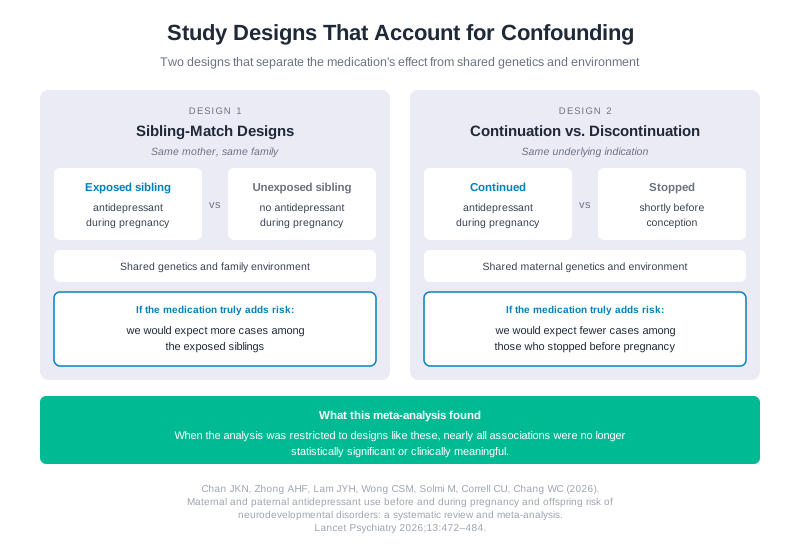
This discussion then directly informs my risk-versus-risk conversation, in which the patient and I jointly weigh the known risks to maternal mental health of discontinuing or changing a stable medication against the potential risks of fetal exposure. I try to clearly center the science on the specific medical decision at hand, for example, deciding whether or not to continue an antidepressant during pregnancy.
Based on this study, the previously reported associations were also present with preconception antidepressant use, and stopping the antidepressant before conception didn’t make a difference in infant neurodevelopmental outcomes. So the data don’t support discontinuing the medication to reduce even a theoretical risk. In this way, you can tailor the conversation to what is most relevant to the patient’s clinical situation, which may differ depending on whether the question is continuing a medication or starting a new one.
Tricyclics Warrant a Different Consideration
On the basis of this study, I would, however, adjust my risk-versus-risk conversation for patients taking tricyclic antidepressants (TCAs) such as amitriptyline and nortriptyline. Two points I would raise:
- The data around these specific agents are less reassuring than for the SSRIs and serotonin-noradrenaline reuptake inhibitors (SNRIs) that are more commonly used and studied, and some risk signal remained even after attempts to address confounding.
- Part of why the evidence base suggests concern here is that there are few available studies of TCA exposure.
Given that TCAs are not typically used as first-line antidepressants, it may be the case that other treatment strategies such as SSRIs have already been tried, and the risk-versus-risk conversation may still conclude that the alternative strategies would be anticipated to jeopardize maternal euthymia.
Download PDF and other files
Paternal Use Points to Confounding
Interestingly, the authors also looked at the relationship between paternal antidepressant use and infant neurodevelopmental outcomes. In unadjusted analyses, paternal use during pregnancy was similarly associated with ADHD and ASD in offspring. However, there was not enough literature available to address confounding through approaches like sibling-match designs or comparisons with fathers who discontinued medication before conception.
As the authors conceptualize it, this paternal finding serves as further evidence for the genetic and environmental factors that may explain the association between maternal antidepressant use and child neurodevelopment. That is most likely the case. But as more research emerges testing hypotheses about the influence of paternal psychotropic exposure during pregnancy, and especially around conception, psychiatrists are likely to begin receiving similar questions and consults from male patients who are considering family planning.
Notably, in 2024 the Pharmacovigilance Risk Assessment Committee of the European Medicines Agency recommended caution for men using valproate, citing a potential increased risk of neurodevelopmental disorders in offspring. That signal, reported in a Scandinavian population-based study, was followed by other studies that did not identify an association between paternal valproate use and ASD, and that instead found a highly significant genetic overlap between the indication for valproate use and ASD itself.
The clinical conversations and scientific findings surrounding paternal psychotropic use largely mirror those for maternal use: maintaining euthymia during the process of becoming a parent has known benefits for the patient and the family unit as a whole, and current studies do not offer compelling evidence of increased risk to offspring. Although the paternal findings may have originally been intended as reassurance to mothers, it is just as likely that we will be reassuring fathers that although there is less published data on their exposures, we would most likely attribute any reported associations to confounding, based on our understanding of the studies in mothers.
Bottom Line
In my view, the main takeaway of this study is that the evidence did not support a causal association between prenatal antidepressant use and neurodevelopmental disorders in exposed offspring. Once shared familial and environmental factors were accounted for, the previously reported concerns from less rigorously designed individual studies disappeared.
If an antidepressant would otherwise be indicated for a patient, the evidence does not support stopping their antidepressant or decreasing the dose out of concern for infant neurodevelopment.
Download PDF and other files
Abstract
Maternal and paternal antidepressant use before and during pregnancy and offspring risk of neurodevelopmental disorders: a systematic review and meta-analysis
Joe Kwun Nam Chan, PhD; Alan Hung Fai Zhong, MBBS; Jacko Yat Hei Lam; Corine Sau Man Wong, PhD; Marco Solmi, PhD; Prof Christoph U Correll, M.D. & Prof Wing Chung Chang, M.D.
Background
The potential risk of neurodevelopmental disorders following prenatal antidepressant exposure is concerning. Meta-analyses conducted in the past decade have had small study numbers and insufficient assessment of confounding by treatment indication. We aimed to synthesise risk of neurodevelopmental disorders, including ADHD and autism spectrum disorder (ASD), with antidepressant exposure before or during pregnancy in mothers and fathers, accounting for antidepressant classes, agents, dose, and confounding.
Methods
In this systematic review and meta-analysis, we searched Embase, MEDLINE, PsycINFO, and Web of Science from database inception to May 14, 2025, for studies that included mothers or fathers with antidepressant use before or during the pregnancy period and that reported data on neurodevelopmental disorders. Relative risks (RRs) were pooled using random-effect meta-analyses. We assessed publication bias, subgroup analyses, and quality assessment (Newcastle-Ottawa scale). No people with relevant lived experience were involved in the research and writing process. Only two studies reported ethnicity data. This study is registered with PROSPERO (CRD420251052595).
Findings
We identified 37 studies involving 648 626 antidepressant-exposed and 24 967 806 unexposed pregnancies (weighted average mean age 28·8 years, range 28·5–32·3). Prenatal antidepressant use was associated with a modestly increased risk of neurodevelopmental disorders in offspring (RR 1·13, 95% CI 1·08–1·18; k=2; I2=64·9%; p=0·051), including ADHD (1·35, 1·24–1·47; k=14; I2=90·2%; p<0·0001) and ASD (1·69, 1·24–2·30; k=25; I2=98·1%; p<0·0001), but not intellectual disabilities, motor disorders, or speech and language disorders. No significant difference in ASD risk was found between high-dose and low-dose exposure, and paternal antidepressant use around conception was not linked to ASD. Both SSRI and non-SSRI antidepressants exhibited increased risk for ADHD (SSRI 1·35, 1·20–1·51; k=11; I2=87·3%; p<0·0001; non-SSRI 1·41, 1·33–1·50; k=3; I2=0%; p=0·35) and ASD (SSRI 1·52, 1·39–1·65; k=21; I2=55·6%; p<0·0001; non-SSRI 1·19, 1·03–1·45; k=4; I2=0%; p=0·38). Notably, similar associations were found for pre-conception exposure. Observed associations were attenuated or became non-significant in sensitivity analyses accounting for confounding factors, such as maternal mental disorders, familial or genetic influences, and misclassification. Paternal antidepressant use during pregnancy served as a negative control and was associated with increased ADHD risk (1·46, 1·38–1·56; k=2; I2=25·3%; p=0·24) and ASD risk (1·28, 1·16–1·40; k=6; I2=35·0%; p=0·20). When confounding by indication was minimised, only amitriptyline and nortriptyline were associated with increased risk of ADHD (amitriptyline 1·74, 1·00–3·03) or ASD (amitriptyline and nortriptyline 2·02, 1·32–3·10), whereas no significant associations were found for specific SSRIs or SNRIs. The certainty of evidence was low to very low.
Interpretation
This systematic review and meta-analysis indicated a small association between antidepressants and ADHD or ASD, which was attenuated or became non-significant after adjusting for confounding factors. Antidepressant treatment should be continued for pregnant women with moderate-to-severe depression. Optimising both maternal and paternal mental health is essential for the child’s long-term neurodevelopment.
Reference
Chan, J.; Zhong, A.; Lam, J.; Wong, C.; Solmi, M.; Correll, C. et al. (2026). Maternal and paternal antidepressant use before and during pregnancy and offspring risk of neurodevelopmental disorders: a systematic review and meta-analysis. The Lancet Psychiatry; 13(6):472-484.
