



Slides and Transcript
Slide 1 of 20
The Pharmacologic Framework for Treating Borderline Personality Disorder.
References:
- Paul S. Links, M.D., F.R.C.P.C.
Slide 2 of 20
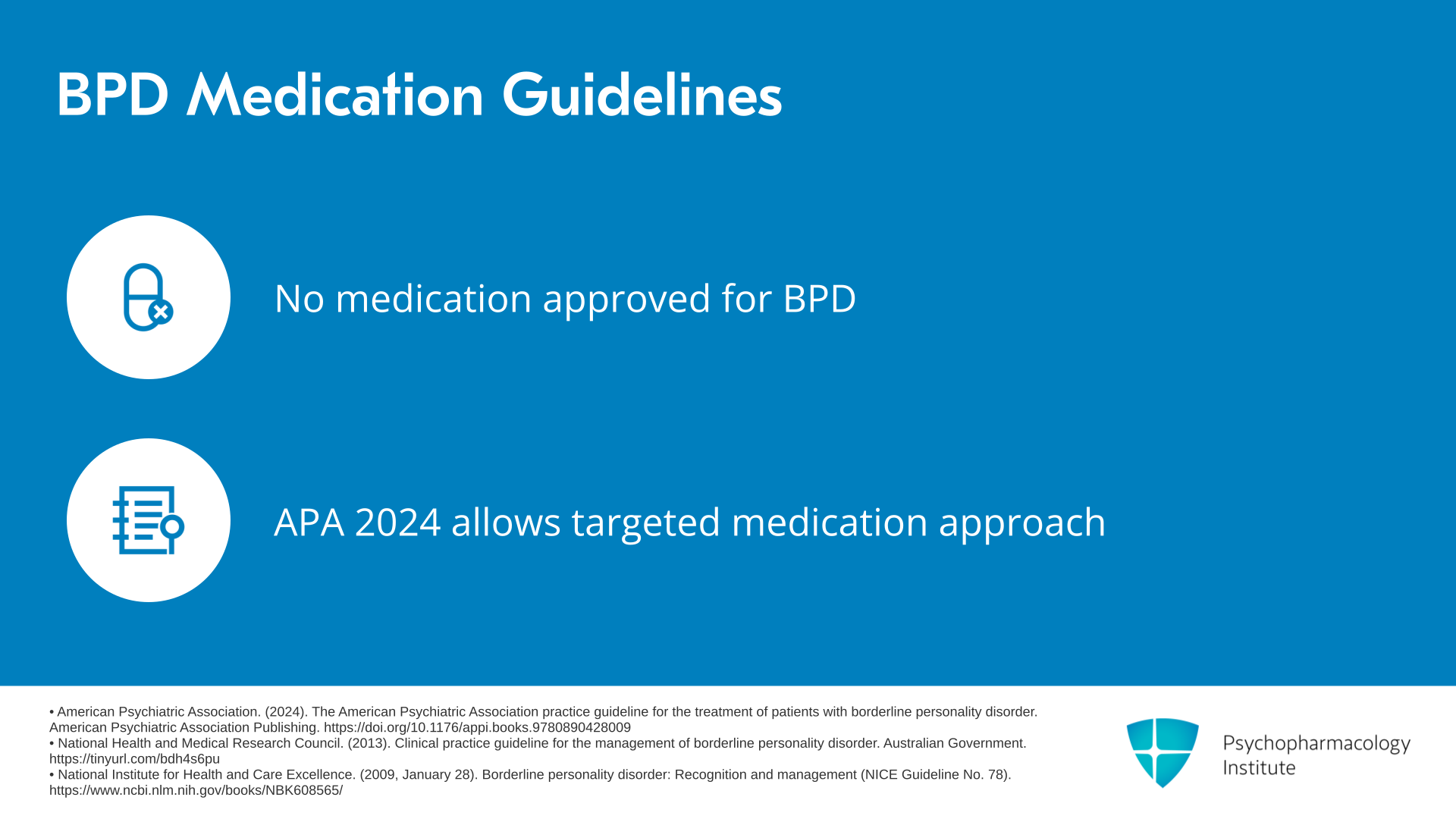
So to start, it’s important to know that no medication has received regulatory approval for treating borderline personality disorder. That is the core aspect of the disorder. The UK NICE Guidelines advise that medications are not to be used for the disorder itself. The Australian Guidelines also suggest that you shouldn’t be using medication for the disorder itself. The American Psychiatric Association guidance document that was released in 2024 would suggest that you can use medication as a targeted approach and we’ll come back to this a bit later in our talk.
References:
- American Psychiatric Association. (2024). The American Psychiatric Association practice guideline for the treatment of patients with borderline personality disorder. American Psychiatric Association Publishing. https://doi.org/10.1176/appi.books.9780890428009
- National Health and Medical Research Council. (2013). Clinical practice guideline for the management of borderline personality disorder. Australian Government. https://tinyurl.com/bdh4s6pu
- National Institute for Health and Care Excellence. (2009, January 28). Borderline personality disorder: Recognition and management (NICE Guideline No. 78). https://www.ncbi.nlm.nih.gov/books/NBK608565/
Free Files
Download PDF and other files
Success!
Check your inbox, we sent you all the materials there.
Slide 3 of 20
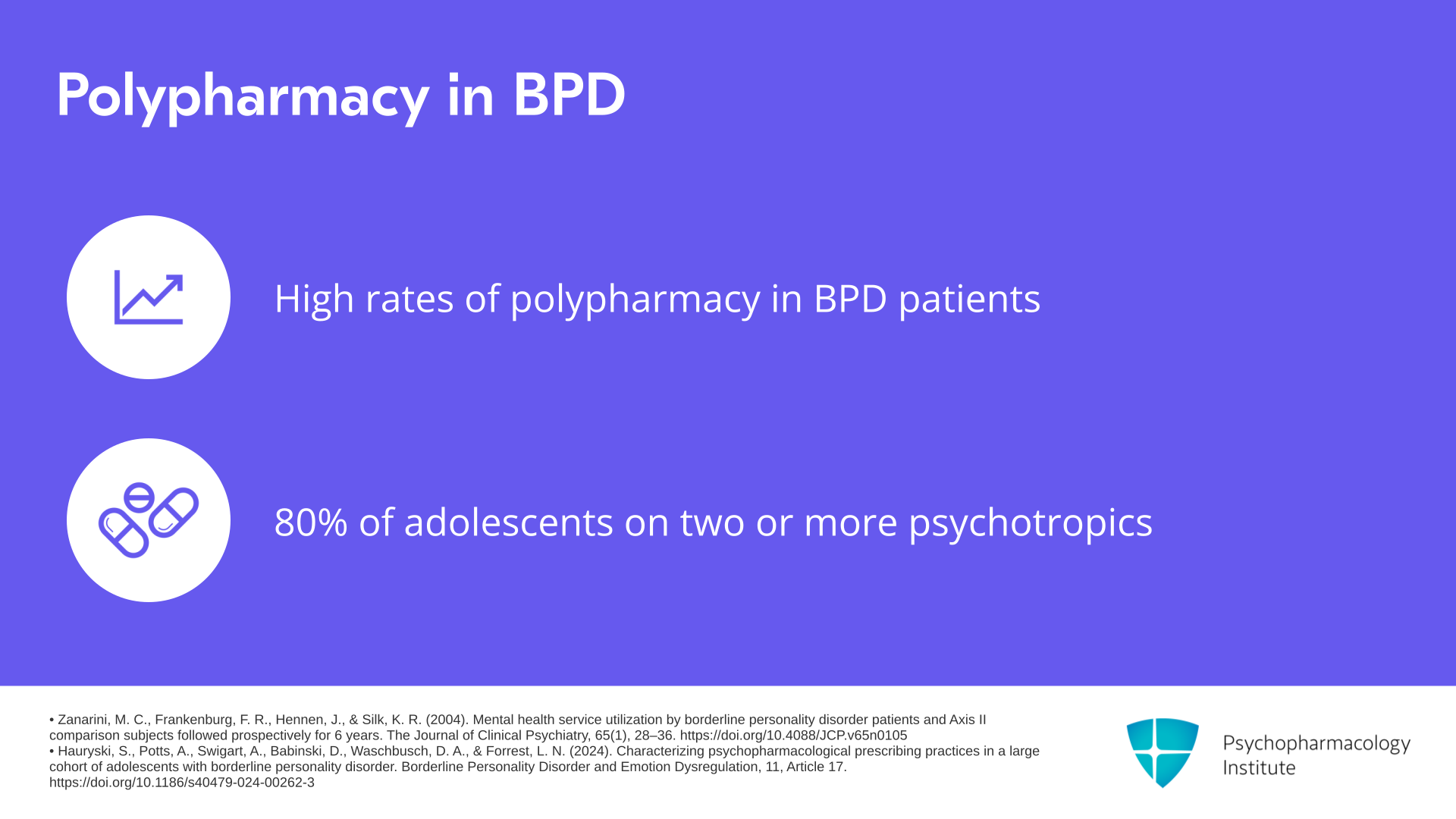
I think this guidance comes about because there are lots of evidence that polypharmacy is found frequently in borderline patients, and Mary Zanarini demonstrated that patients can be on as many as five or more concurrent psychotropic medications in about 10% of patients, four or more concurrent psychotropic medications may be found in 20% of patients and three or more concurrent psychotropic medications may be found in 40% of borderline patients. A recent study in adolescents found that 80% of adolescents with borderline personality disorder were on two or more types of psychotropic medication. It was somewhat less if the patient was in a specialized clinic but still a common finding.
References:
- Zanarini, M. C., Frankenburg, F. R., Hennen, J., & Silk, K. R. (2004). Mental health service utilization by borderline personality disorder patients and Axis II comparison subjects followed prospectively for 6 years. The Journal of Clinical Psychiatry, 65(1), 28–36. https://doi.org/10.4088/JCP.v65n0105
- Hauryski, S., Potts, A., Swigart, A., Babinski, D., Waschbusch, D. A., & Forrest, L. N. (2024). Characterizing psychopharmacological prescribing practices in a large cohort of adolescents with borderline personality disorder. Borderline Personality Disorder and Emotion Dysregulation, 11, Article 17. https://doi.org/10.1186/s40479-024-00262-3
Slide 4 of 20
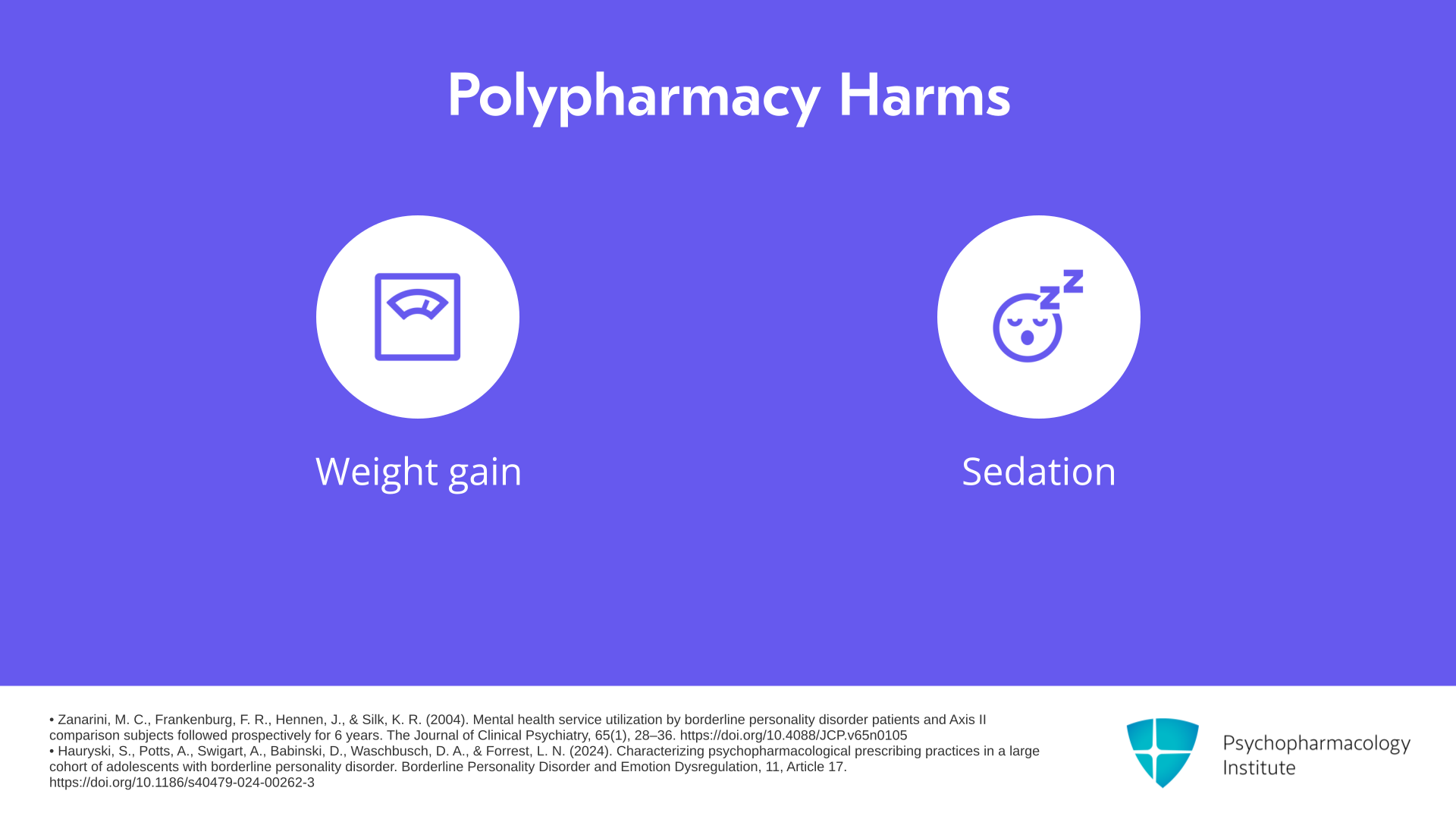
And this is important because of course polypharmacy leads to harms such as weight gain, sedation and other adverse effects.
References:
- Zanarini, M. C., Frankenburg, F. R., Hennen, J., & Silk, K. R. (2004). Mental health service utilization by borderline personality disorder patients and Axis II comparison subjects followed prospectively for 6 years. The Journal of Clinical Psychiatry, 65(1), 28–36. https://doi.org/10.4088/JCP.v65n0105
- Hauryski, S., Potts, A., Swigart, A., Babinski, D., Waschbusch, D. A., & Forrest, L. N. (2024). Characterizing psychopharmacological prescribing practices in a large cohort of adolescents with borderline personality disorder. Borderline Personality Disorder and Emotion Dysregulation, 11, Article 17. https://doi.org/10.1186/s40479-024-00262-3
Free Files
Download PDF and other files
Success!
Check your inbox, we sent you all the materials there.
Slide 5 of 20
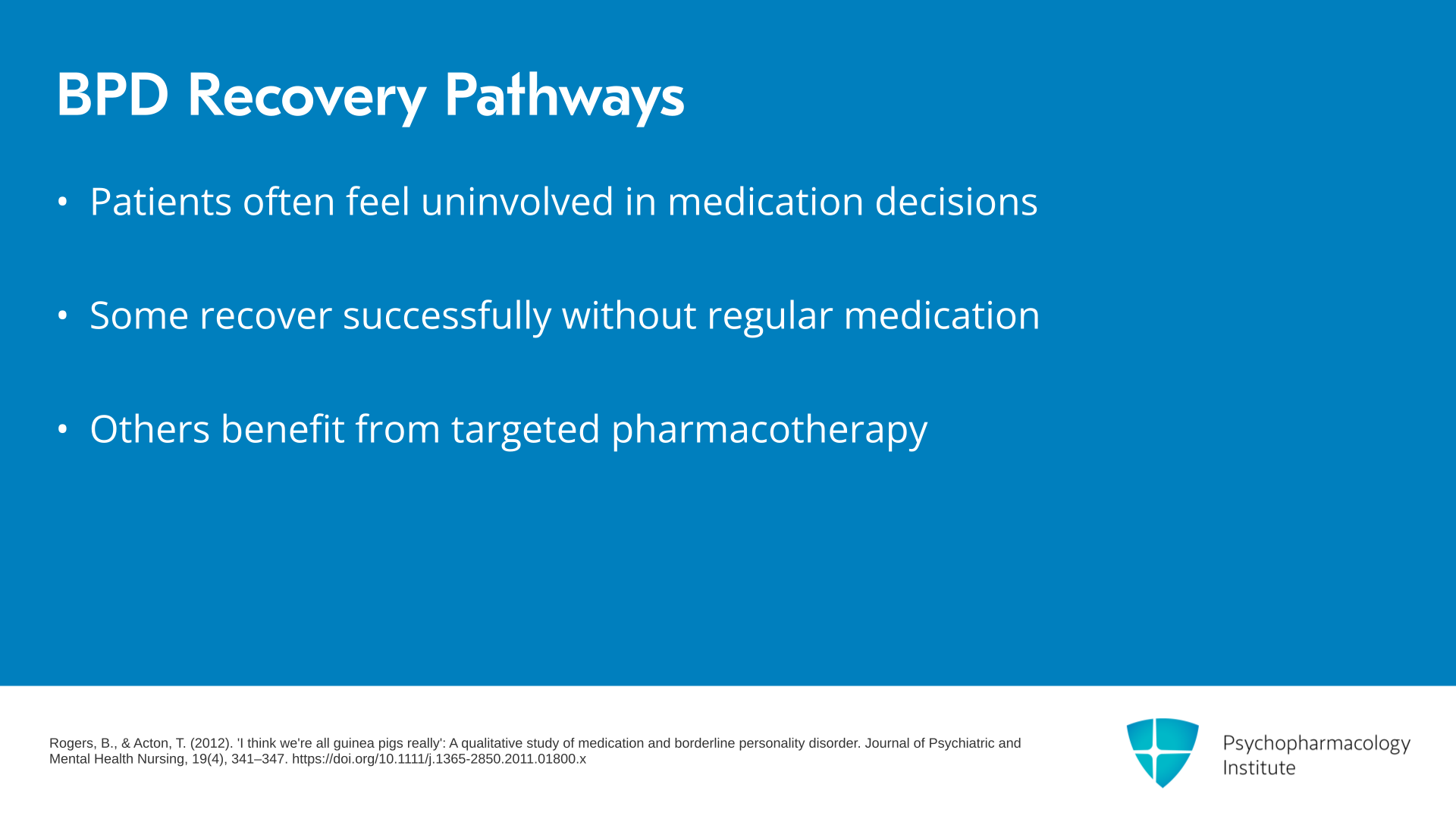
An important qualitative study that talks about dealing with borderline patients and prescribing medications comes from Rogers and Acton 2012. They found that patients often feel uninvolved in treatment decisions including medication decisions. They described there were two pathways that patients describe on their recovery from borderline personality disorder. Some patients felt that medications were not necessary to their recovery. They maybe had tried medications and they hadn’t felt that they were helpful. And in these patients, I think it’s important to support their approach to recovery. Often, patients can be successful without taking regular medication and you might have a role in tapering or stopping unneeded medication. Other patients felt that their recovery required some medications to help them be successful. And in this regard, I think the stance of supporting them when medications may help with their recovery, particularly help them with their functioning and then there’s a useful role for what we’re talking about today, choosing the appropriate pharmacotherapy.
References:
- Rogers, B., & Acton, T. (2012). 'I think we're all guinea pigs really': A qualitative study of medication and borderline personality disorder. Journal of Psychiatric and Mental Health Nursing, 19(4), 341–347. https://doi.org/10.1111/j.1365-2850.2011.01800.x
Slide 6 of 20
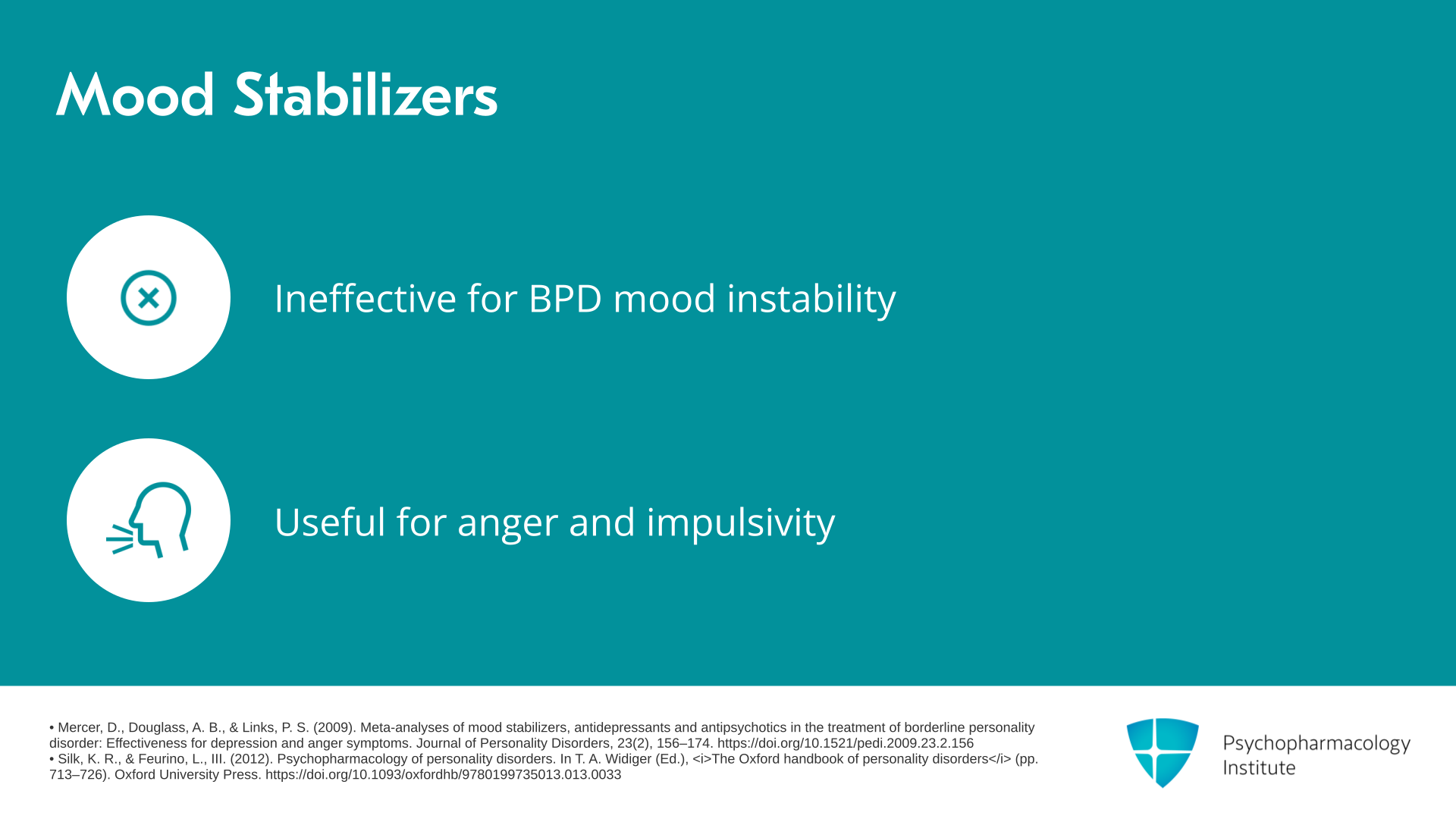
Now, we’ll say some things about symptom targets and medication types but as a broad summary, mood stabilizers, they’re probably not effective for the mood instability that’s found in borderline personality disorder. Certainly, this is what I express to patients that our typical mood stabilizers aren’t effective for the emotion dysregulation found in borderline personality disorder. If they have a usefulness, it’s probably more related to anger and impulsivity.
References:
- Mercer, D., Douglass, A. B., & Links, P. S. (2009). Meta-analyses of mood stabilizers, antidepressants and antipsychotics in the treatment of borderline personality disorder: Effectiveness for depression and anger symptoms. Journal of Personality Disorders, 23(2), 156–174. https://doi.org/10.1521/pedi.2009.23.2.156
- Silk, K. R., & Feurino, L., III. (2012). Psychopharmacology of personality disorders. In T. A. Widiger (Ed.), The Oxford handbook of personality disorders (pp. 713–726). Oxford University Press. https://doi.org/10.1093/oxfordhb/9780199735013.013.0033
Free Files
Download PDF and other files
Success!
Check your inbox, we sent you all the materials there.
Slide 7 of 20
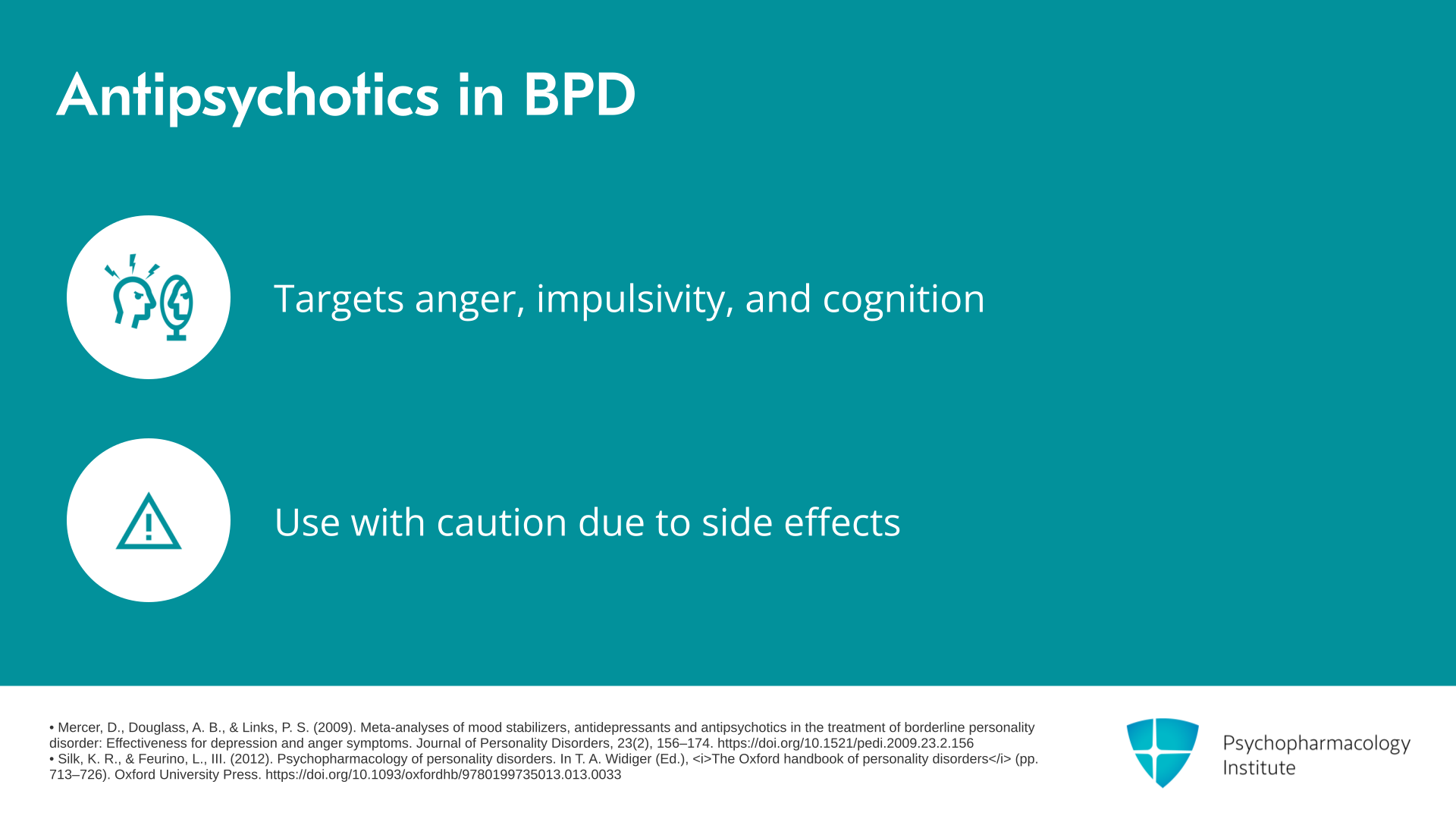
Antipsychotics have a broad effectiveness in borderline personality disorder. They can affect anger and impulsivity, the cognitive symptoms of borderline personality disorder. And so they can be used but we’re cautious that they do have significant side effects.
References:
- Mercer, D., Douglass, A. B., & Links, P. S. (2009). Meta-analyses of mood stabilizers, antidepressants and antipsychotics in the treatment of borderline personality disorder: Effectiveness for depression and anger symptoms. Journal of Personality Disorders, 23(2), 156–174. https://doi.org/10.1521/pedi.2009.23.2.156
- Silk, K. R., & Feurino, L., III. (2012). Psychopharmacology of personality disorders. In T. A. Widiger (Ed.), The Oxford handbook of personality disorders (pp. 713–726). Oxford University Press. https://doi.org/10.1093/oxfordhb/9780199735013.013.0033
Slide 8 of 20
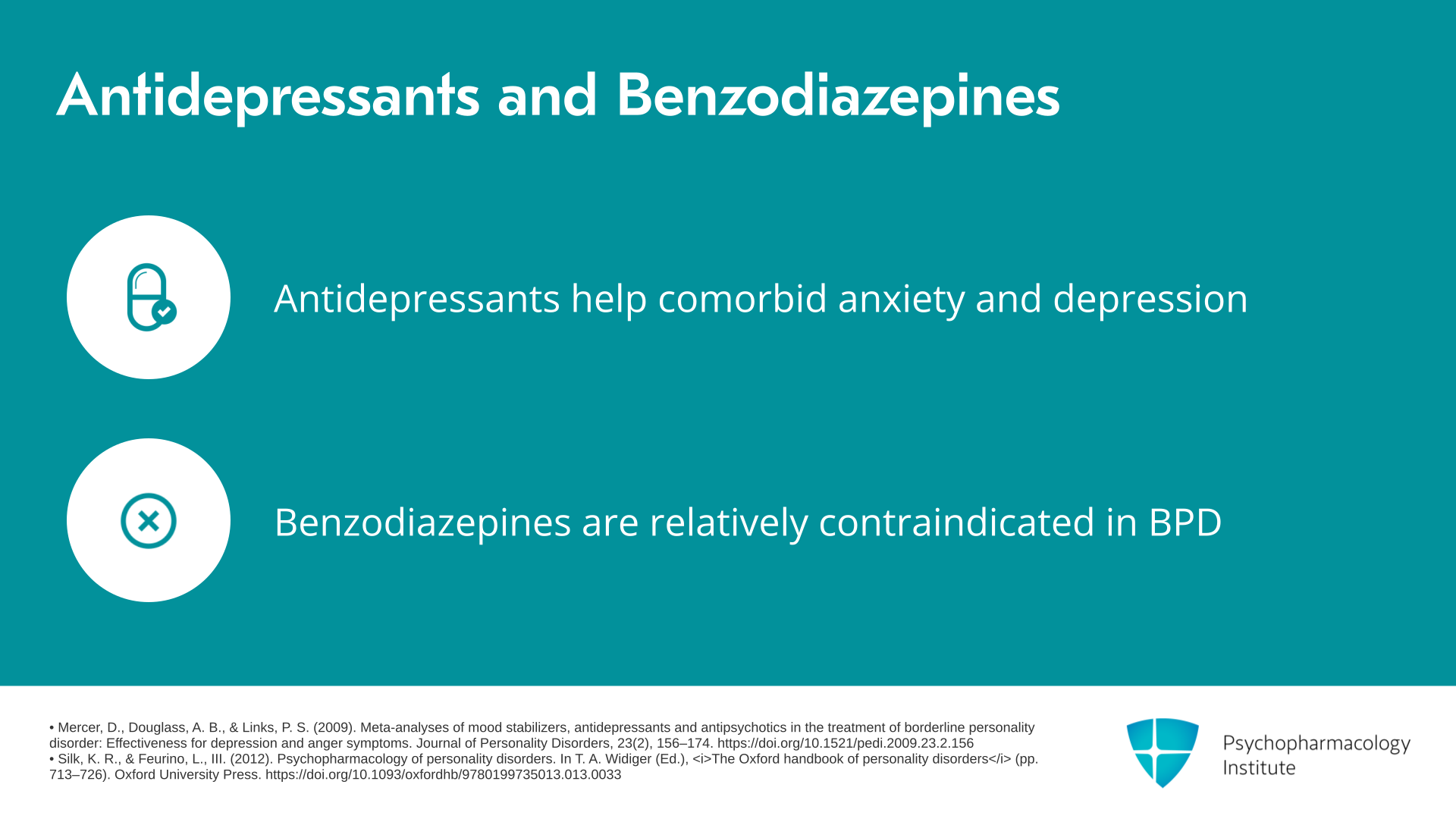
Antidepressants don’t have a value in the dysphoria that’s part of core borderline personality disorder, but I think they are useful in comorbid anxiety and depression. And benzodiazepines really are relatively contraindicated in borderline personality disorder. They can be habit forming. They can lead to disinhibition. And we’ll talk about some evidence that suggest they might be related to an increase of suicide behavior and even death by suicide.
References:
- Mercer, D., Douglass, A. B., & Links, P. S. (2009). Meta-analyses of mood stabilizers, antidepressants and antipsychotics in the treatment of borderline personality disorder: Effectiveness for depression and anger symptoms. Journal of Personality Disorders, 23(2), 156–174. https://doi.org/10.1521/pedi.2009.23.2.156
- Silk, K. R., & Feurino, L., III. (2012). Psychopharmacology of personality disorders. In T. A. Widiger (Ed.), The Oxford handbook of personality disorders (pp. 713–726). Oxford University Press. https://doi.org/10.1093/oxfordhb/9780199735013.013.0033
Free Files
Download PDF and other files
Success!
Check your inbox, we sent you all the materials there.
Slide 9 of 20
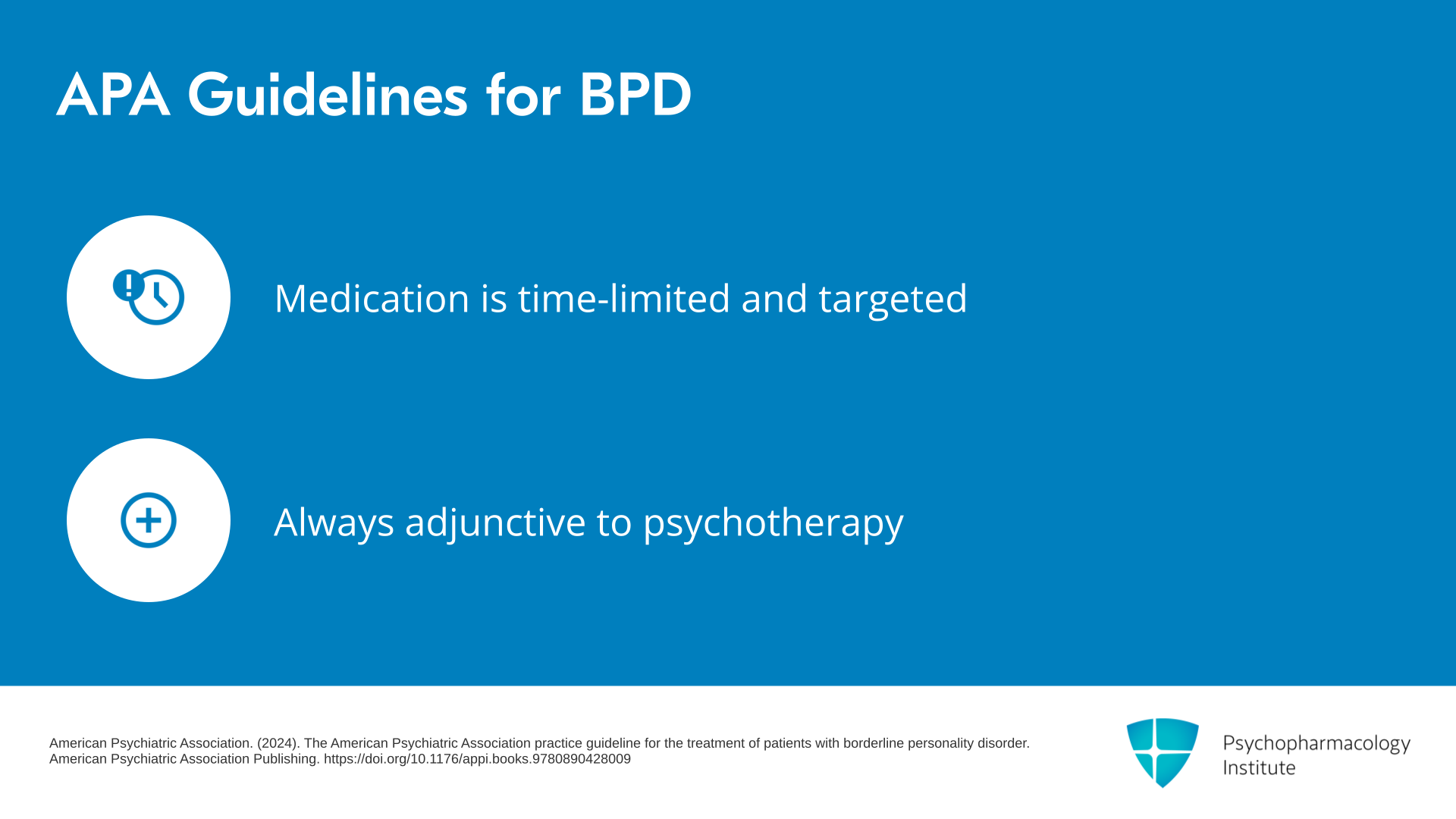
Regarding an approach to treating borderline patients with medications, I really stand by the APA Guideline that I’ll review with you. That guideline suggests that any psychotropic medication treatment be time limited, aimed at addressing a specific measurable treatment target and it’s adjunctive to psychotherapy. And that would be the way that we approach psychopharmacologic management in borderline patients.
References:
- American Psychiatric Association. (2024). The American Psychiatric Association practice guideline for the treatment of patients with borderline personality disorder. American Psychiatric Association Publishing. https://doi.org/10.1176/appi.books.9780890428009
Slide 10 of 20
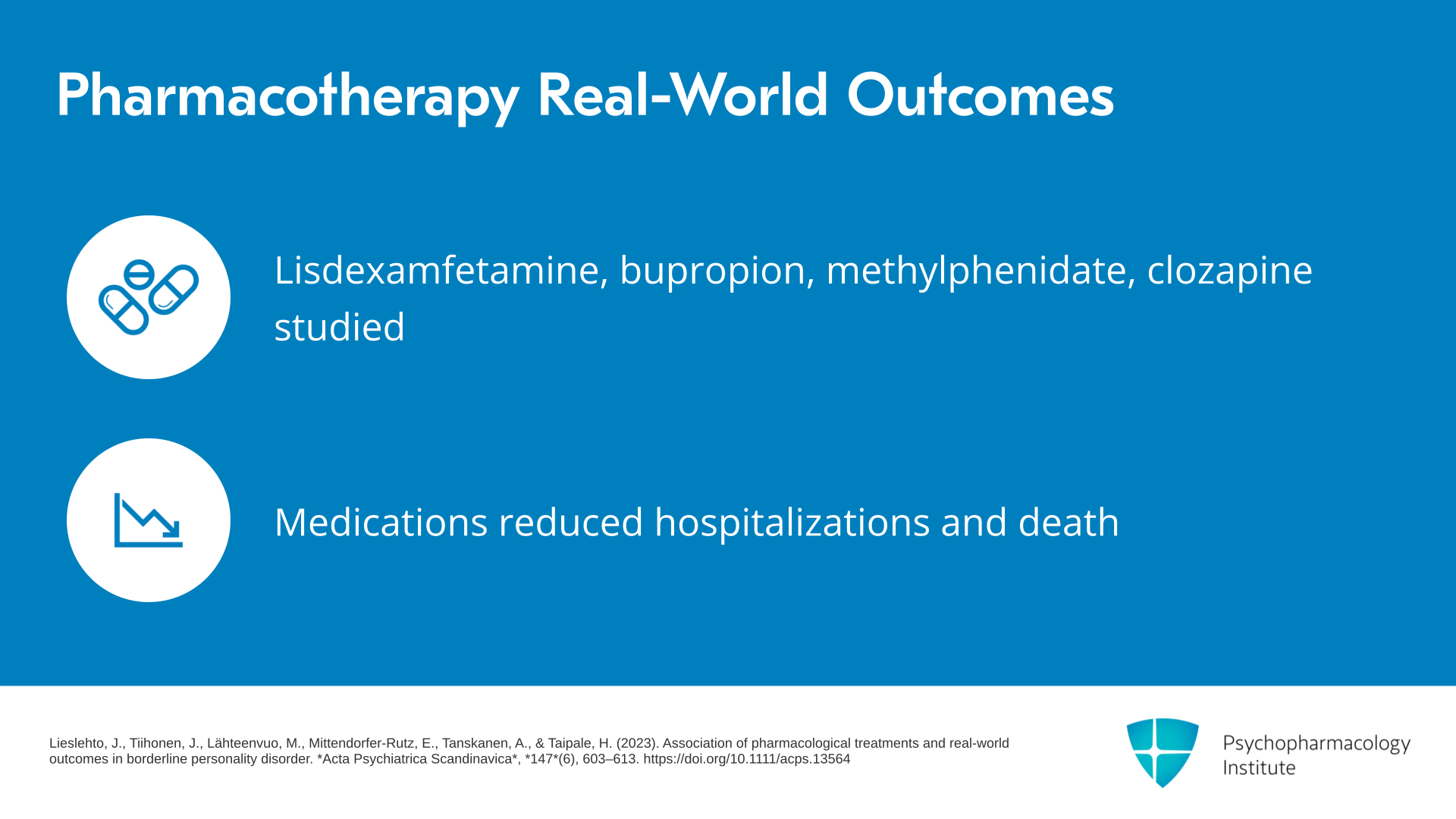
There’s been a recent observational study on real-world outcomes of pharmacotherapy. This study was done using the Swedish National Registry and they looked at medication exposure and the outcomes of rehospitalization, hospitalization for any reason and even death. And in this study, they found that the use of lisdexamphetamine, bupropion and methylphenidate plus clozapine were associated with improved outcomes in terms of hospitalizations, rehospitalizations and death. So the finding indicated that these medications may have a role in reducing hospitalizations and death.
References:
- Lieslehto, J., Tiihonen, J., Lähteenvuo, M., Mittendorfer-Rutz, E., Tanskanen, A., & Taipale, H. (2023). Association of pharmacological treatments and real-world outcomes in borderline personality disorder. *Acta Psychiatrica Scandinavica*, *147*(6), 603–613. https://doi.org/10.1111/acps.13564
Free Files
Download PDF and other files
Success!
Check your inbox, we sent you all the materials there.
Slide 11 of 20
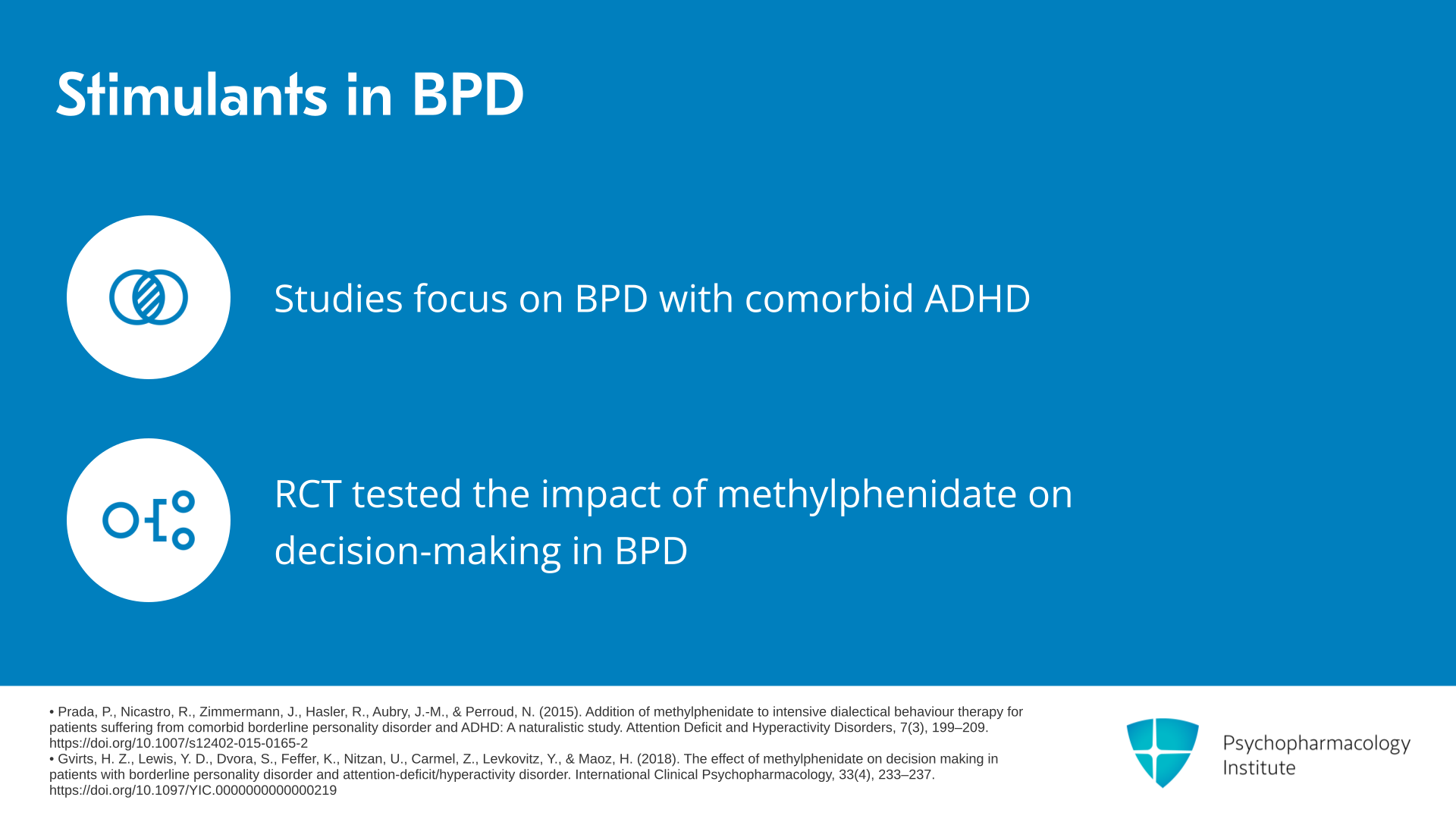
Now, it’s important to add that there are really only studies that have looked at treating borderline patients with comorbid ADHD. The one randomized controlled trial that looked at borderline patients and exposed them to methylphenidate without comorbid ADHD was really just a laboratory investigation of the impact on methylphenidate on decision making. So the caution is that we really don’t know the value of stimulant medication in borderline patients without comorbid ADHD symptoms and their usefulness in these patients really requires further study.
References:
- Prada, P., Nicastro, R., Zimmermann, J., Hasler, R., Aubry, J.-M., & Perroud, N. (2015). Addition of methylphenidate to intensive dialectical behaviour therapy for patients suffering from comorbid borderline personality disorder and ADHD: A naturalistic study. Attention Deficit and Hyperactivity Disorders, 7(3), 199–209. https://doi.org/10.1007/s12402-015-0165-2
- Gvirts, H. Z., Lewis, Y. D., Dvora, S., Feffer, K., Nitzan, U., Carmel, Z., Levkovitz, Y., & Maoz, H. (2018). The effect of methylphenidate on decision making in patients with borderline personality disorder and attention-deficit/hyperactivity disorder. International Clinical Psychopharmacology, 33(4), 233–237. https://doi.org/10.1097/YIC.0000000000000219
Slide 12 of 20
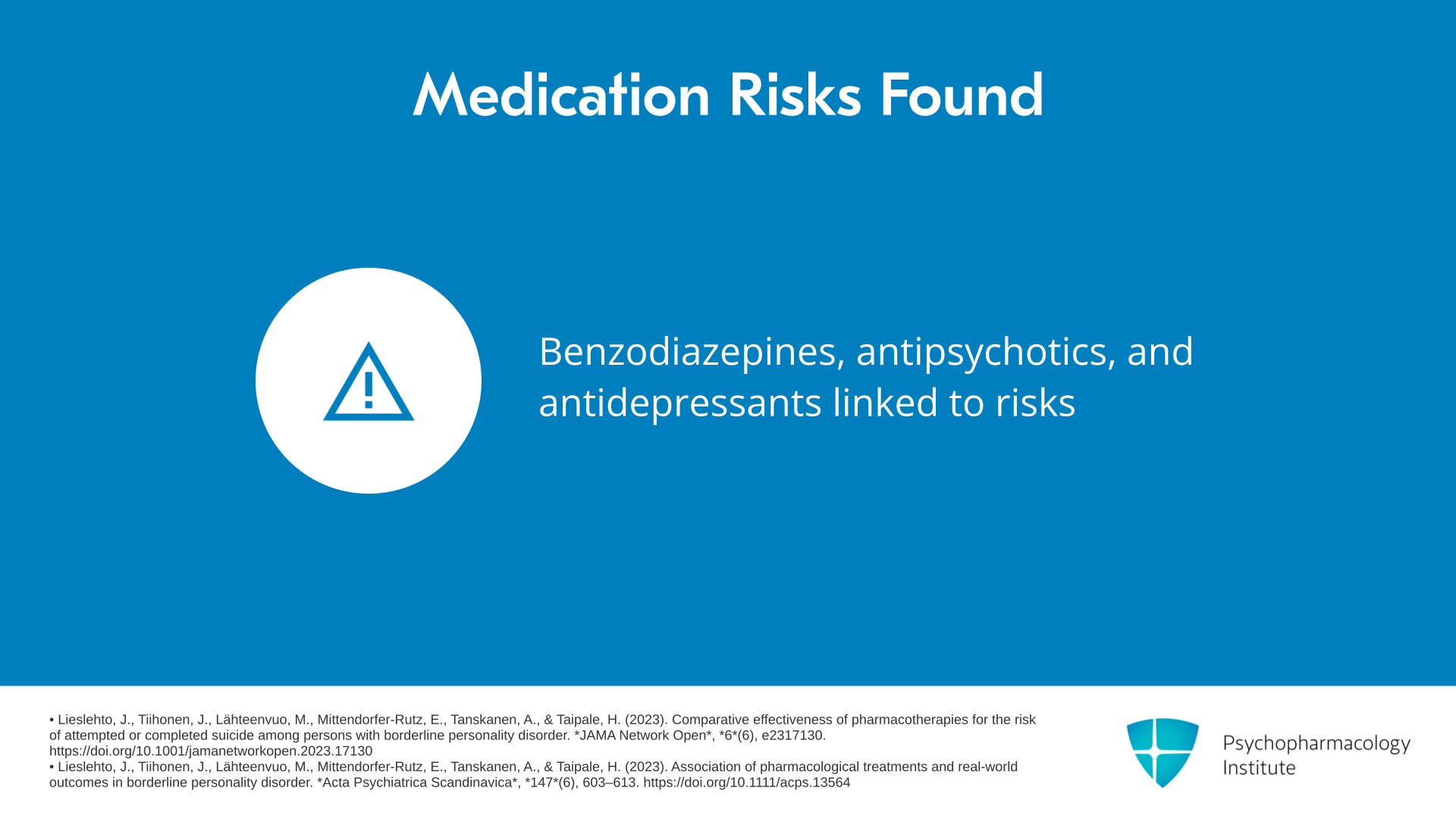
But the other finding of this study was that benzodiazepines, antipsychotics and antidepressants were associated with a higher risk of hospitalizations for any reason and also death.
References:
- Lieslehto, J., Tiihonen, J., Lähteenvuo, M., Mittendorfer-Rutz, E., Tanskanen, A., & Taipale, H. (2023). Comparative effectiveness of pharmacotherapies for the risk of attempted or completed suicide among persons with borderline personality disorder. *JAMA Network Open*, *6*(6), e2317130. https://doi.org/10.1001/jamanetworkopen.2023.17130
- Lieslehto, J., Tiihonen, J., Lähteenvuo, M., Mittendorfer-Rutz, E., Tanskanen, A., & Taipale, H. (2023). Association of pharmacological treatments and real-world outcomes in borderline personality disorder. *Acta Psychiatrica Scandinavica*, *147*(6), 603–613. https://doi.org/10.1111/acps.13564
Free Files
Download PDF and other files
Success!
Check your inbox, we sent you all the materials there.
Slide 13 of 20
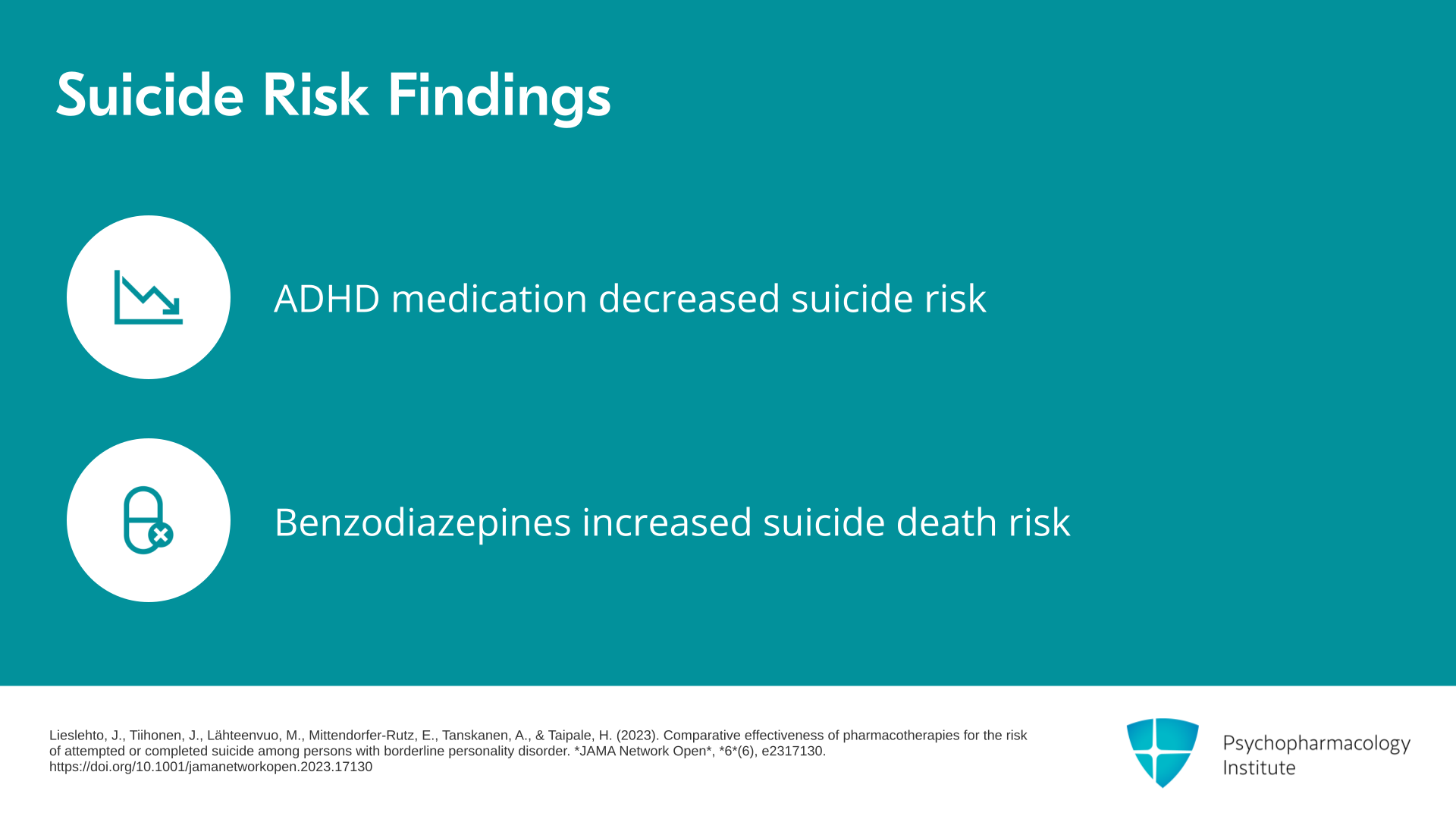
These authors took information from the Swedish National Registry, but this time examined attempted suicide and death by suicide as the outcome. And this is a very large study that included 22,601 patients. The results again indicated that ADHD medication was associated with decreased risk of attempted suicide and death by suicide, while benzodiazepines were associated with an increased death by suicide. Antidepressants, antipsychotics or mood stabilizers did not appear to reduce suicide behavior.
References:
- Lieslehto, J., Tiihonen, J., Lähteenvuo, M., Mittendorfer-Rutz, E., Tanskanen, A., & Taipale, H. (2023). Comparative effectiveness of pharmacotherapies for the risk of attempted or completed suicide among persons with borderline personality disorder. *JAMA Network Open*, *6*(6), e2317130. https://doi.org/10.1001/jamanetworkopen.2023.17130
Slide 14 of 20
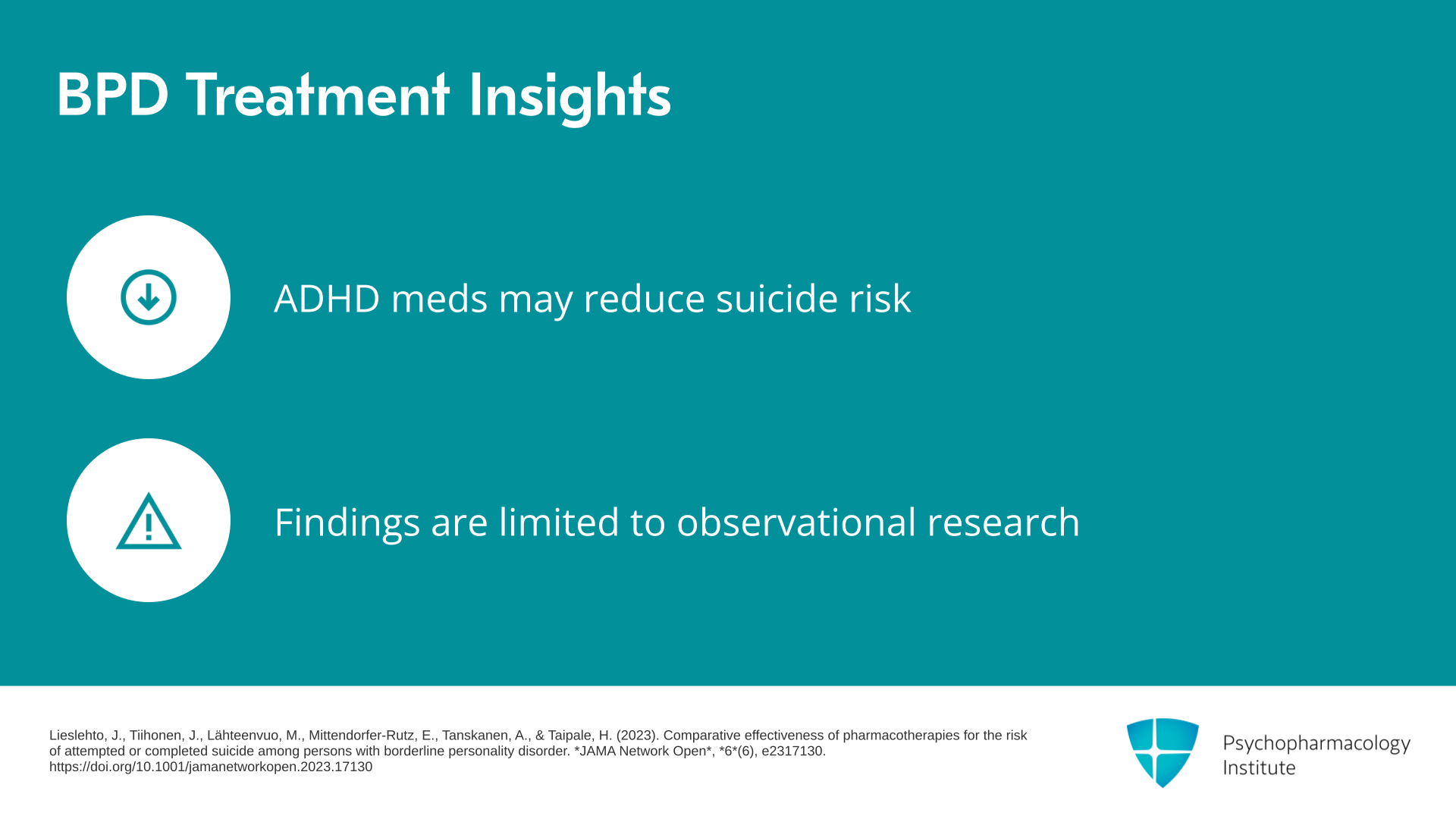
So the authors suggested that ADHD meds may be of interest because they could decrease the risk of suicidal behavior and death by suicide in patients with borderline personality disorder with ADHD symptoms and a risk of suicide. However, the evidence does suggest that these patients should not be treated with benzodiazepines. So it supports the caution that I mentioned earlier. Now, it’s important to note that this is observational research which is handicapped because we don’t know the rationale for the patient being exposed to the drug in the initial circumstance.
References:
- Lieslehto, J., Tiihonen, J., Lähteenvuo, M., Mittendorfer-Rutz, E., Tanskanen, A., & Taipale, H. (2023). Comparative effectiveness of pharmacotherapies for the risk of attempted or completed suicide among persons with borderline personality disorder. *JAMA Network Open*, *6*(6), e2317130. https://doi.org/10.1001/jamanetworkopen.2023.17130
Free Files
Download PDF and other files
Success!
Check your inbox, we sent you all the materials there.
Slide 15 of 20
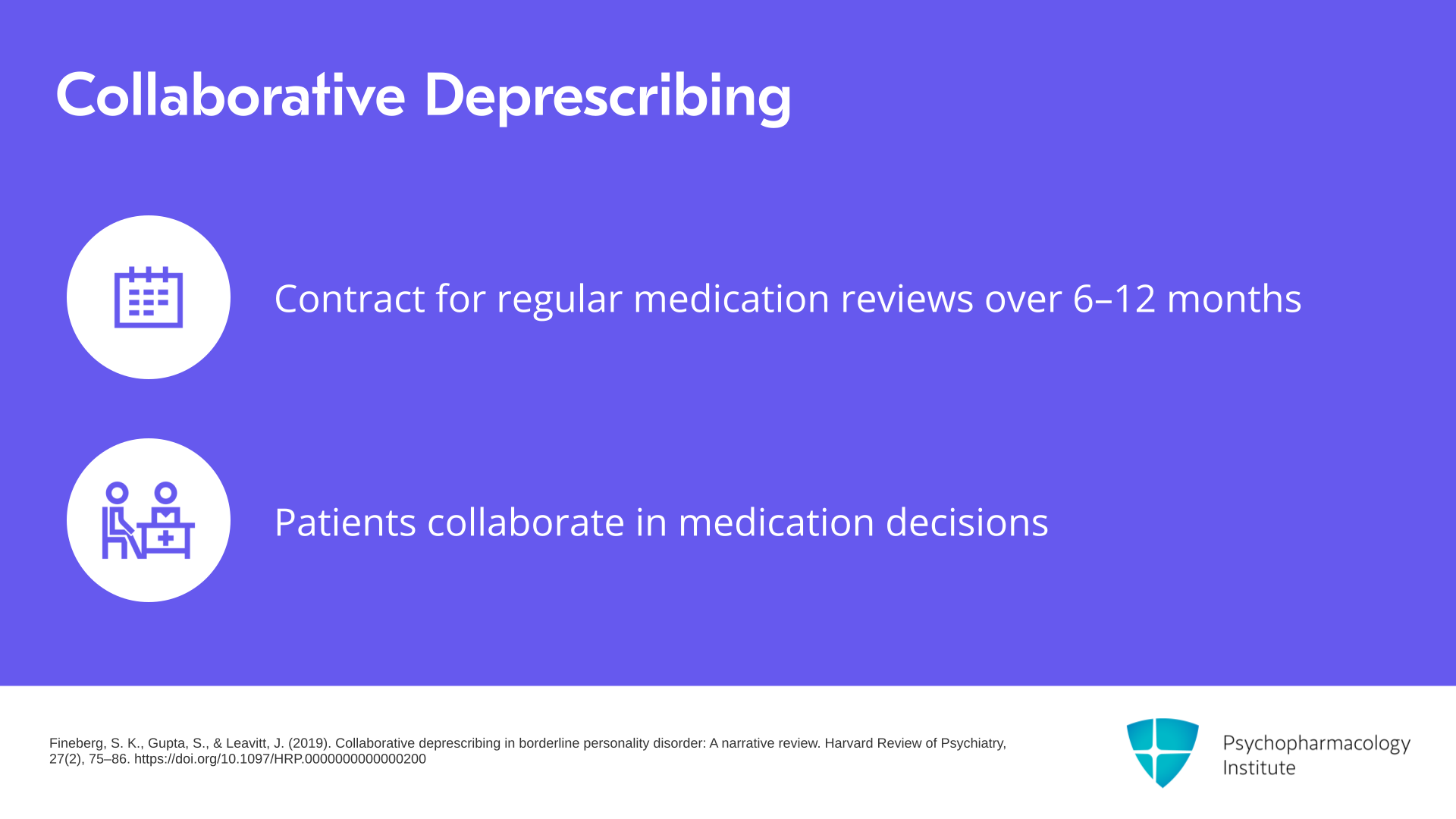
This leads us to talk about an important issue that is collaborative deprescribing in borderline personality disorder and this comes from a study by Fineberg et al. They developed this idea that if you’re working with a borderline patient you should develop a framework for deprescribing. So you actually set up a contract that over a period of say 6 to 12 months you’re going to have regular meetings about let’s review in a collaborative way your medications and determine if they’re leading to improvement or are they worsening your situation. Now, an important part of this work is you’re really seeking the patient to be collaborative and to demonstrate their self-agency in deciding what medications should the patient continue on.
References:
- Fineberg, S. K., Gupta, S., & Leavitt, J. (2019). Collaborative deprescribing in borderline personality disorder: A narrative review. Harvard Review of Psychiatry, 27(2), 75–86. https://doi.org/10.1097/HRP.0000000000000200
Slide 16 of 20
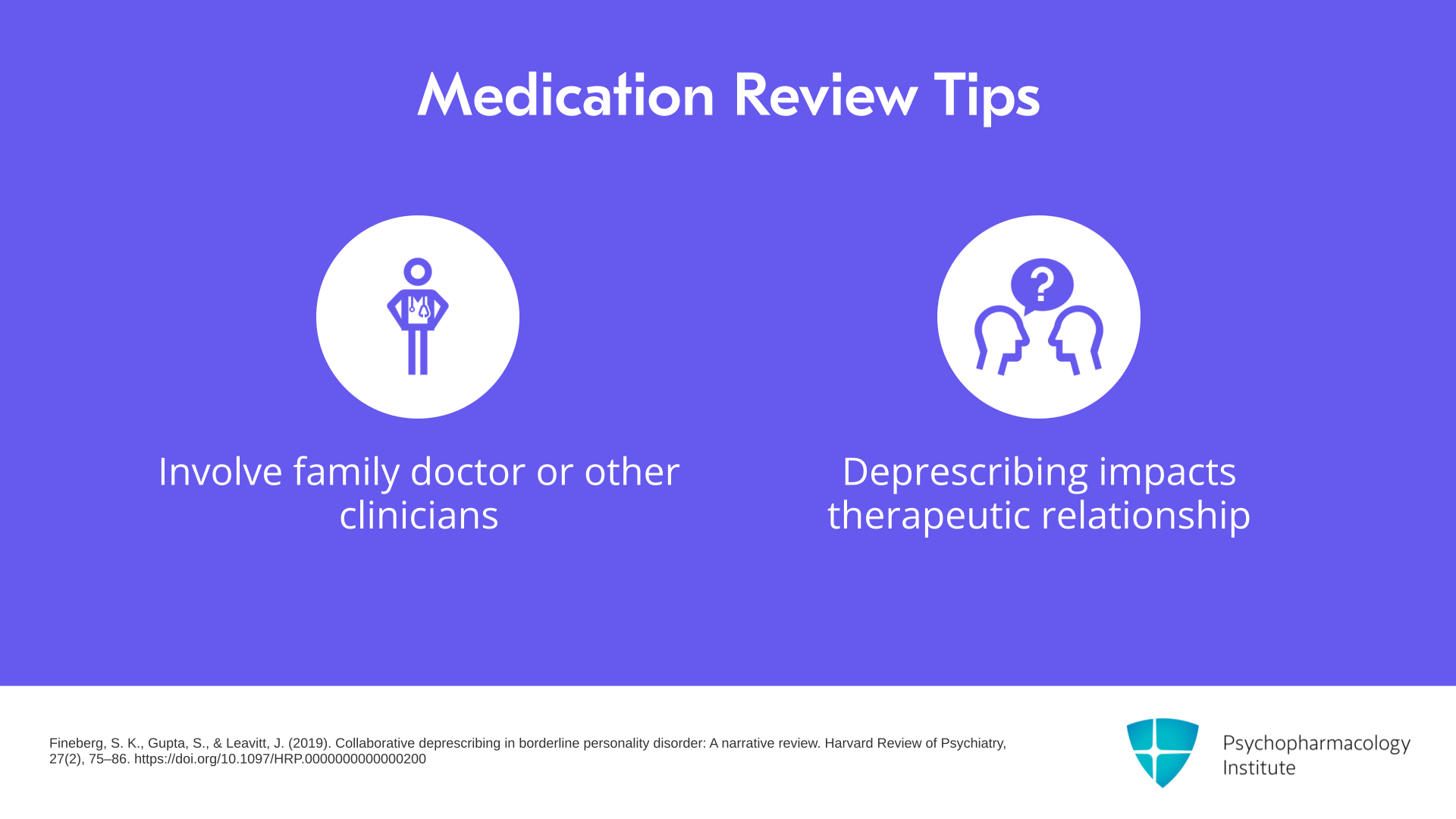
Fineberg suggests that you would review all medications but some of the medications may not be in your area of expertise but it might be a useful exercise for the patient to do this, with their family doctor or their other clinicians. An important point made by Fineberg is you want to be sensitive that medications have an interpersonal meaning. So you want to remember that deprescribing can have some impact on the patient and prescriber’s relationship.
References:
- Fineberg, S. K., Gupta, S., & Leavitt, J. (2019). Collaborative deprescribing in borderline personality disorder: A narrative review. Harvard Review of Psychiatry, 27(2), 75–86. https://doi.org/10.1097/HRP.0000000000000200
Free Files
Download PDF and other files
Success!
Check your inbox, we sent you all the materials there.
Slide 17 of 20
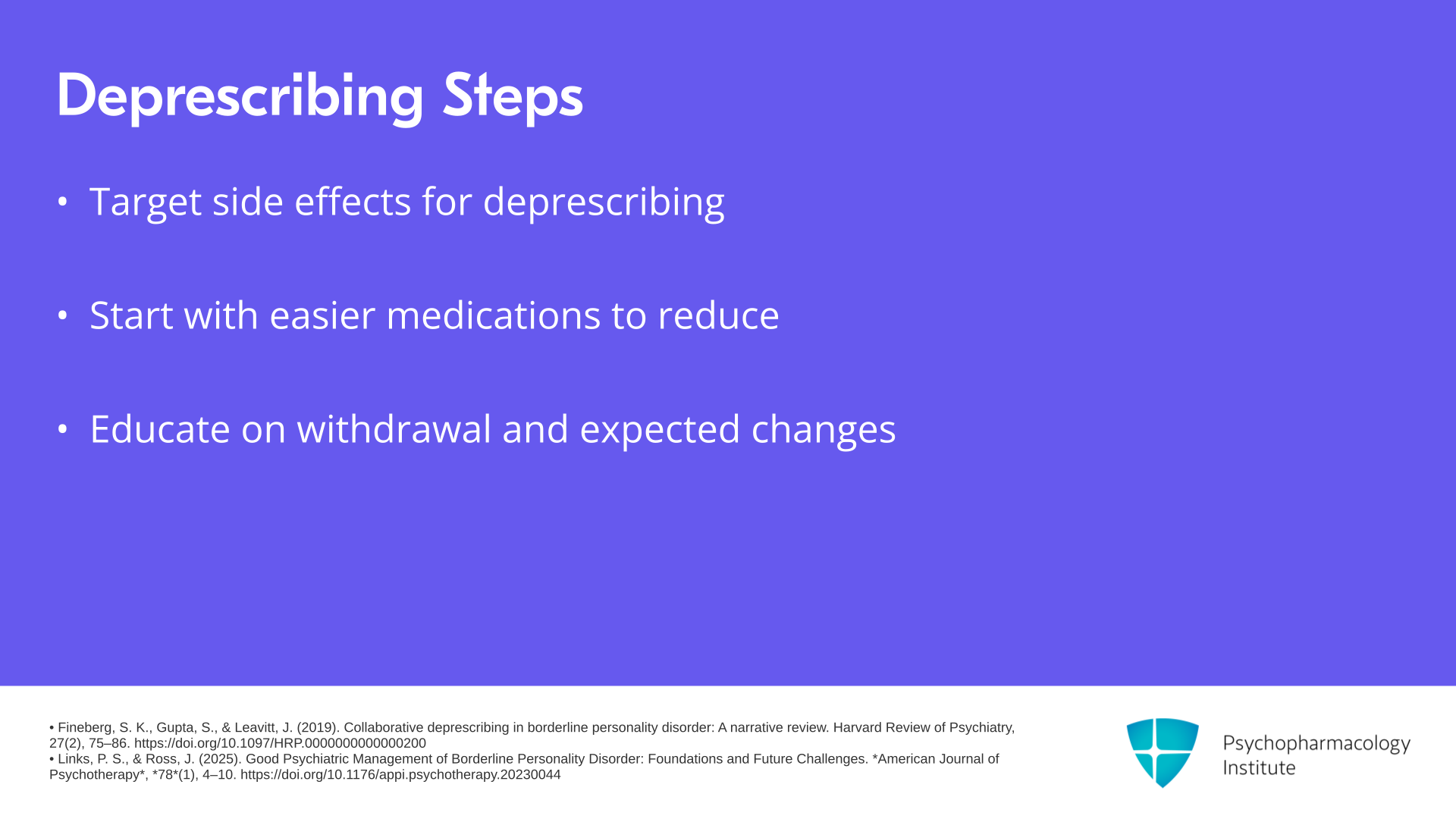
With my colleague Dr. Heidi King, we’ve been working on a chapter for an upcoming book where we take this idea of deprescribing and we add some further context to it. First, you want to engage the patient in identifying side effects that are troublesome that would be a target for deprescribing. If polypharmacy exists, you want to suggest a medication that might be easier to decrease and deprescribe, because you want to promote the patient’s confidence in this process and pick something where the patient will likely be successful in going through the deprescribing process. You want to work with the patient to develop a clear plan for the deprescribing. You want to educate them about possible withdrawal and also the impact that the deprescribing will have on the side effects.
References:
- Fineberg, S. K., Gupta, S., & Leavitt, J. (2019). Collaborative deprescribing in borderline personality disorder: A narrative review. Harvard Review of Psychiatry, 27(2), 75–86. https://doi.org/10.1097/HRP.0000000000000200
- Links, P. S., & Ross, J. (2025). Good Psychiatric Management of Borderline Personality Disorder: Foundations and Future Challenges. *American Journal of Psychotherapy*, *78*(1), 4–10. https://doi.org/10.1176/appi.psychotherapy.20230044
Slide 18 of 20
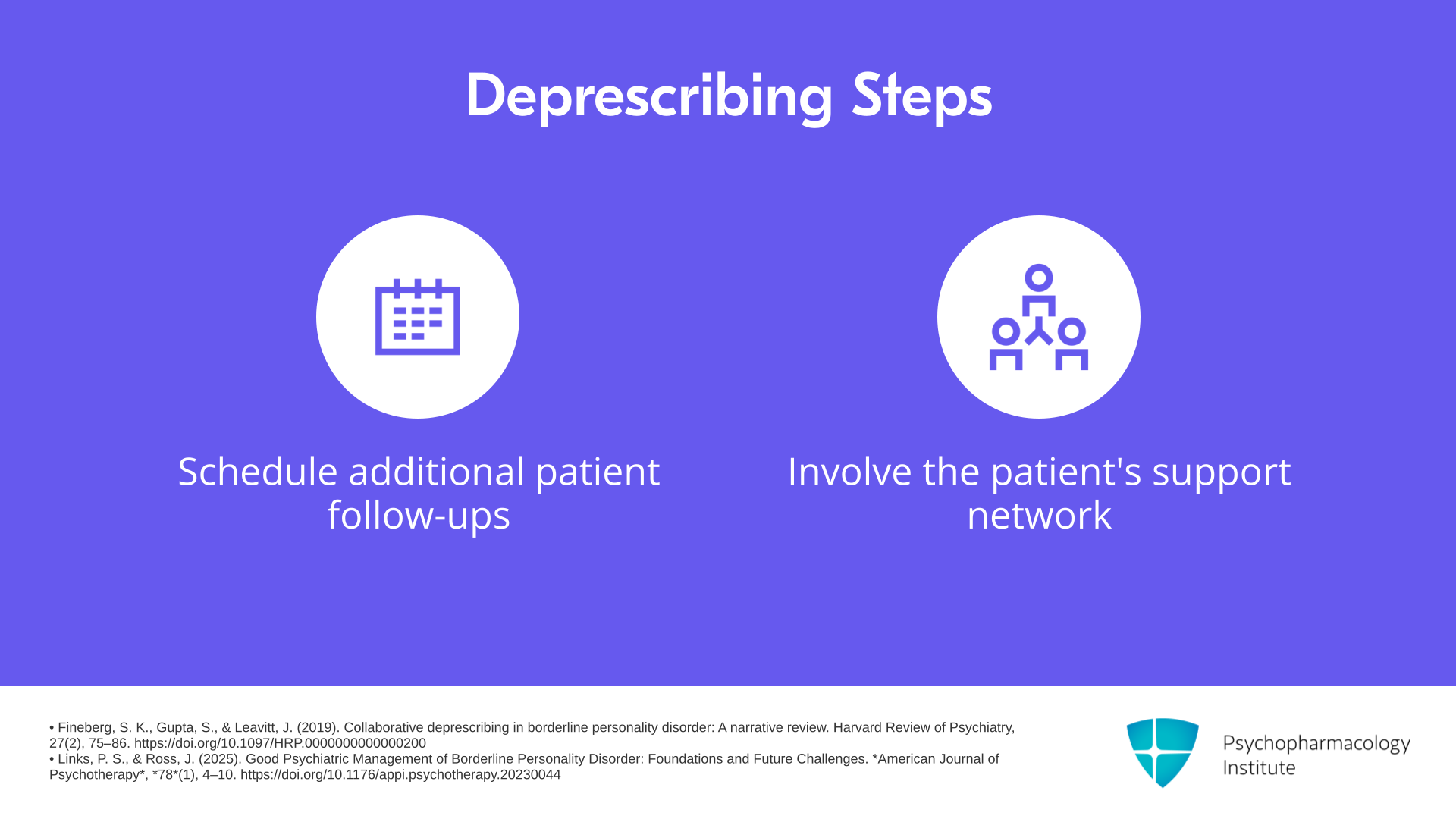
And it’s important to remember that deprescribing takes time. You may need to add extra contact with the patient to support them through the process. You need to be flexible about, is there anything that needs to be added to deal with the withdrawal symptoms? And you want to involve the others because this will be important to get the support of the patient’s important network.
References:
- Fineberg, S. K., Gupta, S., & Leavitt, J. (2019). Collaborative deprescribing in borderline personality disorder: A narrative review. Harvard Review of Psychiatry, 27(2), 75–86. https://doi.org/10.1097/HRP.0000000000000200
- Links, P. S., & Ross, J. (2025). Good Psychiatric Management of Borderline Personality Disorder: Foundations and Future Challenges. *American Journal of Psychotherapy*, *78*(1), 4–10. https://doi.org/10.1176/appi.psychotherapy.20230044
Free Files
Download PDF and other files
Success!
Check your inbox, we sent you all the materials there.
Slide 19 of 20
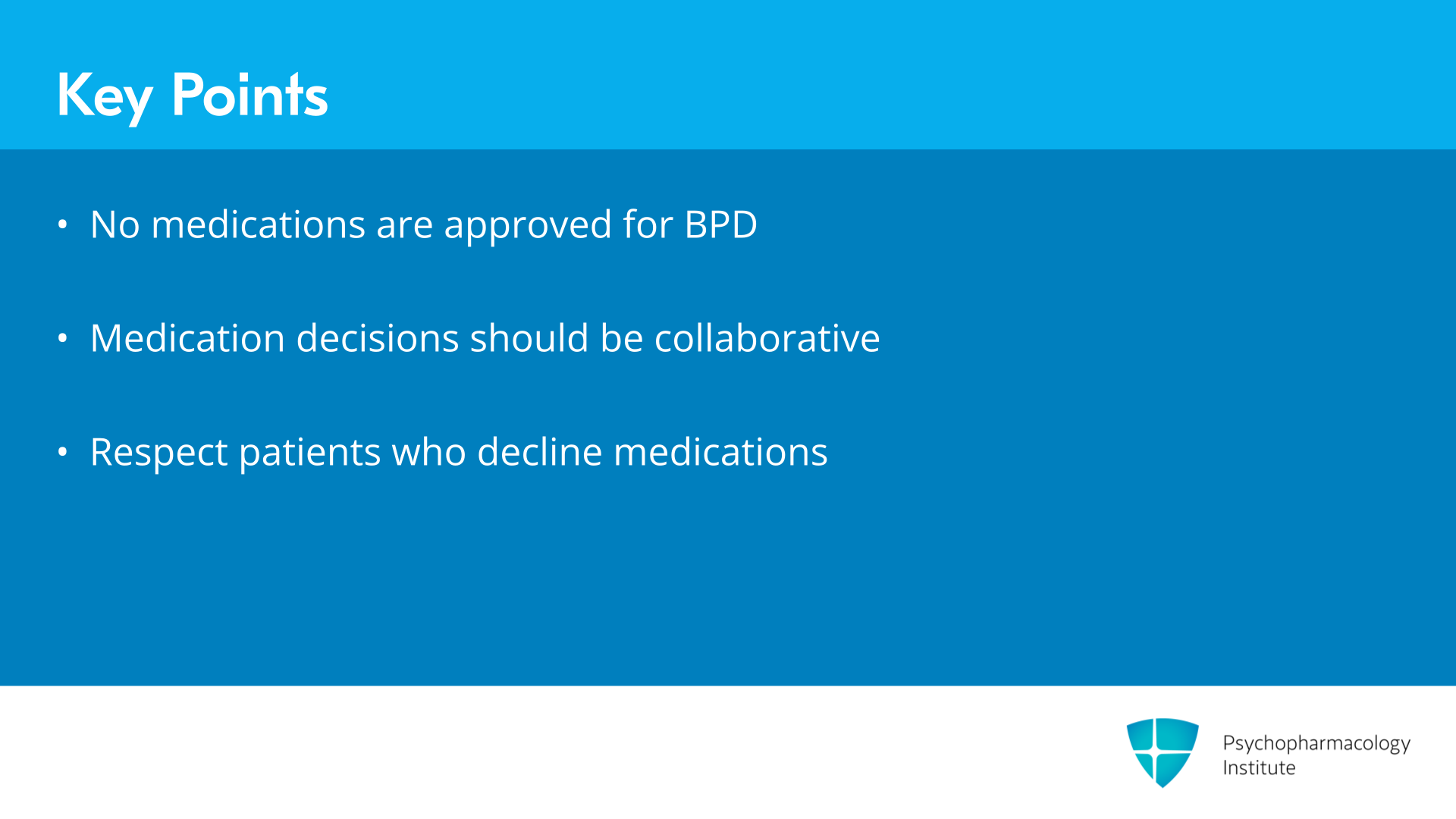
So the key points from this section are: No medication has received regulatory approval for treating borderline personality disorder per se. This work should be collaborative as patients are generally uninvolved in medication management. So you want to ensure their involvement. You want to support patients who strongly feel that medications are not necessary to their recovery.
Slide 20 of 20
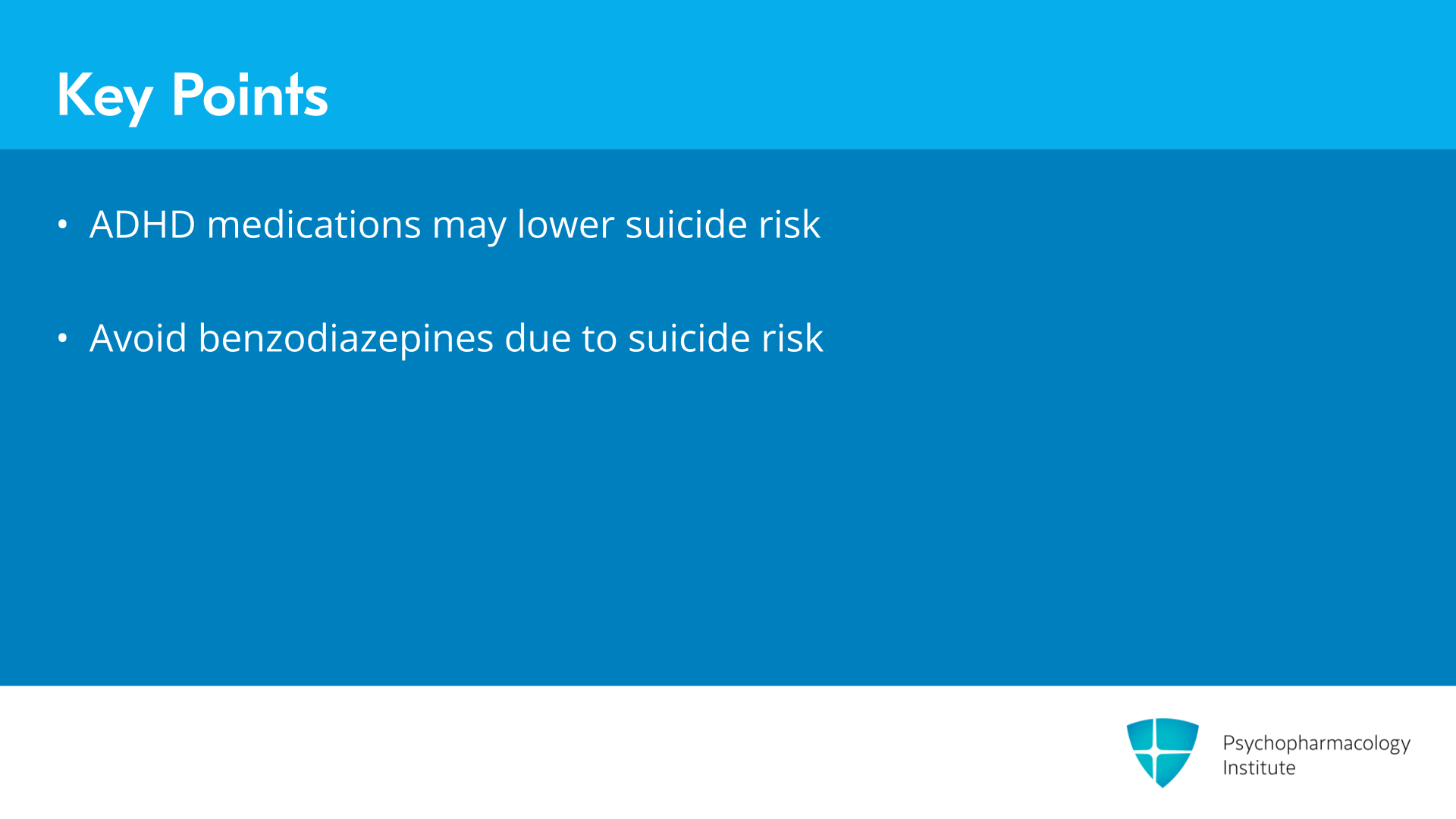
ADHD medications may have some role in decreasing the risk of attempted suicide and death by suicide and certainly this warrants further study. And benzodiazepines seem to be associated with increased death by suicide and should be avoided.
Free Files
Download PDF and other files
Success!
Check your inbox, we sent you all the materials there.
