Close Banner
Free Section  - Video Lectures

06. Diagnosis and Treatment of Cannabis Hyperemesis Syndrome (CHS)

Published on November 27, 2026 Certification expiration date: November 27, 2029
Joao P. De Aquino, M.D.

Joao P. De Aquino, M.D.

Assistant Professor of Psychiatry - Yale University School of Medicine

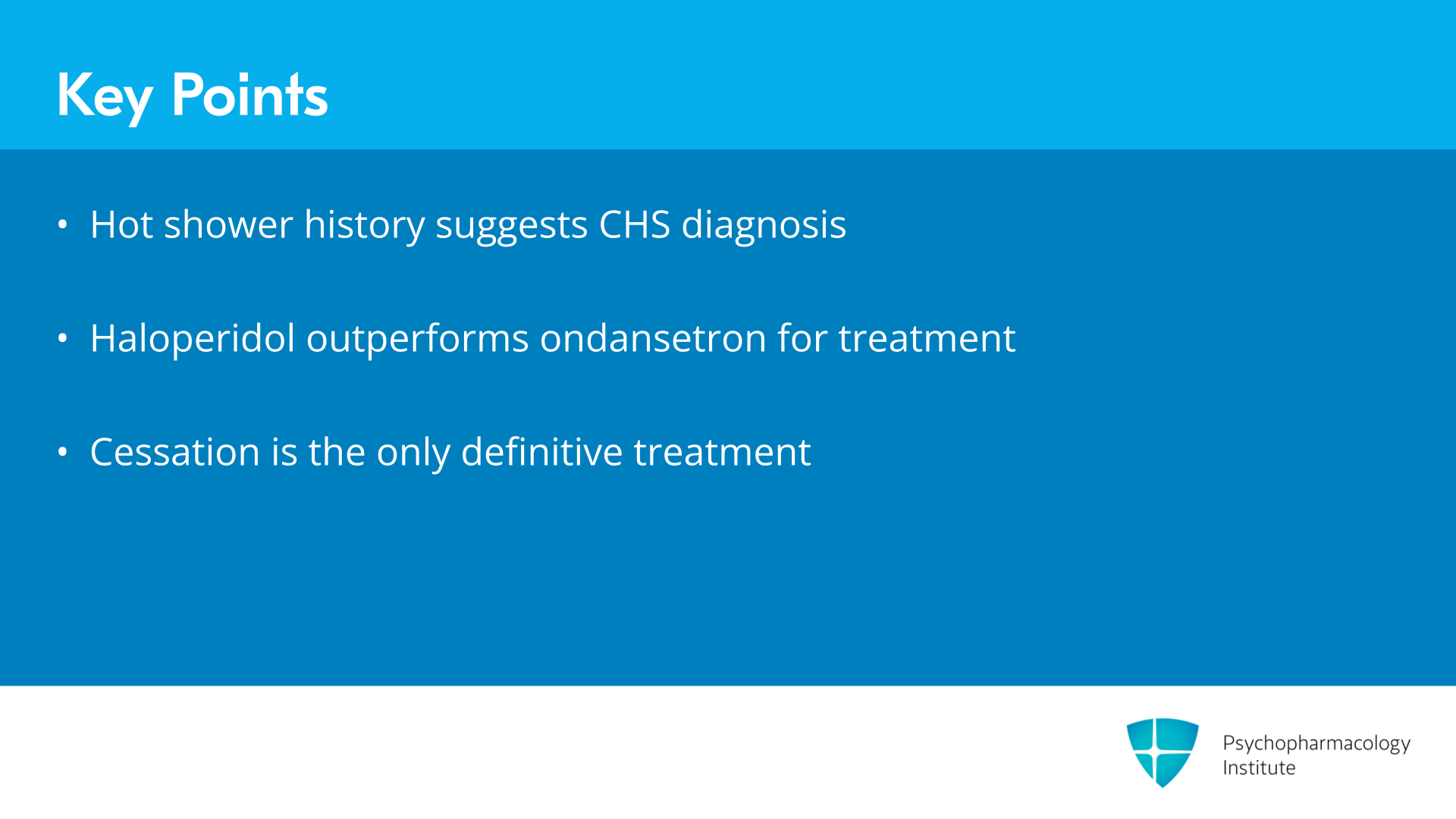
Key Points

  • When assessing a patient with heavy cannabis use and recurrent vomiting relieved by hot showers or baths, consider cannabis hyperemesis syndrome (CHS) at the top of the differential.
  • Haloperidol outperformed ondansetron for acute CHS in a small randomized trial. The favored dose is 0.05 mg/kg IV once, roughly 3.5 mg for a 70 kg adult.
  • Avoid opioids in CHS, even though they are often used in EDs for pain and nausea. They work briefly but leave the pathophysiology untouched and can reinforce repeat visits.

Free Downloads for Offline Access

  • Free Download PDF File
  • Free Download Audio File (MP3)
  • Free Download Video (MP4)

Slides and Transcript

Slide 1 of 14

I want to spend a few minutes on cannabis hyperemesis syndrome because in my experience it remains underdiagnosed, not because it’s rare but because clinicians don’t have a high index of suspicion for it.
References:
  • João P. De Aquino, M.D.

Slide 2 of 14

CHS is a cyclical vomiting syndrome that occurs in people who use cannabis heavily for a long time. The classic presentation is repeated episodes of severe nausea, retching and vomiting often leading to ED visits with complete resolution of symptoms between episodes and relief of acute symptoms with hot showers or baths.
References:
  • Connor, J. P., Stjepanović, D., Le Foll, B., et al. (2021). Cannabis use and cannabis use disorder. Nature Reviews Disease Primers, 7, 16. https://doi.org/10.1038/s41572-021-00247-4
  • Sorensen, C. J., DeSanto, K., Borgelt, L., Phillips, K. T., & Monte, A. A. (2017). Cannabinoid hyperemesis syndrome: Diagnosis, pathophysiology, and treatment-a systematic review. Journal of Medical Toxicology, 13(1), 71-87. https://doi.org/10.1007/s13181-016-0595-z
Free Files
Success!
Check your inbox, we sent you all the materials there.

Slide 3 of 14

That last point, the hot shower compulsion, is pathognomonic. Patients will describe spending hours in a scalding shower during acute episodes because heat relieves their nausea. If you hear that history in the context of heavy cannabis use, CHS should be at the top of your differential.
References:
  • Connor, J. P., Stjepanović, D., Le Foll, B., et al. (2021). Cannabis use and cannabis use disorder. Nature Reviews Disease Primers, 7, 16. https://doi.org/10.1038/s41572-021-00247-4
  • Sorensen, C. J., DeSanto, K., Borgelt, L., Phillips, K. T., & Monte, A. A. (2017). Cannabinoid hyperemesis syndrome: Diagnosis, pathophysiology, and treatment-a systematic review. Journal of Medical Toxicology, 13(1), 71-87. https://doi.org/10.1007/s13181-016-0595-z

Slide 4 of 14

Despite a very distinctive presentation, patients with CHS are often misdiagnosed for years. Their cycle through Gastroenterology – get worked up for cyclic vomiting syndrome, gastroparesis, cyclic vomiting disorder, sometimes getting extensive and expensive testing before someone asks whether they use cannabis heavily.
References:
  • Loganathan, P., Gajendran, M., & Goyal, H. (2024). A comprehensive review and update on cannabis hyperemesis syndrome. Pharmaceuticals (Basel, Switzerland), 17(11), 1549. https://doi.org/10.3390/ph17111549
Free Files
Success!
Check your inbox, we sent you all the materials there.

Slide 5 of 14

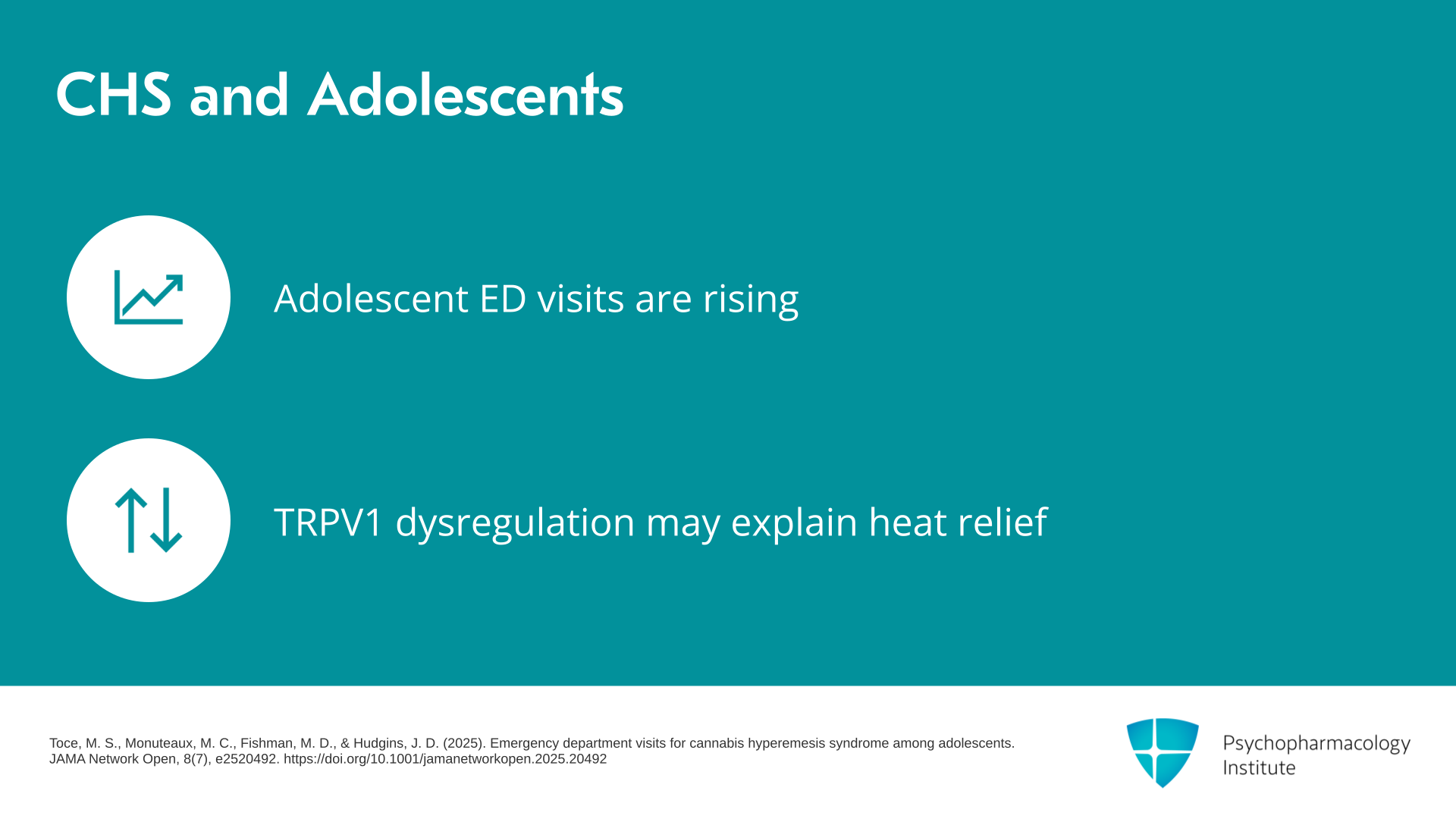
Adolescent ED presentations are increasing as Toce and colleagues documented in JAMA Network Open in 2025. As potency rises and more young people use daily, CHS is appearing in younger and younger patients. The pathophysiology is not fully characterized. The current leading hypothesis involved TRPV1 receptor dysregulation. TRPV1 is a heat-sensitive receptor which is thought to explain why the heat provides relief.
References:
  • Toce, M. S., Monuteaux, M. C., Fishman, M. D., & Hudgins, J. D. (2025). Emergency department visits for cannabis hyperemesis syndrome among adolescents. JAMA Network Open, 8(7), e2520492. https://doi.org/10.1001/jamanetworkopen.2025.20492

Slide 6 of 14

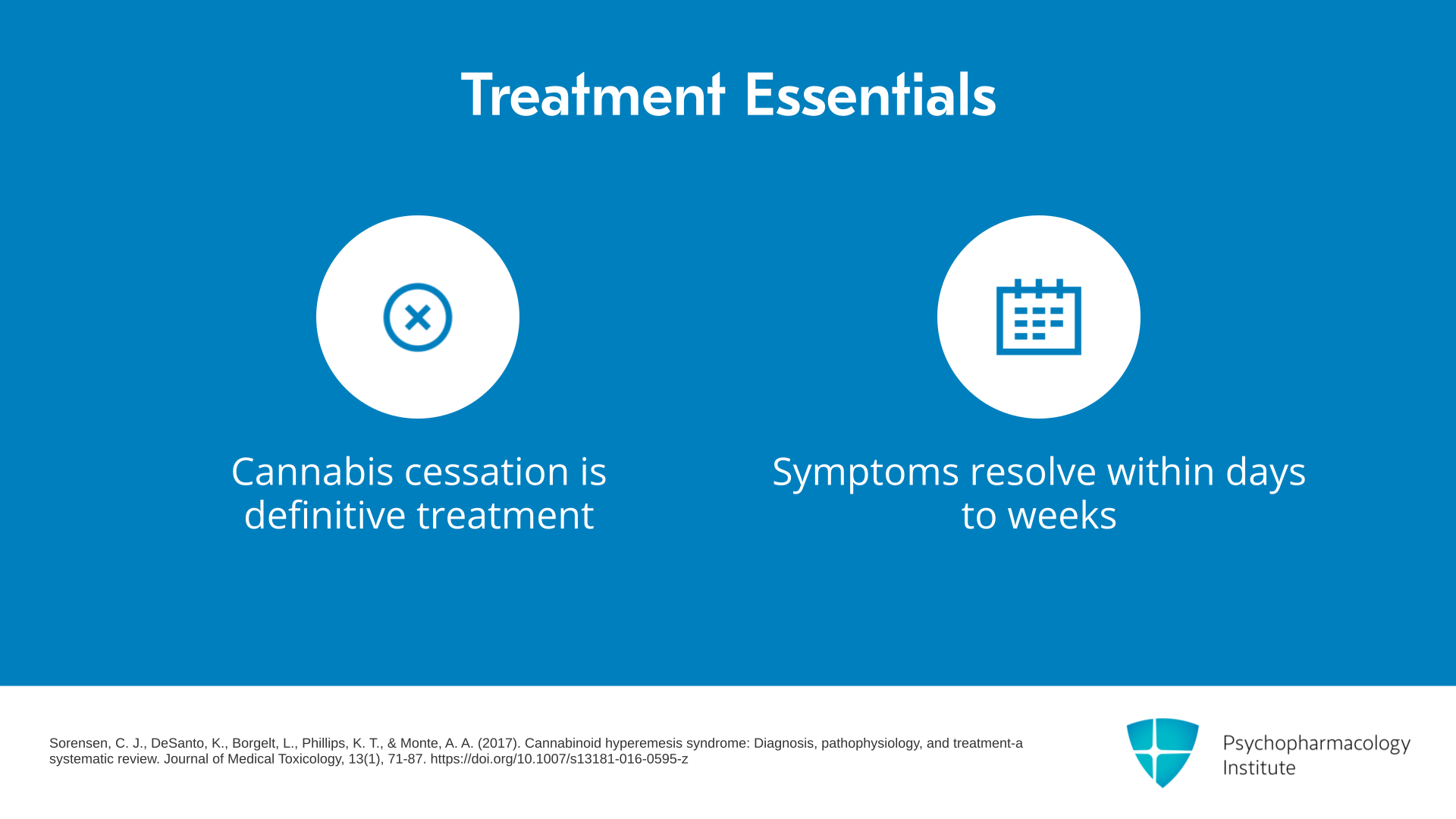
And the most important clinical point, the definitive treatment is cannabis cessation, full stop. Symptoms resolve within days to weeks after stopping. There is no pharmacological treatment that is definitive. Managing the acute episode without addressing the cause leads to recurrence.
References:
  • Sorensen, C. J., DeSanto, K., Borgelt, L., Phillips, K. T., & Monte, A. A. (2017). Cannabinoid hyperemesis syndrome: Diagnosis, pathophysiology, and treatment-a systematic review. Journal of Medical Toxicology, 13(1), 71-87. https://doi.org/10.1007/s13181-016-0595-z
Free Files
Success!
Check your inbox, we sent you all the materials there.

Slide 7 of 14

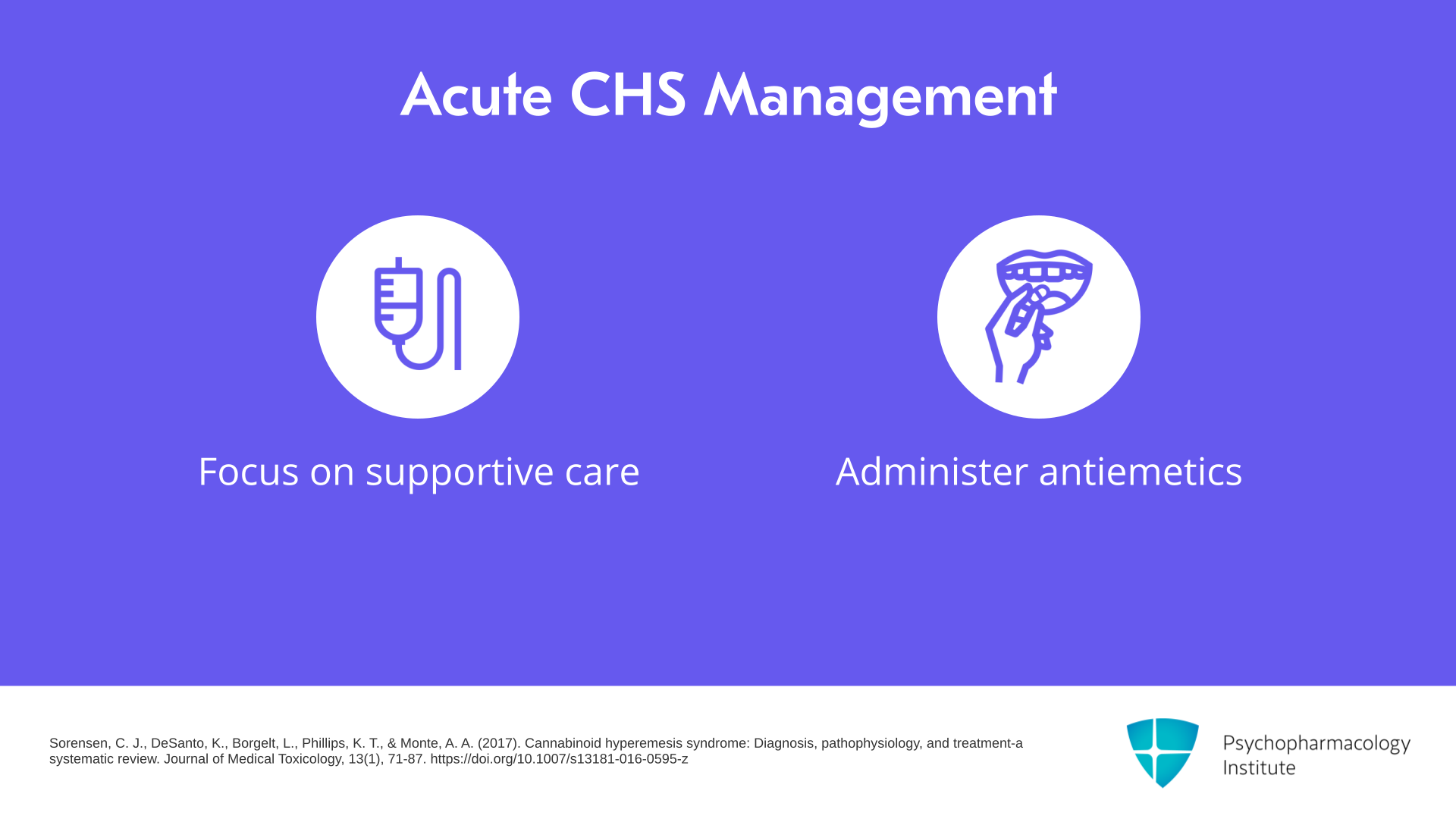
Let me be practical about acute management. In the emergency department or inpatient setting, management of CHS centers on supportive care, IV hydration, electrolyte repletion, and antiemetics.
References:
  • Sorensen, C. J., DeSanto, K., Borgelt, L., Phillips, K. T., & Monte, A. A. (2017). Cannabinoid hyperemesis syndrome: Diagnosis, pathophysiology, and treatment-a systematic review. Journal of Medical Toxicology, 13(1), 71-87. https://doi.org/10.1007/s13181-016-0595-z

Slide 8 of 14

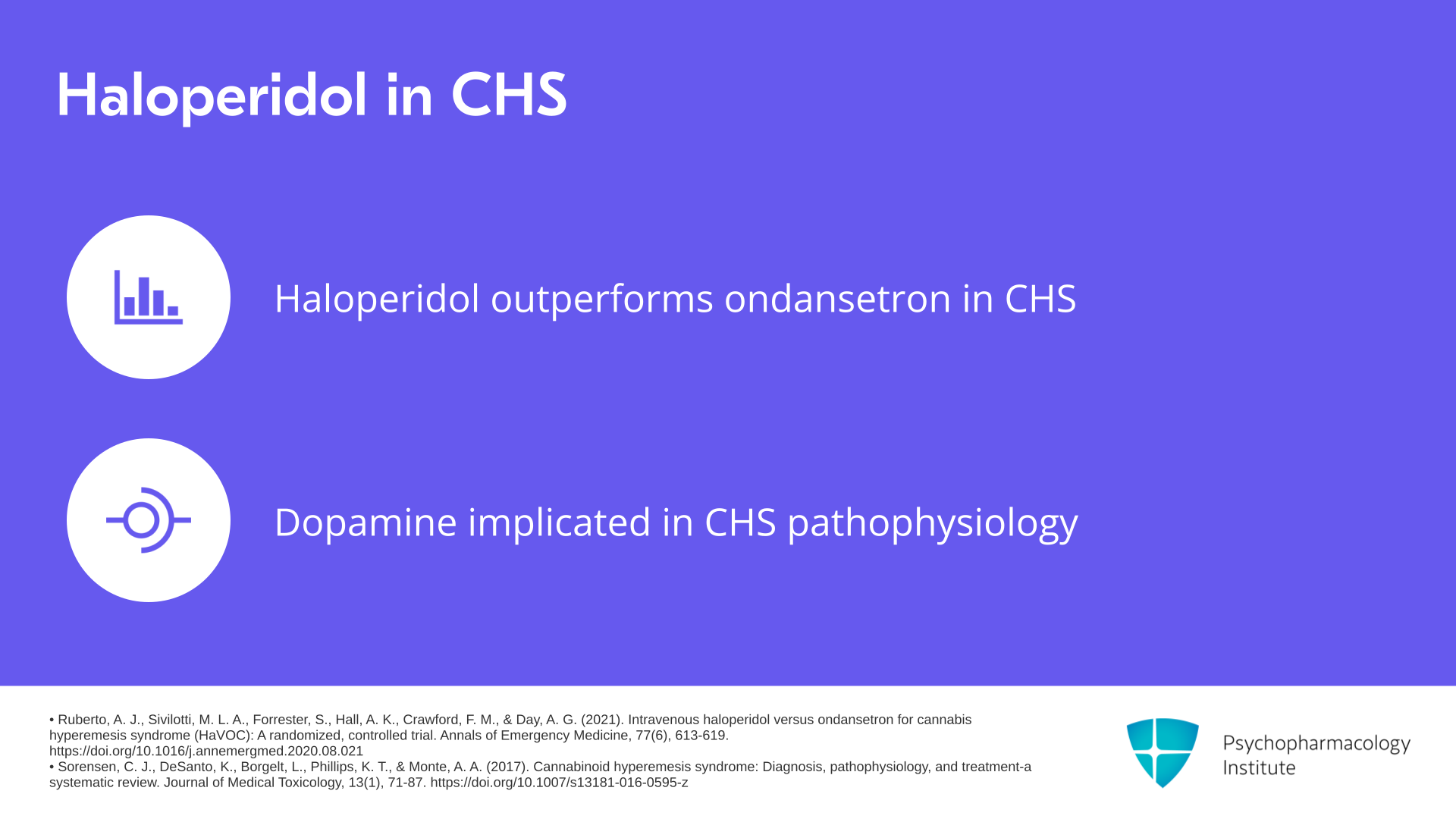
Here’s a pearl that surprises many emergency physicians. Haldol or haloperidol appears to be more effective than ondansetron in CHS. This is a pattern that’s emerged in case series and a small clinical trial. The mechanism likely involves dopamine which is implicated in the hypothesized pathophysiology. Consider recommending haloperidol over serotonin-based antiemetics for this specific diagnosis. The dose is 0.05 mg/kg intravenously one time, roughly 3.5 mg for a 70 kg adult.
References:
  • Ruberto, A. J., Sivilotti, M. L. A., Forrester, S., Hall, A. K., Crawford, F. M., & Day, A. G. (2021). Intravenous haloperidol versus ondansetron for cannabis hyperemesis syndrome (HaVOC): A randomized, controlled trial. Annals of Emergency Medicine, 77(6), 613-619. https://doi.org/10.1016/j.annemergmed.2020.08.021
  • Sorensen, C. J., DeSanto, K., Borgelt, L., Phillips, K. T., & Monte, A. A. (2017). Cannabinoid hyperemesis syndrome: Diagnosis, pathophysiology, and treatment-a systematic review. Journal of Medical Toxicology, 13(1), 71-87. https://doi.org/10.1007/s13181-016-0595-z
Free Files
Success!
Check your inbox, we sent you all the materials there.

Slide 9 of 14

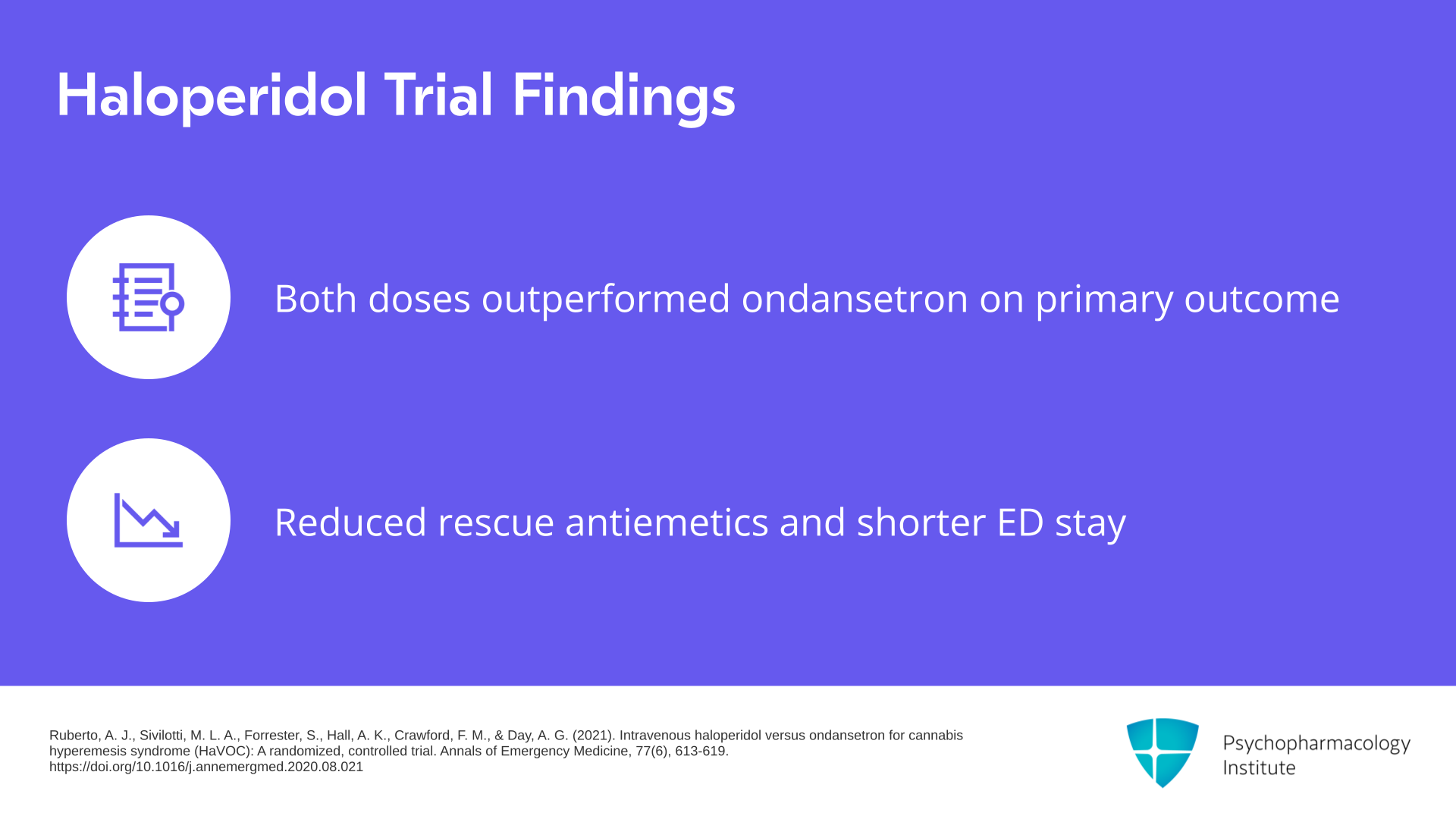
The trial used a nested randomization to either 0.05 or 0.1 mg/kg and both beat ondansetron 8 mg IV on the primary outcome. But the authors favor the lower dose for the reason below. Case reports describe intramuscular and oral use but the controlled evidence is for IV haloperidol only. It’s worth knowing that IV administration of haloperidol is off-label in the United States. The primary outcome was reduction in abdominal pain and nausea on a 10 cm visual analog scale at two hours. Haloperidol at either dose was superior, required less rescue antiemetics and shortened time to ED departure.
References:
  • Ruberto, A. J., Sivilotti, M. L. A., Forrester, S., Hall, A. K., Crawford, F. M., & Day, A. G. (2021). Intravenous haloperidol versus ondansetron for cannabis hyperemesis syndrome (HaVOC): A randomized, controlled trial. Annals of Emergency Medicine, 77(6), 613-619. https://doi.org/10.1016/j.annemergmed.2020.08.021

Slide 10 of 14

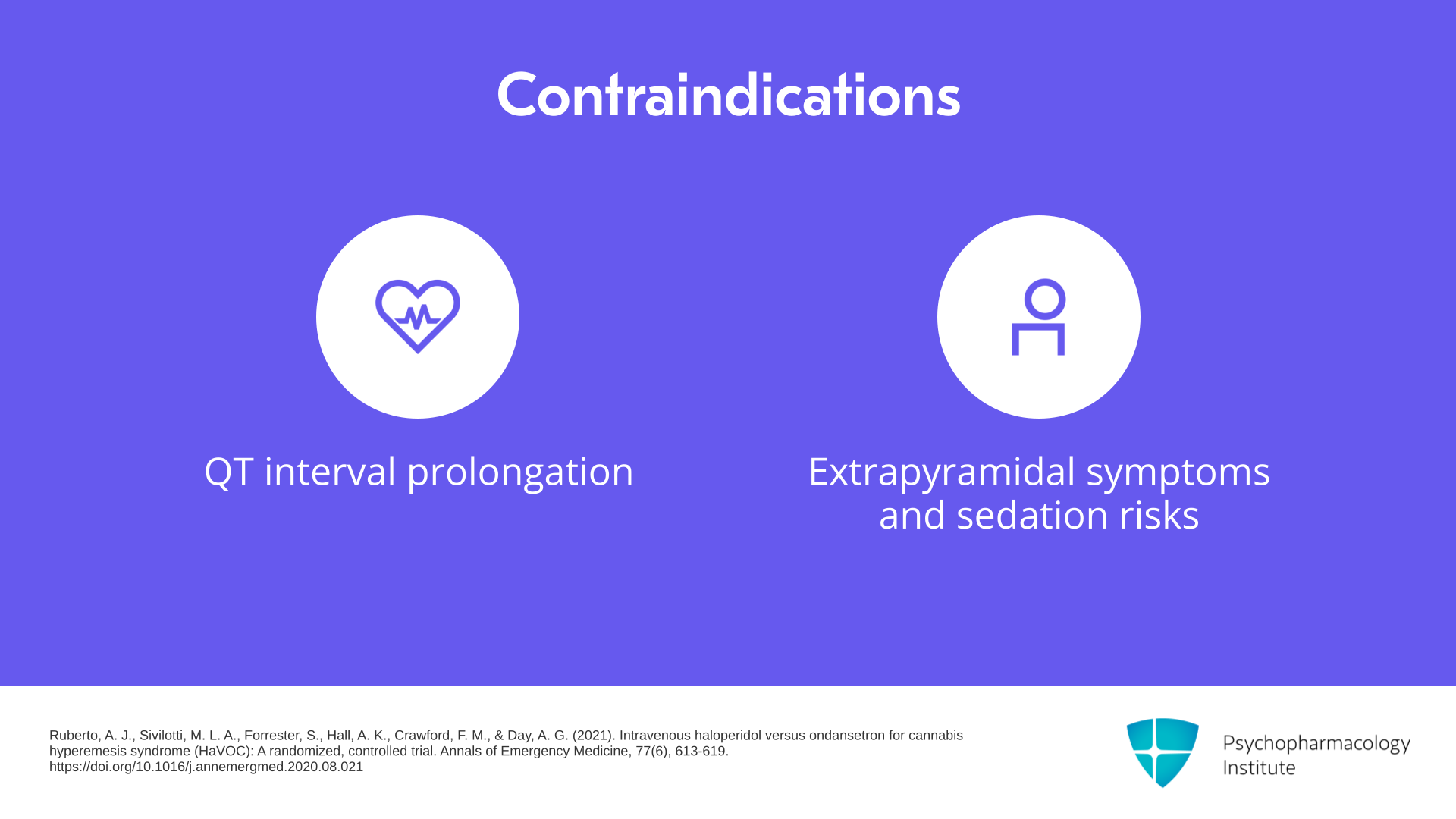
Contraindications are QT interval prolongation, extrapyramidal symptoms such as dystonia or conditions that make patients prone to extrapyramidal symptoms and also additive sedation.
References:
  • Ruberto, A. J., Sivilotti, M. L. A., Forrester, S., Hall, A. K., Crawford, F. M., & Day, A. G. (2021). Intravenous haloperidol versus ondansetron for cannabis hyperemesis syndrome (HaVOC): A randomized, controlled trial. Annals of Emergency Medicine, 77(6), 613-619. https://doi.org/10.1016/j.annemergmed.2020.08.021
Free Files
Success!
Check your inbox, we sent you all the materials there.

Slide 11 of 14

Topical capsaicin cream applied to the abdomen is an emerging treatment with credible mechanistic rationale. The evidence base is small but it’s a low-risk intervention worth knowing about.
References:
  • Sorensen, C. J., DeSanto, K., Borgelt, L., Phillips, K. T., & Monte, A. A. (2017). Cannabinoid hyperemesis syndrome: Diagnosis, pathophysiology, and treatment-a systematic review. Journal of Medical Toxicology, 13(1), 71-87. https://doi.org/10.1007/s13181-016-0595-z

Slide 12 of 14

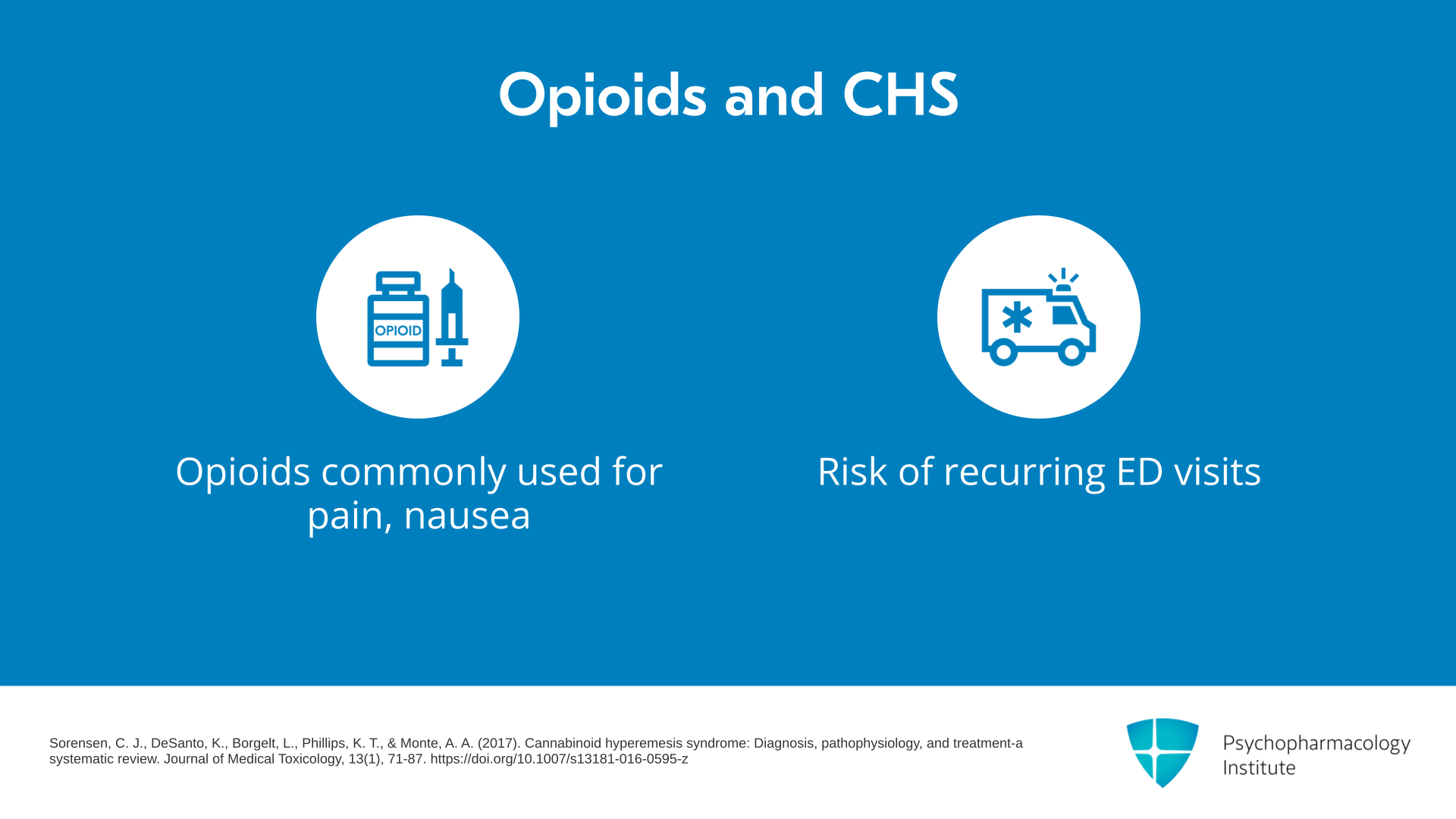
Now, opioids. In many EDs, patients with CHS receive opioids for pain and nausea. I understand why these patients are in distress and the opioids work in the short term, but opioids do not address the underlying pathophysiology of CHS and there’s a risk of reinforcing returning ED visits without solving the problem.
References:
  • Sorensen, C. J., DeSanto, K., Borgelt, L., Phillips, K. T., & Monte, A. A. (2017). Cannabinoid hyperemesis syndrome: Diagnosis, pathophysiology, and treatment-a systematic review. Journal of Medical Toxicology, 13(1), 71-87. https://doi.org/10.1007/s13181-016-0595-z
Free Files
Success!
Check your inbox, we sent you all the materials there.

Slide 13 of 14

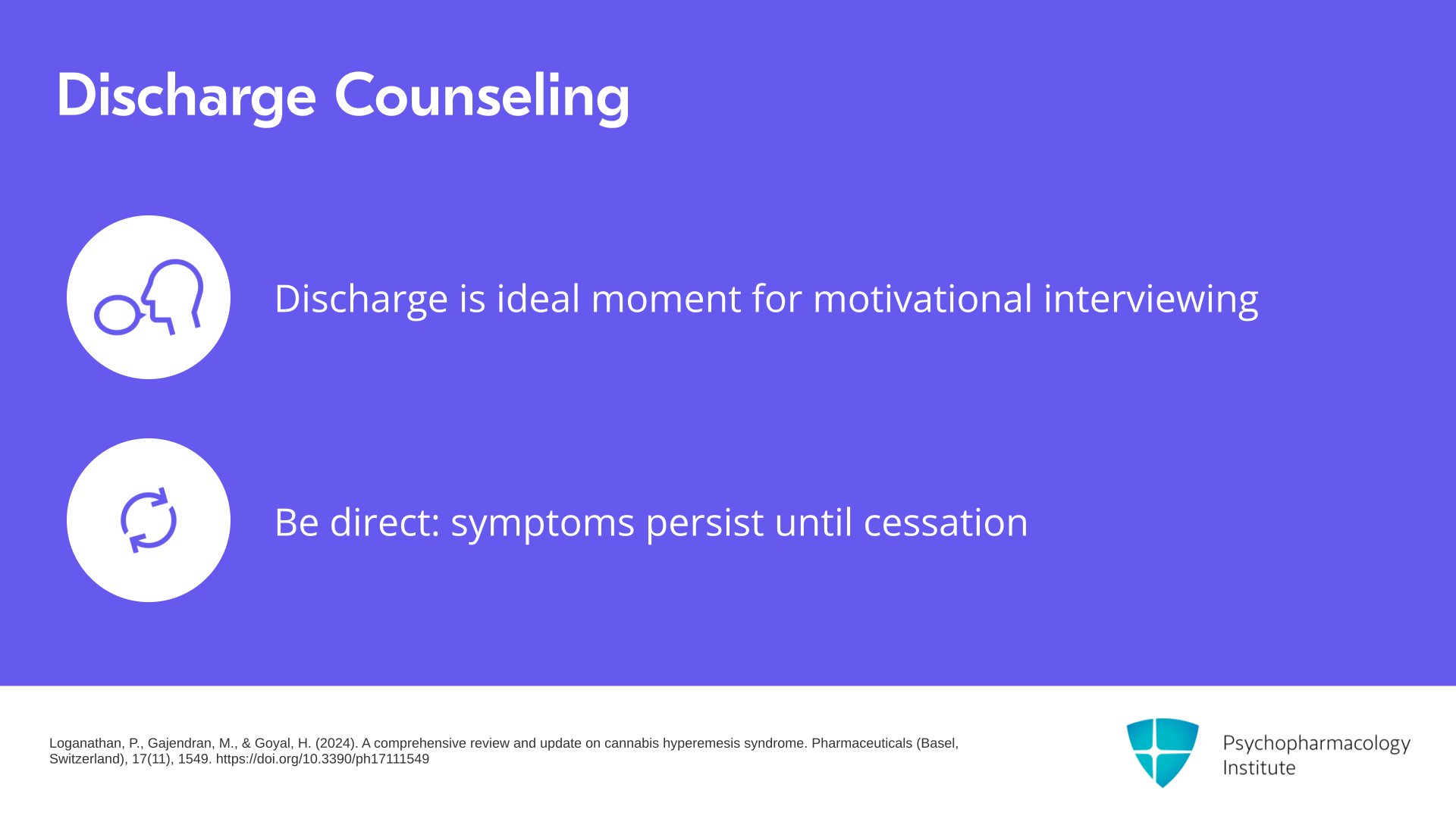
The most important intervention at discharge, more important than the antiemetic agent, is cessation of cannabis use. This is actually an ideal moment for motivational interviewing. The patient is in distress. They have a concrete visible complication of their cannabis use. They are more likely to be receptive to a conversation about stopping than at any other time. If addiction consultation is available, please request it. And be direct at discharge. The symptoms will not go away permanently until you stop using cannabis. Every time you use, you risk another episode like this one. Recurrence is the rule unless the patient stops.
References:
  • Loganathan, P., Gajendran, M., & Goyal, H. (2024). A comprehensive review and update on cannabis hyperemesis syndrome. Pharmaceuticals (Basel, Switzerland), 17(11), 1549. https://doi.org/10.3390/ph17111549

Slide 14 of 14

Some key points to highlight in this section. The hot shower history in a patient who uses cannabis heavily helps the CHS diagnosis. Ask about it before you order the gastroenterology workup. Haloperidol outperformed ondansetron in a randomized trial, 0.05 mg/kg intravenously after correcting electrolytes and checking a QT interval. Cessation is the only definitive treatment. And the ED visit can be a useful motivational interviewing moment you will get with your patient.
Free Files
Success!
Check your inbox, we sent you all the materials there.

Learning Objectives

After completing this activity, the learner will be able to:

  1. Apply a two-step screen and DSM-5 severity criteria to identify cannabis use disorder and match patients to an appropriate level of care.
  2. Describe the neurobiology and expected timeline of cannabis withdrawal, and use it to counsel patients through early abstinence.
  3. Select psychosocial treatments and off-label, symptom-targeted medications for cannabis use disorder, and manage the acute presentation of cannabis hyperemesis syndrome.

Activity

Original Release Date: November 27, 2026
Expiration Date: November 27, 2029
Expert: Joao P. De Aquino, M.D.
Medical Editor: Tomás Abudarham, M.D.

Relevant Financial Disclosures:

Joao P. De Aquino, M.D. declares the following interests:
– National Institutes of Health (NIDA, NIAAA, NCCIH): Research funding
– Doris Duke Charitable Foundation: Research funding
– Robert E. Leet and Clara Guthrie Patterson Trust: Research funding
– Jazz Pharmaceuticals: Study medications (investigator-initiated clinical trials)
– Ananda Scientific: Study medications (investigator-initiated clinical trials)
– Boehringer Ingelheim: Compensated consultancy

All the relevant financial relationships listed above have been mitigated by Medical Academy and the Psychopharmacology Institute.

None of the other faculty, planners, and reviewers for this educational activity has relevant financial relationships to disclose during the last 24 months with ineligible companies whose primary business is producing, marketing, selling, re-selling, or distributing healthcare products used by or on patients.

Instructions for Participation and Credit

Participants must complete the activity online within the valid credit period noted above.
Follow these steps to earn CME credit:

  1. View the required educational content provided on this course page.
  2. Complete the Post-Activity Evaluation to provide the necessary feedback for continuing accreditation purposes and for the development of future activities. NOTE: Completing the Post Activity Evaluation after the quiz is required to receive the earned credit.
  3. Download your certificate.

Please note that CME and SA CME certificates completion dates are recorded using UTC. Depending on your local time zone, activities completed later in the day may appear on your certificate with the following calendar date.

Contact Information: For questions regarding the content or access to this activity, contact us at support@psychopharmacologyinstitute.com

Accreditation

Physicians

Accreditation Statement:
This activity has been planned and implemented in accordance with the accreditation requirements and policies of the Accreditation Council for Continuing Medical Education through the joint providership of Medical Academy LLC and the Psychopharmacology Institute. Medical Academy is accredited by the ACCME to provide continuing medical education for physicians.

Credit Designation Statement:
Medical Academy designates this enduring activity for a maximum of 1.25 AMA PRA Category 1 credit(s)™. Physicians should claim only the credit commensurate with the extent of their participation in the activity.

Nursing professionals — The ANCC accepts AMA PRA Category 1 Credit(s)™ as Contact Hours, under this calculation: 1 CME = 1 Contact Hour. All of our content is psychopharmacology, so the pharmacology hours shown on your certificate match the credits awarded for that activity. Your certificate states them on their own line, separately from the credit designation statement. This applies to APRN pharmacology renewal as well. Boards of nursing define pharmacology CE in their own way, so please confirm with your board that this is the documentation they expect.

Physician assistants — The NCCPA accepts AMA PRA Category 1 Credit™ from providers accredited by the ACCME toward PA certification maintenance. Requirements are set by the NCCPA, so please confirm with them what your current cycle requires.

Physicians outside the United States — AMA PRA Category 1 Credit™ may be awarded to physicians regardless of where they are licensed. Physicians interested in converting AMA PRA Category 1 Credit™ to UEMS-European Accreditation Council for Continuing Medical Education CME credits (ECMEC®s) should contact the UEMS at mutualrecognition@uems.eu. Acceptance toward a national continuing education requirement is determined by each country’s own authority.

Artificial Intelligence (AI) Use Disclosure

Artificial intelligence (AI) tools may have been used in limited stages of developing this activity (e.g., drafting or language refinement). The specific tool, version, and date of use are documented internally. AI is used solely as an editorial support mechanism and does not replace human expertise. AI does not determine clinical recommendations. All content is reviewed, verified, and approved by the listed experts and medical editors, and reflects independent human clinical judgment consistent with ACCME Standards for Integrity and Independence in Accredited Continuing Education.


Free Files
Success!
Check your inbox, we sent you all the materials there.
Continue in the website
Instant access modal

Become a Bronze, Silver, Gold, Bronze extended, Silver extended or Gold extended Member.

2026–27 Psychopharmacology CME Program

Unlock up to 155 CME Credits, including 40 SA CME Credits.