Close Banner
Free Section  - Video Lectures

07. Antidepressants for Insomnia: Doxepin, Trazodone, and Mirtazapine

Published on August 5, 2026 Certification expiration date: August 5, 2029

Bhanu Prakash Kolla, M.D.

Professor of Psychiatry - Mayo Clinic

Key Points

  • Doxepin is FDA-approved as a hypnotic at 3 to 6 mg, acting primarily as an antihistamine. Anticholinergic effects emerge at antidepressant levels of 75 to 300 mg.
  • Trazodone is widely used off-label for insomnia. Watch for priapism: roughly 1 in 10,000 prescriptions results in a case.
  • Consider mirtazapine when insomnia coexists with depression, poor appetite, frailty or unwanted weight loss.

Free Downloads for Offline Access

  • Free Download PDF File
  • Free Download Audio File (MP3)
  • Free Download Video (MP4)

Slides and Transcript

Slide 1 of 18

In this section, we will talk about antidepressants for sleep with an emphasis on doxepin, trazodone and mirtazapine.

Slide 2 of 18

Doxepin is a tricyclic antidepressant and also a potent antihistamine. It has been used as an antidepressant at doses of 75 to 300 mg. Doxepin has FDA approval to be used as a hypnotic at doses of 3 to 6 mg and at this dose it works exclusively as an antihistaminergic agent. Most of the anticholinergic side effects that occur at higher doses do not occur at these low doses.
References:
  • Almasi, A., Patel, P., & Meza, C. E. (2024). Doxepin. In *StatPearls* [Internet]. StatPearls Publishing. https://www.ncbi.nlm.nih.gov/books/NBK542306/
  • Krystal, A. D., Lankford, A., Durrence, H. H., Ludington, E., Jochelson, P., Rogowski, R., & Roth, T. (2011). Efficacy and safety of doxepin 3 and 6 mg in a 35-day sleep laboratory trial in adults with chronic primary insomnia. Sleep, 34(10), 1433–1442. https://doi.org/10.5665/SLEEP.1294
Free Files
Success!
Check your inbox, we sent you all the materials there.

Slide 3 of 18

At least six randomized controlled trials have examined the efficacy of low-dose doxepin on sleep parameters. The studies report improvements in multiple sleep measures including a short latency to persistent sleep, increased total sleep time and sleep efficiency. Another study of 47 patients examined doxepin at doses of 25 to 50 mg and this showed an increase in total sleep time of about 50 minutes and improvements in sleep efficiency by about 10%. These results persisted for four weeks of treatment.
References:
  • Yeung, W. F., Chung, K. F., Yung, K. P., & Ng, T. H. (2015). Doxepin for insomnia: a systematic review of randomized placebo-controlled trials. *Sleep Medicine Reviews*, *19*, 75–83. https://doi.org/10.1016/j.smrv.2014.06.001
  • Hajak, G., Rodenbeck, A., Voderholzer, U., Riemann, D., Cohrs, S., Hohagen, F., Berger, M., & Rüther, E. (2001). Doxepin in the treatment of primary insomnia: A placebo-controlled, double-blind, polysomnographic study. The Journal of Clinical Psychiatry, 62(6), 453–463. https://doi.org/10.4088/JCP.v62n0609

Slide 4 of 18

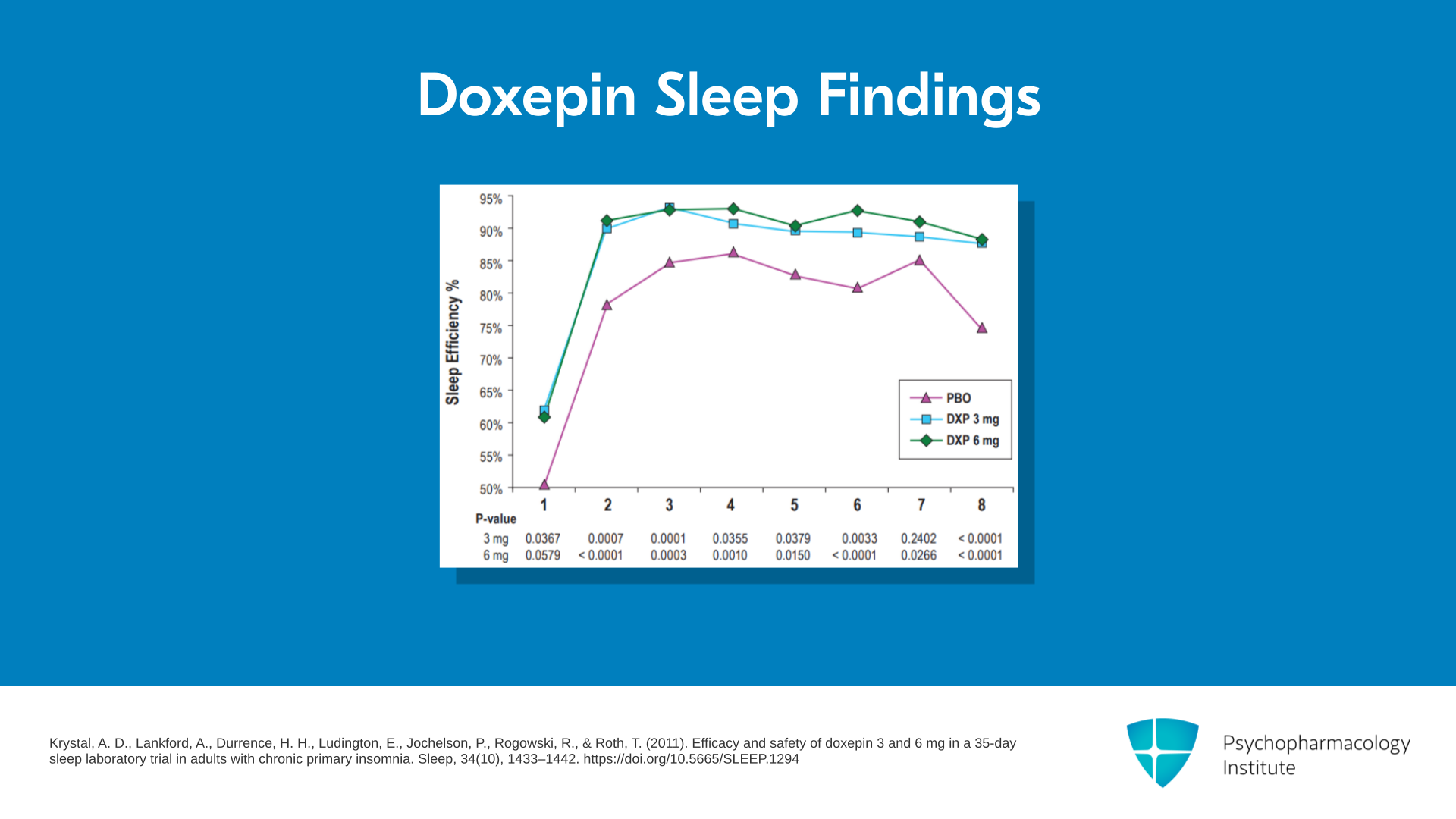
In this study comparing both 3 and 6 mg of doxepin to placebo, you can see very quickly there is an improvement in sleep efficiency, which lasts over the week that the patients were examined.
References:
  • Krystal, A. D., Lankford, A., Durrence, H. H., Ludington, E., Jochelson, P., Rogowski, R., & Roth, T. (2011). Efficacy and safety of doxepin 3 and 6 mg in a 35-day sleep laboratory trial in adults with chronic primary insomnia. Sleep, 34(10), 1433–1442. https://doi.org/10.5665/SLEEP.1294
Free Files
Success!
Check your inbox, we sent you all the materials there.

Slide 5 of 18

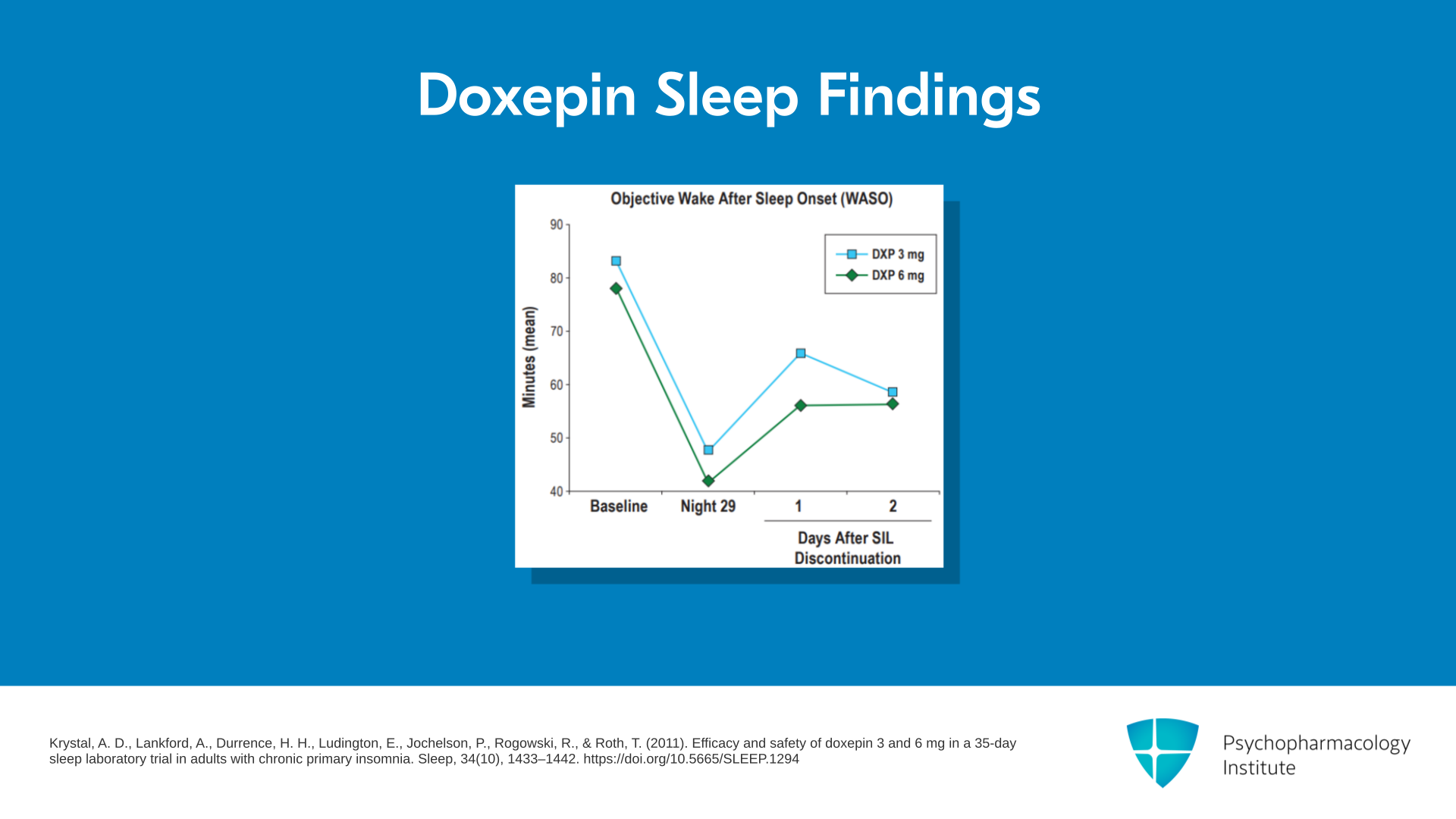
Doxepin also at 3 and 6 mg significantly reduced the wake after sleep onset which again persisted over 28 days, 4 weeks, and the sleep deteriorated with an increase in wake after sleep onset within 1 to 2 days of discontinuation of the medication.
References:
  • Krystal, A. D., Lankford, A., Durrence, H. H., Ludington, E., Jochelson, P., Rogowski, R., & Roth, T. (2011). Efficacy and safety of doxepin 3 and 6 mg in a 35-day sleep laboratory trial in adults with chronic primary insomnia. Sleep, 34(10), 1433–1442. https://doi.org/10.5665/SLEEP.1294

Slide 6 of 18

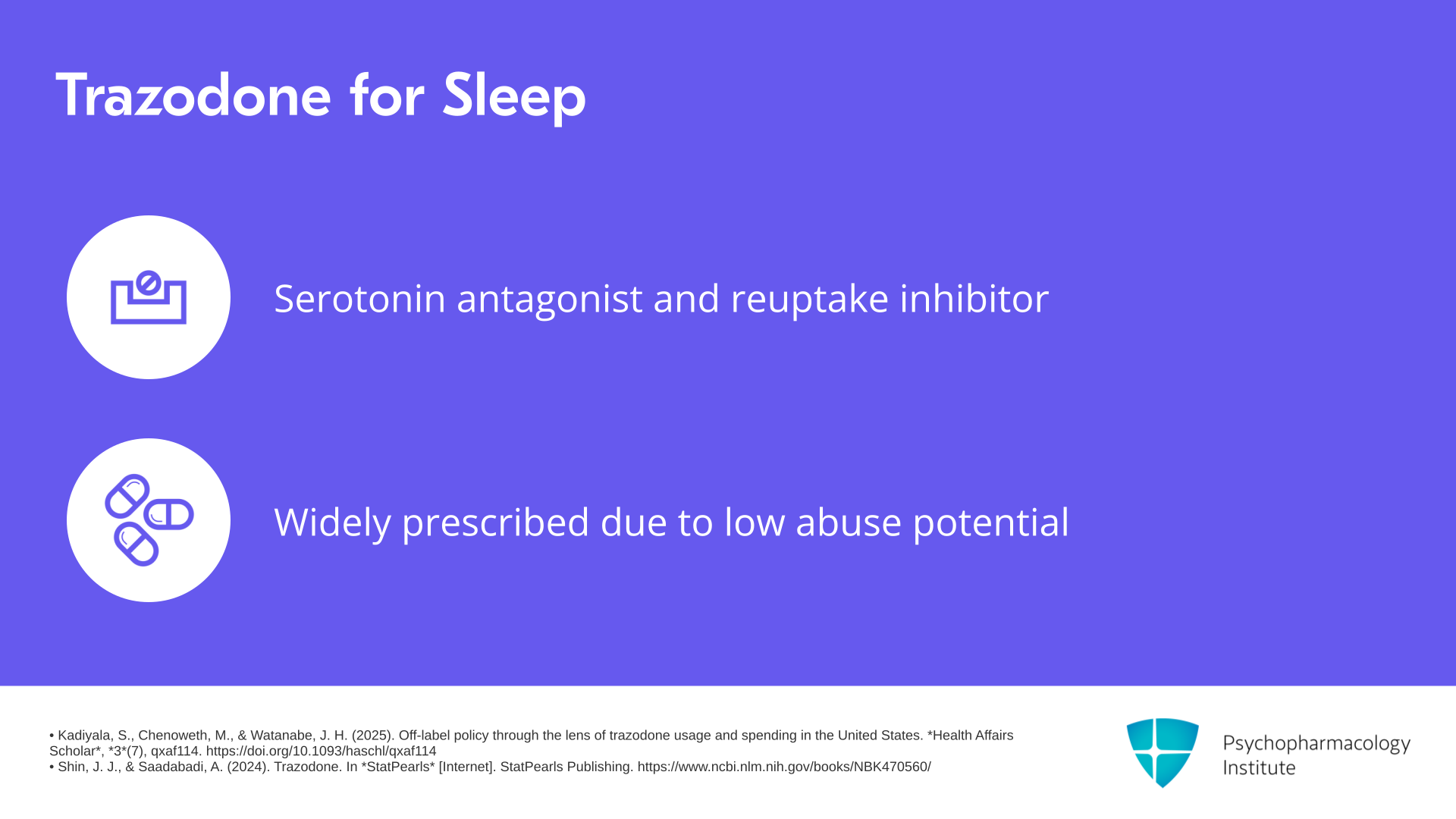
The next antidepressant that is commonly used for sleep is trazodone. Trazodone is a serotonin antagonist and reuptake inhibitor drug. It also works as an alpha-1 and alpha-2 adrenergic receptor and 5-HT2A receptor as well as histamine H1 receptor antagonist. It is not FDA approved for insomnia. In addition, both the American Academy of Sleep Medicine and the Veterans Affairs and Department of Defense Clinical Practice Guidelines explicitly advise against trazodone use for chronic insomnia disorder. Despite this, trazodone is one of the most widely prescribed sleep aids in the United States. This likely reflects its perceived low abuse potential and overall favorable side effect profile.
References:
  • Kadiyala, S., Chenoweth, M., & Watanabe, J. H. (2025). Off-label policy through the lens of trazodone usage and spending in the United States. *Health Affairs Scholar*, *3*(7), qxaf114. https://doi.org/10.1093/haschl/qxaf114
  • Shin, J. J., & Saadabadi, A. (2024). Trazodone. In *StatPearls* [Internet]. StatPearls Publishing. https://www.ncbi.nlm.nih.gov/books/NBK470560/
Free Files
Success!
Check your inbox, we sent you all the materials there.

Slide 7 of 18

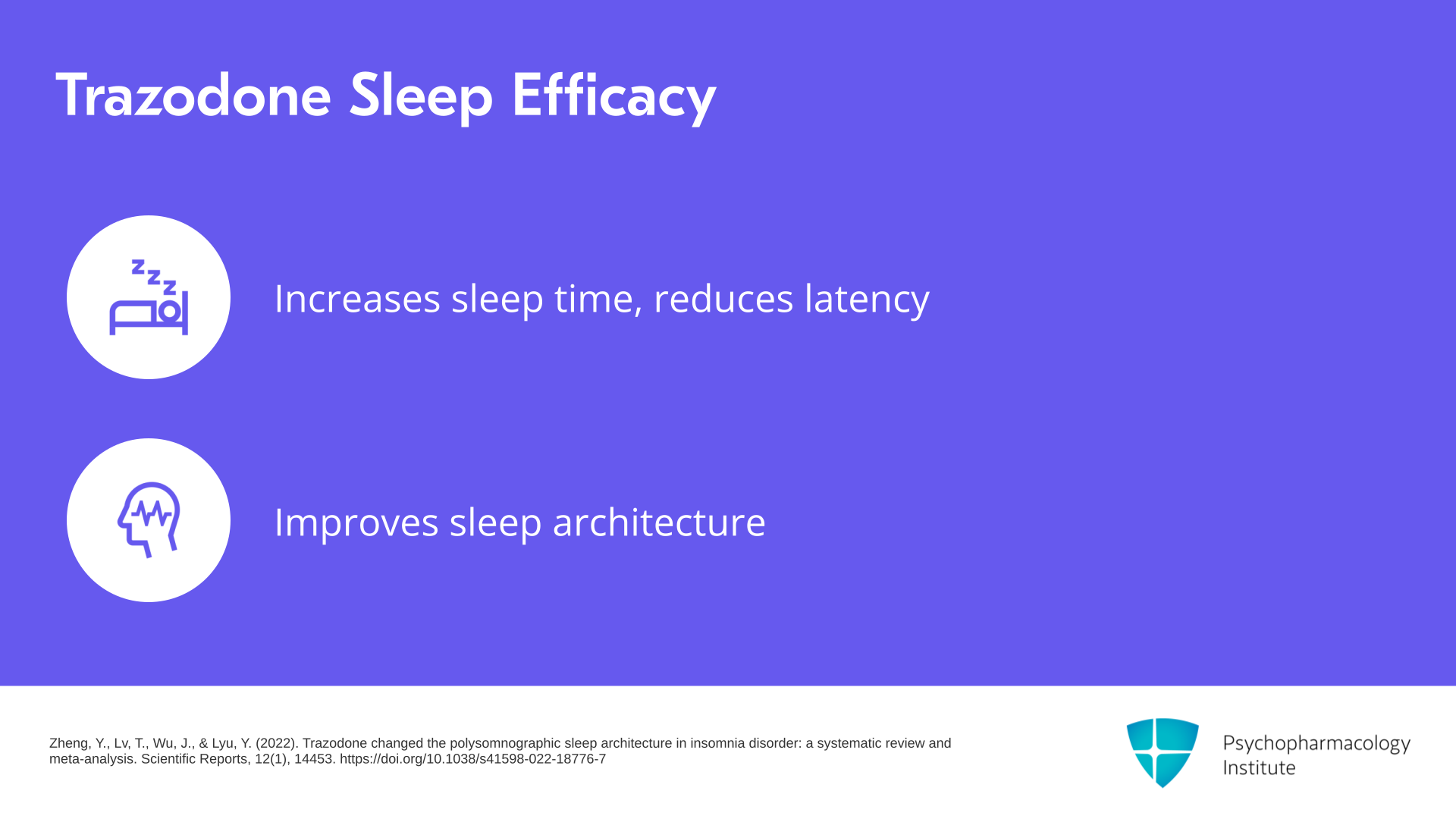
In studies examining trazodone efficacy, there have been at least 11 randomized controlled trials involving 466 participants, trazodone was found to increase total sleep time by about 40 minutes and reduce latency to persistent sleep by about 19 minutes. In terms of sleep architecture, trazodone has been shown to decrease stage N1 sleep and increase stage N3 sleep.
References:
  • Zheng, Y., Lv, T., Wu, J., & Lyu, Y. (2022). Trazodone changed the polysomnographic sleep architecture in insomnia disorder: a systematic review and meta-analysis. Scientific Reports, 12(1), 14453. https://doi.org/10.1038/s41598-022-18776-7

Slide 8 of 18

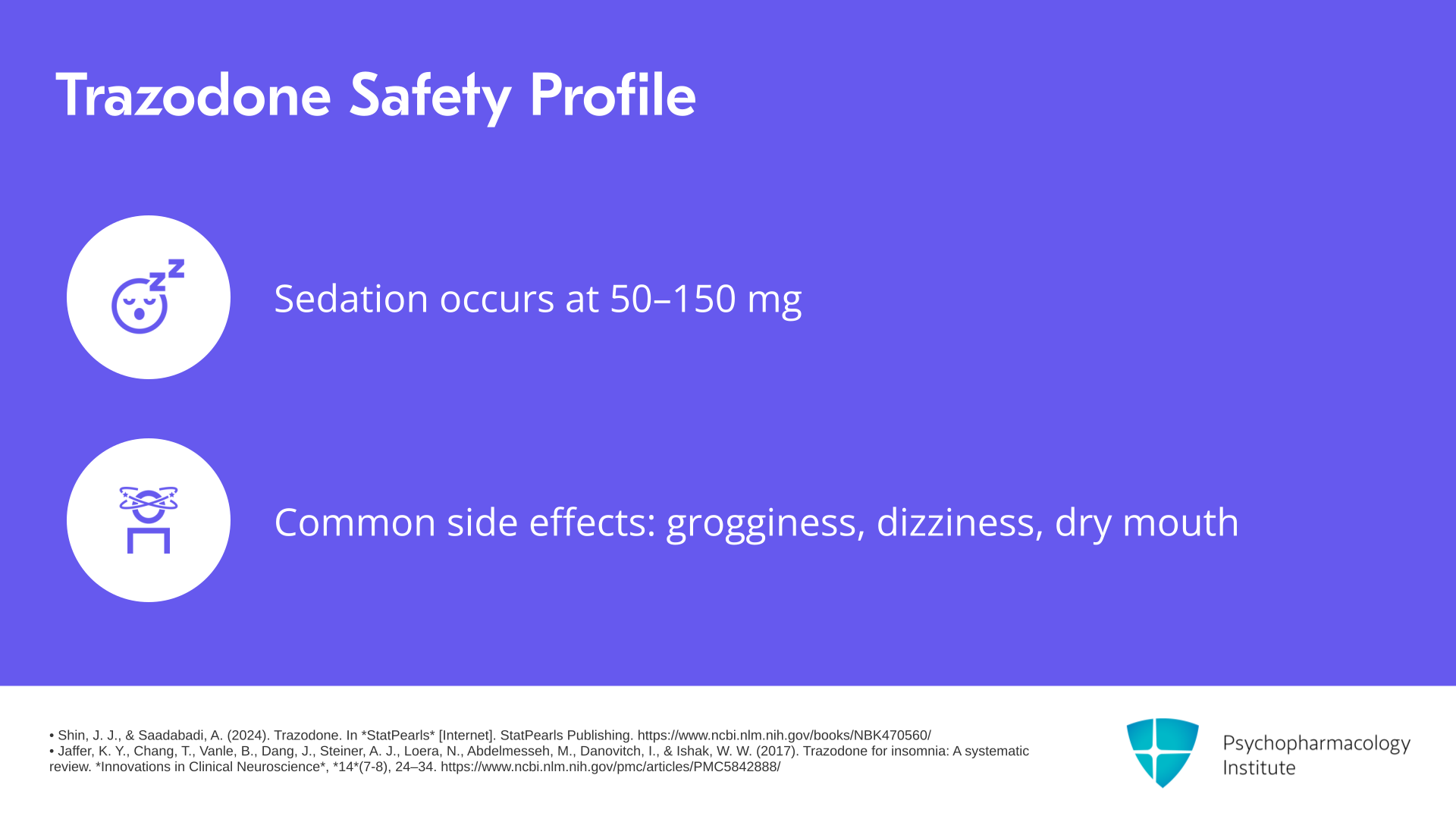
Most sedating effects with trazodone seem to occur between doses of 50 to 150 mg. It is unclear as to whether there is any further benefit in terms of sedation at higher doses. Common adverse effects include grogginess, dizziness and dry mouth. It can cause hypotension and QT prolongation.
References:
  • Shin, J. J., & Saadabadi, A. (2024). Trazodone. In *StatPearls* [Internet]. StatPearls Publishing. https://www.ncbi.nlm.nih.gov/books/NBK470560/
  • Jaffer, K. Y., Chang, T., Vanle, B., Dang, J., Steiner, A. J., Loera, N., Abdelmesseh, M., Danovitch, I., & Ishak, W. W. (2017). Trazodone for insomnia: A systematic review. *Innovations in Clinical Neuroscience*, *14*(7-8), 24–34. https://www.ncbi.nlm.nih.gov/pmc/articles/PMC5842888/
Free Files
Success!
Check your inbox, we sent you all the materials there.

Slide 9 of 18

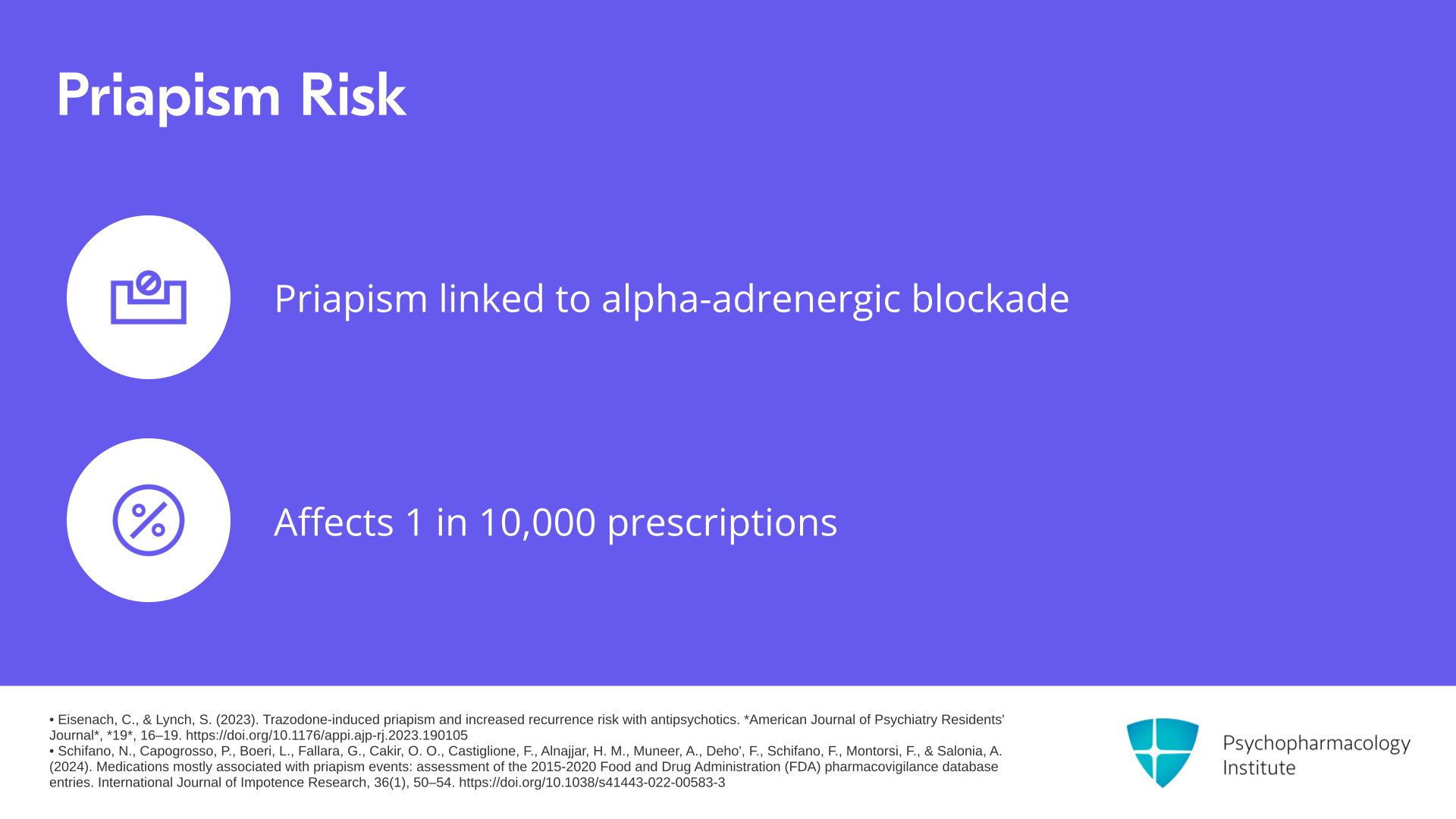
Due to its alpha-adrenergic blockade, it can cause priapism. Studies show that it has a proportional reporting ratio of 9.04 and is possibly the drug with the greatest risk of priapism. This usually translates to about 1 in 10,000 prescriptions for a case of priapism to occur.
References:
  • Eisenach, C., & Lynch, S. (2023). Trazodone-induced priapism and increased recurrence risk with antipsychotics. *American Journal of Psychiatry Residents' Journal*, *19*, 16–19. https://doi.org/10.1176/appi.ajp-rj.2023.190105
  • Schifano, N., Capogrosso, P., Boeri, L., Fallara, G., Cakir, O. O., Castiglione, F., Alnajjar, H. M., Muneer, A., Deho', F., Schifano, F., Montorsi, F., & Salonia, A. (2024). Medications mostly associated with priapism events: assessment of the 2015-2020 Food and Drug Administration (FDA) pharmacovigilance database entries. International Journal of Impotence Research, 36(1), 50–54. https://doi.org/10.1038/s41443-022-00583-3

Slide 10 of 18

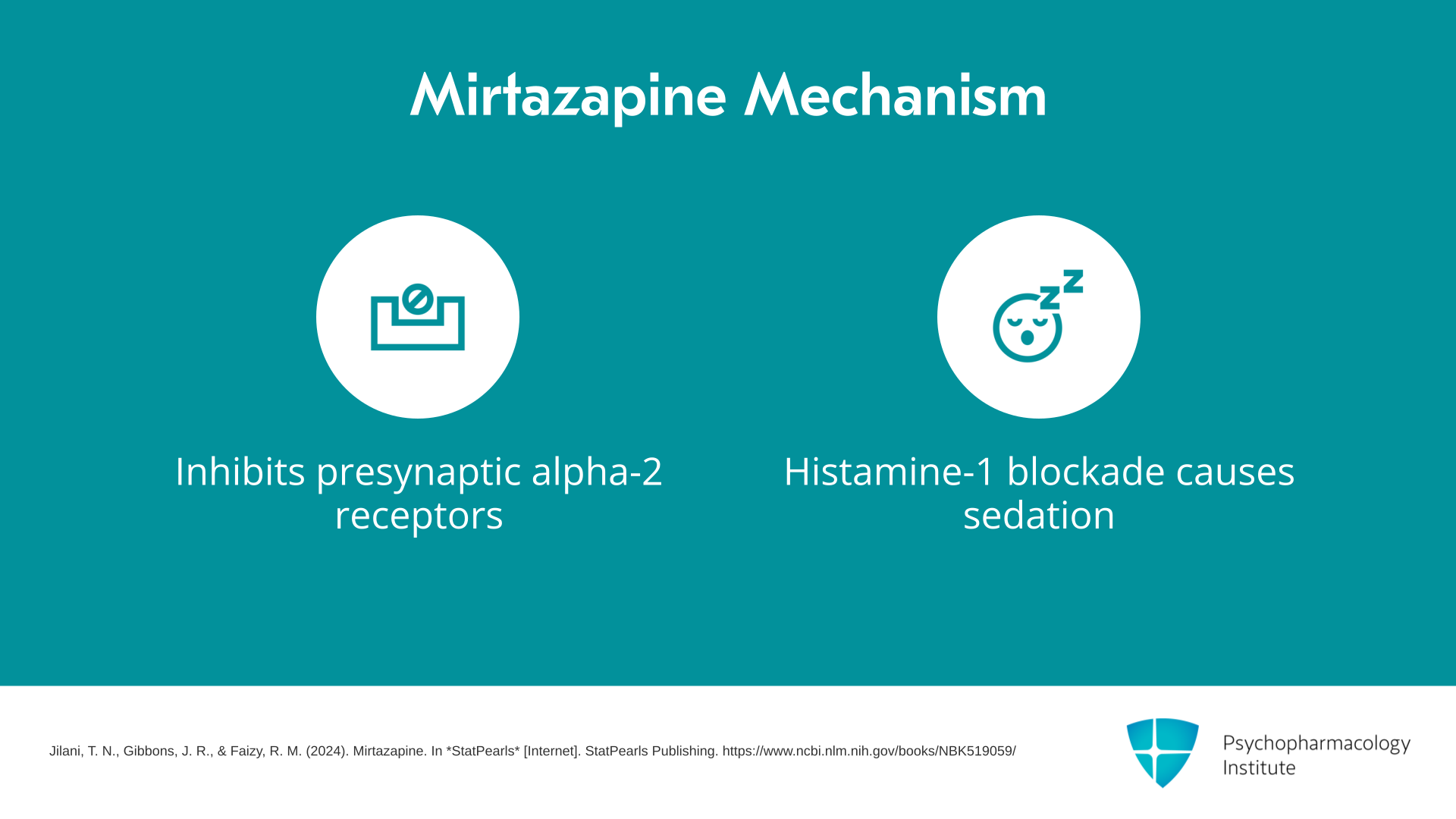
Mirtazapine, another antidepressant with a central presynaptic alpha-2 adrenergic receptor inhibition that in turn leads to increased serotonin and norepinephrine release. In addition, mirtazapine is also a potent histamine-1 antagonist resulting in sedation.
References:
  • Jilani, T. N., Gibbons, J. R., & Faizy, R. M. (2024). Mirtazapine. In *StatPearls* [Internet]. StatPearls Publishing. https://www.ncbi.nlm.nih.gov/books/NBK519059/
Free Files
Success!
Check your inbox, we sent you all the materials there.

Slide 11 of 18

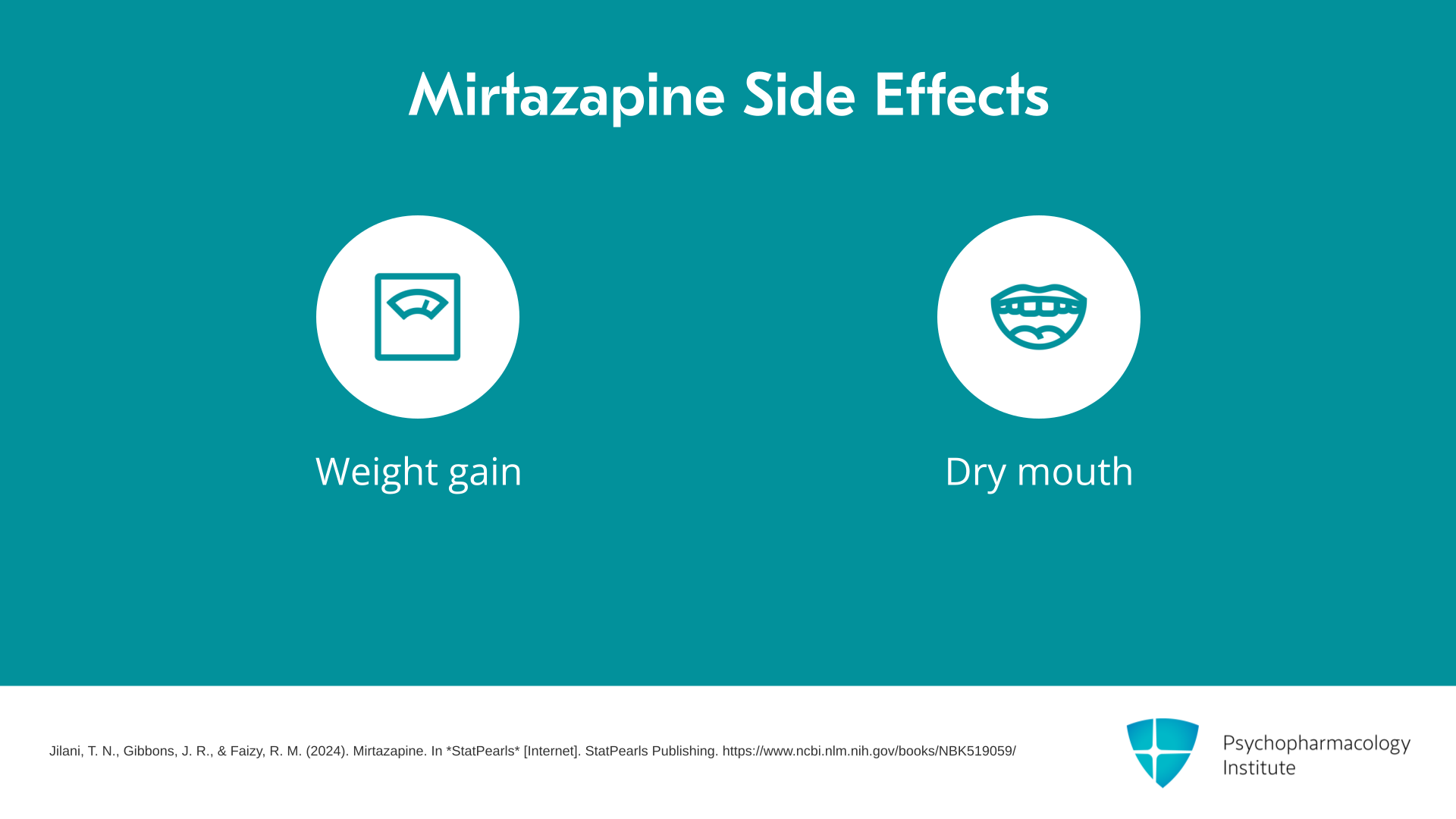
The main side effects with mirtazapine include weight gain and dry mouth.
References:
  • Jilani, T. N., Gibbons, J. R., & Faizy, R. M. (2024). Mirtazapine. In *StatPearls* [Internet]. StatPearls Publishing. https://www.ncbi.nlm.nih.gov/books/NBK519059/

Slide 12 of 18

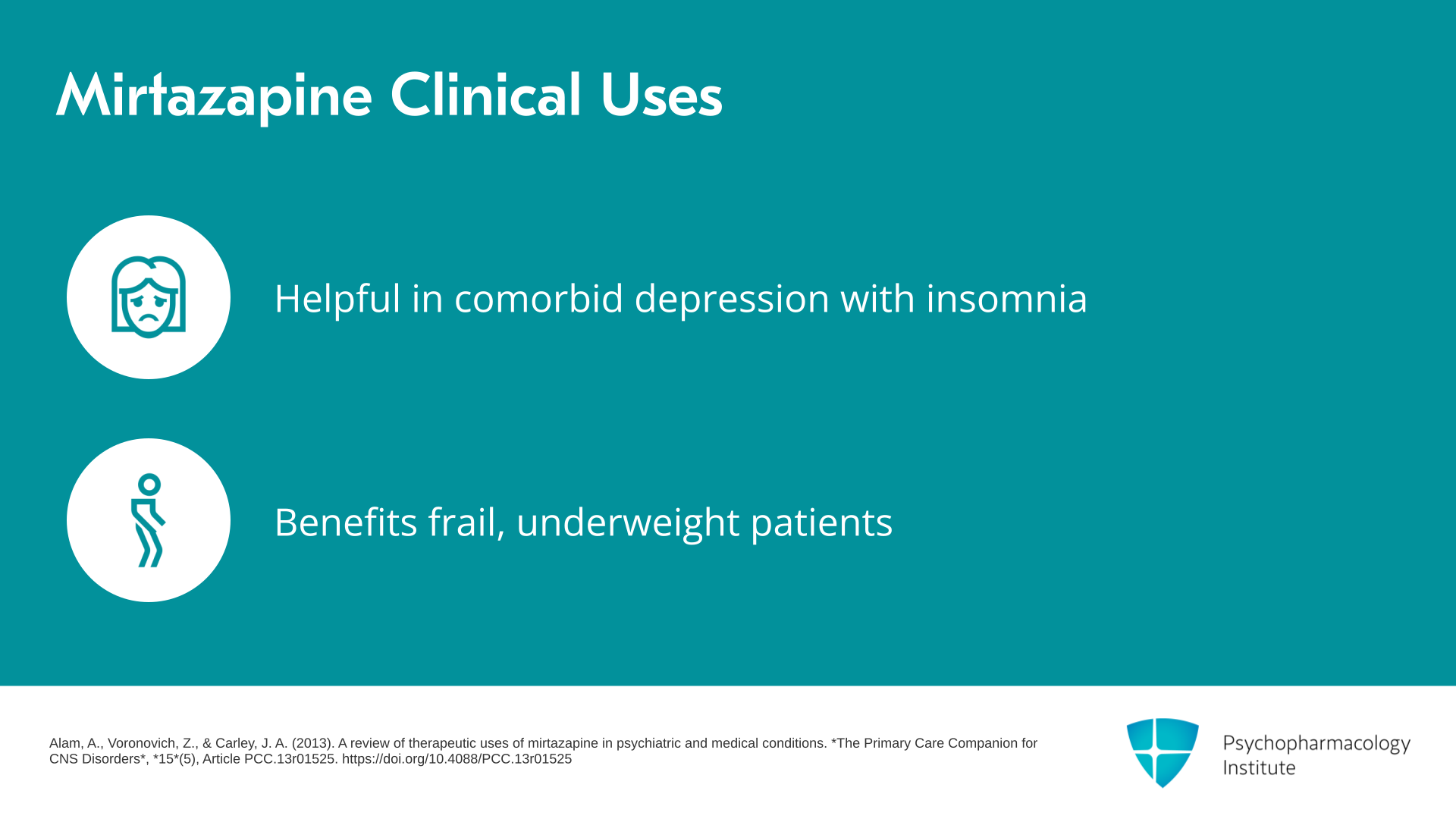
Mirtazapine is used as an antidepressant in doses between 15 to 45 mg; as a sleep aid could be particularly helpful in patients with comorbid depression. Mirtazapine can also help patients with poor appetite, frailty, who are sleeping poorly and also need to gain weight.
References:
  • Alam, A., Voronovich, Z., & Carley, J. A. (2013). A review of therapeutic uses of mirtazapine in psychiatric and medical conditions. *The Primary Care Companion for CNS Disorders*, *15*(5), Article PCC.13r01525. https://doi.org/10.4088/PCC.13r01525
Free Files
Success!
Check your inbox, we sent you all the materials there.

Slide 13 of 18

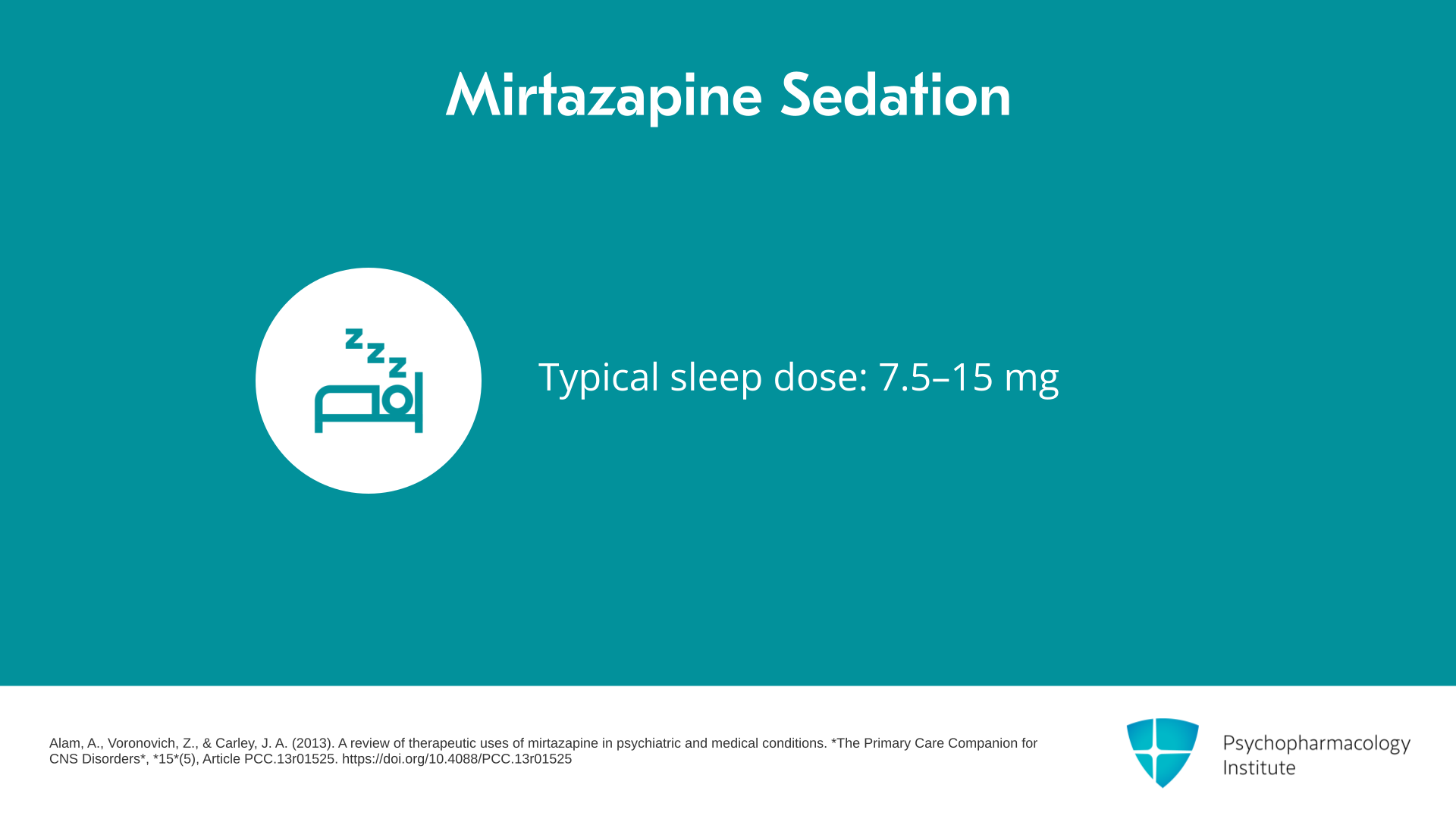
Sedation seems to be most pronounced at lower doses. Mirtazapine is usually used between doses of 7.5 to 15 mg to help with sleep with data indicating minimal benefit to sedation at doses greater than 15 mg.
References:
  • Alam, A., Voronovich, Z., & Carley, J. A. (2013). A review of therapeutic uses of mirtazapine in psychiatric and medical conditions. *The Primary Care Companion for CNS Disorders*, *15*(5), Article PCC.13r01525. https://doi.org/10.4088/PCC.13r01525

Slide 14 of 18

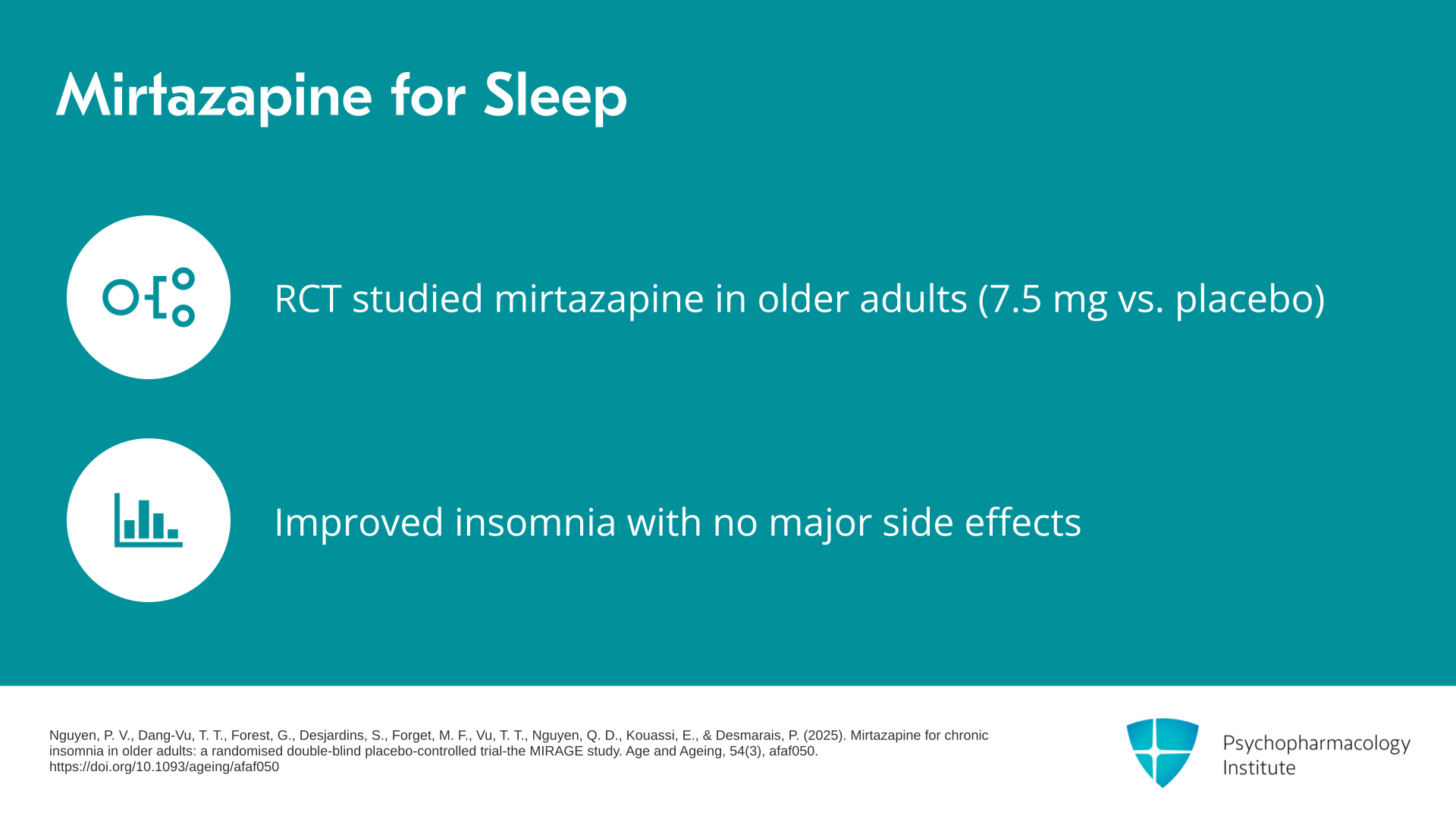
There have been recent studies examining the efficacy of mirtazapine for sleep. A randomized controlled trial of adults older than 65 years compared 7.5 mg to matching placebo. After four weeks, there was a significant improvement in the Insomnia Severity Index and no major adverse effects were noted.
References:
  • Nguyen, P. V., Dang-Vu, T. T., Forest, G., Desjardins, S., Forget, M. F., Vu, T. T., Nguyen, Q. D., Kouassi, E., & Desmarais, P. (2025). Mirtazapine for chronic insomnia in older adults: a randomised double-blind placebo-controlled trial-the MIRAGE study. Age and Ageing, 54(3), afaf050. https://doi.org/10.1093/ageing/afaf050
Free Files
Success!
Check your inbox, we sent you all the materials there.

Slide 15 of 18

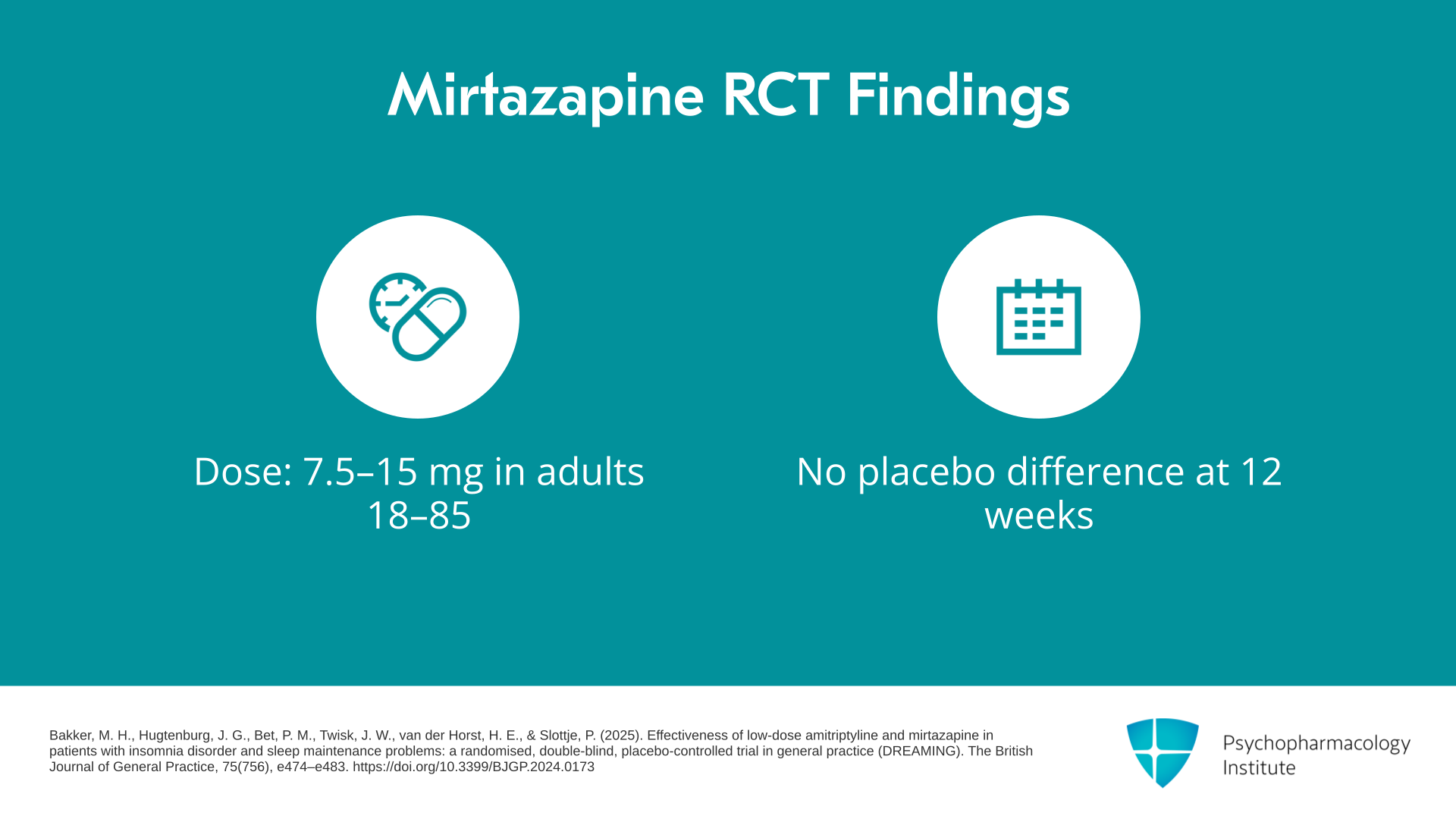
Another randomized controlled trial, this time in adults between 18 to 85 years, used mirtazapine in doses between 7.5 to 15 mg. At six weeks, there was a significant improvement again in the Insomnia Severity Index scores. However, by 12 weeks, there was no statistical significance in the difference with placebo.
References:
  • Bakker, M. H., Hugtenburg, J. G., Bet, P. M., Twisk, J. W., van der Horst, H. E., & Slottje, P. (2025). Effectiveness of low-dose amitriptyline and mirtazapine in patients with insomnia disorder and sleep maintenance problems: a randomised, double-blind, placebo-controlled trial in general practice (DREAMING). The British Journal of General Practice, 75(756), e474–e483. https://doi.org/10.3399/BJGP.2024.0173

Slide 16 of 18

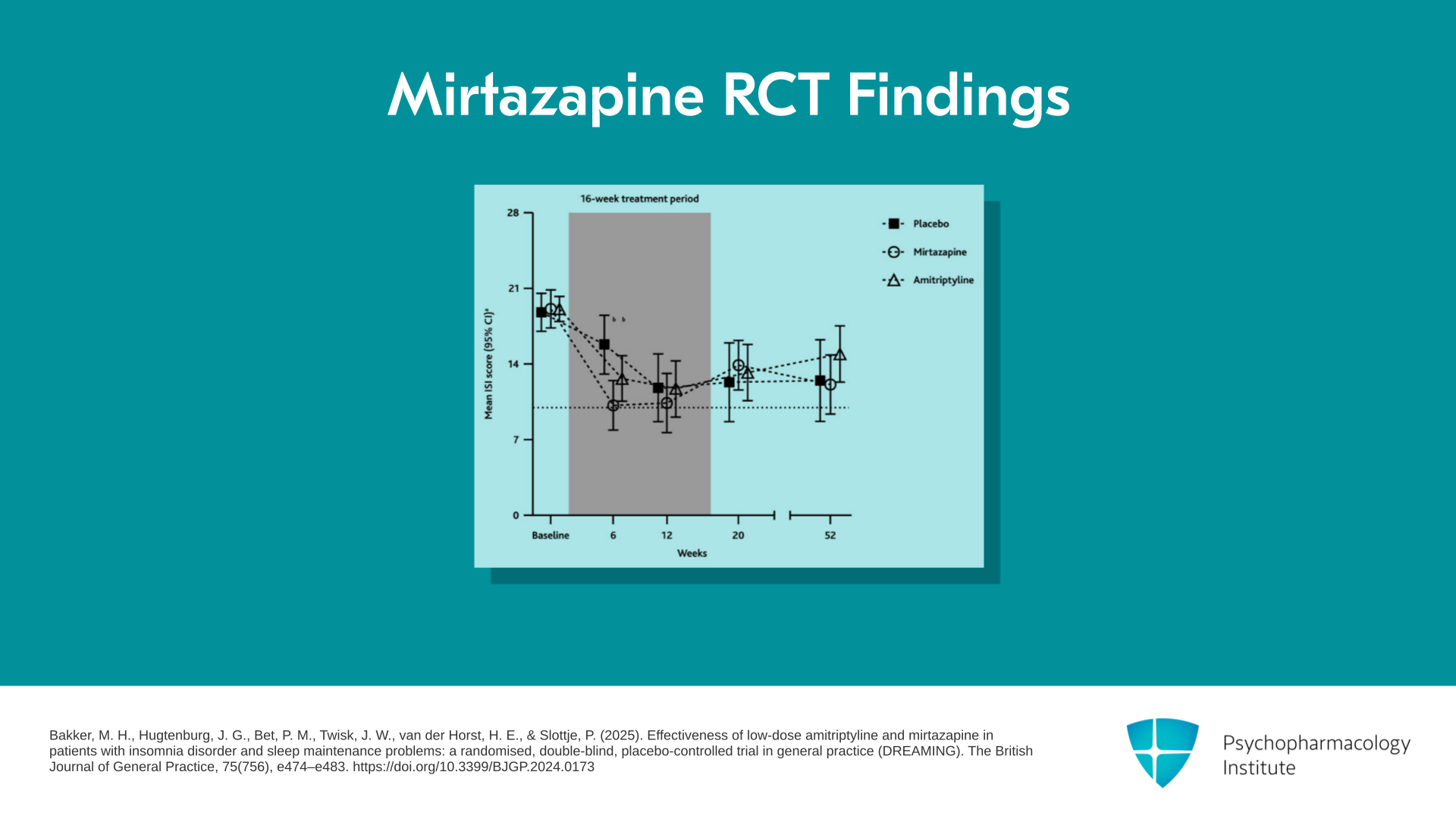
So we can see in this figure how there is improvement at six weeks with mirtazapine which is the circle but over time this difference washed off after the treatment period ended.
References:
  • Bakker, M. H., Hugtenburg, J. G., Bet, P. M., Twisk, J. W., van der Horst, H. E., & Slottje, P. (2025). Effectiveness of low-dose amitriptyline and mirtazapine in patients with insomnia disorder and sleep maintenance problems: a randomised, double-blind, placebo-controlled trial in general practice (DREAMING). The British Journal of General Practice, 75(756), e474–e483. https://doi.org/10.3399/BJGP.2024.0173
Free Files
Success!
Check your inbox, we sent you all the materials there.

Slide 17 of 18

The key points in this section include: Low-dose doxepin at 3 to 6 mg improves sleep maintenance and efficiency with minimal anticholinergic side effects. Trazodone is widely prescribed for insomnia despite lacking FDA approval and guideline support for its use in chronic insomnia.

Slide 18 of 18

Mirtazapine can improve insomnia symptoms especially at low doses, 7.5 to 15 mg. Mirtazapine is particularly useful when insomnia co-exists with depression, poor appetite, frailty or weight loss.
Free Files
Success!
Check your inbox, we sent you all the materials there.

Learning Objectives:

  1. Describe the diagnostic criteria for chronic insomnia disorder and apply the Insomnia Severity Index to screen patients and monitor treatment response.
  2. Compare the efficacy, dosing, and safety profiles of FDA-approved and off-label agents for insomnia, including dual orexin receptor antagonists, Z-drugs, benzodiazepines, melatonin agonists, and sedating antidepressants.
  3. Select appropriate pharmacotherapy for insomnia in special populations, including pregnancy, older adults, patients receiving opioids or with comorbid substance use disorder, and patients requiring long-term treatment.

Original Release Date: August 05, 2026
Expiration Date: August 05, 2029

Faculty: Bhanu Kolla, M.D.
Medical Editor: Tomás Abudarham, M.D.

Relevant Financial Disclosures:
None of the faculty, planners, and reviewers for this educational activity has relevant financial relationships to disclose during the last 24 months with ineligible companies whose primary business is producing, marketing, selling, re-selling, or distributing healthcare products used by or on patients.

Contact Information: For questions regarding the content or access to this activity, contact us at support@psychopharmacologyinstitute.com

Instructions for Participation and Credit:
Participants must complete the activity online within the valid credit period noted above.

Follow these steps to earn CME credit:

  1. View the required educational content provided on this course page.
  2. Complete the Post-Activity Evaluation to provide the necessary feedback for continuing accreditation purposes and for the development of future activities. NOTE: Completing the Post Activity Evaluation after the quiz is required to receive the earned credit.
  3. Download your certificate.

Please note that CME and SA CME certificates completion dates are recorded using UTC. Depending on your local time zone, activities completed later in the day may appear on your certificate with the following calendar date.

Accreditation Statement
This activity has been planned and implemented in accordance with the accreditation requirements and policies of the Accreditation Council for Continuing Medical Education through the joint providership of Medical Academy LLC and the Psychopharmacology Institute. Medical Academy is accredited by the ACCME to provide continuing medical education for physicians.

Credit Designation Statement
Medical Academy designates this enduring activity for a maximum of 1 AMA PRA Category 1 credit(s)™. Physicians should claim only the credit commensurate with the extent of their participation in the activity.

Artificial Intelligence (AI) Use Disclosure
Artificial intelligence (AI) tools may have been used in limited stages of developing this activity (e.g., drafting or language refinement). The specific tool, version, and date of use are documented internally.
AI does not determine clinical recommendations. All content is reviewed, verified, and approved by the listed faculty and medical editors, and reflects independent human clinical judgment consistent with ACCME Standards for Integrity and Independence in Accredited Continuing Education.


Free Files
Success!
Check your inbox, we sent you all the materials there.
Continue in the website
Instant access modal

Become a Bronze, Silver, Gold, Bronze extended, Silver extended or Gold extended Member.

2026–27 Psychopharmacology CME Program

Unlock up to 155 CME Credits, including 40 SA CME Credits.

This site is registered on wpml.org as a development site. Switch to a production site key to remove this banner.