



This newsletter provides a concise summary of key highlights from the 2023 APA Annual Meeting, offering valuable clinical insights to apply in practice. Additionally, we bid farewell to Dr. Phelps, whose contributions to the Quick Takes over the past 5 years have been invaluable.
We also discuss practical aspects for managing psychosis in youth; key points from a presentation on depression, anxiety, and delirium in patients with cancer; and our practical research summaries of adult, child, and adolescent psychiatry (Quick Takes and CAP Smart Takes).
Insights From the 2023 APA Annual Meeting
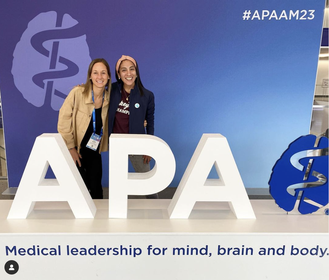
Dr. Paz Badia attended the meeting and summed up the following key points for you:
ECT: Clinical Update for Adult Patients
- Consider ECT as an early treatment strategy for patients presenting with severe depressive symptoms, medical frailty, suicidal ideation, or psychotic symptoms.
- Predictors of good response to ECT in patients with depression include:
- Later onset.
- Presence of psychotic symptoms.
- Shorter duration of illness.
- Heightened severity.
Psychopharmacology of Acute Agitation in Psychosis and Mania
- Try nonmedication management as the first approach if the patient’s condition permits it.
- First tier oral medications include:
- Haloperidol plus lorazepam: 5 mg/2 mg every 30 minutes, up to a maximum of 4 doses within 24 hours.
- Lorazepam: 2 mg every 2 hours, up to a maximum of 12 mg within 24 hours.
- First tier intramuscular medications include:
- Haloperidol plus promethazine: 5 mg/25 mg–50 mg every 30 minutes, maximum 4 doses in 24 hours.
- Olanzapine: 10 mg every 2 hours, maximum 20 mg in 24 hours.
Everything You Need to Start a New Patient on Clozapine
- Severe neutropenia typically peaks in the first several months after starting clozapine (6–12 months).
- Fast clozapine titration increases myocarditis risk.
- SMIAdviser provides a free tool called the Clozapine Dose Planner that can be used to provide an estimate of what plasma level might be obtained, given the parameters of age, gender, weight, and smoking status.
- Individuals of Asian ancestry may need about half the dose of clozapine prescribed to Caucasian patients.
Mental Illness During Pregnancy and the Postpartum Period
- Strategies for managing perinatal depression include:
- Psychotherapy for mild-to-moderate episodes.
- Antidepressants for severe episodes.
- Strategies for managing bipolar disorder:
- Maintenance treatment using lithium monotherapy is recommended during the first year postpartum.
- Antipsychotics:
- Antipsychotic monotherapy is recommended.
- Quetiapine is the top choice due to the lowest rates of placental passage.
Catatonia: What Should Psychiatrists Know and Why?
- Bipolar disorder is the most common underlying diagnosis in catatonia.
- Early recognition, close observation, and frequent measurement of vital signs are essential.
- If necessary, aripiprazole and olanzapine are the recommended antipsychotics for catatonia.
- ECT is effective in 80%–90% of all cases with catatonia and should be considered for patients who do not respond to lorazepam.
ADHD Across the Lifespan
- Diagnosis:
- Neuropsychological testing is not required for ADHD diagnosis, but it can help assess learning disorders and executive function deficits.
- Treatment:
- Should involve both medication and specific psychosocial interventions.
- Omega-3 supplements are the only complementary therapy that has shown a positive effect.
A Clinician’s Guide to Management of BPSD in the Era of Boxed Warnings
- When it comes to atypical antipsychotics for dementia:
- Aripiprazole and risperidone have modest efficacy.
- Olanzapine and quetiapine are not effective.
- Brexpiprazole was recently approved for treating agitation in patients with Alzheimer’s disease, but there is still a black box warning about the increased risk of mortality.
- Antipsychotic treatment has been associated with poorer cognitive outcomes.
Farewell to Dr. Phelps
We are excited to share the news that Dr. Jim Phelps is retiring to dedicate more time to his beloved family. His remarkable contributions span across 52 volumes, amounting to an estimated total of 260 reviewed articles. We are immensely grateful for Dr. Phelps’s invaluable work over the past 5 years.
Stay tuned for July’s volume, which holds special significance, as it features Dr. Phelps’s curated selection of 5 articles that are particularly relevant to clinical practice. Make sure not to miss it as we bid farewell to an esteemed colleague and celebrate his impactful contributions.


Psychosis and Schizophrenia in Children and Adolescents, With David Rosenberg, M.D.
In this interview, Dr. David Rosenberg highlights practical considerations regarding the diagnostic evaluation of psychosis and schizophrenia among children and adolescents, such as the need to rule out medical conditions among children presenting with new-onset psychotic symptoms. He also reviews essential management strategies, including antipsychotic selection and titration, family engagement, and psychoeducation, among others.
Interview highlights include the following:
- For patients presenting with acute agitation, an antipsychotic with diphenhydramine or lorazepam administered intramuscularly may be safe and effective after other nonpharmacologic options have been tried.
- Although more studies need to be done, long-acting injectable antipsychotics may be an option for youth with psychotic disorders who also have problems adhering to oral medication regimens.
Learn more and earn 1 CME credit here.
Depression, Anxiety, and Delirium in Patients With Cancer
In this presentation, Dr. Jaroslava Salman, a mental health expert in supportive care medicine, discusses the neuropsychiatric aspects of cancer. Dr. Salman addresses the psychological distress of patients diagnosed with cancer, including grief and demoralization, as well as the mental disorders they most frequently develop: Depression, anxiety, and delirium. Diagnosis tips and therapeutic options are thoroughly reviewed for each of these instances.
Treating Depressive Disorders in Patients With Cancer
- Antidepressants are the first-line treatment.
- Favorable side effects should be taken into consideration when selecting an antidepressant.
- Stimulants can be used safely and effectively as an augmentation of antidepressant treatment.
Learn more and earn 1.25 CME credits here.
Quick Takes: Research, Digested
Haloperidol for the Treatment of Delirium in ICU Patients
- Haloperidol is used in roughly half of all cases of delirium in the intensive care unit.
- In this large randomized trial, routine haloperidol was not superior to placebo for shortening hospital stay.
- Critical care guidelines recommend against routine use of haloperidol for delirium but acknowledge that short-term use for managing distress for specific symptoms may be helpful. Learn more.
Listen to or read the full volume, and earn 0.5 CME credits here.
CAP Smart Takes: Research, Digested
Psychopharmacologic Treatment Algorithms for Bipolar Disorder in Youth
- Lurasidone is the first-line treatment for depressive episodes in pediatric bipolar disorder. If lurasidone does not work, lamotrigine can be added.
- SGAs that are FDA approved for pediatric bipolar disorder mixed or manic episodes are aripiprazole, asenapine, olanzapine, quetiapine, and risperidone. If response is inadequate, lithium can be used for augmentation. Learn more.
Listen to or read the full volume, and earn 0.5 CME credits here.
Join our Silver or Gold membership program and start earning CMEs and SAs. Also, listen to all of our content through your favorite podcasting app. Click here.
