



Text version
Z-Drug Safety in the First Trimester of Pregnancy
During pregnancy, insomnia and poor sleep are extremely common, affecting between 30% to 60% of women. It’s safe to say that if you treat perinatal patients, sleep — and not getting enough of it — is a frequent topic of conversation.
Enter the Z-drugs: zolpidem, eszopiclone, and zaleplon, three non-benzodiazepine sedative-hypnotics that are FDA approved specifically for insomnia. We’ve known for a while that these medications cross the placenta and concentrate in fetal circulation, but whether that meaningfully translates to adverse outcomes for the fetus has been unclear. So are Z-drugs a safe option to keep in the insomnia toolkit during pregnancy?
A recent study published in JAMA Psychiatry analyzed insurance claims data from over 4 million pregnancies. It pulls out all the stops to answer this question and sparks a larger conversation about how we should evaluate insomnia during pregnancy. I’m Amanda Koire for the Psychopharmacology Institute and this is Quick Takes.
Download PDF and other files
Cohort Study Analyzed Four Million Pregnancies
The authors of this US population-based cohort study set out to address the question of Z-drug teratogenicity by examining infant outcomes after Z-drug exposure in the first trimester. To do so, they analyzed healthcare utilization data from two different insurance claims databases: Medicaid, a public insurance claims dataset, and MarketScan, a commercial insurance claims dataset.
In each dataset, they were able to obtain data from approximately 2 million pregnancies amassed over nearly two decades. This design was a major strength because effects driven by the medication rather than patient factors should be replicated in both datasets.
The authors’ primary analysis looked at differences in overall congenital malformation rates after a live birth in pregnancies that either were or were not exposed to a Z-drug. They defined prenatal exposure as having at least one prescription for Z-drugs filled during the first trimester.
Zolpidem Dominates Z-Drug Prescriptions
First trimester Z-drug prescriptions occurred in about 1 out of every 200 pregnancies they assessed, leading to approximately 11,000 exposed pregnancies in each dataset. I wouldn’t describe this as a particularly common exposure. For a point of reference, exposure to an SSRI in pregnancy is about 20 times more common.
While this study is framed as Z-drugs in general and did in fact look at all of them, zolpidem accounts for nearly all the prescriptions — more than 90%. So as you listen, it would be more accurate to conceptualize this as a study of zolpidem. Beyond that, you’d be assuming that it’s reasonable to generalize based on class effects.
Download PDF and other files
Results: No Increased Overall Malformation Risk
The authors found that compared to unexposed pregnancies, pregnancies with Z-drug exposures tended to be in women who are older and who had comorbid psychiatric conditions and other medication use. Notably, 80% of Z-drug prescriptions were not associated with a sleep disorder diagnosis code. I’ll come back to that point later.
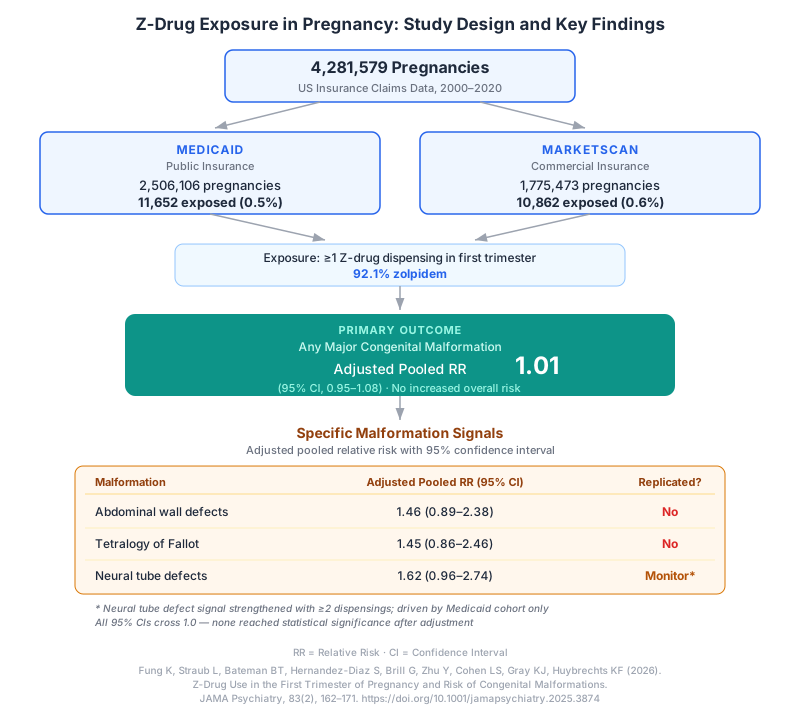
The bottom line takeaway of their analysis is that the overall rate of major congenital malformation was not increased in pregnancies with a first trimester Z-drug exposure. In both datasets, the rate of any major congenital malformation was 4% after an exposure, which sits squarely in the 3% to 5% range I quote patients as the baseline risk. Rates in unexposed pregnancies were very similar, and the difference was not statistically significant after adjusting for potential confounders.
Sensitivity Analyses Upheld Primary Finding
The authors were admirably rigorous in their handling of confounders and they interrogated their primary finding in a number of ways. Their analytic approach accounted for a comprehensive list of patient factors that could confound the results, including:
- Demographic characteristics
- Psychiatric comorbidities
- Chronic medical conditions
- Use of other medications
- Healthcare utilization patterns
They also compared their exposure group to an even more specific control group: those who had previously taken Z-drugs but who had discontinued them shortly before becoming pregnant. This comparison gives perhaps the most relevant clinical information because it most closely mimics the effect of telling someone to stop the medication before conception.
Additionally, they looked in more detail at pregnancies where the medication was filled more than once in an attempt to enrich for the pregnancies most likely to be truly exposed. Yet across all these different approaches to the data, the findings remained largely reassuring.
Download PDF and other files
Neural Tube Defect Signal Reported
A few specific congenital malformations, namely abdominal wall defects, Tetralogy of Fallot, and neural tube defects, did show a slight increase in risk in the Medicaid dataset even after adjustment. However, those increases weren’t replicated in the MarketScan dataset.
This finding aligns with what had been previously reported at the level of case reports and small studies, where abdominal wall defects and Tetralogy of Fallot have been inconsistently reported. The dissonance between datasets most likely means that patient-related factors associated with the medication use in the Medicaid population, rather than the medication itself, are driving this finding. Even if genuine, the increase in risk would only correspond to about 1 additional case for every 5,000 pregnancies.
That said, the outcome I’ll be keeping an eye on in the future is the association with a slightly increased risk of neural tube defects, mainly because the association got stronger when they looked at people who filled the script more than once. The authors’ logic in doing that type of focused analysis is that a limitation of healthcare utilization data is that they only know that the patient filled the script, they can’t know with certainty that they actually took it. But patients don’t usually get refills on a script they’re not taking.
Putting aside that Z-drugs aren’t intended to be prescribed long term, when an association increases after the exposure definition is made more stringent, it’s a sign that there might be a real signal there even if the added risk is low. Given this lingering potential concern for neural tube defects, I’d encourage patients to take a prenatal vitamin with folate, but I would’ve recommended that regardless as that’s standard of care for all pregnancies. I don’t feel there’s sufficient evidence or concern to merit recommending higher than standard doses of folate at this time.
Other Pregnancy Outcomes Remain Unclear
Does this finding mean that Z-drugs have no effect on the fetus or the pregnancy overall? I wouldn’t jump to that conclusion so fast based on this study. Congenital malformations are only one piece of the puzzle when it comes to advising patients on the risk of medication exposure versus the risk of untreated illness.
Since the study only examined live births, it isn’t designed to comment on whether Z-drugs increase miscarriage or stillbirth rates. They did conduct a sensitivity analysis that basically said that even if Z-drug exposure increased miscarriages by 20%, the overall impact on the risk calculations would be modest. So if there’s an increase, it probably isn’t extreme, but I would consider the true estimate to still be an open question.
Similarly, obstetric outcomes and long-term neurodevelopmental outcomes weren’t examined at all in this study, and that’s completely fine because one study can’t cover every topic.
A systematic review that came out last year attempted to address those other outcomes and found an association between Z-drug prescriptions (again, almost entirely zolpidem) with a small increased risk of preterm birth and low infant birth weight. It could be that insomnia itself is what’s associated with these outcomes, not the medication. But the bottom line is there’s still a lot we don’t know about the consequences of Z-drug exposure, and it’s important to be candid about that.
Download PDF and other files
Most Z-Drug Prescriptions Lack Sleep Disorder Diagnosis
When I think about how this study will affect my clinical practice, I see the most applicability in the context of preconception consultations and collaborative care advising. Even though they can be useful medications when prescribed appropriately, I find that I don’t personally reach for Z-drugs all that often.
I wondered if I was an outlier in this regard. But a study of Z-drug prescribing practices from 2023 suggests that the majority of Z-drug prescriptions are coming from Internal Medicine and Family Medicine practitioners. Only about 10% of the scripts were sent by psychiatrists.
To me, this adds context to the study finding I mentioned before, where 80% of Z-drug exposures in pregnancy did not have a sleep disorder associated with the prescription while a majority did have a diagnosis of depression or anxiety. It’s safe to say I’m going to be doing my own evaluation of their sleep-related symptoms when making a treatment plan.
Practical Clinical Scenarios
To give examples, I’ll talk through three potential scenarios where you might have a conversation about Z-drugs in the perinatal period — preconception, during pregnancy when experiencing insomnia, and during pregnancy when they’ve already been taking a Z-drug as part of their regimen.
Scenario 1 – Preconception: Reassess Z-Drug Use
If someone is seeing me for a preconception consultation and a Z-drug is in their medication regimen for an insomnia disorder, I’d be taking the opportunity to offer psychoeducation about Z-drugs and that they’re not intended or designed to be used for chronic use.
In my experience, patients are often very motivated to make changes preconception and during pregnancy and are pretty open to these types of conversations. So after confirming the underlying diagnosis, I’d be asking them about whether they have tried cognitive behavioral therapy for insomnia before and talking about identifying a different approach for addressing their sleep issues long term.
Scenario 2 – During Pregnancy: Insomnia Evaluation Before Prescribing
I’d be highly unlikely to start a Z-drug for the first time during pregnancy. I would not see this paper and have your takeaway be Z-drugs are safe for use in pregnancy, so I’ll prescribe it whenever a pregnant patient reports poor sleep.
For one thing, just in general, I don’t tend to talk about anything being “safe” per se. I instead discuss what we know or often don’t know about the risks of medication exposure compared to the risk of untreated illness.
On the one hand, it’s true that the risk of untreated insomnia isn’t trivial because it’s associated with increased rates of perinatal anxiety, depression, gestational diabetes, and preterm birth. But before I jump to treating insomnia disorder with a Z-drug, as part of their evaluation, I’d be exploring and addressing any psychiatric and medical conditions that can present with poor sleep as a symptom.
I often get asked my preferred medication for insomnia in pregnancy, and that’s a deceptively hard question to answer because it really matters why they’re not sleeping.
There are so many psychiatric disorders that present with a patient reporting bad sleep. A manic or hypomanic episode of bipolar disorder is going to have a different treatment recommendation than generalized anxiety keeping someone up at night worrying about the future, which will be different still from PTSD-associated nightmares. None of those presentations of insomnia would have a Z-drug as a first-line recommendation.
Substance use withdrawal is something to have on your radar as a cause of insomnia in pregnancy as well, as patients will sometimes stop abruptly using nicotine, alcohol, or other substances when they learn they’re pregnant. If you don’t specifically elicit past rather than current use in your history, you might miss it.
Medical Causes of Pregnancy Insomnia
On top of all that, in pregnancy, there are also a number of other medical causes of insomnia and sleep disruption, none of which are zebras.
Restless legs syndrome, for example, occurs in up to a third of pregnancies and is associated with pregnancy-related iron deficiency and low ferritin levels. Getting some lab work can be extremely helpful for working up these cases, and I often detect very low ferritin levels.
Obstructive sleep apnea is also more common during pregnancy, affecting somewhere between 1 in 10 and 1 in 4 women. Many other potential sleep disruptions — including hyperemesis gravidarum, gastroesophageal reflux disease, frequent urination, and overall physical discomfort — can occur to the point that by the third trimester of pregnancy, almost 100% of women report at least one nocturnal awakening each night.
Generally, by the time I’ve done my own diagnostic evaluation and medical workup, a different medication class has presented itself as a more appropriate treatment plan if medication is indicated. Unfortunately, that makes it hard to give easy to digest recommendations for sleep issues in pregnancy. The reality is it’s always going to depend on the details of the case.
Scenario 3 – Already Exposed: Reassure and Weigh Continuation
On the other hand, if a patient arrives for consultation distressed because they were already pregnant and conceived while taking this medication, on the basis of this study, I’d be offering reassurance that the exposure wouldn’t be expected to increase overall risk of congenital malformations.
Whether I would support continuing a Z-drug throughout pregnancy, especially if the patient was stable, would depend on a lot of case-specific factors. Even though long-term use isn’t supported for insomnia or any mental health condition, it clearly happens and frequently enough that the study authors had sufficient power to run sensitivity analyses with those cases. Whenever feasible, I’d be hoping to taper or minimize use.
However, physical dependence can occur after just a few weeks of continuous daily use. So now you and the patient are in a tricky situation because withdrawal symptoms can present their own risks to the fetus, and then you’re potentially layering on new exposures of insomnia plus additional medication trials that may or may not resolve symptoms.
Some of the alternatives the patient might think to reach for have even less data than Z-drugs. For example, you might be shocked to know how little we know about melatonin in pregnancy. So this all presents its own risk versus risk mental calculus, and often the patient will have a strong preference after an informed discussion.
With this new, relatively reassuring data in hand, I do think it’s a little easier to rationalize prioritizing continuing a regimen that has kept the patient well managed and stable, even if it isn’t ideal for the long term for reasons separate from the pregnancy.
Download PDF and other files
Bottom Line
In my view, the main takeaway of this study is that if a patient is distressed that they conceived while taking this medication, you can tell them that the data seems largely reassuring and wouldn’t be expected to increase overall risk of congenital malformations. Given the lingering potential concern about neural tube defects, I’d encourage them to take a prenatal vitamin with folate, which hopefully they would already be doing.
For all patients, I’d discuss their past medical and psychiatric history that led up to them taking a Z-drug in the first place, to better understand whether it would be reasonable to trial a taper off the medication, especially if they’re preconception.
Abstract
Z-Drug Use in the First Trimester of Pregnancy and Risk of Congenital Malformations
Kelly Fung, M.S.; Loreen Straub, M.D., M.S.; Brian T. Bateman, M.D., M.S. & et al
Importance Sleep disturbances are common in pregnancy and often treated with nonbenzodiazepine sedative hypnotics (Z-drugs). However, there is limited evidence on the fetal safety of Z-drugs.
Objective To evaluate whether Z-drug exposure in the first trimester of pregnancy is associated with an increased risk of congenital malformations.
Design, Setting, and Participants This US population-based cohort study evaluated health care utilization data from publicly insured beneficiaries in the Medicaid database (2000-2018) and commercially insured beneficiaries in the Merative MarketScan database (2003-2020). Participants were pregnant individuals and their liveborn infants, with maternal enrollment from 90 days before pregnancy to 30 days after delivery and infant enrollment for 90 days after birth unless death occurred sooner. Data analysis was performed from November 2023 to April 2025.
Exposure At least 1 dispensing of Z-drugs (zaleplon, eszopiclone, or zolpidem) in the first trimester of pregnancy compared with no dispensing.
Main Outcomes and Measures Major congenital malformations were identified using linked maternal and infant claims. The risks of any major congenital malformation, organ-specific malformations, and individual malformations in pregnancies with Z-drug exposure in the first trimester were compared with the risks in unexposed pregnancies. Relative risks (RRs) and 95% CIs were estimated. Propensity score fine stratification weights were used to control for confounders.
Results A total of 4 281 579 pregnancies were identified (mean [SD] maternal age at delivery, 25.2 [6.0] years in Medicaid and 31.6 [4.6] years in MarketScan). First-trimester Z-drug exposure was identified in 11 652 (0.5%) of 2 506 106 pregnancies in Medicaid and 10 862 (0.6%) of 1 775 473 pregnancies in MarketScan; 92.1% of exposed pregnancies had zolpidem exposure. The adjusted pooled RR for malformations overall was 1.01 (95% CI, 0.95-1.08). While adjusted pooled RRs were increased for abdominal wall defects (1.46; 95% CI, 0.89-2.38), tetralogy of Fallot (1.45; 95% CI, 0.86-2.46), and neural tube defects (1.62; 95% CI, 0.96-2.74), these associations were imprecisely estimated, driven by the Medicaid cohort and not replicated in the MarketScan cohort. Results were consistent across multiple sensitivity analyses.
Conclusions and Relevance These findings suggest that Z-drug exposure in the first trimester of pregnancy is not associated with a meaningful elevation in the risk of congenital malformations overall, nor was there a consistent signal observed for organ-specific or uncommon, individual malformations examined.
Download PDF and other files
Reference
Fung, K.; Straub, L.; Bateman, B.; Hernandez-Diaz, S.; Brill, G.; Zhu, Y. et al. (2026). Z-Drug Use in the First Trimester of Pregnancy and Risk of Congenital Malformations. JAMA Psychiatry; 83(2):162.
