



In a nutshell
Vilazodone is an SSRI with 5-HT1A partial agonism approved for major depressive disorder. Despite theoretical advantages from 5-HT1A partial agonism (faster onset, fewer sexual side effects), clinical trials show no consistent superiority over standard SSRIs. Clinical use requires administration with food for adequate bioavailability and gradual titration to minimize gastrointestinal side effects.

- When to consider Vilazodone:
- Prior therapy limited by sexual adverse effects and bupropion/mirtazapine aren’t desirable alternatives
- Discuss with the patient that potential advantages regarding sexual adverse effects remain inconclusive; incidence was relatively low in patients without baseline dysfunction.
- Weight neutrality is a priority.
- After 1–2 unsuccessful trials (reasonable to try after SSRI/SNRI nonresponse or intolerance)
- Comorbid generalized anxiety disorder or MDD with anxious distress (mixed evidence)
- Pooled/post-hoc RCT analyses show a signal vs placebo in anxious-depressed subgroups, without superiority over SSRIs/SNRIs
- May be considered as a reasonable SSRI-class choice when anxiety is prominent
- Prior therapy limited by sexual adverse effects and bupropion/mirtazapine aren’t desirable alternatives
- Consider alternatives when:
- Seeking faster onset of action; not proven for vilazodone. Consider options with quicker onset (e.g., esketamine; dextromethorphan–bupropion; ECT/IV ketamine)
- Patient cannot reliably take medication with food (risk of subtherapeutic exposure and nonresponse)
- Pregnancy/lactation use needed (limited data)
Pharmacodynamics and mechanism of action
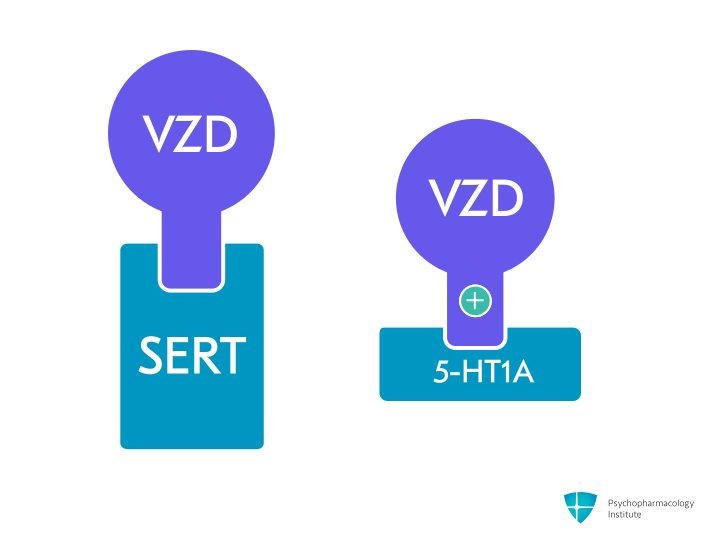
- Vilazodone is a selective serotonin reuptake inhibitor and a 5-HT1A receptor partial agonist [1,2]
- This dual mechanism is often termed Serotonin Partial Agonist/Reuptake Inhibitor (SPARI) or “multimodal” [1,2]
- However, this pharmacologic rationale remains hypothetical and has not translated into consistent clinical superiority over standard therapies [2]
- Vilazodone has minimal affinity for norepinephrine and dopamine transporters [3]
- 5-HT-1A partial agonist component
- Receptor selectivity: Vilazodone shows higher 5-HT1A receptor selectivity than buspirone (a 5-HT1A partial agonist used for anxiety) [4]
- Claim: Faster onset
- Mechanistic rationale: 5-HT1A partial agonism may accelerate response by desensitizing presynaptic 5-HT1A autoreceptors [4]
- Activation of these presynaptic 5-HT1A autoreceptors early in SSRI therapy can suppress serotonergic neuron firing, contributing to the typical 2–4 week delay in antidepressant effect
- Evidence summary: Robust comparative data confirming a clinically meaningful faster onset with vilazodone are lacking [2]
- A network meta-analysis found no definitive early-onset advantage, and RCTs have not shown earlier separation vs other antidepressants. [2,5,6]
- Mechanistic rationale: 5-HT1A partial agonism may accelerate response by desensitizing presynaptic 5-HT1A autoreceptors [4]
- Claim: Anxiety/anxious distress
- Pooled MDD analyses show a signal vs placebo in anxious-depressed subgroups [7]
- Comparative perspective: No evidence of advantage over SSRIs/SNRIs; consider as an SSRI-class option when anxiety is prominent [2]
- Claim: Sexual side effects
- Could potentially reduce sexual dysfunction compared to SSRIs, but controlled comparisons with other antidepressants show inconsistent results [2]
Pharmacokinetics
Metabolism and Pharmacokinetic Interactions
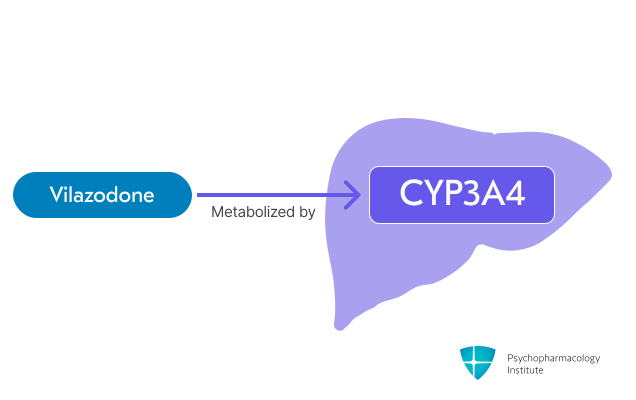
- Vilazodone is extensively metabolized in the liver, primarily via CYP3A4 (major pathway) [3]
- Minor contributions from CYP2C19 and CYP2D6
- Bioavailability considerations:
- Must be taken with food
- The absolute bioavailability of vilazodone is 72% when taken with food.
- Fasting decreases AUC by ~50% and Cmax by ~60%, risking subtherapeutic exposure. [3]
- Drug interactions
- Vilazodone levels increased by:
- Strong CYP3A4 inhibitors (ketoconazole, itraconazole, clarithromycin, voriconazole)
- Reduce vilazodone dose to a maximum 20 mg/day [3]
- Return to the original dose when the inhibitor is discontinued
- Vilazodone levels decreased by:
- Strong CYP3A4 inducers (carbamazepine, phenytoin, rifampin)
- Consider increasing vilazodone dose up to 80 mg/day after 14 days of concurrent use [3]
- Return to original dose gradually within 14 days after discontinuing the inducer [3]
- Vilazodone levels increased by:
- P-glycoprotein:
- Vilazodone may inhibit P-glycoprotein (PGP), potentially increasing plasma concentrations of PGP substrates.
- However, the clinical significance of PGP inhibition by vilazodone is unclear [2,8]
- Concomitant use with digoxin, a narrow therapeutic index PGP substrate, may increase digoxin levels [3]
- Measure serum digoxin concentrations before initiating concomitant use and monitor levels, reducing the digoxin dose as necessary [3]
- Vilazodone may inhibit P-glycoprotein (PGP), potentially increasing plasma concentrations of PGP substrates.
Pharmacodynamic Interactions
- MAOIs
- A 14-day washout period is required when switching to or from an MAOI [3]
- This includes MAOIs intended for psychiatric use (e.g., phenelzine, tranylcypromine) as well as others with MAOI properties, such as the antibiotic linezolid and intravenous methylene blue.
- Serotonergic drugs (e.g., SSRIs, SNRIs, TCAs, triptans)
- Concomitant use increases the risk of serotonin syndrome
- Monitor closely for symptoms. If serotonin syndrome occurs, discontinue [3]
- Anticoagulants, antiplatelet agents, or NSAIDs
- Use of drugs that interfere with serotonin reuptake increases the risk of bleeding events, especially with concomitant use of NSAIDs, aspirin, antiplatelets, or anticoagulants [2,9]
- Vilazodone’s 96-99% protein binding could potentially displace other highly protein-bound medications with narrow therapeutic indices, including warfarin and digoxin [2]
- For patients taking warfarin, carefully monitor coagulation indices when initiating, titrating, or discontinuing vilazodone [3]
Half-life
- Vilazodone’s half-life is approximately 25 hours [3]
Dosage forms
- Immediate-release tablets:
- 10 mg, 20 mg, 40 mg
- Brand name: Viibryd
- Starter pack available (contains 10 mg and 20 mg tablets for titration)
- Formulation considerations
- Must be taken with food to ensure adequate absorption
- Can be taken morning or evening, though some patients prefer morning dosing if activation occurs
- Tablets can be split if needed for dose titration
Indications
FDA-Approved Indications
Major Depressive Disorder (MDD)
- Vilazodone is approved for the treatment of MDD in adults [10]
- The latest guidelines (CANMAT 2024) list vilazodone as a first-line antidepressant (versus second-line in CANMAT 2016) [10]
- Despite theoretical mechanisms suggesting accelerated efficacy, there is no convincing evidence for a faster onset of action compared with other antidepressants [2]
- MDD and comorbid anxiety
- Mixed evidence overall; no superiority over SSRIs/SNRIs [2]
- Pooled/post-hoc analyses showed greater improvements vs placebo in anxious-depressed subgroups [7]
- However, citalopram 40 mg/day improved HAM-A vs placebo, whereas vilazodone 20/40 mg/day did not [6]
- Mixed evidence overall; no superiority over SSRIs/SNRIs [2]
- Dosing:
- Starting dose: 10 mg once daily with food for 7 days [3]
- Titration:
- After 7 days, increase the dose to 20 mg once daily with food.
- The dose may be further increased to 40 mg once daily after a minimum of another 7 days [3]
- This titration schedule is intended to reduce gastrointestinal side effects.
- Target dose: 20 mg to 40 mg once daily.
- Maximum dose: 40 mg/day.
- Dose adjustments
- With strong CYP3A4 inhibitors: Maximum 20 mg/day
- With strong CYP3A4 inducers for >14 days: May increase up to 80 mg/day
- If inadequate response
- Confirm doses are taken with food (fasting reduces exposure by ~50%), review for CYP3A4 inducers/inhibitors, and address GI tolerability before concluding nonresponse
Off-Label Uses
Generalized anxiety disorder (GAD)
- Not recommended yet as a first-line agent.
- Three industry-sponsored RCTs found that vilazodone 20–40 mg/day improved Hamilton Anxiety Rating Scale (HAM-A) scores vs placebo [ [11]; [12,13]
- 40 mg consistently separated from placebo; 20 mg showed mixed results
- Functional outcomes were less robust; more GI adverse effects than placebo
- Overall small effect size and a moderate risk of bias reported in meta-analysis [14]
Social anxiety disorder
- Small pilot RCT showed greater improvement vs placebo at 12 weeks [15]
- Further research is needed
Obsessive-compulsive disorder (OCD)
- Reviews note no documented clinical trials of vilazodone in OCD (despite theoretical 5-HT1A rationale) [16]
- Use is not evidence-based at this time.
Side effects
Most common side effects
- Gastrointestinal [3]
- Diarrhea (26-29% incidence)
- Most common gastrointestinal adverse effect [17]
- Usually transient and improves with continued treatment
- Nausea (22-24% incidence)
- Most common reason for treatment discontinuation (1.4%) [3]
- Dose-related effect
- Generally occurs in the first 1-2 weeks of treatment
- Can be minimized by taking it with food as recommended
- Dry mouth (7-8% incidence)
- Vomiting (4-5% incidence)
- Diarrhea (26-29% incidence)
- Neurological/Psychiatric [3]
- Headache (14-15% incidence)
- Insomnia (6-7% incidence)
- May be managed by morning dosing
- Consider dose reduction or slower titration if persistent
- Dizziness (6-8% incidence)
- Abnormal dreams (2-3% incidence)
- Somnolence (4-5% incidence)
- Paresthesia (2% incidence)
Other side effects
- Sexual dysfunction
- Claims of a lower risk compared with SSRIs remain unproven; reported rates were influenced by baseline sexual dysfunction [2]
- In patients without baseline dysfunction, incidence was relatively low (~8%), but no robust head-to-head advantage has been established [2]
- Males: Abnormal orgasm 2%, erectile dysfunction 3%, decreased libido 3-4%, ejaculatory disorder 2% [3]
- Females: Abnormal orgasm 1%, decreased libido 2% [3]
- Claims of a lower risk compared with SSRIs remain unproven; reported rates were influenced by baseline sexual dysfunction [2]
- Weight change
- Generally weight-neutral in clinical studies [6,18]
- Short-term trials: Mean weight change 0.2–0.4 kg with vilazodone vs 0.1–0.4 kg with placebo; ≥7% weight gain occurred in 1% (vilazodone) vs 0.4% (placebo) [17,18]
- Long-term (52-week open-label): Mean increase 1.7 kg; only 2 discontinuations due to weight gain. [19]
- Discontinuation of therapy
- Discontinuation syndrome symptoms are not common with vilazodone [2]
- However, since vilazodone acts as a serotonin reuptake inhibitor, a gradual tapering down of the vilazodone dose over 1–2 weeks is recommended whenever possible for patients who need to discontinue treatment [8]
- Discontinuing from 40 mg/day: Taper to 20 mg/day for 4 days, followed by 10 mg/day for 3 days before stopping completely [3]
- Discontinuing from 20 mg/day: Taper to 10 mg/day for 7 days before stopping [3]
Severe side effects
- Serotonin syndrome
- Risk increases with concomitant use of other serotonergic drugs
- Can also occur when used alone (0.1% incidence in pre-marketing trials) [3]
- Acute pancreatitis (postmarketing) [20]
- Rare; consider in patients with severe abdominal pain (± nausea/vomiting) [3]
- Bleeding risk
- May impair platelet aggregation, particularly when used with NSAIDs, antiplatelet agents, or anticoagulants [2,9]
- Exercise caution in patients at risk for bleeding.
- For patients taking warfarin, carefully monitor coagulation indices when initiating, titrating, or discontinuing vilazodone [3]
- Hyponatremia
- One published case report of vilazodone-associated hyponatremia [21]
- Can occur as with other serotonergic antidepressants, in many cases as the result of the syndrome of inappropriate antidiuretic hormone secretion (SIADH) [3]
- Higher risk in elderly patients and those taking diuretics [3]
- Suicidal thoughts/behaviors (boxed warning)
- Monitor closely during initiation and dose changes; not approved in pediatrics. [3]
- Activation of mania/hypomania
- Screen for bipolar disorder; monitor for decreased need for sleep, grandiosity. [3]
- Angle-closure glaucoma
- Pupillary dilation may trigger an angle closure attack in patients with anatomically narrow angles [3]
- Screen patients with narrow angles who have not had iridectomy
- Educate about symptoms: eye pain, vision changes, eye redness/swelling
Contraindications
- Concomitant use of monoamine oxidase inhibitors (MAOIs), or use within 14 days of stopping MAOIs
Use in special populations
Pregnancy
- First-trimester safety
- Animal studies showed no teratogenicity at doses up to 10× (rat) and 4× (rabbit) the maximum recommended human dose [3,22]
- Limited human data, one published case report described a healthy term infant after maternal vilazodone 40 mg/day throughout pregnancy (development normal at 6 months) [23]
- Pregnancy complications
- Similar to other serotonergic antidepressants
- Late pregnancy exposure may be associated with
- Neonatal adaptation syndrome [3]
- Persistent pulmonary hypertension of the newborn (PPHN) [3,24–28]
- In 2011, the FDA issued a Drug Safety Communication retracting its previous warning and clarifying that it remained unclear whether serotonin reuptake inhibitors increased the risk of PPHN [29]
- Although no pregnancy data existed for vilazodone at the time, the FDA included it in this 2011 communication
Breastfeeding
- There are no data on the presence of vilazodone in human milk. However, vilazodone is excreted in rat milk [3]
- One case report documented normal infant development at 6 months following maternal vilazodone 40 mg/day exposure during breastfeeding [23]
- Breastfed infants should be monitored for:
- Sedation
- Poor feeding patterns
- Weight gain adequacy
- Development
Hepatic impairment
- No dosage adjustment needed across mild to severe hepatic impairment (Child-Pugh scores 5–15) [3]
Renal impairment
- No dosage adjustment needed in mild to severe renal impairment (eGFR 15–90 mL/min) [3]
Elderly
- No dose adjustment needed [3]
Brand names
- US: Viibryd, Viibryd Starter Pack
- Canada: Viibryd, Viibryd Starter Pack, APO-Vilazodone
References
- Schwartz, T. L., Siddiqui, U. A., & Stahl, S. M. (2011). Vilazodone: A brief pharmacological and clinical review of the novel serotonin partial agonist and reuptake inhibitor. Therapeutic Advances in Psychopharmacology, 1(3), 81–87. https://doi.org/10.1177/2045125311409486
- Chauhan, M., Parry, R., & Bobo, W. V. (2022). Vilazodone for Major Depression in Adults: Pharmacological Profile and an Updated Review for Clinical Practice. Neuropsychiatric Disease and Treatment, 18, 1175–1193. https://doi.org/10.2147/NDT.S279342
- Food, & Administration, D. (2023). VIIBRYD® (vilazodone hydrochloride) tablets, for oral use prescribing information. https://www.accessdata.fda.gov/drugsatfda_docs/label/2024/022567s025lbl.pdf
- Sahli, Z. T., Banerjee, P., & Tarazi, F. I. (2016). The Preclinical and Clinical Effects of Vilazodone for the Treatment of Major Depressive Disorder. Expert Opinion on Drug Discovery, 11(5), 515–523. https://doi.org/10.1517/17460441.2016.1160051
- Wagner, G., Schultes, M.-T., Titscher, V., Teufer, B., Klerings, I., & Gartlehner, G. (2018). Efficacy and safety of levomilnacipran, vilazodone and vortioxetine compared with other second-generation antidepressants for major depressive disorder in adults: A systematic review and network meta-analysis. Journal of Affective Disorders, 228, 1–12. https://doi.org/10.1016/j.jad.2017.11.056
- Mathews, M., Gommoll, C., Chen, D., Nunez, R., & Khan, A. (2015). Efficacy and safety of vilazodone 20 and 40mg in major depressive disorder: A randomized, double-blind, placebo-controlled trial. International Clinical Psychopharmacology, 30(2), 67–74. https://doi.org/10.1097/YIC.0000000000000057
- Thase, M. E., Chen, D., Edwards, J., & Ruth, A. (2014). Efficacy of vilazodone on anxiety symptoms in patients with major depressive disorder. International Clinical Psychopharmacology, 29(6), 351–356. https://doi.org/10.1097/YIC.0000000000000045
- Laughren, T. P., Gobburu, J., Temple, R. J., Unger, E. F., Bhattaram, A., Dinh, P. V., Fossom, L., Hung, H. M. J., Klimek, V., Lee, J. E., Levin, R. L., Lindberg, C. Y., Mathis, M., Rosloff, B. N., Wang, S.-J., Wang, Y., Yang, P., Yu, B., Zhang, H., … Zineh, I. (2011). Vilazodone: Clinical basis for the US Food and Drug Administration’s approval of a new antidepressant. The Journal of Clinical Psychiatry, 72(9), 1166–1173. https://doi.org/10.4088/JCP.11r06984
- Bixby, A. L., VandenBerg, A., & Bostwick, J. R. (2019). Clinical Management of Bleeding Risk With Antidepressants. Annals of Pharmacotherapy, 53(2), 186–194. https://doi.org/10.1177/1060028018794005
- Lam, R. W., Kennedy, S. H., Adams, C., Bahji, A., Beaulieu, S., Bhat, V., Blier, P., Blumberger, D. M., Brietzke, E., Chakrabarty, T., Do, A., Frey, B. N., Giacobbe, P., Gratzer, D., Grigoriadis, S., Habert, J., Ishrat Husain, M., Ismail, Z., McGirr, A., … Milev, R. V. (2024). Canadian Network for Mood and Anxiety Treatments (CANMAT) 2023 Update on Clinical Guidelines for Management of Major Depressive Disorder in Adults: Réseau canadien pour les traitements de l’humeur et de l’anxiété (CANMAT) 2023 : Mise à jour des lignes directrices cliniques pour la prise en charge du trouble dépressif majeur chez les adultes. Can. J. Psychiatry, 69(9), 641–687. https://doi.org/10.1177/07067437241245384
- Gommoll, C., Forero, G., Mathews, M., Nunez, R., Tang, X., Durgam, S., & Sambunaris, A. (2015). Vilazodone in patients with generalized anxiety disorder: A double-blind, randomized, placebo-controlled, flexible-dose study. International Clinical Psychopharmacology, 30(6), 297–306. https://doi.org/10.1097/YIC.0000000000000096
- Gommoll, C., Durgam, S., Mathews, M., Forero, G., Nunez, R., Tang, X., & Thase, M. E. (2015). A DOUBLE-BLIND, RANDOMIZED, PLACEBO-CONTROLLED, FIXED-DOSE PHASE III STUDY OF VILAZODONE IN PATIENTS WITH GENERALIZED ANXIETY DISORDER. Depression and Anxiety, 32(6), 451–459. https://doi.org/10.1002/da.22365
- Durgam, S., Gommoll, C., Forero, G., Nunez, R., Tang, X., Mathews, M., & Sheehan, D. V. (2016). Efficacy and Safety of Vilazodone in Patients With Generalized Anxiety Disorder: A Randomized, Double-Blind, Placebo-Controlled, Flexible-Dose Trial. The Journal of Clinical Psychiatry, 77(12), 1687–1694. https://doi.org/10.4088/JCP.15m09885
- Zareifopoulos, N., & Dylja, I. (2017). Efficacy and tolerability of vilazodone for the acute treatment of generalized anxiety disorder: A meta-analysis. Asian Journal of Psychiatry, 26, 115–122. https://doi.org/10.1016/j.ajp.2017.01.016
- Careri, J. M., Draine, A. E., Hanover, R., & Liebowitz, M. R. (2015). A 12-Week Double-Blind, Placebo-Controlled, Flexible-Dose Trial of Vilazodone in Generalized Social Anxiety Disorder. The Primary Care Companion for CNS Disorders, 17(6), 10.4088/PCC.15m01831. https://doi.org/10.4088/PCC.15m01831
- Kayser, R. R. (2020). Pharmacotherapy for Treatment-Resistant Obsessive-Compulsive Disorder. The Journal of Clinical Psychiatry, 81(5), 19ac13182. https://doi.org/10.4088/JCP.19ac13182
- Khan, A., Cutler, A. J., Kajdasz, D. K., Gallipoli, S., Athanasiou, M., Robinson, D. S., Whalen, H., & Reed, C. R. (2011). A randomized, double-blind, placebo-controlled, 8-week study of vilazodone, a serotonergic agent for the treatment of major depressive disorder. The Journal of Clinical Psychiatry, 72(4), 441–447. https://doi.org/10.4088/JCP.10m06596
- Croft, H. A., Pomara, N., Gommoll, C., Chen, D., Nunez, R., & Mathews, M. (2014). Efficacy and safety of vilazodone in major depressive disorder: A randomized, double-blind, placebo-controlled trial. The Journal of Clinical Psychiatry, 75(11), e1291–1298. https://doi.org/10.4088/JCP.14m08992
- Robinson, D. S., Kajdasz, D. K., Gallipoli, S., Whalen, H., Wamil, A., & Reed, C. R. (2011). A 1-year, open-label study assessing the safety and tolerability of vilazodone in patients with major depressive disorder. Journal of Clinical Psychopharmacology, 31(5), 643–646. https://doi.org/10.1097/JCP.0b013e31822c6741
- Food, & Administration, D. (2016). VIIBRYD® (vilazodone hydrochloride) tablets, for oral use SUPPLEMENT APPROVAL [Letter]. https://www.accessdata.fda.gov/drugsatfda_docs/appletter/2016/022567Orig1s019ltr.pdf
- Das, S., & Thirthalli, J. (2019). Dose dependent hyponatremia caused by Vilazodone: A case report. Asian Journal of Psychiatry, 43, 213. https://doi.org/10.1016/j.ajp.2017.11.003
- Agrawal, P., Singh, P., & Singh, K. P. (2024). Vilazodone exposure during pregnancy: Effects on embryo-fetal development, pregnancy outcomes and fetal neurotoxicity by BDNF/Bax-Bcl2/5-HT mediated mechanisms. Neurotoxicology, 105, 280–292. https://doi.org/10.1016/j.neuro.2024.10.012
- Morrison, C. M. (2014). A Case Report of the Use of Vilazodone in Pregnancy. The Primary Care Companion for CNS Disorders, 16(2), PCC.13l01612. https://doi.org/10.4088/PCC.13l01612
- Chambers, C. D., Hernandez-Diaz, S., Van Marter, L. J., Werler, M. M., Louik, C., Jones, K. L., & Mitchell, A. A. (2006). Selective serotonin-reuptake inhibitors and risk of persistent pulmonary hypertension of the newborn. The New England Journal of Medicine, 354(6), 579–587. https://doi.org/10.1056/NEJMoa052744
- Andrade, S. E., McPhillips, H., Loren, D., Raebel, M. A., Lane, K., Livingston, J., Boudreau, D. M., Smith, D. H., Davis, R. L., Willy, M. E., & Platt, R. (2009). Antidepressant medication use and risk of persistent pulmonary hypertension of the newborn. Pharmacoepidemiology and Drug Safety, 18(3), 246–252. https://doi.org/10.1002/pds.1710
- Källén, B., & Olausson, P. O. (2008). Maternal use of selective serotonin re-uptake inhibitors and persistent pulmonary hypertension of the newborn. Pharmacoepidemiology and Drug Safety, 17(8), 801–806. https://doi.org/10.1002/pds.1570
- Wichman, C. L., Moore, K. M., Lang, T. R., Sauver, J. L. St., Heise, R. H., & Watson, W. J. (2009). Congenital Heart Disease Associated With Selective Serotonin Reuptake Inhibitor Use During Pregnancy. Mayo Clinic Proceedings, 84(1), 23–27. https://doi.org/10.4065/84.1.23
- Kieler, H., Artama, M., Engeland, A., Ericsson, O., Furu, K., Gissler, M., Nielsen, R. B., Nørgaard, M., Stephansson, O., Valdimarsdottir, U., Zoega, H., & Haglund, B. (2012). Selective serotonin reuptake inhibitors during pregnancy and risk of persistent pulmonary hypertension in the newborn: Population based cohort study from the five Nordic countries. BMJ (Clinical Research Ed.), 344, d8012. https://doi.org/10.1136/bmj.d8012
- Research, C. for D. E. and. (Wed, 06/26/2019 – 10:43). FDA Drug Safety Communication: Selective serotonin reuptake inhibitor (SSRI) antidepressant use during pregnancy and reports of a rare heart and lung condition in newborn babies. FDA. https://www.fda.gov/drugs/drug-safety-and-availability/fda-drug-safety-communication-selective-serotonin-reuptake-inhibitor-ssri-antidepressant-use-during
