



In a nutshell
Lumateperone (Caplyta) is a second-generation antipsychotic with strong 5-HT2A blockade and weak D2 engagement. That profile is why it has been near-placebo for extrapyramidal symptoms and akathisia, prolactin-sparing, and placebo-level for weight and metabolic measures. This makes it an option for patients who did not tolerate a previous antipsychotic [1–4]
It is FDA-approved for schizophrenia, for bipolar I/II depression (monotherapy and adjunctive with lithium or valproate), and as adjunctive therapy for MDD [1]
The trade-offs are the smallest effect size of the 24 antipsychotics in a recent meta-analysis of acute schizophrenia, somnolence well above placebo, and a brand-only price near $20,900 a year [1,4,5]

- When to consider lumateperone:
- Consider alternatives when:
- Rapid, robust control of acute, severely agitated psychosis is the priority
- Higher-D2-affinity agents (olanzapine, risperidone) may achieve larger short-term symptom reductions [4]
- Sedation would be unacceptable (safety-critical work, established daytime somnolence)
- Somnolence ran two to six times the placebo rate in all three trial programs [1]
- A CYP3A4 inducer such as rifampin, carbamazepine, or phenytoin cannot be avoided [1,12]
- A lower dose is wanted, as in first-episode patients [13]
- Cost or formulary access is decisive
- Dementia-related psychosis: not an approved use, and the boxed warning on increased mortality applies, as with all antipsychotics [1]
- Rapid, robust control of acute, severely agitated psychosis is the priority
Pharmacodynamics and mechanism of action
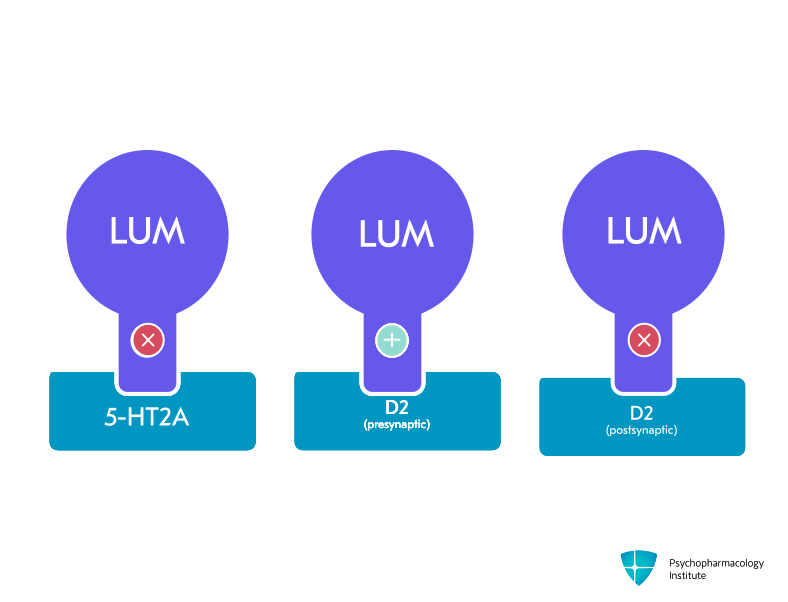
- Lumateperone’s antipsychotic and antidepressant activity is attributed to combined antagonism at 5-HT2A receptors and partial agonism at dopamine D2 receptors, with additional serotonin-transporter inhibition [1]
- Serotonergic blockade dominates at therapeutic doses: 5-HT2A affinity is about 60-fold higher than D2 affinity (Ki 0.54 nM vs 32 nM) [1]
-
Receptor occupancy is the proposed explanation for the clinical profile: serotonergic first, and not enough D2 at the approved dose for motor or prolactin effects [1,2]
| Target | Affinity | Action | Clinical relevance |
|---|---|---|---|
| 5-HT2A | ●●●●● | Antagonist | Primary target; >80% cortical occupancy after a single 7 mg dose (healthy volunteers) |
| Dopamine D2 | ●●●○○ | Partial agonist | Low striatal occupancy (~39%); near-placebo EPS and prolactin in the schizophrenia trials |
| SERT | ●●●○○ | Inhibitor | Hypothesized antidepressant contribution; clinically, may add to SSRI/SNRI adverse reactions (serotonin syndrome, hyponatremia) |
| α1A/α1B-adrenergic | ●●●○○ | Binding only (function not stated) | Orthostatic hypotension is greatest at initiation |
| H1 and muscarinic | ●○○○○ | Binding only (function not stated) | Minimal binding is the proposed basis of the placebo-level weight and metabolic profile |
Affinity dots follow the label’s own categories: ●●●●● high, ●●●○○ moderate, ●○○○○ low (less than 50% inhibition at 100 nM); the underlying Ki values are 5-HT2A 0.54 nM, D2 32 nM, SERT 33 nM and α1A/α1B 100 nM or less [1]
- Minimal off-target binding is the proposed basis of its tolerability [1,2]
- Minimal H1 and muscarinic binding is the proposed reason for the placebo-level short-term weight and metabolic changes [1,2]
- The mechanism of the somnolence seen in trials has not been established; because H1 binding is negligible, an antihistaminic mechanism is unlikely [1,14]
- 5-HT2A antagonism, which promotes slow-wave sleep with selective 5-HT2A antagonists, and α1-adrenergic binding are the candidate contributors; neither has been tested directly for lumateperone [14]
- Muscarinic affinity is low, although dry mouth is a labeled common reaction (see Side effects)
- Minimal H1 and muscarinic binding is the proposed reason for the placebo-level short-term weight and metabolic changes [1,2]
Pharmacokinetics
Metabolism
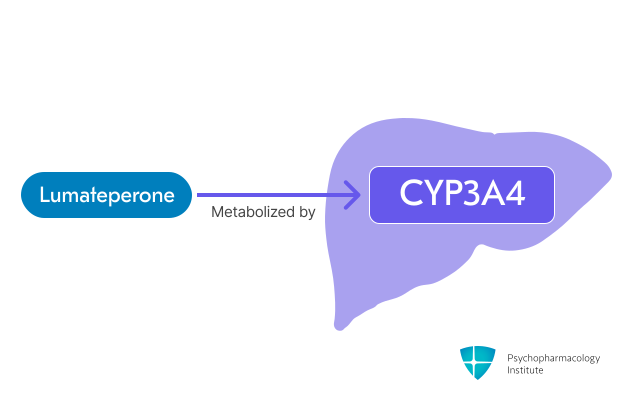
- CYP3A4 is the pathway with clinical considerations [1]
- It is the only pathway for which the label sets a dose change or avoidance
-
No dose adjustment is needed with UGT inhibitors, valproate included, although glucuronide metabolites make up about half of circulating drug-related material [1]
-
In vitro, lumateperone shows little or no inhibition or induction of the major CYP enzymes and does not appear to be a P-gp or BCRP substrate [1]
- It is unlikely to alter the levels of co-prescribed drugs
Bioavailability considerations and food effect
- Absolute oral bioavailability is low (about 4.4%), consistent with extensive first-pass metabolism; Cmax at 1–2 hours [1]
- Can be taken with or without food [1]
- A high-fat meal lowers the peak by about a third and delays it by about an hour without changing total exposure (see Dosage forms) [1]
Half-life
- Terminal half-life about 18 hours; steady state in about 5 days with once-daily oral dosing [1]
- No clinically meaningful pharmacokinetic differences by age, sex, or race, although the efficacy trials enrolled almost no patients aged 65 or older [1]
Drug Interactions

Pharmacokinetic Interactions
- CYP3A4 inducers: avoid, as a class and not only the strong ones; rifampin all but abolished exposure, and the label’s answer is to avoid the combination, not to raise the dose [1]
- CYP3A4 inhibitors: reduce the dose [1,15]
- Itraconazole (strong) raised AUC 3.8-fold; diltiazem (moderate) 2.3-fold
- Grapefruit juice counts as a strong or a moderate inhibitor depending on the preparation; the simplest advice is to avoid it
- No adjustment needed [1]
- UGT inhibitors (probenecid, valproic acid)
- When lumateperone is combined with CYP3A4 substrates (midazolam unaffected)
Pharmacodynamic Interactions
- Serotonin reuptake inhibitors: monitor, do not avoid [1]
- Its moderate SERT activity may add to SRI-associated reactions (serotonin syndrome, hyponatremia), although the MDD trials saw no clinically significant interaction with adjunctive SSRIs/SNRIs
- Post-marketing reports carry a serotonin-syndrome signal in one FAERS analysis but not in a second (see Side effects › Tolerability considerations) [16,17]
- Additive risk with other drugs that cause somnolence or orthostatic hypotension, such as antihypertensives:
- Monitor orthostatic vital signs at the start of treatment and assess fall risk in vulnerable patients [1]
Dosage forms
- Capsules: 42 mg, 21 mg, 10.5 mg [1]
- Dosing:
- 42 mg once daily is the start, target, and maximum dose across all three indications [1]
- Dose titration is not needed
- No starting dose below 42 mg is approved
- The lower strengths exist for dose reduction, not for titration [1]
- 21 mg with a moderate CYP3A4 inhibitor, or in moderate-to-severe hepatic impairment (Child-Pugh B or C)
- 10.5 mg with a strong CYP3A4 inhibitor
- The label sets no renal dose reduction (see Use in special populations)
- Take with or without food [1]
- 42 mg once daily is the start, target, and maximum dose across all three indications [1]
- The trade-off of a fixed dose
- Every patient starts at the full dose, so somnolence and dizziness are the events to warn about [1]
- They were predominantly mild in the pivotal trials, and evening dosing is the practical answer (how the fixed dose shaped the acceptability data is in Indications › Clinical positioning) [1,2]
- The absence of any lower dose also limits its use where a smaller dose would be preferable, such as in first-episode patients, who may need lower doses [13]
Indications
Clinical positioning
- Best viewed as a tolerability-driven, second-line antipsychotic: fewer side effects than most, but the lowest acute efficacy of the 24 antipsychotics compared [4]
- What recommends it is metabolic, EPS, and prolactin sparing plus dosing simplicity, not efficacy magnitude [1,4]
- The same network meta-analysis suggests aripiprazole when tolerability is the primary concern, because it keeps mid-range efficacy
- Lumateperone ranked low on efficacy even after adjustment for placebo response [4]
- Brand-only, with no generic at any strength, which reinforces second-line use [5,20]
- Most reasonable when the tolerability profile is the deciding consideration, in bipolar depression (including bipolar II), or as MDD augmentation after antidepressant nonresponse
- Prefer alternatives:
- When maximal acute antipsychotic efficacy is needed
- When an unavoidable CYP3A4 inducer is on board
- When cost or access is a concern
- The fixed 42 mg dose shapes its acceptability data. In the adjunctive MDD network meta-analysis, lumateperone ranked first on efficacy but last on all-cause discontinuation [10]
- Its trials used one fixed 42 mg dose while the comparators were studied across several fixed and flexible doses, so tolerability and study design are partly conflated; the authors leave open whether a 10.5–21 mg lead-in would reduce early dropout, and the label recommends 42 mg without titration [1,10]
- In practice: evening dosing, and warning patients about sedation, which was predominantly mild in the phase 3 schizophrenia trial [2]
FDA-Approved Indications
Schizophrenia (adults)
- Approved for the treatment of schizophrenia in adults [1]
- Maintenance and relapse prevention: new label data, April 2026 [1,22]
- The FDA approved an sNDA adding relapse-prevention data to the label in April 2026, announced on 27 April [22]
- What changed is the evidence in the label, not the indication: the same three indications remain [1]
- The practical significance is largely regulatory and payer-facing, since maintenance treatment was already standard practice
- The evidence is a randomized-withdrawal trial: patients stabilized on 18 weeks of open-label lumateperone were randomized to continue 42 mg or switch to placebo, and continuing delayed relapse; the design shows that continuing beats stopping in patients already doing well on the drug, and it allows no comparison with another antipsychotic [1,22]
- The FDA approved an sNDA adding relapse-prevention data to the label in April 2026, announced on 27 April [22]
- How it compares with other antipsychotics in schizophrenia
- Efficacy: the smallest effect on overall symptoms of the 24 antipsychotics in a 2026 acute-schizophrenia network meta-analysis, and low even after adjustment for placebo response [4]
- A separate 2025 network meta-analysis found no significant PANSS separation from placebo [23]
- Tolerability: among the best in the same analysis [4]
- Efficacy: the smallest effect on overall symptoms of the 24 antipsychotics in a 2026 acute-schizophrenia network meta-analysis, and low even after adjustment for placebo response [4]
Bipolar I or II depression (adults)
- Approved for depressive episodes associated with bipolar I or II disorder, as monotherapy and as adjunctive therapy with lithium or valproate [1]
- Monotherapy (6 weeks): the positive trial was effective in both bipolar I and bipolar II, with a moderate effect size [6]
- A second monotherapy trial did not separate from placebo at either dose, which its authors attribute to a high placebo response; with no active comparator, it cannot tell a failed trial from a negative one [9]
- Adjunctive to lithium or valproate (6 weeks): a smaller effect at 42 mg, and the 28 mg dose did not separate from placebo on the primary endpoint [1,7]
- Bipolar II specifically: a pooled post hoc analysis of the late-phase trials supports benefit in this historically under-studied group [8]
- Durability: open-label extension data only (6 months after the negative monotherapy trial, 58% completion, no control arm), with no notable weight, metabolic, prolactin, or EPS change [24]
- Monotherapy (6 weeks): the positive trial was effective in both bipolar I and bipolar II, with a moderate effect size [6]
- Where it sits among alternatives for bipolar depression
- Efficacy: ranked below quetiapine and lurasidone for response in a 2024 network meta-analysis of the FDA-approved antipsychotics, and did not separate from placebo on remission [25]
- A 2026 network meta-analysis found a small effect on depressive symptoms in its low-risk-of-bias analysis, the smallest among the drugs that separated from placebo; no drug beat placebo on response or remission [26]
- Tolerability: the lowest weight gain of the class, but more somnolence than placebo and than lurasidone [25]
- On balance, a tolerability-favorable option rather than the most potent one, particularly as monotherapy and in bipolar II [6,25]
- Efficacy: ranked below quetiapine and lurasidone for response in a 2024 network meta-analysis of the FDA-approved antipsychotics, and did not separate from placebo on remission [25]
Adjunctive treatment of MDD (adults), added November 2025
- Approved as adjunctive therapy with antidepressants for MDD in adults; the registration trials enrolled patients with an inadequate response to one or two prior antidepressants [1]
- A moderate effect: depression scores fell 4.5 to 5 MADRS points more than with placebo at 6 weeks in each of the two trials (effect sizes 0.56 and 0.61) [1,27,28]
- In practice, one extra responder for every 5 patients treated and one extra remission for every 9 (NNT 5 and 9 in one trial, about the same when both are pooled) [27,29]
- First on efficacy among the FDA-approved adjunctive antipsychotics in two network meta-analyses, one of them manufacturer-funded [10,11]
- The one that measured acceptability ranked it last (see Clinical positioning) [10]
- Durability: open-label extension data only, with continued improvement and no notable cardiometabolic change over 6 months, uncontrolled [30]
Off-Label and Emerging Uses
Depression with mixed features
- Not FDA-approved, but a randomized trial of 42 mg monotherapy improved depression in MDD and in bipolar depression with mixed features [31]
- May be considered as a reasonable emerging option for depressive episodes with subsyndromal mixed (manic/hypomanic) features, where antidepressant monotherapy is problematic
Side effects
Lumateperone is generally well tolerated. In the trials to date, weight, glucose, and lipid measures stayed at placebo level, EPS and akathisia were near placebo, and prolactin was minimally affected [1,3,4]. That evidence is short-term and largely sponsor-run, so treat “weight-neutral” as the current picture rather than a settled property. The most common adverse effects are somnolence/sedation, dizziness, dry mouth, and nausea [1]
Most common side effects
Neurological/Psychiatric
- Somnolence/sedation [1]
- The largest excess over placebo in schizophrenia and bipolar depression; in adjunctive MDD, dizziness and dry mouth matched or exceeded it
- Schizophrenia 24% vs 10% placebo; bipolar depression 13% vs 3%; adjunctive MDD 12% vs 2%
- The label sets no time of day; the mood trials dosed in the evening by design (see Dosage forms) [6,27,28]
- Mid-range of the class for sedation, unlike the rest of its profile: two network meta-analyses put it at more than double placebo [4,23]
- Dizziness (including postural): schizophrenia 5%, bipolar 8–11%, MDD 17% (vs 5% placebo) [1]
- Orthostatic hypotension: 0.7% vs 0% in schizophrenia, none in bipolar depression, 6.6% vs 6.2% in adjunctive MDD; check orthostatic vitals at initiation in patients vulnerable to hypotension [1]
- Headache (bipolar 14% vs 8%; MDD 19% vs 13%) and fatigue (MDD 8% vs 2%) [1]
Gastrointestinal
- Nausea (8–9%), dry mouth (5–13%), vomiting, diarrhea: mostly mild to moderate in the trial that reported severity [1,27]
- Dry mouth occurs despite low muscarinic affinity; the label states no mechanism for it [1]
- Creatine phosphokinase increased (4% vs 1%) and transaminases increased (2% vs 1%) in the schizophrenia trials [1]
Metabolic and endocrine
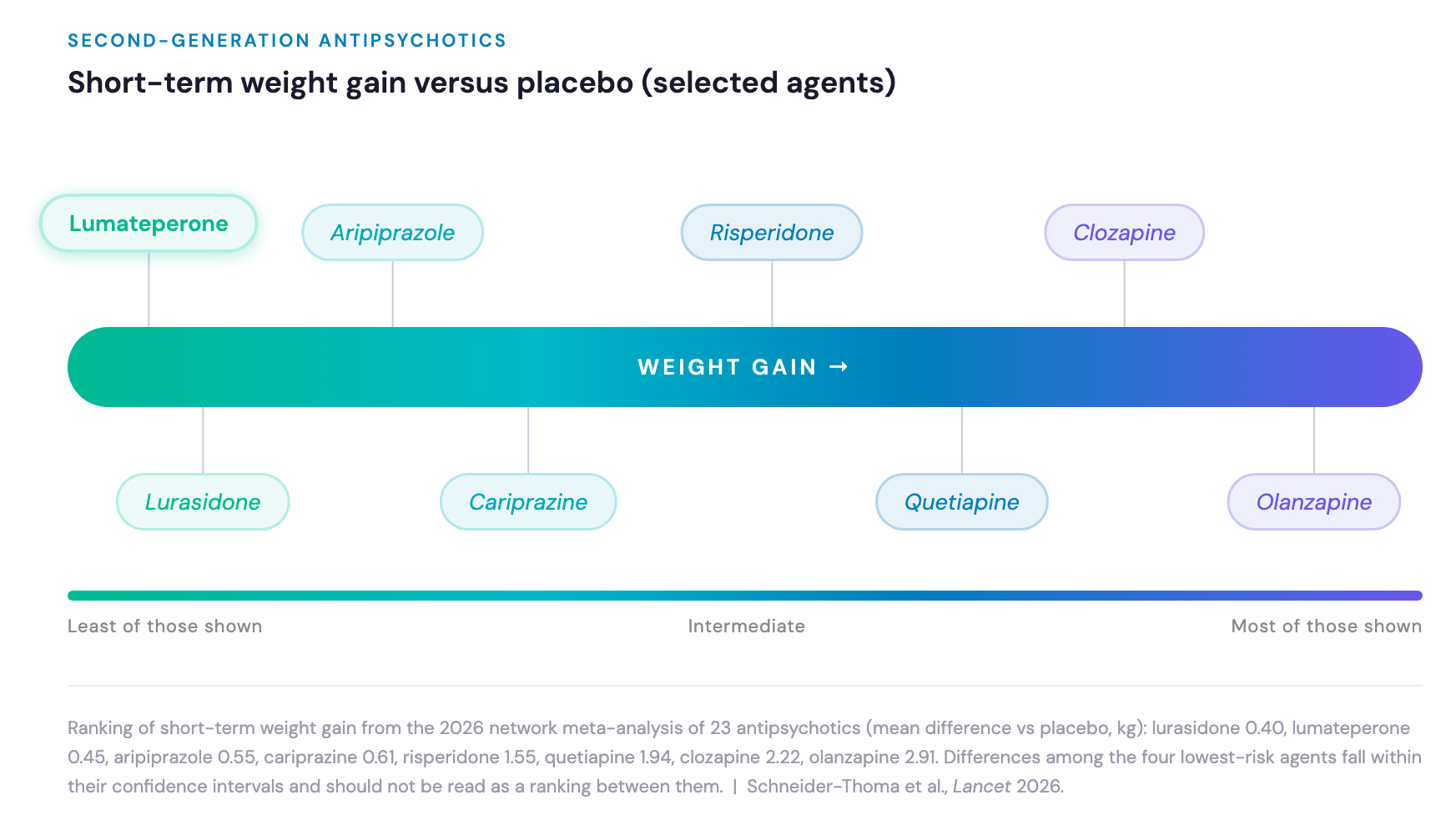
- Weight: placebo-level in the trials, with one discordant finding
- Short-term weight change and the proportion gaining ≥7% were similar to placebo across the schizophrenia, bipolar, and MDD programs [1,3]
- Network meta-analyses in acute schizophrenia, bipolar depression, and adjunctive MDD agree, placing it at the low end of the class for weight gain (on a single trial in bipolar depression and an exploratory outcome in MDD) [4,10,25]
- Long-term open-label data showed net weight loss in schizophrenia (about −3 kg at 1 year, in a study that 38% of patients completed) and no change in bipolar depression and MDD over 6 months [1,33]
- One discordant finding: a smaller network meta-analysis, built on the two short-term schizophrenia trials only, reported a higher risk of ≥7% weight gain; its primary analysis took each trial’s highest dose arm, in one trial twice the approved dose [23]
- It is outweighed by the larger analyses above, but is worth knowing before presenting weight neutrality as settled
- Glucose and lipids
- Short-term changes in fasting glucose, insulin, cholesterol, and triglycerides were similar to placebo [1]
- The label still asks for fasting glucose and lipids at baseline and periodically, and weight at baseline and frequently, and it notes reports of hyperglycemia [1]
- In the 1-year open-label schizophrenia trial, 8% shifted to high fasting glucose and 5% of those with a normal HbA1c reached 6.5% or more [1]
- Metabolic syndrome prevalence was essentially unchanged in both arms in a sponsor-funded post hoc analysis of two bipolar depression trials, published as a congress abstract [34]
- Prolactin
Motor (EPS and akathisia)
- Near-placebo rates in most of the program [1]
- Schizophrenia: total EPS-related events 6.7% vs 6.3% placebo
- Bipolar depression: 1.3% vs 1.1% as monotherapy, 4% vs 2.3% adjunctive to lithium or valproate
- Akathisia/restlessness in adjunctive MDD: ~1% vs ~0.8% placebo
- Caveat: in the adjunctive MDD trials, non-akathisia EPS events were 5% vs 0.8% on placebo, mostly tremor (4% vs under 1%); in the trial that reported onset and severity, most cases began in the first 2 weeks and most were mild [1,27]
- Akathisia itself stayed at placebo level in the same trials
- Ask about tremor and stiffness, not only restlessness, when using it as an antidepressant adjunct
Severe or rare side effects
QT prolongation
- Minimal at therapeutic dose: placebo-corrected QTcF +4.9 msec at 42 mg [1]
- A larger effect (+15.8 msec) appeared only at 3× the recommended dose [1]
Class antipsychotic warnings
- Neuroleptic malignant syndrome and tardive dyskinesia remain class warnings [1]
- Increased mortality in older adults with dementia-related psychosis (boxed warning) and cerebrovascular events including stroke in the same population (warning); not approved for this use [1]
- Leukopenia and neutropenia have been reported with lumateperone [1]
- Monitor CBC during the first months in patients with a low WBC/ANC or a history of drug-induced leukopenia
- Stop if the ANC falls below 1000/mm³ [1]
Suicidal thoughts and behaviors (boxed warning)
- Per the antidepressant class boxed warning: increased risk of suicidal thinking and behavior in patients < 25 years [1]
- Monitor closely during initiation and dose changes
Tolerability considerations
- No single adverse reaction led to discontinuation in more than 2% of patients in any program [1]
- Post-marketing reports to the FDA show disproportionate reporting of mania and hypomania, serotonin syndrome, somnolence, tardive dyskinesia, and neuroleptic malignant syndrome
Use in special populations
Pregnancy
- Human pregnancy data specific to lumateperone are limited to case reports, insufficient to establish any risk of birth defects, miscarriage, or adverse maternal or fetal outcomes [1]
- Class-level evidence does not support antipsychotics as major teratogens: a 2026 meta-analysis of over 10 million pregnancies found a borderline, nonsignificant increase in congenital malformations overall and none with second-generation agents as a class [36]
- Preterm birth is the outcome that did separate, with moderate-to-high heterogeneity, and confounding by illness severity is difficult to exclude; none of this is lumateperone-specific [36]
- Third-trimester exposure risks extrapyramidal and/or withdrawal symptoms in the neonate; monitor the newborn and manage symptoms as they arise [1]
- Animal data: no malformations in rats or rabbits at multiples of the maximum human dose; the one signal near the clinical range is fewer live-born pups at about twice that dose [1]
- Manage via shared decision-making, weighing the risks of untreated illness (relapse, hospitalization, suicide) against these signals [1,36]
Breastfeeding
- Low transfer into milk [1]
- Estimated daily infant dose 0.0004 mg/kg/day, a relative infant dose of 0.06%, far below the 10% conventionally considered compatible with breastfeeding [1,37]
- Major circulating metabolites appeared in milk at similarly low amounts; aniline metabolites were below quantifiable levels in milk and maternal plasma
- There are still no data on effects in the breastfed infant or on milk production [1]
Females and males of reproductive potential
- Animal findings suggest lumateperone may impair fertility in both sexes [1]
- The label cites animal findings only and describes no human fertility data [1]
Hepatic impairment
- Mild (Child-Pugh A): no adjustment [1]
- Moderate or severe (Child-Pugh B or C): reduce to 21 mg once daily [1]
Renal impairment
- The label sets no renal dose adjustment; it does not address dialysis [1]
Older adults
- No specific dose adjustment, but the evidence base is thin [1]
- The boxed warning for increased mortality in older adults with dementia-related psychosis applies, and lumateperone is not approved for that use [1]
- Tardive dyskinesia risk is highest in older adults, particularly older women [1]
- Watch for hyponatremia when combining with a serotonin reuptake inhibitor [1]
Brand names
- US: Caplyta [1]
- Canada: Not currently approved [39]
- Other countries/regions:
- Argentina: Neuronovo 42 (Bagó), 42 mg only, approved for schizophrenia and bipolar depression but not for adjunctive MDD [40,41]
- India: approved by CDSCO in December 2024 for bipolar depression only (Sun Pharma, 42 mg capsules), after an expert-committee recommendation in October 2024 [42,43]
- No marketing authorization found in the EMA (EU), UK, Australian, Japanese or Korean registers as of September 2026 [44–49]
References
1. Intra-Cellular Therapies, Inc. (2026). CAPLYTA (lumateperone) capsules, for oral use: US prescribing information.
2. Correll, C. U., Davis, R. E., Weingart, M., Saillard, J., O’Gorman, C., Kane, J. M., Lieberman, J. A., Tamminga, C. A., Mates, S., & Vanover, K. E. (2020). Efficacy and Safety of Lumateperone for Treatment of Schizophrenia: A Randomized Clinical Trial. JAMA Psychiatry, 77(4), 349–358.
3. Satodiya, R. M., Brown, V. R., Njuguna, S. W., & Bied, A. M. (2022). A Systematic Review of Clinical Trials on Lumateperone and Its Effects on Body Weight. Journal of Clinical Psychopharmacology, 42(5), 495–499.
4. Schneider-Thoma, J., Zhu, Y., Qin, M., Dong, Y., Guan, S., Wang, J., Tian, J., Lin, X., Rodolico, A., Siafis, S., Bighelli, I., Wehner, M., Veith, C., Krayer, F., Scheuring, E., Davis, J. M., Priller, J., Nikolakopoulou, A., Salanti, G., … Leucht, S. (2026). Comparative efficacy and tolerability of antidopaminergic and muscarinic antipsychotics for acute schizophrenia: A network meta-analysis of randomised controlled trials indexed in international English and Chinese databases. The Lancet, 407(10531), 876–891.
5. Centers for Medicare & Medicaid Services. (2026). National average drug acquisition cost (NADAC): Weekly comparison file. Medicaid.gov open data.
6. Calabrese, J. R., Durgam, S., Satlin, A., Vanover, K. E., Davis, R. E., Chen, R., Kozauer, S. G., Mates, S., & Sachs, G. S. (2021). Efficacy and Safety of Lumateperone for Major Depressive Episodes Associated With Bipolar I or Bipolar II Disorder: A Phase 3 Randomized Placebo-Controlled Trial. American Journal of Psychiatry, 178(12), 1098–1106.
7. Suppes, T., Durgam, S., Kozauer, S. G., Chen, R., Lakkis, H. D., Davis, R. E., Satlin, A., Vanover, K. E., Mates, S., McIntyre, R. S., & Tohen, M. (2023). Adjunctive lumateperone (ITI-007) in the treatment of bipolar depression: Results from a randomized placebo-controlled clinical trial. Bipolar Disorders, 25(6), 478–488.
8. Durgam, S., Lakkis, H., Kozauer, S. G., Chen, C., & McIntyre, R. S. (2025). Efficacy of Lumateperone in depression associated with bipolar II disorder: A pooled analysis of late-phase clinical trials. CNS Spectrums, 30(1), e80.
9. Correll, C. U., Durgam, S., Kozauer, S. G., Lakkis, H. D., Chen, C., Vanover, K. E., Mates, S., & Davis, R. E. (2026). Lumateperone monotherapy for major depressive episodes associated with bipolar disorder: Efficacy and safety in a randomized placebo-controlled trial. International Clinical Psychopharmacology, 41(2), 120–129.
10. McIntyre, R. S., Stahl, S. M., Shim, S. R., Pompili, M., Goldberg, J. F., Correll, C. U., Kwan, A. T. H., Dri, C. E., Xu, H., Vinberg, M., & Rhee, T. G. (2026). Adjunctive Antipsychotics in Major Depressive Disorder: A Systematic Review and Network Meta-Analysis. JAMA Psychiatry, 83(7), 741–750.
11. Cutler, A. J., Lemyre, A., Zhang, Q., Mao, C., Totev, T. I., Gauthier-Loiselle, M., Wu, Y., Liu, J., Hashim, M., Namjoshi, M., Sheehan, J. J., Pilon, D., Lefebvre, P., Khoury, A. C. E., & Citrome, L. (2026). Efficacy and Safety of Lumateperone and Other Atypical Antipsychotics Approved as Adjunctive Treatment for Major Depressive Disorder in the United States: A Network Meta-Analysis. Advances in Therapy, 43(9), 4079–4103.
12. US Food and Drug Administration. (2023). Drug development and drug interactions: Table of substrates, inhibitors and inducers. FDA web page, content current as of 5 June 2023.
13. Siafis, S., Wu, H., Wang, D., Burschinski, A., Nomura, N., Takeuchi, H., Schneider-Thoma, J., Davis, J. M., & Leucht, S. (2023). Antipsychotic dose, dopamine D2 receptor occupancy and extrapyramidal side-effects: A systematic review and dose-response meta-analysis. Molecular Psychiatry, 28(8), 3267–3277.
14. Snyder, G. L., Vanover, K. E., Zhu, H., Miller, D. B., O’Callaghan, J. P., Tomesch, J., Li, P., Zhang, Q., Krishnan, V., Hendrick, J. P., Nestler, E. J., Davis, R. E., Wennogle, L. P., & Mates, S. (2015). Functional profile of a novel modulator of serotonin, dopamine, and glutamate neurotransmission. Psychopharmacology, 232(3), 605–621.
15. US Food and Drug Administration. (2020). Drug development and drug interactions: Table of substrates, inhibitors and inducers. Table 3-2, examples of clinical inhibitors for P450-mediated metabolisms (03/06/2020), and table 3-3, examples of clinical inducers (12/03/2019). FDA web page, content current as of 10 March 2020; archived copy of 1 March 2022 at web.archive.org.
16. Zhao, D., Zhang, W., Liu, Y., & Yan, Z. (2024). Post-marketing safety concerns with lumateperone: A pharmacovigilance analysis based on the FDA adverse event reporting system (FAERS) database. Frontiers in Pharmacology, 15, 1389814.
17. Zhang, Y., Zhou, C., Liu, Y., Hao, Y., Wang, J., Song, B., & Yu, J. (2024). Adverse event signal mining and severe adverse event influencing factor analysis of Lumateperone based on FAERS database. Frontiers in Pharmacology, 15, 1472648.
18. US Food and Drug Administration. (2026). Drugs@FDA: Lumateperone abbreviated new drug applications with tentative approval (ANDA 219085 Aurobindo, 219142 Hetero, 219200 Alkem, 219229 Dr. Reddy’s, 219248 MSN). Drugs@FDA database, accessed 8 September 2026.
19. Kane, J. M., Durgam, S., Satlin, A., Vanover, K. E., Chen, R., Davis, R., & Mates, S. (2021). Safety and tolerability of lumateperone for the treatment of schizophrenia: A pooled analysis of late-phase placebo- and active-controlled clinical trials. International Clinical Psychopharmacology, 36(5), 244–250.
20. Intra-Cellular Therapies, Inc. (2025). Intra-cellular therapies settles CAPLYTA (lumateperone) patent litigation with sandoz. Form 8-K, Exhibit 99.1, US Securities and Exchange Commission.
21. Lieberman, J. A., Davis, R. E., Correll, C. U., Goff, D. C., Kane, J. M., Tamminga, C. A., Mates, S., & Vanover, K. E. (2016). ITI-007 for the Treatment of Schizophrenia: A 4-Week Randomized, Double-Blind, Controlled Trial. Biological Psychiatry, 79(12), 952–961.
22. Johnson & Johnson. (2026). FDA approves CAPLYTA (lumateperone) sNDA with robust new data supporting reduced risk of relapse in schizophrenia. Press release, Titusville, NJ.
23. Abusalameh, A., Andonie, C. R., Ladadweh, M., Hodrob, T., Ismail, I., & Ayesh, H. (2025). Efficacy and Safety of Cariprazine, Asenapine, Xanomeline–Trospium, and Lumateperone for Acute Exacerbations of Schizophrenia in Adults: A Network Meta-Analysis. Schizophrenia Bulletin Open, 6(1), sgaf024.
24. Tohen, M., Durgam, S., Kozauer, S. G., Chen, C., Davis, R. E., & Mates, S. (2026). Long-term safety and tolerability of lumateperone 42 mg in patients with bipolar disorder: Results from a 6-month open-label extension study. International Clinical Psychopharmacology, 41(2), 130–137.
25. Li, S., Xu, C., Hu, S., & Lai, J. (2024). Efficacy and tolerability of FDA-approved atypical antipsychotics for the treatment of bipolar depression: A systematic review and network meta-analysis. European Psychiatry, 67(1), e29.
26. Fornaro, M., Di Lorenzo, C., Oliva, V., De Prisco, M., & Vieta, E. (2026). Efficacy, acceptability, and related outcomes of pharmacological interventions for acute bipolar depression: A systematic review and dose-related network meta-analysis across different age groups. Journal of Affective Disorders, 412, 122160.
27. Durgam, S., Earley, W. R., Kozauer, S. G., Chen, C., Lakkis, H., McIntyre, R. S., & Stahl, S. (2025). Lumateperone as adjunctive therapy in patients with major depressive disorder: Results from a randomized, double-blind, phase 3 trial. The Journal of Clinical Psychiatry, 86(4), 25m15848.
28. Durgam, S., Earley, W. R., Kozauer, S. G., Mo, Y., Lakkis, H., Edwards, J. B., Kornstein, S. G., & Fava, M. (2025). Adjunctive Lumateperone in Patients With Major Depressive Disorder: Results From a Randomized, Double-Blind, Phase 3 Trial. American Journal of Psychiatry, 182, 1072–1082.
29. Durgam, S., Earley, W., Kozauer, S., Chen, C., Edwards, J., & Jain, R. (2025). 612. Efficacy of lumateperone 42 mg in the treatment of major depressive disorder: A pooled analysis of phase 3 randomized controlled trials. International Journal of Neuropsychopharmacology, 28(Supplement 2), ii77–ii78.
30. Durgam, S., Earley, W. R., Kozauer, S. G., Chen, C., Lakkis, H., & Cutler, A. J. (2026). Long-term adjunctive lumateperone 42 mg treatment in major depressive disorder: Results from a 6-month open-label extension study. European Neuropsychopharmacology, 108, 112786.
31. Durgam, S., Kozauer, S. G., Earley, W. R., Chen, C., Huo, J., Lakkis, H., Stahl, S., & McIntyre, R. S. (2025). Lumateperone for the treatment of major depressive disorder with mixed features or bipolar depression with mixed features: A randomized placebo-controlled trial. Journal of Clinical Psychopharmacology, 45(2), 67–75.
32. McIntyre, R. S., Durgam, S., Huo, J., Kozauer, S. G., & Stahl, S. M. (2023). The Efficacy of Lumateperone in Patients With Bipolar Depression With Mixed Features. The Journal of Clinical Psychiatry, 84(3).
33. Correll, C. U., Durgam, S., Kozauer, S. G., Chen, C., & Earley, W. R. (2026). Long-term safety and tolerability of lumateperone 42 mg in patients with stable symptoms of schizophrenia: Results from a 1-year open-label study. Schizophrenia Research, 297, 393–402.
34. Correll, C. U., Kozauer, S. G., Lands, M., Huo, J., & Durgam, S. (2023). Metabolic Syndrome in Bipolar Depression with Lumateperone (ITI-007): A Post Hoc Analysis of 2 Randomized, Placebo-Controlled Trials. CNS Spectrums, 28(2), 247–248.
35. Earley, W. R., Durgam, S., Kozauer, S. G., Chen, C., Migliore, R., & Correll, C. U. (2026). Safety and Tolerability of Adjunctive Lumateperone for the Treatment of Major Depressive Disorder: A Pooled Analysis of Two Randomized Placebo-Controlled Trials. CNS Drugs, 40(10), 1395–1408.
36. Quinn, D., Donnelly, M., & O’Neill, C. (2026). Antipsychotic drug use during pregnancy and neonatal outcomes: A systematic review and meta-analysis. Archives of Women’s Mental Health, 29(1), 12.
37. Andrade, C. (2026). The Relative Infant Dose for Maternal Use of Drugs During Breastfeeding: Nuances in Derivation, Interpretation, and Application. The Journal of Clinical Psychiatry, 87(3).
38. US Food and Drug Administration. (2017). Drugs@FDA glossary of terms: Tentative approval. FDA web page, content current as of 14 November 2017; accessed 8 September 2026.
39. Health Canada. (2026). Drug Product Database online query: lumateperone.
40. Laboratorios Bagó. (2026). Neuronovo 42 (lumateperona 42 mg, cápsulas duras): Prospecto (document header reads PROYECTO DE PROSPECTO, digitally signed). ANMAT-approved prescribing information, Argentina.
41. Administracion Nacional de Medicamentos, Alimentos y Tecnologia Medica. (2025). Inscripciones en el Registro de Especialidades Medicinales (REM) durante el ano 2025.
42. Central Drugs Standard Control Organisation. (2024). List of New Drugs approved in the year 2024 till date.
43. Central Drugs Standard Control Organisation. (2024). Recommendations of the SEC (Neurology and Psychiatry) made in its 14th/24 meeting held on 16.10.2024.
44. European Medicines Agency. (2026). Applications for new human medicines under evaluation by the CHMP: September 2026 (EMA/201150/2026).
45. Datapharm. (2026). Electronic Medicines Compendium Search: Lumateperone.
46. Medicines and Healthcare products Regulatory Agency. (2026). MHRA Products: Substance index, letter L.
47. Therapeutic Goods Administration. (2026). Australian register of therapeutic goods search: lumateperone.
48. Pharmaceuticals and Medical Devices Agency. (2026). Database of drugs approved by the FDA but not approved in Japan.
49. Ministry of Food and Drug Safety. (2026). Drug product search (Uiyakpum Anjeon Nara): lumateperone.
