
In a nutshell
Brexpiprazole is a second-generation antipsychotic and dopamine partial agonist. Consider it after akathisia or activation on aripiprazole, when a partial agonist is still the goal: brexpiprazole activates D2 less, so less of both is possible, not proven. In schizophrenia and depression, aripiprazole usually comes first when it has not been tried, given its ranking in recent network meta-analyses and its generic price [1–8]
Unlike aripiprazole, brexpiprazole is FDA-approved for agitation in Alzheimer’s dementia, with a small average benefit. In schizophrenia trials it was neither activating nor sedating [2,9–12]
The trade-offs are modest efficacy, dose-related akathisia in depression, weight gain of about 2 to 3 kg over a year in open-label studies, and a brand-only US price near $18,000 a year [5,8,9,12–16]

- When to consider brexpiprazole:
- Akathisia or activation on aripiprazole, when the goal is to stay on a partial agonist [1,2]
- Agitation in Alzheimer’s dementia that persists after non-pharmacologic approaches [9,17,18]
- MDD with inadequate response to antidepressants, as a first-line add-on in the 2023 CANMAT update, as is aripiprazole [9,19]
- Schizophrenia, as one of several options when tolerability is the priority, including adolescents from 13 (see Indications › Clinical positioning) [5,9,20]
- Consider alternatives when:
- Aripiprazole has not been tried
- Akathisia already limits treatment and a partial agonist is not essential
- Akathisia is one of the most common adverse reactions in adjunctive depression, where it rose with dose [9]
- A larger effect on acute psychotic symptoms is the priority: olanzapine, risperidone, or amisulpride (where available) may be preferred [5]
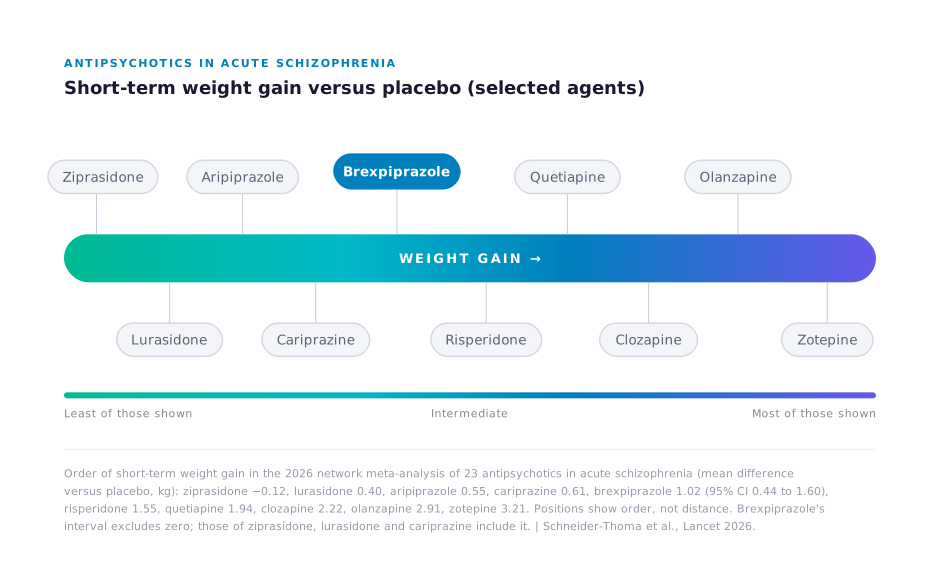
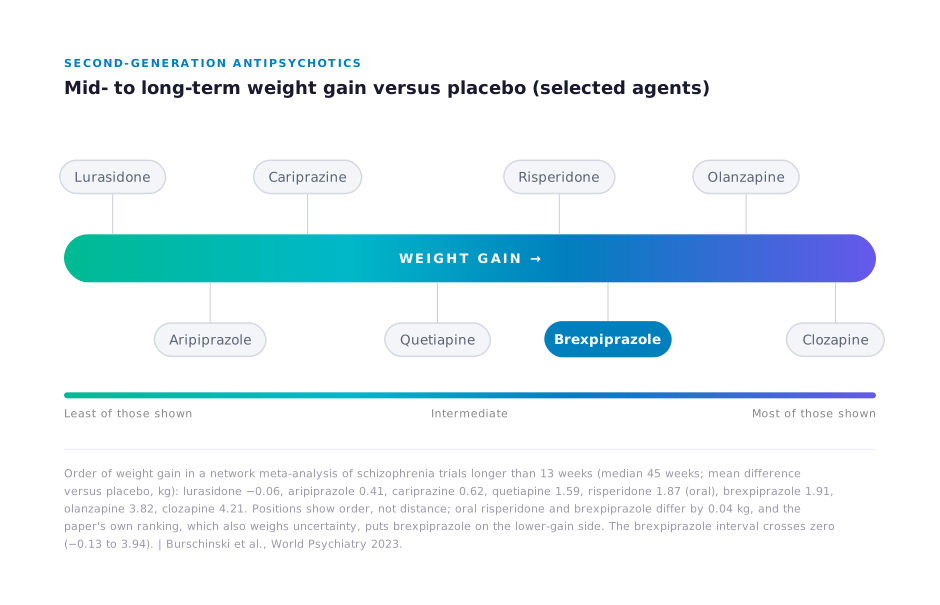
- Weight gain would be a problem: in schizophrenia trials, aripiprazole, cariprazine and lurasidone gained less weight than brexpiprazole, short and long term, on point estimates with overlapping intervals [5,21]
- Cost or formulary access is decisive: brand only in practice in the US [8]
Pharmacodynamics and mechanism of action
- Brexpiprazole is a partial agonist at dopamine D2 and serotonin 5-HT1A receptors, and an antagonist at serotonin 5-HT2A receptors and at alpha-1B and alpha-2C adrenergic receptors [3,9]
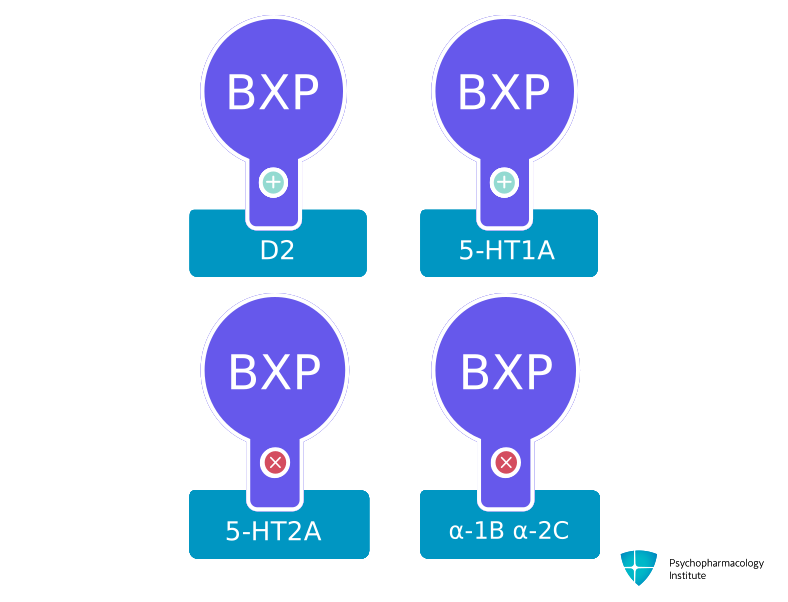
- Lower D2 intrinsic activity and akathisia
- Receptor profile [3–5,9,22,23]
- On PET at steady state in patients with schizophrenia, occupancy was high at D2 (64% at 1 mg/day and 80% at 4 mg/day), moderate at 5-HT2A (28% and 45%) and negligible at 5-HT1A (under 5% at 4 mg), in a small industry-funded study [22]
| Target | Affinity | Action | Clinical relevance |
|---|---|---|---|
| Dopamine D2 | ●●●●○ | Partial agonist with low intrinsic activity | Antipsychotic effect |
| 5-HT1A | ●●●●○ | Partial agonist | Part of the label’s efficacy hypothesis, though occupancy on PET was negligible |
| 5-HT2A | ●●●●○ | Antagonist | Proposed to lower extrapyramidal risk, a contested theory: parkinsonism still rises with dose |
| Alpha-1B and alpha-2C | ●●●●○ | Antagonist | Orthostatic hypotension (1% or less) and orthostasis-related dizziness (2% to 3%) |
| Dopamine D3 | ●●●○○ | Partial agonist | No measurable occupancy at 4 mg |
| 5-HT2B, 5-HT7, alpha-1A and alpha-1D | ●●●○○ | Antagonist | Clinical relevance unknown |
| H1 | ●●○○○ | Binding only | Possible contributor to the modest somnolence (see Side effects) |
| Muscarinic M1 | ●○○○○ | Binding only | Low anticholinergic burden (see Side effects) |
Affinity dots group the published binding affinities (Ki): ●●●●○ subnanomolar, ●●●○○ nanomolar, ●●○○○ moderate, ●○○○○ low [3,9]
Pharmacokinetics and Drug Interactions
Metabolism
- Brexpiprazole is metabolized mainly by CYP3A4 and CYP2D6 [9]
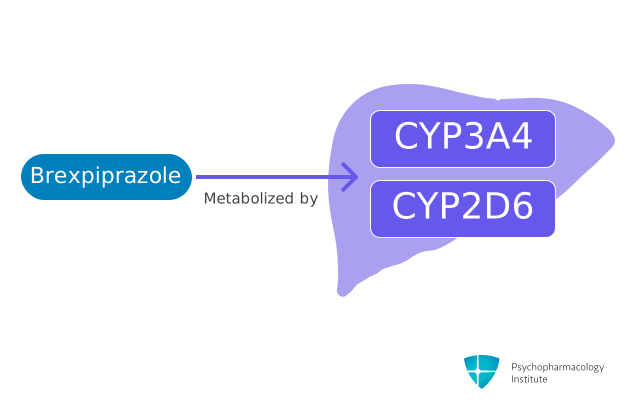
- Known CYP2D6 poor metabolizers: halve the dose, and quarter it with a strong or moderate CYP3A4 inhibitor [9]
- Genotyping is not routine; in known poor metabolizers the pharmacogenetics guideline also recommends a dose reduction [24]
Half-life
- Half-life about 4 days (91 hours) [9]
- A dose change is fully reflected in plasma after about two weeks: steady state comes in 10 to 12 days [9]
- Side effects can appear a week or two after an increase, a practical inference from the time to steady state [9]
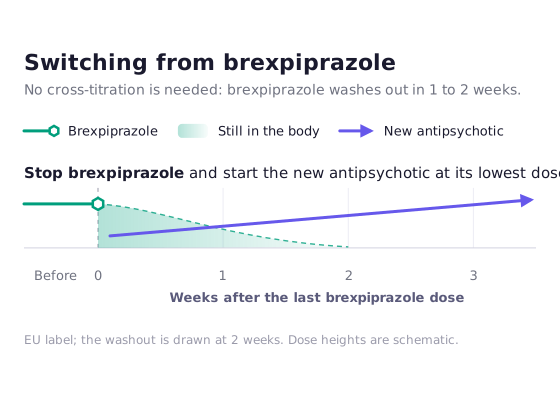
- After stopping, the drug washes out in 1 to 2 weeks [25]
Absorption and food
- Once daily, with or without food (see Dosage forms) [9]
Drug interactions

Pharmacokinetic interactions
- Halve the dose when one pathway is blocked, quarter it when both are, double it with a strong CYP3A4 inducer [9]
| Scenario | Brexpiprazole dose |
|---|---|
| Strong CYP2D6 inhibitor (e.g., fluoxetine, paroxetine, bupropion) | Half |
| Strong CYP3A4 inhibitor (e.g., nefazodone, clarithromycin, itraconazole, ketoconazole) | Half |
| A strong or moderate inhibitor of both CYP3A4 and CYP2D6 (e.g., fluoxetine, paroxetine or duloxetine with erythromycin, fluconazole or verapamil) | A quarter |
| Strong CYP3A4 inducer (e.g., carbamazepine, phenytoin, St John’s wort, rifampin) | Double over 1 to 2 weeks; back down over 1 to 2 weeks when the inducer stops |
| A single moderate inhibitor of either enzyme | No adjustment in the label |
Doses from the US label; examples from the EU label and the FDA’s list of interacting drugs [9,25,26]
- When an inhibitor stops, return to the original dose [9]
- Adjunctive MDD: no adjustment for strong CYP2D6 inhibitors such as fluoxetine or paroxetine, because the trials did not adjust for them; still, favor 1 to 2 mg with them, a practical inference from the FDA’s review [9,27]
- In that review of the depression trials, akathisia at 3 mg reached 24% with fluoxetine or paroxetine vs. 11% with other antidepressants, without more discontinuations; the reviewer advised halving the dose, and the label did not adopt it [9,27]
- A known CYP2D6 poor metabolizer still takes half the dose in depression [9]
- Brexpiprazole as a perpetrator: other drugs need no adjustment; it had no clinically relevant effect on the substrates tested [9]
Pharmacodynamic interactions
- Other antipsychotics:
- Additive orthostasis with antihypertensives: check orthostatic vital signs, especially during titration [9,25]
- Alcohol and other centrally acting drugs: use caution [25]
Dosage forms
- Tablets: 0.25 mg, 0.5 mg, 1 mg, 2 mg, 3 mg and 4 mg [9]
- The 0.25 mg and 0.5 mg strengths cover the quarter and half doses with CYP interactions (see Pharmacokinetics); 0.5 mg is also a starting dose in depression, adolescent schizophrenia and dementia agitation (see Indications) [9]
- Every strength costs the same, about $49.50 a tablet (about $18,000 a year), so a lower dose saves nothing [8]
- Brand cariprazine costs about the same; generic aripiprazole standard tablets cost 12 to 18 cents each [8]
- Formulation considerations
Indications
Clinical positioning
- Efficacy is modest in all three indications, and the main trade-offs are akathisia in depression and weight gain over the first year (see Side effects) [5,13–16]
- Adjunctive MDD: first-line in the 2023 CANMAT update, as is aripiprazole [19]
- The US Veterans Affairs guideline lists augmentation with a second-generation antipsychotic among four unranked options after partial or no response [28]
- Schizophrenia: one of several options, as the APA guideline favors no antipsychotic over another, clozapine possibly aside [20]
- Agitation in Alzheimer’s dementia: only after non-pharmacologic approaches; the Canadian label also limits it to aggressive behavior [29,30]
- The Beers criteria advise avoiding antipsychotics for behavioral problems of dementia unless documented non-pharmacologic options have failed or the patient threatens substantial harm to self or others [18]
- Most reasonable when:
- Akathisia or activation on aripiprazole is the reason to switch, and the goal is to stay on a partial agonist [1,2]
- Tolerability is the priority over maximal efficacy in schizophrenia [5]
- Agitation in Alzheimer’s dementia persists after non-drug approaches, and the family accepts a small average benefit and the mortality warning [9,17]
- Prefer alternatives:
- When a larger effect on acute psychotic symptoms is the priority (olanzapine, risperidone, or amisulpride where available) [5]
- When tolerability is the priority in schizophrenia and aripiprazole has not been tried
- The 2026 network meta-analysis suggests aripiprazole, which keeps mid-range efficacy [5]
- The 2025 INTEGRATE guidelines point the same way: with first-episode psychosis and no patient preference, they recommend a drug with a lower side-effect burden, such as a D2 partial agonist (e.g., aripiprazole), and their dosing table includes brexpiprazole [31]
- When augmentation with aripiprazole has not been tried
- When weight gain is unacceptable
- Aripiprazole, cariprazine, lurasidone and ziprasidone gained less weight than brexpiprazole in short-term schizophrenia trials, on point estimates [5]
- All four had lower point estimates than brexpiprazole in schizophrenia trials longer than 13 weeks, with overlapping intervals (see Side effects) [21]
- When an antipsychotic is not acceptable for agitation in dementia
- Dextromethorphan-bupropion has the same indication without an antipsychotic’s mortality warning [32]
- When cost or access is decisive: generic aripiprazole costs cents a tablet, and brexpiprazole is brand only (see Dosage forms) [8]
FDA-Approved Indications
Major depressive disorder, adjunctive to antidepressants (adults)
- Approved as adjunctive therapy to antidepressants for MDD in adults [9]
- Trial patients had failed one to three antidepressant courses in the current episode and then an 8-week prospective antidepressant course [9]
- Efficacy rests on four positive 6-week trials [9,33–36]
- Effect size: small, a standardized mean difference of 0.20 vs. placebo at week 6 in a meta-analysis [13]
- 1 mg did not separate, and functioning did not separate in the later trials [9,35,36]
- Number needed to treat for response: 12 in the two label trials, and 17 in a meta-analysis that also included unpublished trials [13,37]
- Patients with anxious distress responded at least as well, in a prespecified subgroup of one trial and in two sponsor-funded post hoc analyses [35,38,39]
- A 24-week trial missed its remission endpoint and did not separate on MADRS at week 6; longer-term data are open-label [16,40]
- How it compares with the other approved add-ons
- CANMAT lists akathisia and weight gain as common to brexpiprazole and aripiprazole [19]
- In a 2026 network meta-analysis of the approved adjunctive antipsychotics [7]
- Response: third, behind lumateperone and aripiprazole, with overlapping intervals
- Acceptability: third, behind aripiprazole and cariprazine, and more patients stopped treatment than on placebo
- Dosing [9]
- Starting dose: 0.5 mg or 1 mg once daily, added to the antidepressant; prefer 0.5 mg when akathisia is a concern [41]
- Titration: 1 mg, then 2 mg, at weekly intervals
- Target dose: 2 mg once daily
- Maximum dose: 3 mg/day
- Dose tip: stay at 2 mg; efficacy peaked around 2 mg in a dose-response meta-analysis, and 3 mg doubled akathisia in the label’s pooled fixed-dose trials (14% vs. 7%, arms from different trials) [9,42]
Schizophrenia
- Approved for the treatment of schizophrenia in adults and in adolescents from 13 years [9]
- How it compares with other antipsychotics in schizophrenia
- Efficacy: in the low-efficacy group of a 2026 network meta-analysis of 24 antipsychotics, with lumateperone, iloperidone, cariprazine and lurasidone [5]
- Tolerability: the same analysis found the partial agonists, brexpiprazole included, better tolerated overall than dopamine antagonists [5]
- Versus aripiprazole
- Head to head, reported non-inferior on symptoms at 6 weeks, with similar adverse events, in one Otsuka-sponsored, double-blind trial in China [46,47]
- An earlier network meta-analysis of short-term trials found no significant difference on any outcome in its primary analysis [6]
- Less akathisia is possible, not proven (see Side effects) [5,6]
- Dosing in adults [9]
- Dosing in adolescents (13 to 17 years) [9]
- Starting dose: 0.5 mg once daily on days 1 to 4
- Titration: 1 mg on days 5 to 7, 2 mg on day 8, then weekly steps of 1 mg
- Target dose: 2 to 4 mg once daily
- Maximum dose: 4 mg/day
- Switching to brexpiprazole:
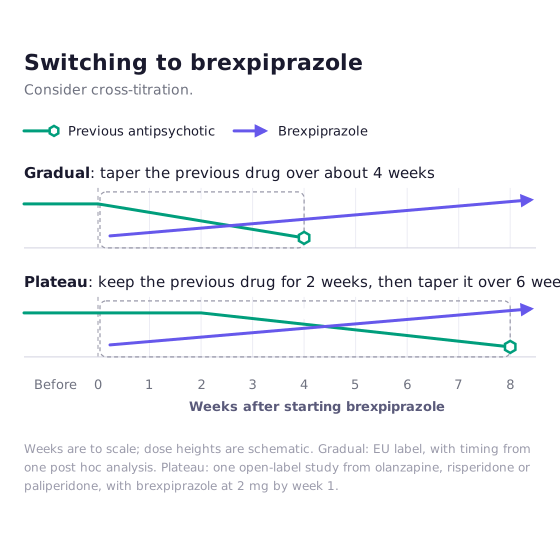
A 2025 systematic review found no randomized comparison of switching strategies for brexpiprazole [53]
Patients with treatment-resistant schizophrenia failed the switch more often, in a retrospective series [55]
Switching from brexpiprazole:
- Stop it and start the new antipsychotic at its lowest dose; no cross-titration is needed, as brexpiprazole washes out in 1 to 2 weeks [25]
Agitation associated with dementia due to Alzheimer’s disease
- Approved in May 2023 as the first drug for this indication [56]
- What the benefit means in practice
- Expect a small average improvement: 3 to 6 points on the 29 to 203 agitation scale across two meta-analyses, and a new trial could plausibly show none [9,11,12]
- Weigh it against slightly worse parkinsonism ratings and the mortality warning (see Side effects) [9,11]
- The balance is debated
- A larger benefit with co-occurring psychotic symptoms remains a hypothesis: 9.2 vs. 4.2 points over placebo, with overlapping intervals, in a sponsor-authored exploratory post hoc analysis; dementia-related psychosis without agitation is not an approved use [9,60]
- Dosing [9]
- Starting dose: 0.5 mg once daily on days 1 to 7
- Titration: 1 mg on days 8 to 14, then 2 mg from day 15
- Target dose: 2 mg once daily
- Maximum dose: 3 mg/day, only after at least 14 days at 2 mg
- Dose tip:
Off-label and emerging uses
- Post-traumatic stress disorder: not approved, and with efficacy not established, not a reasonable off-label choice [61,62]
- The FDA declined to approve brexpiprazole started together with sertraline after its advisory committee voted 10 to 1, in July 2025, that efficacy had not been established [61,62]
- Two of three trials were positive (about 5 CAPS-5 points over sertraline alone); a meta-analysis of four trials pooled 3.8 points, with no difference on the clinician’s global severity rating and 1.5 kg of weight gain [63–66]
- Other studied uses, all negative or preliminary
- Bipolar I mania: two phase 3 trials negative [67]
- Borderline personality disorder: a phase 2 trial missed its primary endpoint, with akathisia in 14% vs. 1%; a small academic trial separated only at week 12, with heavy dropout [68,69]
- Irritability in autism spectrum disorder: effectiveness not shown, with more somnolence and weight gain [9,70]
Side effects
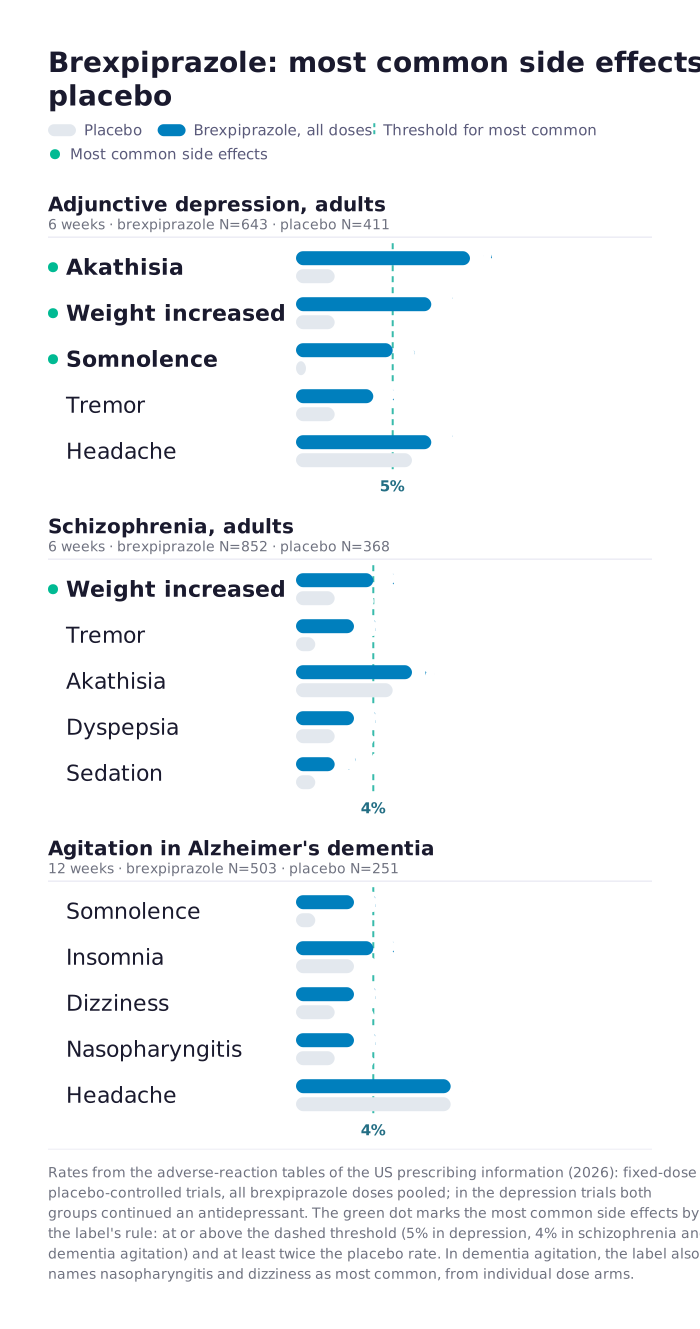
In schizophrenia trials, brexpiprazole was neither activating nor sedating [2]
Weight gain over the first year is larger than the short-term trials suggest (open-label data): in depression most of it comes in the first 6 months, and in schizophrenia it continues through the year [9,15,16]
Akathisia is one of the most common adverse reactions in adjunctive depression, where it rose with dose [9,37]
Most common side effects
Akathisia
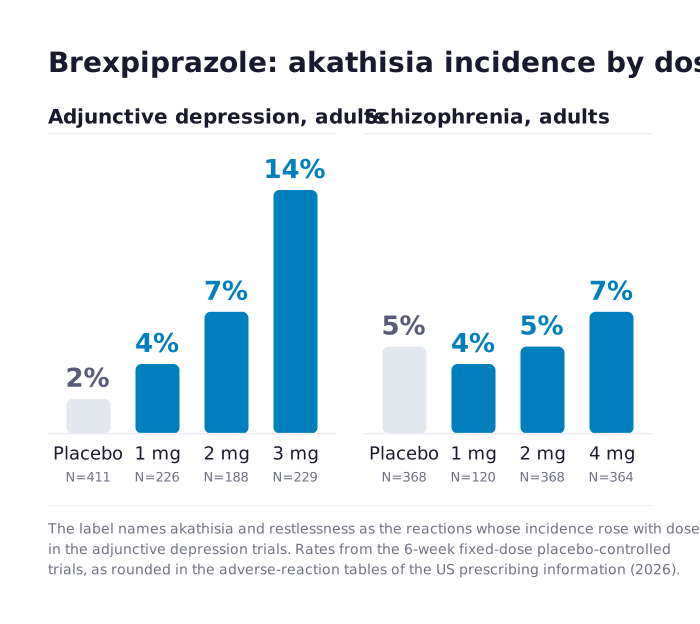
- Dose-related in adjunctive depression: 4%, 7% and 14% at 1, 2 and 3 mg vs. 2% on placebo; restlessness rose with dose too [9]
- Close to placebo in the other indications (schizophrenia 4% to 7% vs. 5%; dementia agitation 1% vs. 0%; adolescents 4% vs. 3%) [9,37]
- Long-term rates differed between studies [16,71]
- With fluoxetine or paroxetine, watch for akathisia as the dose rises (see Pharmacokinetics) [27]
- Management
- Step down the dose first [72]
- In depression, start at 0.5 mg rather than 1 mg (less akathisia in a cross-trial comparison) [41]
- Adjunctive treatment: mirtazapine (15 mg once daily) or propranolol (10 to 30 mg two to three times daily) are the usual add-ons, with low confidence and no evidence of long-term efficacy [31,72,73]
- Choose by profile: mirtazapine is sedating, and propranolol needs blood pressure checks as the dose rises [20,72]
- A short course of a benzodiazepine, or high-dose vitamin B6, might also help, with very low confidence [72,73]
- Anticholinergics are not routinely recommended, and they add cognitive and anticholinergic effects [72]
- Versus the other partial agonists: less akathisia than aripiprazole is possible, not proven [5,6]
Extrapyramidal symptoms other than akathisia
- Slightly above placebo in each adult indication (depression 6% vs. 3%; schizophrenia 5% vs. 4%; dementia agitation 3% vs. 2%) [9]
- Tremor (depression 4% vs. 2%) [9]
- In older adults with dementia, parkinsonism ratings worsened slightly in two meta-analyses [11,75]
Psychiatric
- Somnolence (depression 4% vs. 1%; schizophrenia 5% vs. 3%; dementia agitation 3% vs. 1%) [9]
- Among the least sedating antipsychotics in acute schizophrenia, with cariprazine, aripiprazole and lurasidone [5]
- Insomnia (dementia agitation 4% vs. 3%; 9% over a year of open-label treatment in schizophrenia) [9,15]
Gastrointestinal
- Nausea, dyspepsia, diarrhea, constipation, increased appetite and dry mouth, all slightly above placebo [9]
Cardiovascular
- Orthostatic hypotension 1% or less and syncope 0.1% to 0.2%, at or near placebo [9]
- The risk is greatest during titration, so check orthostatic vital signs in vulnerable patients
- Dizziness (depression 3% vs. 1%; dementia agitation 3% vs. 2%) [9]
- QTc: no clinically relevant prolongation at 3 to 4 times the maximum dose [9]
- Among the antipsychotics with the smallest QTc effect in the 2026 network meta-analysis [5]
Severe or rare side effects
Metabolic changes
- Weight gain: modest at first, larger over a year
- At 6 weeks: +1.0 to +1.6 kg vs. +0.2 to +0.3 kg on placebo; almost none in older adults with dementia over 12 weeks [9,37,76]
- Over a year, in open-label studies: about +2 to +3 kg, with 19% to 30% of patients gaining 7% or more; fewer than half completed the year [9,15,16]
- Adolescents: track weight against expected growth [9]
- Versus aripiprazole and cariprazine: more gain on point estimates in schizophrenia trials, short and long term (figures below) [5,21]
- Short term: +1.0 kg over placebo vs. +0.6 kg for both in a 2026 network meta-analysis; in another, brexpiprazole gained weight over placebo while aripiprazole and cariprazine did not [5,77]
- Long term: +1.9 kg vs. +0.4 kg and +0.6 kg in trials longer than 13 weeks, with a wide interval for brexpiprazole that crossed zero [21]
- Glucose and lipids:
- Short-term shifts close to placebo, except slightly more triglyceride rises [9]
- Among the five most benign metabolic profiles in a short-term network meta-analysis, with no worsening of mean values [77]
- Shifts to high values in long-term open-label studies, with no comparison group [9]
- Fasting glucose: 9% to 10% of those normal or borderline at baseline (20% in a 12-week dementia extension)
- Triglycerides: 13% to 17% of those normal at baseline
- Short-term shifts close to placebo, except slightly more triglyceride rises [9]
- Monitoring per label: fasting glucose and lipids at baseline and periodically; weight at baseline and often [9]
Prolactin
- Small rises, mainly in women [78]
- In adolescents: in a 6-week trial, 29% of girls and 21% of boys shifted above the normal range vs. 5% and 7% on placebo [9]
- In the long-term open-label adolescent study, the FDA noted a high incidence of abnormal prolactin values, with no comparison group [43]
- Sexual-function scores improved over a year of open-label adjunctive treatment in depression, in observed cases (fewer than half completed) and with no comparison group [16]
Impulse-control disorders
- The label warns of new intense urges (gambling, sexual urges, shopping, binge eating):
Mortality in older adults with dementia
- The agitation indication did not remove the boxed warning: discuss the mortality risk with the family and weigh it against the small benefit (see Indications) [9]
Tardive dyskinesia and other class warnings
- Class warnings apply, including tardive dyskinesia (rare in a year-long trial), neuroleptic malignant syndrome, seizures, dysphagia and body-temperature dysregulation [9,15]
Other rare reactions
- Hematologic: leukopenia and neutropenia as for the class [9]
- Suicidal thoughts and behaviors: as a treatment for depression, it carries the antidepressant boxed warning for patients aged 24 and younger; monitor closely at the start and after dose changes [9]
- Hypersensitivity is the only contraindication in the US label; reactions have included rash, facial swelling, urticaria and anaphylaxis [9]
Use in special populations
Pregnancy
- Discuss pregnancy plans and contraception before starting [80]
- The EU does not recommend brexpiprazole during pregnancy or in women of childbearing potential not using contraception [25]
- Human pregnancy data on brexpiprazole are too few to estimate risk
- Third-trimester exposure carries the class risk of neonatal extrapyramidal and withdrawal signs: monitor the newborn [9]
- In a US registry, about a third of infants exposed to second-generation antipsychotics had at least one sign of poor neonatal adaptation, a rate similar to that after an SSRI or SNRI (preliminary data) [85]
- Manage by shared decision-making, weighing the risks of stopping treatment, including relapse [9,86]
Breastfeeding
- Prefer another agent for a patient who wants to breastfeed:
- Stop the partial agonist during breastfeeding, or do not breastfeed if it must continue, a class review suggests; the review draws mostly on aripiprazole and calls the evidence not clear-cut [84]
- If brexpiprazole continues, watch milk supply and infant weight
- No lactation study [9]
- One case on three antipsychotics put the relative infant dose below 1.1%, under the 10% conventionally considered compatible; too few to establish safety [83,87]
- Infant outcomes: no withdrawal or serious adverse events in the first month in a three-infant series, and normal growth to 6 months in one exclusively breastfed infant [81,82]
- Reassess the infant once a new dose reaches steady state (10 to 12 days), and expect exposure to persist for 1 to 2 weeks after a stop [9,25,87]
Hepatic impairment
- Mild (Child-Pugh A): no dose adjustment [9]
- Moderate or severe (Child-Pugh B or C):
- Maximum 2 mg/day in depression and dementia agitation, 3 mg/day in schizophrenia [9]
Renal impairment
- Creatinine clearance below 60 mL/min:
- Maximum 2 mg/day in depression and dementia agitation, 3 mg/day in schizophrenia [9]
- Dialysis: no dosing guidance in the label [9]
Older adults
- Start at the low end of the dosing range: only 3% of schizophrenia and depression trial patients were 65 or over [9]
- Watch for falls: assess fall risk at the start and periodically on long-term treatment when illness or other drugs add to sedation, orthostasis or unsteadiness [9]
- Before raising the dose for agitation, bear in mind that akathisia in an older patient can be mistaken for agitation
- Tardive dyskinesia risk is highest in older adults, especially older women [9]
Brand names
- US: Rexulti [9]
- Canada: Rexulti [29]
- Other countries/regions: Rxulti (European Union); Rexulti (Japan, Australia, Switzerland); Rexulti, Brexil, Laplex, Brexan and Bremidan (Argentina); no UK product listed on the electronic medicines compendium (emc) [25,30,90–95]
- Practical differences among the labels checked:
- Adjunctive depression is an indication only in the US, Canadian, Japanese and Argentine labels [9,25,29,30,90–92]
- Agitation in Alzheimer’s dementia is approved in the US and Japan; in Canada, Australia and Switzerland only after non-drug approaches fail (Canada also requires aggressive behavior); not in the EU [9,25,29,30,90,91]
- Like the US label, the EU and Swiss labels cover schizophrenia from 13 years; the Canadian and Australian labels, adults only [9,25,29,30,91]
- The Japanese label doses every indication at 2 mg/day or less, half the US schizophrenia maximum of 4 mg, and uses 1 mg as the usual dose for dementia agitation [9,90]
References
1. Citrome, L., Ota, A., Nagamizu, K., Perry, P., Weiller, E., & Baker, R. A. (2016). The effect of brexpiprazole (OPC-34712) and aripiprazole in adult patients with acute schizophrenia: Results from a randomized, exploratory study. International Clinical Psychopharmacology, 31(4), 192–201.
2. Citrome, L. (2017). Activating and sedating adverse effects of second-generation antipsychotics in the treatment of schizophrenia and major depressive disorder: Absolute risk increase and number needed to harm. Journal of Clinical Psychopharmacology, 37(2), 138–147.
3. Maeda, K., Sugino, H., Akazawa, H., Amada, N., Shimada, J., Futamura, T., Yamashita, H., Ito, N., McQuade, R. D., Mørk, A., Pehrson, A. L., Hentzer, M., Nielsen, V., Bundgaard, C., Arnt, J., Stensbøl, T. B., & Kikuchi, T. (2014). Brexpiprazole I: In vitro and in vivo characterization of a novel serotonin-dopamine activity modulator. The Journal of Pharmacology and Experimental Therapeutics, 350(3), 589–604.
4. Stahl, S. M. (2016). Mechanism of action of brexpiprazole: Comparison with aripiprazole. CNS Spectrums, 21(1), 1–6.
5. Schneider-Thoma, J., Zhu, Y., Qin, M., Dong, Y., Guan, S., Wang, J., Tian, J., Lin, X., Rodolico, A., Siafis, S., Bighelli, I., Wehner, M., Veith, C., Krayer, F., Scheuring, E., Davis, J. M., Priller, J., Nikolakopoulou, A., Salanti, G., … Leucht, S. (2026). Comparative efficacy and tolerability of antidopaminergic and muscarinic antipsychotics for acute schizophrenia: A network meta-analysis of randomised controlled trials indexed in international English and Chinese databases. The Lancet, 407(10531), 876–891.
6. Kishi, T., Ikuta, T., Matsuda, Y., Sakuma, K., & Iwata, N. (2020). Aripiprazole vs. Brexpiprazole for acute schizophrenia: A systematic review and network meta-analysis. Psychopharmacology, 237(5), 1459–1470.
7. McIntyre, R. S., Stahl, S. M., Shim, S. R., Pompili, M., Goldberg, J. F., Correll, C. U., Kwan, A. T. H., Dri, C. E., Xu, H., Vinberg, M., & Rhee, T. G. (2026). Adjunctive antipsychotics in major depressive disorder: A systematic review and network meta-analysis. JAMA Psychiatry, 83(7), 741–750.
8. Centers for Medicare & Medicaid Services. (2026). NADAC (National Average Drug Acquisition Cost) 2026: Brexpiprazole (Rexulti), aripiprazole and cariprazine (Vraylar) rows. data.medicaid.gov datastore API, dataset fbb83258-11c7-47f5-8b18-5f8e79f7e704, rows as of October 21, 2026.
9. Otsuka America Pharmaceutical, Inc. (2026). REXULTI (brexpiprazole) tablets, for oral use: US prescribing information. Revised 4/2026; DailyMed version 26, published May 28, 2026.
10. Otsuka America Pharmaceutical, Inc. (2025). ABILIFY (aripiprazole) tablets, for oral use: US prescribing information. Revised 01/2025.
11. Marinheiro, G., Dantas, J. M., Mutarelli, A., Menegaz de Almeida, A., Monteiro, G. de A., Zerlotto, D. S., & Telles, J. P. M. (2024). Efficacy and safety of brexpiprazole for the treatment of agitation in Alzheimer’s disease: A meta-analysis of randomized controlled trials. Neurological Sciences, 45(10), 4679–4686.
12. da Silva, A. M. P., Falcão, L., Ribeiro Gonçalves, O., Virgilio Ribeiro, F., Machado Magalhães, P. L., Lee Han, M., Łajczak, P., Letícia de Bastos Maximiano, M., Cal, H., de Souza Franco, E., & de Sousa Maia, M. B. (2025). Brexpiprazole for the treatment of agitation in older adults with Alzheimer’s disease: A systematic review, bayesian meta-analysis, and meta-regression. CNS Drugs, 39(11), 1071–1082.
13. Kishi, T., Sakuma, K., Nomura, I., Matsuda, Y., Mishima, K., & Iwata, N. (2019). Brexpiprazole as adjunctive treatment for major depressive disorder following treatment failure with at least one antidepressant in the current episode: A systematic review and meta-analysis. The International Journal of Neuropsychopharmacology, 22(11), 698–709.
14. Aga, V. M. (2025). Brexpiprazole for the treatment of agitation in Alzheimer’s disease dementia: Clinical uncertainties and the path forward. The American Journal of Geriatric Psychiatry, 33(3), 322–329.
15. Forbes, A., Hobart, M., Ouyang, J., Shi, L., Pfister, S., & Hakala, M. (2018). A long-term, open-label study to evaluate the safety and tolerability of brexpiprazole as maintenance treatment in adults with schizophrenia. The International Journal of Neuropsychopharmacology, 21(5), 433–441.
16. Hobart, M., Zhang, P., Skuban, A., Brewer, C., Hefting, N., Sanchez, R., & McQuade, R. D. (2019). A long-term, open-label study to evaluate the safety and tolerability of brexpiprazole as adjunctive therapy in adults with major depressive disorder. Journal of Clinical Psychopharmacology, 39(3), 203–209.
17. Lee, D., Slomkowski, M., Hefting, N., Chen, D., Larsen, K. G., Kohegyi, E., Hobart, M., Cummings, J. L., & Grossberg, G. T. (2023). Brexpiprazole for the treatment of agitation in Alzheimer dementia: A randomized clinical trial. JAMA Neurology, 80(12), 1307–1316.
18. American Geriatrics Society Beers Criteria Update Expert Panel. (2023). American Geriatrics Society 2023 updated AGS Beers Criteria for potentially inappropriate medication use in older adults. Journal of the American Geriatrics Society, 71(7), 2052–2081.
19. Lam, R. W., Kennedy, S. H., Adams, C., Bahji, A., Beaulieu, S., Bhat, V., Blier, P., Blumberger, D. M., Brietzke, E., Chakrabarty, T., Do, A., Frey, B. N., Giacobbe, P., Gratzer, D., Grigoriadis, S., Habert, J., Ishrat Husain, M., Ismail, Z., McGirr, A., … Milev, R. V. (2024). Canadian Network for Mood and Anxiety Treatments (CANMAT) 2023 update on clinical guidelines for management of major depressive disorder in adults. The Canadian Journal of Psychiatry, 69(9), 641–687.
20. American Psychiatric Association. (2020). The American Psychiatric Association practice guideline for the treatment of patients with schizophrenia (3rd ed.). American Psychiatric Association Publishing.
21. Burschinski, A., Schneider-Thoma, J., Chiocchia, V., Schestag, K., Wang, D., Siafis, S., Bighelli, I., Wu, H., Hansen, W.-P., Priller, J., Davis, J. M., Salanti, G., & Leucht, S. (2023). Metabolic side effects in persons with schizophrenia during mid- to long-term treatment with antipsychotics: A network meta-analysis of randomized controlled trials. World Psychiatry, 22(1), 116–128.
22. Girgis, R. R., Forbes, A., Abi-Dargham, A., & Slifstein, M. (2020). A positron emission tomography occupancy study of brexpiprazole at dopamine D2 and D3 and serotonin 5-HT1A and 5-HT2A receptors, and serotonin reuptake transporters in subjects with schizophrenia. Neuropsychopharmacology, 45(5), 786–792.
23. Siafis, S., Wu, H., Wang, D., Burschinski, A., Nomura, N., Takeuchi, H., Schneider-Thoma, J., Davis, J. M., & Leucht, S. (2023). Antipsychotic dose, dopamine D2 receptor occupancy and extrapyramidal side-effects: A systematic review and dose-response meta-analysis. Molecular Psychiatry, 28(8), 3267–3277.
24. Beunk, L., Nijenhuis, M., Soree, B., de Boer-Veger, N. J., Buunk, A.-M., Guchelaar, H. J., Houwink, E. J. F., Risselada, A., Rongen, G. A. P. J. M., van Schaik, R. H. N., Swen, J. J., Touw, D., van Westrhenen, R., Deneer, V. H. M., & van der Weide, J. (2024). Dutch Pharmacogenetics Working Group (DPWG) guideline for the gene-drug interaction between CYP2D6, CYP3A4 and CYP1A2 and antipsychotics. European Journal of Human Genetics, 32(3), 278–285.
25. European Medicines Agency. (2026). Rxulti (brexpiprazole): Summary of product characteristics (EPAR product information). Annex I, Summary of Product Characteristics.
26. U.S. Food and Drug Administration. (2026). For healthcare professionals: FDA’s examples of drugs that interact with CYP enzymes and transporter systems. Web page, Center for Drug Evaluation and Research; content current as of 05/29/2026.
27. U.S. Food and Drug Administration. (2015). Clinical pharmacology and biopharmaceutics review(s), NDA 205422 (brexpiprazole). Office of Clinical Pharmacology, Center for Drug Evaluation and Research.
28. Department of Veterans Affairs and Department of Defense. (2022). VA/DoD clinical practice guideline for the management of major depressive disorder, version 4.0.
29. Otsuka Canada Pharmaceutical Inc. (2024). REXULTI (brexpiprazole tablets): Product monograph including patient medication information. Date of revision January 23, 2024; Health Canada Drug Product Database.
30. Lundbeck Australia Pty Ltd. (2026). REXULTI (brexpiprazole) tablets: Australian product information. Therapeutic Goods Administration, Australian Register of Therapeutic Goods.
31. McCutcheon, R. A., Pillinger, T., Varvari, I., Halstead, S., Ayinde, O. O., Crossley, N. A., Correll, C. U., Hahn, M., Howes, O. D., Kane, J. M., Kabir, T., Konradsson-Geuken, Å., Lennox, B., Hui, C. L. M., Rossell, S. L., Solmi, M., Sommer, I. E., Taipale, H., Uchida, H., … Siskind, D. (2025). INTEGRATE: International guidelines for the algorithmic treatment of schizophrenia. The Lancet Psychiatry, 12(5), 384–394.
32. Axsome Therapeutics, Inc. (2026). AUVELITY (dextromethorphan hydrobromide and bupropion hydrochloride) extended-release tablets, for oral use: US prescribing information. DailyMed SPL version 18, effective August 17, 2026; agitation indication (1.2) approved April 30, 2026.
33. Thase, M. E., Youakim, J. M., Skuban, A., Hobart, M., Augustine, C., Zhang, P., McQuade, R. D., Carson, W. H., Nyilas, M., Sanchez, R., & Eriksson, H. (2015). Efficacy and safety of adjunctive brexpiprazole 2 mg in major depressive disorder: A phase 3, randomized, placebo-controlled study in patients with inadequate response to antidepressants. The Journal of Clinical Psychiatry, 76(9), 1224–1231.
34. Thase, M. E., Youakim, J. M., Skuban, A., Hobart, M., Zhang, P., McQuade, R. D., Nyilas, M., Carson, W. H., Sanchez, R., & Eriksson, H. (2015). Adjunctive brexpiprazole 1 and 3 mg for patients with major depressive disorder following inadequate response to antidepressants: A phase 3, randomized, double-blind study. The Journal of Clinical Psychiatry, 76(9), 1232–1240.
35. Hobart, M., Skuban, A., Zhang, P., Augustine, C., Brewer, C., Hefting, N., Sanchez, R., & McQuade, R. D. (2018). A randomized, placebo-controlled study of the efficacy and safety of fixed-dose brexpiprazole 2 mg/d as adjunctive treatment of adults with major depressive disorder. The Journal of Clinical Psychiatry, 79(4), 17m12058.
36. Hobart, M., Skuban, A., Zhang, P., Josiassen, M. K., Hefting, N., Augustine, C., Brewer, C., Sanchez, R., & McQuade, R. D. (2018). Efficacy and safety of flexibly dosed brexpiprazole for the adjunctive treatment of major depressive disorder: A randomized, active-referenced, placebo-controlled study. Current Medical Research and Opinion, 34(4), 633–642.
37. Citrome, L. (2015). Brexpiprazole for schizophrenia and as adjunct for major depressive disorder: A systematic review of the efficacy and safety profile for this newly approved antipsychotic – what is the number needed to treat, number needed to harm and likelihood to be helped or harmed?. International Journal of Clinical Practice, 69(9), 978–997.
38. McIntyre, R. S., Weiller, E., Zhang, P., & Weiss, C. (2016). Brexpiprazole as adjunctive treatment of major depressive disorder with anxious distress: Results from a post-hoc analysis of two randomised controlled trials. Journal of Affective Disorders, 201, 116–123.
39. Thase, M. E., Weiller, E., Zhang, P., Weiss, C., & McIntyre, R. S. (2019). Adjunctive brexpiprazole in patients with major depressive disorder and anxiety symptoms: Post hoc analyses of three placebo-controlled studies. Neuropsychiatric Disease and Treatment, 15, 37–45.
40. Bauer, M., Hefting, N., Lindsten, A., Josiassen, M. K., & Hobart, M. (2019). A randomised, placebo-controlled 24-week study evaluating adjunctive brexpiprazole in patients with major depressive disorder. Acta Neuropsychiatrica, 31(1), 27–35.
41. Kishi, T., Sakuma, K., Saito, T., Nakagawa, A., Kato, M., & Iwata, N. (2024). Comparison of brexpiprazole, aripiprazole, and placebo for Japanese major depressive disorder: A systematic review and network meta-analysis. Neuropsychopharmacology Reports, 44(1), 165–175.
42. Furukawa, Y., Oguro, S., Obata, S., Hamza, T., Ostinelli, E. G., & Kasai, K. (2022). Optimal dose of brexpiprazole for augmentation therapy of antidepressant-refractory depression: A systematic review and dose-effect meta-analysis. Psychiatry and Clinical Neurosciences, 76(9), 416–422.
43. U.S. Food and Drug Administration. (2021). NDA 205422/S-007 supplement approval letter: REXULTI (brexpiprazole) for the treatment of schizophrenia in pediatric patients ages 13 to 17 years. Approval letter dated December 27, 2021, Division of Psychiatry.
44. Zhang, H., Liu, J., Sharma, V., Zhuang, L., Horn, P., Uppoor, R., Mehta, M., & Zhu, H. (2024). Pediatric extrapolation approach for U.S. Food and Drug Administration approval of brexpiprazole in patients aged 13 to 17 years with schizophrenia. Journal of Clinical Pharmacology, 64(7), 771–778.
45. Ward, C., Pejović Milovančević, M., Kohegyi, E., Hefting, N., Aurang, C., Chen, D., Larsen, K. G., Hobart, M., & Correll, C. U. (2025). Efficacy and safety of brexpiprazole in adolescents with schizophrenia: A multicountry, randomised, double-blind, placebo-controlled, phase 3 trial with an active reference. The Lancet Psychiatry, 12(5), 345–354.
46. Zhou, S. Z., Li, L., Yang, D., Zhai, J. G., Jiang, T., Shi, Y. Z., Wu, B., Wu, X. P., Li, K. Q., Liu, T. B., Li, J., Tang, S. Y., Wang, L. L., Wang, X. Y., Tan, Y. L., Liu, Q., Uki, M., Xian, M. J., & Zhang, H. Y. (2024). 布瑞哌唑片治疗成人急性期精神分裂症患者的临床研究 [Clinical trial of brexpiprazole in the treatment of adults with acute schizophrenia]. The Chinese Journal of Clinical Pharmacology, 40(5), 654–658.
47. Otsuka Beijing Research Institute. (2021). A phase III, multicenter, randomized, double-blind, active-controlled study (aripiprazole tablets) to evaluate the efficacy and safety of brexpiprazole in the treatment of adults with acute schizophrenia. ClinicalTrials.gov identifier NCT03874494.
48. Zhao, M., Qin, B., Mao, Y., Wang, H., Wang, A., & Wang, C. (2022). Efficacy and safety of low-dose brexpiprazole for acute schizophrenia: Meta-analysis of randomized placebo-controlled trials. Neuropsychiatric Disease and Treatment, 18, 1705–1713.
49. Leucht, S., Crippa, A., Siafis, S., Patel, M. X., Orsini, N., & Davis, J. M. (2020). Dose-response meta-analysis of antipsychotic drugs for acute schizophrenia. The American Journal of Psychiatry, 177(4), 342–353.
50. Correll, C. U., Mafi, C. E., Fagiolini, A., Seerden, P., Seifritz, E., Tiihonen, J., Vita, A., & Citrome, L. (2025). Brexpiprazole in the management of schizophrenia: A consensus report of best practices from acute to maintenance treatment. Neuropsychiatric Disease and Treatment, 21, 1857–1883.
51. Correll, C. U., Shi, L., Weiss, C., Hobart, M., Eramo, A., Duffy, R. A., Weiller, E., & Baker, R. A. (2019). Successful switching of patients with acute schizophrenia from another antipsychotic to brexpiprazole: Comparison of clinicians’ choice of cross-titration schedules in a post hoc analysis of a randomized, double-blind, maintenance treatment study. CNS Spectrums, 24(5), 507–517.
52. Ishigooka, J., Usami, T., Iwashita, S., Kojima, Y., & Matsuo, S. (2020). Post-hoc analysis investigating the safety and efficacy of brexpiprazole in Japanese patients with schizophrenia who were switched from other antipsychotics in a long-term study (secondary publication). Neuropsychopharmacology Reports, 40(2), 122–129.
53. Correll, C. U. (2025). Strategies for switching between oral postsynaptic antidopaminergic antipsychotics in patients with schizophrenia: A systematic review. CNS Drugs, 39(10), 913–935.
54. Nakagome, K., Tachimori, H., Endo, S., Murakami, K., Azekawa, T., Hongo, S., Niidome, K., Kojima, Y., Yamada, S., Oi, H., & Sumiyoshi, T. (2024). A multicenter, single-arm, open-label interventional study of adherence to brexpiprazole during switching from previous antipsychotic drugs in patients with schizophrenia or schizoaffective disorder. Neuropsychopharmacology Reports, 44(1), 187–196.
55. Yamasaki, F., Kanahara, N., Nakata, Y., Koyoshi, S., Yanagisawa, Y., Saito, T., Oiwa, T., Kogure, M., Sasaki, T., Yoshida, T., Kimura, H., & Iyo, M. (2023). Can brexpiprazole be switched safely in patients with schizophrenia and dopamine supersensitivity psychosis? A retrospective analysis in a real-world clinical practice. Journal of Psychopharmacology, 37(10), 992–1002.
56. U.S. Food and Drug Administration. (2023). FDA approves first drug to treat agitation symptoms associated with dementia due to Alzheimer’s disease.
57. U.S. Food and Drug Administration. (2023). FDA briefing document: Joint meeting of the Psychopharmacologic Drugs Advisory Committee and the Peripheral and Central Nervous System Drugs Advisory Committee, April 14, 2023. sNDA 205422/S-009, brexpiprazole for agitation associated with dementia due to Alzheimer’s disease.
58. Public Citizen. (2023). Letter to the FDA opposing approval of brexpiprazole (Rexulti) for agitation associated with dementia due to Alzheimer’s disease.
59. U.S. Food and Drug Administration. (2023). Final summary minutes of the joint meeting of the Psychopharmacologic Drugs Advisory Committee and the Peripheral and Central Nervous System Drugs Advisory Committee, April 14, 2023 (sNDA 205422/S-009, brexpiprazole).
60. Tariot, P. N., Chumki, S. R., Wang, D., Such, P., Palma, A. M., Zhang, Z., & Montano, C. B. (2026). Brexpiprazole for agitation in patients with Alzheimer’s dementia with and without co-occurring psychosis: Post hoc analysis of short- and long-term trials. Neuropsychiatric Disease and Treatment, 22, 1–9.
61. Otsuka Pharmaceutical Co., Ltd. and H. Lundbeck A/S. (2025). Otsuka and Lundbeck receive complete response letter from U.S. FDA for sNDA of REXULTI (brexpiprazole) in combination with sertraline for the treatment of adults with PTSD.
62. U.S. Food and Drug Administration. (2025). Psychopharmacologic Drugs Advisory Committee meeting, July 18, 2025: Final summary minutes and voting results, sNDA 205422 (brexpiprazole with sertraline for post-traumatic stress disorder).
63. Hobart, M., Chang, D., Hefting, N., & Davis, L. L. (2025). Brexpiprazole in combination with sertraline and as monotherapy in posttraumatic stress disorder: A full-factorial randomized clinical trial. The Journal of Clinical Psychiatry, 86(1), 24m15577.
64. Davis, L. L., Behl, S., Lee, D., Zeng, H., Skubiak, T., Weaver, S., Hefting, N., Larsen, K. G., & Hobart, M. (2025). Brexpiprazole and sertraline combination treatment in posttraumatic stress disorder: A phase 3 randomized clinical trial. JAMA Psychiatry, 82(3), 218–227.
65. Davis, L. L., Behl, S., Lee, D., Zeng, H., Skubiak, T., Weaver, S., Hefting, N., Larsen, K. G., & Hobart, M. (2025). Fixed-dose brexpiprazole and sertraline combination therapy for the treatment of posttraumatic stress disorder: A phase 3, randomized trial. Journal of Clinical Psychopharmacology, 45(6), 580–589.
66. Kotochinsky, M., Alessi, M. R., Vieira, G. H., Balogun, M., Sherpa, N. N., & Lezana, A. G. (2026). Efficacy and tolerability of brexpiprazole augmentation of SSRI therapy in PTSD: A systematic review and meta-analysis of randomized controlled trials. Journal of Psychiatric Research, 192, 237–244.
67. Vieta, E., Sachs, G., Chang, D., Hellsten, J., Brewer, C., Peters-Strickland, T., & Hefting, N. (2021). Two randomized, double-blind, placebo-controlled trials and one open-label, long-term trial of brexpiprazole for the acute treatment of bipolar mania. Journal of Psychopharmacology, 35(8), 971–982.
68. Rothman, B., Brewer, C., Chang, D., Hobart, M., Hefting, N., McQuade, R. D., & Grant, J. E. (2024). A randomised study and an extension study of brexpiprazole in patients with borderline personality disorder. Acta Neuropsychiatrica, 37, e39.
69. Grant, J. E., Valle, S., Chesivoir, E., Ehsan, D., & Chamberlain, S. R. (2022). A double-blind placebo-controlled study of brexpiprazole for the treatment of borderline personality disorder. The British Journal of Psychiatry, 220(2), 58–63.
70. Ward, C., Childress, A., Martinko, K., Chen, D., Larsen, K. G., Shah, A., Sheridan, P., Hefting, N., & Knutson, J. (2025). Safety and efficacy of brexpiprazole in the treatment of irritability associated with autism spectrum disorder: An 8-week, phase 3, randomized, double-blind, placebo-controlled trial and 26-week open-label extension in children and adolescents. Journal of Child and Adolescent Psychopharmacology, 35(4), 194–201.
71. Kato, M., Shiosakai, M., Kuwahara, K., Iba, K., Shimada, Y., Saito, M., Sekine, D., Aoki, K., Shiomi, Y., & Higuchi, T. (2024). A multicenter, open-label study to evaluate the long-term safety and efficacy of adjunctive brexpiprazole 2 mg daily in Japanese patients with major depressive disorder. CNS Drugs, 38(12), 1003–1016.
72. Pringsheim, T., Gardner, D., Addington, D., Martino, D., Morgante, F., Ricciardi, L., Poole, N., Remington, G., Edwards, M., Carson, A., & Barnes, T. R. E. (2018). The assessment and treatment of antipsychotic-induced akathisia. Canadian Journal of Psychiatry, 63(11), 719–729.
73. Furukawa, Y., Imai, K., Takahashi, Y., Efthimiou, O., & Leucht, S. (2026). Comparative efficacy and acceptability of treatment strategies for antipsychotic-induced akathisia: A systematic review and network meta-analysis. Schizophrenia Bulletin, 52(2), sbae098.
74. Cutler, A. J., Lemyre, A., Zhang, Q., Mao, C., Totev, T. I., Gauthier-Loiselle, M., Wu, Y., Liu, J., Hashim, M., Namjoshi, M., Sheehan, J. J., Pilon, D., Lefebvre, P., Khoury, A. C. E., & Citrome, L. (2026). Efficacy and safety of lumateperone and other atypical antipsychotics approved as adjunctive treatment for major depressive disorder in the United States: A network meta-analysis. Advances in Therapy, 43(9), 4079–4103.
75. Javaid, H., Jha, A., Cheema, U., Noor, M., Cheema, S., Arfan, M., Aqeel, M., Habib, E., Saddique, M. N., Qadri, M., & Shamoon, S. (2026). Dose-dependent efficacy and safety of brexpiprazole in agitation associated with dementia in Alzheimer’s disease: A systematic review and meta-analysis. Neurological Sciences, 47(2), 208.
76. Shah, A., Estilo, A., Sheridan, P. L., Kalu, U., Chen, D., Chang, D., Slomkowski, M., Lee, D., Hefting, N., Hobart, M., Behl, S., Such, P., Brubaker, M., & Grossberg, G. T. (2025). Safety and tolerability of brexpiprazole in participants with agitation associated with dementia due to Alzheimer’s disease: Pooled analysis of three randomized trials and an extension trial. CNS Drugs, 39(10), 1011–1023.
77. Pillinger, T., McCutcheon, R. A., Vano, L., Mizuno, Y., Arumuham, A., Hindley, G., Beck, K., Natesan, S., Efthimiou, O., Cipriani, A., & Howes, O. D. (2020). Comparative effects of 18 antipsychotics on metabolic function in patients with schizophrenia, predictors of metabolic dysregulation, and association with psychopathology: A systematic review and network meta-analysis. The Lancet Psychiatry, 7(1), 64–77.
78. Ivkovic, J., Lindsten, A., George, V., Eriksson, H., & Hobart, M. (2019). Effect of brexpiprazole on prolactin: An analysis of short- and long-term studies in schizophrenia. Journal of Clinical Psychopharmacology, 39(1), 13–19.
79. Fusaroli, M., Raschi, E., Giunchi, V., Menchetti, M., Rimondini Giorgini, R., De Ponti, F., & Poluzzi, E. (2022). Impulse control disorders by dopamine partial agonists: A pharmacovigilance-pharmacodynamic assessment through the FDA adverse event reporting system. The International Journal of Neuropsychopharmacology, 25(9), 727–736.
80. National Institute for Health and Care Excellence. (2014). Antenatal and postnatal mental health: Clinical management and service guidance (CG192).
81. Alsupiany, A. (2026). Brexpiprazole and quetiapine use during pregnancy and lactation: A case report. Clinical Case Reports, 14(7), e73092.
82. Fukuda, A., Oyanagi, G., Kikuchi, S., Iwasaki, C., Okubo, M., Noda, A., Morishita, K., Okabe, N., Iwabuchi, R., Sato, Y., Kimura, E., Kobayashi, N., Tomita, H., Sato, S., Iwama, N., Hanita, T., Saito, M., Tomita, H., Obara, T., & Mano, N. (2026). Evaluation of the safety of taking brexpiprazole during the lactation period. Breastfeeding Medicine, 21(4), 275–279.
83. Konishi, T., Kitahiro, Y., Fujiwara, N., Yamamoto, K., Hashimoto, M., Ito, T., Itohara, K., Fujioka, K., Imafuku, H., Otsuka, I., Omura, T., & Yano, I. (2024). Pharmacokinetics of brexpiprazole, quetiapine, risperidone, and its active metabolite paliperidone in a postpartum woman and her baby. Therapeutic Drug Monitoring, 46(5), 687–691.
84. Koukopoulos, A., Janiri, D., Milintenda, M., Barbonetti, S., Kotzalidis, G. D., Callovini, T., Moccia, L., Montanari, S., Mazza, M., Rinaldi, L., Simonetti, A., Pinto, M., Camardese, G., & Sani, G. (2025). Dopamine partial agonists in pregnancy and lactation: A systematic review. Pharmaceuticals, 18(7), 1010.
85. Viguera, A. C., McElheny, S. A., Caplin, P. S., Kobylski, L. A., Rossa, E. T., Young, A. V., Gaccione, P., Góez-Mogollón, L., Freeman, M. P., & Cohen, L. S. (2023). Risk of poor neonatal adaptation syndrome among infants exposed to second-generation atypical antipsychotics compared to antidepressants: Results from the National Pregnancy Registry for Psychiatric Medications. The Journal of Clinical Psychiatry, 84(1), 22m14492.
86. Quinn, D., Donnelly, M., & O’Neill, C. (2026). Antipsychotic drug use during pregnancy and neonatal outcomes: A systematic review and meta-analysis. Archives of Women’s Mental Health, 29(1), 12.
87. Andrade, C. (2026). The relative infant dose for maternal use of drugs during breastfeeding: Nuances in derivation, interpretation, and application. The Journal of Clinical Psychiatry, 87(3), 26f16563.
88. Lepola, U., Hefting, N., Zhang, D., & Hobart, M. (2018). Adjunctive brexpiprazole for elderly patients with major depressive disorder: An open-label, long-term safety and tolerability study. International Journal of Geriatric Psychiatry, 33(10), 1403–1410.
89. U.S. Food and Drug Administration. (2026). Orange Book: Approved drug products with therapeutic equivalence evaluations, data files (products, patents, exclusivity) for brexpiprazole, NDA 205422 and ANDAs. Data files dated October 9, 2026; downloaded October 22, 2026.
90. Otsuka Pharmaceutical Co., Ltd. (2024). レキサルティ錠1mg/2mg 添付文書 [REXULTI tablets 1 mg and 2 mg: Japanese package insert], 2024年9月改訂(第5版). Pharmaceuticals and Medical Devices Agency, 添付文書番号 1179058F1020_1_08.
91. Lundbeck (Schweiz) AG. (2025). REXULTI (brexpiprazole) film-coated tablets: Swiss Fachinformation (Swissmedic authorisation 66475). Fachinformation as published on ch.oddb.org.
92. Administración Nacional de Medicamentos, Alimentos y Tecnología Médica. (2022). Disposición DI-2022-5207-APN-ANMAT#MS: REXULTI, certificado 59.226 [Disposition DI-2022-5207-APN-ANMAT#MS: REXULTI, certificate 59.226].
93. Administración Nacional de Medicamentos, Alimentos y Tecnología Médica. (2024). Disposición DI-2024-3158-APN-ANMAT#MS: REXULTI 1/2/3/4 mg, producto de referencia [Disposition DI-2024-3158-APN-ANMAT#MS: REXULTI 1/2/3/4 mg, reference product].
94. Administración Nacional de Medicamentos, Alimentos y Tecnología Médica. (2026). Vademécum Nacional de Medicamentos: brexpiprazol [National Medicines Formulary: brexpiprazole].
95. Electronic Medicines Compendium (Datapharm). (2026). Search results for “brexpiprazole”: No search results.