
In a nutshell
Fluoxetine has the longest half-life of the SSRIs, so it suits patients likely to miss doses: skipped doses cause fewer discontinuation symptoms than with sertraline or paroxetine. [1–4] In adults it is a first-line SSRI chosen for its half-life and tolerability rather than its efficacy: in head-to-head depression trials its efficacy sits at the lower end, while its acceptability is among the best. [4,5] It is also the only antidepressant FDA-approved for bulimia nervosa. [6]
The trade-offs are activation, appetite loss, more drug interactions than most SSRIs and, as with all SSRIs, sexual dysfunction. [1,4,7]

- When to consider fluoxetine:
- Bulimia nervosa, alone or with OCD
- Discontinuation symptoms are a concern, or doses are likely to be missed
- Weight gain on mirtazapine or paroxetine
- Young patients up to age 25
- Consider alternatives when:
- Insomnia, agitation or anxiety already dominate, or sedation is wanted
- Fluoxetine was more activating than other antidepressants as a group [14]
- Underweight patients
- The label warns that significant weight loss may be undesirable in underweight patients [1]
- A drug the patient must keep is metabolized or activated by CYP2D6 or CYP2C19
- An antidepressant is started for the first time in pregnancy or while breastfeeding
- An MAOI antidepressant may be needed soon
- Insomnia, agitation or anxiety already dominate, or sedation is wanted
Pharmacodynamics and mechanism of action
- Norfluoxetine is the only identified active metabolite; its S-enantiomer, which carries most of the activity, inhibits serotonin reuptake about as potently as fluoxetine (animal data) [1,21]
- Fluoxetine and norfluoxetine are both eliminated slowly, so active drug persists in the body for weeks after the last dose [1]
- Withdrawal symptoms can start weeks after the last dose; they appear less frequent than with most SSRIs, but they do occur, and short follow-ups may miss them (see Side effects) [4,11,22]
- The label still recommends a gradual reduction whenever possible, as do the Maudsley Deprescribing Guidelines (how to stop: see Side effects) [1,11]
- CANMAT, by contrast, exempts fluoxetine from tapering because of its long half-life [4]
- Slow elimination is also why the washout before starting an MAOI for a psychiatric disorder is at least five weeks (see Drug interactions) [1]
- Fluoxetine and norfluoxetine are both eliminated slowly, so active drug persists in the body for weeks after the last dose [1]
- The 5-HT2C hypothesis and the activating profile
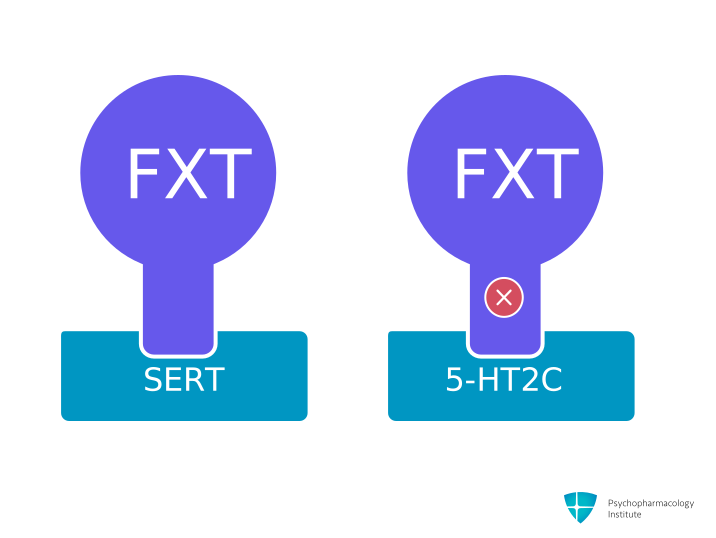
- Fluoxetine blocks 5-HT2C receptors in vitro [23,24]
- In rats, it was the only one of five SSRIs to acutely raise norepinephrine and dopamine in the prefrontal cortex [25]
- The manufacturer’s scientists proposed 5-HT2C blockade as a possible cause of this rise [24,25]
- This affinity sits in R-fluoxetine, the minor enantiomer in plasma at steady state [1,24]
- The link to activation in patients is an inference (see Side effects)
Pharmacokinetics and Drug Interactions
Metabolism
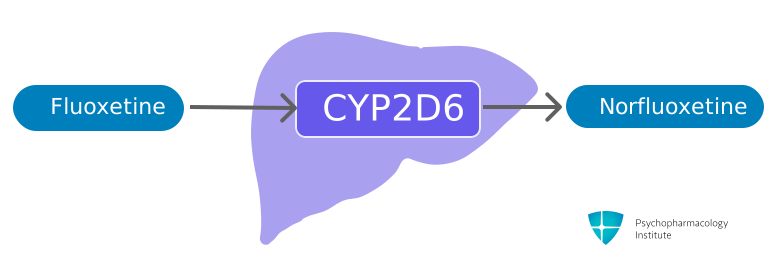
- Fluoxetine is metabolized in the liver, mainly by CYP2D6, to norfluoxetine, its only identified active metabolite, which has a longer half-life [1]
- Fluoxetine’s own levels can rise with CYP2D6 inhibitors and with other highly protein-bound drugs [1]
Bioavailability considerations and food effect
- Can be taken with or without food[1]
- Food may delay absorption by 1 to 2 hours without changing the amount absorbed [1]
Half-life
- Fluoxetine has the longest half-life of the SSRIs: the others range from 21 hours (paroxetine) to 36 hours (citalopram) at steady state [2]
- Allow several weeks between dose steps, because a change takes that long to show fully in plasma [1]
Drug interactions
- Among the SSRIs, fluoxetine has the highest interaction potential, together with fluvoxamine and paroxetine [4]
- Fluoxetine and norfluoxetine are strong inhibitors of both CYP2D6 and CYP2C19; they do not meaningfully inhibit CYP3A4 or CYP1A2 [1,15,26]
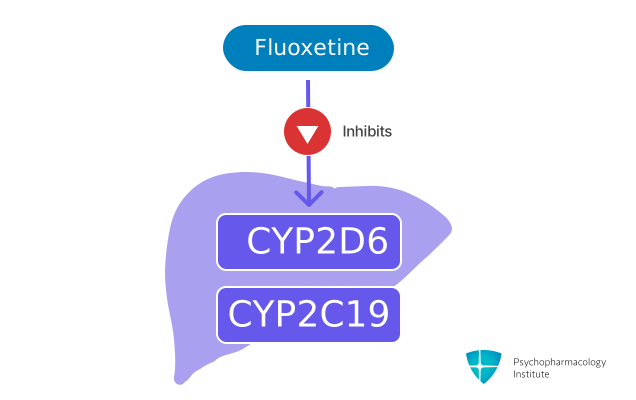
- Before adding any drug, check whether it depends on CYP2D6 or CYP2C19
- When the other drug cannot be changed, consider another antidepressant
- Options with a more favorable interaction profile: citalopram (monitor the QTc), escitalopram, desvenlafaxine, levomilnacipran, mirtazapine, vilazodone and vortioxetine [4]
Pharmacokinetic interactions
- Contraindicated: pimozide and thioridazine [1]
- Fluoxetine changes the levels or effects of these drugs
| Drug | What to do |
|---|---|
| Flecainide, propafenone, vinblastine | Start at the low end of the range, also if fluoxetine was taken in the previous 5 weeks; when fluoxetine is added, consider a lower dose |
| Tricyclics | Start low or reduce the dose (also if fluoxetine was taken in the previous 5 weeks) and check plasma levels, which can rise 2- to 10-fold and stay up for 3 weeks or more after fluoxetine stops |
| Aripiprazole, brexpiprazole | Half the usual dose (a quarter if a strong or moderate CYP3A4 inhibitor is also taken); no change when either is an add-on for major depressive disorder |
| Iloperidone | Avoid where possible: both prolong the QT interval, and CYP2D6 inhibition increases iloperidone’s QT effect; if it is used, half the dose |
| Risperidone | Lower dose and titrate slowly; in adults, not above 8 mg/day |
| Atomoxetine | Usual doses; increase only after 4 weeks instead of at least 3 days, if symptoms have not improved and the starting dose is well tolerated |
| Alprazolam, diazepam | Start low: alprazolam levels rise, with more psychomotor impairment, and diazepam’s half-life may lengthen |
| Phenytoin, carbamazepine | Check levels when fluoxetine starts: toxicity has followed its addition |
| Haloperidol, clozapine | Watch for adverse effects when fluoxetine starts: their levels rise |
| Lithium | Check lithium levels: both rises and falls, and lithium toxicity, have been reported |
| Warfarin | Monitor coagulation closely when fluoxetine starts or stops |
Guidance from the US labels; tricyclic data also from a volunteer study; for the benzodiazepines, anticonvulsants, haloperidol and clozapine, the action is a practical reading of the rises the fluoxetine label reports [1,27–32]
- When fluoxetine stops, return aripiprazole, brexpiprazole and iloperidone to their previous dose, and consider a higher risperidone dose [28–31]
- Prodrugs activated by CYP2D6 or CYP2C19 can lose their effect
| Drug | What to do |
|---|---|
| Codeine, tramadol | Avoid: both need CYP2D6 to form their active metabolite, so analgesia drops, and tramadol also adds a risk of serotonin syndrome; use a non-opioid or an opioid not affected by CYP2D6, such as morphine |
| Tamoxifen | Avoid prolonged overlap, because fluoxetine lowers endoxifen, its active metabolite; choose an antidepressant that is at most a weak CYP2D6 inhibitor, such as escitalopram or sertraline (in CYP2D6 intermediate metabolizers, avoid weak inhibitors too) |
| Clopidogrel | Its activation through CYP2C19 may be blunted; when the antidepressant is still to be chosen, an SSRI that does not inhibit CYP2C19 is a reasonable preference |
CPIC guidance for codeine, tramadol and tamoxifen; FDA inhibitor list; the serotonin syndrome risk with tramadol from the fluoxetine label; for clopidogrel, a small volunteer study of CYP2C19 inhibition and cohort data [1,15–17,26,34,35]
Pharmacodynamic interactions
- MAOIs: contraindicated[1]
- Other serotonergic drugs: added risk of serotonin syndrome; monitor, especially at starts and dose increases [1]
- NSAIDs, aspirin, antiplatelets and anticoagulants: more bleeding, including upper gastrointestinal bleeding (see Side effects) [1,36]
- QT-prolonging drugs (ziprasidone, iloperidone, chlorpromazine, droperidol, methadone, some antibiotics and antiarrhythmics): avoid the combination where possible [1]
- If it is needed, consider an ECG at the start and periodically (see Side effects) [1]
- ECT: rare prolonged seizures reported [1]
Switching to or from fluoxetine
- Stopping altogether (see Side effects)
- From fluoxetine: two strategies; which one fits depends on the next drug (see the table) [37,38]
- Fluoxetine can still interact with the next drug for about 5 weeks after the last dose; its CYP2D6 inhibition is why the next drug starts low [37–39]
- Wait, then start low (more cautious): stop fluoxetine (taper first above 40 mg/day), wait, then start the next drug low; for drugs that interact with fluoxetine, or when there is no hurry [4,37–39]
- Start without waiting (faster): cross-taper or switch directly; some experts do it with another SSRI (not fluvoxamine), an SNRI, bupropion or mirtazapine, when a gap without treatment risks relapse [37–39]
- In two trials an immediate switch was tolerated as well as a washout: from fluoxetine to paroxetine (randomized, industry-funded; side effects in the first 2 weeks were somewhat fewer after a 2-week washout) and from an SSRI tapered to its minimal effective dose to mirtazapine (open-label) [40,41]
| Switching from fluoxetine to | Wait after the last dose | Start without waiting? |
|---|---|---|
| Citalopram, escitalopram, paroxetine or sertraline | 4 to 7 days | Possible: cross-taper or direct switch |
| Bupropion | 4 to 7 days | Possible: cross-taper |
| Mirtazapine | No wait | Yes: direct switch at a low dose, or a cautious cross-taper |
| An SNRI | 4 to 7 days (one review tapers fluoxetine first at any dose), then start low and increase slowly | Possible: direct switch |
| Vortioxetine | 4 to 7 days | Not described in the reviews: wait |
| A tricyclic | 4 to 14 days (clomipramine 2 to 3 weeks), then hold 25 mg for 3 weeks; the amitriptyline, nortriptyline and clomipramine labels say at least 5 weeks may be necessary | One review cross-tapers (not clomipramine), but fluoxetine can raise tricyclic levels for 3 weeks or longer |
| Fluvoxamine | 4 to 14 days | No: serotonin syndrome risk |
| An MAOI | At least 5 weeks (5 to 6 in expert guidance; longer after high doses or long-term use) | No: contraindicated |
Expert switching guidance, ranges across sources; most faster options come from one review, and another advises against co-prescribing fluoxetine with another SSRI, vortioxetine or an SNRI; the 5-week MAOI minimum follows the fluoxetine label [1,37–39,42–44]
- To fluoxetine
- Usually no washout: switch directly from another SSRI or an SNRI; more cautiously, taper and stop it, then start fluoxetine at 10 mg [37,39]
- Lower a tricyclic or stop it before fluoxetine starts (clomipramine: stop it), because fluoxetine raises tricyclic levels [1,37–39]
- After an MAOI, wait at least 14 days [1]
- Fluoxetine as a bridge: when discontinuation symptoms from another SSRI or SNRI are severe, CANMAT offers switching to fluoxetine and then tapering it; the Maudsley Deprescribing Guidelines doubt its value and find too little evidence to recommend it widely [4,11]
Dosage forms
- Capsules: 10 mg, 20 mg and 40 mg [1,45]
- Tablets: 10 mg, 20 mg and 60 mg [45]
- Oral solution: 20 mg/5 mL [45]
- For doses below 10 mg/day, a practical use: 10 mg/day is the lowest dose the label names (e.g., children; the first week in panic disorder) [1]
- Also the usual form for tapering in steps smaller than capsules or tablets allow (see Side effects) [11]
- Doses below 0.8 mg need the solution diluted with water, taken at once because its stability cannot be assured [11]
- Delayed-release capsule: 90 mg once weekly [45,46]
- Olanzapine/fluoxetine capsules: 3/25, 6/25, 12/25, 6/50 and 12/50 mg (olanzapine/fluoxetine) [45]
- Formulation considerations
Indications
Clinical positioning
- First-line SSRI chosen for its half-life, tolerability and price rather than its efficacy
- Advantages: a long half-life, so missed doses and stopping cause fewer discontinuation symptoms; little sedation or weight gain; a low price, shared with citalopram, escitalopram and sertraline [3,4,47]
- Costs: drug interactions, sexual dysfunction (as with the other SSRIs) and, in some patients, insomnia or anxiety [1,4]
- Efficacy sits at the lower end in head-to-head depression trials, while acceptability is among the best [5]
- CANMAT lists it first line, but not among the eight agents with a slightly better response [4]
- Prefer fluoxetine when:
- Doses are likely to be missed or the patient may stop abruptly [3,4]
- Sedation or weight gain must be avoided
- CANMAT rates fluoxetine favorably on both, as it does escitalopram and sertraline; it rates mirtazapine unfavorably on both and paroxetine on weight gain [4]
- Bulimia nervosa is present, alone or with OCD
- Young patients up to age 25: CANMAT suggests the balance of benefits and risks may favor fluoxetine or agomelatine [4]
- In children and adolescents, sertraline or escitalopram could also be a first option [13]
- Prefer alternatives when:
- Underweight patients: appetite loss carried the highest odds among the SSRIs that differed from placebo in a 2025 network meta-analysis [1,7]
- A drug the patient must keep relies on CYP2D6 or CYP2C19, such as tamoxifen, clopidogrel or a tricyclic (see Drug interactions) [1,15–17]
- Sedation is wanted, or insomnia and anxiety already dominate
- Fluoxetine is more activating than other antidepressants [14]
- An antidepressant is started for the first time in pregnancy or while breastfeeding (see Use in special populations)
- Older adults taking several medications
- A switch to an MAOI may be needed soon: fluoxetine needs a five-week washout, other serotonergic antidepressants two weeks [1,4]
FDA-Approved Indications
Major depressive disorder
- Approved for the acute and maintenance treatment of MDD in adults and in children and adolescents aged 8 and older [1]
- Dosing in adults[1]
- Starting dose: 20 mg once daily in the morning
- Titration: consider an increase after several weeks without sufficient improvement; doses above 20 mg: once in the morning, or split morning and noon
- Target dose: 20 mg/day
- Trials comparing 20, 40 and 60 mg/day with placebo found 20 mg sufficient for most patients
- Maximum dose: 80 mg/day
- Dose tip: across SSRIs, efficacy levels off somewhere between about 20 and 50 mg of fluoxetine equivalents in depression, while dropouts for side effects keep rising with the dose [4,50,51]
- Children and adolescents (8 to 18 years): approved from age 8, starting at 10 or 20 mg/day; the benefit is small [1,13]
- NICE advises combining it with psychological therapy; if therapy is declined, it may still be given with close monitoring [52]
Obsessive-compulsive disorder
- Approved for OCD in adults and in children and adolescents aged 7 and older [1]
- First line, with the other SSRIs; no efficacy difference among them [9]
- With comorbid bulimia nervosa, the CANMAT/ICOCS OCD guideline picks fluoxetine, although the choice is not yet evidence-based [9]
- Dosing in adults[1]
- Children and adolescents (7 to 17 years)
- Approved from age 7, starting at 10 mg/day [1]
- CANMAT/ICOCS 2025 rates fluoxetine, sertraline and fluvoxamine first line in pediatric OCD (escitalopram too, but not before fluoxetine or sertraline) [9]
- NICE prefers sertraline or fluvoxamine and keeps fluoxetine for significant comorbid depression [54]
Bulimia nervosa
- Approved for the acute and maintenance treatment of binge eating and vomiting in moderate to severe bulimia nervosa in adults [1]
- Do not use it alone; combine it with psychological treatment [8]
- Dosing[1]
- Efficacy: on 60 mg, binge eating and vomiting fell more than on placebo from week 1, apparently independent of the baseline depression score, but most patients improved only partially [1]
- Patients who have not cut binge eating or vomiting by at least 60% by week 3 are unlikely to respond (pooled data from the two largest trials) [6]
Panic disorder
- Approved for the acute treatment of panic disorder, with or without agoraphobia, in adults [1]
- First line with the other SSRIs and venlafaxine in the WFSBP guideline [56]
- Dosing[1]
- Starting dose: 10 mg/day for one week; patients with panic disorder may be sensitive to early jitteriness, and the WFSBP advises half doses or less in some patients to limit it [1,56]
- Titration: 20 mg/day after one week; increase after several weeks if there is no improvement
- Target dose: 20 mg/day (the most frequent dose in the trials); range 20 to 60 mg (WFSBP: 20 to 40 mg) [1,56]
- Maximum dose: 60 mg/day (not systematically evaluated above)
Premenstrual dysphoric disorder
- Approved for PMDD in the labeling of a generic fluoxetine tablet, not in the Prozac label [1,59]
- Dosing[59]
- Target dose: 20 mg/day, either every day of the cycle or from 14 days before the expected period through the first full day of menses
- Maximum dose: 80 mg/day; 60 mg/day added no significant benefit over 20 mg, and doses above 60 mg have not been systematically studied in PMDD
- Efficacy was shown for up to 6 months of continuous and 3 months of intermittent dosing; reassess the need for treatment periodically
- Continuous dosing was probably more effective than luteal-phase dosing across SSRIs in the 2024 Cochrane update [61]
Bipolar I depression, in combination with olanzapine
- Approved, with olanzapine (as the combination capsule or two separate drugs), for acute depressive episodes of bipolar I disorder in adults and in children and adolescents aged 10 to 17; fluoxetine alone is not indicated [1,48]
- Second line in the CANMAT/ISBD guideline, after the first-line quetiapine, lithium, lamotrigine, lurasidone and cariprazine; third line for maintenance and for adolescents [62]
- Weight gain is the main drawback: consider its consequences before starting, and monitor weight regularly [48]
- Dosing[1,48]
- Combination capsule: 6/25 mg (olanzapine/fluoxetine) once daily in the evening; children and adolescents start at 3/25 mg
- As separate drugs: olanzapine 5 mg with fluoxetine 20 mg (children and adolescents: olanzapine 2.5 mg with fluoxetine 20 mg)
- Adult range: fluoxetine 20 to 50 mg; olanzapine 5 to 12.5 mg
- Lower start (capsule 3/25 or 6/25 mg; olanzapine 2.5 to 5 mg as a separate drug) in patients:
- prone to hypotension
- with hepatic impairment
- with several factors that slow metabolism (female sex, older age, non-smoking)
- Not systematically studied over 65 or under 10
Treatment-resistant depression, in combination with olanzapine
- Approved, with olanzapine, for treatment-resistant depression in adults: no response to two antidepressants of adequate dose and duration in the current episode; fluoxetine alone is not indicated [1,48]
- Efficacy: mixed; better than either drug alone in one of two 8-week trials and in their pooled analysis, and in a third trial better than olanzapine alone at endpoint but not than fluoxetine alone or venlafaxine [63,64]
- The same weight gain applies here (see Bipolar I depression) [48]
- Dosing[1,48]
Off-label and emerging uses
Reasonable off-label uses
- Body dysmorphic disorder: an option, including the delusional variant
- In one placebo-controlled trial, 53% vs. 18% responded at 12 weeks, delusional patients as often as nondelusional ones [65]
- Bipolar II disorder: fluoxetine monotherapy is an option for maintenance
- The CANMAT/ISBD guideline ranks it below quetiapine, lithium and lamotrigine [62]
- Premature ejaculation: an option at 20 to 40 mg daily [66]
Weaker than the alternatives
- Posttraumatic stress disorder:
- Social anxiety disorder:
- Prefer the WFSBP’s first-line drugs (escitalopram, fluvoxamine, paroxetine, sertraline or venlafaxine); fluoxetine’s trials are mixed (one positive, two negative), which the WFSBP calls inconclusive [56]
- Generalized anxiety disorder:
Not supported
- Binge-eating disorder:
- Anorexia nervosa:
- Added to CBT, no benefit in preventing relapse after weight restoration in a placebo-controlled trial of up to one year in 93 patients [76]
- Trichotillomania:
Side effects
Fluoxetine tends to be activating: insomnia, anxiety and nervousness are its most characteristic effects, together with nausea and appetite loss [1]. Against other antidepressants as a group, it causes more activating and gastrointestinal effects [14]
Three features set it apart from most of the class: among the lowest rates of discontinuation symptoms, the highest short-term odds of appetite loss among the SSRIs that differed from placebo, and an early weight loss that does not last [7,10,78]. Once depression remits, weight rises again as much as on placebo, in step with recovering appetite [79]
Most common side effects
Neurological and psychiatric
- Insomnia (19% vs. 10% placebo across the pooled trials; 33% vs. 13% at 60 mg in bulimia) [1]
- Prefer dosing in the morning (morning and noon when a dose above 20 mg/day is split) [1]
- Anxiety (12% vs. 6%) and nervousness (13% vs. 8%) [1]
- Somnolence (12% vs. 5%) and asthenia (11% vs. 6%) [1]
- Fluoxetine can be sedating for some patients as well [1]
- Emotional blunting
- Common with any antidepressant: about five to six in ten patients report it in surveys, possibly fewer with bupropion [80,81]
- See the Antidepressant-Induced Emotional Blunting guide for assessment and management
Gastrointestinal
- Nausea (22% vs. 9%) [1]
- Anorexia (10% vs. 3%; 11% vs. 2% in the depression trials) and weight loss (2% vs. 1%) [1]
- The highest short-term anorexia odds among the SSRIs that differed from placebo in a network meta-analysis, ahead of paroxetine and escitalopram [7]
- Diarrhea (11% vs. 7%) [1]
- Dyspepsia (8% vs. 4%) [1]
- See the GI Side Effects of Antidepressants guide for management
Weight
- Monitor weight, especially in underweight patients with depression or bulimia nervosa [1]
- At 60 mg in bulimia the mean loss was about 0.5 kg over 16 weeks against a small gain on placebo [1]
- The early weight loss does not last[78,79]
- Small differences between antidepressants over six months, with fluoxetine at the low end: in US routine care it matched sertraline; only bupropion gained less, and escitalopram, paroxetine and duloxetine gained most (0.3 to 0.4 kg more than sertraline) [12]
- Weight rose on all of them, but with no untreated group the study could not show how much of the rise the drugs caused [12]
- See the Antidepressants and Metabolic Disturbances guide
Sexual dysfunction
- Common, at rates similar to the other SSRIs: about six in ten patients report it when asked directly (58% in an open-label study) [82–84]
- If sexual function is a priority: bupropion or mirtazapine probably cause less, though comparisons between antidepressants rest on low-strength evidence [83,84]
- Drug holidays are unlikely to help with fluoxetine, whose levels take weeks to fall [1,85]
Other common side effects
- Sweating (7% vs. 3%) [1]
- Rash or urticaria (7% in the US trials): stop fluoxetine if no other cause is found, because rare systemic reactions, some fatal, have followed [1]
- Yawning (3% vs. under 1%) and abnormal vision (2% vs. 1%) [1]
Severe or rare side effects
Bleeding
- Small on an SSRI alone at average risk; larger with NSAIDs, antiplatelets or anticoagulants, so warn patients who take them, aspirin included [1,36]
- Upper gastrointestinal bleeding at general-population risk: about one extra bleed a year for every 800 patients on an SSRI, every 300 when an antiplatelet is added and every 160 with an NSAID (observational studies) [36]
- If an NSAID must continue: consider acid suppression, which removed the excess in the two studies that tested it with SSRIs and NSAIDs [36]
- If the patient takes an oral anticoagulant: monitor closely, especially in the first months; a less potent SSRI did not lower the risk [89]
Hyponatremia
- Check sodium in the first two to four weeks in older adults, patients on diuretics and anyone volume-depleted [1,91]
- Not a lower-risk SSRI: its rank varies between analyses, from mid-class to the highest [91,93]
- If the patient is prone to hyponatremia: mirtazapine carries less risk than the SSRIs [91]
- See the Antidepressant-Induced Hyponatremia guide for monitoring
Serotonin syndrome
- Can occur with fluoxetine alone and more often with other serotonergic drugs or MAOIs (contraindicated) [1]
- The washout before an MAOI for a psychiatric disorder is at least five weeks; linezolid and intravenous methylene blue have their own rule (see Drug interactions) [1]
Mania or hypomania
- Watch for mania, especially in children, adolescents and patients with OCD; in adults treated for depression it was no more frequent than on placebo [1]
- If the patient has bipolar disorder: do not use fluoxetine alone; for bipolar I depression, its combination with olanzapine is approved (see Indications) [1,94]
Suicidal thoughts and behaviors (boxed warning)
- Monitor closely in the first months and after any dose change, especially under 25[1]
QT prolongation
- Low QT risk in practice [96–98]
- If the patient has risk factors for QT prolongation: consider an ECG at the start and periodically; torsades de pointes has been reported [1]
Fractures and falls
- Fracture risk rises with SSRIs and appears highest in the first six weeks of use [99,100]
- About 40% higher with antidepressants as a group and about 70% with SSRIs alone, in observational meta-analyses [99,100]
- In randomized trials after stroke (mean age about 70, most not depressed), fluoxetine 20 mg for six months more than doubled fractures (3.2% vs. 1.4%) and increased falls with injury [101]
Overdose
- Among the safest antidepressants in overdose: in England and Wales from 2000 to 2006, its deaths relative to prescriptions were about a third of citalopram’s and a tenth of venlafaxine’s; seizures and cardiac toxicity can be delayed [1,102]
Other
- Label warnings also cover diabetes (hypoglycemia on treatment and hyperglycemia after stopping, so glucose-lowering doses may need adjusting at both points) and angle-closure glaucoma; hepatitis is a rare trial reaction, and hepatic failure appears in postmarketing reports [1]
Discontinuation considerations
- Less frequent than with most antidepressants, but not rare: they can start weeks after the last dose [10,11]
- About 15% of patients in a meta-analysis, close to placebo (17%) and sertraline (18%), but from only two studies, with a very wide margin of error [10]
- About half on average in double-blind trials of stopping fluoxetine, which did not measure severity or duration; short studies may have missed delayed symptoms [11]
- Missed doses cause fewer symptoms than with shorter-acting SSRIs [3,22]
- How to stop: reduce gradually where possible, as the label and the Maudsley Deprescribing Guidelines advise, although CANMAT considers a taper unnecessary for fluoxetine [1,4,11]
- Maudsley reduces in steps that shrink as the dose falls (hyperbolic tapering), down to doses below 1 mg; CANMAT finds too little evidence to recommend such schedules, which have not been tested in trials [4,11]
- Spacing every second reduction 6 to 8 weeks apart, instead of the usual 2 to 4, is a reasonable option, because withdrawal can be delayed and fluoxetine partly tapers itself [11]
- Taper with a smaller dose every day, using the oral solution for steps below the smallest capsule or tablet (see Dosage forms); fluoxetine is the only antidepressant for which dosing every other day is also acceptable [11]
- If symptoms are intolerable, return to the previous dose and reduce more slowly [1,11]
Tolerability considerations
- Fluoxetine was one of only two antidepressants with fewer dropouts than placebo (with agomelatine) among 21 in a network meta-analysis, and among the more tolerable head to head [5]
- However, the same analysis placed it among the least efficacious drugs head to head [5]
Use in special populations
Pregnancy
- If fluoxetine is working, weigh the risk of relapse before stopping or switching it during pregnancy[1,18]
- Fluoxetine early in pregnancy has been linked to a small increase in malformations, below the two-fold rise accepted as clinically significant[18]
- Late pregnancy[1]
- Poor neonatal adaptation
- Affects 15% to 30% of exposed newborns and usually resolves within two weeks with supportive care; some have needed respiratory support or tube feeding [1,18]
- Possibly highest with paroxetine, venlafaxine and fluoxetine [18]
- More frequent than with untreated depression, also in sibling comparisons [106]
- Persistent pulmonary hypertension of the newborn
- Postpartum hemorrhage: 4.1% with fluoxetine use at delivery vs. 2.8% without antidepressants, in women with mood or anxiety disorders [109]
- Poor neonatal adaptation
- No significant link with autism or ADHD once confounding is accounted for [110–112]
Breastfeeding
- Continue fluoxetine if it controlled symptoms during pregnancy; for a new start while breastfeeding, prefer sertraline[19]
- CANMAT ranks fluoxetine below citalopram, escitalopram and sertraline for postpartum depression because of its long half-life and slightly higher rates of minor infant reactions [18]
- Fluoxetine reaches the infant more than most antidepressants studied
- Among antidepressants in use by 2002, fluoxetine most often produced infant levels above 10% of the average maternal level in pooled data (22% of cases) [49]
- With sertraline and paroxetine, infant levels are usually undetectable [19,49]
- At maternal doses of 20 mg or less, infant levels were less often detectable (one small study) [113]
- Watch the infant’s feeding, weight gain and behavior [1,19]
Hepatic impairment
- Use a lower dose or a longer dosing interval[1]
Renal impairment
- No routine dose adjustment[1]
Older adults
- Not a first choice for a new start in older adults, although it is effective at 20 mg[1,18]
- CANMAT’s late-life recommendations do not list fluoxetine, and the guideline notes that geriatric clinicians are reluctant to use it because of drug interactions, even though it has positive trial evidence in late-life depression [18]
- A patient already doing well on it need not switch for age alone (a practical reading, not a guideline statement)
- Watch for falls and hyponatremia (see Side effects)
- Dosing: consider a lower or less frequent dose; 20 mg daily was the effective dose in the label’s late-life trials, and many older adults need the usual adult dose [1,117]
Brand names
- US: generic fluoxetine only; the Prozac, Sarafem, Prozac Weekly and Symbyax brands are discontinued [45]
- Canada: generics only, for example, Apo-Fluoxetine, Teva-Fluoxetine, pms-Fluoxetine and JAMP Fluoxetine oral solution; Prozac discontinued (capsules September 2024, liquid 2007) [118]
- Other countries/regions: Foxetin and Prozac (Argentina); Zactin (Australia); Luramon (Spain); Olena and Prozep (UK); generics in Australia, France, Spain and the UK [119–125]
- In Australia, Prozac is no longer marketed: registrations were canceled for the 20 mg tablet in June 2022 and the 20 mg capsule in April 2025 [122,126,127]
- In France, Prozac marketing ended in October 2025 [128]
- In Ireland, the Prozac 20 mg capsule license was withdrawn in December 2020 [129]
- In Spain, the Prozac, Adofen and Reneuron authorizations have been revoked (Prozac in September 2025) [124]
- In Switzerland, Fluctine 20 mg capsules have been listed as out of trade since January 2025 [130]
- Practical differences among the labels checked (US, Canada, UK, EU, Spain, Switzerland):
- Panic disorder and the combination with olanzapine (bipolar I depression, treatment-resistant depression) are US indications only: Canada, the UK and Spain list depression, OCD and bulimia; Switzerland lists depression and bulimia [1,130–133]
- Children: the US label covers depression from age 8, OCD from age 7 and, combined with olanzapine, bipolar I depression from age 10; the EU and UK labels cover moderate to severe depression from age 8 only in children who have not responded to 4 to 6 sessions of psychological therapy, and only in combination with it; Canada has no pediatric indication [1,131,132,134]
- Forms:
- 20 mg dispersible tablets are available, for example, in the UK (Olena), Australia (Zactin Tabs) and Spain (generics); the UK tablet is scored, and its label starts children at 10 mg as half a tablet [124,125,132,135]
- 30 mg and 60 mg capsules in the UK and scored 10 mg and 20 mg tablets in Argentina [121,125]
- The 90 mg weekly capsule and the 60 mg tablet are US products; neither appears in the UK or Spanish listings, which give the strength of every product [45,124,125]
References
1. Eli Lilly and Company. (2023). PROZAC (fluoxetine capsules), for oral use: US prescribing information. Revised 08/2023; DailyMed SPL version published 01/2026.
2. Hiemke, C., & Härtter, S. (2000). Pharmacokinetics of selective serotonin reuptake inhibitors. Pharmacology and Therapeutics, 85(1), 11–28.
3. Rosenbaum, J. F., Fava, M., Hoog, S. L., Ascroft, R. C., & Krebs, W. B. (1998). Selective serotonin reuptake inhibitor discontinuation syndrome: A randomized clinical trial. Biological Psychiatry, 44(2), 77–87.
4. Lam, R. W., Kennedy, S. H., Adams, C., Bahji, A., Beaulieu, S., Bhat, V., Blier, P., Blumberger, D. M., Brietzke, E., Chakrabarty, T., Do, A., Frey, B. N., Giacobbe, P., Gratzer, D., Grigoriadis, S., Habert, J., Ishrat Husain, M., Ismail, Z., McGirr, A., … Milev, R. V. (2024). Canadian Network for Mood and Anxiety Treatments (CANMAT) 2023 update on clinical guidelines for management of major depressive disorder in adults. The Canadian Journal of Psychiatry, 69(9), 641–687.
5. Cipriani, A., Furukawa, T. A., Salanti, G., Chaimani, A., Atkinson, L. Z., Ogawa, Y., Leucht, S., Ruhe, H. G., Turner, E. H., Higgins, J. P. T., Egger, M., Takeshima, N., Hayasaka, Y., Imai, H., Shinohara, K., Tajika, A., Ioannidis, J. P. A., & Geddes, J. R. (2018). Comparative efficacy and acceptability of 21 antidepressant drugs for the acute treatment of adults with major depressive disorder: A systematic review and network meta-analysis. The Lancet, 391(10128), 1357–1366.
6. Sysko, R., Sha, N., Wang, Y., Duan, N., & Walsh, B. T. (2010). Early response to antidepressant treatment in bulimia nervosa. Psychological Medicine, 40(6), 999–1005.
7. Wen, S., Yan, Y., Shao, J., Xie, H., Wang, M., Dou, Y., Liu, D., Yang, X., & Ma, X. (2025). Comparative gastrointestinal effects of antidepressants for the acute treatment of adults with major depressive disorder: A network and dose-response meta-analysis. Translational Psychiatry, 16(1), 34.
8. National Institute for Health and Care Excellence. (2017). Eating disorders: Recognition and treatment (NG69).
9. Van Ameringen, M., Fineberg, N. A., Ravindran, A., Arnold, P. D., Beaulieu, S., Brakoulias, V., Brietzke, E., Dowlati, Y., Drummond, L. M., Ferretti, C. J., Feusner, J. D., Freire, R. C. R., Frey, B. N., Gardiner, S., Geller, D. A., Giacobbe, P., Bergmann, C. G., Grassi, G., Greenberg, E., … Dell’Osso, B. M. (2026). Canadian Network for Mood and Anxiety Treatments (CANMAT) and International College of Obsessive-Compulsive Spectrum Disorders (ICOCS) 2025 international guidelines for the management of patients with obsessive-compulsive disorder. Journal of Psychiatric Research, 199, 404–488.
10. Henssler, J., Schmidt, Y., Schmidt, U., Schwarzer, G., Bschor, T., & Baethge, C. (2024). Incidence of antidepressant discontinuation symptoms: A systematic review and meta-analysis. The Lancet Psychiatry, 11(7), 526–535.
11. Horowitz, M., & Taylor, D. (2024). The Maudsley deprescribing guidelines: Antidepressants, benzodiazepines, gabapentinoids and Z-drugs. Wiley.
12. Petimar, J., Young, J. G., Yu, H., Rifas-Shiman, S. L., Daley, M. F., Heerman, W. J., Janicke, D. M., Jones, W. S., Lewis, K. H., Lin, P.-I. D., Prentice, C., Merriman, J. W., Toh, S., & Block, J. P. (2024). Medication-induced weight change across common antidepressant treatments: A target trial emulation study. Annals of Internal Medicine, 177(8), 993–1003.
13. Hetrick, S. E., McKenzie, J. E., Bailey, A. P., Sharma, V., Moller, C. I., Badcock, P. B., Cox, G. R., Merry, S. N., & Meader, N. (2021). New generation antidepressants for depression in children and adolescents: A network meta-analysis. Cochrane Database of Systematic Reviews, 2021(5), CD013674.
14. Brambilla, P., Cipriani, A., Hotopf, M., & Barbui, C. (2005). Side-effect profile of fluoxetine in comparison with other SSRIs, tricyclic and newer antidepressants: A meta-analysis of clinical trial data. Pharmacopsychiatry, 38(2), 69–77.
15. U.S. Food and Drug Administration. (2026). For healthcare professionals: FDA’s examples of drugs that interact with CYP enzymes and transporter systems. Web page, Center for Drug Evaluation and Research; content current as of 05/29/2026; fetched 2026-10-09.
16. Goetz, M. P., Sangkuhl, K., Guchelaar, H.-J., Schwab, M., Province, M., Whirl-Carrillo, M., Symmans, W. F., McLeod, H. L., Ratain, M. J., Zembutsu, H., Gaedigk, A., van Schaik, R. H., Ingle, J. N., Caudle, K. E., & Klein, T. E. (2018). Clinical Pharmacogenetics Implementation Consortium (CPIC) guideline for CYP2D6 and tamoxifen therapy. Clinical Pharmacology and Therapeutics, 103(5), 770–777.
17. Bykov, K., Schneeweiss, S., Donneyong, M. M., Dong, Y.-H., Choudhry, N. K., & Gagne, J. J. (2017). Impact of an interaction between clopidogrel and selective serotonin reuptake inhibitors. American Journal of Cardiology, 119(4), 651–657.
18. MacQueen, G. M., Frey, B. N., Ismail, Z., Jaworska, N., Steiner, M., Van Lieshout, R. J., Kennedy, S. H., Lam, R. W., Milev, R. V., Parikh, S. V., Ravindran, A. V., & CANMAT Depression Work Group. (2016). Canadian Network for Mood and Anxiety Treatments (CANMAT) 2016 clinical guidelines for the management of adults with major depressive disorder: Section 6. Special populations: Youth, women, and the elderly. The Canadian Journal of Psychiatry, 61(9), 588–603.
19. Sriraman, N. K., Melvin, K., Meltzer-Brody, S., & Academy of Breastfeeding Medicine. (2015). ABM clinical protocol #18: Use of antidepressants in breastfeeding mothers. Breastfeeding Medicine, 10(6), 290–299.
20. Tatsumi, M., Groshan, K., Blakely, R. D., & Richelson, E. (1997). Pharmacological profile of antidepressants and related compounds at human monoamine transporters. European Journal of Pharmacology, 340(2-3), 249–258.
21. Wong, D. T., Bymaster, F. P., Reid, L. R., Mayle, D. A., Krushinski, J. H., & Robertson, D. W. (1993). Norfluoxetine enantiomers as inhibitors of serotonin uptake in rat brain. Neuropsychopharmacology, 8(4), 337–344.
22. Horowitz, M. A., Framer, A., Hengartner, M. P., Sørensen, A., & Taylor, D. (2023). Estimating risk of antidepressant withdrawal from a review of published data. CNS Drugs, 37(2), 143–157.
23. Pälvimäki, E. P., Roth, B. L., Majasuo, H., Laakso, A., Kuoppamäki, M., Syvälahti, E., & Hietala, J. (1996). Interactions of selective serotonin reuptake inhibitors with the serotonin 5-HT2c receptor. Psychopharmacology, 126(3), 234–240.
24. Koch, S., Perry, K. W., Nelson, D. L., Conway, R. G., Threlkeld, P. G., & Bymaster, F. P. (2002). R-fluoxetine increases extracellular DA, NE, as well as 5-HT in rat prefrontal cortex and hypothalamus: An in vivo microdialysis and receptor binding study. Neuropsychopharmacology, 27(6), 949–959.
25. Bymaster, F. P., Zhang, W., Carter, P. A., Shaw, J., Chernet, E., Phebus, L., Wong, D. T., & Perry, K. W. (2002). Fluoxetine, but not other selective serotonin uptake inhibitors, increases norepinephrine and dopamine extracellular levels in prefrontal cortex. Psychopharmacology, 160(4), 353–361.
26. Sager, J. E., Lutz, J. D., Foti, R. S., Davis, C., Kunze, K. L., & Isoherranen, N. (2014). Fluoxetine- and norfluoxetine-mediated complex drug-drug interactions: In vitro to in vivo correlation of effects on CYP2D6, CYP2C19, and CYP3A4. Clinical Pharmacology and Therapeutics, 95(6), 653–662.
27. Preskorn, S. H., Alderman, J., Chung, M., Harrison, W., Messig, M., & Harris, S. (1994). Pharmacokinetics of desipramine coadministered with sertraline or fluoxetine. Journal of Clinical Psychopharmacology, 14(2), 90–98.
28. Otsuka America Pharmaceutical, Inc. (2025). ABILIFY (aripiprazole) tablets, for oral use: US prescribing information. Revised 01/2025.
29. Otsuka America Pharmaceutical, Inc. (2026). REXULTI (brexpiprazole) tablet, for oral use: US prescribing information. DailyMed; revised April 2026.
30. Vanda Pharmaceuticals Inc. (2026). FANAPT (iloperidone) tablets, for oral use: US prescribing information. Label effective 2026-05-06.
31. Janssen Pharmaceuticals, Inc. (2026). RISPERDAL (risperidone) tablets, orally disintegrating tablets and oral solution: US prescribing information. Label effective 2026-05-28.
32. Eli Lilly and Company. (2026). STRATTERA (atomoxetine hydrochloride) capsules, for oral use: US prescribing information. DailyMed; revised June 2026.
33. Liston, H. L., DeVane, C. L., Boulton, D. W., Risch, S. C., Markowitz, J. S., & Goldman, J. (2002). Differential time course of cytochrome P450 2D6 enzyme inhibition by fluoxetine, sertraline, and paroxetine in healthy volunteers. Journal of Clinical Psychopharmacology, 22(2), 169–173.
34. Crews, K. R., Monte, A. A., Huddart, R., Caudle, K. E., Kharasch, E. D., Gaedigk, A., Dunnenberger, H. M., Leeder, J. S., Callaghan, J. T., Samer, C. F., Klein, T. E., Haidar, C. E., Van Driest, S. L., Ruano, G., Sangkuhl, K., Cavallari, L. H., Müller, D. J., Prows, C. A., Nagy, M., … Skaar, T. C. (2021). Clinical Pharmacogenetics Implementation Consortium guideline for CYP2D6, OPRM1, and COMT genotypes and select opioid therapy. Clinical Pharmacology and Therapeutics, 110(4), 888–896.
35. Bykov, K., Schneeweiss, S., Glynn, R. J., Mittleman, M. A., Bates, D. W., & Gagne, J. J. (2017). Updating the evidence of the interaction between clopidogrel and CYP2C19-inhibiting selective serotonin reuptake inhibitors: A cohort study and meta-analysis. Drug Safety, 40(10), 923–932.
36. Jiang, H.-Y., Chen, H.-Z., Hu, X.-J., Yu, Z.-H., Yang, W., Deng, M., Zhang, Y.-H., & Ruan, B. (2015). Use of selective serotonin reuptake inhibitors and risk of upper gastrointestinal bleeding: A systematic review and meta-analysis. Clinical Gastroenterology and Hepatology, 13(1), 42–50.e3.
37. Keks, N., Hope, J., & Keogh, S. (2016). Switching and stopping antidepressants. Australian Prescriber, 39(3), 76–83.
38. Ogle, N. R., & Akkerman, S. R. (2013). Guidance for the discontinuation or switching of antidepressant therapies in adults. Journal of Pharmacy Practice, 26(4), 389–396.
39. Taylor, D. M., Barnes, T. R. E., & Young, A. H. (2021). The Maudsley prescribing guidelines in psychiatry (14th ed.). Wiley-Blackwell.
40. Kreider, M. S., Bushnell, W. D., Oakes, R., & Wheadon, D. E. (1995). . The Journal of Clinical Psychiatry, 56(4), 142–145.
41. Fava, M., Dunner, D. L., Greist, J. H., Preskorn, S. H., Trivedi, M. H., Zajecka, J., & Cohen, M. (2001). Efficacy and safety of mirtazapine in major depressive disorder patients after SSRI treatment failure: An open-label trial. The Journal of Clinical Psychiatry, 62(6), 413–420.
42. AiPing Pharmaceutical, Inc. (2025). Amitriptyline hydrochloride tablets, USP: US prescribing information. DailyMed SPL version 3, published 11/2025.
43. Dr. Reddy’s Laboratories Inc. (2023). Nortriptyline hydrochloride capsules, USP: US prescribing information. Revised 11/2023; DailyMed SPL version 1.
44. Ajanta Pharma USA Inc. (2021). Clomipramine hydrochloride capsules, USP: US prescribing information. DailyMed SPL version 3, published 11/2021.
45. U.S. Food and Drug Administration. (2026). Drugs@FDA via the openFDA API: Applications containing fluoxetine hydrochloride, olanzapine and fluoxetine hydrochloride (marketing status of PROZAC, PROZAC WEEKLY, SARAFEM, SYMBYAX and generics). Queried 2026-10-09 (api.fda.gov/drug/drugsfda.json; search openfda.generic_name:fluoxetine; products.brand_name:PROZAC, “PROZAC WEEKLY”, SARAFEM, SYMBYAX).
46. Dr. Reddy’s Laboratories. (2026). Fluoxetine delayed-release capsules USP, 90 mg: Prescribing information (ANDA 078572). DailyMed, SPL set id 887fc670-db67-4cfe-967b-46b38375dae5.
47. Centers for Medicare & Medicaid Services. (2026). NADAC (National Average Drug Acquisition Cost) 2026. Weekly file, rows as of 2026-10-07 (prices effective 2026-09-23), data.medicaid.gov dataset fbb83258-11c7-47f5-8b18-5f8e79f7e704.
48. Eli Lilly and Company. (2025). SYMBYAX (olanzapine and fluoxetine) capsules, for oral use: US prescribing information. Revised 01/2025 (NDA 021520 S-056).
49. Weissman, A. M., Levy, B. T., Hartz, A. J., Bentler, S., Donohue, M., Ellingrod, V. L., & Wisner, K. L. (2004). Pooled analysis of antidepressant levels in lactating mothers, breast milk, and nursing infants. The American Journal of Psychiatry, 161(6), 1066–1078.
50. Furukawa, T. A., Cipriani, A., Cowen, P. J., Leucht, S., Egger, M., & Salanti, G. (2019). Optimal dose of selective serotonin reuptake inhibitors, venlafaxine, and mirtazapine in major depression: A systematic review and dose-response meta-analysis. The Lancet Psychiatry, 6(7), 601–609.
51. Jakubovski, E., Varigonda, A. L., Freemantle, N., Taylor, M. J., & Bloch, M. H. (2016). Systematic review and meta-analysis: Dose-response relationship of selective serotonin reuptake inhibitors in major depressive disorder. The American Journal of Psychiatry, 173(2), 174–183.
52. National Institute for Health and Care Excellence. (2019). Depression in children and young people: Identification and management (NG134).
53. Bloch, M. H., McGuire, J., Landeros-Weisenberger, A., Leckman, J. F., & Pittenger, C. (2010). Meta-analysis of the dose-response relationship of SSRI in obsessive-compulsive disorder. Molecular Psychiatry, 15(8), 850–855.
54. National Institute for Health and Care Excellence. (2005). Obsessive-compulsive disorder and body dysmorphic disorder: Treatment (CG31).
55. Fluoxetine Bulimia Nervosa Collaborative Study Group. (1992). Fluoxetine in the treatment of bulimia nervosa. A multicenter, placebo-controlled, double-blind trial. Archives of General Psychiatry, 49(2), 139–147.
56. Bandelow, B., Allgulander, C., Baldwin, D. S., Costa, D. L. da C., Denys, D., Dilbaz, N., Domschke, K., Eriksson, E., Fineberg, N. A., Hättenschwiler, J., Hollander, E., Kaiya, H., Karavaeva, T., Kasper, S., Katzman, M., Kim, Y.-K., Inoue, T., Lim, L., Masdrakis, V., … Zohar, J. (2023). World Federation of Societies of Biological Psychiatry (WFSBP) guidelines for treatment of anxiety, obsessive-compulsive and posttraumatic stress disorders – Version 3. Part I: Anxiety disorders. The World Journal of Biological Psychiatry, 24(2), 79–117.
57. Chawla, N., Anothaisintawee, T., Charoenrungrueangchai, K., Thaipisuttikul, P., McKay, G. J., Attia, J., & Thakkinstian, A. (2022). Drug treatment for panic disorder with or without agoraphobia: Systematic review and network meta-analysis of randomised controlled trials. BMJ, 376, e066084.
58. Guaiana, G., Meader, N., Barbui, C., Davies, S. J. C., Furukawa, T. A., Imai, H., Dias, S., Caldwell, D. M., Koesters, M., Tajika, A., Bighelli, I., Pompoli, A., Cipriani, A., Dawson, S., & Robertson, L. (2023). Pharmacological treatments in panic disorder in adults: A network meta-analysis. Cochrane Database of Systematic Reviews, 2023(11), CD012729.
59. Torrent Pharmaceuticals Limited. (2024). Fluoxetine tablets USP, 10 mg and 20 mg: US prescribing information (ANDA 206937). Label effective 2024-12-11.
60. Food and Drug Administration. (2024). Eli Lilly and Company; withdrawal of approval of SARAFEM (fluoxetine hydrochloride) capsules, equivalent to 10 milligrams base and equivalent to 20 milligrams base, including the premenstrual dysphoric disorder indication approved under new drug application 018936. Federal Register, 89 FR 20223, March 21, 2024 (document 2024-05982).
61. Jespersen, C., Lauritsen, M. P., Frokjaer, V. G., & Schroll, J. B. (2024). Selective serotonin reuptake inhibitors for premenstrual syndrome and premenstrual dysphoric disorder. Cochrane Database of Systematic Reviews, 2024(8), CD001396.
62. Keramatian, K., Chithra, N. K., & Yatham, L. N. (2023). The CANMAT and ISBD guidelines for the treatment of bipolar disorder: Summary and a 2023 update of evidence. Focus, 21(4), 344–353.
63. Thase, M. E., Corya, S. A., Osuntokun, O., Case, M., Henley, D. B., Sanger, T. M., Watson, S. B., & Dubé, S. (2007). A randomized, double-blind comparison of olanzapine/fluoxetine combination, olanzapine, and fluoxetine in treatment-resistant major depressive disorder. The Journal of Clinical Psychiatry, 68(2), 224–236.
64. Corya, S. A., Williamson, D., Sanger, T. M., Briggs, S. D., Case, M., & Tollefson, G. (2006). A randomized, double-blind comparison of olanzapine/fluoxetine combination, olanzapine, fluoxetine, and venlafaxine in treatment-resistant depression. Depression and Anxiety, 23(6), 364–372.
65. Phillips, K. A., Albertini, R. S., & Rasmussen, S. A. (2002). A randomized placebo-controlled trial of fluoxetine in body dysmorphic disorder. Archives of General Psychiatry, 59(4), 381–388.
66. Kara, H., Aydin, S., Yücel, M., Agargün, M. Y., Odabaş, O., & Yilmaz, Y. (1996). The efficacy of fluoxetine in the treatment of premature ejaculation: A double-blind placebo controlled study. The Journal of Urology, 156(5), 1631–1632.
67. Waldinger, M. D., Zwinderman, A. H., Schweitzer, D. H., & Olivier, B. (2004). Relevance of methodological design for the interpretation of efficacy of drug treatment of premature ejaculation: A systematic review and meta-analysis. International Journal of Impotence Research, 16(4), 369–381.
68. Sathianathen, N. J., Hwang, E. C., Mian, R., Bodie, J. A., Soubra, A., Lyon, J. A., Sultan, S., & Dahm, P. (2021). Selective serotonin re-uptake inhibitors for premature ejaculation in adult men. Cochrane Database of Systematic Reviews, 2021(3), CD012799.
69. Department of Veterans Affairs and Department of Defense. (2023). VA/DoD clinical practice guideline for management of posttraumatic stress disorder and acute stress disorder: Provider summary, version 4.0. June 2023.
70. International Society for Traumatic Stress Studies. (2019). ISTSS prevention and treatment guidelines: Methodology and recommendations. Final version, March 19, 2019.
71. American Psychological Association, Guideline Development Panel for the Treatment of Posttraumatic Stress Disorder in Adults. (2019). Summary of the clinical practice guideline for the treatment of posttraumatic stress disorder (PTSD) in adults. American Psychologist, 74(5), 596–607.
72. Baldwin, D., Woods, R., Lawson, R., & Taylor, D. (2011). Efficacy of drug treatments for generalised anxiety disorder: Systematic review and meta-analysis. BMJ, 342, d1199.
73. Slee, A., Nazareth, I., Bondaronek, P., Liu, Y., Cheng, Z., & Freemantle, N. (2019). Pharmacological treatments for generalised anxiety disorder: A systematic review and network meta-analysis. The Lancet, 393(10173), 768–777.
74. Arnold, L. M., McElroy, S. L., Hudson, J. I., Welge, J. A., Bennett, A. J., & Keck, P. E. (2002). A placebo-controlled, randomized trial of fluoxetine in the treatment of binge-eating disorder. The Journal of Clinical Psychiatry, 63(11), 1028–1033.
75. Grilo, C. M., Masheb, R. M., & Wilson, G. T. (2005). Efficacy of cognitive behavioral therapy and fluoxetine for the treatment of binge eating disorder: A randomized double-blind placebo-controlled comparison. Biological Psychiatry, 57(3), 301–309.
76. Walsh, B. T., Kaplan, A. S., Attia, E., Olmsted, M., Parides, M., Carter, J. C., Pike, K. M., Devlin, M. J., Woodside, B., Roberto, C. A., & Rockert, W. (2006). Fluoxetine after weight restoration in anorexia nervosa: A randomized controlled trial. JAMA, 295(22), 2605–2612.
77. Christenson, G. A., Mackenzie, T. B., Mitchell, J. E., & Callies, A. L. (1991). A placebo-controlled, double-blind crossover study of fluoxetine in trichotillomania. The American Journal of Psychiatry, 148(11), 1566–1571.
78. Serretti, A., & Mandelli, L. (2010). Antidepressants and body weight: A comprehensive review and meta-analysis. The Journal of Clinical Psychiatry, 71(10), 1259–1272.
79. Michelson, D., Amsterdam, J. D., Quitkin, F. M., Reimherr, F. W., Rosenbaum, J. F., Zajecka, J., Sundell, K. L., Kim, Y., & Beasley, C. M. (1999). Changes in weight during a 1-year trial of fluoxetine. The American Journal of Psychiatry, 156(8), 1170–1176.
80. Goodwin, G. M., Price, J., De Bodinat, C., & Laredo, J. (2017). Emotional blunting with antidepressant treatments: A survey among depressed patients. Journal of Affective Disorders, 221, 31–35.
81. Read, J., Cartwright, C., & Gibson, K. (2014). Adverse emotional and interpersonal effects reported by 1829 New Zealanders while taking antidepressants. Psychiatry Research, 216(1), 67–73.
82. Montejo, A. L., Llorca, G., Izquierdo, J. A., & Rico-Villademoros, F. (2001). . The Journal of Clinical Psychiatry, 62(Suppl. 3), 10–21.
83. Serretti, A., & Chiesa, A. (2009). Treatment-emergent sexual dysfunction related to antidepressants: A meta-analysis. Journal of Clinical Psychopharmacology, 29(3), 259–266.
84. Reichenpfader, U., Gartlehner, G., Morgan, L. C., Greenblatt, A., Nussbaumer, B., Hansen, R. A., Van Noord, M., Lux, L., & Gaynes, B. N. (2014). Sexual dysfunction associated with second-generation antidepressants in patients with major depressive disorder: Results from a systematic review with network meta-analysis. Drug Safety, 37(1), 19–31.
85. Rothschild, A. J. (1995). Selective serotonin reuptake inhibitor-induced sexual dysfunction: Efficacy of a drug holiday. The American Journal of Psychiatry, 152(10), 1514–1516.
86. Taylor, M. J., Rudkin, L., Bullemor-Day, P., Lubin, J., Chukwujekwu, C., & Hawton, K. (2013). Strategies for managing sexual dysfunction induced by antidepressant medication. Cochrane Database of Systematic Reviews, 2013(5), CD003382.
87. Beyer, C., Cappetta, K., Johnson, J. A., & Bloch, M. H. (2017). Meta-analysis: Risk of hyperhidrosis with second-generation antidepressants. Depression and Anxiety, 34(12), 1134–1146.
88. Mago, R., Thase, M. E., & Rovner, B. W. (2013). Antidepressant-induced excessive sweating: Clinical features and treatment with terazosin. Annals of Clinical Psychiatry, 25(3), 186–192.
89. Rahman, A. A., Platt, R. W., Beradid, S., Boivin, J.-F., Rej, S., & Renoux, C. (2024). Concomitant use of selective serotonin reuptake inhibitors with oral anticoagulants and risk of major bleeding. JAMA Network Open, 7(3), e243208.
90. Hackam, D. G., & Mrkobrada, M. (2012). Selective serotonin reuptake inhibitors and brain hemorrhage: A meta-analysis. Neurology, 79(18), 1862–1865.
91. Gheysens, T., Van Den Eede, F., & De Picker, L. (2024). The risk of antidepressant-induced hyponatremia: A meta-analysis of antidepressant classes and compounds. European Psychiatry, 67(1), e20.
92. Leth-Møller, K. B., Hansen, A. H., Torstensson, M., Andersen, S. E., Ødum, L., Gislasson, G., Torp-Pedersen, C., & Holm, E. A. (2016). Antidepressants and the risk of hyponatremia: A Danish register-based population study. BMJ Open, 6(5), e011200.
93. Mo, H., Channa, Y., Ferrara, T. M., Waxse, B. J., Schlueter, D. J., Tran, T. C., Awan, A. H., Goleva, S. B., Williams, A., Babbar, A., Stubblefield, O., Keaton, J. M., Larson, E. A., Wilke, R. A., & Denny, J. C. (2024). Hyponatremia associated with the use of common antidepressants in the All of Us Research Program. Clinical Pharmacology and Therapeutics, 117(2), 534–543.
94. Viktorin, A., Lichtenstein, P., Thase, M. E., Larsson, H., Lundholm, C., Magnusson, P. K. E., & Landén, M. (2014). The risk of switch to mania in patients with bipolar disorder during treatment with an antidepressant alone and in combination with a mood stabilizer. The American Journal of Psychiatry, 171(10), 1067–1073.
95. Bridge, J. A., Iyengar, S., Salary, C. B., Barbe, R. P., Birmaher, B., Pincus, H. A., Ren, L., & Brent, D. A. (2007). Clinical response and risk for reported suicidal ideation and suicide attempts in pediatric antidepressant treatment: A meta-analysis of randomized controlled trials. JAMA, 297(15), 1683–1696.
96. Castro, V. M., Clements, C. C., Murphy, S. N., Gainer, V. S., Fava, M., Weilburg, J. B., Erb, J. L., Churchill, S. E., Kohane, I. S., Iosifescu, D. V., Smoller, J. W., & Perlis, R. H. (2013). QT interval and antidepressant use: A cross sectional study of electronic health records. BMJ, 346, f288.
97. Funk, K. A., & Bostwick, J. R. (2013). A comparison of the risk of QT prolongation among SSRIs. Annals of Pharmacotherapy, 47(10), 1330–1341.
98. Beach, S. R., Celano, C. M., Sugrue, A. M., Adams, C., Ackerman, M. J., Noseworthy, P. A., & Huffman, J. C. (2018). QT prolongation, torsades de pointes, and psychotropic medications: A 5-year update. Psychosomatics, 59(2), 105–122.
99. Rabenda, V., Nicolet, D., Beaudart, C., Bruyère, O., & Reginster, J.-Y. (2013). Relationship between use of antidepressants and risk of fractures: A meta-analysis. Osteoporosis International, 24(1), 121–137.
100. Eom, C.-S., Lee, H.-K., Ye, S., Park, S. M., & Cho, K.-H. (2012). Use of selective serotonin reuptake inhibitors and risk of fracture: A systematic review and meta-analysis. Journal of Bone and Mineral Research, 27(5), 1186–1195.
101. Mead, G., Graham, C., Lundström, E., Hankey, G. J., Hackett, M. L., Billot, L., Näsman, P., Forbes, J., & Dennis, M. (2024). Individual patient data meta-analysis of the effects of fluoxetine on functional outcomes after acute stroke. International Journal of Stroke, 19(7), 798–808.
102. Hawton, K., Bergen, H., Simkin, S., Cooper, J., Waters, K., Gunnell, D., & Kapur, N. (2010). Toxicity of antidepressants: Rates of suicide relative to prescribing and non-fatal overdose. The British Journal of Psychiatry, 196(5), 354–358.
103. De Vries, C., Gadzhanova, S., Sykes, M. J., Ward, M., & Roughead, E. (2021). A systematic review and meta-analysis considering the risk for congenital heart defects of antidepressant classes and individual antidepressants. Drug Safety, 44(3), 291–312.
104. Huybrechts, K. F., Palmsten, K., Avorn, J., Cohen, L. S., Holmes, L. B., Franklin, J. M., Mogun, H., Levin, R., Kowal, M., Setoguchi, S., & Hernández-Díaz, S. (2014). Antidepressant use in pregnancy and the risk of cardiac defects. The New England Journal of Medicine, 370(25), 2397–2407.
105. Furu, K., Kieler, H., Haglund, B., Engeland, A., Selmer, R., Stephansson, O., Valdimarsdottir, U. A., Zoega, H., Artama, M., Gissler, M., Malm, H., & Nørgaard, M. (2015). Selective serotonin reuptake inhibitors and venlafaxine in early pregnancy and risk of birth defects: Population based cohort study and sibling design. BMJ, 350, h1798.
106. Malm, H., Brown, A. S., Cheslack-Postava, K., Gissler, M., Gyllenberg, D., Heinonen, E., Hinkka-Yli-Salomäki, S., McKeague, I. W., Tornio, A., Upadhyaya, S., & Sourander, A. (2026). Selective serotonin reuptake inhibitor use during pregnancy and maternal depression: A nationwide birth cohort study on risks to the mother and the newborn. American Journal of Obstetrics & Gynecology MFM, 8(4), 101910.
107. Huybrechts, K. F., Bateman, B. T., Palmsten, K., Desai, R. J., Patorno, E., Gopalakrishnan, C., Levin, R., Mogun, H., & Hernandez-Diaz, S. (2015). Antidepressant use late in pregnancy and risk of persistent pulmonary hypertension of the newborn. JAMA, 313(21), 2142–2151.
108. Masarwa, R., Bar-Oz, B., Gorelik, E., Reif, S., Perlman, A., & Matok, I. (2019). Prenatal exposure to selective serotonin reuptake inhibitors and serotonin norepinephrine reuptake inhibitors and risk for persistent pulmonary hypertension of the newborn: A systematic review, meta-analysis, and network meta-analysis. American Journal of Obstetrics and Gynecology, 220(1), 57.e1–57.e13.
109. Palmsten, K., Hernández-Díaz, S., Huybrechts, K. F., Williams, P. L., Michels, K. B., Achtyes, E. D., Mogun, H., & Setoguchi, S. (2013). Use of antidepressants near delivery and risk of postpartum hemorrhage: Cohort study of low income women in the United States. BMJ, 347, f4877.
110. Suarez, E. A., Bateman, B. T., Hernández-Díaz, S., Straub, L., Wisner, K. L., Gray, K. J., Pennell, P. B., Lester, B., McDougle, C. J., Zhu, Y., Mogun, H., & Huybrechts, K. F. (2022). Association of antidepressant use during pregnancy with risk of neurodevelopmental disorders in children. JAMA Internal Medicine, 182(11), 1149–1160.
111. Sujan, A. C., Rickert, M. E., Öberg, A. S., Quinn, P. D., Hernández-Díaz, S., Almqvist, C., Lichtenstein, P., Larsson, H., & D’Onofrio, B. M. (2017). Associations of maternal antidepressant use during the first trimester of pregnancy with preterm birth, small for gestational age, autism spectrum disorder, and attention-deficit/hyperactivity disorder in offspring. JAMA, 317(15), 1553–1562.
112. Chan, J. K. N., Zhong, A. H. F., Lam, J. Y. H., Wong, C. S. M., Solmi, M., Correll, C. U., & Chang, W. C. (2026). Maternal and paternal antidepressant use before and during pregnancy and offspring risk of neurodevelopmental disorders: A systematic review and meta-analysis. The Lancet Psychiatry, 13(6), 472–484.
113. Hendrick, V., Stowe, Z. N., Altshuler, L. L., Mintz, J., Hwang, S., Hostetter, A., Suri, R., Leight, K., & Fukuchi, A. (2001). Fluoxetine and norfluoxetine concentrations in nursing infants and breast milk. Biological Psychiatry, 50(10), 775–782.
114. Schenker, S., Bergstrom, R. F., Wolen, R. L., & Lemberger, L. (1988). Fluoxetine disposition and elimination in cirrhosis. Clinical Pharmacology and Therapeutics, 44(3), 353–359.
115. Aronoff, G. R., Bergstrom, R. F., Pottratz, S. T., Sloan, R. S., Wolen, R. L., & Lemberger, L. (1984). Fluoxetine kinetics and protein binding in normal and impaired renal function. Clinical Pharmacology and Therapeutics, 36(1), 138–144.
116. 2023 American Geriatrics Society Beers Criteria Update Expert Panel. (2023). American Geriatrics Society 2023 updated AGS Beers Criteria for potentially inappropriate medication use in older adults. Journal of the American Geriatrics Society, 71(7), 2052–2081.
117. Kok, R. M., & Reynolds, C. F., III. (2017). Management of depression in older adults: A review. JAMA, 317(20), 2114–2122.
118. Health Canada. (2026). Drug Product Database online query: fluoxetine. Queried 2026-10-09.
119. Alfabeta SACIFyS. (2026). Foxetin (fluoxetina), Gador: Manual Farmacéutico entry [Pharmaceutical manual entry].
120. Alfabeta SACIFyS. (2026). Prozac (fluoxetina), Adium: Manual Farmacéutico entry [Pharmaceutical manual entry].
121. Gador S.A. (2026). Foxetin (fluoxetina 10 y 20 mg): información para profesionales [Product page for healthcare professionals].
122. Therapeutic Goods Administration. (2026). eBS product information and consumer medicine information repository: Search results for fluoxetine and for Prozac. Queried 2026-10-09: 10 PI documents for fluoxetine (including Zactin Caps and Zactin Tabs), 0 for Prozac.
123. Agence nationale de sécurité du médicament et des produits de santé. (2026). Base de données publique des médicaments: groupe générique FLUOXETINE (CHLORHYDRATE DE) équivalant à FLUOXETINE 20 mg – PROZAC 20 mg, gélule [Public drug database: generic group, fluoxetine 20 mg]. Generic group 60681934; 15 generic 20 mg capsules listed; queried 2026-10-09.
124. Agencia Española de Medicamentos y Productos Sanitarios. (2026). CIMA: medicamentos con principio activo fluoxetina, consulta REST [Online medicines information centre: products containing fluoxetine, REST query]. 33 records; LURAMON marketed; PROZAC 20 mg (nº 57954, Lilly S.A.), ADOFEN and RENEURON authorizations revoked (Prozac 10 September 2025); 13 of 28 EFG generics marketed; queried 2026-10-09 and 2026-10-22.
125. Datapharm Ltd. (2026). Fluoxetine hydrochloride: Products listed on the electronic Medicines Compendium. emc ingredient page 2227, accessed 2026-10-09.
126. Therapeutic Goods Administration. (2022). PROZAC TAB fluoxetine (as hydrochloride) 20mg tablet blister pack: Cancelled under Section 30(1)(c) of the Act. ARTG 61081; sponsor Eli Lilly Australia Pty Ltd; cancelled 24 June 2022.
127. Therapeutic Goods Administration. (2025). PROZAC 20 fluoxetine 20mg (as hydrochloride) capsule blister pack: Cancelled under Section 30(1)(c) of the Act. ARTG 14653; sponsor Eli Lilly Australia Pty Ltd; date of effect 15 April 2025.
128. Agence nationale de sécurité du médicament et des produits de santé. (2026). Base de données publique des médicaments: PROZAC 20 mg, gélule [Public drug database: Prozac 20 mg capsule]. Record 61885224; titulaire Lilly France; AMM 16/06/1988; discontinuation declared 31/10/2025; generic group 60681934.
129. Health Products Regulatory Authority. (2026). Prozac 20 mg hard capsules (PA2276/004/002): Withdrawn medicine record. Licence holder Eli Lilly Nederland B.V.; licence issued 09/02/1989; withdrawn 17/12/2020; accessed 2026-10-09.
130. HCI Solutions AG. (2026). FLUCTINE Kaps 20 mg: Arzneimittel-Kompendium der Schweiz product entry [Swiss drug compendium]. Zulassungsinhaberin Eli Lilly (Suisse) S.A.; Swissmedic no. 46347; Abgabekategorie B; accessed 2026-10-22.
131. Eli Lilly Canada Inc. (2024). PROZAC (fluoxetine hydrochloride) capsules, 10 mg and 20 mg: Product monograph. Date of revision January 12, 2024; Health Canada Drug Product Database, control number 277882.
132. Mercury Pharmaceuticals Ltd. (2024). Olena 20mg dispersible tablets: Summary of product characteristics. PL 12762/0475; date of revision 04/01/2024; last updated on emc 11 January 2024.
133. Lilly S.A. (2020). Ficha técnica: PROZAC 20 mg cápsulas duras [Summary of product characteristics: Prozac 20 mg hard capsules]. Nº de registro 57.954; fecha de revisión del texto 22/12/2020; AEMPS CIMA.
134. European Medicines Agency. (2006). Questions and answers on the review of Prozac for use in children and adolescents. Doc. Ref. EMEA/198323/2006, London, 6 June 2006.
135. Healthdirect Australia. (2026). Zactin: Brand medicine information (ZACTIN TABS fluoxetine hydrochloride 20mg dispersible tablet blister pack). Australian Medicines Terminology and Australian Register of Therapeutic Goods data, last updated 1 October 2026.