



Slides and Transcript
Slide 1 of 24
In this section, I’m going to outline alternative routes for antidepressant administration which may be important in patients who are unable to swallow.
Slide 2 of 24
The oral administration of medicines may not always be possible in patients who are unable or unwilling to take medicines orally, or when gastrointestinal absorption of medication may be compromised. Alternative treatments such as psychological interventions and electroconvulsive therapy are often either impractical or contraindicated in the very medically unwell patient. In some scenarios, it may therefore be necessary to consider indications and routes of administration of drugs that are perhaps outside the standard labeling.
References:
- Royal College of Psychiatrists. (2017). *Use of licensed medicines for unlicensed applications in psychiatric practice* (2nd ed., College Report CR210). Author. https://tinyurl.com/2p9tvjuk
Free Files
Download PDF and other files
Success!
Check your inbox, we sent you all the materials there.
Slide 3 of 24
Psychotropic medicines, for example, that are not conventionally labelled as antidepressants might possess pharmacological antidepressant activity and might be more readily available in non-oral formulations. For example, many of the atypical antipsychotics are available as intramuscular injections and although data supporting use in depression are limited to oral adjunct of standard antidepressants they may be something that’s worth trying.
References:
- Royal College of Psychiatrists. (2017). *Use of licensed medicines for unlicensed applications in psychiatric practice* (2nd ed., College Report CR210). Author. https://tinyurl.com/2p9tvjuk
Slide 4 of 24
The use of off-label formulations or licensed formulations via unlicensed routes such as crushing tablets, administering via enteral feeding tubes and so on requires documentation of the reasoning for the choice of treatment and that route as it would do with all unlicensed preparations. And every effort should be made to outline this reasoning to the patient and/or their next of kin.
References:
- Royal College of Psychiatrists. (2017). *Use of licensed medicines for unlicensed applications in psychiatric practice* (2nd ed., College Report CR210). Author. https://tinyurl.com/2p9tvjuk
Free Files
Download PDF and other files
Success!
Check your inbox, we sent you all the materials there.
Slide 5 of 24
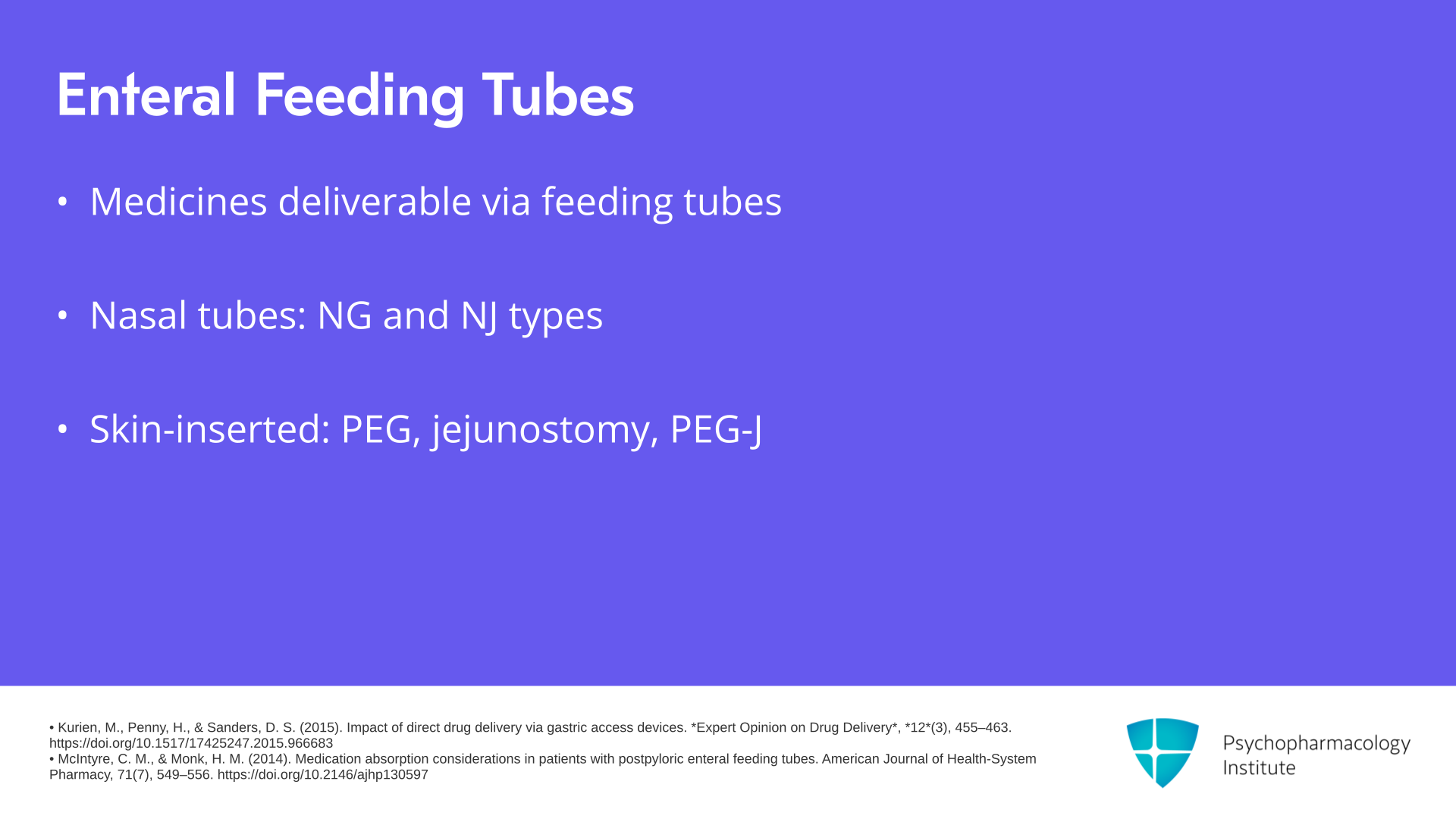
Enteral feeding tubes. If the patient has a feeding tube in place, medicines can usually be administered using this route. There are several different types of enteral feeding tubes. They can be inserted via the nasopharynx into the stomach. That’s the nasogastric or an NG tube. Or they can go into the jejunum. That’s a nasojejunal or NJ tube. Alternatively, the two can be inserted directly into the gastrointestinal tract through the skin. It either goes directly into the stomach, which is called a percutaneous endoscopic gastrostomy, a PEG, or into the jejunum, that’s a jejunostomy. Often, it’s a PEG tube with an extension into the jejunum, sometimes called a PEG-J.
References:
- Kurien, M., Penny, H., & Sanders, D. S. (2015). Impact of direct drug delivery via gastric access devices. *Expert Opinion on Drug Delivery*, *12*(3), 455–463. https://doi.org/10.1517/17425247.2015.966683
- McIntyre, C. M., & Monk, H. M. (2014). Medication absorption considerations in patients with postpyloric enteral feeding tubes. American Journal of Health-System Pharmacy, 71(7), 549–556. https://doi.org/10.2146/ajhp130597
Slide 6 of 24
Delivery of a drug via an NG or a PEG tube would be expected to cause little change in the pharmacokinetics of the drug because most drug absorption occurs in the small intestine and that’s distal to the point of delivery via the tube. There is one case of reduced plasma concentrations of clozapine using a PEG tube though. And so if you can monitor the plasma concentration of the drug that you’re putting down the tube, then that would be a good idea.
References:
- Kuzin, M., Haen, E., Hiemke, C., Bochon, B., Bochon, K., Gründer, G., Paulzen, M., & Schoretsanitis, G. (2021). Body mass index as a determinant of clozapine plasma concentrations: A pharmacokinetic-based hypothesis. Journal of Psychopharmacology, 35(3), 273–278. https://doi.org/10.1177/0269881120985166
- Kurien, M., Penny, H., & Sanders, D. S. (2015). Impact of direct drug delivery via gastric access devices. *Expert Opinion on Drug Delivery*, *12*(3), 455–463. https://doi.org/10.1517/17425247.2015.966683
Free Files
Download PDF and other files
Success!
Check your inbox, we sent you all the materials there.
Slide 7 of 24
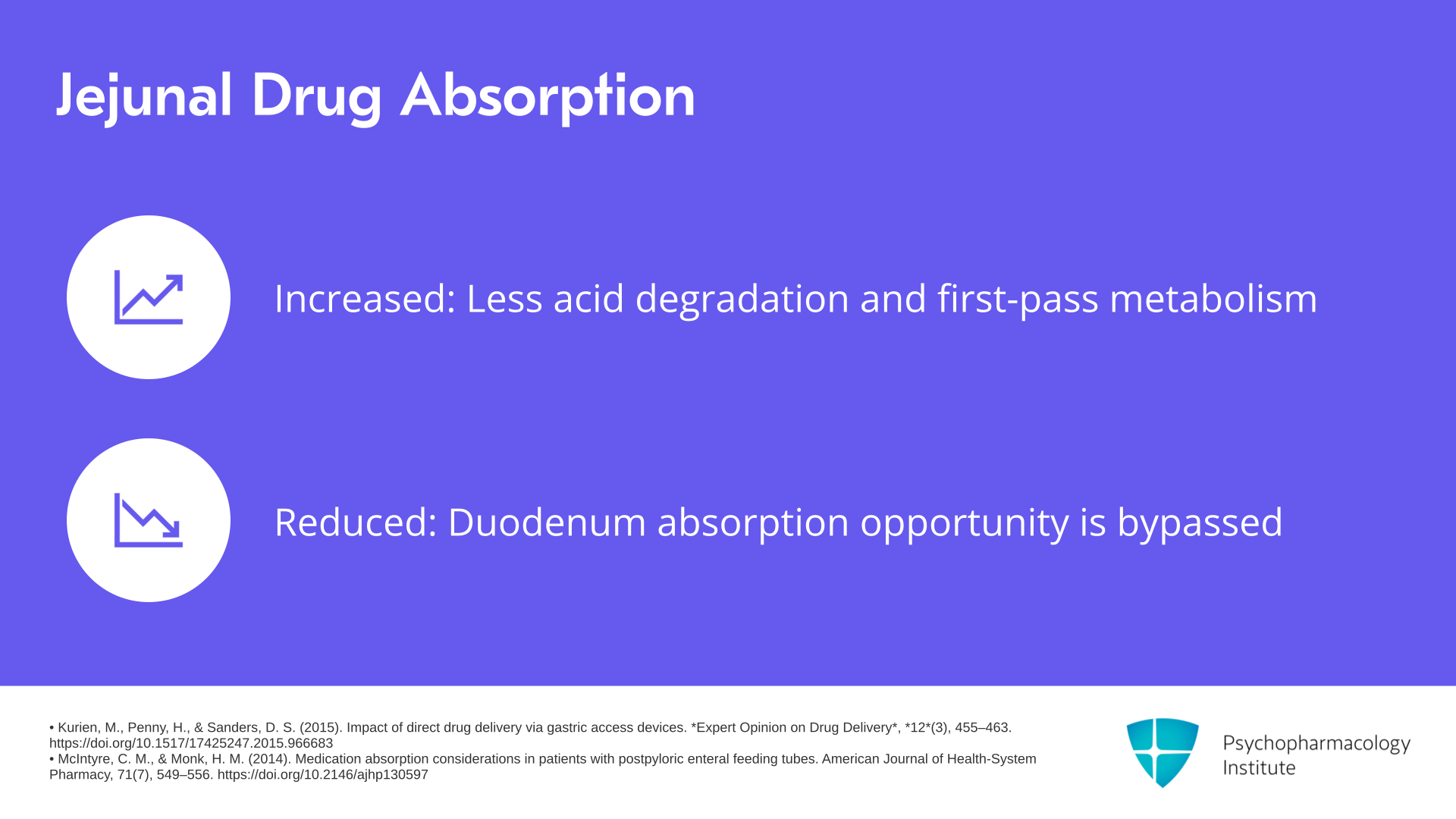
Administration of drugs directly into the jejunum, so that’s the NJ or the PEG-J tube that I described, also called post-pyloric administration, is more problematic for drug delivery than an NG route. You may have increased absorption because of the reduced opportunity for degradation by stomach acid or reduced first pass metabolism. So you’ve skipped all of that bit out by putting the drug directly into the jejunum, or you can have reduced absorption as a consequence of the missed opportunity for absorption in the duodenum.
References:
- Kurien, M., Penny, H., & Sanders, D. S. (2015). Impact of direct drug delivery via gastric access devices. *Expert Opinion on Drug Delivery*, *12*(3), 455–463. https://doi.org/10.1517/17425247.2015.966683
- McIntyre, C. M., & Monk, H. M. (2014). Medication absorption considerations in patients with postpyloric enteral feeding tubes. American Journal of Health-System Pharmacy, 71(7), 549–556. https://doi.org/10.2146/ajhp130597
Slide 8 of 24
In general, if you can use an enteral tube for medicine administration, it’s better to try that route and observe the response of the patient rather than dismissing it because we’re not sure exactly where the drug is going to be absorbed or if it will be absorbed at all. If putting a drug down an enteral tube, if possible, use a commercial liquid formulation of the drug because of the risk of occluding the tube if you crush a tablet or dispersible formulations can be dispersed in water and then put down the tube. But if there is no liquid formulation and there is no oral dispersible formulation, in the vast majority of cases, there is little risk to crushing tablets. Crushing should aim to reduce the particle size to an absolute minimum.
References:
- Kurien, M., Penny, H., & Sanders, D. S. (2015). Impact of direct drug delivery via gastric access devices. *Expert Opinion on Drug Delivery*, *12*(3), 455–463. https://doi.org/10.1517/17425247.2015.966683
- McIntyre, C. M., & Monk, H. M. (2014). Medication absorption considerations in patients with postpyloric enteral feeding tubes. American Journal of Health-System Pharmacy, 71(7), 549–556. https://doi.org/10.2146/ajhp130597
Free Files
Download PDF and other files
Success!
Check your inbox, we sent you all the materials there.
Slide 9 of 24
The use of plasma concentrations to guide dosing when you’re using an enteral feeding tube is recommended particularly if you have a drug that has a very narrow therapeutic index. So that would be clozapine and lithium.
References:
- Kuzin, M., Haen, E., Hiemke, C., Bochon, B., Bochon, K., Gründer, G., Paulzen, M., & Schoretsanitis, G. (2021). Body mass index as a determinant of clozapine plasma concentrations: A pharmacokinetic-based hypothesis. Journal of Psychopharmacology, 35(3), 273–278. https://doi.org/10.1177/0269881120985166
- Kurien, M., Penny, H., & Sanders, D. S. (2015). Impact of direct drug delivery via gastric access devices. *Expert Opinion on Drug Delivery*, *12*(3), 455–463. https://doi.org/10.1517/17425247.2015.966683
Slide 10 of 24
If we think about antidepressants in particular, there are very few non-oral formulations of antidepressants available as commercial products. Most formulations that do exist don’t have formal product licenses, and they may only be available through pharmaceutical importers or from specials manufacturers. The ideal antidepressant in a patient who can’t take anything orally is one, firstly, that treats the patient’s depression. If you know the response history of a patient to the antidepressant, that should be the starting point. And then the ideal choice depends on the individual patient’s circumstances, the speed of the response that’s required, the administration routes that you have available to you, and the length of time that the patient is likely to be nil by mouth for.
References:
- Royal College of Psychiatrists. (2017). *Use of licensed medicines for unlicensed applications in psychiatric practice* (2nd ed., College Report CR210). Author. https://tinyurl.com/2p9tvjuk
Free Files
Download PDF and other files
Success!
Check your inbox, we sent you all the materials there.
Slide 11 of 24
I’m going to talk now through the different antidepressant routes that may be available. Sublingual antidepressants. There are a small number of case reports supporting the effectiveness of fluoxetine liquid used sublingually in depressed, medically compromised patients. There are studies that show doses of up to 60 mg a day produce plasma fluoxetine and norfluoxetine levels towards the lower end of the proposed therapeutic range for fluoxetine. So that may be an option, although it seems likely that it may be a challenge to get the drug into the therapeutic range.
References:
- Pakyurek M, Pasol E. (1999). Sublingually administered fluoxetine for major depression in medically compromised patients. Am J Psychiatry, 156(11):1833-4. PMID: 10553754.
Slide 12 of 24
Ketamine injection has also been used sublingually with apparently good efficacy. And in fact, it may be best tolerated giving it this route rather than other routes of administration, such as intravenous or subcutaneous. So that’s using the ketamine injection ampules, and using them sublingually.
References:
- Swainson, J., & Khullar, A. (2020). Sublingual ketamine: An option for increasing accessibility of ketamine treatments for depression? *The Journal of Clinical Psychiatry*, *81*(1), 19lr13146. https://doi.org/10.4088/JCP.19lr13146
Free Files
Download PDF and other files
Success!
Check your inbox, we sent you all the materials there.
Slide 13 of 24
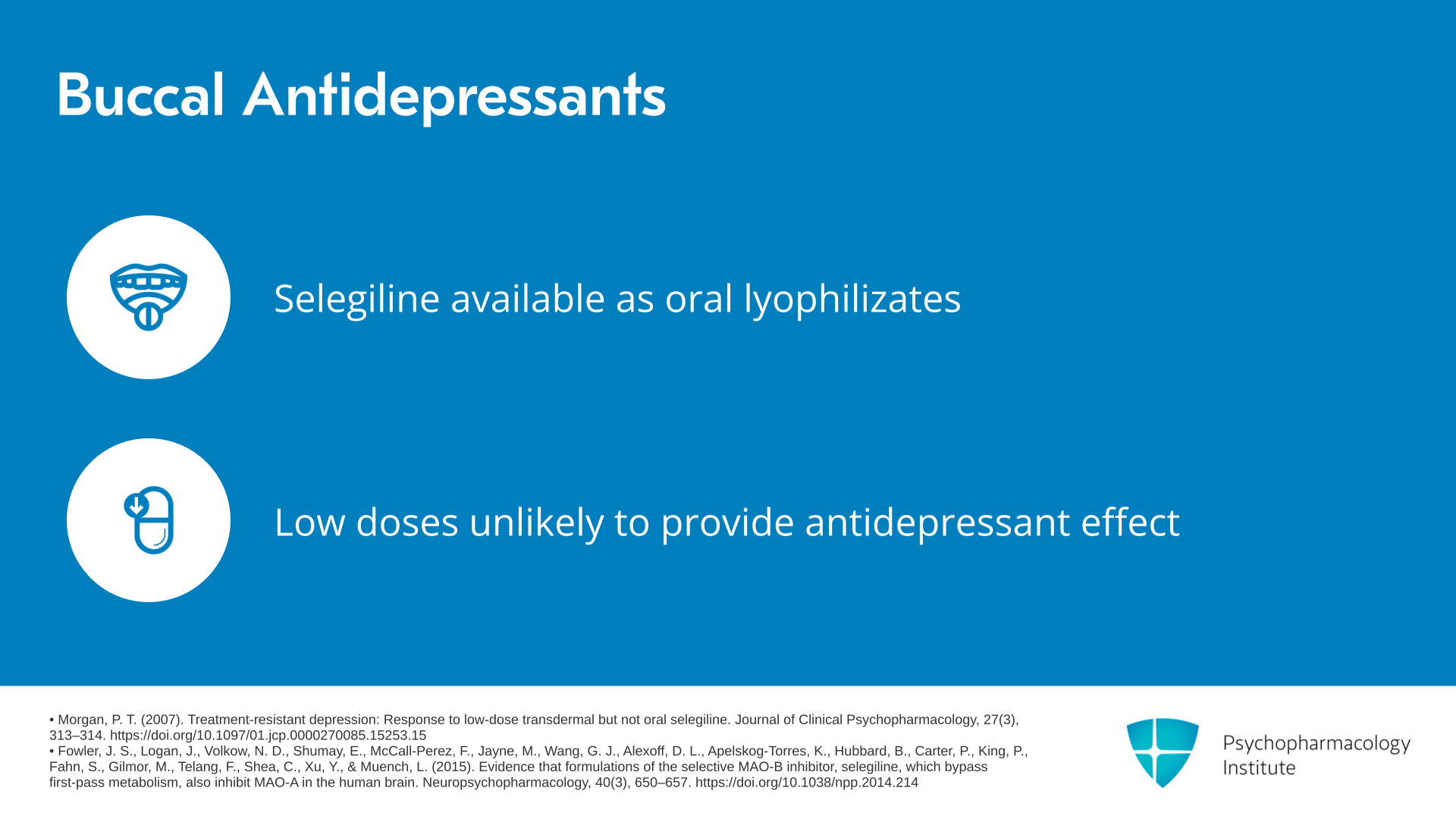
Buccal antidepressants. Selegiline is available in some countries as oral lyophilizates for absorption specifically in the buccal cavity. It’s licensed for the treatment of Parkinson’s disease in this context, but selegiline is selective for MAO-B inhibition at the 1.25 mg doses that are available as oral lyophilizates. A lack of action at MAO-A in the central nervous system at these very low doses probably precludes antidepressant activity. There is a very small study of orally disintegrating 10 mg per day selegiline which showed significant inhibition of brain MAO-A but clinical antidepressant activity wasn’t investigated.
References:
- Morgan, P. T. (2007). Treatment-resistant depression: Response to low-dose transdermal but not oral selegiline. Journal of Clinical Psychopharmacology, 27(3), 313–314. https://doi.org/10.1097/01.jcp.0000270085.15253.15
- Fowler, J. S., Logan, J., Volkow, N. D., Shumay, E., McCall-Perez, F., Jayne, M., Wang, G. J., Alexoff, D. L., Apelskog-Torres, K., Hubbard, B., Carter, P., King, P., Fahn, S., Gilmor, M., Telang, F., Shea, C., Xu, Y., & Muench, L. (2015). Evidence that formulations of the selective MAO-B inhibitor, selegiline, which bypass first-pass metabolism, also inhibit MAO-A in the human brain. Neuropsychopharmacology, 40(3), 650–657. https://doi.org/10.1038/npp.2014.214
Slide 14 of 24
There is one case report that described buccal administration of amitriptyline tablets which managed to achieve therapeutic plasma levels. But in general, we don’t have any antidepressants that are specifically designed to be absorbed in the buccal cavity.
References:
- Robbins, B., & Reiss, R. A. (1999). Amitriptyline absorption in a patient with short bowel syndrome. The American Journal of Gastroenterology, 94(8), 2302–2304. https://doi.org/10.1111/j.1572-0241.1999.01323.x
Free Files
Download PDF and other files
Success!
Check your inbox, we sent you all the materials there.
Slide 15 of 24
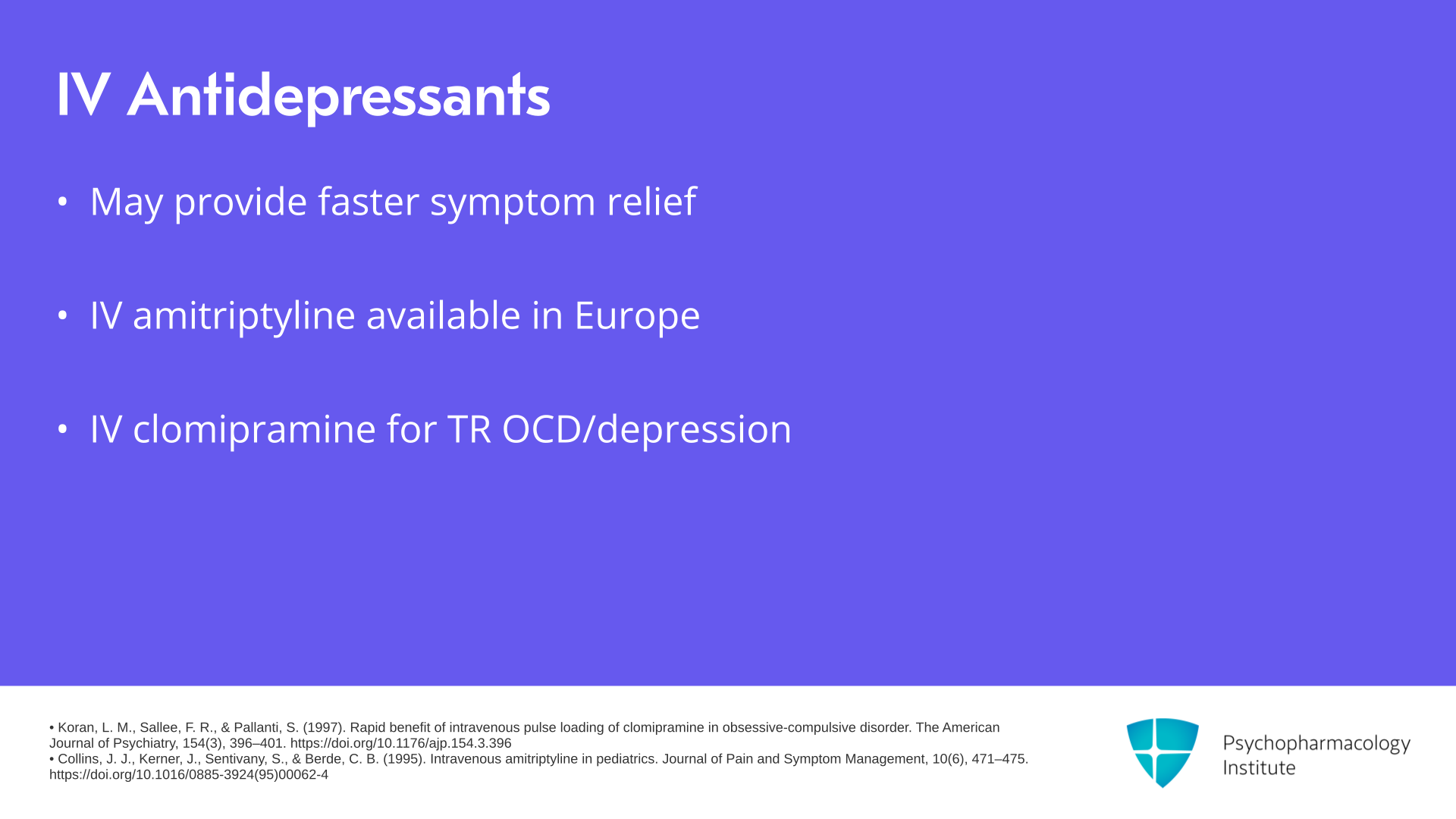
Moving on to talk about intravenous antidepressants. There are some small studies that suggest that intravenous administration may deliver more rapid symptom relief but efficacy data for IV versus oral are quite inconsistent. Intravenous amitriptyline is available in some parts of Europe. Intravenous clomipramine is used for pulsed loading in treatment-resistant OCD and depression.
References:
- Koran, L. M., Sallee, F. R., & Pallanti, S. (1997). Rapid benefit of intravenous pulse loading of clomipramine in obsessive-compulsive disorder. The American Journal of Psychiatry, 154(3), 396–401. https://doi.org/10.1176/ajp.154.3.396
- Collins, J. J., Kerner, J., Sentivany, S., & Berde, C. B. (1995). Intravenous amitriptyline in pediatrics. Journal of Pain and Symptom Management, 10(6), 471–475. https://doi.org/10.1016/0885-3924(95)00062-4
Slide 16 of 24
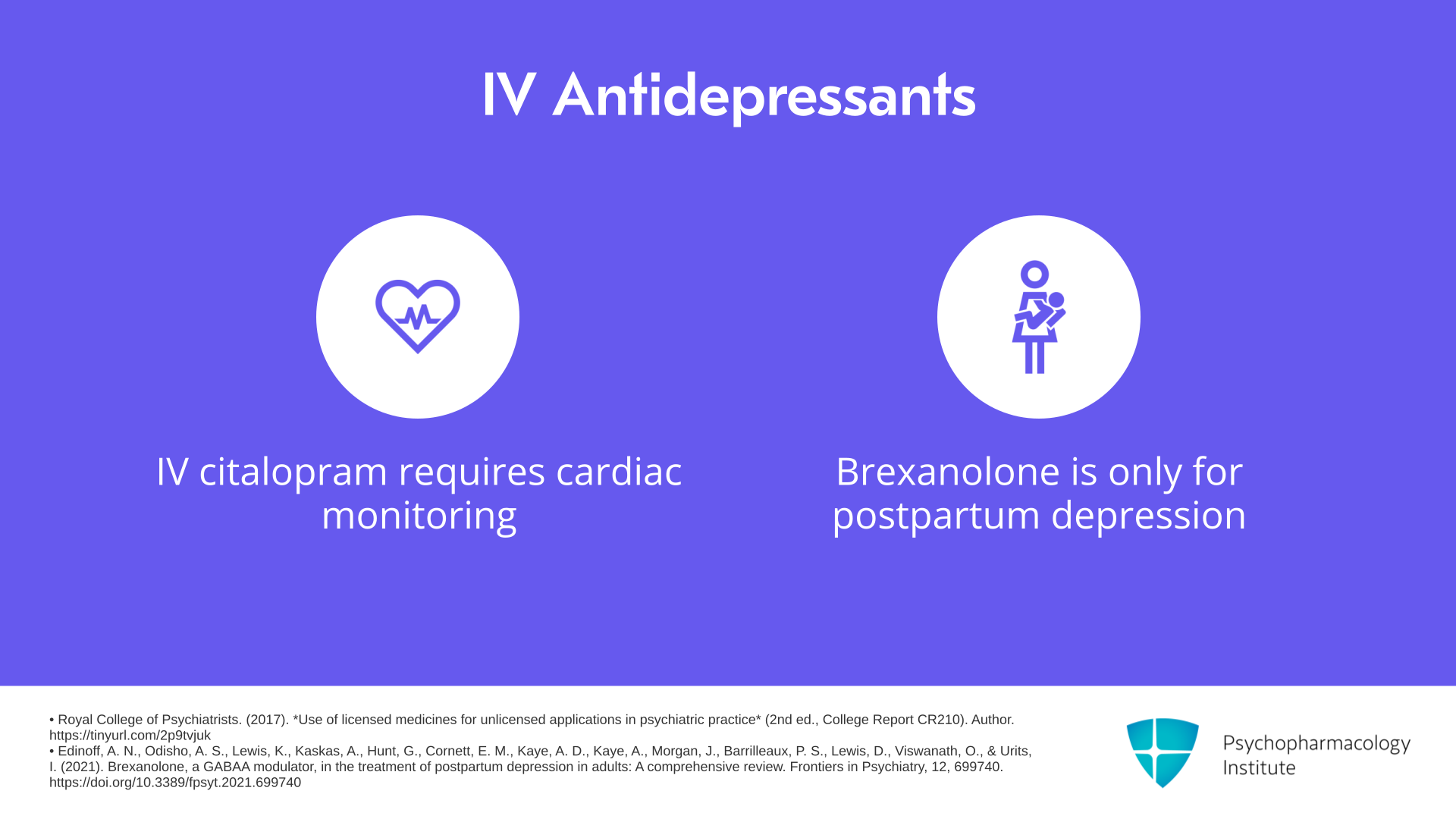
Intravenous citalopram is not a licensed preparation, but it can be requested directly from the manufacturer. IV citalopram requires cardiac monitoring due to the potential for QT prolongation. Intravenous mirtazapine has been used in hospital settings, but to date isn’t available as a commercial preparation. And finally, brexanolone is administered by continuous IV infusion, but only for postpartum depression and its mechanism of action means that this is the only indication for which it will be effective.
References:
- Royal College of Psychiatrists. (2017). *Use of licensed medicines for unlicensed applications in psychiatric practice* (2nd ed., College Report CR210). Author. https://tinyurl.com/2p9tvjuk
- Edinoff, A. N., Odisho, A. S., Lewis, K., Kaskas, A., Hunt, G., Cornett, E. M., Kaye, A. D., Kaye, A., Morgan, J., Barrilleaux, P. S., Lewis, D., Viswanath, O., & Urits, I. (2021). Brexanolone, a GABAA modulator, in the treatment of postpartum depression in adults: A comprehensive review. Frontiers in Psychiatry, 12, 699740. https://doi.org/10.3389/fpsyt.2021.699740
Free Files
Download PDF and other files
Success!
Check your inbox, we sent you all the materials there.
Slide 17 of 24
Transdermal antidepressants. Transdermal selegiline is the only commercially available transdermal antidepressant. It’s licensed in the UK, it bypasses first pass metabolism and has proven efficacy in depression. The dose range is 6 to 12 mg per 24 hours, and lower doses don’t require dietary tyramine restrictions. Although of course for patients who are nil by mouth, this is unlikely to be an issue in any case. There are no other transdermal antidepressants. Some of the tricyclics, nortriptyline and amitriptyline have been manufactured as patches, but they’re for the treatment of pain and the doses are likely to be far too low to be of use for antidepressant activity.
References:
- Morgan, P. T. (2007). Treatment-resistant depression: Response to low-dose transdermal but not oral selegiline. Journal of Clinical Psychopharmacology, 27(3), 313–314. https://doi.org/10.1097/01.jcp.0000270085.15253.15
- Amsterdam, J. D., & Bodkin, J. A. (2006). Selegiline transdermal system in the prevention of relapse of major depressive disorder: a 52-week, double-blind, placebo-substitution, parallel-group clinical trial. Journal of Clinical Psychopharmacology, 26(6), 579–586. https://doi.org/10.1097/01.jcp.0000239794.37073.70
Slide 18 of 24
Rectal antidepressants. Rectal antidepressants are available through compounding pharmacies. Amitriptyline suppositories have been manufactured by pharmacies so they may be available. Doxepin capsules have been administered via the rectal route directly in the treatment of cancer-related pain and they produce plasma concentrations in a case report within the supposed therapeutic range. There are examples of extemporaneously manufactured imipramine and clomipramine suppositories that produce plasma levels comparable with the oral route of administration.
References:
- Adams, S. (1982). Amitriptyline suppositories. *The New England Journal of Medicine*, *306*(16), 996. https://doi.org/10.1056/nejm198204223061622
- Storey, P., & Trumble, M. (1992). Rectal doxepin and carbamazepine therapy in patients with cancer. *The New England Journal of Medicine*, *327*(18), 1318–1319.
- Chaumeil, J. C., Khoury, J. M., Zuber, M., Courteille, F., Piraube, C., Gard, C., & Bellenger, P. (1988). Formulation of suppositories containing imipramine and clomipramine chlorhydrates. *Drug Development and Industrial Pharmacy*, *14*(15–17), 2225–2239. https://doi.org/10.3109/03639048809152012
Free Files
Download PDF and other files
Success!
Check your inbox, we sent you all the materials there.
Slide 19 of 24
Trazodone has been successfully administered in a suppository formulation postoperatively for a patient who was stable on the oral formulation prior to surgery. And there is also a case report of sertraline tablets being administered rectally with success in a critically ill patient with bowel compromise. So the rectal route is a pretty good one for drug administration but it’s challenging to find antidepressants that are available this way.
References:
- Leung, J. G., Philbrick, K. L., Loomis, E. A., & Frazee, E. (2017). Rectal bioavailability of sertraline tablets in a critically ill patient with bowel compromise. *Journal of Clinical Psychopharmacology*, *37*(3), 372–373. https://doi.org/10.1097/JCP.0000000000000685
- Gee, S., & Taylor, D. M. (2024). *The Maudsley prescribing guidelines for mental health conditions in physical illness*. Wiley-Blackwell. https://doi.org/10.1002/9781394192403
Slide 20 of 24
Intranasal antidepressants. Esketamine is available as a nasal spray. It is licensed in the UK since 2019 and in the USA since 2020 for treatment-resistant major depressive disorder. It requires specific administration practices – tilting of the head and sniffing – which might not be possible to adhere to in the medically unwell patient. The UK National Institute of Health and Care Excellence hasn’t recommended intranasal ketamine for use in treatment-resistant depression due to concerns of clinical and cost effectiveness, although it should be noted this is for long-term use, which may be less of a concern in patients who are nil by mouth.
References:
- Mischel, N. A., & Balon, R. (2021). Esketamine: A drug to treat resistant depression that brings more questions than answers. Journal of Clinical Psychopharmacology, 41(3), 233–235. https://doi.org/10.1097/JCP.0000000000001395
Free Files
Download PDF and other files
Success!
Check your inbox, we sent you all the materials there.
Slide 21 of 24
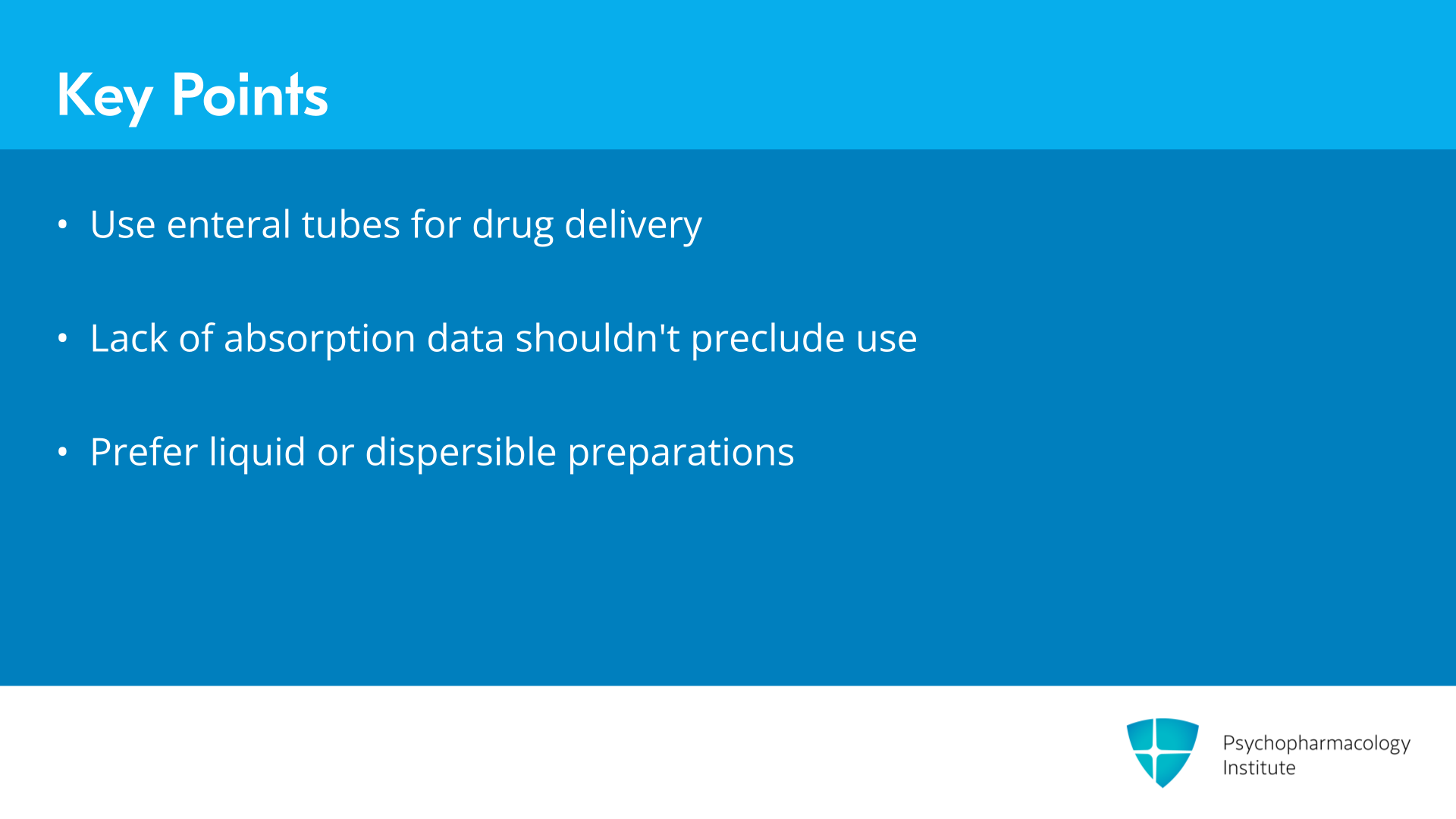
Key points for the use of antidepressants in patients who are nil by mouth. If enteral tubes are in situ, then this should ideally be used for drug delivery in patients who can’t take oral medicines. Reliable information on exactly where in the gastrointestinal tract a drug is absorbed are lacking. So an absence of this information shouldn’t preclude trying this route and observing the response. At worst, nothing will happen. Liquid or oral dispersible preparations are preferrable for putting down enteral tubes.
Slide 22 of 24
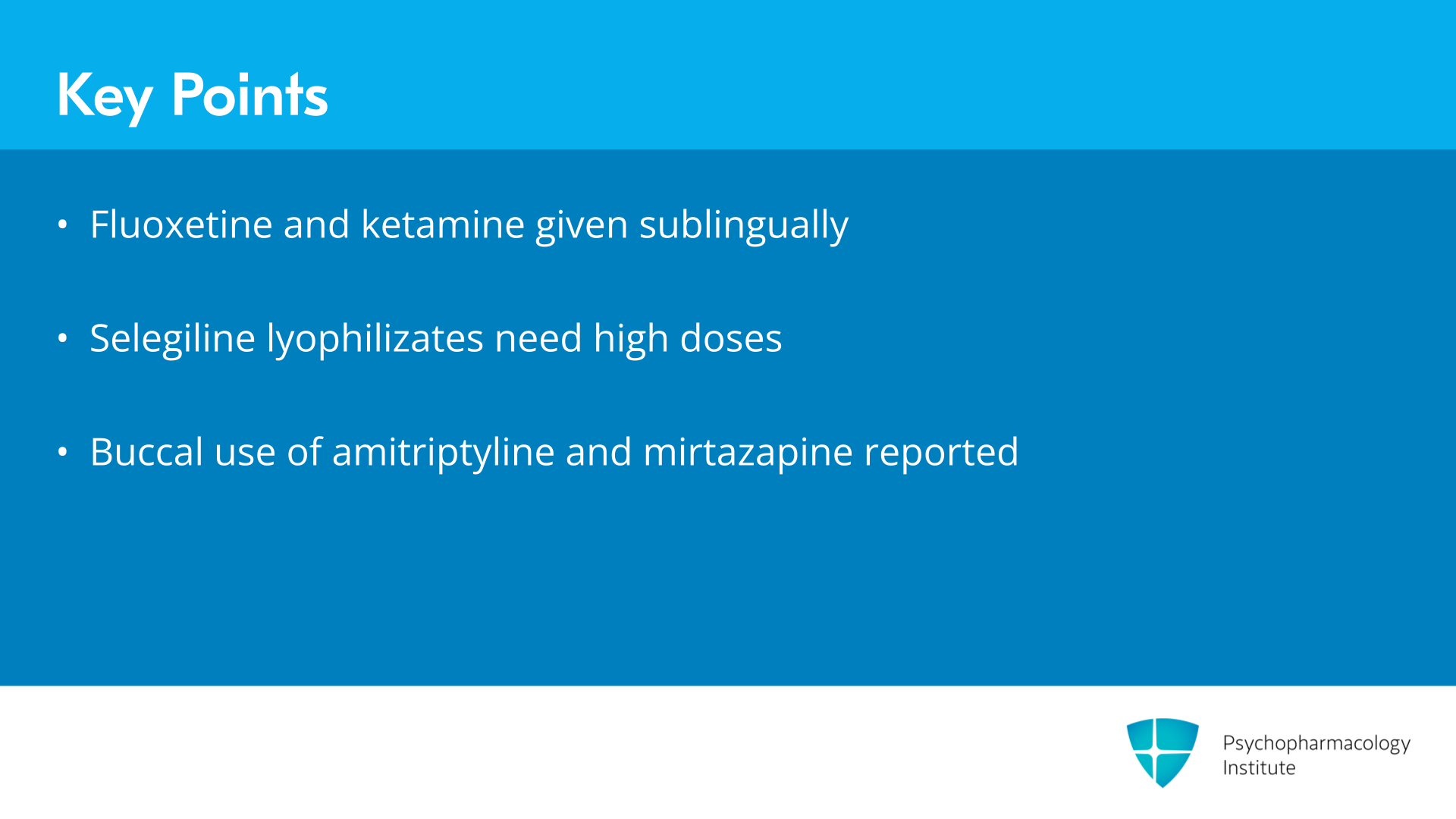
Fluoxetine liquid and ketamine liquid given sublingually, have both been used sublingually. Selegiline which is of course an MAOI is available in some countries as oral lyophilizates although you’d need high doses to achieve MAO-A inhibition in the brain for antidepressant effects. There are case reports that describe the use of amitriptyline tablets and oral dispersible mirtazapine buccally, but note that oral dispersible preparations are not designed for buccal absorption. The drug disperses into saliva that’s then swallowed.
Free Files
Download PDF and other files
Success!
Check your inbox, we sent you all the materials there.
Slide 23 of 24
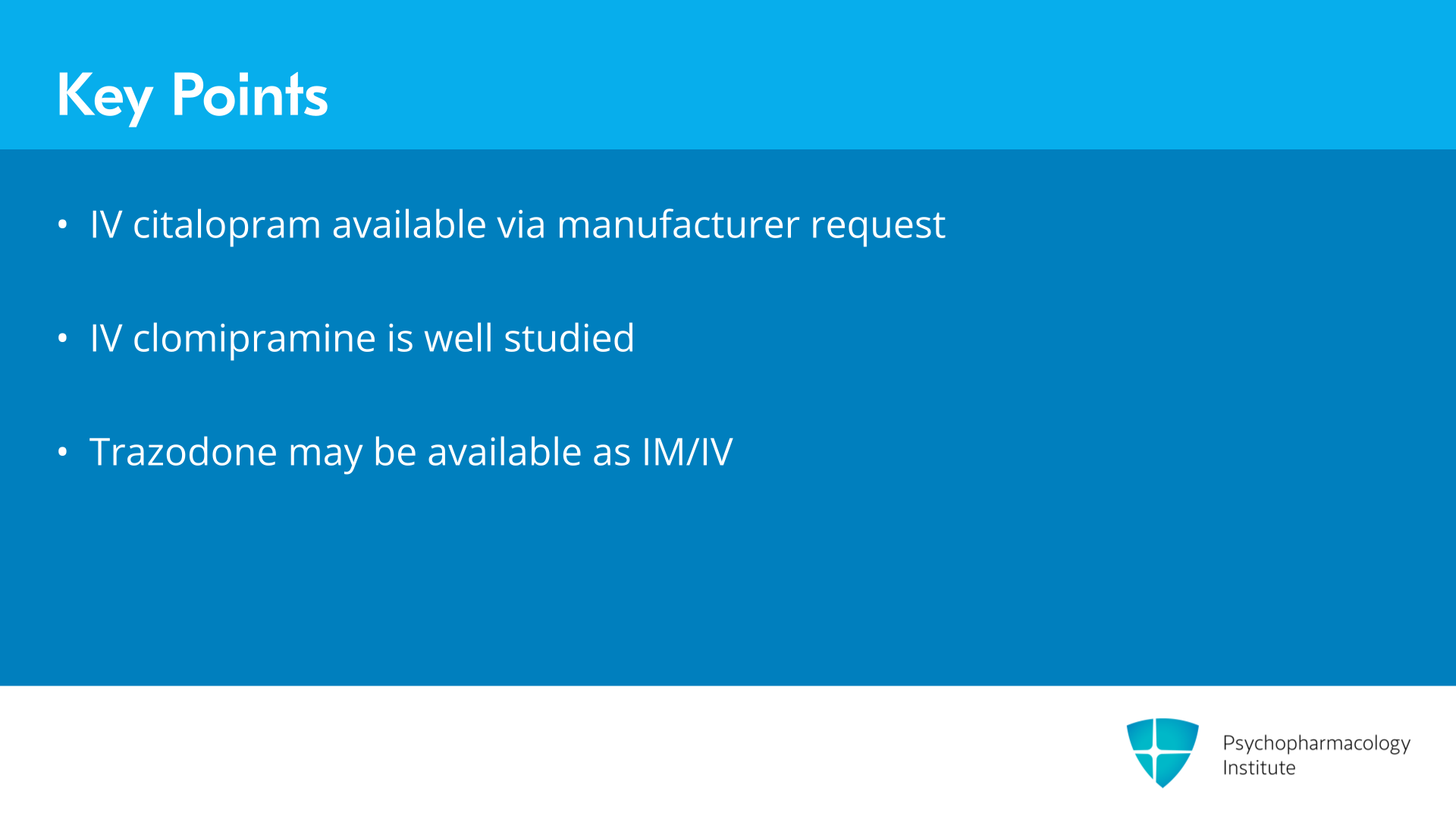
Intravenous citalopram is available by direct request to the manufacturers. Intramuscular amitriptyline preparations can be used intravenously but they’re not available in most parts of the world anymore. However, IV clomipramine is very well studied and it’s available as a licensed product in some countries. Trazodone might be available as IM or IV formulations in Italy.
Slide 24 of 24
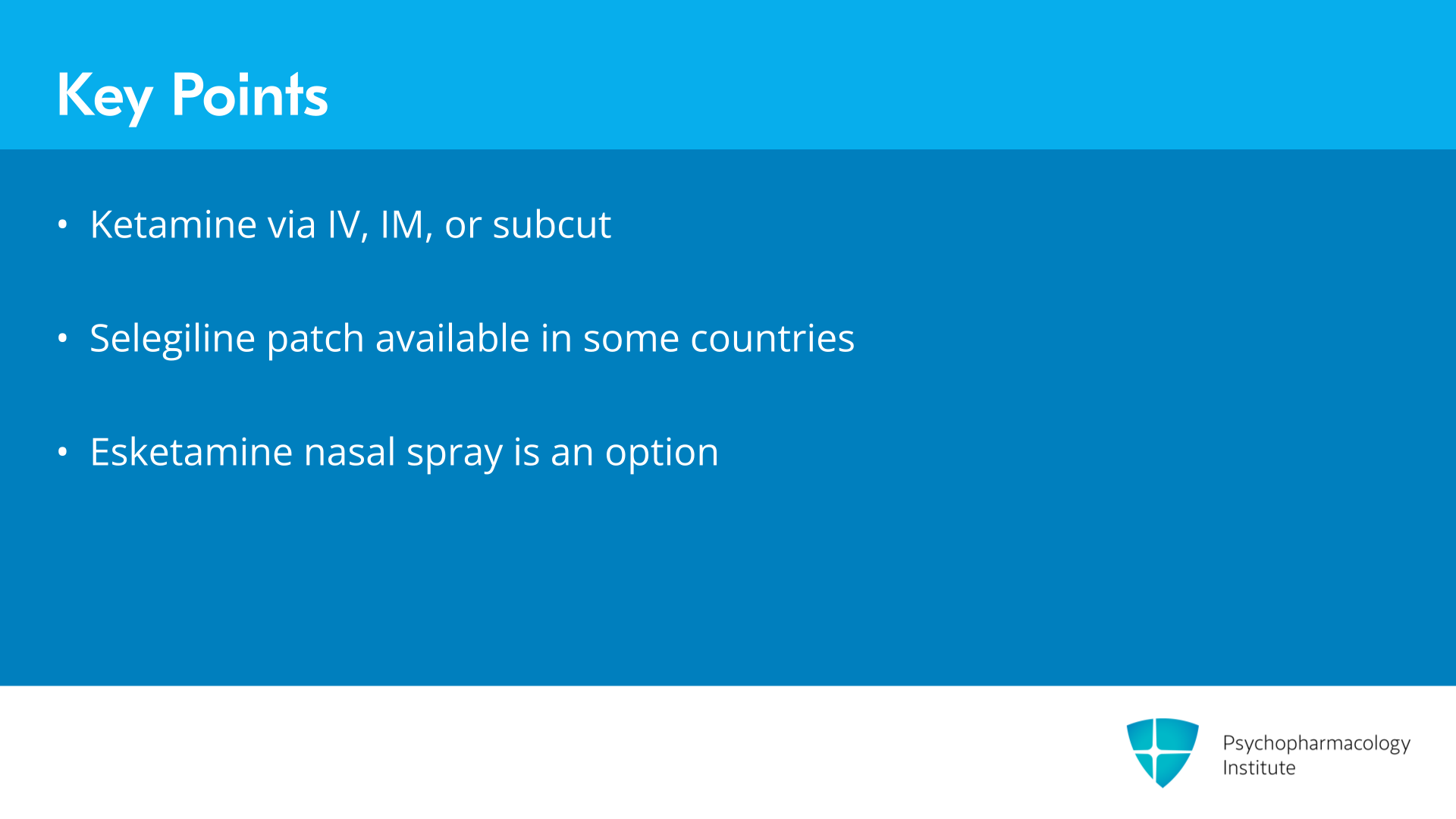
IV, IM or subcut ketamine has been extensively studied and is widely available, and is an effective antidepressant. And flupentixol depot has also been used in low doses for depression. Selegiline is available as a transdermal patch in some countries. It may be possible to manufacture antidepressant suppositories locally, and esketamine is available as a nasal spray in some countries.
Free Files
Download PDF and other files
Success!
Check your inbox, we sent you all the materials there.
