



In a nutshell
April to early August 2026 brought two first-in-class FDA approvals, a set of label and safety updates, and three new guidelines.
The FDA approved centanafadine (Simtriyo) for ADHD in adults and pediatric patients 6 years and older, and oveporexton (Orzeyful) for narcolepsy type 1 in adults. Neither can be dispensed until the DEA assigns a controlled substance schedule. Guidance arrived on OCD across the lifespan (CANMAT-ICOCS), on lithium and the kidney (IGSLi/ISBD), and on combination treatment for chronic insomnia (AASM).

New FDA approvals
- Centanafadine (Simtriyo): approved for ADHD, not yet prescribable[1,2]
- Approved July 24, 2026 for adults and pediatric patients 6 years and older weighing at least 20 kg, as a once-daily extended-release capsule
- The DEA schedule was still pending in the July 2026 label
- The first ADHD drug that also inhibits serotonin reuptake, and it is a stimulant
- Serotonin syndrome is therefore a theoretical interaction rather than an observed one: no case occurred in the trials, but it matters because many patients with ADHD are already taking an SSRI or SNRI
- All four registrational trials were placebo-controlled: no comparison with methylphenidate, amphetamine, atomoxetine, or viloxazine exists
- Two-part boxed warning covering pediatric suicidal ideation and behavior plus abuse, misuse, and addiction
- The label makes no claim of lower abuse potential than an existing stimulant
- Approved July 24, 2026 for adults and pediatric patients 6 years and older weighing at least 20 kg, as a once-daily extended-release capsule
- Oveporexton (Orzeyful): approved for narcolepsy type 1[3,4]
- Approved August 5, 2026 for adults, from Takeda. First orexin receptor 2 agonist approved in the US
- It restores the orexin signaling whose loss causes the disorder, rather than treating the individual symptoms
- The regimen is a morning one: a dose after awakening and a second 3 to 5 hours later [5]
- Insomnia and urinary frequency are common, and do not fall away at the lower dose [5]
- Like centanafadine, it cannot be marketed until the DEA assigns a schedule
- Approved August 5, 2026 for adults, from Takeda. First orexin receptor 2 agonist approved in the US
Label and safety updates
- Lumateperone (Caplyta): relapse-prevention data in the label, not a new indication[6,7]
- The three indications are unchanged. What changed is the evidence the label carries
- The significance is largely regulatory and payer-facing: maintenance treatment was already standard practice, and the label now carries controlled data supporting it
- Also on labels this period
- Lecanemab (Leqembi Iqlik) can now be started with a subcutaneous autoinjector, which the FDA calls the first at-home starting dose for an Alzheimer’s disease treatment [8]
- The first two doses are still given under a provider’s direct guidance, and the boxed warning for amyloid-related imaging abnormalities and its MRI schedule are unchanged
- Rextovy naloxone 4 mg nasal spray moved from prescription to over-the-counter on June 16, 2026. This is a switch for a product approved since 2023, not a new approval [9]
- Setting aside centanafadine’s boxed warning, no FDA safety labeling action touched an already-marketed psychotropic between April and July 2026
- Lecanemab (Leqembi Iqlik) can now be started with a subcutaneous autoinjector, which the FDA calls the first at-home starting dose for an Alzheimer’s disease treatment [8]
- Valproate, paternal use: the EMA keeps the 2024 precautions but softens the evidence statement[10]
- On June 11, 2026 the EMA’s Pharmacovigilance Risk Assessment Committee (PRAC) judged the evidence for neurodevelopmental disorders in children born to men treated with valproate inconsistent, and the causal role of valproate uncertain
- The measures are unchanged: effective contraception, including for a female partner, during treatment and for at least 3 months after stopping; no sperm donation over the same period; and regular review of whether valproate remains the right treatment
New guidance
- CANMAT-ICOCS international OCD guidelines: dose higher and wait longer before calling a trial failed[11]
- Published in the August 2026 issue of the Journal of Psychiatric Research, online since January 2026
- Run acute treatment for at least 12 weeks at the maximally tolerated dose before assessing response
- A patient counts as treatment-resistant only after two such trials have failed
- In treatment-resistant OCD, first-line augmentation is aripiprazole, risperidone, or CBT/ERP added to the SSRI
- Run for at least 8 weeks before assessing response
- Lithium and the kidney: the risk is mild to moderate CKD, not kidney failure, and the modifiable part is the level[12]
- An IGSLi/ISBD task force reads the newer comparator-controlled evidence as showing higher rates of CKD stage 3
- It finds no clear increase in end-stage kidney disease
- It finds no renal advantage in switching to valproate
- Aim below 0.80 mmol/L: the 0.80–0.99 band carries a 4.3-fold increase in CKD [12,13]
- Dose once daily, and ask about polyuria, nocturia, and nocturnal thirst at every visit
- Past a certain point, stopping lithium no longer protects the kidney: once eGFR falls to roughly 30–40 mL/min/1.73 m² the decline usually continues even after withdrawal
- The argument is therefore for getting the dose and the level right early, not for stopping late
- AASM on combination treatment for chronic insomnia: CBT-I still comes first[14]
- CBT-I plus a medication is suggested over medication alone, but CBT-I alone still ranks above the combination. Both recommendations are conditional and rest on low-certainty evidence
- The everyday question of adding CBT-I to ongoing hypnotic therapy was not graded: only concurrent-start trials qualified
- No eligible trial studied a dual orexin receptor antagonist or a melatonin receptor agonist, so lemborexant and daridorexant have no combination evidence in either direction
Centanafadine (Simtriyo) Approved for ADHD
- The FDA approved centanafadine (Simtriyo, Otsuka) on July 24, 2026 for ADHD in adults and pediatric patients 6 years and older weighing at least 20 kg [1,2]
- Once-daily extended-release capsule: 140 mg, 210 mg, 280 mg [1]
- Not recommended below age 6 (more weight loss than in older children) or below 20 kg (no data, plus weight-loss risk) [1]
- It cannot be dispensed yet: the controlled substance schedule was still unassigned in the July 2026 label, which leaves even the initial US approval date blank pending DEA review [1]
- Centanafadine is the first ADHD drug that also inhibits serotonin reuptake
- First norepinephrine-dopamine-serotonin reuptake inhibitor (NDSRI) approved for ADHD [1,2]
- It inhibits reuptake at the norepinephrine, dopamine, and serotonin transporters [1]
- The label applies the full CNS stimulant warning set and a boxed warning for abuse, misuse, and addiction, so trade coverage grouping it with atomoxetine and viloxazine is wrong [1]
| Agent | Norepinephrine | Dopamine | Serotonin | Class |
|---|---|---|---|---|
| Centanafadine | ✔ | ✔ | ✔ | NDSRI and CNS stimulant |
| Methylphenidate | ✔ | ✔ | ✕ | Stimulant: reuptake inhibitor |
| Amphetamine | ✔ | ✔ | ✕ | Stimulant: releaser and reuptake inhibitor |
| Atomoxetine | ✔ | ✕ | ✕ | Non-stimulant: selective norepinephrine reuptake inhibitor |
| Viloxazine | ✔ | ✕ | ✕ | Non-stimulant: selective norepinephrine reuptake inhibitor |
- What the serotonergic component adds clinically is not known
- The molecule was designed and first characterized in the literature as a norepinephrine-dopamine reuptake inhibitor [15]
- Serotonin was not part of the published design rationale; the triple-reuptake framing came later
- Where the serotonergic activity changes practice is in the potential interactions, not in the efficacy
- It brings a serotonin syndrome warning and an MAOI contraindication to an ADHD drug
- The molecule was designed and first characterized in the literature as a norepinephrine-dopamine reuptake inhibitor [15]
- No advantage over existing agents was established
- Every registrational trial was placebo-controlled, with no active comparator, so no head-to-head efficacy trial against any ADHD drug exists [1]
- Any comparison with methylphenidate, amphetamine, atomoxetine, or viloxazine is therefore necessarily indirect
- No patient profile has been identified
- No subgroup or predictor analysis shows who responds better, and centanafadine has not been studied in patients who failed or could not tolerate a stimulant [1,16]
How large is the effect
- The published adult effect sizes are small: Cohen’s d 0.24 to 0.40 across the two adult studies[16]
- By the conventional reading of Cohen’s d, 0.2 is small, 0.5 moderate, and 0.8 large
- The placebo arms did most of the work: in adolescents placebo alone removed 38% of baseline symptoms against 49% on centanafadine, which is what compresses the between-group gap to 4.4 points on a 54-point scale [1]
- Caveats[1]
- The two adult studies used a twice-daily sustained-release tablet at 200 and 400 mg total daily dose, not the marketed once-daily capsule
- The lower dose failed in both pediatric studies, which is why only the higher dose is approved in children and adolescents
- In adults the high dose beat the low dose in only one of the two studies
Boxed warning
- Suicidal ideation and behaviors in pediatric patients 6 years and older[1]
- Higher rates than placebo were reported in a 6-week study in children 6 to 12, and the warning extends to all pediatric patients 6 and older
- Atomoxetine carries a comparable pediatric boxed warning [17]
- Abuse, misuse, and addiction[1]
- The same class of boxed warning that CII stimulants carry, with the same requirement to assess abuse risk before prescribing and to monitor during treatment
Is it less abusable than other stimulants?
- Not established, and the label does not claim it.
- One conclusion is that the human data demonstrate that centanafadine has abuse potential, so the manufacturer’s “low potential for abuse” framing is not the label’s [1]
- The comparison is direct rather than indirect: amphetamine and lisdexamfetamine were active comparator arms within centanafadine’s own abuse studies. Even so, the results pointed both ways and the label draws no comparative conclusion
- What can be said is about dependence, which is a different question from abuse[1]
- The label suggests centanafadine does not produce physical dependence, while noting separately that tolerance may occur
Dosing considerations
- Adults start at 210 mg once daily, with a single optional step to 280 mg [1]
- Adolescents take 280 mg once daily [1]
- Children 6 to 12 weighing at least 20 kg are dosed by weight: 140 mg to under 35 kg, 210 mg from 35 to 50 kg, 280 mg above 50 kg [1]
- There is effectively no titration, and in the adolescent trial separation from placebo appeared at Week 1, the first postbaseline timepoint [18]
- Alcohol accelerates release
- Avoid it at the time of a dose and for at least 2 hours after [1]
Safety and interactions worth knowing
- Serotonin syndrome is a theoretical interaction rather than an observed one, and prescribers do not expect it from an ADHD drug[1]
- No case occurred in the trials. The warning is mechanism-based, but it matters because many patients with ADHD are already taking an SSRI or SNRI
- MAOIs are contraindicated during treatment and within 14 days of stopping one
- Centanafadine is metabolized mainly by MAO-A rather than by CYP enzymes[1]
- It is itself a moderate CYP1A2 inhibitor and doubled caffeine exposure
- Rash is the reason patients stopped the drug, and it is unusual for an ADHD agent[1]
- Serious hypersensitivity, including angioedema and anaphylaxis occurred in trials
- Growth suppression is most pronounced in the youngest patients[1]
- By Week 88 of the open-label study, 15.6% of children 6 to 12 had a height z-score fall of at least 1, against 1.5% of adolescents
- The rest is the standard stimulant package: avoid in serious cardiac disease, recheck blood pressure and heart rate after dose increases, watch for new psychotic or manic symptoms, and monitor for tics [1]
Logistic considerations: centanafadine cannot be prescribed yet
- The controlled substance schedule was still unassigned in the label revised July 2026. The schedule is deferred to DEA review, and the label’s initial US approval date is given as pending scheduling [1]
- Because the label classifies centanafadine as a CNS stimulant and carries a boxed warning for abuse, it will be federally controlled
- Where the DEA places it is not predictable from the label, and until it decides, refill limits, quantity limits, and e-prescribing rules are not knowable
- Most ADHD stimulants are Schedule II. Some CNS stimulants used outside ADHD sit lower, including modafinil and solriamfetol at Schedule IV, so a schedule below CII would be unusual for an ADHD agent without being unprecedented for a stimulant
Oveporexton (Orzeyful) Approved for Narcolepsy Type 1
- The FDA approved oveporexton (Orzeyful, Takeda) for narcolepsy type 1 in adults on August 5, 2026[3,4]
- The first orexin receptor 2 agonist approved in the US [3]
- The FDA describes it as the first drug to treat the full range of narcolepsy type 1 symptoms [3]
- It restores the orexin signaling whose loss causes narcolepsy type 1, rather than treating the individual symptoms with stimulants or sedatives
- The regimen is a morning one, not a conventional twice-daily schedule: a dose after awakening and a second 3 to 5 hours later [5]
Efficacy
- Two randomized, double-blind, placebo-controlled 12-week trials in 273 adults, the Phase 3 FirstLight and RadiantLight studies [3,4]
- Both 1 mg and 2 mg twice daily separated from placebo on the ability to stay awake, on daytime sleepiness, and on cataplexy [5]
Tolerability
- The common adverse effects barely change between the two doses, so lowering the dose to 1 mg is not a way to avoid them [5]
| Adverse reaction | 2 mg twice daily | 1 mg twice daily | Placebo |
|---|---|---|---|
| Insomnia | 60% | 55% | 1% |
| Urinary frequency | 58% | 53% | 5% |
| Urinary urgency | 16% | 15% | 1% |
| Salivary hypersecretion | 7% | 8% | 0% |
- Insomnia: roughly 90% of cases began within the first 2 days, and about 63% resolved within a week [5]
- Two laboratory signals, reported across both doses combined [5]
- LDL above 160 mg/dL in 32% against 20% on placebo, with a mean rise of 17.6 against 4.4 mg/dL by Week 12
- Asymptomatic creatine phosphokinase above 5 times the upper limit of normal in 11% (21/196) against 5% (4/76)
- Two cases combined markedly elevated CPK with raised transaminases and discontinued
Before prescribing
- Screen for lower urinary tract symptoms, and counsel about insomnia at initiation [5]
- If insomnia persists beyond 7 days and significantly impacts daytime functioning or quality of life, consider dose reduction or discontinuation [5]
- Contraindicated with strong CYP3A inhibitors, and avoid strong and moderate inducers [5]
- With a moderate CYP3A inhibitor, reduce to 0.5 mg twice daily
- Like centanafadine, it cannot be marketed until the DEA assigns a controlled substance schedule [4]
- None had been issued by mid-August 2026, and Takeda expects US availability by November
Lumateperone (Caplyta): New Relapse-Prevention Data in Schizophrenia
- On April 27, 2026 the FDA approved an sNDA adding long-term relapse-prevention data to the lumateperone label[7]
- What changed is the evidence in the label, not the indication
- The prescribing information revised 04/2026 still lists the same three indications: schizophrenia, bipolar I/II depression alone or with lithium or valproate, and adjunctive MDD [6]
- The practical significance is largely regulatory and payer-facing: maintenance treatment was already standard practice, and the label now carries controlled data supporting it
- The randomized-withdrawal data shows that continuing an effective drug beats abruptly stopping it in patients already stabilized on it [19]
- It does not show that lumateperone prevents relapse better than the alternatives
- Three features of the design explain why[6,19]
- Enrichment: only patients stabilized on open-label lumateperone were randomized to continue it or switch to placebo, so the population is pre-selected for tolerating and doing well on the drug
- Discontinuation effects: the placebo arm is not drug-naive; it is being withdrawn. Some of the relapse there may reflect withdrawal or rebound rather than untreated illness taking its course
- The comparator is placebo, not another antipsychotic, so the result supports no comparison with another agent
Other Approvals and Safety Updates
Other approvals
- Leqembi Iqlik (lecanemab-irmb): subcutaneous initiation dosing, July 2026[8]
- The FDA calls this the first at-home starting dose for an Alzheimer’s disease treatment
- The autoinjector had previously been approved only for maintenance dosing, after 18 months of intravenous treatment
- “At home” has a limit worth stating: therapy must still be initiated under a healthcare provider’s guidance and supervision
- Patient or caregiver administration is permitted only after direct guidance for at least 2 consecutive subcutaneous doses
- Initiation is 500 mg once weekly, given as two 250 mg injections
- After 18 months, patients may either continue that dose or move to maintenance, which is 360 mg weekly subcutaneously or 10 mg/kg every 4 weeks intravenously
- The boxed warning for amyloid-related imaging abnormalities still applies, and the MRI monitoring schedule is unchanged
- Rextovy naloxone nasal spray moved to over-the-counter, June 16, 2026[9]
- This is a full prescription-to-nonprescription switch of a spray that has been approved as a prescription product since 2023, and adds another over-the-counter option rather than a novel one
Safety labeling actions
- Setting aside the new boxed warning that arrived with centanafadine, no FDA safety labeling action touched an already-marketed psychotropic between April and July 2026
- Valproate, paternal use: the EMA keeps the 2024 precautions but softens the evidence statement, June 11, 2026[10]
- The Pharmacovigilance Risk Assessment Committee (PRAC) judged the evidence for neurodevelopmental disorders in children born to men treated with valproate inconsistent
- It also judged the causal role of valproate uncertain
- The signal nonetheless stays classified as an important potential risk, and product information is being amended to state that other studies did not show an increased risk
- The measures themselves are unchanged
- For men of reproductive potential taking valproate:
- Effective contraception, including for a female partner, during treatment and for at least 3 months after stopping
- No sperm donation over the same period
- Regular review by the prescriber of whether valproate remains the most suitable treatment
- TANGO, the EMA-mandated study intended to settle the question, reports in 2028
CANMAT-ICOCS International Guidelines for OCD: Dose Higher and Wait Longer
- CANMAT and the International College of Obsessive-Compulsive Spectrum Disorders issued joint guidelines for OCD across the lifespan, published in the August 2026 issue of the Journal of Psychiatric Research and online since January 2026 [11]
- They are titled the 2025 guidelines after their development cycle, in the same way as the 2016 CANMAT depression guidelines
First-line pharmacotherapy
- Assess response at 12 weeks at the maximally tolerated dose, not before (Level 1) [11]
- All six SSRIs are first line (Level 1), without any significant difference in efficacy[11]
- Sertraline, fluoxetine, fluvoxamine, citalopram, escitalopram, and paroxetine
- The guideline treats the side-effect profile as the only evidence-based basis for choosing between them, settled through a full discussion with the patient [11]
- Weight gain: paroxetine may induce more of it than the other SSRIs (see our Antidepressants and Metabolic Disturbances Guide)
- Polypharmacy: review interactions regularly with fluvoxamine, which inhibits CYP1A2, 2C9, 2C19, and 3A4, and with fluoxetine and paroxetine, which inhibit CYP2D6
- QTc: citalopram and escitalopram may prolong QTc, which explains the dose ceilings below.
- The guideline judges the clinical impact low, but still calls ECG monitoring highly recommended
- Matching the SSRI to a comorbidity is described as reasonable but still not evidence-based
- Clomipramine is kept off first line by tolerability, not by efficacy[11]
- Consistently reported as one of the most effective interventions for OCD, and second line at 100–250 mg/day (see our Prescribing Tricyclic Antidepressants Safely Guide)
- Venlafaxine is not first line[11]
- More potential side effects than SSRIs at higher doses, including hypertension, plus the absence of placebo-controlled RCTs
- Children and adolescents present a different first-line list[11]
- First line is fluoxetine, sertraline, fluvoxamine, and escitalopram (Level 1), but not paroxetine, which is second line in this age group
- Paroxetine is demoted despite strong pediatric efficacy evidence, on two grounds: it is not FDA approved for pediatric OCD, and it carries suicidality concerns in this age group
- Over age 65 the SSRI to avoid is paroxetine, not citalopram or escitalopram[11]
- SSRIs other than paroxetine are first line (Level 4).
- Paroxetine is not recommended first line in older adults because of its high anticholinergic burden, and drops to second line alongside clomipramine
Treatment-resistant OCD
- Consider a patient as treatment-resistant only after two failed trials of adequately dosed SSRIs [11]
- First-line augmentation: adjunctive aripiprazole (Level 1) or risperidone (Level 1) or haloperidol (Level 2), or augment with CBT/ERP (Level 1)[11]
- Haloperidol’s first-line rank is the surprise on that list, and it rests on one small RCT (N = 17), plus its mechanistic similarity to the other dopamine blockers and its wide availability in low- and middle-income countries
- Second-line augmentation: lamotrigine (Level 1), memantine (Level 2), or a high-dose SSRI (Level 2)[11]
- Memantine, where a 2026 meta-analysis has moved the picture: not supported for routine use in unselected OCD, but defensible as a cautious off-label option in treatment-resistant OCD when the established augmenters are unsuitable, with no clear excess of adverse events or discontinuations [20]
- A high-dose SSRI is supported by controlled studies for sertraline up to 400 mg and escitalopram up to 40 mg
- Use an SSRI other than citalopram. The guideline deems citalopram’s own QT risk low but advises against it here, because the strategy uses above-therapeutic doses and the QT risk at those doses has not been studied
- This runs deliberately past the ceilings above, so treat it as a monitored exception with an ECG
- Continue any augmentation trial for at least 8 weeks before assessing benefit (Level 1) [11]

- The tic-related rule of thumb does not hold[11]
- The older teaching that tics predict lower SSRI response and better antipsychotic augmentation response is not supported
Duration and relapse prevention
- Continue for at least 12 months, and consider treatment indefinite in many individuals given acceptable tolerability [11]
- CBT is not recommended as a method to protect against relapse following SRI withdrawal (Level 3, negative)[11]
- A completed course of ERP is not, by itself, a reason to taper the medication
Lithium and Renal Function: IGSLi/ISBD Expert Opinion and Management Algorithm
- A joint task force of the International Group for the Study of Lithium Treated Patients (IGSLi) and the International Society for Bipolar Disorders (ISBD) published an expert opinion and management algorithm on lithium and the kidney [12]
- The problem it sets out to solve is prescriber hesitancy: fear of renal injury is one of the main reasons lithium is under-used
How large is the risk?
- Lithium increases the rate of mild-to-moderate chronic kidney disease [12]
- It has not been shown to raise the rate of end-stage kidney disease [12]
- Switching to valproate to protect the kidney is not supported [12]
The dose-response relationship is the modifiable part
- Risk tracks the mean serum level, which is the part a prescriber controls[12]
- 0.30–0.59 mmol/L is not associated with excess CKD, 0.60–0.79 mmol/L carries a 2.9-fold increase, and 0.80–0.99 mmol/L a 4.3-fold increase
- Dose once daily[12]
- Lower troughs and fewer peaks are probably why once-daily dosing is associated with less kidney damage
- It may also improve urine concentrating ability compared with divided doses
Monitoring
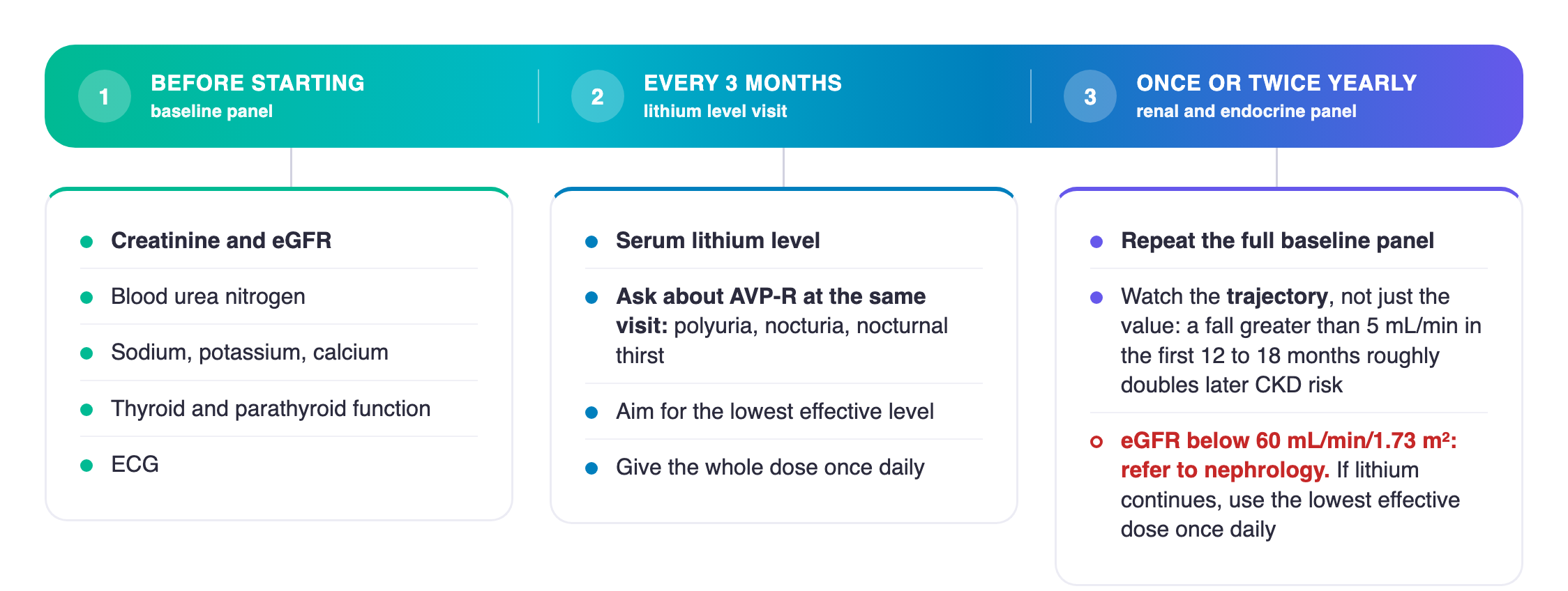
- Before starting, and once or twice yearly after that:
- Creatinine and eGFR, blood urea nitrogen, sodium, potassium, calcium, thyroid and parathyroid function, and an ECG [12]
- Lithium levels every three months
- Ask about symptoms of arginine vasopressin resistance at the same visit [12]
- eGFR below 60 mL/min/1.73 m²: refer to nephrology
- If lithium continues, use the lowest effective dose, once daily [12]
Arginine vasopressin resistance
- Nephrogenic diabetes insipidus has been renamed arginine vasopressin resistance (AVP-R)[12]
- It presents as polyuria, nocturia, and nocturnal thirst
- It is the early functional warning sign on lithium
- Functional changes may improve after dose reduction or discontinuation and do not by themselves predict progression to advanced CKD
- Asymptomatic hypernatremia is its own trigger to investigate, independent of what the patient reports

- Amiloride is the recommended off-label option when once-daily dosing and dose reduction have not worked or are not feasible [12]
- Spironolactone is not an alternative: it showed no benefit for AVP-R, and it can raise serum lithium by altering renal sodium and water handling [12]
- A thiazide can be added if symptoms persist, at the cost of mild electrolyte disturbance such as hypokalemia and metabolic alkalosis, and it can raise serum lithium [12]
- Combining hydrochlorothiazide with amiloride may reduce that electrolyte disturbance
When to stop, and the point of no return
- Do not reflexively stop lithium when eGFR falls[12]
- Weigh the risk of relapse and of suicide on discontinuation against a renal decline that may be slow
- Past a certain point, stopping lithium no longer protects the kidney[12]
- Once eGFR falls to roughly 30–40 mL/min/1.73 m², the decline usually continues even after lithium is withdrawn.
- The task force calls this a pragmatic renal “point of no return”
- Below that threshold, stopping costs the patient lithium’s benefit without buying back kidney function. The renal argument is therefore for optimizing the dose early, not for stopping late
- It is a transition rather than a fixed cliff, but the practical implication holds: dose optimization, strict level monitoring, avoiding other nephrotoxic drugs, and early nephrology involvement matter more than late discontinuation
- Once eGFR falls to roughly 30–40 mL/min/1.73 m², the decline usually continues even after lithium is withdrawn.
| Favours continuing lithium | Favours tapering | |
|---|---|---|
| Response | Full remission for 12 months or more, or a history of robust relapse prevention | Only partial response, or frequent breakthrough episodes |
| Alternatives | Other mood stabilizers already ineffective or poorly tolerated | Valproate, lamotrigine or a second-generation antipsychotic not yet tried |
| Renal trajectory | eGFR above 40 mL/min/1.73 m² and falling less than 3 mL/min per year | Fall greater than 5 mL/min per year, eGFR around 30 to 40 mL/min/1.73 m², or rising lithium troughs |
| Age | Older or frail patient, where end-stage disease is unlikely before competing mortality | Younger patient with a long life expectancy |
| Suicide risk | Recurrent attempts or persistent suicidal ideation | Low suicidal risk profile |
| Other burden | No troublesome thyroid, weight, cognitive or tremor problems | Multiple side effects or poor quality of life on lithium |
Decision factors from Strandhave C, Hansen HAS, Alda M, et al. Lithium effects on renal functioning: an expert opinion and management algorithm. Int J Bipolar Disord. 2026;14(1):22. Published 2026 Apr 25
- If stopping, taper over at least 3 months, start an alternative mood stabilizer in parallel [12]
- Re-trialing lithium later remains viable; there is no solid evidence of permanent refractoriness
AASM Guideline on Combination Treatment for Chronic Insomnia
- The 2026 AASM guideline issued two recommendations, both conditional and both at low certainty of evidence[14]
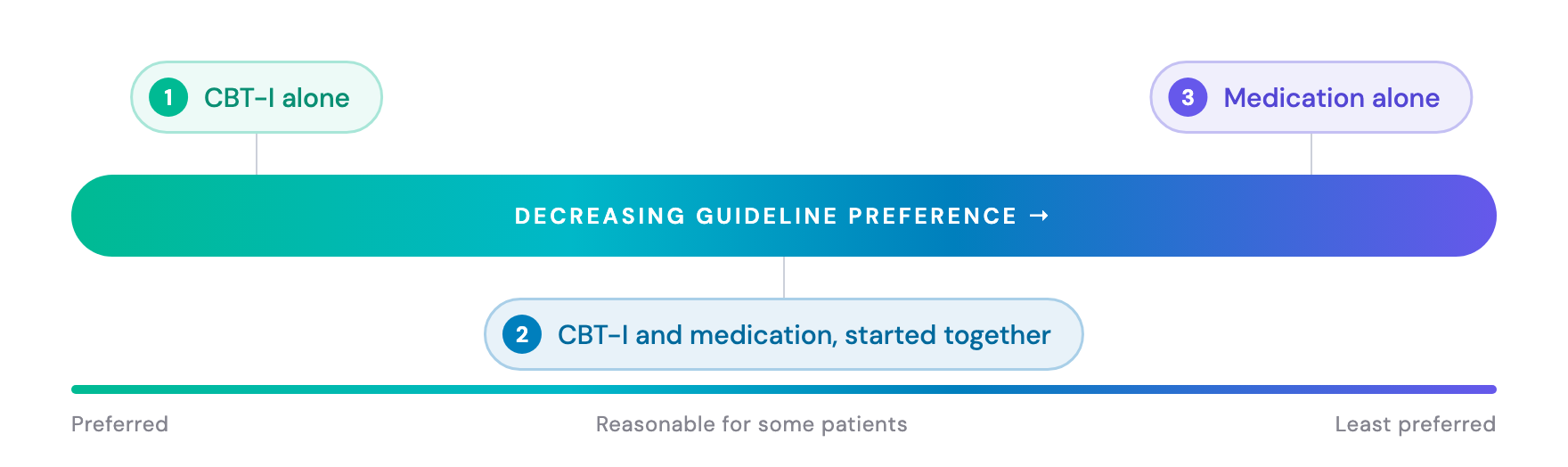
- Combination treatment (CBT-I plus an insomnia medication) is suggested over insomnia medication alone
- Combination treatment is suggested against when the comparator is CBT-I alone
- CBT-I on its own is preferred to starting a medication alongside it
- The two recommendations put CBT-I alone first, combination second, medication alone last
- Combination over CBT-I alone may still be reasonable for patients who place higher value on increasing total sleep time early in treatment, and/or lower value on reducing daytime symptoms [14]
Scope limitations
- “Combination treatment” here means CBT-I started at the same time as medication [14]
- Adding CBT-I to medication a patient is already taking was not graded [14]
- The analyses do not support any comparison between the medications used alongside CBT-I[14]
- Almost every eligible trial used a benzodiazepine receptor agonist
- No eligible study investigated a dual orexin receptor antagonist (DORA) or a melatonin receptor agonist, so lemborexant and daridorexant have no combination-trial evidence in either direction
What to do in clinic
- Start with CBT-I
- The 2021 AASM behavioral CPG gives multicomponent CBT-I a strong recommendation, while the 2017 agent recommendations and both 2026 recommendations are conditional [14,21]
- Patient already on a hypnotic and sleeping poorly
- Adding CBT-I is reasonable, on extrapolated rather than graded evidence [14]
- Patient responding to CBT-I alone
- Adding a medication is not supported. As with the reverse sequence, this direction was not directly graded [14]
Choosing an agent
- The 2026 CPG does not revise the 2017 agent recommendations [14,22]
- Conditional recommendations for, by target symptom [14,22]
- Sleep onset: triazolam, ramelteon, zaleplon
- Sleep maintenance: doxepin, suvorexant
- Both: temazepam, zolpidem, eszopiclone
- These recommendations apply to chronic insomnia disorder and should not be carried over to insomnia arising from another sleep disorder [22]
References
1. Otsuka America Pharmaceutical, Inc. (2026). SIMTRIYO (centanafadine) extended-release capsules, for oral use [controlled substance schedule pending]: Highlights of prescribing information. U.S. Food and Drug Administration, Drugs@FDA (NDA 218145, original approval 24 July 2026). https://www.accessdata.fda.gov/drugsatfda_docs/label/2026/218145s000lbl.pdf
2. Otsuka Pharmaceutical Development & Commercialization, Inc., & Otsuka Pharmaceutical Co., Ltd. (2026). Otsuka receives FDA approval for first-in-class SIMTRIYO (centanafadine) for the treatment of attention-deficit hyperactivity disorder (ADHD) in adults and pediatric patients aged 6 years and older. Press release, Princeton, NJ and Tokyo, Japan. https://www.otsuka-us.com/otsuka-shares-fda-review-update-for-centanafadine
3. U.S. Food and Drug Administration, Center for Drug Evaluation and Research. (2026). FDA approves first drug to treat the full range of narcolepsy type 1 symptoms (Orzeyful, oveporexton). FDA press announcement. https://www.fda.gov/news-events/press-announcements/fda-approves-first-drug-treat-full-range-narcolepsy-type-1-symptoms
4. Takeda Pharmaceutical Company Limited. (2026). U.S. FDA approves Takeda’s ORZEYFUL (oveporexton), the first and only medicine to treat the underlying cause of narcolepsy type 1. Press release, including Important Safety Information. https://www.takeda.com/newsroom/newsreleases/2026/orzeyful-approved-narcolepsy/
5. Takeda Pharmaceuticals America, Inc. (2026). ORZEYFUL (oveporexton) tablets, for oral use [controlled substance schedule pending]: Highlights of prescribing information. U.S. Food and Drug Administration, Drugs@FDA (NDA 220860, original approval 5 August 2026). https://www.accessdata.fda.gov/drugsatfda_docs/label/2026/220860Orig1s000lbl.pdf
6. Intra-Cellular Therapies, Inc. (2026). CAPLYTA (lumateperone) capsules, for oral use: Highlights of prescribing information. U.S. Food and Drug Administration, Drugs@FDA (NDA 209500, supplement S-017, approved 24 April 2026). https://www.accessdata.fda.gov/drugsatfda_docs/label/2026/209500s017lbl.pdf
7. Johnson & Johnson. (2026). FDA approves CAPLYTA (lumateperone) sNDA with robust new data supporting reduced risk of relapse in schizophrenia. Press release, Titusville, NJ. https://www.jnj.com/media-center/press-releases/fda-approves-caplyta-lumateperone-snda-with-robust-new-data-supporting-reduced-risk-of-relapse-in-schizophrenia
8. U.S. Food and Drug Administration, Center for Drug Evaluation and Research. (2026). FDA approves first at-home starting dose for Alzheimer’s disease treatment (LEQEMBI IQLIK subcutaneous autoinjector). FDA news release. https://www.fda.gov/drugs/news-events-human-drugs/fda-approves-first-home-starting-dose-alzheimers-disease-treatment
9. U.S. Food and Drug Administration, Office of the Commissioner. (2026). FDA broadens access to over-the-counter naloxone nasal spray for opioid overdose (Rextovy, naloxone hydrochloride 4 mg nasal spray). FDA press announcement. https://www.fda.gov/news-events/press-announcements/fda-broadens-access-over-counter-naloxone-nasal-spray-opioid-overdose
10. European Medicines Agency, Pharmacovigilance Risk Assessment Committee. (2026). Signal assessment report on neurodevelopmental disorders with paternal exposure to valproate and related substances. EMA/PRAC/165641/2026, EPITT no. 20191, adopted by the PRAC 11 June 2026. https://www.ema.europa.eu/en/documents/prac-recommendation/signal-assessment-report-neurodevelopmental-disorders-paternal-exposure-valproate-related-substances_en.pdf
11. Van Ameringen, M., Fineberg, N. A., Ravindran, A., Arnold, P. D., Beaulieu, S., Brakoulias, V., Brietzke, E., Dowlati, Y., Drummond, L. M., Ferretti, C. J., Feusner, J. D., Freire, R. C. R., Frey, B. N., Gardiner, S., Geller, D. A., Giacobbe, P., Bergmann, C. G., Grassi, G., Greenberg, E., … Dell’Osso, B. M. (2026). Canadian Network for Mood and Anxiety Treatments (CANMAT) and International College of Obsessive-Compulsive Spectrum Disorders (ICOCS) 2025 international guidelines for the management of patients with obsessive-compulsive disorder. Journal of Psychiatric Research, 199, 404–488. https://doi.org/10.1016/j.jpsychires.2025.12.039
12. Strandhave, C., Hansen, H. A. S., Alda, M., Bauer, M., Berk, M., Buspavanich, P., Brandt, L., Carvalho, A. F., Duffy, A., Forlenza, O., Laursen, M. F., Frye, M., Gitlin, M., Gomes, F. A., Gonzalez-Pinto, A., Grof, P., Hajek, T., Hovgesen, S. V., Kessing, L. V., … Nielsen, R. E. (2026). Lithium effects on renal functioning: An expert opinion and management algorithm. International Journal of Bipolar Disorders, 14(1), 22. https://doi.org/10.1186/s40345-026-00423-z
13. Gislason, G., Indridason, O. S., Sigurdsson, E., & Palsson, R. (2024). Risk of chronic kidney disease in individuals on lithium therapy in Iceland: A nationwide retrospective cohort study. The Lancet. Psychiatry, 11(12), 1002–1011. https://doi.org/10.1016/S2215-0366(24)00324-9
14. Buysse, D. J., Arnedt, J. T., Buenaver, L., Chang, J. L., Fernandez-Mendoza, J., Patel, S. I., Zhou, E. S., Falck-Ytter, Y., Hyer, S., Kazmi, U., Singh, M., & Wickwire, E. M. (2026). Combination treatment for chronic insomnia disorder in adults: An American Academy of Sleep Medicine clinical practice guideline. Journal of Clinical Sleep Medicine : JCSM : Official Publication of the American Academy of Sleep Medicine, 22(1), 56. https://doi.org/10.1007/s44470-025-00038-8
15. Bymaster, F. P., Golembiowska, K., Kowalska, M., Choi, Y. K., & Tarazi, F. I. (2012). Pharmacological characterization of the norepinephrine and dopamine reuptake inhibitor EB-1020: Implications for treatment of attention-deficit hyperactivity disorder. Synapse, 66(6), 522–532. https://doi.org/10.1002/syn.21538
16. Adler, L. A., Adams, J., Madera-McDonough, J., Kohegyi, E., Hobart, M., Chang, D., Angelicola, M., McQuade, R., & Liebowitz, M. (2022). Efficacy, Safety, and Tolerability of Centanafadine Sustained-Release Tablets in Adults With Attention-Deficit/Hyperactivity Disorder. Journal of Clinical Psychopharmacology, 42(5), 429–439. https://doi.org/10.1097/JCP.0000000000001575
17. Eli Lilly and Company. (2026). STRATTERA (atomoxetine) capsules, for oral use: Highlights of prescribing information. U.S. Food and Drug Administration, Drugs@FDA (NDA 021411, supplement S-053, approved 29 June 2026). https://www.accessdata.fda.gov/drugsatfda_docs/label/2026/021411s053lbl.pdf
18. Ward, C. L., Childress, A. C., Jin, N., Turkoglu, O., Skubiak, T., & Wilens, T. E. (2026). Centanafadine for Attention-Deficit/Hyperactivity Disorder in Adolescents: A Randomized Clinical Trial. Journal of the American Academy of Child & Adolescent Psychiatry, 65(6), 805–817. https://doi.org/10.1016/j.jaac.2025.06.023
19. Durgam, S., Earley, W. R., Kozauer, S. G., Lin, J., Lakkis, H., Escher, T., Maddirevula, G., & Correll, C. U. (2026). Lumateperone for the prevention of relapse in patients with schizophrenia: Results from a double-blind, placebo-controlled, randomized withdrawal, phase 3 trial. Neuroscience Applied, 5, 106338. https://doi.org/10.1016/j.nsa.2025.106338
20. Lyndon, S., & McNally, D. R. (2026). Memantine Augmentation in Obsessive-Compulsive Disorder: A Systematic Review and Meta-analysis. CNS Drugs, 40(9), 1243–1257. https://doi.org/10.1007/s40263-026-01318-4
21. Edinger, J. D., Arnedt, J. T., Bertisch, S. M., Carney, C. E., Harrington, J. J., Lichstein, K. L., Sateia, M. J., Troxel, W. M., Zhou, E. S., Kazmi, U., Heald, J. L., & Martin, J. L. (2021). Behavioral and psychological treatments for chronic insomnia disorder in adults: An American Academy of Sleep Medicine clinical practice guideline. Journal of Clinical Sleep Medicine : JCSM : Official Publication of the American Academy of Sleep Medicine, 17(2), 255–262. https://doi.org/10.5664/jcsm.8986
22. Sateia, M. J., Buysse, D. J., Krystal, A. D., Neubauer, D. N., & Heald, J. L. (2017). Clinical Practice Guideline for the Pharmacologic Treatment of Chronic Insomnia in Adults: An American Academy of Sleep Medicine Clinical Practice Guideline. Journal of Clinical Sleep Medicine : JCSM : Official Publication of the American Academy of Sleep Medicine, 13(2), 307–349. https://doi.org/10.5664/jcsm.6470
