Slides and Transcript
Slide 2 of 9
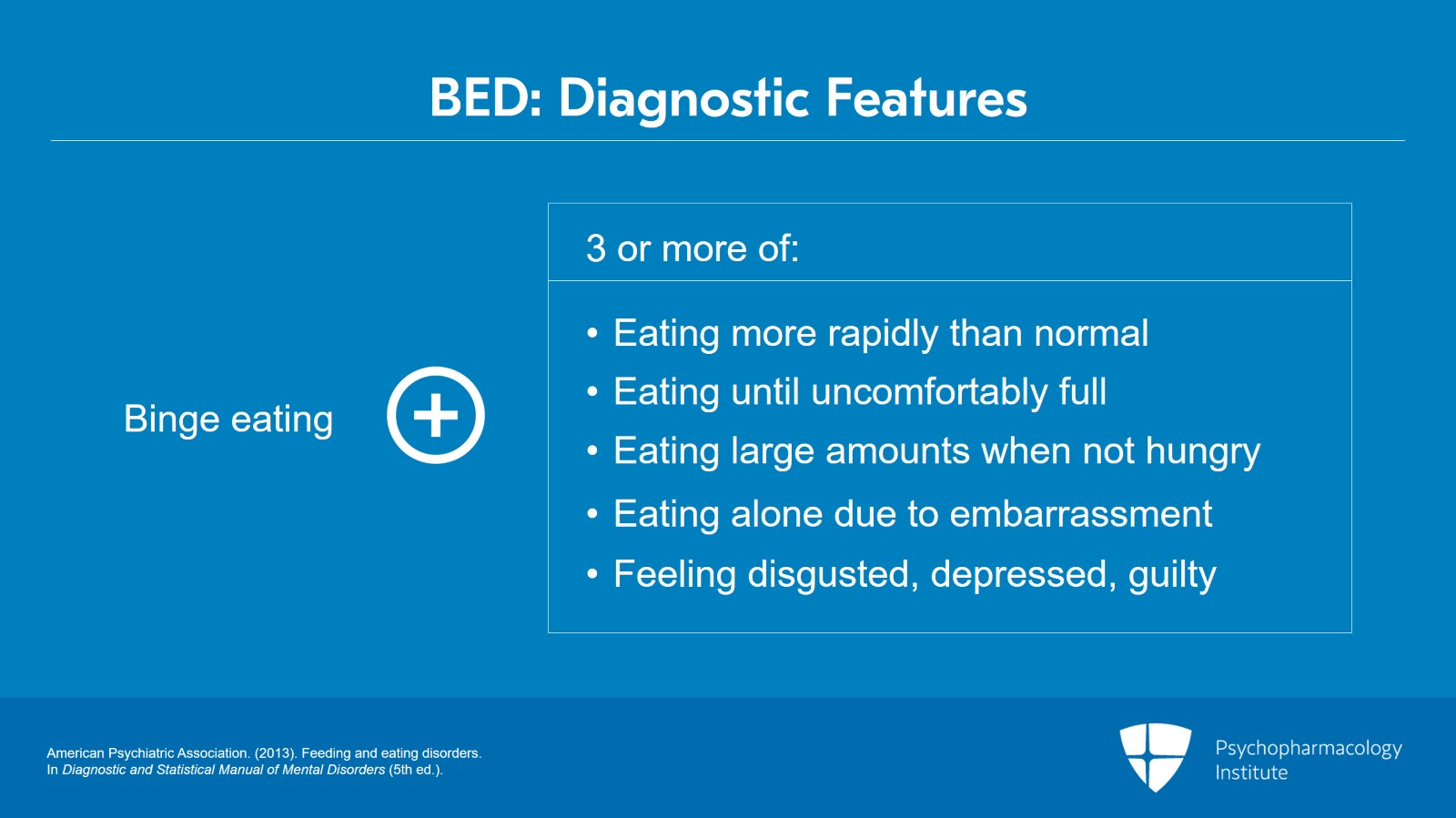
In binge eating disorder, you have the same binge eating that occurs in bulimia nervosa and anorexia nervosa binge-purge type. The binge eating in binge eating disorder is associated with three or more of these specific criteria: Eating more rapidly than normal, eating until uncomfortably full, eating large amounts when not hungry, eating alone due to embarrassment and feeling disgusted with one’s self or depressed or guilty.
References:
- American Psychiatric Association. (2013). Feeding and eating disorders. In Diagnostic and Statistical Manual of Mental Disorders (5th ed.).
Free Files
Download PDF and other files
Success!
Check your inbox, we sent you all the materials there.
Slide 3 of 9
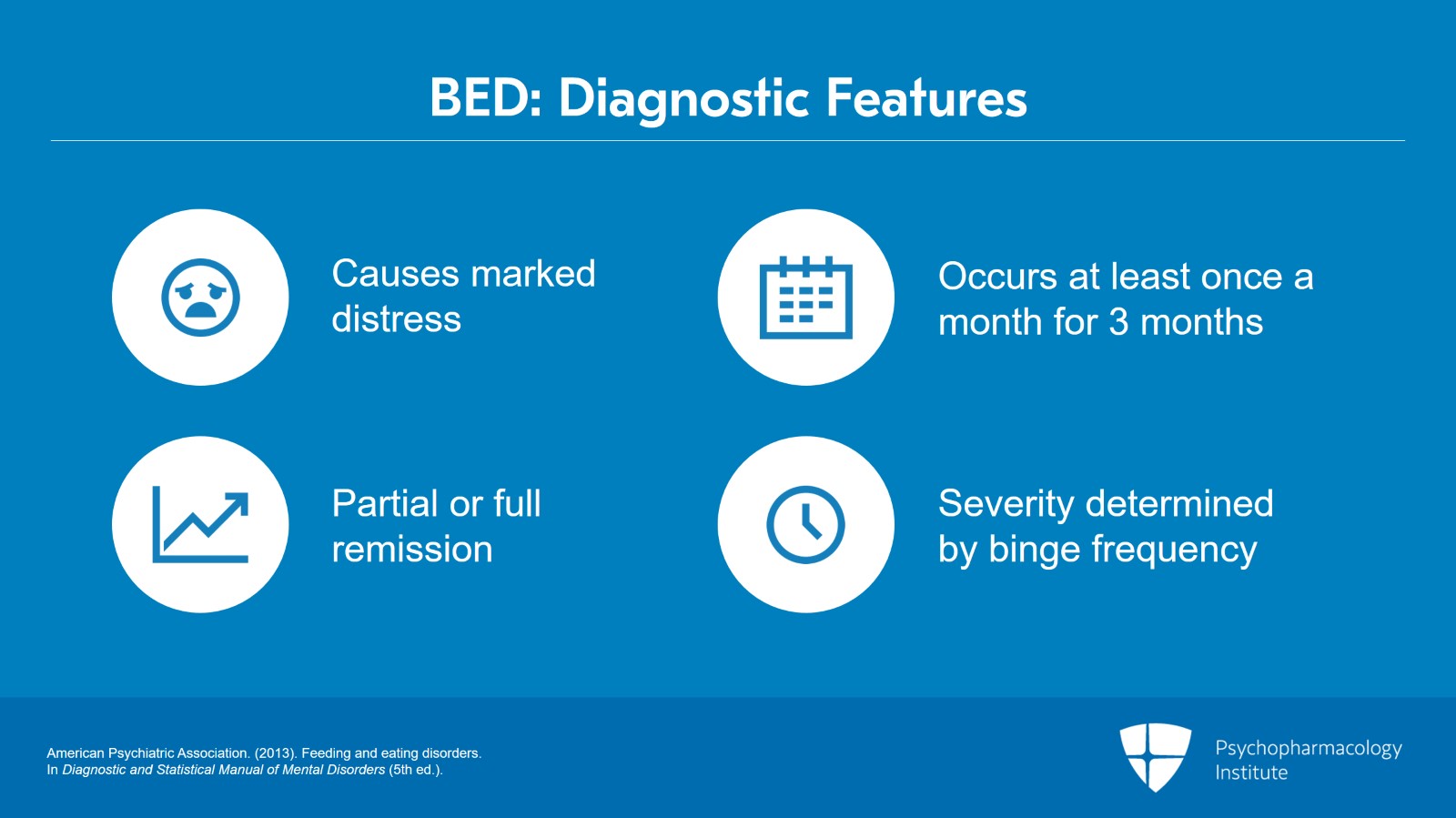
It causes marked distress and it occurs at least once a month for three months. Like in bulimia nervosa, there is partial and full remission. And severity is determined by binge frequency occurring along the range of once a week or mild to 14 or more times a week or extreme.
References:
- American Psychiatric Association. (2013). Feeding and eating disorders. In Diagnostic and Statistical Manual of Mental Disorders (5th ed.).
Slide 4 of 9
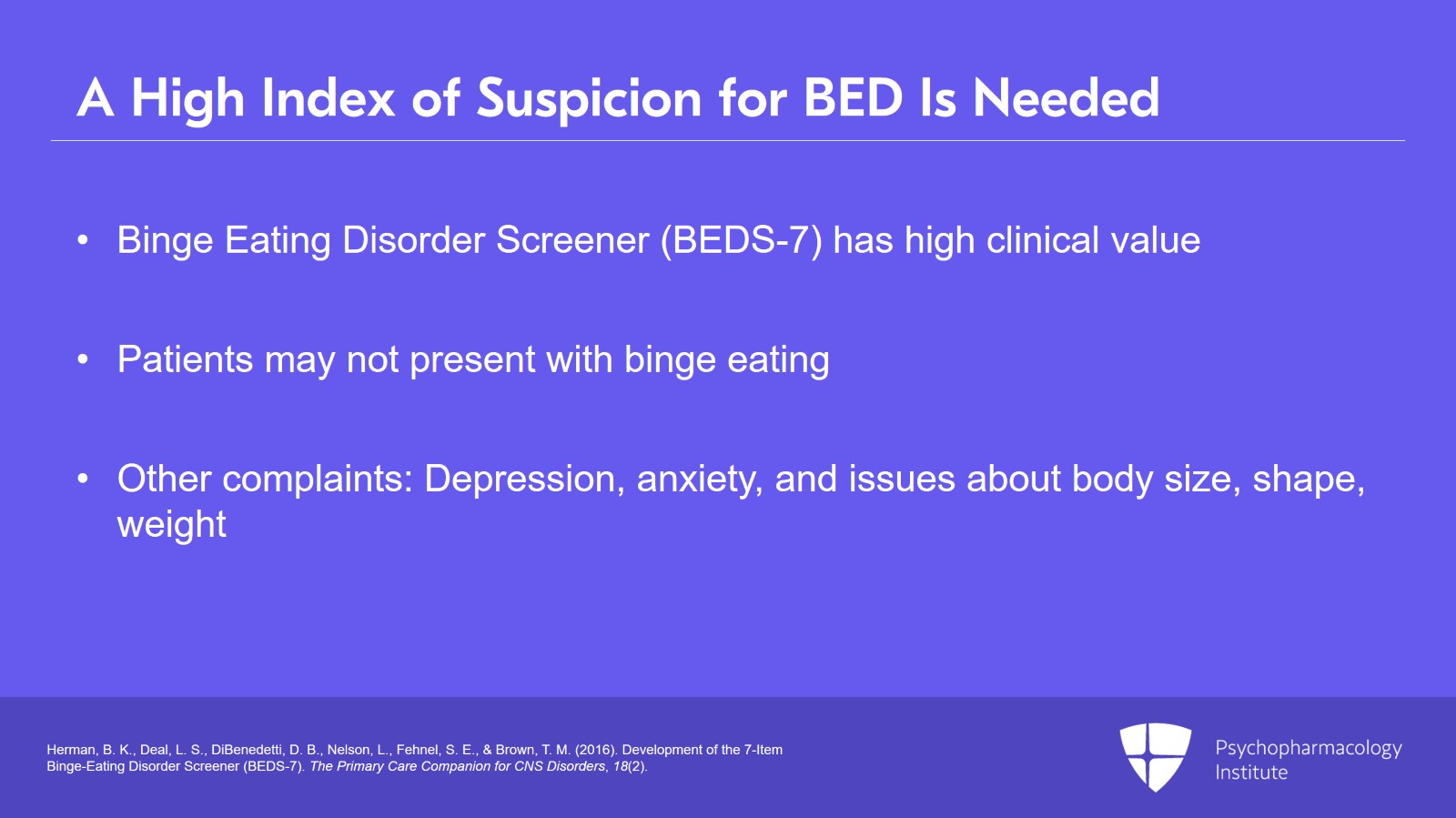
Psychiatrists should have a high index of suspicion for the presence of binge eating disorder which is the most prevalent eating disorder. The seven-item Binge Eating Disorder Screener or BEDS-7 is an easy to administer self-report screening instrument of high clinical value. Patients may not present with binge eating per se. Any number of associated medical and psychiatric complaints, for example, depression, anxiety and issues around body size, shape and overweight may be prominent.
References:
- Herman, B. K., Deal, L. S., DiBenedetti, D. B., Nelson, L., Fehnel, S. E., & Brown, T. M. (2016). Development of the 7-Item Binge-Eating Disorder Screener (BEDS-7). The Primary Care Companion for CNS Disorders, 18(2).
Free Files
Download PDF and other files
Success!
Check your inbox, we sent you all the materials there.
Slide 5 of 9
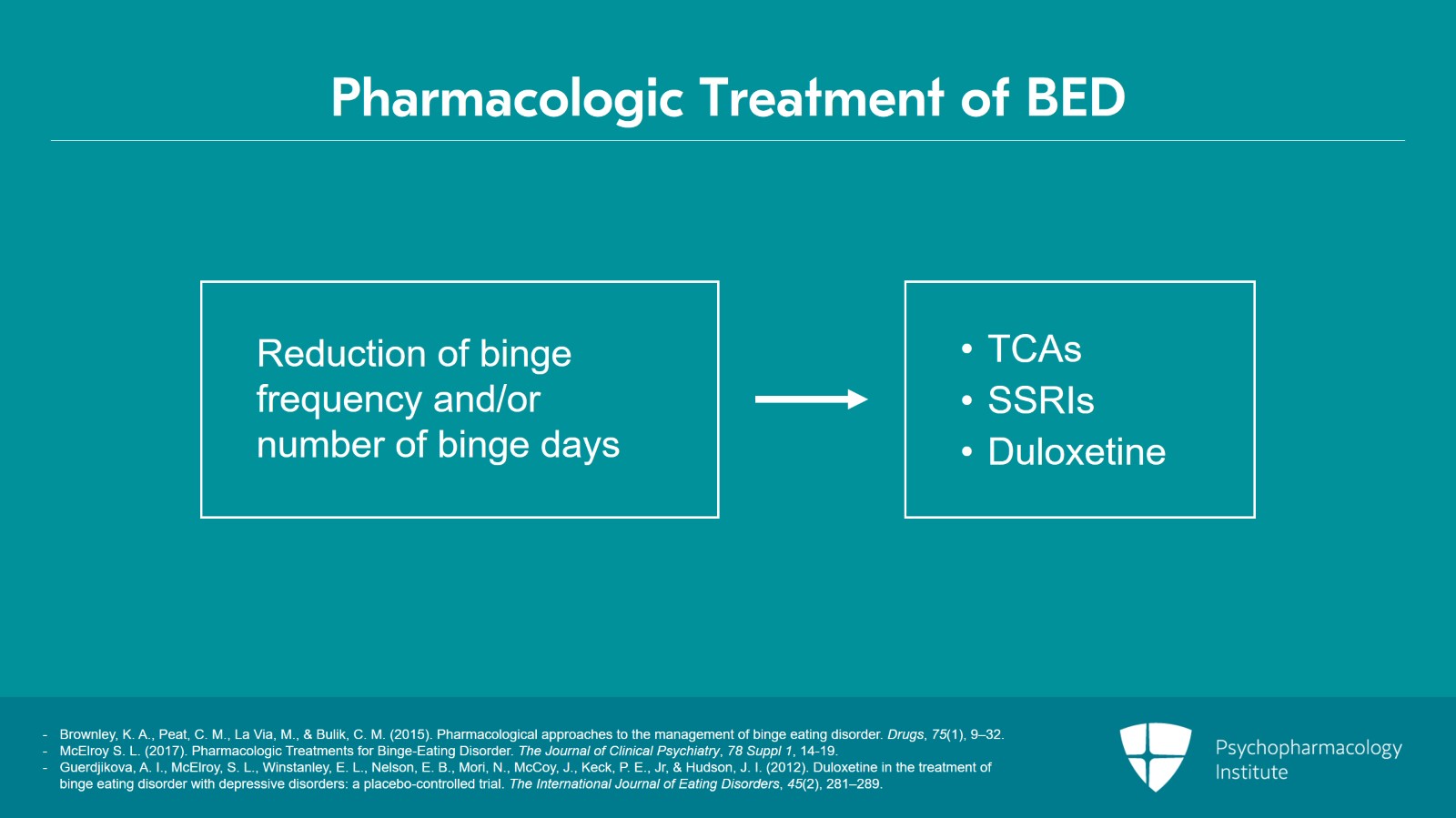
There have been a host of drugs studied in the treatment of binge eating disorder, many more than in bulimia nervosa. A number of antidepressants have been found in randomized double-blind, placebo-controlled studies to be effective in reducing binge frequency and/or number of binge days including tricyclic antidepressants, SSRIs and duloxetine.
References:
- Brownley, K. A., Peat, C. M., La Via, M., & Bulik, C. M. (2015). Pharmacological approaches to the management of binge eating disorder. Drugs, 75(1), 9–32.
- McElroy S. L. (2017). Pharmacologic Treatments for Binge-Eating Disorder. The Journal of Clinical Psychiatry, 78 Suppl 1, 14-19.
- Guerdjikova, A. I., McElroy, S. L., Winstanley, E. L., Nelson, E. B., Mori, N., McCoy, J., Keck, P. E., Jr, & Hudson, J. I. (2012). Duloxetine in the treatment of binge eating disorder with depressive disorders: a placebo-controlled trial. The International Journal of Eating Disorders, 45(2), 281–289.
Slide 6 of 9
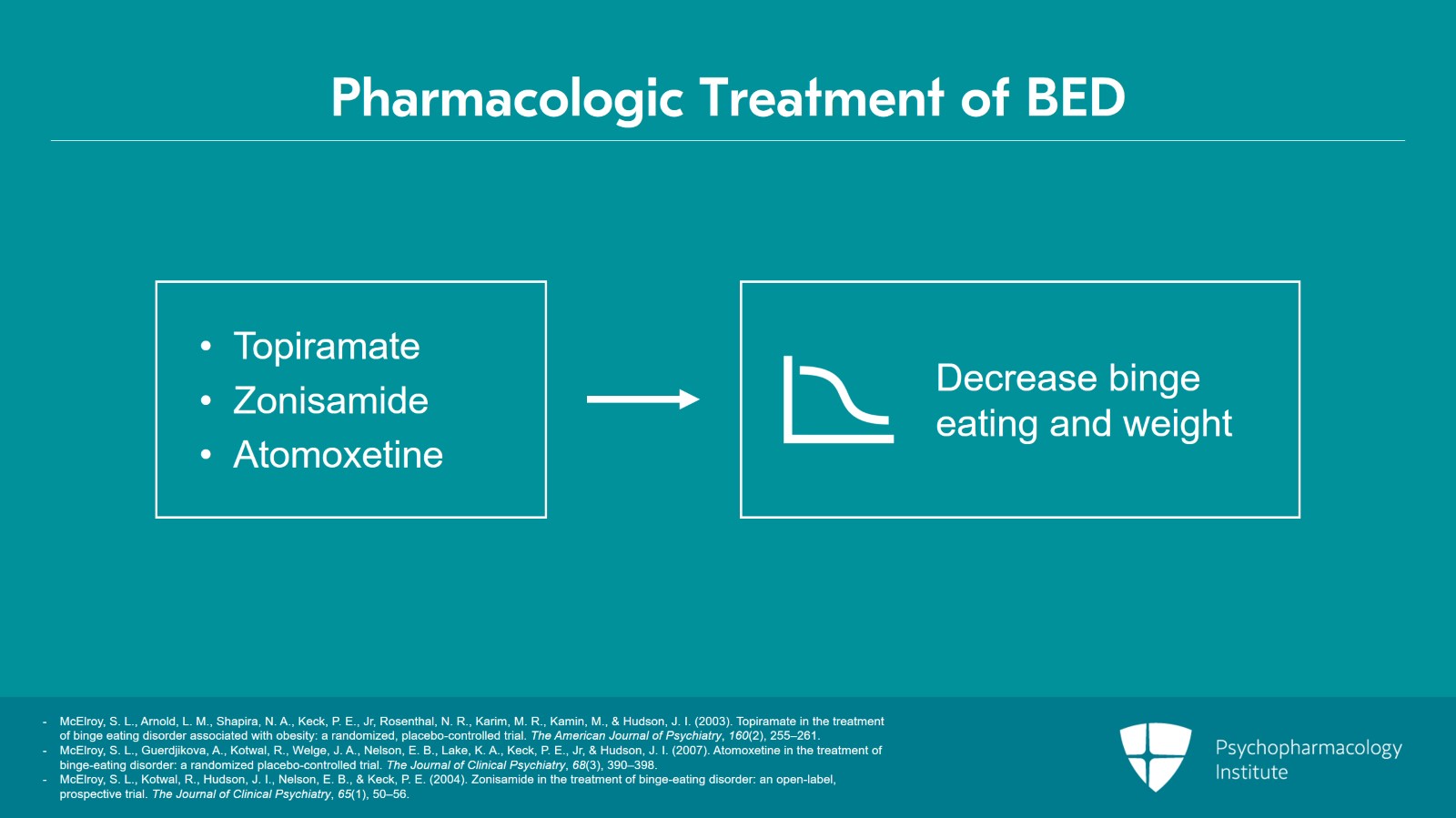
…..the anticonvulsants, topiramate and zonisamide, and the norepinephrine-dopamine reuptake inhibitor, atomoxetine, have been shown in randomized double-blind, placebo-controlled trials to not only decrease binge eating but weight as well.
References:
- McElroy, S. L., Arnold, L. M., Shapira, N. A., Keck, P. E., Jr, Rosenthal, N. R., Karim, M. R., Kamin, M., & Hudson, J. I. (2003). Topiramate in the treatment of binge eating disorder associated with obesity: a randomized, placebo-controlled trial. The American Journal of Psychiatry, 160(2), 255–261.
- McElroy, S. L., Guerdjikova, A., Kotwal, R., Welge, J. A., Nelson, E. B., Lake, K. A., Keck, P. E., Jr, & Hudson, J. I. (2007). Atomoxetine in the treatment of binge-eating disorder: a randomized placebo-controlled trial. The Journal of Clinical Psychiatry, 68(3), 390–398.
- McElroy, S. L., Kotwal, R., Hudson, J. I., Nelson, E. B., & Keck, P. E. (2004). Zonisamide in the treatment of binge-eating disorder: an open-label, prospective trial. The Journal of Clinical Psychiatry, 65(1), 50–56.
Free Files
Download PDF and other files
Success!
Check your inbox, we sent you all the materials there.
Slide 7 of 9
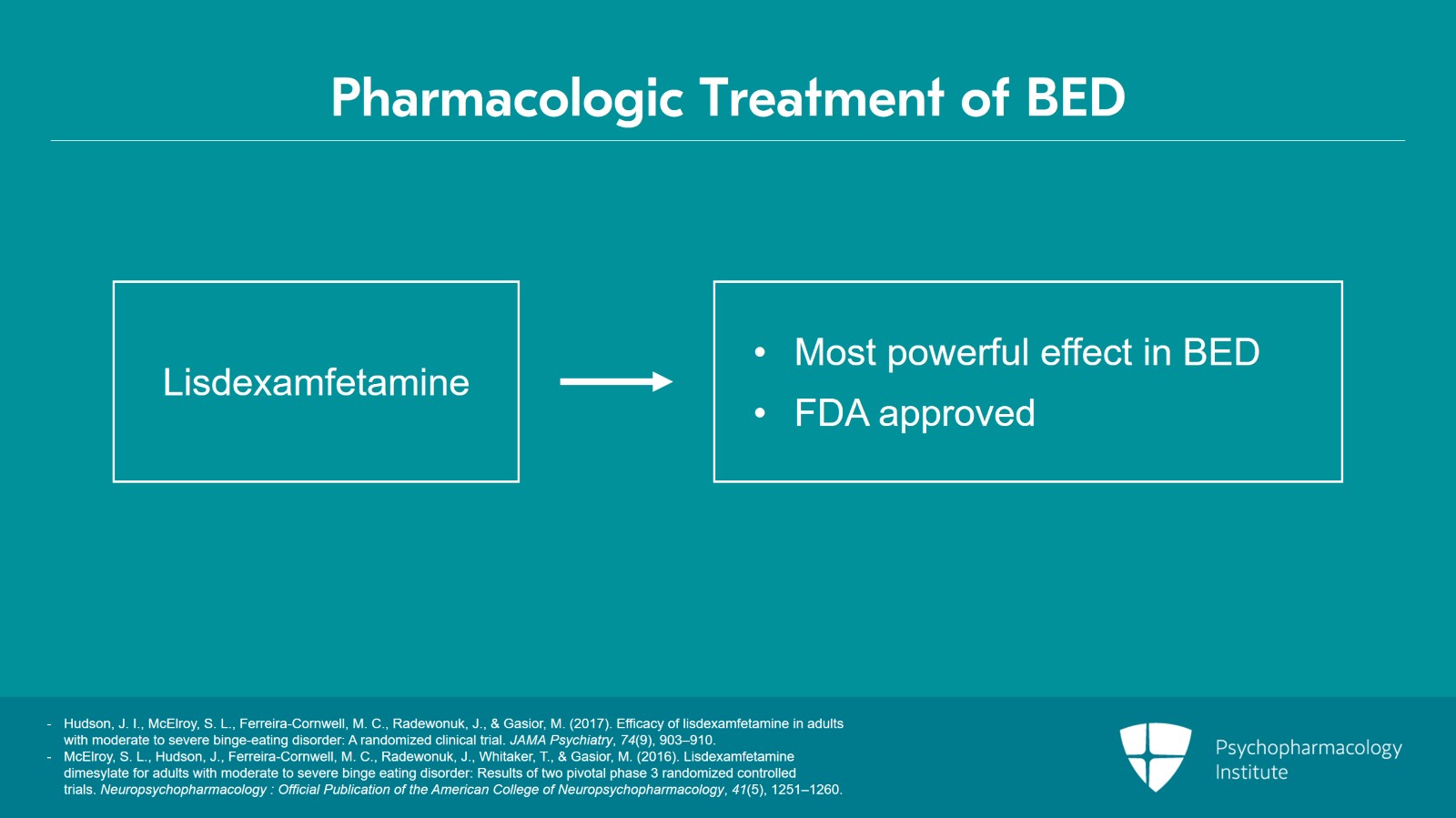
Lisdexamfetamine has shown the most powerful effect in binge eating disorder such that it received FDA approval.
References:
- Hudson, J. I., McElroy, S. L., Ferreira-Cornwell, M. C., Radewonuk, J., & Gasior, M. (2017). Efficacy of lisdexamfetamine in adults with moderate to severe binge-eating disorder: A randomized clinical trial. JAMA Psychiatry, 74(9), 903–910.
- McElroy, S. L., Hudson, J., Ferreira-Cornwell, M. C., Radewonuk, J., Whitaker, T., & Gasior, M. (2016). Lisdexamfetamine dimesylate for adults with moderate to severe binge eating disorder: Results of two pivotal phase 3 randomized controlled trials. Neuropsychopharmacology : Official Publication of the American College of Neuropsychopharmacology, 41(5), 1251–1260.
Slide 8 of 9
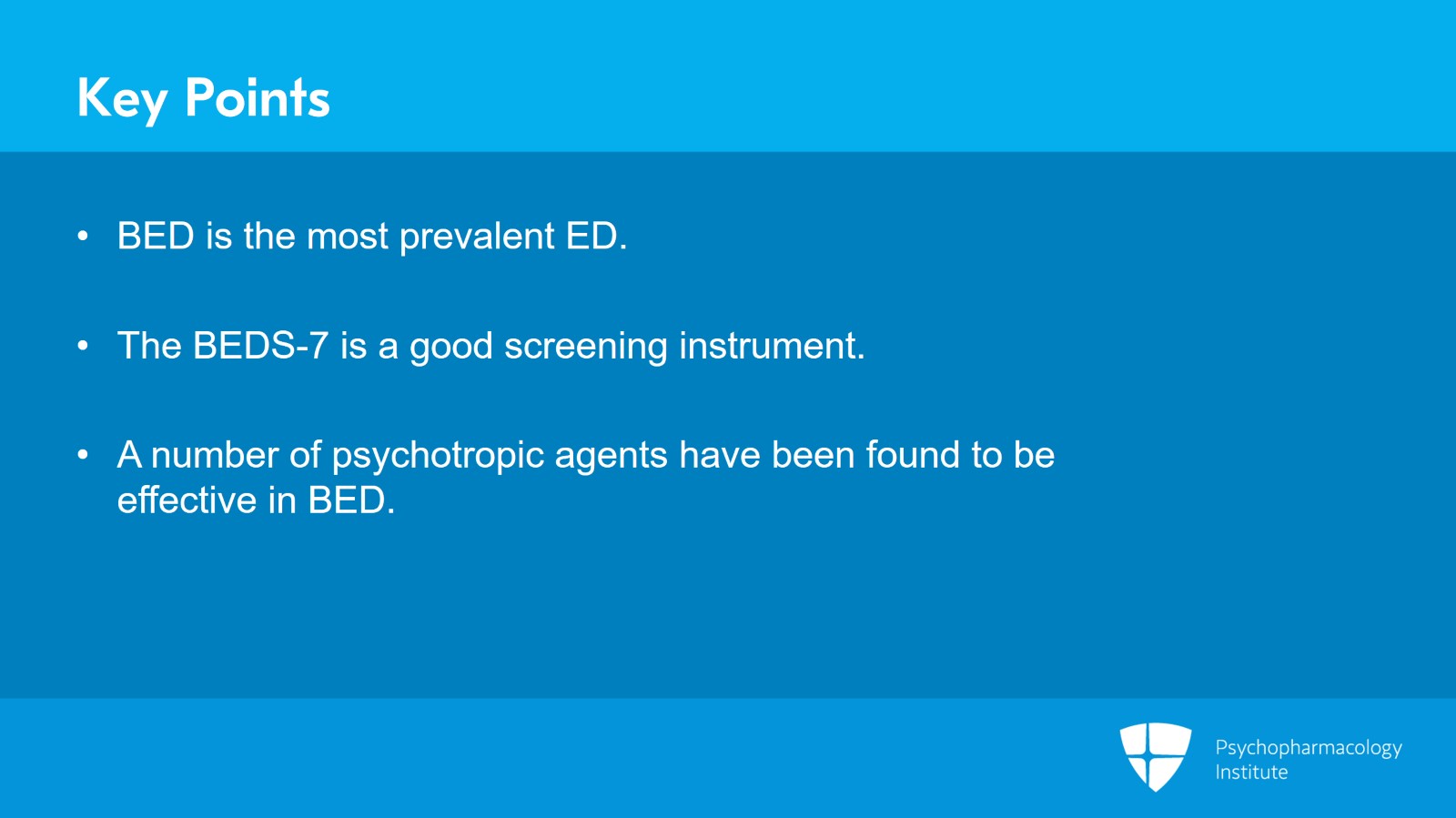
The key points are as follows: Binge eating disorder is the most prevalent eating disorder. The Binge Eating Disorder Screener or BEDS-7 is a good screening instrument. A number of psychotropic agents have been found to be effective in binge eating disorder.
Free Files
Download PDF and other files
Success!
Check your inbox, we sent you all the materials there.