



In a nutshell
- Citalopram (Celexa, Ctp) and escitalopram (Lexapro, Cipralex) have no significant drug-drug interactions.
- This is because of their low potential to inhibit CYP450 isoenzymes.
- Citalopram is linked to QT prolongation.
- It was initially approved to be used in a range from 20 mg–60 mg/day.
- In 2011, the FDA recommended against its use in doses higher than 40 mg/day.
- Prescribing tip: Escitalopram’s equivalent dose is half that of citalopram.
Pharmacology
- Citalopram was approved in 1998 for the treatment of depression.
- It is produced as a racemate, meaning it is a mixture of two stereoisomers: R-citalopram and S-citalopram.
- Escitalopram was approved in 2002 and was developed with the goal of better tolerability.
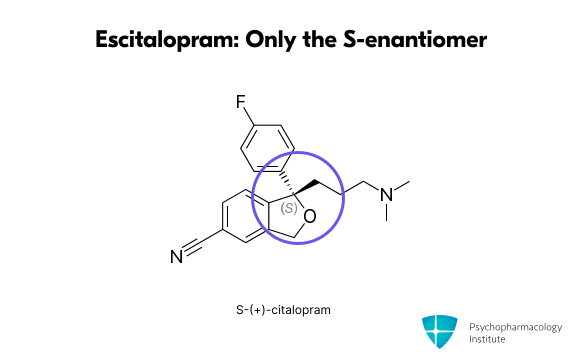
- It is only one enantiomer, s-citalopram.
Chemical aspects
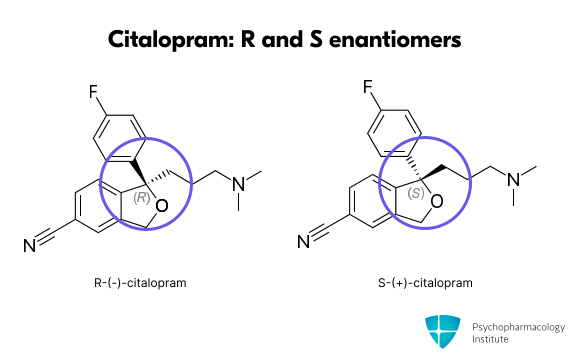
The image shows the two enantiomers of citalopram. The purple circles highlight the drug’s chiral center and two possible isomers: R-citalopram and S-citalopram.
Pharmacodynamics
- Citalopram and escitalopram are among the most selective of the SSRI class [1].
- Both are SERT inhibitors.
- They do not have a significant affinity for muscarinic, dopaminergic, or norepinephrine receptors.
- Citalopram is a mild antagonist at histamine 1 receptors. Escitalopram does not block histamine 1 receptors.
Pharmacokinetics
- Citalopram and escitalopram have a half-life of around one day: 27 to 32 hours.
- This feature is shared with most SSRIs; there are two exceptions: fluvoxamine and fluoxetine.
- Effects on CYP450

-
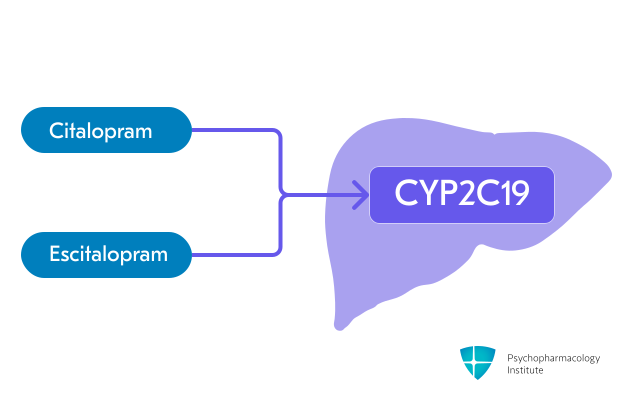
Citalopram and escitalopram are both metabolized by the CYP2C19 enzyme.
-
Dosing recommendations for citalopram and escitalopram based on CYP2C19 phenotype [4].
- CYP2C19 ultrarapid metabolizer:
- Lower plasma concentrations decrease the probability of clinical benefit.
- Consider a clinically appropriate alternative antidepressant not predominantly metabolized by CYP2C19.
- If citalopram or escitalopram are clinically appropriate, and adequate efficacy is not achieved at standard maintenance dosing, consider titrating to a higher maintenance dose.
- CYP2C19 poor metabolizer:
- Higher plasma concentrations may increase the probability of side effects.
- Consider a clinically appropriate antidepressant not predominantly metabolized by CYP2C19.
- If citalopram or escitalopram are clinically appropriate, consider a lower starting dose, slower titration schedule, and 50% reduction of the standard maintenance dose compared to normal metabolizers.
- CYP2C19 ultrarapid metabolizer:
Dosage forms and available strengths
- Citalopram
- Tablet 10 mg, 20 mg scored, 40 mg scored.
- Solution: 10 mg/5 mL
- Escitalopram
- Tablets: 5 mg, 10 mg (scored), and 20 mg (scored)
- Oral solution 5 mg/5 mL
FDA-approved indications and dosing
FDA-approved indications [2:1] [3:1]
| Indication | Citalopram | Escitalopram |
|---|---|---|
| Major depressive disorder | ☑️ | ☑️ |
| Generalized anxiety disorder | ☑️ |
- Both SSRIs are approved for major depressive disorder. Citalopram was approved in 1998, and escitalopram in 2002.
- Escitalopram is also approved for generalized anxiety disorder.
Citalopram dosing for major depressive disorder
- Administer citalopram once daily, with or without food.
- Adults <60 years of age:
- Starting dose: 20 mg/day
- Usual adult dose: 20 mg/day
- Maximum dose (if needed and tolerated due to the risk of QT prolongation): 40 mg/day
- For these patient groups, the maximum dose is lower: 20 mg/day.
- Patients greater than 60 years of age
- Patients with hepatic impairment
- CYP2C19 poor metabolizers
- Titration: Dose increases should usually occur at least a week apart.
Escitalopram dosing for major depressive disorder and generalized anxiety disorder
- Major depressive disorder
- Adults
- Starting dose: 10 mg once daily
- Recommended: 10 mg once daily
- Maximum: 20 mg once daily
- Pediatric patients 12 years and older
- Initial: 10 mg once daily
- Recommended: 10 mg once daily
- Maximum: 20 mg once daily
- Adults
- Generalized anxiety disorder
- Pediatric patients 7 years and older
- Recommended: 10 mg once daily
- Maximum: 20 mg once daily
- Adults
- Initial: 10 mg once daily
- Recommended: 10 mg once daily
- Pediatric patients 7 years and older
Major depressive disorder dose comparison in adults
| Drug | Starting dose | Recommended | Maximum |
|---|---|---|---|
| Citalopram | 20 mg/day | 20 mg/day | 40 mg/day |
| Escitalopram | 10 mg/day | 10 mg/day | 20 mg/day |
Escitalopram’s equivalent dose is half that of citalopram.
Off-label uses
Obsessive-compulsive disorder
- Citalopram and escitalopram are effective for treating OCD symptoms, though they are not FDA-approved specifically for OCD, like some other SSRIs.
- Citalopram can cause QTc prolongation at doses of 40mg/day and higher.
- Treatment algorithms recommend avoiding citalopram and escitalopram for OCD because higher doses are often needed.[5].
PTSD
- The evidence supporting the use of SSRIs for PTSD is weak. [6]
- SSRIs can be tried for PTSD:
- If the patient does not have prominent sleep disturbance.
- If prazosin and trazodone were not tolerated or only partially effective for residual PTSD symptoms.
- Citalopram and escitalopram efficacy for PTSD may be inferred from efficacy in other anxiety disorders and in major depression.
- They have the advantage of a slightly more benign side effect profile within the SSRI class.
- They have a low propensity for drug–drug interactions.
Social Anxiety Disorder
- All SSRIs are probably effective, but some have more robust supporting evidence.
- In order of effect size (i.e., the difference from placebo) on the Clinical Global Impression scale, the best results are with paroxetine, followed by sertraline, fluvoxamine, and escitalopram. [7]
- These differences may not be significant: The studies were done in different patient populations.
- In the only head-to-head comparison of 2 SSRIs, escitalopram at a (high) dose of 20 mg was more effective than paroxetine at a (relatively low) dose of 20 mg.[8]
Panic Disorder
- According to the NICE guidelines, escitalopram and citalopram should be offered as first-line pharmacological treatment. [9]
- In the UK, escitalopram is licensed for panic disorder. [10]
Escitalopram for Premenstrual Dysphoric Disorder (PMDD)
- Escitalopram dosed continuously or only in the luteal phase of the menstrual cycle is efficacious in the treatment of PMDD. [11]
- One hypothesis is that SSRIs may modulate the synthesis of allopregnanolone.
- The effect on symptoms is rapid and achieved at relatively low doses (10 mg–20 mg/day)
Citalopram for Agitation in Dementia
- Citalopram has the strongest evidence for efficacy in agitation, based on the CitAD trial. [12]
- 30mg of citalopram daily had a positive effect on agitation in dementia.
- This study also confirmed the risk of QT prolongation with citalopram at this dose.
- The maximum dose of citalopram in older people is 20 mg/day because of the drug’s effect on cardiac QT interval.
- Although there is less evidence, escitalopram may also be effective in behavioral and psychological symptoms of dementia.
Switching
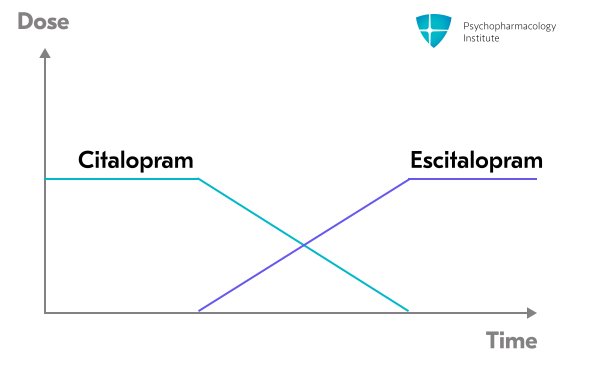
- Follow the cross-taper method [13].
- Start escitalopram at the lowest dose possible.
- Once escitalopram is titrated upward to the lowest effective dose, slowly taper the dose of citalopram.
Side Effects
- Most common side effects [2:2] [3:2] :
- Nausea, somnolence, sexual side effects, and headache.
- Severe but rare adverse effects :
- Hyponatremia, mainly in older adults and reversible on discontinuation
- Gastrointestinal bleeding, especially when combined with NSAIDs such as ibuprofen.
- Sexual dysfunction [14]
- Dose-dependent side effect
- Men: delayed ejaculation, erectile dysfunction.
- Men and women: decreased sexual desire, anorgasmia
- Sweating
- Dose-dependent side effect
- Discontinuation syndrome
- Citalopram and escitalopram have a moderate risk of discontinuation syndrome.
- If they need to be stopped, it is recommended to taper in 1-4 weeks gradually. [14:1]
- Cardiac side effects [15]
- Heart rate
- Slight decrease in heart rate
- Blood pressure
- Slight drop in systolic blood pressure
- Heart rate
- Citalopram and QT prolongation [16]
- There is evidence that citalopram causes more QT prolongation than other SSRIs.
- It is associated with QT prolongation from 10 ms to 20 ms.
- Citalopram does not appear to be associated with higher rates of Torsade de Pointes or other ventricular arrhythmias.
- Reflexively lowering the dose of citalopram due to concerns about QT prolongation may lead to adverse psychiatric outcomes [17].
- Citalopram is not recommended for patients with:
- Congenital long QT syndrome
- Bradycardia
- Hypokalemia or hypomagnesemia
- Recent MI
- Uncompensated heart failure
- There is evidence that citalopram causes more QT prolongation than other SSRIs.
- Escitalopram and QT prolongation [18]
- Escitalopram may carry some risk of very mild QT prolongation, but it is unlikely to be clinically significant.
Special populations
Breastfeeding
Citalopram
- Infant plasma concentrations:
- Undetectable to up to 10% of maternal plasma levels.
- Higher than for fluvoxamine, sertraline, paroxetine, and escitalopram, but lower than for fluoxetine [19]
- Relative infant dose (RID)
- 3–10%
- Reported acute adverse effects in the infant:
- Sleep disturbance (which resolved on halving maternal dose), colic, decreased feeding, and irritability and restessness.
- One case of irregular breathing, sleep disorder, and hypo- and hypertonia Infant exposed to citalopram in utero.
- Symptoms attributed to withdrawal syndrome despite the mother continuing citalopram postpartum.
- Reported developmental effects in the infant
- None reported.
Escitalopram
- Infant plasma concentrations [19:1] :
- Undetectable or low
- Relative infant dose (RID)
- 3-8.3%
- Reported acute adverse effects in the infant:
- Necrotizing enterocolitis in a 5-day infant (necessitating intensive care admission and intravenous antibiotic treatment) infant was exposed to escitalopram in utero.
- Reported developmental effects in the infant
- None reported, but not studied.
Hepatic impairment
- Citalopram
- Should not be used at doses greater than 20 mg/day [2:3]
- May need to dose cautiously at the lower end of the dose range in some patients for maximal tolerability
- Escitalopram
- Recommended dose: 10 mg/day [3:3]
Renal impairment
Citalopram [2:4]
- Mild–to–moderate renal impairment:
- No dose adjustment is needed.
- Severe renal impairment:
- Use cautiously.
- The manufacturer does not advise use if GFR <20ml/min.
- Renal failure has been reported with citalopram overdose.
Escitalopram [3:4]
- Mild–to–moderate renal impairment:
- No dose adjustment is needed.
- Severe renal impairment: Use cautiously
- Start with a low dose and increase slowly.
Brand names
Citalopram
- US: Celexa
- International: Adco-Talomil, Akarin, C Pram S, Celapram, Celesta, Celica, Celius, Ciazil, Cilate, Cilift, Cimal, Cipram, Cipramil, Cipraned, Cinapen, Ciprapine, Cipratal, Ciprotan, Citabax, Citaxin, Cital, Citalec, Citox, Citrol, Citta, Dalsan, Denyl, Elopram, Estar, Humorap, Lecital, Lexapram, Lopraxer, Opra, Oropram, Pram, Pramcit, Prepram, Procimax, Recital, Relaxol, Sepram, Seropram, Szetalo, Talam, Temperax, Vodelax, Zentius, Zetalo, and Zylotex.
Escitalopram
- US: Lexapro
- International: Aciprex, Adescilan, Alivate-E, Alvocital, Alwel, Anamiba, Antidex, Anxila, Anxipram, Anzyl, ApoEscitaxin ORO, Aramix, Articalm, Astrale, Attention, Avail, Avertyn, Axiomat, Beaplen, Belexa, Benel, Betesda, Bivadin, Blusyver, C-Pram-S, C-Pram-S Plus, Celtium, Cheer up, Cilentra, Cilopam-S, Cipra Pro, Cipralex, Ciraset, Cironex, Cita-S, Cita-S Forte, Cita-S Plus, Citadep E-10, Citalax, Citalea, Citalem, Citalex, Citalomep, Citalon, Citalop-S, Citanew, Citaplex, Citapronex, Citofast, Citoles, Citowel, Citrales, Citram, Citraplax, Citraz, Clomentin, Clominil, Coverfax, Deciprax, Depgo, Deplo, Depralin, Depralin ODT, Depresinal, Deprilept, Deptune, Deptune Plus, Despra, Dexapron, Diprex, Dipwell, Dipwell, Duopram, E-Cetopress, E-Psiconor, E-Rest, E-Talpram, E-Zentius, E-pram, EX3, Ec-Sap, Ecitalex, Ecitalex FT, Ecitalop, Ecitalop-C, Ecsapro, Ectiban, Eficentus, Elicea, Eliceya, Elitrex, Elonzep, Eloryqa, Enlift, Entact, Entact-S, Epram, Eram, Erliniz, Es-Pramcit, Esc, Escadep, Escertal, Escicor, Escidivule, Eselan, Esipram, Eslopram, Eslorex, Esloz, Esom, Esox, Espix, Esram, Estorax, Esvicital, Estorax, Esvicital, Eszopram, Etadep, Exapram, Exepram, Exipra, Exopram, Frenatus, Frext, Frizell, Froxem, Genix, Genpram, Gensia, Gleez, Glepox, Good-Mood, Harzol, Heipram, Ipran, Itakem, Italtric, Italtric Plus, Jolivel, Jovia, Kapistrol, Lamobrigan, Lanocipram, Lata, Lenuxin, Lexacure, Lexam, Lexamil, Lexcitox, Lextor, Lifodep Plus, Lopragen, Losiram, Losita, Loures, Loxalate, Medolapram, Meliva, Mentumir, Meridian, Mersinol, Mind, MinestFoliqoz, Miracetol, Miraklide, Morcet, Mozarin, Neopresol, Neozentius, Nepanil, Newam, Nexcital, Nexito, Nexpram, Nodep, Norestal, Novo Humorap, Obsyl, Optiser, Oroes, Oroprex, Otigem, Oxapro, Petril Plus, Pracidep-S, Pralex, Pramatis, Pramogen, Pramulex, Prasilex, Prasilex Plus, Pratal, Premalex, Prilect, Psychopram, Purlex, Raldon, Ratice, Recita, Reconter, Remis, Rempec, Reposil, Restaural, Retabliss, Rualalit, S Zetalo, S-Celepra, S-Citapram, S-Oropram, SC-Talo, Savandra, Scippa, Scitalax, Scitoplex, Secita, Selective, Selectra, Serocover, Serodeps, Seroplex, Serpentil, Servenon, Sevpram, Sipralexa, Sitalom, Sitela, Slesodex, Solatcit, Somnolex, Sosecit, Stalopam, Starcitin, Symescital, Talo, Talocalm, Talpram, Tepram, Tiopram, Tresus, Unitram, Vidapram, Zelax, Zendor, Zenvas, Zepax, Zepira, Zitolex, Zytomil.
References
- class=”pi-references”
- Kirino, E. (2012). Escitalopram for the management of major depressive disorder: A review of its efficacy, safety, and patient acceptability. Patient Preference and Adherence, 6, 853-861. ↩︎.
- Allergan USA, Inc. (2022). Celexa (citalopram) tablets [Prescribing information]. Madison, NJ:. Retrieved from Revised Feb 2022. Accessed August 21, 2023. ↩︎ ↩︎ ↩︎ ↩︎ ↩︎.
- AbbVie, Inc Lexapro (escitalopram tablet, film coated; escitalopram solution) [Prescribing information]. U.S. Food and Drug Administration website. . Revised May 2023. Accessed August 21, 2023. ↩︎ ↩︎ ↩︎ ↩︎ ↩︎.
- Bousman, C.A., Stevenson, J.M., Ramsey, L.B., Sangkuhl, K., Hicks, J.K., Strawn, J.R., Singh, A.B., Ruaño, G., Mueller, D.J., Tsermpini, E.E., Brown, J.T., Bell, G.C., Leeder, J.S., Gaedigk, A., Scott, S.A., Klein, T.E., Caudle, K.E., & Bishop, J.R. (2023). Clinical Pharmacogenetics Implementation Consortium (CPIC) Guideline for CYP2D6, CYP2C19, CYP2B6, SLC6A4, and HTR2A Genotypes and Serotonin Reuptake Inhibitor Antidepressants. Clinical Pharmacology & Therapeutics, 114(1), 51-68. ↩︎.
- Beaulieu, A. M., Tabasky, E., & Osser, D. N. (2019). The psychopharmacology algorithm project at the Harvard South Shore Program: An algorithm for adults with obsessive-compulsive disorder. Psychiatry Research, 281, 112583. ↩︎.
- Osser, D (2020). Posttraumatic stress algorithm. Psychopharm. Mobi. ↩︎.
- Osser, D. (2020). Social Anxiety Disorder algorithm. Psychopharm. Mobi. ↩︎.
- Bielski, R. J., Ventura, D., & Chang, C. C. (2010). Baseline anxiety effect on outcome of SSRI treatment in patients with severe depression: escitalopram vs paroxetine. Current Medical Research and Opinion, 26(3), 605-613. ↩︎.
- National Institute for Health and Care Excellence. (2020 Update). Generalised anxiety disorder and panic disorder in adults: management (Clinical guideline [CG113]). Retrieved from ↩︎.
- Datapharm. (n.d.). Cipralex 10 mg film-coated tablets. Electronic Medicines Compendium. Retrieved from ↩︎.
- Carlini, S. V., Lanza di Scalea, T., McNally, S. T., Lester, J., & Deligiannidis, K. M. (2022). Management of Premenstrual Dysphoric Disorder: A Scoping Review. international Journal of Women’s Health, 14, 1783-1801. ↩︎.
- Drye, L. T., Ismail, Z., Porsteinsson, A. P., Rosenberg, P. B., Weintraub, D., Marano, C., Pelton, G., Frangakis, C., Rabins, P. V., Munro, C. A., Meinert, C. L., Devanand, D. P., Yesavage, J., Mintzer, J. E., Schneider, L. S., Pollock, B. G., Lyketsos, C. G., & CitAD Research Group. (2012). Citalopram for agitation in Alzheimer’s disease: Design and methods. Alzheimer’s & Dementia, 8(2), 121–130. ↩︎.
- SwitchRx. (n.d.). Antidepressants. Retrieved from ↩︎.
- Puzantian, T., Carlat, D. (2020). Medication Fact Book for Psychiatric Practice, Fifth Edition. United States: Carlat Publishing, LLC. ↩︎ ↩︎
- Taylor, D. M., Barnes, T. R. E., & Young, A. H. (2021). The Maudsley prescribing guidelines in psychiatry (14th ed.). Wiley-Blackwell. ↩︎
- Hutton, L. M. J., Cave, A. J., St-Jean, R., & Banh, H. L. (2017). Should We Be Worried About QTc Prolongation Using Citalopram? A Review. Journal of Pharmacy Practice, 30(3), 353-358. . ↩︎.
- Gerlach, L. B., Kales, H. C., Maust, D. T., Chiang, C., Stano, C., Choe, H. M., & Zivin, K. (2017). Unintended Consequences of Adjusting Citalopram Prescriptions Following the 2011 FDA Warning. The American journal of geriatric psychiatry: official journal of the American Association for Geriatric Psychiatry, 25(4), 407–414. ↩︎.
- Funk, K. A., & Bostwick, J. R. (2013). A Comparison of the Risk of QT Prolongation Among SSRIs. Annals of Pharmacotherapy, 47(10), 1330-1341. . ↩︎.
- Hale, T. W., Krutsch, K. (2022). Hale’s Medications & Mothers’ Milk 2023: A Manual of Lactational Pharmacology. United States: Springer Publishing Company, Incorporated. ↩︎ ↩︎
