Close Banner
Free Section  - Video Lectures

05. SSRI Treatment During Pregnancy: A Clinical Case

Published on January 1, 2025 Certification expiration date: January 1, 2028

Amanda Koire, M.D.

Attending Psychiatrist - Brigham and Women's Hospital

Key Points

  • SSRIs as a class are not consistently associated with increased risk of congenital malformations above baseline risk.
  • Switching from an effective SSRI to another during pregnancy may disrupt maternal mood stability and result in unnecessary fetal exposures.
  • Tapering or discontinuing SSRIs prior to delivery does not consistently reduce the risk of postnatal adaptation syndrome, which is generally self-limited.

Free Downloads for Offline Access

  • Free Download PDF File
  • Free Download Audio File (MP3)
  • Free Download Video (MP4)

Slides and Transcript

Slide 1 of 7

Let’s now discuss another clinical case in which we manage SSRI treatment during pregnancy.

Slide 2 of 7

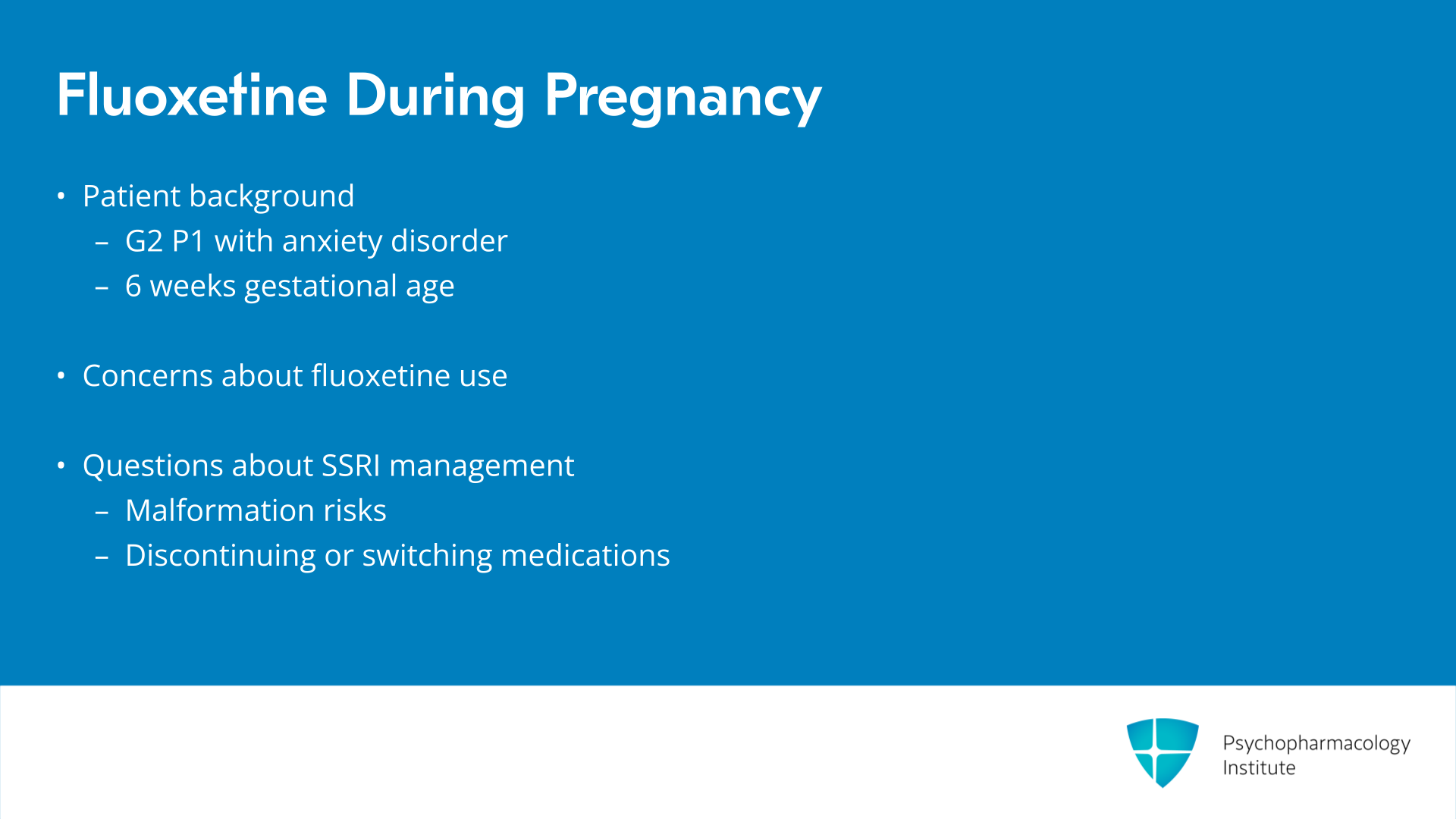
Ms. B is a G2 P1 with history of generalized anxiety disorder requesting consultation about management of fluoxetine 20 mg during pregnancy. She is at 6 weeks gestational age and is concerned about the risks of the medication to the fetus as she has read that SSRIs may cause heart defects and withdrawal symptoms after birth. She asks if she should discontinue entirely, asked the PCP prescribing her medication about switching to sertraline and/or taper during the third trimester. She does plan to breastfeed. She wonders, are SSRIs associated with malformations? Should I switch to sertraline? And should I discontinue my antidepressant in the third trimester to prevent withdrawal in the neonate? Let’s now address all those points.
Free Files
Success!
Check your inbox, we sent you all the materials there.

Slide 3 of 7

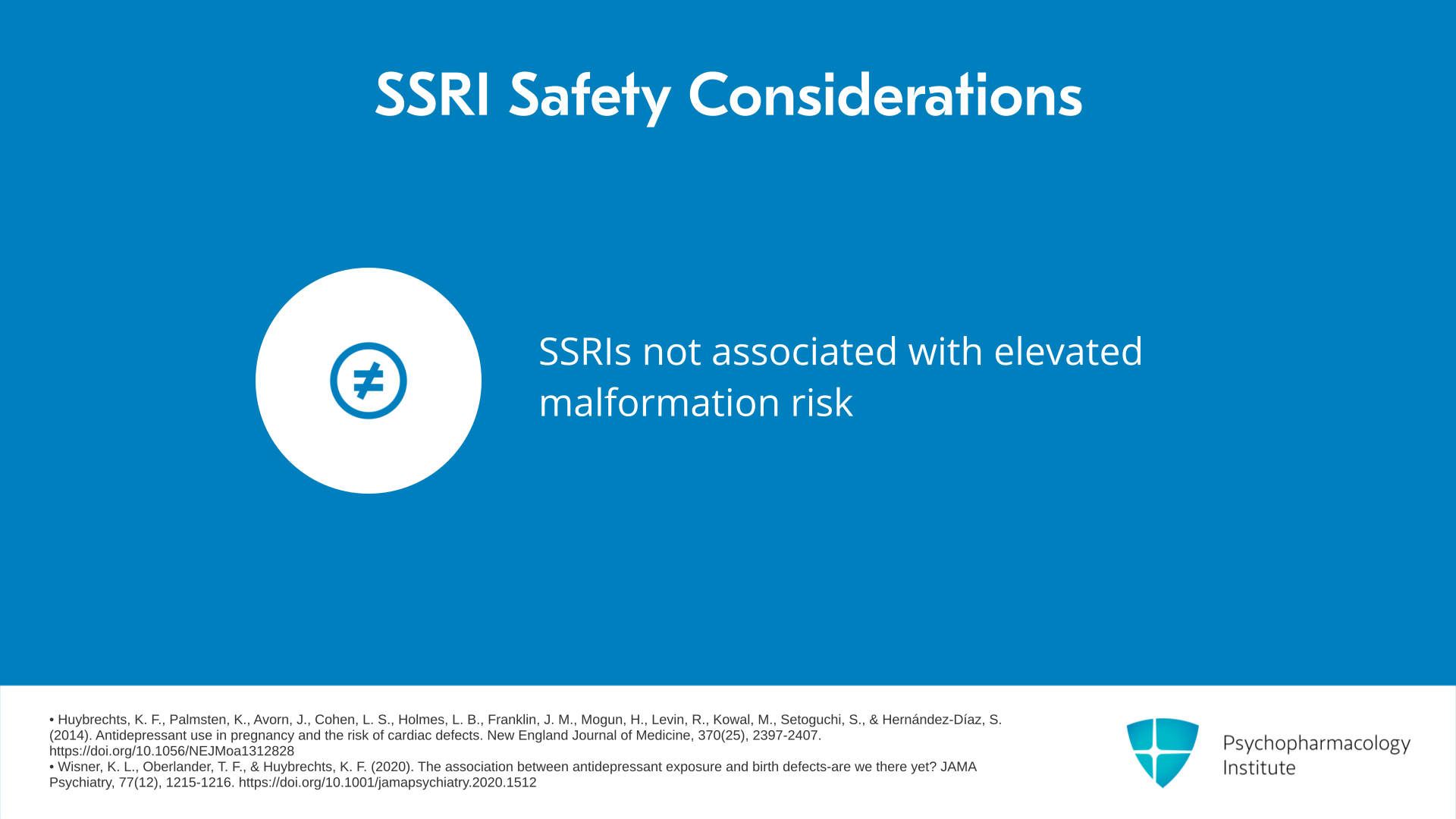
SSRIs as a class have not been consistently associated with an elevated risk of congenital malformations above baseline risk. If fluoxetine is already effective for her, there is risk in switching to another SSRI. The new medication may not work as well to maintain her mood stability and put her at risk of a mood episode.
References:
  • Huybrechts, K. F., Palmsten, K., Avorn, J., Cohen, L. S., Holmes, L. B., Franklin, J. M., Mogun, H., Levin, R., Kowal, M., Setoguchi, S., & Hernández-Díaz, S. (2014). Antidepressant use in pregnancy and the risk of cardiac defects. New England Journal of Medicine, 370(25), 2397-2407. https://doi.org/10.1056/NEJMoa1312828
  • Wisner, K. L., Oberlander, T. F., & Huybrechts, K. F. (2020). The association between antidepressant exposure and birth defects-are we there yet? JAMA Psychiatry, 77(12), 1215-1216. https://doi.org/10.1001/jamapsychiatry.2020.1512

Slide 4 of 7

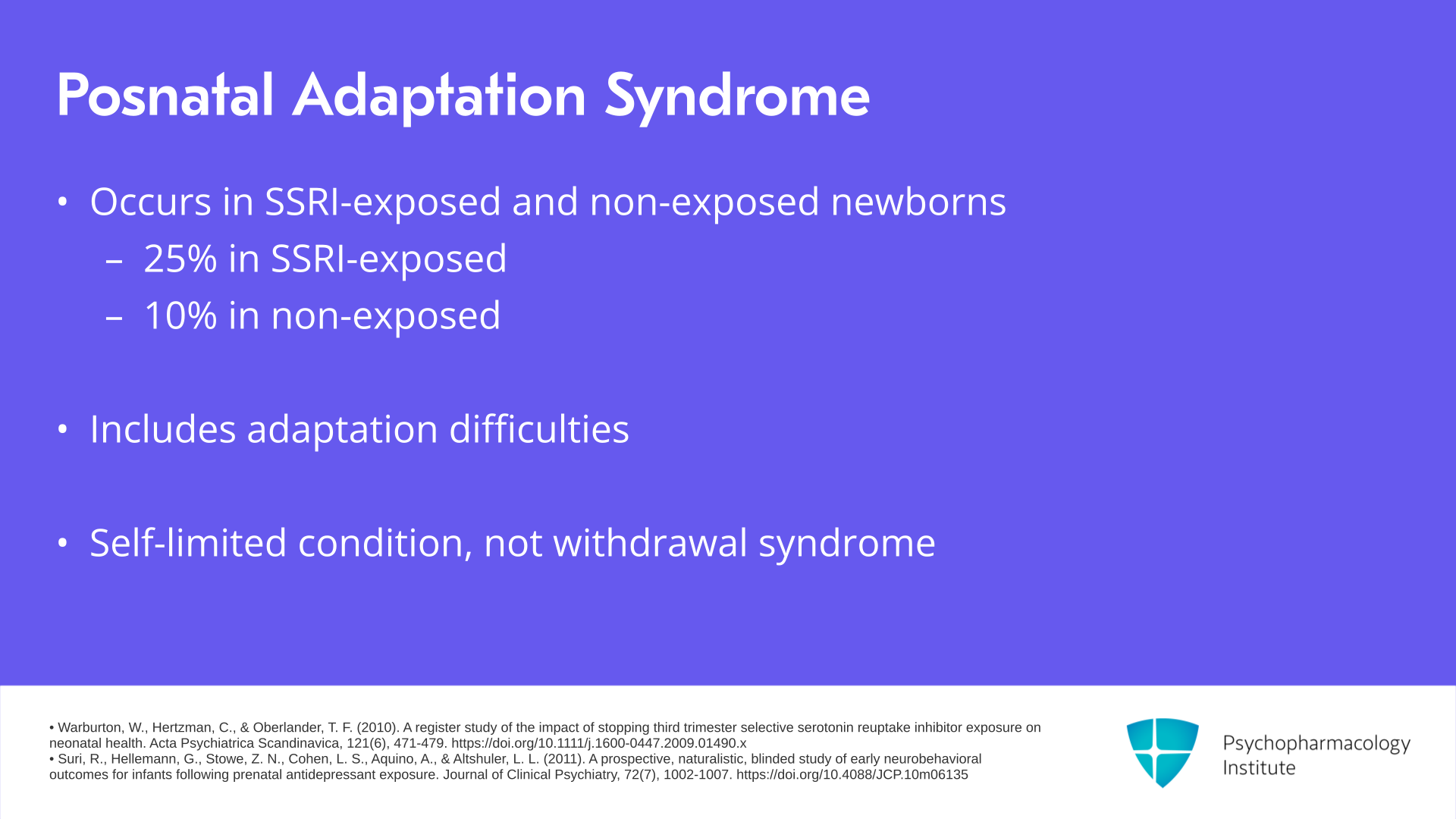
When she is asking a question about withdrawal symptoms after birth, it’s likely that she is referring to postnatal adaptation syndrome. Postnatal adaptation syndrome occurs in up to 25% of newborns born to women who took SSRIs during pregnancy compared to about 10% of newborns if their mothers were not taking SSRIs during pregnancy. So it can occur in either case. It is best described as taking a little bit more time to adapt to life outside the womb, sometimes increased irritability and jitteriness. Postnatal adaptation syndrome does not represent withdrawal or a discontinuation syndrome. It is generally self-limited and resolves in a few days on its own.
References:
  • Warburton, W., Hertzman, C., & Oberlander, T. F. (2010). A register study of the impact of stopping third trimester selective serotonin reuptake inhibitor exposure on neonatal health. Acta Psychiatrica Scandinavica, 121(6), 471-479. https://doi.org/10.1111/j.1600-0447.2009.01490.x
  • Suri, R., Hellemann, G., Stowe, Z. N., Cohen, L. S., Aquino, A., & Altshuler, L. L. (2011). A prospective, naturalistic, blinded study of early neurobehavioral outcomes for infants following prenatal antidepressant exposure. Journal of Clinical Psychiatry, 72(7), 1002-1007. https://doi.org/10.4088/JCP.10m06135
Free Files
Success!
Check your inbox, we sent you all the materials there.

Slide 5 of 7

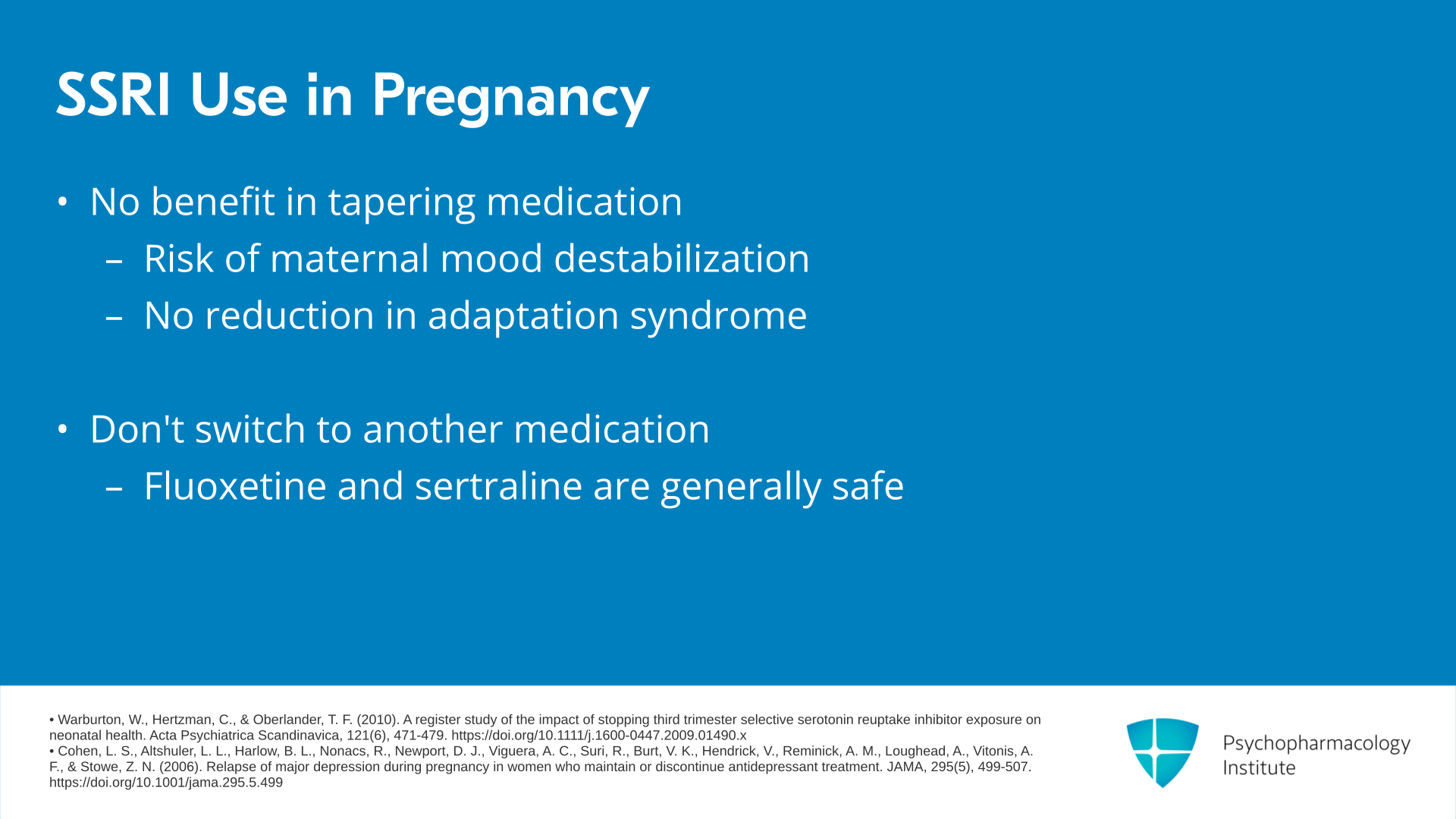
There is not any consistently demonstrated benefit in tapering or discontinuing medication prior to delivery in terms of the risk of postnatal adaptation syndrome. However, there is an increased risk to maternal mood destabilization. If the patient is already on an effective SSRI, don’t switch to another medication which may not work as well. There’s no specific benefit in doing so. Both fluoxetine and sertraline are considered generally safe in pregnancy and lactation.
References:
  • Cohen, L. S., Altshuler, L. L., Harlow, B. L., Nonacs, R., Newport, D. J., Viguera, A. C., Suri, R., Burt, V. K., Hendrick, V., Reminick, A. M., Loughead, A., Vitonis, A. F., & Stowe, Z. N. (2006). Relapse of major depression during pregnancy in women who maintain or discontinue antidepressant treatment. JAMA, 295(5), 499-507. https://doi.org/10.1001/jama.295.5.499
  • Warburton, W., Hertzman, C., & Oberlander, T. F. (2010). A register study of the impact of stopping third trimester selective serotonin reuptake inhibitor exposure on neonatal health. Acta Psychiatrica Scandinavica, 121(6), 471-479. https://doi.org/10.1111/j.1600-0447.2009.01490.x

Slide 6 of 7

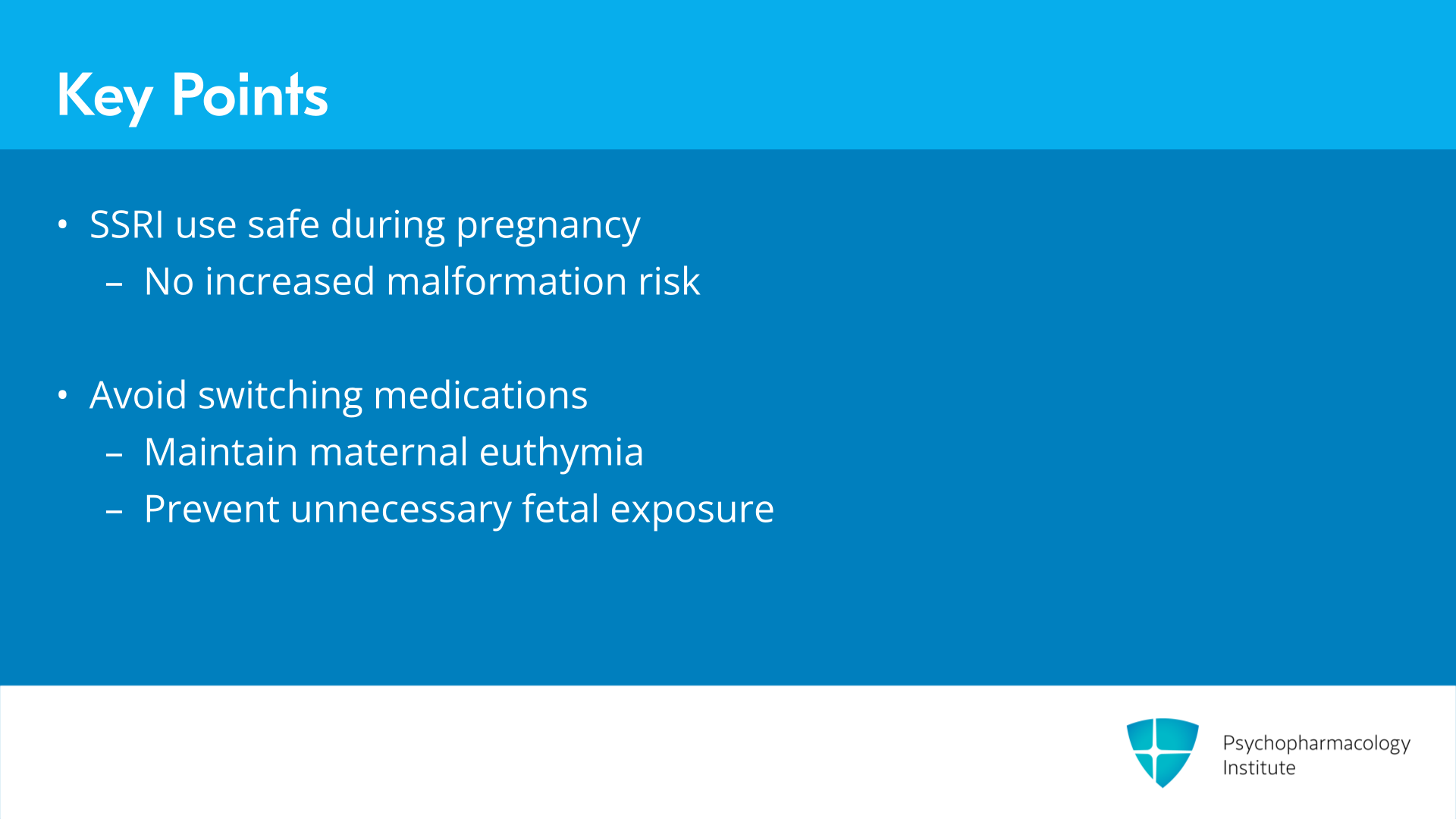
To wrap up, here are some key points for this section. SSRI use in pregnancy is not considered to increase risk of congenital malformations. If an SSRI is clinically effective for an individual, avoid switching medications during pregnancy as this may disrupt maternal euthymia and result in unnecessary fetal exposures.
Free Files
Success!
Check your inbox, we sent you all the materials there.

Slide 7 of 7

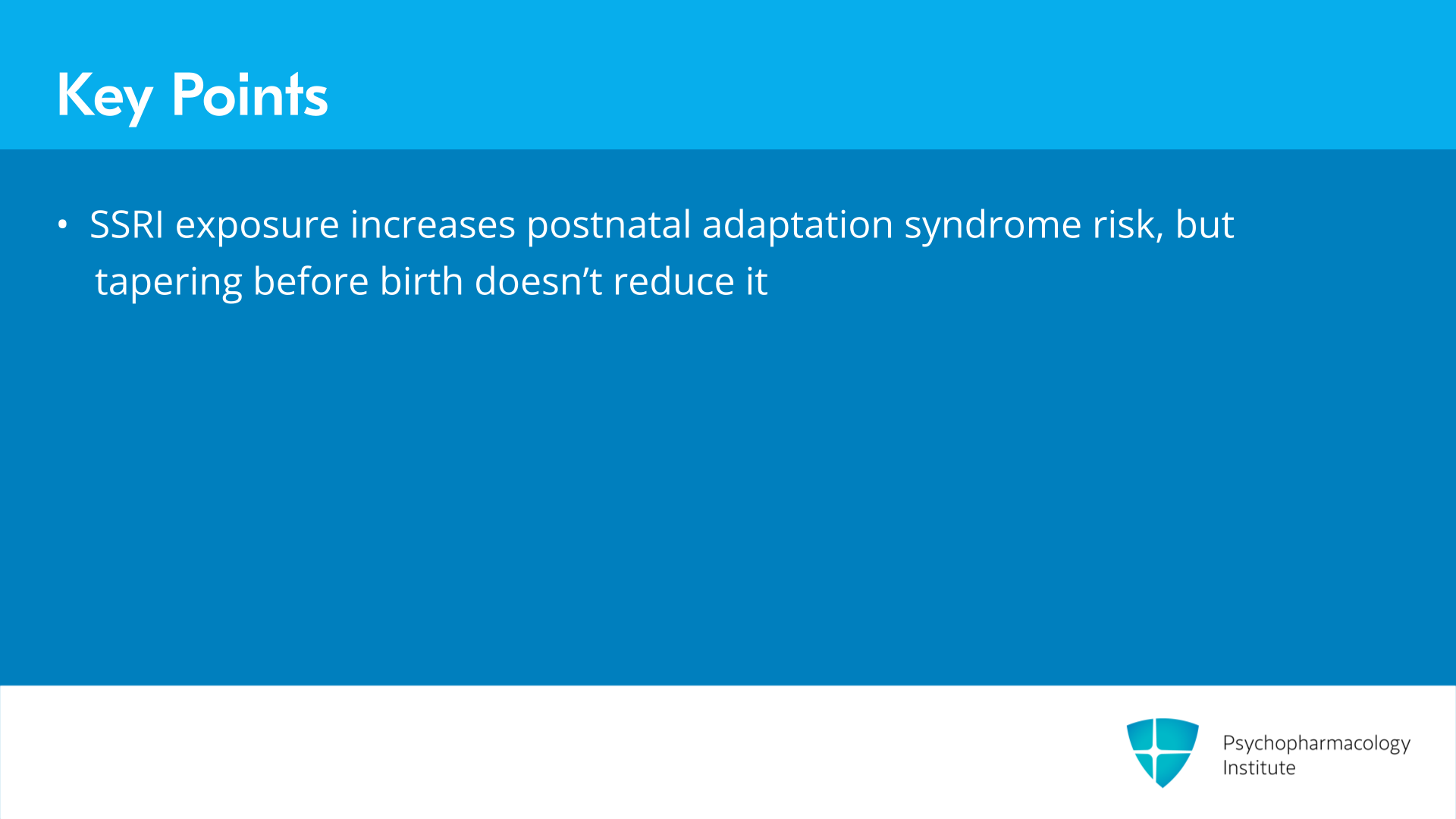
Postnatal adaptation syndrome occurs at higher rates in newborns who are SSRI-exposed in utero but discontinuing or tapering prior to birth does not consistently reduce this risk.

Learning Objectives:

After completing this activity, the learner will be able to:

  1. Describe the prevalence and barriers to treatment of perinatal mental health conditions.
  2. Explain how pregnancy affects medication efficacy through physiological changes and recognize when dose adjustments may be needed for common psychiatric medications
  3. Evaluate and discuss the risks and benefits of continuing versus discontinuing psychiatric medications during pregnancy, incorporating evidence-based data to inform shared decision-making with patients

Original Release Date: January 1, 2025
Expiration Date: January 1, 2028

Expert: Amanda Koire, M.D.
Medical Editor: Flavio Guzmán, M.D.

Relevant Financial Disclosures:
None of the faculty, planners, and reviewers for this educational activity have relevant financial relationships to disclose during the last 24 months with ineligible companies whose primary business is producing, marketing, selling, re-selling, or distributing healthcare products used by or on patients.

Contact Information: For questions regarding the content or access to this activity, contact us at support@psychopharmacologyinstitute.com

Instructions for Participation and Credit:
Participants must complete the activity online during the valid credit period that is noted above.

Follow these steps to earn CME credit:

  1. View the required educational content provided on this course page.
  2. Complete the Post Activity Evaluation for providing the necessary feedback for continuing accreditation purposes and for the development of future activities. NOTE: Completing the Post Activity Evaluation after the quiz is required to receive the earned credit.
  3. Download your certificate.

Accreditation Statement
This activity has been planned and implemented in accordance with the accreditation requirements and policies of the Accreditation Council for Continuing Medical Education through the joint providership of Medical Academy LLC and the Psychopharmacology Institute. Medical Academy is accredited by the ACCME to provide continuing medical education for physicians.

Credit Designation Statement
Medical Academy designates this enduring activity for a maximum of 0.5 AMA PRA Category 1 credit(s)™. Physicians should claim only the credit commensurate with the extent of their participation in the activity.

Artificial Intelligence (AI) Use DisclosureArtificial intelligence (AI) tools may have been used in limited stages of developing this activity (e.g., drafting or language refinement). The specific tool, version, and date of use are documented internally.AI does not determine clinical recommendations. All content is reviewed, verified, and approved by the listed faculty and medical editors, and reflects independent human clinical judgment consistent with ACCME Standards for Integrity and Independence in Accredited Continuing Education.


Free Files
Success!
Check your inbox, we sent you all the materials there.
Continue in the website
Instant access modal

Become a Bronze, Silver, Gold, Bronze extended, Silver extended or Gold extended Member.

2025–26 Psychopharmacology CME Program

Unlock up to 155 CME Credits, including 40 SA CME Credits.