



Slides and Transcript
Slide 1 of 10
Now, let’s talk about pregnancy and medication efficacy. To start off with, pregnancy does affect medication efficacy.
Slide 2 of 10
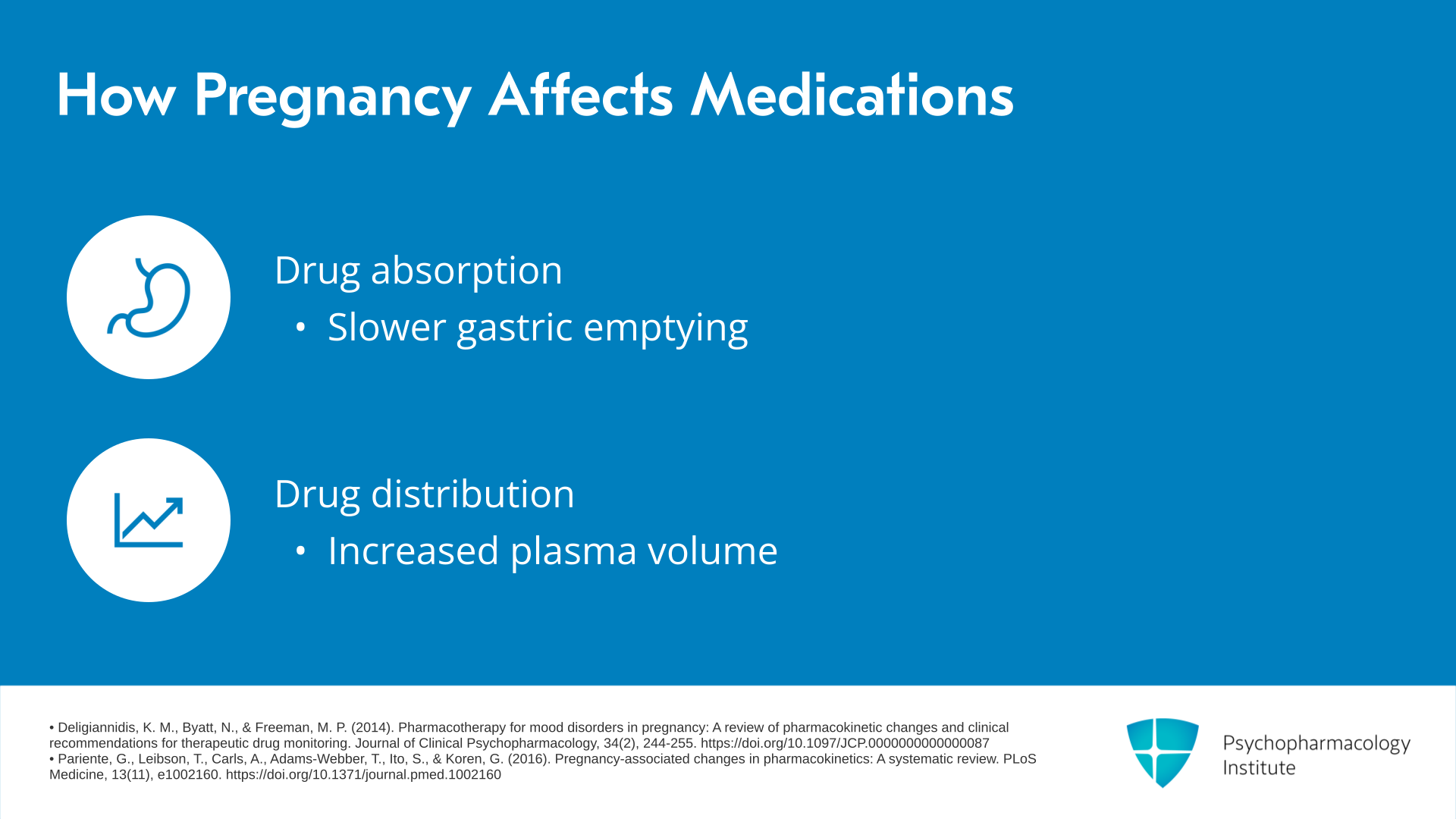
It can affect how medications work in a number of ways. It can affect drug absorption. Thus, it’s associated with slower gastric emptying and slower bowel and colonic transit. It can affect drug distribution through an increase in plasma volume, changes in protein binding, and a lower ratio of lean muscle to adipose tissue.
References:
- Deligiannidis, K. M., Byatt, N., & Freeman, M. P. (2014). Pharmacotherapy for mood disorders in pregnancy: A review of pharmacokinetic changes and clinical recommendations for therapeutic drug monitoring. Journal of Clinical Psychopharmacology, 34(2), 244-255. https://doi.org/10.1097/JCP.0000000000000087
- Pariente, G., Leibson, T., Carls, A., Adams-Webber, T., Ito, S., & Koren, G. (2016). Pregnancy-associated changes in pharmacokinetics: A systematic review. PLoS Medicine, 13(11), e1002160. https://doi.org/10.1371/journal.pmed.1002160
Free Files
Download PDF and other files
Success!
Check your inbox, we sent you all the materials there.
Slide 3 of 10
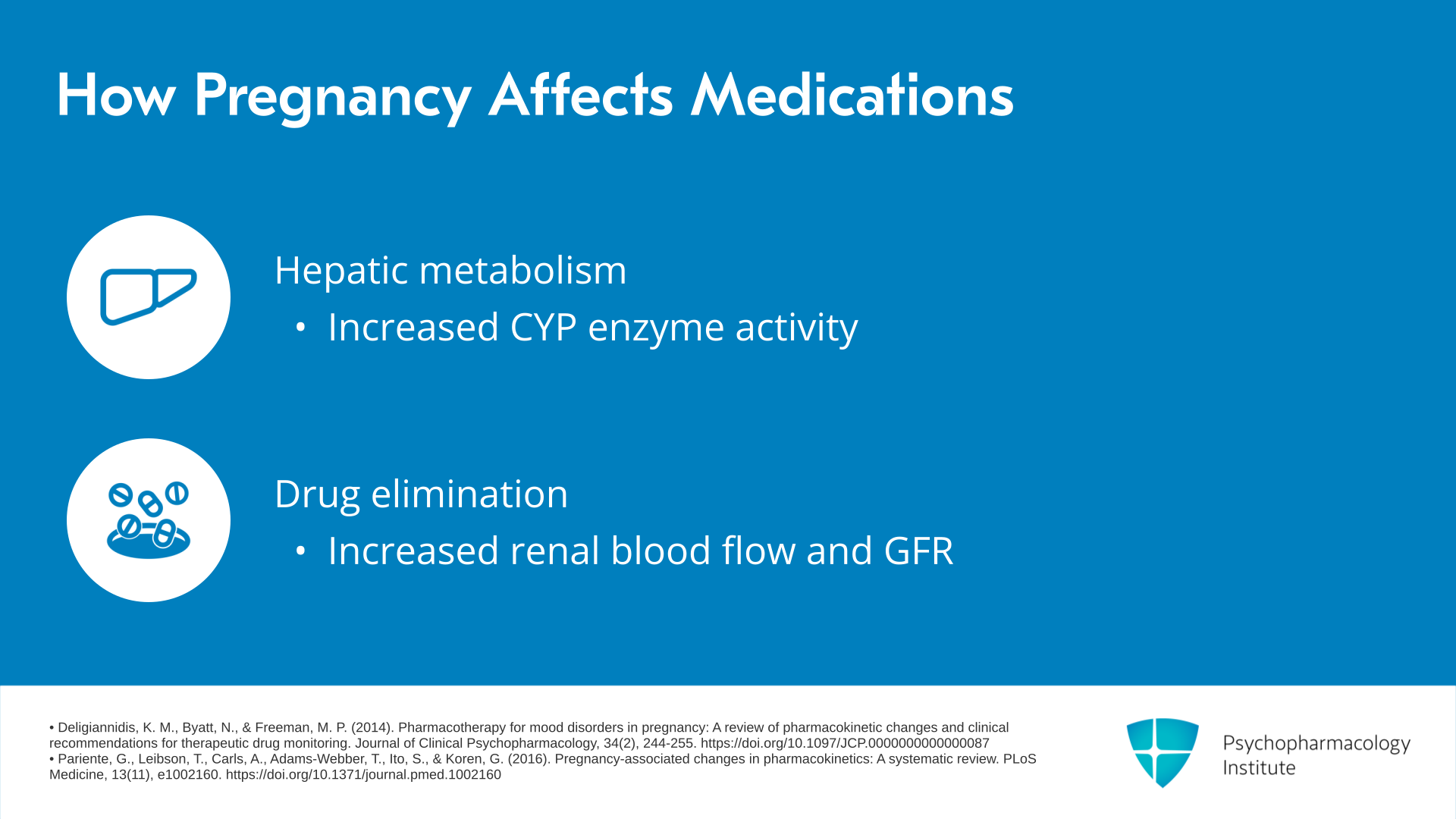
It can also affect hepatic metabolism through an increased activity of CYP enzymes. And pregnancy can affect drug elimination notably leading to an increased renal blood flow and increased GFR, glomerular filtration rate.
References:
- Deligiannidis, K. M., Byatt, N., & Freeman, M. P. (2014). Pharmacotherapy for mood disorders in pregnancy: A review of pharmacokinetic changes and clinical recommendations for therapeutic drug monitoring. Journal of Clinical Psychopharmacology, 34(2), 244-255. https://doi.org/10.1097/JCP.0000000000000087
- Pariente, G., Leibson, T., Carls, A., Adams-Webber, T., Ito, S., & Koren, G. (2016). Pregnancy-associated changes in pharmacokinetics: A systematic review. PLoS Medicine, 13(11), e1002160. https://doi.org/10.1371/journal.pmed.1002160
Slide 4 of 10
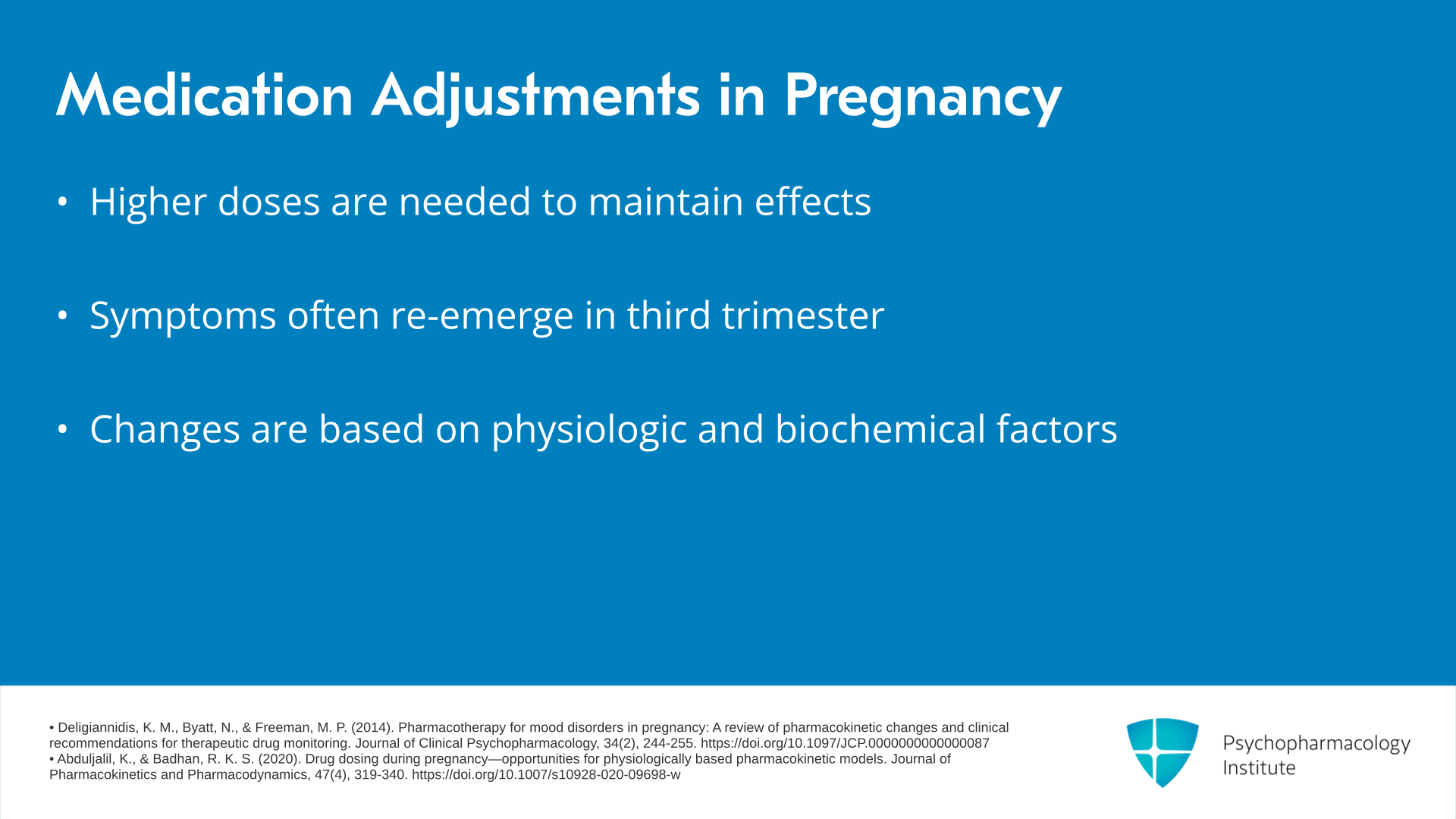
As a result of these changes, it’s not uncommon to need higher doses of medication to maintain the same effect as pregnancy progresses. Typically, when symptoms do re-emerge, it’s often around the start of the third trimester. This doesn’t mean that you need to change dosing proactively or even always get a level. That depends on the medication. But don’t be surprised if a higher dose is needed for a while based on what is happening at the physiologic and biochemical level.
References:
- Deligiannidis, K. M., Byatt, N., & Freeman, M. P. (2014). Pharmacotherapy for mood disorders in pregnancy: A review of pharmacokinetic changes and clinical recommendations for therapeutic drug monitoring. Journal of Clinical Psychopharmacology, 34(2), 244-255. https://doi.org/10.1097/JCP.0000000000000087
- Abduljalil, K., & Badhan, R. K. S. (2020). Drug dosing during pregnancy—opportunities for physiologically based pharmacokinetic models. Journal of Pharmacokinetics and Pharmacodynamics, 47(4), 319-340. https://doi.org/10.1007/s10928-020-09698-w
Free Files
Download PDF and other files
Success!
Check your inbox, we sent you all the materials there.
Slide 5 of 10
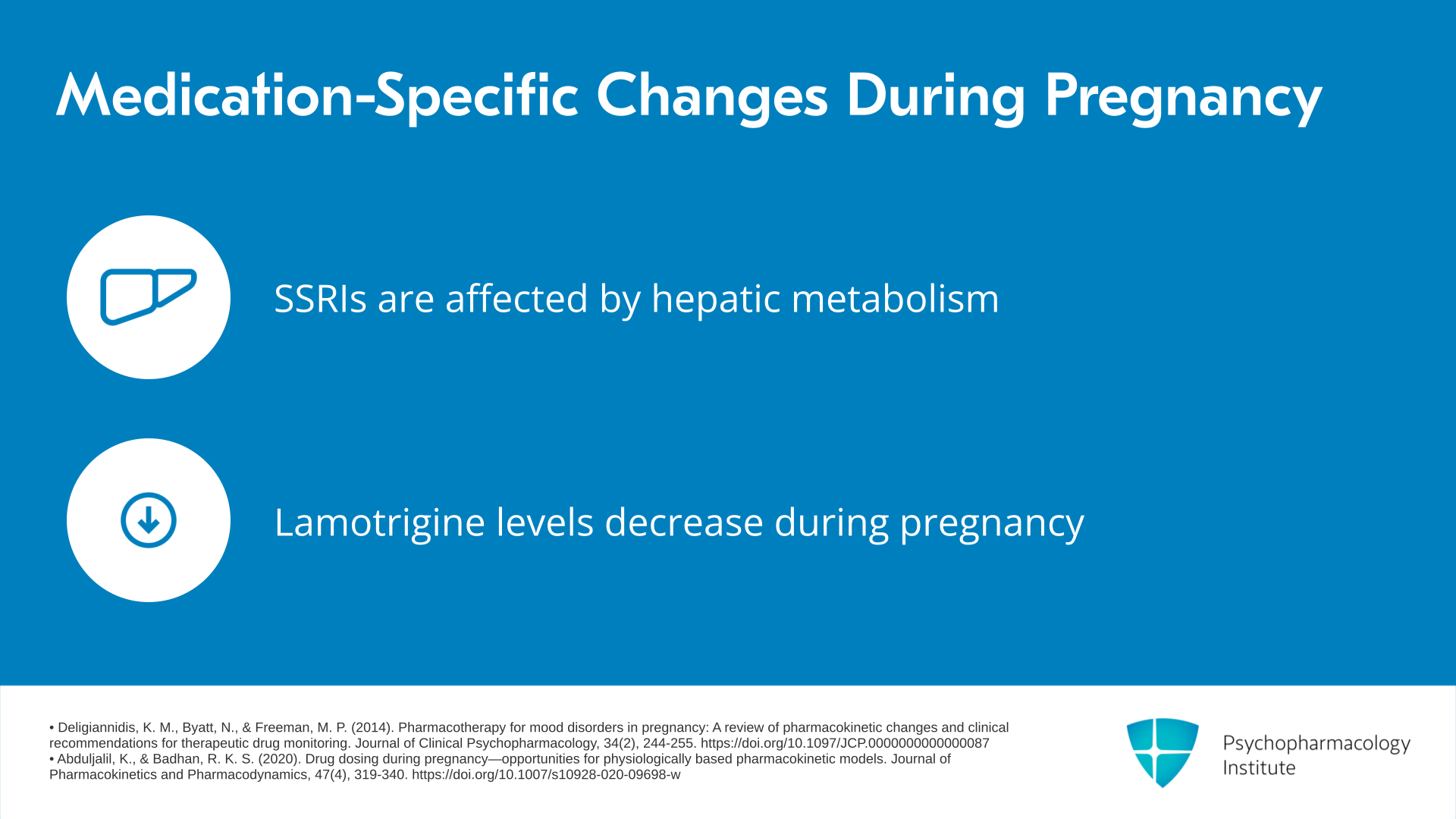
There are some specific medications to know about that are affected by pregnancy in particular ways. SSRIs or selective serotonin reuptake inhibitors can be affected by hepatic
CYP enzyme metabolism. Antidepressant levels may decrease especially in late pregnancy. If that happens, increase the dose if symptoms re-emerge clinically. For lamotrigine, increases in estrogen and estradiol during pregnancy can increase phase 2 glucuronidation which decreases the levels of the lamotrigine. Levels may decrease by 50% by the second trimester and patients may need an increased dose if symptoms re-emerge.
References:
- Deligiannidis, K. M., Byatt, N., & Freeman, M. P. (2014). Pharmacotherapy for mood disorders in pregnancy: A review of pharmacokinetic changes and clinical recommendations for therapeutic drug monitoring. Journal of Clinical Psychopharmacology, 34(2), 244-255. https://doi.org/10.1097/JCP.0000000000000087
- Abduljalil, K., & Badhan, R. K. S. (2020). Drug dosing during pregnancy—opportunities for physiologically based pharmacokinetic models. Journal of Pharmacokinetics and Pharmacodynamics, 47(4), 319-340. https://doi.org/10.1007/s10928-020-09698-w
Slide 6 of 10
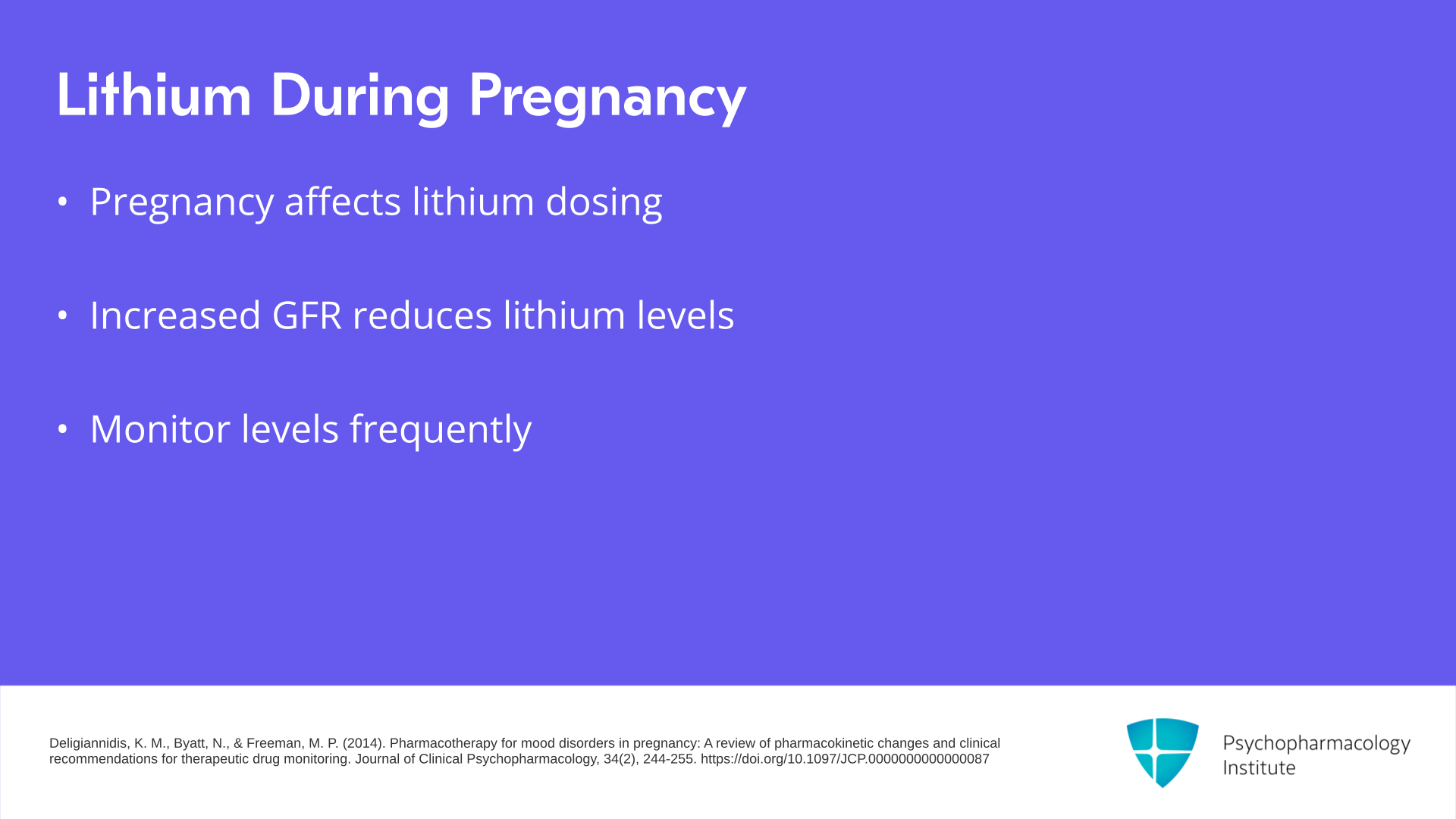
Lithium is a medication to be aware of in pregnancy. It’s important to consider the effects of pregnancy on the dosing of lithium because the increase in GFR during pregnancy can reduce the levels of lithium and this can have important clinical effects. It can be very beneficial for lithium in particular to monitor levels quite frequently especially during the third trimester to stay in the therapeutic range.
References:
- Deligiannidis, K. M., Byatt, N., & Freeman, M. P. (2014). Pharmacotherapy for mood disorders in pregnancy: A review of pharmacokinetic changes and clinical recommendations for therapeutic drug monitoring. Journal of Clinical Psychopharmacology, 34(2), 244-255. https://doi.org/10.1097/JCP.0000000000000087
Free Files
Download PDF and other files
Success!
Check your inbox, we sent you all the materials there.
Slide 7 of 10
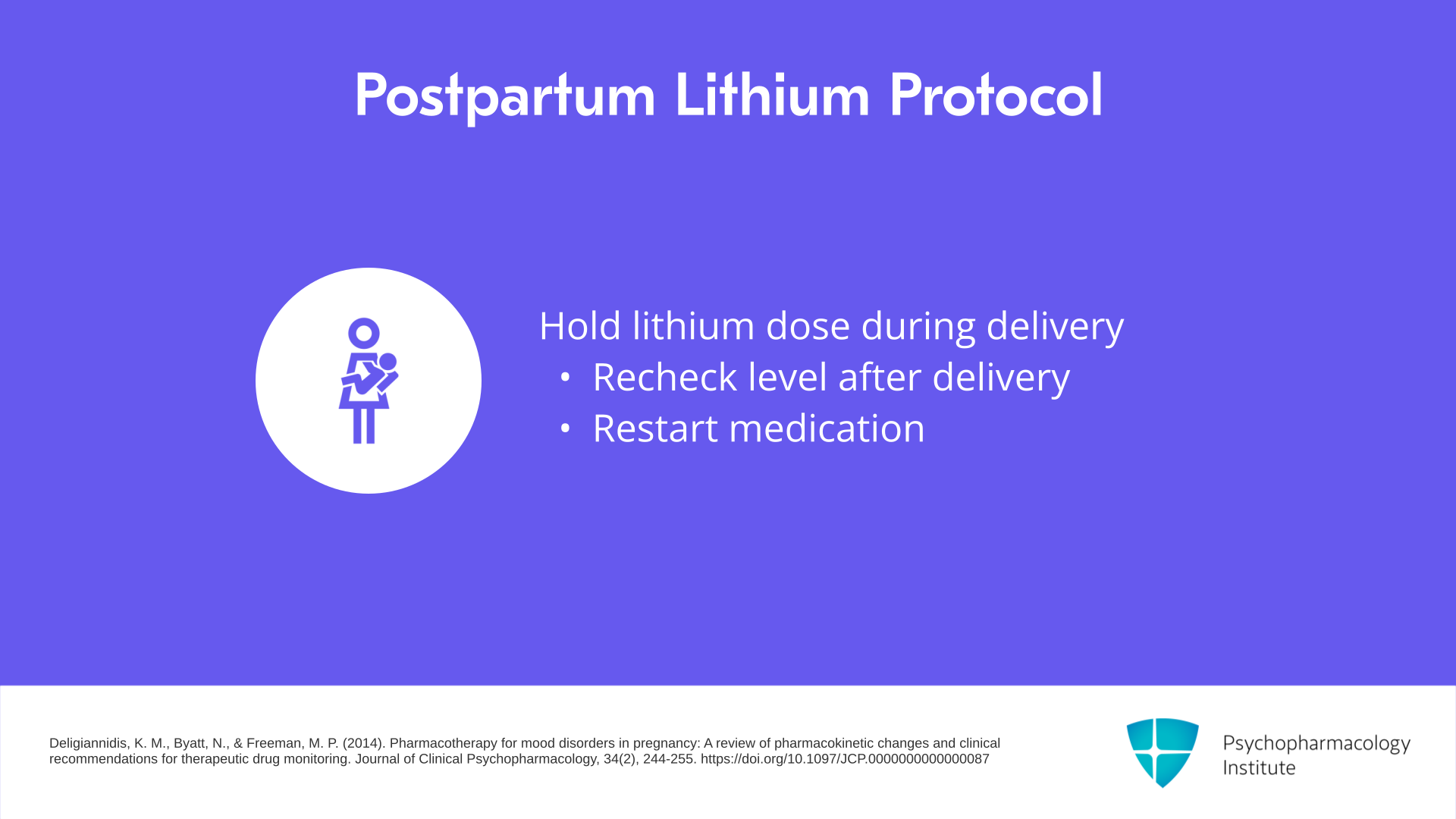
It’s common clinical practice to hold the dose of lithium during labor and delivery then recheck the lithium level after delivery and restart the medication because at delivery vascular volume and lithium clearance changes rapidly revert to pre-pregnancy levels and you want to make sure that the postpartum individual does not experience lithium toxicity.
References:
- Deligiannidis, K. M., Byatt, N., & Freeman, M. P. (2014). Pharmacotherapy for mood disorders in pregnancy: A review of pharmacokinetic changes and clinical recommendations for therapeutic drug monitoring. Journal of Clinical Psychopharmacology, 34(2), 244-255. https://doi.org/10.1097/JCP.0000000000000087
Slide 8 of 10
As we think about medications during pregnancy, it’s important to recognize that mood recurrence, mood episode recurrence is common with or without medications. However, mood episode recurrence is much higher if medications are discontinued. For women with a history of major depressive disorder who entered pregnancy euthymic, 68% of those who discontinued their antidepressant experienced a relapse during pregnancy compared to only 26% of those who continued their medication.
References:
- Deligiannidis, K. M., Byatt, N., & Freeman, M. P. (2014). Pharmacotherapy for mood disorders in pregnancy: A review of pharmacokinetic changes and clinical recommendations for therapeutic drug monitoring. Journal of Clinical Psychopharmacology, 34(2), 244-255. https://doi.org/10.1097/JCP.0000000000000087
- Cohen, L. S., Altshuler, L. L., Harlow, B. L., Nonacs, R., Newport, D. J., Viguera, A. C., Suri, R., Burt, V. K., Hendrick, V., Reminick, A. M., Loughead, A., Vitonis, A. F., & Stowe, Z. N. (2006). Relapse of major depression during pregnancy in women who maintain or discontinue antidepressant treatment. JAMA, 295(5), 499-507. https://doi.org/10.1001/jama.295.5.499
Free Files
Download PDF and other files
Success!
Check your inbox, we sent you all the materials there.
Slide 9 of 10
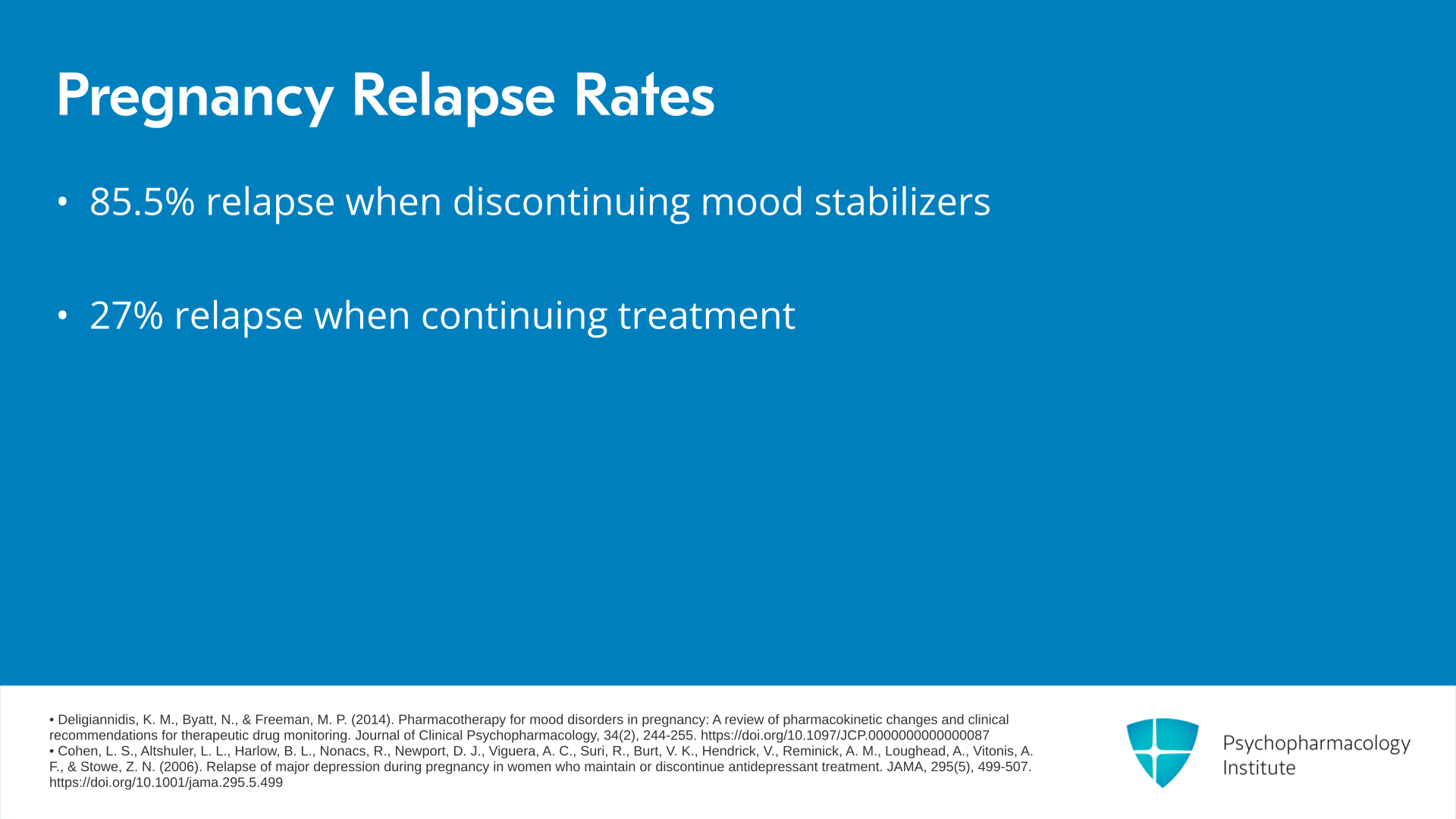
For women with a history of bipolar disorder who entered pregnancy euthymic, 85.5% of those who discontinued their mood stabilizer experienced a relapse during pregnancy, which may have been a depressive episode, manic, hypomanic, or mixed episode compared to 27% of those who continued treatment. So in both cases, the risk of relapse is far higher when discontinuing medications but it is not trivial even when maintaining treatment.
References:
- Deligiannidis, K. M., Byatt, N., & Freeman, M. P. (2014). Pharmacotherapy for mood disorders in pregnancy: A review of pharmacokinetic changes and clinical recommendations for therapeutic drug monitoring. Journal of Clinical Psychopharmacology, 34(2), 244-255. https://doi.org/10.1097/JCP.0000000000000087
- Cohen, L. S., Altshuler, L. L., Harlow, B. L., Nonacs, R., Newport, D. J., Viguera, A. C., Suri, R., Burt, V. K., Hendrick, V., Reminick, A. M., Loughead, A., Vitonis, A. F., & Stowe, Z. N. (2006). Relapse of major depression during pregnancy in women who maintain or discontinue antidepressant treatment. JAMA, 295(5), 499-507. https://doi.org/10.1001/jama.295.5.499
Slide 10 of 10
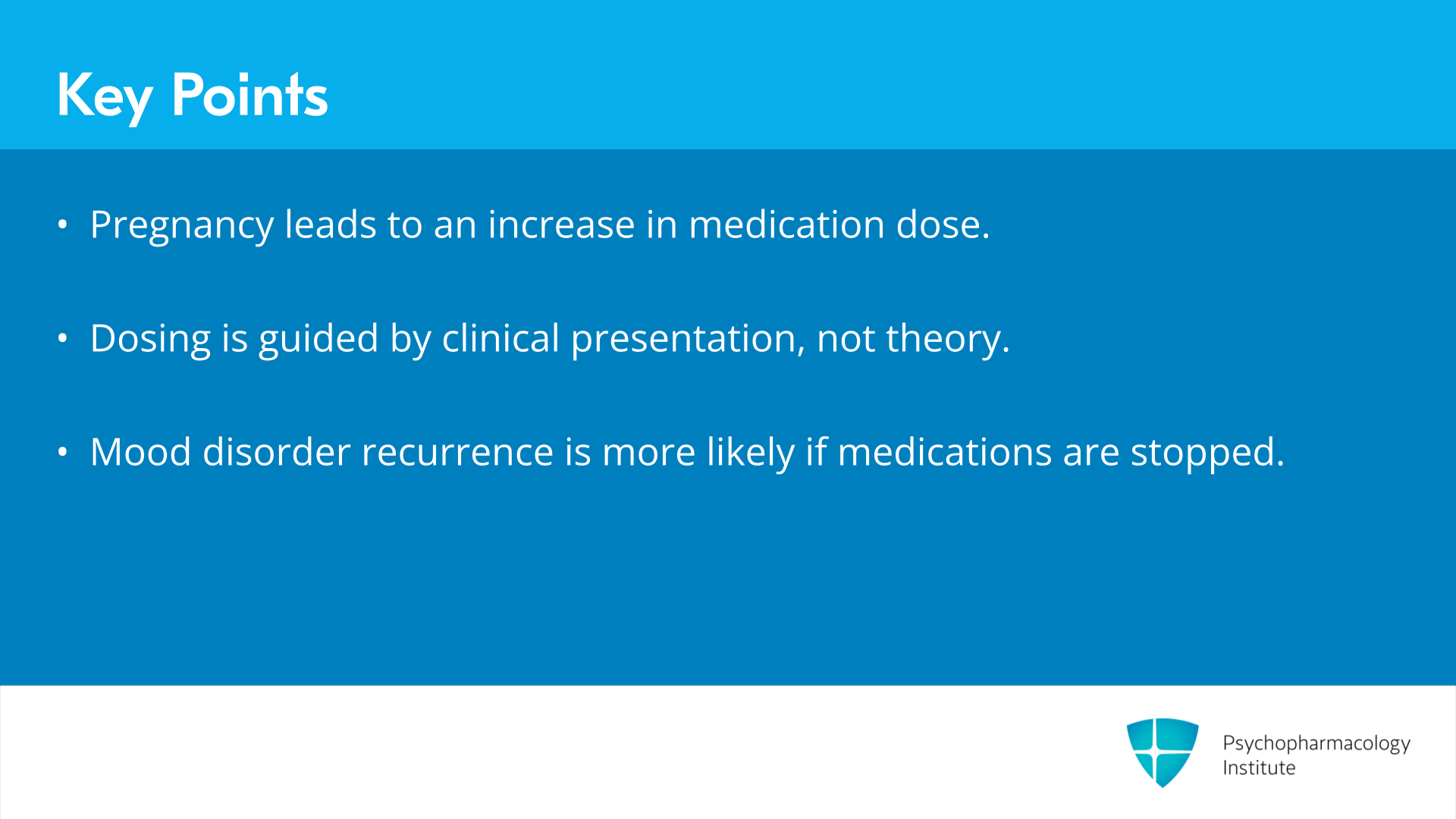
To wrap up, here are some key points for this section. The physiology of pregnancy may lead to a need for increase of a previously stable medication dose. Dosing should generally be guided by clinical presentation rather than theory. Recurrence of a mood disorder may occur even when a patient continues medication treatment during pregnancy but is far more likely if they have discontinued their medications.
Free Files
Download PDF and other files
Success!
Check your inbox, we sent you all the materials there.
