Slides and Transcript
Slide 1 of 17
In this section, we’ll be discussing optimizing depression management while minimizing sexual side effects.
Slide 2 of 17
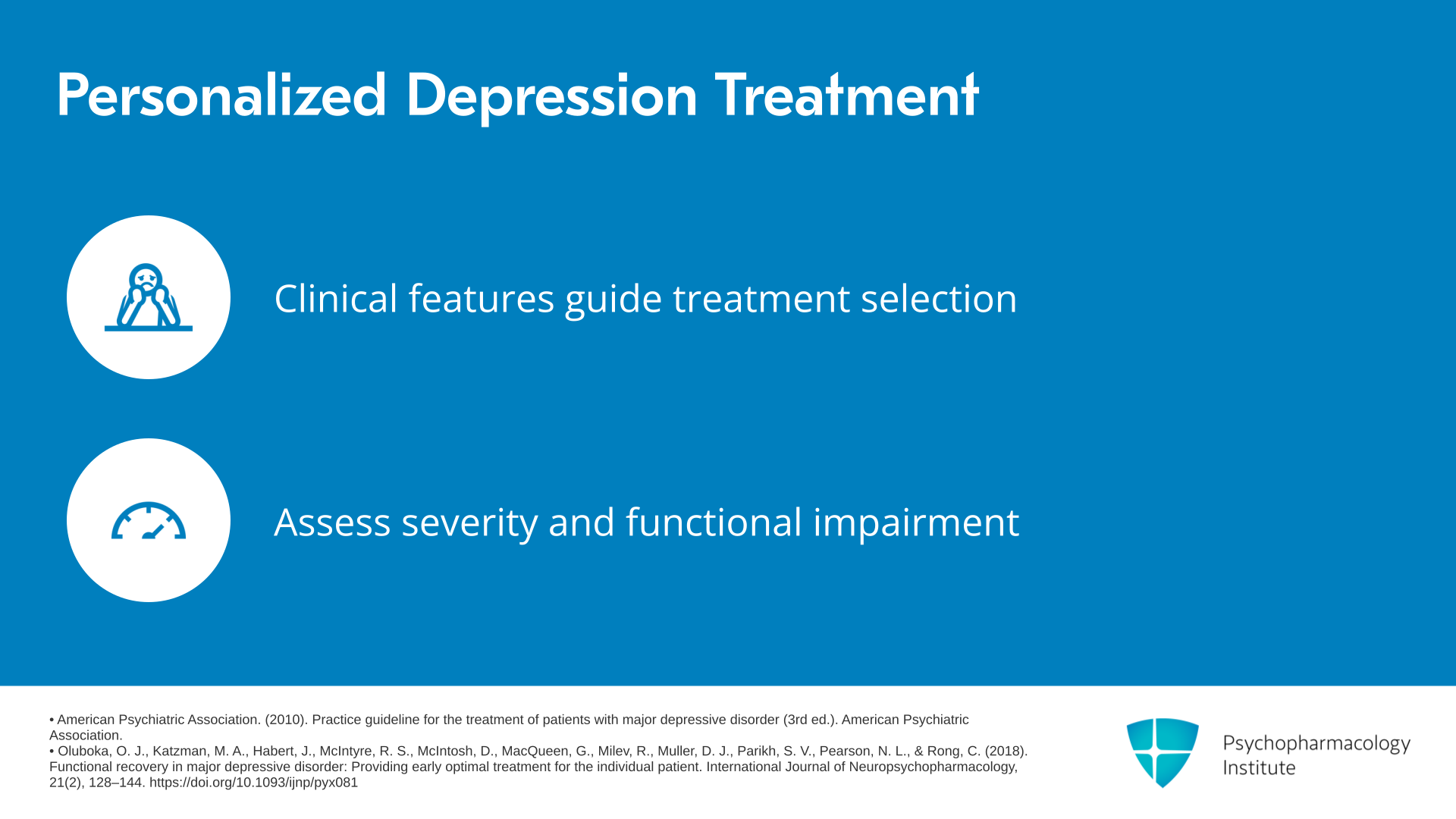
Key thing to remember – the treatment of depression should be personalized, and factors that can guide treatment selection include their clinical features like comorbidities or specific symptoms, the severity of the depression, how much functional impairment they’re experiencing, and any treatment history or what their preferences, goals and expectations are.
References:
- American Psychiatric Association. (2010). Practice guideline for the treatment of patients with major depressive disorder (3rd ed.). American Psychiatric Association.
- Oluboka, O. J., Katzman, M. A., Habert, J., McIntyre, R. S., McIntosh, D., MacQueen, G., Milev, R., Muller, D. J., Parikh, S. V., Pearson, N. L., & Rong, C. (2018). Functional recovery in major depressive disorder: Providing early optimal treatment for the individual patient. International Journal of Neuropsychopharmacology, 21(2), 128–144. https://doi.org/10.1093/ijnp/pyx081
Free Files
Download PDF and other files
Success!
Check your inbox, we sent you all the materials there.
Slide 3 of 17
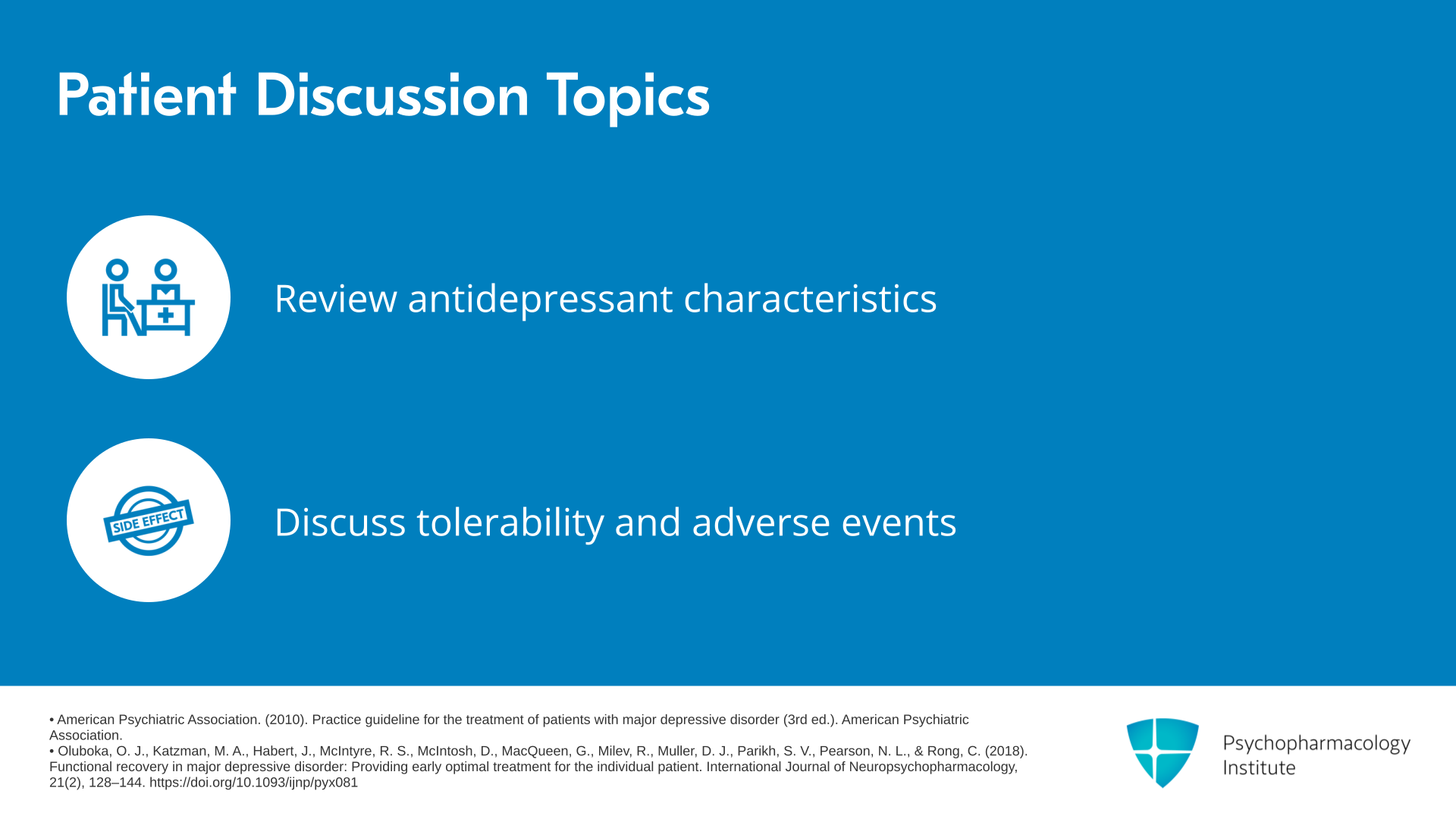
We want to discuss with them characteristics of the antidepressant, what its efficacy may be, its safety, that is tolerability, and adverse events data which may compromise effectiveness, tolerability or adherence.
References:
- American Psychiatric Association. (2010). Practice guideline for the treatment of patients with major depressive disorder (3rd ed.). American Psychiatric Association.
- Oluboka, O. J., Katzman, M. A., Habert, J., McIntyre, R. S., McIntosh, D., MacQueen, G., Milev, R., Muller, D. J., Parikh, S. V., Pearson, N. L., & Rong, C. (2018). Functional recovery in major depressive disorder: Providing early optimal treatment for the individual patient. International Journal of Neuropsychopharmacology, 21(2), 128–144. https://doi.org/10.1093/ijnp/pyx081
Slide 4 of 17
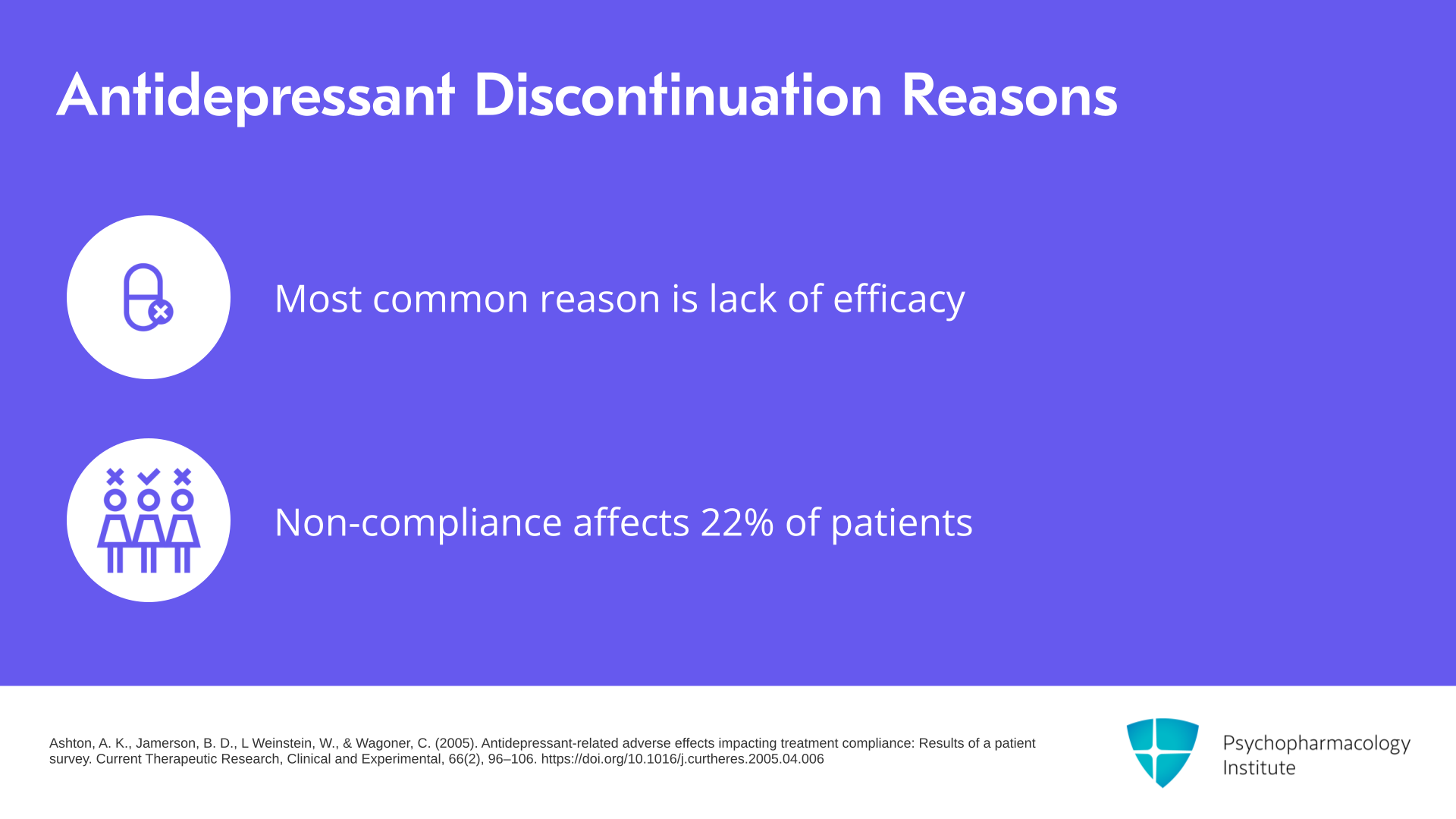
In a study that looked at patient preferences impacting adverse effects on non-adherence to their antidepressant, the most common reason for discontinuing an antidepressant has to do with lack of efficacy, where 60% of people will stop their antidepressant. There’s non-compliance in about 22% of patients and they don’t always report this to their provider.
References:
- Ashton, A. K., Jamerson, B. D., L Weinstein, W., & Wagoner, C. (2005). Antidepressant-related adverse effects impacting treatment compliance: Results of a patient survey. Current Therapeutic Research, Clinical and Experimental, 66(2), 96–106. https://doi.org/10.1016/j.curtheres.2005.04.006
Free Files
Download PDF and other files
Success!
Check your inbox, we sent you all the materials there.
Slide 5 of 17
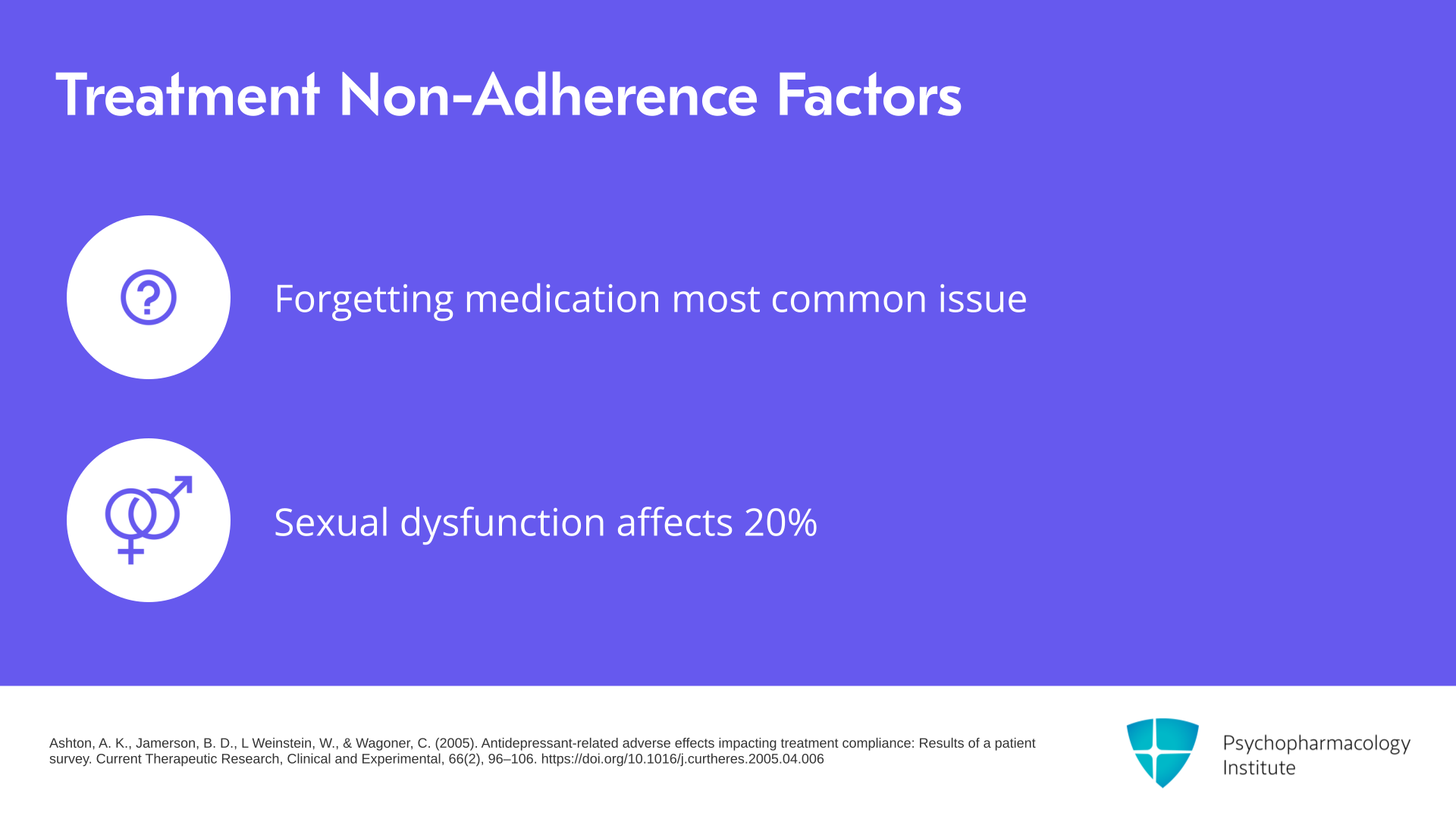
Reasons they gave for non-adherence to treatment include trouble remembering to take the medication at 43%, gained a lot of weight at over a quarter of the patients, couldn’t have an orgasm 1 in 5 patients and they lost their sex drive also 20% of the patients.
References:
- Ashton, A. K., Jamerson, B. D., L Weinstein, W., & Wagoner, C. (2005). Antidepressant-related adverse effects impacting treatment compliance: Results of a patient survey. Current Therapeutic Research, Clinical and Experimental, 66(2), 96–106. https://doi.org/10.1016/j.curtheres.2005.04.006
Slide 6 of 17
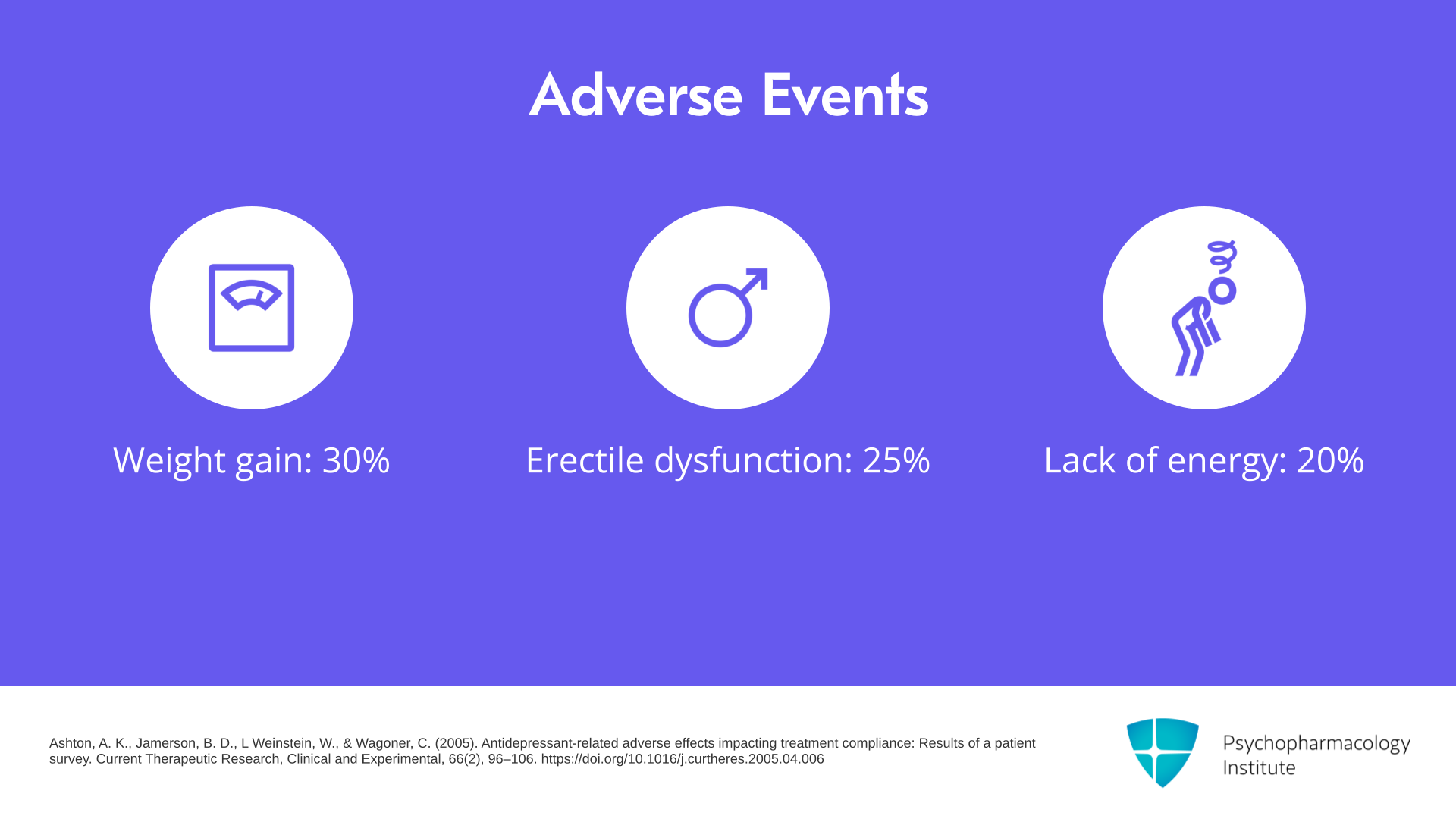
They said that the adverse events that were extremely difficult to tolerate and impacted on their quality of life were weight gain at over 30%, unable to have an erection at 25%, difficulty reaching orgasm at 24% and feeling tired during the day or lacking energy at about 20%. Most wanted improvements to help them adhere to their treatment. So we should be keeping these in mind when we talk about interventions to our patients.
References:
- Ashton, A. K., Jamerson, B. D., L Weinstein, W., & Wagoner, C. (2005). Antidepressant-related adverse effects impacting treatment compliance: Results of a patient survey. Current Therapeutic Research, Clinical and Experimental, 66(2), 96–106. https://doi.org/10.1016/j.curtheres.2005.04.006
Free Files
Download PDF and other files
Success!
Check your inbox, we sent you all the materials there.
Slide 7 of 17
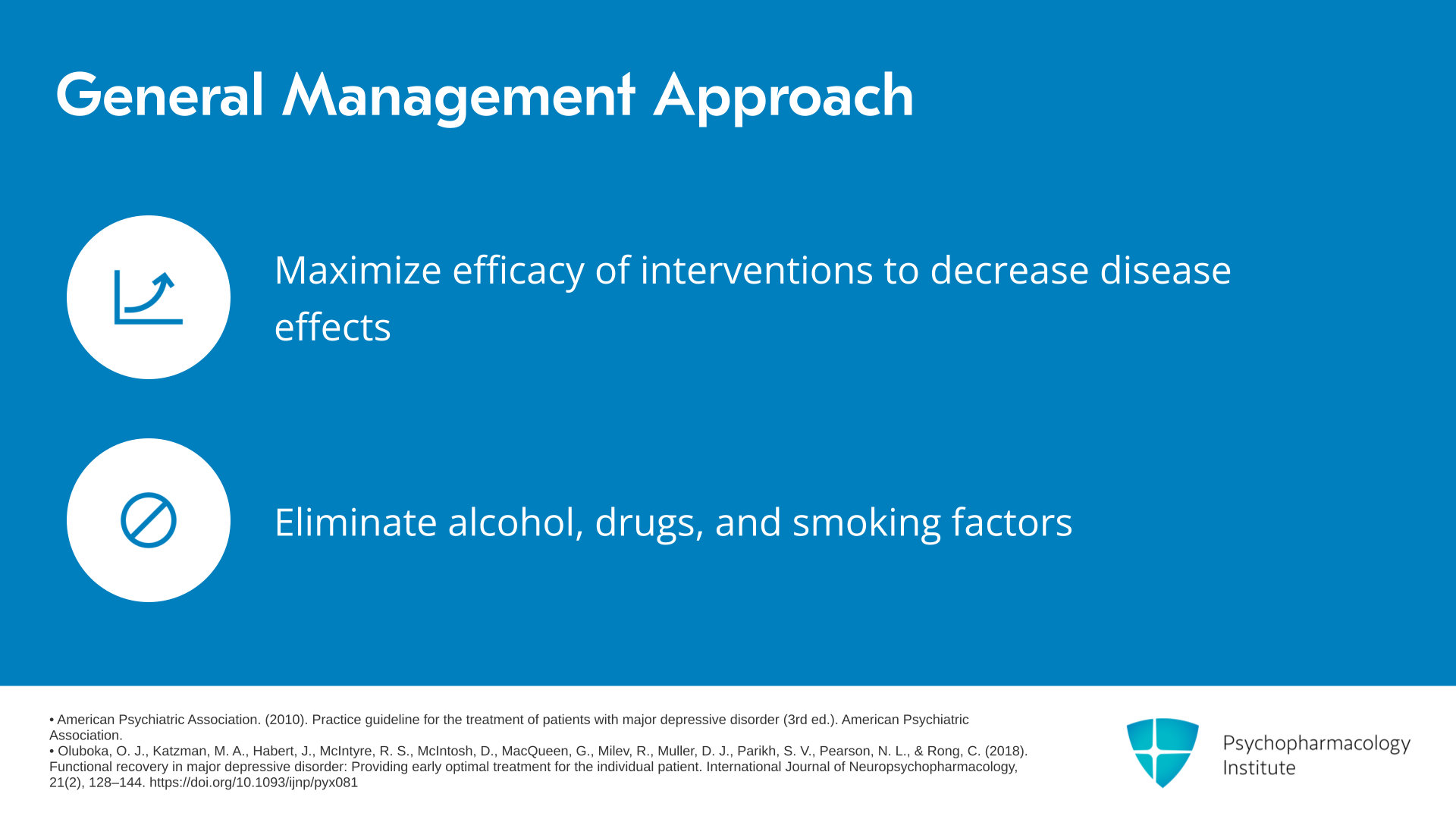
What kind of general management should we consider for psychiatric and medical conditions? Maximize the efficacy of interventions to decrease disease effects. That’s first and foremost. Eliminate contributing factors – alcohol, other drugs, medications, smoking and partner sexual dysfunction. Those are important to be discussing with the patients and you should have that as part of your routine examination.
References:
- American Psychiatric Association. (2010). Practice guideline for the treatment of patients with major depressive disorder (3rd ed.). American Psychiatric Association.
- Oluboka, O. J., Katzman, M. A., Habert, J., McIntyre, R. S., McIntosh, D., MacQueen, G., Milev, R., Muller, D. J., Parikh, S. V., Pearson, N. L., & Rong, C. (2018). Functional recovery in major depressive disorder: Providing early optimal treatment for the individual patient. International Journal of Neuropsychopharmacology, 21(2), 128–144. https://doi.org/10.1093/ijnp/pyx081
Slide 8 of 17
And you want to discuss limitations and modifications to include the sexual partner, alternative positions, or psychosocial or relationship issues.
References:
- Lorenz, T., Rullo, J., & Faubion, S. (2016). Antidepressant-induced female sexual dysfunction. Mayo Clinic Proceedings, 91(9), 1280-1286. https://doi.org/10.1016/j.mayocp.2016.04.033
Free Files
Download PDF and other files
Success!
Check your inbox, we sent you all the materials there.
Slide 9 of 17
For SRI-induced sexual dysfunction, you can substitute medications and this might be most effective in patients who are experiencing sexual dysfunction with their first antidepressant treatment. Drugs like bupropion, mirtazapine, the selegiline transdermal system, vilazodone, desvenlafaxine, duloxetine, vortioxetine and gepirone ER may be possibly less efficacious or have other poor tolerability than sexual dysfunction but you should see improvements in sexual functioning when transitioning patients to these medications.
References:
- Clayton, A. H., Pradko, J. F., Croft, H. A., Montano, C. B., Leadbetter, R. A., Bolden-Watson, C., Bass, K. I., Donahue, R. M., Jamerson, B. D., & Metz, A. (2002). Prevalence of sexual dysfunction among newer antidepressants. The Journal of Clinical Psychiatry, 63(4), 357–366. https://doi.org/10.4088/jcp.v63n0414
- Clayton, A. H., Croft, H. A., Horrigan, J. P., Wightman, D. S., Krishen, A., Richard, N. E., & Modell, J. G. (2006). Bupropion extended release compared with escitalopram: effects on sexual functioning and antidepressant efficacy in 2 randomized, double-blind, placebo-controlled studies. The Journal of Clinical Psychiatry, 67(5), 736–746. https://doi.org/10.4088/jcp.v67n0507
Slide 10 of 17
Or if they seem to be responding well to their SRI but are experiencing sexual dysfunction and particularly if they failed other antidepressant treatments in the past, you can add antidotes. Now, these are all off-label but they may reverse the sexual dysfunction seen with an SRI and that would include bupropion, buspirone, testosterone, sildenafil, mirtazapine, over-the-counter DHEA. These may all be used and may in fact enhance the antidepressant efficacy of the SRI. Unfortunately, you can also possibly see drug interactions and side effects related to that plus increased cost of having to take two medications.
References:
- Kornstein, S. G., Clayton, A. H., Warnock, J. K., Pinkerton, R., Sheldon-Keller, A., & McGarvey, E. L. (2004). A placebo-controlled trial of bupropion SR as an antidote for selective serotonin reuptake inhibitor-induced sexual dysfunction. The Journal of Clinical Psychiatry, 65(1), 62–67. https://doi.org/10.4088/JCP.v65n0110
- Nurnberg, H. G., Hensley, P. L., Heiman, J. R., Croft, H. A., Debattista, C., & Paine, S. (2008). Sildenafil treatment of women with antidepressant-associated sexual dysfunction: A randomized controlled trial. JAMA, 300(4), 395-404. https://doi.org/10.1001/jama.300.4.395
Free Files
Download PDF and other files
Success!
Check your inbox, we sent you all the materials there.
Slide 11 of 17
When we’re thinking about interventions for our patients, educating the patient and possibly including their partner about normal sexual functioning and contributing or maintaining factors of sexual dysfunction can often make a big difference in sexual functioning. So for example, recommending use of lubricants in women who are postmenopausal may in fact improve their sexual functioning. You need to individualize care. You need to look at what they’re taking. You need to look at their episodes of depression and you need to determine their patient preferences for interventions. And in doing so, you want to think about management principles like the risk-benefit ratio, the degree of invasiveness and cost.
References:
- Clayton, A. H., Goldstein, I., Kim, N. N., Althof, S. E., Faubion, S. S., Faught, B. M., Parish, S. J., Simon, J. A., Vignozzi, L., Christiansen, K., Davis, S. R., Freedman, M. A., Kingsberg, S. A., Kirana, P. S., Larkin, L., McCabe, M., & Sadovsky, R. (2018). The International Society for the Study of Women's Sexual Health Process of Care for Management of Hypoactive Sexual Desire Disorder in Women. Mayo Clinic Proceedings, 93(4), 467–487. https://doi.org/10.1016/j.mayocp.2017.11.002
Slide 12 of 17
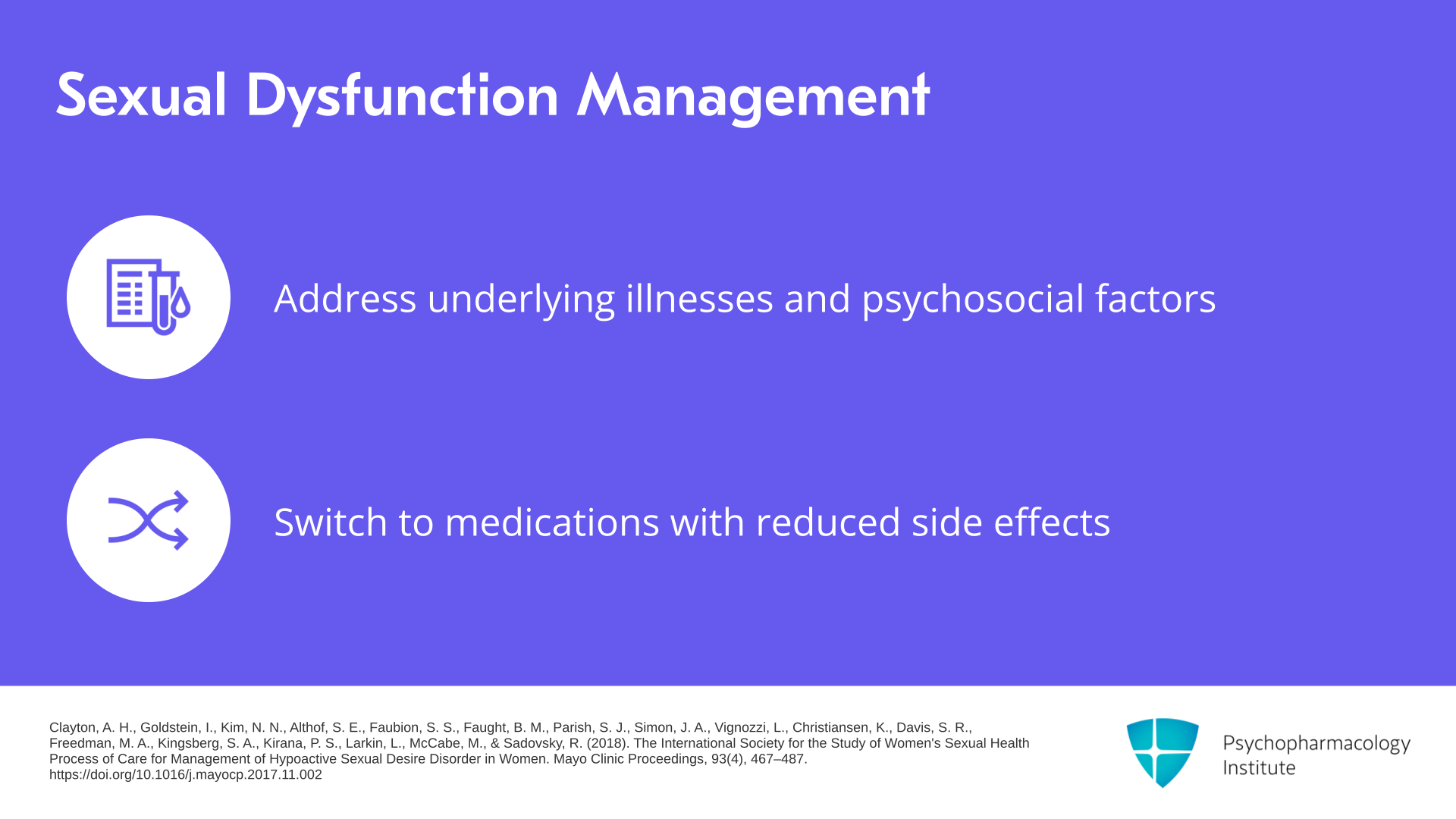
So one of the first things to do is to manage modifiable factors, address illnesses, medications and psychosocial situations that may be contributing to sexual dysfunction. And then you could consider medication treatments like switching to a CNS active agent with less sexual side effects, adding antidotes which might include hormones like testosterone, estrogen or DHEA or change from a hormonal contraceptive to non-hormonal birth control. Or you can add specific medications for sexual dysfunction.
References:
- Clayton, A. H., Goldstein, I., Kim, N. N., Althof, S. E., Faubion, S. S., Faught, B. M., Parish, S. J., Simon, J. A., Vignozzi, L., Christiansen, K., Davis, S. R., Freedman, M. A., Kingsberg, S. A., Kirana, P. S., Larkin, L., McCabe, M., & Sadovsky, R. (2018). The International Society for the Study of Women's Sexual Health Process of Care for Management of Hypoactive Sexual Desire Disorder in Women. Mayo Clinic Proceedings, 93(4), 467–487. https://doi.org/10.1016/j.mayocp.2017.11.002
Free Files
Download PDF and other files
Success!
Check your inbox, we sent you all the materials there.
Slide 13 of 17
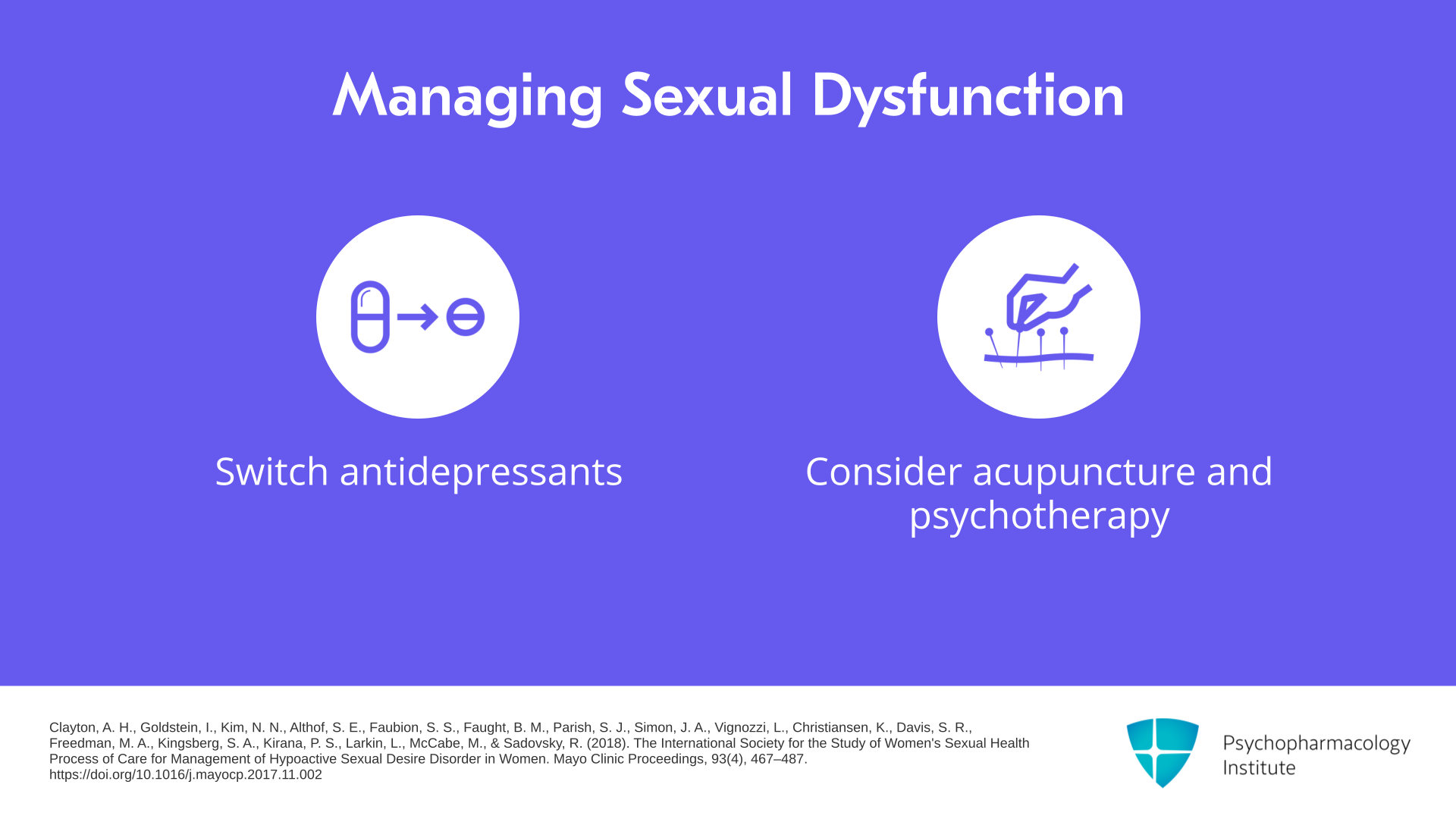
And when you’re managing medication-induced sexual dysfunction, you can switch to antidepressants with fewer side effects on sexual functioning, add antidotes which are off-label, use acupuncture, consider psychotherapy. And I do not recommend lowering the dose or drug holidays because this usually leads to relapse or absolute medication discontinuation.
References:
- Clayton, A. H., Goldstein, I., Kim, N. N., Althof, S. E., Faubion, S. S., Faught, B. M., Parish, S. J., Simon, J. A., Vignozzi, L., Christiansen, K., Davis, S. R., Freedman, M. A., Kingsberg, S. A., Kirana, P. S., Larkin, L., McCabe, M., & Sadovsky, R. (2018). The International Society for the Study of Women's Sexual Health Process of Care for Management of Hypoactive Sexual Desire Disorder in Women. Mayo Clinic Proceedings, 93(4), 467–487. https://doi.org/10.1016/j.mayocp.2017.11.002
Slide 14 of 17
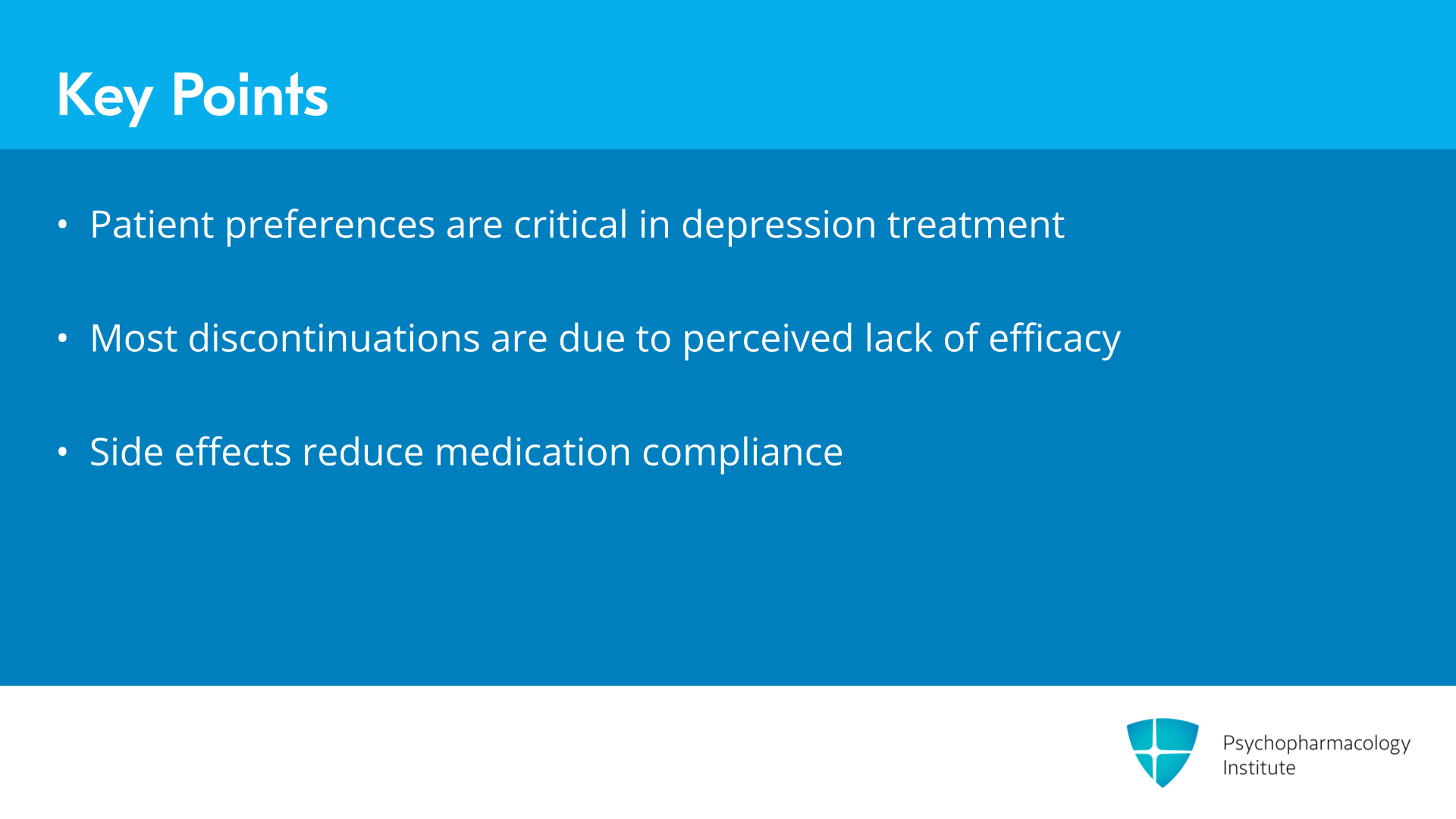
So our key points here are: Patient preferences are critical in the treatment of depression so consider prescribing your initial treatment that takes into account the clinical features, severity of symptoms, functional impairment and side effects the patient wishes to avoid. The majority of patients with MDD who discontinue their psychiatric medications do so to perceived lack of efficacy. Having a chronic health condition that requires daily medication therapy is associated with 25% to 50% of such patients being partially or fully non-adherent to treatment. And adverse effects such as sexual dysfunction, weight gain or lack of energy may also contribute to medication discontinuation or negatively impact quality of life.
Free Files
Download PDF and other files
Success!
Check your inbox, we sent you all the materials there.
Slide 15 of 17
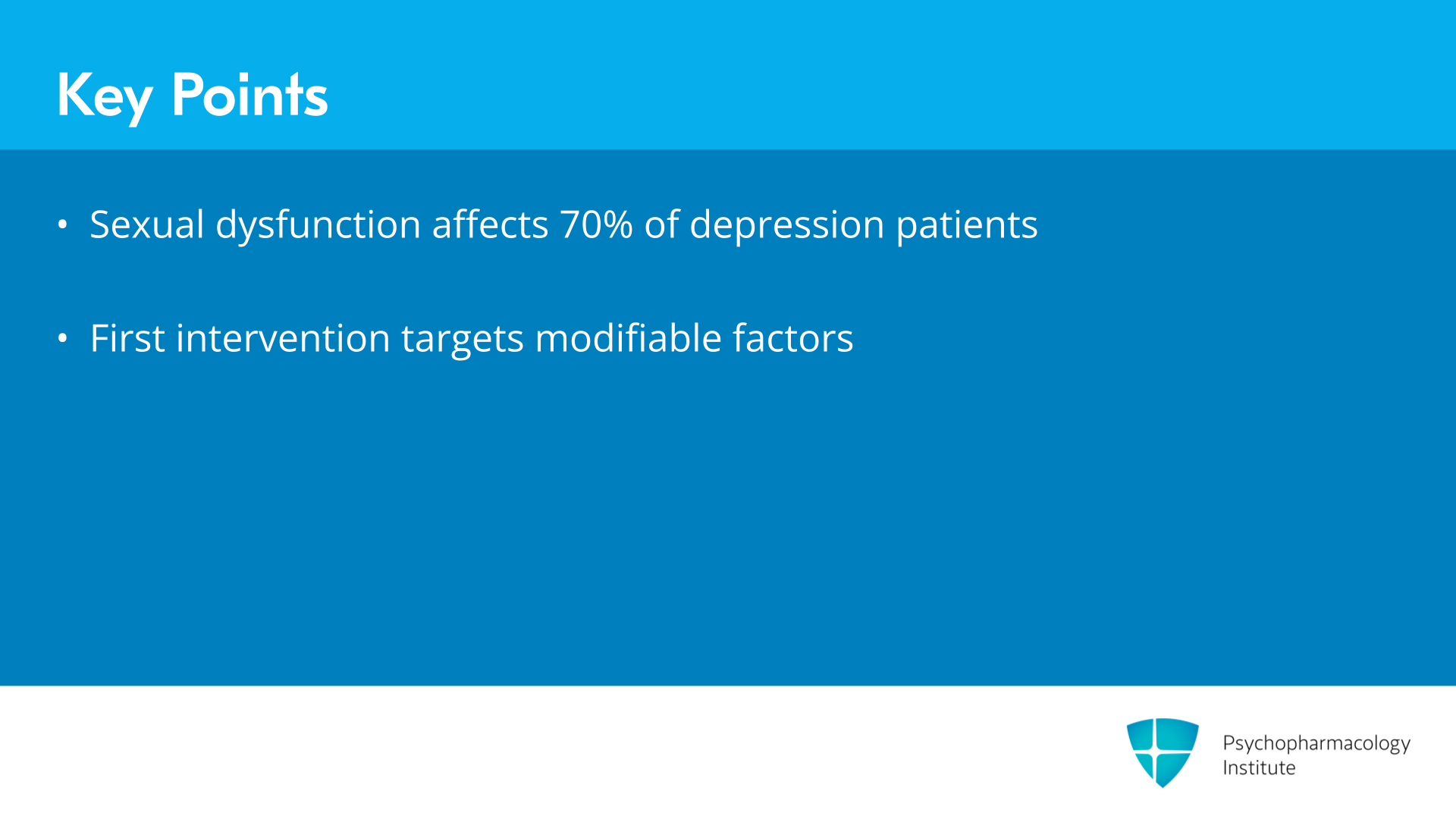
Sexual dysfunction as a symptom of major depressive disorder occurs in about 70% of those diagnosed with depression. And this symptom may improve with effective treatment or it may occur as an adverse effect of an antidepressant. The first intervention for onset of antidepressant-induced sexual dysfunction is to manage modifiable factors such as illnesses, medications be they psychiatric or medical and psychosocial situations contributing to sexual dysfunction.
Slide 16 of 17
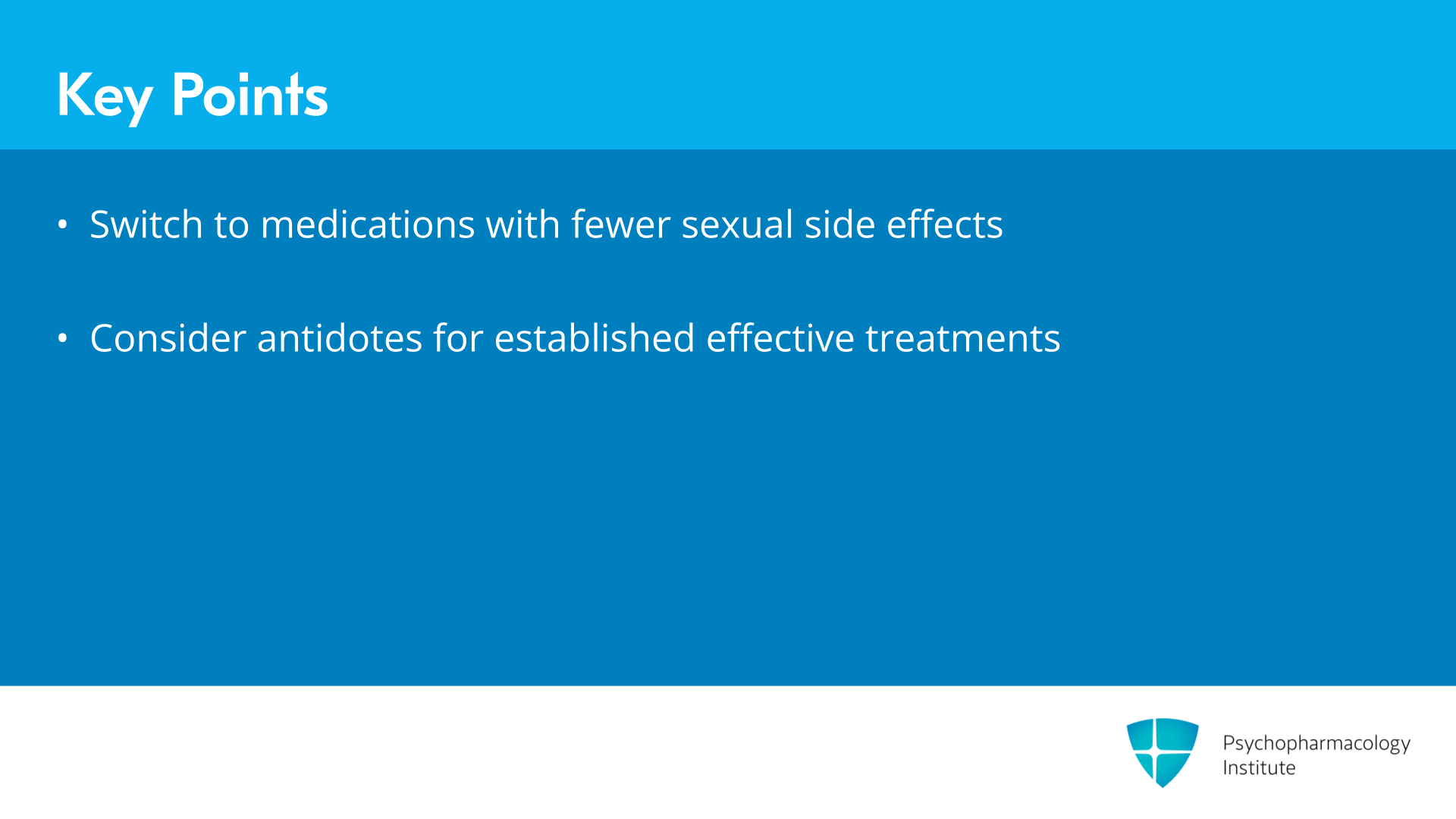
If the sexual dysfunction continues, consider a switch to a medication with fewer sexual side effects like bupropion, vortioxetine, mirtazapine, vilazodone, selegiline transdermal system, duloxetine, desvenlafaxine or gepirone ER. Patient history, that is multiple failed medication trials and currently on one with efficacy and patient preference might suggest adding an antidote for sexual dysfunction rather than switching.
Free Files
Download PDF and other files
Success!
Check your inbox, we sent you all the materials there.
Slide 17 of 17
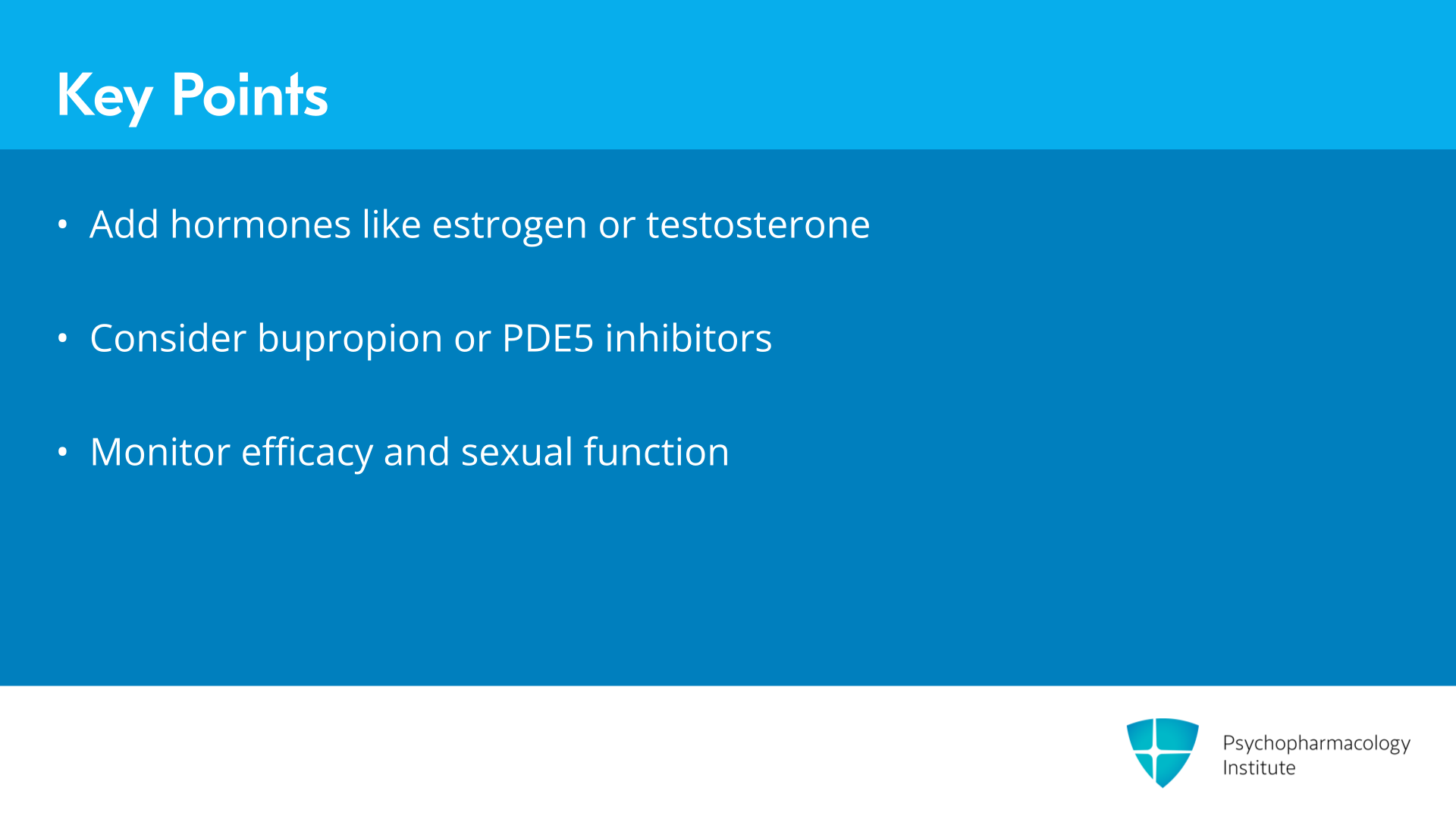
Antidotes may include adding hormones like estrogen, testosterone or DHEA, changing from hormonal contraceptives to non-hormonal birth control, or adding bupropion, buspirone, a PDE5 inhibitor or mirtazapine. You want to observe for change in efficacy or a different tolerability issue in addition to improvement in sexual functioning.