Slides and Transcript
Slide 2 of 12
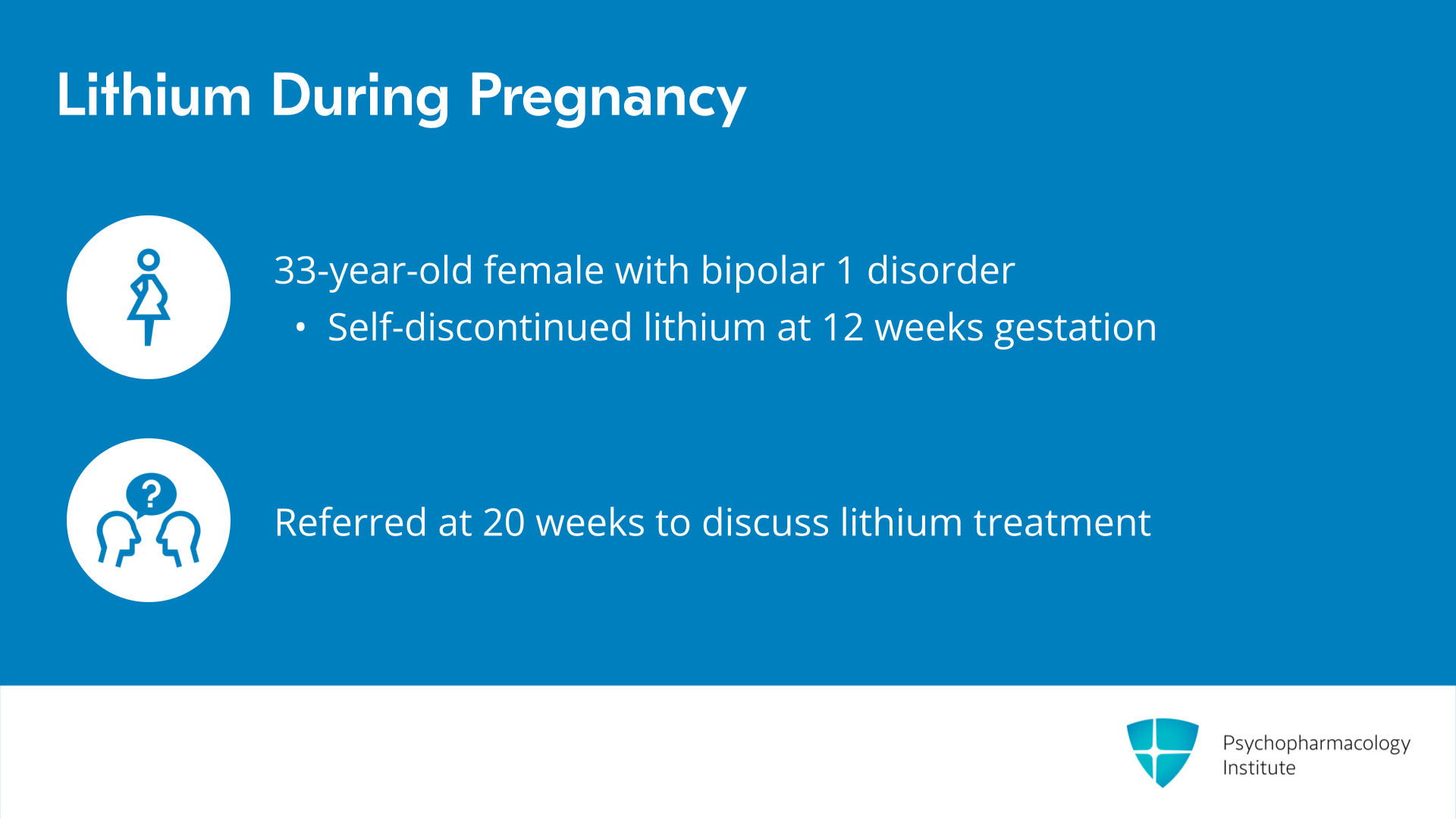
Ms. A is a 33-year-old female, G1 P0 with a history of bipolar 1 disorder who had been taking lithium for several years after several manic episodes resulted in hospitalization. She became pregnant unexpectedly and self-discontinued her lithium abruptly when she found out around 12 weeks gestational age. She is referred to you by her PCP at 20 weeks pregnant to discuss whether lithium is safe in pregnancy and she is not sure if she wants to breastfeed.
Free Files
Download PDF and other files
Success!
Check your inbox, we sent you all the materials there.
Slide 3 of 12
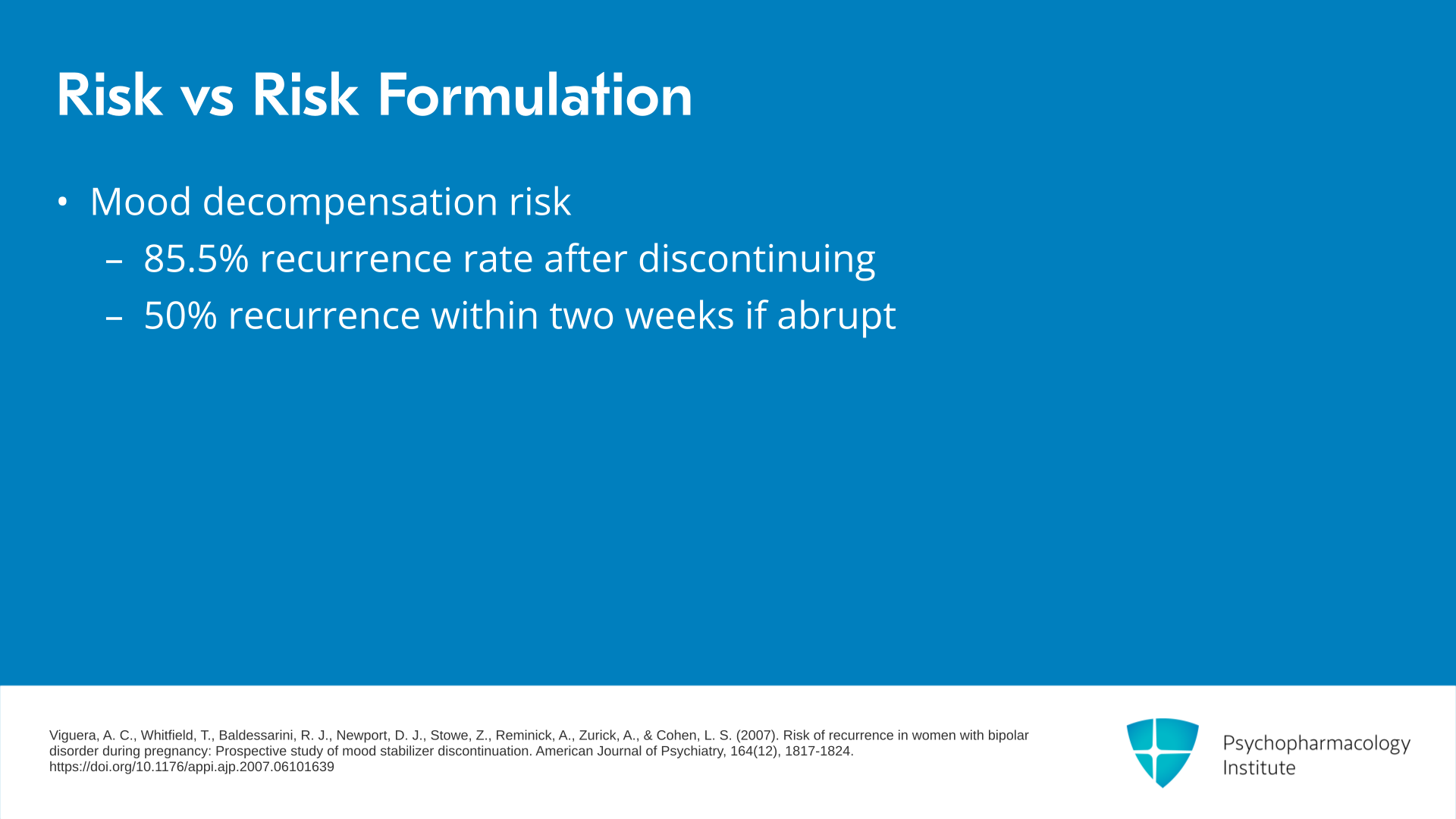
So let’s talk now about how you would conceptualize a risk versus risk formulation for a discussion. The first risk we’ll talk about is the risk of her mood decompensation. There is an 85.5% recurrence rate of a mood episode in pregnancy after discontinuing mood stabilizers for bipolar disorder. Furthermore, discontinuing abruptly increases that risk. There’s a 50% likelihood of recurrence within two weeks when discontinuing abruptly.
References:
- Viguera, A. C., Whitfield, T., Baldessarini, R. J., Newport, D. J., Stowe, Z., Reminick, A., Zurick, A., & Cohen, L. S. (2007). Risk of recurrence in women with bipolar disorder during pregnancy: Prospective study of mood stabilizer discontinuation. American Journal of Psychiatry, 164(12), 1817-1824. https://doi.org/10.1176/appi.ajp.2007.06101639
Slide 4 of 12
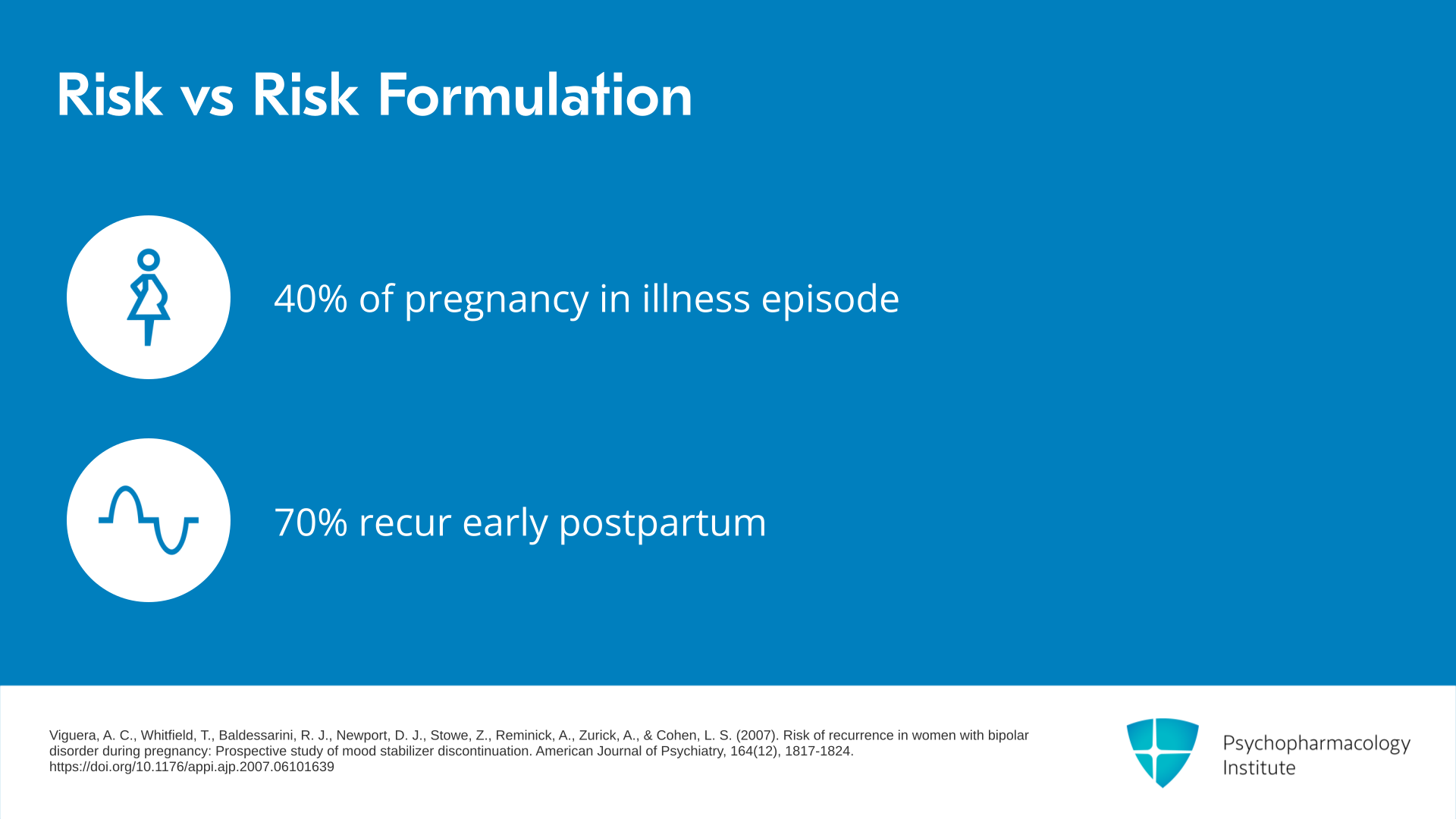
On average, 40% of pregnancy ends up being spent in an illness episode when women discontinue their mood stabilizers. And in the small minority that are still well at delivery, 70% then have a recurrence early postpartum. So it’s very, very likely that a recurrence will occur if not medicated. And it’s important to discuss those risks with patients candidly.
References:
- Viguera, A. C., Whitfield, T., Baldessarini, R. J., Newport, D. J., Stowe, Z., Reminick, A., Zurick, A., & Cohen, L. S. (2007). Risk of recurrence in women with bipolar disorder during pregnancy: Prospective study of mood stabilizer discontinuation. American Journal of Psychiatry, 164(12), 1817-1824. https://doi.org/10.1176/appi.ajp.2007.06101639
Free Files
Download PDF and other files
Success!
Check your inbox, we sent you all the materials there.
Slide 5 of 12
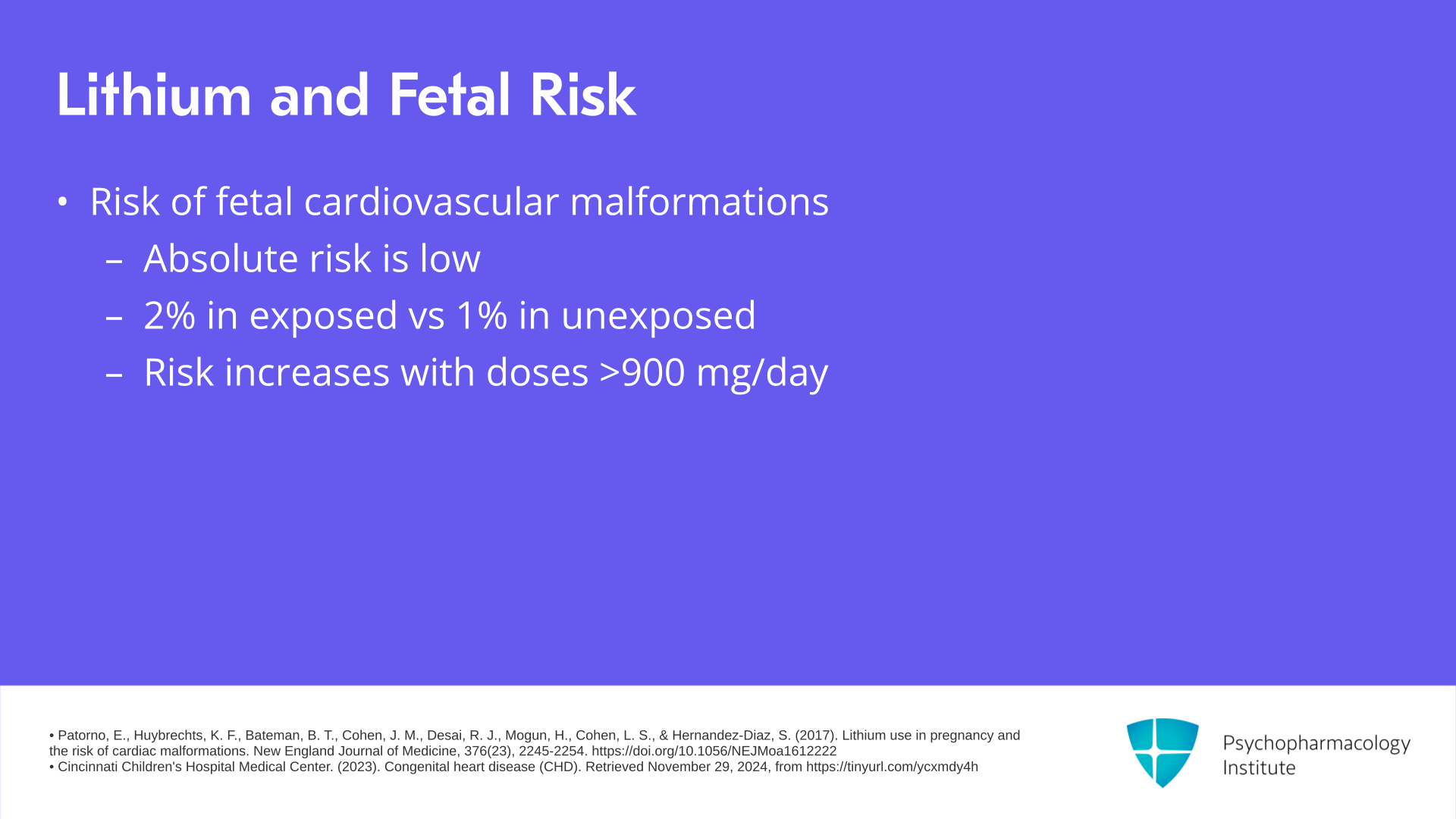
The next risk we’ll talk about is the risk of fetal cardiovascular malformations when fetuses are exposed to lithium. The absolute risk of fetal cardiovascular malformations is still quite low, about 2 in 100 infants exposed to lithium in utero compared to 1 in 100 if not exposed. The risk or rather the increase in risk is also dose related and is only significantly higher when the lithium dose is more than 900 mg per day.
References:
- Patorno, E., Huybrechts, K. F., Bateman, B. T., Cohen, J. M., Desai, R. J., Mogun, H., Cohen, L. S., & Hernandez-Diaz, S. (2017). Lithium use in pregnancy and the risk of cardiac malformations. New England Journal of Medicine, 376(23), 2245-2254. https://doi.org/10.1056/NEJMoa1612222
- Cincinnati Children's Hospital Medical Center. (2023). Congenital heart disease (CHD). Retrieved November 29, 2024, from https://tinyurl.com/ycxmdy4h
Slide 6 of 12
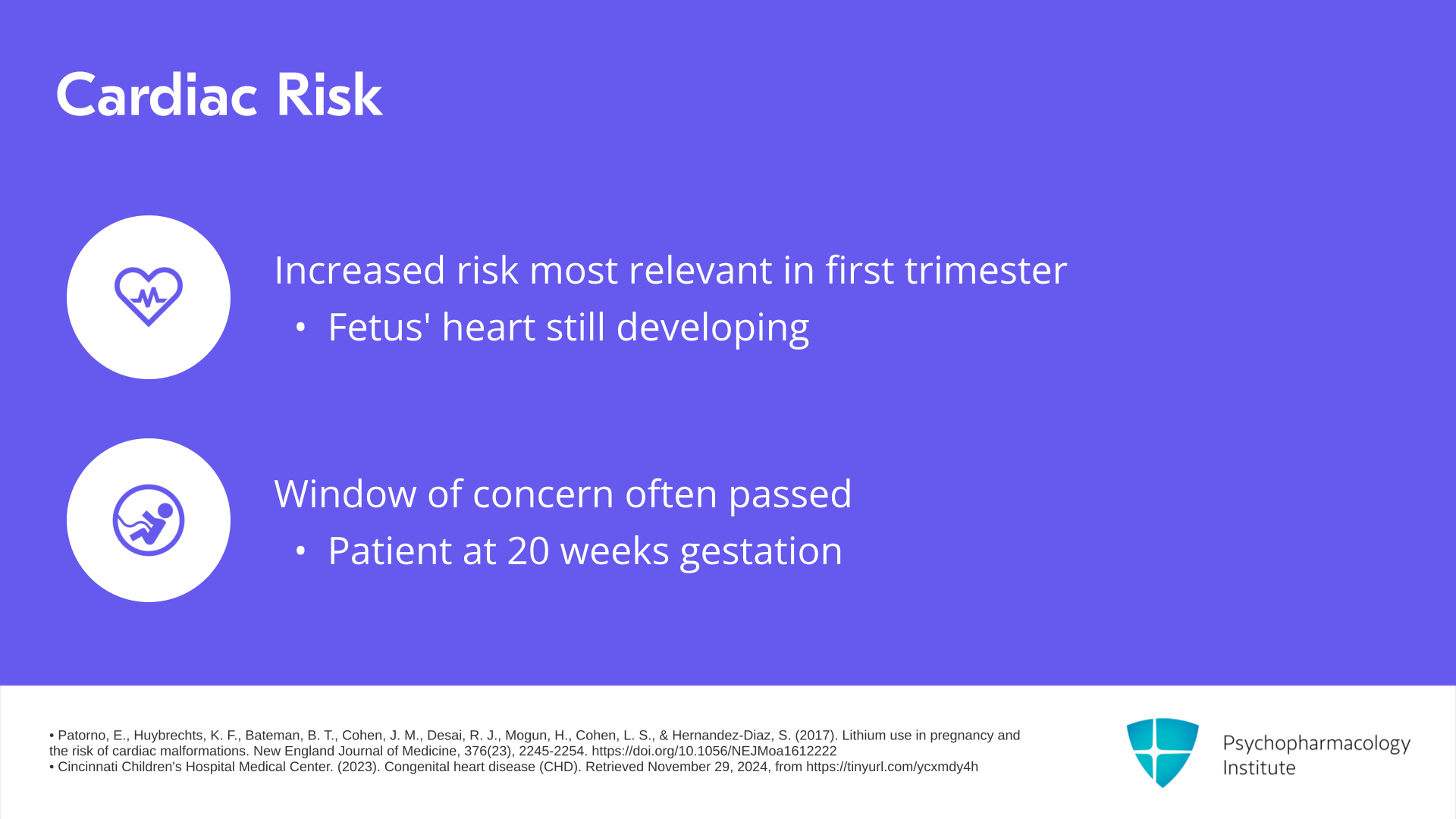
Importantly, the increase in risk is also most relevant in the first trimester of pregnancy while the fetus’ heart is still developing. When cardiac defects do occur during fetal development, it’s in the first couple of months after conception. For those who are already pregnant, the window of potential concern has often already passed by the time they’re seen in psychiatric clinic. In this case, this patient is now at 20 weeks gestational age, well outside that window.
References:
- Patorno, E., Huybrechts, K. F., Bateman, B. T., Cohen, J. M., Desai, R. J., Mogun, H., Cohen, L. S., & Hernandez-Diaz, S. (2017). Lithium use in pregnancy and the risk of cardiac malformations. New England Journal of Medicine, 376(23), 2245-2254. https://doi.org/10.1056/NEJMoa1612222
- Cincinnati Children's Hospital Medical Center. (2023). Congenital heart disease (CHD). Retrieved November 29, 2024, from https://tinyurl.com/ycxmdy4h
Free Files
Download PDF and other files
Success!
Check your inbox, we sent you all the materials there.
Slide 7 of 12
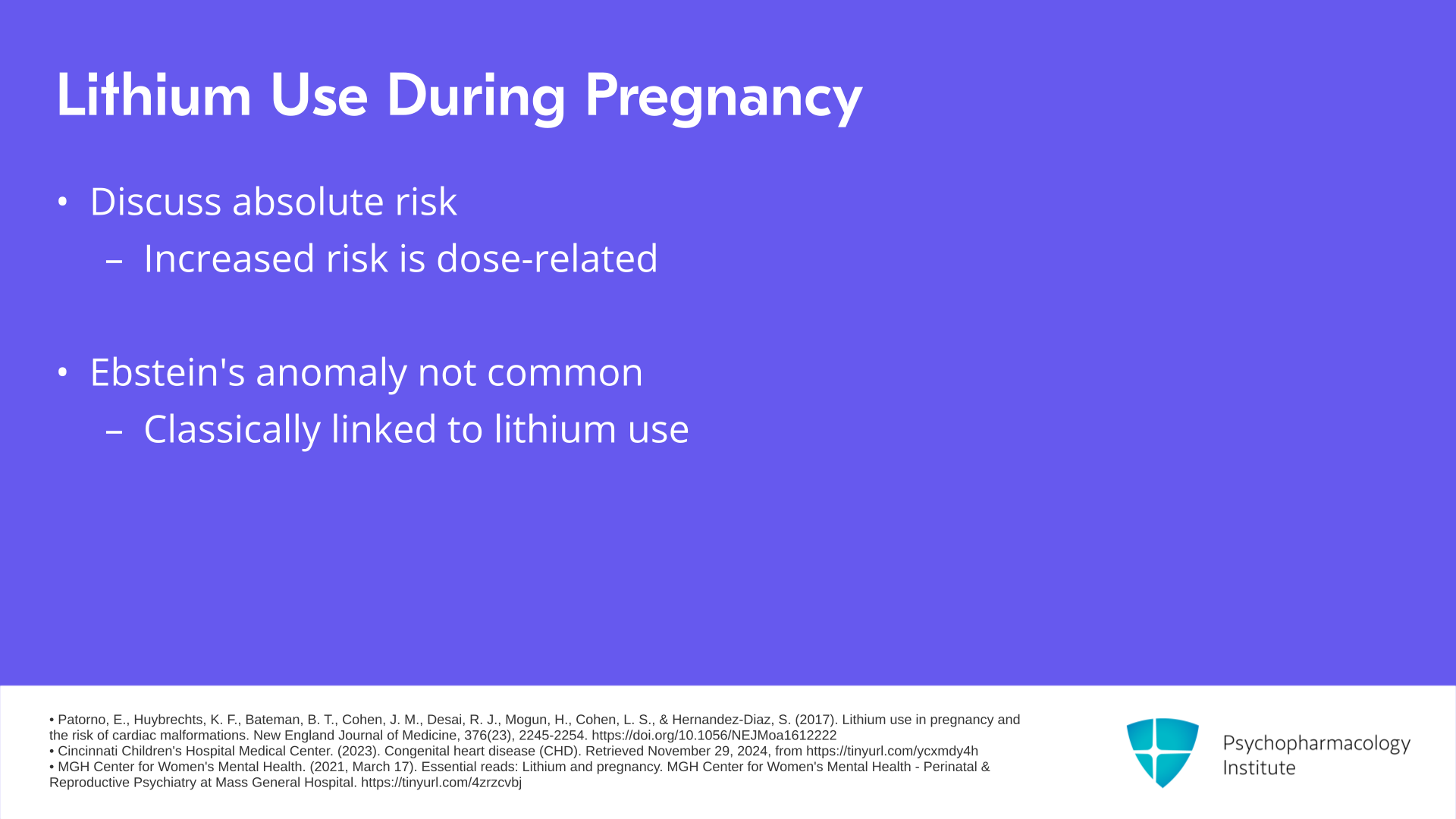
It’s important to discuss absolute risk in these cases. There is an increased risk but not necessarily as much as one might think and is a dose-related increase in that risk. Ebstein’s anomaly or atrialization of the right ventricle is classically associated with lithium use during pregnancy. And you see that often come up on exams. But in reality, it’s not an especially common outcome.
References:
- Patorno, E., Huybrechts, K. F., Bateman, B. T., Cohen, J. M., Desai, R. J., Mogun, H., Cohen, L. S., & Hernandez-Diaz, S. (2017). Lithium use in pregnancy and the risk of cardiac malformations. New England Journal of Medicine, 376(23), 2245-2254. https://doi.org/10.1056/NEJMoa1612222
- Cincinnati Children's Hospital Medical Center. (2023). Congenital heart disease (CHD). Retrieved November 29, 2024, from https://tinyurl.com/ycxmdy4h
- MGH Center for Women's Mental Health. (2021, March 17). Essential reads: Lithium and pregnancy. MGH Center for Women's Mental Health – Perinatal & Reproductive Psychiatry at Mass General Hospital. https://tinyurl.com/4zrzcvbj
Slide 8 of 12
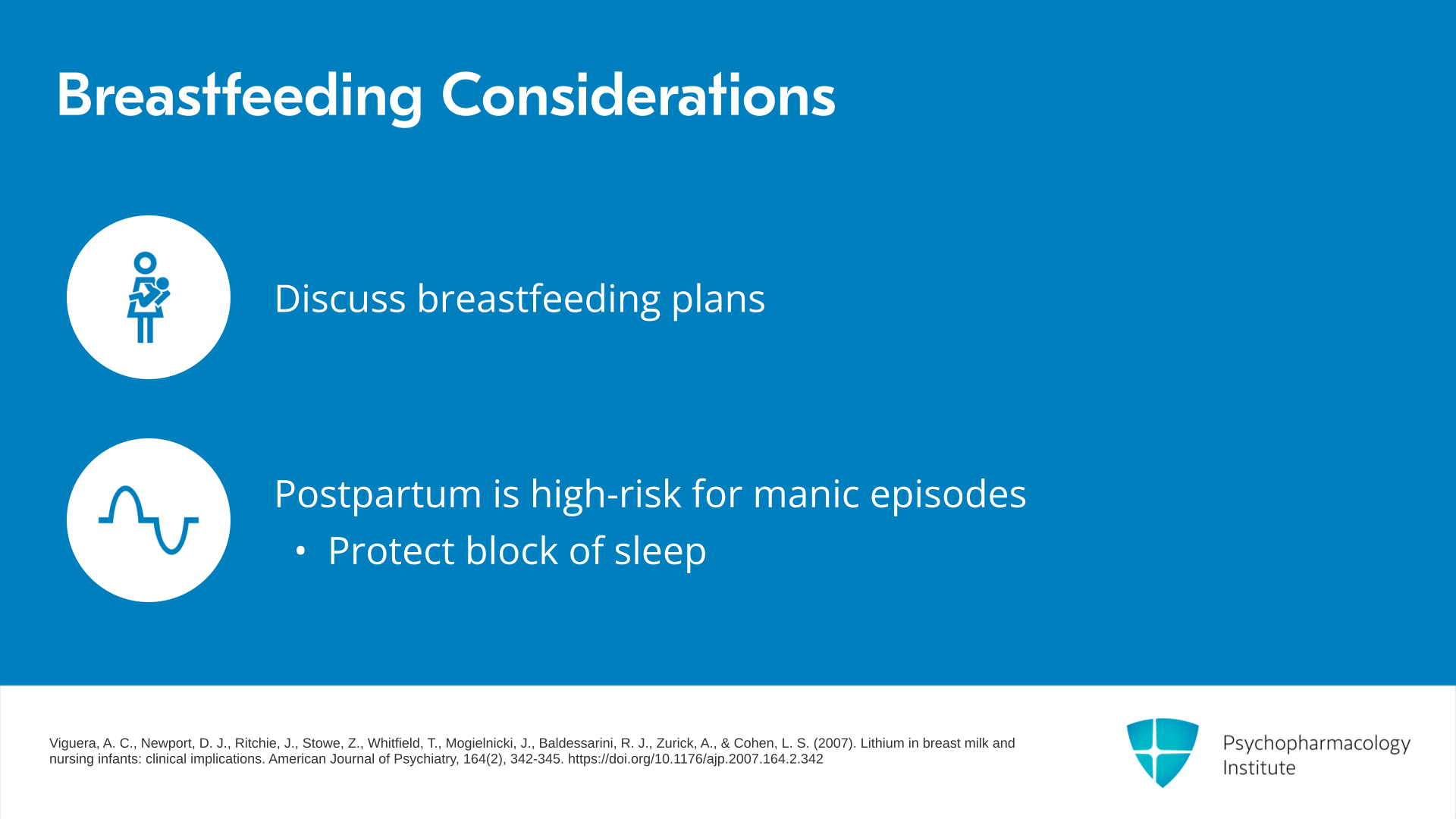
Now, let’s talk about bipolar disorder and breastfeeding in this patient. It’s important to discuss this patient’s breastfeeding plans because lactation can be more complex where bipolar disorder and lithium is involved. Postpartum is a high-risk time for manic episodes and postpartum psychosis in part because sleep is highly disrupted. It’s recommended to protect a block of sleep. So if they want to breastfeed, thinking about how to incorporate breastfeeding while also protecting sleep is an important discussion.
References:
- Viguera, A. C., Newport, D. J., Ritchie, J., Stowe, Z., Whitfield, T., Mogielnicki, J., Baldessarini, R. J., Zurick, A., & Cohen, L. S. (2007). Lithium in breast milk and nursing infants: clinical implications. American Journal of Psychiatry, 164(2), 342-345. https://doi.org/10.1176/ajp.2007.164.2.342
Free Files
Download PDF and other files
Success!
Check your inbox, we sent you all the materials there.
Slide 9 of 12
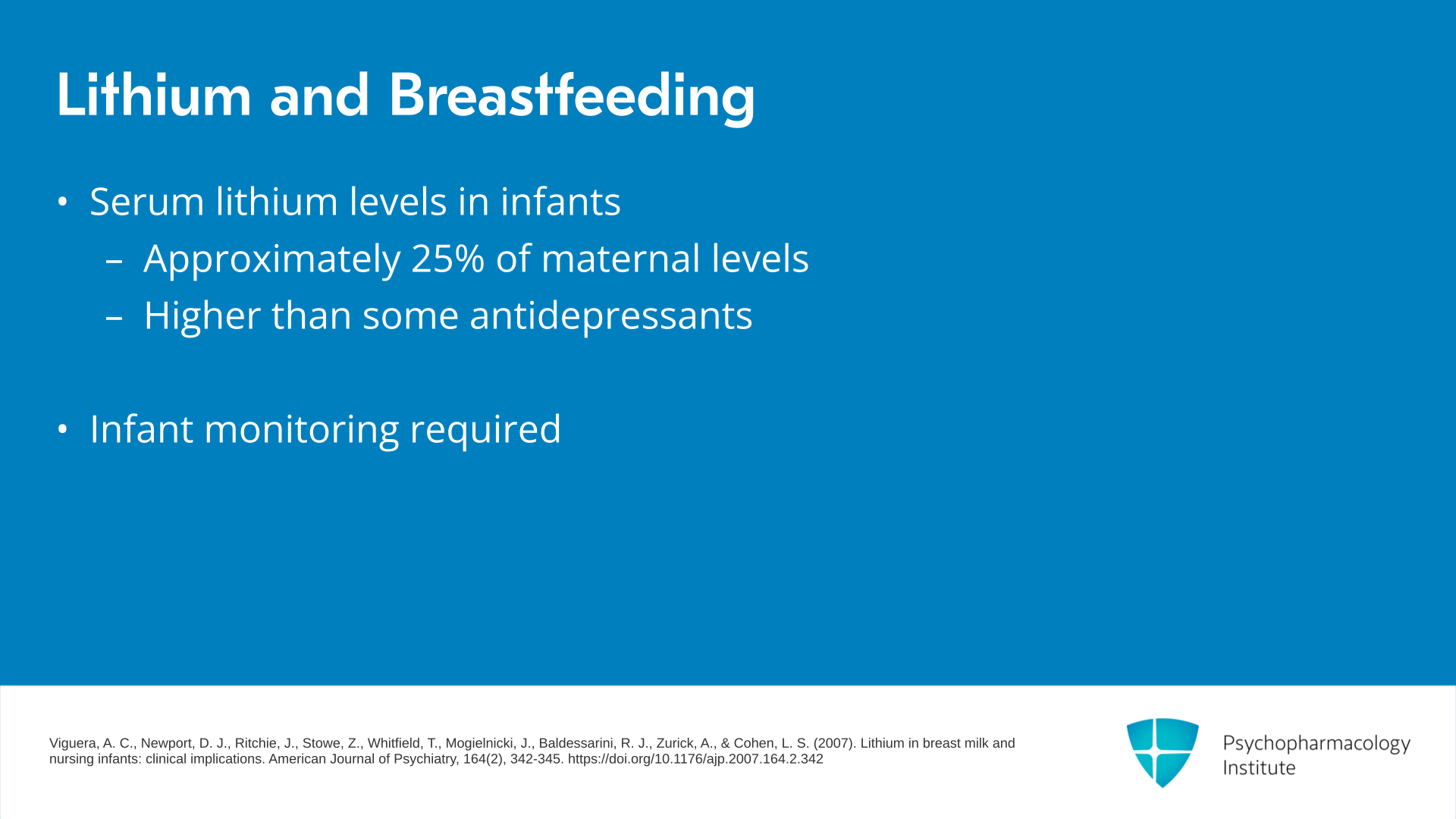
Serum lithium levels in nursing infants are approximately 25% of maternal levels which is higher than some other medications including antidepressants which we mentioned earlier are typically less than 10%. Unlike many other medications, the infant has to be monitored when the mom is taking lithium and breastfeeding. So it would be important to coordinate with the support of pediatrician.
References:
- Viguera, A. C., Newport, D. J., Ritchie, J., Stowe, Z., Whitfield, T., Mogielnicki, J., Baldessarini, R. J., Zurick, A., & Cohen, L. S. (2007). Lithium in breast milk and nursing infants: clinical implications. American Journal of Psychiatry, 164(2), 342-345. https://doi.org/10.1176/ajp.2007.164.2.342
Slide 10 of 12
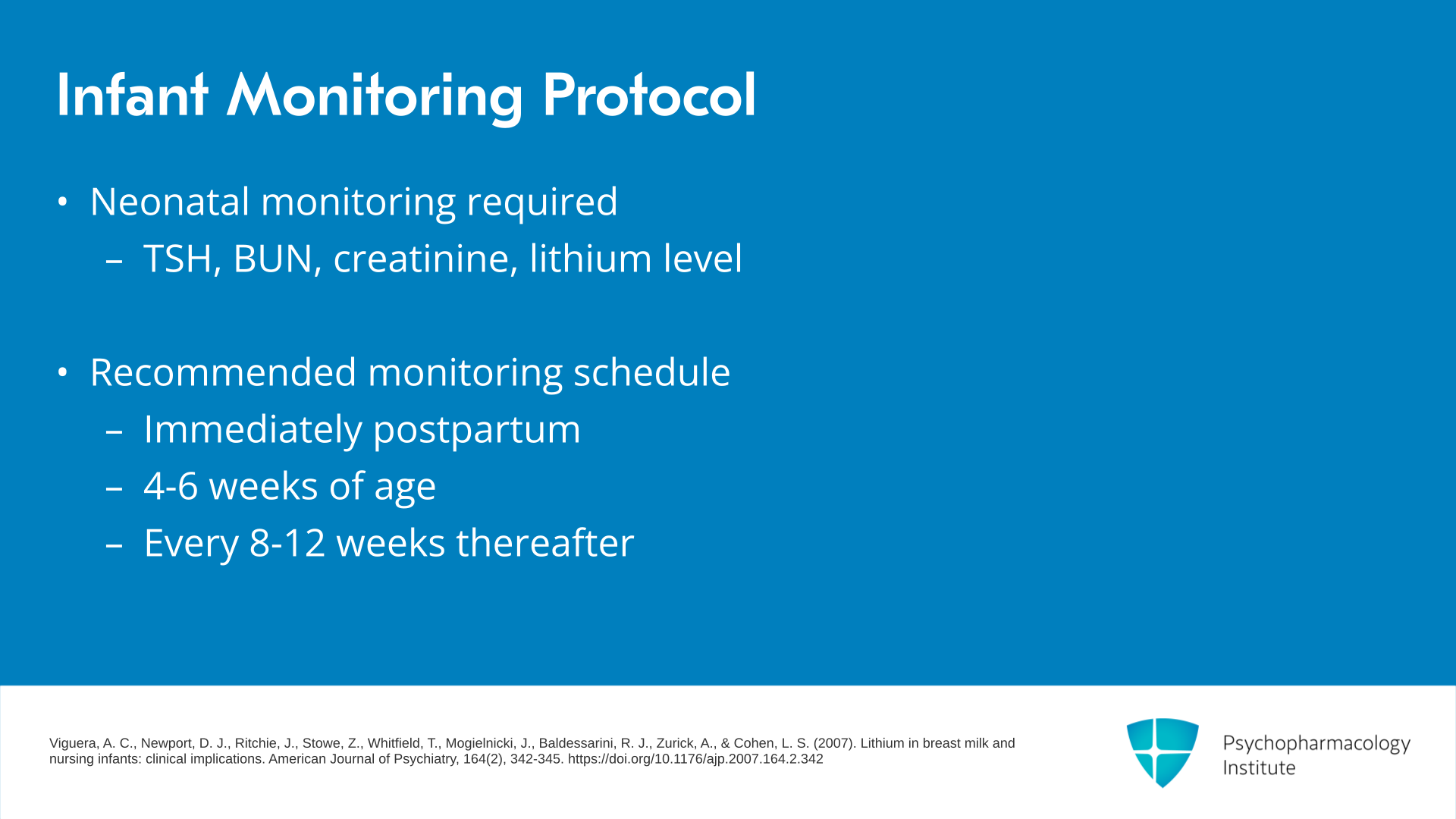
In general, the infant would need some neonatal monitoring of TSH, BUN, creatinine and lithium level. The exact frequency and timing depend on what study you go by but one recommendation is to monitor TSH, BUN, creatinine and lithium level immediately postpartum, about 4 to 6 weeks of age and then every 8 to 12 weeks.
References:
- Viguera, A. C., Newport, D. J., Ritchie, J., Stowe, Z., Whitfield, T., Mogielnicki, J., Baldessarini, R. J., Zurick, A., & Cohen, L. S. (2007). Lithium in breast milk and nursing infants: clinical implications. American Journal of Psychiatry, 164(2), 342-345. https://doi.org/10.1176/ajp.2007.164.2.342
Free Files
Download PDF and other files
Success!
Check your inbox, we sent you all the materials there.
Slide 11 of 12
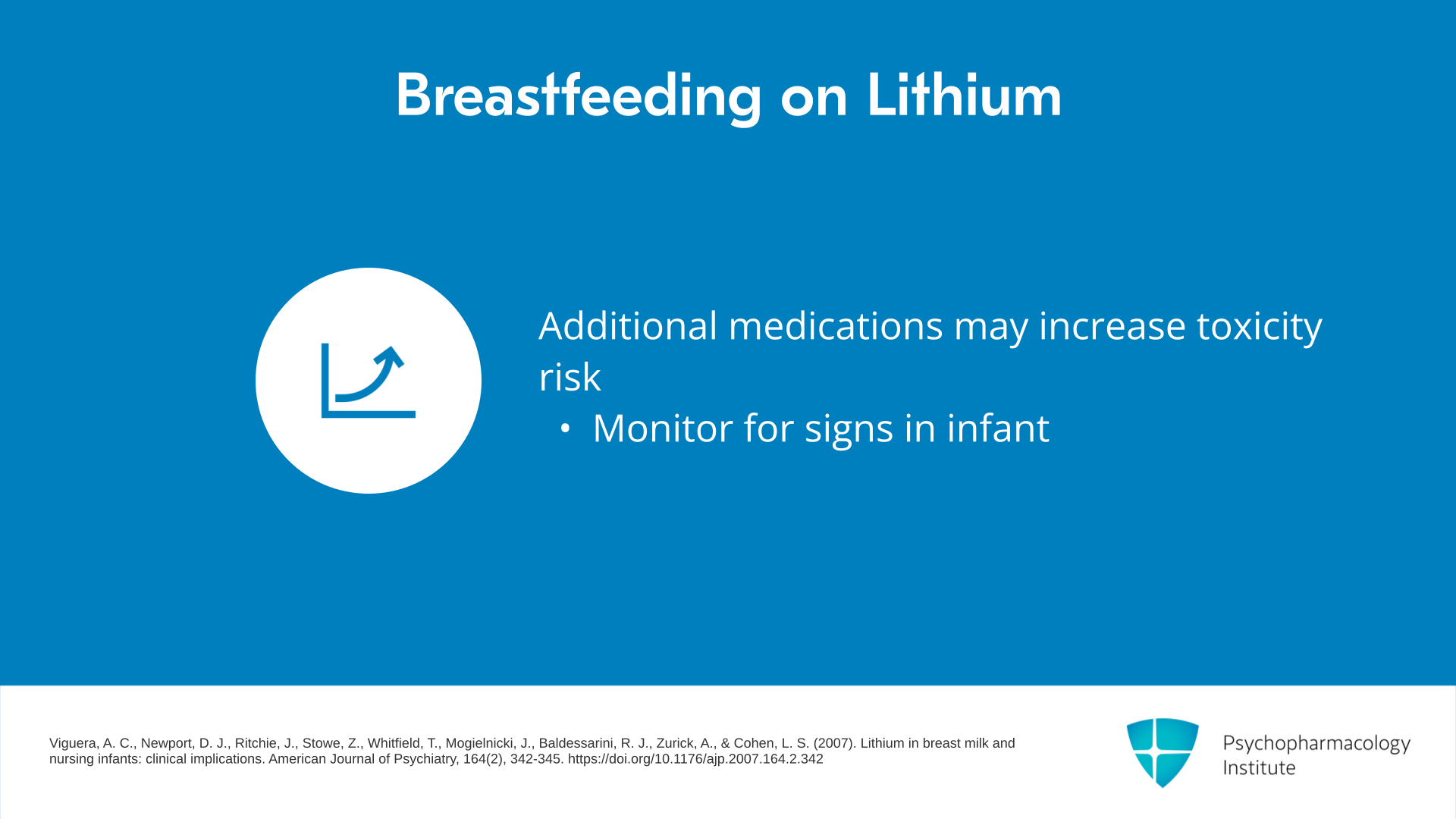
Lithium monotherapy and healthy full-term infants aren’t absolute requirements but additional medications the mom or infant is receiving may increase the risk of interactions that lead to lithium toxicity. Parents need to be instructed on how to monitor for signs of lithium toxicity in the infant which may happen in the infant if they become dehydrated or ill.
References:
- Viguera, A. C., Newport, D. J., Ritchie, J., Stowe, Z., Whitfield, T., Mogielnicki, J., Baldessarini, R. J., Zurick, A., & Cohen, L. S. (2007). Lithium in breast milk and nursing infants: clinical implications. American Journal of Psychiatry, 164(2), 342-345. https://doi.org/10.1176/ajp.2007.164.2.342
Slide 12 of 12
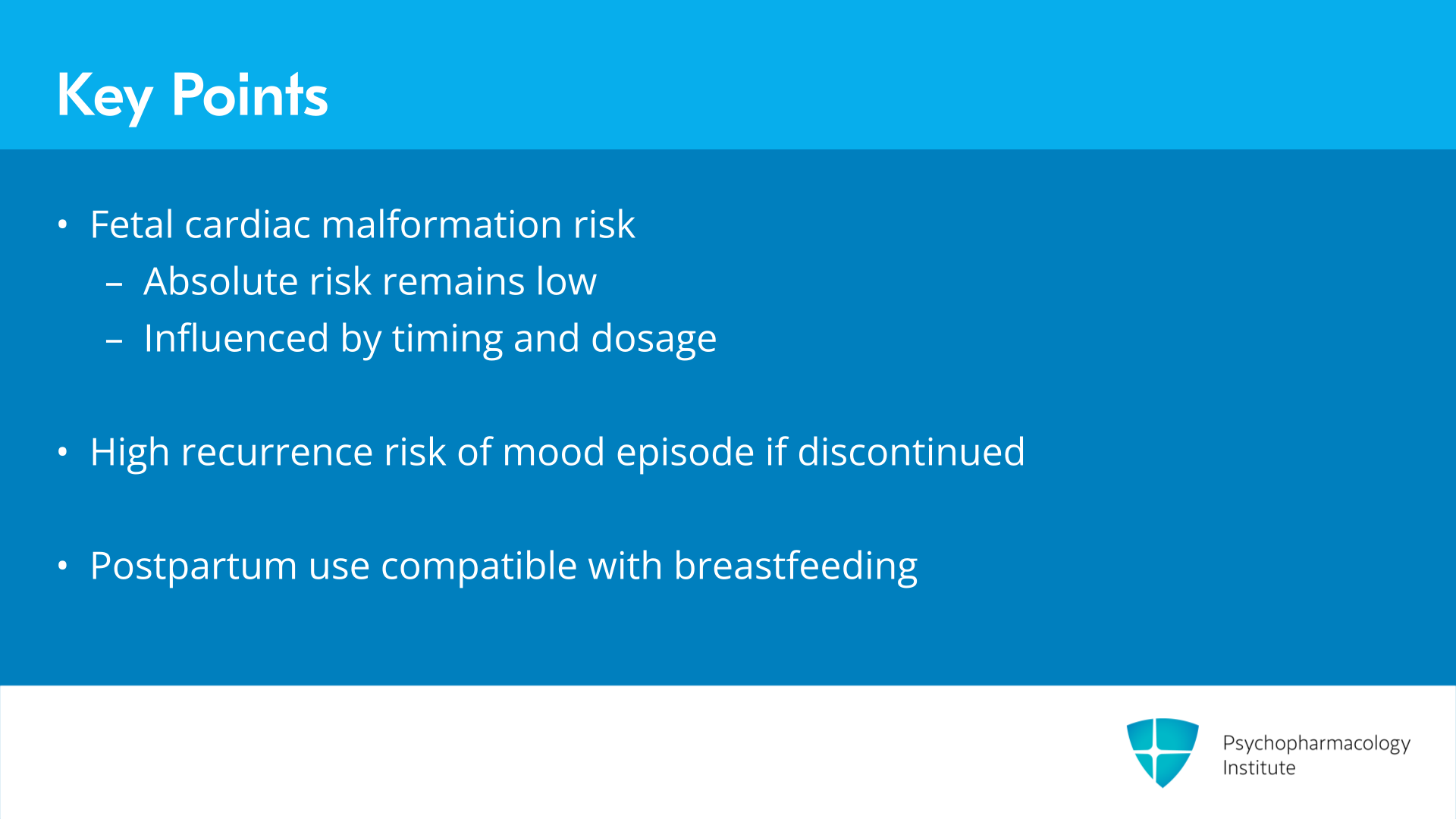
To wrap up, here are some key points for this section. While lithium use in pregnancy is associated with an increased risk of fetal cardiac malformations, the absolute risk remains low and is influenced by timing and dosage. Recurrence of a bipolar disorder mood episode is highly likely if lithium is discontinued. Lithium use postpartum is not a contraindication to breastfeeding but requires additional monitoring.
Free Files
Download PDF and other files
Success!
Check your inbox, we sent you all the materials there.