



Slides and Transcript
Slide 1 of 16
In this next section, we’re going to focus specifically on ADHD medications and talk about cardiovascular effects of ADHD medications, really reviewing their safety.
Slide 2 of 16
One of the most consistent cardiac effects of stimulants is on heart rate. On average, stimulants produce mild increases in heart rate, about 1 to 6 beats per minute. They also increase both systolic blood pressure and diastolic blood pressure on the order of about 1 to 3 mmHg.
References:
- Torres-Acosta, N., O'Keefe, J. H., O'Keefe, C. L., & Lavie, C. J. (2020). Cardiovascular Effects of ADHD Therapies: JACC Review Topic of the Week. Journal of the American College of Cardiology, 76(7), 858–866. https://doi.org/10.1016/j.jacc.2020.05.081
Free Files
Download PDF and other files
Success!
Check your inbox, we sent you all the materials there.
Slide 3 of 16
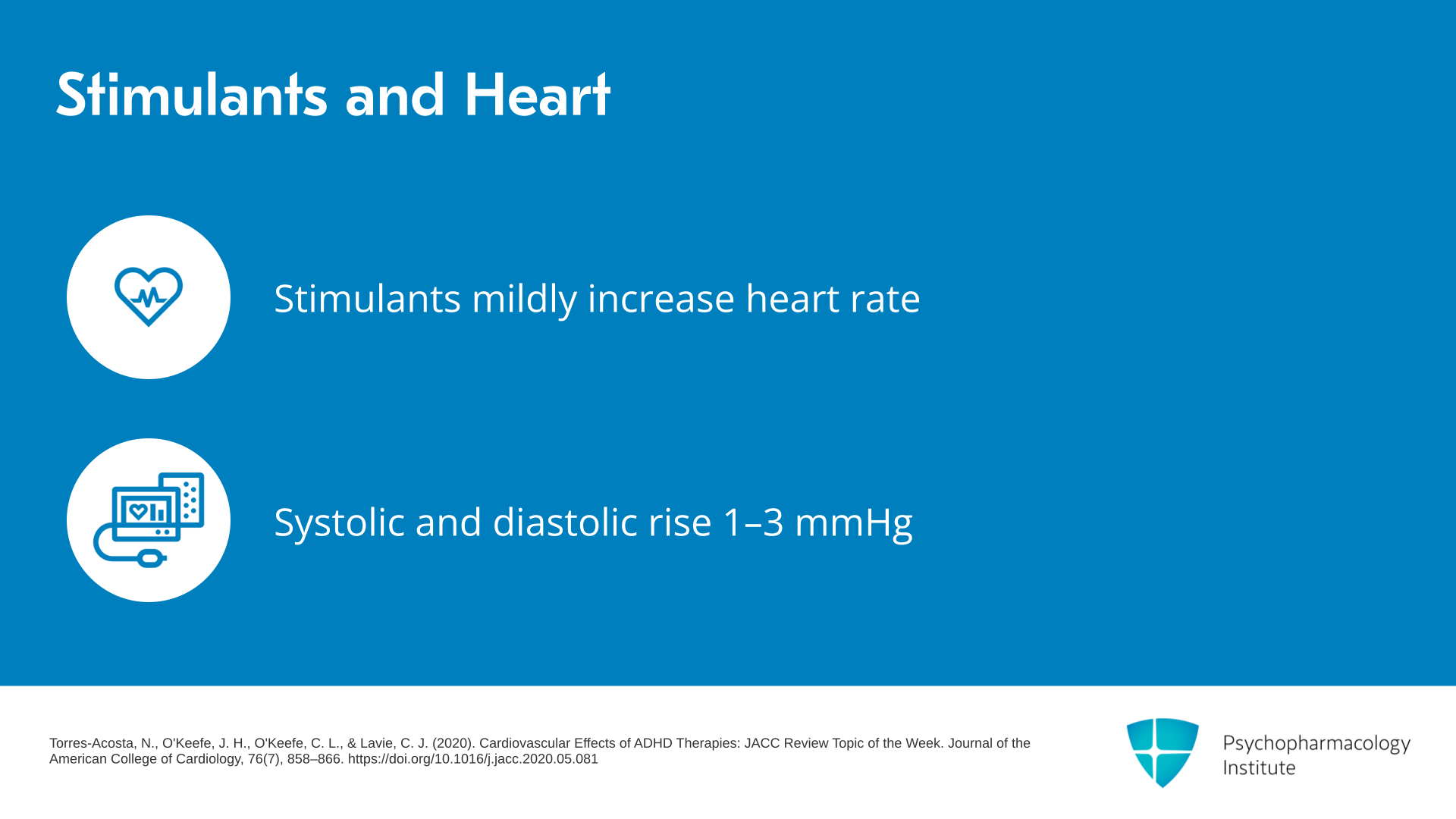
However, it’s important to keep in mind that 5% to 15% of individuals experience a more substantial increase in heart rate and blood pressure that may necessitate ongoing vital sign monitoring. Interestingly, stimulants were not associated with larger hemodynamic increments compared to non-stimulants.
References:
- Torres-Acosta, N., O'Keefe, J. H., O'Keefe, C. L., & Lavie, C. J. (2020). Cardiovascular Effects of ADHD Therapies: JACC Review Topic of the Week. Journal of the American College of Cardiology, 76(7), 858–866. https://doi.org/10.1016/j.jacc.2020.05.081
Slide 4 of 16
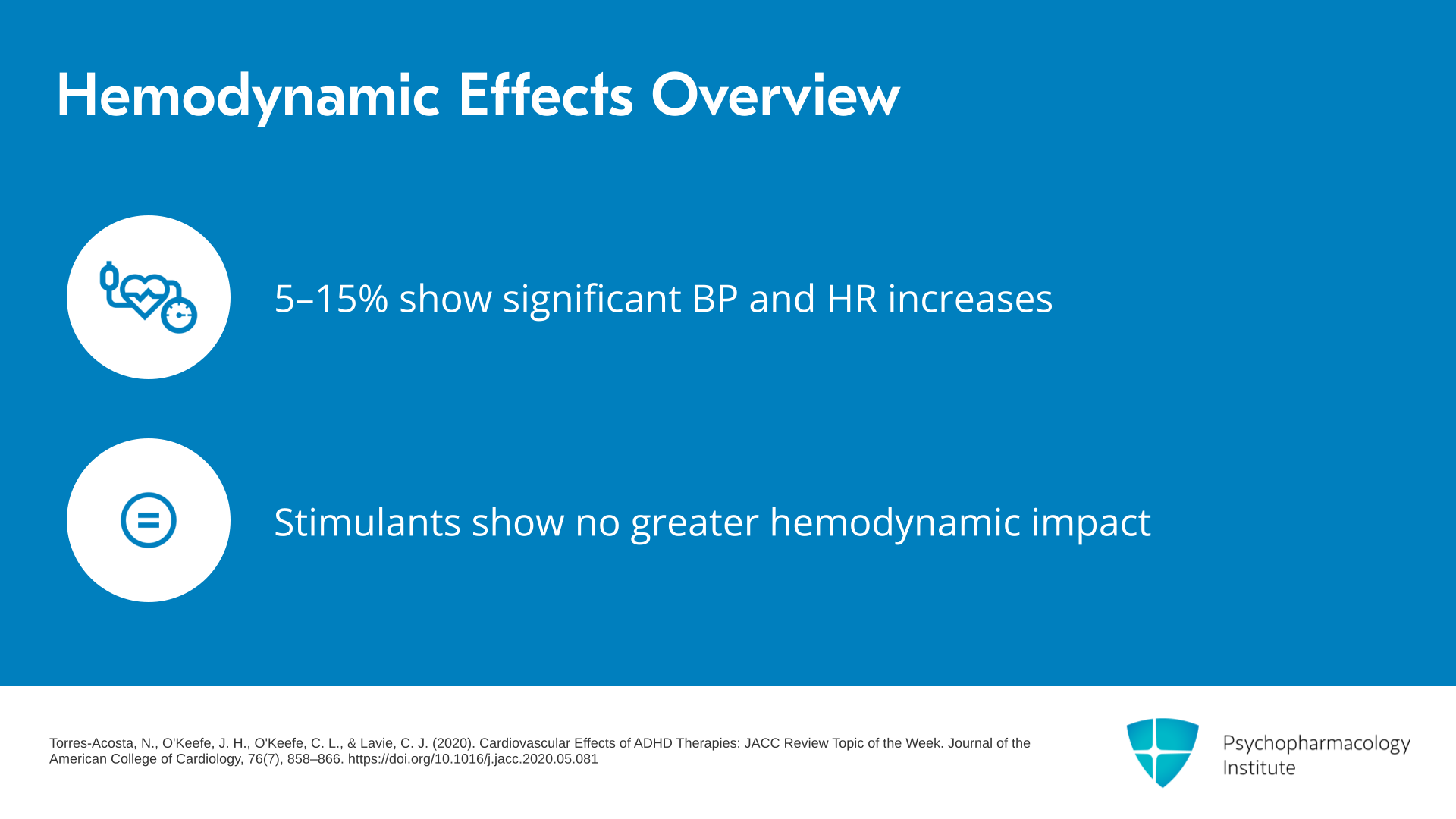
Long-term use of stimulants, so more than three to five years, does appear to be associated with an increased risk for hypertension with an odds ratio of about 1.75 as well as an increased risk for arterial disease occurring in a dose-response manner.
References:
- Torres-Acosta, N., O'Keefe, J. H., O'Keefe, C. L., & Lavie, C. J. (2020). Cardiovascular Effects of ADHD Therapies: JACC Review Topic of the Week. Journal of the American College of Cardiology, 76(7), 858–866. https://doi.org/10.1016/j.jacc.2020.05.081
- Zhang, L., Yao, H., Li, L., Du Rietz, E., Andell, P., Garcia-Argibay, M., D'Onofrio, B. M., Cortese, S., Larsson, H., & Chang, Z. (2024). Attention-deficit/hyperactivity disorder medications and long-term risk of cardiovascular diseases. JAMA Psychiatry, 81(2), 178–187. https://doi.org/10.1001/jamapsychiatry.2023.4294
Free Files
Download PDF and other files
Success!
Check your inbox, we sent you all the materials there.
Slide 5 of 16
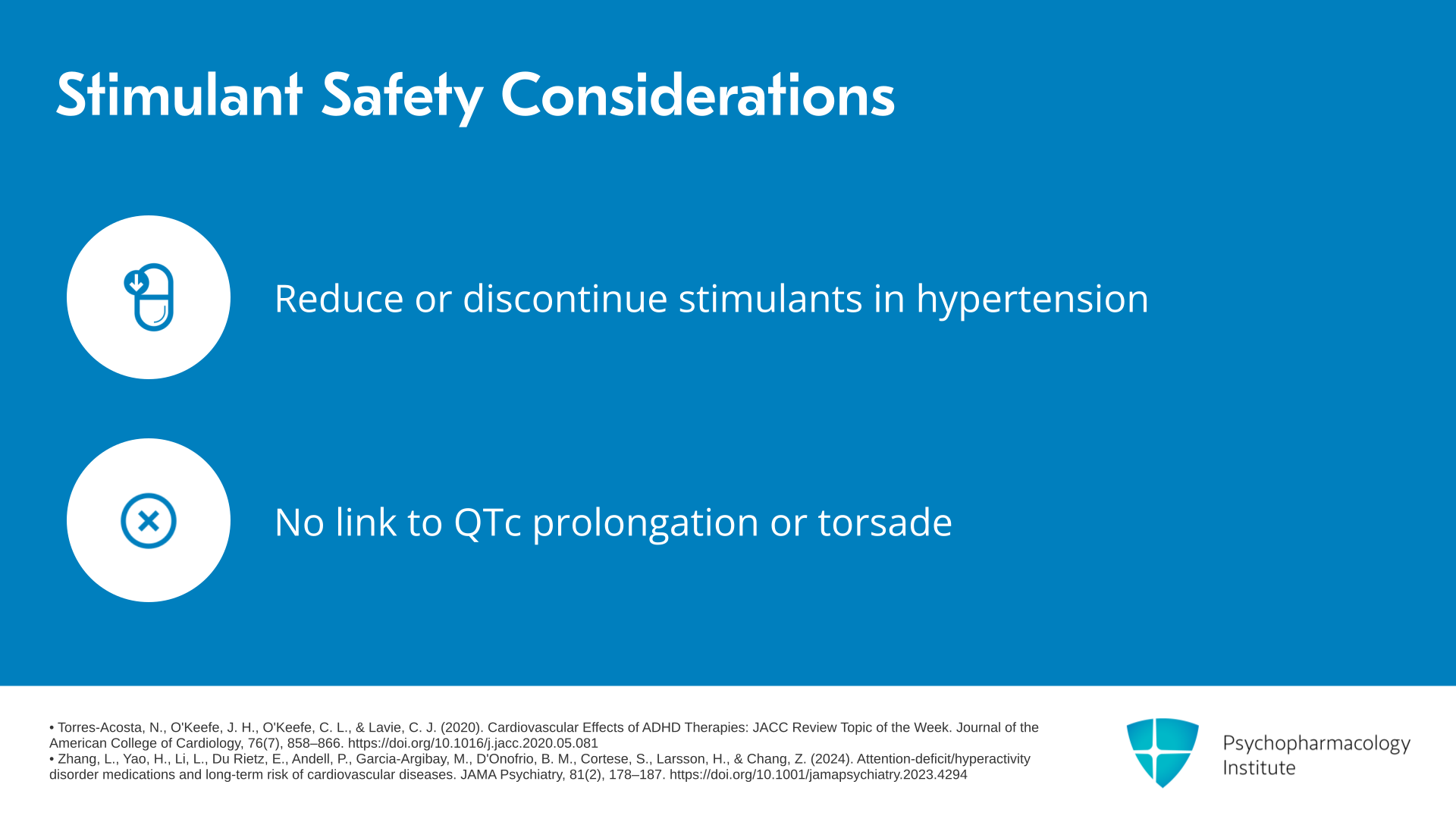
For patients with hypertension who are prescribed stimulants, you might consider decreasing the dose or even discontinuing them per recommendations from the American College of Cardiology. Importantly, stimulants have not been linked to QTc prolongation or torsade.
References:
- Torres-Acosta, N., O'Keefe, J. H., O'Keefe, C. L., & Lavie, C. J. (2020). Cardiovascular Effects of ADHD Therapies: JACC Review Topic of the Week. Journal of the American College of Cardiology, 76(7), 858–866. https://doi.org/10.1016/j.jacc.2020.05.081
- Zhang, L., Yao, H., Li, L., Du Rietz, E., Andell, P., Garcia-Argibay, M., D'Onofrio, B. M., Cortese, S., Larsson, H., & Chang, Z. (2024). Attention-deficit/hyperactivity disorder medications and long-term risk of cardiovascular diseases. JAMA Psychiatry, 81(2), 178–187. https://doi.org/10.1001/jamapsychiatry.2023.4294
Slide 6 of 16
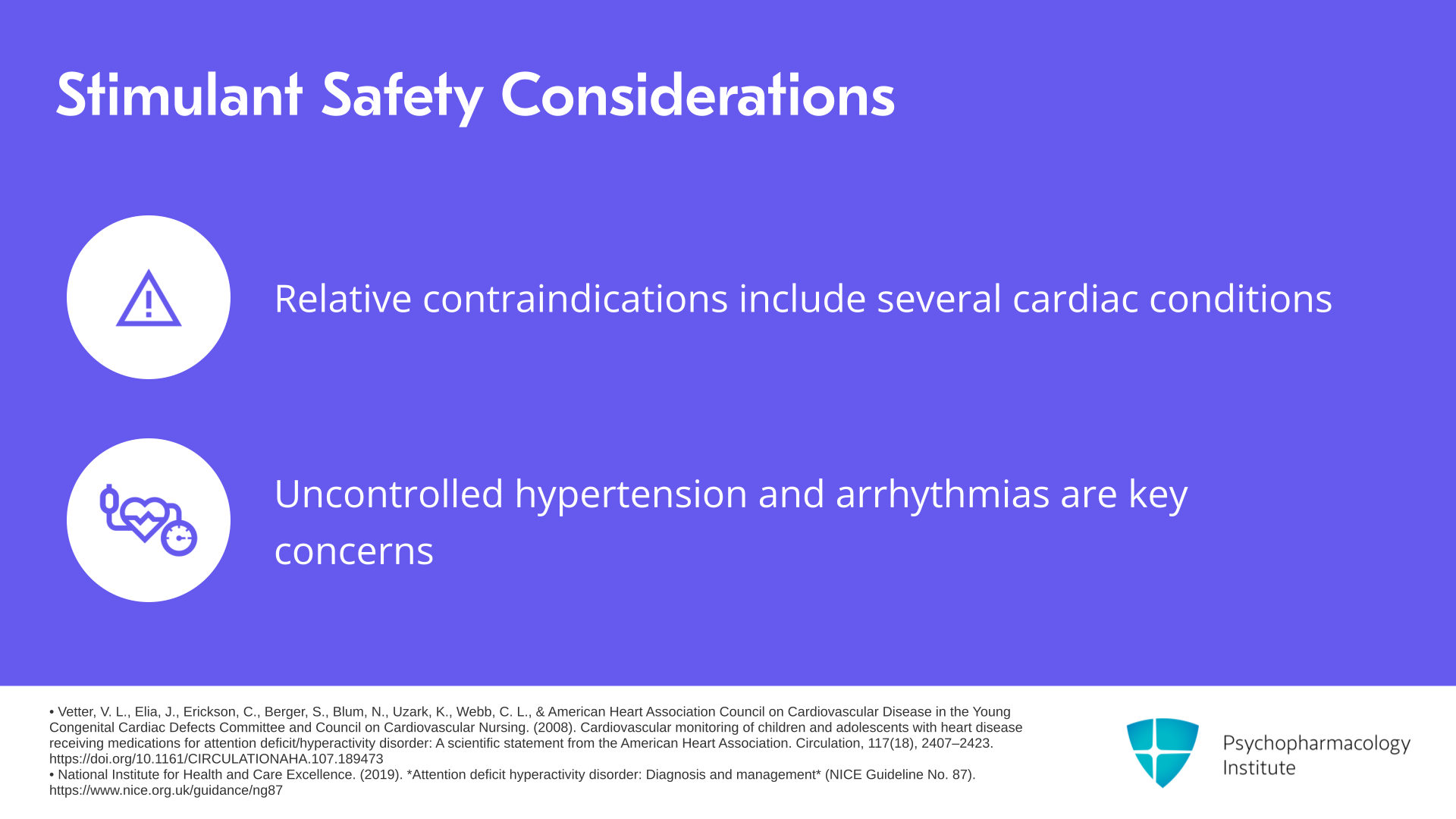
A big question that comes up with regard to stimulant use is around screening and safety considerations in patients who have or may be at risk for cardiovascular disease. First of all, it’s important to know that there are some relative contraindications to stimulant use from a cardiac perspective. These include uncontrolled hypertension, angina, having a prior MI, arrhythmias, significant valvular disease, cardiomyopathy, heart failure or structural cardiac abnormalities.
References:
- Vetter, V. L., Elia, J., Erickson, C., Berger, S., Blum, N., Uzark, K., Webb, C. L., & American Heart Association Council on Cardiovascular Disease in the Young Congenital Cardiac Defects Committee and Council on Cardiovascular Nursing. (2008). Cardiovascular monitoring of children and adolescents with heart disease receiving medications for attention deficit/hyperactivity disorder: A scientific statement from the American Heart Association. Circulation, 117(18), 2407–2423. https://doi.org/10.1161/CIRCULATIONAHA.107.189473
- National Institute for Health and Care Excellence. (2019). Attention deficit hyperactivity disorder: Diagnosis and management (NICE Guideline No. 87). https://www.ncbi.nlm.nih.gov/books/NBK493361/
Free Files
Download PDF and other files
Success!
Check your inbox, we sent you all the materials there.
Slide 7 of 16
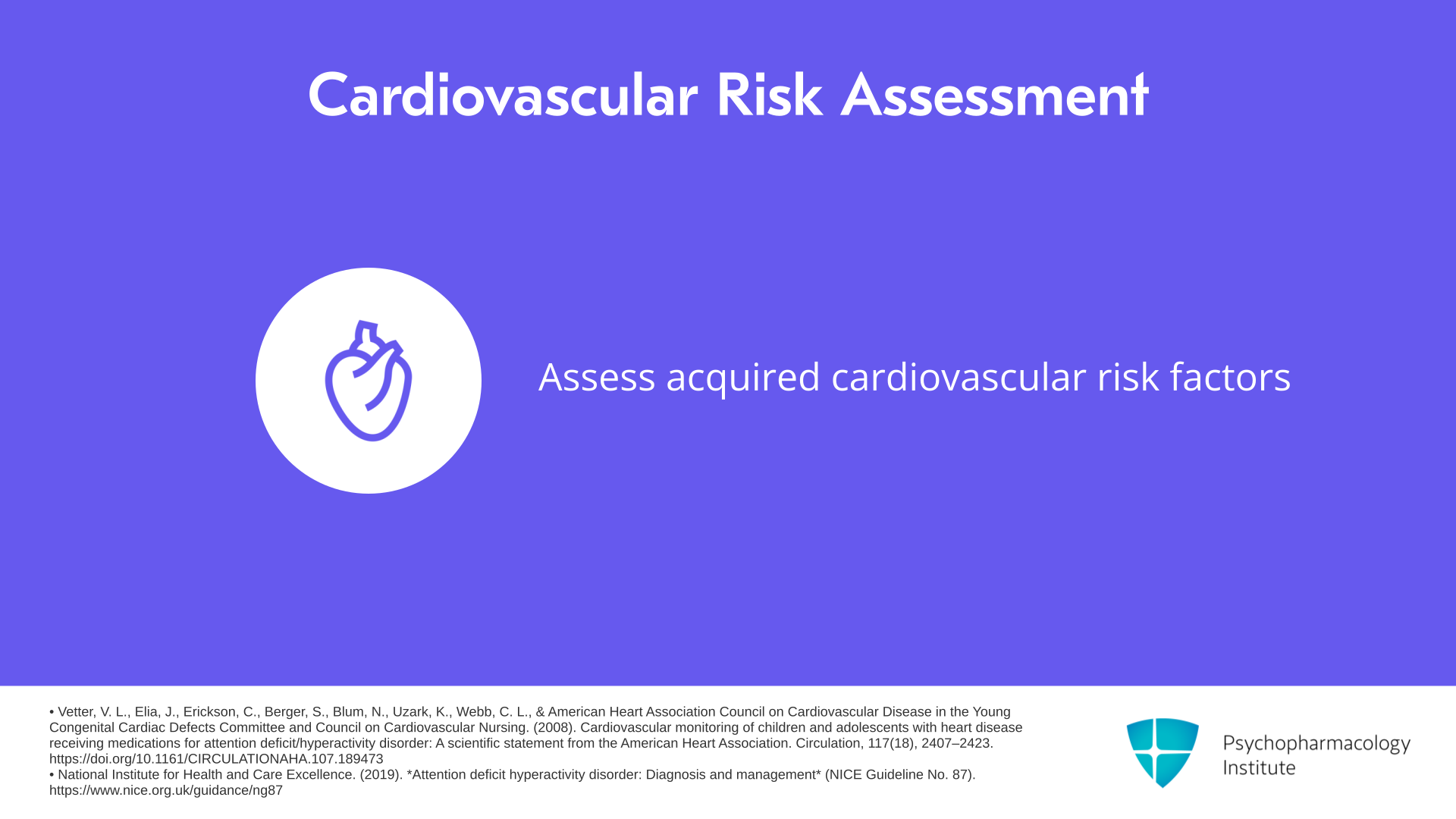
Providers should also assess for acquired cardiovascular risk factors, things like coronary artery disease, peripheral artery disease and metabolic syndrome as these may constitute additional risk factors despite not being contraindications.
References:
- Vetter, V. L., Elia, J., Erickson, C., Berger, S., Blum, N., Uzark, K., Webb, C. L., & American Heart Association Council on Cardiovascular Disease in the Young Congenital Cardiac Defects Committee and Council on Cardiovascular Nursing. (2008). Cardiovascular monitoring of children and adolescents with heart disease receiving medications for attention deficit/hyperactivity disorder: A scientific statement from the American Heart Association. Circulation, 117(18), 2407–2423. https://doi.org/10.1161/CIRCULATIONAHA.107.189473
- National Institute for Health and Care Excellence. (2019). Attention deficit hyperactivity disorder: Diagnosis and management (NICE Guideline No. 87). https://www.ncbi.nlm.nih.gov/books/NBK493361/
Slide 8 of 16
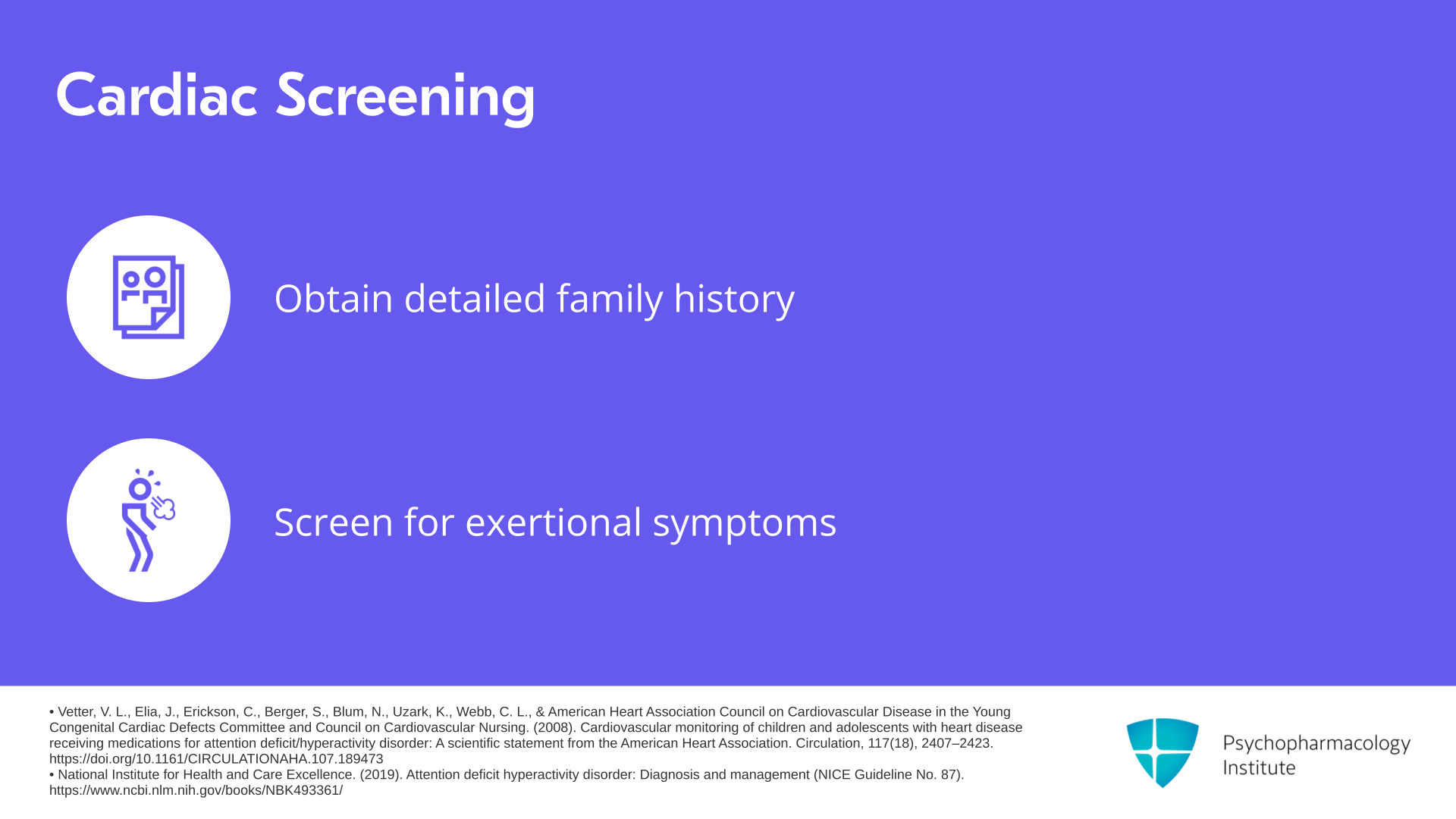
It’s also important to screen for family history, looking at things like premature sudden cardiac death, cardiomyopathy, long QT syndrome, Brugada syndrome and to ask patients about cardiac symptoms. Do they have exertional chest pain, unexplained syncope or near syncope, palpitations or exertional dyspnea?
References:
- Vetter, V. L., Elia, J., Erickson, C., Berger, S., Blum, N., Uzark, K., Webb, C. L., & American Heart Association Council on Cardiovascular Disease in the Young Congenital Cardiac Defects Committee and Council on Cardiovascular Nursing. (2008). Cardiovascular monitoring of children and adolescents with heart disease receiving medications for attention deficit/hyperactivity disorder: A scientific statement from the American Heart Association. Circulation, 117(18), 2407–2423. https://doi.org/10.1161/CIRCULATIONAHA.107.189473
- National Institute for Health and Care Excellence. (2019). Attention deficit hyperactivity disorder: Diagnosis and management (NICE Guideline No. 87). https://www.ncbi.nlm.nih.gov/books/NBK493361/
Free Files
Download PDF and other files
Success!
Check your inbox, we sent you all the materials there.
Slide 9 of 16
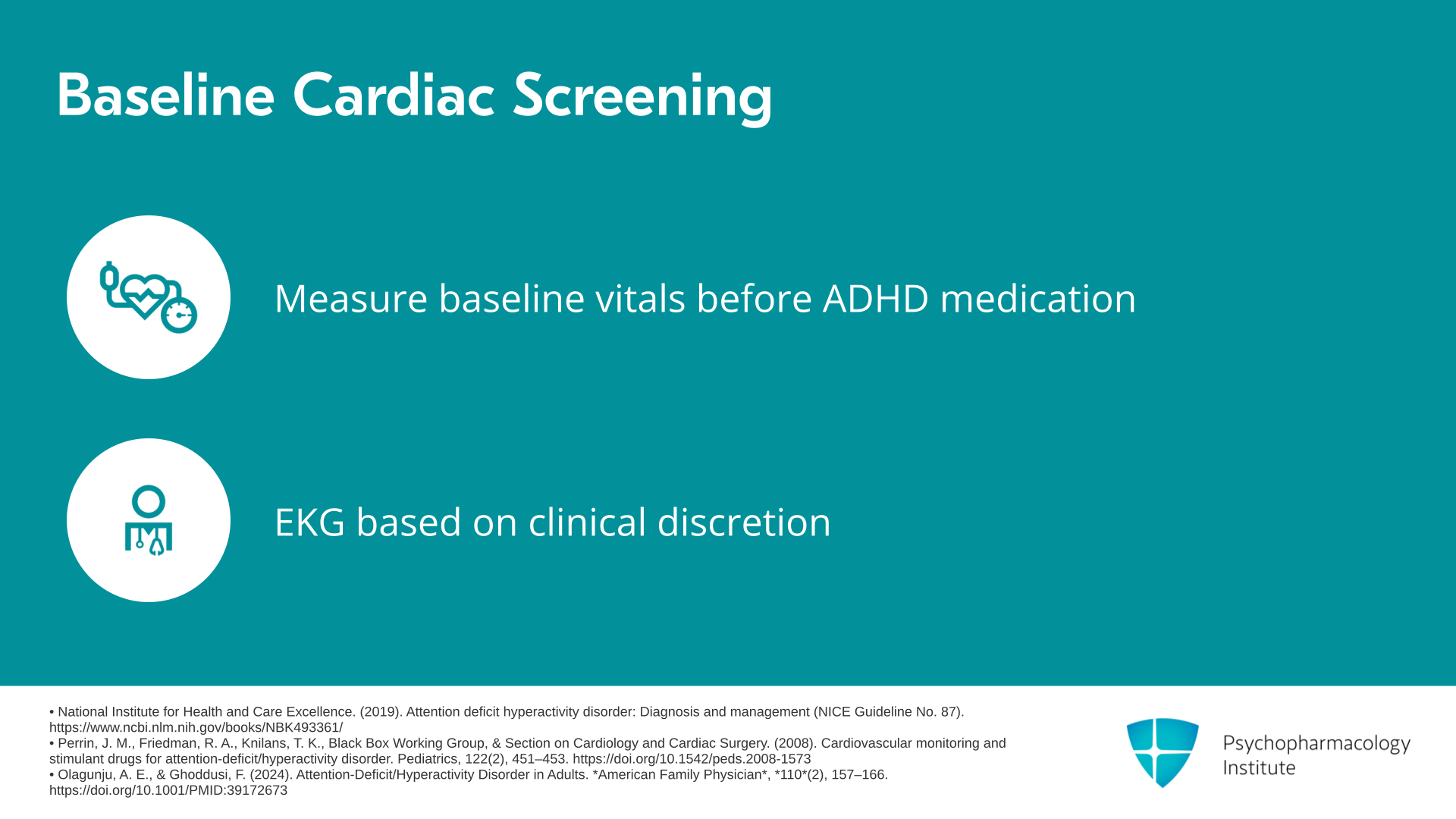
Some guidelines do recommend measuring the baseline heart rate, blood pressure, height and weight before initiating any ADHD medication and comparing with age-appropriate normative data. An EKG is not universally required. The current consensus is that EKG screening for patients started on stimulants should be at the clinician’s discretion and should be based on history, family history and exam findings. If any cardiac risk factors are identified, it’s important to obtain an additional evaluation which might include an EKG, an echocardiogram or a cardiology referral before starting stimulants.
References:
- National Institute for Health and Care Excellence. (2019). Attention deficit hyperactivity disorder: Diagnosis and management (NICE Guideline No. 87). https://www.ncbi.nlm.nih.gov/books/NBK493361/
- Perrin, J. M., Friedman, R. A., Knilans, T. K., Black Box Working Group, & Section on Cardiology and Cardiac Surgery. (2008). Cardiovascular monitoring and stimulant drugs for attention-deficit/hyperactivity disorder. Pediatrics, 122(2), 451–453. https://doi.org/10.1542/peds.2008-1573
- Olagunju, A. E., & Ghoddusi, F. (2024). Attention-Deficit/Hyperactivity Disorder in Adults. *American Family Physician*, *110*(2), 157–166. https://doi.org/10.1001/PMID:39172673
Slide 10 of 16
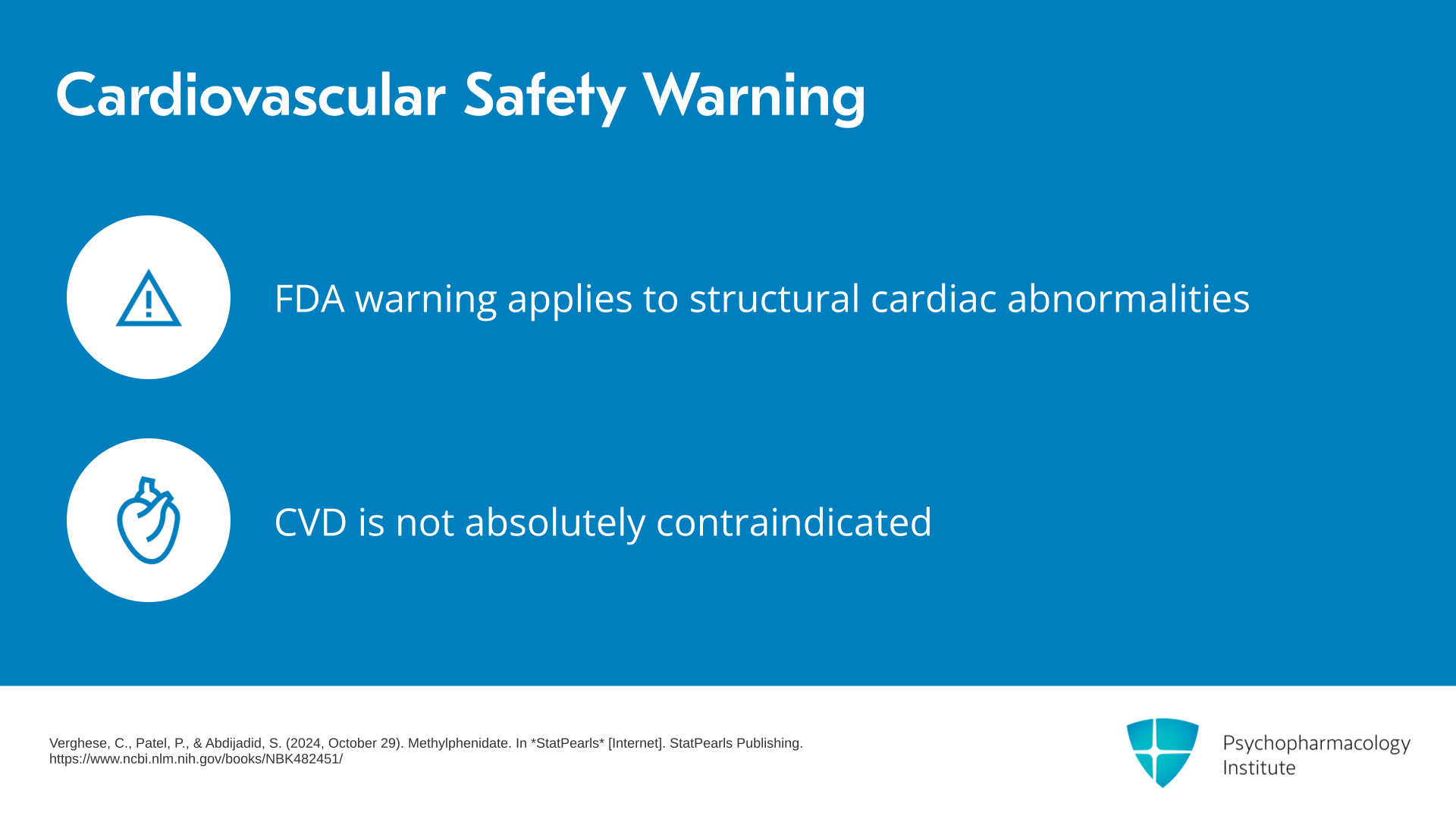
In patients who have underlying cardiovascular risk, there is an FDA warning on the use of ADHD medications for patients with structural cardiac abnormalities or other serious heart problems. However, cardiovascular disease is not an absolute contraindication.
References:
- Verghese, C., Patel, P., & Abdijadid, S. (2024, October 29). Methylphenidate. In *StatPearls* [Internet]. StatPearls Publishing. https://www.ncbi.nlm.nih.gov/books/NBK482451/
Free Files
Download PDF and other files
Success!
Check your inbox, we sent you all the materials there.
Slide 11 of 16
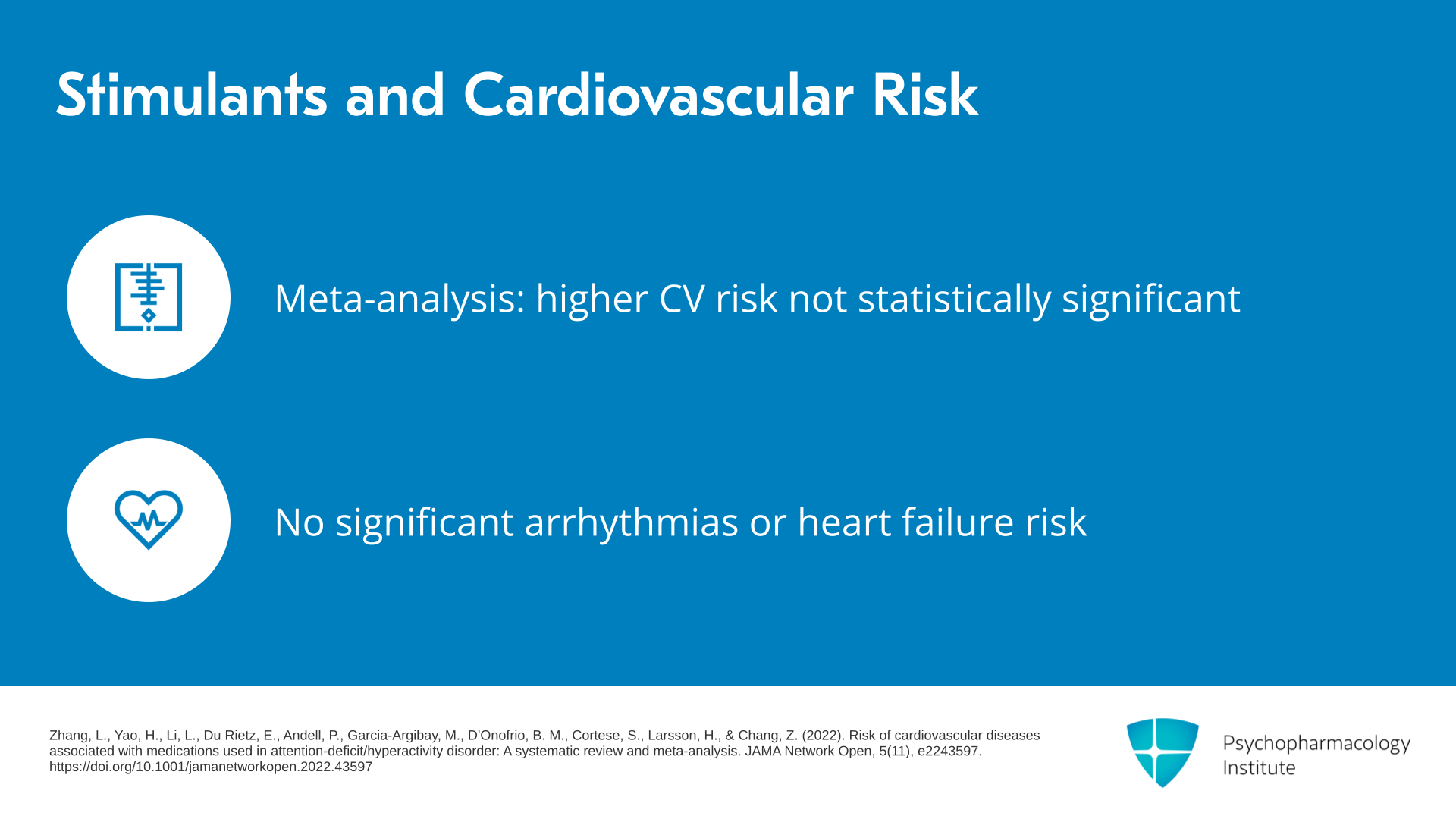
There is a meta-analysis of observational data suggesting that the risk for cardiovascular events may be higher in those with pre-existing cardiovascular disease when prescribed stimulants though the findings did not reach statistical significance. There is no significant increase in arrhythmias, heart failure, ischemic heart disease or stroke in patients who are prescribed stimulants.
References:
- Zhang, L., Yao, H., Li, L., Du Rietz, E., Andell, P., Garcia-Argibay, M., D'Onofrio, B. M., Cortese, S., Larsson, H., & Chang, Z. (2022). Risk of cardiovascular diseases associated with medications used in attention-deficit/hyperactivity disorder: A systematic review and meta-analysis. JAMA Network Open, 5(11), e2243597. https://doi.org/10.1001/jamanetworkopen.2022.43597
Slide 12 of 16
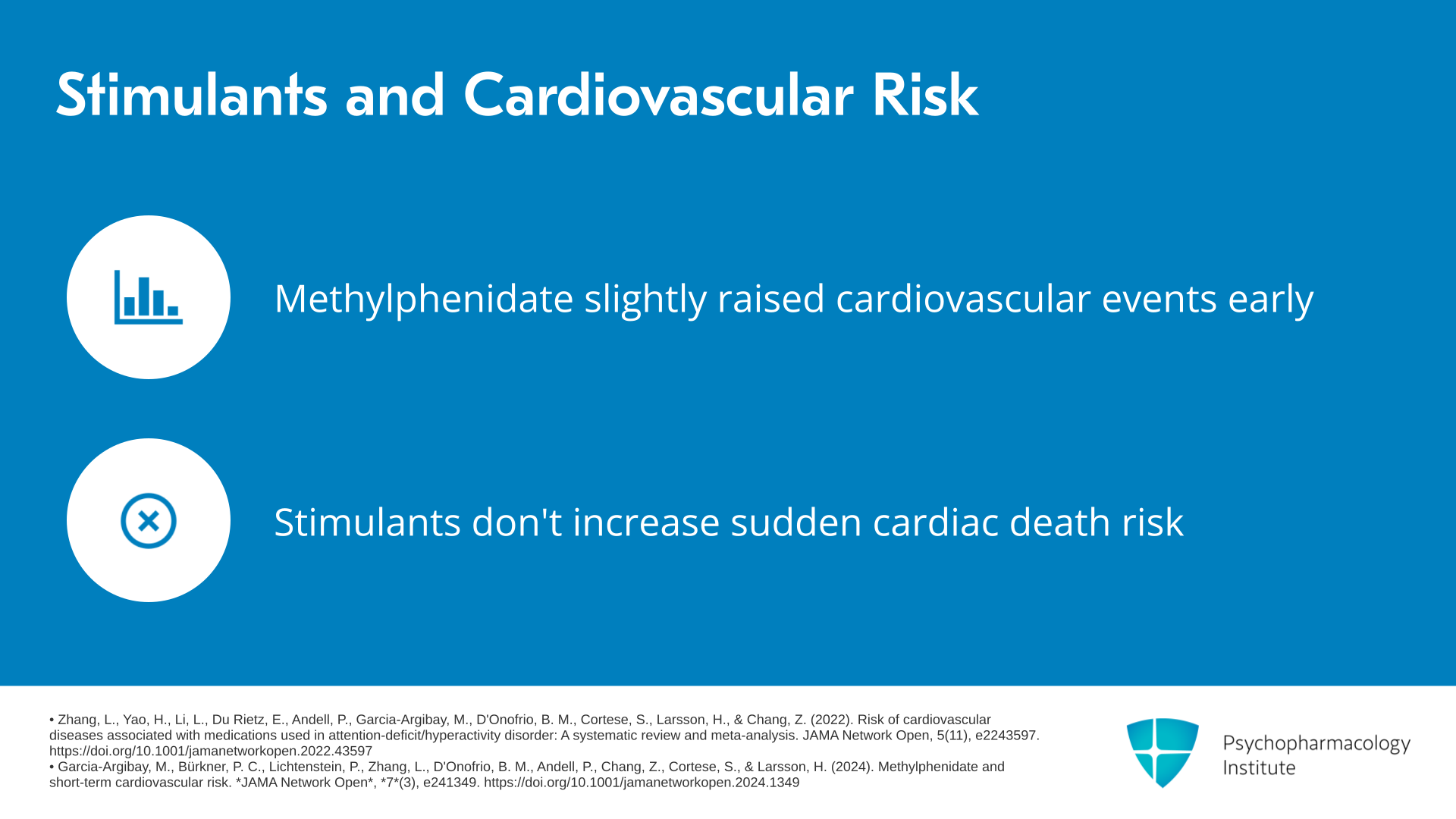
In a 2024 cohort study, patients treated with methylphenidate showed a slightly higher cardiovascular event rate compared with non-treated matched controls in the first six months. However, there was no difference in risk based on pre-existing cardiovascular disease. Stimulants have also not been shown to increase the risk of sudden cardiac death beyond baseline population rates.
References:
- Zhang, L., Yao, H., Li, L., Du Rietz, E., Andell, P., Garcia-Argibay, M., D'Onofrio, B. M., Cortese, S., Larsson, H., & Chang, Z. (2022). Risk of cardiovascular diseases associated with medications used in attention-deficit/hyperactivity disorder: A systematic review and meta-analysis. JAMA Network Open, 5(11), e2243597. https://doi.org/10.1001/jamanetworkopen.2022.43597
- Garcia-Argibay, M., Bürkner, P. C., Lichtenstein, P., Zhang, L., D'Onofrio, B. M., Andell, P., Chang, Z., Cortese, S., & Larsson, H. (2024). Methylphenidate and short-term cardiovascular risk. *JAMA Network Open*, *7*(3), e241349. https://doi.org/10.1001/jamanetworkopen.2024.1349
Free Files
Download PDF and other files
Success!
Check your inbox, we sent you all the materials there.
Slide 13 of 16
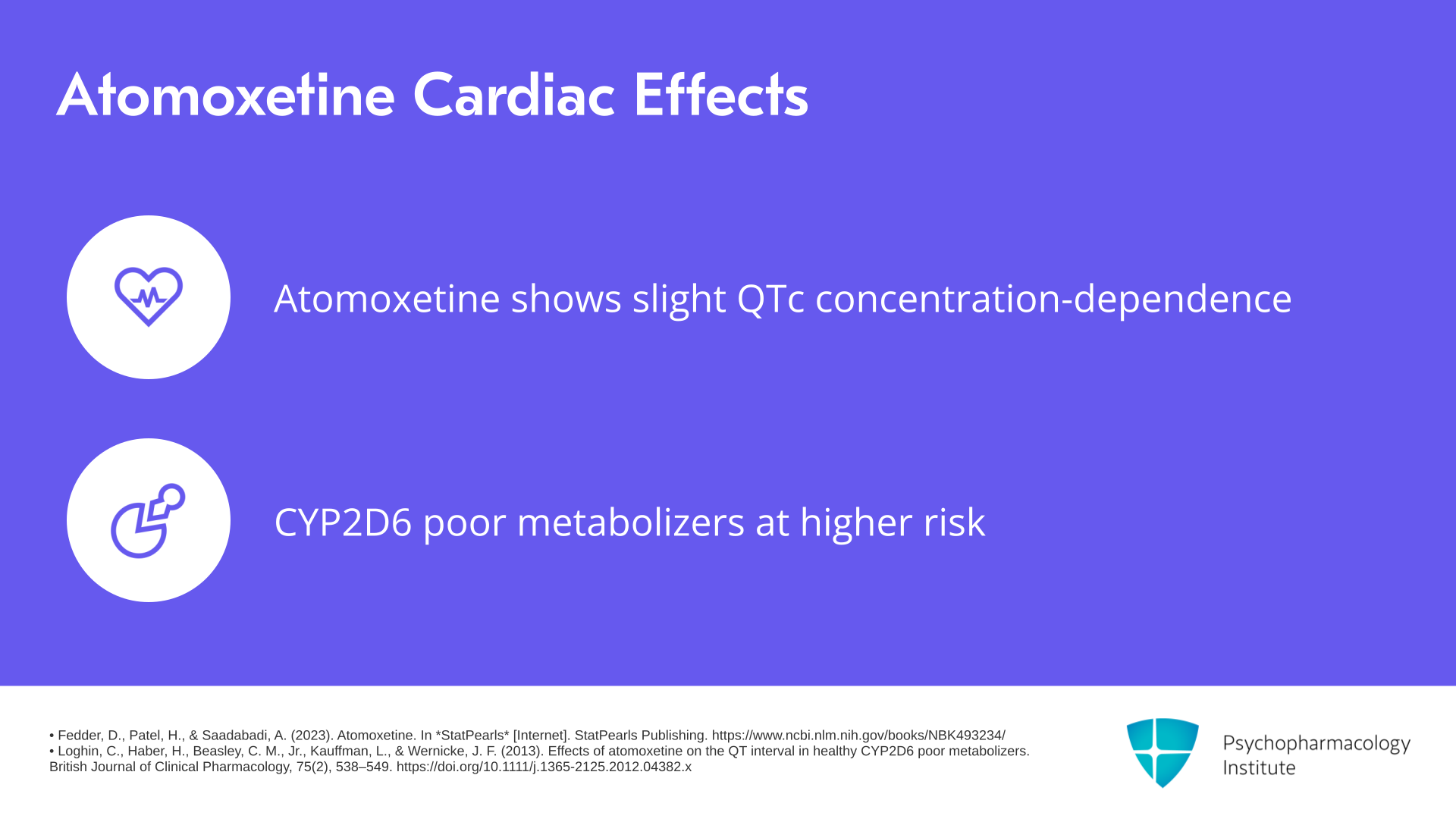
If we think about some non-stimulant medications that are used for ADHD, atomoxetine is one that has been looked at from the perspective of QT prolongation and actually has a Thorough QT study which is the gold standard way of measuring to what extent a medication may prolong the QT. In that study, atomoxetine showed no large QT changes but it did show a slight concentration-dependent increase in QTc as the plasma level of atomoxetine increased. Keep in mind that CYP2D6 poor metabolizers or those taking 2D6 inhibitors may end up with higher concentrations of atomoxetine which could lead to greater heart rate and blood pressure elevations.
References:
- Fedder, D., Patel, H., & Saadabadi, A. (2023). Atomoxetine. In *StatPearls* [Internet]. StatPearls Publishing. https://www.ncbi.nlm.nih.gov/books/NBK493234/
- Loghin, C., Haber, H., Beasley, C. M., Jr., Kauffman, L., & Wernicke, J. F. (2013). Effects of atomoxetine on the QT interval in healthy CYP2D6 poor metabolizers. British Journal of Clinical Pharmacology, 75(2), 538–549. https://doi.org/10.1111/j.1365-2125.2012.04382.x
Slide 14 of 16
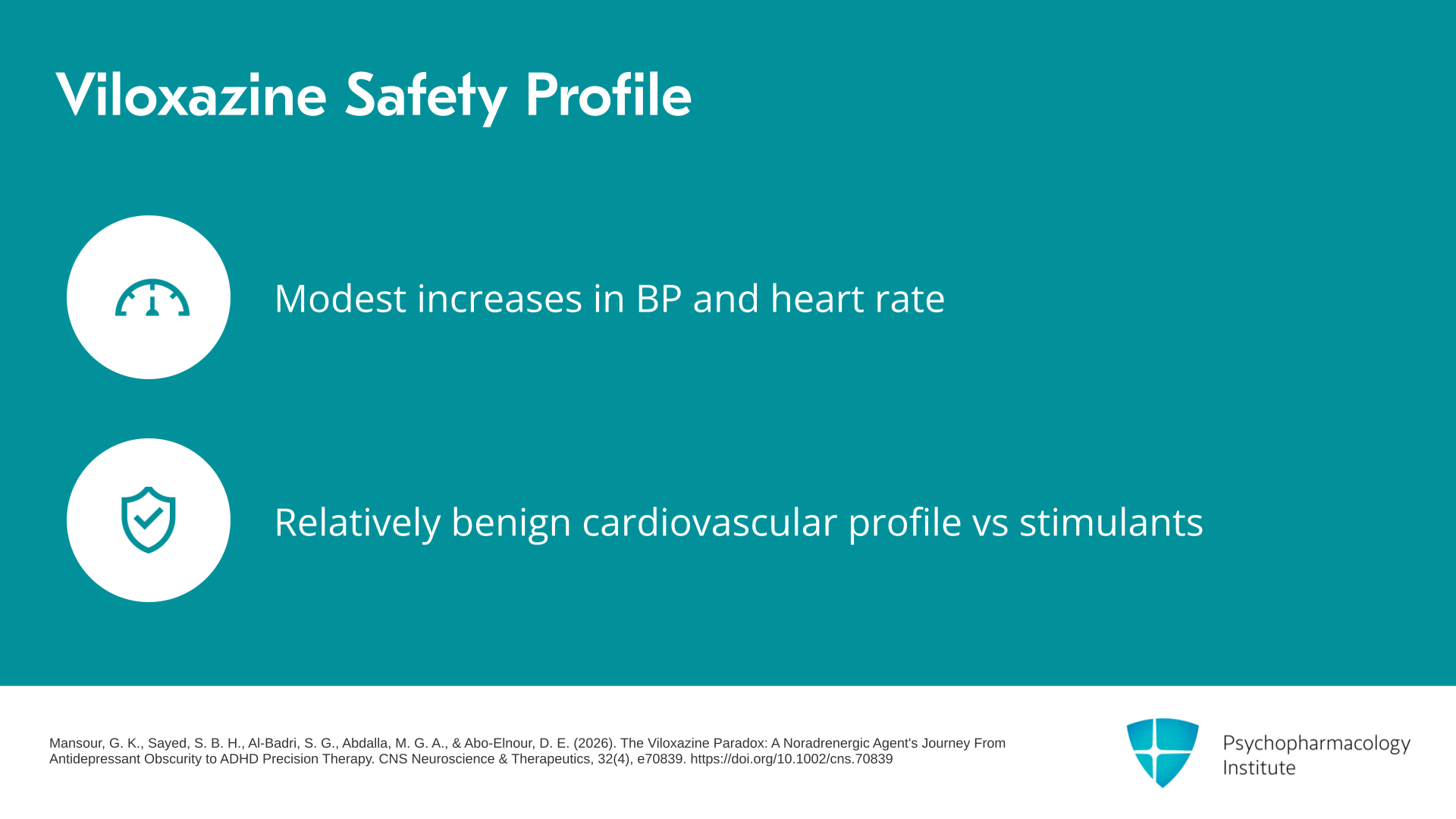
Viloxazine has also been demonstrated to cause modest increases in blood pressure and heart rate. Tachycardia has been reported in 4% of adults versus only 1% on placebo. Overall, however, viloxazine is considered to have a relatively benign cardiovascular profile compared to stimulants but it is still recommended to monitor blood pressure before and during treatment. There’s also a Thorough QT study for viloxazine showing no QTc or QRS prolongation even at supratherapeutic doses.
References:
- Mansour, G. K., Sayed, S. B. H., Al-Badri, S. G., Abdalla, M. G. A., & Abo-Elnour, D. E. (2026). The Viloxazine Paradox: A Noradrenergic Agent's Journey From Antidepressant Obscurity to ADHD Precision Therapy. CNS Neuroscience & Therapeutics, 32(4), e70839. https://doi.org/10.1002/cns.70839
Free Files
Download PDF and other files
Success!
Check your inbox, we sent you all the materials there.
Slide 15 of 16
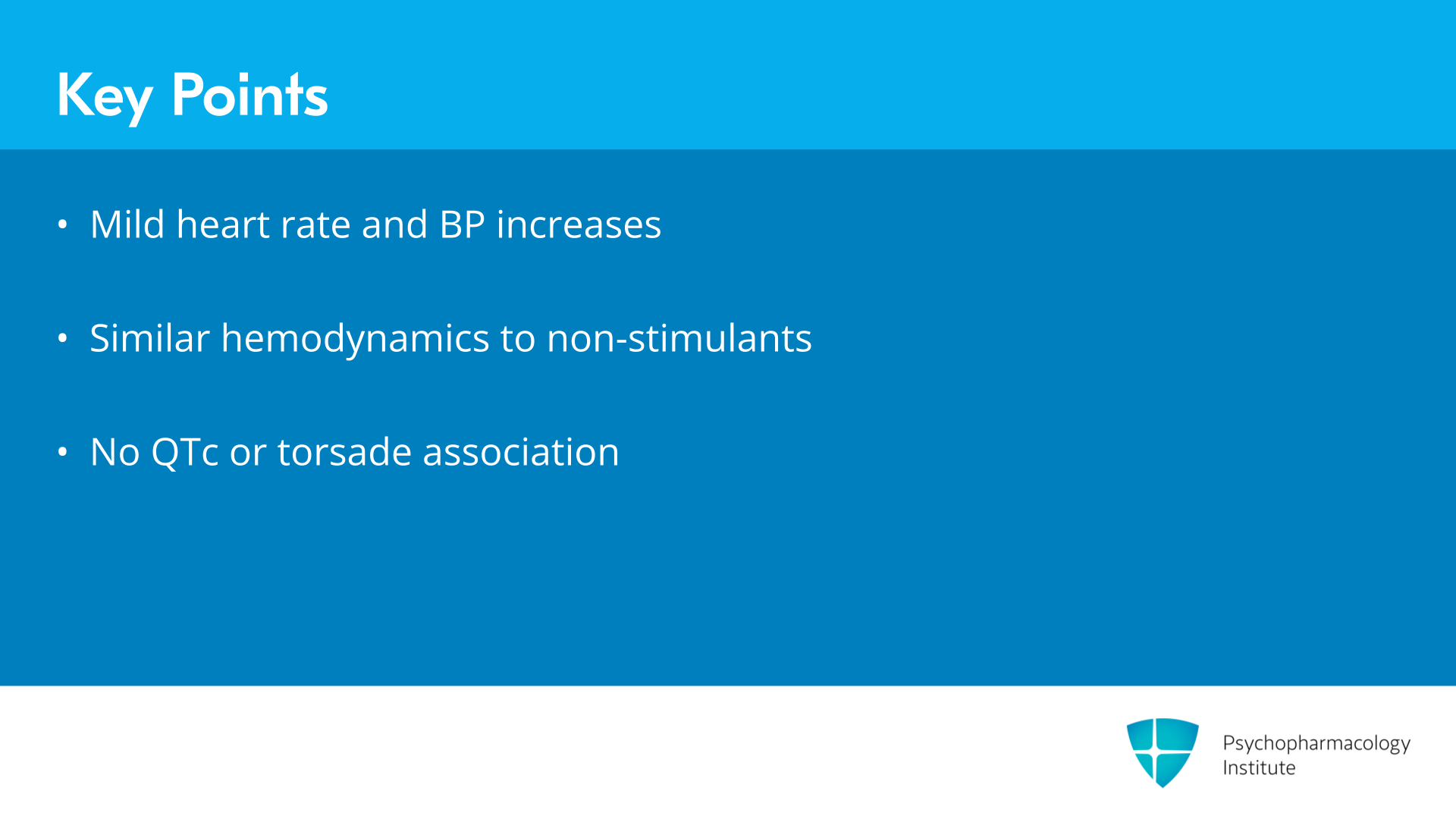
To summarize some key points for this section: On average, stimulants produce mild increases in heart rate and blood pressure but 5% to 15% of individuals may experience more substantial increases. Stimulants were not associated with larger hemodynamic increments compared with non-stimulants. Stimulants are also not linked to QTc prolongation or torsade.
Slide 16 of 16
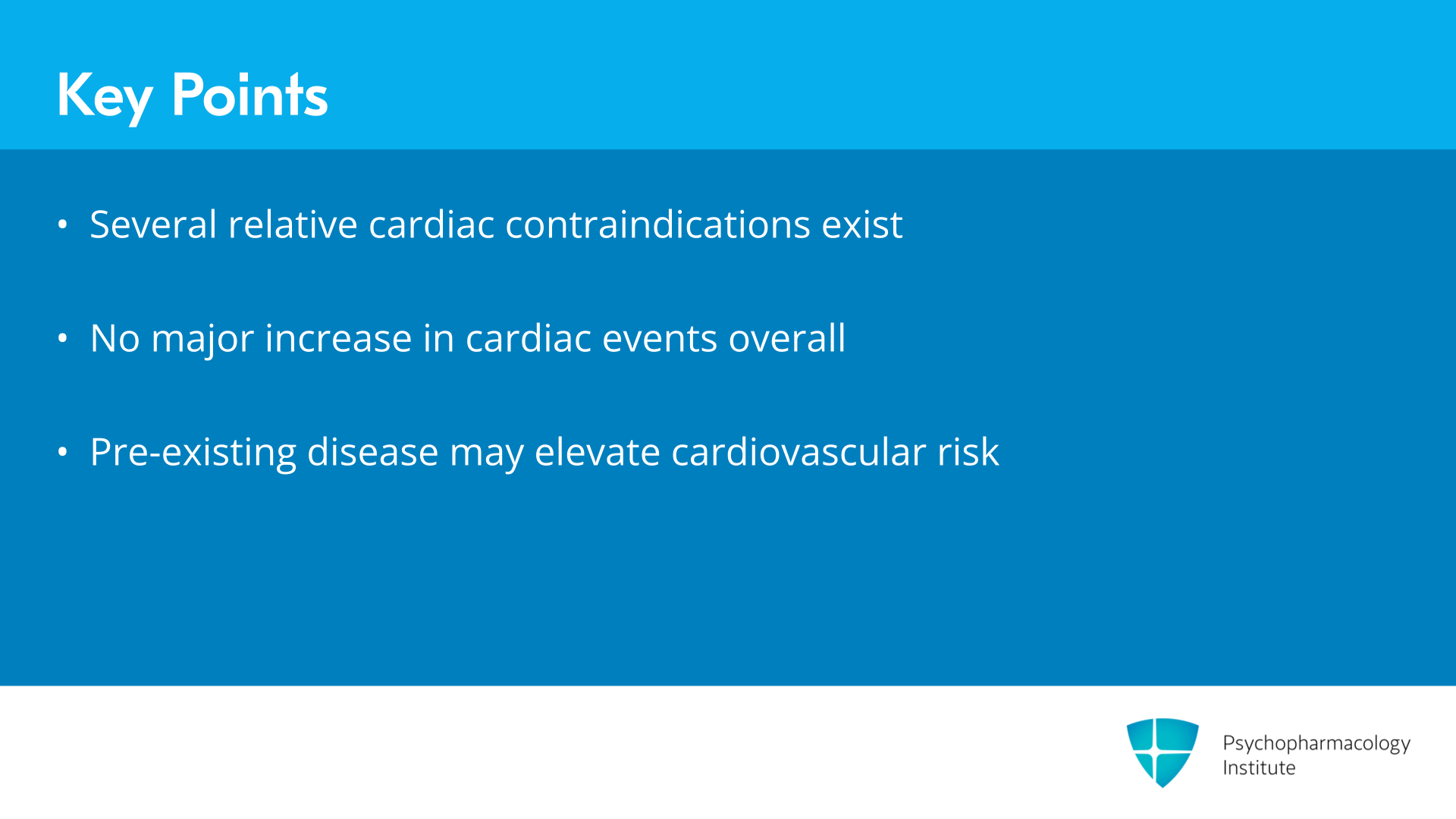
Relative contraindications to stimulant use include uncontrolled hypertension, angina, a prior MI, arrhythmias, significant valvular disease, cardiomyopathy, heart failure or structural cardiac abnormalities. There is no significant increase in arrhythmias, heart failure, ischemic heart disease or stroke with stimulant use but there is a suggestion that the risk of cardiovascular events may be higher in those with pre-existing cardiovascular disease.
Free Files
Download PDF and other files
Success!
Check your inbox, we sent you all the materials there.
