Close Banner
Free Section  - Video Lectures

06. Sexual Side Effects of Antipsychotics, Mood Stabilizers, and Benzodiazepines

Published on April 1, 2026 Certification expiration date: April 1, 2029

Anita H. Clayton, M.D., D.L.F.A.P.A., I.F.

Wilford W. Spradlin Professor and Chair of Psychiatry - University of Virginia School of Medicine, Charlottesville, VA

Key Points

  • Prefer aripiprazole, lurasidone, or lumateperone when minimizing antipsychotic-associated sexual dysfunction.
  • Consider lamotrigine over lithium, valproate, or carbamazepine if sexual dysfunction is a concern with mood stabilizers.
  • Chronic daily benzodiazepine use is associated with sexual dysfunction, with greater negative impact in women than in men.

Free Downloads for Offline Access

  • Free Download PDF File
  • Free Download Audio File (MP3)
  • Free Download Video (MP4)

Slides and Transcript

Slide 1 of 10

In this section, we’ll discuss sexual side effects of other psychotropics like antipsychotics and mood stabilizers.

Slide 2 of 10

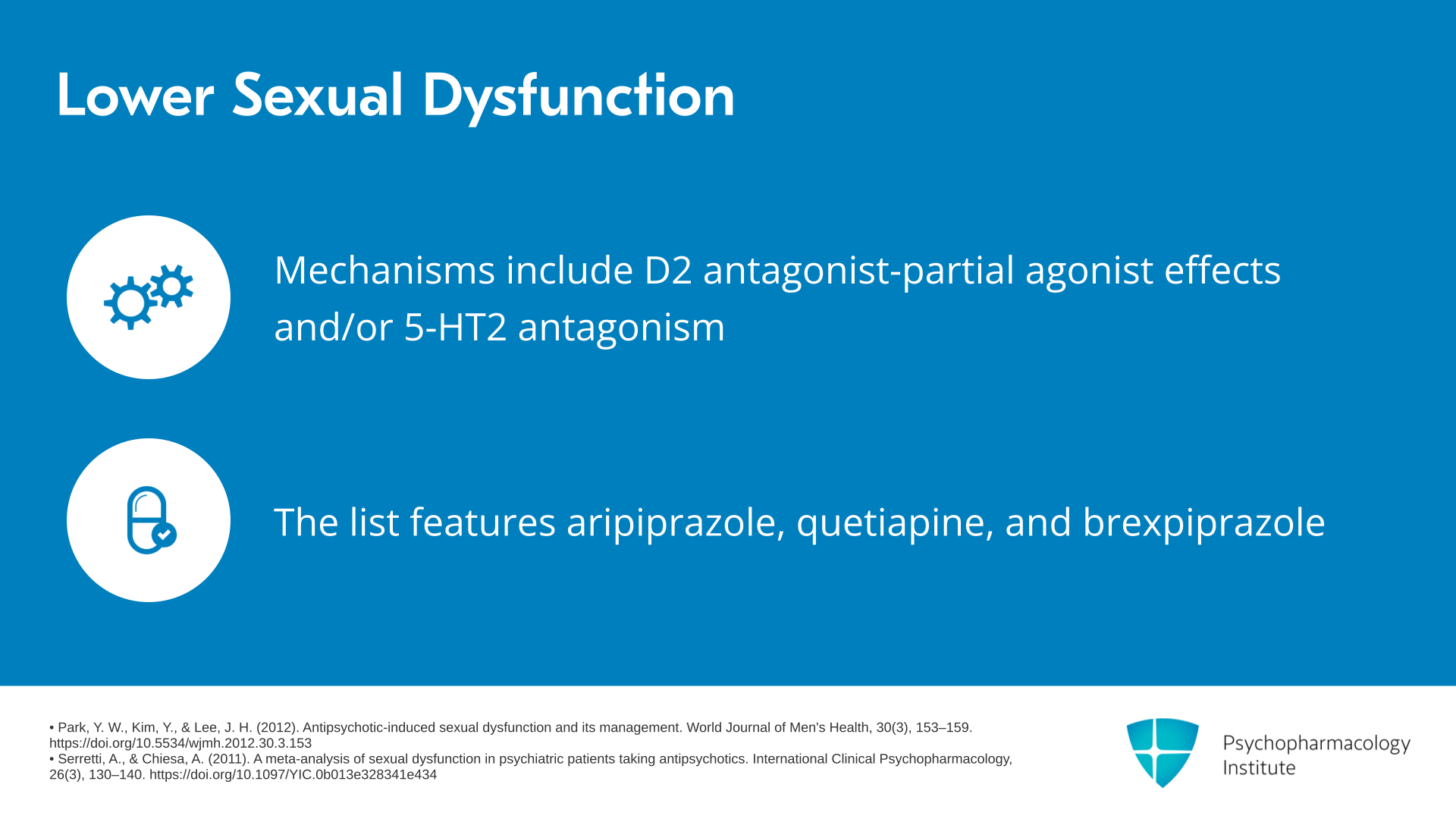
Among antipsychotic medications with lower rates of sexual dysfunction, we see D2 antagonist, partial agonist effects and/or 5-HT2 antagonism as mechanisms of action. These would include aripiprazole, quetiapine, brexpiprazole, ziprasidone, lurasidone, olanzapine and lumateperone.
References:
  • Park, Y. W., Kim, Y., & Lee, J. H. (2012). Antipsychotic-induced sexual dysfunction and its management. World Journal of Men's Health, 30(3), 153–159. https://doi.org/10.5534/wjmh.2012.30.3.153
  • Serretti, A., & Chiesa, A. (2011). A meta-analysis of sexual dysfunction in psychiatric patients taking antipsychotics. International Clinical Psychopharmacology, 26(3), 130–140. https://doi.org/10.1097/YIC.0b013e328341e434
Free Files
Success!
Check your inbox, we sent you all the materials there.

Slide 3 of 10

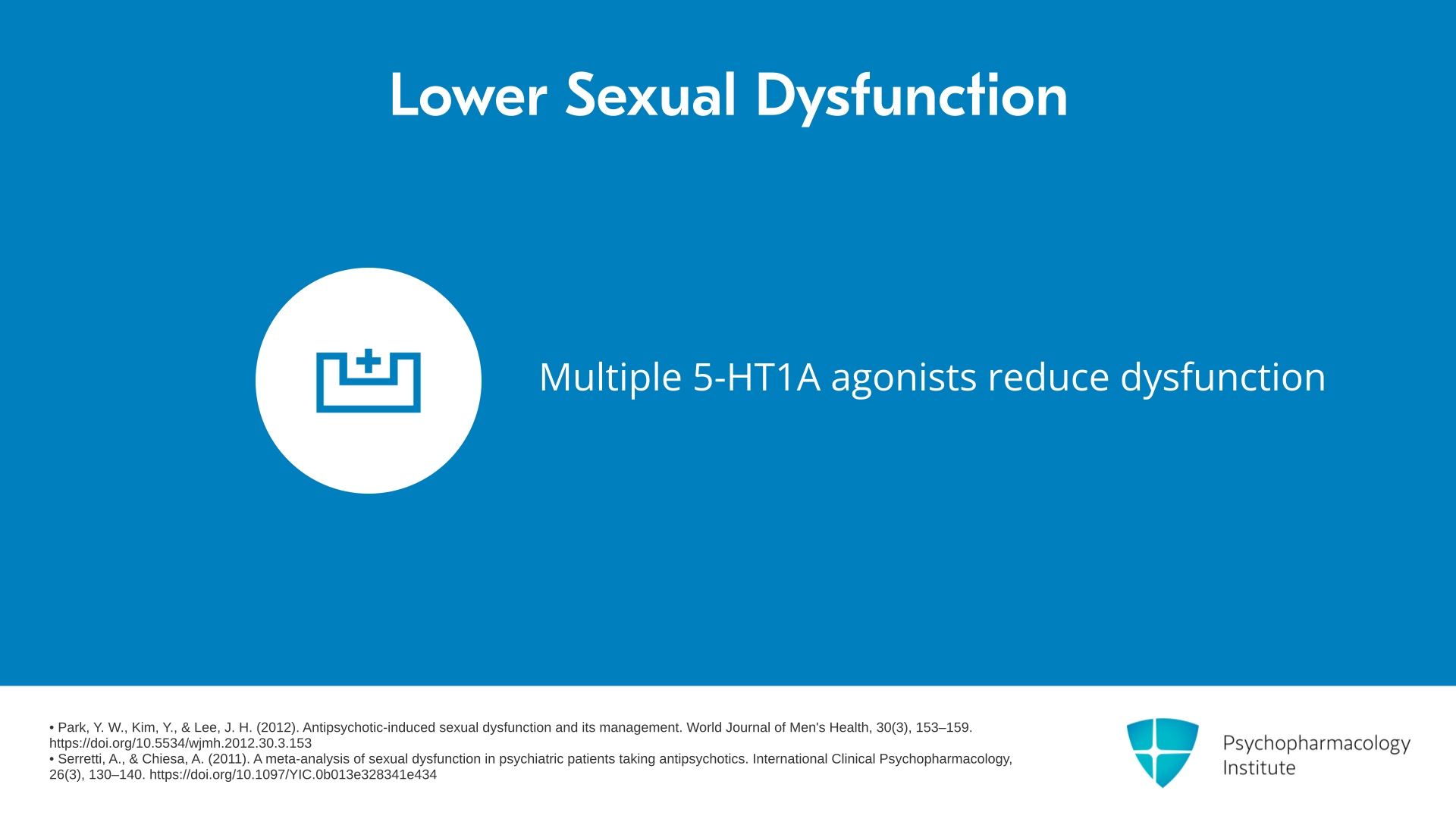
5-HT1A agonists like aripiprazole, brexpiprazole, cariprazine, lurasidone and lumateperone also were associated with lower rates of sexual dysfunction.
References:
  • Park, Y. W., Kim, Y., & Lee, J. H. (2012). Antipsychotic-induced sexual dysfunction and its management. World Journal of Men's Health, 30(3), 153–159. https://doi.org/10.5534/wjmh.2012.30.3.153
  • Serretti, A., & Chiesa, A. (2011). A meta-analysis of sexual dysfunction in psychiatric patients taking antipsychotics. International Clinical Psychopharmacology, 26(3), 130–140. https://doi.org/10.1097/YIC.0b013e328341e434

Slide 4 of 10

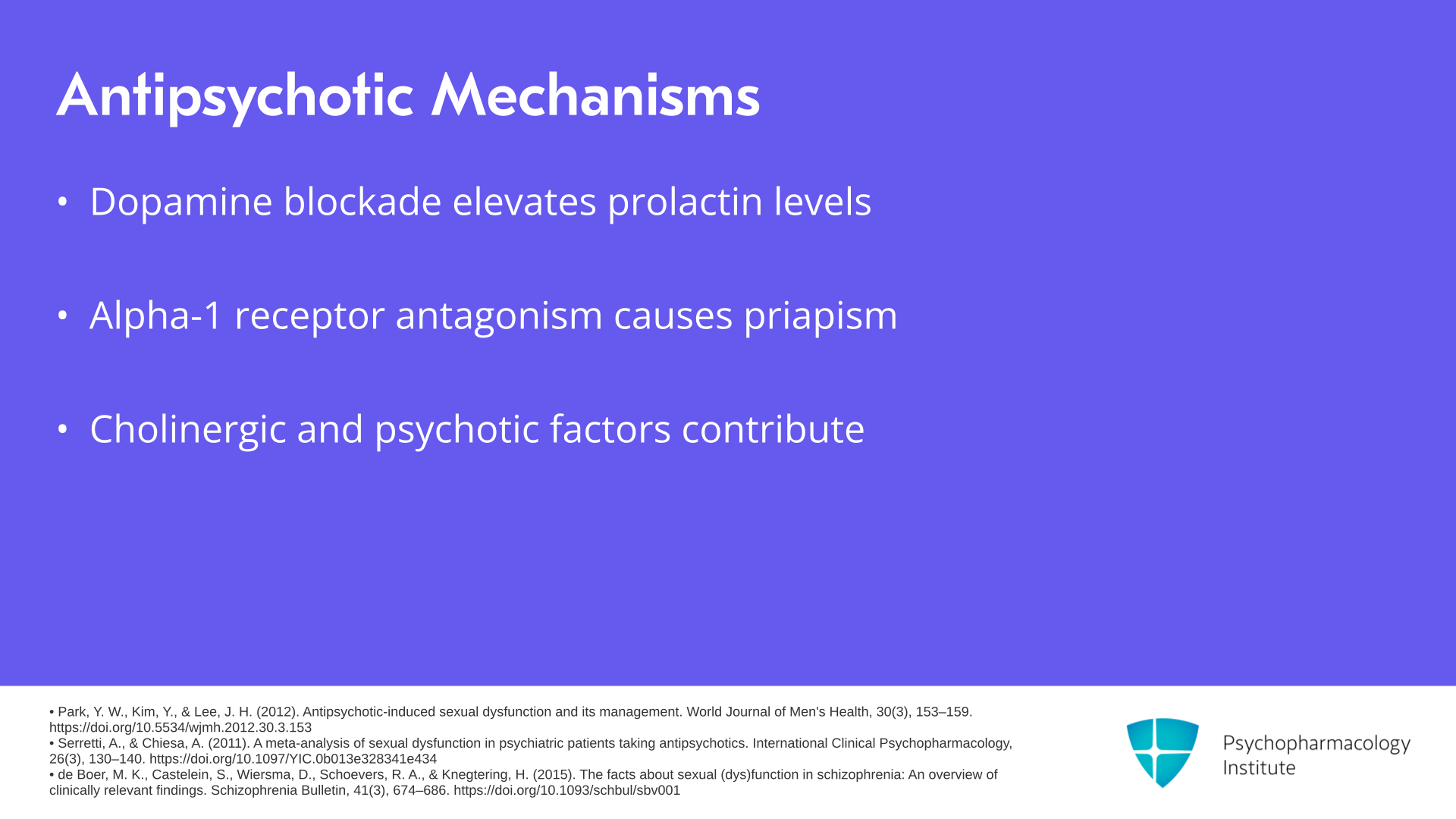
Other negative effects of antipsychotics related to postsynaptic dopamine blockade and elevated prolactin like risperidone and paliperidone, alpha-1 receptor antagonism like priapism, and perhaps cholinergic antagonism that is affecting arousal, or persistent psychosis also seem to be associated with sexual dysfunction.
References:
  • Park, Y. W., Kim, Y., & Lee, J. H. (2012). Antipsychotic-induced sexual dysfunction and its management. World Journal of Men's Health, 30(3), 153–159. https://doi.org/10.5534/wjmh.2012.30.3.153
  • Serretti, A., & Chiesa, A. (2011). A meta-analysis of sexual dysfunction in psychiatric patients taking antipsychotics. International Clinical Psychopharmacology, 26(3), 130–140. https://doi.org/10.1097/YIC.0b013e328341e434
  • de Boer, M. K., Castelein, S., Wiersma, D., Schoevers, R. A., & Knegtering, H. (2015). The facts about sexual (dys)function in schizophrenia: An overview of clinically relevant findings. Schizophrenia Bulletin, 41(3), 674–686. https://doi.org/10.1093/schbul/sbv001
Free Files
Success!
Check your inbox, we sent you all the materials there.

Slide 5 of 10

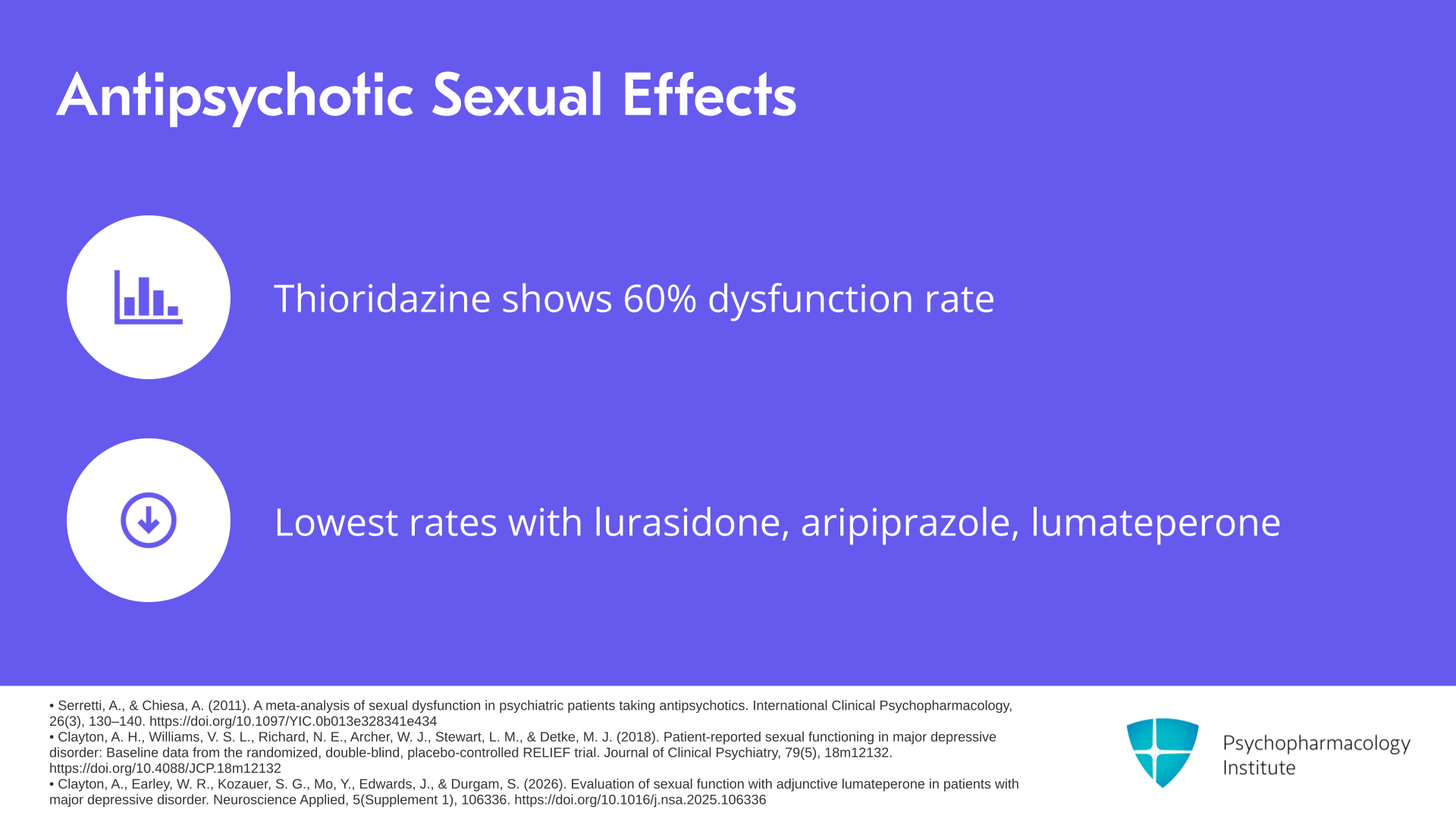
If we look at decreasing impact on sexual function, we can see that thioridazine, one of the older typical antipsychotics, has the highest identified rate at 60% and then through risperidone, probably cariprazine following next, haloperidol, olanzapine, ziprasidone, quetiapine and now most recently even less than quetiapine was seen with lurasidone, aripiprazole, and lumateperone.
References:
  • Serretti, A., & Chiesa, A. (2011). A meta-analysis of sexual dysfunction in psychiatric patients taking antipsychotics. International Clinical Psychopharmacology, 26(3), 130–140. https://doi.org/10.1097/YIC.0b013e328341e434
  • Clayton, A. H., Williams, V. S. L., Richard, N. E., Archer, W. J., Stewart, L. M., & Detke, M. J. (2018). Patient-reported sexual functioning in major depressive disorder: Baseline data from the randomized, double-blind, placebo-controlled RELIEF trial. Journal of Clinical Psychiatry, 79(5), 18m12132. https://doi.org/10.4088/JCP.18m12132
  • Clayton, A., Earley, W. R., Kozauer, S. G., Mo, Y., Edwards, J., & Durgam, S. (2026). Evaluation of sexual function with adjunctive lumateperone in patients with major depressive disorder. Neuroscience Applied, 5(Supplement 1), 106336. https://doi.org/10.1016/j.nsa.2025.106336

Slide 6 of 10

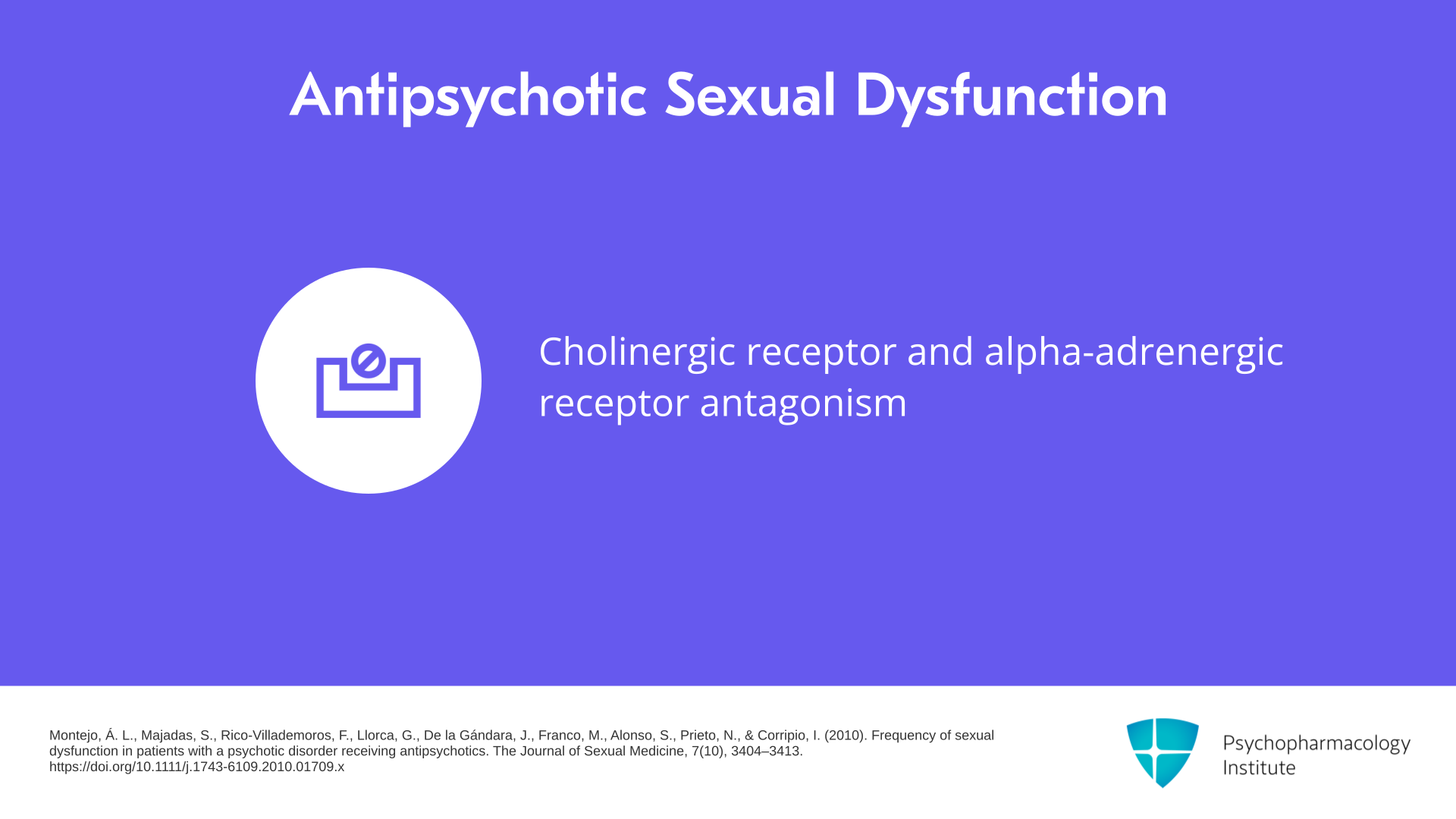
So antipsychotics may cause sexual dysfunction through cholinergic receptor antagonism and alpha-adrenergic receptor antagonism.
References:
  • Montejo, Á. L., Majadas, S., Rico-Villademoros, F., Llorca, G., De la Gándara, J., Franco, M., Alonso, S., Prieto, N., & Corripio, I. (2010). Frequency of sexual dysfunction in patients with a psychotic disorder receiving antipsychotics. The Journal of Sexual Medicine, 7(10), 3404–3413. https://doi.org/10.1111/j.1743-6109.2010.01709.x
Free Files
Success!
Check your inbox, we sent you all the materials there.

Slide 7 of 10

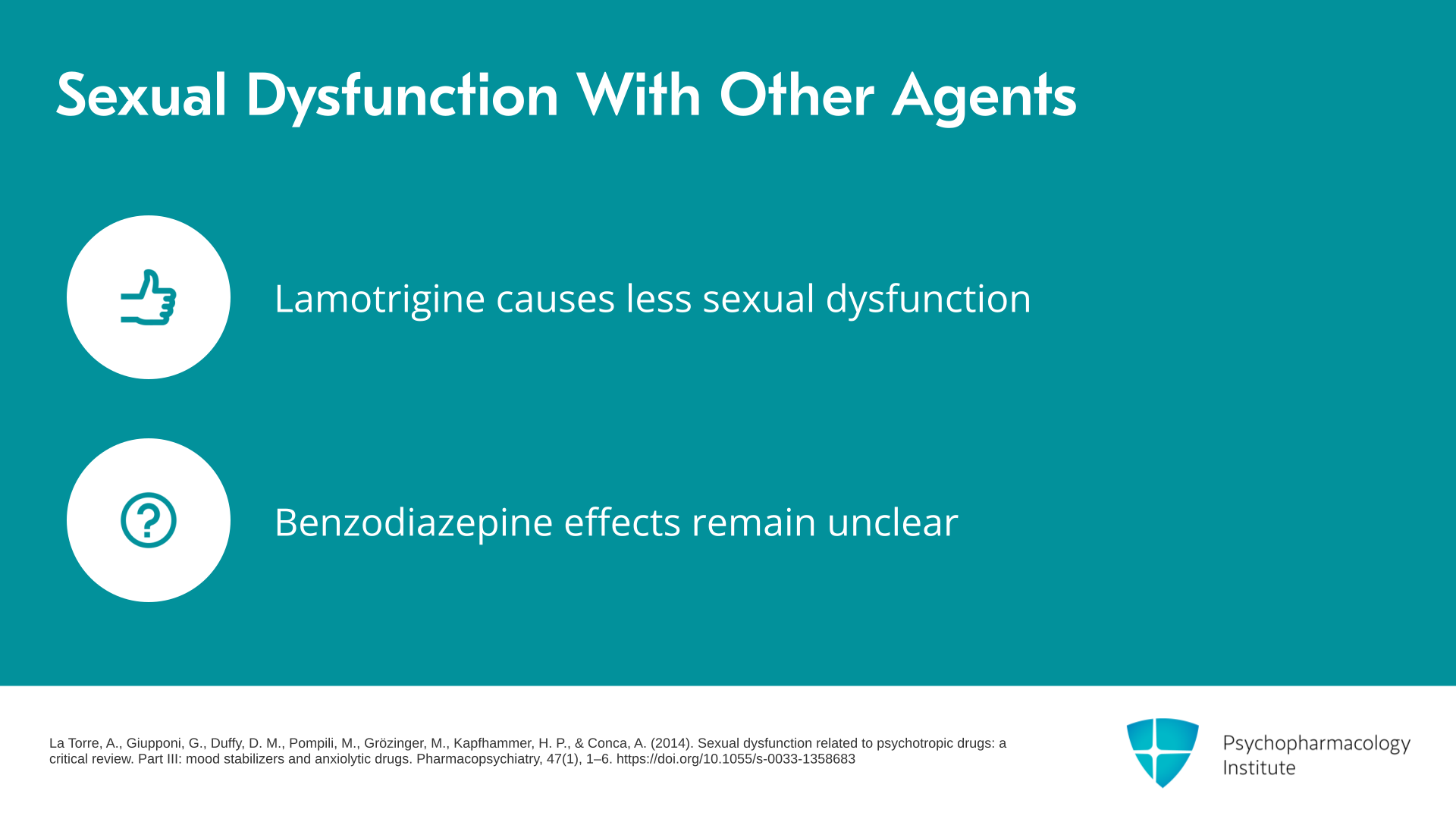
When we look at mood stabilizers, less sexual dysfunction has been seen with lamotrigine, but lithium, valproate, carbamazepine have some sexual dysfunction associated with their use. Outcomes with benzodiazepines are inconclusive. Perhaps, there’s a gender difference negatively impacting sexual functioning in women more than men.
References:
  • La Torre, A., Giupponi, G., Duffy, D. M., Pompili, M., Grözinger, M., Kapfhammer, H. P., & Conca, A. (2014). Sexual dysfunction related to psychotropic drugs: a critical review. Part III: mood stabilizers and anxiolytic drugs. Pharmacopsychiatry, 47(1), 1–6. https://doi.org/10.1055/s-0033-1358683

Slide 8 of 10

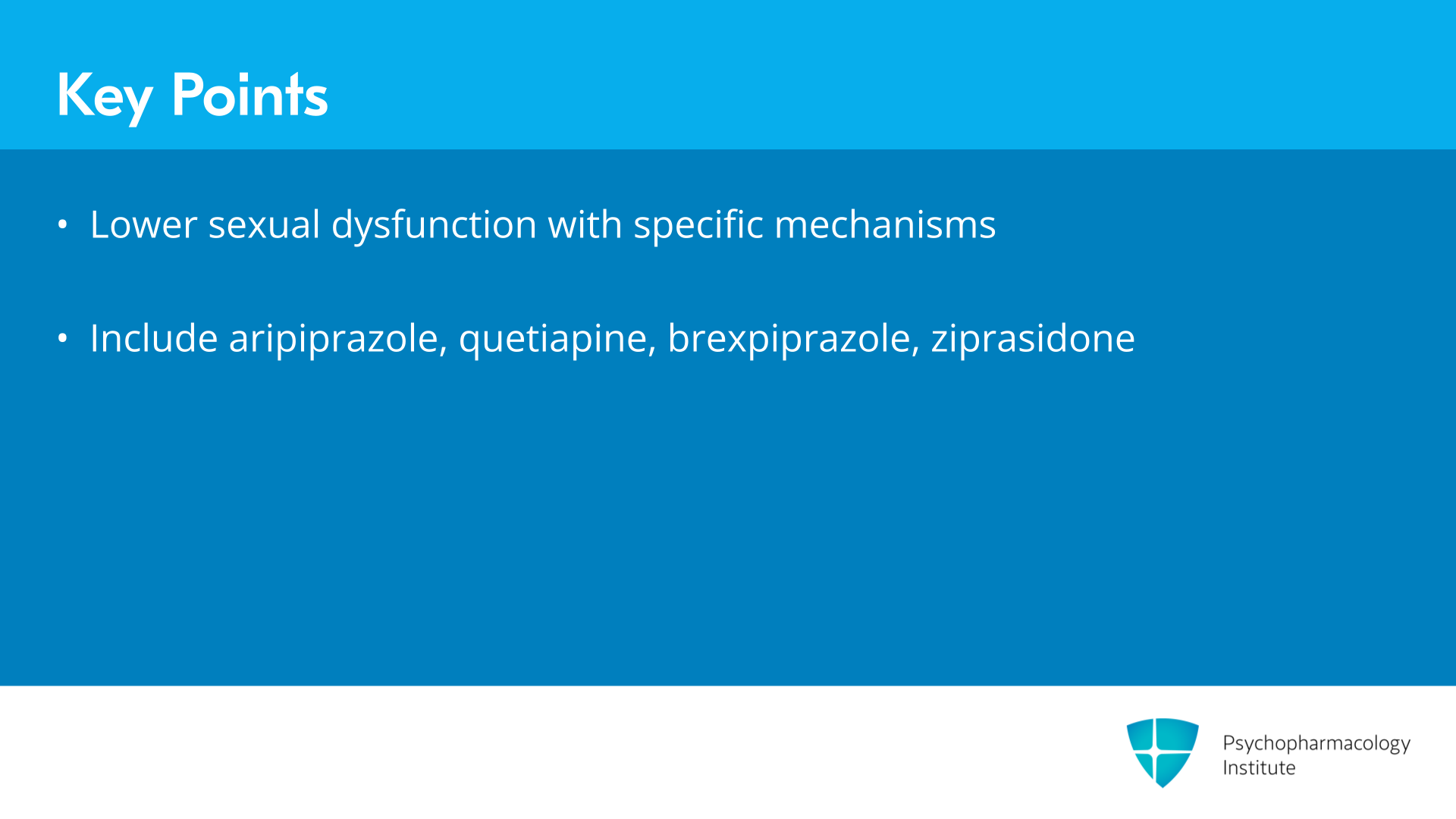
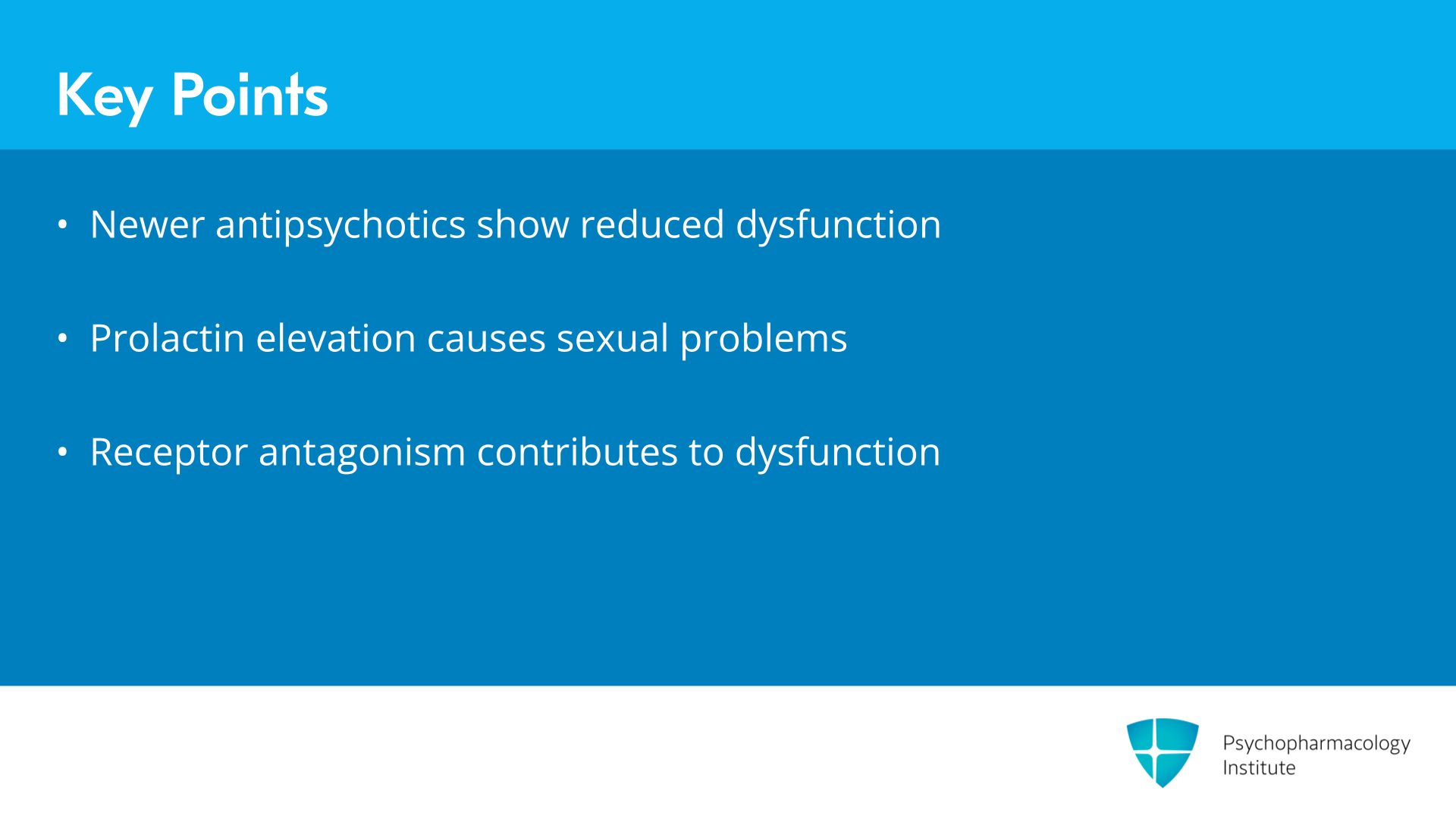
Our key points here are: Antipsychotic medications with lower rates of sexual dysfunction are those with D2 antagonist, partial agonist effects and/or 5-HT2 antagonism and these include aripiprazole, quetiapine, brexpiprazole, ziprasidone, lurasidone, olanzapine and lumateperone.
Free Files
Success!
Check your inbox, we sent you all the materials there.

Slide 9 of 10

Less sexual dysfunction may be seen with aripiprazole, brexpiprazole, cariprazine, lurasidone and lumateperone through the 5-HT1A agonism effects. Conversely, antipsychotics may cause sexual dysfunction through elevation of prolactin such as with risperidone and paliperidone, alpha-1 receptor antagonism potentially priapism, cholinergic receptor antagonism and/or alpha-adrenergic receptor antagonism.

Slide 10 of 10

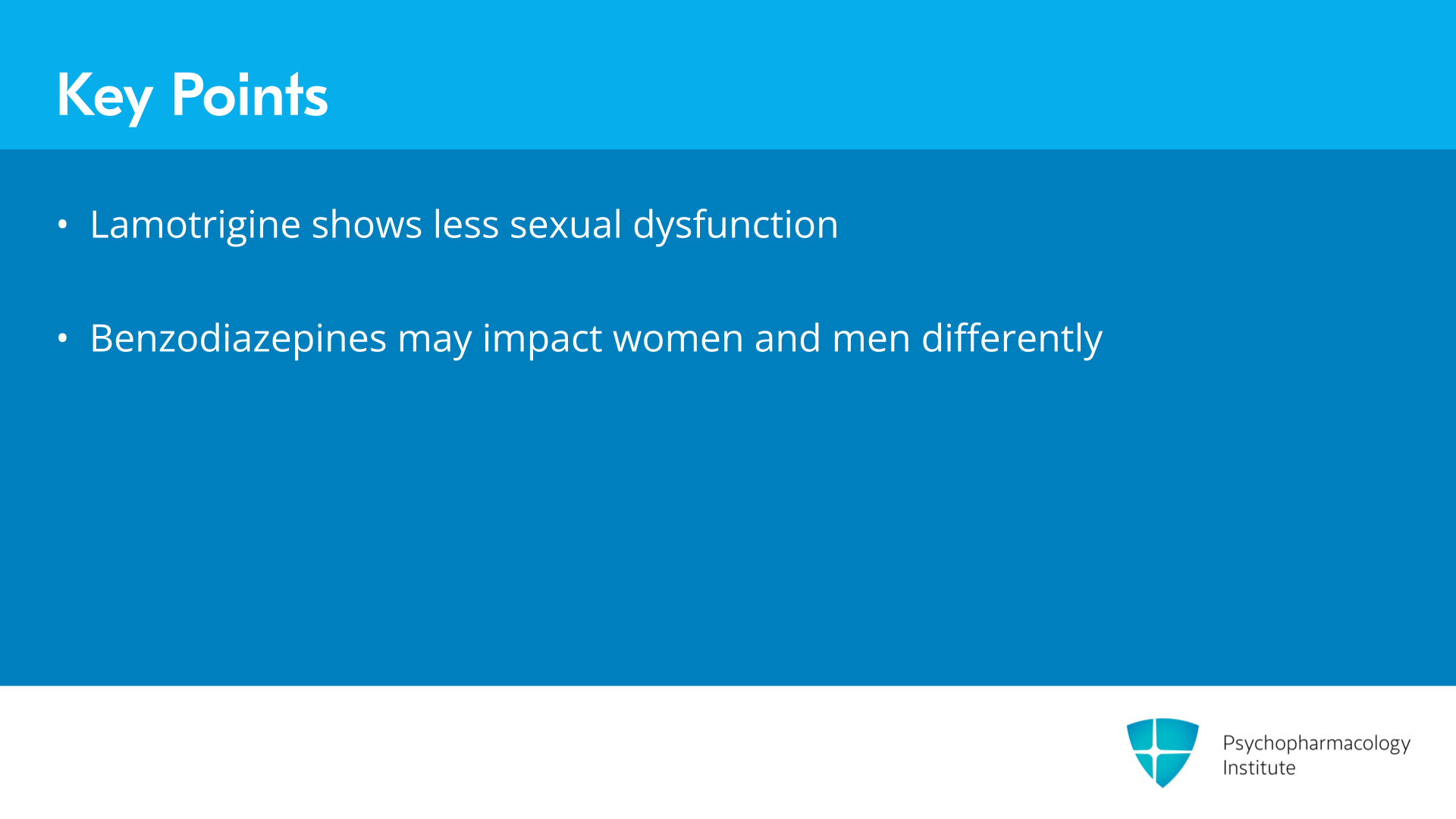
Mood stabilizers may contribute to sexual dysfunction – lithium, valproate and carbamazepine. Less sexual dysfunction is seen with lamotrigine. Benzodiazepines may impact women and men differently or may be due to dosing with chronic daily use associated with sexual dysfunction versus acute occasional administration.
Free Files
Success!
Check your inbox, we sent you all the materials there.

Learning Objectives:

  1. Identify the neurotransmitter, hormonal, and genetic factors that contribute to psychotropic-induced sexual dysfunction and differentiate medication effects from disease-related and non-psychiatric causes.
  2. Compare the sexual dysfunction profiles of antidepressants, antipsychotics, and mood stabilizers to select agents with lower risk based on clinical trial evidence.
  3. Apply a stepwise management approach — including modifiable factor assessment, medication substitution, and adjunctive antidote strategies — to individualize treatment while maintaining psychiatric stability.

Original Release Date: April 01, 2026
Expiration Date: April 01, 2029

Faculty: Anita Clayton, M.D.
Medical Editor: Tomás Abudarham, M.D.

Relevant Financial Disclosures:
Anita Clayton declares the following interests:
– Janssen: Grants/Research Contracts
– Neumora Therapeutics
– Neurocrine Biosciences
– Otsuka
– Relmada Therapeutics, Inc.
– Reunion Neuroscience, Inc.
– S1 Biopharma
– Autobahn Therapeutics
– Daré Bioscience
– AbbVie, Inc.: Advisory Board Fee/Consultant Fee
– Actinogen
– AdhereTech
– Axsome Therapuetics
– Biogen, Inc.
– Fabre-Kramer Pharmaceuticals
– Initiator Pharma
– Intra-cellular Therapies
– Janssen Research & Development, LLC
– LIVANOVA PLC
– MycoMedica Life Sciences, PBC
– P/S/L Group Services
– Seaport Therapeutics
– Sirtsei Pharmaceuticals, Inc.
– Vella Bioscience, Inc.
– Royalties/Copyright: Ballantine Books/Random House
– Changes in Sexual Functioning Questionnaire
– Guilford Publications
– Shares/Restricted Stock Units: Mediflix LLC

All the relevant financial relationships listed above have been mitigated by Medical Academy and the Psychopharmacology Institute.

None of the other faculty, planners, and reviewers for this educational activity has relevant financial relationships to disclose during the last 24 months with ineligible companies whose primary business is producing, marketing, selling, re-selling, or distributing healthcare products used by or on patients.

Contact Information: For questions regarding the content or access to this activity, contact us at support@psychopharmacologyinstitute.com

Instructions for Participation and Credit:
Participants must complete the activity online within the valid credit period noted above.

Follow these steps to earn CME credit:

  1. View the required educational content provided on this course page.
  2. Complete the Post-Activity Evaluation to provide the necessary feedback for continuing accreditation purposes and for the development of future activities. NOTE: Completing the Post Activity Evaluation after the quiz is required to receive the earned credit.
  3. Download your certificate.

Accreditation Statement
This activity has been planned and implemented in accordance with the accreditation requirements and policies of the Accreditation Council for Continuing Medical Education through the joint providership of Medical Academy LLC and the Psychopharmacology Institute. Medical Academy is accredited by the ACCME to provide continuing medical education for physicians.

Credit Designation Statement
Medical Academy designates this enduring activity for a maximum of 1 AMA PRA Category 1 credit(s)™. Physicians should claim only the credit commensurate with the extent of their participation in the activity.

Artificial Intelligence (AI) Use Disclosure
Artificial intelligence (AI) tools may have been used in limited stages of developing this activity (e.g., drafting or language refinement). The specific tool, version, and date of use are documented internally.
AI does not determine clinical recommendations. All content is reviewed, verified, and approved by the listed faculty and medical editors, and reflects independent human clinical judgment consistent with ACCME Standards for Integrity and Independence in Accredited Continuing Education.


Free Files
Success!
Check your inbox, we sent you all the materials there.
Continue in the website
Instant access modal

Become a Bronze, Silver, Gold, Bronze extended, Silver extended or Gold extended Member.

2025–26 Psychopharmacology CME Program

Unlock up to 155 CME Credits, including 40 SA CME Credits.