Slides and Transcript
Slide 1 of 11
Let's move on to the next section, Clinical Principles in Managing Alcohol Use Disorder.
Slide 2 of 11
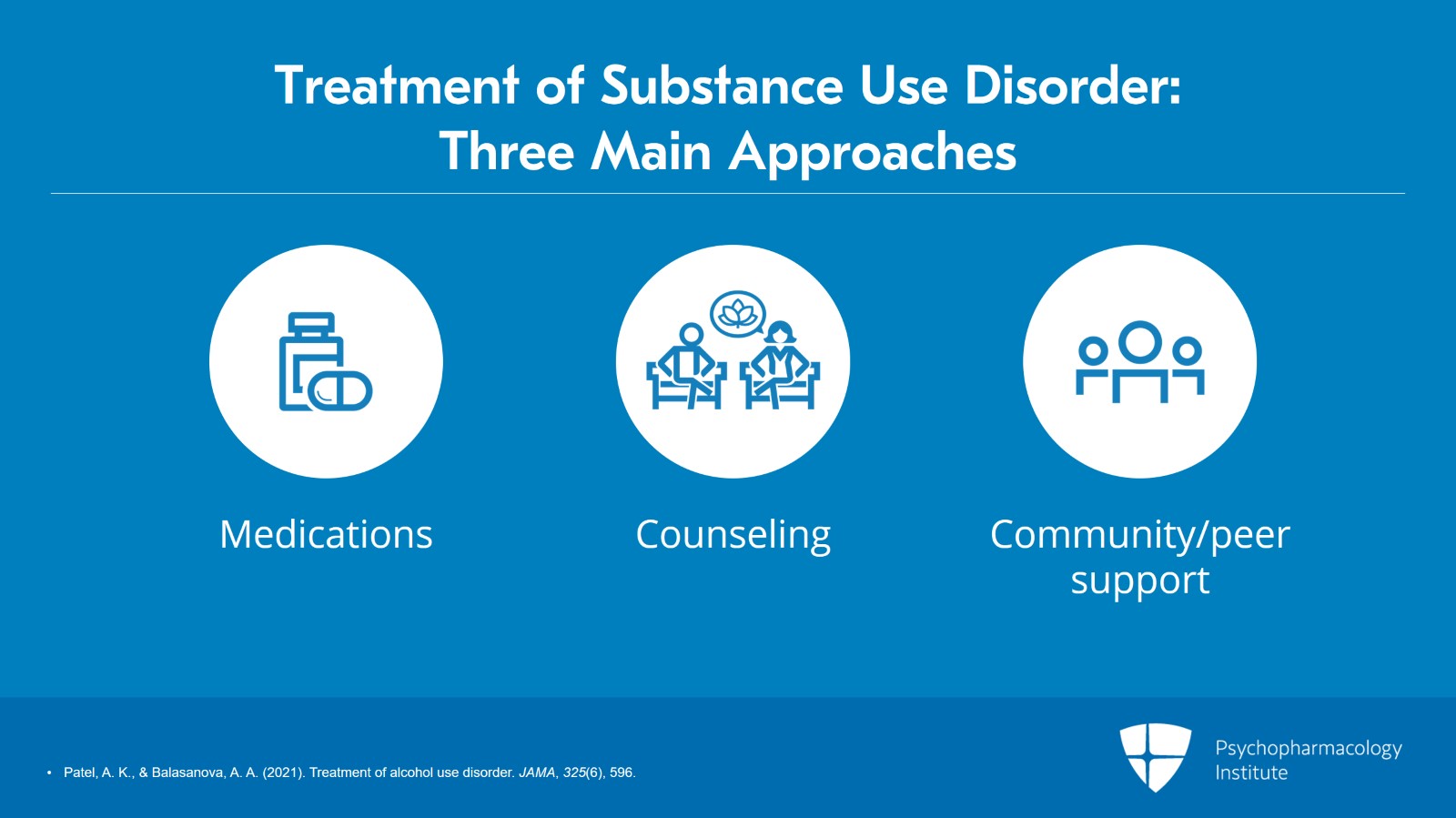
Treating substance use disorders — It's really composed of three main approaches. We think about medications if they're available, some type of counseling and then community supports or peer supports. This really aligns well with the biopsychosocial model and substance use disorder is no different.
References:
- Patel, A. K., & Balasanova, A. A. (2021). Treatment of alcohol use disorder. JAMA, 325(6), 596.
Free Files
Download PDF and other files
Success!
Check your inbox, we sent you all the materials there.
Slide 3 of 11
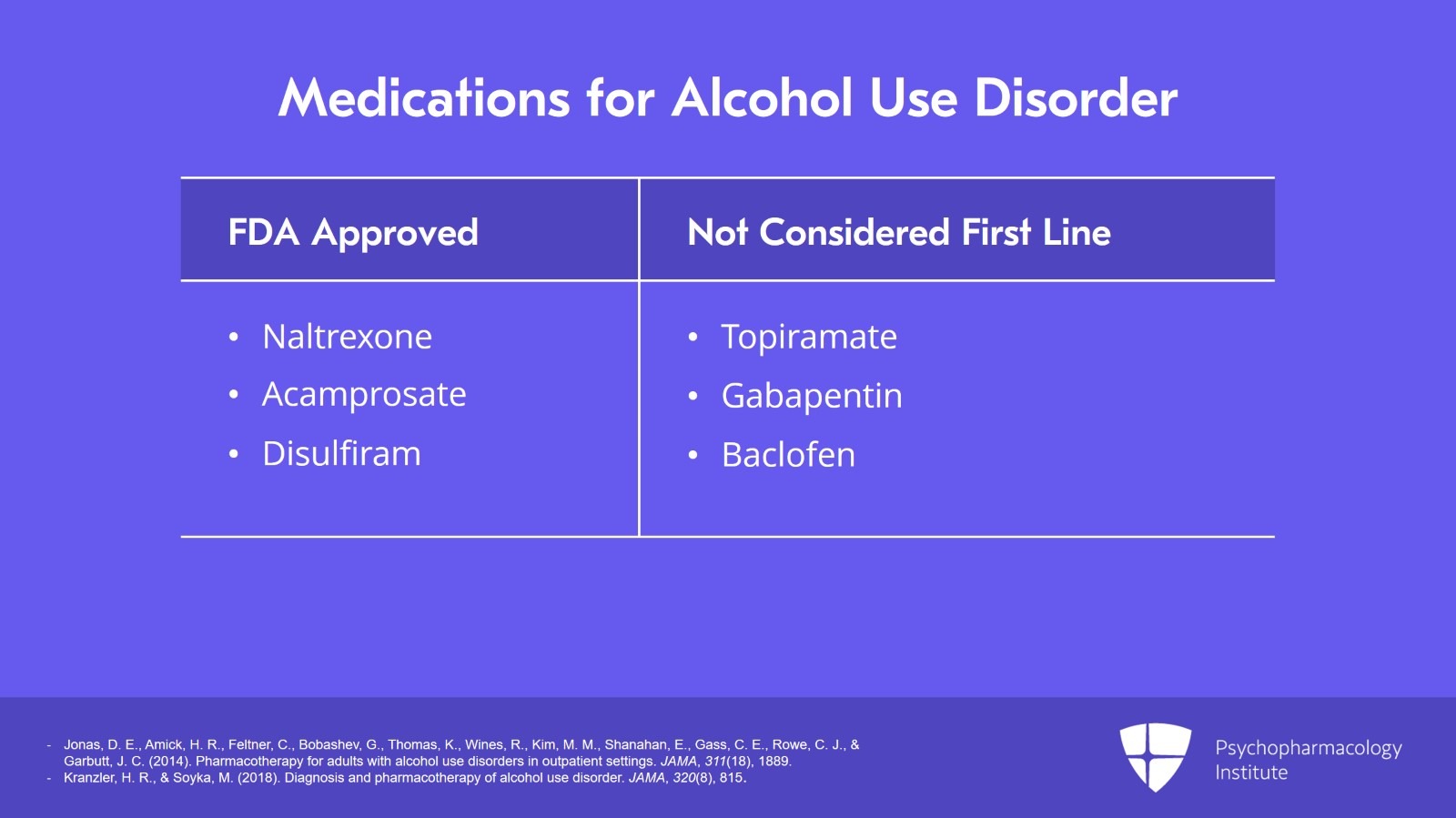
Medications are not available for all types of substance use disorders but thankfully, we do for alcohol use disorder although they remain highly underutilized. There are currently three FDA-approved medications, naltrexone, acamprosate and disulfiram. I'll be talking more about these in subsequent sections. There are additional data to support the use of things like topiramate, gabapentin and baclofen but these are not considered first line.
References:
- Jonas, D. E., Amick, H. R., Feltner, C., Bobashev, G., Thomas, K., Wines, R., Kim, M. M., Shanahan, E., Gass, C. E., Rowe, C. J., & Garbutt, J. C. (2014). Pharmacotherapy for adults with alcohol use disorders in outpatient settings. JAMA, 311(18), 1889.
- Kranzler, H. R., & Soyka, M. (2018). Diagnosis and pharmacotherapy of alcohol use disorder. JAMA, 320(8), 815.
Slide 4 of 11
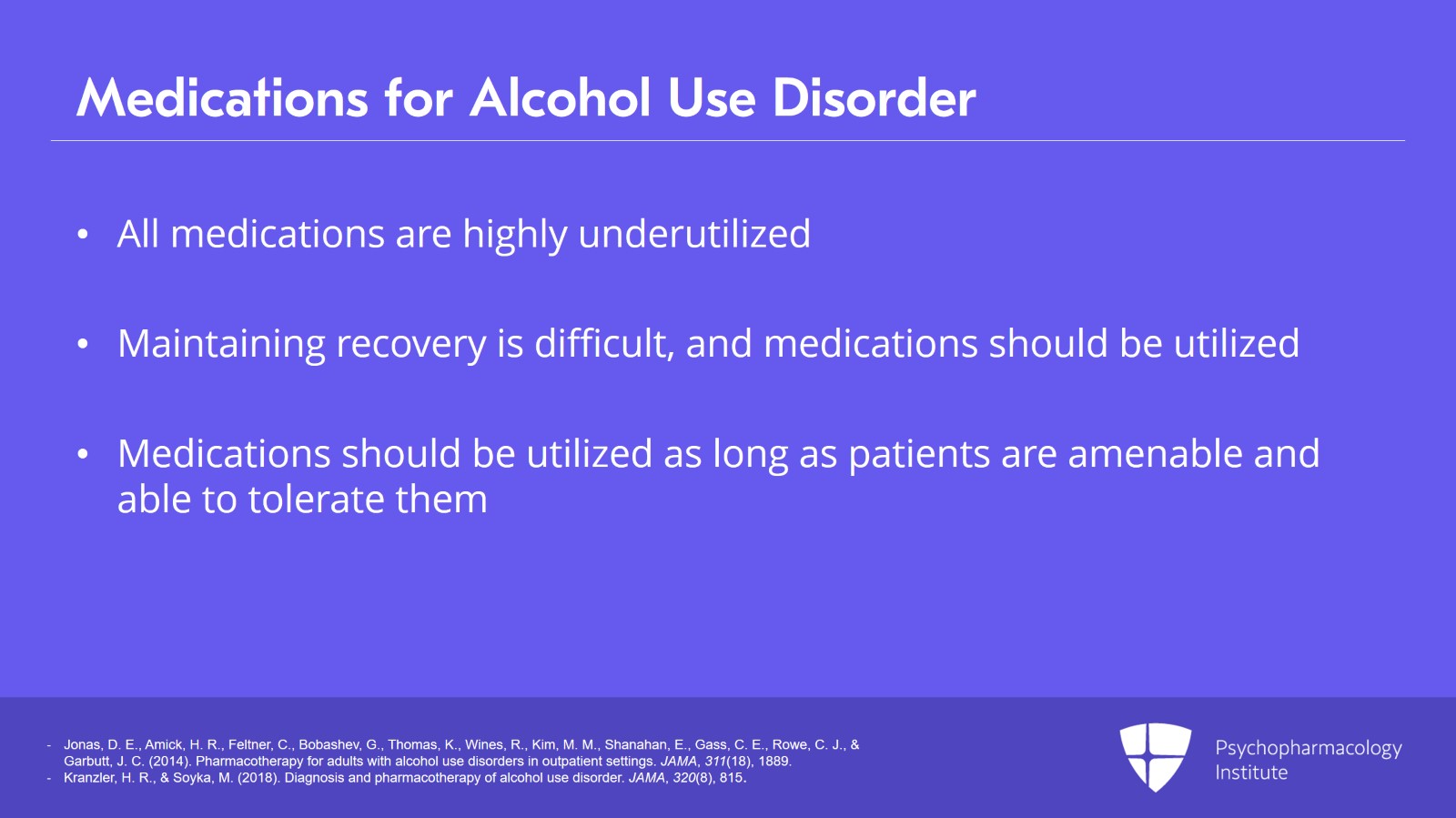
But overall, all medications regardless of whether they're FDA approved or not are highly underutilized. And it really makes sense for clinicians to be thinking about the use of these medications and being comfortable with them because as I mentioned earlier maintaining recovery is difficult even with individuals who are motivated. It's not easy. Most patients require multiple attempts. And if medications do help, they really should be utilized. Now, medications should be utilized as long as patients are amenable and able to tolerate them without side effects. And you know, the overall use is fairly straightforward, not a whole lot of dose titration. I recommend patients to keep trying them as long as they find them beneficial.
References:
- Jonas, D. E., Amick, H. R., Feltner, C., Bobashev, G., Thomas, K., Wines, R., Kim, M. M., Shanahan, E., Gass, C. E., Rowe, C. J., & Garbutt, J. C. (2014). Pharmacotherapy for adults with alcohol use disorders in outpatient settings. JAMA, 311(18), 1889.
- Kranzler, H. R., & Soyka, M. (2018). Diagnosis and pharmacotherapy of alcohol use disorder. JAMA, 320(8), 815.
Free Files
Download PDF and other files
Success!
Check your inbox, we sent you all the materials there.
Slide 5 of 11
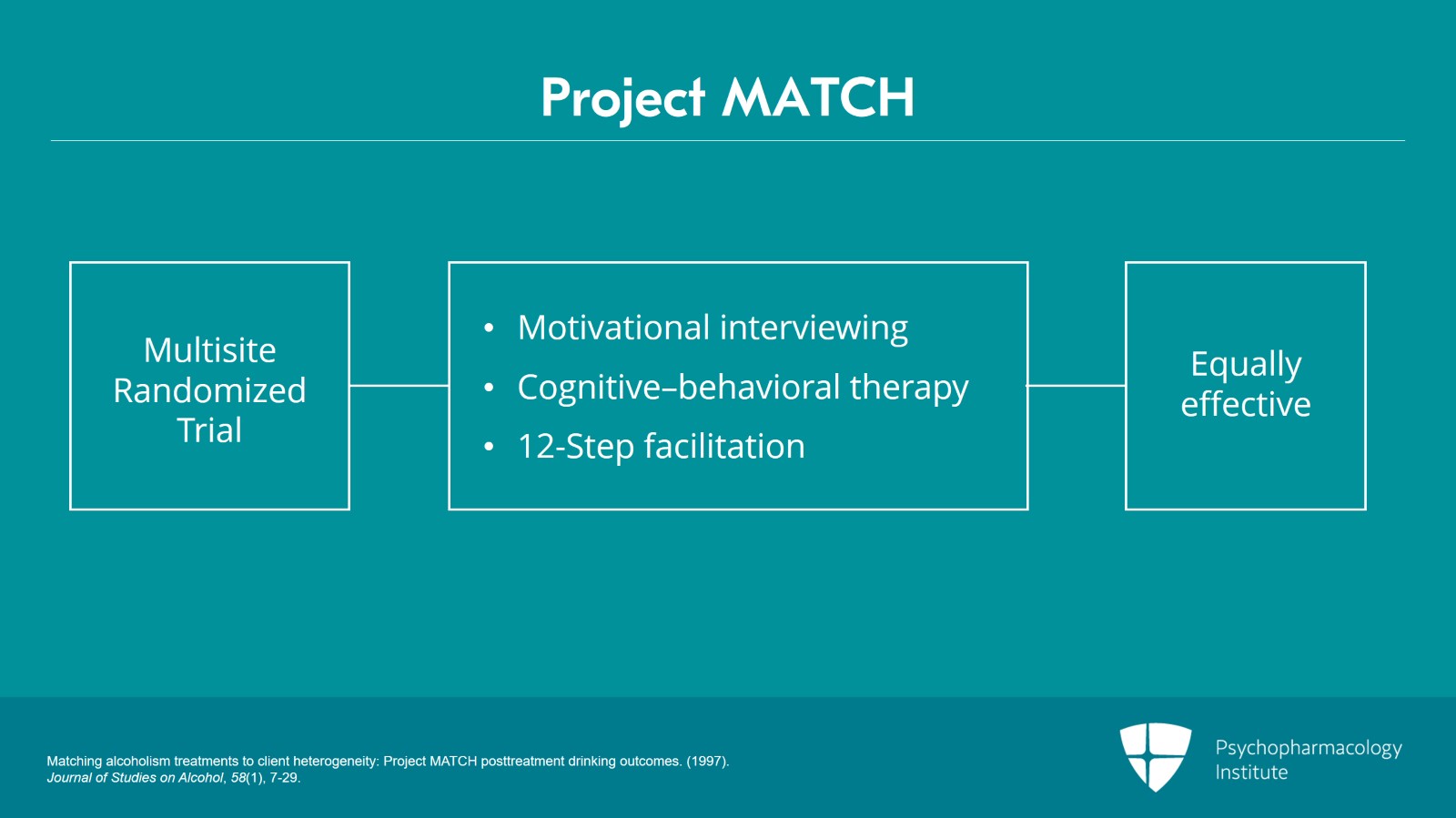
There was a large multi-site randomized trial done, it's been a while, called the Project MATCH where they tested different types of manualized interventions — motivational interviewing, cognitive behavioral therapy and 12-Step facilitation. And they actually were all considered equally effective.
References:
- Matching alcoholism treatments to client heterogeneity: Project MATCH posttreatment drinking outcomes. (1997). Journal of Studies on Alcohol, 58(1), 7-29.
Slide 6 of 11
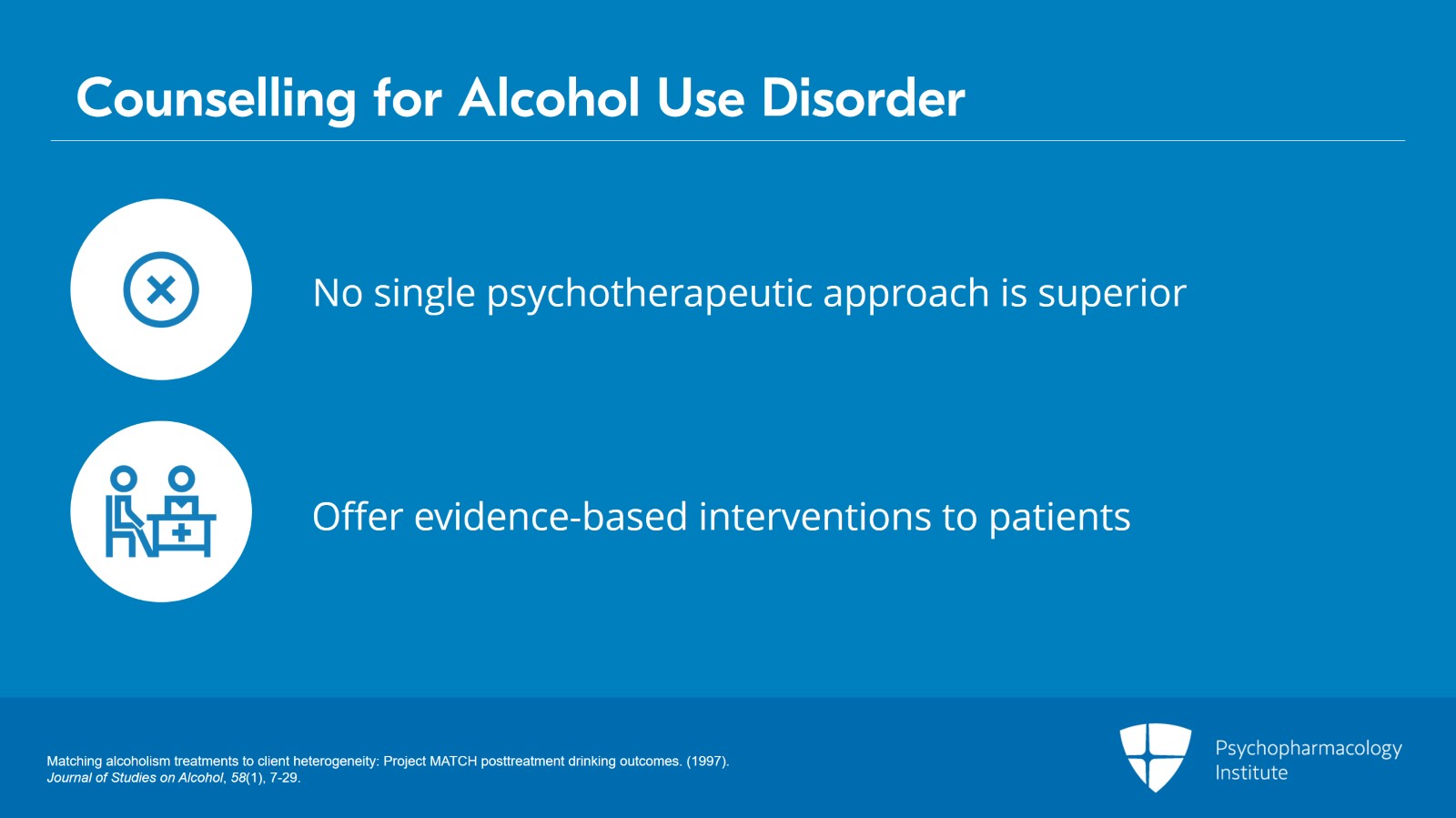
For counseling, there's no single psychotherapeutic approach that is considered superior. And so if patients are amenable, whatever they're willing to do, you know, if they're evidence-based interventions, they should be offered.
References:
- Matching alcoholism treatments to client heterogeneity: Project MATCH posttreatment drinking outcomes. (1997). Journal of Studies on Alcohol, 58(1), 7-29.
Free Files
Download PDF and other files
Success!
Check your inbox, we sent you all the materials there.
Slide 7 of 11
And regardless of the approach, there will always be a role for maximizing the patient's own desires for staying engaged in recovery, learning skills to manage cravings and treating any sort of comorbid psychiatric disorders such as depression and anxiety.
References:
- Patel, A. K., & Balasanova, A. A. (2021). Treatment of alcohol use disorder. JAMA, 325(6), 596.
Slide 8 of 11
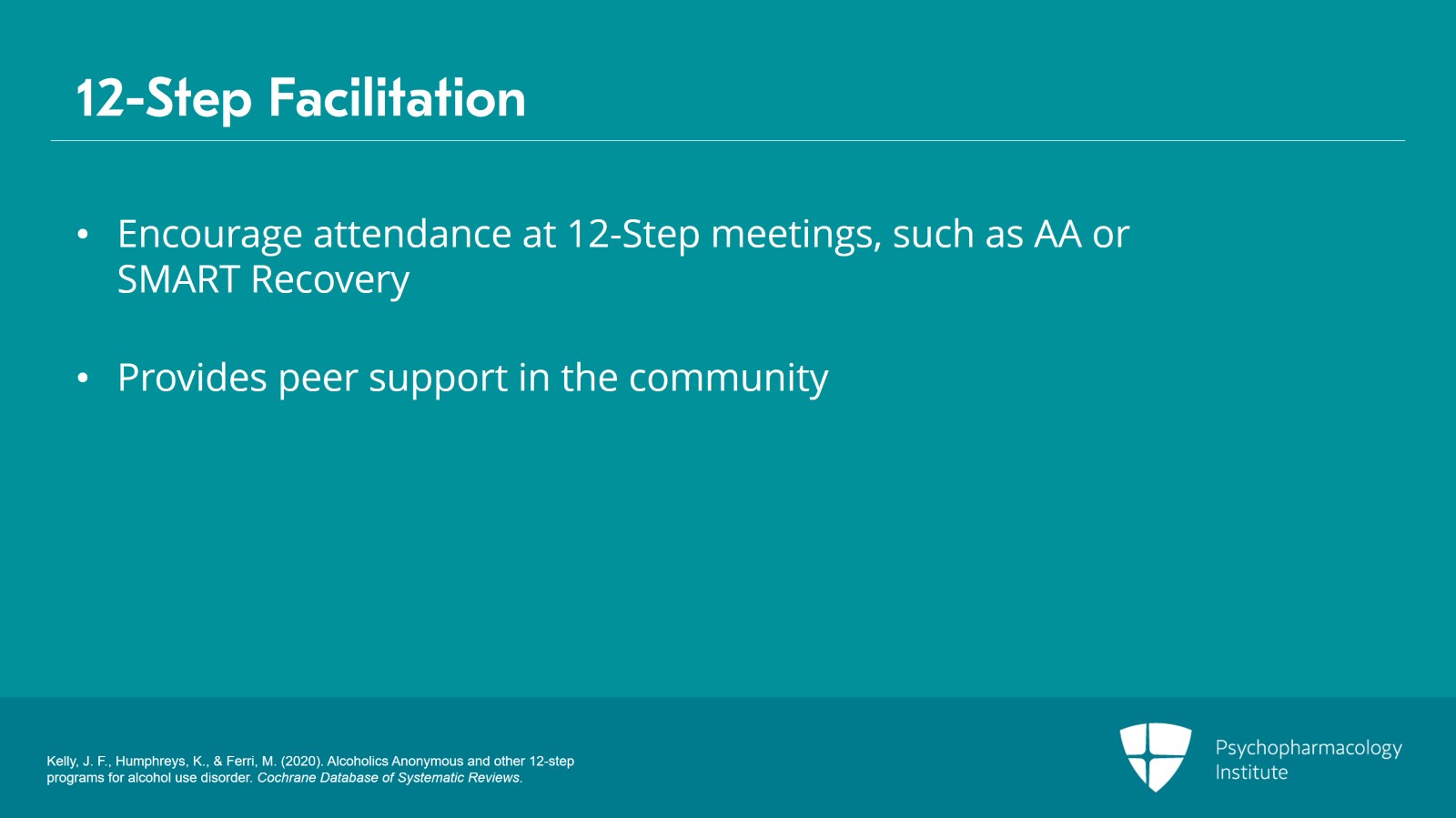
Twelve-Step facilitation, for those who may not know is a way to utilize a clinical encounter as a way to encourage attendance at 12-Step meetings like AA or Smart Recovery which many, many patients find to be a critical adjunct to treatment and for those in recovery particularly because it provides that sort of peer support in the community. And it's really actually important to be able to create this new social support system that is recovery-supportive because, you know, many individuals in recovery initially don't have a whole lot of support system in place who are sober. Obviously, recovery is going to be difficult if you continue to socialize with people who continue to use or drink or if you go to the bar, that sort of thing.
References:
- Kelly, J. F., Humphreys, K., & Ferri, M. (2020). Alcoholics Anonymous and other 12-step programs for alcohol use disorder. Cochrane Database of Systematic Reviews.
Free Files
Download PDF and other files
Success!
Check your inbox, we sent you all the materials there.
Slide 9 of 11
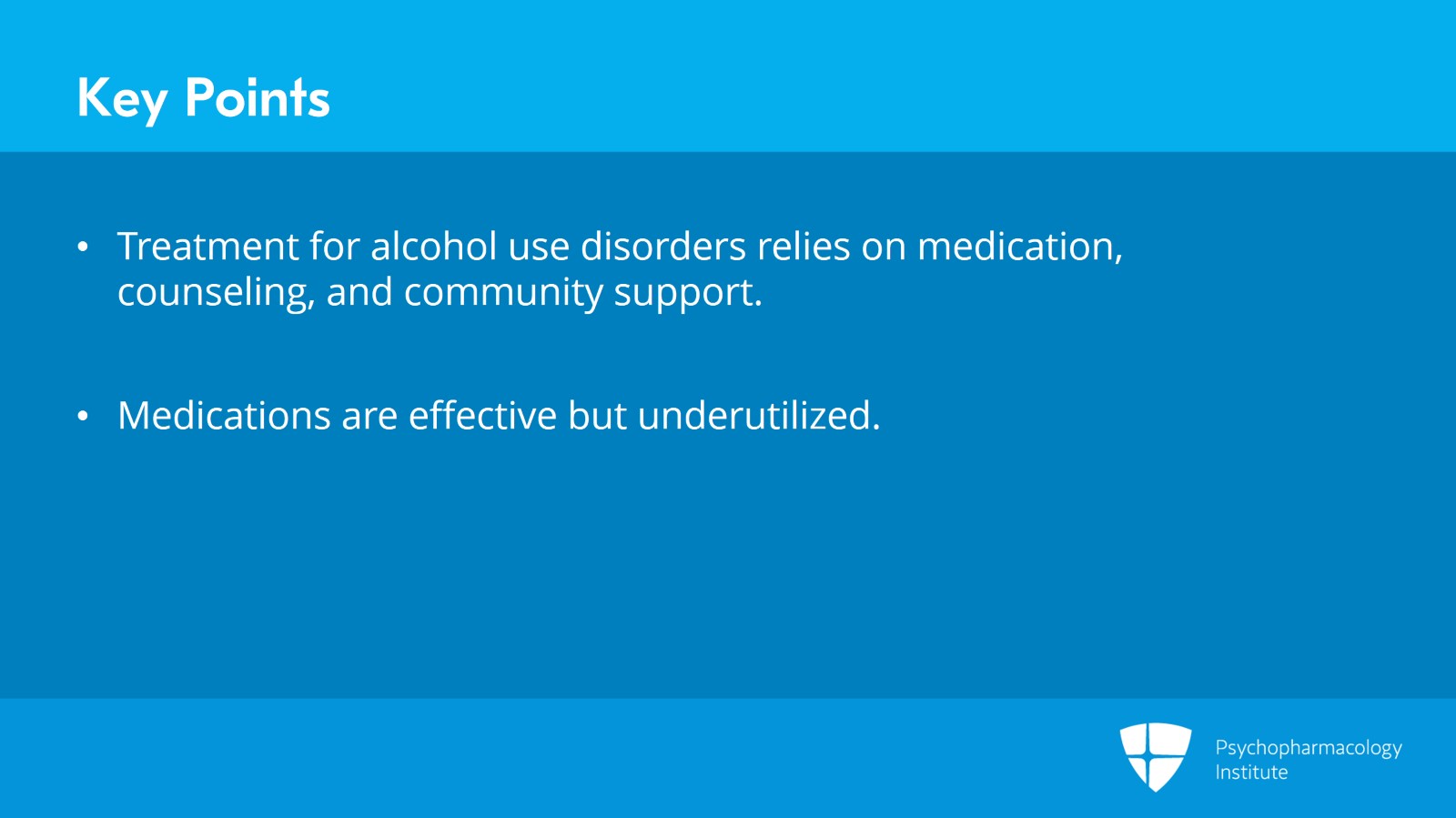
So the key points for this section are treatment for alcohol use disorders is similar to other substance use disorders and should rely on the three main pillars of treatment — medication/pharmacologic approaches, counseling or psychosocial support and creating a sort of supportive community environment. Medications are actually effective but are often very much underutilized and clinicians really should be encouraged to think about them more often.
Slide 10 of 11
A variety of psychotherapeutic approaches can be utilized to sort of remain motivated, learn how to prevent relapse, to cope with cravings. And then consider incorporating 12-Step treatment into their overall recovery.
Free Files
Download PDF and other files
Success!
Check your inbox, we sent you all the materials there.