Close Banner
Section Free  - Video Lectures

05. Zolpidem-Induced Sleepwalking and SRED

Published on March 1, 2023 Certification expiration date: March 1, 2026

Carlos H. Schenck, M.D.

Professor & Senior Staff Psychiatrist at the Hennepin County Medical Center (HCMC) - University of Minnesota

Key Points

  • Zolpidem can induce de novo SRED.
  • Females taking higher doses of zolpidem and other psychotropic medications are the most vulnerable patients.
  • The risk of zolpidem-induced SRED increases with complex clinical scenarios.
  • There is an FDA warning regarding complex sleep behaviors induced by insomnia medications.
  • Get a family history and a personal history for parasomnia before prescribing zolpidem. 

Free Downloads for Offline Access

  • Free Download Presentation File (PPTX)
  • Free Download Video (MP4)
  • Free Download Audio File (MP3)

Slides and Transcript
Slide 1 of 23

I will now elaborate more on the important topic of zolpidem-induced sleepwalking and sleep-related eating disorder.

Slide 2 of 23

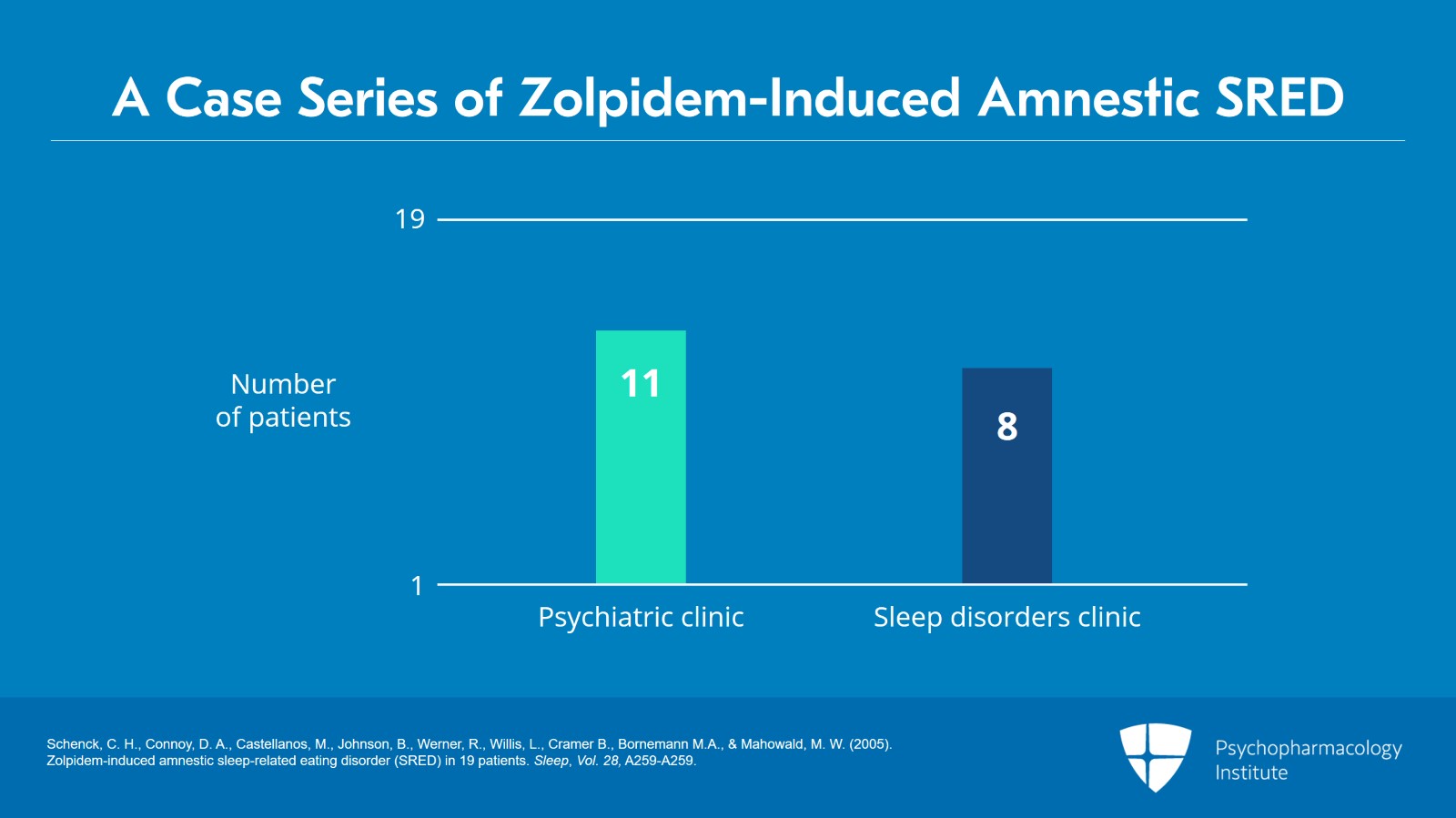
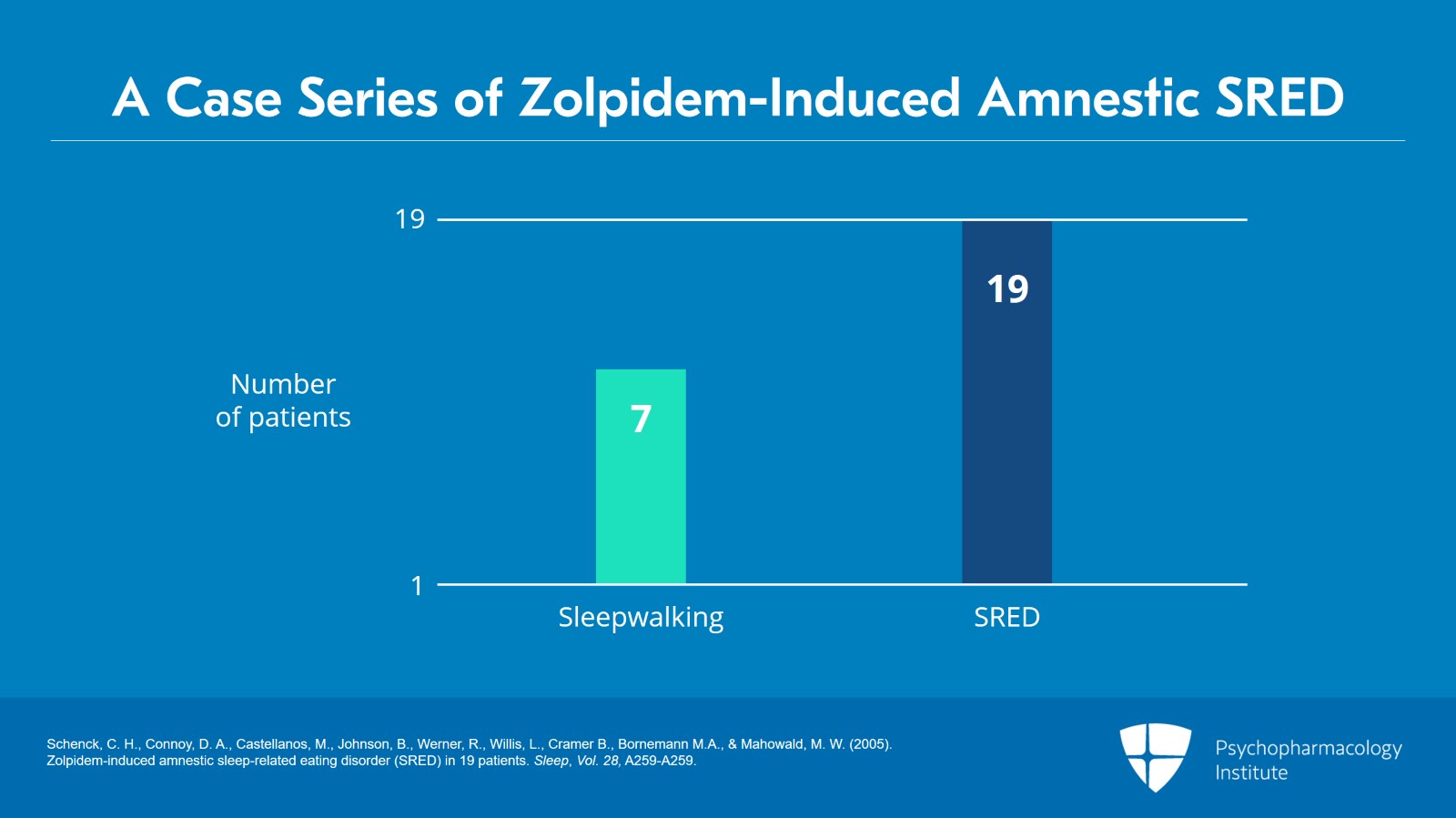
Now together with my colleagues both at the sleep center and the psychiatry clinic at Hennepin County Medical Center in Minneapolis, we published a series of 19 cases of zolpidem-induced amnestic sleep-related eating disorder in 2005 and this was during a two-year period during routine clinical work. Eleven of these patients were in the psychiatry clinic and eight were in our sleep disorders clinic.
References:
  • Schenck, C. H., Connoy, D. A., Castellanos, M., Johnson, B., Werner, R., Willis, L., Cramer B., Bornemann M.A., & Mahowald, M. W. (2005). Zolpidem-induced amnestic sleep-related eating disorder (SRED) in 19 patients. Sleep, Vol. 28, A259-A259.
Free Files
Success!
Check your inbox, we sent you all the materials there.
Slide 3 of 23

And seven had zolpidem-induced amnestic non-eating parasomnia sleepwalking, but 19 cases of sleep-related eating disorder.
References:
  • Schenck, C. H., Connoy, D. A., Castellanos, M., Johnson, B., Werner, R., Willis, L., Cramer B., Bornemann M.A., & Mahowald, M. W. (2005). Zolpidem-induced amnestic sleep-related eating disorder (SRED) in 19 patients. Sleep, Vol. 28, A259-A259.

Slide 4 of 23

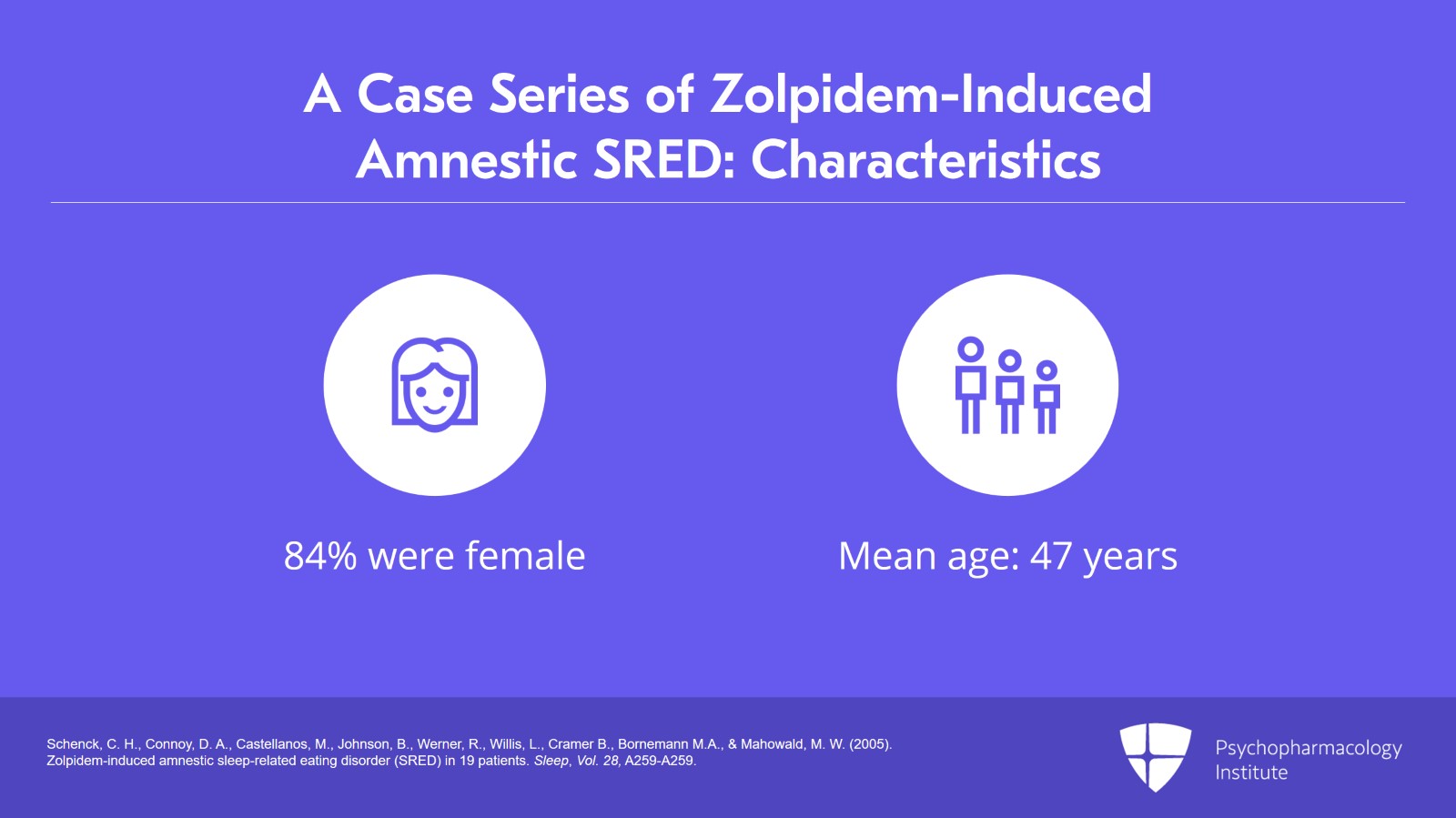
Eighty-four percent were females. The mean age was 47 years, and the range was very impressive extending from 17 years to 78 years.
References:
  • Schenck, C. H., Connoy, D. A., Castellanos, M., Johnson, B., Werner, R., Willis, L., Cramer B., Bornemann M.A., & Mahowald, M. W. (2005). Zolpidem-induced amnestic sleep-related eating disorder (SRED) in 19 patients. Sleep, Vol. 28, A259-A259.
Free Files
Success!
Check your inbox, we sent you all the materials there.
Slide 5 of 23

So, again, a female-predominant disorder either with idiopathic sleep-related eating disorder or with zolpidem-induced sleep-related eating disorder.
References:
  • Schenck, C. H., Connoy, D. A., Castellanos, M., Johnson, B., Werner, R., Willis, L., Cramer B., Bornemann M.A., & Mahowald, M. W. (2005). Zolpidem-induced amnestic sleep-related eating disorder (SRED) in 19 patients. Sleep, Vol. 28, A259-A259.

Slide 6 of 23

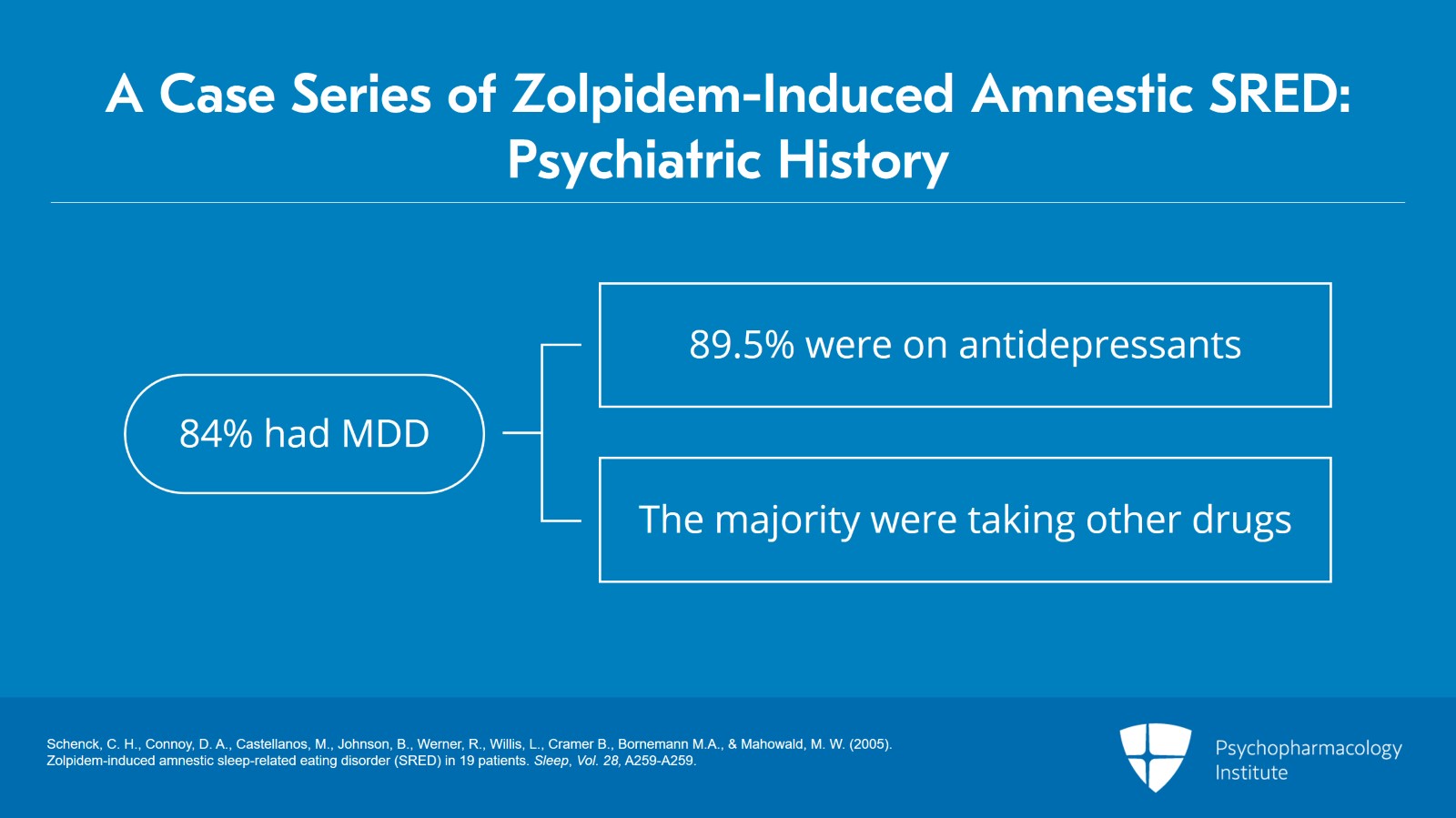
Eighty-four percent had recent and/or current major depression, 89.5% were taking antidepressant drugs when zolpidem had induced a sleep-related eating disorder, and the majority of patients were taking other drugs for various psychiatric and medical disorders.
References:
  • Schenck, C. H., Connoy, D. A., Castellanos, M., Johnson, B., Werner, R., Willis, L., Cramer B., Bornemann M.A., & Mahowald, M. W. (2005). Zolpidem-induced amnestic sleep-related eating disorder (SRED) in 19 patients. Sleep, Vol. 28, A259-A259.
Free Files
Success!
Check your inbox, we sent you all the materials there.
Slide 7 of 23

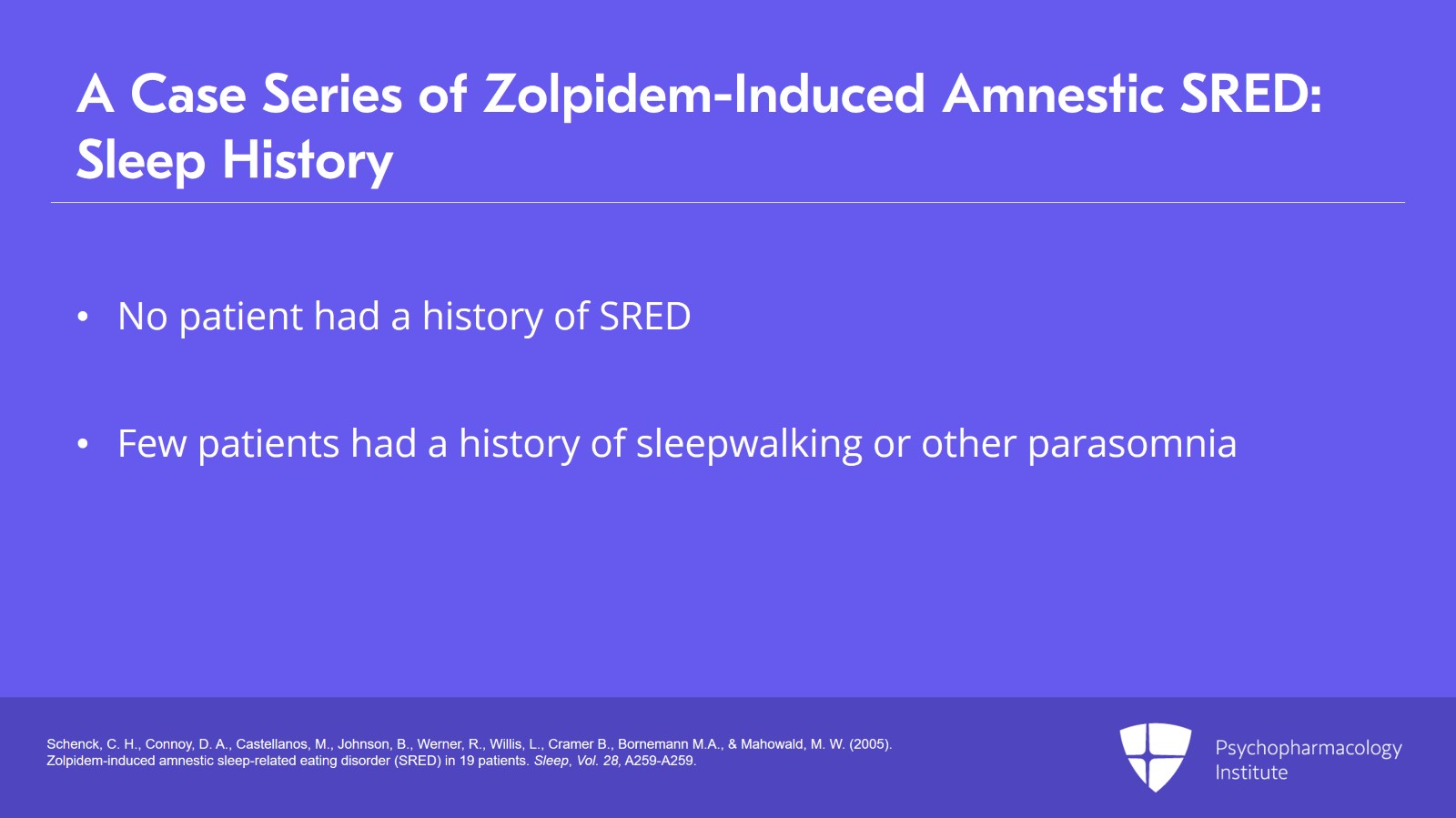
No patient had a past history of sleep-related eating disorder. Very few of these patients had a past history of sleepwalking or other parasomnia.
References:
  • Schenck, C. H., Connoy, D. A., Castellanos, M., Johnson, B., Werner, R., Willis, L., Cramer B., Bornemann M.A., & Mahowald, M. W. (2005). Zolpidem-induced amnestic sleep-related eating disorder (SRED) in 19 patients. Sleep, Vol. 28, A259-A259.

Slide 8 of 23

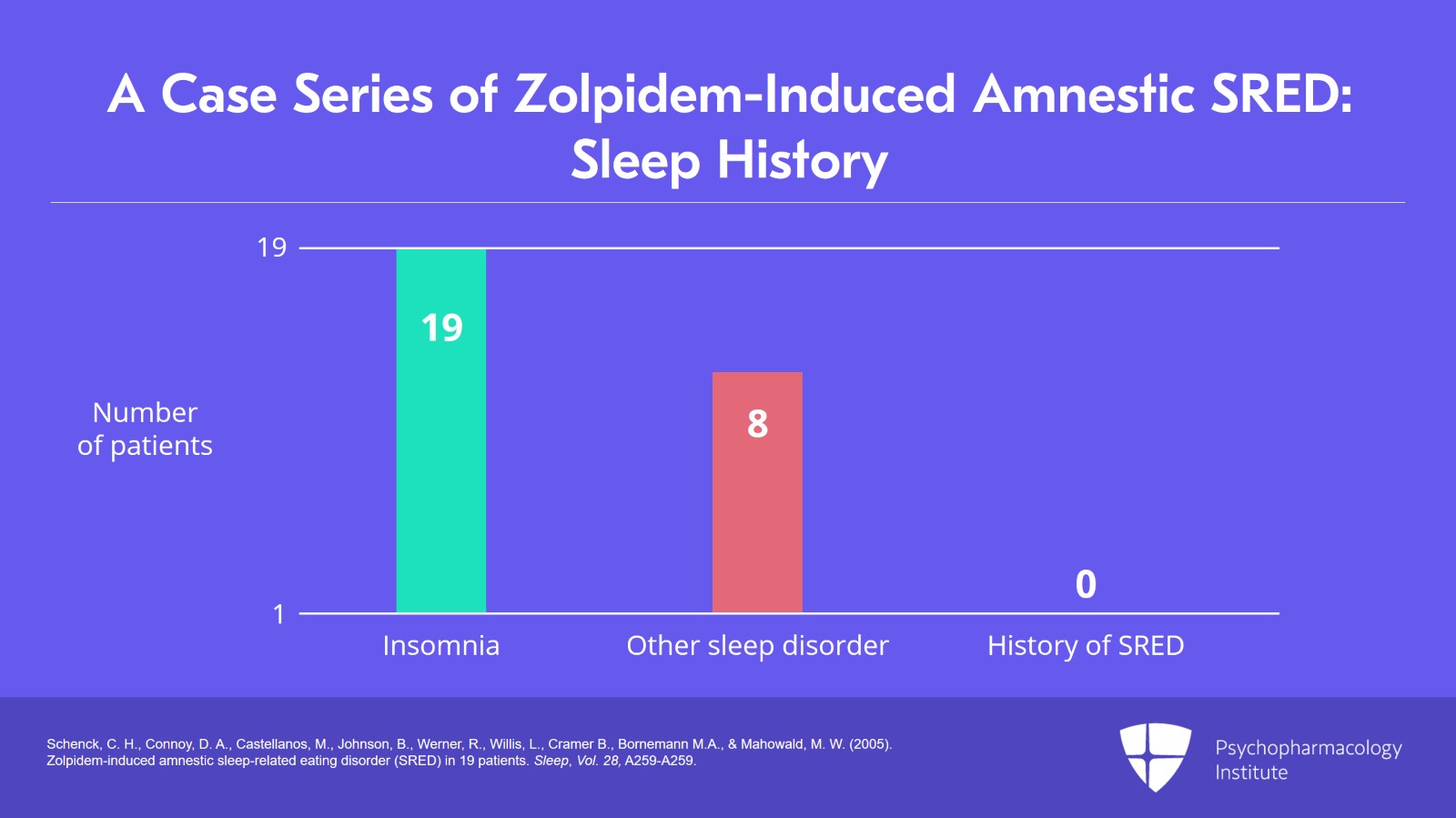
All patients had persistent insomnia, 42.1% had more than one other sleep disorder, involving obstructive sleep apnea in three, narcolepsy in two, and one each for sleepwalking, restless legs syndrome, REM sleep behavior disorder, and delayed sleep phase syndrome, but no prior history of sleep-related eating disorder.
References:
  • Schenck, C. H., Connoy, D. A., Castellanos, M., Johnson, B., Werner, R., Willis, L., Cramer B., Bornemann M.A., & Mahowald, M. W. (2005). Zolpidem-induced amnestic sleep-related eating disorder (SRED) in 19 patients. Sleep, Vol. 28, A259-A259.
Free Files
Success!
Check your inbox, we sent you all the materials there.
Slide 9 of 23

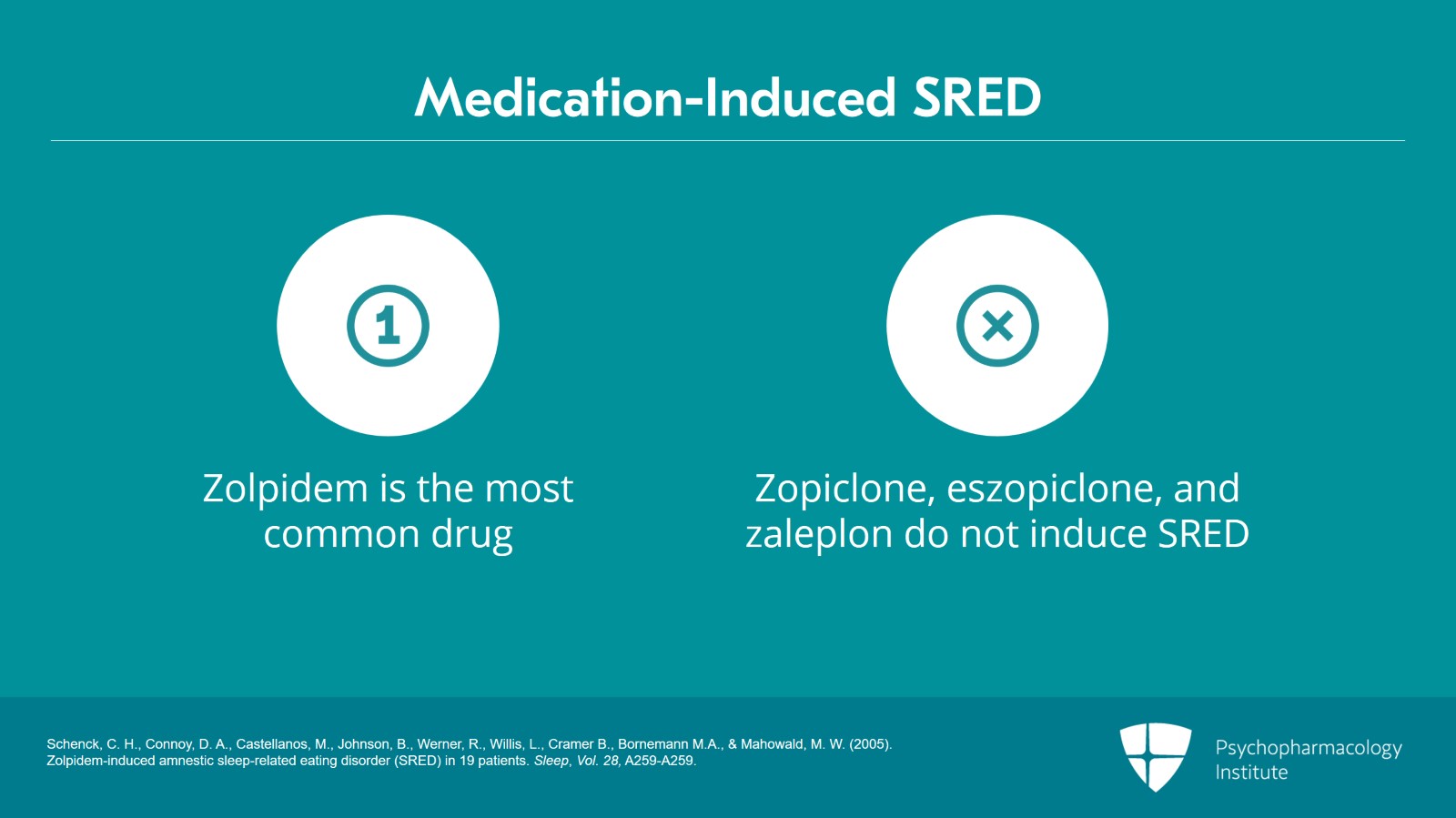
Zolpidem appears to be the most common drug that can induce amnestic sleep-related eating disorder. Nevertheless, only a small percent of patients treated with zolpidem will develop sleep-related eating disorder. Zopiclone, eszopiclone and zaleplon, that are similar to zolpidem, apparently did not have similar effects.
References:
  • Schenck, C. H., Connoy, D. A., Castellanos, M., Johnson, B., Werner, R., Willis, L., Cramer B., Bornemann M.A., & Mahowald, M. W. (2005). Zolpidem-induced amnestic sleep-related eating disorder (SRED) in 19 patients. Sleep, Vol. 28, A259-A259.

Slide 10 of 23

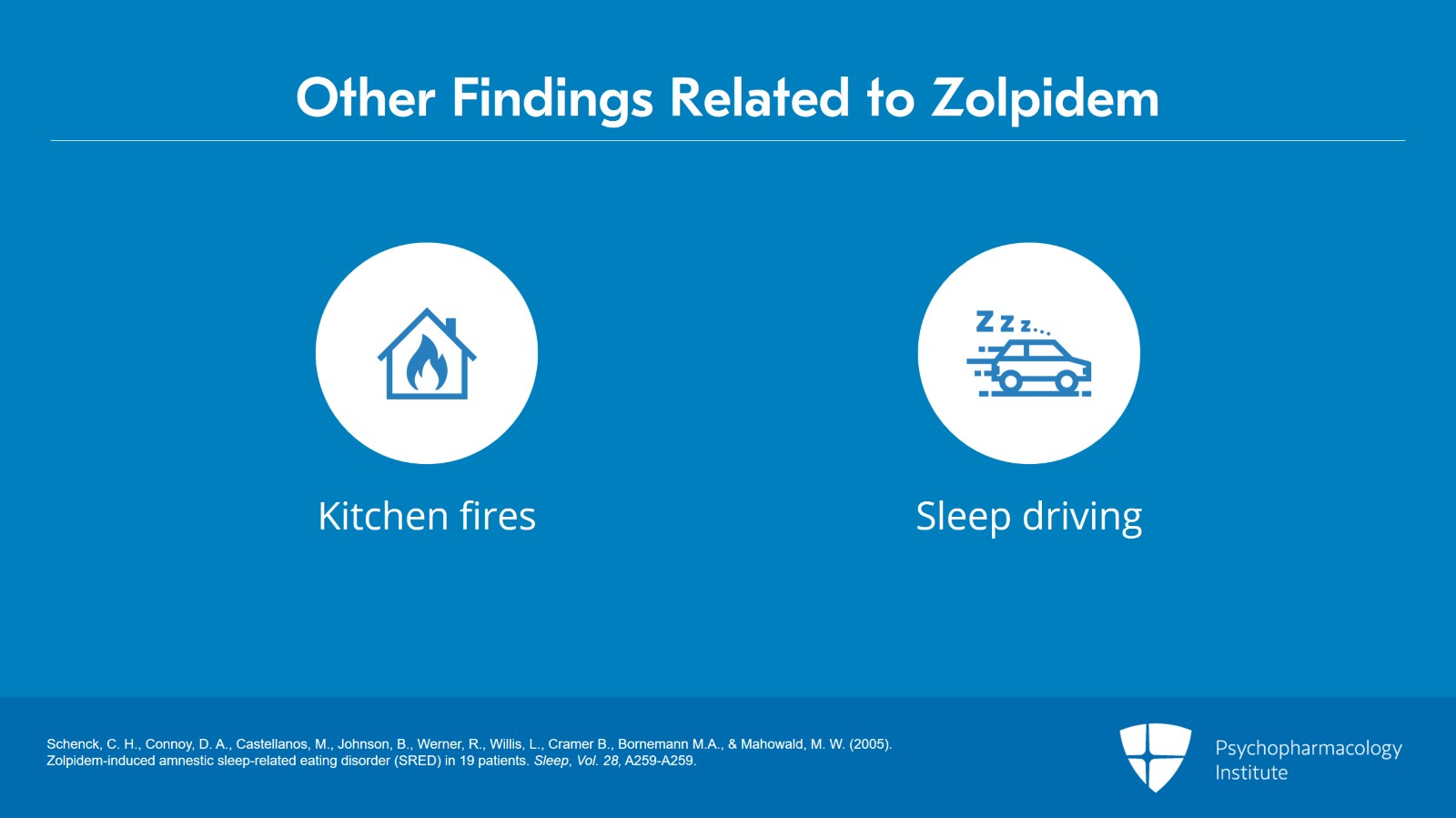
Also, two patients started kitchen fires related to zolpidem. Two had sleep driving. Both cases of sleep driving occurred when the patients took the zolpidem as prescribed at home.
References:
  • Schenck, C. H., Connoy, D. A., Castellanos, M., Johnson, B., Werner, R., Willis, L., Cramer B., Bornemann M.A., & Mahowald, M. W. (2005). Zolpidem-induced amnestic sleep-related eating disorder (SRED) in 19 patients. Sleep, Vol. 28, A259-A259.
Free Files
Success!
Check your inbox, we sent you all the materials there.
Slide 11 of 23

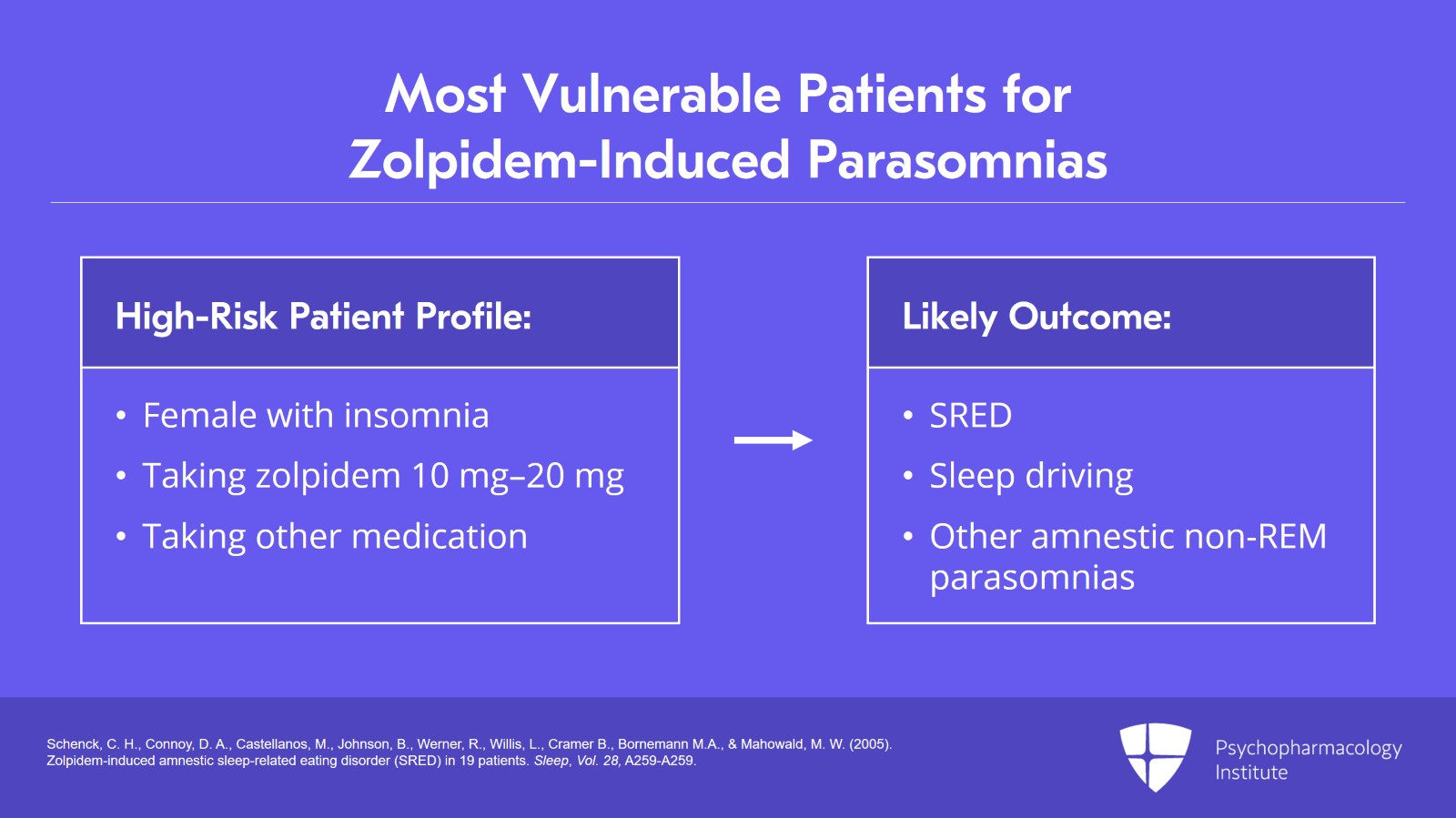
These are the most vulnerable patients, the most complex cases: females with insomnia taking 10 to 20 mg of zolpidem and taking medications for major depression and other psychiatric sleep or medical disorders. In other words, complex patients with complex pharmacology, the more likely zolpidem will induce sleep-related eating disorder or sleep driving and other amnestic non-REM parasomnias.
References:
  • Schenck, C. H., Connoy, D. A., Castellanos, M., Johnson, B., Werner, R., Willis, L., Cramer B., Bornemann M.A., & Mahowald, M. W. (2005). Zolpidem-induced amnestic sleep-related eating disorder (SRED) in 19 patients. Sleep, Vol. 28, A259-A259.

Slide 12 of 23

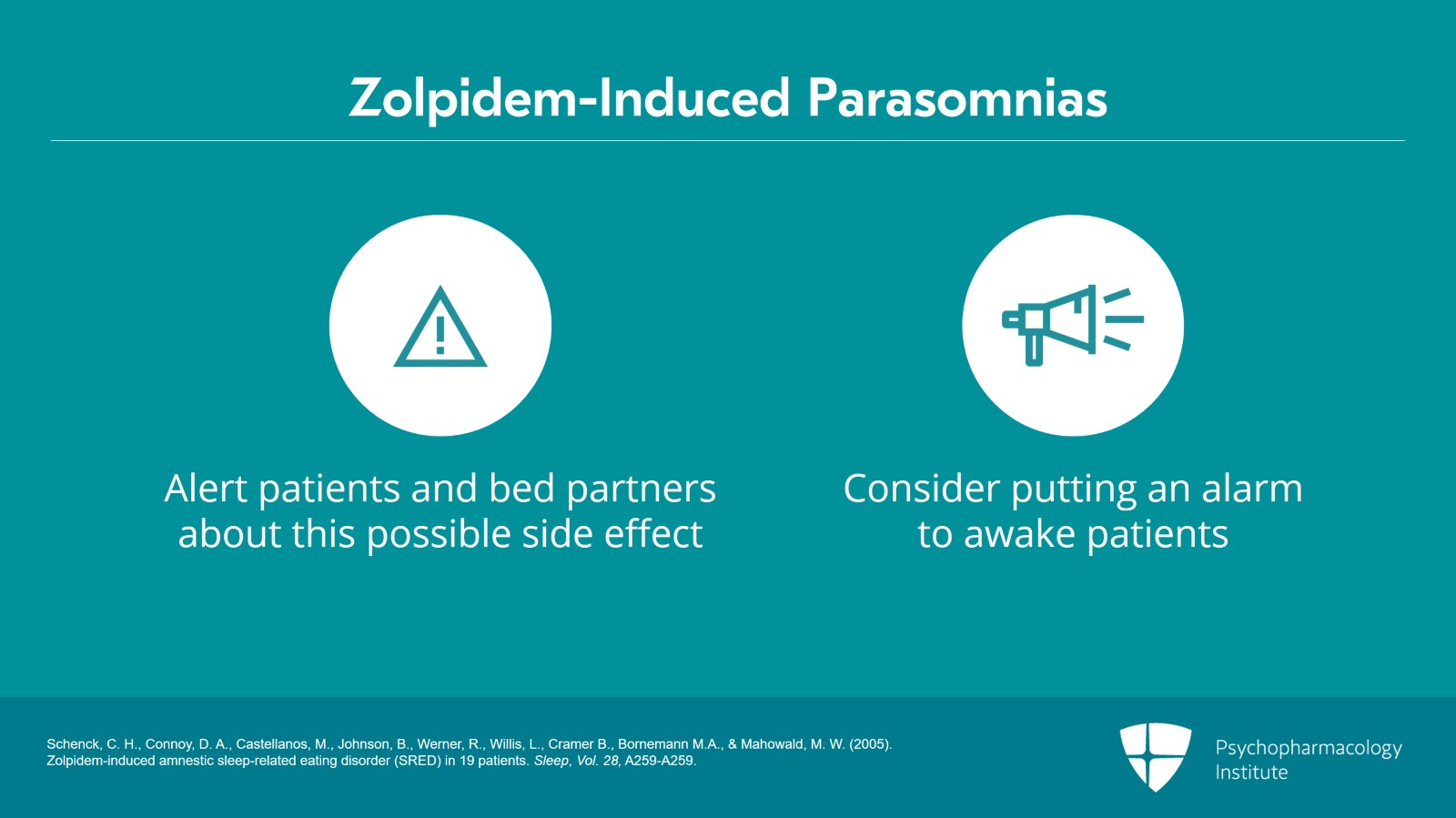
Therefore, physicians should alert patients about this possible side effect when prescribing zolpidem and certainly alert the bed partner. And if someone sleeps alone, consider putting in a door alarm to fully awaken them if they seem to have sleepwalked during the night and want to get out of their own bedroom.
References:
  • Schenck, C. H., Connoy, D. A., Castellanos, M., Johnson, B., Werner, R., Willis, L., Cramer B., Bornemann M.A., & Mahowald, M. W. (2005). Zolpidem-induced amnestic sleep-related eating disorder (SRED) in 19 patients. Sleep, Vol. 28, A259-A259.
Free Files
Success!
Check your inbox, we sent you all the materials there.
Slide 13 of 23

The good news is that cessation of zolpidem promptly stopped the sleep-related eating disorder in all 19 patients.
References:
  • Schenck, C. H., Connoy, D. A., Castellanos, M., Johnson, B., Werner, R., Willis, L., Cramer B., Bornemann M.A., & Mahowald, M. W. (2005). Zolpidem-induced amnestic sleep-related eating disorder (SRED) in 19 patients. Sleep, Vol. 28, A259-A259.

Slide 14 of 23

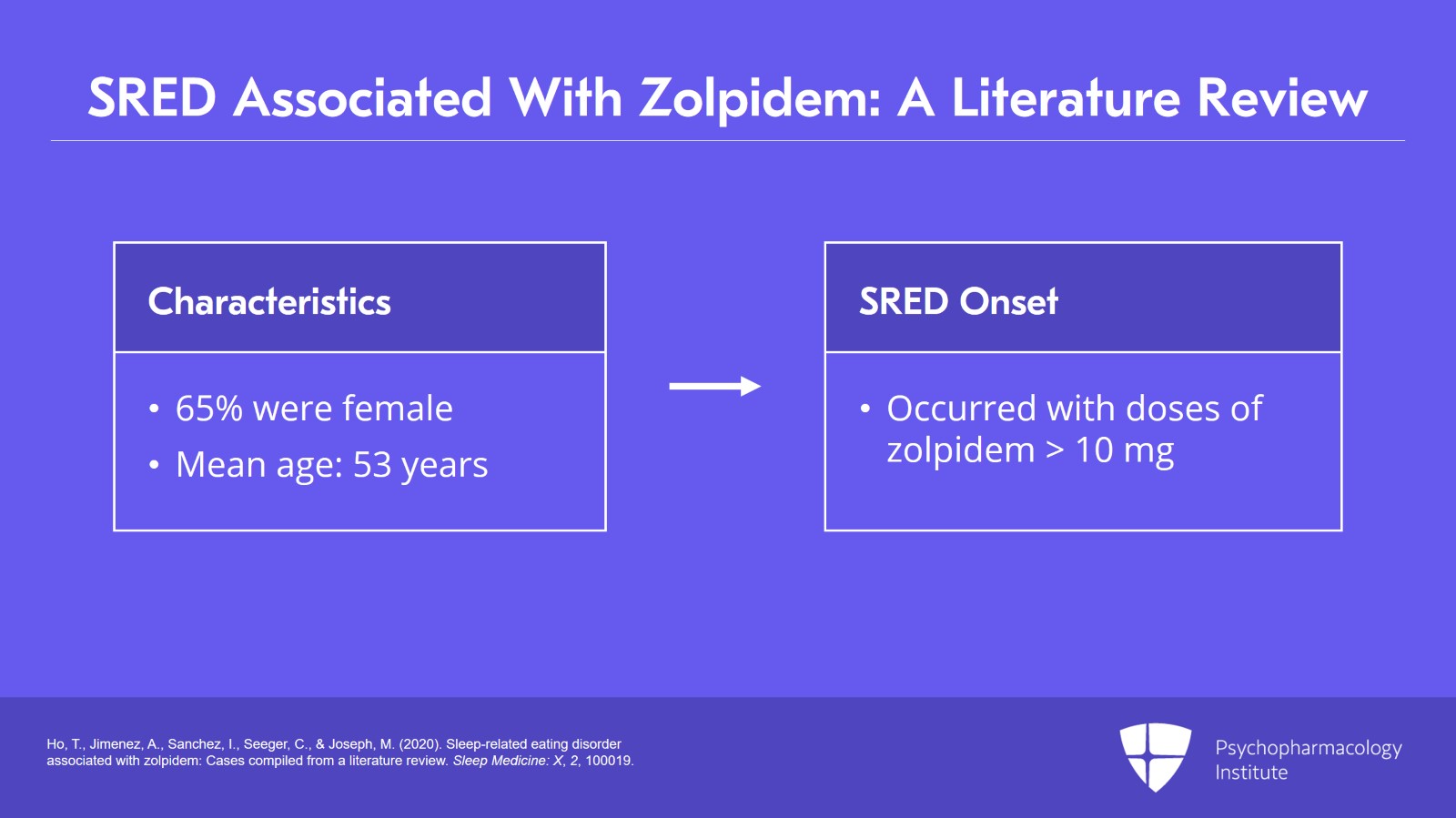
In the journal Sleep Medicine: X 2020, there was an important article entitled, Sleep-related Eating Disorder Associated with Zolpidem: Cases Compiled from a Literature Review. So, the authors did an extensive database search both in English and in Spanish. They found 40 cases involving 65% females, mean age 53 years. The onset of sleep-related eating disorder occurred with nightly doses of zolpidem of greater than 10 mg. There should be a theme that's obvious to all of us by now. A dose of zolpidem more than 10 mg at bedtime is inviting trouble basically.
References:
  • Ho, T., Jimenez, A., Sanchez, I., Seeger, C., & Joseph, M. (2020). Sleep-related eating disorder associated with zolpidem: Cases compiled from a literature review. Sleep Medicine: X, 2, 100019.
Free Files
Success!
Check your inbox, we sent you all the materials there.
Slide 15 of 23

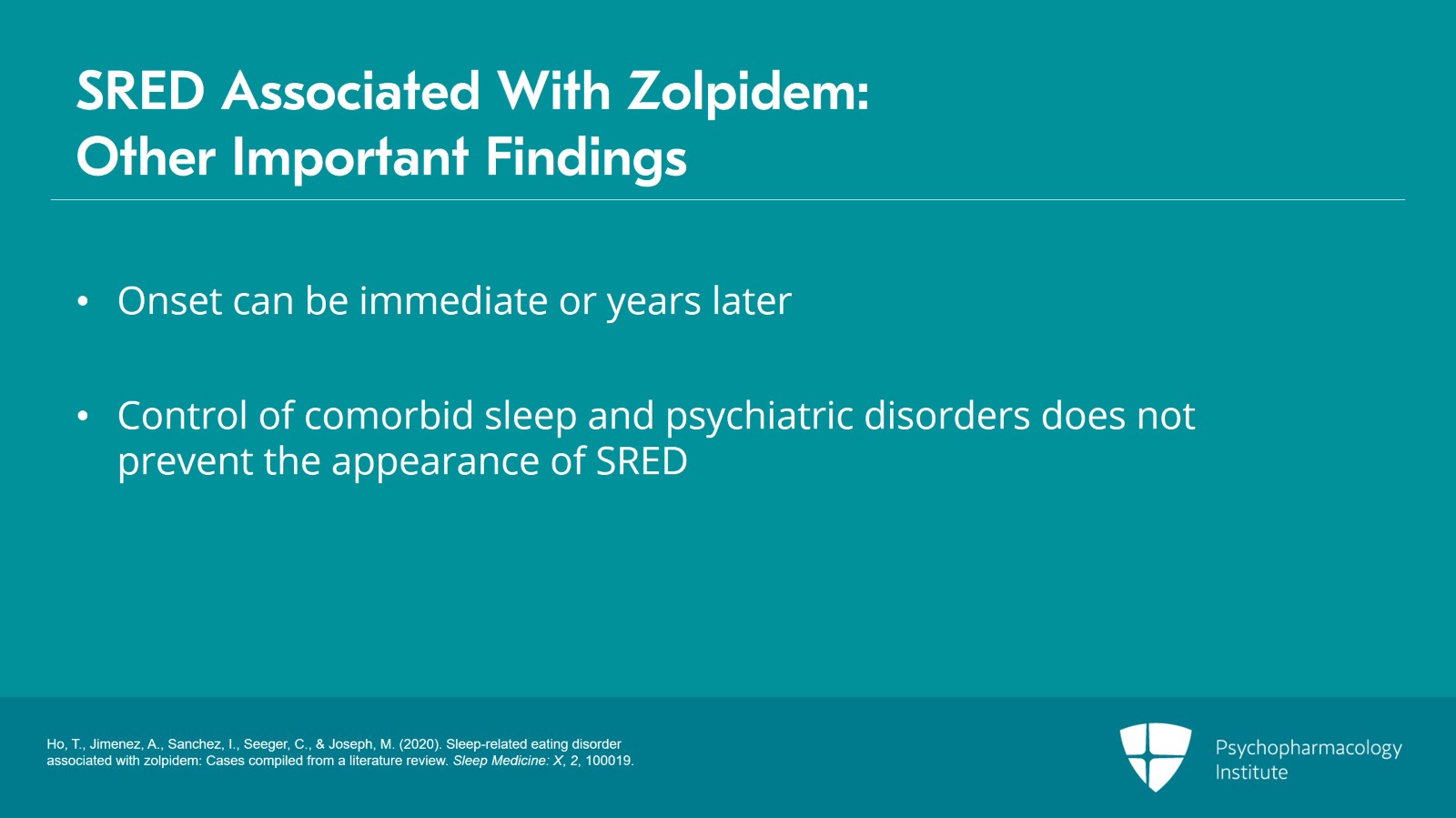
The onset of sleep-related eating disorder came with the first dose or even as late as nine years after use. So that's an important factor to keep in mind. There was also comorbid sleep, and psychiatric disorders, involving obstructive sleep apnea in 35% of these patients, restless legs syndrome in 25% of the patients, and clinical depression in 32% of these cases. However, control of these comorbid sleep and psychiatric disorders did not prevent the zolpidem-induced sleep-related eating disorder. That's an important point to consider.
References:
  • Ho, T., Jimenez, A., Sanchez, I., Seeger, C., & Joseph, M. (2020). Sleep-related eating disorder associated with zolpidem: Cases compiled from a literature review. Sleep Medicine: X, 2, 100019.

Slide 16 of 23

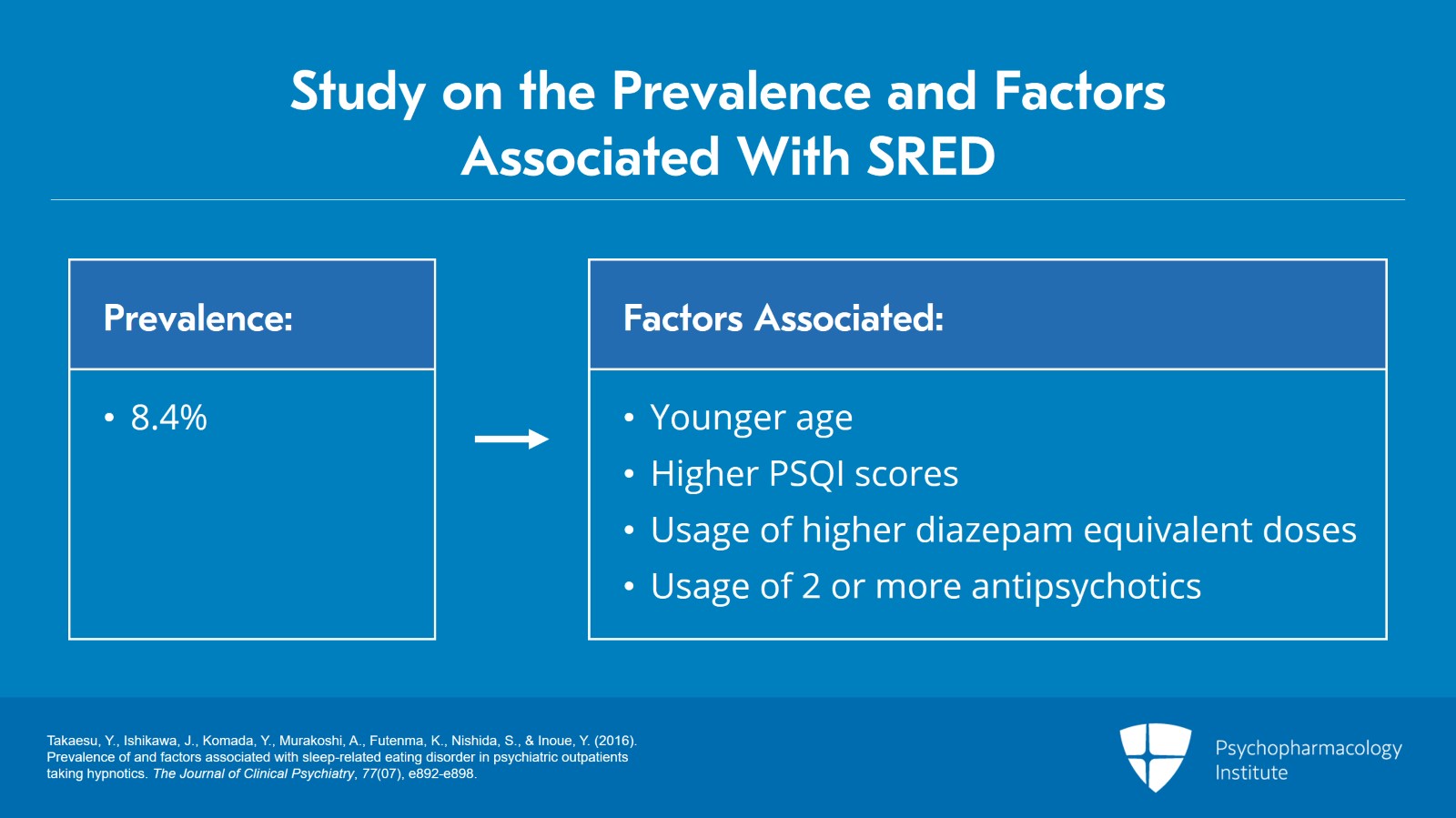
And here's another study: Journal of Clinical Psychiatry in 2016, Prevalence and Factors Associated with Sleep-related Eating Disorder in Psychiatric Outpatients Taking Hypnotics. This was a Japanese study from Tokyo, a cross-sectional questionnaire study. They found 8.4% sleep-related eating disorder in this questionnaire study, significantly younger patients, higher PSQI scores, and took significantly higher bedtime diazepam equivalent doses of hypnotics compared to patients who did not develop sleep-related eating disorder. Also, taking two or more antipsychotics was an additional risk factor.
References:
  • Takaesu, Y., Ishikawa, J., Komada, Y., Murakoshi, A., Futenma, K., Nishida, S., & Inoue, Y. (2016). Prevalence of and factors associated with sleep-related eating disorder in psychiatric outpatients taking hypnotics. The Journal of Clinical Psychiatry, 77(07), e892-e898.
Free Files
Success!
Check your inbox, we sent you all the materials there.
Slide 17 of 23

Now, there's another study entitled, Zolpidem for Insomnia: A Double-edged Sword. A Systematic Literature Review on Zolpidem-induced Complex Sleep Behaviors, published in the Indian Journal of Psychological Medicine 2021. Again, there was an extensive literature search, database search on the internet, looking for any type of complex sleep behaviors associated with zolpidem. They identified 148 patients. And the most common complex sleep behavior reported was sleepwalking and sleep-related eating disorder. This is repeating what we've known but with more data. There was an 88% probability association of complex sleep behaviors associated with zolpidem use. And there were three observational case series that found a 4.7% incidence, 69 out of 1454 patients with zolpidem-associated complex sleep behaviors.
References:
  • Mittal, N., Mittal, R., & Gupta, M. C. (2021). Zolpidem for insomnia: A double-edged sword. A systematic literature review on zolpidem-induced complex sleep behaviors. Indian Journal of Psychological Medicine, 43(5), 373-381.

Slide 18 of 23

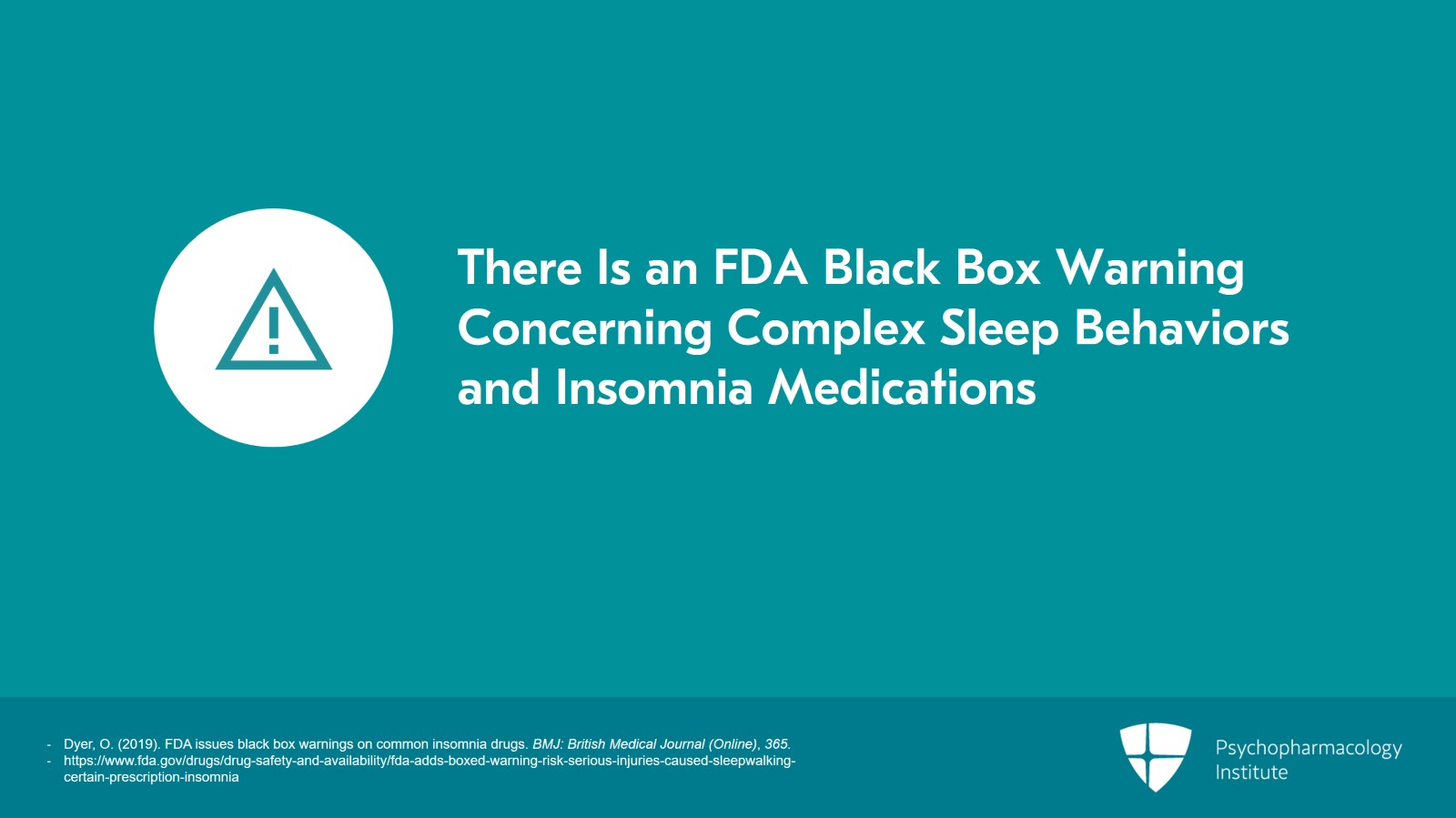
There is now an FDA black box warning, dated April 30, 2019, concerning complex sleep behaviors and insomnia medications. This is what the FDA wrote: "Side effects may include dangerous behaviors done while sleeping such as eating, walking, driving, engaging in a range of activities in your sleep that can lead to injury or death.“
References:
  • Dyer, O. (2019). FDA issues black box warnings on common insomnia drugs. BMJ: British Medical Journal (Online), 365.
  • https://www.fda.gov/drugs/drug-safety-and-availability/fda-adds-boxed-warning-risk-serious-injuries-caused-sleepwalking-certain-prescription-insomnia
Free Files
Success!
Check your inbox, we sent you all the materials there.
Slide 19 of 23

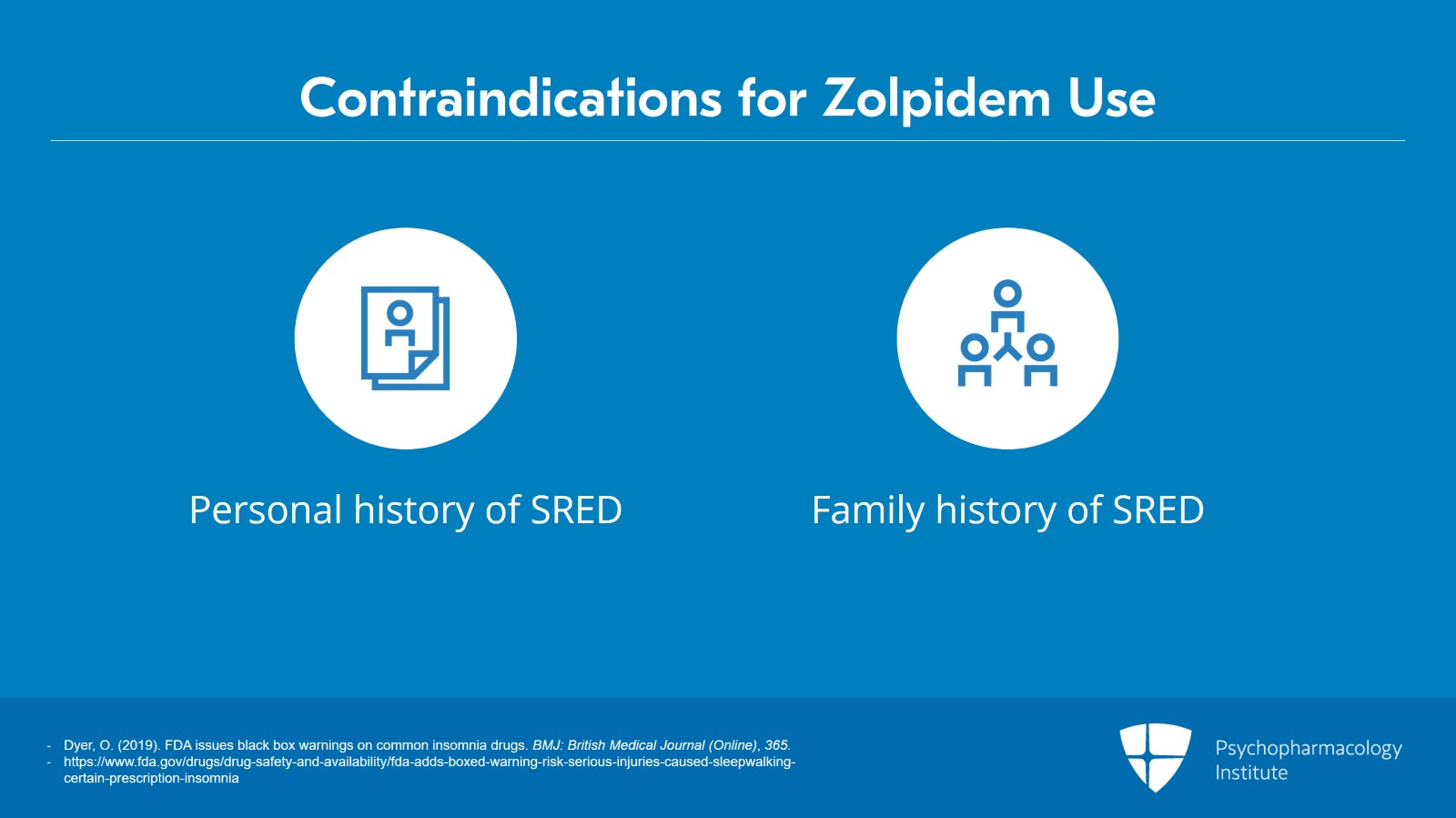
According to the FDA, a personal history of sleep-related eating disorder is a contraindication to zolpidem use, and a family history of sleep-related eating disorder is a relative contraindication. So, you need to get a family history for parasomnia, in addition to a personal history of parasomnia, in patients for whom you're thinking of prescribing zolpidem.
References:
  • Dyer, O. (2019). FDA issues black box warnings on common insomnia drugs. BMJ: British Medical Journal (Online), 365.
  • https://www.fda.gov/drugs/drug-safety-and-availability/fda-adds-boxed-warning-risk-serious-injuries-caused-sleepwalking-certain-prescription-insomnia

Slide 20 of 23

So, key points: Zolpidem can induce de novo sleep-related eating disorder. Also, females with insomnia taking higher doses, in other words, 10 mg or more of zolpidem, and taking other psychotropic medications, appear to be the most vulnerable patients for developing sleep-related eating disorder.
Free Files
Success!
Check your inbox, we sent you all the materials there.
Slide 21 of 23

The risk of zolpidem-associated or zolpidem-induced sleep-related eating disorder increases with complex clinical scenarios, involving psychiatric disorders, taking concurrent psychotropic medications, obstructive sleep apnea, restless legs syndrome, and other clinical conditions. And, since April 30, 2019, there has been an FDA "black box warning" in regard to complex sleep behaviors induced by insomnia medications.

Slide 22 of 23

You need to get a family history for parasomnia in addition to a personal history of parasomnia in patients for whom you're thinking of prescribing zolpidem.
Free Files
Success!
Check your inbox, we sent you all the materials there.

Slide 23 of 23

Learning Objectives:

After completing this activity, the learner will be able to:

  1. Recognize and analyze abnormal non-REM sleep behaviors.
  2. Correlate sedative-hypnotics use patterns with the occurrence of parasomnias.
  3. Confidently diagnose sleep-related eating disorder and sleepwalking.

Original Release Date: March 1, 2023

Review and Re-release Date: March 1, 2024

Expiration Date: March 1, 2026

Expert: Carlos Schenck, M.D.

Medical Editor: Horia Batranu, M.D.

Relevant Financial Disclosures: 

Carlos H. Schenck, M.D. declares the following interests:

- Eisai, Inc.:  One time lecture on REM sleep behavior disorder, without any product promotion.

All of the relevant financial relationships listed above have been mitigated by Medical Academy and the Psychopharmacology Institute.

Contact Information: For questions regarding the content or access to this activity, contact us at support@psychopharmacologyinstitute.com

Instructions for Participation and Credit:

Participants must complete the activity online during the valid credit period that is noted above.

Follow these steps to earn CME credit:

  1. View the required educational content provided on this course page.

  2. Complete the Post Activity Evaluation for providing the necessary feedback for continuing accreditation purposes and for the development of future activities. NOTE: Completing the Post Activity Evaluation after the quiz is required to receive the earned credit.

  3. Download your certificate.

Accreditation Statement

This activity has been planned and implemented in accordance with the accreditation requirements and policies of the Accreditation Council for Continuing Medical Education through the joint providership of Medical Academy LLC and the Psychopharmacology Institute. Medical Academy is accredited by the ACCME to provide continuing medical education for physicians.

Credit Designation Statement

Medical Academy designates this enduring activity for a maximum of 0.5 AMA PRA Category 1 credit(s)™. Physicians should claim only the credit commensurate with the extent of their participation in the activity.

Free Files
Success!
Check your inbox, we sent you all the materials there.
Continue in the website
Instant access modal

Become a Bronze, Silver, Gold, Bronze extended, Silver extended or Gold extended Member.

2025–26 Psychopharmacology CME Program

Unlock up to 155 CME Credits, including 40 SA CME Credits.