Close Banner
Section Free  - Video Lectures

03. Use of Omega-3 Fatty Acids in Children and Adolescents

Published on October 1, 2022 Certification expiration date: October 1, 2028

David R. Rosenberg, M.D.

Chair of the Department of Psychiatry & Behavioral Neuroscience - Wayne State University School of Medicine

Key Points

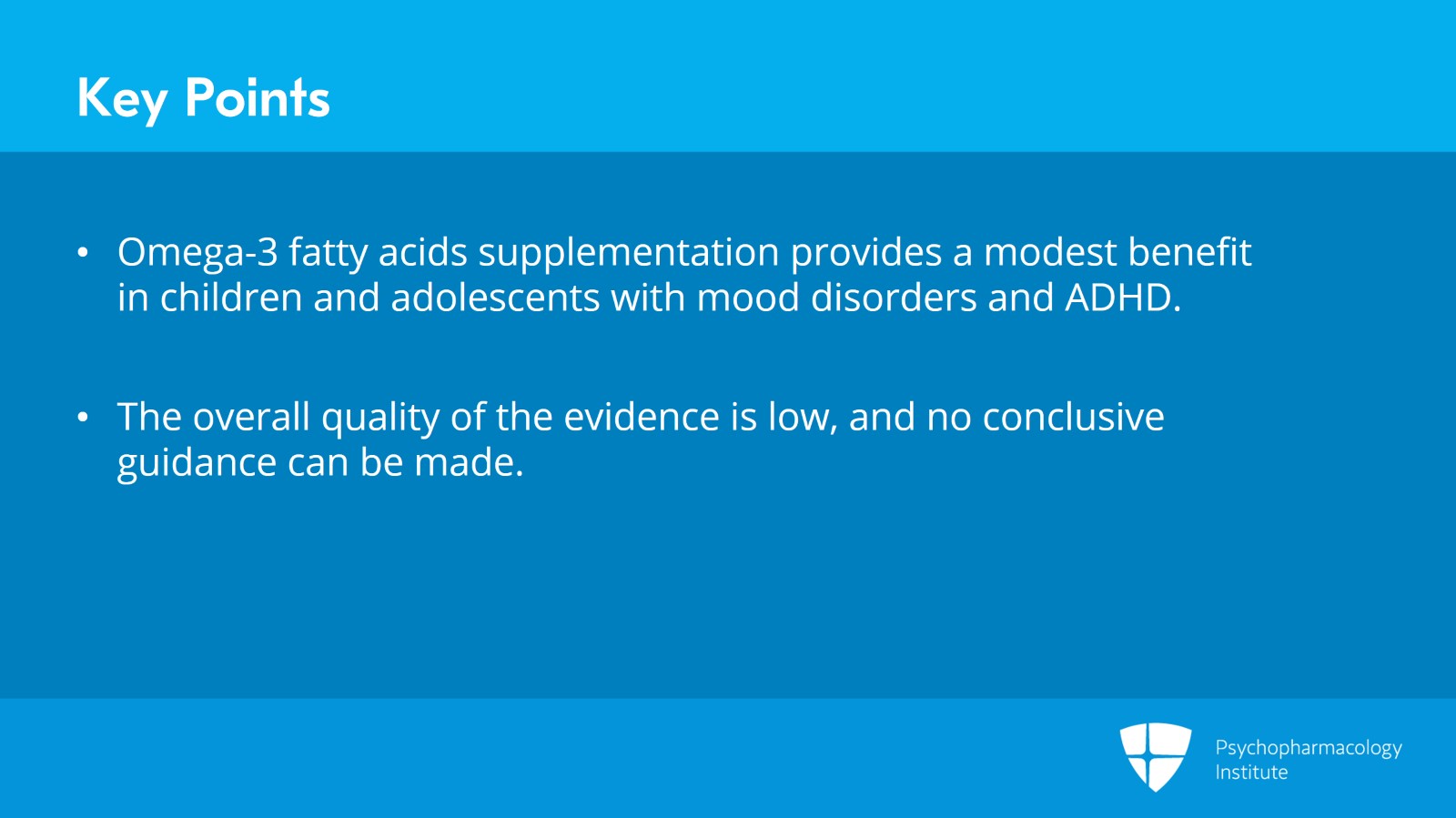
  • Omega-3 fatty acids supplementation provides a modest benefit in children and adolescents with mood disorders and ADHD.
  • The overall quality of the evidence is low, and no conclusive guidance can be made.
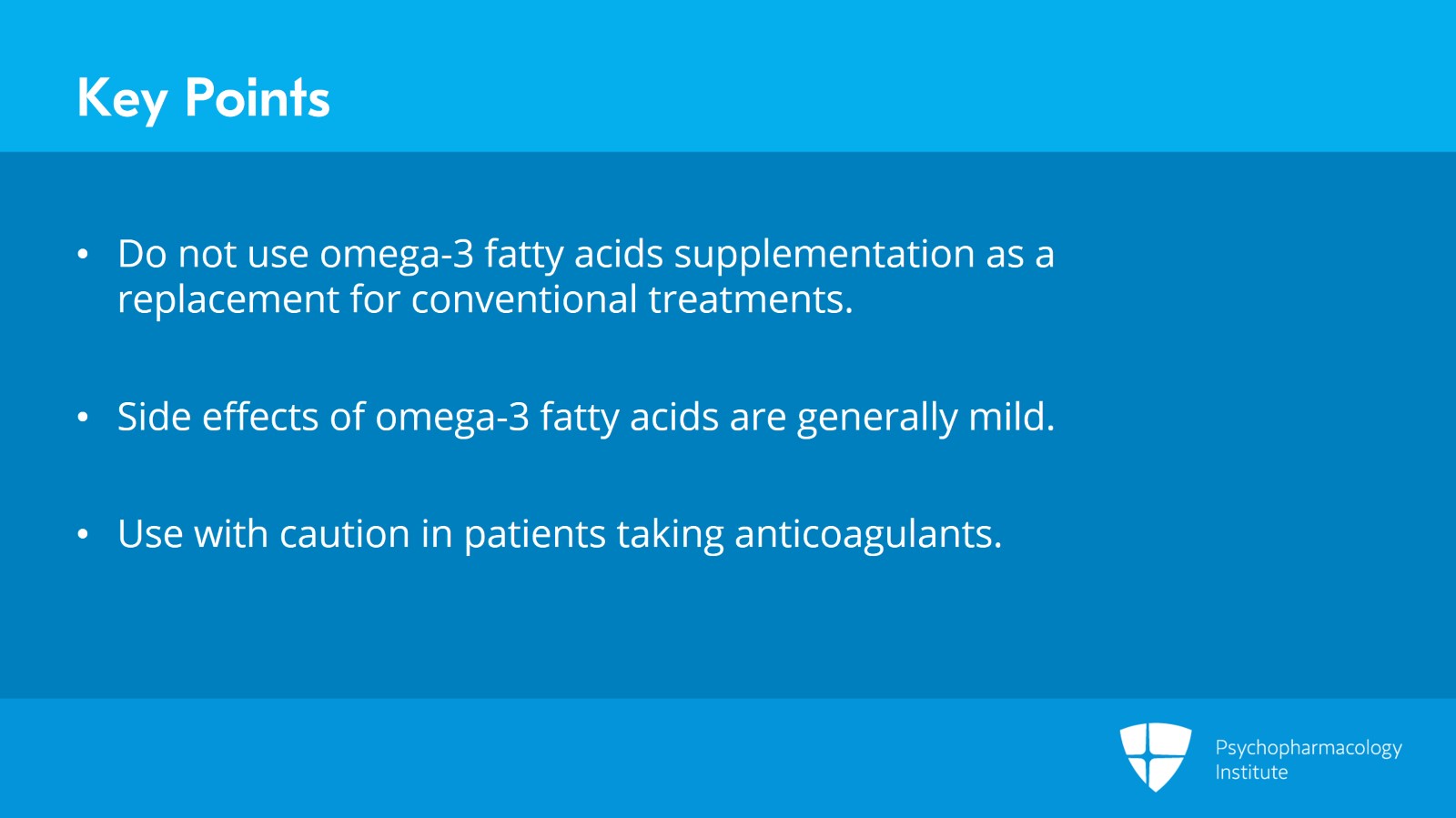
  • Do not use omega-3 fatty acids supplementation as a replacement for conventional treatments.
  • Side effects of omega-3 fatty acids are generally mild.
  • Use with caution in patients taking anticoagulants.
  • Omega-3 fatty acids supplementation could be acceptable for youth with mood disorders, ASD, and ADHD.

Free Downloads for Offline Access

  • Free Download Presentation File (PPTX)
  • Free Download Video (MP4)
  • Free Download Audio File (MP3)

Slides and Transcript
Slide 1 of 25

Let’s turn to video three, the use of omega-3 fatty acids in children and adolescents.

Slide 2 of 25

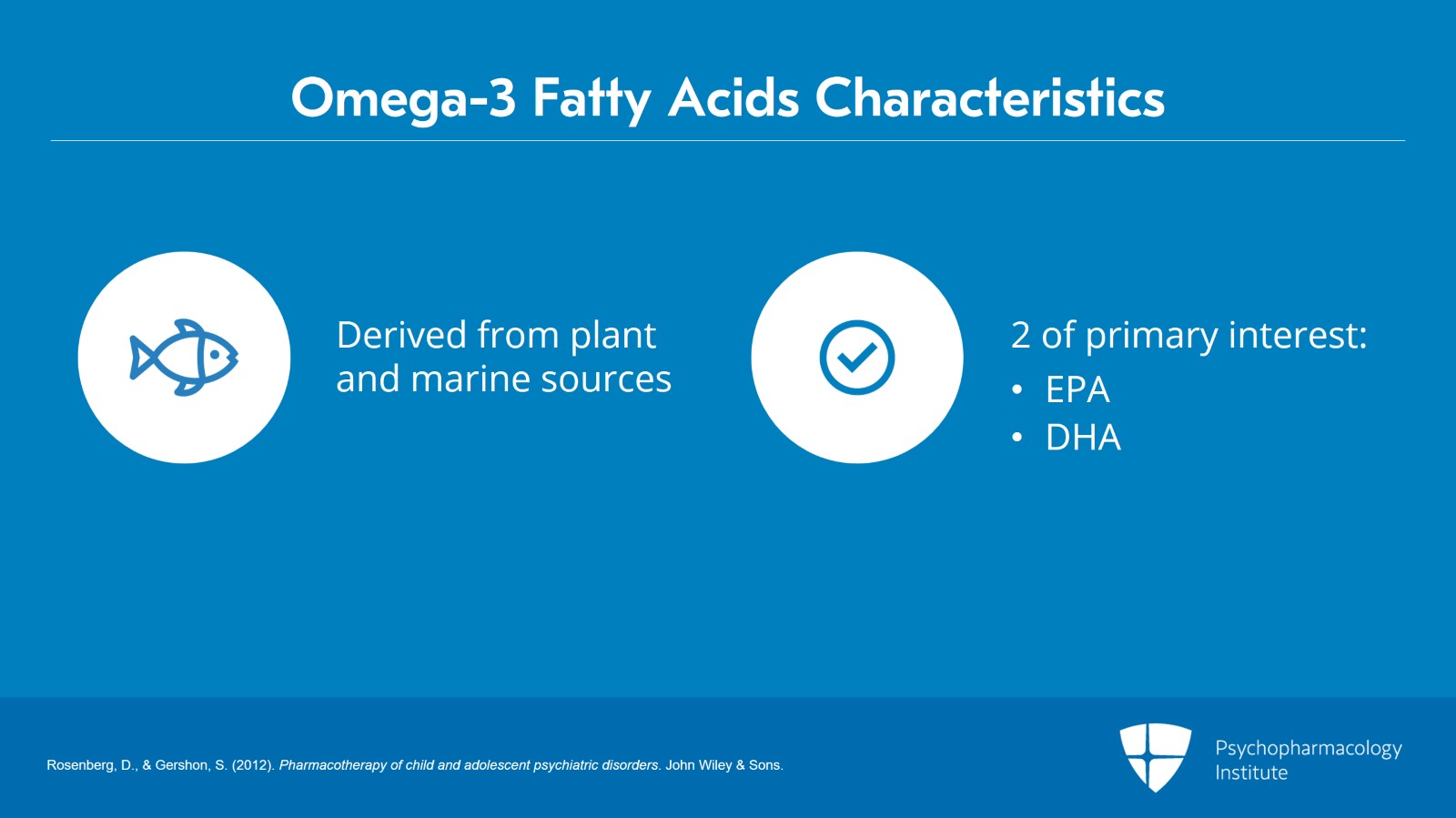
Omega-3 fatty acids are long chain polyunsaturated fatty acids that are derived from plant and marine sources. And the two omega-3 fatty acids of primary interest to us for potential psychiatric indications are eicosapentaenoic acid, EPA for short, easier to pronounce and docosahexaenoic acid or DHA for short.
References:
  • Rosenberg, D., & Gershon, S. (2012). Pharmacotherapy of child and adolescent psychiatric disorders. John Wiley & Sons.
Free Files
Success!
Check your inbox, we sent you all the materials there.
Slide 3 of 25

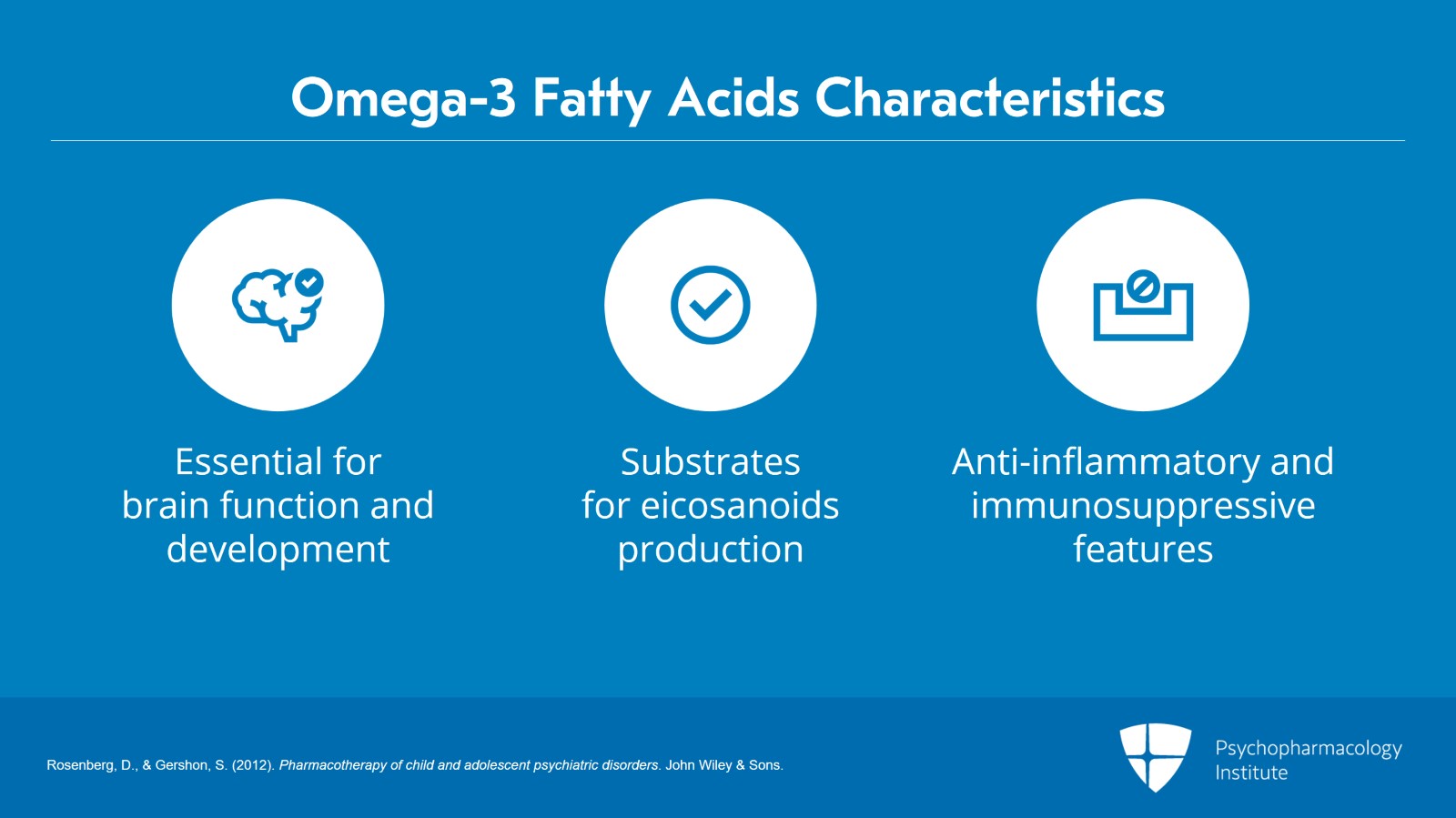
Omega-3 fatty acids are essential to brain function and development. They are also a critical component of neuronal membranes and are essential for their optimal functioning and serve as substrates for the production of the eicosanoids, that is the prostaglandins necessary for cell communication and immune regulation. Omega-3 fatty acids have also demonstrated potent anti-inflammatory and immunosuppressive features which could be useful for treating a variety of psychiatric and non-psychiatric illnesses.
References:
  • Rosenberg, D., & Gershon, S. (2012). Pharmacotherapy of child and adolescent psychiatric disorders. John Wiley & Sons.

Slide 4 of 25

So let’s turn to potential indications for the omega-3 fatty acids. And the first diagnosis we think of is going to be major depressive disorder because it’s such a hot area of research in terms of the role of inflammation in depression and anti-inflammatories in the treatment of depression.
References:
  • Rosenberg, D., & Gershon, S. (2012). Pharmacotherapy of child and adolescent psychiatric disorders. John Wiley & Sons.
  • Haller, H., Anheyer, D., Cramer, H., & Dobos, G. (2019). Complementary therapies for clinical depression: An overview of systematic reviews. BMJ Open, 9(8), e028527. 
Free Files
Success!
Check your inbox, we sent you all the materials there.
Slide 5 of 25

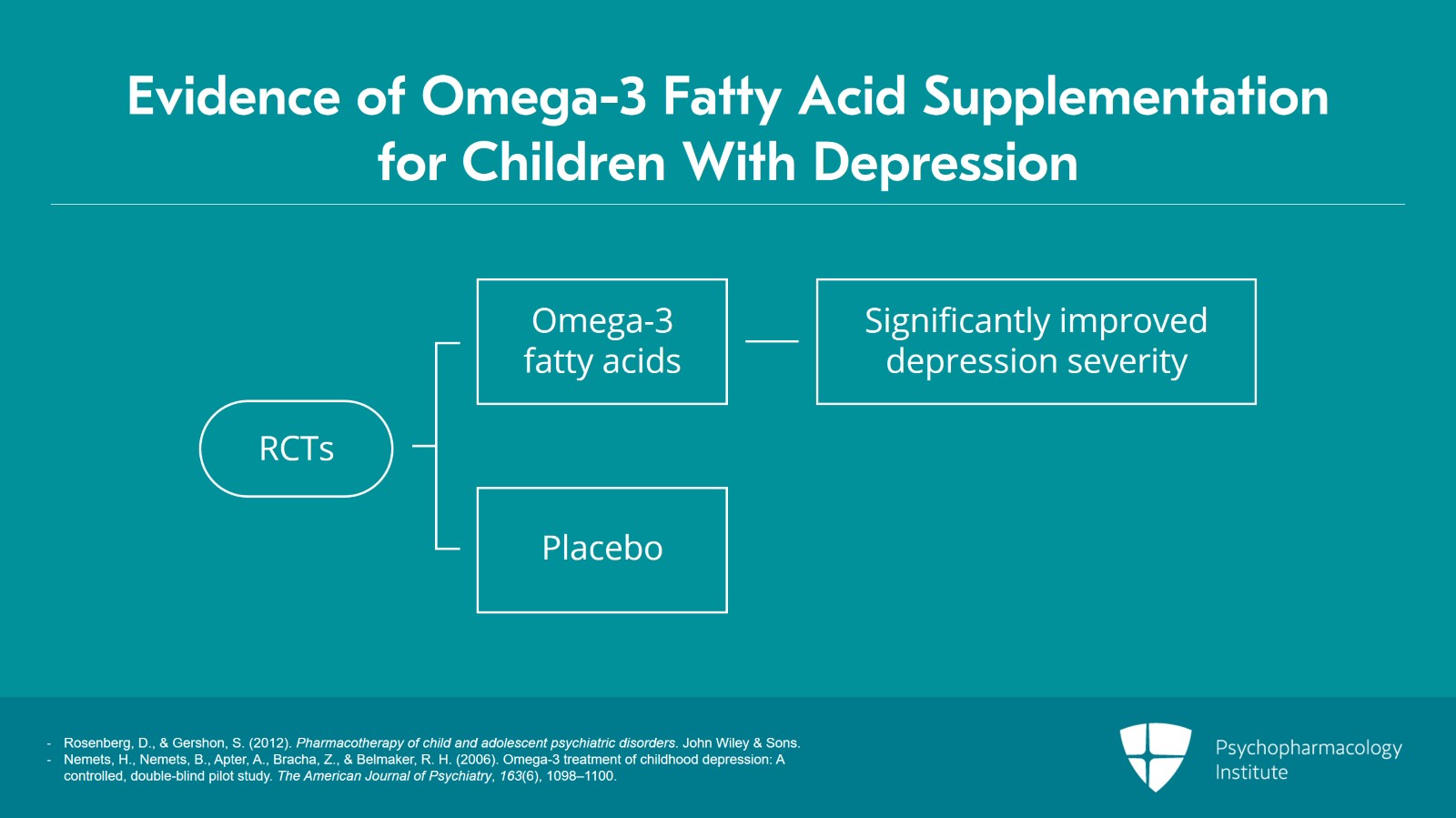
Only two randomized controlled trials have been completed which compare the efficacy of omega-3 fatty acid supplementation versus placebo in children with depression. Results from an initial randomized controlled trial with a small sample as well as a more recent randomized controlled trial with a larger sample both suggest omega-3 supplementation significantly improved depression severity in comparison to placebo.
References:
  • Rosenberg, D., & Gershon, S. (2012). Pharmacotherapy of child and adolescent psychiatric disorders. John Wiley & Sons.
  • Nemets, H., Nemets, B., Apter, A., Bracha, Z., & Belmaker, R. H. (2006). Omega-3 treatment of childhood depression: A controlled, double-blind pilot study. The American Journal of Psychiatry, 163(6), 1098–1100.

Slide 6 of 25

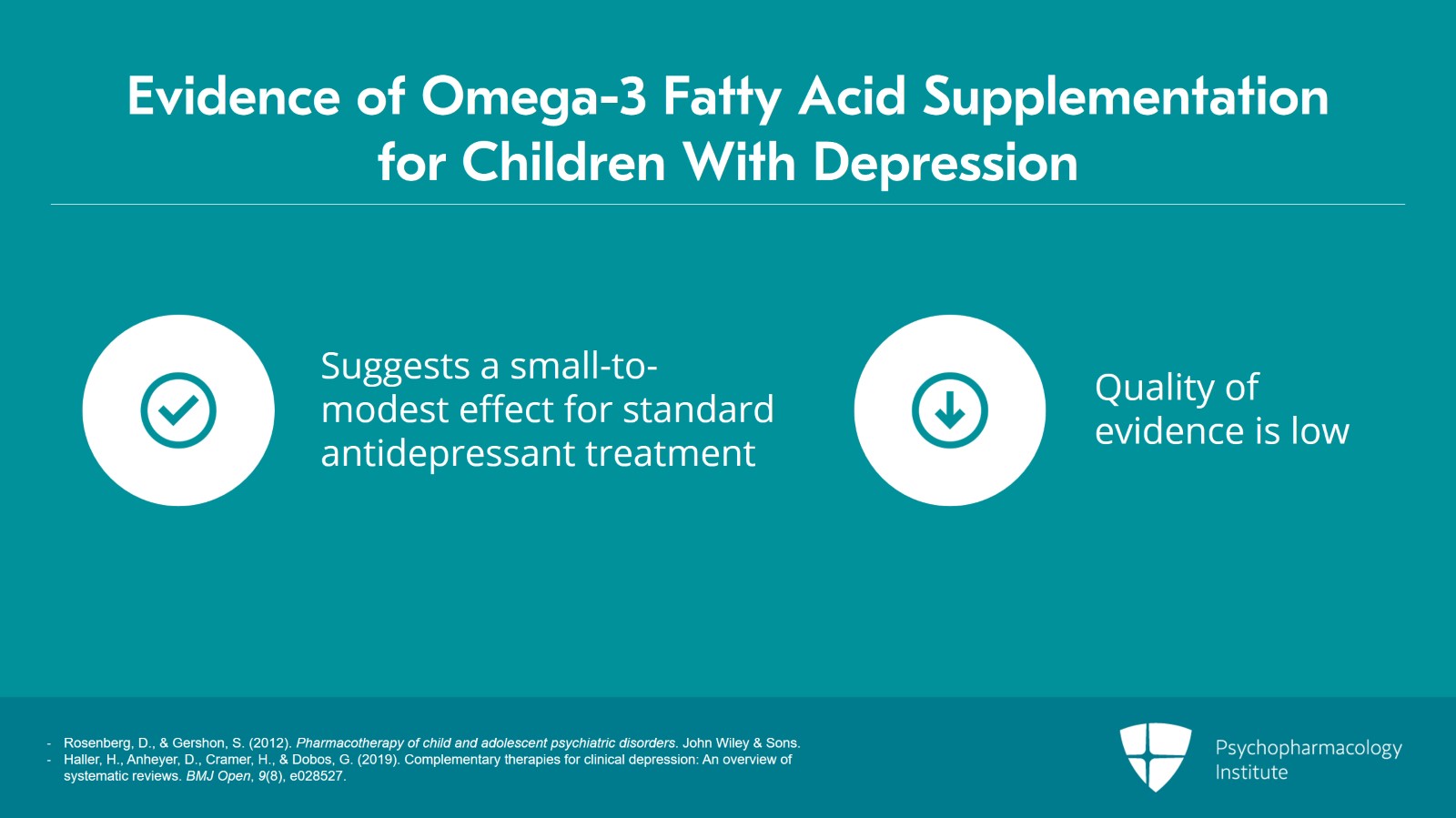
Taken as a whole, current evidence suggests omega-3 supplementation provides a small to modest effect for standard antidepressant treatment in children and adolescents with depression compared to placebo. However, the overall quality of this evidence is considered to be low.
References:
  • Rosenberg, D., & Gershon, S. (2012). Pharmacotherapy of child and adolescent psychiatric disorders. John Wiley & Sons.
  • Haller, H., Anheyer, D., Cramer, H., & Dobos, G. (2019). Complementary therapies for clinical depression: An overview of systematic reviews. BMJ Open, 9(8), e028527. 
Free Files
Success!
Check your inbox, we sent you all the materials there.
Slide 7 of 25

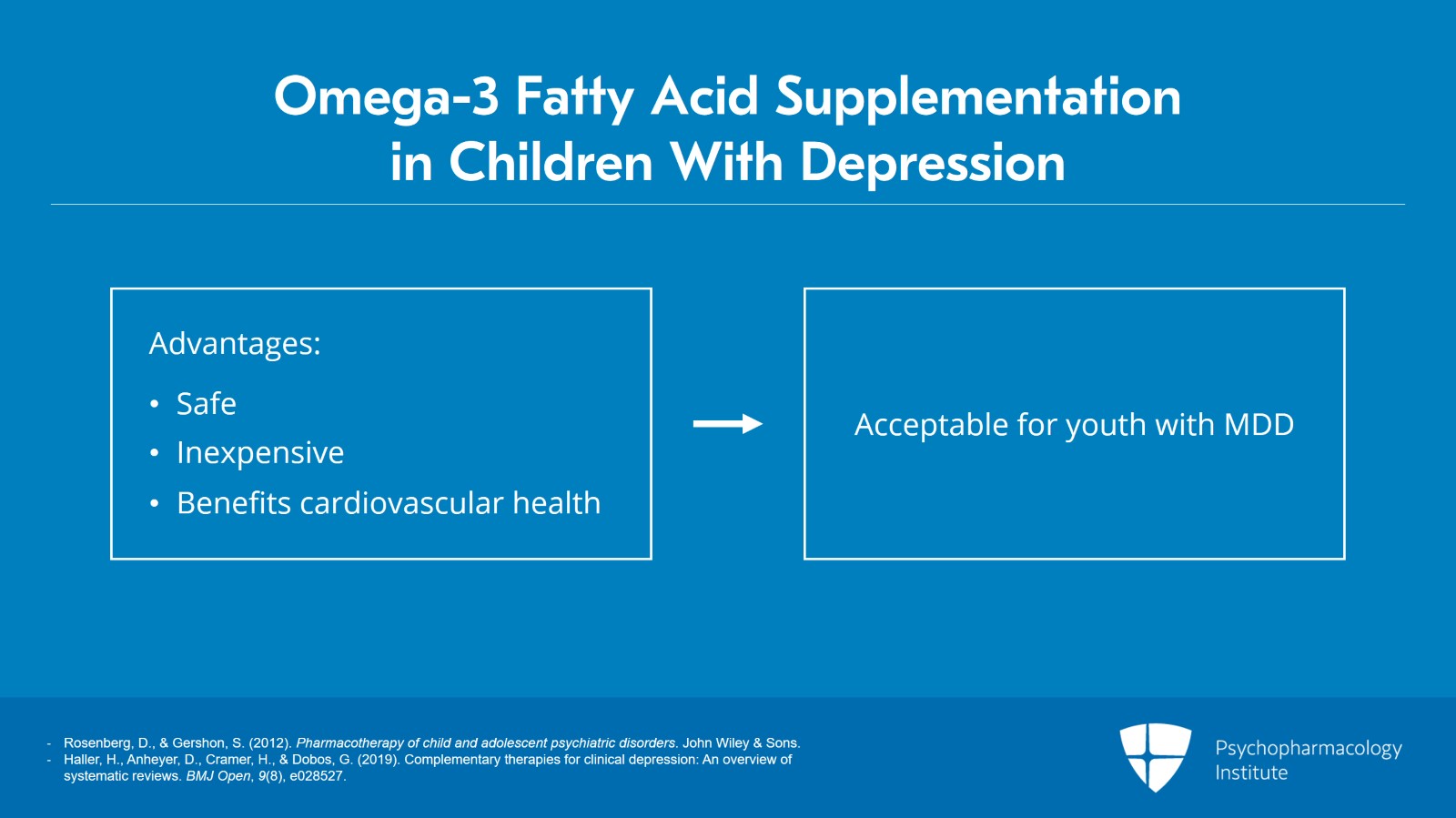
Despite the modest treatment effect, omega-3 supplementation is safe. It’s easy, it’s inexpensive and sensible given the potential benefit for cardiovascular health. While more evidence from randomized controlled trials is needed, omega-3 supplementation appears to be acceptable for youth with major depressive disorder while awaiting more definitive research. And I think another important area of research is considering its supplementation in patients getting non-medication therapy, psychotherapy, cognitive behavioral therapy.
References:
  • Rosenberg, D., & Gershon, S. (2012). Pharmacotherapy of child and adolescent psychiatric disorders. John Wiley & Sons.
  • Haller, H., Anheyer, D., Cramer, H., & Dobos, G. (2019). Complementary therapies for clinical depression: An overview of systematic reviews. BMJ Open, 9(8), e028527. 

Slide 8 of 25

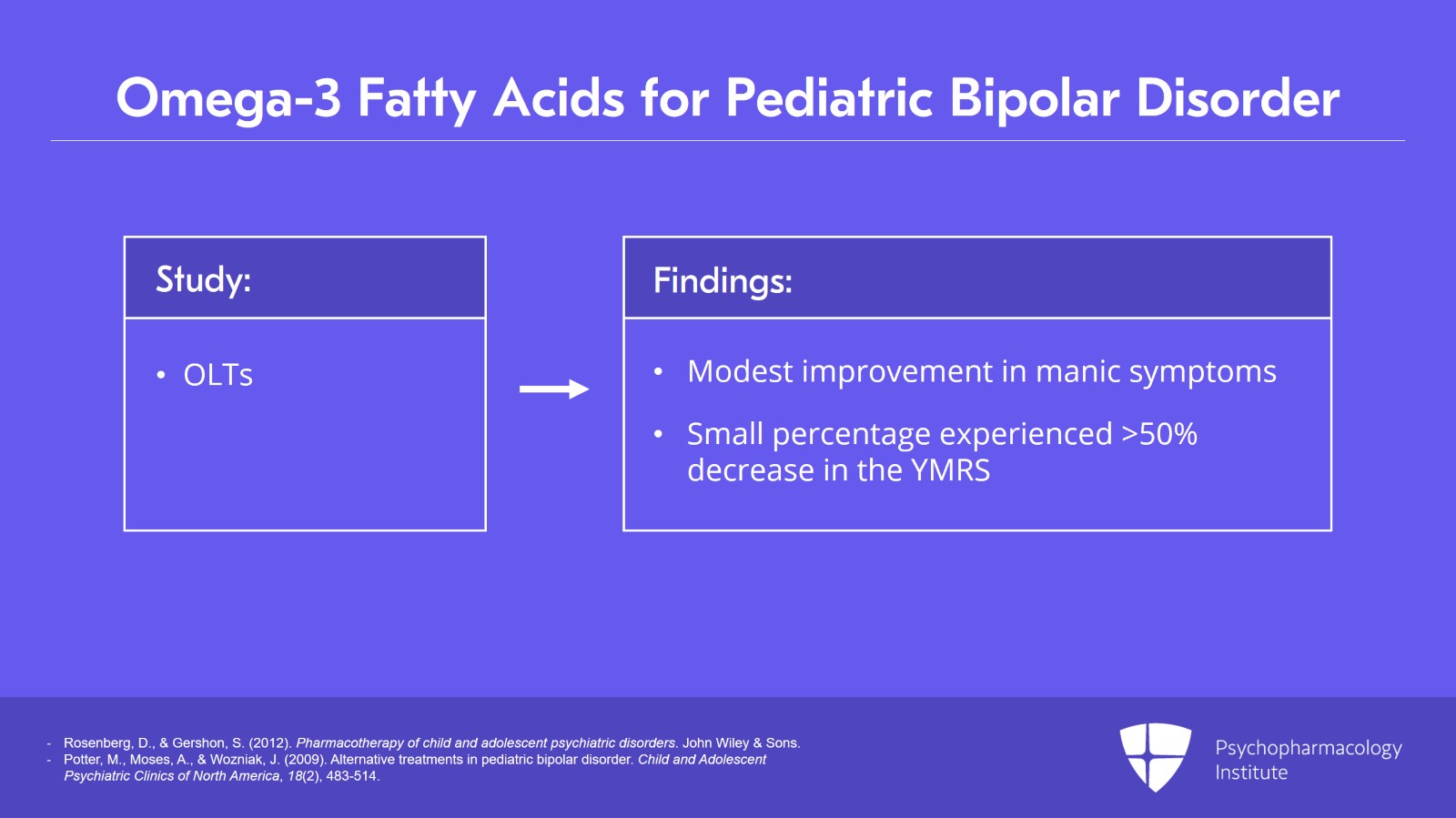
Let’s look at its potential indication for bipolar disorder.    To date, there has been one randomized controlled trial and two open-label trials which examined the efficacy of omega-3 fatty acids for treating pediatric bipolar disorders. Both open-label trials showed a modest improvement in manic symptoms in bipolar youth. However, only a small percentage experienced a greater than 50% decrease on the YMRS.
References:
  • Rosenberg, D., & Gershon, S. (2012). Pharmacotherapy of child and adolescent psychiatric disorders. John Wiley & Sons.
  • Potter, M., Moses, A., & Wozniak, J. (2009). Alternative treatments in pediatric bipolar disorder. Child and Adolescent Psychiatric Clinics of North America, 18(2), 483-514.
Free Files
Success!
Check your inbox, we sent you all the materials there.
Slide 9 of 25

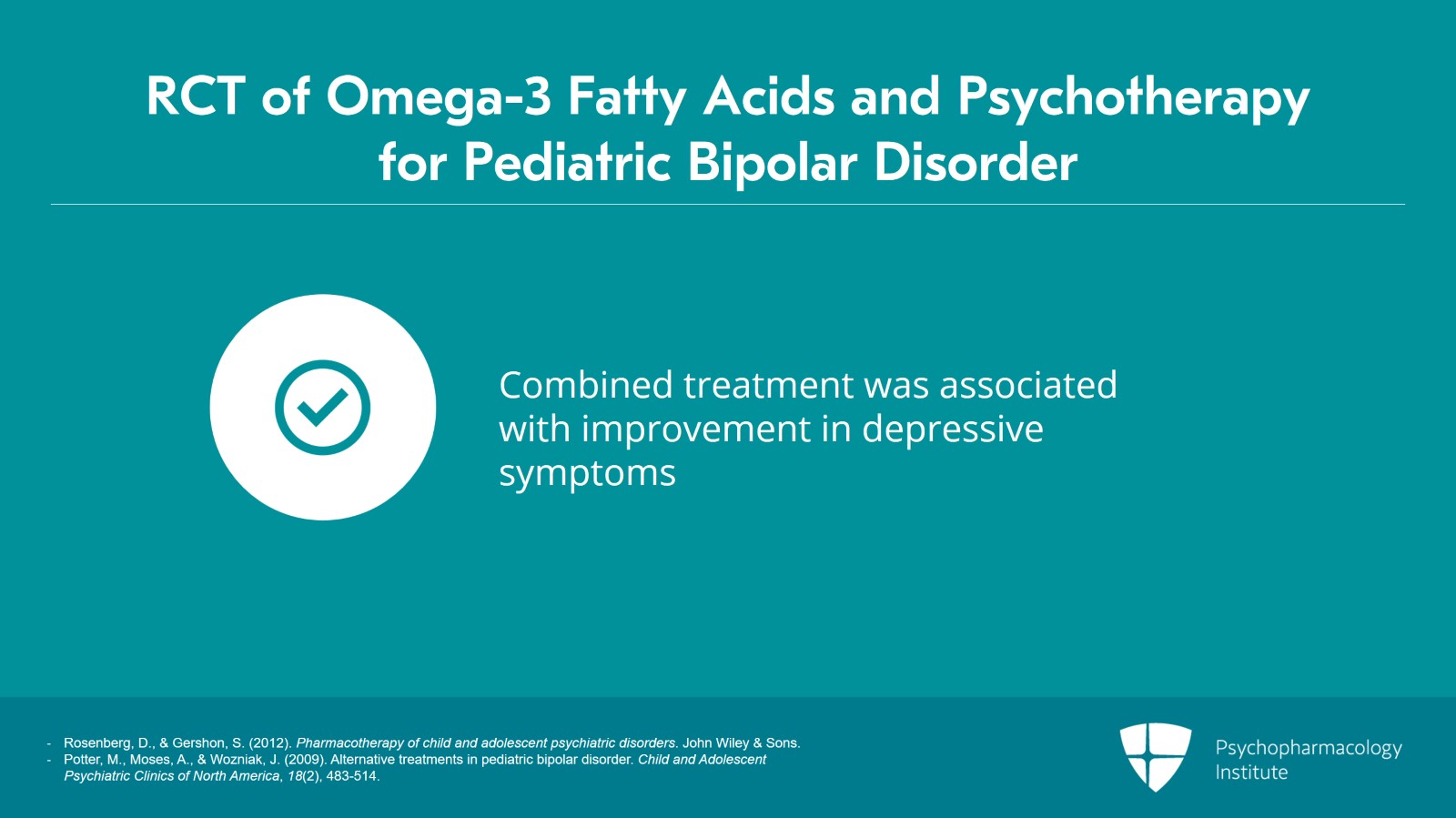
A recent randomized controlled trial comparing the combination of omega-3 fatty acids with psychoeducational psychotherapy found that combined treatment was associated with greater improvement in depressive but not manic symptoms although manic symptoms also decreased during the study.
References:
  • Rosenberg, D., & Gershon, S. (2012). Pharmacotherapy of child and adolescent psychiatric disorders. John Wiley & Sons.
  • Potter, M., Moses, A., & Wozniak, J. (2009). Alternative treatments in pediatric bipolar disorder. Child and Adolescent Psychiatric Clinics of North America, 18(2), 483-514.

Slide 10 of 25

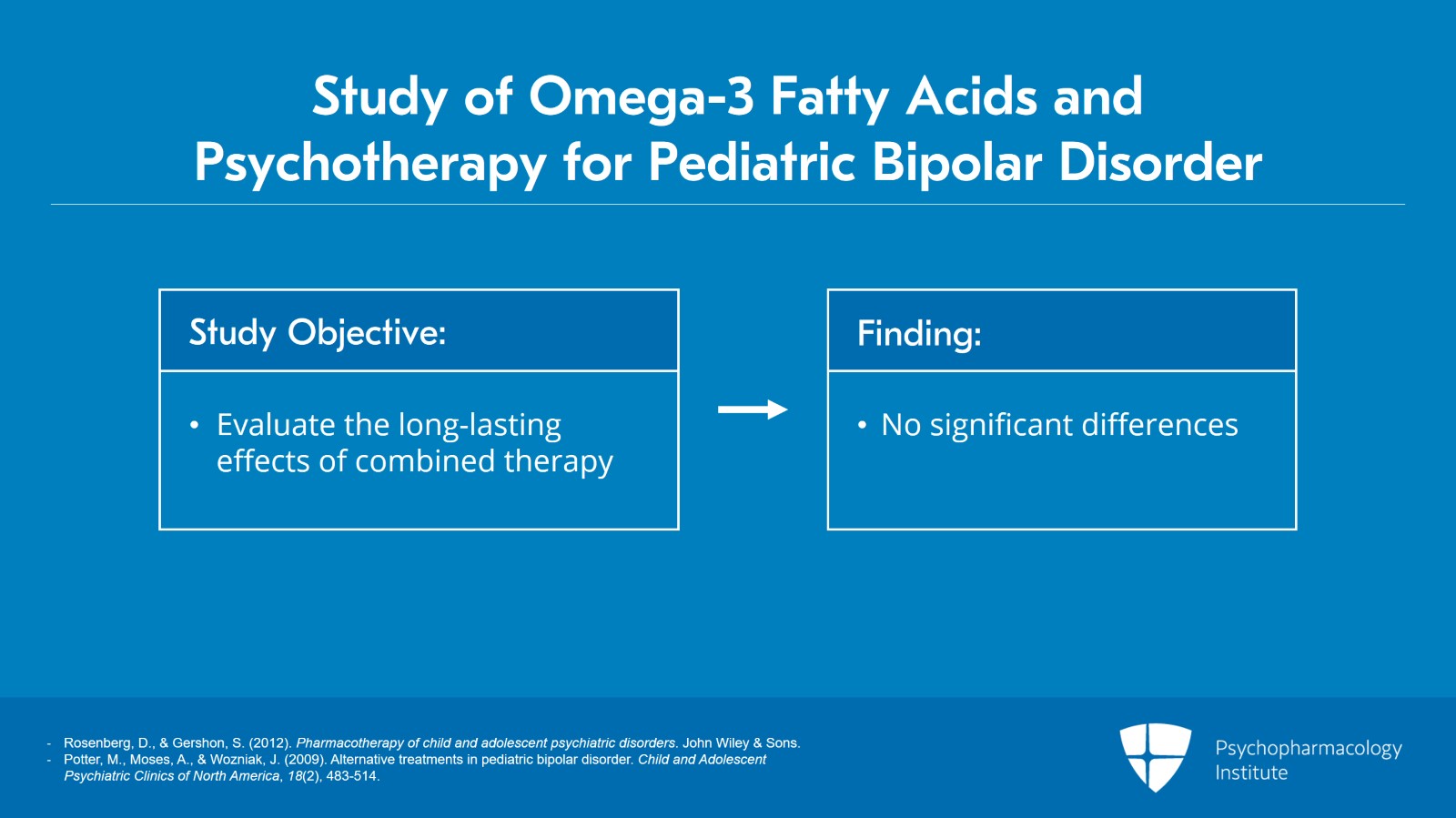
A follow-up study was conducted between two to five years after the randomized controlled trial to evaluate the long-lasting effects of combined therapy but found no significant differences in outcomes between those treated with omega-3 fatty acids compared with those who did not.
References:
  • Rosenberg, D., & Gershon, S. (2012). Pharmacotherapy of child and adolescent psychiatric disorders. John Wiley & Sons.
  • Potter, M., Moses, A., & Wozniak, J. (2009). Alternative treatments in pediatric bipolar disorder. Child and Adolescent Psychiatric Clinics of North America, 18(2), 483-514.
Free Files
Success!
Check your inbox, we sent you all the materials there.
Slide 11 of 25

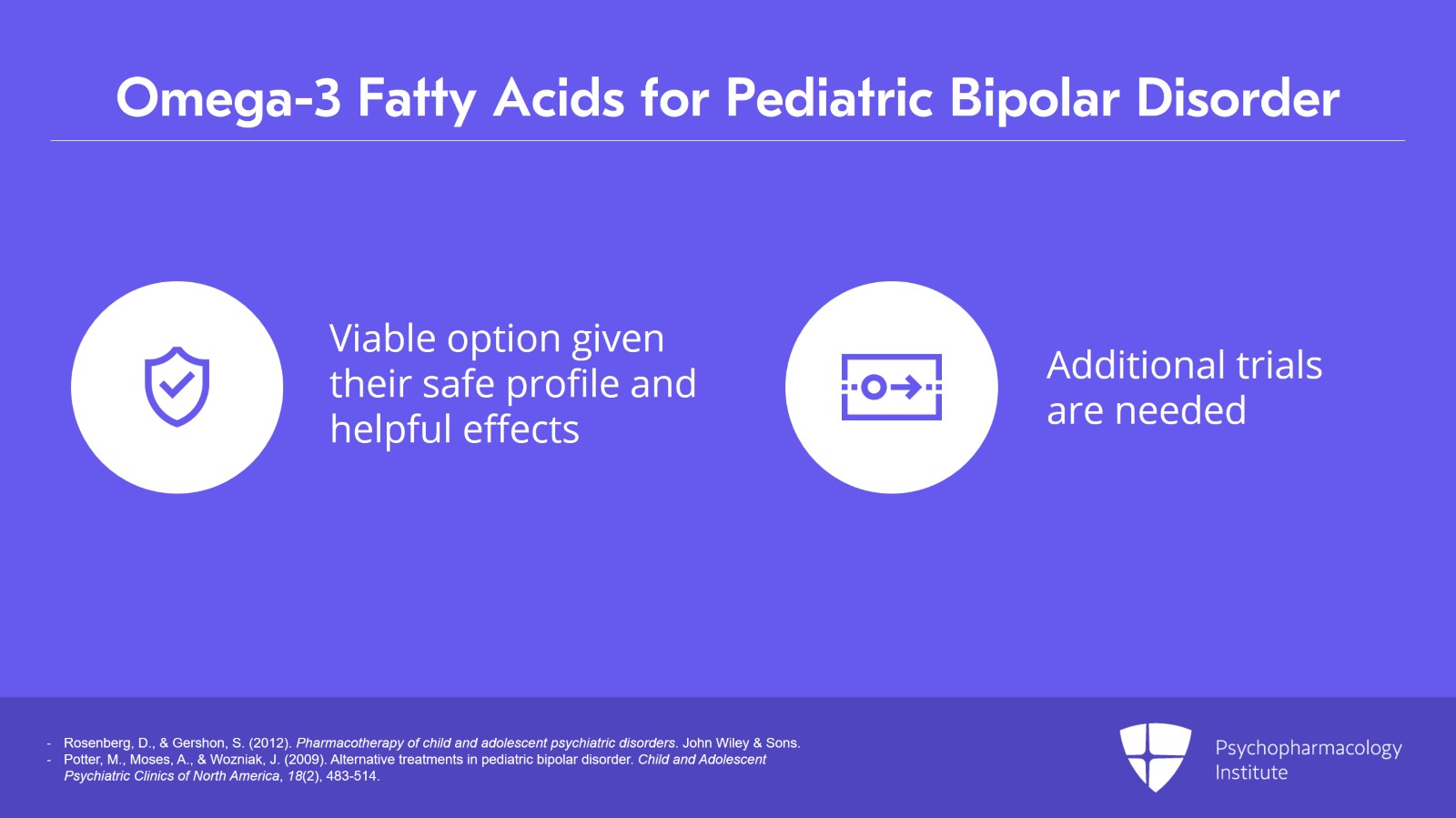
Despite these mixed results and a modest treatment effect noted in current studies, omega-3 fatty acids may still be a viable treatment option given their relatively safe profile and other helpful effects. That being said, additional trials are needed to determine whether omega-3 supplementation could play a therapeutic role in pediatric bipolar disorder.
References:
  • Rosenberg, D., & Gershon, S. (2012). Pharmacotherapy of child and adolescent psychiatric disorders. John Wiley & Sons.
  • Potter, M., Moses, A., & Wozniak, J. (2009). Alternative treatments in pediatric bipolar disorder. Child and Adolescent Psychiatric Clinics of North America, 18(2), 483-514.

Slide 12 of 25

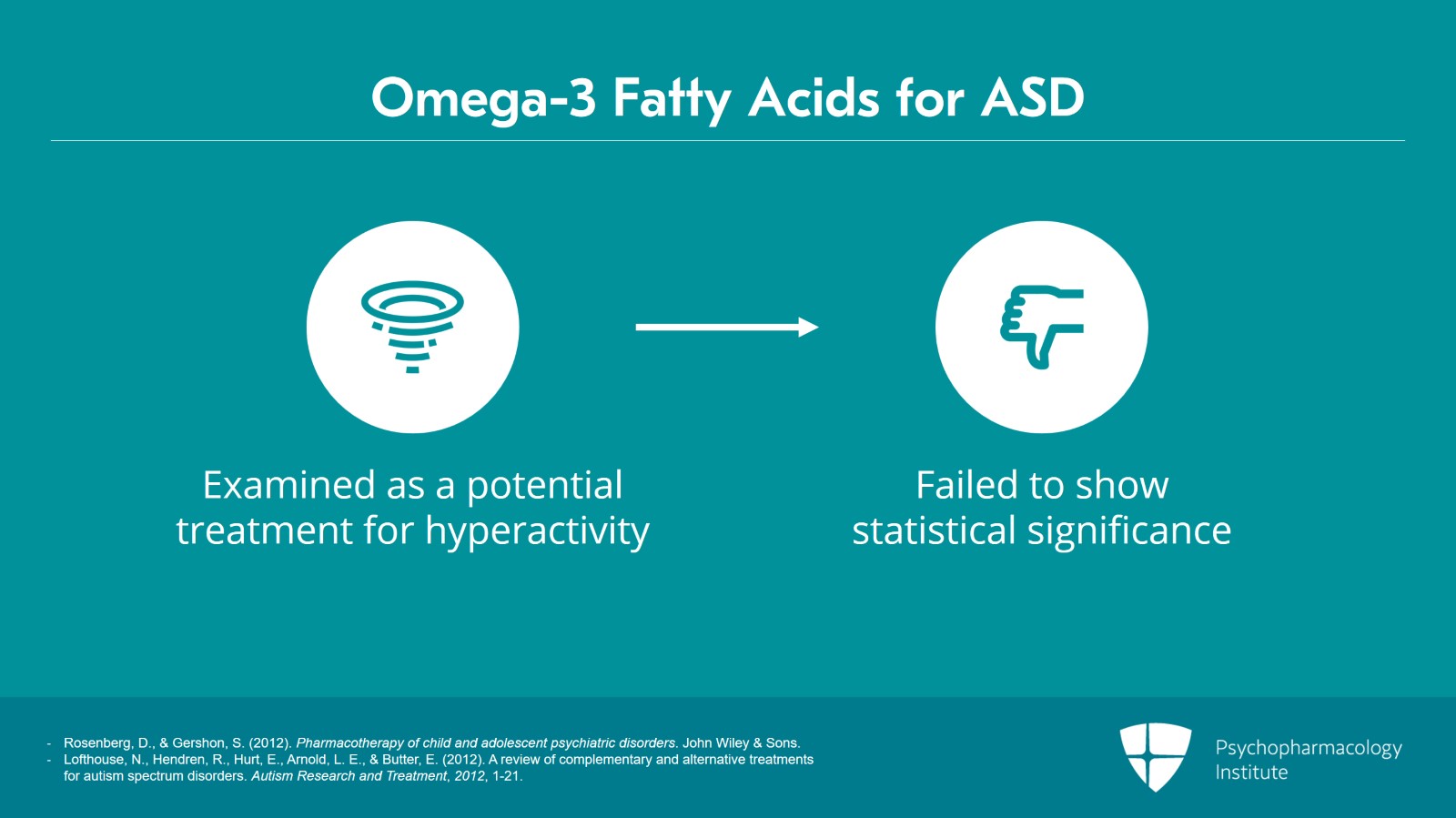
Autism spectrum disorder. This is a very interesting and hot area for a variety of reasons. Omega-3 fatty acids have been examined as a potential treatment for autism spectrum disorder specific for the associated symptom of hyperactivity. In spite of the excitement and mechanistic thinking in terms of research, most studies have failed to show statistical significance in improving either autism core symptoms or hyperactivity.
References:
  • Rosenberg, D., & Gershon, S. (2012). Pharmacotherapy of child and adolescent psychiatric disorders. John Wiley & Sons.
  • Lofthouse, N., Hendren, R., Hurt, E., Arnold, L. E., & Butter, E. (2012). A review of complementary and alternative treatments for autism spectrum disorders. Autism Research and Treatment, 2012, 1-21.
Free Files
Success!
Check your inbox, we sent you all the materials there.
Slide 13 of 25

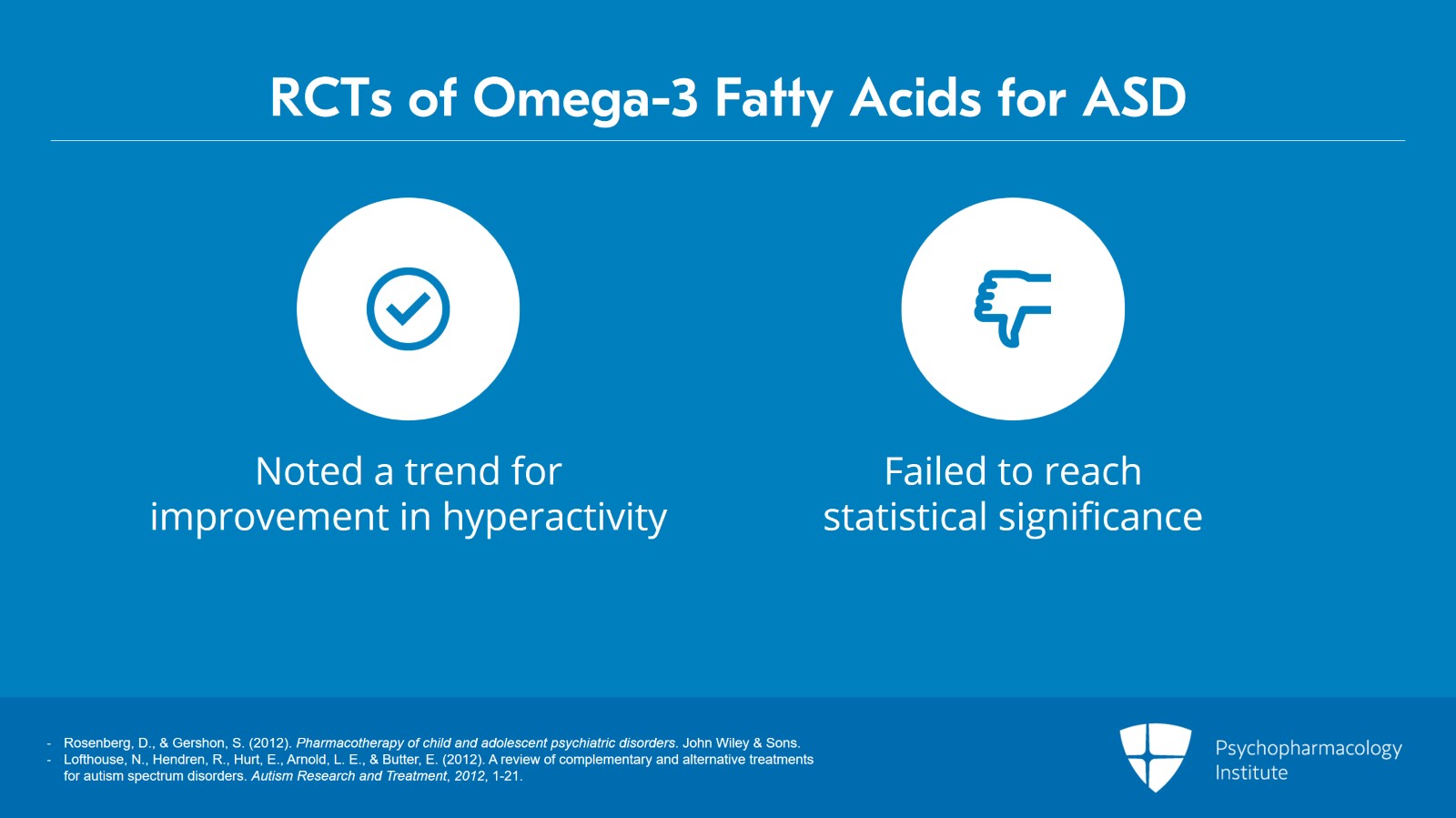
Three randomized controlled trials each noted a trend for improvement in hyperactivity compared to placebo. However, all studies failed to reach statistical significance and no effects were noted in social withdrawal, irritability, inappropriate speech or stereotypy as measured by the ABC.
References:
  • Rosenberg, D., & Gershon, S. (2012). Pharmacotherapy of child and adolescent psychiatric disorders. John Wiley & Sons.
  • Lofthouse, N., Hendren, R., Hurt, E., Arnold, L. E., & Butter, E. (2012). A review of complementary and alternative treatments for autism spectrum disorders. Autism Research and Treatment, 2012, 1-21.

Slide 14 of 25

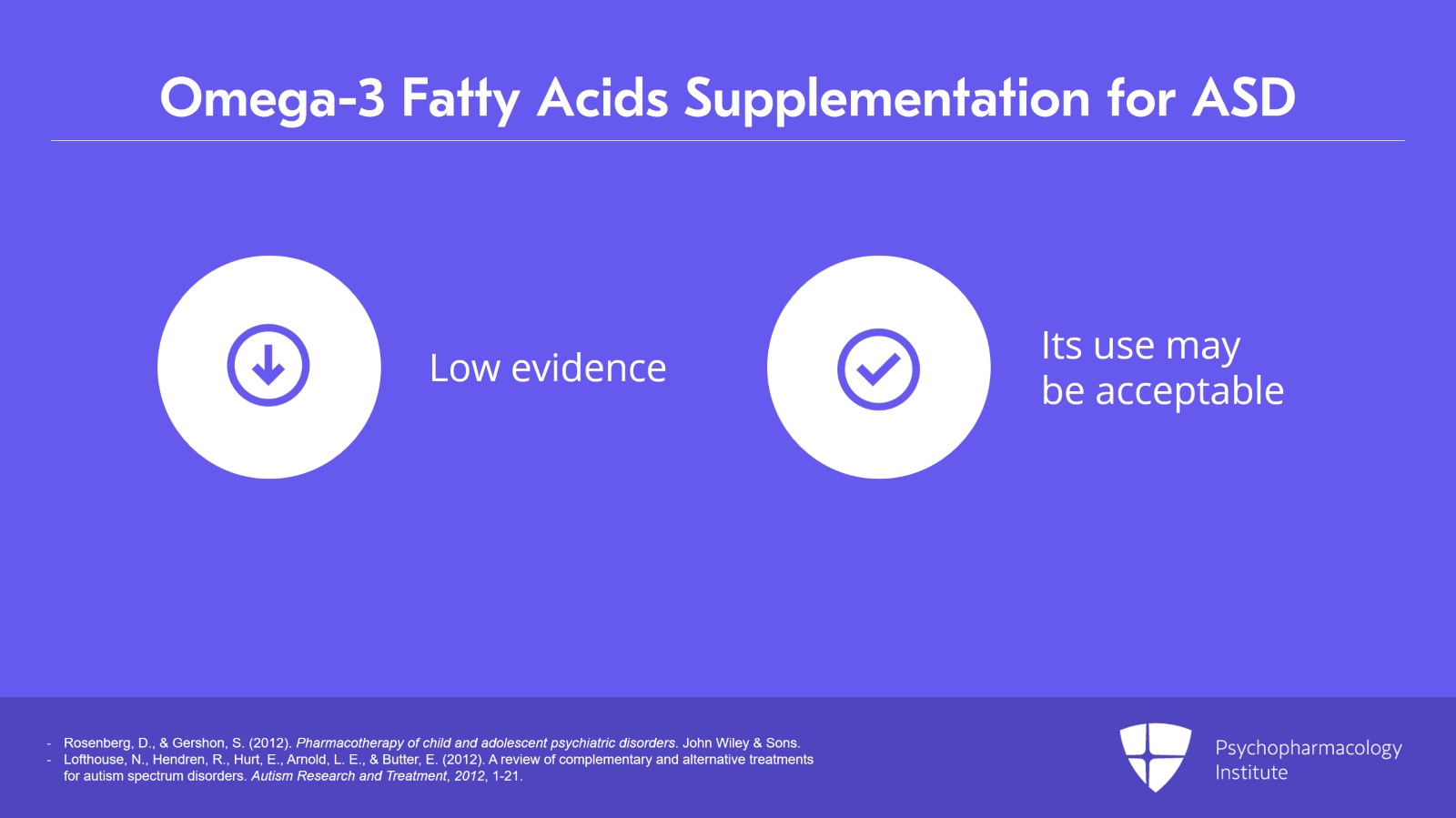
With randomized controlled trials and open-label trials all failing to show statistically significant effects, the evidence for omega-3 supplementation in autism spectrum disorder is low. Nevertheless, omega-3 supplementation is safe and its use may be acceptable for autism spectrum disorder while awaiting more definitive research.
References:
  • Rosenberg, D., & Gershon, S. (2012). Pharmacotherapy of child and adolescent psychiatric disorders. John Wiley & Sons.
  • Lofthouse, N., Hendren, R., Hurt, E., Arnold, L. E., & Butter, E. (2012). A review of complementary and alternative treatments for autism spectrum disorders. Autism Research and Treatment, 2012, 1-21.
Free Files
Success!
Check your inbox, we sent you all the materials there.
Slide 15 of 25

Let’s turn to potential indications for ADHD. Both omega-3 and omega-6 PUFAs have been well studied as a potential treatment for children with ADHD. In fact, there have been 16 published randomized controlled trials examining the efficacy of PUFA supplementation in children with ADHD as well as two meta-analyses and one Cochrane review. Results from these studies observed that children with ADHD had lower levels of both omega-3 and omega-6 compared with controls.
References:
  • Rosenberg, D., & Gershon, S. (2012). Pharmacotherapy of child and adolescent psychiatric disorders. John Wiley & Sons.
  • Arnold, L. E., Hurt, E., & Lofthouse, N. (2013). Attention-deficit/hyperactivity disorder: Dietary and nutritional treatments. Child and Adolescent Psychiatric Clinics of North America, 22(3), 381-402.

Slide 16 of 25

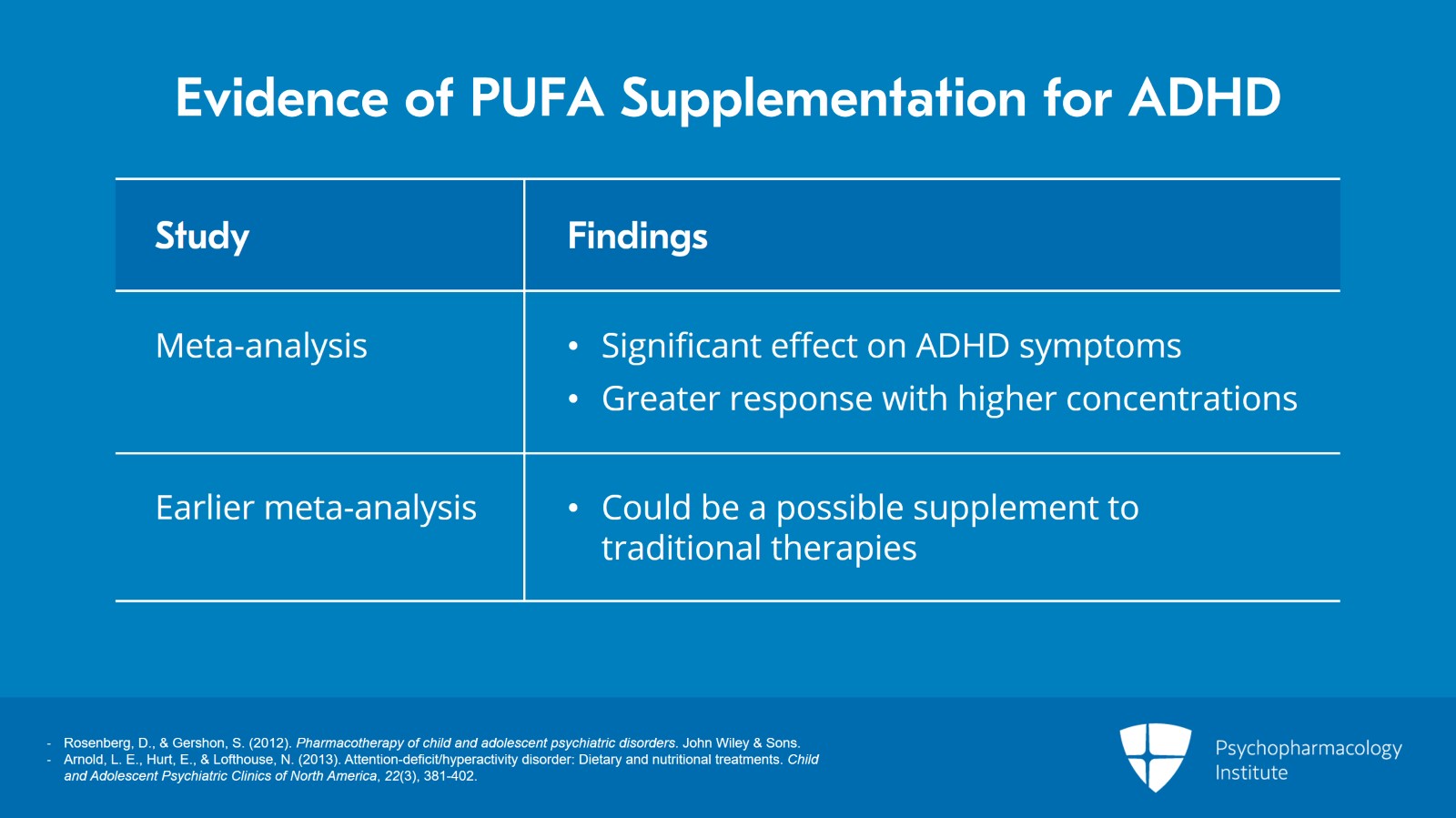
Evidence from a meta-analysis of 10 trials with data from 700 children found a significant but small effect of PUFA supplementation on ADHD symptoms as well as a significant dose-response slope with greater response in those using higher concentrations of EPA. An earlier meta-analysis also concluded that omega-3 fatty acids offer promise as a possible supplement to traditional therapies.
References:
  • Rosenberg, D., & Gershon, S. (2012). Pharmacotherapy of child and adolescent psychiatric disorders. John Wiley & Sons.
  • Arnold, L. E., Hurt, E., & Lofthouse, N. (2013). Attention-deficit/hyperactivity disorder: Dietary and nutritional treatments. Child and Adolescent Psychiatric Clinics of North America, 22(3), 381-402.
Free Files
Success!
Check your inbox, we sent you all the materials there.
Slide 17 of 25

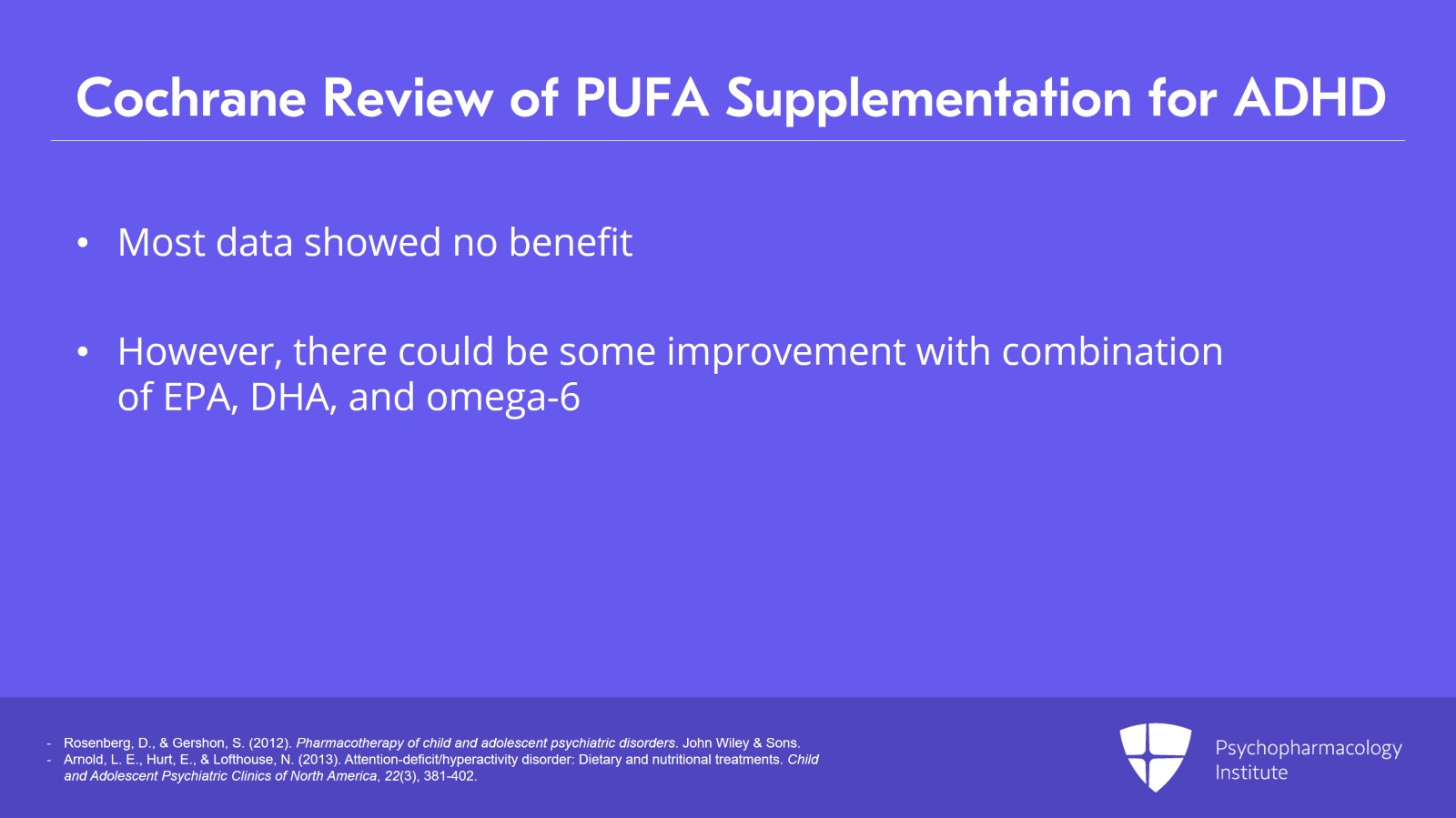
In contrast, however, a Cochrane review in 2012 concluded that most of the data in ADHD patients showed no benefit for PUFAs. The review authors did find evidence of some improvement in symptoms from treatment with a combination of EPA, DHA and, a small amount of omega-6 though.
References:
  • Rosenberg, D., & Gershon, S. (2012). Pharmacotherapy of child and adolescent psychiatric disorders. John Wiley & Sons.
  • Arnold, L. E., Hurt, E., & Lofthouse, N. (2013). Attention-deficit/hyperactivity disorder: Dietary and nutritional treatments. Child and Adolescent Psychiatric Clinics of North America, 22(3), 381-402.

Slide 18 of 25

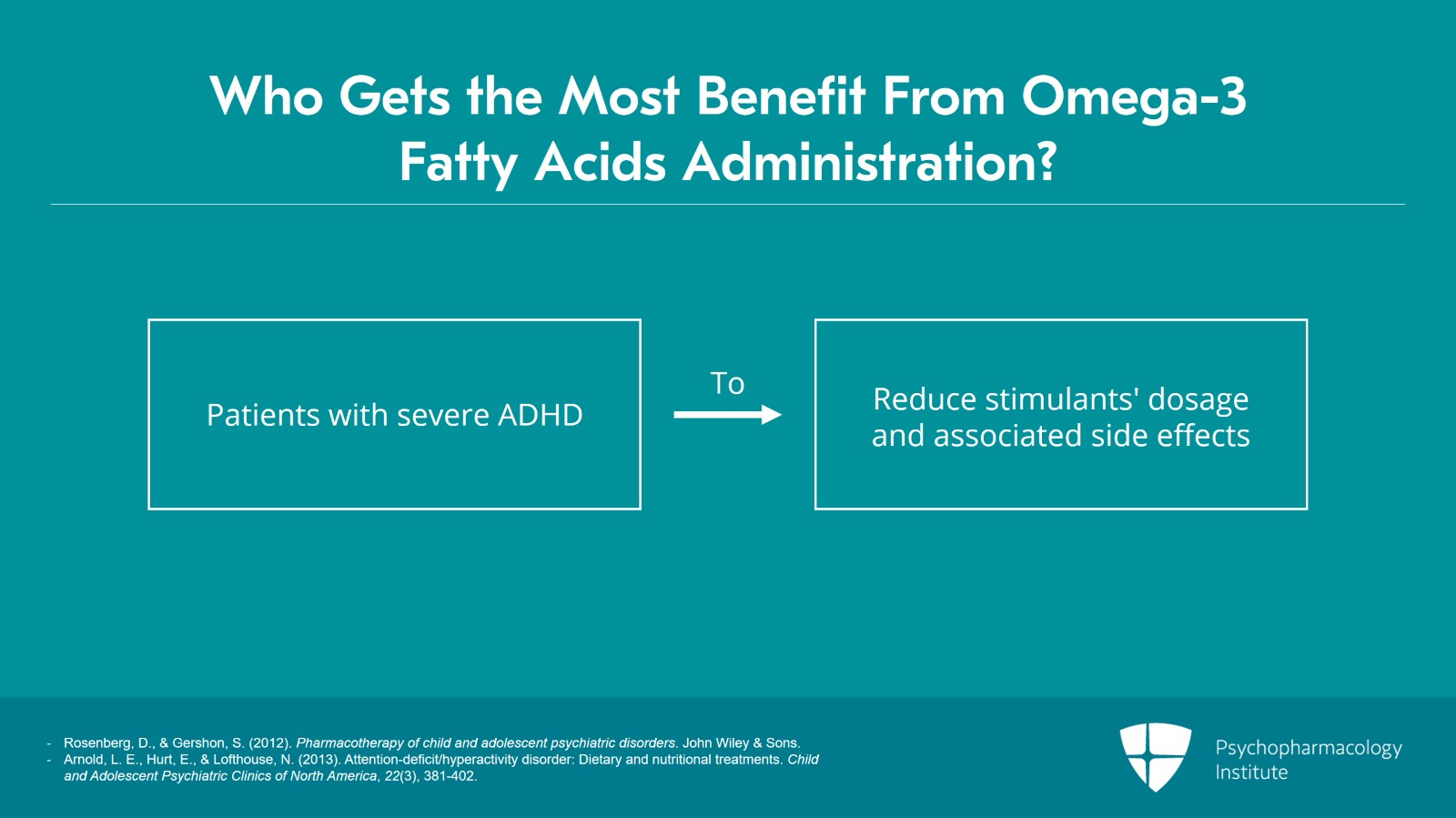
Another review suggested that omega-3 fatty acid administration may provide the most significant benefit in those patients with severe ADHD who use omega-3s to reduce the dosage of stimulant medication and associated medication side effects.
References:
  • Rosenberg, D., & Gershon, S. (2012). Pharmacotherapy of child and adolescent psychiatric disorders. John Wiley & Sons.
  • Arnold, L. E., Hurt, E., & Lofthouse, N. (2013). Attention-deficit/hyperactivity disorder: Dietary and nutritional treatments. Child and Adolescent Psychiatric Clinics of North America, 22(3), 381-402.
Free Files
Success!
Check your inbox, we sent you all the materials there.
Slide 19 of 25

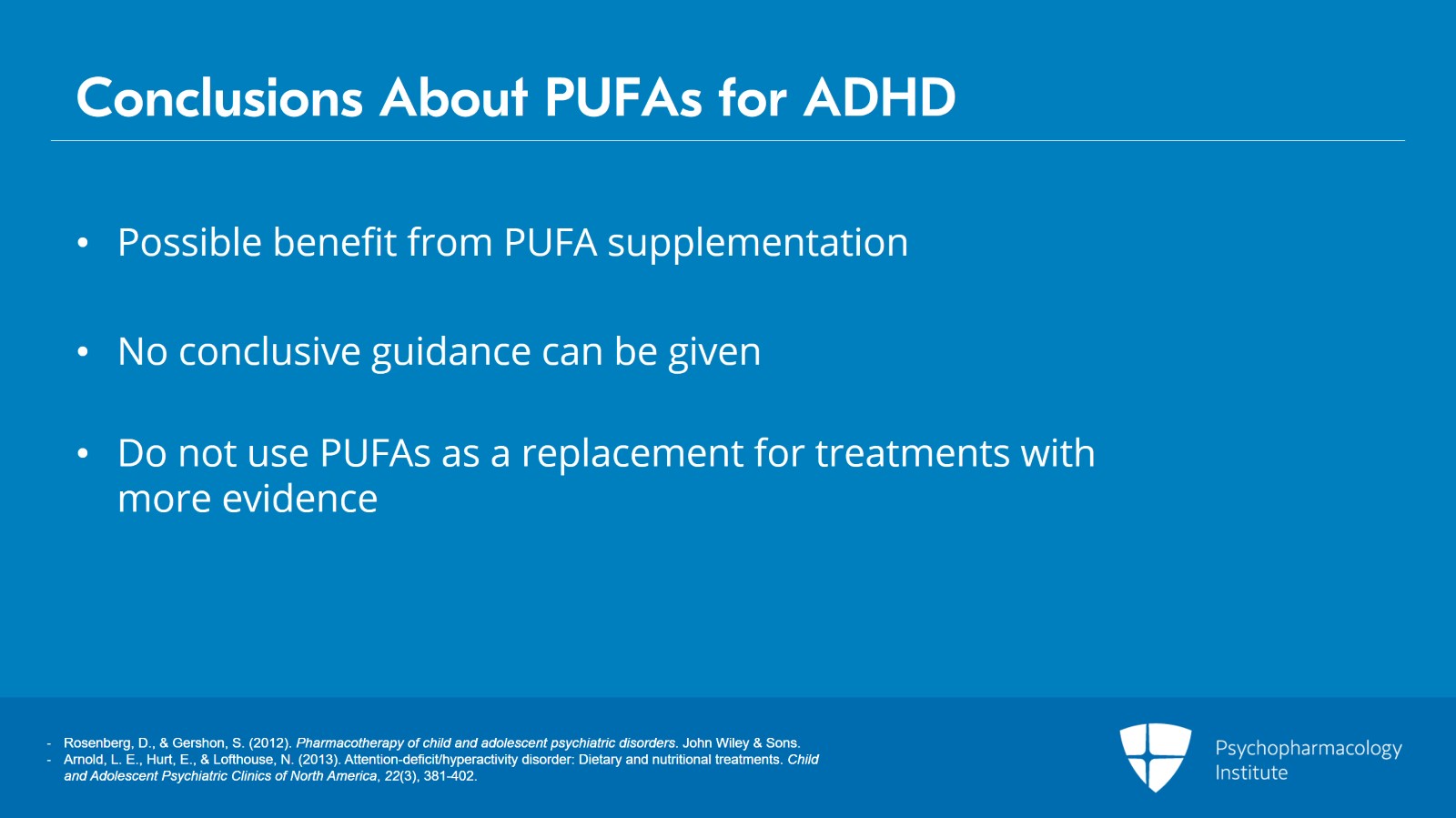
Despite inconsistent evidence resulting from methodological issues across randomized controlled trials, current evidence does suggest a possible benefit from PUFA supplementation with traditional ADHD therapies. However, the overall quality of the evidence is low and no conclusive guidance can be given. It’s also important to note that PUFA supplementation should not be recommended as a replacement for treatment approaches with more robust evidence bases. Omega-3 fatty acids have generated considerable attention and excitement. My own personal experience, however, is that while well tolerated overall there is minimal to no benefit seen when I’ve used this for ADHD, depression, bipolar disorder, or anxiety.
References:
  • Rosenberg, D., & Gershon, S. (2012). Pharmacotherapy of child and adolescent psychiatric disorders. John Wiley & Sons.
  • Arnold, L. E., Hurt, E., & Lofthouse, N. (2013). Attention-deficit/hyperactivity disorder: Dietary and nutritional treatments. Child and Adolescent Psychiatric Clinics of North America, 22(3), 381-402.

Slide 20 of 25

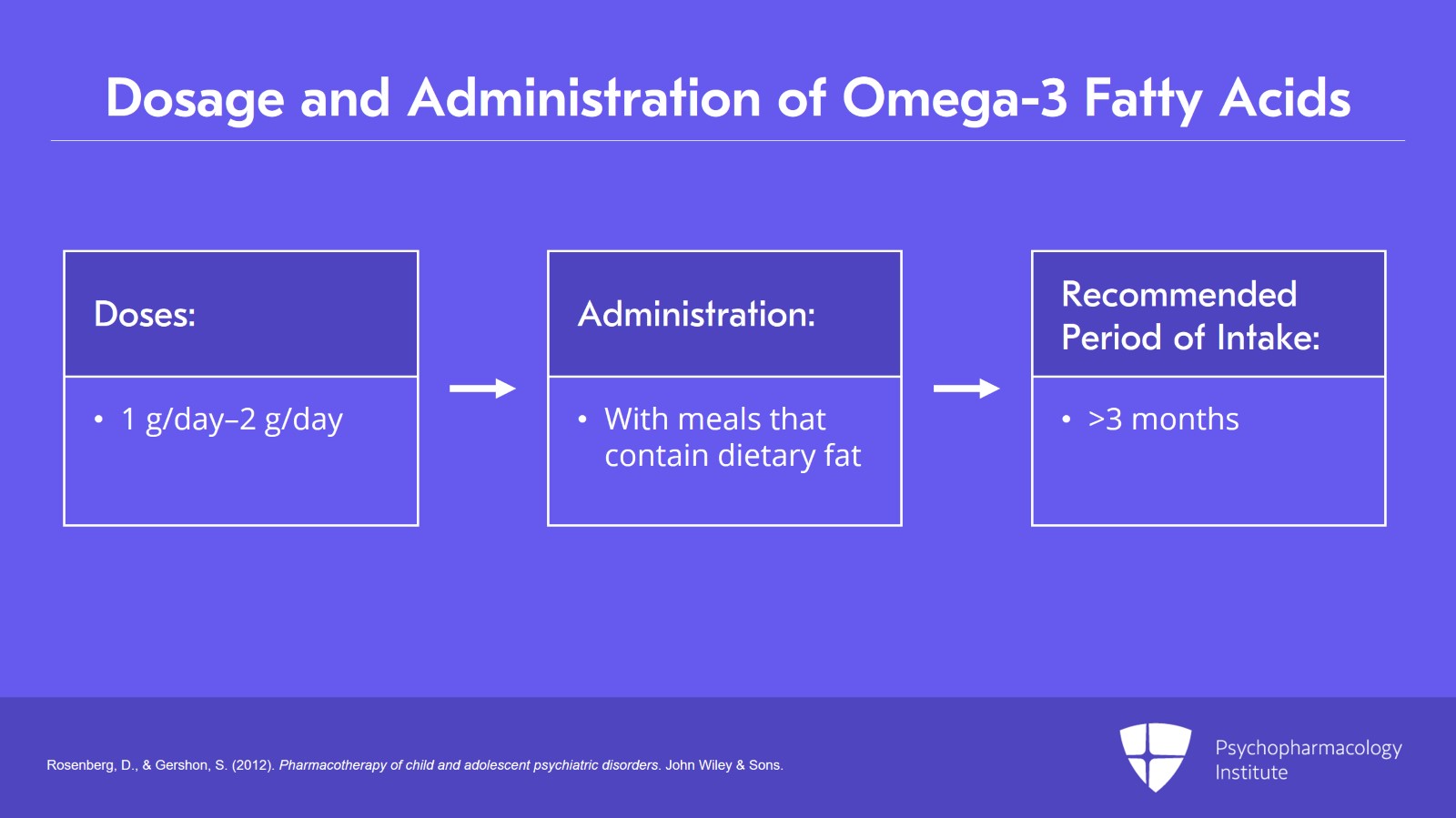
Dosage and administration. Effective standardized doses of omega-3 fatty acids have yet to be determined but between 1 to 2 g per day with a 2:1 ratio of EPA to DHA is considered an acceptable dose in children. Omega-3 fatty acid supplements should be taken with a meal that contains dietary fat to increase absorption. Current recommendations suggest omega-3 fatty acids should be taken for a minimum of three months to evaluate treatment effects. However, six months is preferred.
References:
  • Rosenberg, D., & Gershon, S. (2012). Pharmacotherapy of child and adolescent psychiatric disorders. John Wiley & Sons.
Free Files
Success!
Check your inbox, we sent you all the materials there.
Slide 21 of 25

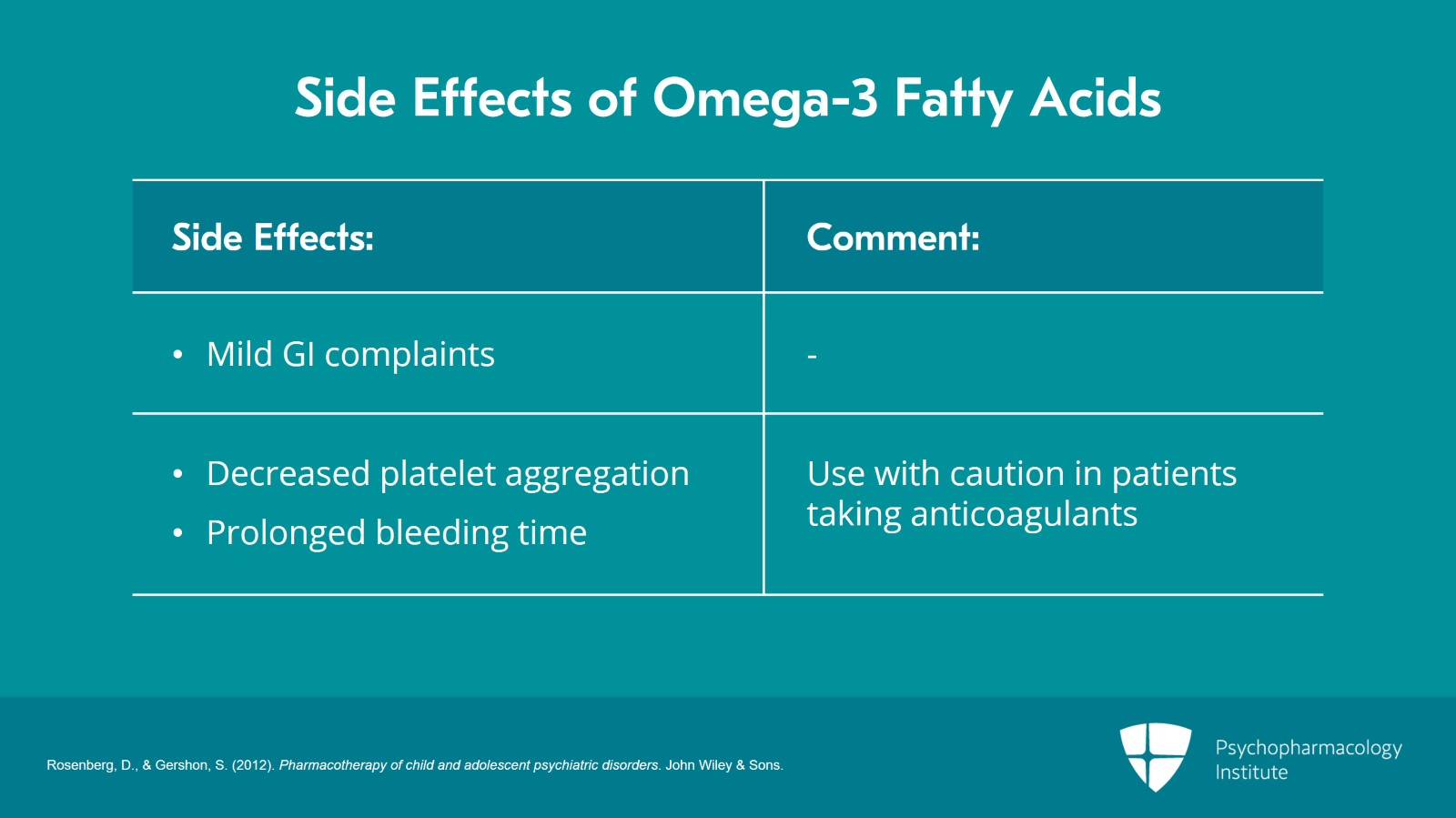
Side effects of omega-3 fatty acids are generally mild and the most commonly reported include mild GI complaints such as loose stools as well as a fishy taste or fishy burps. However, omega-3 fatty acids may also decrease platelet aggregation and prolong bleeding time and should be used with caution in patients taking anticoagulants.
References:
  • Rosenberg, D., & Gershon, S. (2012). Pharmacotherapy of child and adolescent psychiatric disorders. John Wiley & Sons.

Slide 22 of 25

Despite inconsistent results, current evidence suggests omega-3 supplementation provides a modest benefit in children and adolescents with mood disorders or ADHD. However, the overall quality of the evidence is low and no conclusive guidance can be made.
Free Files
Success!
Check your inbox, we sent you all the materials there.
Slide 23 of 25

It’s also important to note that omega-3 supplementation should not be recommended as a replacement for conventional treatment approaches with more evidence bases to them. Side effects of omega-3 fatty acids, fortunately, are generally mild but omega-3 fatty acids may decrease platelet aggregation and prolong bleeding time and should be used with caution in patients taking anticoagulants.  

Slide 24 of 25

While more evidence from additional randomized controlled trials is needed, omega-3 supplementation appears to be acceptable for youth with mood disorders, autism spectrum disorder, and ADHD.  
Free Files
Success!
Check your inbox, we sent you all the materials there.
Slide 25 of 25

Learning Objectives:

After completing this activity, the learner will be able to:

  1. Discuss the available evidence of the use of CAMs in children and adolescents.
  2. Recognize potential indications of CAMs in pediatric patients with mental health conditions.
  3. Identify pediatric patients who can benefit from CAMs and utilize them accordingly.

Original Release Date: October 1, 2022

Review and Re-release Date: October 1, 2025

Expiration Date: October 1, 2028

Expert: David Rosenberg, M.D.

Medical Editor: Paz Badía, M.D.

Relevant Financial Disclosures: 

None of the faculty, planners, and reviewers for this educational activity have relevant financial relationships to disclose during the last 24 months with ineligible companies whose primary business is producing, marketing, selling, re-selling, or distributing healthcare products used by or on patients.

Contact Information: For questions regarding the content or access to this activity, contact us at support@psychopharmacologyinstitute.com

Instructions for Participation and Credit:

Participants must complete the activity online during the valid credit period that is noted above.

Follow these steps to earn CME credit:

  1. View the required educational content provided on this course page.
  2. Complete the Post Activity Evaluation for providing the necessary feedback for continuing accreditation purposes and for the development of future activities. NOTE: Completing the Post Activity Evaluation after the quiz is required to receive the earned credit.
  3. Download your certificate.

Accreditation Statement

This activity has been planned and implemented in accordance with the accreditation requirements and policies of the Accreditation Council for Continuing Medical Education through the joint providership of Medical Academy LLC and the Psychopharmacology Institute. Medical Academy is accredited by the ACCME to provide continuing medical education for physicians.

Credit Designation Statement

Medical Academy designates this enduring activity for a maximum of 1.25 AMA PRA Category 1 credit(s)™. Physicians should claim only the credit commensurate with the extent of their participation in the activity.

Free Files
Success!
Check your inbox, we sent you all the materials there.
Continue in the website
Instant access modal

Become a Bronze, Silver, Gold, Bronze extended, Silver extended or Gold extended Member.

2025–26 Psychopharmacology CME Program

Unlock up to 155 CME Credits, including 40 SA CME Credits.