Close Banner
Section Free  - Video Lectures

02. Understanding Lamotrigine Mechanisms and Titration Schedule

Published on February 1, 2024 Certification expiration date: February 1, 2027

Scott R. Beach, M.D.

Associate Professor of Psychiatry - Harvard Medical School - Massachusetts General Hospital

Key Points

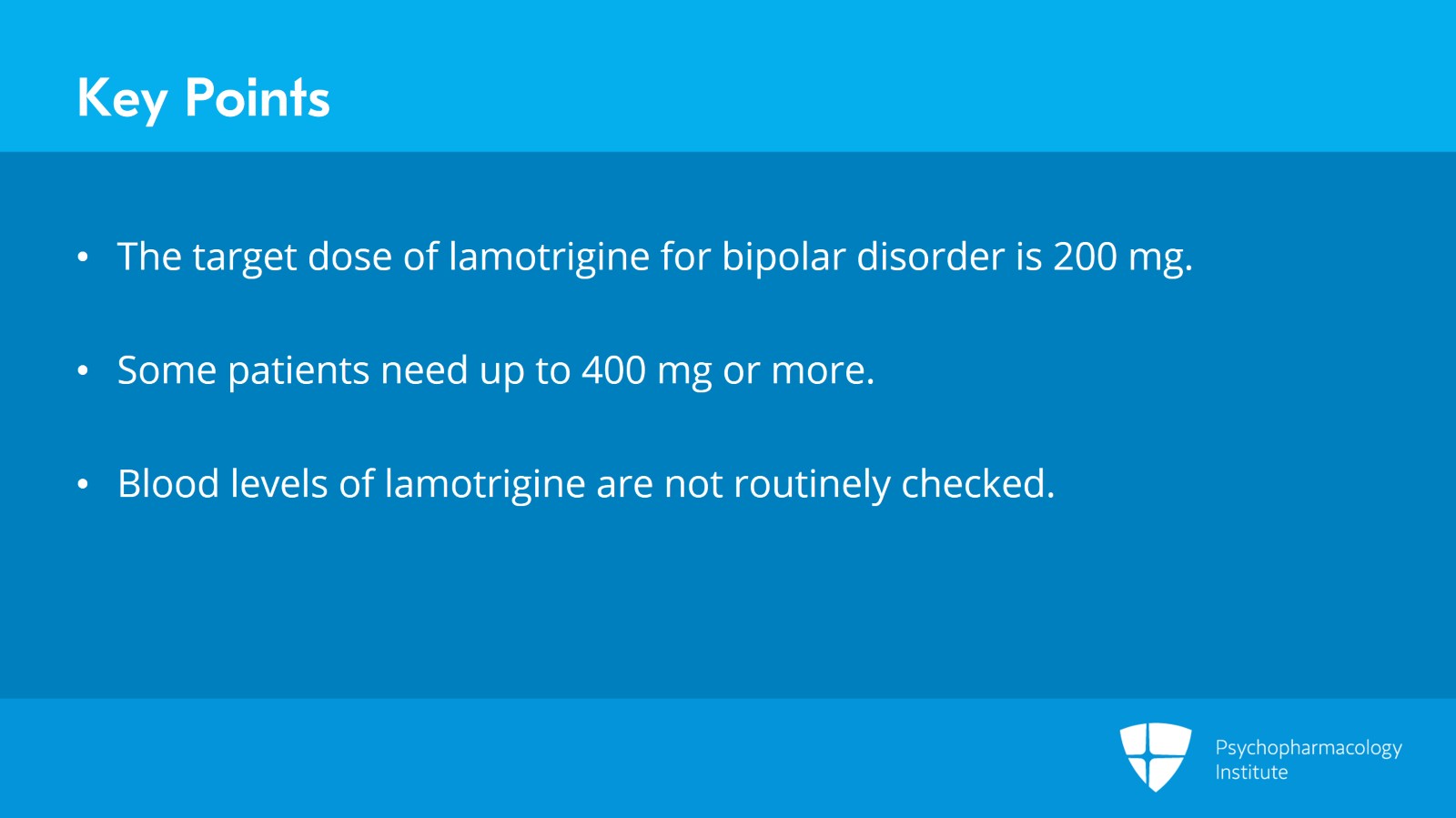
  • The target dose of lamotrigine for bipolar disorder is 200 mg.
  • Some patients need up to 400 mg or more.
  • Blood levels of lamotrigine are not routinely checked.
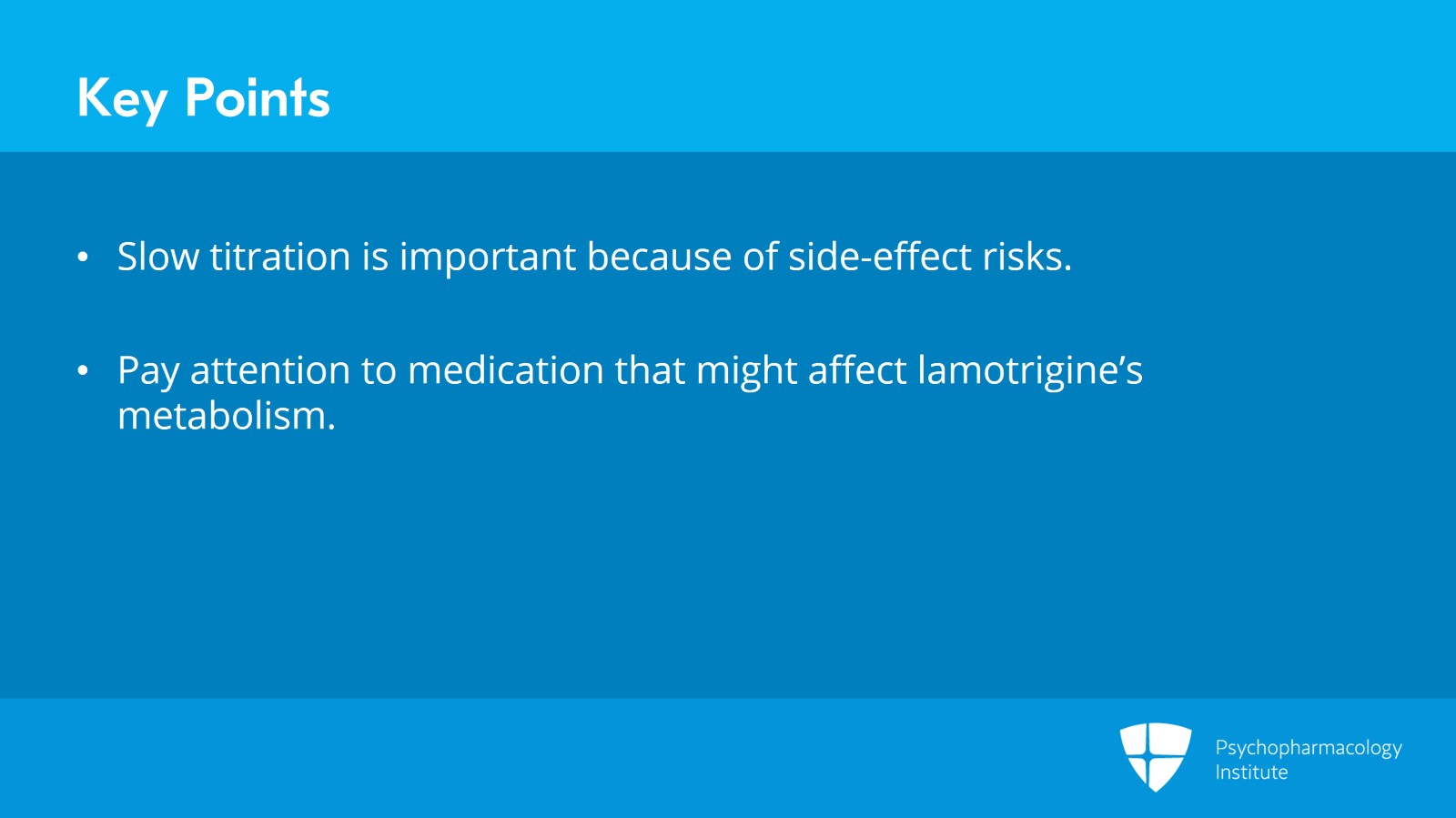
  • Slow titration is important because of side-effect risks.
  • Pay attention to medication that might affect lamotrigine’s metabolism.

Free Downloads for Offline Access

  • Free Download Presentation File (PPTX)
  • Free Download Audio File (MP3)
  • Free Download Video (MP4)

Slides and Transcript
Slide 1 of 15

Let's move on to video 2, understanding lamotrigine mechanisms and titration schedules.

Slide 2 of 15

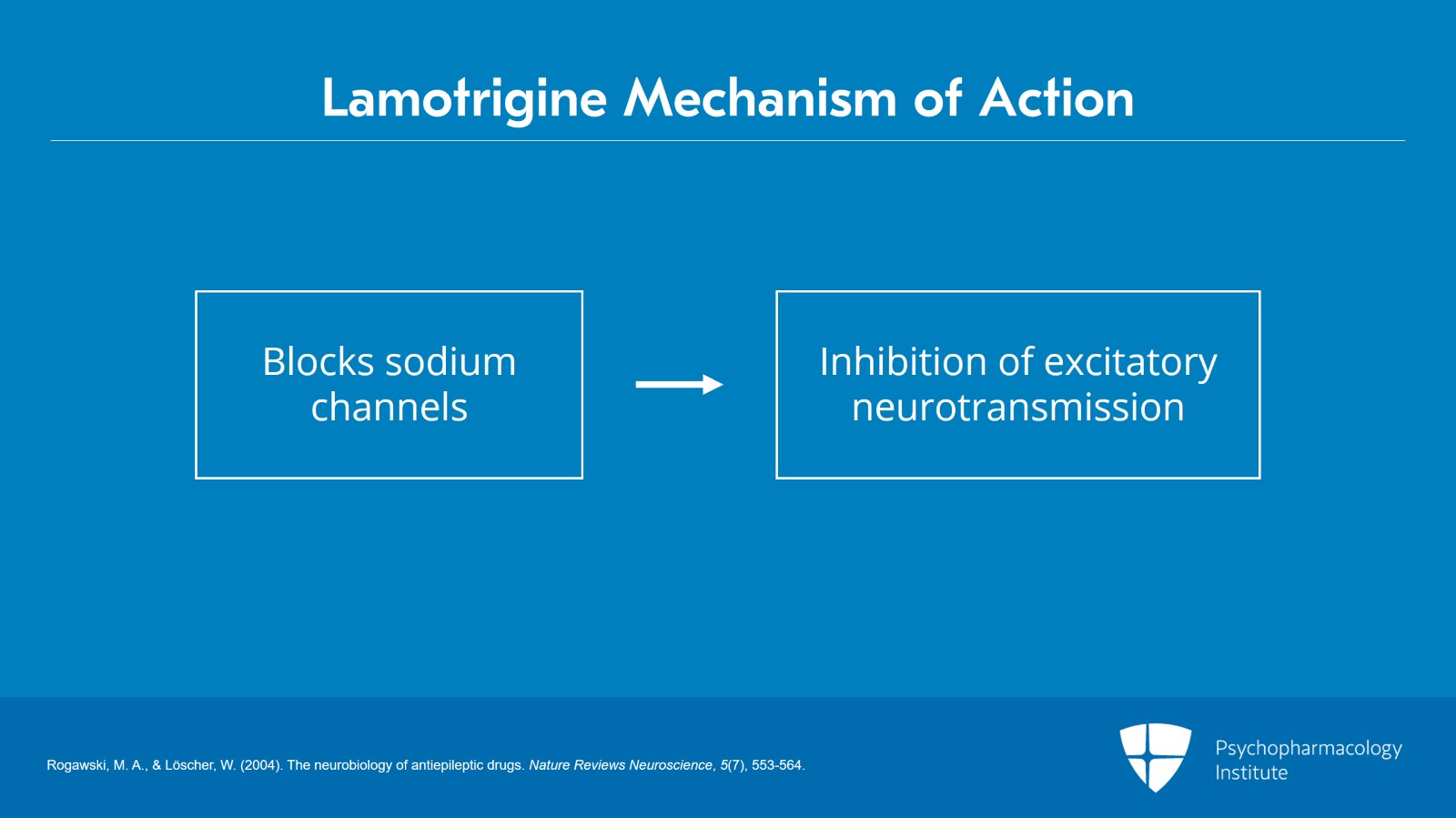
So we'll start with some basics of psychopharmacology with regard to lamotrigine. The mechanism of action is thought to include sodium channel blockade which leads to an inhibition of excitatory neurotransmission. Lamotrigine does not have pronounced effects on histaminergic, muscarinic, adrenergic, 5-HT2, or D2 receptors.
References:
  • Rogawski, M. A., & Löscher, W. (2004). The neurobiology of antiepileptic drugs. Nature Reviews Neuroscience, 5(7), 553-564.
Free Files
Success!
Check your inbox, we sent you all the materials there.
Slide 3 of 15

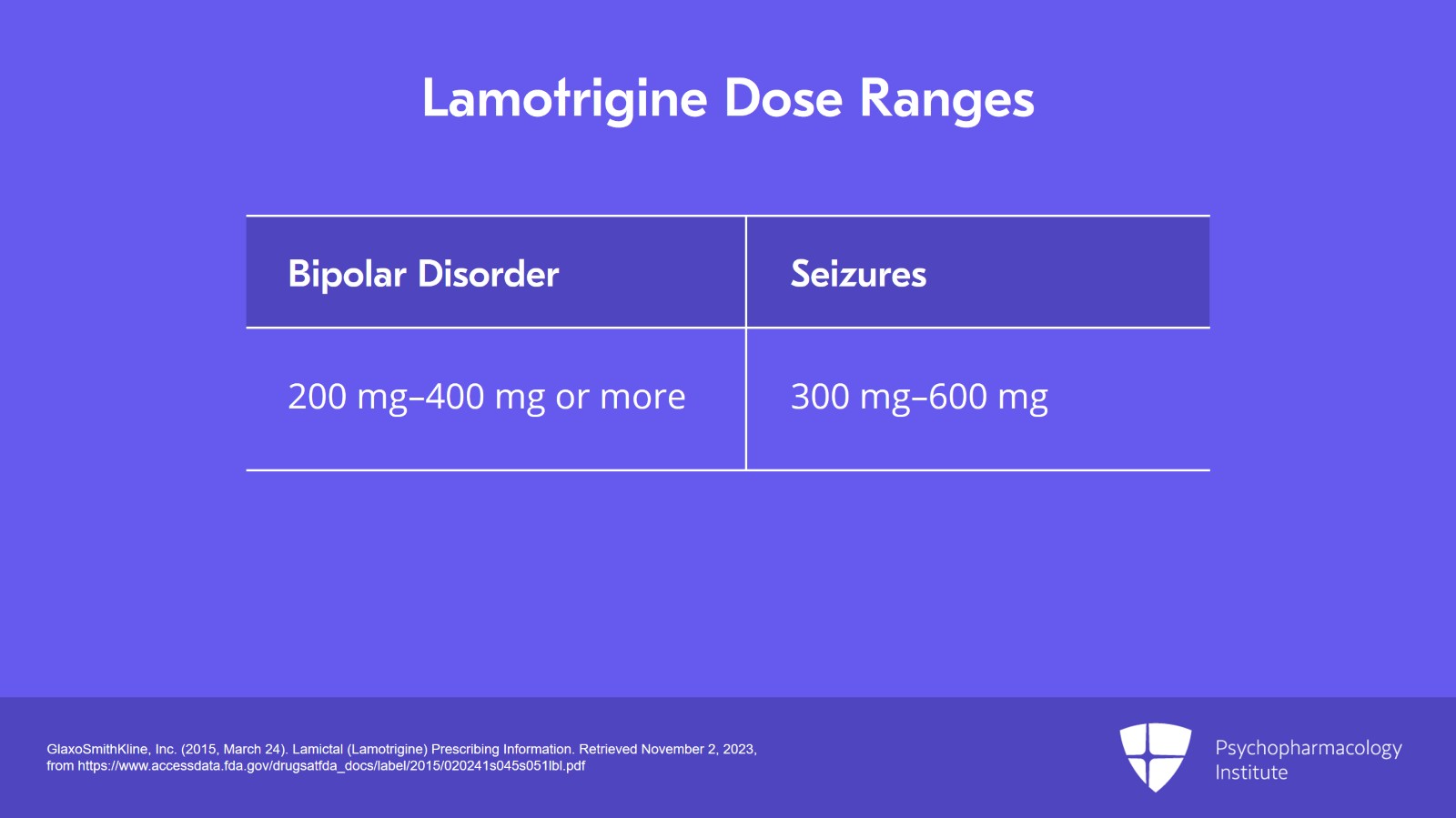
The target dose for bipolar disorder is often thought of as 200 mg daily but some patients will need higher doses up to 400 mg and sometimes beyond. And if that concerns you, keep in mind that the dose range for neurologists is much higher, typically 300 to 600 mg. So we're pretty safe at a wide range of doses.
References:
  • GlaxoSmithKline, Inc. (2015, March 24). Lamictal (Lamotrigine) Prescribing Information. Retrieved November 2, 2023, from https://www.accessdata.fda.gov/drugsatfda_docs/label/2015/020241s045s051lbl.pdf

Slide 4 of 15

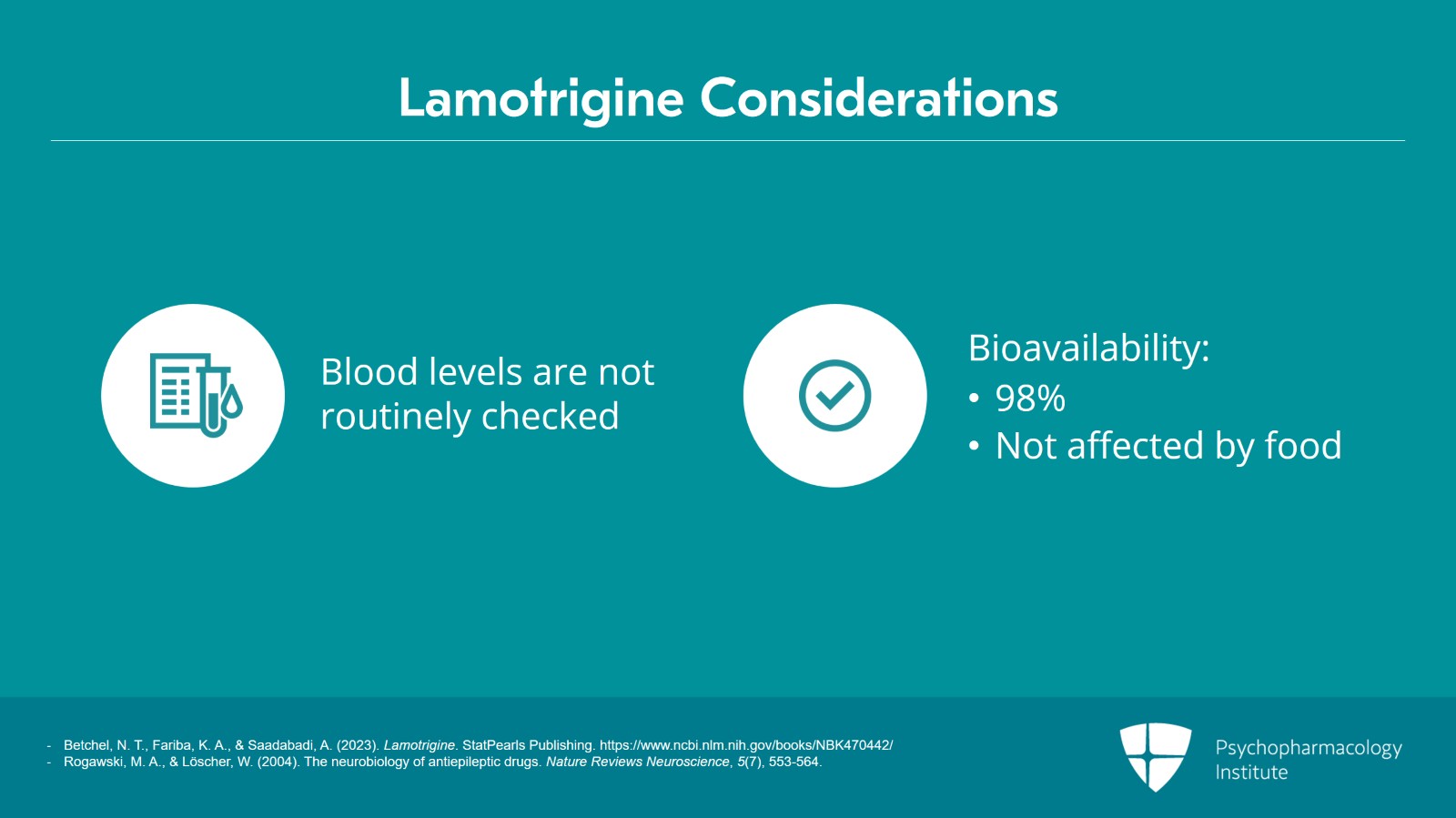
Blood levels of lamotrigine can be checked but are not routinely checked. The half-life is about 24 to 30 hours. It has a 98% oral bioavailability with peak concentrations in about one to three hours and the bioavailability is not affected by food.
References:
  • Betchel, N. T., Fariba, K. A., & Saadabadi, A. (2023). Lamotrigine. StatPearls Publishing. https://www.ncbi.nlm.nih.gov/books/NBK470442/
  • Rogawski, M. A., & Löscher, W. (2004). The neurobiology of antiepileptic drugs. Nature Reviews Neuroscience, 5(7), 553-564.
Free Files
Success!
Check your inbox, we sent you all the materials there.
Slide 5 of 15

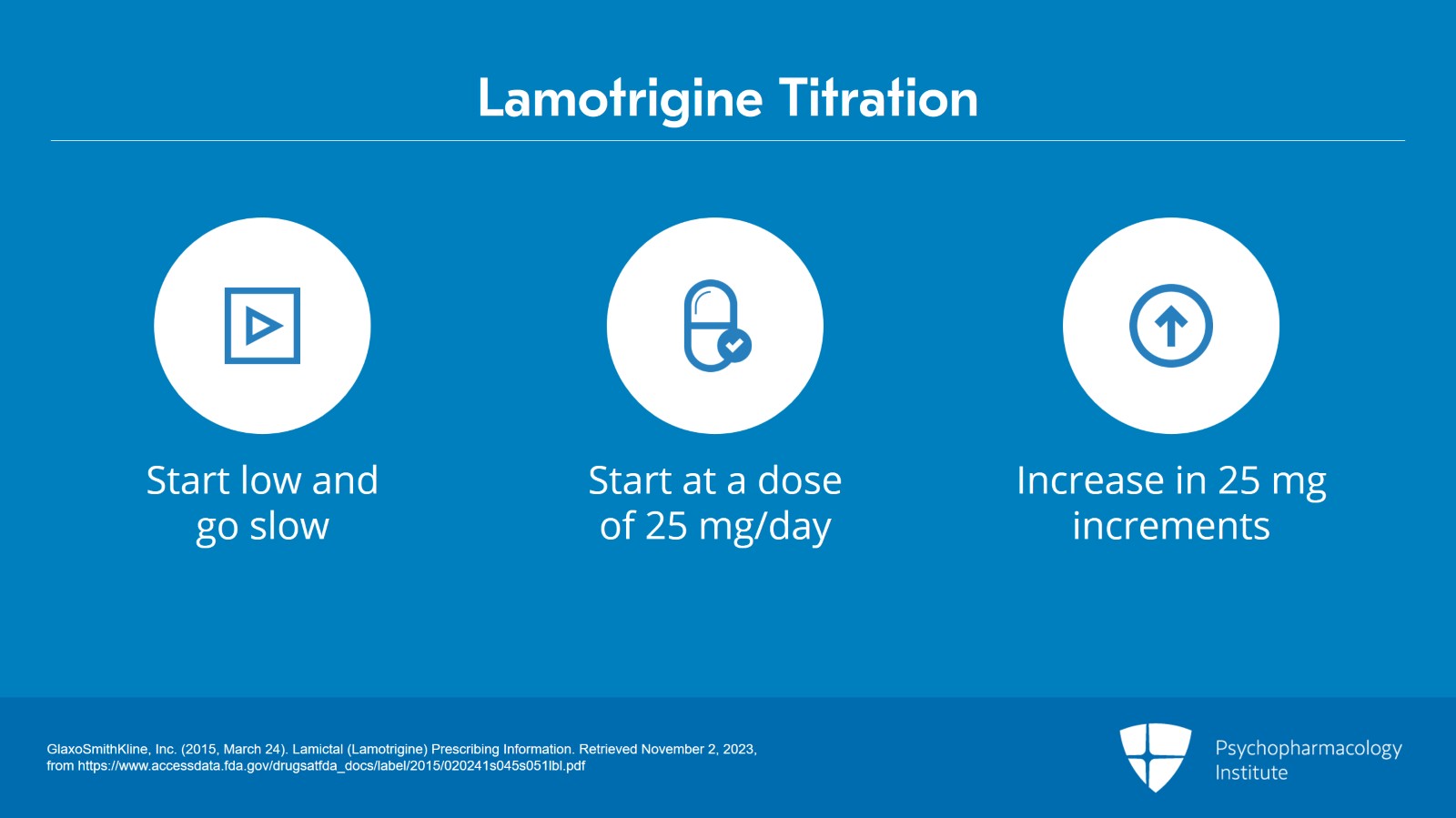
The titration schedule for lamotrigine is really important and the mantra that we want to remember here is to start low and go slow. We'll talk about why that is when we talk about some side effects but generally when you're titrating lamotrigine, you want to start at a dose of 25 mg daily and you want to increase in 25-mg increments at least at the beginning.
References:
  • GlaxoSmithKline, Inc. (2015, March 24). Lamictal (Lamotrigine) Prescribing Information. Retrieved November 2, 2023, from https://www.accessdata.fda.gov/drugsatfda_docs/label/2015/020241s045s051lbl.pdf

Slide 6 of 15

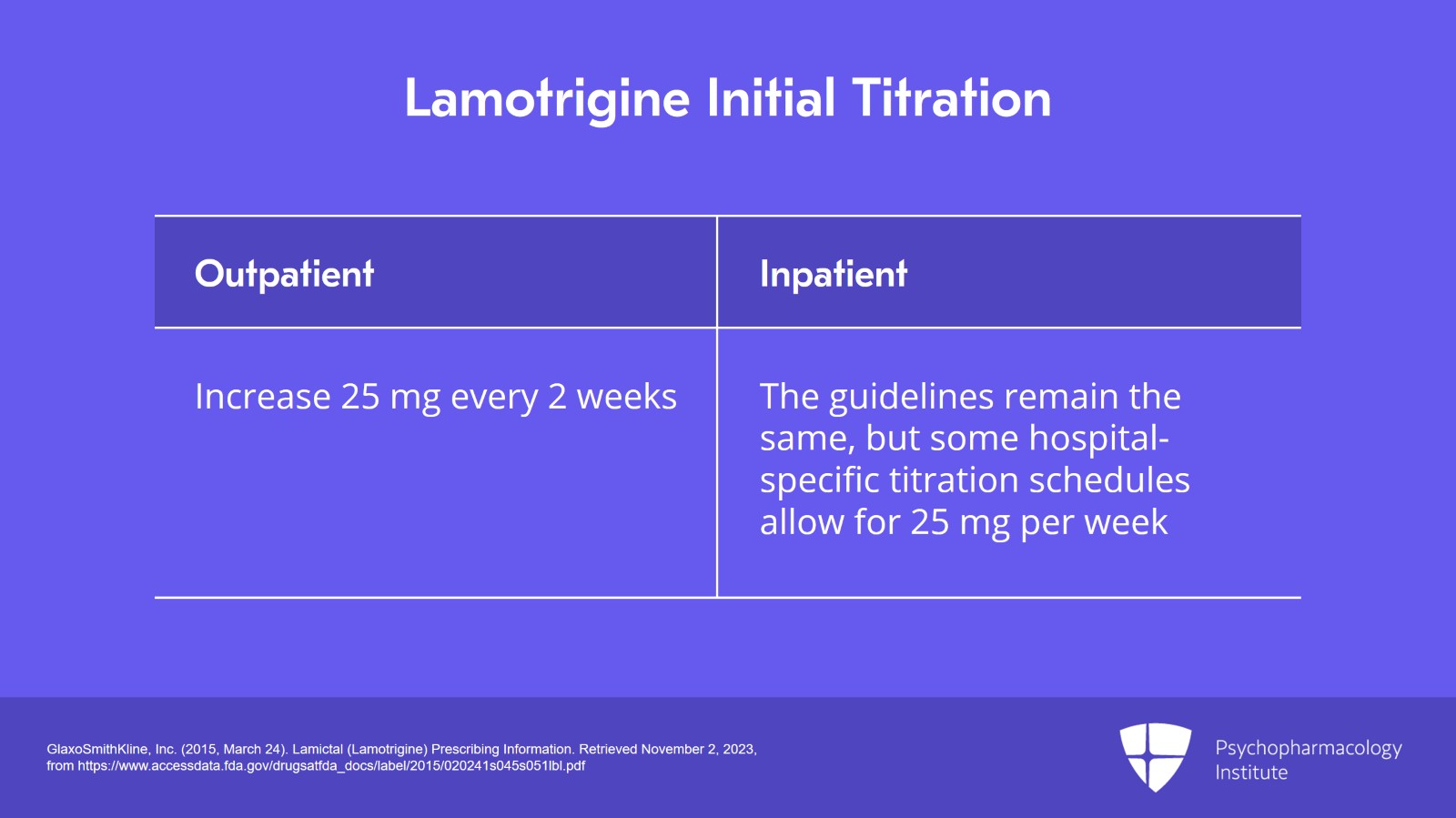
If you're doing that as an outpatient, the recommendation is 25 mg every 2 weeks. If you're doing that as an inpatient, you can probably go a bit quicker than that since you will be monitoring the patients closely and watching for rash or other side effects. Our pharmacist on the inpatient psychiatry unit feels comfortable with a maximum rate of 25 mg per week. In 2021, neurologists in South Korea published a study demonstrating the safety of a rapid titration schedule that actually begins with microdosing lamotrigine at 0.1 mg daily and gets to 200 mg per day in 11 days. It's important to keep in mind, though, that outside of that study, no published guidelines exist for faster titration of lamotrigine for inpatients.
References:
  • GlaxoSmithKline, Inc. (2015, March 24). Lamictal (Lamotrigine) Prescribing Information. Retrieved November 2, 2023, from https://www.accessdata.fda.gov/drugsatfda_docs/label/2015/020241s045s051lbl.pdf
Free Files
Success!
Check your inbox, we sent you all the materials there.
Slide 7 of 15

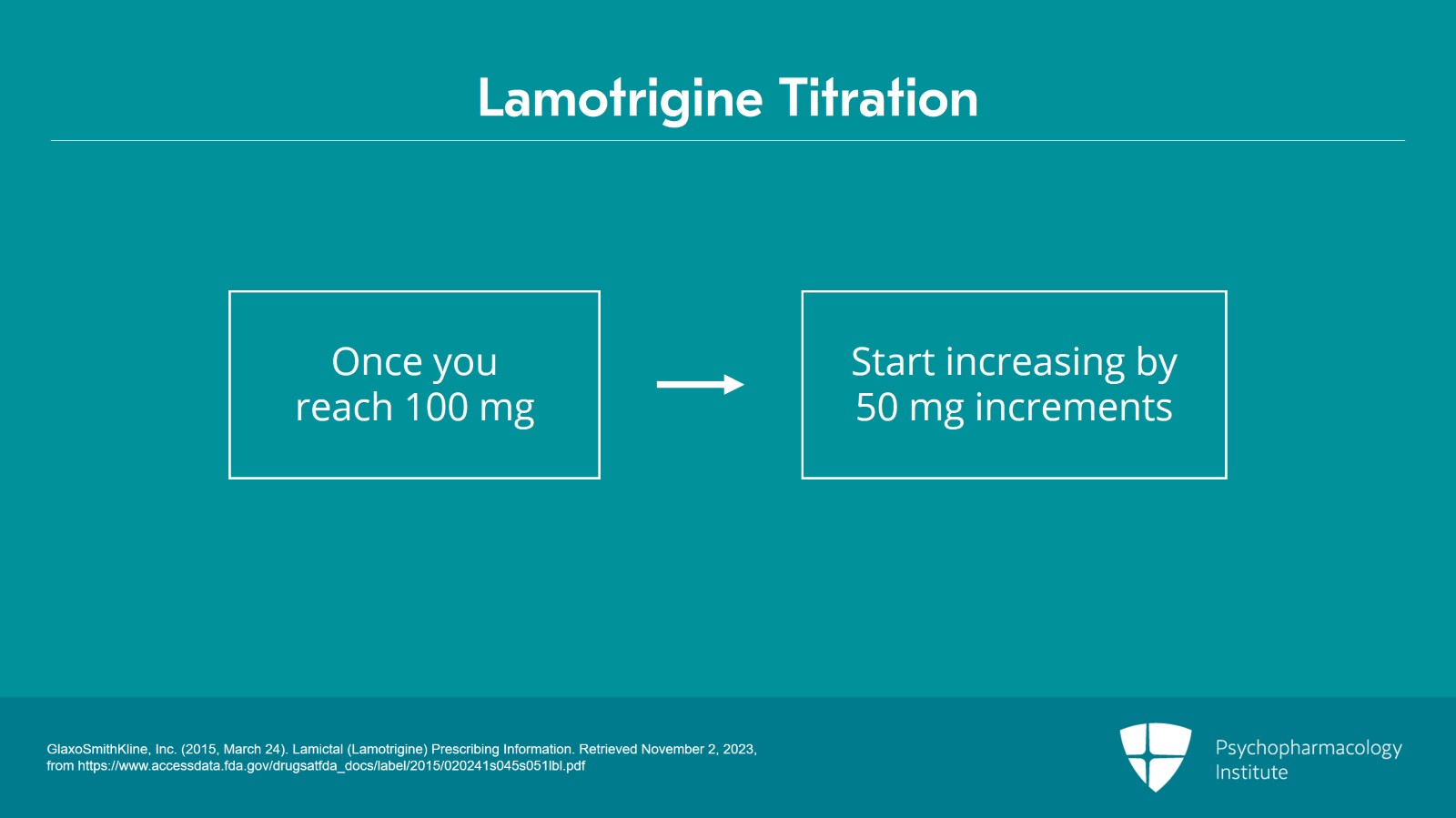
Once you reach a dose of 100 mg, then you can start increasing by 50-mg increments. Importantly, the psychiatry titration is generally quite conservative compared to our neurology colleagues. So neurologists will generally escalate the dose of lamotrigine more quickly. We're typically a little more cautious.
References:
  • GlaxoSmithKline, Inc. (2015, March 24). Lamictal (Lamotrigine) Prescribing Information. Retrieved November 2, 2023, from https://www.accessdata.fda.gov/drugsatfda_docs/label/2015/020241s045s051lbl.pdf

Slide 8 of 15

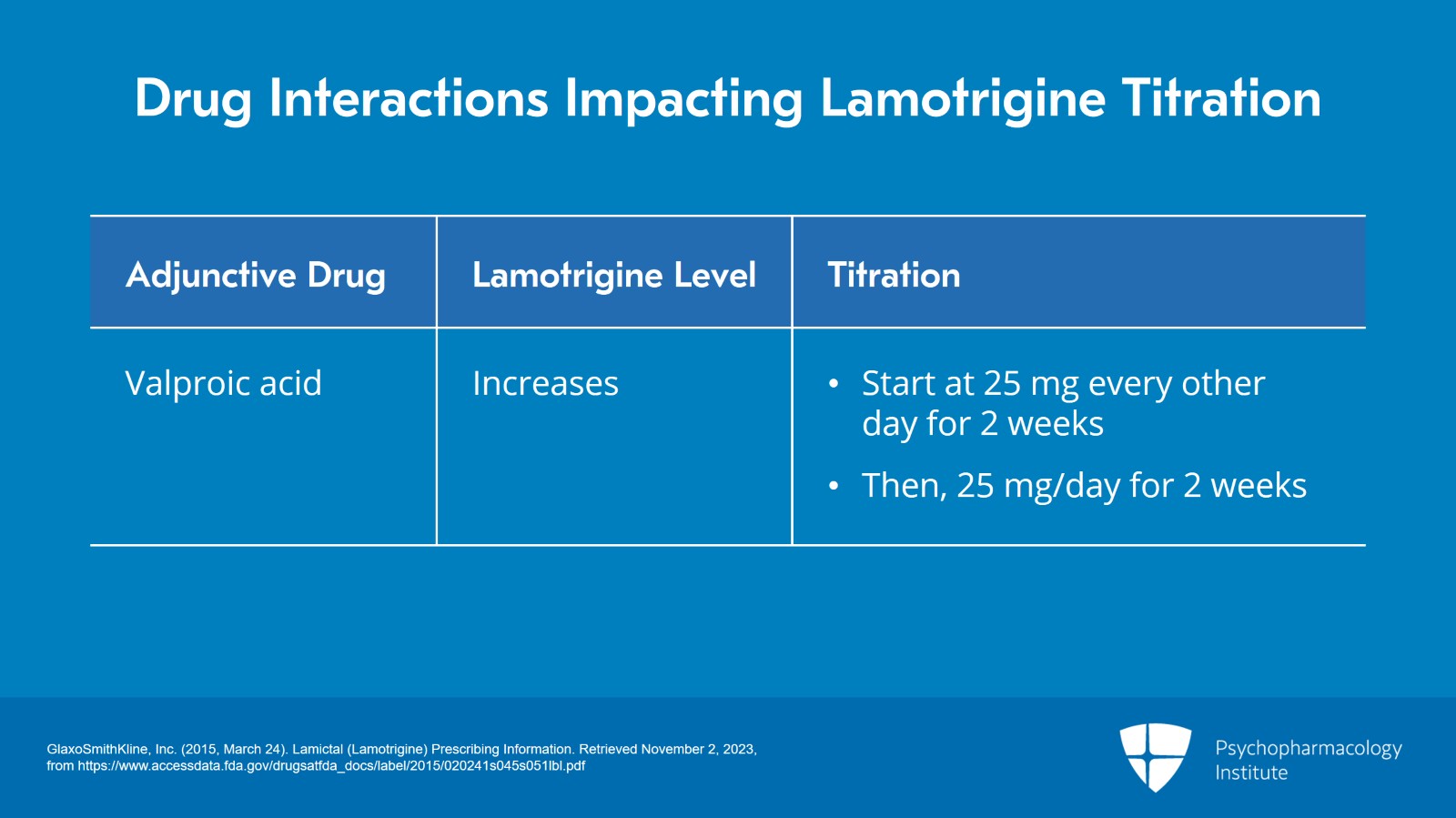
There are some important drug-drug interactions that you must keep in mind while titrating lamotrigine that affect the schedule. If your patient is also taking valproic acid, the levels of lamotrigine are going to be increased and in that case, you're actually going to start at 25 mg every other day for two weeks before going to 25 mg a day for the next two weeks.
References:
  • GlaxoSmithKline, Inc. (2015, March 24). Lamictal (Lamotrigine) Prescribing Information. Retrieved November 2, 2023, from https://www.accessdata.fda.gov/drugsatfda_docs/label/2015/020241s045s051lbl.pdf
Free Files
Success!
Check your inbox, we sent you all the materials there.
Slide 9 of 15

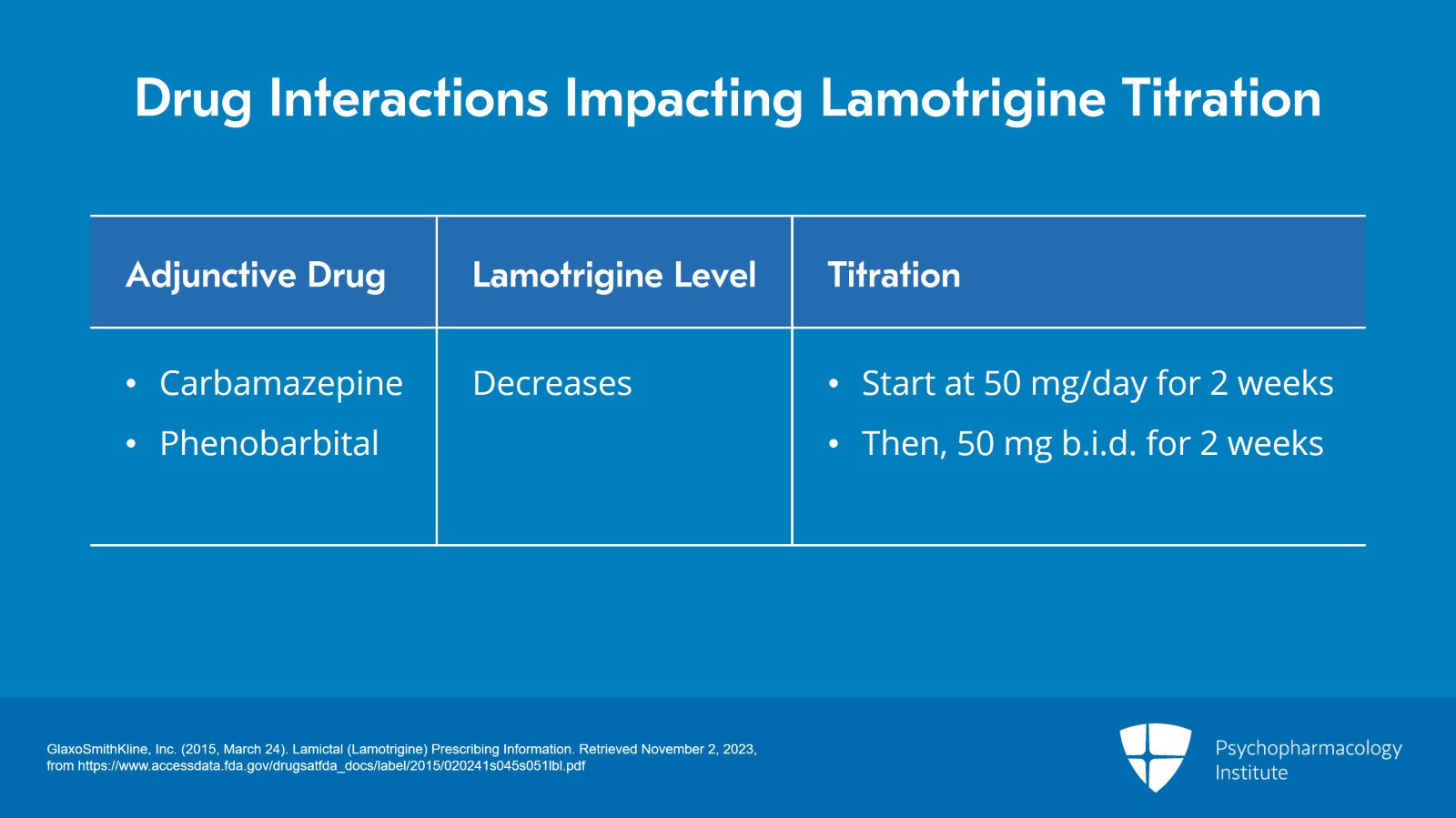
Conversely, if your patients are on carbamazepine or phenobarbital, then their levels of lamotrigine are going to be decreased and in those cases, you'll want to start at 50 mg daily for the first two weeks and then go to 50 mg twice a day for the next two weeks then increasing from there.
References:
  • GlaxoSmithKline, Inc. (2015, March 24). Lamictal (Lamotrigine) Prescribing Information. Retrieved November 2, 2023, from https://www.accessdata.fda.gov/drugsatfda_docs/label/2015/020241s045s051lbl.pdf

Slide 10 of 15

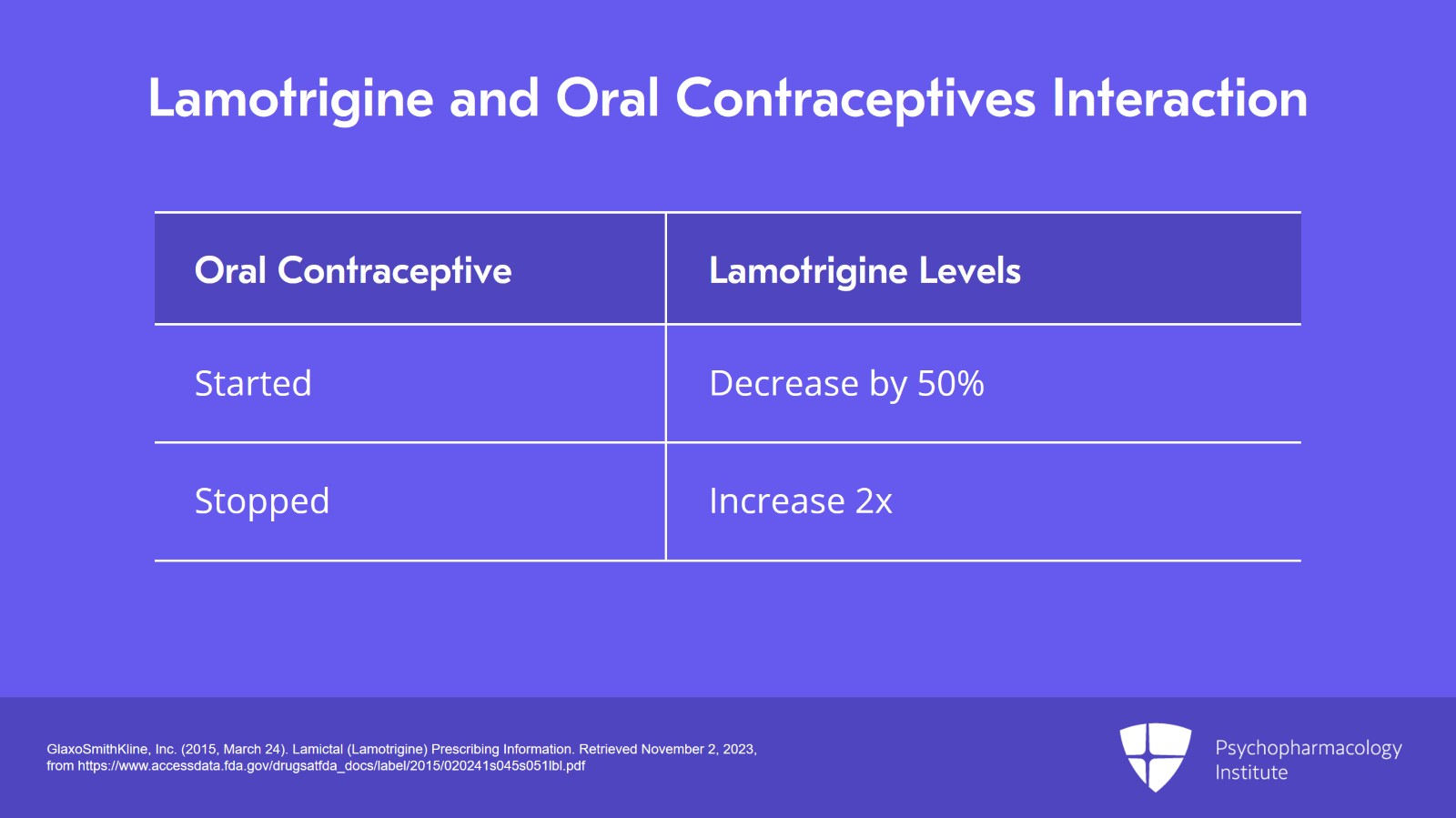
Very importantly, estrogen increases lamotrigine clearance so levels typically decrease by 50% within one week of starting an oral contraceptive and can increase twofold when oral contraception is stopped.
References:
  • GlaxoSmithKline, Inc. (2015, March 24). Lamictal (Lamotrigine) Prescribing Information. Retrieved November 2, 2023, from https://www.accessdata.fda.gov/drugsatfda_docs/label/2015/020241s045s051lbl.pdf
Free Files
Success!
Check your inbox, we sent you all the materials there.
Slide 11 of 15

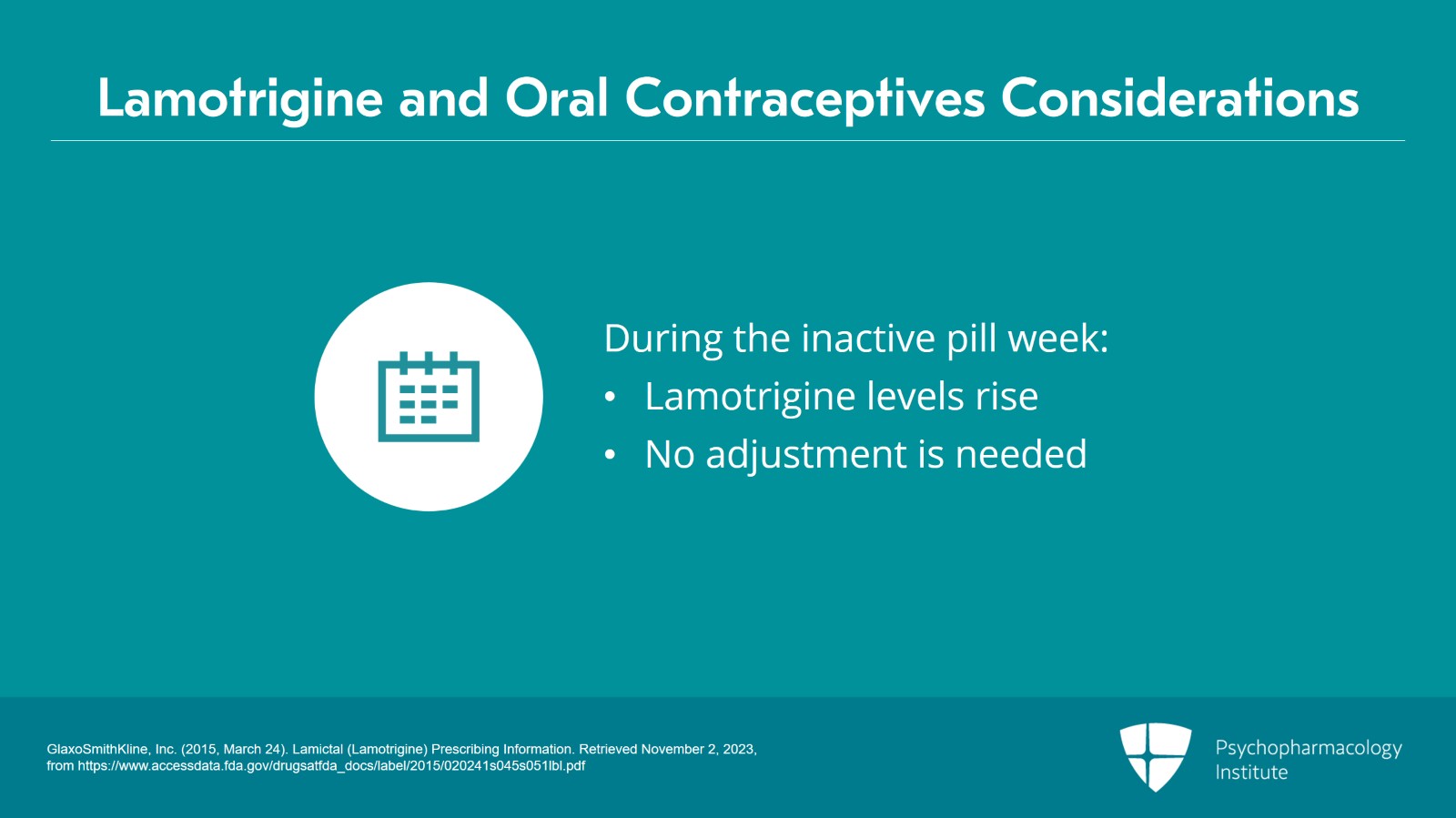
During the inactive pill week for patients on oral contraception, the lamotrigine levels will rise though there is generally no adjustment that is needed during those inactive pill weeks.
References:
  • GlaxoSmithKline, Inc. (2015, March 24). Lamictal (Lamotrigine) Prescribing Information. Retrieved November 2, 2023, from https://www.accessdata.fda.gov/drugsatfda_docs/label/2015/020241s045s051lbl.pdf

Slide 12 of 15

So it's really important for patients to let their psychiatrists know when they are starting, stopping, or changing birth control and really important to have this conversation up front with your patients who may be on birth control. As a prescriber, you should monitor symptoms and adjust the dose of lamotrigine if needed.
References:
  • GlaxoSmithKline, Inc. (2015, March 24). Lamictal (Lamotrigine) Prescribing Information. Retrieved November 2, 2023, from https://www.accessdata.fda.gov/drugsatfda_docs/label/2015/020241s045s051lbl.pdf
Free Files
Success!
Check your inbox, we sent you all the materials there.
Slide 13 of 15

Let's review some key points for this section. The target dose of lamotrigine for bipolar disorder is often thought of as 200 mg total daily dose but some patients will need higher doses, up to 400 mg and sometimes beyond. Blood levels of lamotrigine are not routinely checked.

Slide 14 of 15

Slow titration is important because of side effect risks and prescribers should pay particular attention to other medications that might affect the metabolism including other antiepileptic drugs and oral contraceptives.
Free Files
Success!
Check your inbox, we sent you all the materials there.
Slide 15 of 15

Learning Objectives:

After completing this activity, the learner will be able to:

  1. Comprehend the mechanism of action and clinical indications of lamotrigine.
  2. Implement titration techniques for the optimal administration of lamotrigine.
  3. Utilize evidence-based monitoring and management strategies to ensure the safety of patients with cardiac risk factors when prescribing lamotrigine.

Original Release Date: February 1, 2024

Review and Re-release Date: March 1, 2024

Expiration Date: February 1, 2027

Expert: Scott Beach, M.D.

Medical Editor: Paz Badía, M.D. 

Relevant Financial Disclosures: 

None of the faculty, planners, and reviewers for this educational activity have relevant financial relationships to disclose during the last 24 months with ineligible companies whose primary business is producing, marketing, selling, re-selling, or distributing healthcare products used by or on patients.

Contact Information: For questions regarding the content or access to this activity, contact us at support@psychopharmacologyinstitute.com

Instructions for Participation and Credit:

Participants must complete the activity online during the valid credit period that is noted above.

Follow these steps to earn CME credit:

  1. View the required educational content provided on this course page.

  2. Complete the Post Activity Evaluation for providing the necessary feedback for continuing accreditation purposes and for the development of future activities. NOTE: Completing the Post Activity Evaluation after the quiz is required to receive the earned credit.

  3. Download your certificate.

Accreditation Statement

This activity has been planned and implemented in accordance with the accreditation requirements and policies of the Accreditation Council for Continuing Medical Education through the joint providership of Medical Academy LLC and the Psychopharmacology Institute. Medical Academy is accredited by the ACCME to provide continuing medical education for physicians.

Credit Designation Statement

Medical Academy designates this enduring activity for a maximum of 0.5 AMA PRA Category 1 credit(s)™. Physicians should claim only the credit commensurate with the extent of their participation in the activity.

Free Files
Success!
Check your inbox, we sent you all the materials there.
Continue in the website
Instant access modal

Become a Bronze, Silver, Gold, Bronze extended, Silver extended or Gold extended Member.

2025–26 Psychopharmacology CME Program

Unlock up to 155 CME Credits, including 40 SA CME Credits.