Close Banner
Section Free  - Video Lectures

02. Treatment of Motor Hyperactivity and Inattention in ASD: Stimulants

Published on February 1, 2023 Certification expiration date: February 1, 2026

Christopher Keary, M.D.

Instructor in the Department of Psychiatry at Harvard Medical School & staff psychiatrist in the Lurie Center for Autism at Massachusetts General Hospital for Children - Harvard Medical School

Key Points

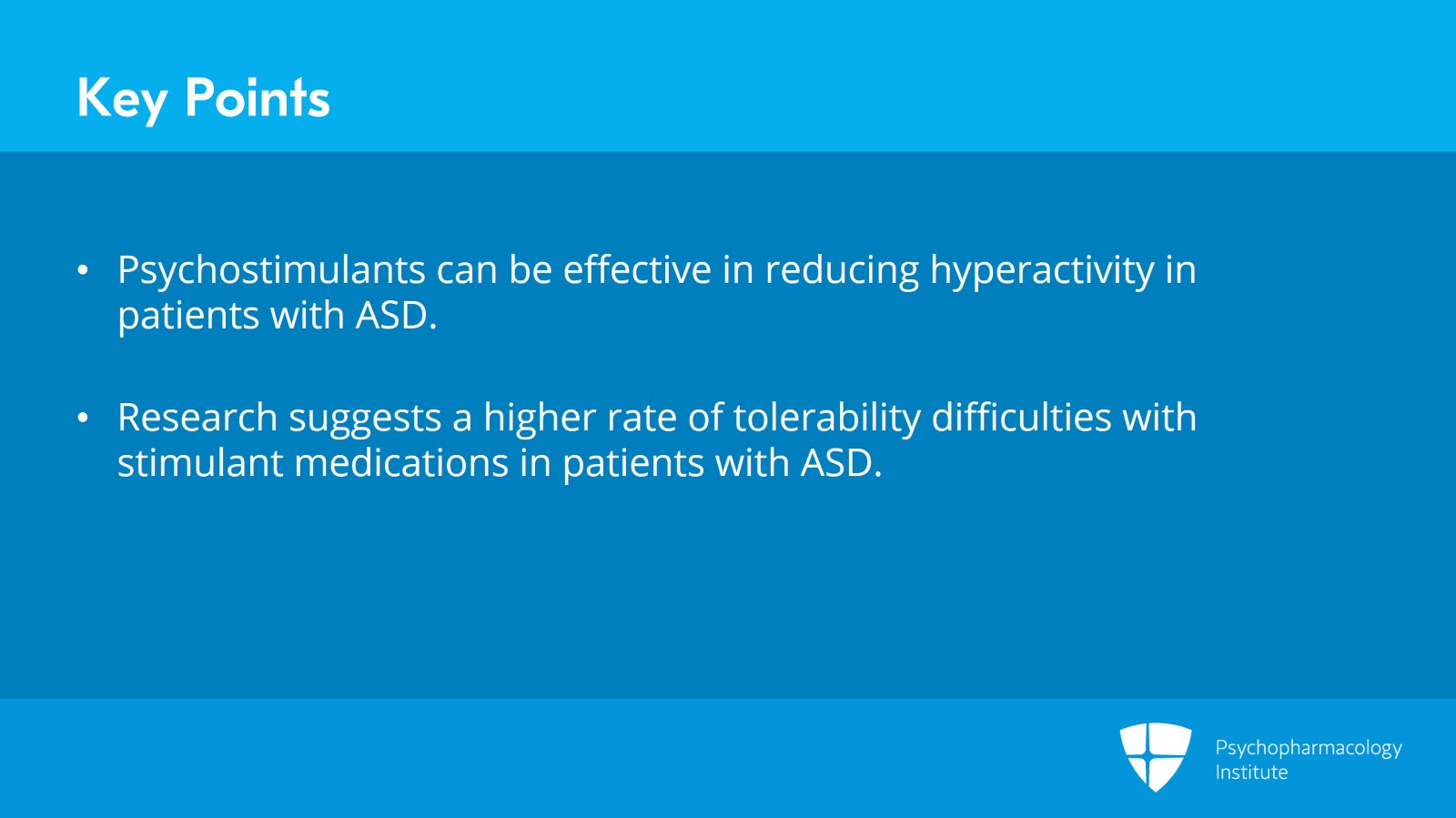
  • Psychostimulants can be effective in reducing hyperactivity in patients with ASD.
  • Research suggests a higher rate of tolerability difficulties with stimulant medications in patients with ASD.
  • Be watchful for social withdrawal when prescribing stimulants in children with ASD.

Free Downloads for Offline Access

  • Free Download Presentation File (PPTX)
  • Free Download Video (MP4)
  • Free Download Audio File (MP3)

Slides and Transcript
Slide 1 of 18

Next, we’re going to talk about the treatment of motor hyperactivity and inattention in patients with autism spectrum disorder specifically psychostimulants.

Slide 2 of 18

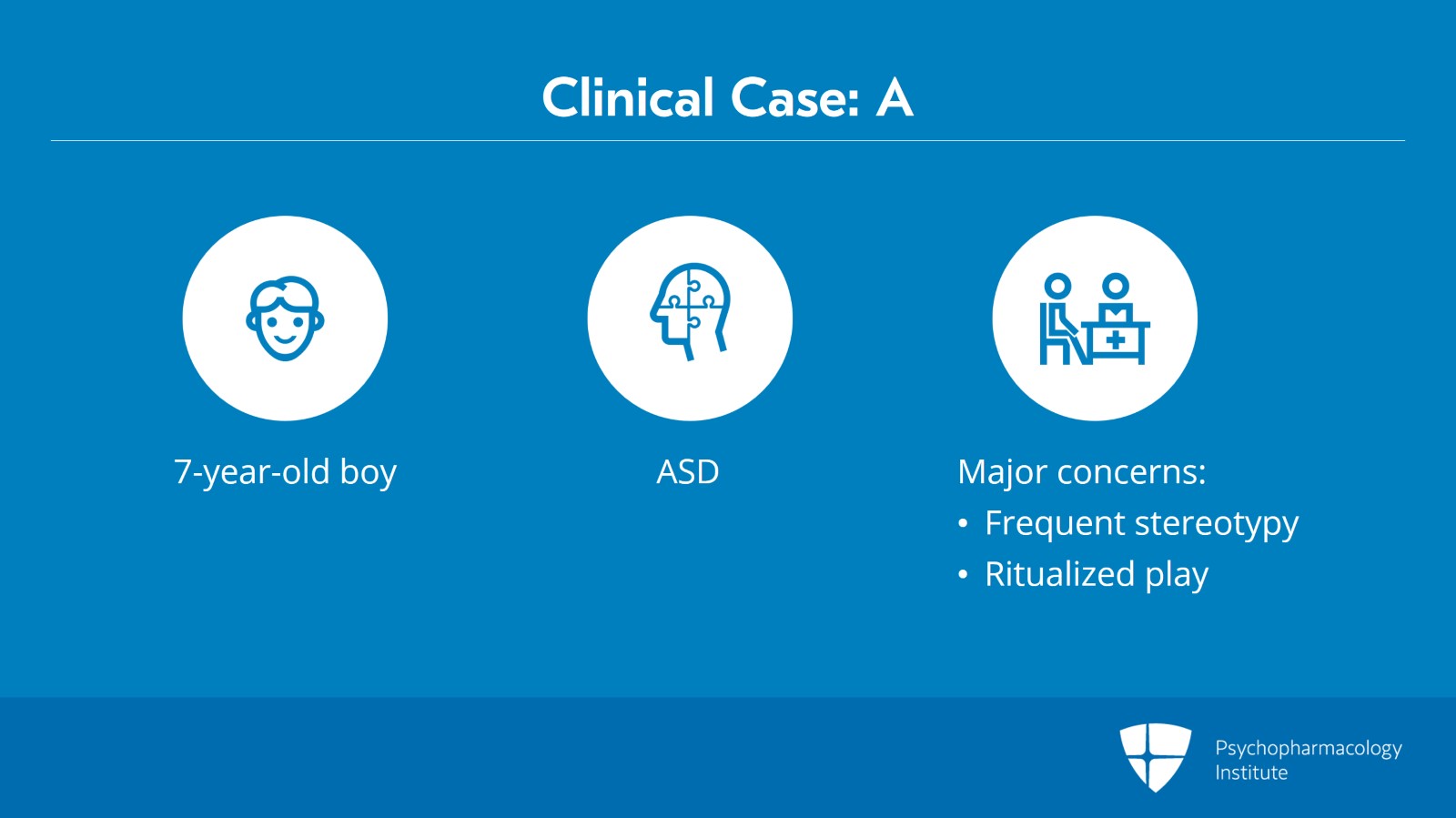
We’re going to start talking about a case. A is a 7-year-old boy with autism spectrum disorder and the major concern brought forth on the part of the parents was frequent stereotypy and ritualized play.
Free Files
Success!
Check your inbox, we sent you all the materials there.
Slide 3 of 18

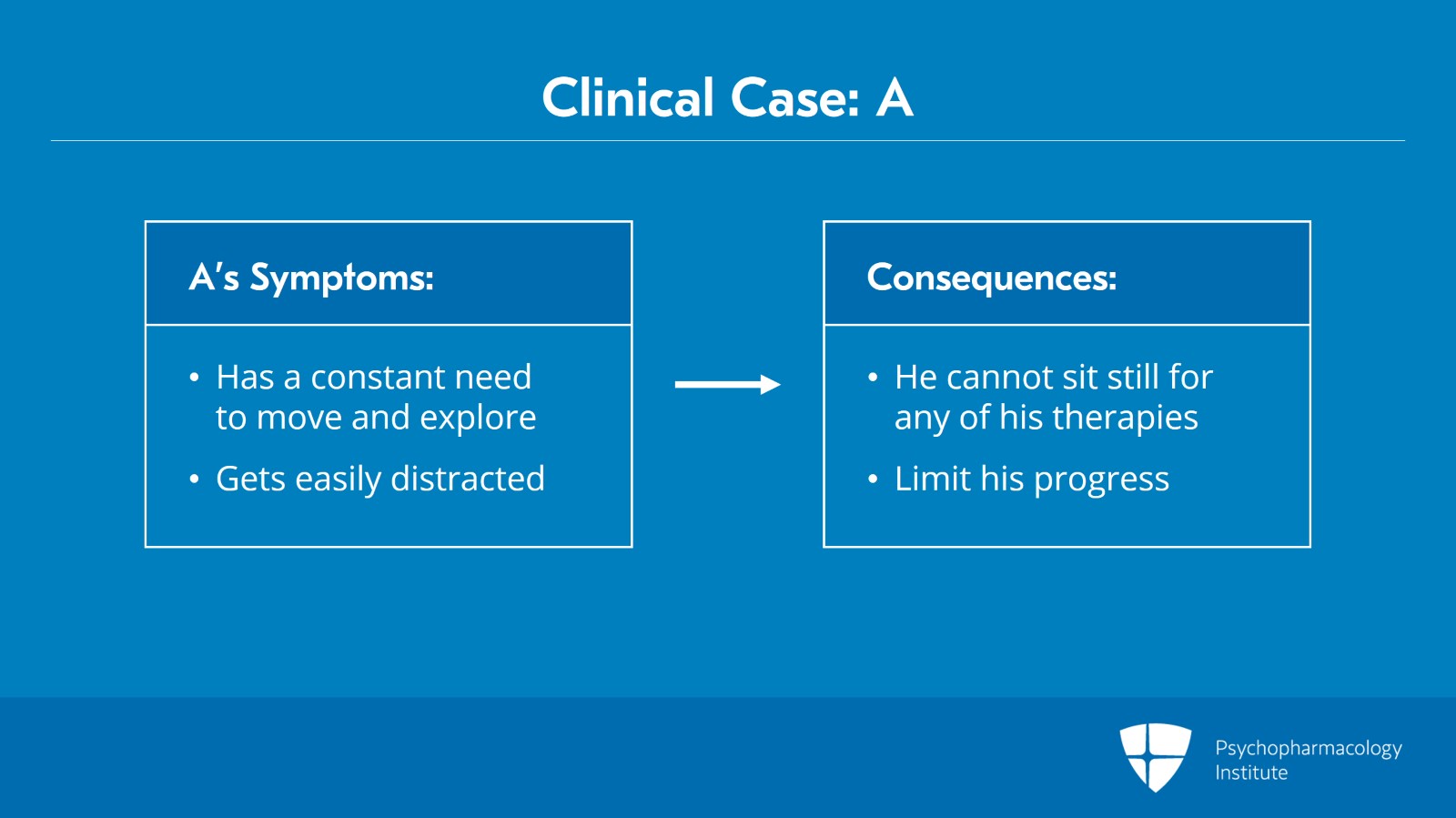
At baseline, A has constant need to move and explore. He is easily distracted at school despite numerous accommodations placed in part of the school. In the appointment with A, he has a constant need to move around the room, be redirected to stay in the office, and take apart things in the examiner’s room. He can’t sit still for any prolonged period of time for any of his therapies at school such as occupational therapy or speech therapy and the need to take constant movement breaks very much limits the progress he can make.

Slide 4 of 18

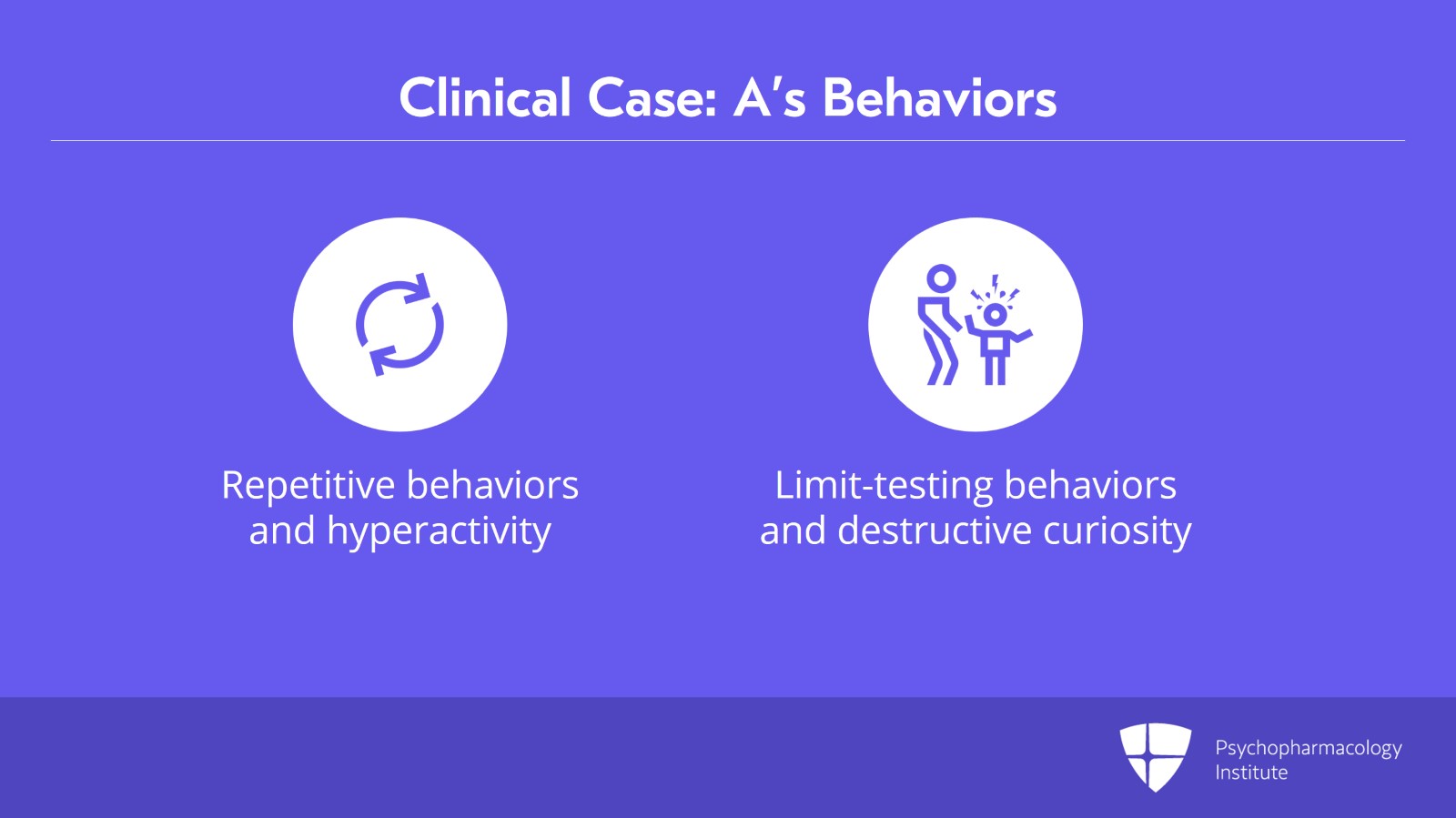
Any period of time where there’s less structure, A engages in repetitive silly behavior and hyperactivity which makes management very difficult. This constant silly limit-testing behavior and destructive curiosity, taking things apart make community trips very difficult.
Free Files
Success!
Check your inbox, we sent you all the materials there.
Slide 5 of 18

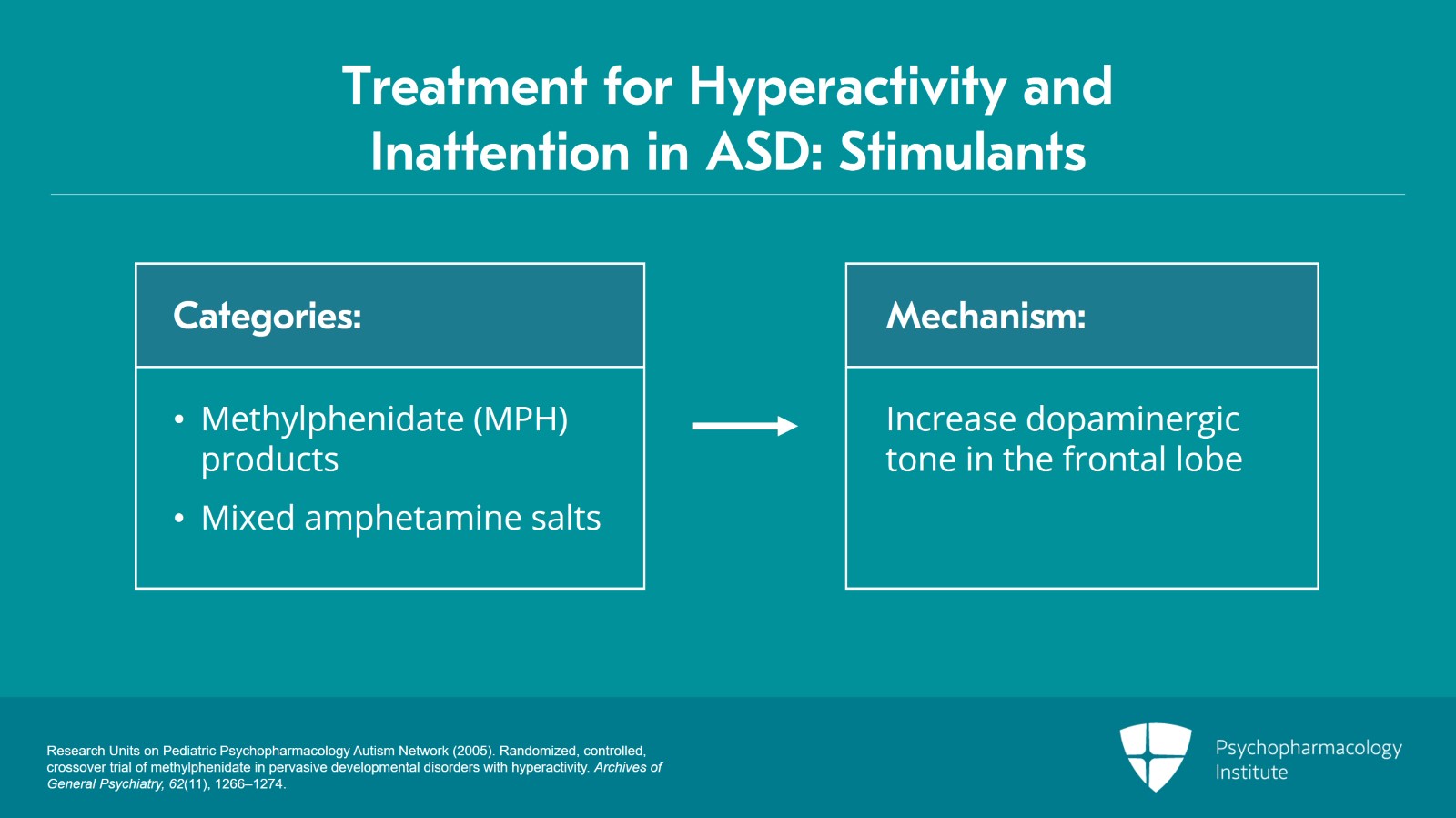
So let’s talk a little bit about the treatment for hyperactivity and inattention in patients with autism spectrum disorder. We’ll talk first about stimulant medications which fall into two major categories, methylphenidate products and mixed amphetamine salts which serve to increase dopaminergic tone in frontal lobe regions of the brain.
References:
  • Research Units on Pediatric Psychopharmacology Autism Network (2005). Randomized, controlled, crossover trial of methylphenidate in pervasive developmental disorders with hyperactivity. Archives of General Psychiatry, 62(11), 1266–1274.

Slide 6 of 18

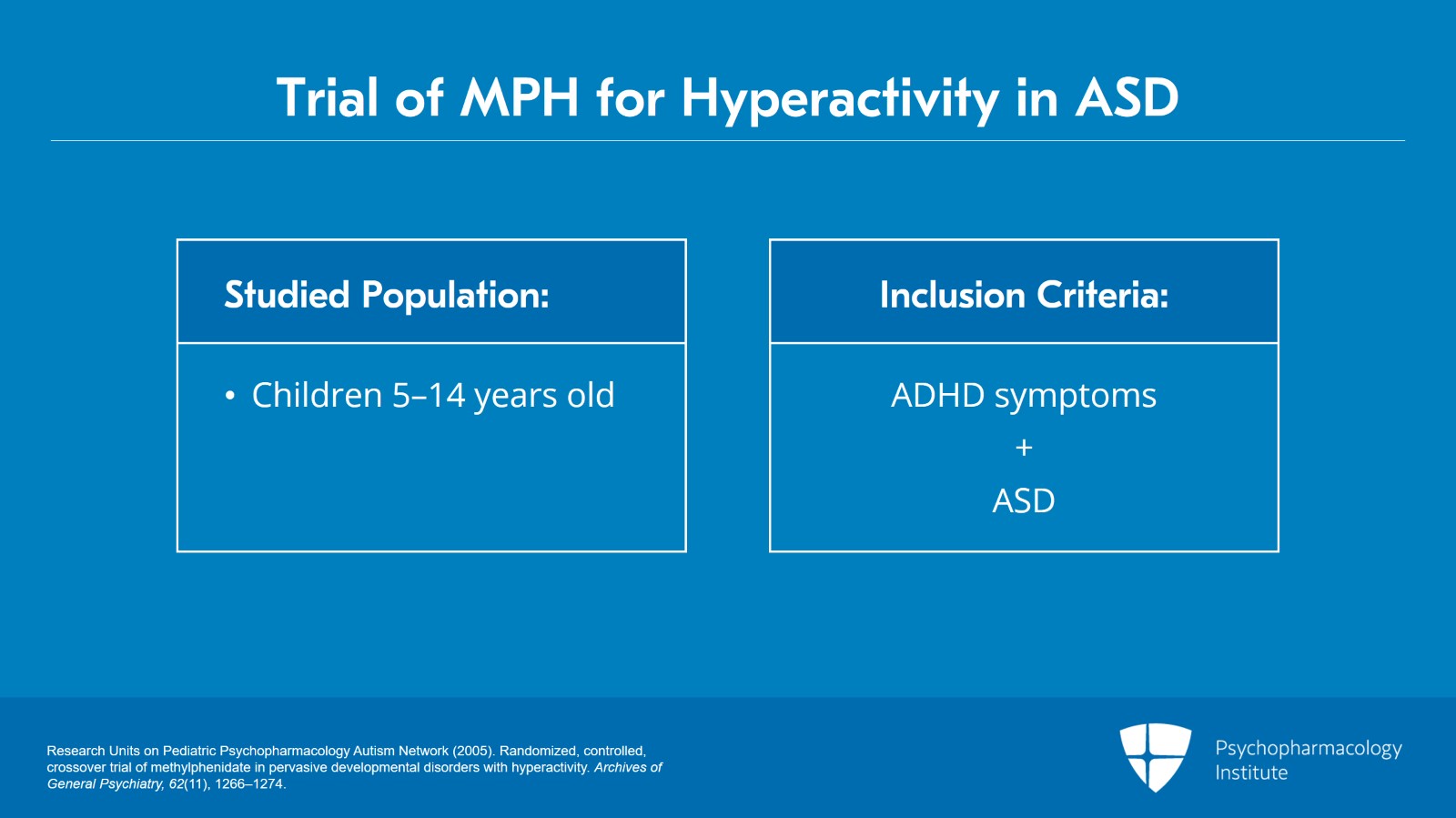
I’m going to start with telling you about an important trial that was done by the RUPP group of methylphenidate for the treatment of hyperactivity in kids with autism. This first trial I’m telling you about was done in 72 children ages between 5 and 14 years old. To participate in this trial, you had to have significant ADHD symptoms in addition to an autism diagnosis, with the full range of severity of autism spectrum disorder from higher functioning to lower functioning individuals with co-occurring intellectual disability.
References:
  • Research Units on Pediatric Psychopharmacology Autism Network (2005). Randomized, controlled, crossover trial of methylphenidate in pervasive developmental disorders with hyperactivity. Archives of General Psychiatry, 62(11), 1266–1274.
Free Files
Success!
Check your inbox, we sent you all the materials there.
Slide 7 of 18

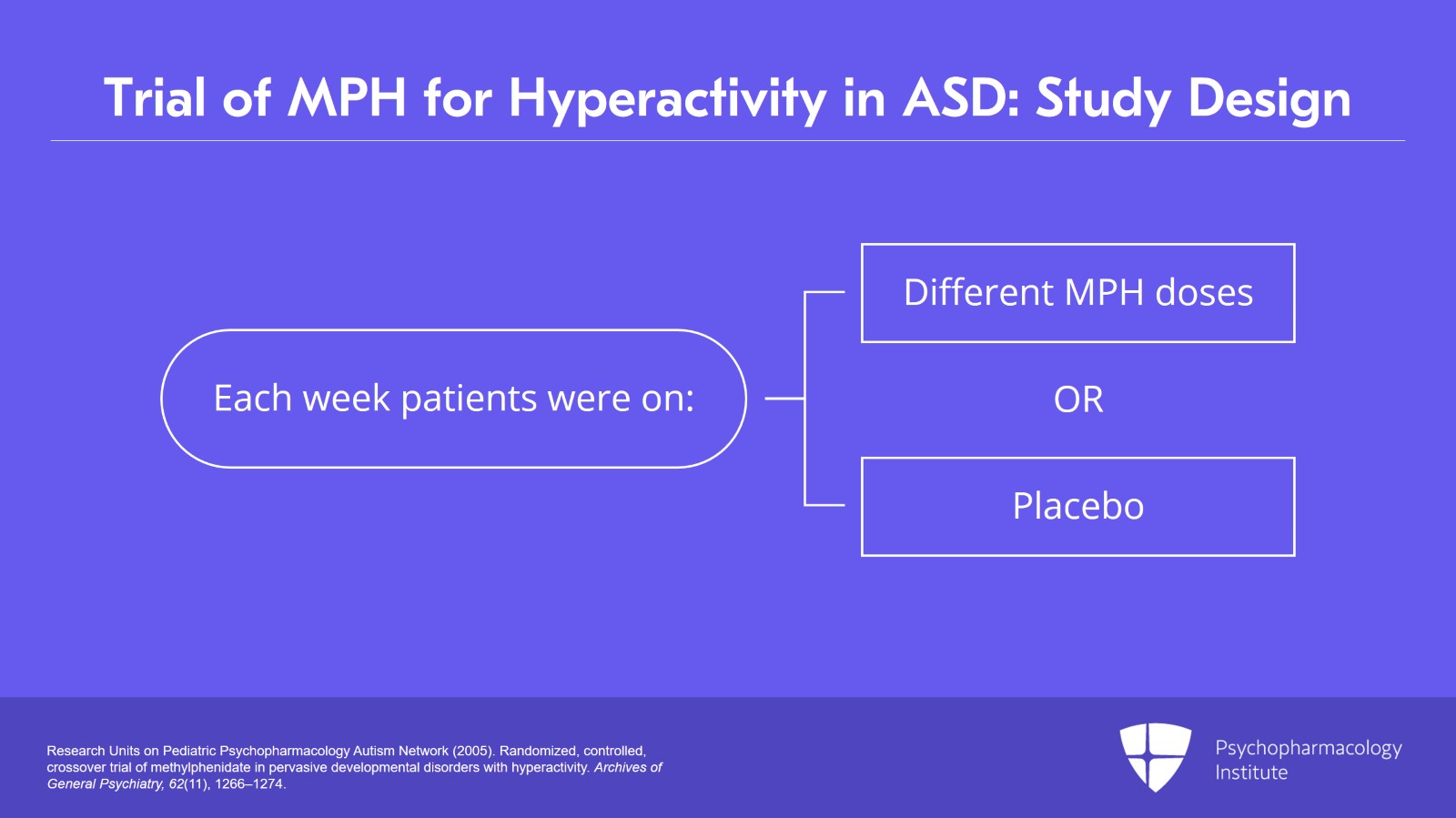
The study design was a four-week double-blind placebo-controlled trial with a seven-day lead-in period where subjects had a test dose ensuring they could tolerate the stimulant medication. In the four-week double-blind placebo-controlled component of the trial, for each week, subjects were on a different dose level of methylphenidate or a placebo.
References:
  • Research Units on Pediatric Psychopharmacology Autism Network (2005). Randomized, controlled, crossover trial of methylphenidate in pervasive developmental disorders with hyperactivity. Archives of General Psychiatry, 62(11), 1266–1274.

Slide 8 of 18

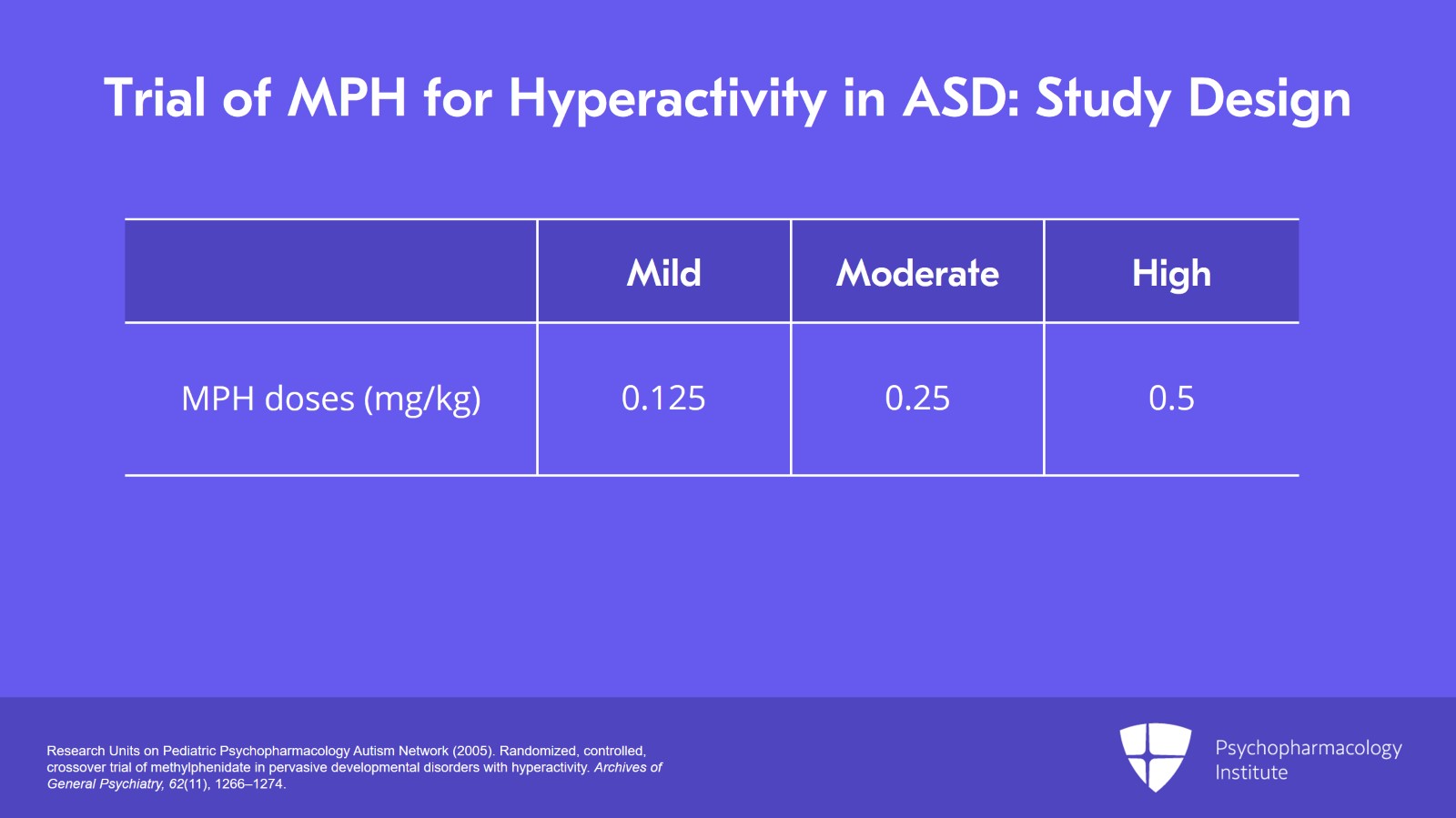
So those three dosage levels were 0.125 mg/kg, 0.25 mg/kg or 0.5 mg/kg corresponding to mild or moderate or high dosage. And that was dosing using immediate release on a three times a day dosing schedule. And then the fourth potential was placebo. So clinicians and subjects and their caregivers did not know what dosage the individual was taking or whether they were on placebo.
References:
  • Research Units on Pediatric Psychopharmacology Autism Network (2005). Randomized, controlled, crossover trial of methylphenidate in pervasive developmental disorders with hyperactivity. Archives of General Psychiatry, 62(11), 1266–1274.
Free Files
Success!
Check your inbox, we sent you all the materials there.
Slide 9 of 18

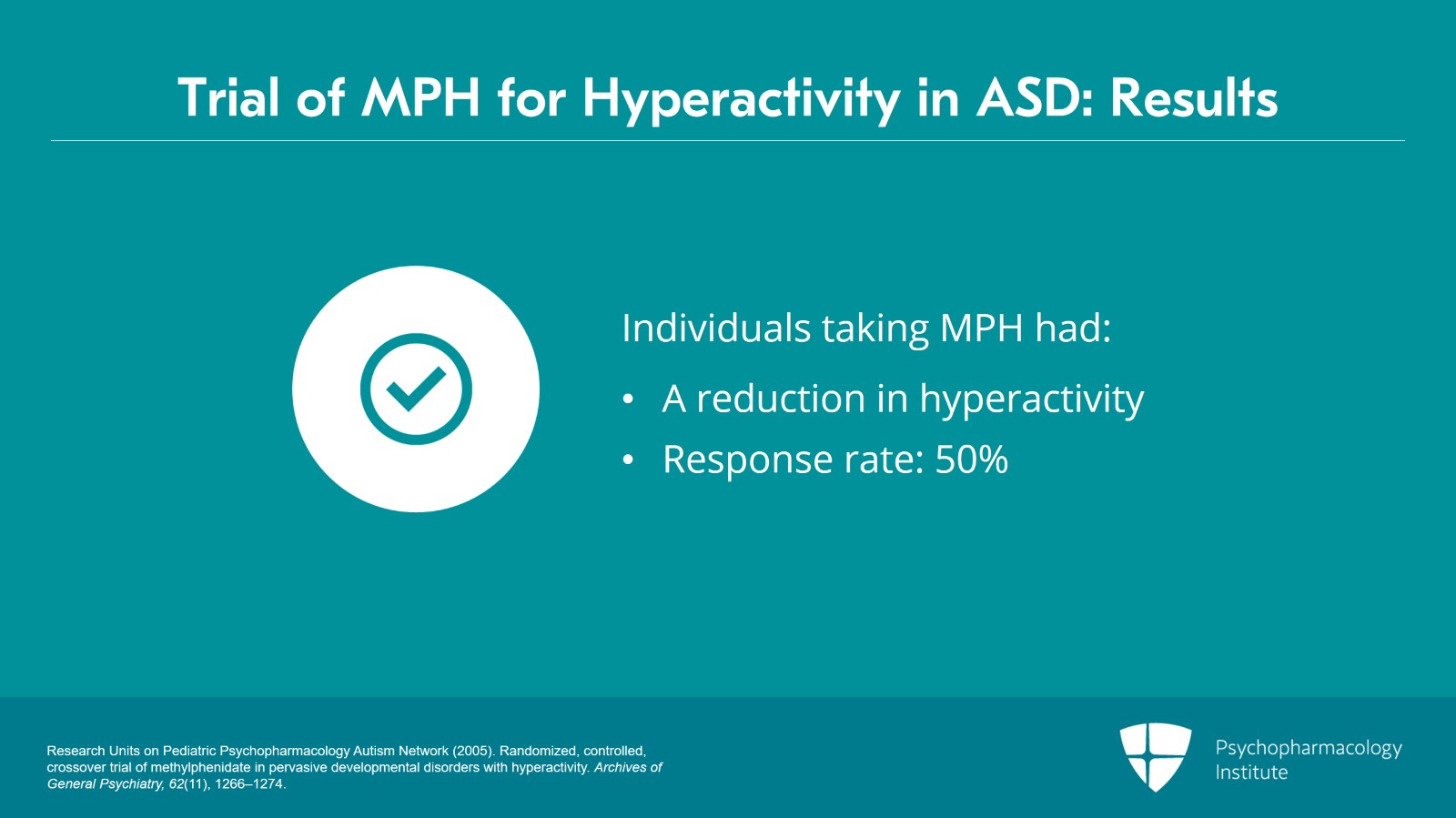
The results of the trials showed that individuals taking methylphenidate were more likely to have reductions in hyperactivity as measured on the ABC, the Aberrant Behavior Checklist, hyperactivity subscale as compared to placebo and that was as rated by both parents and teachers that were blinded to whether an individual was on medication or not. There was about a 50% response rate to methylphenidate among children with autism.
References:
  • Research Units on Pediatric Psychopharmacology Autism Network (2005). Randomized, controlled, crossover trial of methylphenidate in pervasive developmental disorders with hyperactivity. Archives of General Psychiatry, 62(11), 1266–1274.

Slide 10 of 18

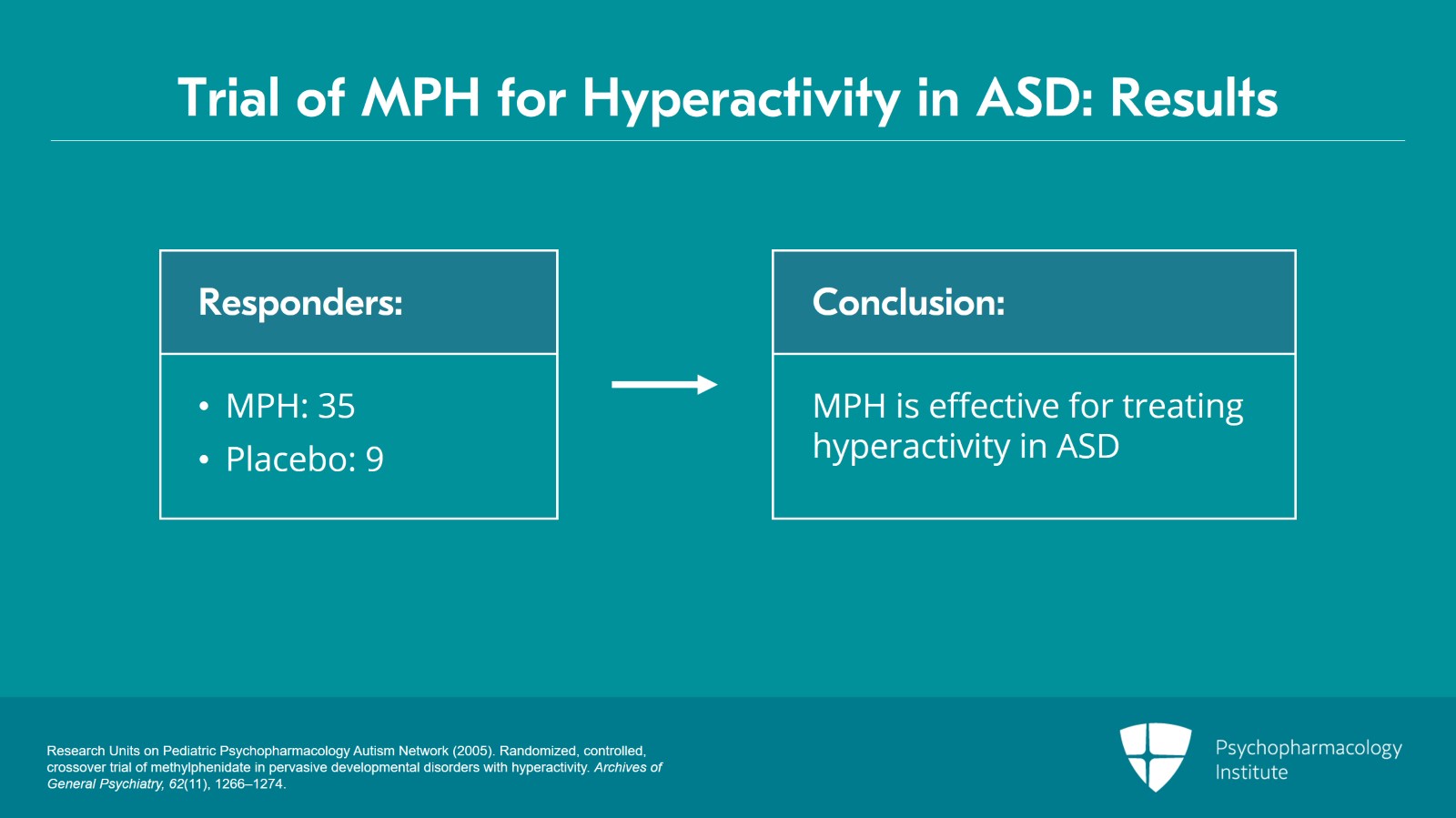
It was judged that 35 of the subjects taking methylphenidate were responders as compared to only nine taking placebo. And this was judged to be a positive trial attesting to the efficacy of methylphenidate for the treatment of hyperactivity in kids with autism.
References:
  • Research Units on Pediatric Psychopharmacology Autism Network (2005). Randomized, controlled, crossover trial of methylphenidate in pervasive developmental disorders with hyperactivity. Archives of General Psychiatry, 62(11), 1266–1274.
Free Files
Success!
Check your inbox, we sent you all the materials there.
Slide 11 of 18

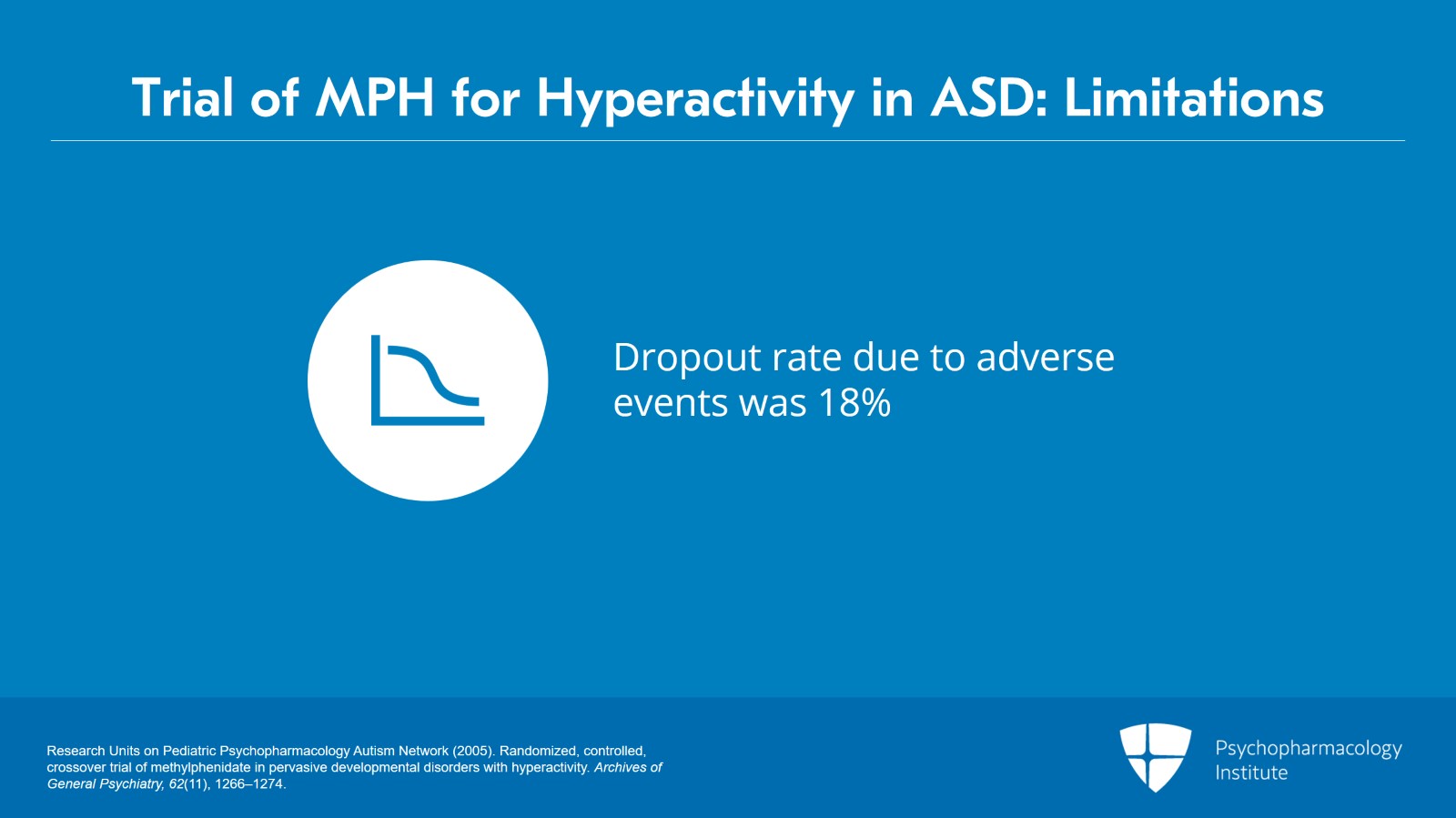
A large number of subjects had to drop out of the trial due to adverse events, about 18% of subjects which is high for a trial. The reasons individuals had to drop out had to do with increased irritability, insomnia, or decreased appetite. Another important side effect that was seen in this patient population was social withdrawal.
References:
  • Research Units on Pediatric Psychopharmacology Autism Network (2005). Randomized, controlled, crossover trial of methylphenidate in pervasive developmental disorders with hyperactivity. Archives of General Psychiatry, 62(11), 1266–1274.

Slide 12 of 18

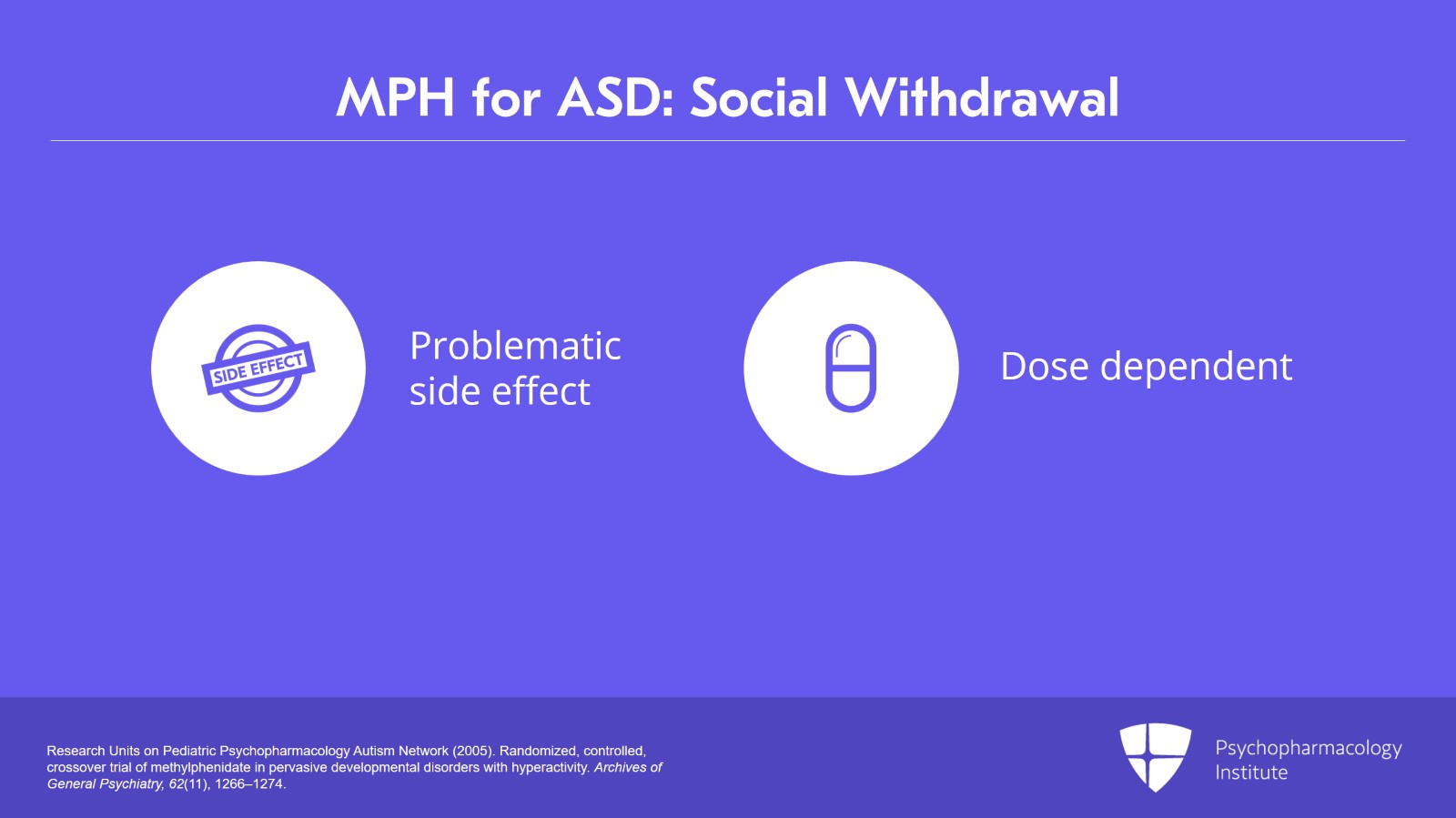
Social withdrawal is obviously a big concern in this patient population because social challenges are already a big issue so any side effect that could decrease an individual’s social interest or make their social withdrawal worse is a problematic side effect in autism. That was a dose-dependent side effect. So, the higher the dosage of the methylphenidate, the bigger risk for social withdrawal.
References:
  • Research Units on Pediatric Psychopharmacology Autism Network (2005). Randomized, controlled, crossover trial of methylphenidate in pervasive developmental disorders with hyperactivity. Archives of General Psychiatry, 62(11), 1266–1274.
Free Files
Success!
Check your inbox, we sent you all the materials there.
Slide 13 of 18

Social withdrawal is an important side effect to watch for when prescribing stimulants in children with autism spectrum disorder.
References:
  • Research Units on Pediatric Psychopharmacology Autism Network (2005). Randomized, controlled, crossover trial of methylphenidate in pervasive developmental disorders with hyperactivity. Archives of General Psychiatry, 62(11), 1266–1274.

Slide 14 of 18

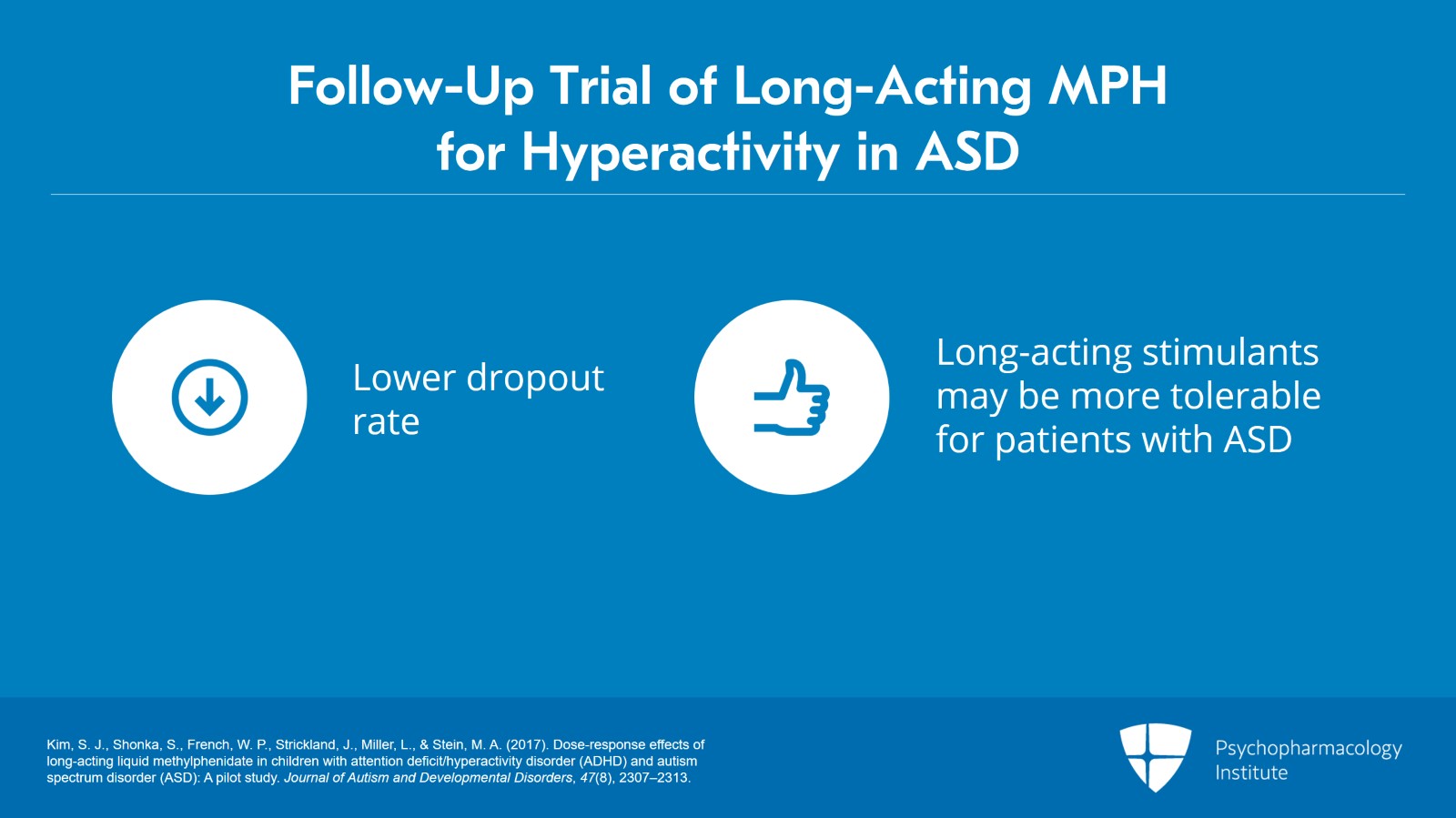
There was a follow-up trial that was done in 2017 that showed better tolerability with long-acting methylphenidate. There was a smaller number of subjects that had to drop out. It was a smaller trial but it suggests perhaps long-acting forms of stimulants may be more tolerable in patients with autism spectrum disorder.
References:
  • Kim, S. J., Shonka, S., French, W. P., Strickland, J., Miller, L., & Stein, M. A. (2017). Dose-response effects of long-acting liquid methylphenidate in children with attention deficit/hyperactivity disorder (ADHD) and autism spectrum disorder (ASD): A pilot study. Journal of Autism and Developmental Disorders, 47(8), 2307–2313.
Free Files
Success!
Check your inbox, we sent you all the materials there.
Slide 15 of 18

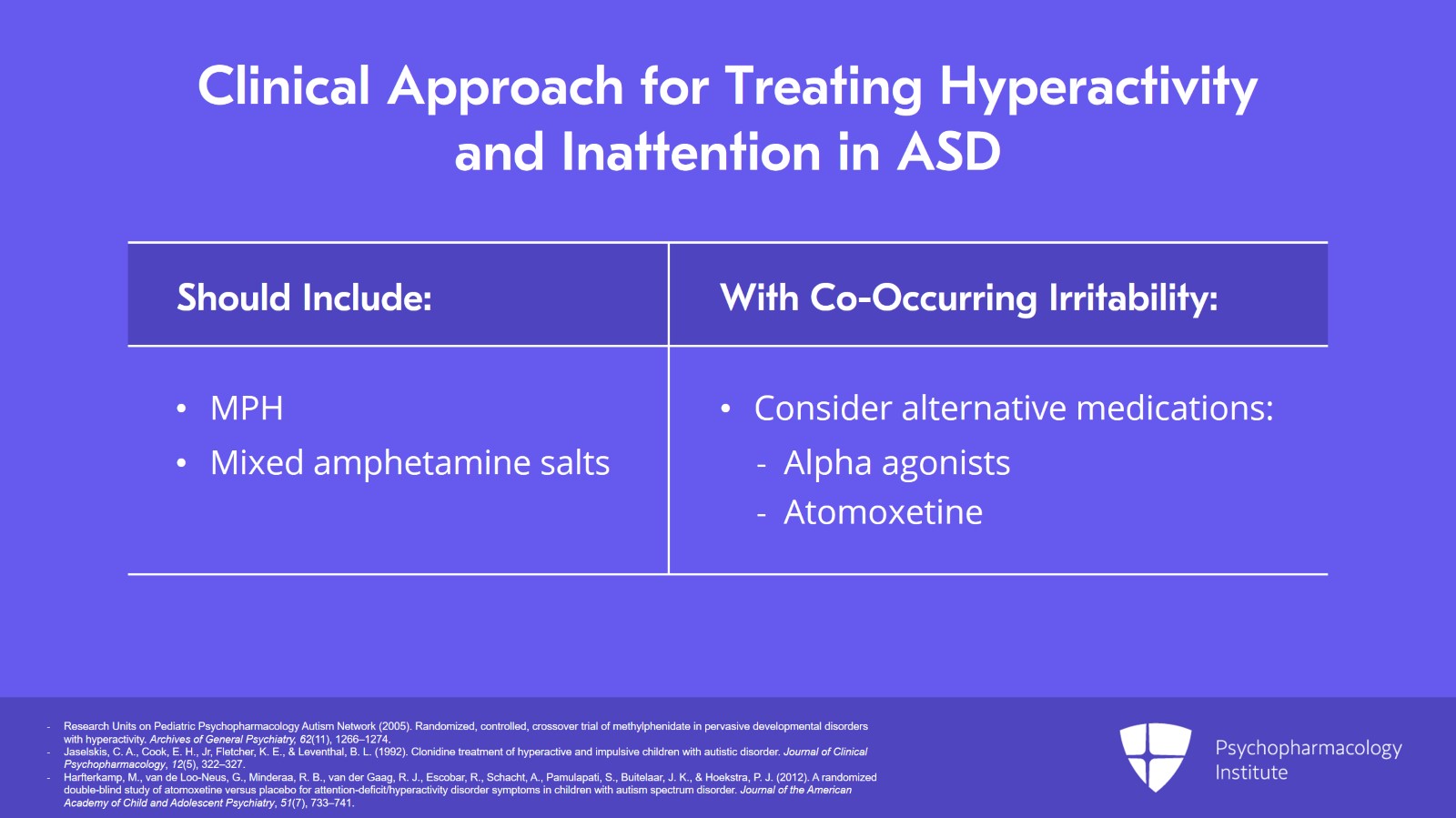
The clinical approach to the treatment of motor hyperactivity and inattention should include methylphenidate and mixed amphetamine salts. If there are already co-occurring issues with irritability that might make a clinician think about the usage of these other nonstimulant medications before stimulants, clinicians may consider alternative medications such as alpha agonists or atomoxetine.
References:
  • Research Units on Pediatric Psychopharmacology Autism Network (2005). Randomized, controlled, crossover trial of methylphenidate in pervasive developmental disorders with hyperactivity. Archives of General Psychiatry, 62(11), 1266–1274.
  • Jaselskis, C. A., Cook, E. H., Jr, Fletcher, K. E., & Leventhal, B. L. (1992). Clonidine treatment of hyperactive and impulsive children with autistic disorder. Journal of Clinical Psychopharmacology, 12(5), 322–327.
  • Harfterkamp, M., van de Loo-Neus, G., Minderaa, R. B., van der Gaag, R. J., Escobar, R., Schacht, A., Pamulapati, S., Buitelaar, J. K., & Hoekstra, P. J. (2012). A randomized double-blind study of atomoxetine versus placebo for attention-deficit/hyperactivity disorder symptoms in children with autism spectrum disorder. Journal of the American Academy of Child and Adolescent Psychiatry, 51(7), 733–741.

Slide 16 of 18

So some key points to take home. Psychostimulants can be effective in reducing hyperactivity among the full range of severity of autism spectrum disorder, both higher functioning individuals and individuals with substantial co-occurring intellectual disability. Research suggests a higher rate of tolerability difficulties with stimulant medications than seen in neurotypical children who have commensurate levels of hyperactivity and inattention.
Free Files
Success!
Check your inbox, we sent you all the materials there.
Slide 17 of 18

Social withdrawal is a dose-dependent side effect to watch for when prescribing stimulants in children with autism spectrum disorder.

Slide 18 of 18

Free Files
Success!
Check your inbox, we sent you all the materials there.
Learning Objectives:

After completing this activity, the learner will be able to:

  1. Define the therapeutic role of psychopharmacology in ASD.
  2. Recognize and assess psychiatric comorbidities in patients with ASD. 
  3. Utilize pharmacologic strategies for managing psychiatric symptoms in patients with ASD.

Original Release Date: February 1, 2023

Review and Re-release Date: March 1, 2024

Expiration Date: February 1, 2026

Expert: Christopher Keary, M.D.

Medical Editor: Paz Badía, M.D.

Relevant Financial Disclosures: 

Christopher Keary declares the following interests:

- Ovid Therapeutics:  Consulting, advisory committee

Contact Information: For questions regarding the content or access to this activity, contact us at support@psychopharmacologyinstitute.com

Instructions for Participation and Credit:

Participants must complete the activity online during the valid credit period that is noted above.

Follow these steps to earn CME credit:

  1. View the required educational content provided on this course page.

  2. Complete the Post Activity Evaluation for providing the necessary feedback for continuing accreditation purposes and for the development of future activities. NOTE: Completing the Post Activity Evaluation after the quiz is required to receive the earned credit.

  3. Download your certificate.

Accreditation Statement

This activity has been planned and implemented in accordance with the accreditation requirements and policies of the Accreditation Council for Continuing Medical Education through the joint providership of Medical Academy LLC and the Psychopharmacology Institute. Medical Academy is accredited by the ACCME to provide continuing medical education for physicians.

Credit Designation Statement

Medical Academy designates this enduring activity for a maximum of 1.25 AMA PRA Category 1 credit(s)™. Physicians should claim only the credit commensurate with the extent of their participation in the activity.

Free Files
Success!
Check your inbox, we sent you all the materials there.
Continue in the website
Instant access modal

Become a Bronze, Silver, Gold, Bronze extended, Silver extended or Gold extended Member.

2025–26 Psychopharmacology CME Program

Unlock up to 155 CME Credits, including 40 SA CME Credits.