Slides and Transcript
Slide 1 of 25
Next, we'll talk about the treatment of irritability in autism spectrum disorder specifically atypical antipsychotic medications.
Slide 2 of 25
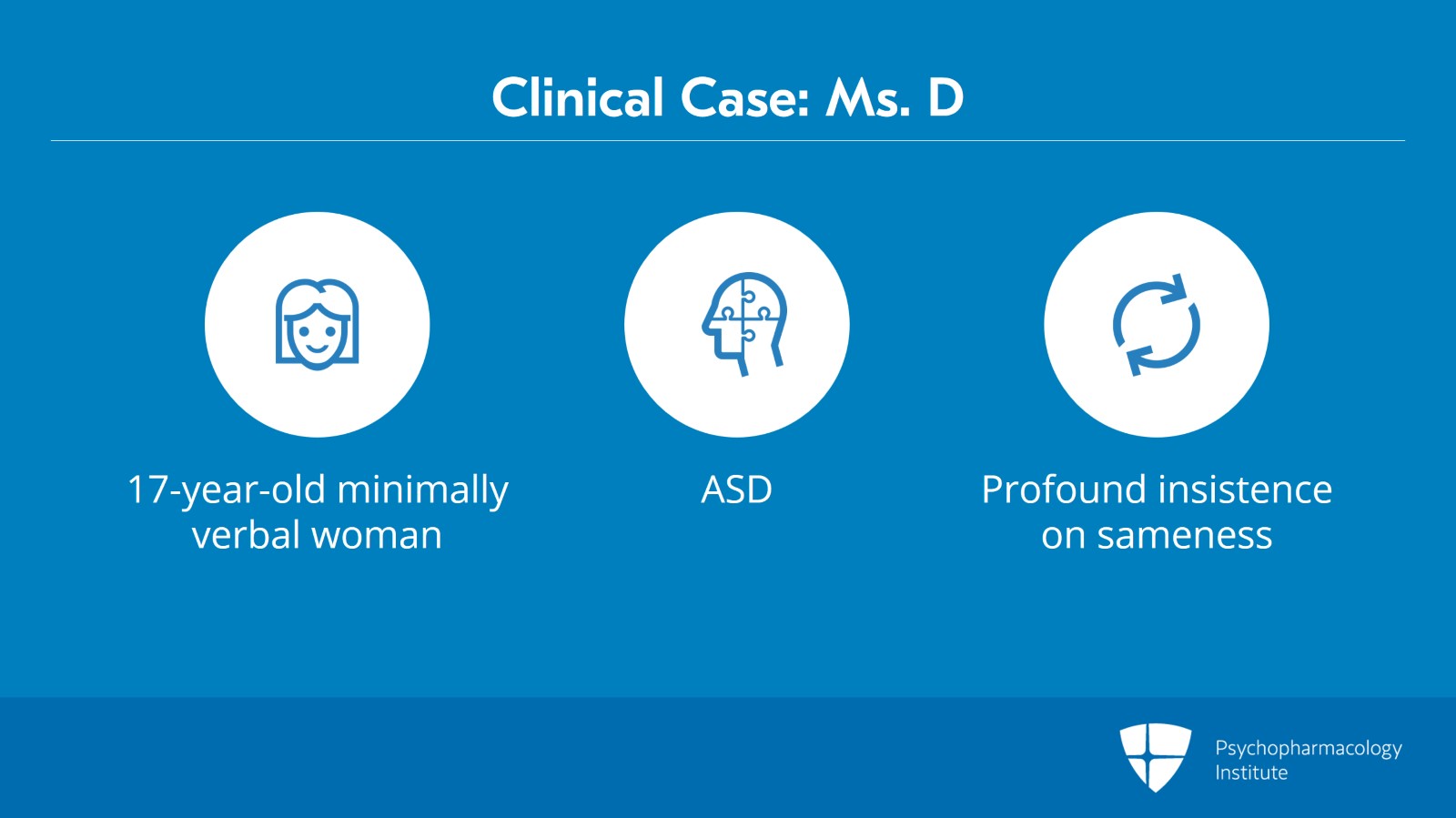
We'll start with talking about a case. Ms. D is a 17-year-old minimally verbal woman with autism spectrum disorder and a profound insistence on sameness, ritual and routine.
Free Files
Download PDF and other files
Success!
Check your inbox, we sent you all the materials there.
Slide 3 of 25
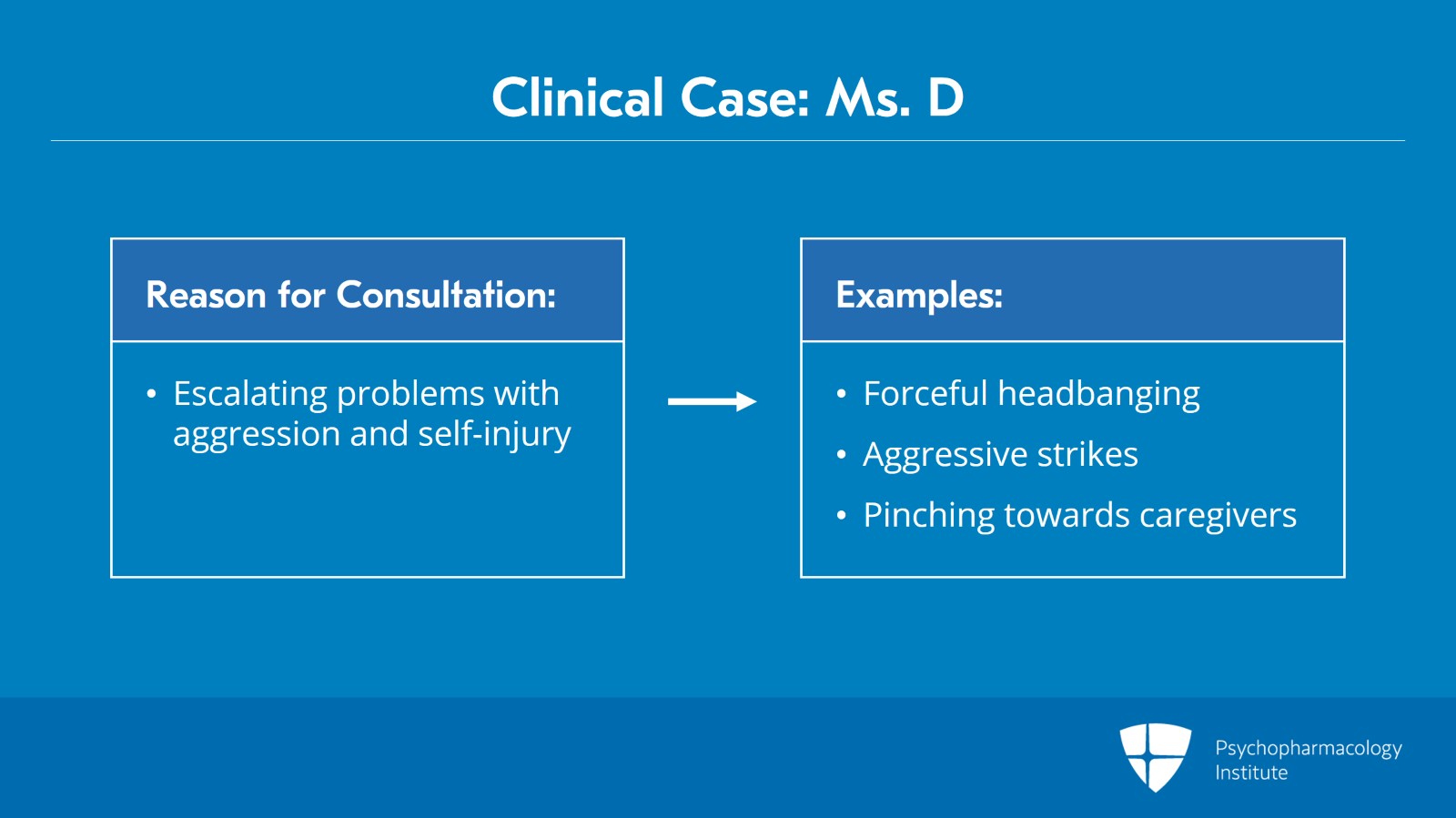
The caregivers had a plan to care for D in the family home into her adult years but they're bringing her to you for treatment because there have been escalating problems with aggression and self-injury that made the parents not confident they can care for D into adulthood. With small limits or changes in her routine, D is increasingly engaging in more forceful headbanging, aggressive strikes and pinching towards caregivers.
Slide 4 of 25
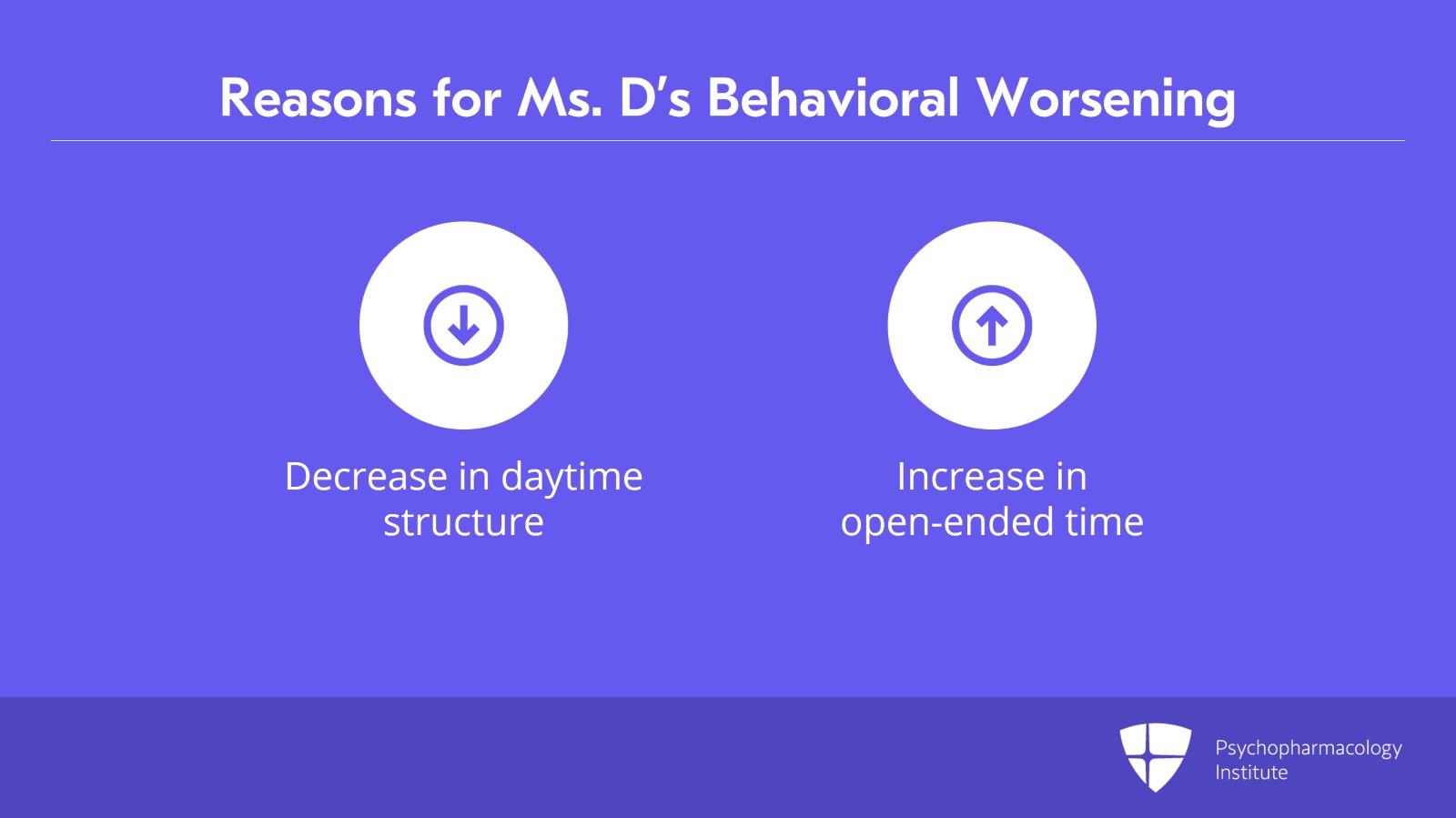
Dad's declining health has resulted in him not being as available to provide daytime structure outside of school and D has more open-ended time which seems to have perhaps worsened some of these behavioral concerns.
Free Files
Download PDF and other files
Success!
Check your inbox, we sent you all the materials there.
Slide 5 of 25
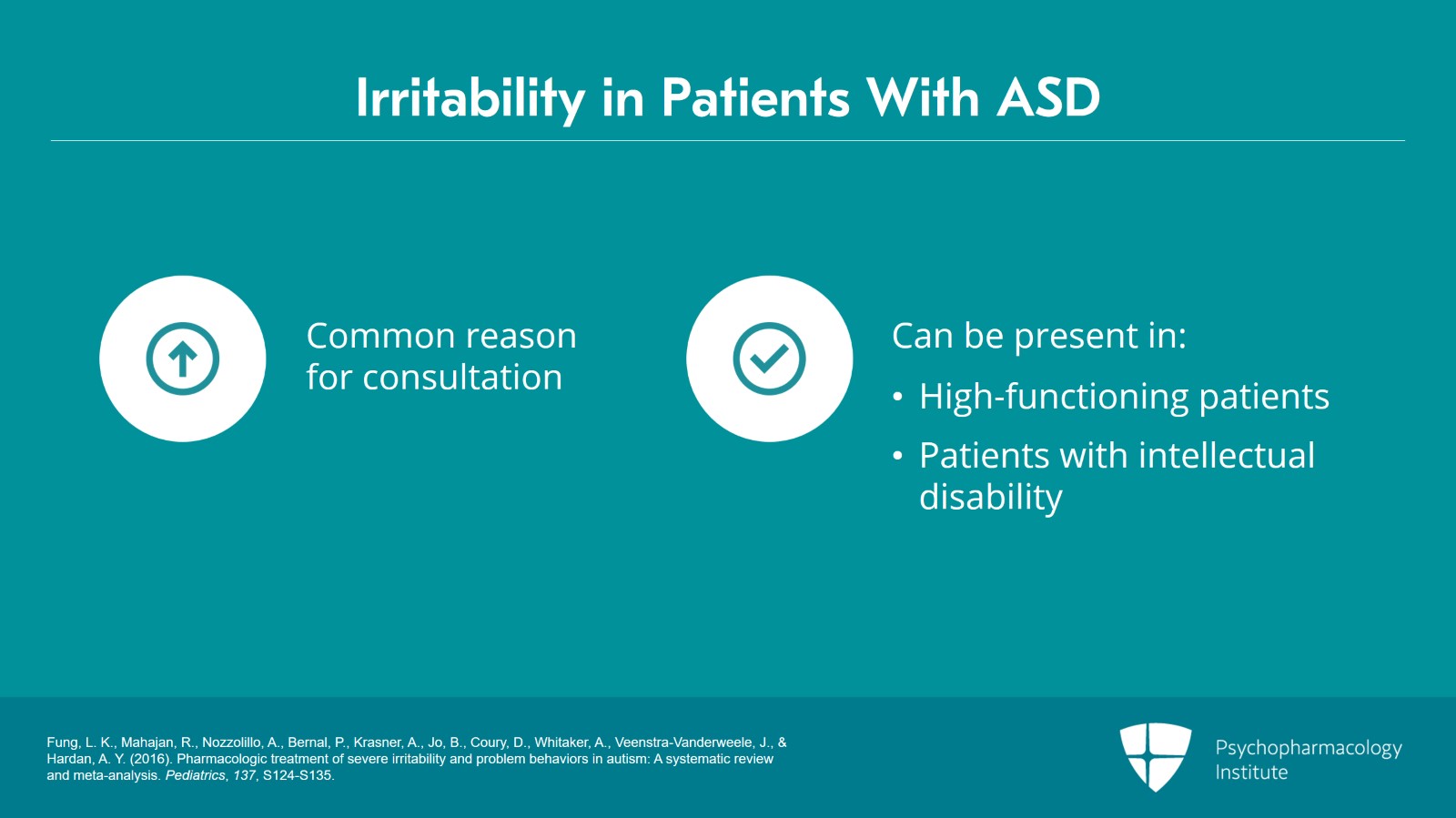
The treatment of irritability is a very common reason for patients with autism spectrum disorder to be brought to the prescribing clinician in both higher functioning patients with autism as well as patients with autism with co-occurring substantial intellectual disability.
References:
- Fung, L. K., Mahajan, R., Nozzolillo, A., Bernal, P., Krasner, A., Jo, B., Coury, D., Whitaker, A., Veenstra-Vanderweele, J., & Hardan, A. Y. (2016). Pharmacologic treatment of severe irritability and problem behaviors in autism: A systematic review and meta-analysis. Pediatrics, 137, S124-S135.
Slide 6 of 25
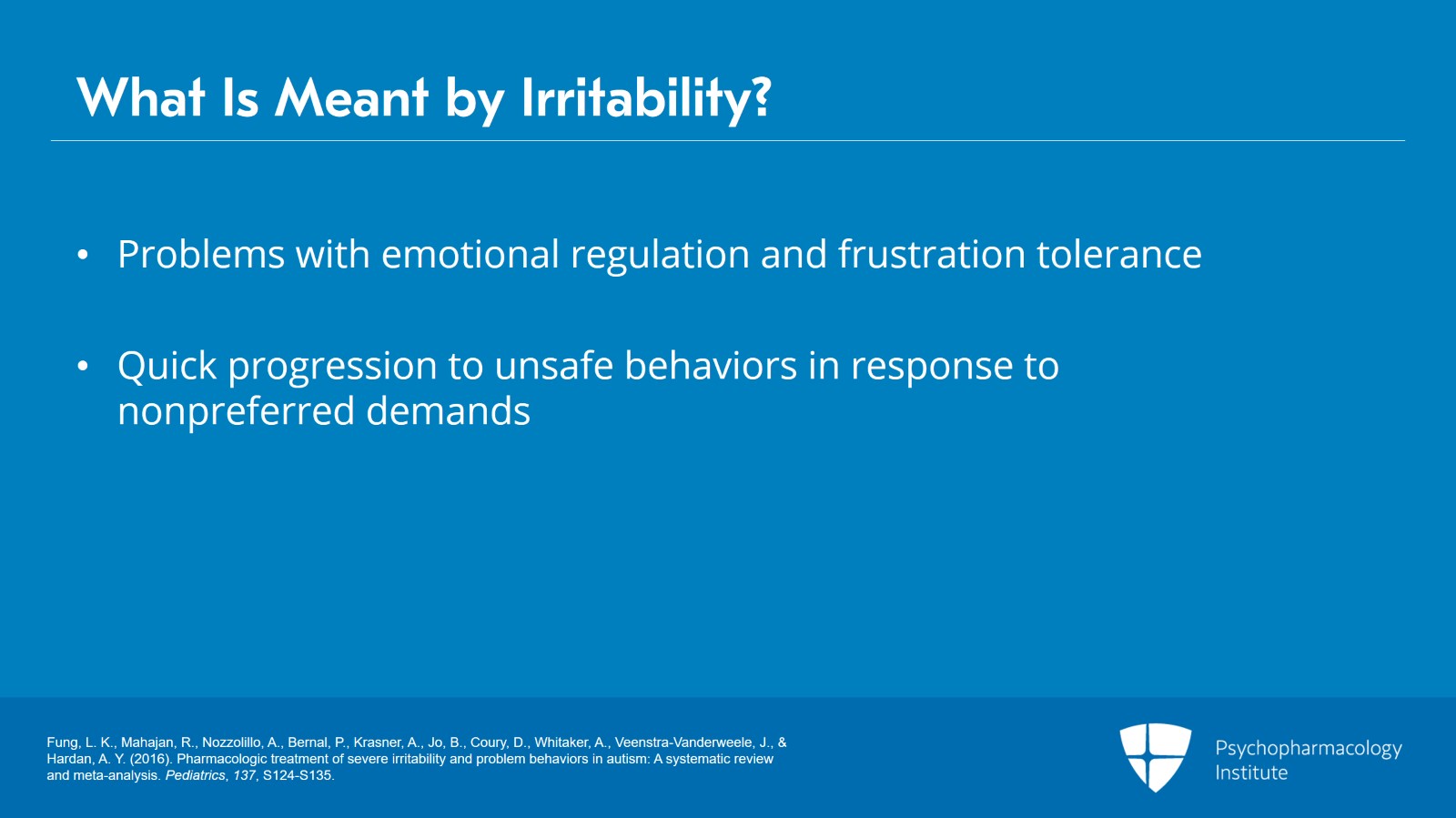
We might understand the constructive irritability as being around problems with emotional regulation, frustration tolerance, a quick progression to unsafe behaviors such as aggression, self-injury, throwing items, property destruction, elopement in response to nonpreferred demands such that families are walking on eggshells.
References:
- Fung, L. K., Mahajan, R., Nozzolillo, A., Bernal, P., Krasner, A., Jo, B., Coury, D., Whitaker, A., Veenstra-Vanderweele, J., & Hardan, A. Y. (2016). Pharmacologic treatment of severe irritability and problem behaviors in autism: A systematic review and meta-analysis. Pediatrics, 137, S124-S135.
Free Files
Download PDF and other files
Success!
Check your inbox, we sent you all the materials there.
Slide 7 of 25
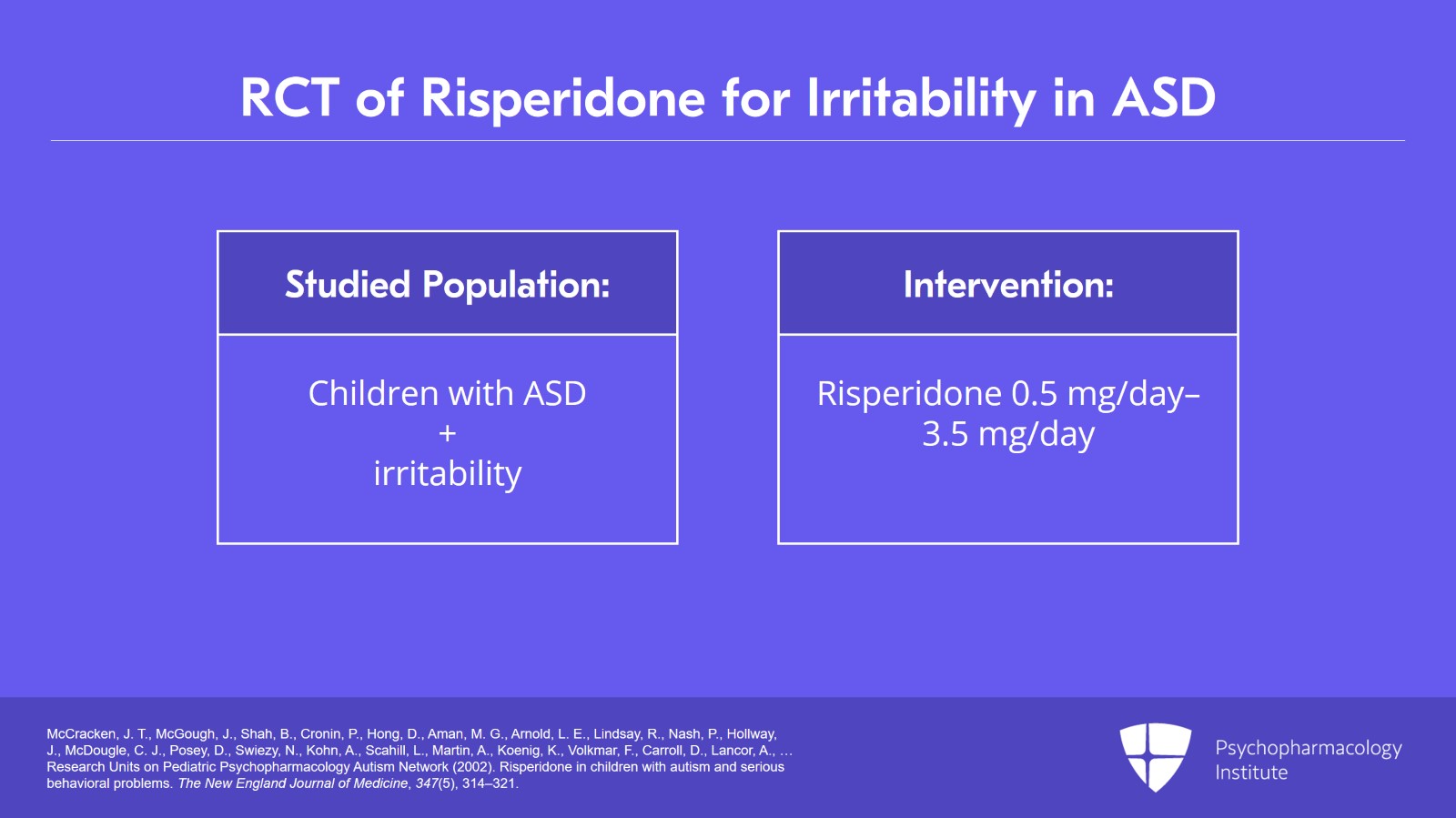
The first trial I want to talk with you about is risperidone for the treatment of irritability. This is a trial that was done by the RUPP group, a group of academic institutions that pooled their resources to study the treatment of medication-based interventions for behavioral concerns, in this case patients with autism. This is a trial that was 82 boys, 19 girls, mean age of 8 years old. Subjects had to have significant irritability as measured using the Aberrant Behavioral Checklist irritability subscale when they entered into the trial. It was an eight-week trial. It was double-blind placebo-controlled parallel groups. The clinicians were allowed to use flexible dosing in the range of risperidone 0.5 mg to 3.5 mg per day.
References:
- McCracken, J. T., McGough, J., Shah, B., Cronin, P., Hong, D., Aman, M. G., Arnold, L. E., Lindsay, R., Nash, P., Hollway, J., McDougle, C. J., Posey, D., Swiezy, N., Kohn, A., Scahill, L., Martin, A., Koenig, K., Volkmar, F., Carroll, D., Lancor, A., … Research Units on Pediatric Psychopharmacology Autism Network (2002). Risperidone in children with autism and serious behavioral problems. The New England Journal of Medicine, 347(5), 314–321.
Slide 8 of 25
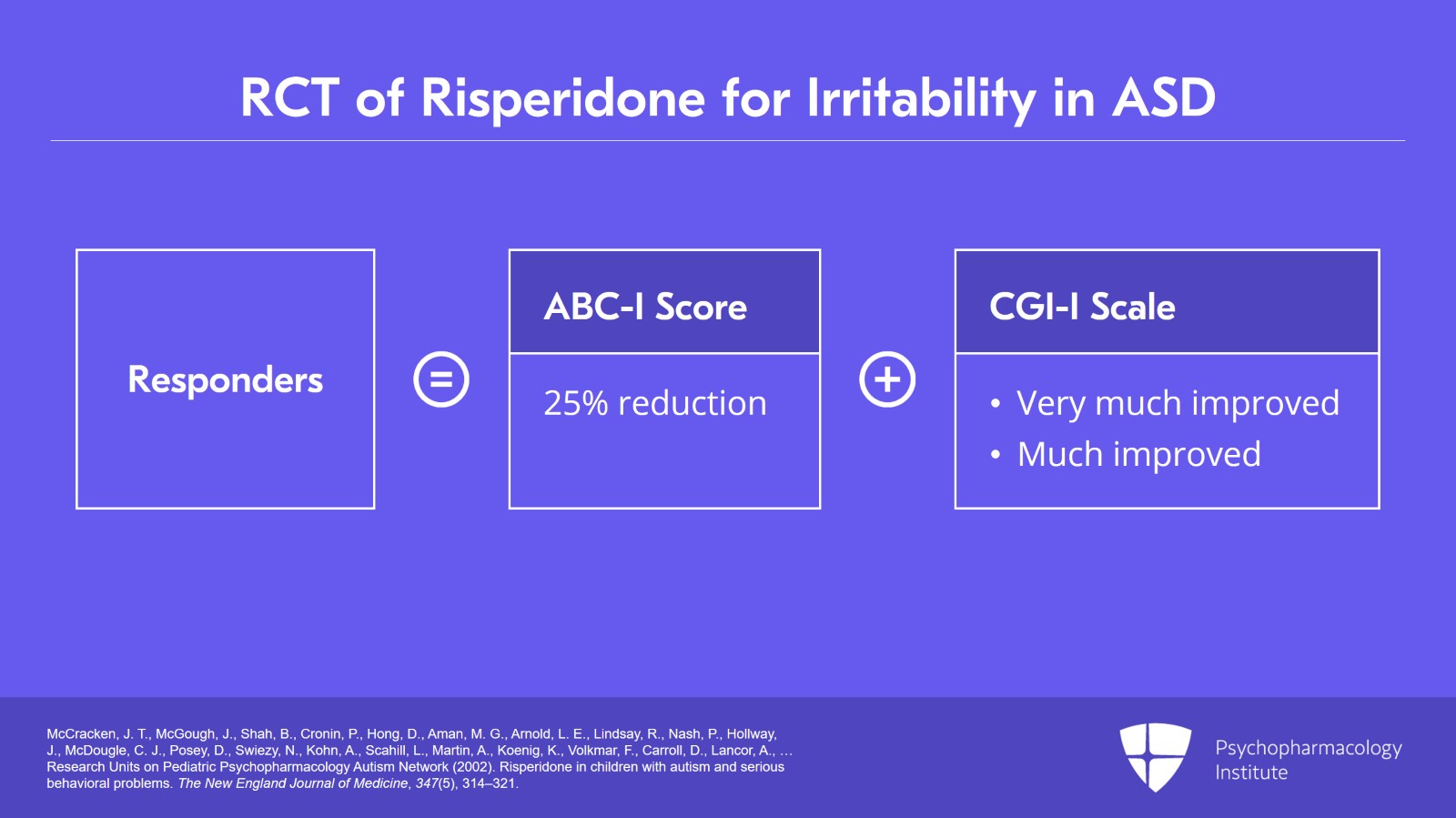
A responder was judged as someone who had a 25% reduction in the Aberrant Behavior Checklist irritability subscore. You had to have a 25% reduction and then also be rated as very much improved or much improved on a measure called the Clinical Global Impression-Improvement scale, the CGI-I. Much improved or very much improved is a responder, that plus the reduction in the ABC-I score. So it's a high standard in terms of whether or not someone was a responder or not.
References:
- McCracken, J. T., McGough, J., Shah, B., Cronin, P., Hong, D., Aman, M. G., Arnold, L. E., Lindsay, R., Nash, P., Hollway, J., McDougle, C. J., Posey, D., Swiezy, N., Kohn, A., Scahill, L., Martin, A., Koenig, K., Volkmar, F., Carroll, D., Lancor, A., … Research Units on Pediatric Psychopharmacology Autism Network (2002). Risperidone in children with autism and serious behavioral problems. The New England Journal of Medicine, 347(5), 314–321.
Free Files
Download PDF and other files
Success!
Check your inbox, we sent you all the materials there.
Slide 9 of 25
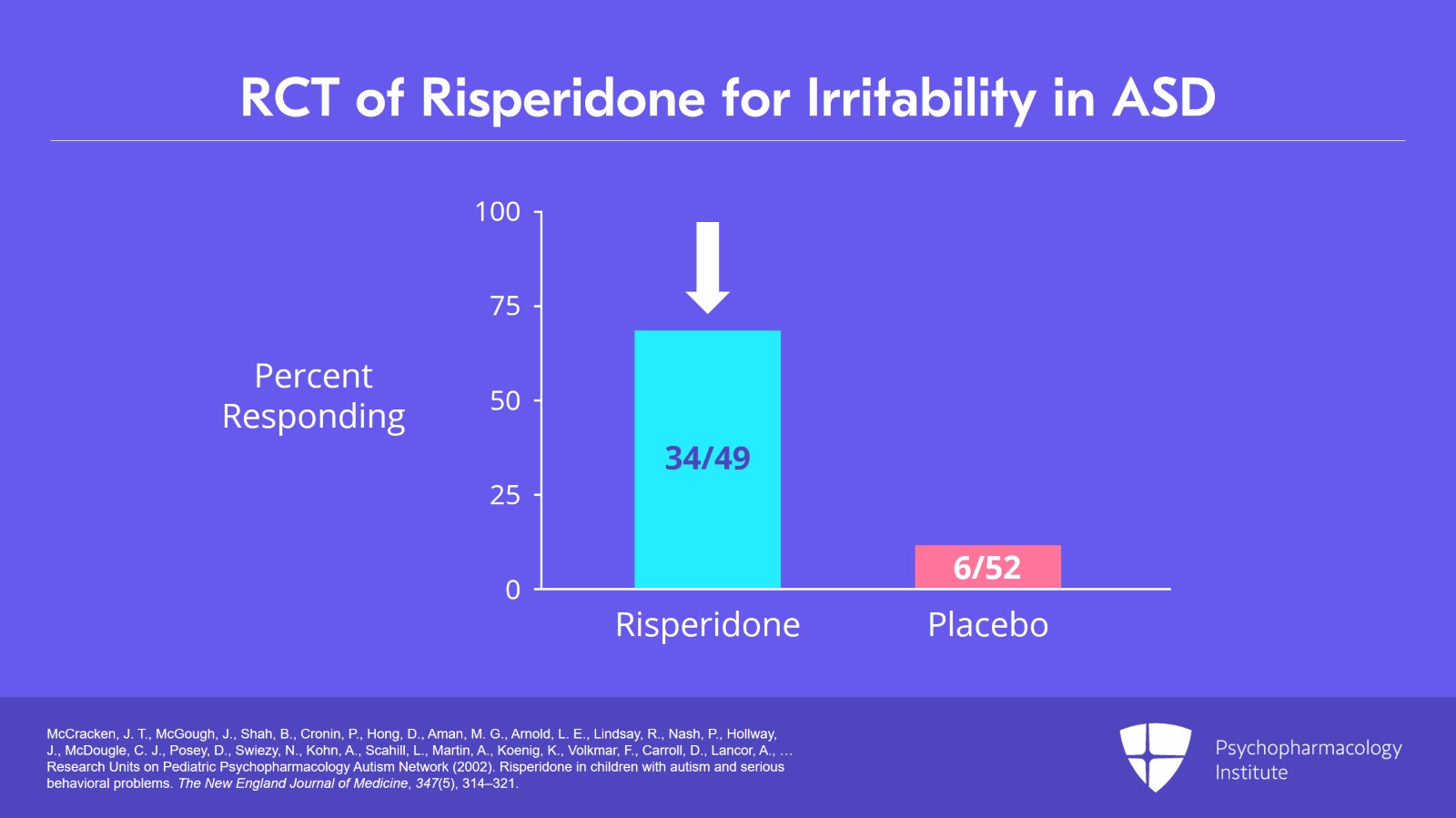
This figure I want to show you here has to do with showing the percent of subjects that responded taking risperidone versus placebo. You'll see 34 out of the 49 subjects taking risperidone were responders as compared to only six taking placebo. So certainly, a positive trial attesting to the benefit of risperidone.
References:
- McCracken, J. T., McGough, J., Shah, B., Cronin, P., Hong, D., Aman, M. G., Arnold, L. E., Lindsay, R., Nash, P., Hollway, J., McDougle, C. J., Posey, D., Swiezy, N., Kohn, A., Scahill, L., Martin, A., Koenig, K., Volkmar, F., Carroll, D., Lancor, A., … Research Units on Pediatric Psychopharmacology Autism Network (2002). Risperidone in children with autism and serious behavioral problems. The New England Journal of Medicine, 347(5), 314–321.
Slide 10 of 25
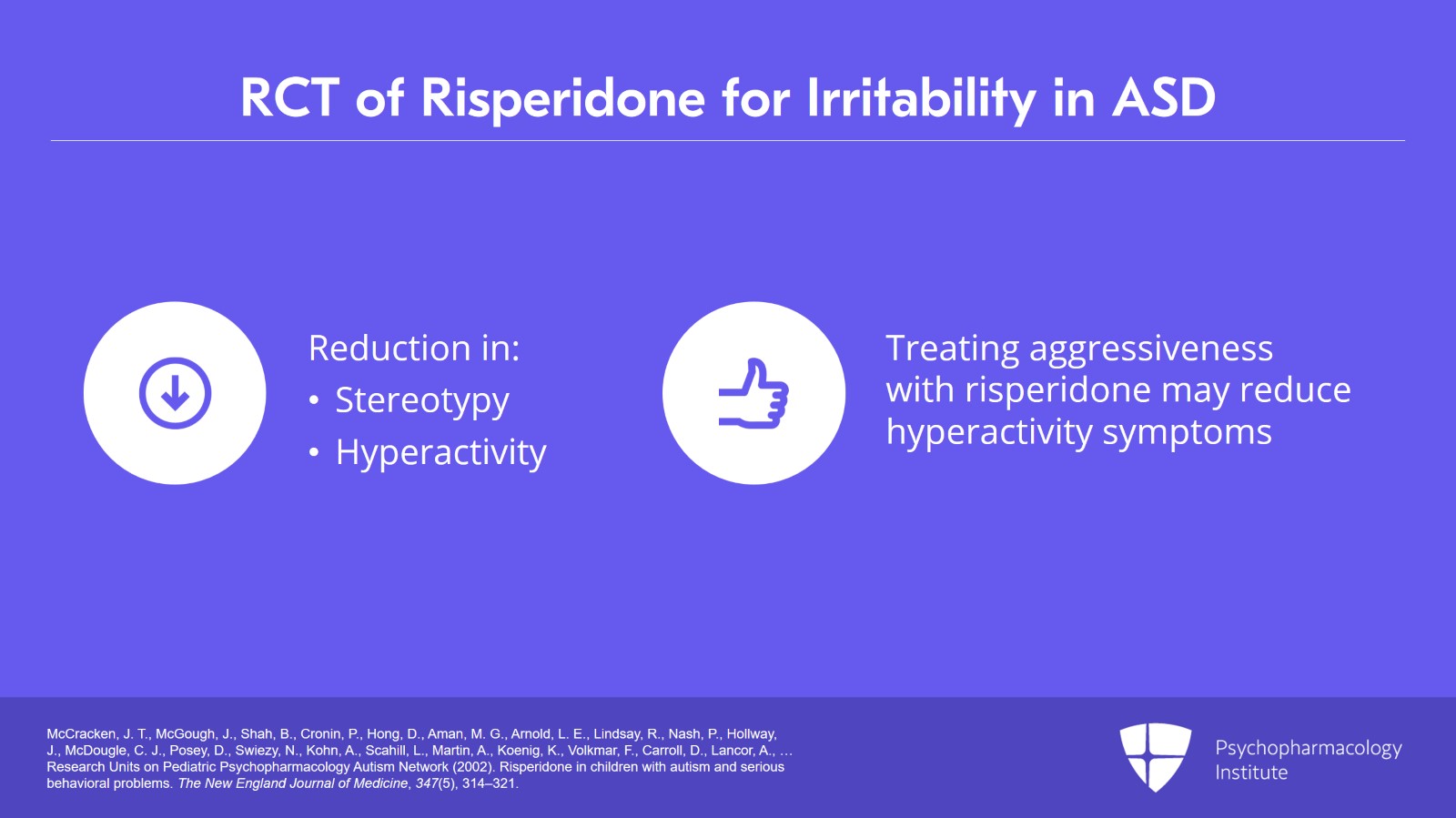
If we dig a little bit more into the results, there was a reduction in stereotypy and also hyperactivity. So while I wouldn't think about risperidone as necessarily being a treatment for ADHD, in this case these are subjects that were very aggressive, there may be a reduction in hyperactive symptoms with the usage of risperidone and this is not unusual to see this area improve.
References:
- McCracken, J. T., McGough, J., Shah, B., Cronin, P., Hong, D., Aman, M. G., Arnold, L. E., Lindsay, R., Nash, P., Hollway, J., McDougle, C. J., Posey, D., Swiezy, N., Kohn, A., Scahill, L., Martin, A., Koenig, K., Volkmar, F., Carroll, D., Lancor, A., … Research Units on Pediatric Psychopharmacology Autism Network (2002). Risperidone in children with autism and serious behavioral problems. The New England Journal of Medicine, 347(5), 314–321.
Free Files
Download PDF and other files
Success!
Check your inbox, we sent you all the materials there.
Slide 11 of 25
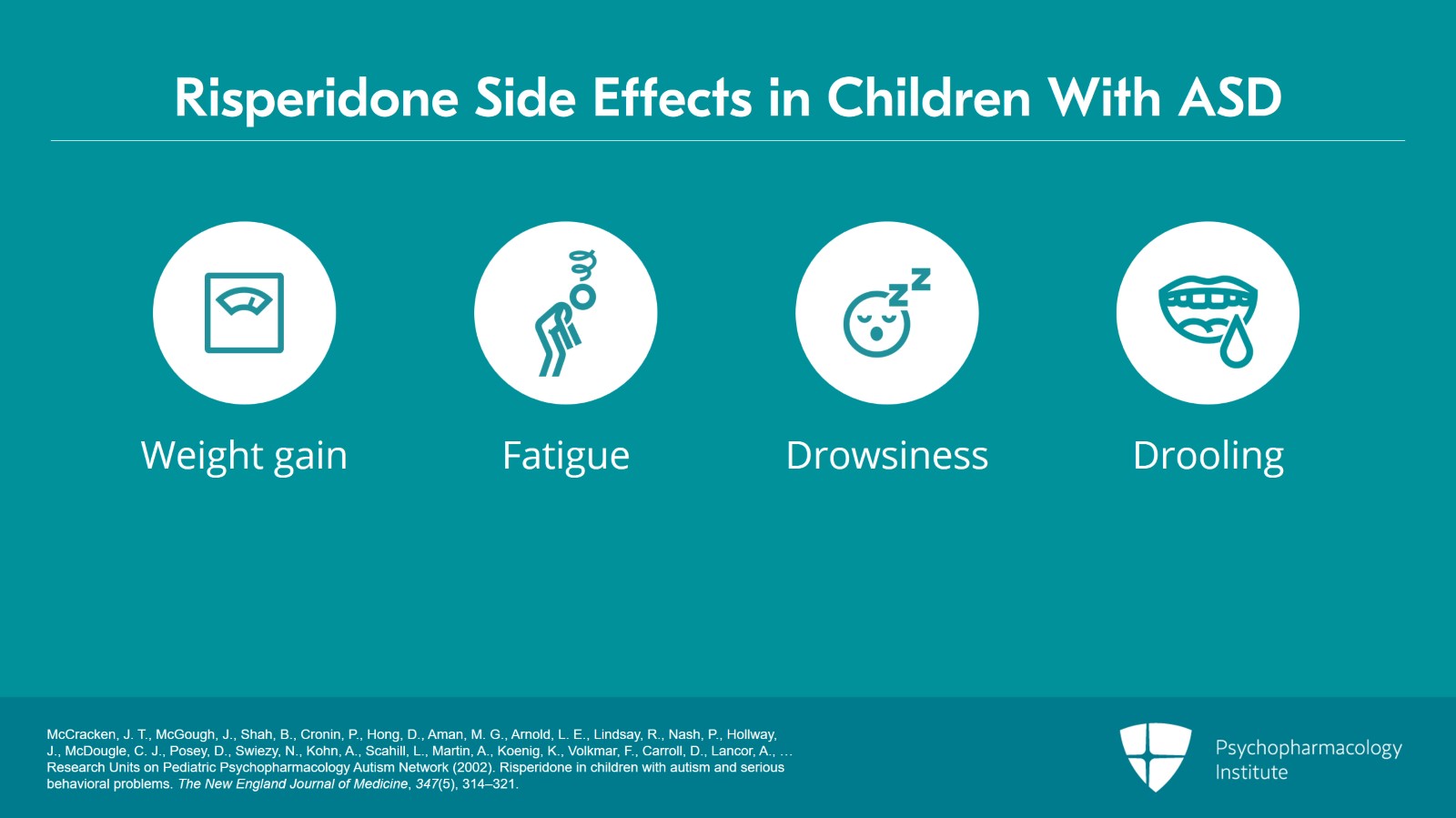
Adverse events that were seen in this trial, the most important to talk about is weight gain, a weight gain of 2.7 kg in just this short eight-week trial and that was compared to a weight gain of 0.8 kg among the placebo population. In addition to increased appetite, fatigue, drowsiness, dizziness, and drooling were all more common in the risperidone group. There were not differences in extrapyramidal symptoms, things like focal dystonias, parkinsonism, or akathisia but again this is just an eight-week trial.
References:
- McCracken, J. T., McGough, J., Shah, B., Cronin, P., Hong, D., Aman, M. G., Arnold, L. E., Lindsay, R., Nash, P., Hollway, J., McDougle, C. J., Posey, D., Swiezy, N., Kohn, A., Scahill, L., Martin, A., Koenig, K., Volkmar, F., Carroll, D., Lancor, A., … Research Units on Pediatric Psychopharmacology Autism Network (2002). Risperidone in children with autism and serious behavioral problems. The New England Journal of Medicine, 347(5), 314–321.
Slide 12 of 25
One important thing to talk about with the usage of risperidone is the potential risk for hyperprolactinemia. The usage of antipsychotics with relatively high D2 affinity such as risperidone or haloperidol, for instance, warrant monitoring for symptoms of hyperprolactinemia.
References:
- McCracken, J. T., McGough, J., Shah, B., Cronin, P., Hong, D., Aman, M. G., Arnold, L. E., Lindsay, R., Nash, P., Hollway, J., McDougle, C. J., Posey, D., Swiezy, N., Kohn, A., Scahill, L., Martin, A., Koenig, K., Volkmar, F., Carroll, D., Lancor, A., … Research Units on Pediatric Psychopharmacology Autism Network (2002). Risperidone in children with autism and serious behavioral problems. The New England Journal of Medicine, 347(5), 314–321.
Free Files
Download PDF and other files
Success!
Check your inbox, we sent you all the materials there.
Slide 13 of 25
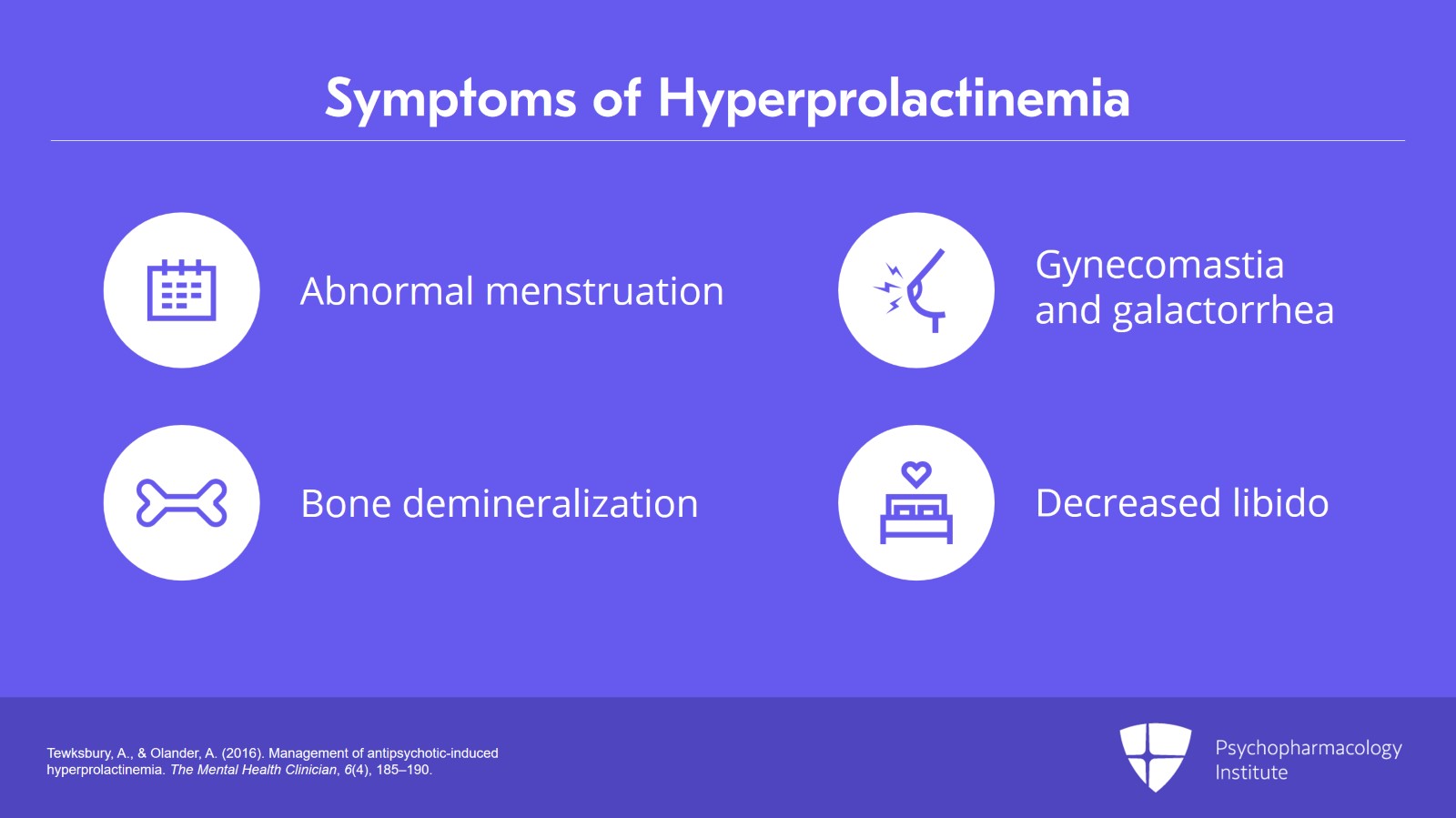
Symptoms of hyperprolactinemia that are important for the clinician to watch for include suppressed or abnormal menstruation, gynecomastia, galactorrhea, bone demineralization, or decreased libido. Monitoring prolactin levels can prompt the clinicians to remember to ask about these symptoms.
References:
- Tewksbury, A., & Olander, A. (2016). Management of antipsychotic-induced hyperprolactinemia. The Mental Health Clinician, 6(4), 185–190.
Slide 14 of 25
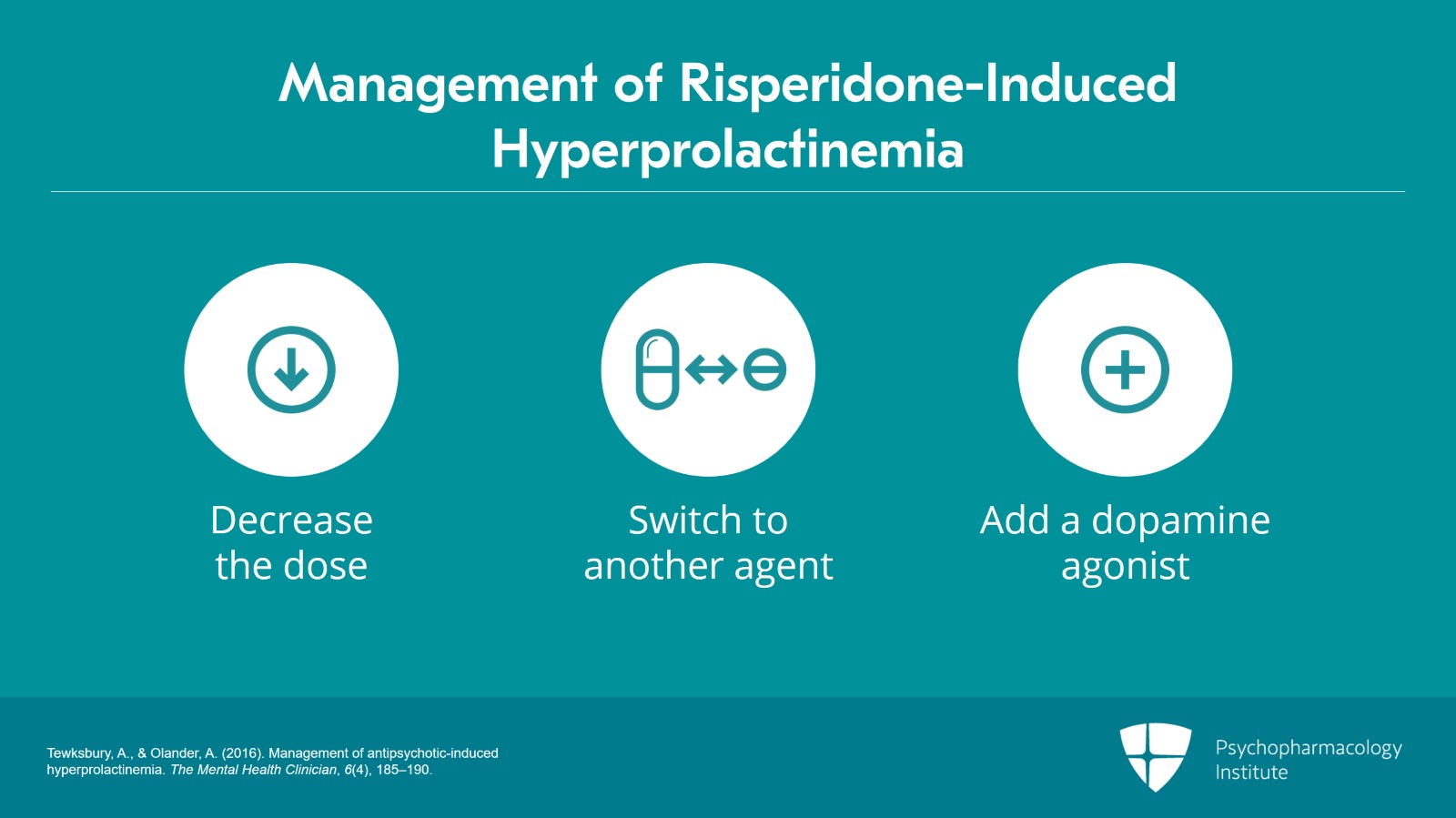
When elevated prolactin levels are combined with symptoms of hyperprolactinemia, the clinical symptoms I talked about, clinicians should consider decreasing the dosage, changing agents away from risperidone entirely or in severe cases adding a dopamine agonist such as a low dosage of aripiprazole which can actually decrease prolactin levels and may reverse the side effect of concern.
References:
- Tewksbury, A., & Olander, A. (2016). Management of antipsychotic-induced hyperprolactinemia. The Mental Health Clinician, 6(4), 185–190.
Free Files
Download PDF and other files
Success!
Check your inbox, we sent you all the materials there.
Slide 15 of 25
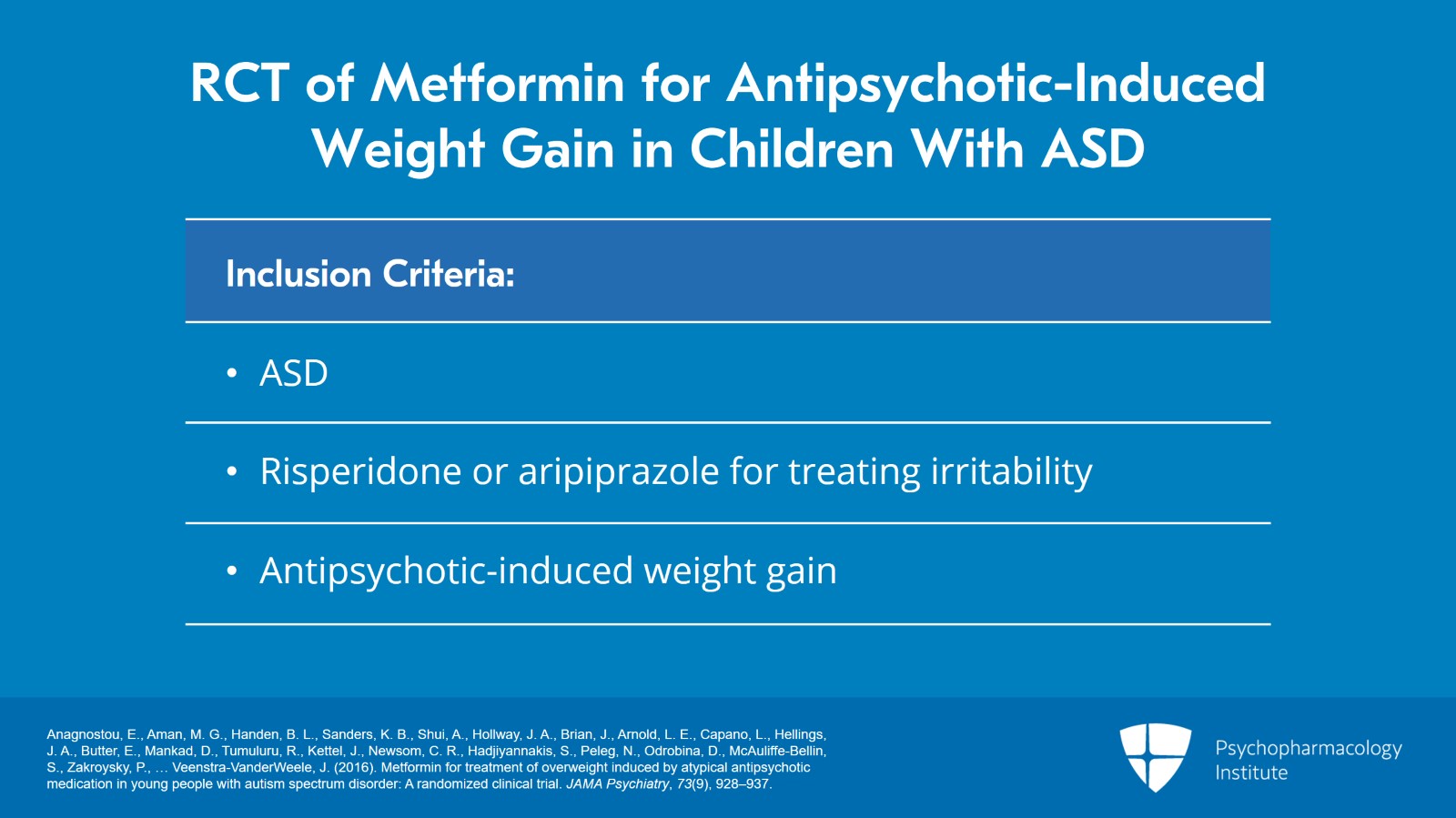
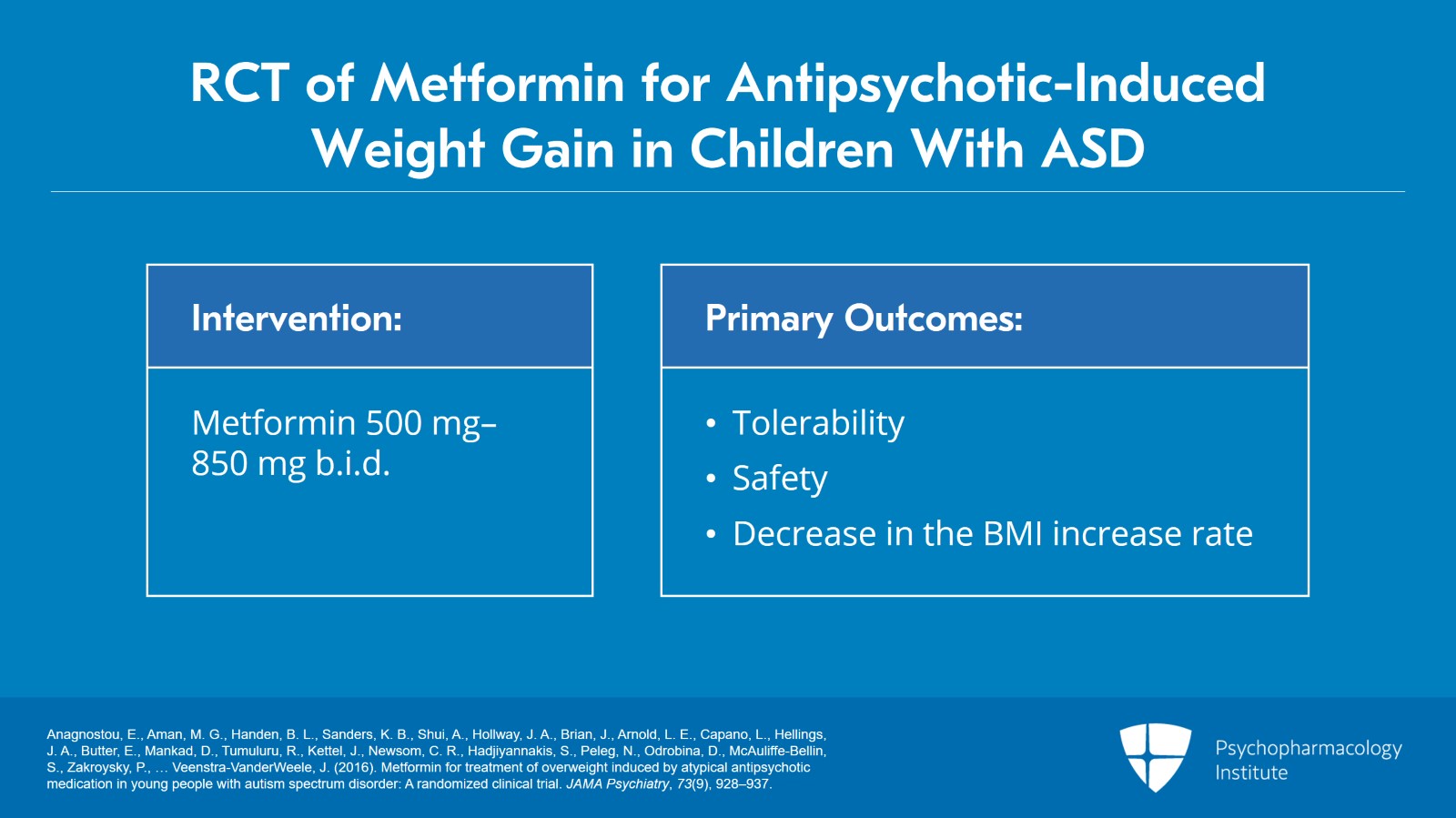
Another important side effect to talk about with risperidone in greater detail is metabolic syndrome and weight gain. There was a trial that looked at metformin for the treatment of weight gain in individuals with autism who had to take risperidone or aripiprazole for the treatment of irritability. This is a 16-week trial double-blind placebo-controlled, 60 subjects with ages 6 to 17 years. These were all subjects that had weight gain from atypical antipsychotics used to treat irritability. The subjects had to be stable for one month with the dosage of the antipsychotic medication and had about a 7% increase in BMI so that was sort of the trigger for them moving forward with this trial of metformin.
References:
- Anagnostou, E., Aman, M. G., Handen, B. L., Sanders, K. B., Shui, A., Hollway, J. A., Brian, J., Arnold, L. E., Capano, L., Hellings, J. A., Butter, E., Mankad, D., Tumuluru, R., Kettel, J., Newsom, C. R., Hadjiyannakis, S., Peleg, N., Odrobina, D., McAuliffe-Bellin, S., Zakroysky, P., … Veenstra-VanderWeele, J. (2016). Metformin for treatment of overweight induced by atypical antipsychotic medication in young people with autism spectrum disorder: A randomized clinical trial. JAMA Psychiatry, 73(9), 928–937.
Slide 16 of 25
The dosing was 500 mg twice a day given with meals to 6- and 9-year-olds who participated and 850 mg twice a day for subjects 10 to 17 years of age. The primary outcomes were whether metformin was tolerable and safe and whether or not there was a decrease in the rate of increase of BMI as measured using the Z-score.
References:
- Anagnostou, E., Aman, M. G., Handen, B. L., Sanders, K. B., Shui, A., Hollway, J. A., Brian, J., Arnold, L. E., Capano, L., Hellings, J. A., Butter, E., Mankad, D., Tumuluru, R., Kettel, J., Newsom, C. R., Hadjiyannakis, S., Peleg, N., Odrobina, D., McAuliffe-Bellin, S., Zakroysky, P., … Veenstra-VanderWeele, J. (2016). Metformin for treatment of overweight induced by atypical antipsychotic medication in young people with autism spectrum disorder: A randomized clinical trial. JAMA Psychiatry, 73(9), 928–937.
Free Files
Download PDF and other files
Success!
Check your inbox, we sent you all the materials there.
Slide 17 of 25
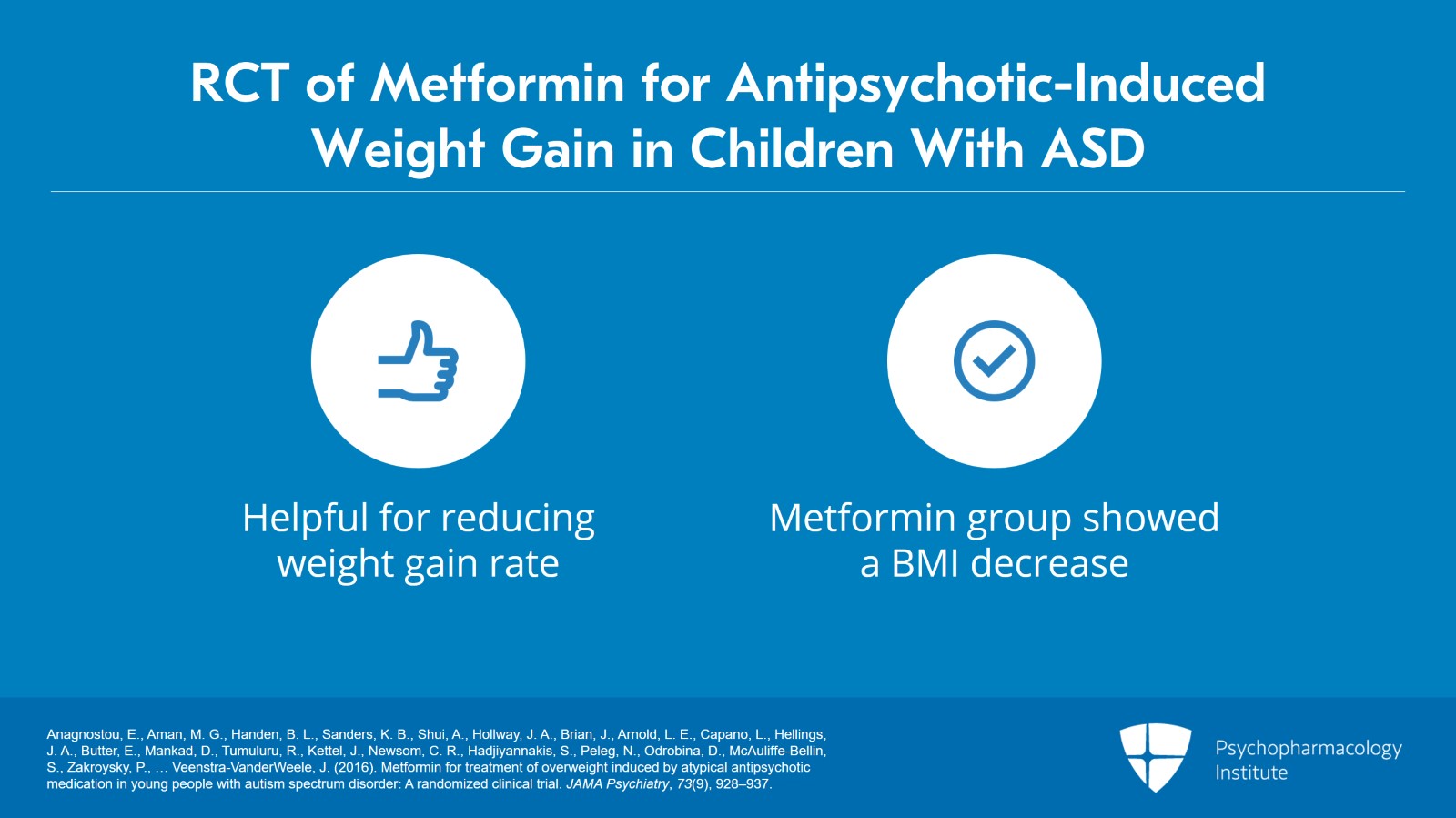
The results of this trial indeed showed that metformin was helpful for reducing the rate of weight gain induced by medications like risperidone and other atypical antipsychotic medications for irritability in autism. The mean weight gain from metformin over the duration of the three-month trial was less as compared to placebo. And 11% of subjects taking metformin actually had a BMI decrease of 8% to 9%.
References:
- Anagnostou, E., Aman, M. G., Handen, B. L., Sanders, K. B., Shui, A., Hollway, J. A., Brian, J., Arnold, L. E., Capano, L., Hellings, J. A., Butter, E., Mankad, D., Tumuluru, R., Kettel, J., Newsom, C. R., Hadjiyannakis, S., Peleg, N., Odrobina, D., McAuliffe-Bellin, S., Zakroysky, P., … Veenstra-VanderWeele, J. (2016). Metformin for treatment of overweight induced by atypical antipsychotic medication in young people with autism spectrum disorder: A randomized clinical trial. JAMA Psychiatry, 73(9), 928–937.
Slide 18 of 25
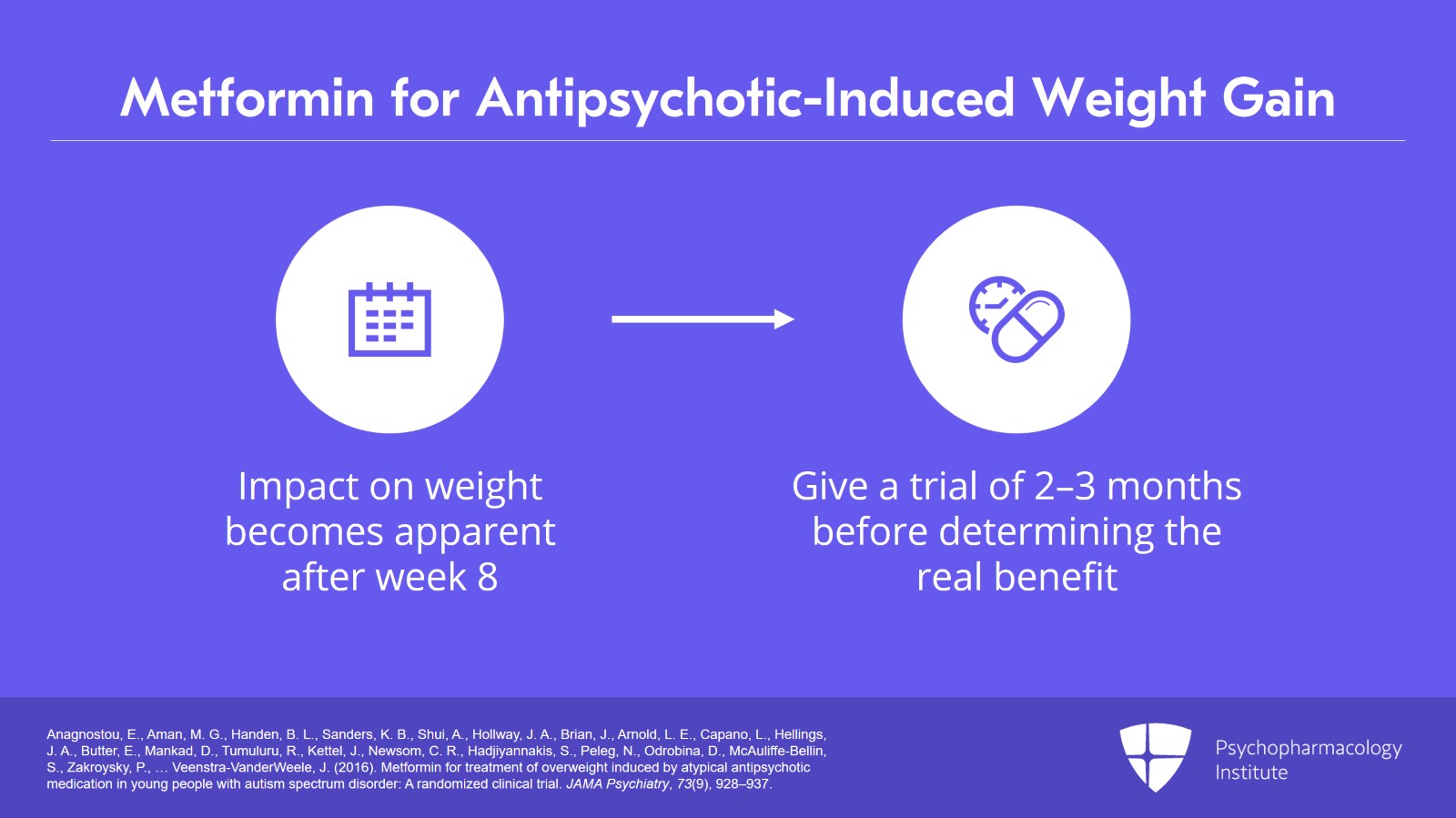
Of note, the differences in terms of the rate of weight increase was not apparent until after eight weeks. So it's important not to give up on metformin too soon. Giving it a trial of two to three months is necessary in order to determine whether or not there is real benefit.
References:
- Anagnostou, E., Aman, M. G., Handen, B. L., Sanders, K. B., Shui, A., Hollway, J. A., Brian, J., Arnold, L. E., Capano, L., Hellings, J. A., Butter, E., Mankad, D., Tumuluru, R., Kettel, J., Newsom, C. R., Hadjiyannakis, S., Peleg, N., Odrobina, D., McAuliffe-Bellin, S., Zakroysky, P., … Veenstra-VanderWeele, J. (2016). Metformin for treatment of overweight induced by atypical antipsychotic medication in young people with autism spectrum disorder: A randomized clinical trial. JAMA Psychiatry, 73(9), 928–937.
Free Files
Download PDF and other files
Success!
Check your inbox, we sent you all the materials there.
Slide 19 of 25
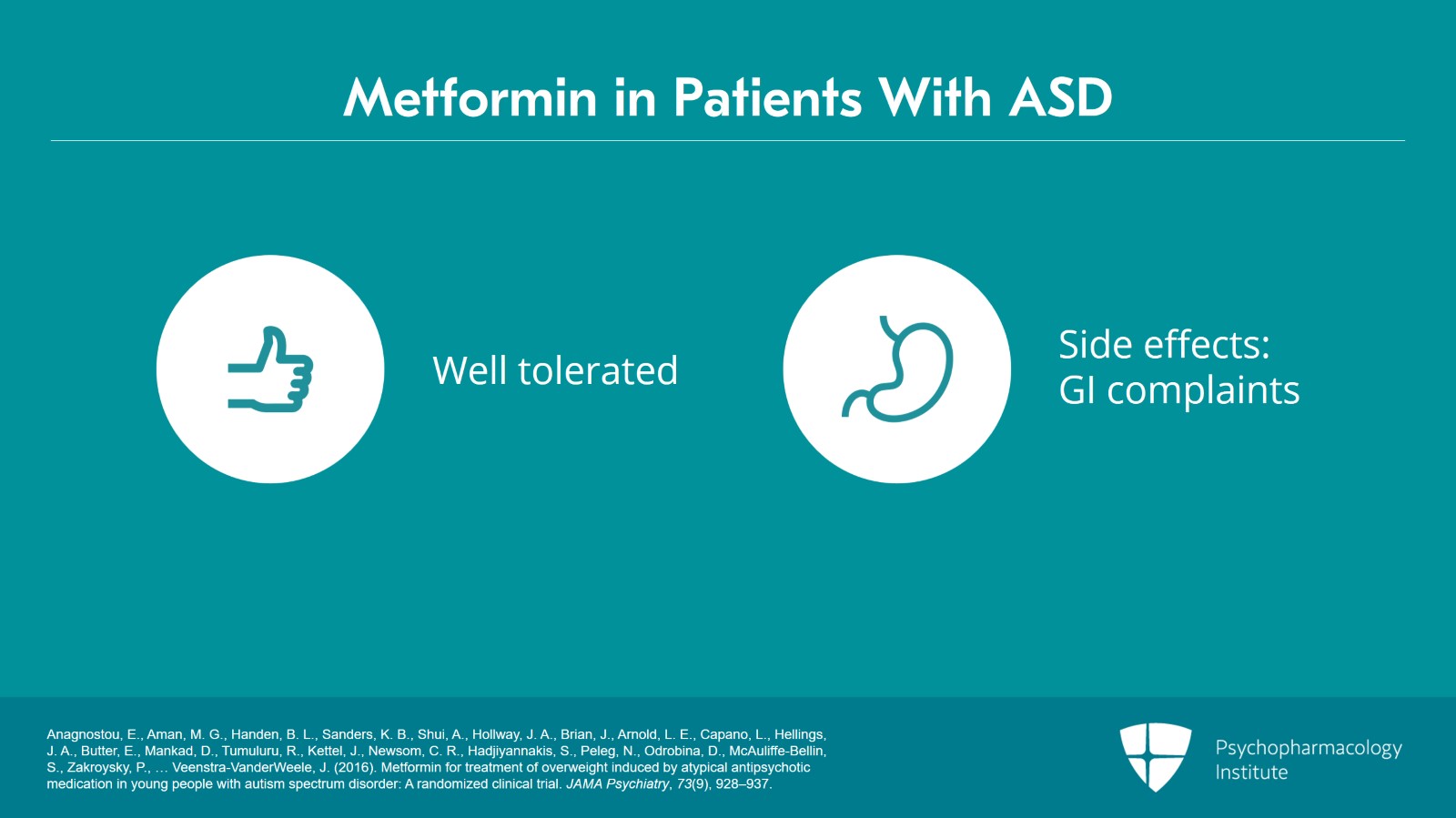
Metformin was tolerable in this patient population. The major difference was the frequency of days of GI complaint. GI complaints included things like abdominal discomfort, diarrhea, bloating, or flatulence. There was one subject in the metformin group that had significant agitation and had to leave the trial for that reason.
References:
- Anagnostou, E., Aman, M. G., Handen, B. L., Sanders, K. B., Shui, A., Hollway, J. A., Brian, J., Arnold, L. E., Capano, L., Hellings, J. A., Butter, E., Mankad, D., Tumuluru, R., Kettel, J., Newsom, C. R., Hadjiyannakis, S., Peleg, N., Odrobina, D., McAuliffe-Bellin, S., Zakroysky, P., … Veenstra-VanderWeele, J. (2016). Metformin for treatment of overweight induced by atypical antipsychotic medication in young people with autism spectrum disorder: A randomized clinical trial. JAMA Psychiatry, 73(9), 928–937.
Slide 20 of 25
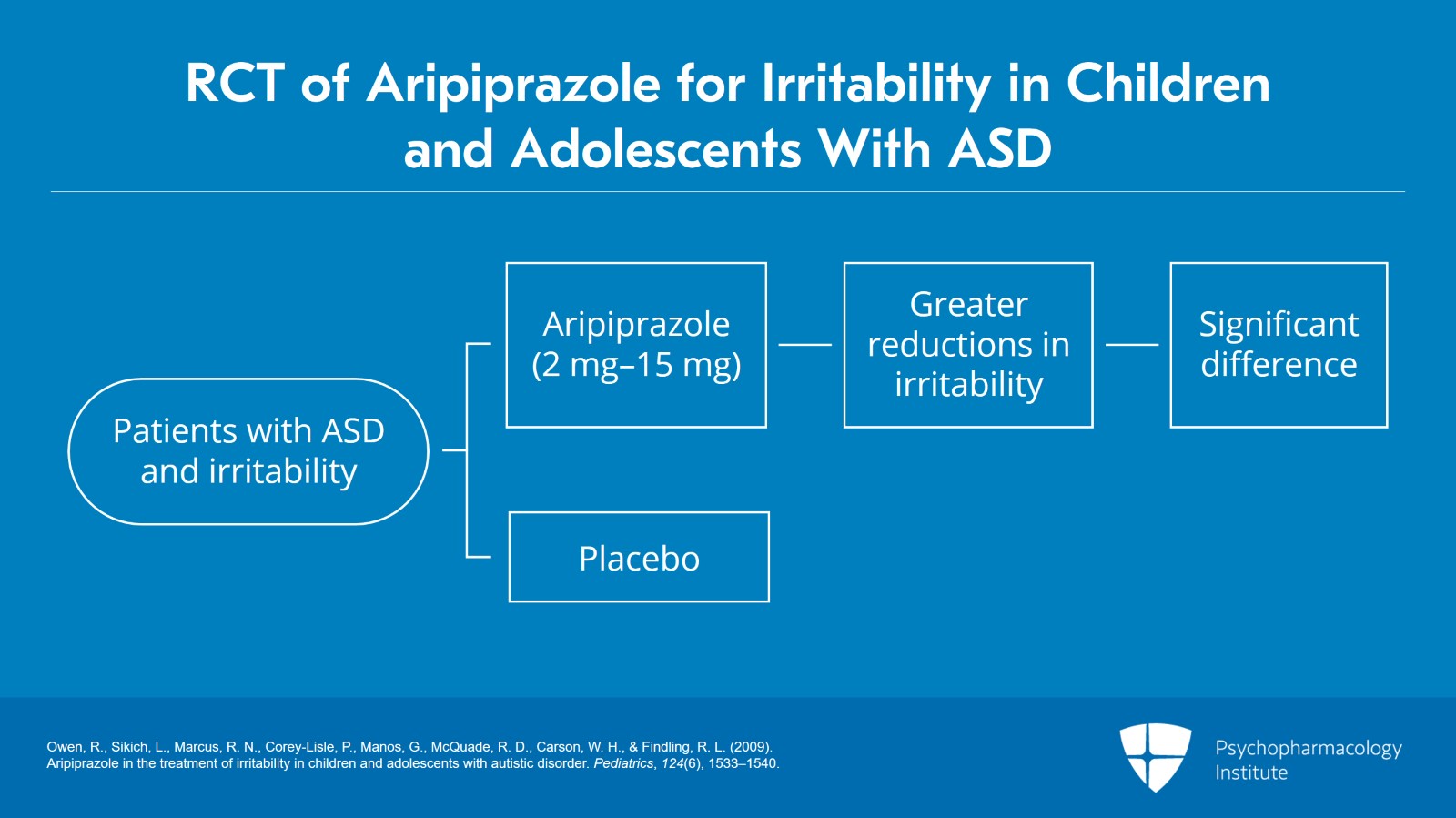
In finishing up this section, I'll briefly mention a trial that was done in aripiprazole in autism. This is a drug company funded trial of 98 subjects in children and adolescents with autism ages 6 to 17 years old with substantial irritability. It was an eight-week double-blind placebo-controlled trial with the dosing range between 2 and 15 mg per day. Subjects ended up on a mean dosage of aripiprazole of 8.5 mg per day and they had greater reductions in the ABC irritability subscale as compared to placebo. That was a significant difference. So it was also a positive trial attesting to the improvements in irritability with aripiprazole.
References:
- Owen, R., Sikich, L., Marcus, R. N., Corey-Lisle, P., Manos, G., McQuade, R. D., Carson, W. H., & Findling, R. L. (2009). Aripiprazole in the treatment of irritability in children and adolescents with autistic disorder. Pediatrics, 124(6), 1533–1540.
Free Files
Download PDF and other files
Success!
Check your inbox, we sent you all the materials there.
Slide 21 of 25
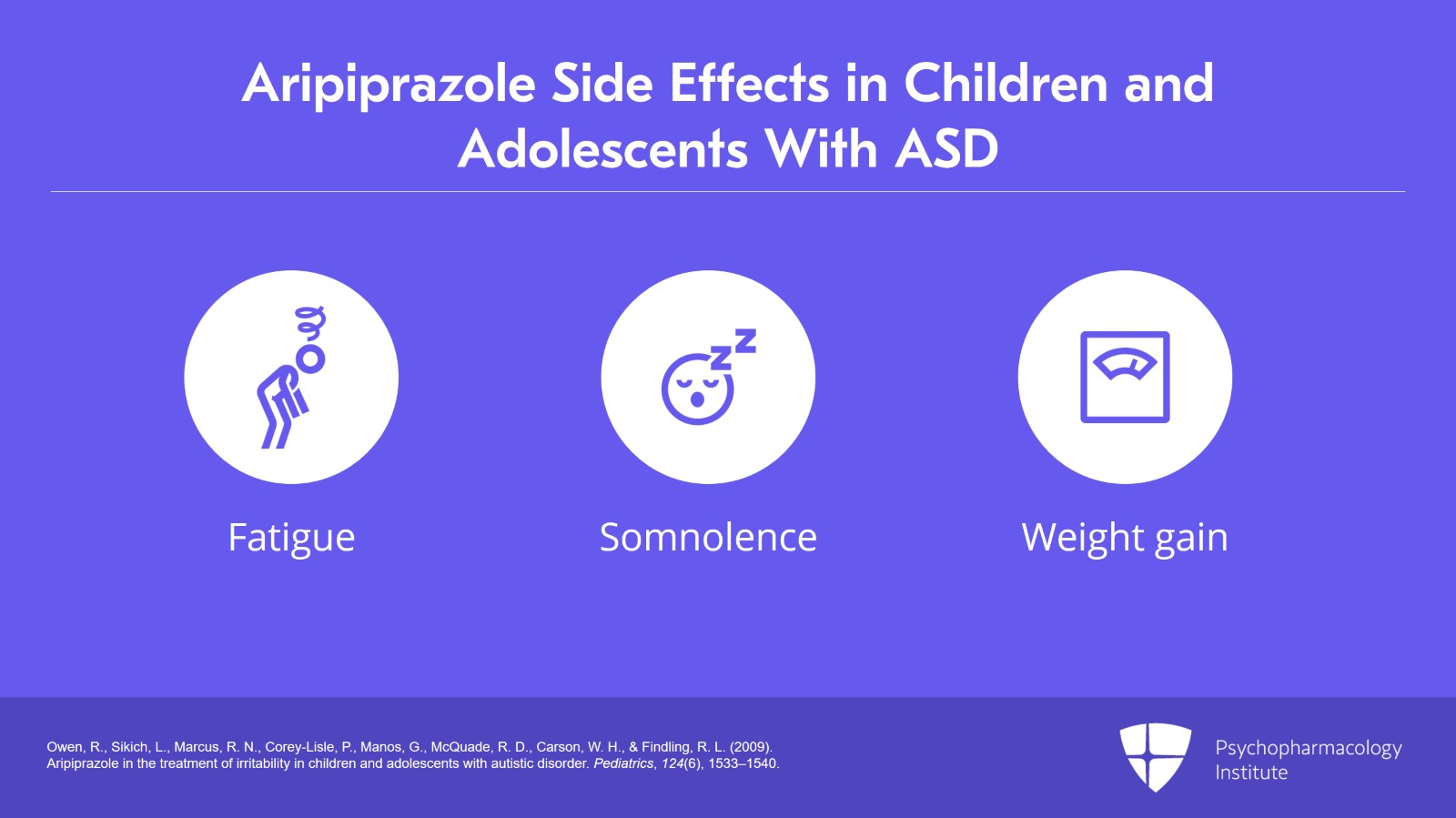
The most common adverse events were fatigue, somnolence. Weight gain was also seen in aripiprazole, 2.1 kg over an eight-week trial as compared to 1 kg with placebo in terms of mean differences.
References:
- Owen, R., Sikich, L., Marcus, R. N., Corey-Lisle, P., Manos, G., McQuade, R. D., Carson, W. H., & Findling, R. L. (2009). Aripiprazole in the treatment of irritability in children and adolescents with autistic disorder. Pediatrics, 124(6), 1533–1540.
Slide 22 of 25
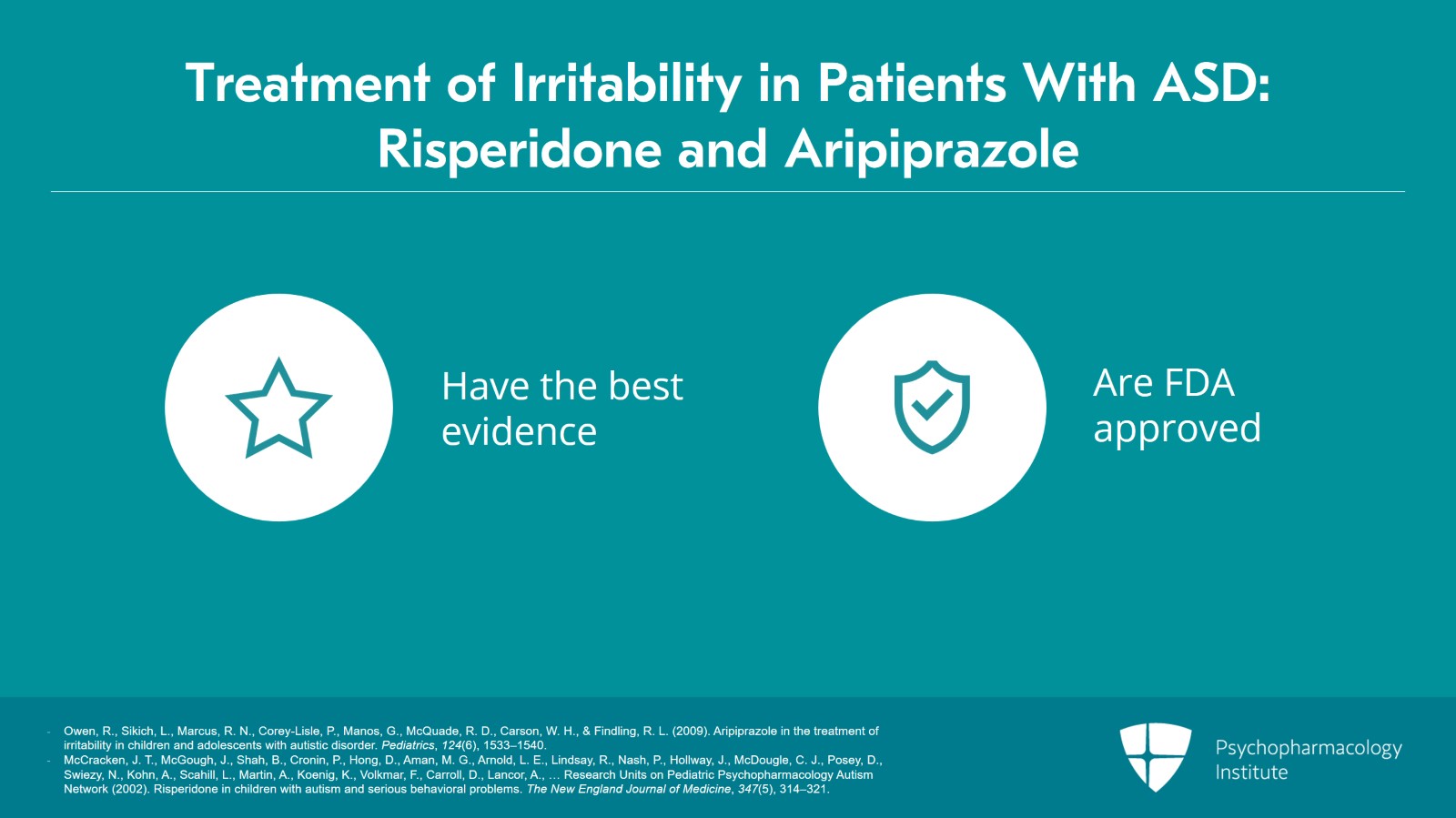
So the clinical approach for the treatment of irritability in patients with autism spectrum disorder, clinicians should know there's the best evidence for risperidone and aripiprazole which both carry an FDA indication for the treatment of irritability.
References:
- Owen, R., Sikich, L., Marcus, R. N., Corey-Lisle, P., Manos, G., McQuade, R. D., Carson, W. H., & Findling, R. L. (2009). Aripiprazole in the treatment of irritability in children and adolescents with autistic disorder. Pediatrics, 124(6), 1533–1540.
- McCracken, J. T., McGough, J., Shah, B., Cronin, P., Hong, D., Aman, M. G., Arnold, L. E., Lindsay, R., Nash, P., Hollway, J., McDougle, C. J., Posey, D., Swiezy, N., Kohn, A., Scahill, L., Martin, A., Koenig, K., Volkmar, F., Carroll, D., Lancor, A., … Research Units on Pediatric Psychopharmacology Autism Network (2002). Risperidone in children with autism and serious behavioral problems. The New England Journal of Medicine, 347(5), 314–321.
Free Files
Download PDF and other files
Success!
Check your inbox, we sent you all the materials there.
Slide 23 of 25
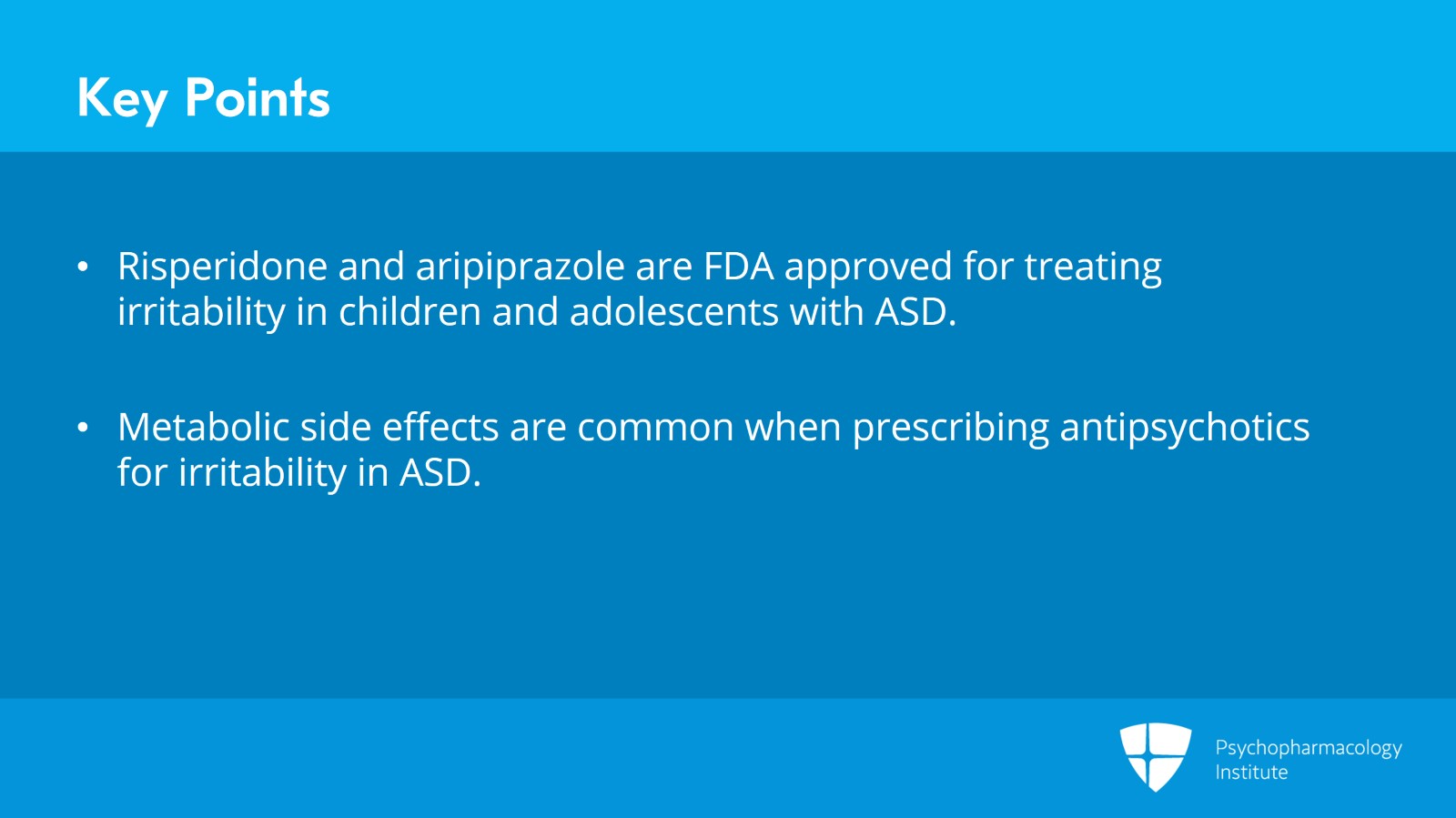
Key points to draw from this section include: Risperidone and aripiprazole carry an FDA indication for the treatment of irritability in children and adolescents with autism. Metabolic side effects including weight gain are common when prescribing antipsychotics for irritability in autism.
Slide 24 of 25
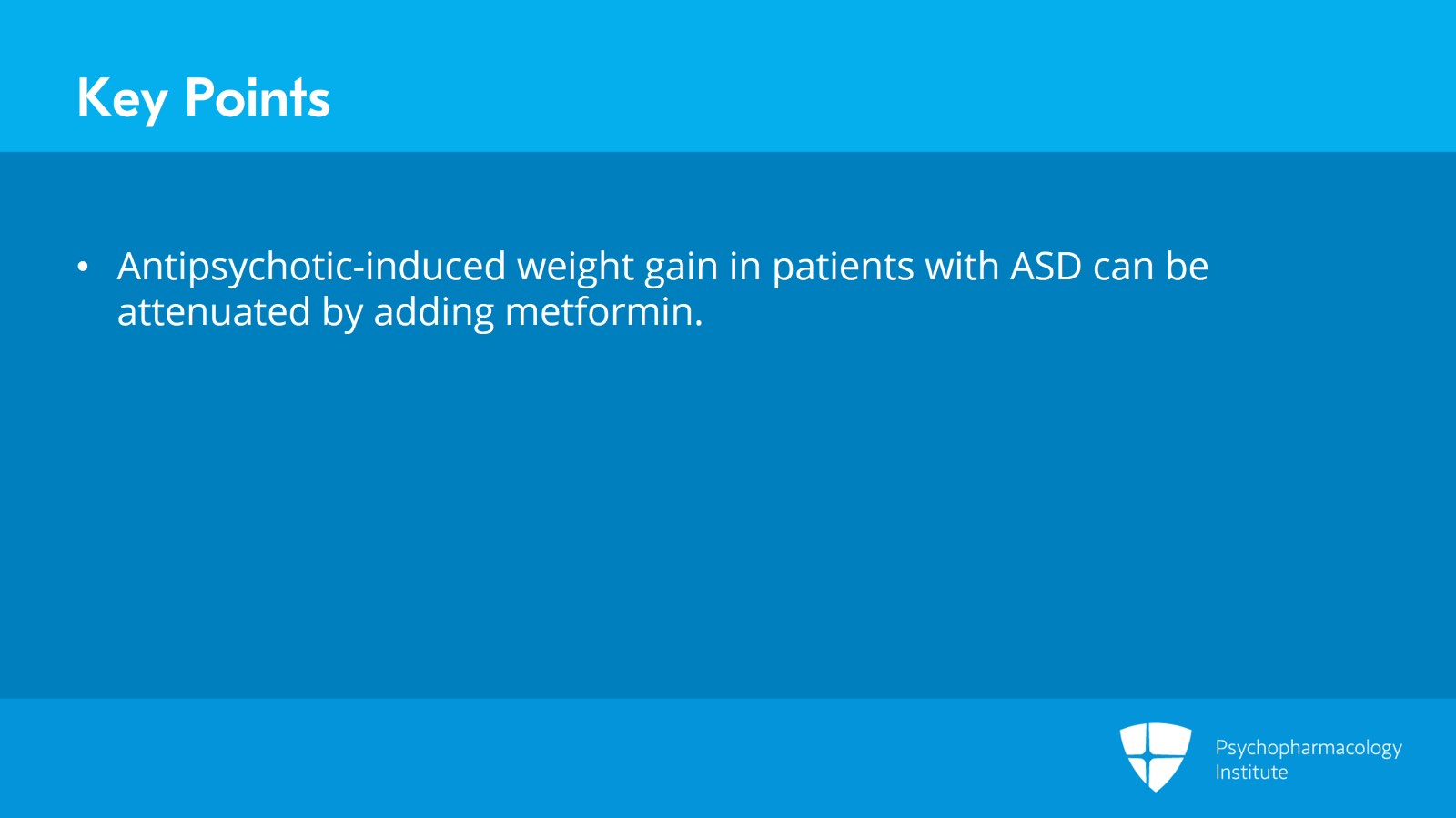
Weight gain with antipsychotics in patients with autism can be attenuated by adding metformin for patients who gain substantial weight in the first few weeks of treatment.
Free Files
Download PDF and other files
Success!
Check your inbox, we sent you all the materials there.