Close Banner
Section Free  - Video Lectures

05. Treatment Algorithm for Adult ADHD

Published on October 1, 2024 Certification expiration date: October 1, 2027

Oscar G. Bukstein, M.D., M.P.H.

Director of Outpatient Psychiatric Services - Boston Children's Hospital

Key Points

  • Amphetamines may be slightly favored over methylphenidate for adults with ADHD, but have a higher risk of adverse events.
  • For ADHD with substance use disorder, consider non-stimulants like atomoxetine or bupropion before stimulants.
  • For ADHD with anxiety, options include a stimulant plus an SSRI/SNRI, atomoxetine, or a tricyclic antidepressant.

Free Downloads for Offline Access

  • Free Download Presentation File (PPTX)
  • Free Download Audio File (MP3)
  • Free Download Video (MP4)

Slides and Transcript

Slide 1 of 10

In considering what treatments to provide adults with ADHD, we can look at an algorithm which specifies psychosocial therapies for ADHD and specific medications or types of medications for ADHD.

Slide 2 of 10

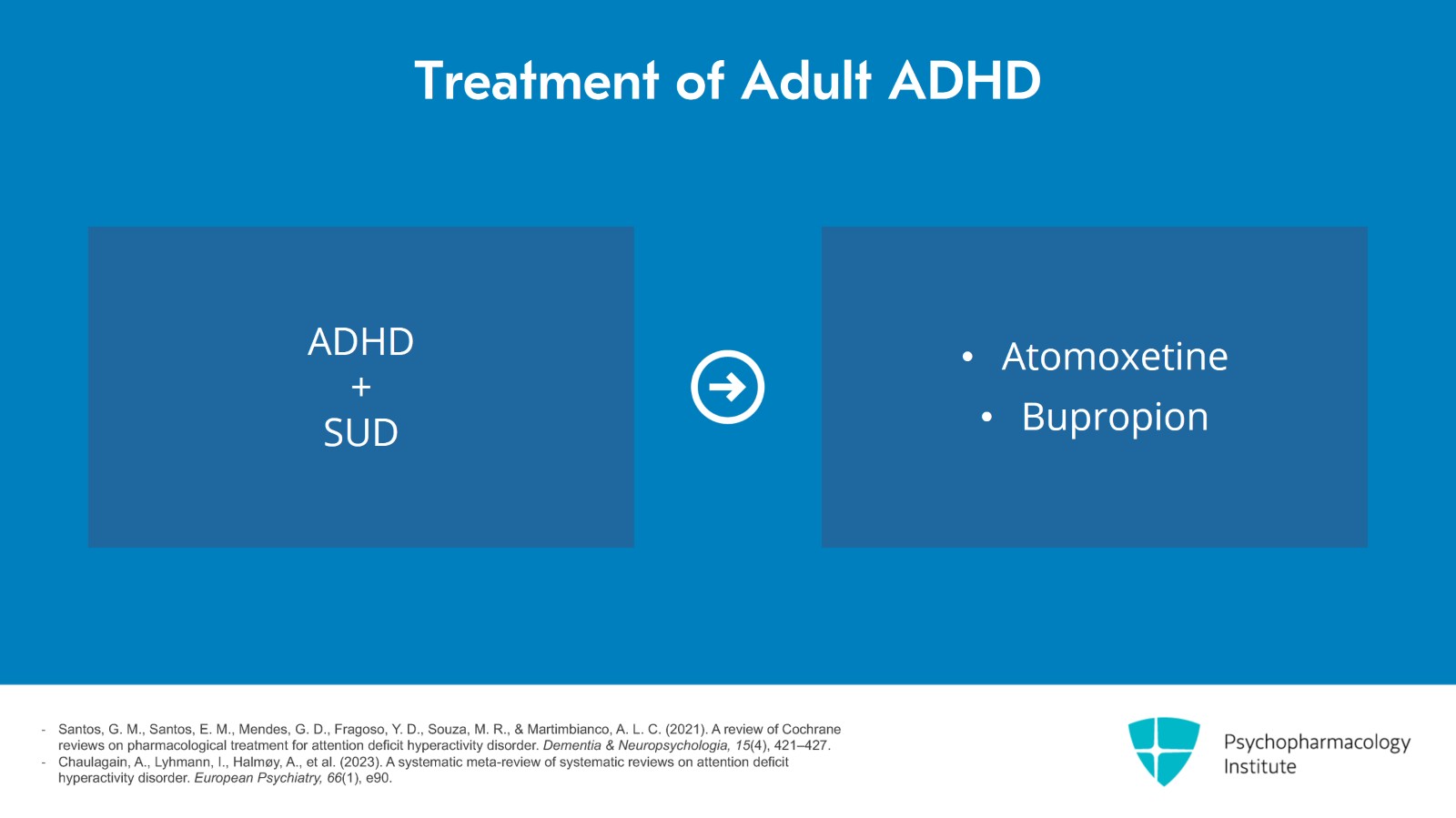
The presence of substance use disorder suggests a treatment with non-stimulants such as atomoxetine or bupropion prior to considering a stimulant trial.
References:
  • Santos, G. M., Santos, E. M., Mendes, G. D., Fragoso, Y. D., Souza, M. R., & Martimbianco, A. L. C. (2021). A review of Cochrane reviews on pharmacological treatment for attention deficit hyperactivity disorder. Dementia & Neuropsychologia, 15(4), 421–427.
  • Chaulagain, A., Lyhmann, I., Halmøy, A., et al. (2023). A systematic meta-review of systematic reviews on attention deficit hyperactivity disorder. European Psychiatry, 66(1), e90.
Free Files
Success!
Check your inbox, we sent you all the materials there.

Slide 3 of 10

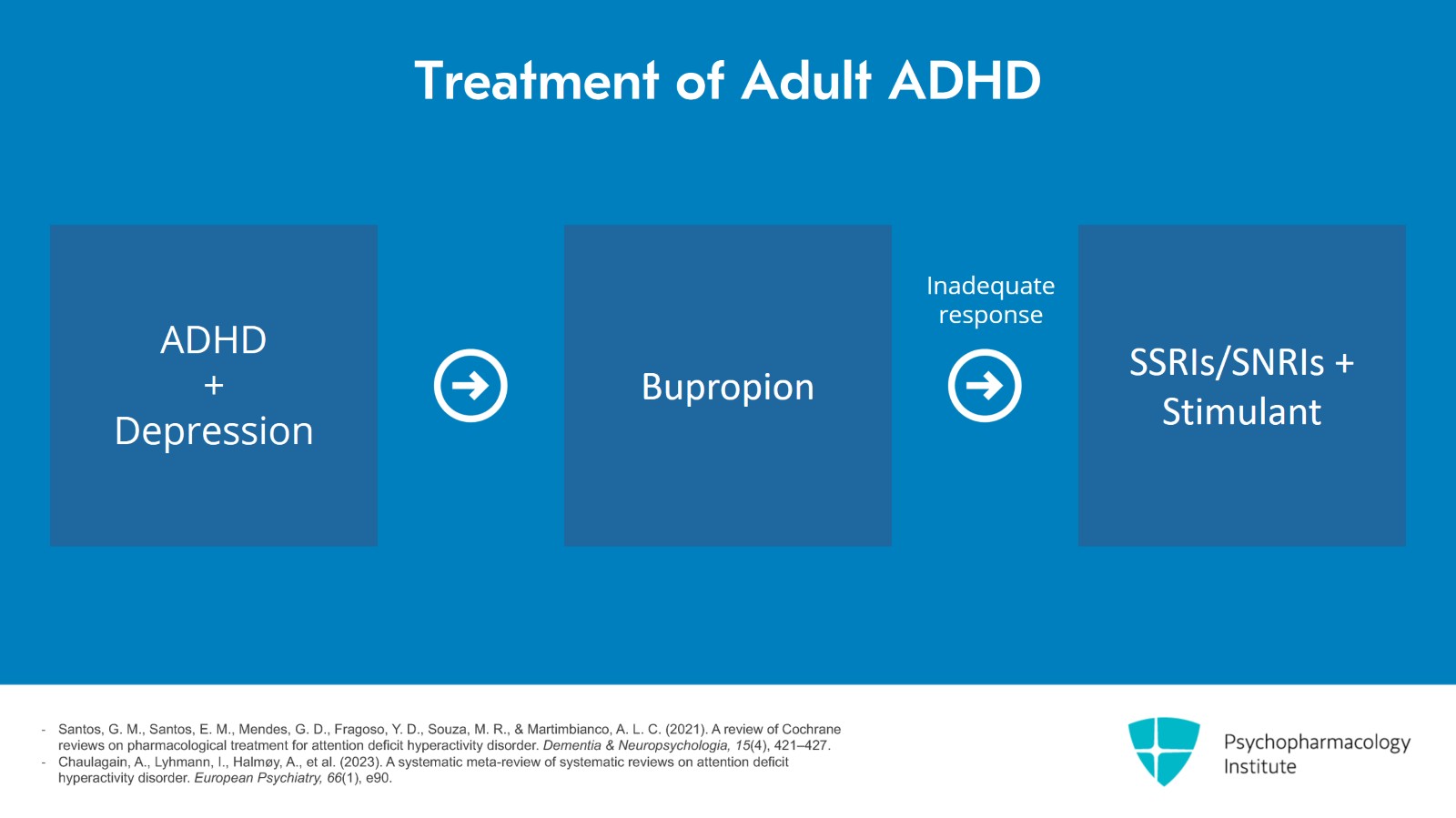
The presence of co-occurring depression suggests the possibility of treatment with an antidepressant bupropion alone or, if that is not successful, treating with a combination of SSRIs or SNRIs in addition to a stimulant.
References:
  • Santos, G. M., Santos, E. M., Mendes, G. D., Fragoso, Y. D., Souza, M. R., & Martimbianco, A. L. C. (2021). A review of Cochrane reviews on pharmacological treatment for attention deficit hyperactivity disorder. Dementia & Neuropsychologia, 15(4), 421–427.
  • Chaulagain, A., Lyhmann, I., Halmøy, A., et al. (2023). A systematic meta-review of systematic reviews on attention deficit hyperactivity disorder. European Psychiatry, 66(1), e90.

Slide 4 of 10

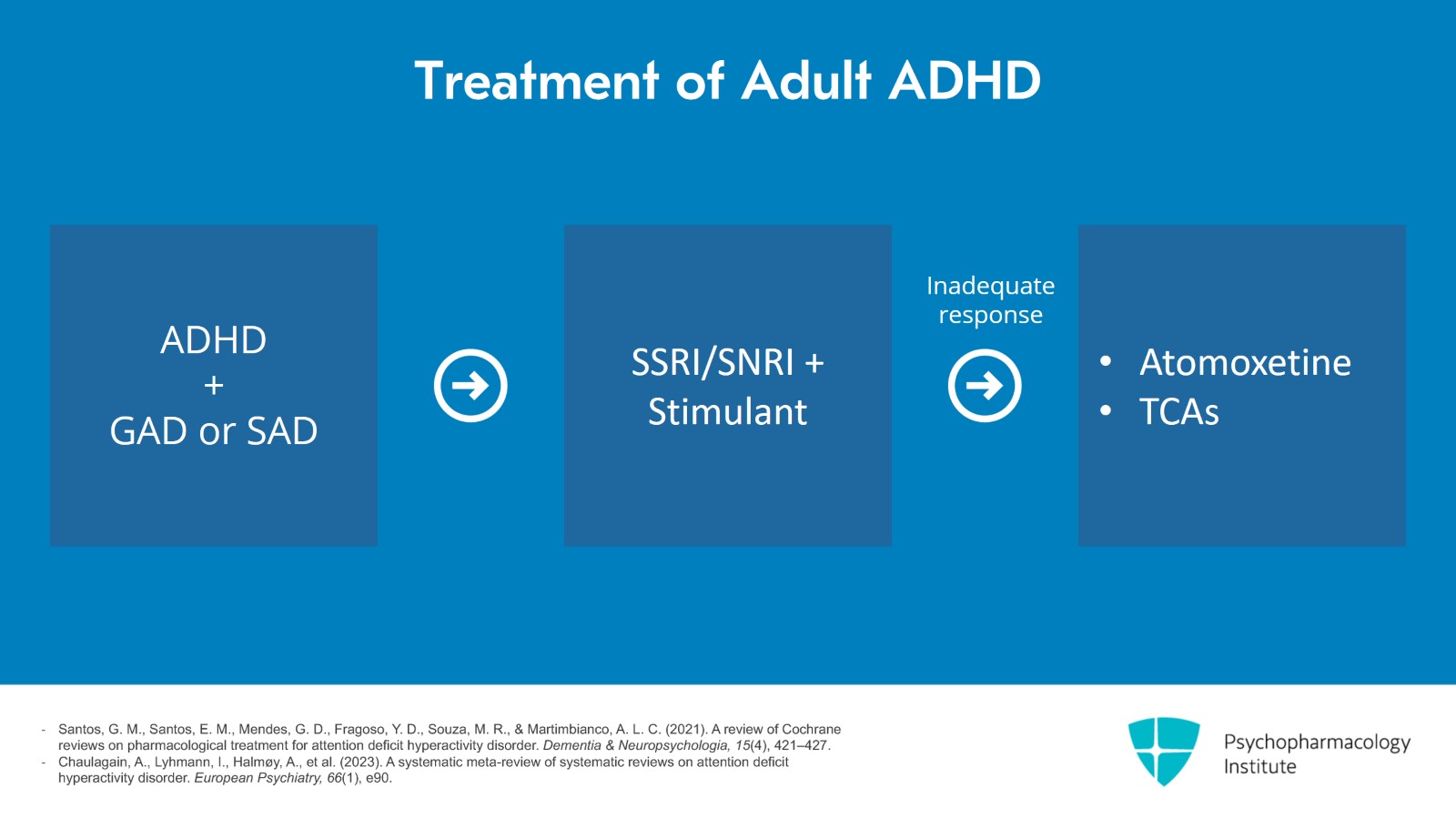
For co-occurring generalized anxiety disorder or social anxiety disorder, the options are to treat with a stimulant and an SSRI or SNRI. If clinically significant symptoms remain after treatment with those two types of agents, a switch to atomoxetine may be considered or even a switch to a tricyclic antidepressant.
References:
  • Santos, G. M., Santos, E. M., Mendes, G. D., Fragoso, Y. D., Souza, M. R., & Martimbianco, A. L. C. (2021). A review of Cochrane reviews on pharmacological treatment for attention deficit hyperactivity disorder. Dementia & Neuropsychologia, 15(4), 421–427.
  • Chaulagain, A., Lyhmann, I., Halmøy, A., et al. (2023). A systematic meta-review of systematic reviews on attention deficit hyperactivity disorder. European Psychiatry, 66(1), e90.
Free Files
Success!
Check your inbox, we sent you all the materials there.

Slide 5 of 10

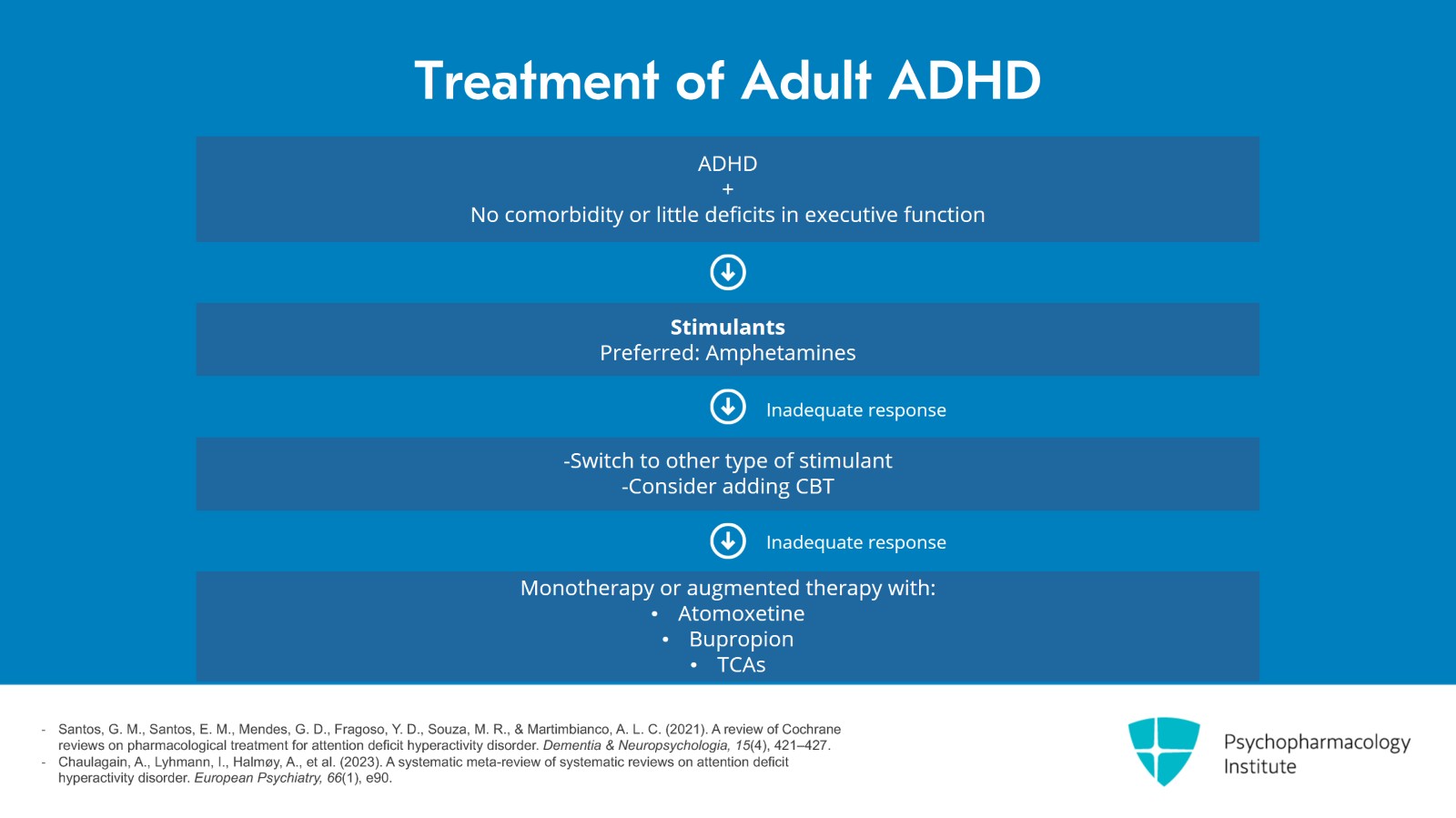
The presence of no comorbidity or little deficits in executive function suggests treating with stimulants with amphetamines slightly favored over methylphenidate. If clinically significant symptoms continue, switching to the other type of stimulant from methylphenidate to amphetamine or from amphetamine to methylphenidate may be tried. The addition of CBT for executive function may be also tried. And finally, monotherapy or augmented therapy with atomoxetine, bupropion, or a tricyclic antidepressant such as nortriptyline may also be tried.
References:
  • Santos, G. M., Santos, E. M., Mendes, G. D., Fragoso, Y. D., Souza, M. R., & Martimbianco, A. L. C. (2021). A review of Cochrane reviews on pharmacological treatment for attention deficit hyperactivity disorder. Dementia & Neuropsychologia, 15(4), 421–427.
  • Chaulagain, A., Lyhmann, I., Halmøy, A., et al. (2023). A systematic meta-review of systematic reviews on attention deficit hyperactivity disorder. European Psychiatry, 66(1), e90.

Slide 6 of 10

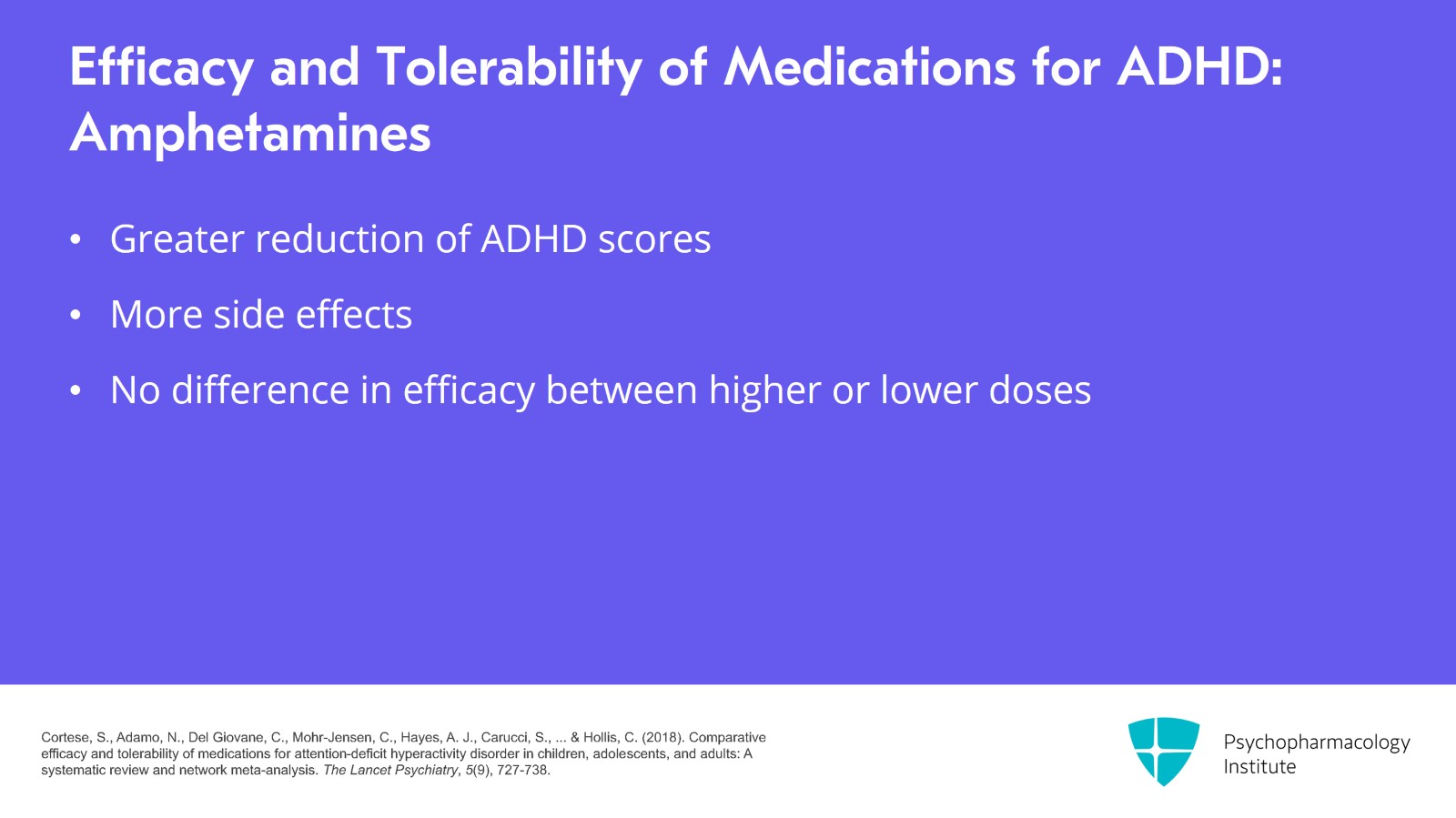
The preference for amphetamines over methylphenidate is supported by a network meta-analysis of clinical trials of ADHD drugs that was published in 2018. In this particular study, 51 drug trials with a total of 8131 adults with ADHD were examined. After approximately 12 weeks, amphetamine showed a preference or greater improvement in the reduction of clinician-rated overall ADHD scores. They were also associated with a higher risk of treatment ending as a result of adverse events. So the greater efficacy was certainly balanced by probably more side effects. No difference in efficacy was seen between higher or lower dose of amphetamines.
References:
  • Cortese, S., Adamo, N., Del Giovane, C., Mohr-Jensen, C., Hayes, A. J., Carucci, S., … & Hollis, C. (2018). Comparative efficacy and tolerability of medications for attention-deficit hyperactivity disorder in children, adolescents, and adults: A systematic review and network meta-analysis. The Lancet Psychiatry, 5(9), 727-738.
Free Files
Success!
Check your inbox, we sent you all the materials there.

Slide 7 of 10

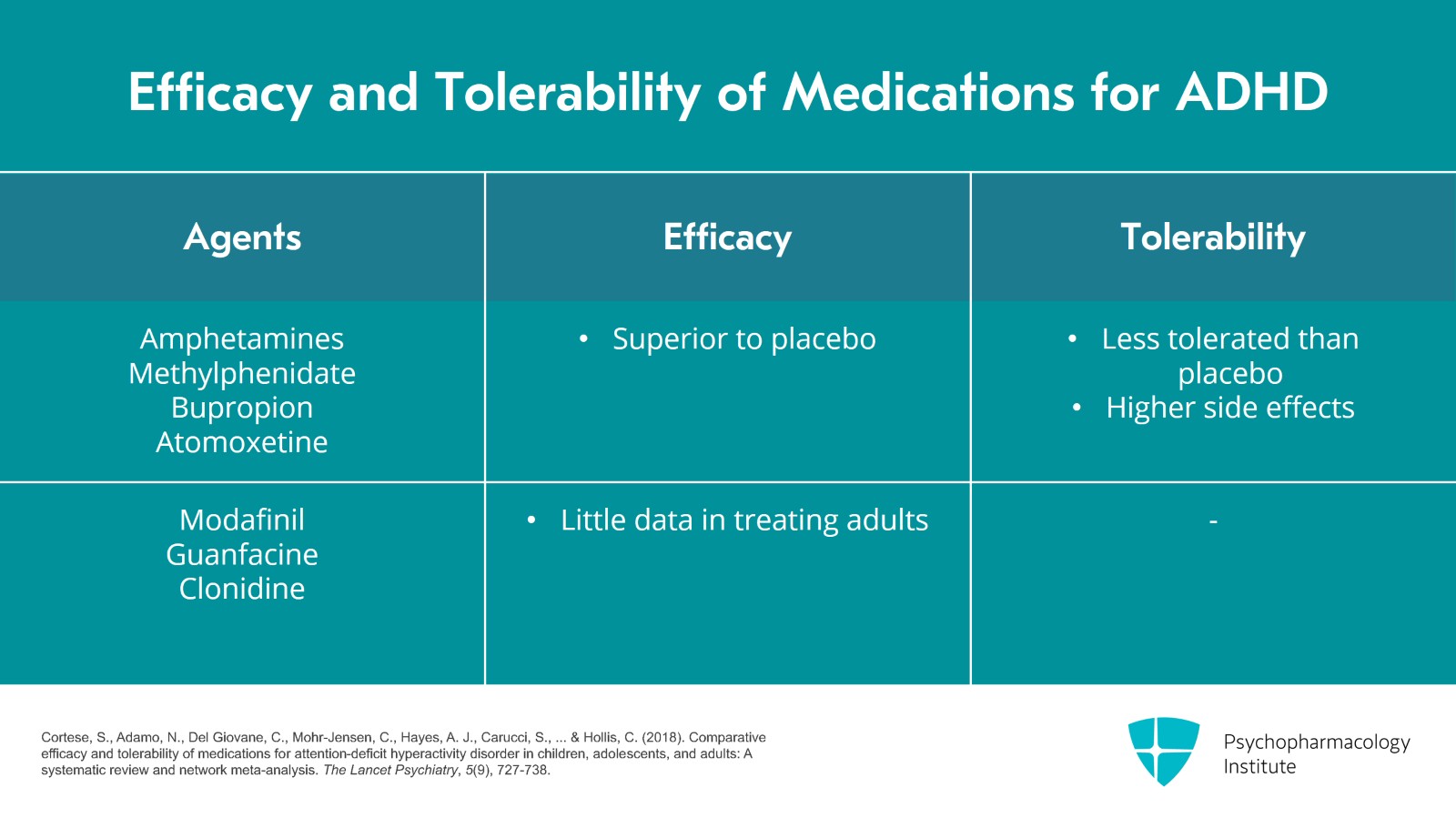
In this particular study, efficacy of amphetamines, methylphenidate, bupropion, and atomoxetine were superior to placebo for ADHD. So all these are potential choices for medications for adults with ADHD. Unfortunately, modafinil did not make the cut and there is very little, if any, data for guanfacine, clonidine, alpha agonists which have shown positive effects in children. In terms of tolerability, not surprisingly, modafinil, amphetamines, methylphenidate and atomoxetine were less tolerated than placebo and had higher side effects.
References:
  • Cortese, S., Adamo, N., Del Giovane, C., Mohr-Jensen, C., Hayes, A. J., Carucci, S., … & Hollis, C. (2018). Comparative efficacy and tolerability of medications for attention-deficit hyperactivity disorder in children, adolescents, and adults: A systematic review and network meta-analysis. The Lancet Psychiatry, 5(9), 727-738.

Slide 8 of 10

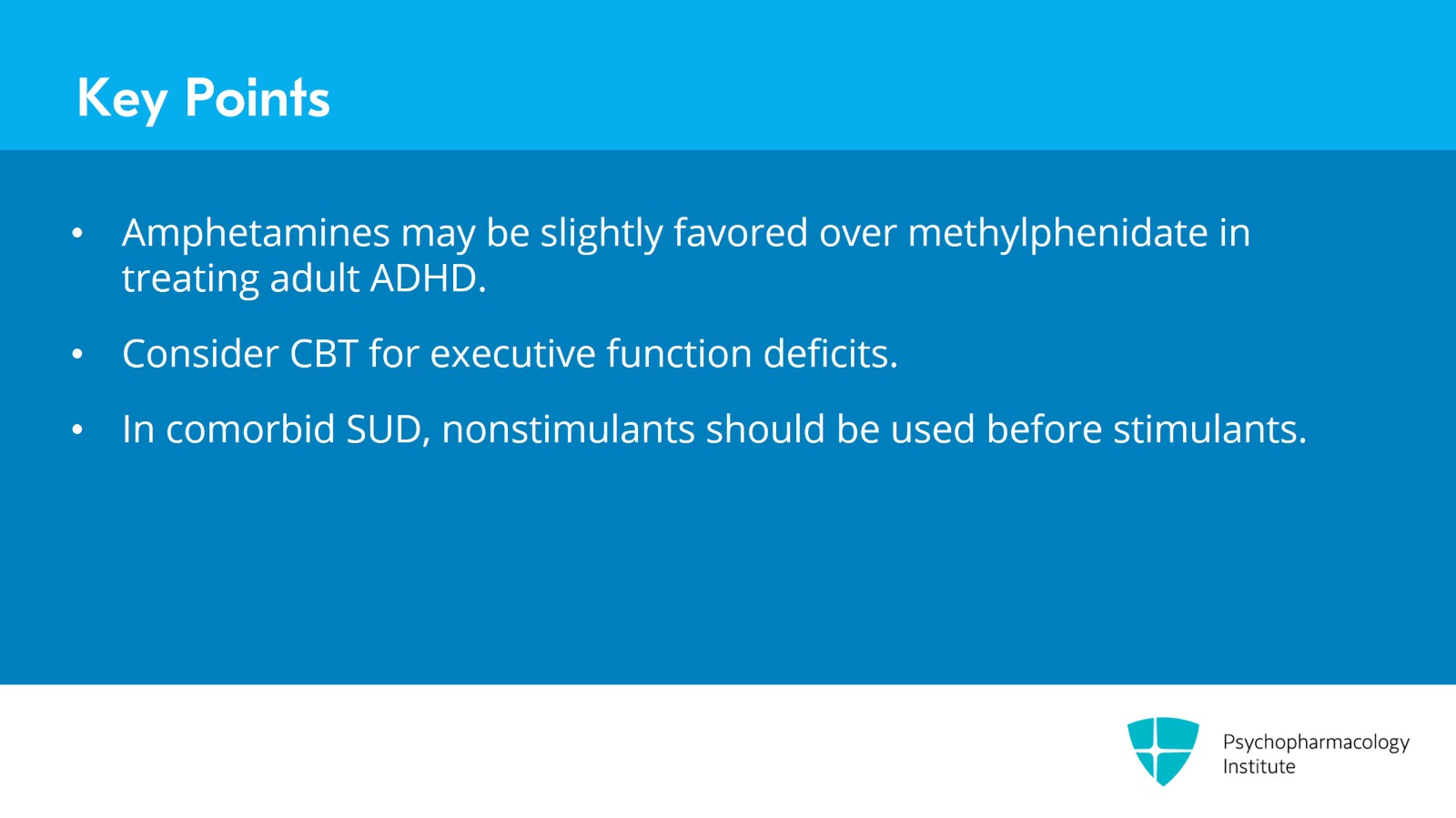
The key points to this information provided include: For adults, amphetamine may be slightly favored over methylphenidate. The clinician should consider CBT for executive function deficits. For substance use disorder comorbidity, nonstimulants should be used first over stimulants.
Free Files
Success!
Check your inbox, we sent you all the materials there.

Slide 9 of 10

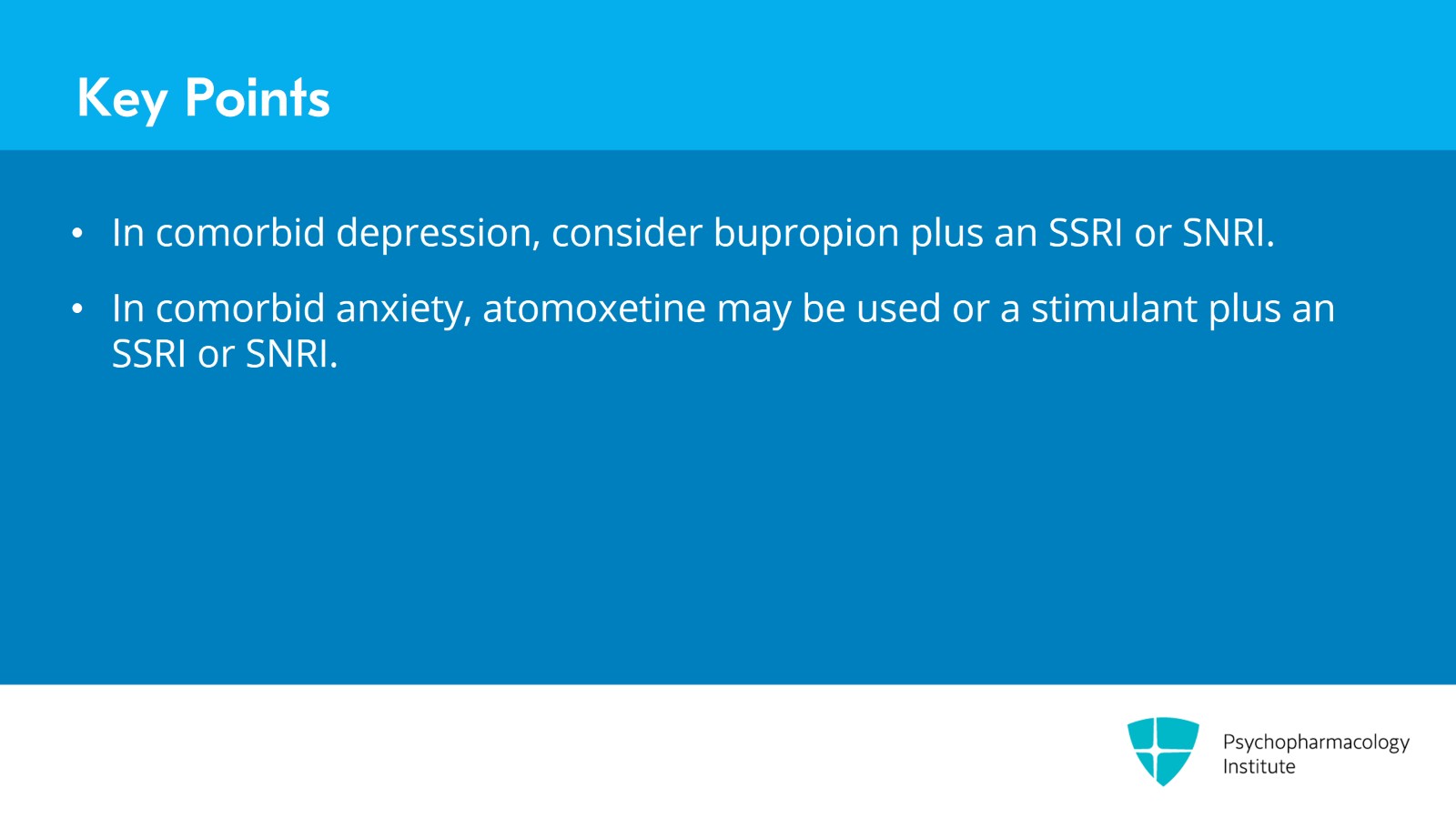
For depression comorbidity, bupropion is an alternative to stimulant plus SSRI or SNRI. And for anxiety comorbidity, atomoxetine may be used or a stimulant plus an SSRI or SNRI.

Slide 10 of 10

Free Files
Success!
Check your inbox, we sent you all the materials there.

Learning Objectives:

After completing this activity, the learner will be able to:

  1. Identify FDA-approved non-stimulant medications for adult ADHD and describe their mechanism of action, efficacy, and common side effects.
  2. Explain the key components of assessing adult ADHD, including diagnostic criteria, screening for comorbidities, and the use of standardized rating scales.
  3. Compare and contrast the efficacy and safety profiles of stimulant and non-stimulant pharmacological treatments for adult ADHD, and describe strategies for optimizing treatment outcomes.

Original Release Date: October 1, 2024

Expiration Date: October 1, 2027

Expert: Oscar Bukstein, M.D.

Medical Editor: Paz Badía, M.D. 

Relevant Financial Disclosures: 

Oscar Bukstein declares the following interests:
- Routledge Press: Authored Book
- Guilford Press: Authored Book
- Wolters-Kluwer: Advisor

All of the relevant financial relationships listed above have been mitigated by Medical Academy and the Psychopharmacology Institute.

None of the other faculty, planners, and reviewers for this educational activity have relevant financial relationships to disclose during the last 24 months with ineligible companies whose primary business is producing, marketing, selling, re-selling, or distributing healthcare products used by or on patients.

Contact Information: For questions regarding the content or access to this activity, contact us at support@psychopharmacologyinstitute.com

Instructions for Participation and Credit:

Participants must complete the activity online during the valid credit period that is noted above.

Follow these steps to earn CME credit:

  1. View the required educational content provided on this course page.

  2. Complete the Post Activity Evaluation for providing the necessary feedback for continuing accreditation purposes and for the development of future activities. NOTE: Completing the Post Activity Evaluation after the quiz is required to receive the earned credit.

  3. Download your certificate.

Accreditation Statement

This activity has been planned and implemented in accordance with the accreditation requirements and policies of the Accreditation Council for Continuing Medical Education through the joint providership of Medical Academy LLC and the Psychopharmacology Institute. Medical Academy is accredited by the ACCME to provide continuing medical education for physicians.

Credit Designation Statement

Medical Academy designates this enduring activity for a maximum of 0.75 AMA PRA Category 1 credit(s)™. Physicians should claim only the credit commensurate with the extent of their participation in the activity.


Free Files
Success!
Check your inbox, we sent you all the materials there.
Continue in the website
Instant access modal

Become a Bronze, Silver, Gold, Bronze extended, Silver extended or Gold extended Member.

2025–26 Psychopharmacology CME Program

Unlock up to 155 CME Credits, including 40 SA CME Credits.