Close Banner
Section Free  - Video Lectures

06. Treating Anxiety Disorders in Patients With Cancer

Published on May 1, 2023 Certification expiration date: May 1, 2026

Jaroslava Salman, M.D.

Southern California Kaiser Permanente Medical Group - City of Hope Helford Clinical Research Hospital

Key Points

  • Anxiety disorders are usually treated with antidepressants.
  • Benzodiazepines should be used only for short term and as-needed.
  • Other modalities of treatment can also be very effective for anxiety.

Free Downloads for Offline Access

  • Free Download Presentation File (PPTX)
  • Free Download Video (MP4)
  • Free Download Audio File (MP3)

Slides and Transcript
Slide 1 of 14

How can we treat anxiety disorders in patients with cancer?

Slide 2 of 14

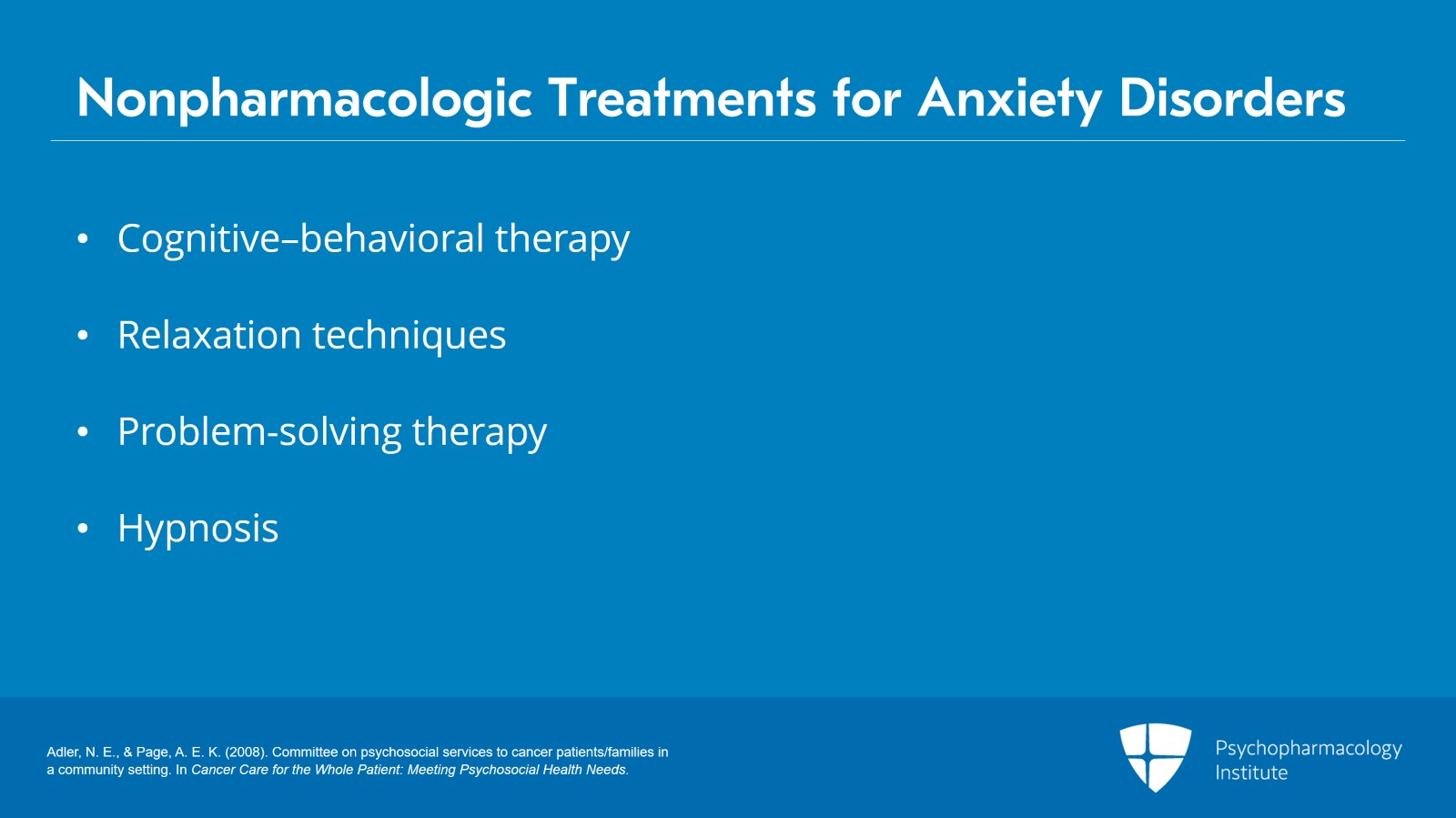
Similarly to the treatment of depressive disorders, anxiety disorders can be effectively treated with different forms of psychotherapy, particularly cognitive-behavioral therapy, but also by implementing and teaching patients techniques like relaxation or problem-solving therapy. For some conditions, hypnosis can be very helpful.
References:
  • Adler, N. E., & Page, A. E. K. (2008). Committee on psychosocial services to cancer patients/families in a community setting. In Cancer Care for the Whole Patient: Meeting Psychosocial Health Needs.2
Free Files
Success!
Check your inbox, we sent you all the materials there.
Slide 3 of 14

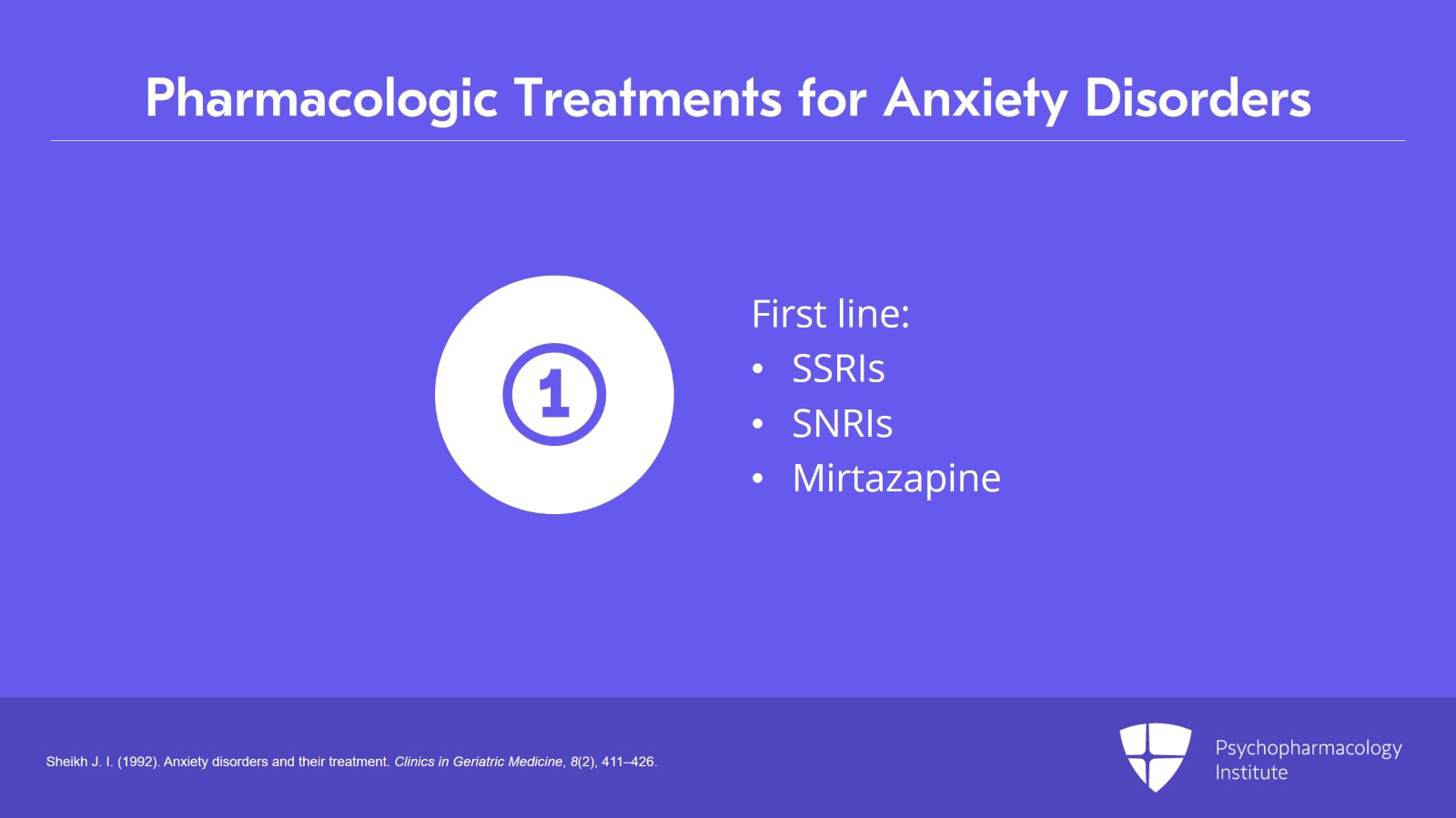
As far as pharmacological treatment, the first-line treatment of anxiety involves antidepressants, so SSRIs, SNRIs or mirtazapine.
References:
  • Sheikh J. I. (1992). Anxiety disorders and their treatment. Clinics in Geriatric Medicine, 8(2), 411–426.

Slide 4 of 14

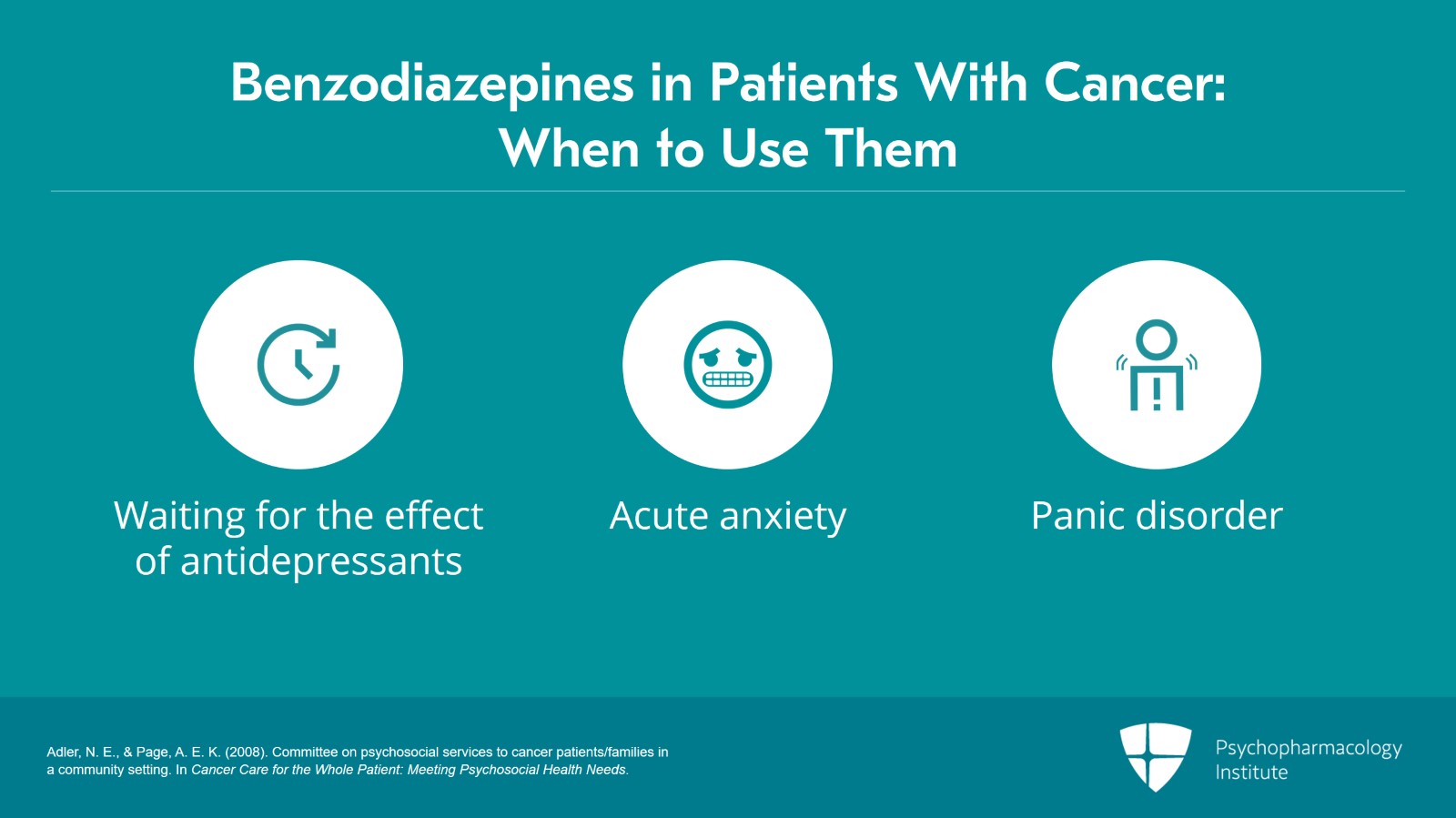
For some patients, concomitant use of benzodiazepines can be very helpful particularly initially while we're waiting for the effect of antidepressants. Benzodiazepines can be helpful for patients who have significant acute anxiety or a panic disorder. They are relatively widely used in cancer patients.
References:
  • Adler, N. E., & Page, A. E. K. (2008). Committee on psychosocial services to cancer patients/families in a community setting. In Cancer Care for the Whole Patient: Meeting Psychosocial Health Needs.
Free Files
Success!
Check your inbox, we sent you all the materials there.
Slide 5 of 14

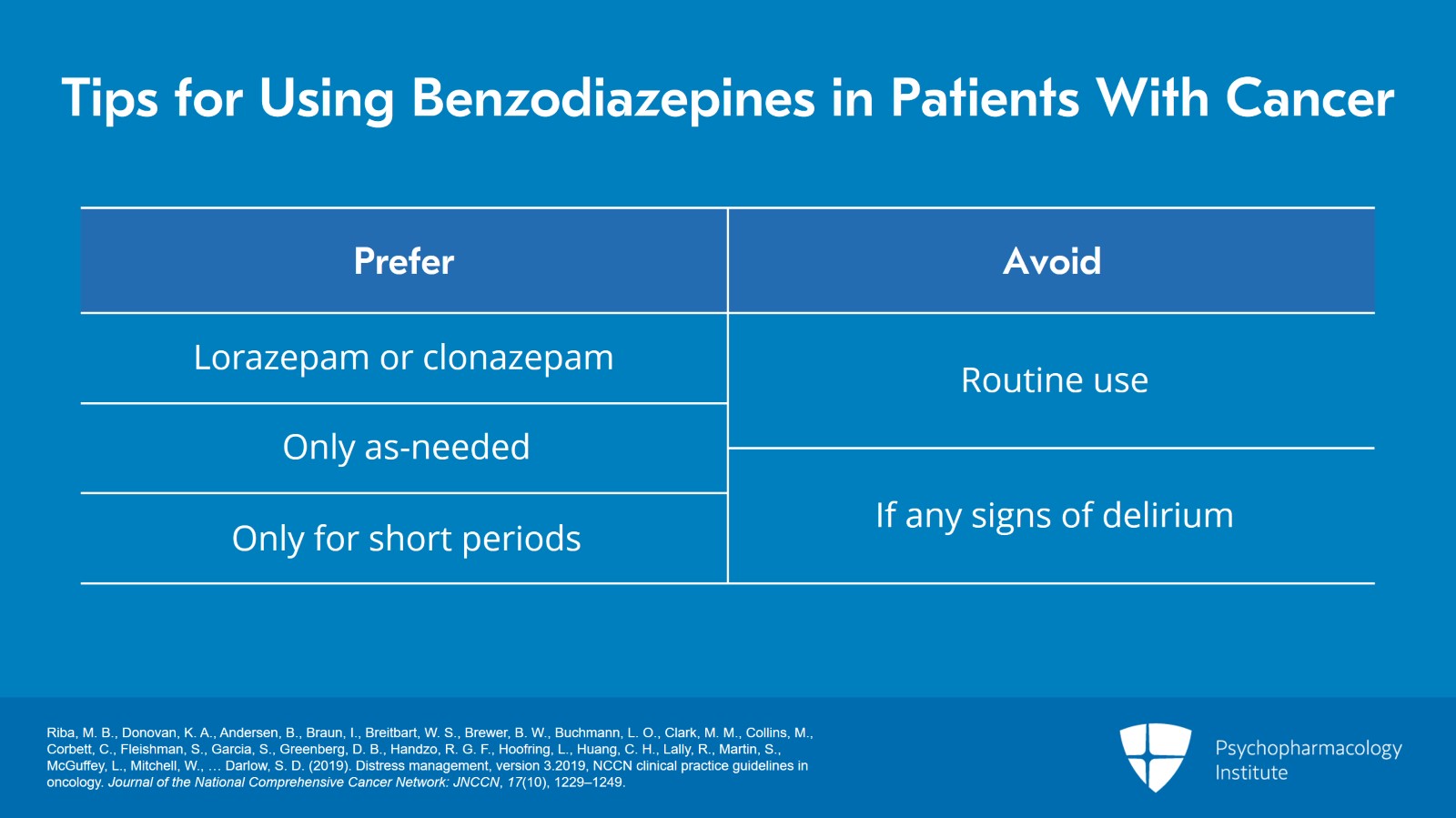
I, in my practice, tend to lean on lorazepam or clonazepam and I always prefer to use them only on an as-needed basis. Very rarely do I use any of these drugs routinely and if so, only for a short period of time and only for patients who are not exhibiting any signs of delirium.
References:
  • Riba, M. B., Donovan, K. A., Andersen, B., Braun, I., Breitbart, W. S., Brewer, B. W., Buchmann, L. O., Clark, M. M., Collins, M., Corbett, C., Fleishman, S., Garcia, S., Greenberg, D. B., Handzo, R. G. F., Hoofring, L., Huang, C. H., Lally, R., Martin, S., McGuffey, L., Mitchell, W., … Darlow, S. D. (2019). Distress management, version 3.2019, NCCN clinical practice guidelines in oncology. Journal of the National Comprehensive Cancer Network: JNCCN, 17(10), 1229–1249.

Slide 6 of 14

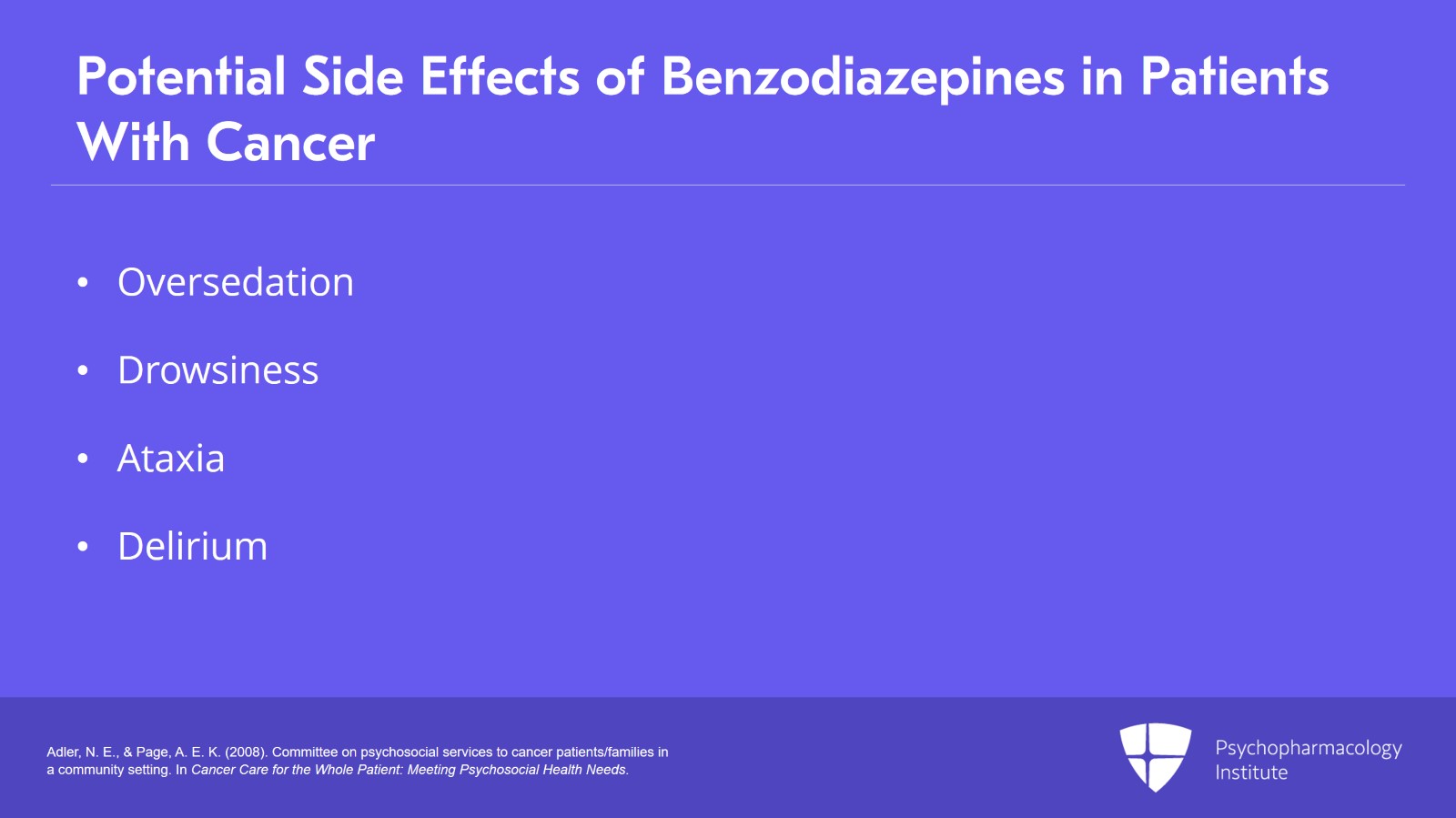
We need to keep in mind the potential side effects of benzodiazepines such as oversedation, drowsiness, ataxia, and precipitating or worsening of delirium.
References:
  • Adler, N. E., & Page, A. E. K. (2008). Committee on psychosocial services to cancer patients/families in a community setting. In Cancer Care for the Whole Patient: Meeting Psychosocial Health Needs.
Free Files
Success!
Check your inbox, we sent you all the materials there.
Slide 7 of 14

We want to be particularly careful about using benzodiazepines in patients who are elderly.
References:
  • Markota, M., Rummans, T. A., Bostwick, J. M., & Lapid, M. I. (2016). Benzodiazepine use in older adults: dangers, management, and alternative therapies. Mayo Clinic Proceedings, 91(11), 1632–1639.

Slide 8 of 14

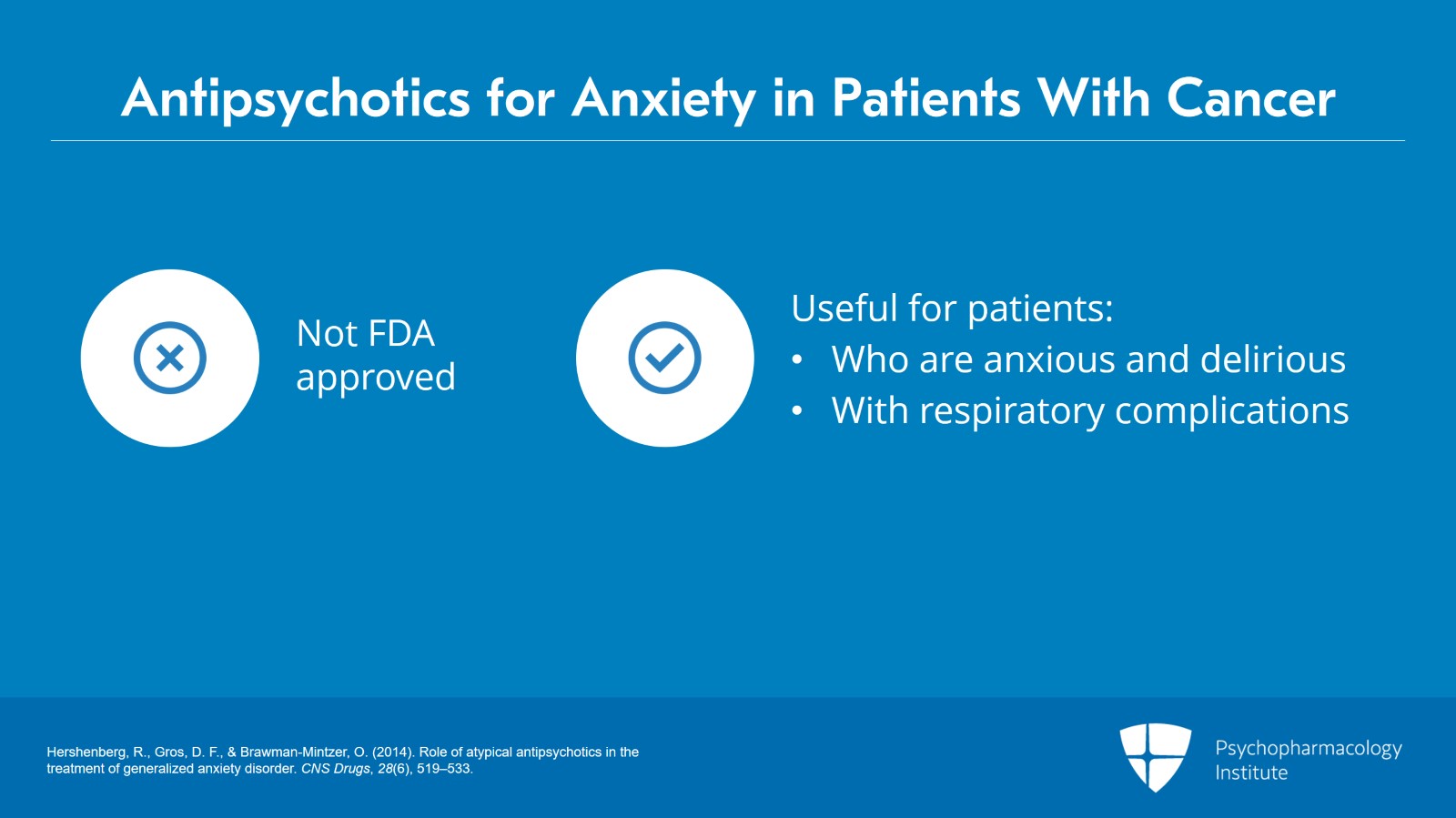
Antipsychotic medications such as quetiapine or olanzapine do not have an FDA approval for treatment of anxiety but at low doses they may be helpful in patients who are both anxious and confused, so likely delirious. They can also be useful in patients with respiratory complications as antipsychotics do not cause respiratory depression.
References:
  • Hershenberg, R., Gros, D. F., & Brawman-Mintzer, O. (2014). Role of atypical antipsychotics in the treatment of generalized anxiety disorder. CNS Drugs, 28(6), 519–533.
Free Files
Success!
Check your inbox, we sent you all the materials there.
Slide 9 of 14

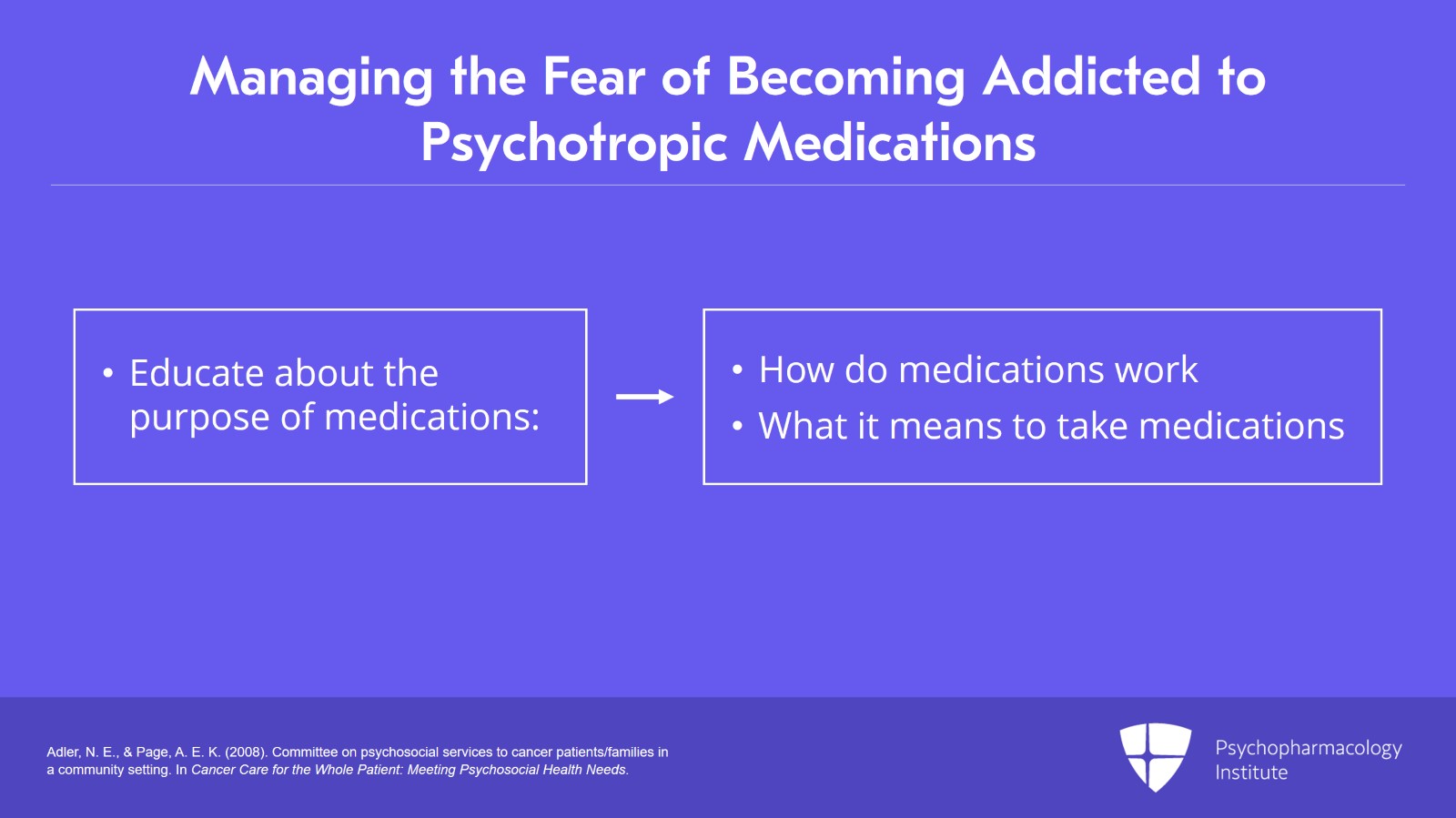
As I mentioned earlier, many of our patients struggle with fear of becoming addicted to psychiatric medications. And here, education about the purpose of medications, how they work, and what it means to take them, is very important.
References:
  • Adler, N. E., & Page, A. E. K. (2008). Committee on psychosocial services to cancer patients/families in a community setting. In Cancer Care for the Whole Patient: Meeting Psychosocial Health Needs.

Slide 10 of 14

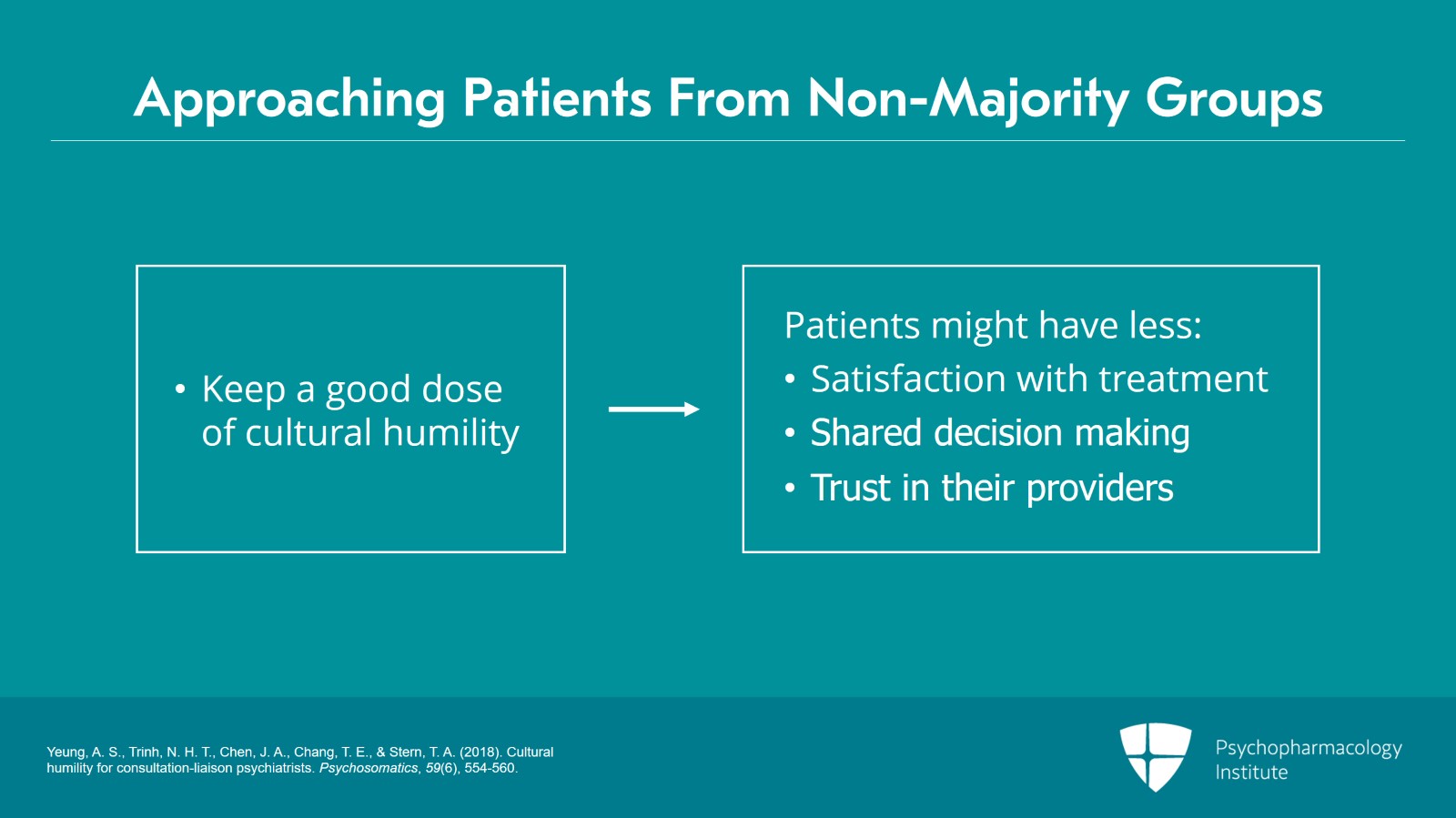
When approaching patients with depression, or anxiety, or both because many of our patients do present with both depression and anxiety, I would recommend that we approach each patient with a good dose of cultural humility. We know that patients who come from non-majority groups tend to report less satisfaction with treatment, less shared decision-making, and less overall trust of their providers. We know that disparity can be exacerbated by racial, ethnic, or linguistic discordance between the patient and the doctor and also by a patient's past experiences of discrimination.
References:
  • Yeung, A. S., Trinh, N. H. T., Chen, J. A., Chang, T. E., & Stern, T. A. (2018). Cultural humility for consultation-liaison psychiatrists. Psychosomatics, 59(6), 554-560.
Free Files
Success!
Check your inbox, we sent you all the materials there.
Slide 11 of 14

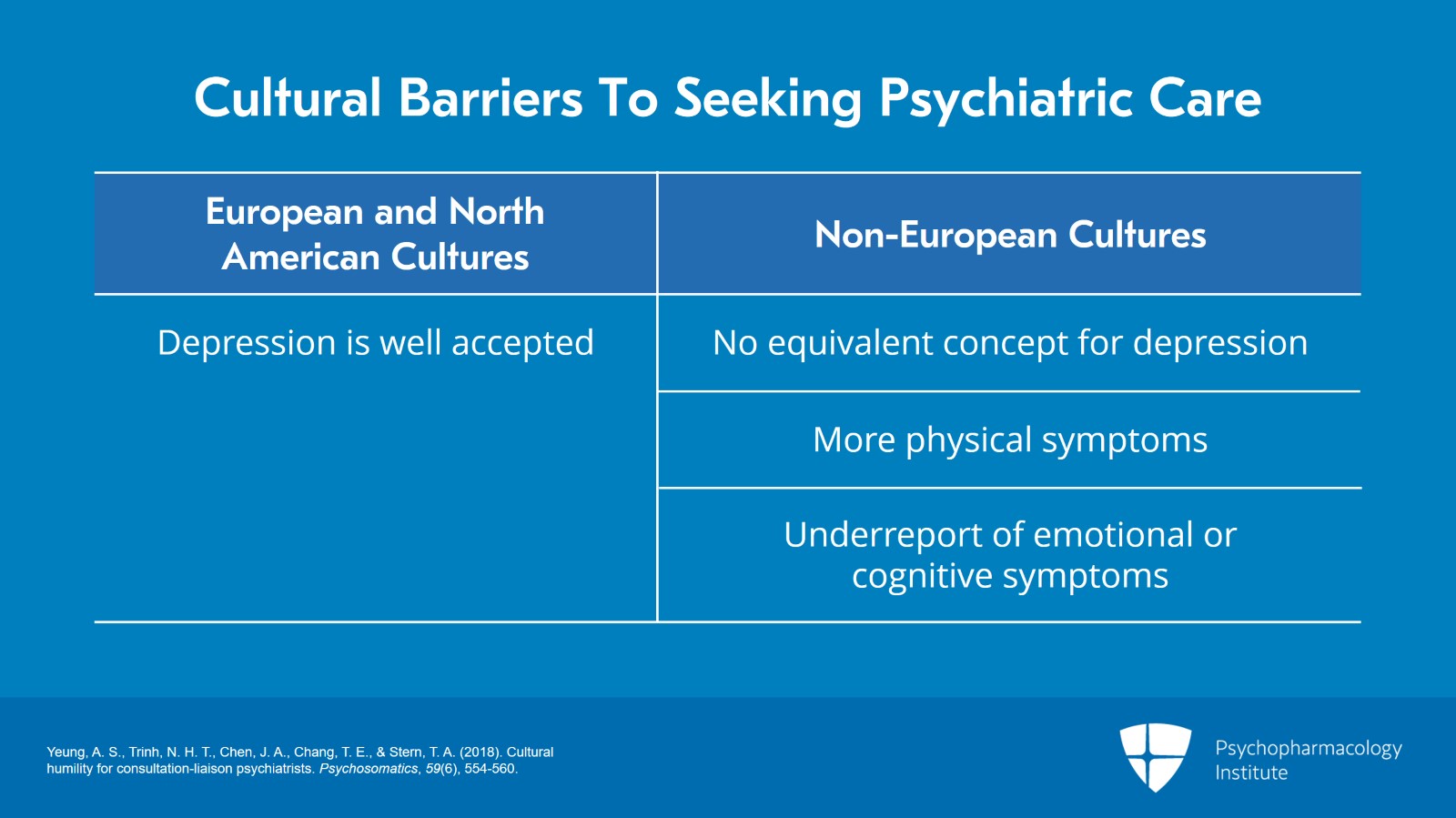
There is still a lot of stigma in seeking psychiatric care, particularly in certain groups. Although depression is a well-accepted concept in European and North American cultures, in many non-European cultures it's hard to find the equivalent concept. And in many cultures, it is actually part of a normative presentation that patients present more with physical symptoms. They may underreport emotional, cognitive symptoms of depression. And that may lead also to a lack of motivation to receive sort of a standard Western psychiatric treatment.
References:
  • Yeung, A. S., Trinh, N. H. T., Chen, J. A., Chang, T. E., & Stern, T. A. (2018). Cultural humility for consultation-liaison psychiatrists. Psychosomatics, 59(6), 554-560.

Slide 12 of 14

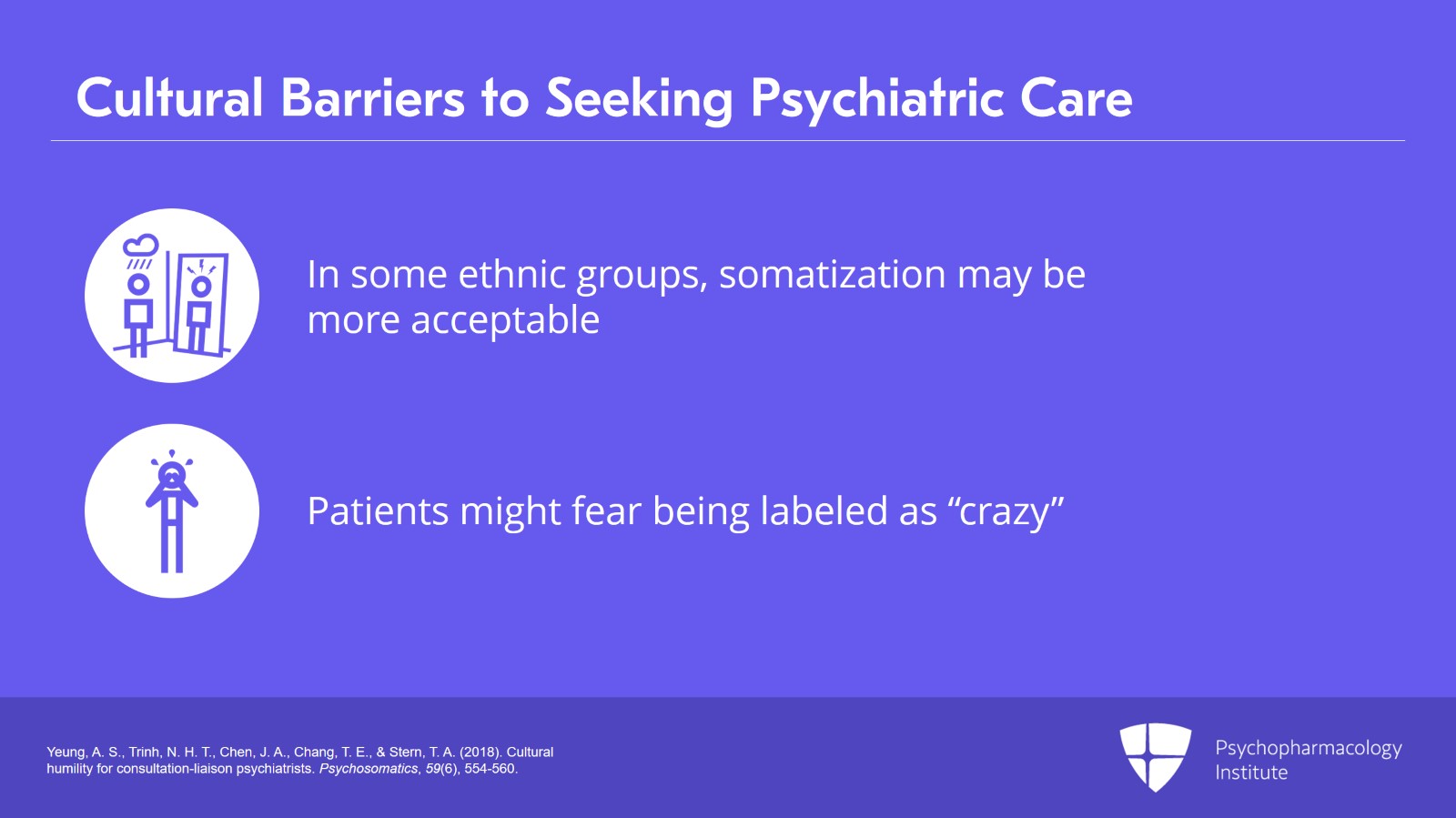
In some cultures, in some ethnic groups, somatization, so presentation with somatic symptoms, can actually be more acceptable. Many of our patients who come to us, or who are meeting with their oncologist who may suggest to go and see a psychiatrist, may fear that if they do, they're going to be labeled "crazy," that there is something really wrong with them. And we want to address that and we want to reassure them that we want to help them and our goal is to decrease their suffering.
References:
  • Yeung, A. S., Trinh, N. H. T., Chen, J. A., Chang, T. E., & Stern, T. A. (2018). Cultural humility for consultation-liaison psychiatrists. Psychosomatics, 59(6), 554-560.
Free Files
Success!
Check your inbox, we sent you all the materials there.
Slide 13 of 14

In conclusion: Primary anxiety disorders, for example, generalized anxiety disorder or panic disorder are usually treated with antidepressants. Benzodiazepines should ideally be used only for short term and on an as-needed basis. And other modalities of treatment such as cognitive behavioral therapy or hypnosis can also be very effective interventions for anxiety.

Slide 14 of 14

Free Files
Success!
Check your inbox, we sent you all the materials there.
Learning Objectives:

After completing this activity, the learner will be able to:

  • Tactfully approach patients with cancer who require psychiatric expertise.
  • Make a correct differential diagnosis between psychological, psychiatric, and medical etiologies.
  • Confidently recommend the best approach or treatment for each case.

Original Release Date: May 1, 2023

Review and Re-release Date: March 1, 2024

Expiration Date: May 1, 2026

Expert: Jaroslava Salman, M.D.

Medical Editor: Horia Batranu, M.D.

Relevant Financial Disclosures: 

None of the faculty, planners, and reviewers for this educational activity have relevant financial relationships to disclose during the last 24 months with ineligible companies whose primary business is producing, marketing, selling, re-selling, or distributing healthcare products used by or on patients.

Contact Information: For questions regarding the content or access to this activity, contact us at support@psychopharmacologyinstitute.com

Instructions for Participation and Credit:

Participants must complete the activity online during the valid credit period that is noted above.

Follow these steps to earn CME credit:

  1. View the required educational content provided on this course page.

  2. Complete the Post Activity Evaluation for providing the necessary feedback for continuing accreditation purposes and for the development of future activities. NOTE: Completing the Post Activity Evaluation after the quiz is required to receive the earned credit.

  3. Download your certificate.

Accreditation Statement

This activity has been planned and implemented in accordance with the accreditation requirements and policies of the Accreditation Council for Continuing Medical Education through the joint providership of Medical Academy LLC and the Psychopharmacology Institute. Medical Academy is accredited by the ACCME to provide continuing medical education for physicians.

Credit Designation Statement

Medical Academy designates this enduring activity for a maximum of 1.25 AMA PRA Category 1 credit(s)™. Physicians should claim only the credit commensurate with the extent of their participation in the activity.

Free Files
Success!
Check your inbox, we sent you all the materials there.
Continue in the website
Instant access modal

Become a Bronze, Silver, Gold, Bronze extended, Silver extended or Gold extended Member.

2025–26 Psychopharmacology CME Program

Unlock up to 155 CME Credits, including 40 SA CME Credits.