Slides and Transcript
Slide 1 of 18
Now, we're going to move on to talking about some other medications that might have benefit for cocaine use disorder.
Slide 2 of 18
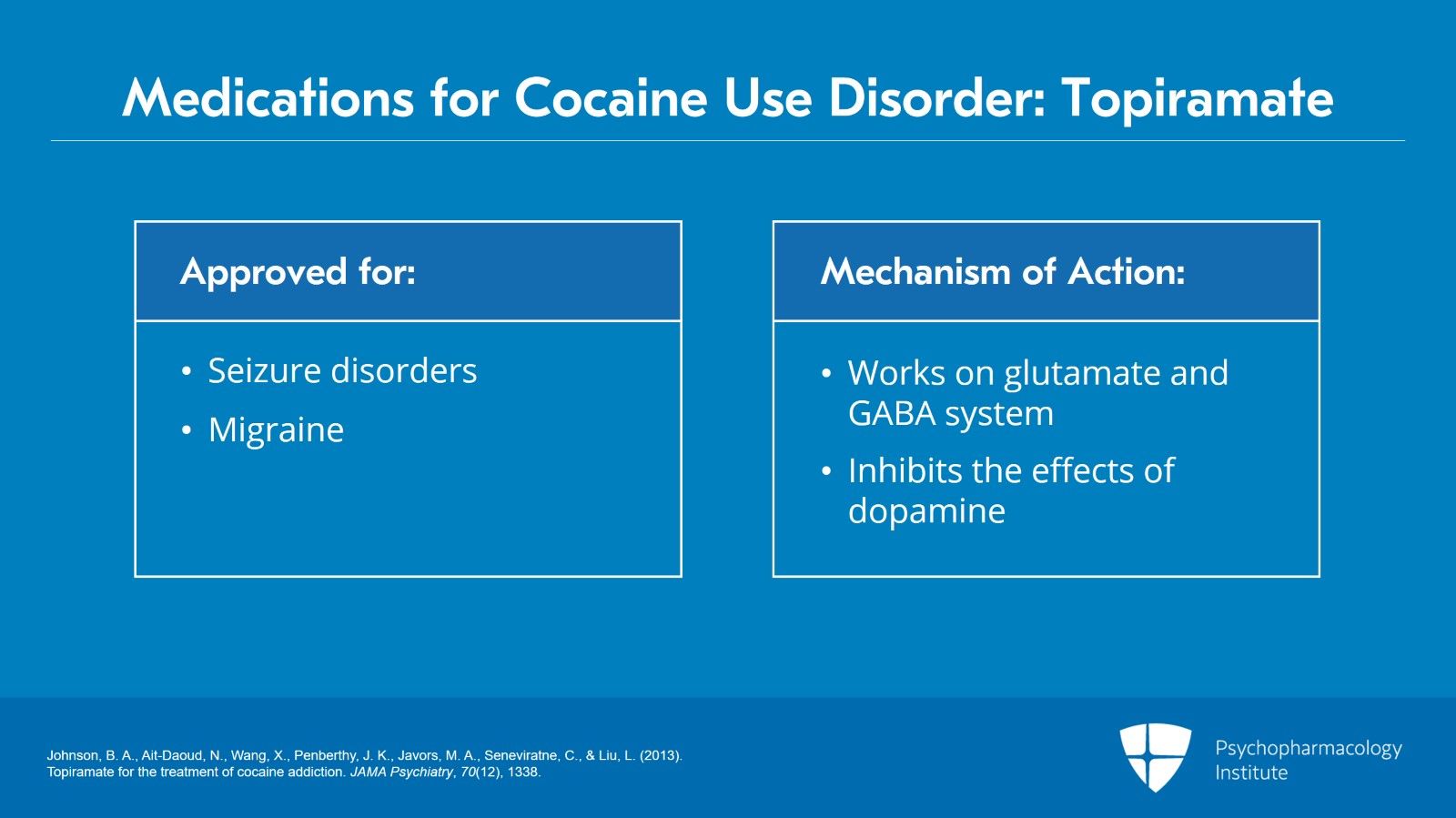
The first one is topiramate. So topiramate is approved for seizure disorders and also for migraine headaches, and it really has a different mechanism of action than most of the medications we've talked about. Topiramate works on the glutamate system and the GABA system. We believe that it may have some effects for cocaine use disorder by inhibiting the effects of dopamine when people do use stimulants so that they don't get the effect that they're looking for and thereby stop using stimulants.
References:
- Johnson, B. A., Ait-Daoud, N., Wang, X., Penberthy, J. K., Javors, M. A., Seneviratne, C., & Liu, L. (2013). Topiramate for the treatment of cocaine addiction. JAMA Psychiatry, 70(12), 1338.
Free Files
Download PDF and other files
Success!
Check your inbox, we sent you all the materials there.
Slide 3 of 18
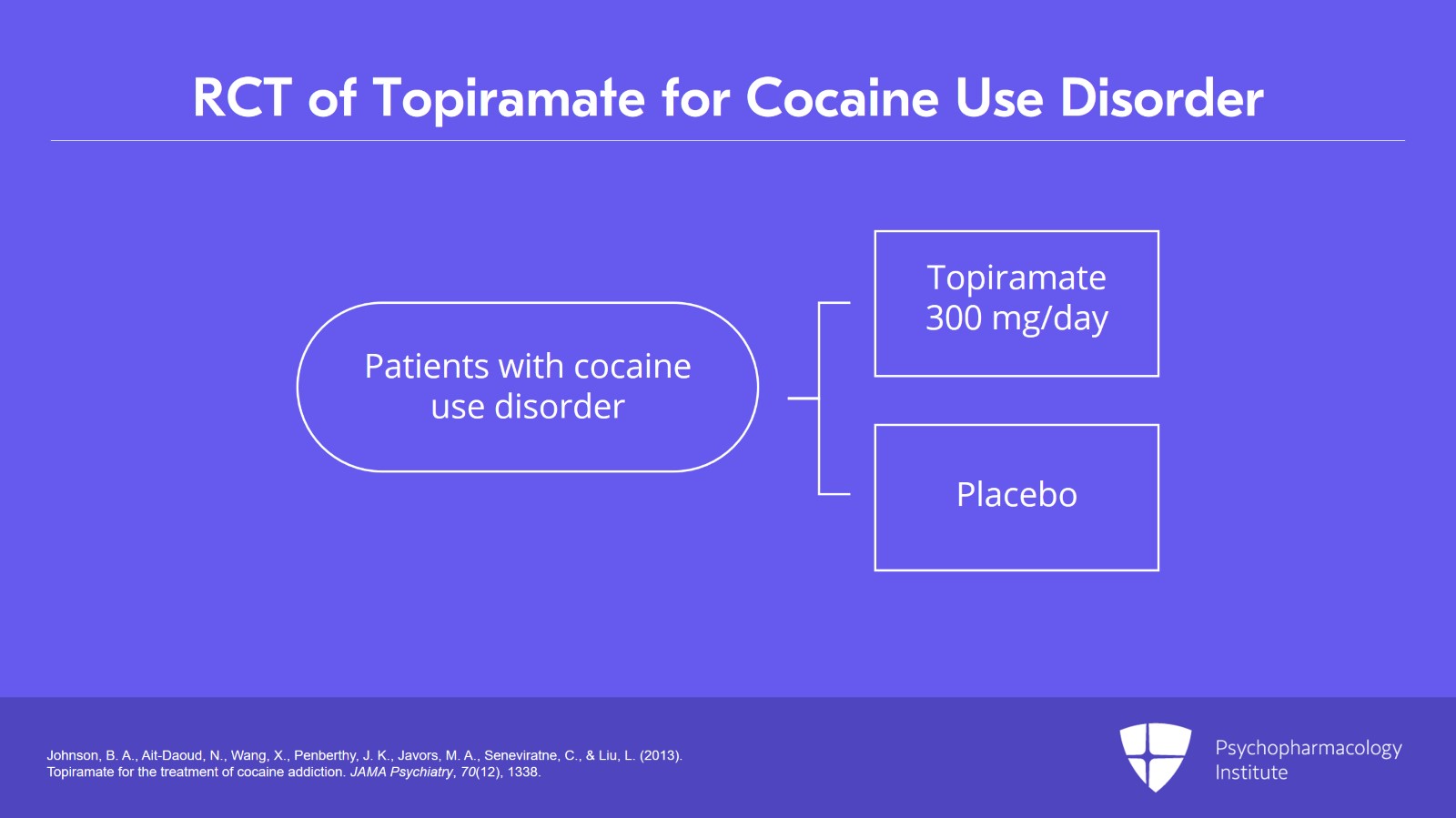
This study was another randomized, double-blind, controlled trial for cocaine use disorder. They got placebo versus topiramate. The target dose was 300 mg per day. Probably, the average dose ended up being 200 mg per day because many people cannot tolerate the 300 mg.
References:
- Johnson, B. A., Ait-Daoud, N., Wang, X., Penberthy, J. K., Javors, M. A., Seneviratne, C., & Liu, L. (2013). Topiramate for the treatment of cocaine addiction. JAMA Psychiatry, 70(12), 1338.
Slide 4 of 18
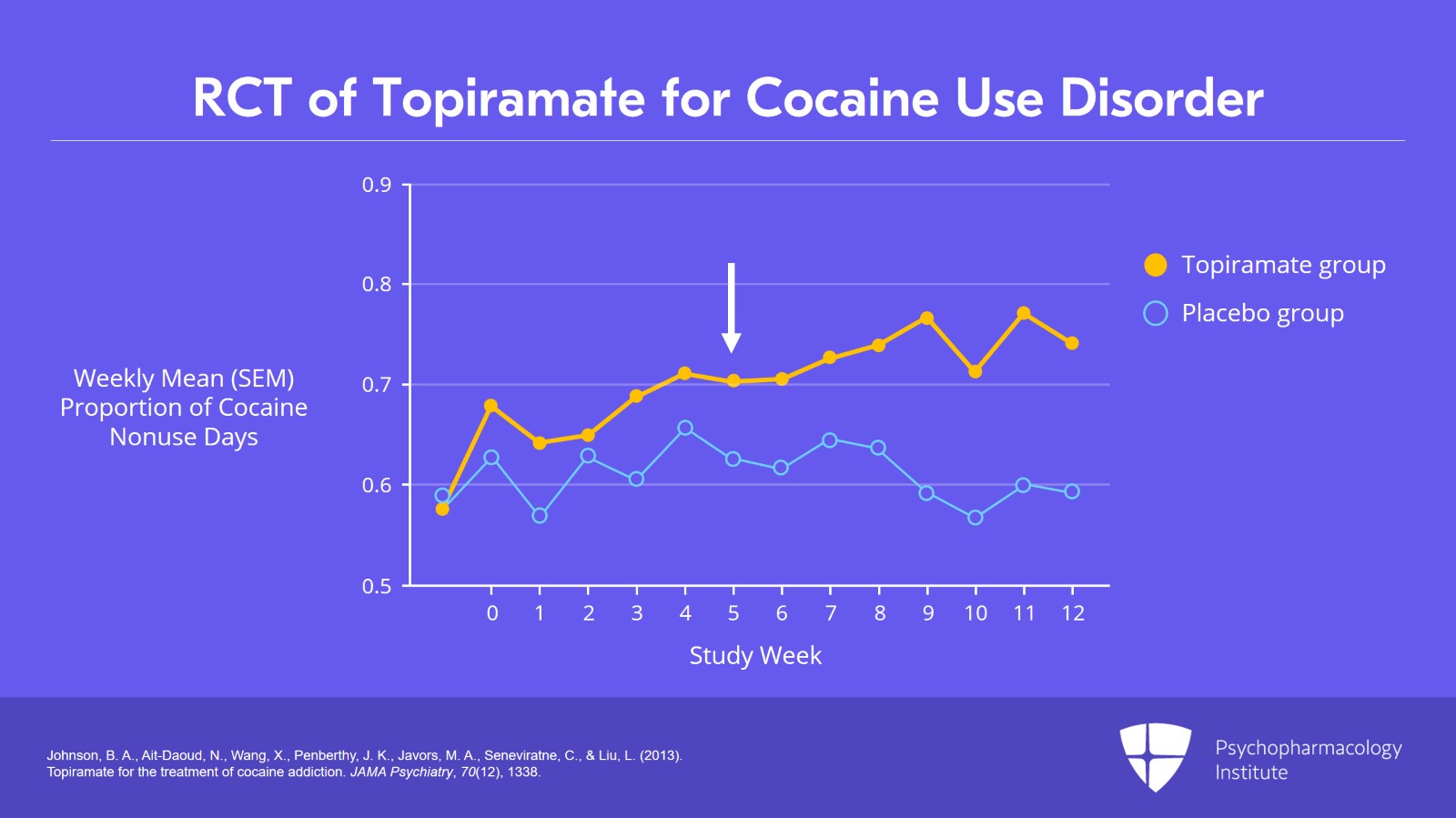
We're looking at the weekly mean proportion of cocaine non-use days. After about week 5, we see the group start to separate with the topiramate group represented in the filled circles demonstrating more days of cocaine non-use than the placebo group, and the separation even increases over time.
References:
- Johnson, B. A., Ait-Daoud, N., Wang, X., Penberthy, J. K., Javors, M. A., Seneviratne, C., & Liu, L. (2013). Topiramate for the treatment of cocaine addiction. JAMA Psychiatry, 70(12), 1338.
Free Files
Download PDF and other files
Success!
Check your inbox, we sent you all the materials there.
Slide 5 of 18
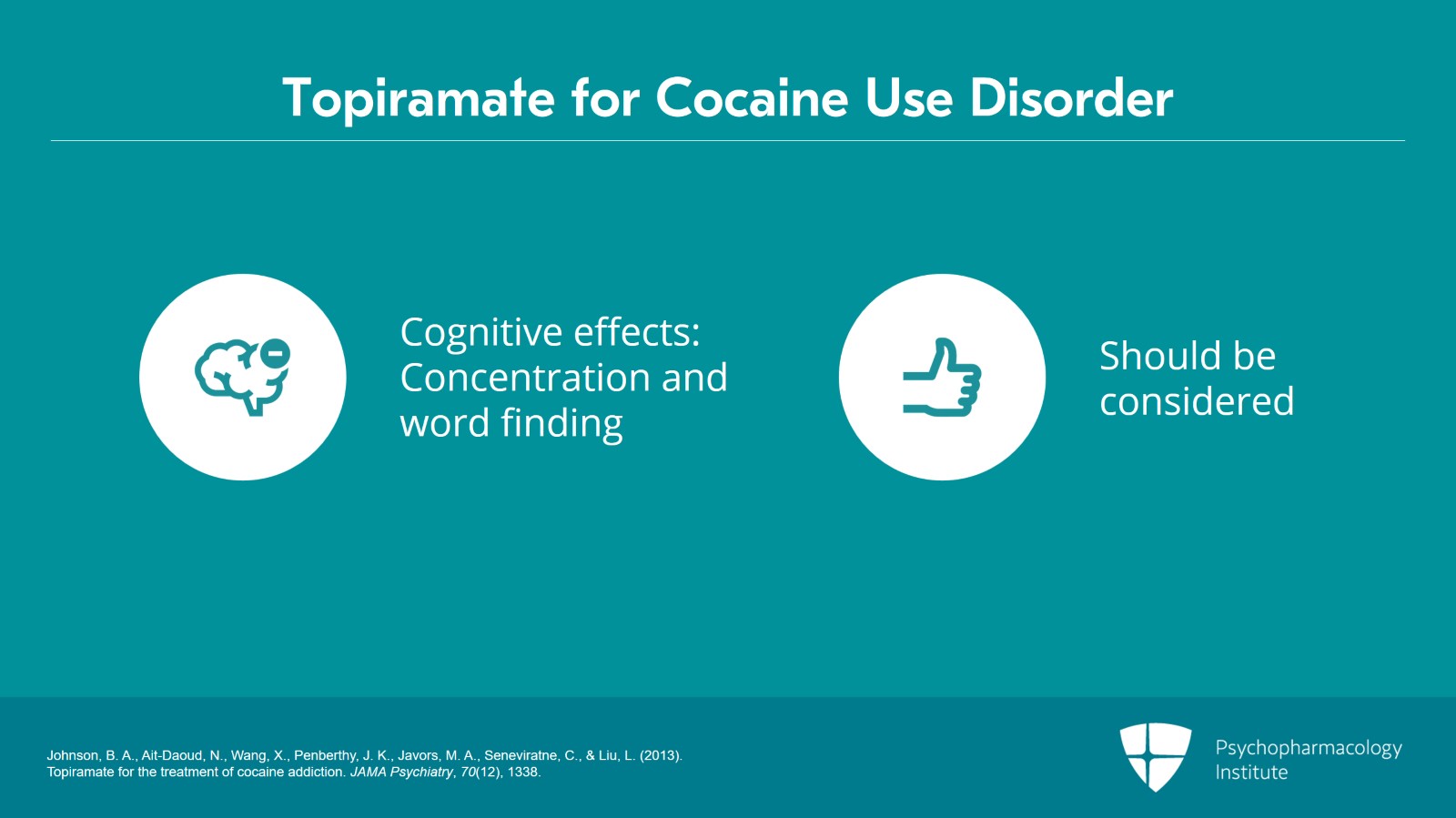
Now, topiramate does have some cognitive effects, primarily effects on concentration and word finding. So that needs to be taken into consideration but the data looked really good for topiramate and so that's a medication to consider when treating cocaine use disorder.
References:
- Johnson, B. A., Ait-Daoud, N., Wang, X., Penberthy, J. K., Javors, M. A., Seneviratne, C., & Liu, L. (2013). Topiramate for the treatment of cocaine addiction. JAMA Psychiatry, 70(12), 1338.
Slide 6 of 18
In this study the participants had both cocaine and alcohol use disorders, and they got placebo versus topiramate. Again, the goal was 300 mg per day.
References:
- Kampman, K. M., Pettinati, H. M., Lynch, K. G., Spratt, K., Wierzbicki, M. R., & O’Brien, C. P. (2013). A double-blind, placebo-controlled trial of topiramate for the treatment of comorbid cocaine and alcohol dependence. Drug and Alcohol Dependence, 133(1), 94-99.
Free Files
Download PDF and other files
Success!
Check your inbox, we sent you all the materials there.
Slide 7 of 18
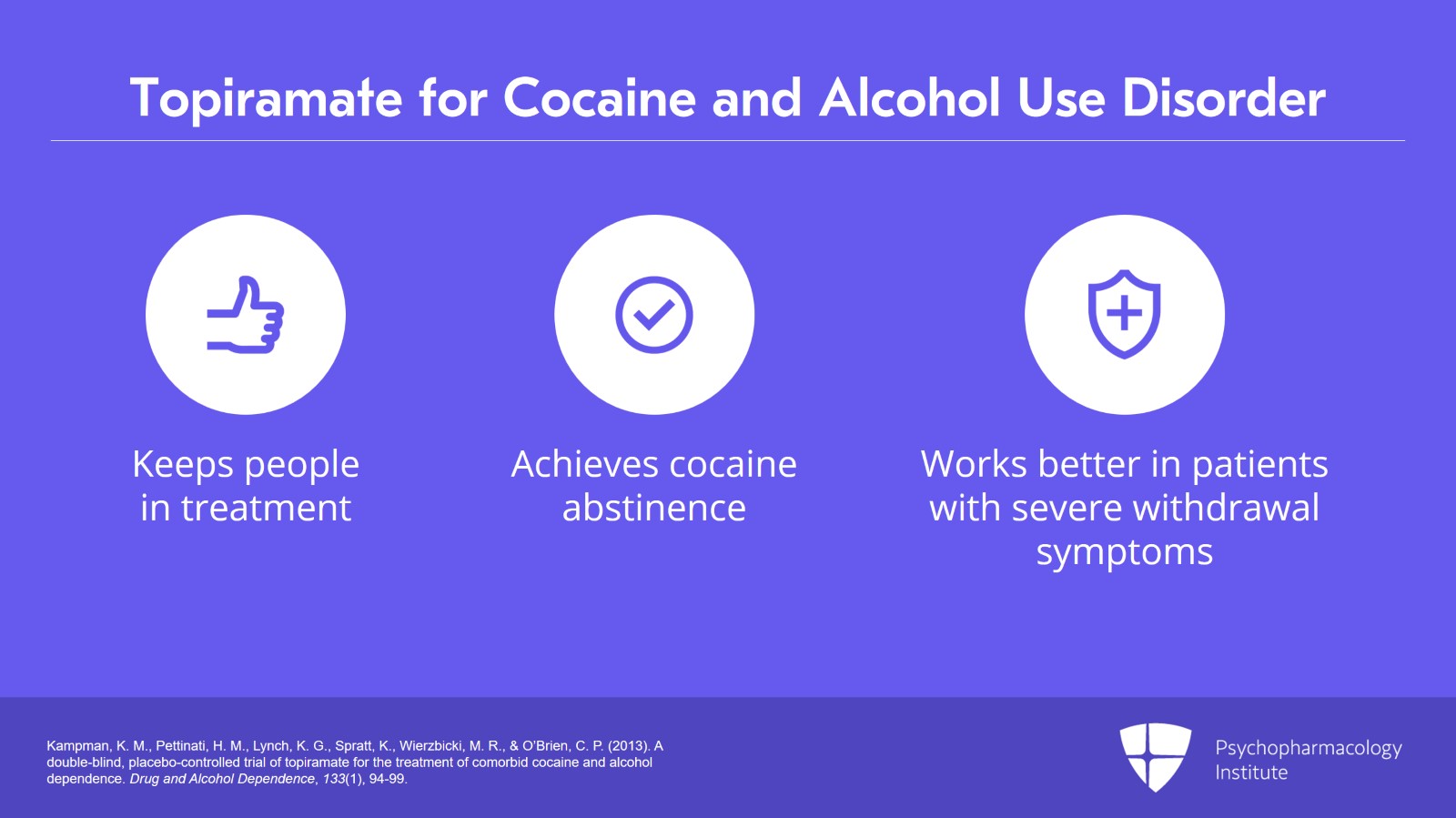
Topiramate was better in keeping people in treatment and getting cocaine abstinence in the last three weeks. And it worked better in patients who had a high severity of cocaine withdrawal symptoms. So again, not a perfect medication but topiramate should be given some consideration for people with co-occurring cocaine and alcohol use disorders.
References:
- Kampman, K. M., Pettinati, H. M., Lynch, K. G., Spratt, K., Wierzbicki, M. R., & O’Brien, C. P. (2013). A double-blind, placebo-controlled trial of topiramate for the treatment of comorbid cocaine and alcohol dependence. Drug and Alcohol Dependence, 133(1), 94-99.
Slide 8 of 18
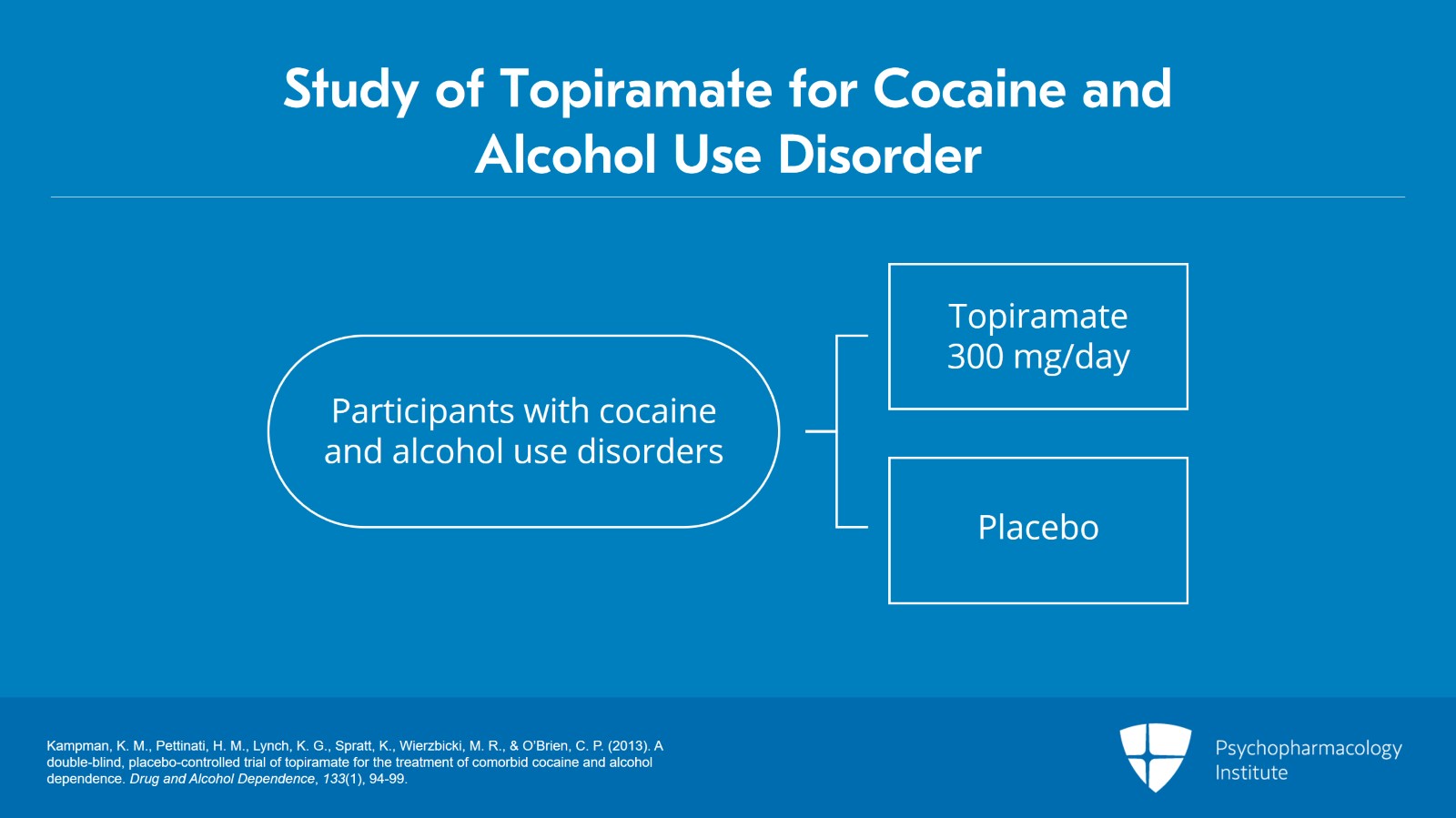
Now, we're going to get back into the notion of stimulant replacement. And in this study, they looked at methylphenidate, in this case for cocaine use disorder co-occurring with ADHD. The methylphenidate dose was up to 60 mg per day.
References:
- Levin, F. R., Evans, S. M., Brooks, D. J., & Garawi, F. (2007). Treatment of cocaine dependent treatment seekers with adult ADHD: Double-blind comparison of methylphenidate and placebo. Drug and Alcohol Dependence, 87(1), 20-29.
Free Files
Download PDF and other files
Success!
Check your inbox, we sent you all the materials there.
Slide 9 of 18
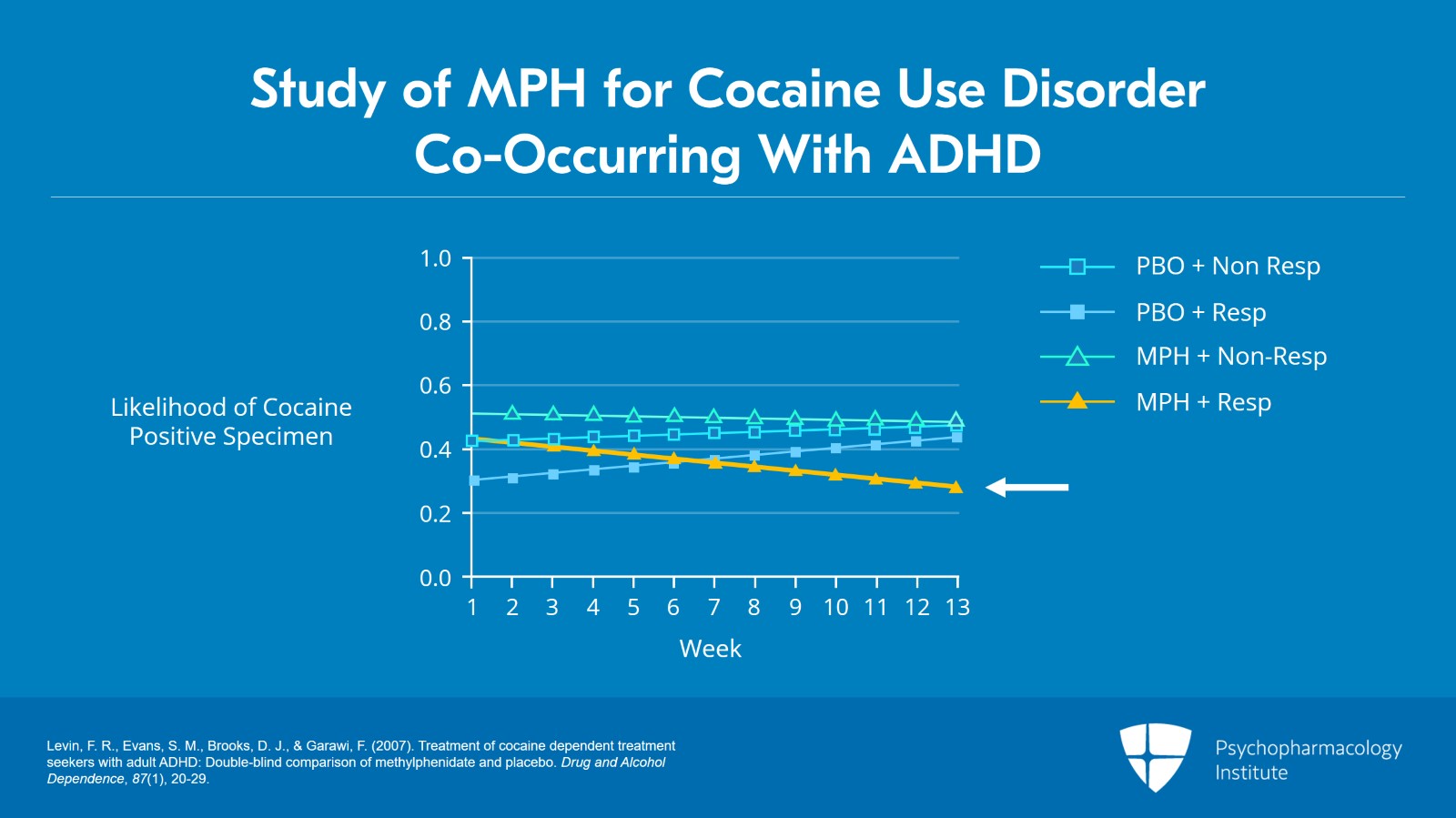
And some very interesting findings here. They divided them into four groups. They were placebo and methylphenidate groups and there were those whose ADHD symptoms did respond to the methylphenidate and those who didn’t. We're looking at likelihood of cocaine-positive urine specimen. You can see there are three groups that really don't change much over time or, if anything, they get worse during the course of the study. But one group is getting better and that was the group that had an improvement in their ADHD symptoms due to the methylphenidate.
References:
- Levin, F. R., Evans, S. M., Brooks, D. J., & Garawi, F. (2007). Treatment of cocaine dependent treatment seekers with adult ADHD: Double-blind comparison of methylphenidate and placebo. Drug and Alcohol Dependence, 87(1), 20-29.
Slide 10 of 18
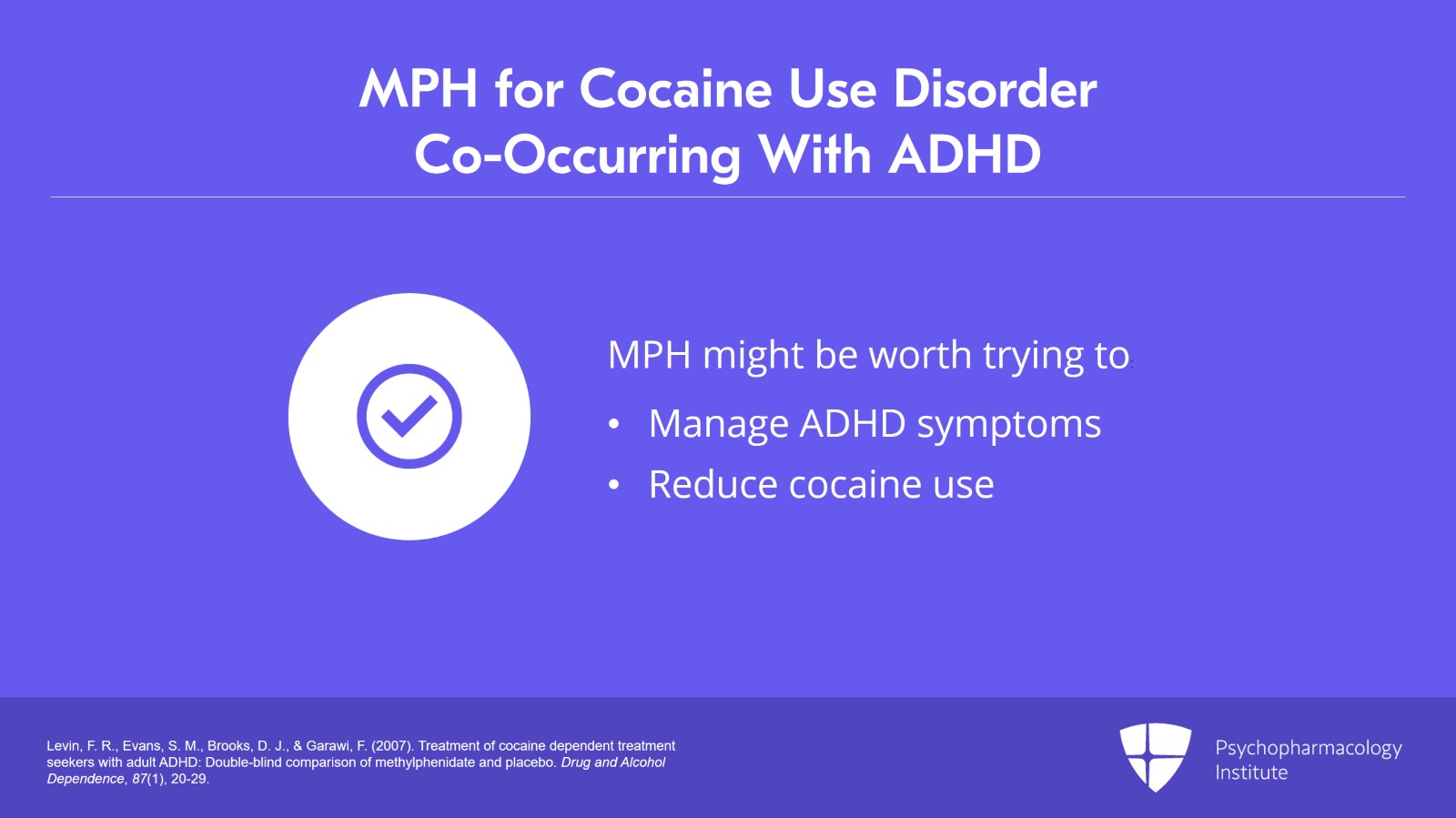
So, what this does suggest is for patients with cocaine use disorder who have clear ADHD, methylphenidate might be worth trying certainly to manage their ADHD symptoms at least and then if they get a response to that in terms of their ADHD they are likely to also reduce their cocaine use.
References:
- Levin, F. R., Evans, S. M., Brooks, D. J., & Garawi, F. (2007). Treatment of cocaine dependent treatment seekers with adult ADHD: Double-blind comparison of methylphenidate and placebo. Drug and Alcohol Dependence, 87(1), 20-29.
Free Files
Download PDF and other files
Success!
Check your inbox, we sent you all the materials there.
Slide 11 of 18
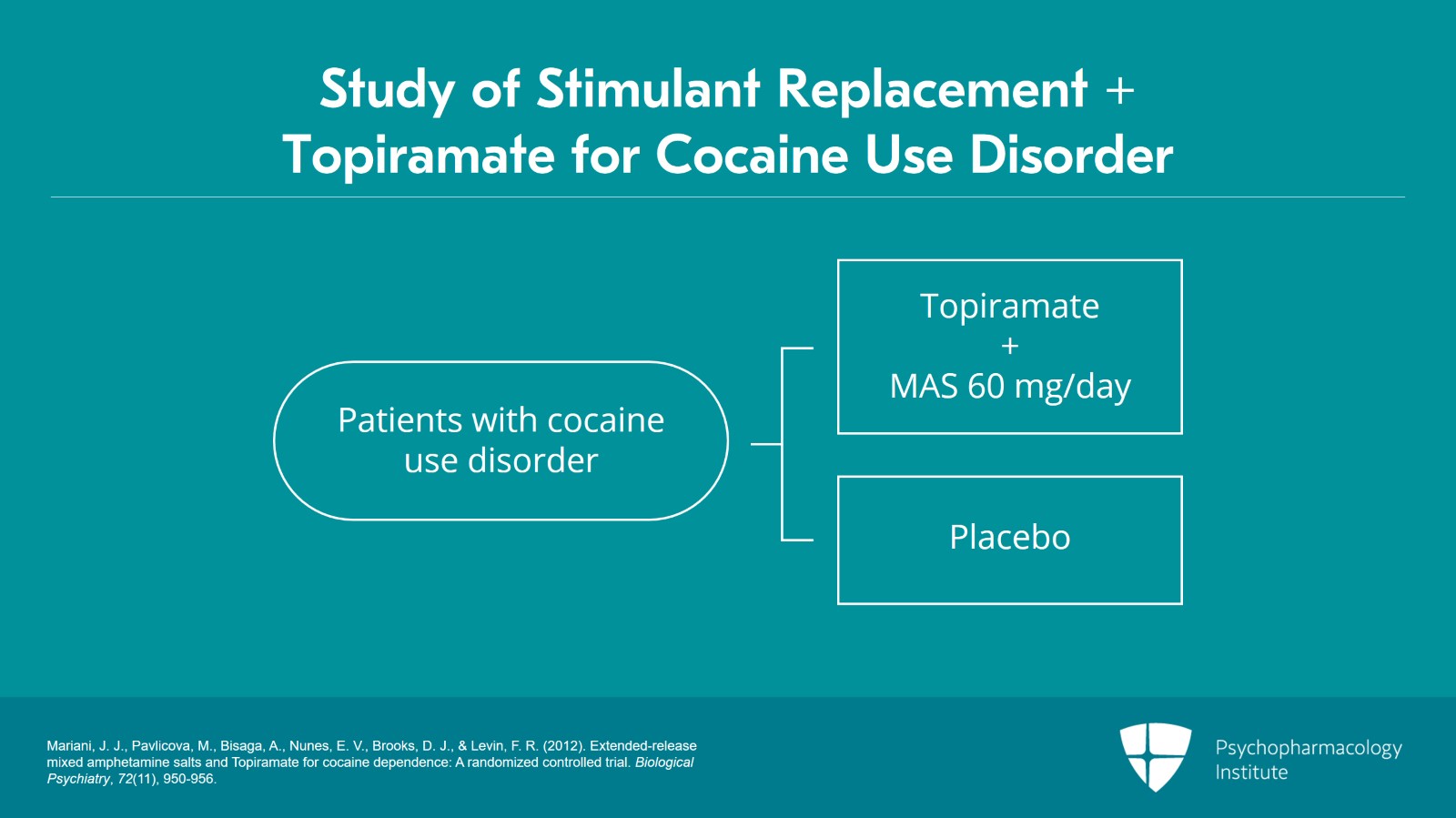
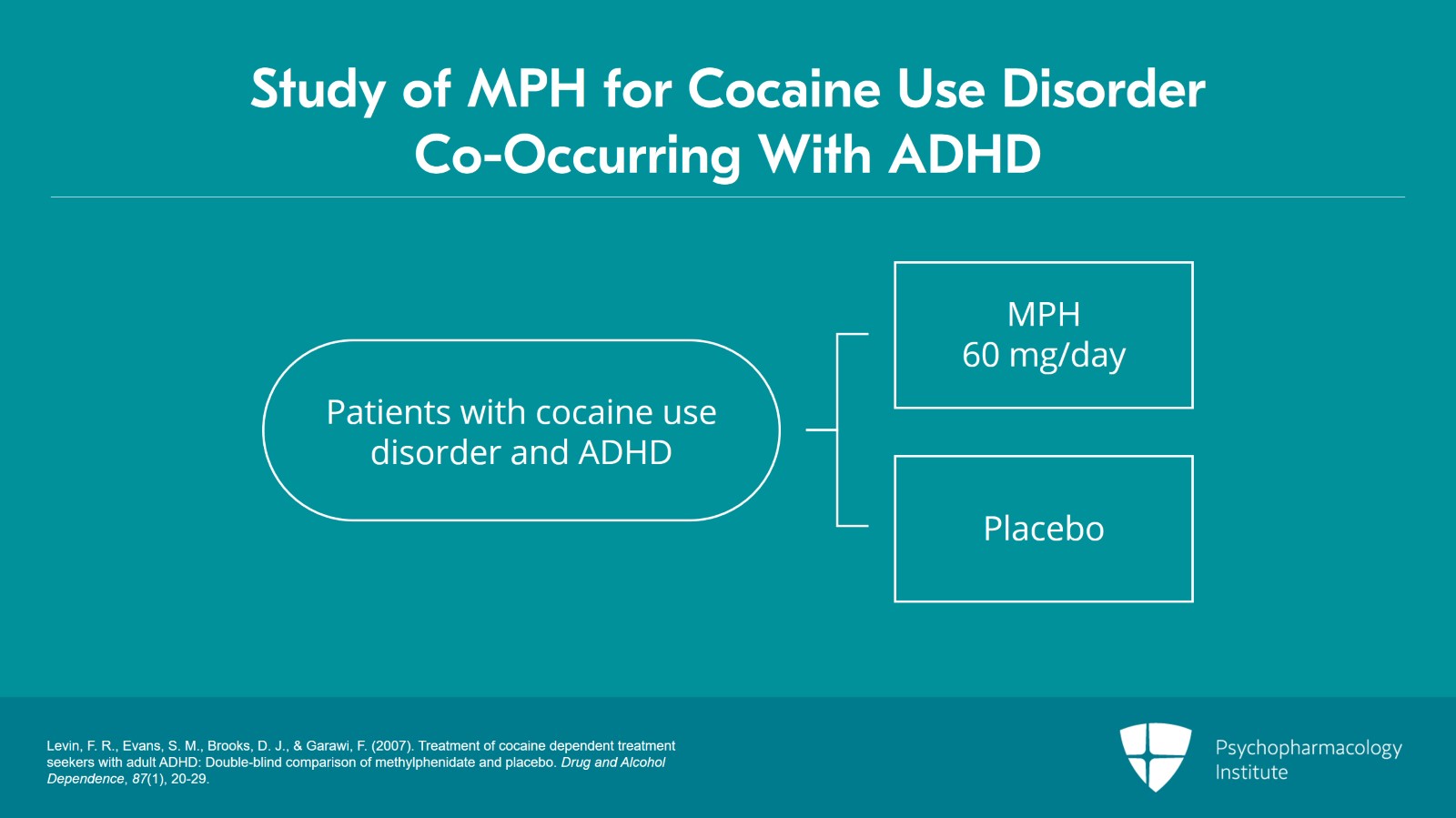
We've seen previously that combining two medications with different mechanisms of action might have some efficacy. In this study, they looked at also a strategy for stimulant replacement but combined that with topiramate. In this study for cocaine use disorder they're using mixed amphetamine salts up to 60 mg titrated up over the first two weeks comparing the combination to placebo.
References:
- Mariani, J. J., Pavlicova, M., Bisaga, A., Nunes, E. V., Brooks, D. J., & Levin, F. R. (2012). Extended-release mixed amphetamine salts and Topiramate for cocaine dependence: A randomized controlled trial. Biological Psychiatry, 72(11), 950-956.
Slide 12 of 18
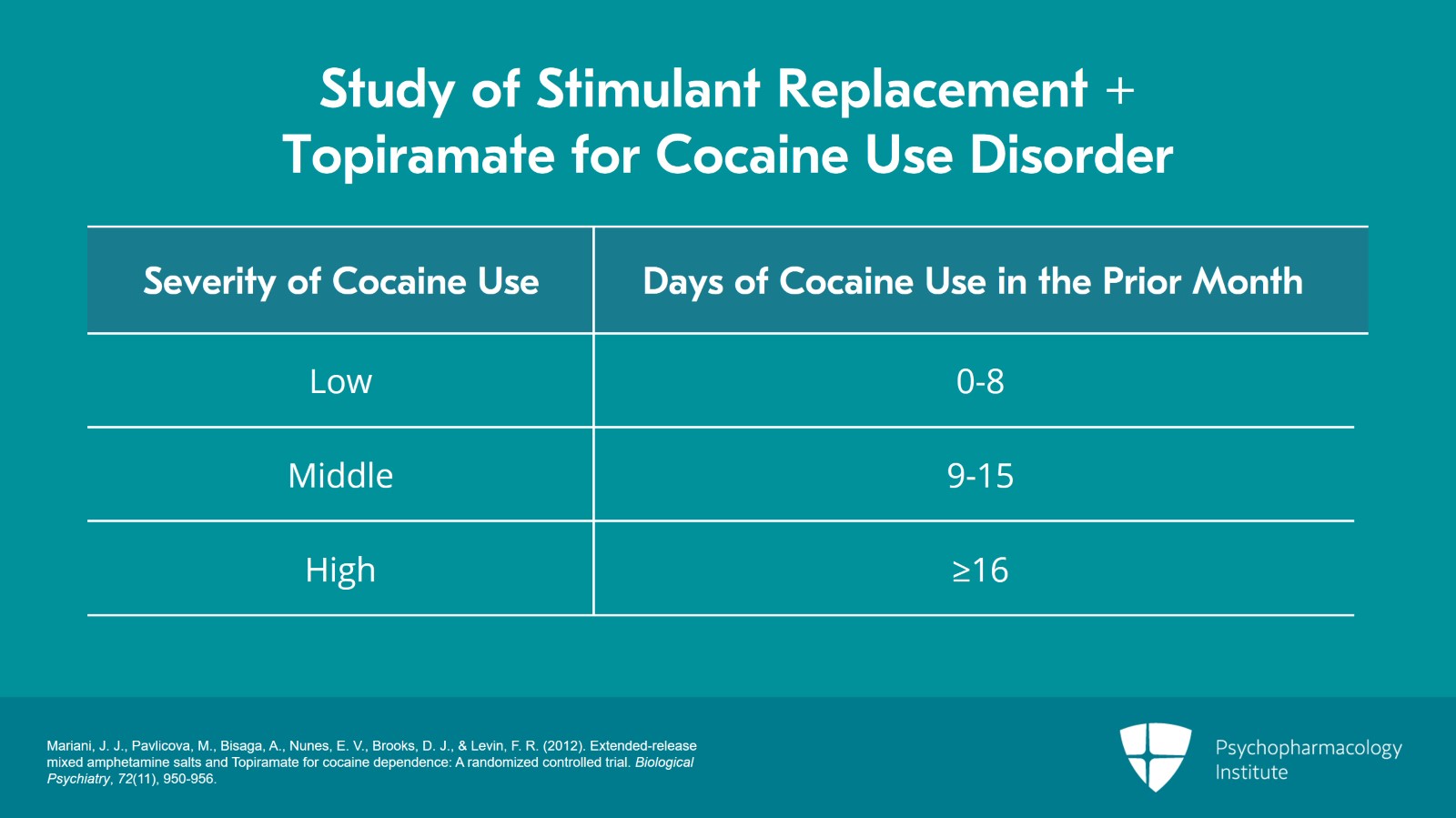
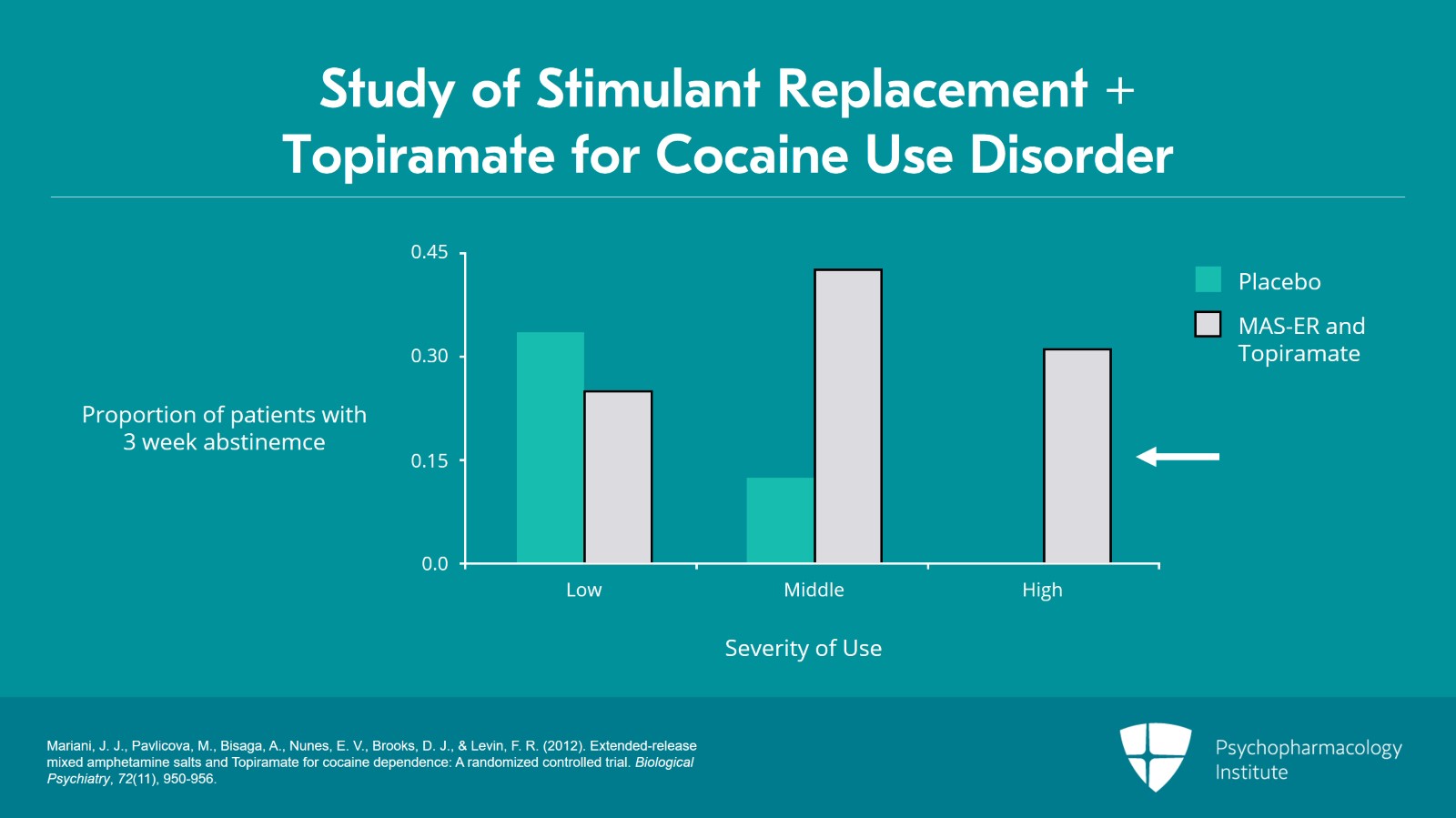
And the way they presented the data was looking at the baseline severity of cocaine use disorder. So they have three groups. They have the low severity who had zero to eight days of cocaine use in the prior month, the middle group had nine to 15 days, and the higher group had 16 or more days in the prior month
References:
- Mariani, J. J., Pavlicova, M., Bisaga, A., Nunes, E. V., Brooks, D. J., & Levin, F. R. (2012). Extended-release mixed amphetamine salts and Topiramate for cocaine dependence: A randomized controlled trial. Biological Psychiatry, 72(11), 950-956.
Free Files
Download PDF and other files
Success!
Check your inbox, we sent you all the materials there.
Slide 13 of 18
So, what you can see is this combination and we're looking at a proportion of patients with three weeks of cocaine abstinence. Among the lower severity group, there really wasn't much difference between placebo and active medication. But as we get into the higher severity groups, we show a real difference with the mixed amphetamine salts plus topiramate, represented by the light gray bars, really outperformed placebo.
References:
- Mariani, J. J., Pavlicova, M., Bisaga, A., Nunes, E. V., Brooks, D. J., & Levin, F. R. (2012). Extended-release mixed amphetamine salts and Topiramate for cocaine dependence: A randomized controlled trial. Biological Psychiatry, 72(11), 950-956.
Slide 14 of 18
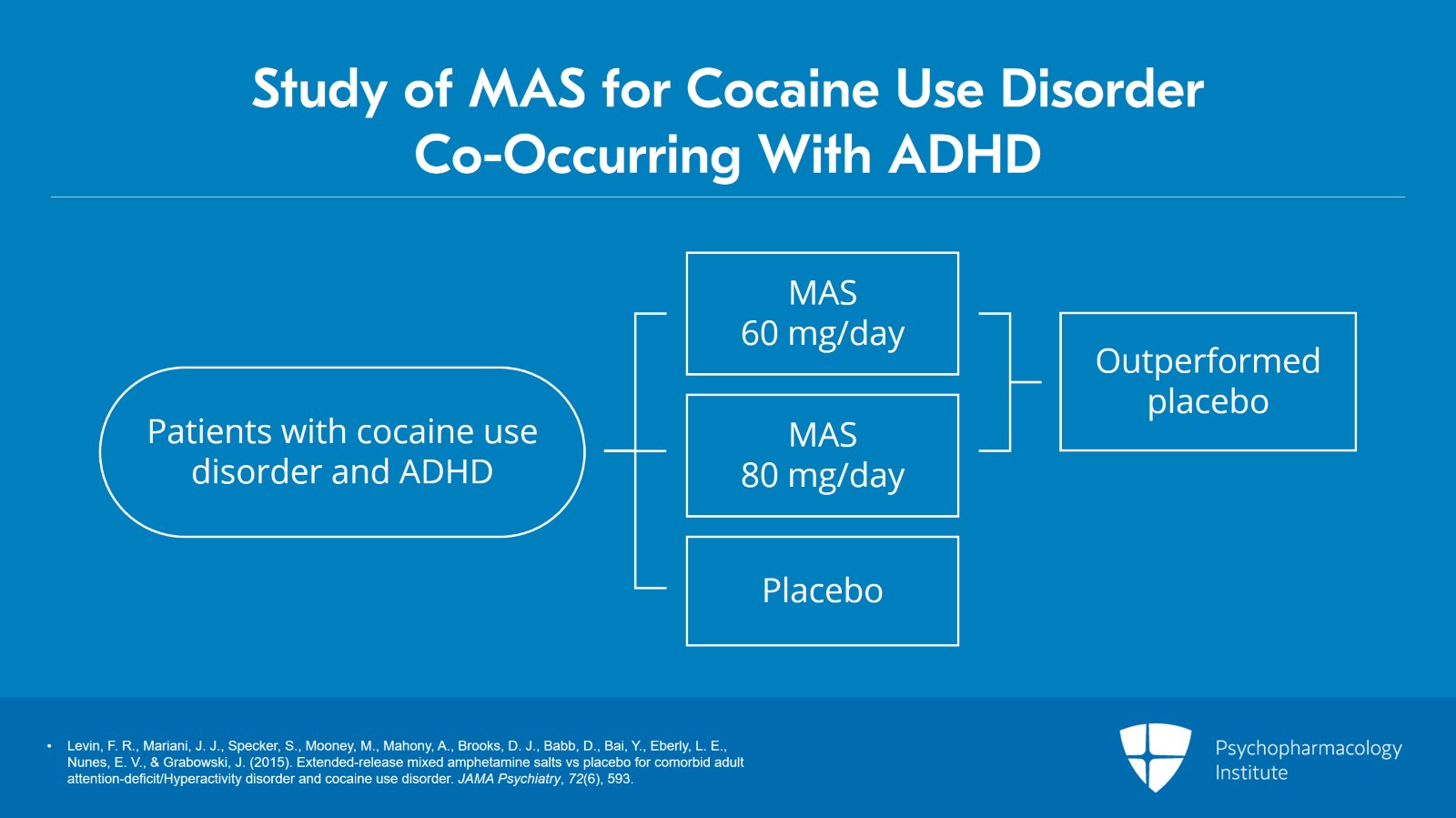
This same group also pursued just the mixed amphetamine salts alone compared to placebo for co-occurring cocaine use disorder in ADHD. And they tried two different doses of mixed amphetamine salts, 60 mg was the lower dose, 80 mg per day was the higher dose compared to placebo. And both of these dosage forms outperformed placebo with the higher dose doing a little better.
References:
- Levin, F. R., Mariani, J. J., Specker, S., Mooney, M., Mahony, A., Brooks, D. J., Babb, D., Bai, Y., Eberly, L. E., Nunes, E. V., & Grabowski, J. (2015). Extended-release mixed amphetamine salts vs placebo for comorbid adult attention-deficit/Hyperactivity disorder and cocaine use disorder. JAMA Psychiatry, 72(6), 593.
Free Files
Download PDF and other files
Success!
Check your inbox, we sent you all the materials there.
Slide 15 of 18
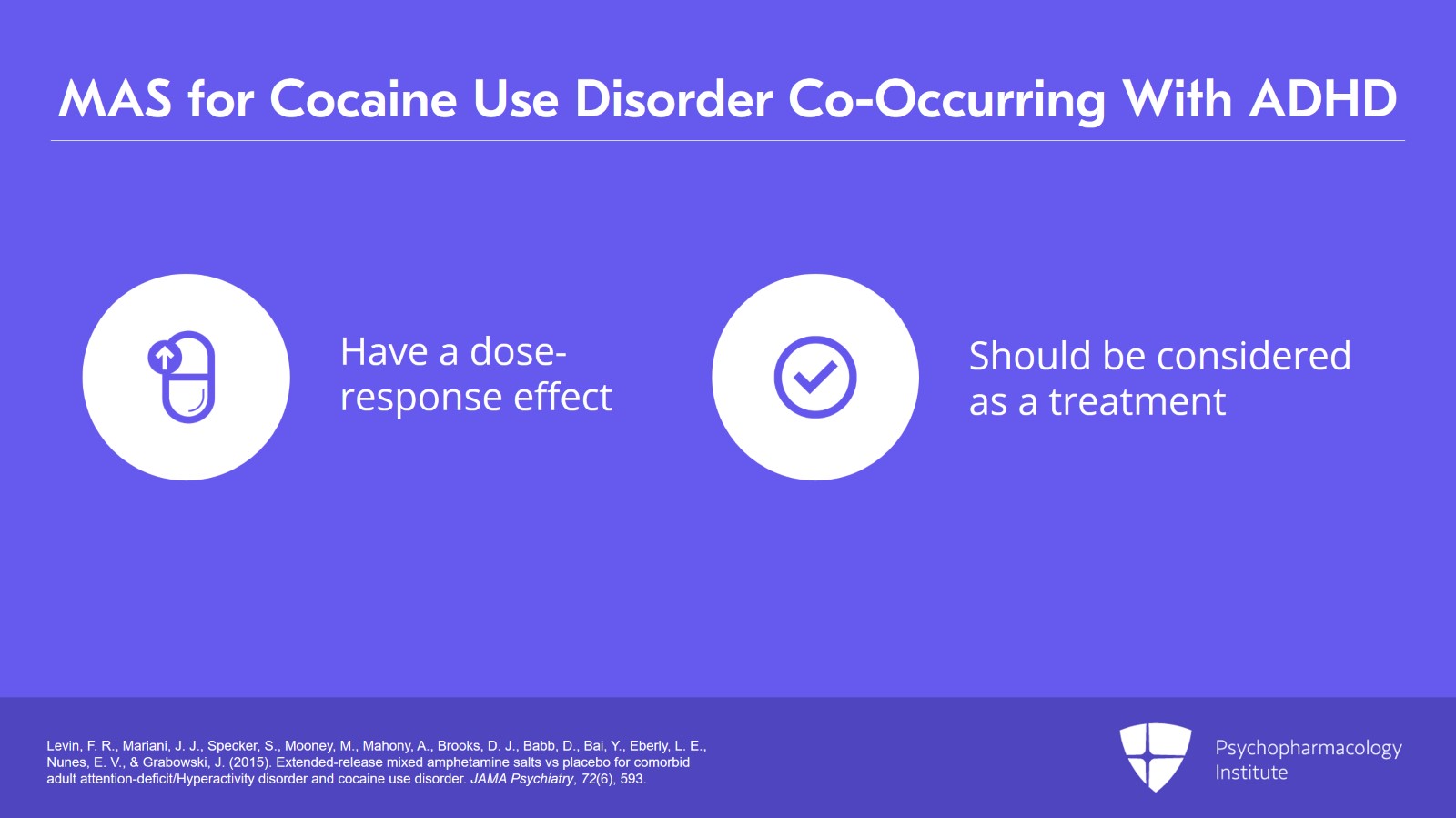
There does seem to be a dose response effect and we really don't know the ceiling dose if we're going to use mixed amphetamine salts to treat cocaine use disorder, what the highest optimal dose would be. So that's something we need to think about for the future. But again, if you were to treat someone with cocaine use disorder and ADHD it's very worthwhile to consider mixed amphetamine salts as a treatment. It wouldn't even be off-label use because you'd be directly treating their ADHD.
References:
- Levin, F. R., Mariani, J. J., Specker, S., Mooney, M., Mahony, A., Brooks, D. J., Babb, D., Bai, Y., Eberly, L. E., Nunes, E. V., & Grabowski, J. (2015). Extended-release mixed amphetamine salts vs placebo for comorbid adult attention-deficit/Hyperactivity disorder and cocaine use disorder. JAMA Psychiatry, 72(6), 593.
Slide 16 of 18
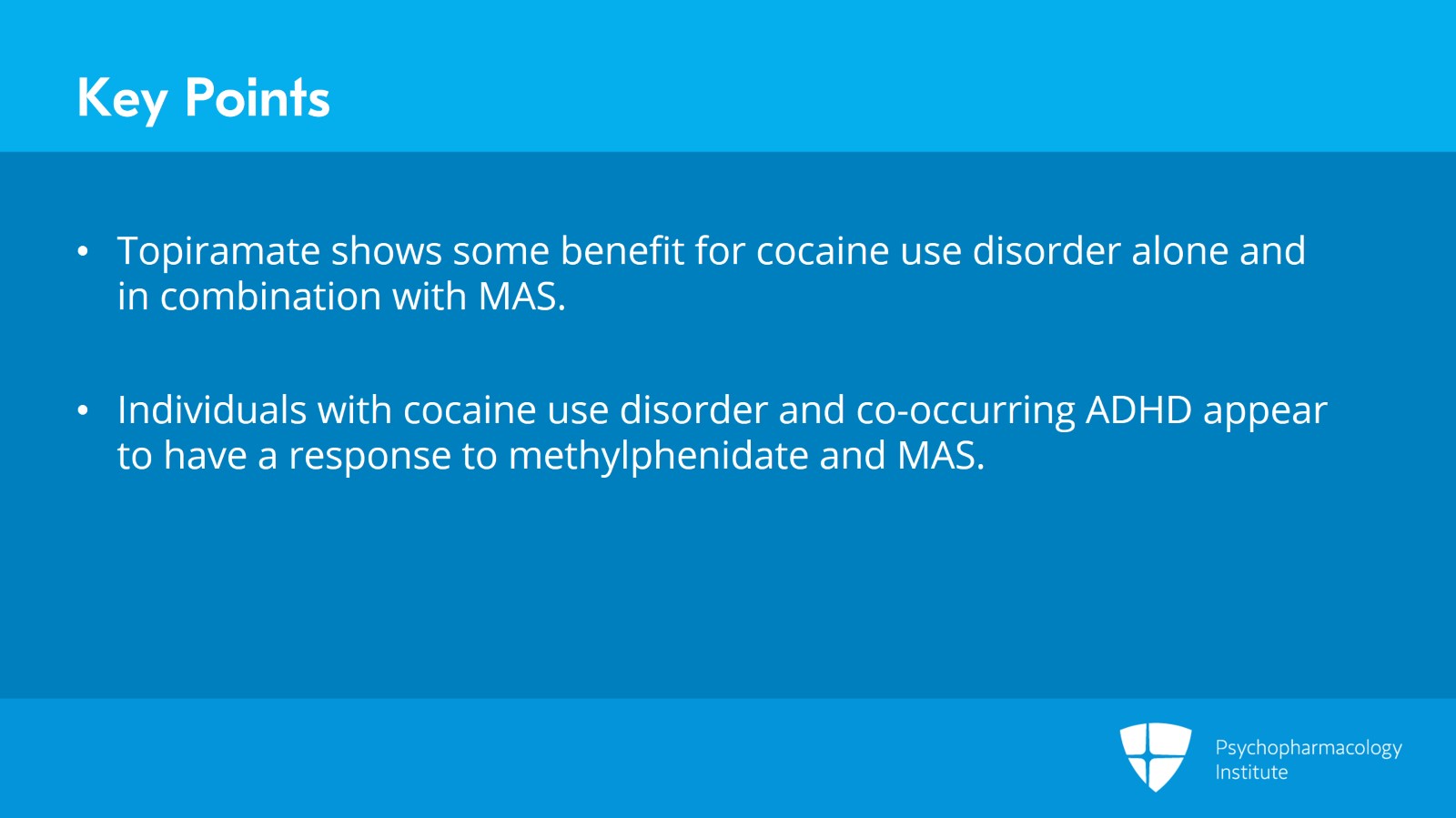
To summarize, topiramate shows some benefit for cocaine use disorder alone and in combination with mixed amphetamine salts. Individuals with cocaine use disorder and co-occurring ADHD appeared to have some response to stimulant replacement either with methylphenidate or with mixed amphetamine salts.
Free Files
Download PDF and other files
Success!
Check your inbox, we sent you all the materials there.
Slide 17 of 18
Whereas, individuals with cocaine use disorder but without ADHD do not seem to have much of a response to stimulant replacement.
Free Files
Download PDF and other files
Success!
Check your inbox, we sent you all the materials there.