Slides and Transcript
Slide 1 of 18
Hi. This is video number eight. This is about the role of these medications in managing agitation, benzodiazepines and dexmedetomidine.
Slide 2 of 18
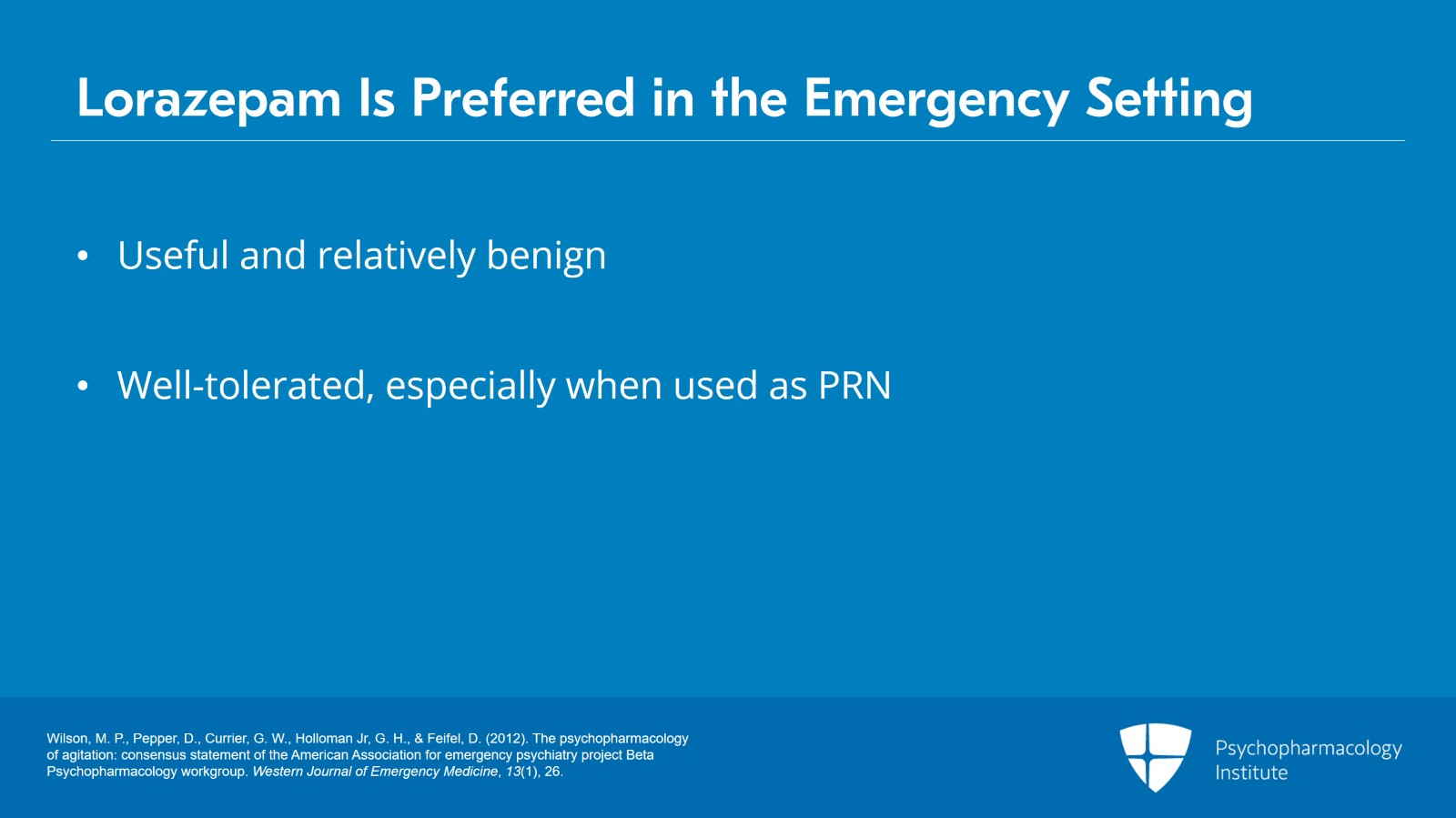
Let’s start off with talking about benzodiazepines, especially lorazepam, which sometimes is referred to as the emergency psychiatrist’s best friend because it’s useful in really many situations while being relatively benign.
It’s fairly well tolerated across the board in most patients, especially when we’re using it as a one-time p.r.n. (as-needed medication).
References:
- Wilson, M. P., Pepper, D., Currier, G. W., Holloman Jr, G. H., & Feifel, D. (2012). The psychopharmacology of agitation: consensus statement of the American Association for emergency psychiatry project Beta Psychopharmacology workgroup. Western Journal of Emergency Medicine, 13(1), 26.
Free Files
Download PDF and other files
Success!
Check your inbox, we sent you all the materials there.
Slide 3 of 18
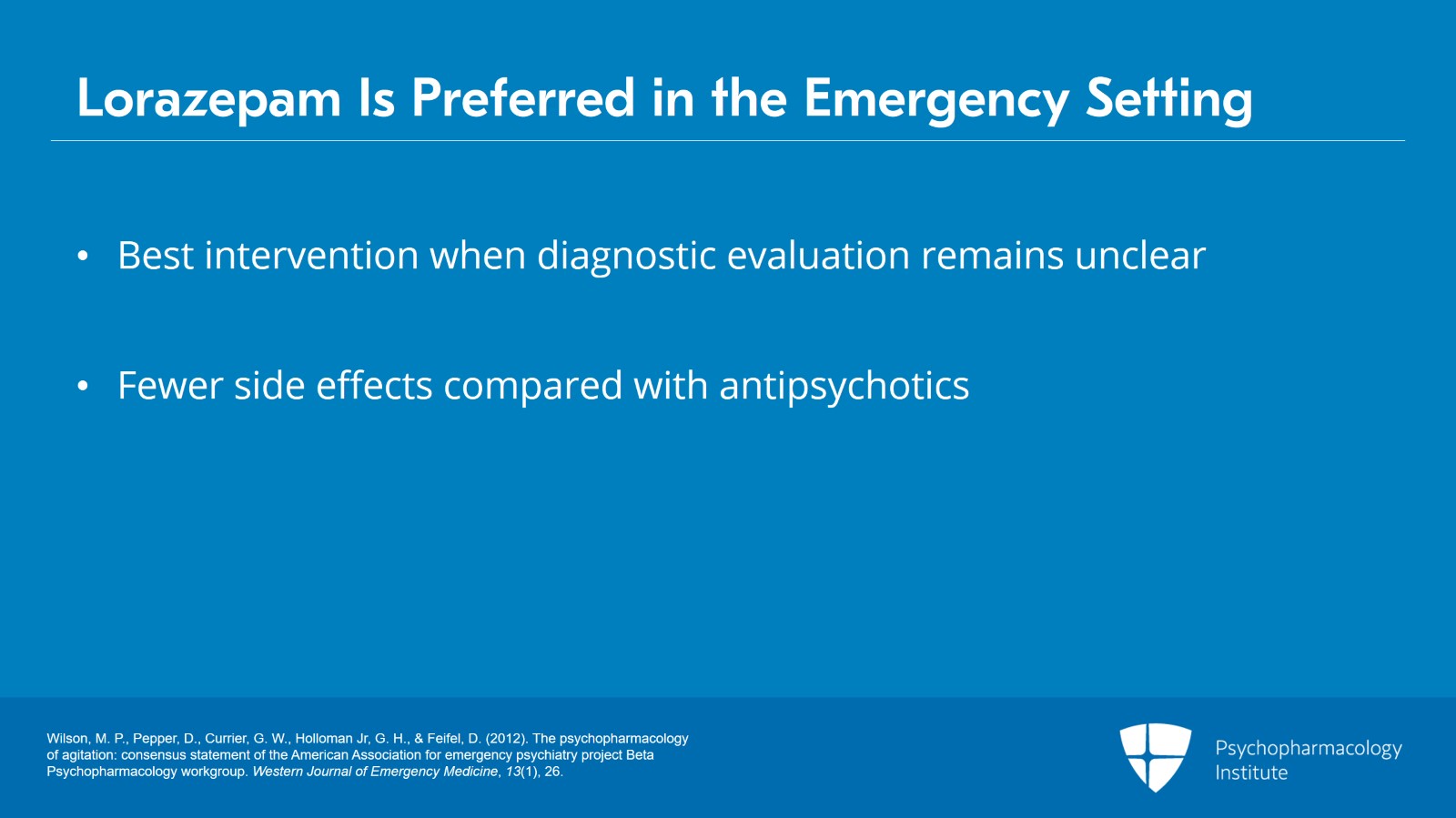
What we find is that benzodiazepines or lorazepam are often our best intervention when we don’t have a lot of information about the patient when our diagnostic evaluation remains unclear.
We know that antipsychotics, in general, and even second-generation antipsychotics, which may have a bit fewer risks of side effects or bad outcomes. We know that they are still risky compared to lorazepam.
So, offering lorazepam when we really don’t know what’s going on might give us a chance, buy us some time to have that person calm down, relax a bit, and it may even be the appropriate treatment.
References:
- Wilson, M. P., Pepper, D., Currier, G. W., Holloman Jr, G. H., & Feifel, D. (2012). The psychopharmacology of agitation: consensus statement of the American Association for emergency psychiatry project Beta Psychopharmacology workgroup. Western Journal of Emergency Medicine, 13(1), 26.
Slide 4 of 18
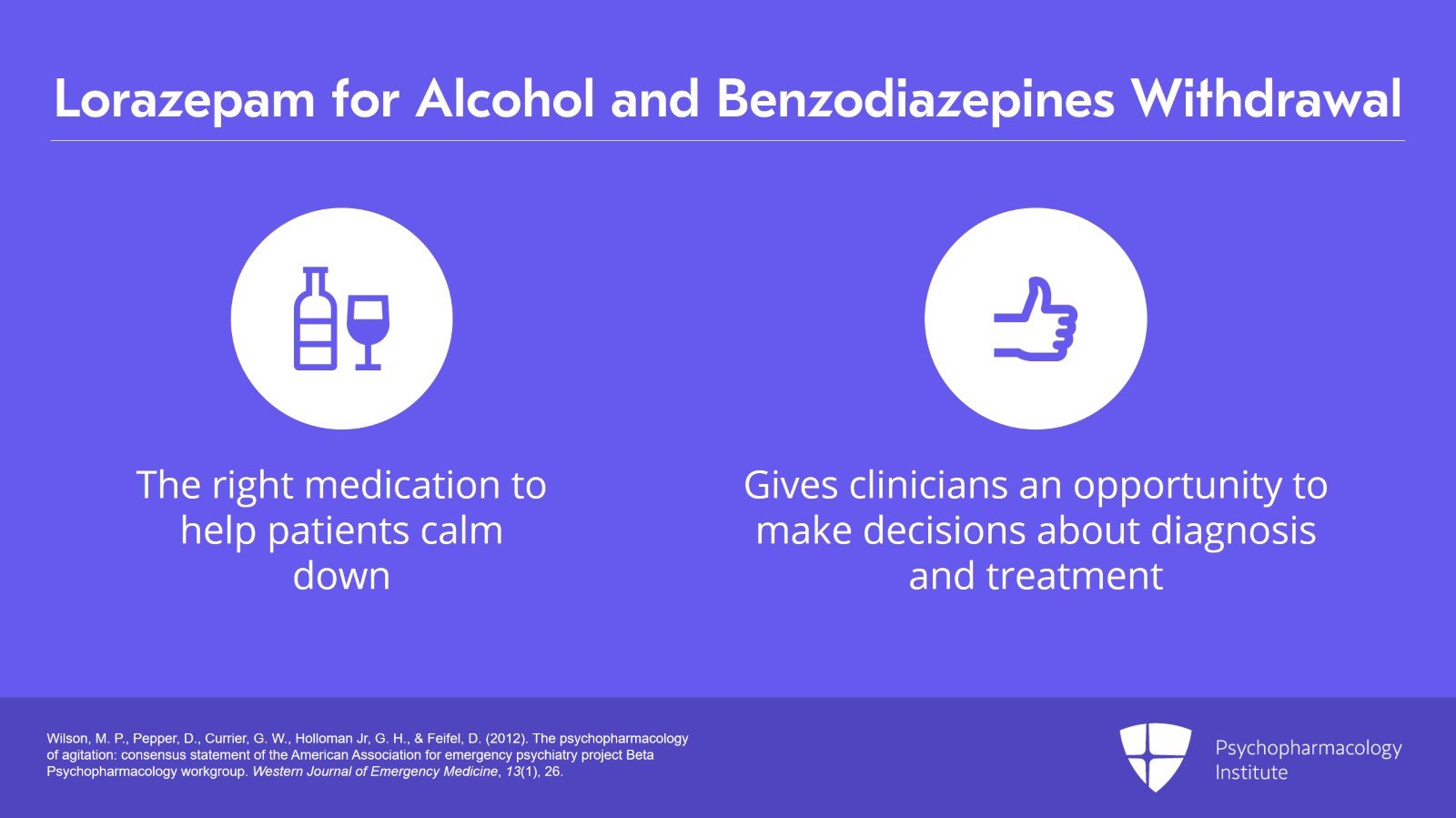
If somebody is in alcohol withdrawal or benzodiazepine withdrawal, for example, it’s going to be the right medication to help them calm down.
It’s also going to make sure we’re giving somebody an opportunity to give us a better time to make a decision about what the diagnosis is and what the longer-term treatment intervention is going to be without the risks that we see in antipsychotics.
References:
- Wilson, M. P., Pepper, D., Currier, G. W., Holloman Jr, G. H., & Feifel, D. (2012). The psychopharmacology of agitation: consensus statement of the American Association for emergency psychiatry project Beta Psychopharmacology workgroup. Western Journal of Emergency Medicine, 13(1), 26.
Free Files
Download PDF and other files
Success!
Check your inbox, we sent you all the materials there.
Slide 5 of 18
Recognize that we can offer oral lorazepam. And sometimes, I’ve heard staff come to me saying, this guy really needs a shot of lorazepam. Don’t write for an oral.
And what they don’t realize is that the time of onset for oral lorazepam is essentially the same as intramuscular.
References:
- Wilson, M. P., Pepper, D., Currier, G. W., Holloman Jr, G. H., & Feifel, D. (2012). The psychopharmacology of agitation: consensus statement of the American Association for emergency psychiatry project Beta Psychopharmacology workgroup. Western Journal of Emergency Medicine, 13(1), 26.
Slide 6 of 18
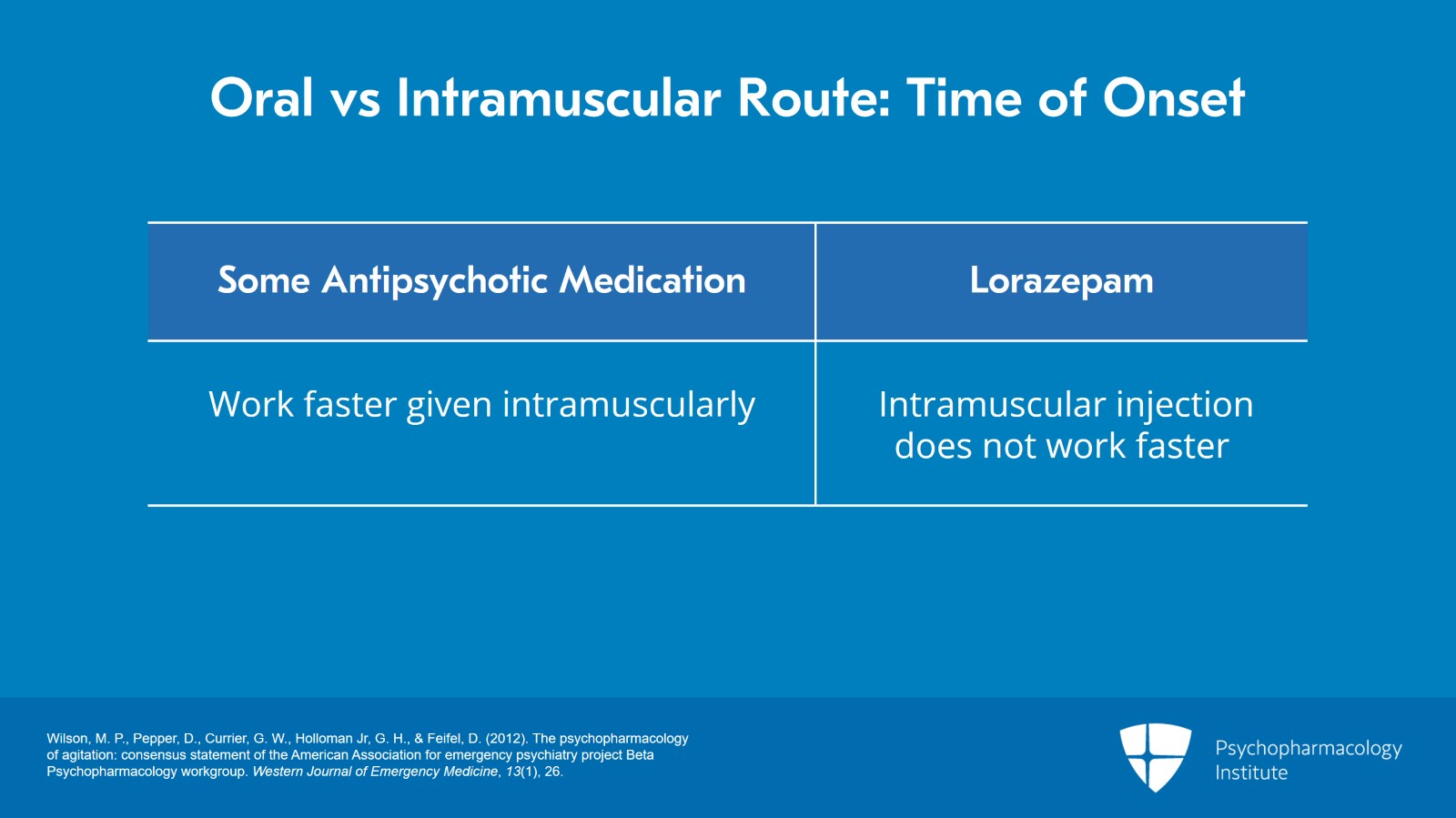
We do know that other antipsychotic meds, for example, work faster given as intramuscular than p.o. but it’s not the case with the lorazepam.
So there’s no advantage to giving somebody the shot, it doesn’t work any faster. And even if staff are thinking that that’s the case, you can just reassure them that the time of onset of oral lorazepam and intramuscular is just about the same.
References:
- Wilson, M. P., Pepper, D., Currier, G. W., Holloman Jr, G. H., & Feifel, D. (2012). The psychopharmacology of agitation: consensus statement of the American Association for emergency psychiatry project Beta Psychopharmacology workgroup. Western Journal of Emergency Medicine, 13(1), 26.
Free Files
Download PDF and other files
Success!
Check your inbox, we sent you all the materials there.
Slide 7 of 18
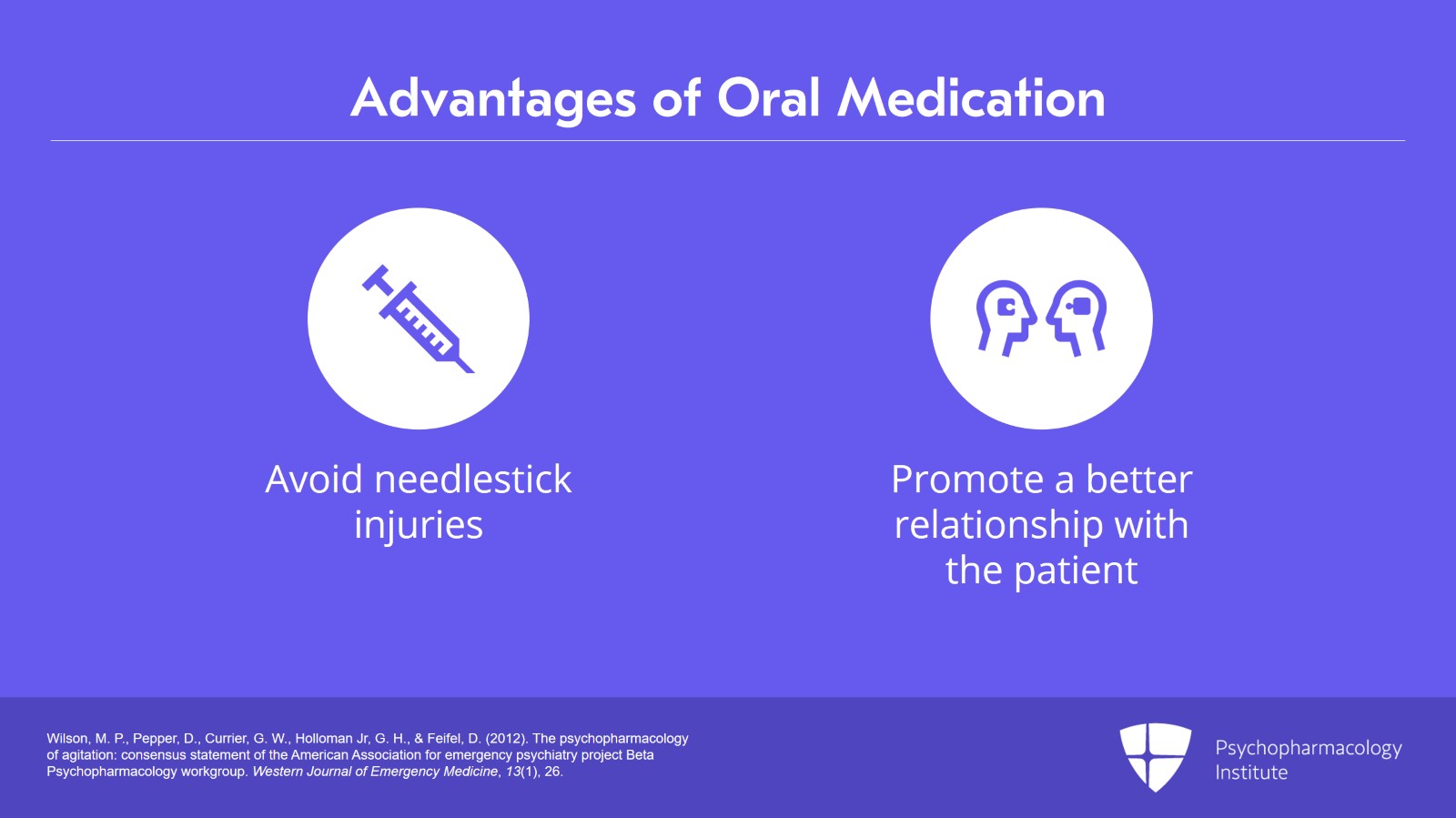
And isn’t it better to avoid that needlestick to have a better relationship with the patient? If they’re willing to take oral medications, that should always be the way you go with this med.
References:
- Wilson, M. P., Pepper, D., Currier, G. W., Holloman Jr, G. H., & Feifel, D. (2012). The psychopharmacology of agitation: consensus statement of the American Association for emergency psychiatry project Beta Psychopharmacology workgroup. Western Journal of Emergency Medicine, 13(1), 26.
Slide 8 of 18
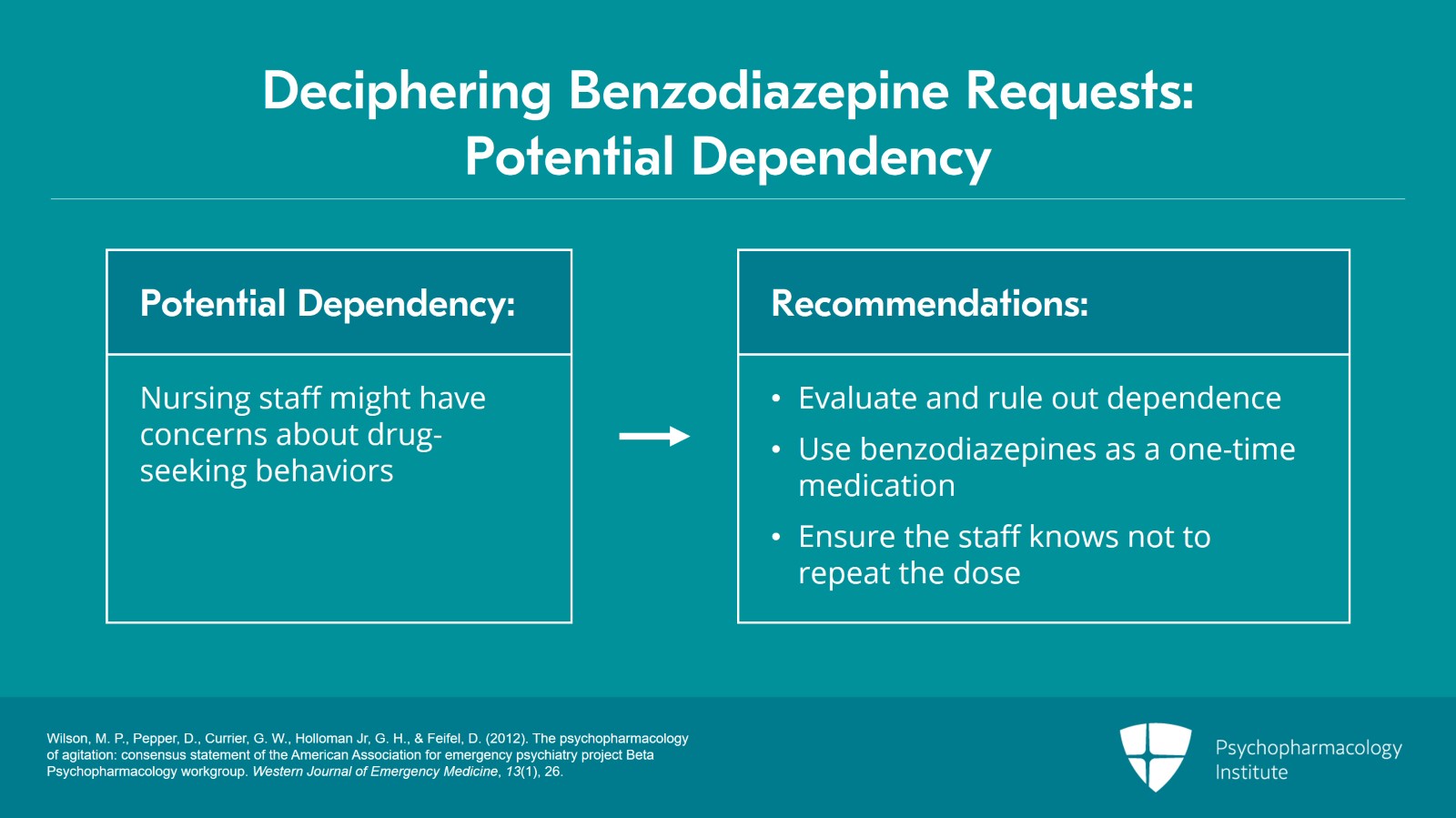
Nursing staff do have concerns at times that maybe a patient is drug seeking or they’re manipulating because they specifically want to get a benzodiazepine. That is something that you need to evaluate and rule out, and certainly, just don’t give the medication out like candy.
You can use it as an emergency medication, as a one-time med, and make sure that the staff know that this will not be repeated, especially if you have concerns that this might be a drug-seeking individual.
At the same time, if you are only using this as a one-time medication, you are not going to be creating somebody with dependency; you are really not creating a situation where you are making somebody into an addict.
References:
- Wilson, M. P., Pepper, D., Currier, G. W., Holloman Jr, G. H., & Feifel, D. (2012). The psychopharmacology of agitation: Consensus statement of the American Association for emergency psychiatry project Beta Psychopharmacology workgroup. Western Journal of Emergency Medicine, 13(1), 26.
Free Files
Download PDF and other files
Success!
Check your inbox, we sent you all the materials there.
Slide 9 of 18
There’s an exciting new opportunity to treat agitation that’s really a different pathway than we’ve ever used before, and that’s one of the reasons it’s so exciting. Pretty much for my entire career in Emergency Psychiatry, which has spanned over 35 years now, when we were talking about treating agitation, we really only had antipsychotics or benzodiazepines available.
References:
- Preskorn, S. H., Zeller, S., Citrome, L., Finman, J., Goldberg, J. F., Fava, M., … & Risinger, R. (2022). Effect of sublingual dexmedetomidine vs placebo on acute agitation associated with bipolar disorder: A randomized clinical trial. Jama, 327(8), 727-736.
Slide 10 of 18
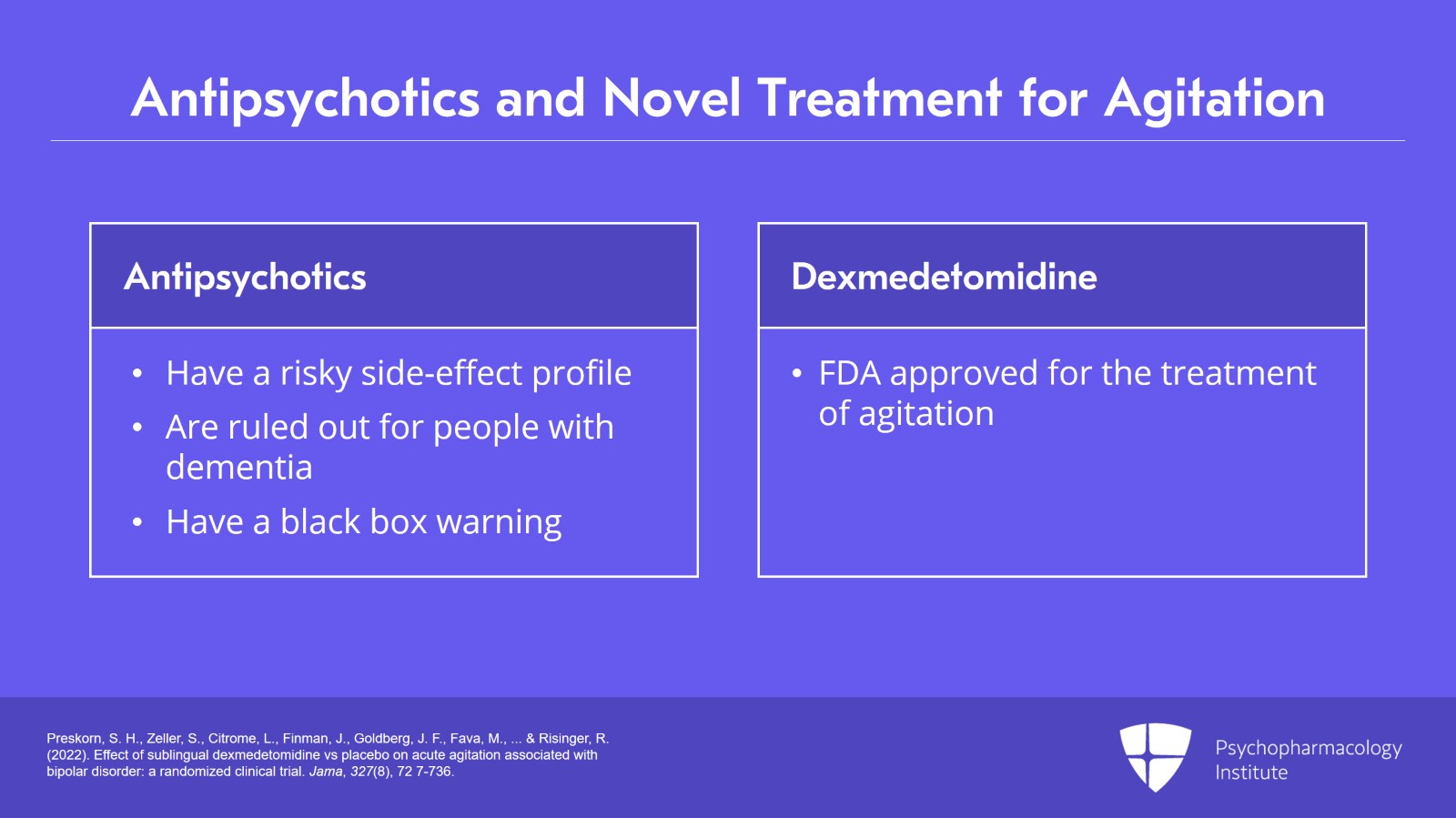
And in many cases, we’re really reluctant to use antipsychotics because they have risky side effect profile, and they also, are ruled out for people with dementia, for example, because of the risk of a CVA. They have a black box warning.
So, because of that, it has been really interesting to see for the first time something outside of the benzodiazepines and antipsychotics that we can use and is now FDA-approved for the treatment of agitation and that’s dexmedetomidine.
References:
- Preskorn, S. H., Zeller, S., Citrome, L., Finman, J., Goldberg, J. F., Fava, M., … & Risinger, R. (2022). Effect of sublingual dexmedetomidine vs placebo on acute agitation associated with bipolar disorder: A randomized clinical trial. Jama, 327(8), 72 7-736.
Free Files
Download PDF and other files
Success!
Check your inbox, we sent you all the materials there.
Slide 11 of 18
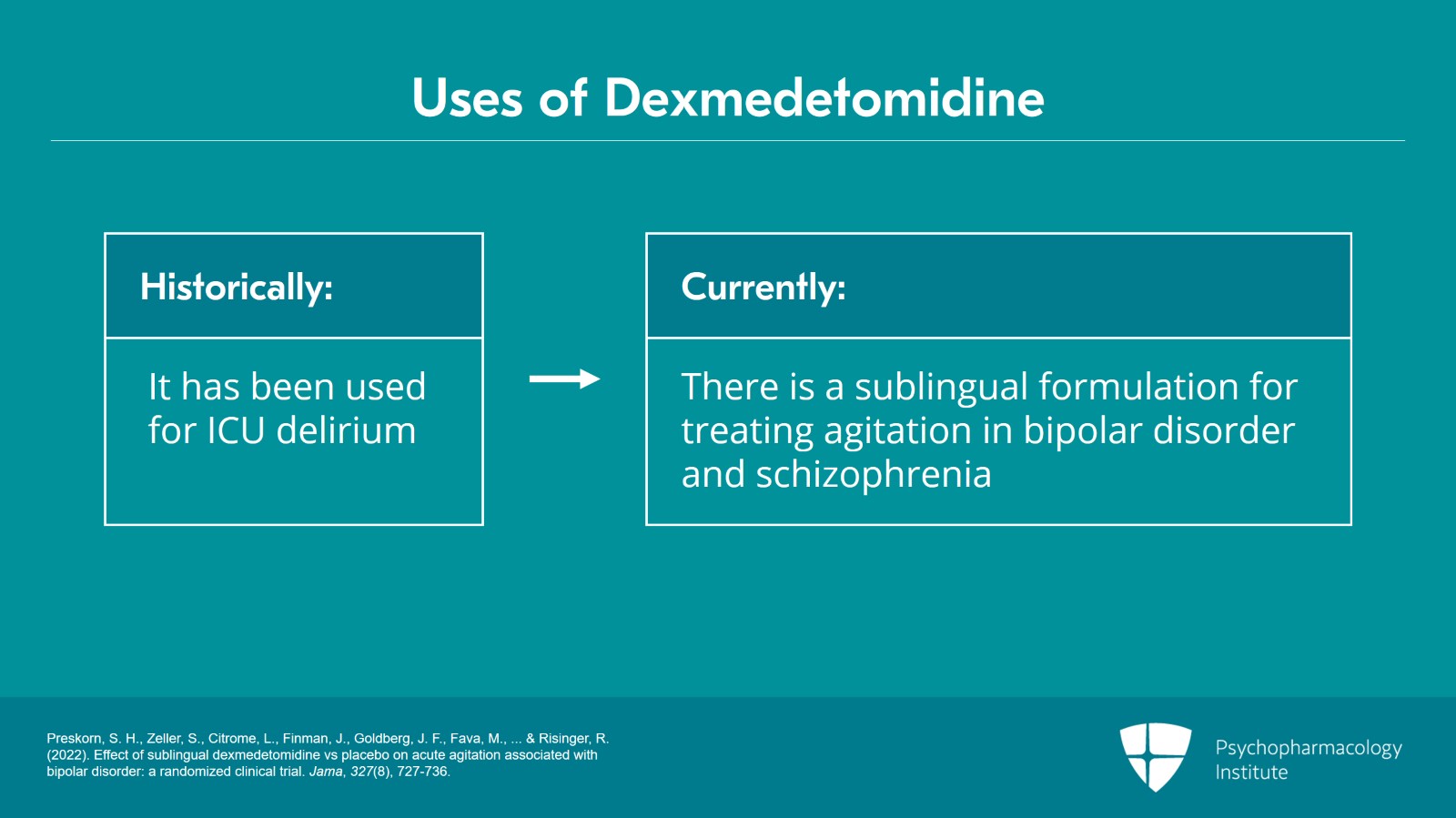
Which has been used historically for kind of ICU delirium, but now there’s a formulation that’s sublingual that is approved and indicated for the treatment of agitation in bipolar disorder and schizophrenia.
References:
- Preskorn, S. H., Zeller, S., Citrome, L., Finman, J., Goldberg, J. F., Fava, M., … & Risinger, R. (2022). Effect of sublingual dexmedetomidine vs placebo on acute agitation associated with bipolar disorder: A randomized clinical trial. Jama, 327(8), 727-736.
Slide 12 of 18
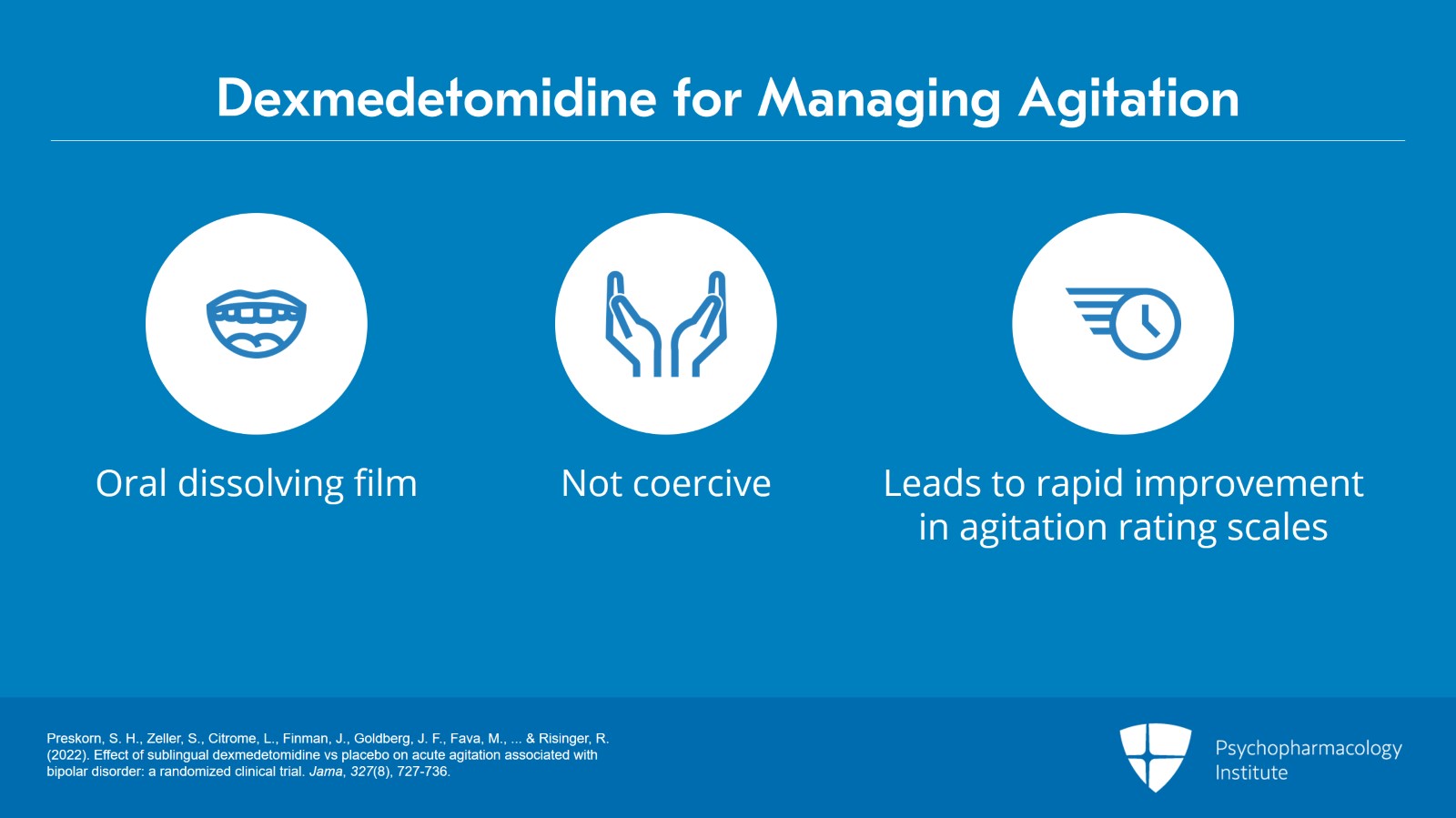
It’s an oral dissolving thin film where you can offer to the patient. It’s not a coercive med. You don’t hold them down and put it in their mouth. You say, here’s this film, put this in your mouth, it’s going to dissolve really fast. They can have a cup of juice or a glass of water with it.
And what you see is a really nice improvement in the rating scales for agitation within a matter of minutes, usually 20 to 30 minutes or so.
References:
- Preskorn, S. H., Zeller, S., Citrome, L., Finman, J., Goldberg, J. F., Fava, M., … & Risinger, R. (2022). Effect of sublingual dexmedetomidine vs placebo on acute agitation associated with bipolar disorder: A randomized clinical trial. Jama, 327(8), 727-736.
Free Files
Download PDF and other files
Success!
Check your inbox, we sent you all the materials there.
Slide 13 of 18
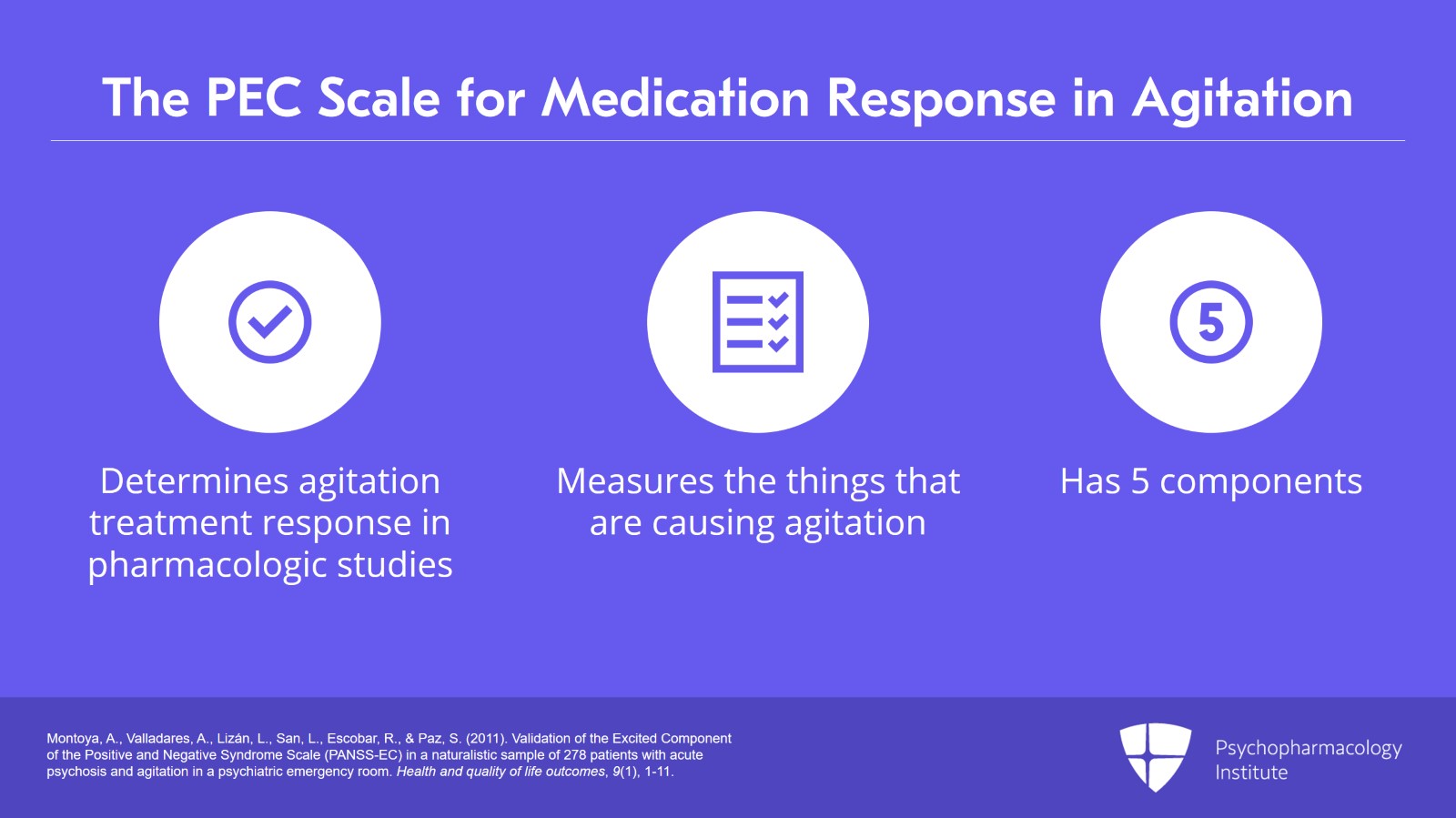
The PEC Scale is what’s used most commonly to determine response to agitation treatment in pharmacologic studies.
The PEC is part of a greater psychiatric rating scale, but it’s really called the excitatory component, and it’s a measure of the things that are causing agitation, which, if you break them down, there are five different parts – excitement, tension, hostility, uncooperativeness and poor impulse control.
References:
- Montoya, A., Valladares, A., Lizán, L., San, L., Escobar, R., & Paz, S. (2011). Validation of the Excited Component of the Positive and Negative Syndrome Scale (PANSS-EC) in a naturalistic sample of 278 patients with acute psychosis and agitation in a psychiatric emergency room. Health and quality of life outcomes, 9(1), 1-11.
Slide 14 of 18
And across those five different components, we see improvement in using this new approach, this dexmedetomidine oral film.
References:
- Montoya, A., Valladares, A., Lizán, L., San, L., Escobar, R., & Paz, S. (2011). Validation of the Excited Component of the Positive and Negative Syndrome Scale (PANSS-EC) in a naturalistic sample of 278 patients with acute psychosis and agitation in a psychiatric emergency room. Health and quality of life outcomes, 9(1), 1-11.
Free Files
Download PDF and other files
Success!
Check your inbox, we sent you all the materials there.
Slide 15 of 18
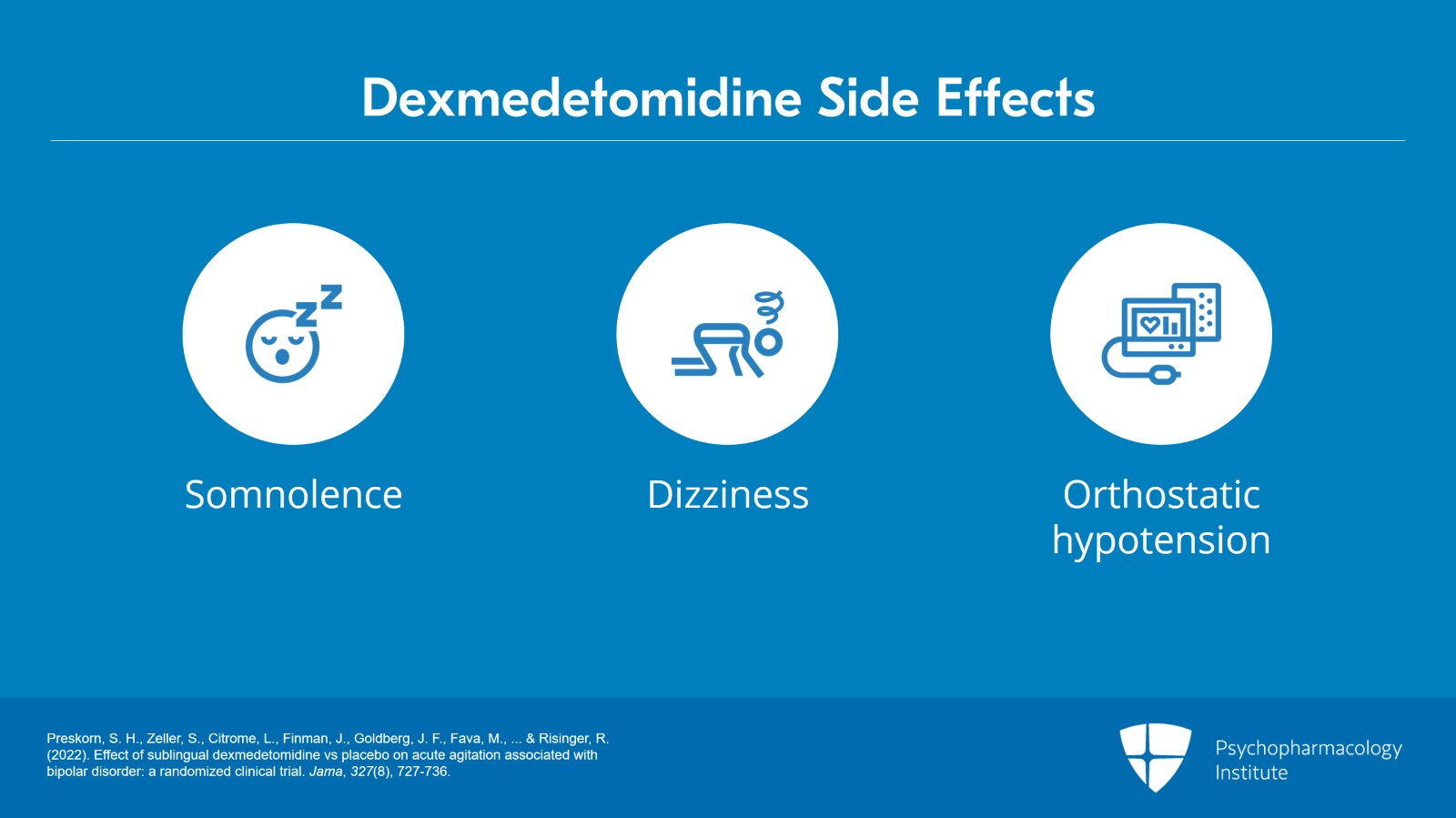
And what’s nice is it has a very low risk of side effects. The most common one is somnolence which so many people might even think is a good thing rather than a side effect.
Occasionally, in really small, less than 5%, you’re seeing dizziness or orthostatic hypotension.
References:
- Preskorn, S. H., Zeller, S., Citrome, L., Finman, J., Goldberg, J. F., Fava, M., … & Risinger, R. (2022). Effect of sublingual dexmedetomidine vs placebo on acute agitation associated with bipolar disorder: A randomized clinical trial. Jama, 327(8), 727-736.
Slide 16 of 18
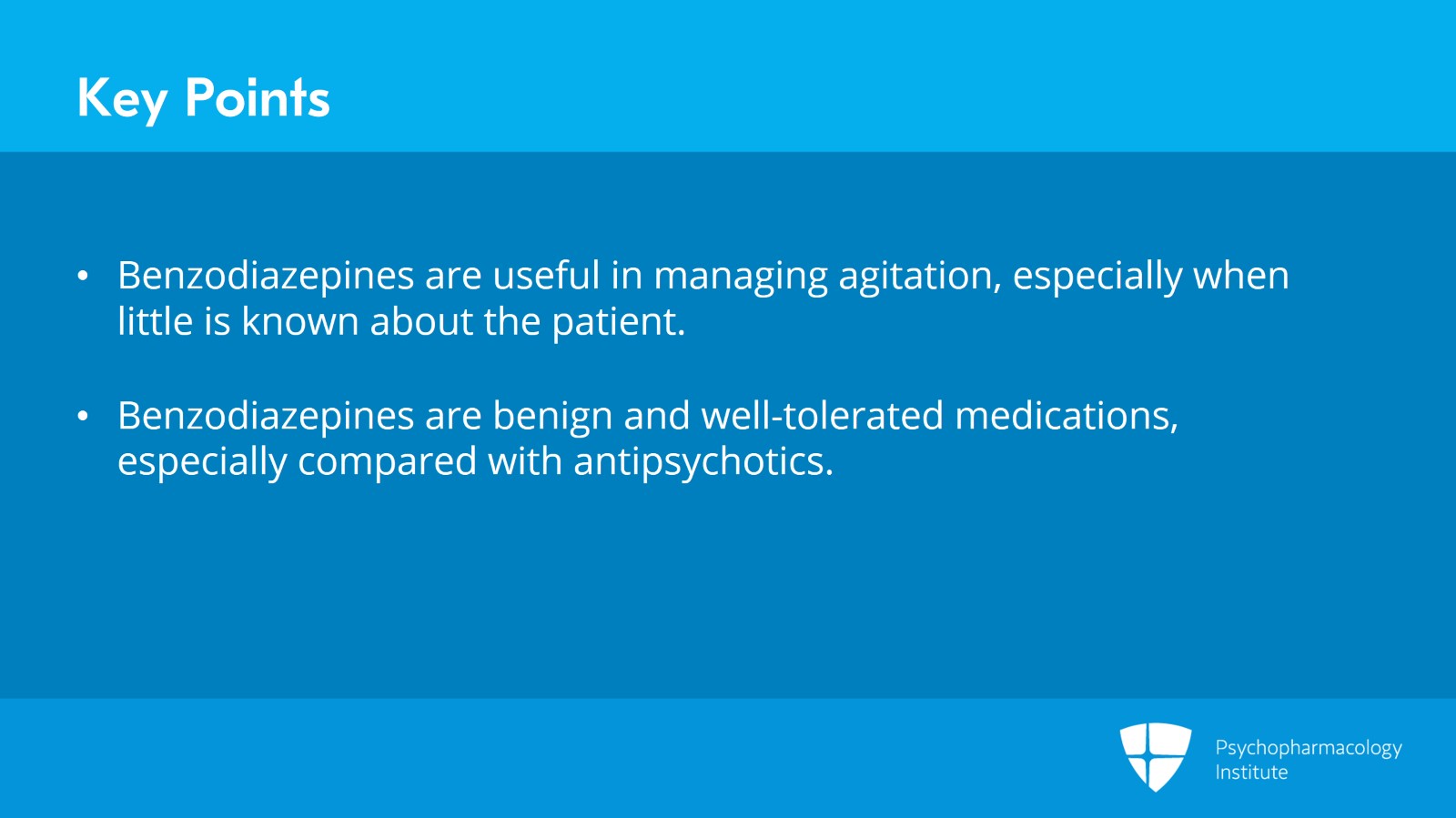
So, our key points from this discussion about benzodiazepines and new opportunities for treatment of agitation is that number one, benzodiazepines are useful in many different aspects of agitation, especially when we don’t know all that much about the patient or the causes of the agitation.
These meds are relatively benign. They’re usually pretty well tolerated in most of our patients, especially compared to antipsychotics.
Free Files
Download PDF and other files
Success!
Check your inbox, we sent you all the materials there.
Slide 17 of 18
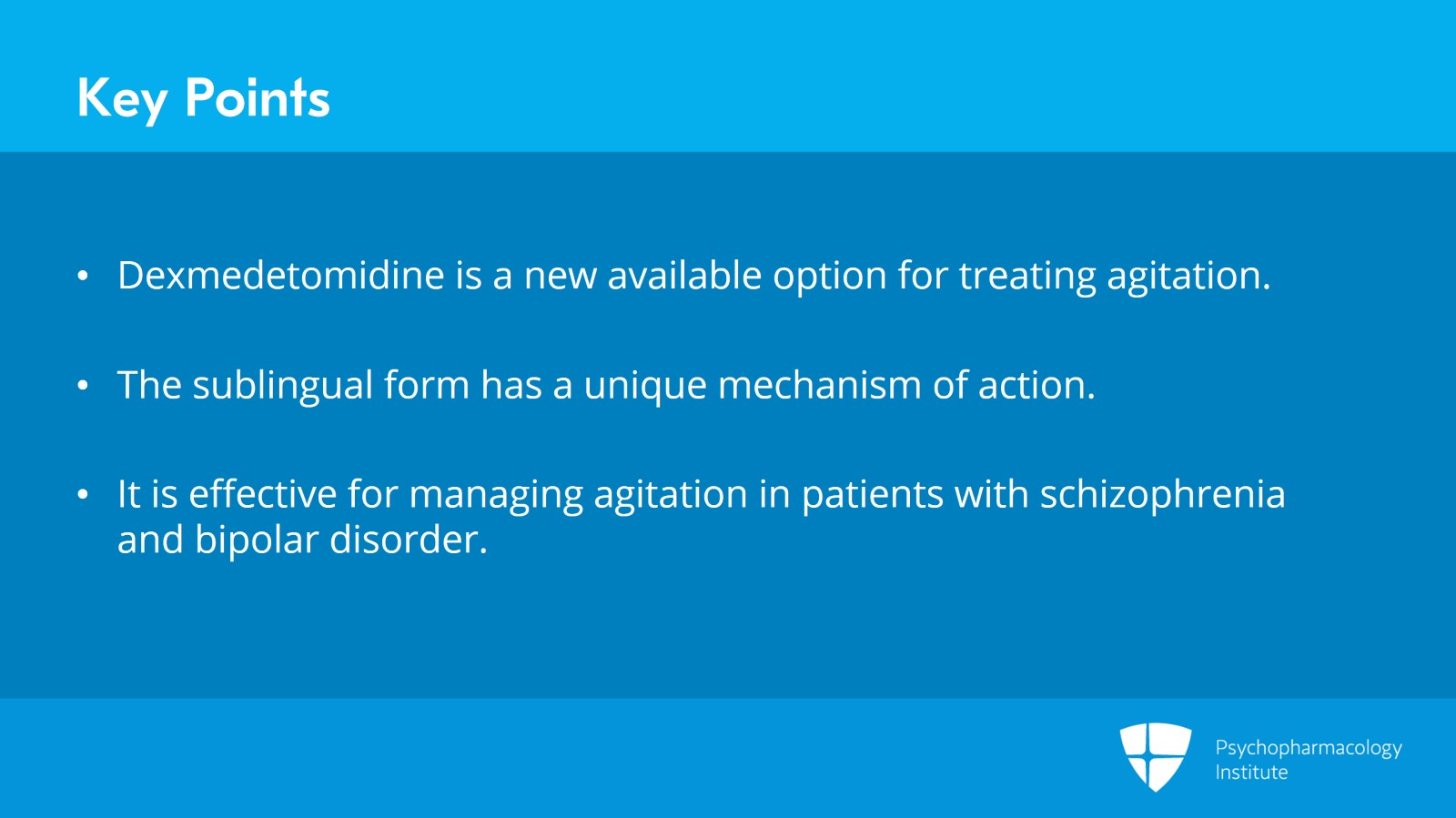
Next, dexmedetomidine is a new option that’s available for the treatment of agitation in a sublingual film formulation with a completely different mechanism of action, and it’s been shown to be effective for agitation in patients with schizophrenia and bipolar disorder.
And so, it’s really nice to have a new option for the treatment of agitation.
Free Files
Download PDF and other files
Success!
Check your inbox, we sent you all the materials there.