Slides and Transcript
Slide 2 of 23
So first, when we talk about psychedelics, there's not any universal definition of what this word means. First, psychedelics are drugs that elicit a change in consciousness and importantly usually this change is associated with a sense of profundity or a transformative nature. Something important feels like it's happening to the experiencer.
Free Files
Download PDF and other files
Success!
Check your inbox, we sent you all the materials there.
Slide 3 of 23
This can and often does occur with a feeling of ego dissolution. That term refers to the dissolving or at least the reduction of the felt boundary between the internal world and the external world. This can co-occur with so-called transpersonal states where people may feel like they are a different person, they might feel like they're an animal or a tree or a rock. And oftentimes, there's a spiritual or at least a mystical experience, and we'll come back to that later in the presentation.
References:
- Letheby, C., & Gerrans, P. (2017). Self unbound: ego dissolution in psychedelic experience. Neuroscience of consciousness, 2017(1), nix016. https://doi.org/10.1093/nc/nix016
Slide 4 of 23
Third, there's an enriched sensory or phenomenal experience. So what I mean by this is that there tend to be visual changes. That's what psychedelics are most well known for. Importantly, this may not and likely is not the most important therapeutic aspect for psychedelics, this sort of hallucinatory quality.
References:
- Császár-Nagy, N., Kapócs, G. & Bókkon, I. (2019). Classic psychedelics: the special role of the visual system. Reviews in the Neurosciences, 30(6), 651-669. https://doi.org/10.1515/revneuro-2018-0092
Free Files
Download PDF and other files
Success!
Check your inbox, we sent you all the materials there.
Slide 5 of 23
In most cases, the visual changes are not true psychotic hallucinations and that the person experiencing them is aware that they're the effect of a drug. So media portrayals of people on psychedelics responding to internal stimuli or running after things that aren't there, that's really more consistent with what we would see in the hospital with hyperactive delirium. This is not usually what happens with psychedelics.
References:
- Baggott, M. J., Siegrist, J. D., Galloway, G. P., Robertson, L. C., Coyle, J. R., & Mendelson, J. E. (2010). Investigating the mechanisms of hallucinogen-induced visions using 3,4-methylenedioxyamphetamine (MDA): a randomized controlled trial in humans. PloS one, 5(12), e14074. https://doi.org/10.1371/journal.pone.0014074
Slide 6 of 23
Lastly, sometimes, synesthesia occurs. So that's the experiencing of one's sense as another, so hearing color, for example. And there're many different terms for the psychedelic state. So different terms have been proffered throughout the years such as exceptional state or extraordinary state, non-ordinary state of consciousness, mystical experience. Like all of these hint at slightly different aspects.
References:
- Luke, D. P., & Terhune, D. B. (2013). The induction of synaesthesia with chemical agents: a systematic review. Frontiers in psychology, 4, 753. https://doi.org/10.3389/fpsyg.2013.00753
Free Files
Download PDF and other files
Success!
Check your inbox, we sent you all the materials there.
Slide 7 of 23
Now, in terms of psychedelics and how they work. For classic psychedelics, the primary effect is via agonist or partial agonist activity at the 5-HT2A receptor, serotonin 2A receptor that is. So we know this from a number of studies that have shown that you can prevent the effect of psychedelics by pre-administering ketanserin which is a 5-HT2A antagonist and the psychedelic experience can be terminated by administration of ketanserin as well. So this has been shown with both psilocybin and LSD.
References:
- Vollenweider, F. X., Leenders, K. L., Scharfetter, C., Maguire, P., Stadelmann, O., & Angst, J. (1997). Positron emission tomography and fluorodeoxyglucose studies of metabolic hyperfrontality and psychopathology in the psilocybin model of psychosis. Neuropsychopharmacology, 16(5), 357-372. https://doi.org/10.1016/S0893-133X(96)00246-1
- Preller, K. H., Herdener, M., Pokorny, T., Planzer, A., Kraehenmann, R., Stämpfli, P., … & Vollenweider, F. X. (2017). The fabric of meaning and subjective effects in LSD-induced states depend on serotonin 2A receptor activation. Current Biology, 27(3), 451-457. https://doi.org/10.1016/j.cub.2016.12.030
- Preller, K. H., Burt, J. B., Ji, J. L., Schleifer, C. H., Adkinson, B. D., Stämpfli, P., … & Anticevic, A. (2018). Changes in global and thalamic brain connectivity in LSD-induced altered states of consciousness are attributable to the 5-HT2A receptor. Elife, 7, e35082. https://doi.org/10.7554/eLife.35082
Slide 8 of 23
There will be a mild increase in sympathetic changes, so slight increase in blood pressure, slight increase in heart rate, slight increase in temperature. This is not a picture of serotonin syndrome. This tends to not be clinically significant in most but I would importantly stress, not all patients. Lastly, mydriasis, dilation of pupils and increased reflexes will be seen with people under the influence of psychedelics.
References:
- Passie, T., Seifert, J., Schneider, U., & Emrich, H. M. (2008). The pharmacology of psilocybin. Addiction Biology, 7(4), 357-364. https://doi.org/10.1080/1355621021000005937
Free Files
Download PDF and other files
Success!
Check your inbox, we sent you all the materials there.
Slide 9 of 23
So we know thus far that psychedelics have been well tolerated in medically vulnerable patients. So there have been some studies with patients with terminal cancer. There've been some lower dose studies looking at LSD in older patient populations. And thus far, it appears that they are medically quite safe.
References:
- Johnston, C. B., Mangini, M., Grob, C., & Anderson, B. (2023). The Safety and Efficacy of Psychedelic-Assisted Therapies for Older Adults: Knowns and Unknowns. The American journal of geriatric psychiatry : official journal of the American Association for Geriatric Psychiatry, 31(1), 44–53. https://doi.org/10.1016/j.jagp.2022.08.007
Slide 10 of 23
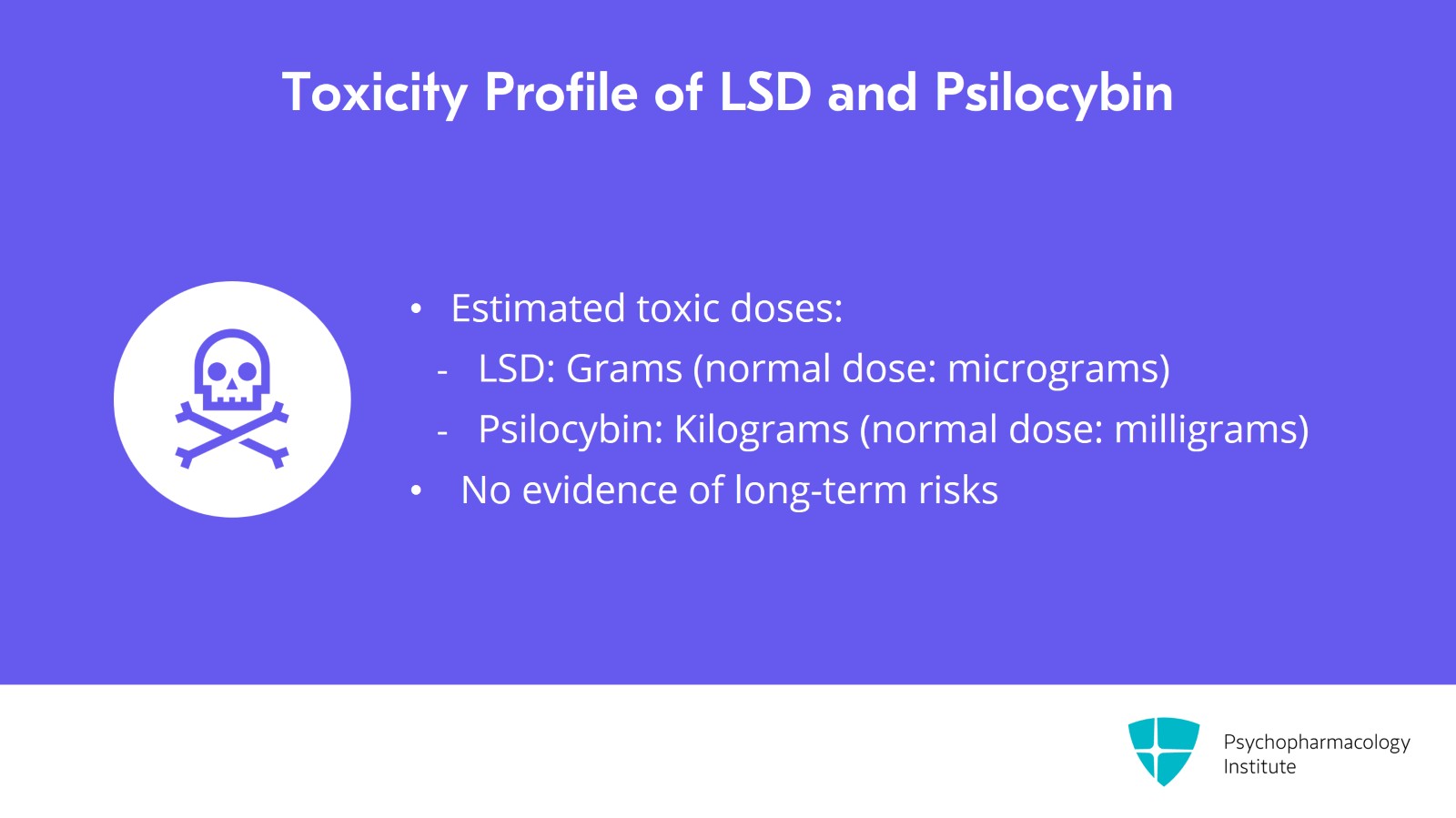
The toxicity actually has never been established for LSD or psilocybin, that is we don't even have an LD50 which is the dose that would be lethal in 50% of people who took such a dose. Usually, this is a measure of drug toxicity and this has never actually been established for LSD or psilocybin. LSD which is dosed in micrograms is thought to probably have an LD50 ranging in the grams, possibly more. Psilocybin for which a normal dose is about 25 mg is thought to likely become toxic in the kilogram range. And there's no evidence for mutagenic effects, neurotoxicity, cancer and that includes high-dose exposures.
Free Files
Download PDF and other files
Success!
Check your inbox, we sent you all the materials there.
Slide 11 of 23
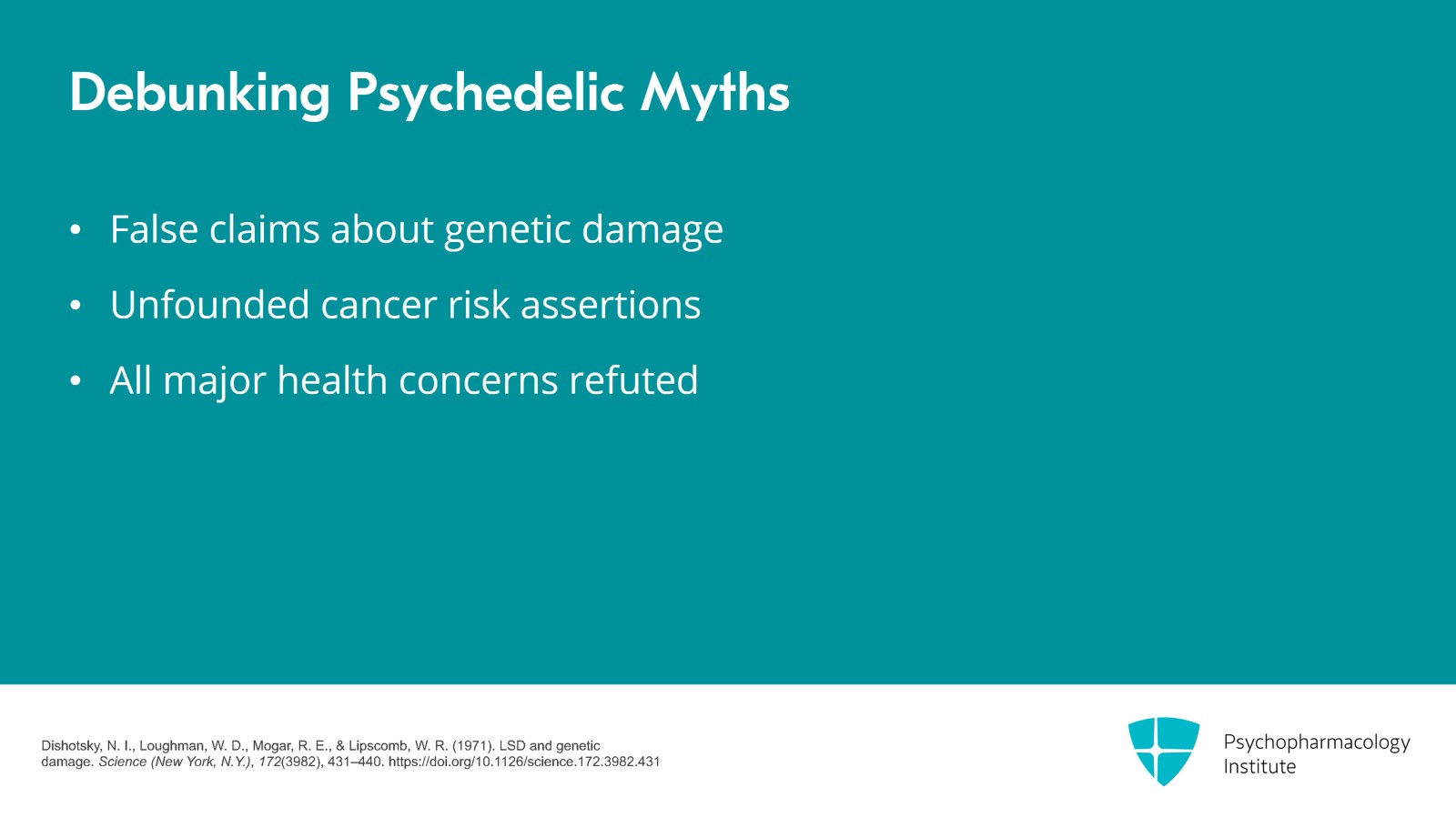
So unfortunately, in the late 1960s through the 1970s, there were a lot of anti-drug and anti-psychedelic drug campaigns talking about chromosome duplications, genetic mutations, higher rates of cancer. None of these has been based on solid science and all of these has been since been refuted.
References:
- Dishotsky, N. I., Loughman, W. D., Mogar, R. E., & Lipscomb, W. R. (1971). LSD and genetic damage. Science (New York, N.Y.), 172(3982), 431–440. https://doi.org/10.1126/science.172.3982.431
Slide 12 of 23
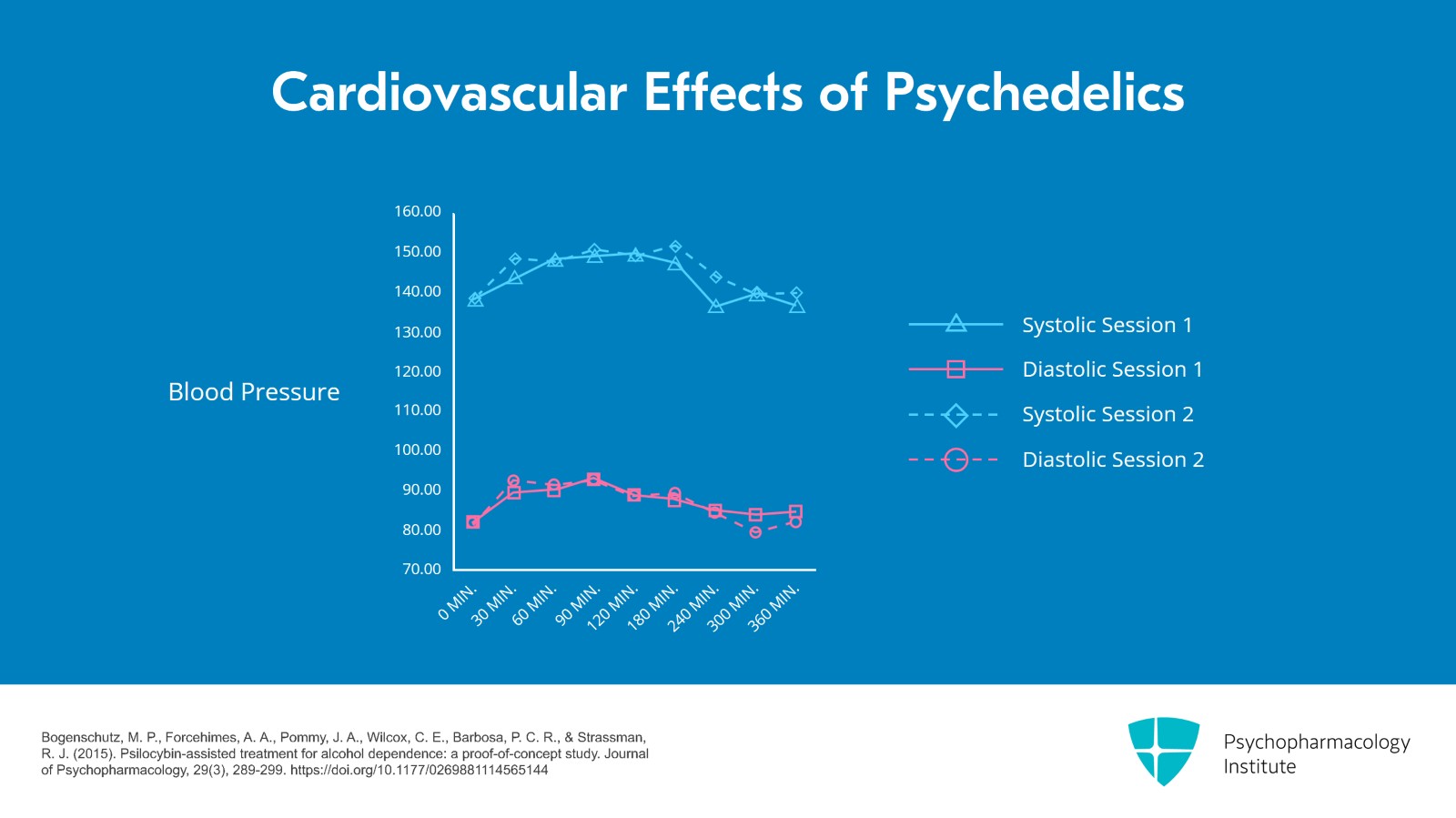
This is just a slide showing the usual impact on blood pressure in a psilocybin session. This is a six-hour session. You can see that there is a slight increase in blood pressure, about 10 to 15 mmHg which for most but certainly not all people will not be clinically significant in both systolic as well as diastolic blood pressure.
References:
- Bogenschutz, M. P., Forcehimes, A. A., Pommy, J. A., Wilcox, C. E., Barbosa, P. C. R., & Strassman, R. J. (2015). Psilocybin-assisted treatment for alcohol dependence: a proof-of-concept study. Journal of Psychopharmacology, 29(3), 289-299. https://doi.org/10.1177/0269881114565144
Free Files
Download PDF and other files
Success!
Check your inbox, we sent you all the materials there.
Slide 13 of 23
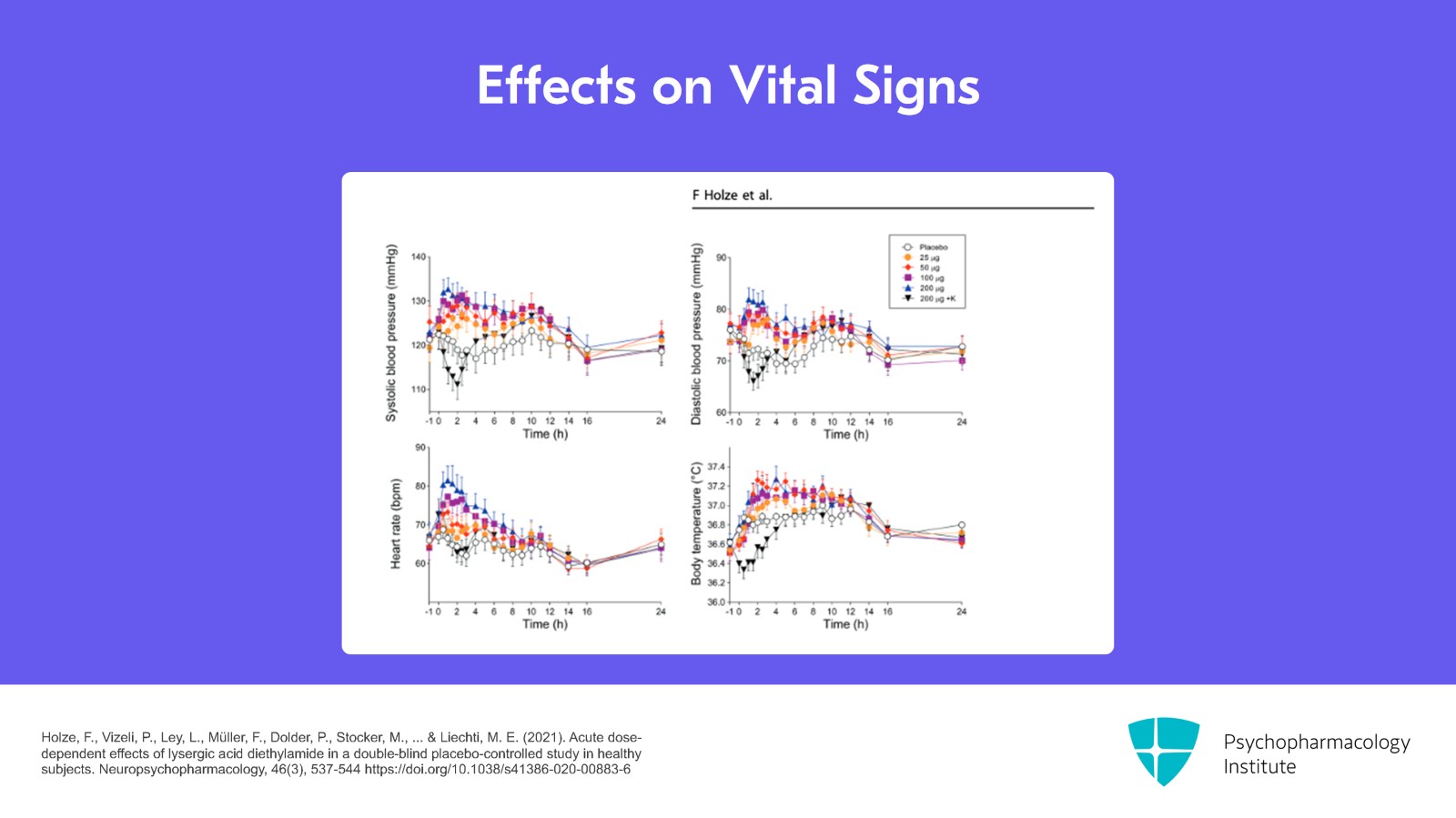
This is an LSD study using a dose-response relationship. So what you're seeing here is a range of placebo – 25, 50, 100 and 200 mcg of LSD. And the black upside-down triangles were the folks that were pretreated with ketanserin which as you recall is an antagonist at the 5-HT2A receptor and thus blocks the effects of LSD. And so you can see that there is a dose-response relationship with increasing doses of LSD leading to increases in vital sign parameters from systolic and diastolic blood pressure as well as heart rate and body temperature. Looking more closely at this though, you can see that for heart rate we're seeing a bump at the highest dose of about 20 beats per minute, the changes in blood pressure again are about 15 mmHg in the highest dose. So generally, not clinically significant for anyone who can tolerate a 15-point bump in blood pressure in other words.
References:
- Holze, F., Vizeli, P., Ley, L., Müller, F., Dolder, P., Stocker, M., … & Liechti, M. E. (2021). Acute dose-dependent effects of lysergic acid diethylamide in a double-blind placebo-controlled study in healthy subjects. Neuropsychopharmacology, 46(3), 537-544 https://doi.org/10.1038/s41386-020-00883-6
Slide 14 of 23
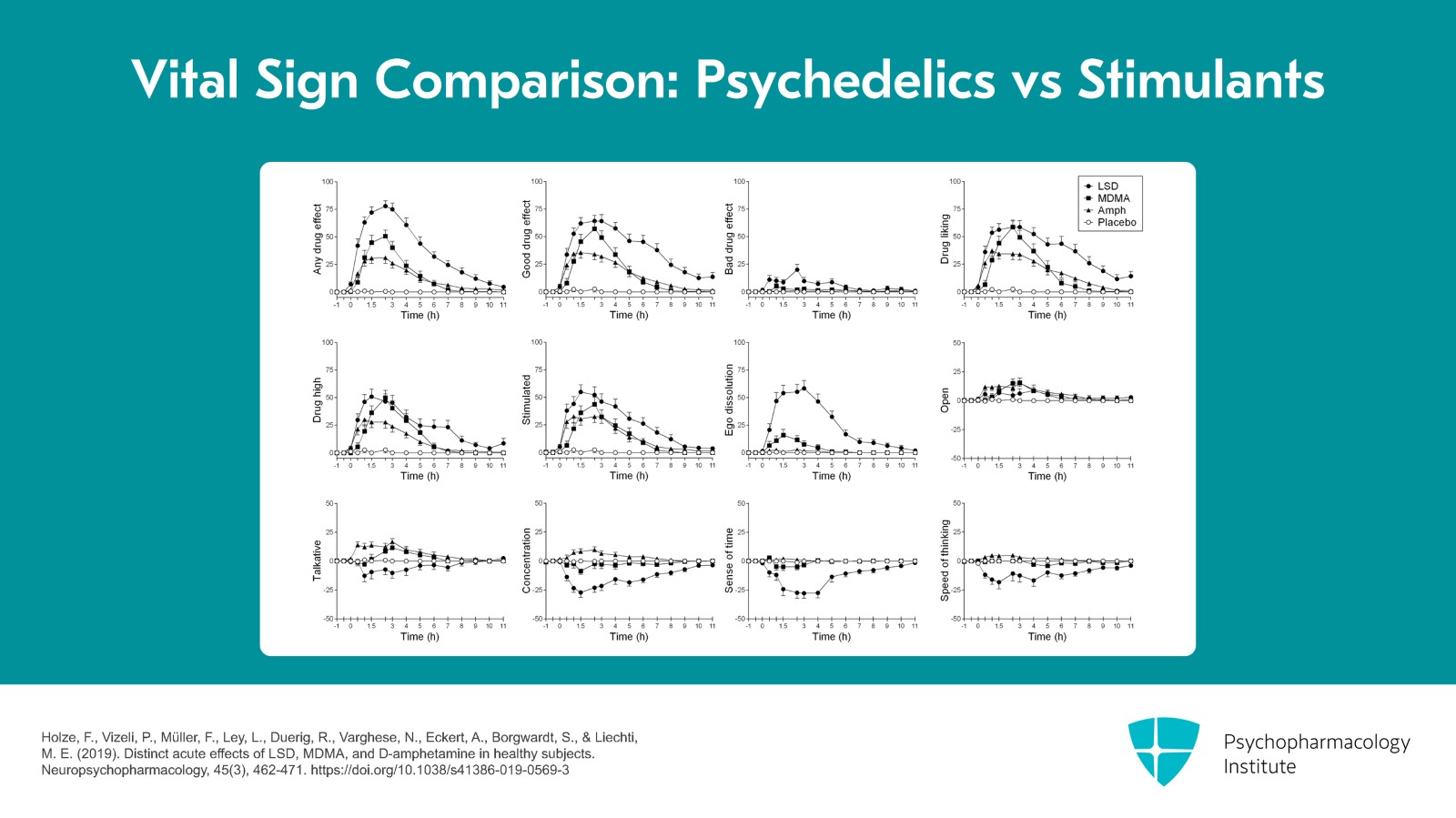
This is just another interesting study from a lab in Switzerland which does some very interesting pharmacological work showing the comparative effects on vital signs between LSD, amphetamine, MDMA, and placebo. And so you can see that actually the effects are really not that different from the effects of what I believe were normal clinical doses of amphetamine.
References:
- Holze, F., Vizeli, P., Müller, F., Ley, L., Duerig, R., Varghese, N., Eckert, A., Borgwardt, S., & Liechti, M. E. (2019). Distinct acute effects of LSD, MDMA, and D-amphetamine in healthy subjects. Neuropsychopharmacology, 45(3), 462-471. https://doi.org/10.1038/s41386-019-0569-3
Free Files
Download PDF and other files
Success!
Check your inbox, we sent you all the materials there.
Slide 15 of 23
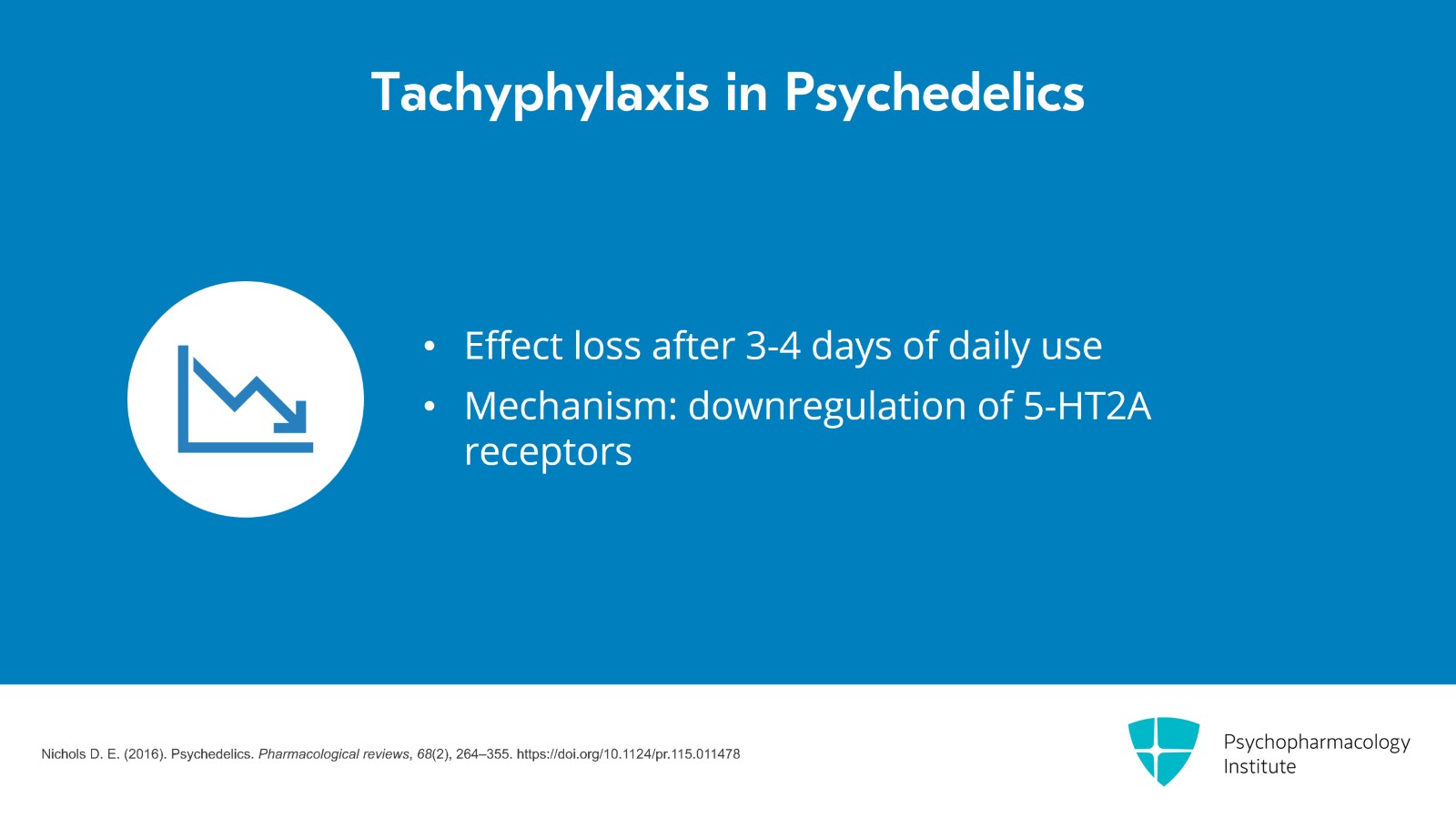
Tachyphylaxis. So this refers to the inability to achieve a previously regularly achieved drug effect after a certain amount of time. So we see this with SSRIs. Well, in the case of psychedelics, tachyphylaxis occurs very quickly. So for most individuals, three to four days of daily administration of a psychedelic will lead to a complete lockout of being able to get any psychedelic effect until there is a washout period of a couple of weeks or more. It's thought that there's probably cross-tolerance between agents. So someone could take LSD for three days and then they wouldn't get an effect from psilocybin on the fourth day. And this likely correlates with downregulation of the postsynaptic 5-HT2A receptors which is what's been seen in animal models.
References:
- Nichols D. E. (2016). Psychedelics. Pharmacological reviews, 68(2), 264–355. https://doi.org/10.1124/pr.115.011478
Slide 16 of 23
But I talk about tachyphylaxis primarily because the implications are that biological dependence on classic psychedelics is not actually possible. You need to be able to get a routine effect from a drug in order to develop a dependence. This is not possible with the classic psychedelics.
References:
- Nichols D. E. (2016). Psychedelics. Pharmacological reviews, 68(2), 264–355. https://doi.org/10.1124/pr.115.011478
Free Files
Download PDF and other files
Success!
Check your inbox, we sent you all the materials there.
Slide 17 of 23
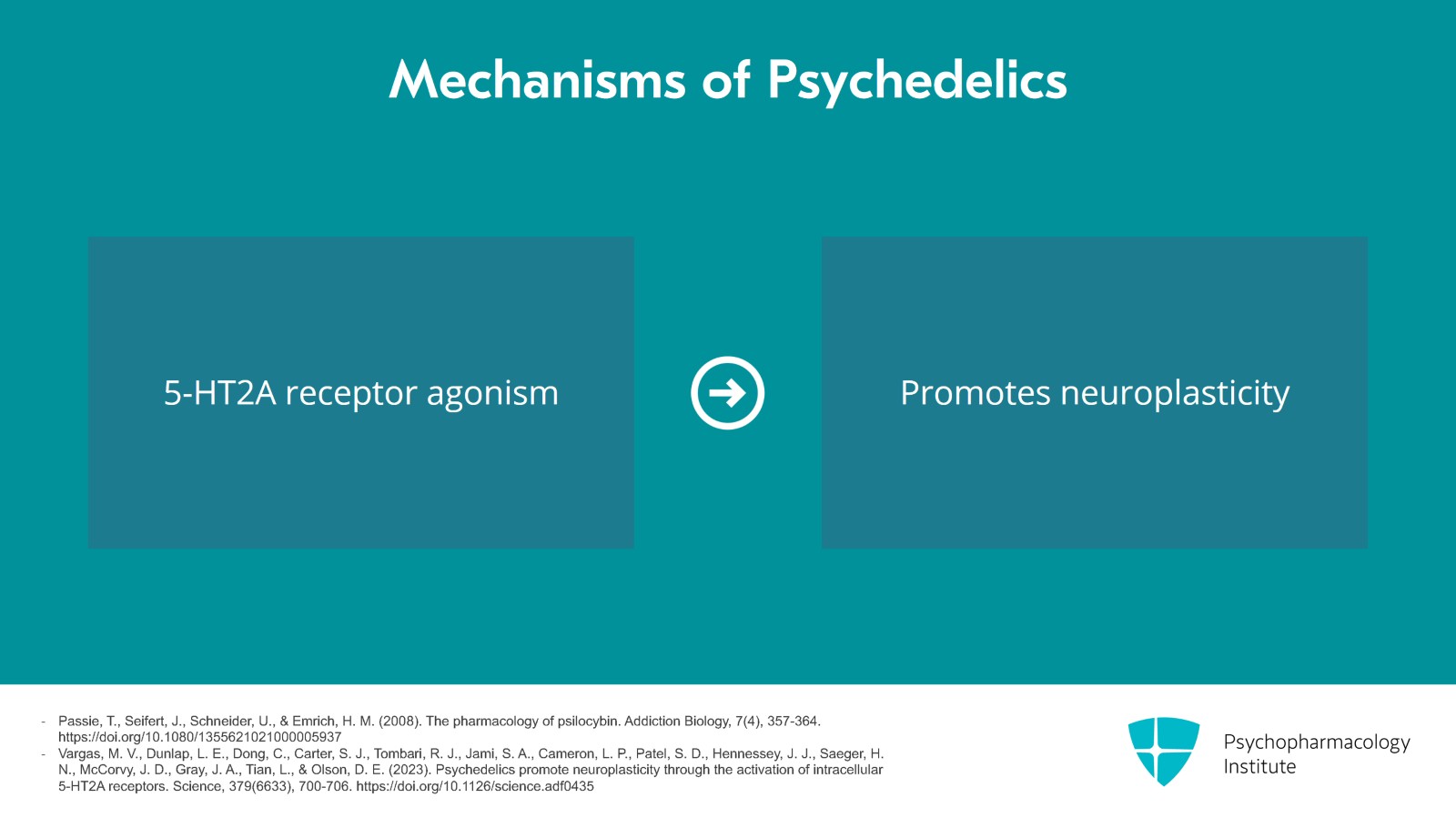
So the mechanisms of psychedelics. As I mentioned, the pharmacology is partial agonist activity at the 5-HT2A receptor. So we know that 5-HT2A agonists promote neuroplasticity, that means the growth of dendritic spines, increased synaptic proteins, formation of new synapses, pruning of old synapses. We know that stimulation of the 5-HT2A receptor leads to increases in markers of neuroplasticity such as brain-derived neurotrophic factor.
References:
- Passie, T., Seifert, J., Schneider, U., & Emrich, H. M. (2008). The pharmacology of psilocybin. Addiction Biology, 7(4), 357-364. https://doi.org/10.1080/1355621021000005937
- Vargas, M. V., Dunlap, L. E., Dong, C., Carter, S. J., Tombari, R. J., Jami, S. A., Cameron, L. P., Patel, S. D., Hennessey, J. J., Saeger, H. N., McCorvy, J. D., Gray, J. A., Tian, L., & Olson, D. E. (2023). Psychedelics promote neuroplasticity through the activation of intracellular 5-HT2A receptors. Science, 379(6633), 700-706. https://doi.org/10.1126/science.adf0435
Slide 18 of 23
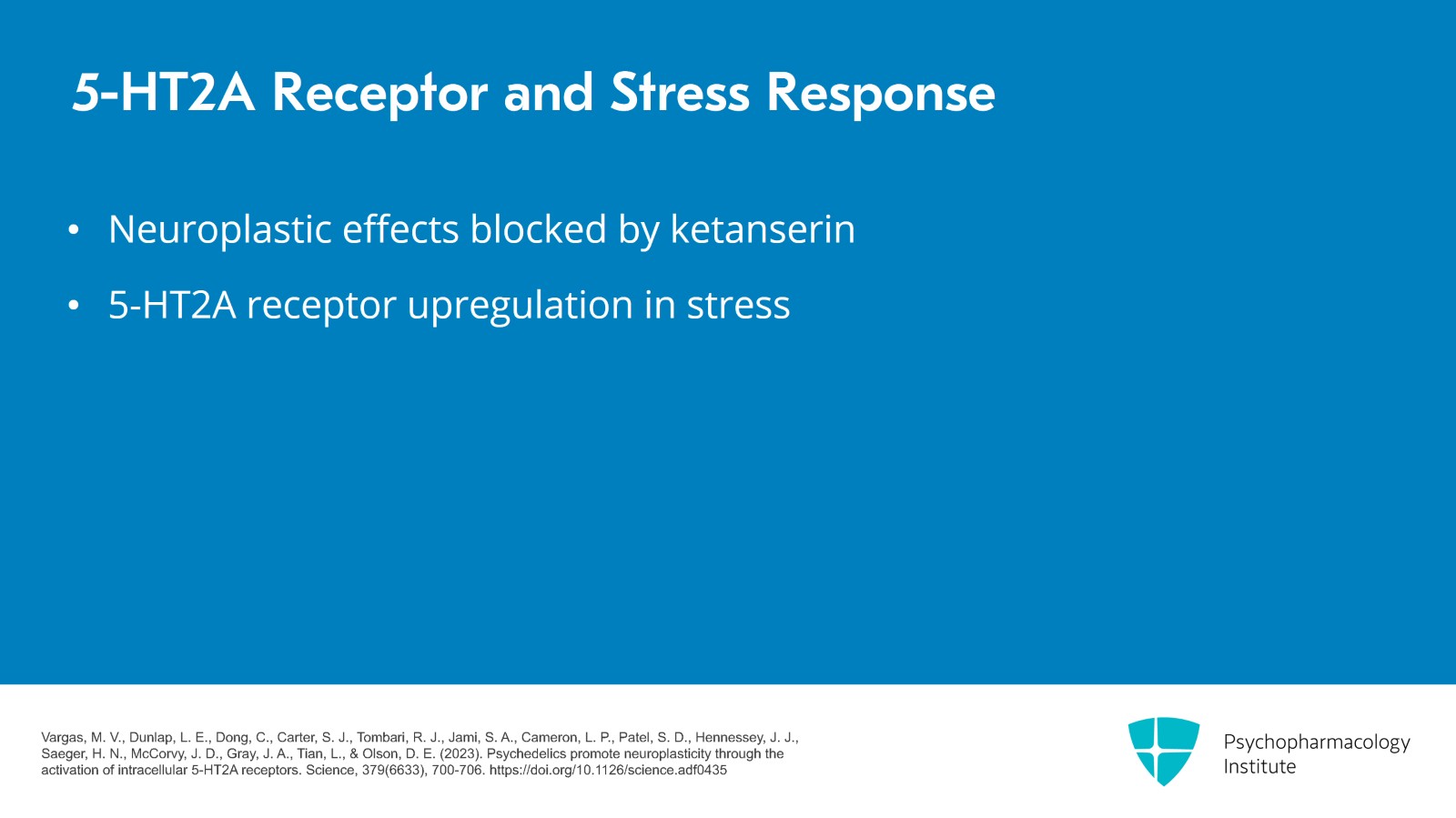
And it's been shown that this effect is blocked by ketanserin indicating that the 5-HT2A receptor is necessary for this neuroplastic effect. Now, the theory behind what the 5-HT2A receptor does is that this receptor system is upregulated both in number of receptors as well as function in multiple different animal models of stress. And so the theory is that psychedelics may be hijacking an innately conserved stress response and if one considers adaptability that this receptor system may activate naturally in times of extreme stress when an organism needs to rapidly unlearn a lot of deeply previously held assumptions about their environment in order to adapt and survive. So that's a very compelling theory as to why this receptor may exist and what psychedelics may actually be doing.
References:
- Vargas, M. V., Dunlap, L. E., Dong, C., Carter, S. J., Tombari, R. J., Jami, S. A., Cameron, L. P., Patel, S. D., Hennessey, J. J., Saeger, H. N., McCorvy, J. D., Gray, J. A., Tian, L., & Olson, D. E. (2023). Psychedelics promote neuroplasticity through the activation of intracellular 5-HT2A receptors. Science, 379(6633), 700-706. https://doi.org/10.1126/science.adf0435
Free Files
Download PDF and other files
Success!
Check your inbox, we sent you all the materials there.
Slide 19 of 23
Now, there's another receptor that I want to speak about, which is the 5-HT2B receptor. This is a receptor that's found on cardiac valvular leaflets. It came to attention in the 1990s when a drug called fen-phen was marketed. This is a combination of fenfluramine and phenethylamine. These are, both, both phenethylamine derivatives. And fen-phen ended up causing a number of patients to develop cardiac valvular fibrosis, and it was discovered that due to the fact that fen-phen agonized the 5-HT2B receptor that was inducing a fibroblastic response in the leaflets.
References:
- Rouaud, A., Calder, A. E., & Hasler, G. (2024). Microdosing psychedelics and the risk of cardiac fibrosis and valvulopathy: Comparison to known cardiotoxins. Journal of Psychopharmacology, 38(3), 217-224. https://doi.org/10.1177/02698811231225609
Slide 20 of 23
So psychedelics including psilocybin and MDMA and LSD all have been shown to have agonist activity at least in vitro at the same receptor. And so there's a theoretical potential risk that stimulating this receptor may lead to similar effects. Now, countering that with the fact that at this point out in the natural world there are thousands, if not millions, of patients who have been microdosing for years, who have had large numbers of exposure to psychedelics including MDMA, and we still have not seen any definitive evidence that this happens. But this is a theoretical risk and something to counsel patients about, particularly I would say with microdosing which of course is going to be much more frequent exposure to psychedelics.
References:
- Rouaud, A., Calder, A. E., & Hasler, G. (2024). Microdosing psychedelics and the risk of cardiac fibrosis and valvulopathy: Comparison to known cardiotoxins. Journal of Psychopharmacology, 38(3), 217-224. https://doi.org/10.1177/02698811231225609
Free Files
Download PDF and other files
Success!
Check your inbox, we sent you all the materials there.
Slide 21 of 23
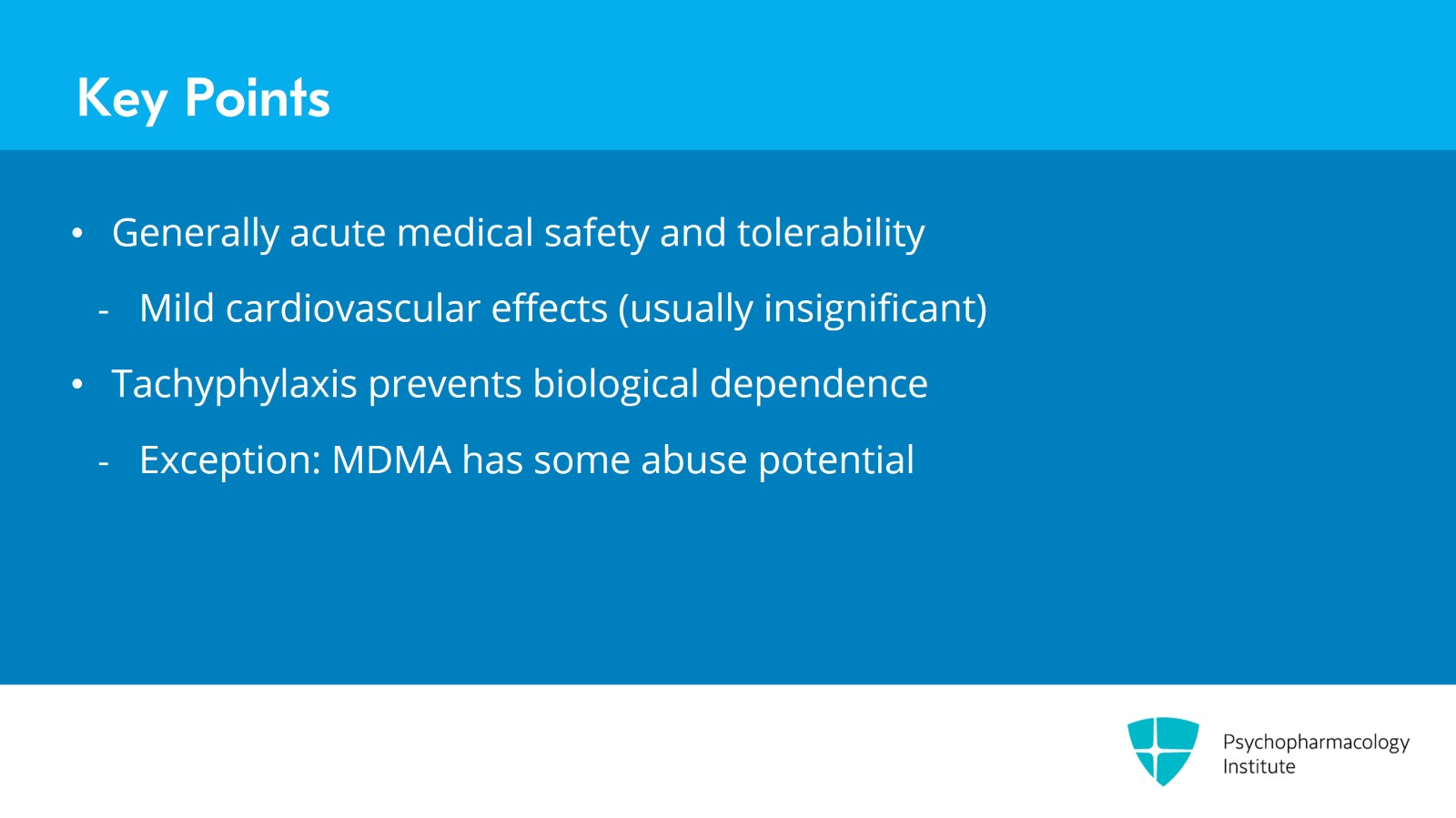
So the key points for this segment are that psychedelics are generally thought to be acutely medically safe and well tolerated. Mild increases in heart rate and blood pressure will be seen which in most but certainly not all cases are going to be clinically insignificant. Tachyphylaxis occurs after repeated administration of psychedelics such as psilocybin or LSD. This means that for these agents biological dependence is not possible. I would mention here that it's worth noting that MDMA as an atypical psychedelic does have some abuse potential, however, and the tachyphylaxis may not occur in exactly the same fashion as for psilocybin or LSD.
Slide 22 of 23
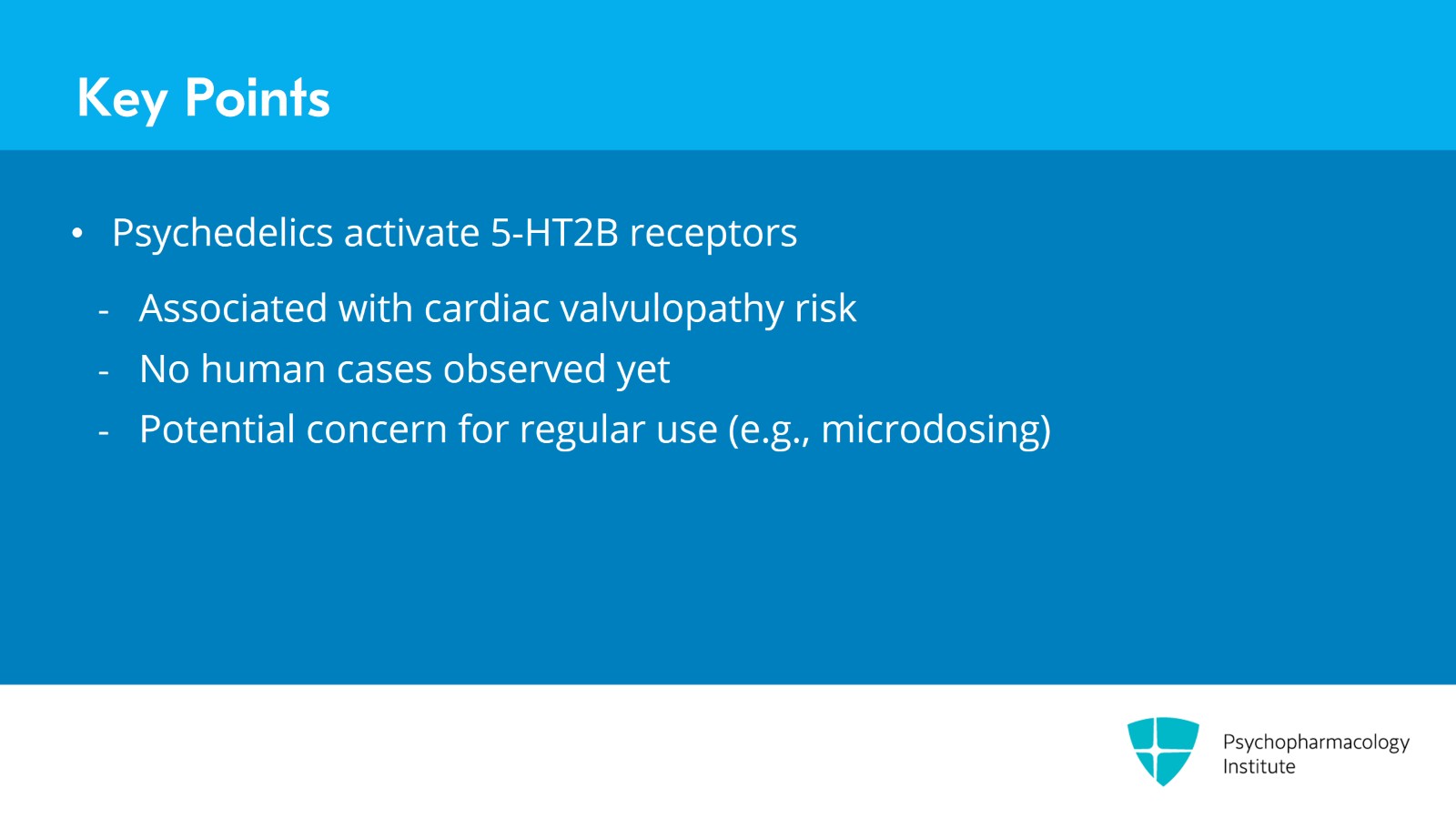
Third, most psychedelics are known to have agonist activity at 5-HT2B receptors which have previously been associated with cardiac valvulopathy. While this has not yet been seen in humans and the clinical implications are unclear, it does remain a potential risk with regular exposures such as microdosing.
Free Files
Download PDF and other files
Success!
Check your inbox, we sent you all the materials there.