Close Banner
Free Section  - Video Lectures

03. Stimulants Use: Course, Assessment, and Diagnosis

Published on December 1, 2021 Expired on April 1, 2025

Andrew Saxon, M.D.

Professor, Department of Psychiatry and Behavioral Sciences - University of Washington School of Medicine

Key Points

  • The course and prognosis for stimulant use disorder can vary widely.
  • Use DSM-5 criteria to make the diagnosis of stimulant use disorder. 
  • Asses for other substance use and co-occurring psychiatric and medical disorders.
  • The use of other substances along with stimulant use is common.
  • Most psychiatric disorders and serious medical side effects commonly co-occur with stimulant use disorder.

Free Downloads for Offline Access

  • Free Download Presentation File (PPTX)
  • Free Download Audio File (MP3)
  • Free Download Video (MP4)

Slides and Transcript
Slide 1 of 19

Now that you understand some of the pharmacology and neurobiology of stimulants, we need to take a step back and talk clinically about how to assess and make a treatment plan when you have a patient with stimulant use disorder.

Slide 2 of 19

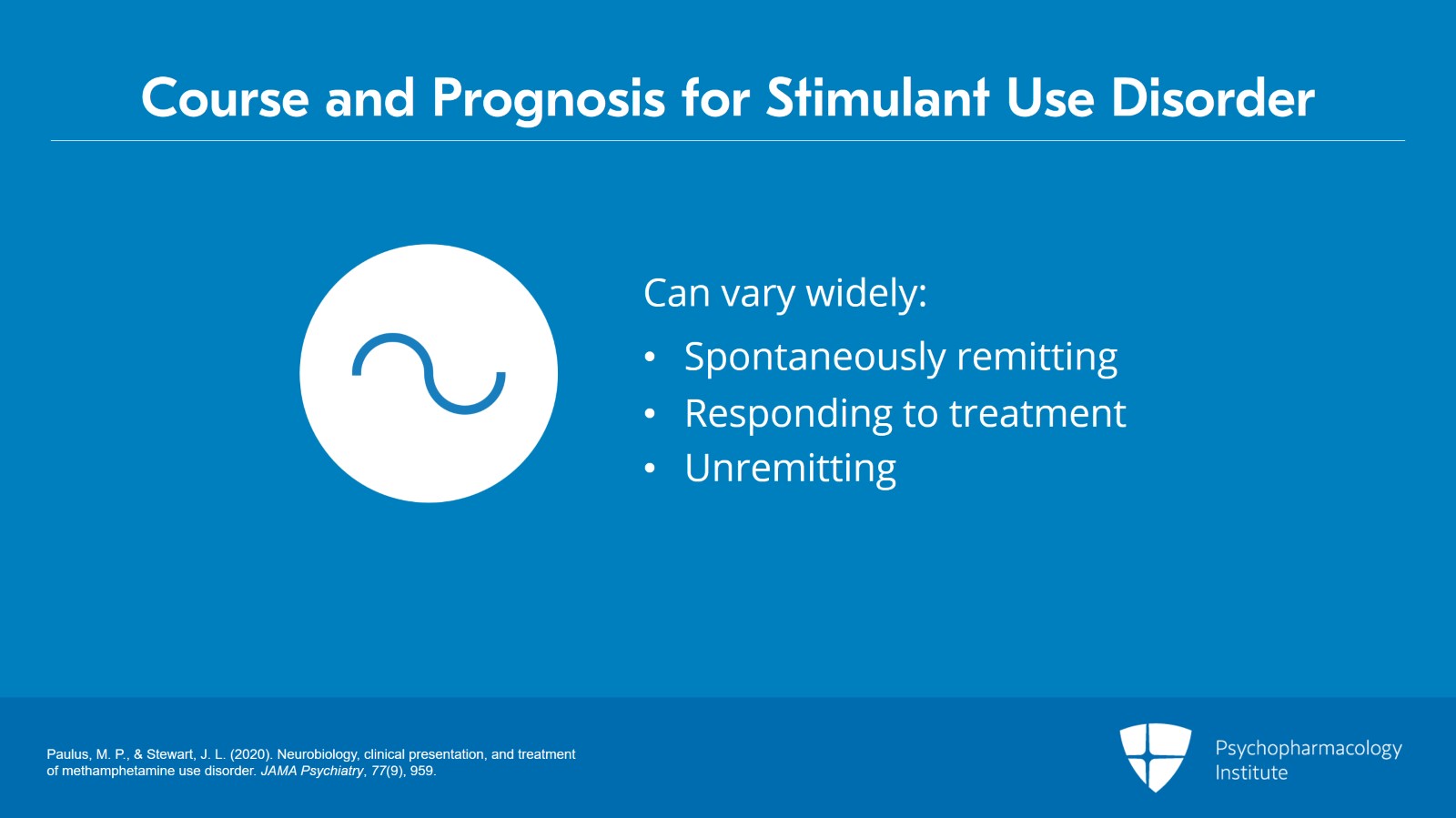
The course and prognosis for stimulant disorder can vary widely with some individuals spontaneously remitting, some having a good response to treatment, and others showing an unremitting downhill course into a lifetime of disability.
References:
  • Paulus, M. P., & Stewart, J. L. (2020). Neurobiology, clinical presentation, and treatment of methamphetamine use disorder. JAMA Psychiatry, 77(9), 959.
Free Files
Success!
Check your inbox, we sent you all the materials there.
Slide 3 of 19

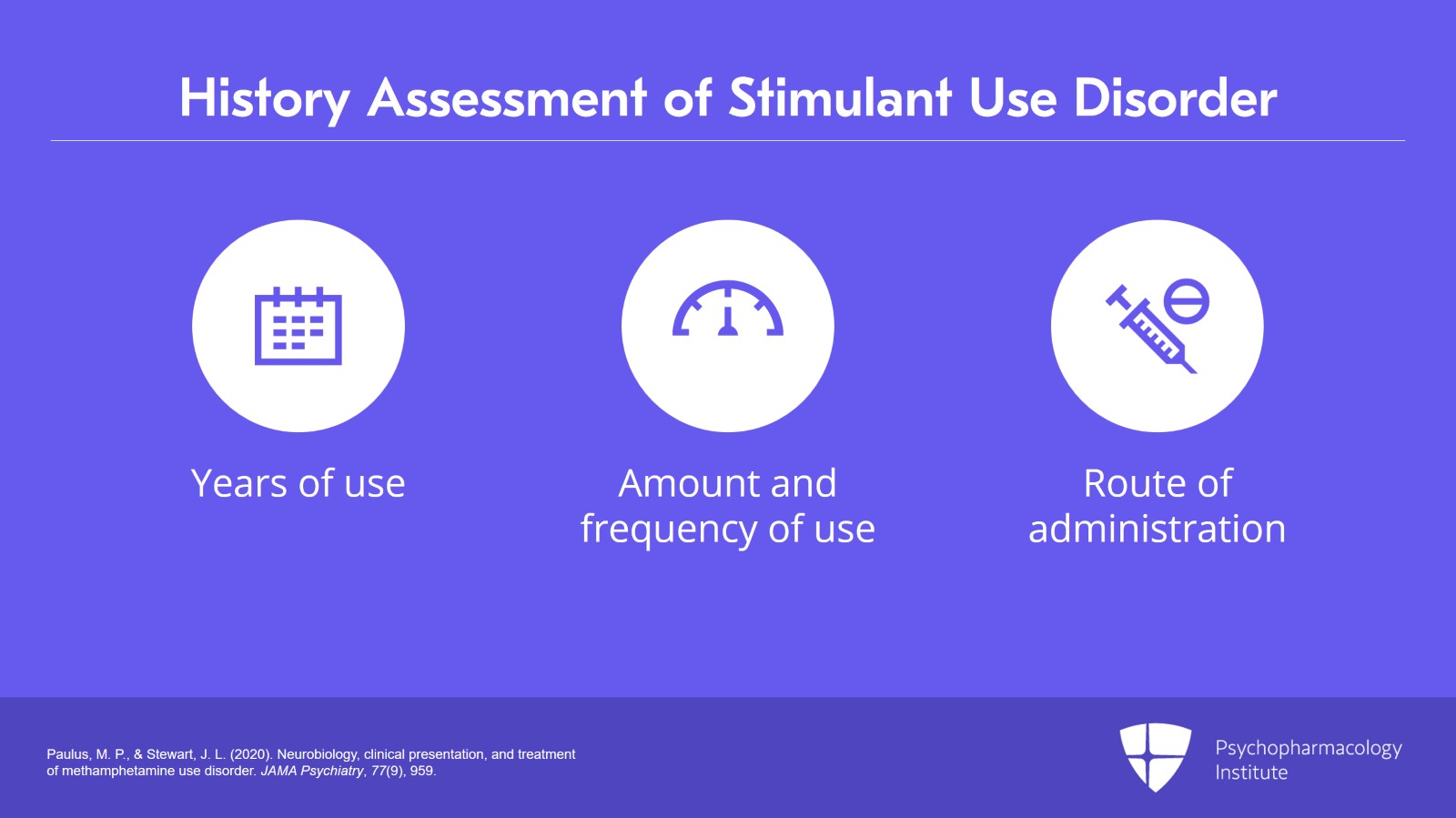
There are areas of the history that are very valuable to obtain in order to treat this disorder the best and that would include the number of years of use that the person has had of the stimulant, the amount and frequency of their use, the route of administration which can vary from oral to intranasal to smoking to intravenous.
References:
  • Paulus, M. P., & Stewart, J. L. (2020). Neurobiology, clinical presentation, and treatment of methamphetamine use disorder. JAMA Psychiatry, 77(9), 959.

Slide 4 of 19

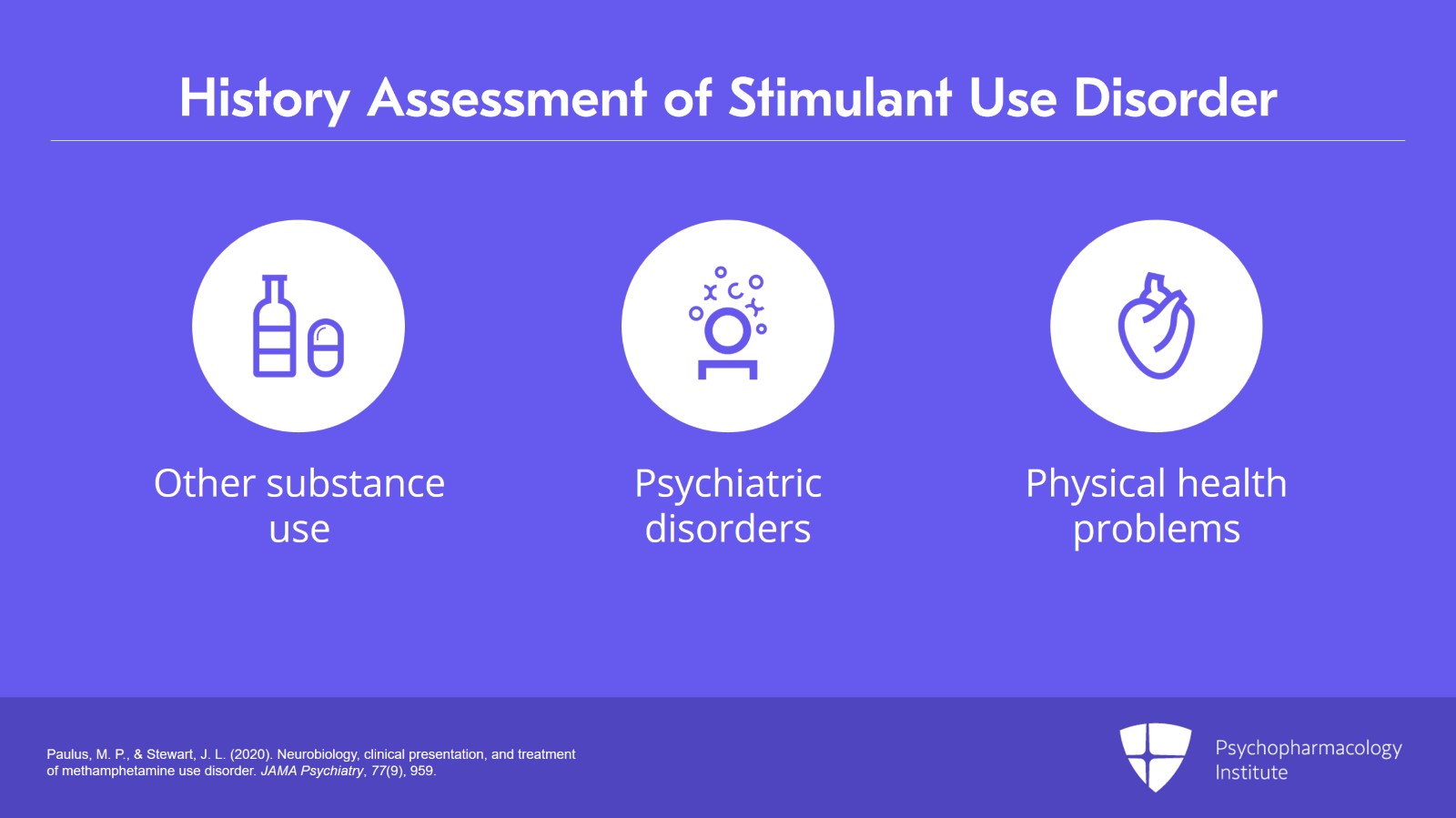
Other substance use because very typically when people have a stimulant use disorder they may be using other substances. Psychiatric disorders are very common to occur with people who have stimulant use disorder and these can either be psychiatric disorders that are caused by the stimulant use or they can be independent psychiatric disorders. And the stimulants themselves are pretty toxic compounds when they're used excessively so that creates a lot of physical health problems as well.
References:
  • Paulus, M. P., & Stewart, J. L. (2020). Neurobiology, clinical presentation, and treatment of methamphetamine use disorder. JAMA Psychiatry, 77(9), 959.
Free Files
Success!
Check your inbox, we sent you all the materials there.
Slide 5 of 19

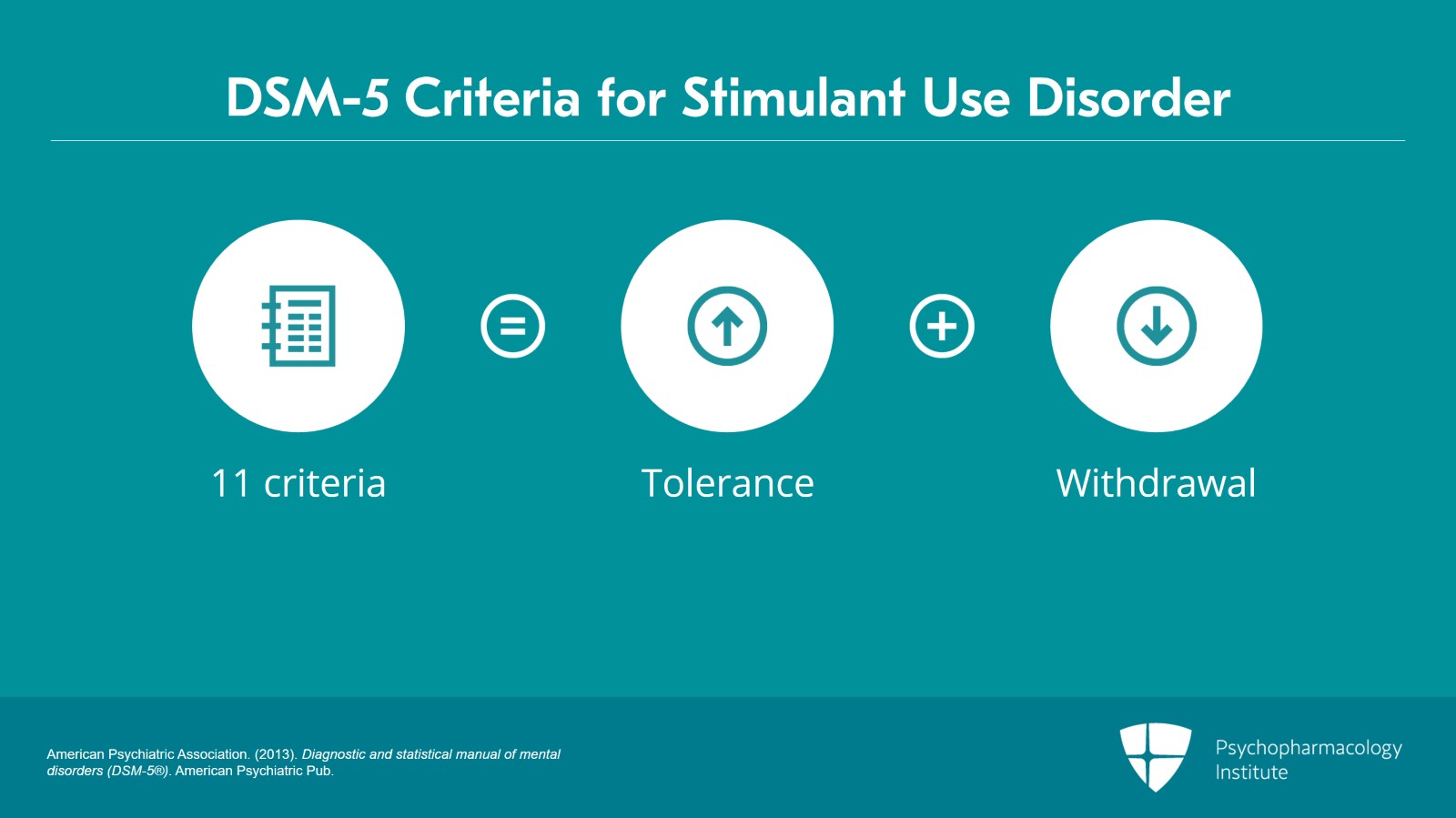
So we want to make a diagnosis of stimulant use disorder using the DSM-5 criteria. The DSM-5 criteria are 11 criteria. The first two criteria are the existence of tolerance or the presence of withdrawal.
References:
  • American Psychiatric Association. (2013). Diagnostic and statistical manual of mental disorders (DSM-5®). American Psychiatric Pub.

Slide 6 of 19

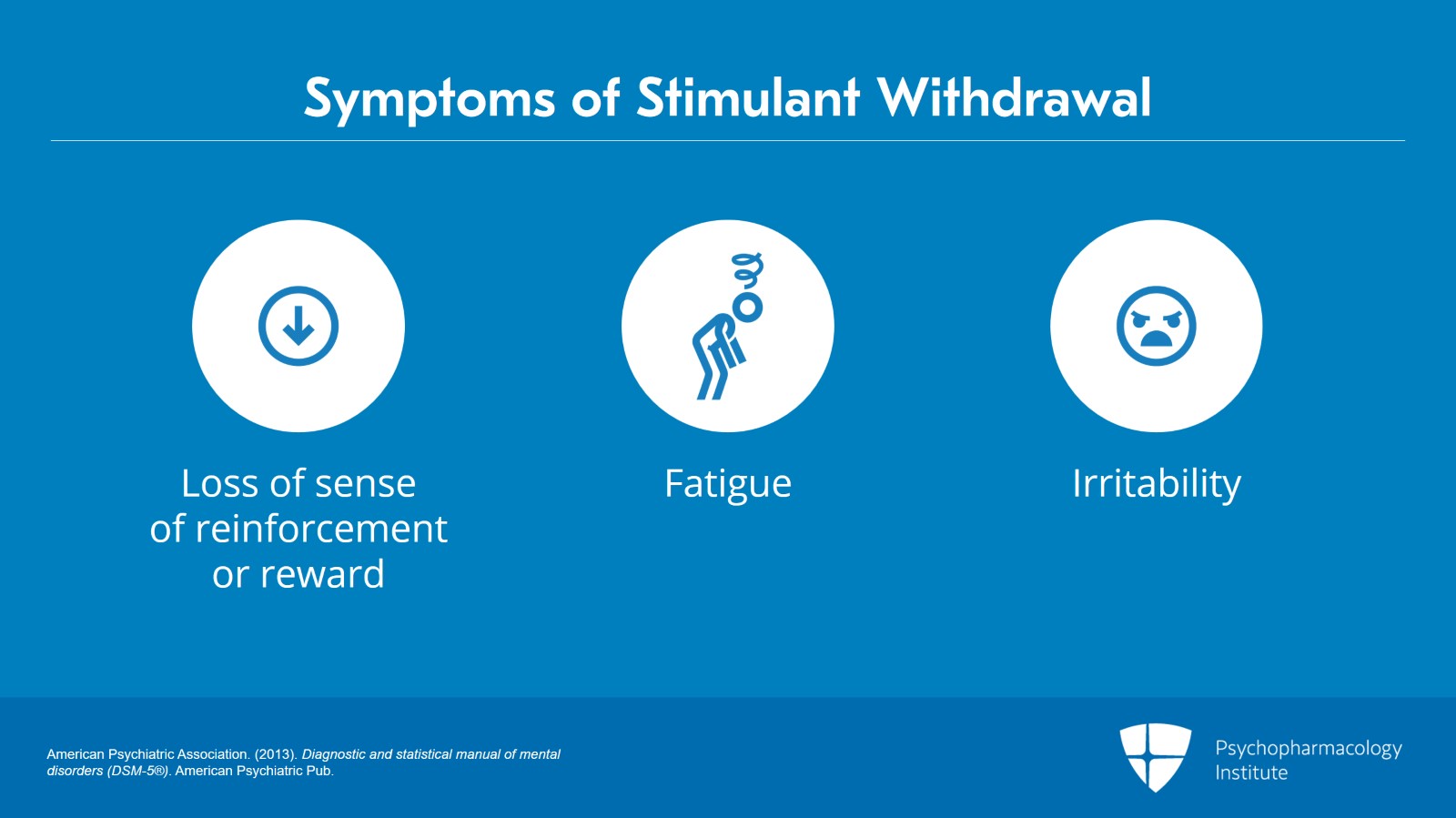
And we haven't talked much about stimulant withdrawal but what typically happens because stimulants are so activating when the stimulants are stopped people don't feel any sense of reinforcement or reward and they feel like life is very bland but they also can be very fatigued, loss of energy and very irritable.
References:
  • American Psychiatric Association. (2013). Diagnostic and statistical manual of mental disorders (DSM-5®). American Psychiatric Pub.
Free Files
Success!
Check your inbox, we sent you all the materials there.
Slide 7 of 19

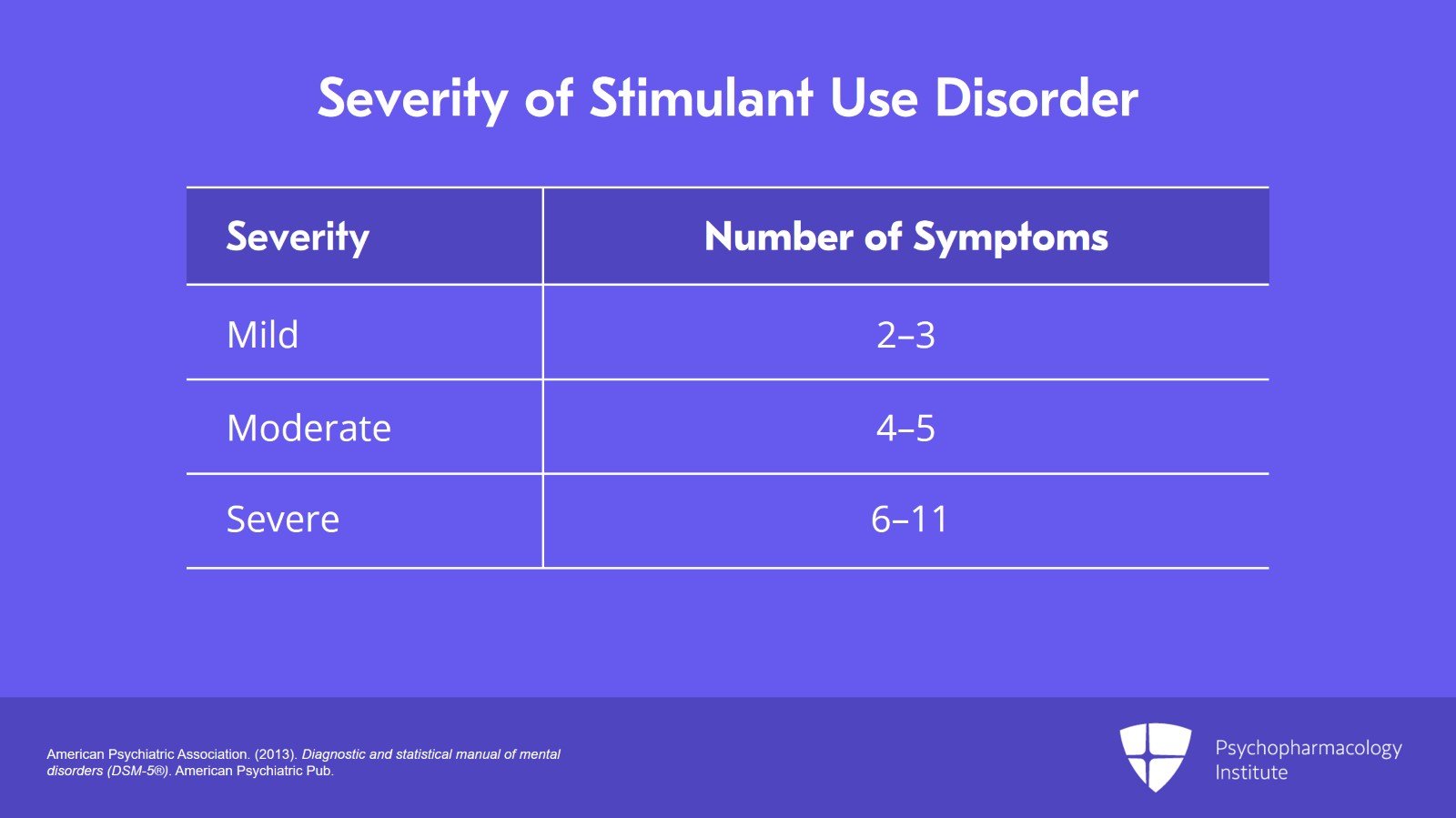
And in order to make a diagnosis, there are different levels of severity that's measured by the number of symptoms. So, two to three of the criteria would be a mild disorder, four to five would be moderate and six through 11 would be severe.
References:
  • American Psychiatric Association. (2013). Diagnostic and statistical manual of mental disorders (DSM-5®). American Psychiatric Pub.

Slide 8 of 19

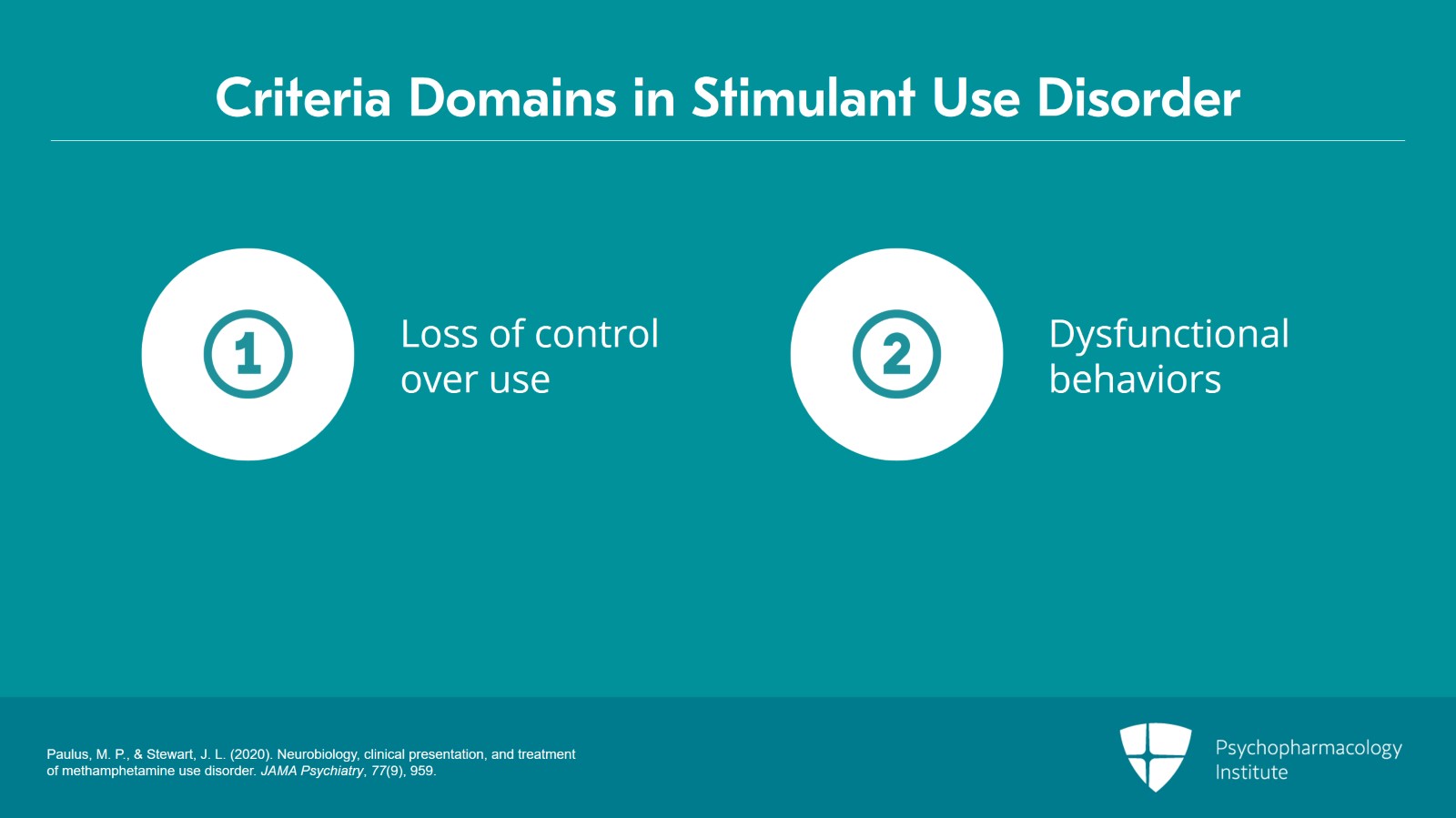
And the criteria can be broken down basically into two domains. One is loss of control over use and the other is beginning to develop dysfunctional behaviors because of the substances.
References:
  • Paulus, M. P., & Stewart, J. L. (2020). Neurobiology, clinical presentation, and treatment of methamphetamine use disorder. JAMA Psychiatry, 77(9), 959.
Free Files
Success!
Check your inbox, we sent you all the materials there.
Slide 9 of 19

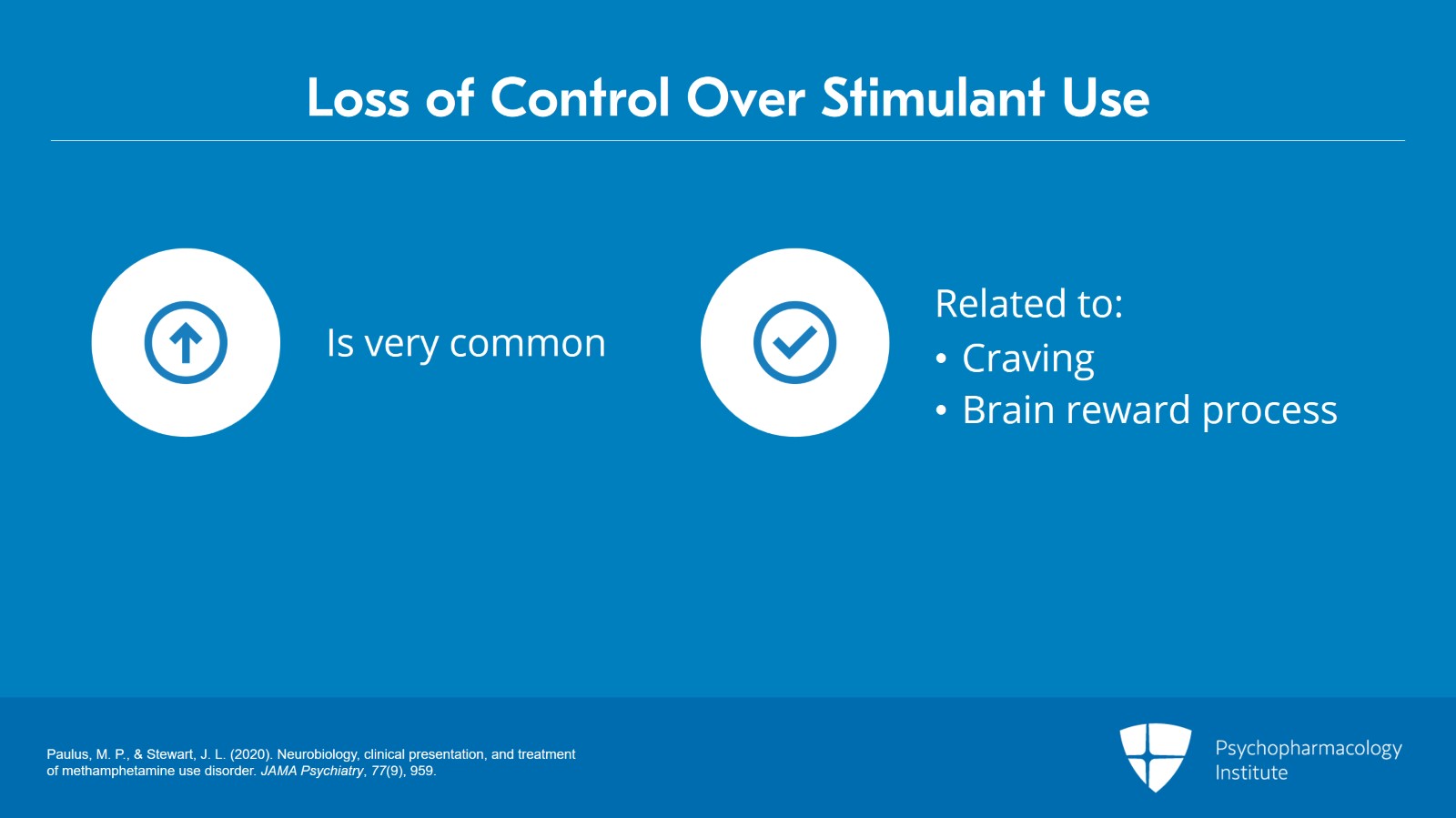
Loss of control over use is very common. The person might say, "I'm just going to snort one little bit of cocaine tonight just to get my energy up a little bit," and then they end up using several grams without having had that plan. Craving for stimulants is very common when people can't get that. Because they remember that the stimulant helped them feel good, helped their brain reward processes work properly or seem to work properly, they're constantly thinking about getting some of that so they can feel good.
References:
  • Paulus, M. P., & Stewart, J. L. (2020). Neurobiology, clinical presentation, and treatment of methamphetamine use disorder. JAMA Psychiatry, 77(9), 959.

Slide 10 of 19

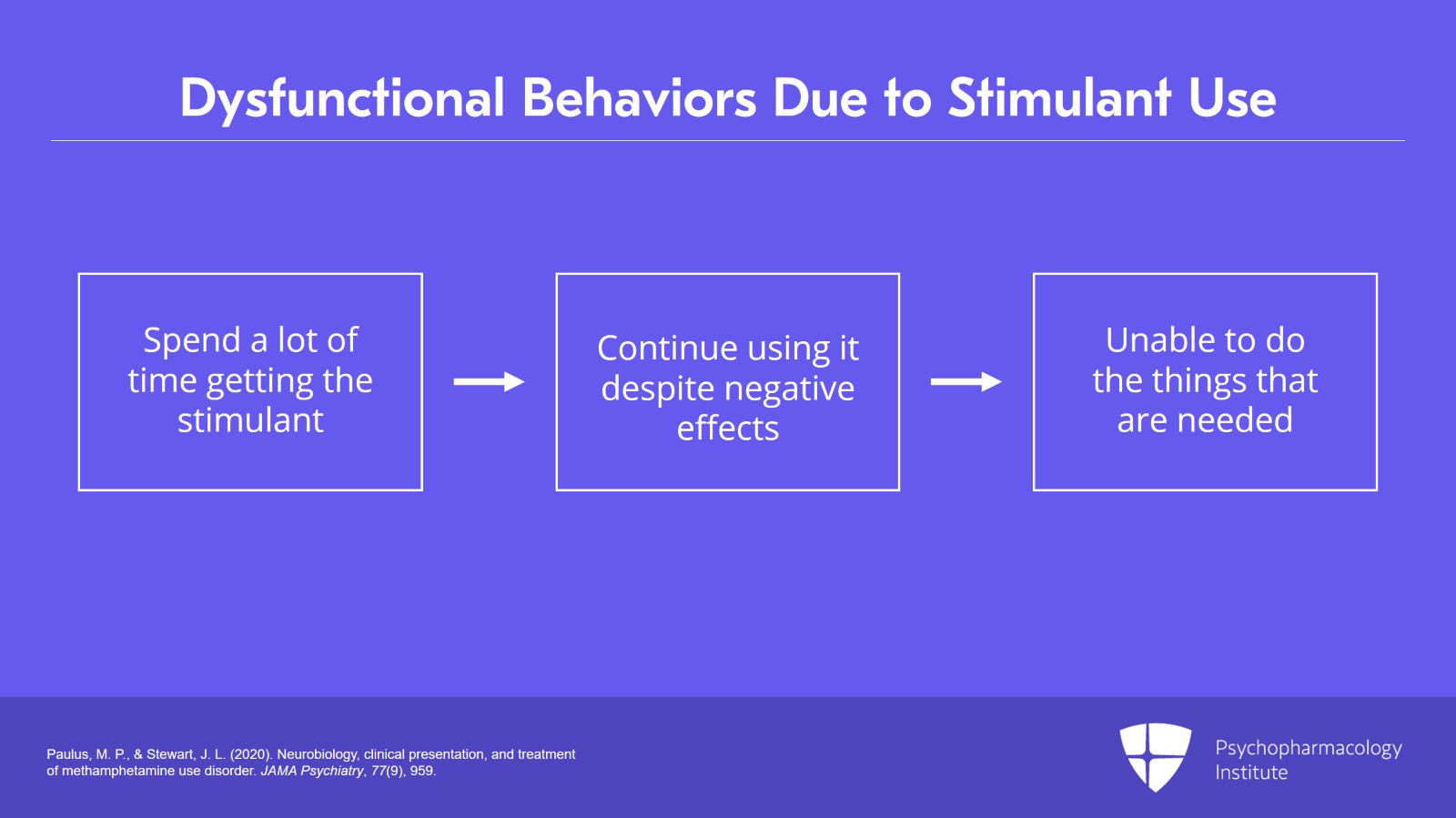
Back to the area of dysfunction, people often have to spend a lot of time getting the stimulants. That means that people are giving up their other activities. They continue using it despite negative effects. So commonly stimulants, cause insomnia and people become sleep deprived yet they still continue using it. And when the substance use disorder gets so bad, people are not really able to do the things they need to do like work, go to school, do their childcare.
References:
  • Paulus, M. P., & Stewart, J. L. (2020). Neurobiology, clinical presentation, and treatment of methamphetamine use disorder. JAMA Psychiatry, 77(9), 959.
Free Files
Success!
Check your inbox, we sent you all the materials there.
Slide 11 of 19

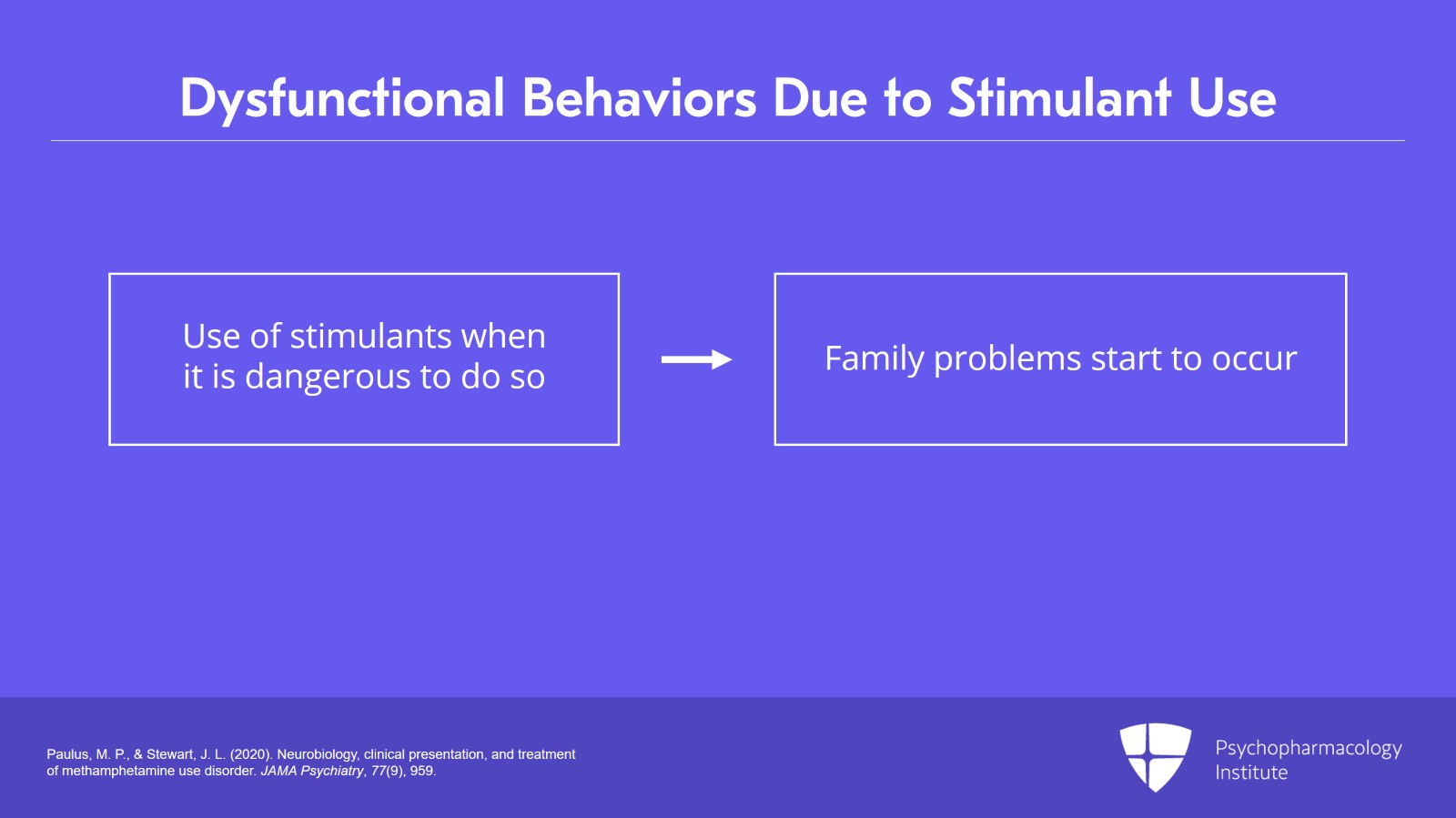
And then it's very common for these people to use stimulants when it's dangerous to do so and the typical thing would be driving under the influence, and finally, family problems start to occur because the person is focused on the drug use and not the people in their lives.
References:
  • Paulus, M. P., & Stewart, J. L. (2020). Neurobiology, clinical presentation, and treatment of methamphetamine use disorder. JAMA Psychiatry, 77(9), 959.

Slide 12 of 19

Frequently, other substance use along with stimulants is happening. We'll talk a bit about how that might be important for some of the pharmacotherapies which can target some of these other co-occurring substances.
References:
  • Darke, S., & Hall, W. (1995). Levels and correlates of polydrug use among heroin users and regular amphetamine users. Drug and Alcohol Dependence, 39(3), 231-235.
Free Files
Success!
Check your inbox, we sent you all the materials there.
Slide 13 of 19

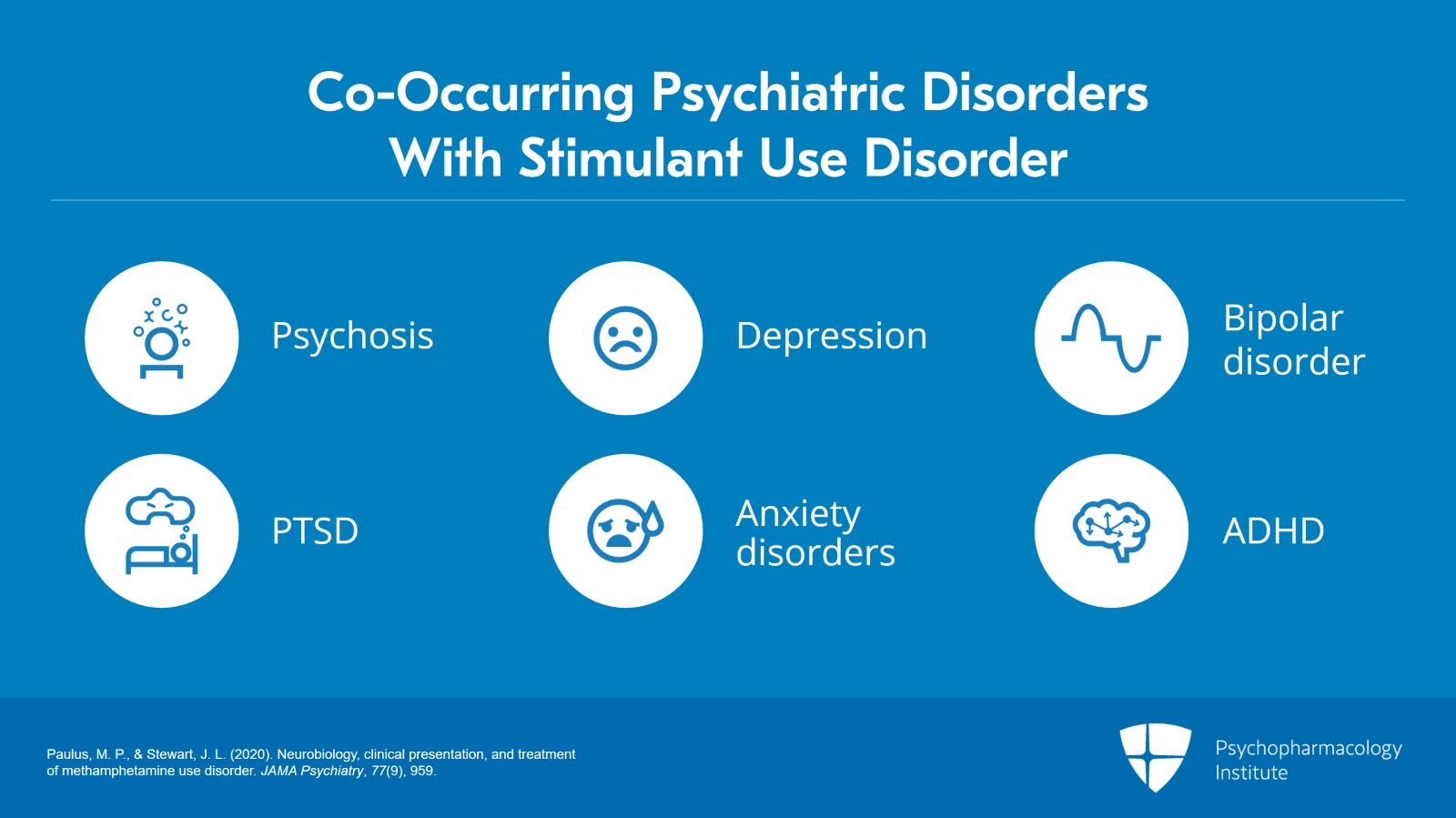
And we mentioned the co-occurring psychiatric disorders, which can either be stimulant induced or primary, so that includes psychosis, depression, bipolar disorder, posttraumatic stress disorder, anxiety disorders and attention deficit hyperactivity disorder as a special case because the presence of attention deficit hyperactivity disorder may modify the pharmacotherapy treatment of stimulant disorder.
References:
  • Paulus, M. P., & Stewart, J. L. (2020). Neurobiology, clinical presentation, and treatment of methamphetamine use disorder. JAMA Psychiatry, 77(9), 959.

Slide 14 of 19

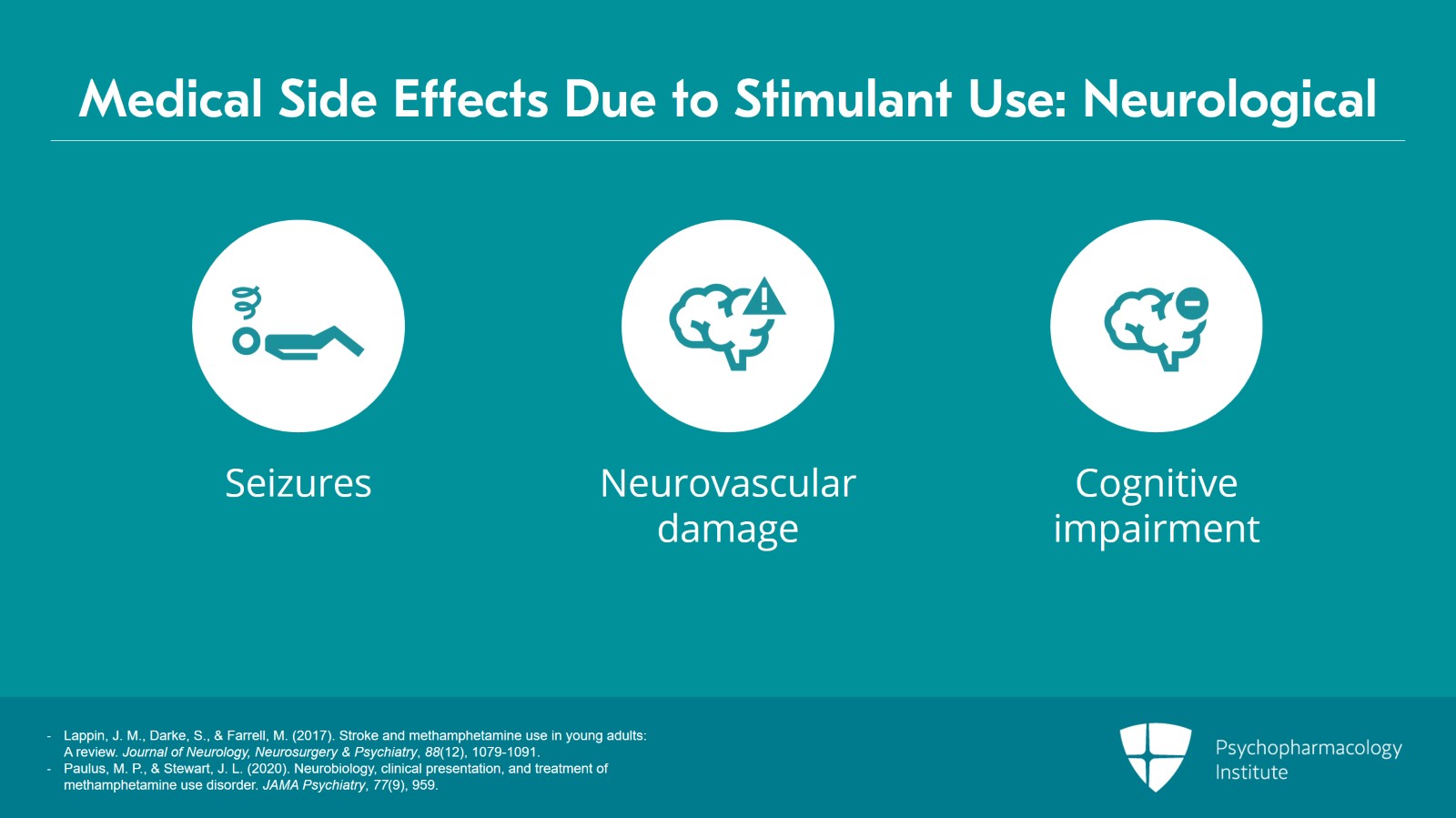
And then there could be very serious medical side effects. Seizures are common. Neurovascular damage is common. And cognitive impairment is common particularly with the amphetamine-like stimulants and part of that may be due to the cytotoxic effects of dopamine being in the cytoplasm. Oftentimes, the cognitive impairment improves with abstinence but not always.
References:
  • Lappin, J. M., Darke, S., & Farrell, M. (2017). Stroke and methamphetamine use in young adults: A review. Journal of Neurology, Neurosurgery & Psychiatry, 88(12), 1079-1091.
  • Paulus, M. P., & Stewart, J. L. (2020). Neurobiology, clinical presentation, and treatment of methamphetamine use disorder. JAMA Psychiatry, 77(9), 959.
Free Files
Success!
Check your inbox, we sent you all the materials there.
Slide 15 of 19

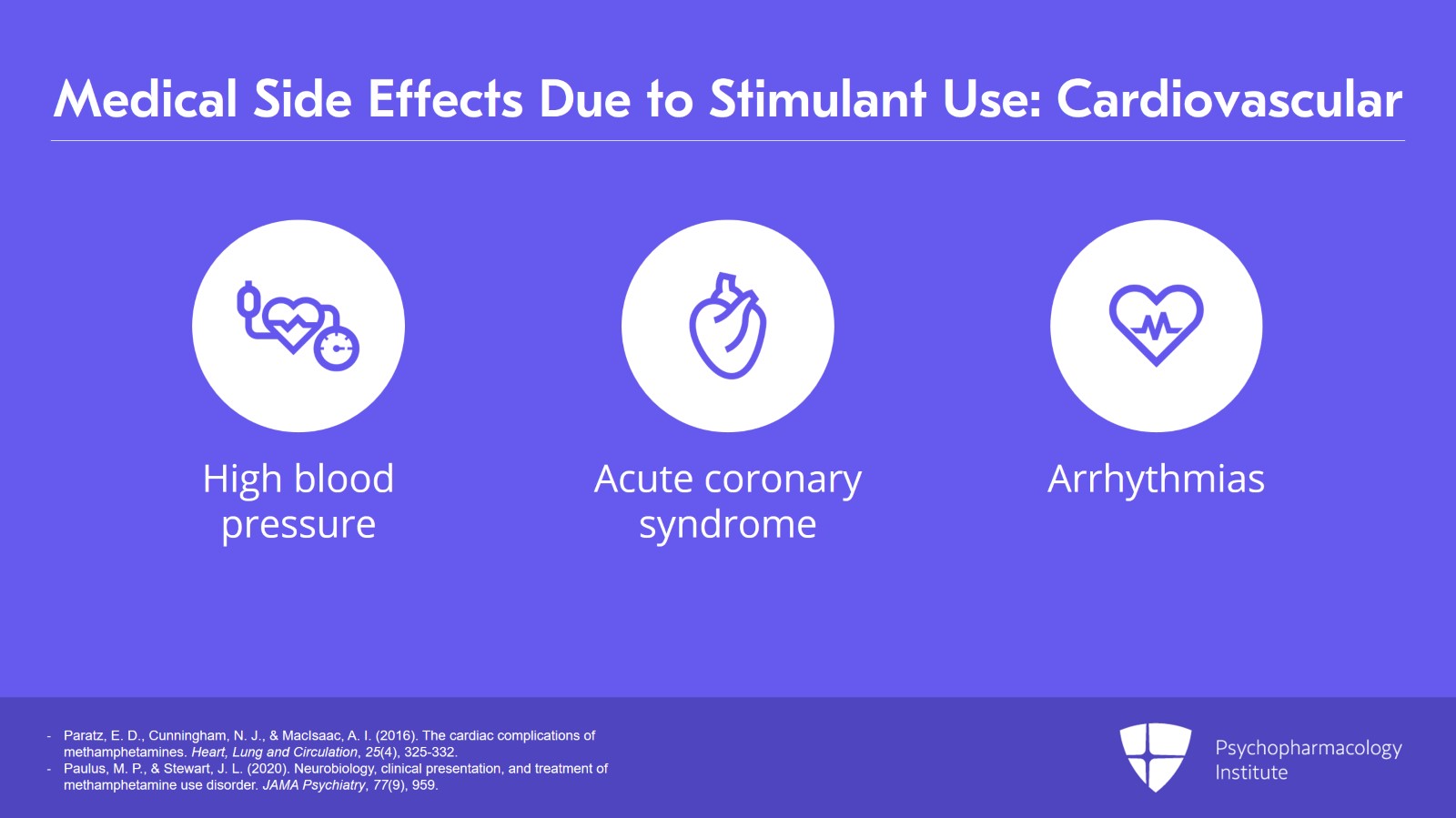
And then because the stimulants also block the reuptake of norepinephrine which is the main compound both in the brain and in the periphery stimulating our sympathetic nervous system, high blood pressure, occlusion of coronary arteries, and cardiac arrhythmias can happen.
References:
  • Paratz, E. D., Cunningham, N. J., & MacIsaac, A. I. (2016). The cardiac complications of methamphetamines. Heart, Lung and Circulation, 25(4), 325-332.
  • Paulus, M. P., & Stewart, J. L. (2020). Neurobiology, clinical presentation, and treatment of methamphetamine use disorder. JAMA Psychiatry, 77(9), 959.

Slide 16 of 19

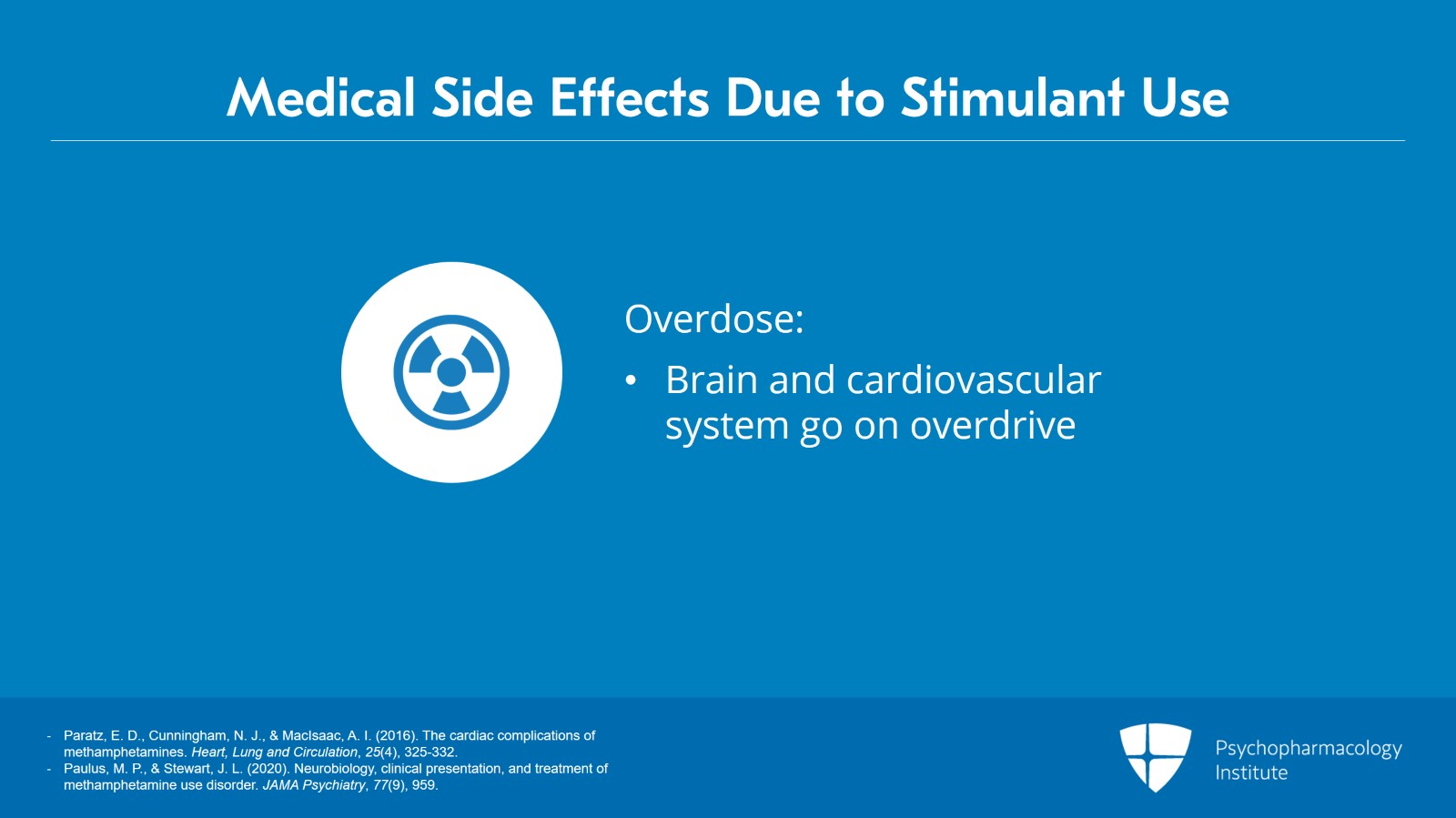
And then of course, overdose can happen. It's often in combination with those other substances but basically what happens in overdose is that the brain just goes on overdrive, and the cardiovascular system goes on overdrive, and people just die of cardiovascular collapse from too much stimulant.
References:
  • Paratz, E. D., Cunningham, N. J., & MacIsaac, A. I. (2016). The cardiac complications of methamphetamines. Heart, Lung and Circulation, 25(4), 325-332.
  • Paulus, M. P., & Stewart, J. L. (2020). Neurobiology, clinical presentation, and treatment of methamphetamine use disorder. JAMA Psychiatry, 77(9), 959.
Free Files
Success!
Check your inbox, we sent you all the materials there.
Slide 17 of 19

So to summarize this section, the course and prognosis for stimulant disorder can vary widely. Use the DSM-5 criteria to make the diagnosis of stimulant use disorder and when possible, assess for other substance use, and co-occurring psychiatric and medical disorders. 

Slide 18 of 19

Use of many other substances along with stimulants is common. Most psychiatric disorders especially ADHD and very serious medical side effects are very common to occur with people who have stimulant use disorder.
Free Files
Success!
Check your inbox, we sent you all the materials there.
Slide 19 of 19

Learning Objectives:

After completing this activity, the learner will be able to:

  1. Review the pathophysiology and clinical course of stimulant use disorder.
  2. Discuss the appropriate use of psychotropic medications for the management of stimulant use disorder.
  3. Cite specific strategies in the management of specific stimulant use disorders, such as methamphetamine and cocaine use disorders.

Original Release Date: 12/01/2021

Review and Re-release Date: 03/01/2024

Expiration Date: 04/01/2025

Expert: Andrew Saxon, M.D.

Medical Editor: Melissa Mariano, M.D

Relevant Financial Disclosures: 

The following planners, faculty, and reviewers have the following relevant financial relationships with commercial interests to disclose:

Dr. Saxon has disclosed the following relationships:

  • Indivior, Inc.: Advisory board
  • UpToDate, Inc.: Section Editor
  • Indivior, Inc.: Advisory board
  • UpToDate, Inc.: Editor

All of the relevant financial relationships listed for these individuals have been mitigated.

Contact Information: For questions regarding the content or access to this activity, contact us at support@psychopharmacologyinstitute.com

Instructions for Participation and Credit:

Participants must complete the activity online during the valid credit period that is noted above.

Follow these steps to earn CME credit:

  1. View the required educational content provided on this course page.
  2. Complete the Post Activity Evaluation for providing the necessary feedback for continuing accreditation purposes and for the development of future activities. NOTE: Completing the Post Activity Evaluation after the quiz is required to receive the earned credit.
  3. Download your certificate.

Accreditation Statement

This activity has been planned and implemented in accordance with the accreditation requirements and policies of the Accreditation Council for Continuing Medical Education through the joint providership of Medical Academy LLC and the Psychopharmacology Institute. Medical Academy is accredited by the ACCME to provide continuing medical education for physicians.

Credit Designation Statement

Medical Academy designates this enduring activity for a maximum of 1 AMA PRA Category 1 credit(s). Physicians should claim only the credit commensurate with the extent of their participation in the activity.

Free Files
Success!
Check your inbox, we sent you all the materials there.
Continue in the website
Instant access modal

Become a Bronze, Silver, Gold, Bronze extended, Silver extended or Gold extended Member.

2025–26 Psychopharmacology CME Program

Unlock up to 155 CME Credits, including 40 SA CME Credits.