Slides and Transcript
Slide 1 of 11
We’re going to talk about First-Line Pharmacotherapy for OCD. This is very important, because one of the causes of treatment resistance I see is not using SSRIs properly as anti-obsessional agents.
Slide 2 of 11
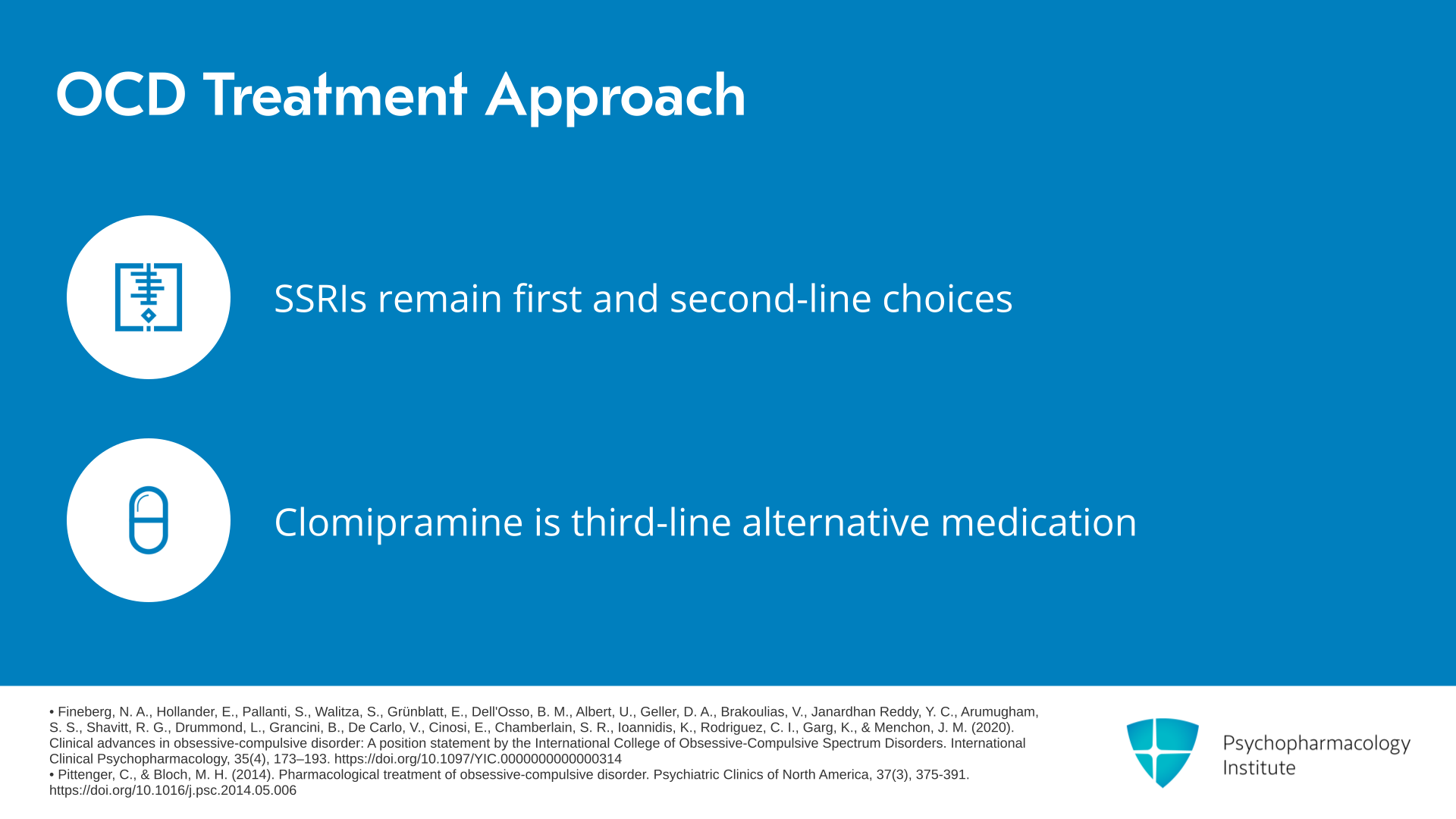
So the medications of choice for OCD – SSRIs are the first-line and the second-line medication, and clomipramine will be considered a third-line medication. And if other SSRIs are needed to be used after that, they can be in the cases of intolerance or side effects, or treatment resistance. So it’s really important to not go outside of the SSRI class.
References:
- Fineberg, N. A., Hollander, E., Pallanti, S., Walitza, S., Grünblatt, E., Dell'Osso, B. M., Albert, U., Geller, D. A., Brakoulias, V., Janardhan Reddy, Y. C., Arumugham, S. S., Shavitt, R. G., Drummond, L., Grancini, B., De Carlo, V., Cinosi, E., Chamberlain, S. R., Ioannidis, K., Rodriguez, C. I., Garg, K., & Menchon, J. M. (2020). Clinical advances in obsessive-compulsive disorder: A position statement by the International College of Obsessive-Compulsive Spectrum Disorders. International Clinical Psychopharmacology, 35(4), 173–193. https://doi.org/10.1097/YIC.0000000000000314
- Pittenger, C., & Bloch, M. H. (2014). Pharmacological treatment of obsessive-compulsive disorder. Psychiatric Clinics of North America, 37(3), 375-391. https://doi.org/10.1016/j.psc.2014.05.006
Free Files
Download PDF and other files
Success!
Check your inbox, we sent you all the materials there.
Slide 3 of 11
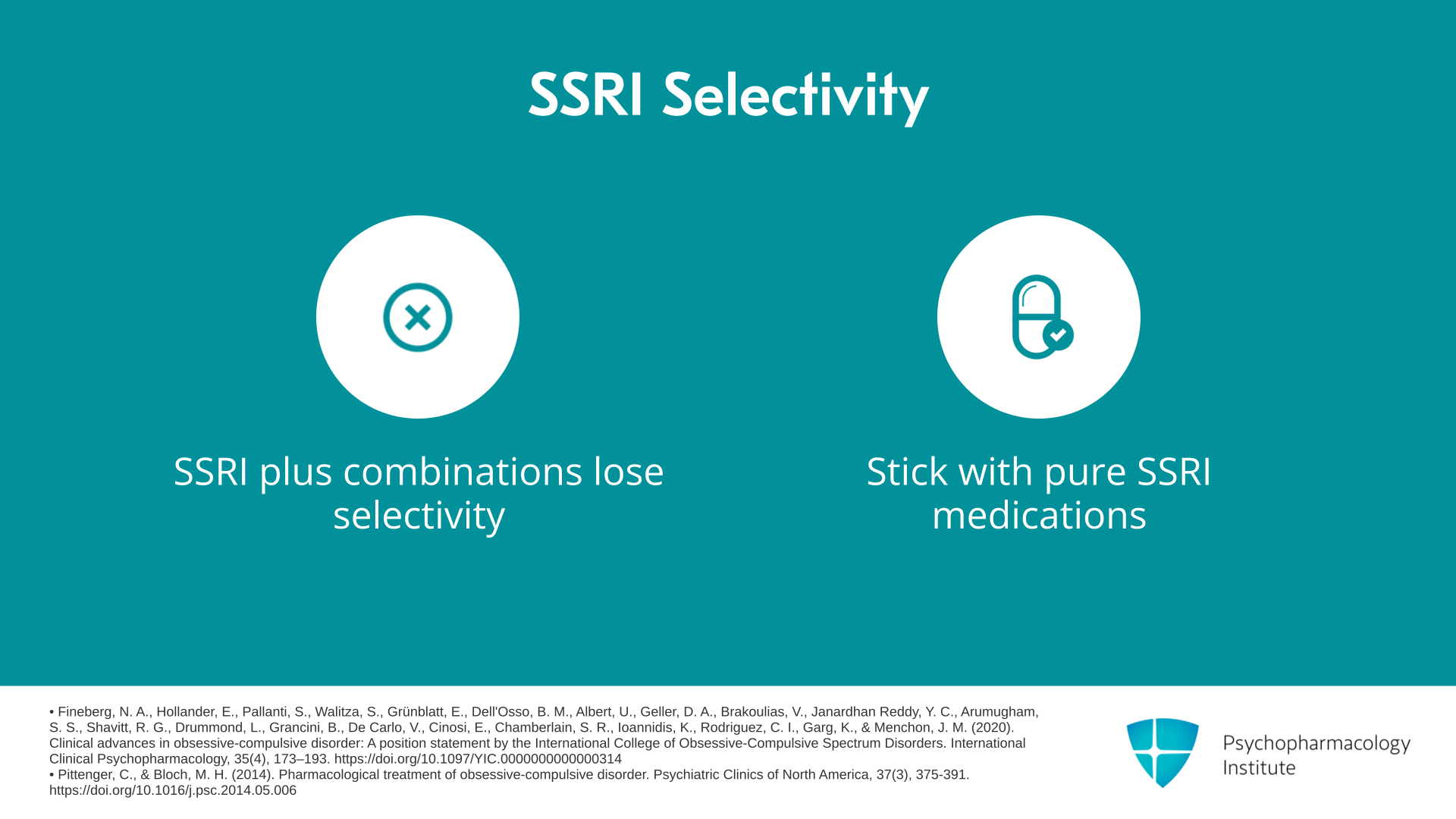
Sometimes, medications are thought of or marketed as being an SSRI plus something else. And I always like to teach that if a medication is an SSRI plus it does something else, it’s no longer an SSRI, because it’s no longer selective. So again, we want to stick with the SSRIs.
References:
- Fineberg, N. A., Hollander, E., Pallanti, S., Walitza, S., Grünblatt, E., Dell'Osso, B. M., Albert, U., Geller, D. A., Brakoulias, V., Janardhan Reddy, Y. C., Arumugham, S. S., Shavitt, R. G., Drummond, L., Grancini, B., De Carlo, V., Cinosi, E., Chamberlain, S. R., Ioannidis, K., Rodriguez, C. I., Garg, K., & Menchon, J. M. (2020). Clinical advances in obsessive-compulsive disorder: A position statement by the International College of Obsessive-Compulsive Spectrum Disorders. International Clinical Psychopharmacology, 35(4), 173–193. https://doi.org/10.1097/YIC.0000000000000314
- Pittenger, C., & Bloch, M. H. (2014). Pharmacological treatment of obsessive-compulsive disorder. Psychiatric Clinics of North America, 37(3), 375-391. https://doi.org/10.1016/j.psc.2014.05.006
Slide 4 of 11
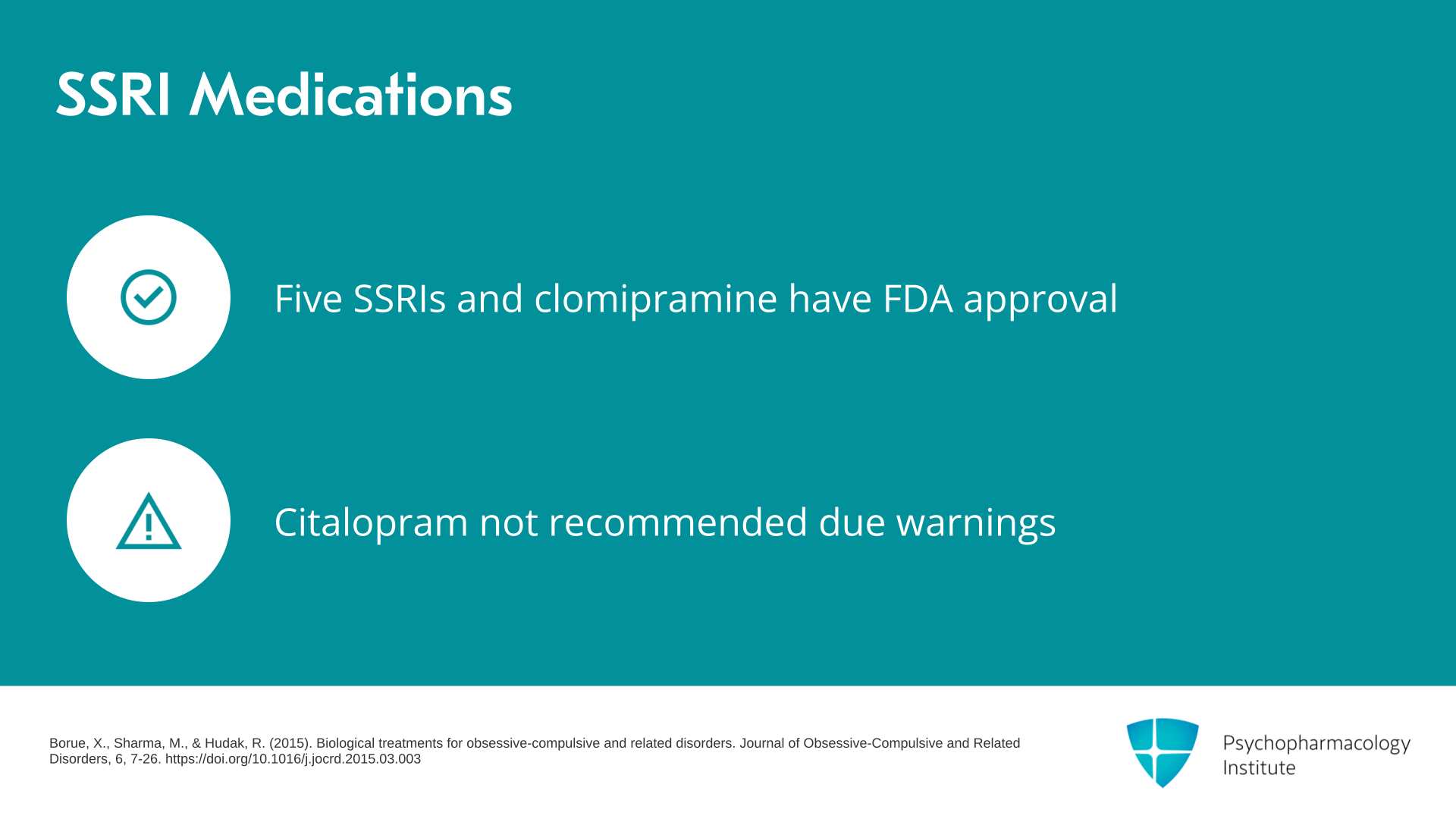
Now, the list of SSRIs that are FDA approved for adults in the United States would be fluoxetine, sertraline, paroxetine, fluvoxamine, and clomipramine which is the TCA. Now, there are two SSRIs that are not approved for adults by the FDA but they still work – escitalopram and citalopram. And of note, I do not recommend the use of citalopram anymore because of a black box warning that limits the maximum dosage that we can use.
References:
- Borue, X., Sharma, M., & Hudak, R. (2015). Biological treatments for obsessive-compulsive and related disorders. Journal of Obsessive-Compulsive and Related Disorders, 6, 7-26. https://doi.org/10.1016/j.jocrd.2015.03.003
Free Files
Download PDF and other files
Success!
Check your inbox, we sent you all the materials there.
Slide 5 of 11
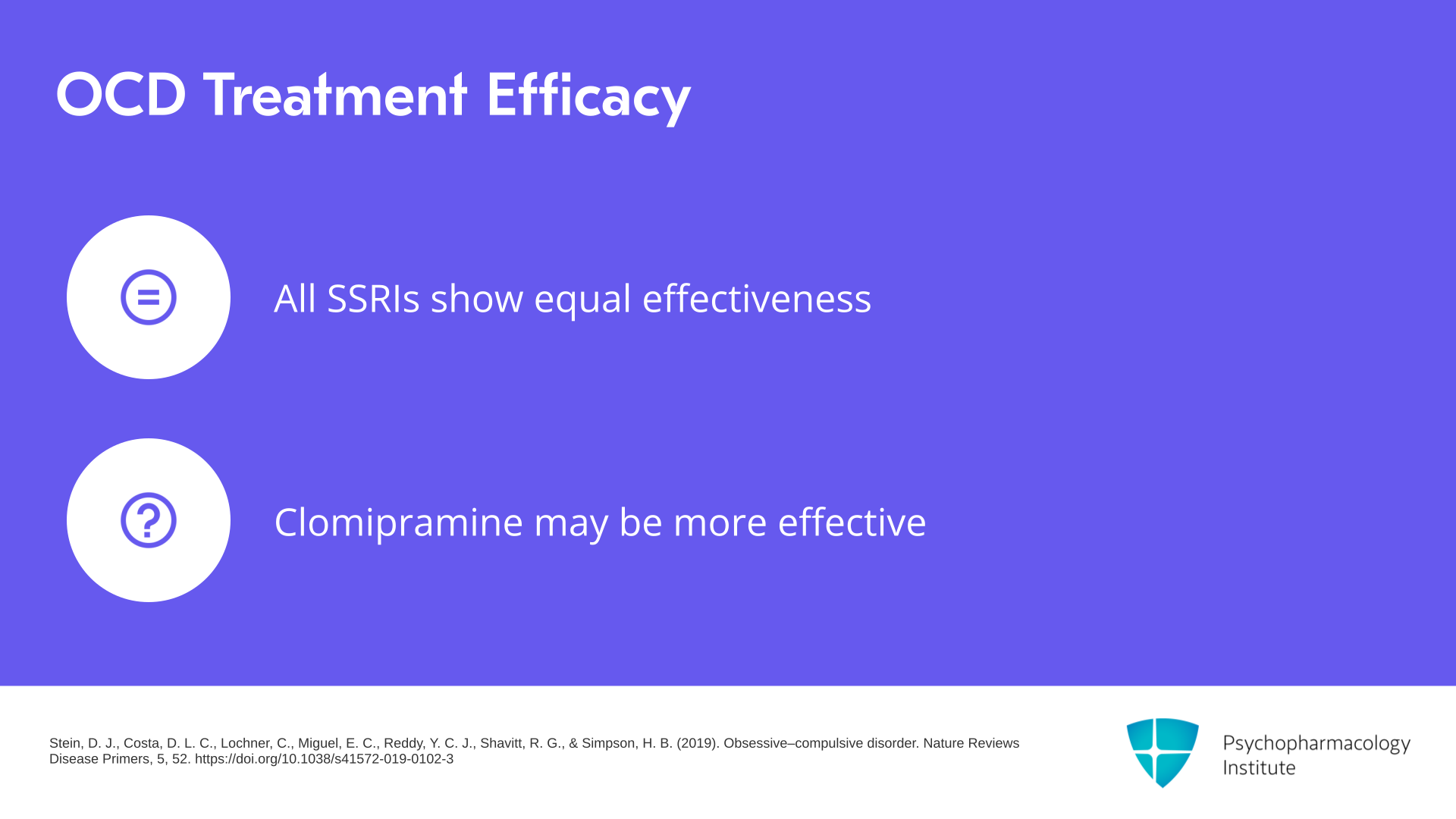
All of the SSRIs are basically considered to be equal whether they’re FDA approved or not FDA approved. Clomipramine may be somewhat more effective than the SSRIs but it’s not something that is proven or known to be for sure.
References:
- Stein, D. J., Costa, D. L. C., Lochner, C., Miguel, E. C., Reddy, Y. C. J., Shavitt, R. G., & Simpson, H. B. (2019). Obsessive–compulsive disorder. Nature Reviews Disease Primers, 5, 52. https://doi.org/10.1038/s41572-019-0102-3
Slide 6 of 11
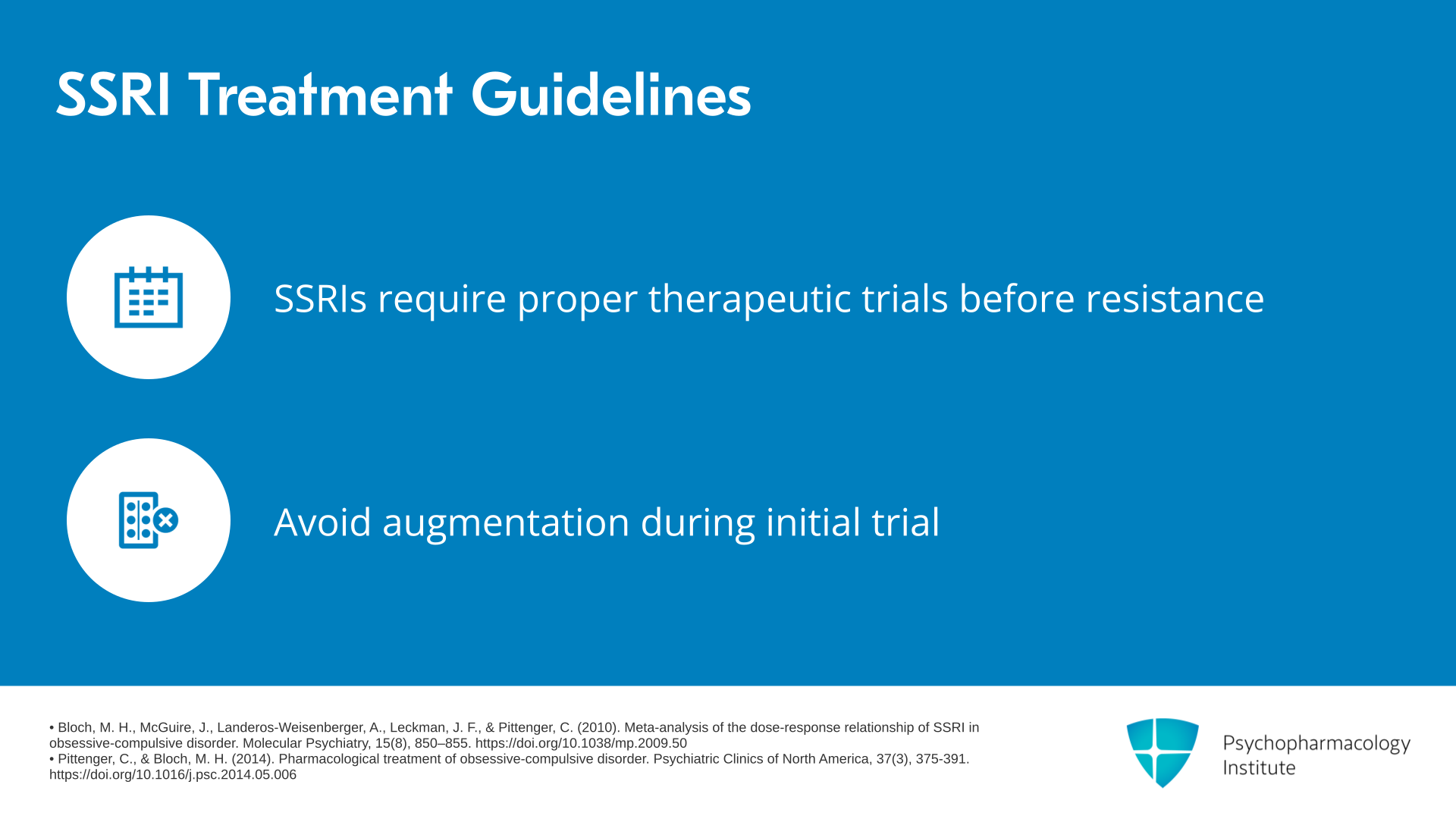
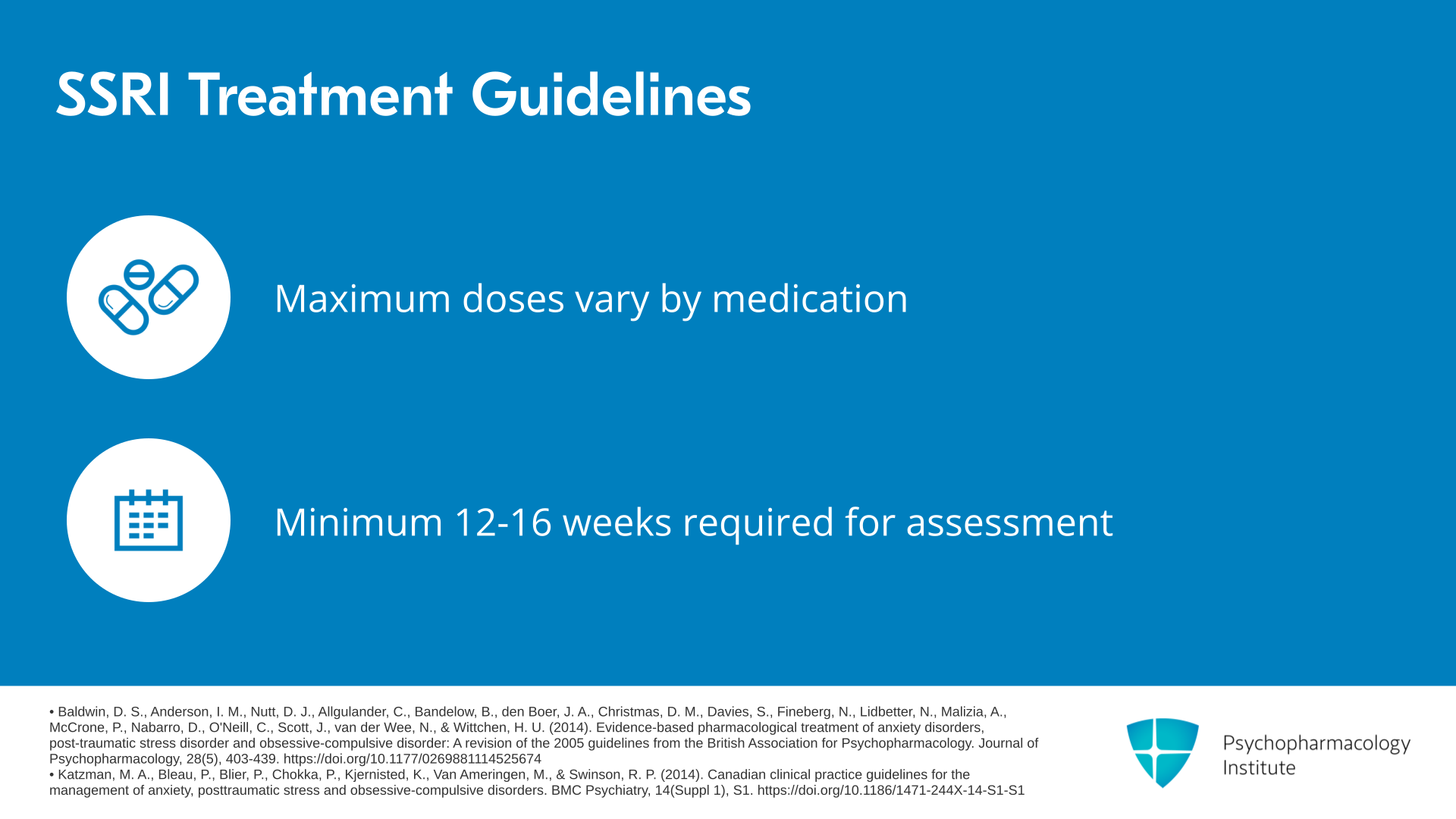
What’s important to note about the SSRIs when you give a therapeutic trial, they should be given a therapeutic trial before they’re deemed treatment resistant. And the definition of a therapeutic trial is very different. A therapeutic trial means the SSRI must be used at the maximum dose. The maximum dose must be maintained for a minimum of 12 to 16 weeks, and augmentation is really usually not recommended during that time.
References:
- Bloch, M. H., McGuire, J., Landeros-Weisenberger, A., Leckman, J. F., & Pittenger, C. (2010). Meta-analysis of the dose-response relationship of SSRI in obsessive-compulsive disorder. Molecular Psychiatry, 15(8), 850–855. https://doi.org/10.1038/mp.2009.50
- Pittenger, C., & Bloch, M. H. (2014). Pharmacological treatment of obsessive-compulsive disorder. Psychiatric Clinics of North America, 37(3), 375-391. https://doi.org/10.1016/j.psc.2014.05.006
Free Files
Download PDF and other files
Success!
Check your inbox, we sent you all the materials there.
Slide 7 of 11
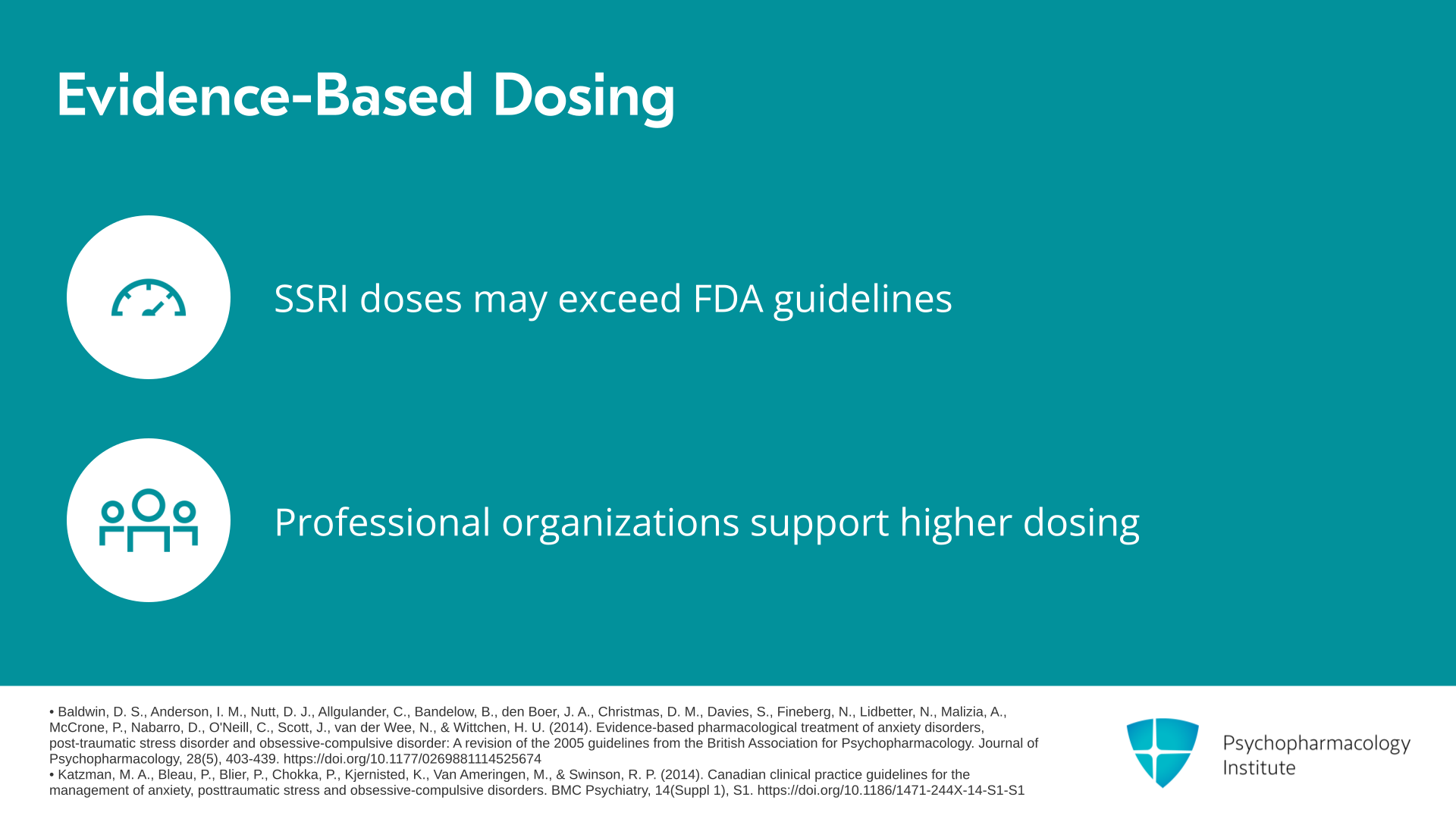
Note that these recommended doses may be above FDA maximum guidelines. However, it’s important to note that even if the SSRI at the maximum dose is used above FDA guidelines, note that these doses are evidence based and they’re consistent with numerous professional guidelines, published by numerous professional organizations that recommend these medications be used at these doses. And quite frankly, these doses are perfectly safe.
References:
- Baldwin, D. S., Anderson, I. M., Nutt, D. J., Allgulander, C., Bandelow, B., den Boer, J. A., Christmas, D. M., Davies, S., Fineberg, N., Lidbetter, N., Malizia, A., McCrone, P., Nabarro, D., O'Neill, C., Scott, J., van der Wee, N., & Wittchen, H. U. (2014). Evidence-based pharmacological treatment of anxiety disorders, post-traumatic stress disorder and obsessive-compulsive disorder: A revision of the 2005 guidelines from the British Association for Psychopharmacology. Journal of Psychopharmacology, 28(5), 403-439. https://doi.org/10.1177/0269881114525674
- Katzman, M. A., Bleau, P., Blier, P., Chokka, P., Kjernisted, K., Van Ameringen, M., & Swinson, R. P. (2014). Canadian clinical practice guidelines for the management of anxiety, posttraumatic stress and obsessive-compulsive disorders. BMC Psychiatry, 14(Suppl 1), S1. https://doi.org/10.1186/1471-244X-14-S1-S1
Slide 8 of 11
So for example, with fluoxetine, we take people routinely up to 80 mg. We’ll occasionally go as high as 120. With sertraline, I will take people up to 400 mg, and paroxetine 80 mg. And so again, they need to be at this maximum dose for a minimum 12 to 16 weeks before we gauge improvement. Patients will often start to see some response in 3 to 5 weeks, but even if they don’t, they need that full 12 to 16 weeks before we know if the medication truly is going to work or not.
References:
- Baldwin, D. S., Anderson, I. M., Nutt, D. J., Allgulander, C., Bandelow, B., den Boer, J. A., Christmas, D. M., Davies, S., Fineberg, N., Lidbetter, N., Malizia, A., McCrone, P., Nabarro, D., O'Neill, C., Scott, J., van der Wee, N., & Wittchen, H. U. (2014). Evidence-based pharmacological treatment of anxiety disorders, post-traumatic stress disorder and obsessive-compulsive disorder: A revision of the 2005 guidelines from the British Association for Psychopharmacology. Journal of Psychopharmacology, 28(5), 403-439. https://doi.org/10.1177/0269881114525674
- Katzman, M. A., Bleau, P., Blier, P., Chokka, P., Kjernisted, K., Van Ameringen, M., & Swinson, R. P. (2014). Canadian clinical practice guidelines for the management of anxiety, posttraumatic stress and obsessive-compulsive disorders. BMC Psychiatry, 14(Suppl 1), S1. https://doi.org/10.1186/1471-244X-14-S1-S1
Free Files
Download PDF and other files
Success!
Check your inbox, we sent you all the materials there.
Slide 9 of 11
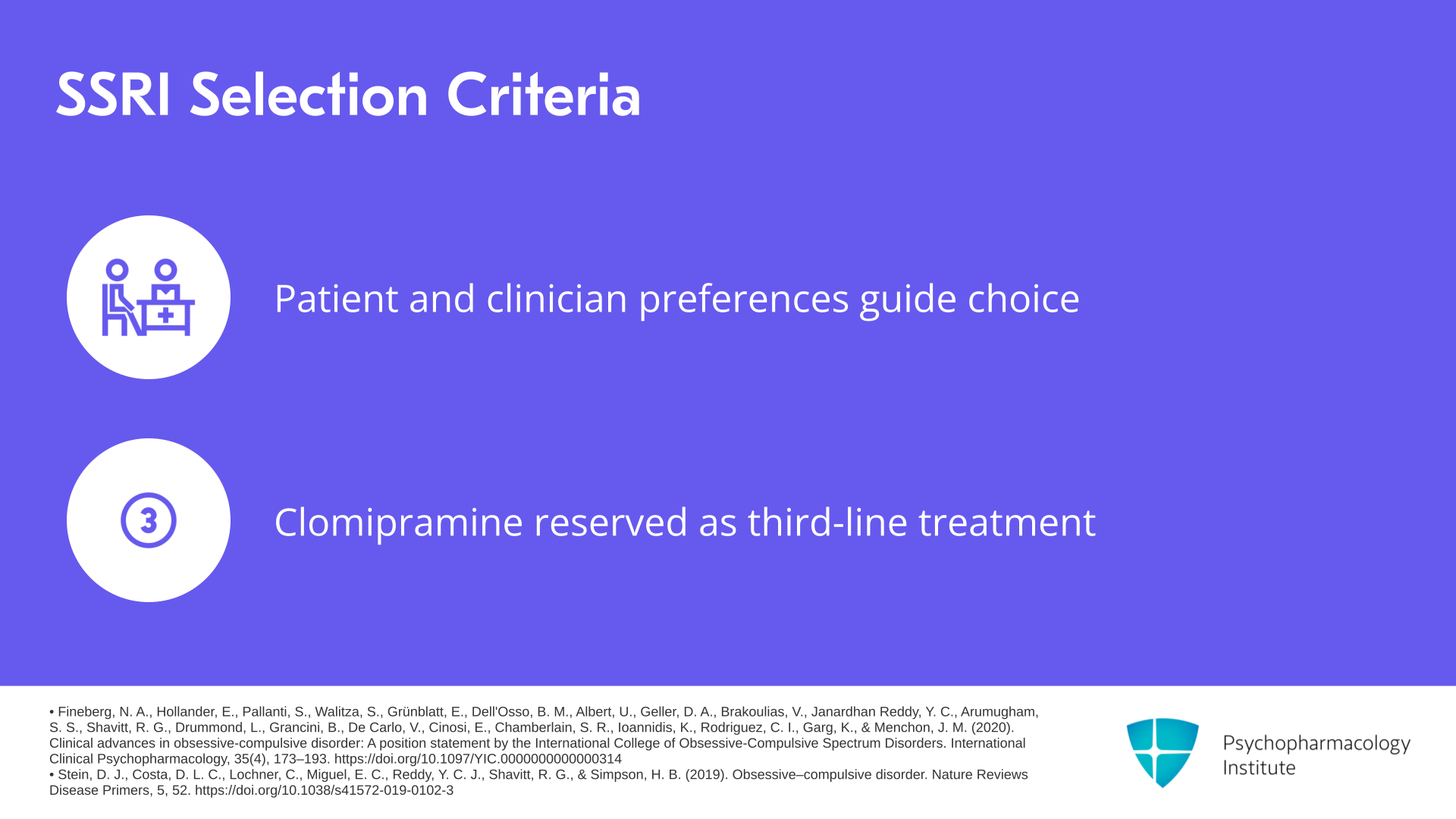
So now, when choosing SSRIs, all the SSRIs are considered equally efficacious and we really choose based on patient preference, clinician preference, side effect profile, patient history, if there’s a family member that’s responded to one SSRI and just the usual things with that. And again, we usually reserve clomipramine as a third line due to its typical tricyclic side effects.
References:
- Fineberg, N. A., Hollander, E., Pallanti, S., Walitza, S., Grünblatt, E., Dell'Osso, B. M., Albert, U., Geller, D. A., Brakoulias, V., Janardhan Reddy, Y. C., Arumugham, S. S., Shavitt, R. G., Drummond, L., Grancini, B., De Carlo, V., Cinosi, E., Chamberlain, S. R., Ioannidis, K., Rodriguez, C. I., Garg, K., & Menchon, J. M. (2020). Clinical advances in obsessive-compulsive disorder: A position statement by the International College of Obsessive-Compulsive Spectrum Disorders. International Clinical Psychopharmacology, 35(4), 173–193. https://doi.org/10.1097/YIC.0000000000000314
- Stein, D. J., Costa, D. L. C., Lochner, C., Miguel, E. C., Reddy, Y. C. J., Shavitt, R. G., & Simpson, H. B. (2019). Obsessive–compulsive disorder. Nature Reviews Disease Primers, 5, 52. https://doi.org/10.1038/s41572-019-0102-3
Slide 10 of 11
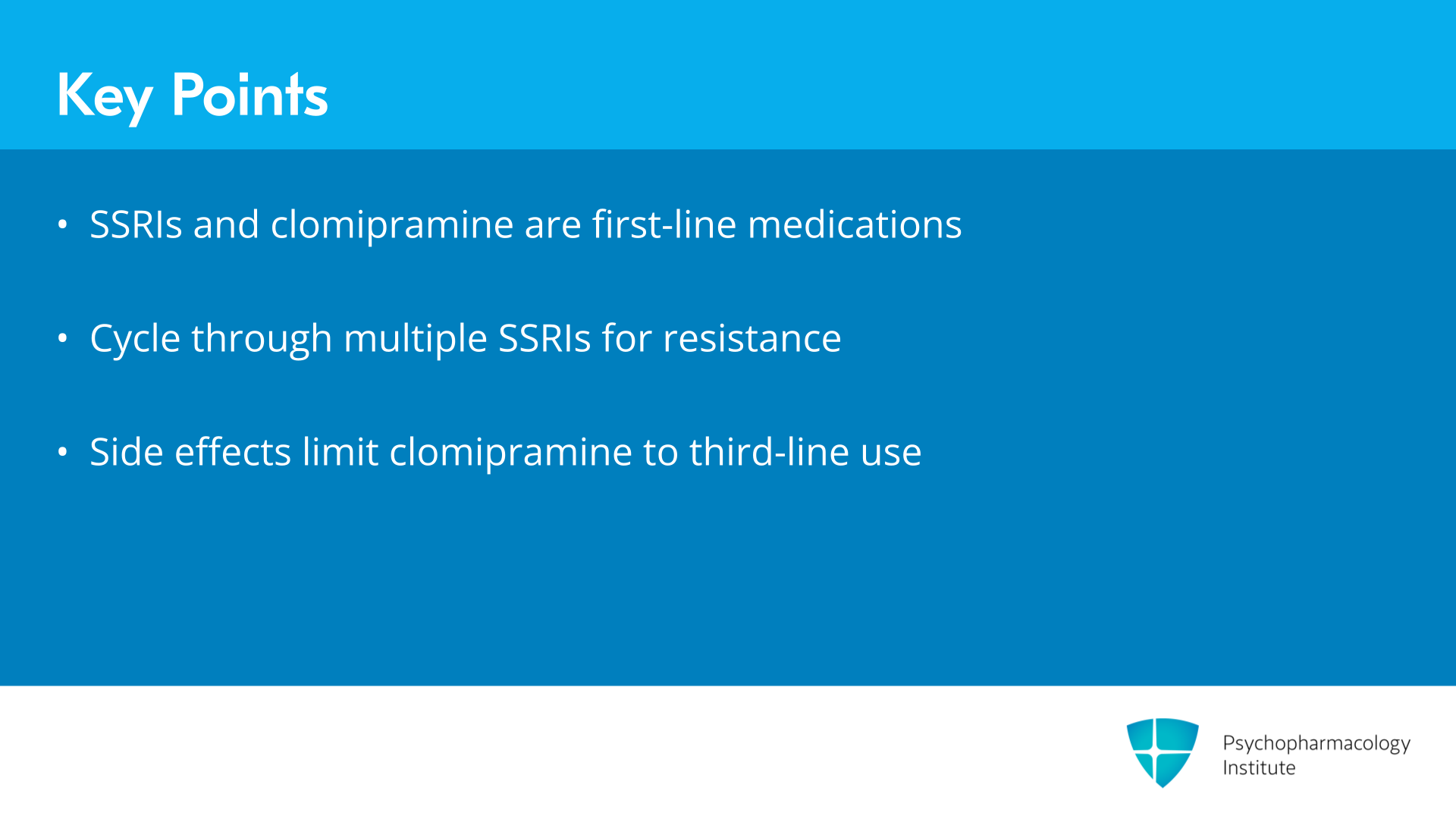
So the key points here. SSRIs and clomipramine are the first-line medications for OCD. Other classes of antidepressants, and other medications are either less effective or not effective. So again, we stick with the SSRIs even in the case of treatment resistance. We’ll cycle to a third SSRI, a four one, a fifth one. All the SSRIs have equal efficacy. Clomipramine may be superior, but side effects really limit it to a third line.
Free Files
Download PDF and other files
Success!
Check your inbox, we sent you all the materials there.
Slide 11 of 11
The SSRI use is very different for OCD compared to major depression. So when you use an SSRI as an anti-obsessional, it’s very different than using an SSRI as an antidepressant. Note that the dosing may be above prescribing guidelines due to the FDA, but it’s effective, safe, and is officially recommended by numerous professional organizations. And therapeutic response can take as long as two to four months in some patients.