



Sertraline is a moderate inhibitor of CYP2D6. In terms of drug-drug interactions this is not as significant as with fluoxetine or paroxetine . It has a similar side effects profile to other SSRIs. The dosage range goes from 50 to 200 mg/day.
Pharmacology and MOA
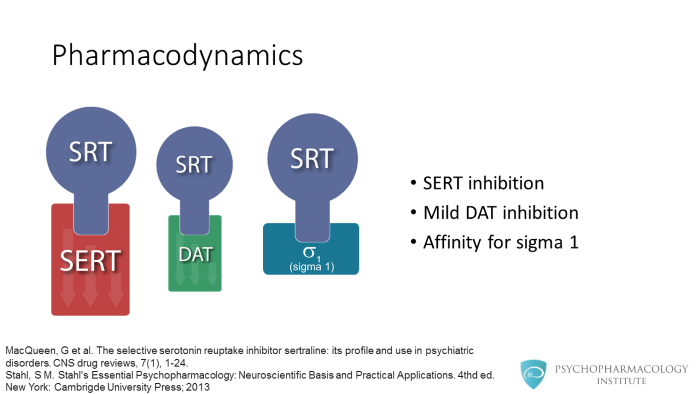
Sertraline is an inhibitor of the SERT transporter, this is linked to its mechanism of action as antidepressant. It has mild effects as dopamine transporter inhibitor, but this hasn’t been proven to have a clear clinical implication. Some clinicians attribute sertraline an activating effect, which could probably be linked to this mild dopaminergic effect. Also, sertraline has affinity for sigma 1 receptors. The clinical relevance of this is still unknown.
Note: watch a related presentation on the mechanism of action of SSRIs here.
Clinical Uses
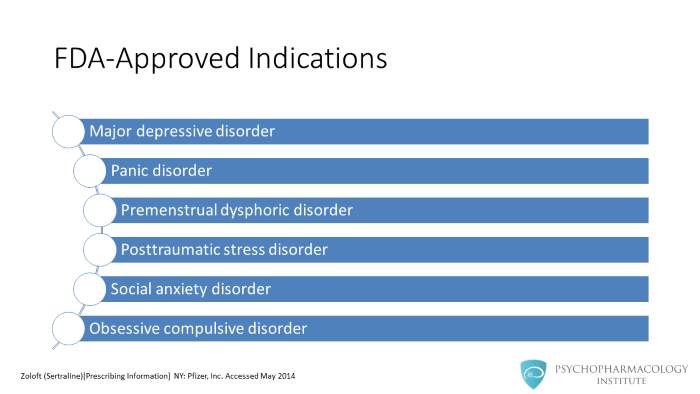
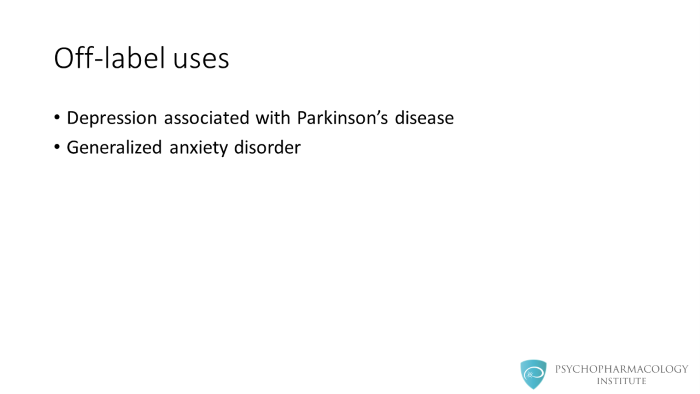
Among other uses, sertraline has been studied for depression associated with Parkinson’s disease and generalized anxiety disorder.
Pharmacokinetics
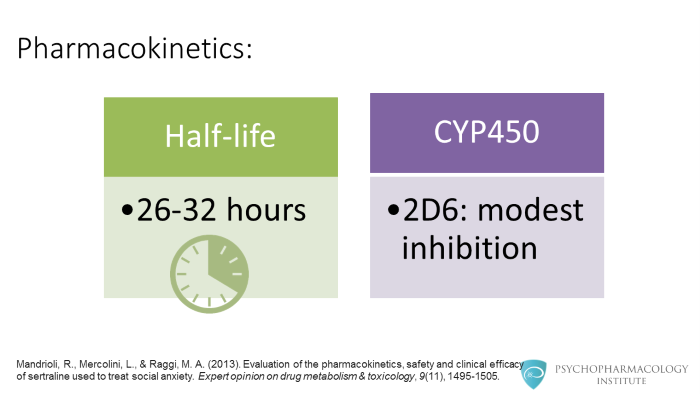
The elimination half life of sertraline is around one day: 26 to 32 hours. Regarding CYP450 isoenzymes, sertraline is modest inhibitor of CYP2D6. As we discuss in other presentations, this opens the theoretical possibility to potential drug interactions with tricyclic antidepressants and antiarrhythmics.
Adverse Effects

The most commonly reported side effects in clinical trials were nausea, insomnia, somnolence, headache, dry mouth and sexual dysfunction. Sertraline is classified under pregnancy risk category C.
Prescribing information
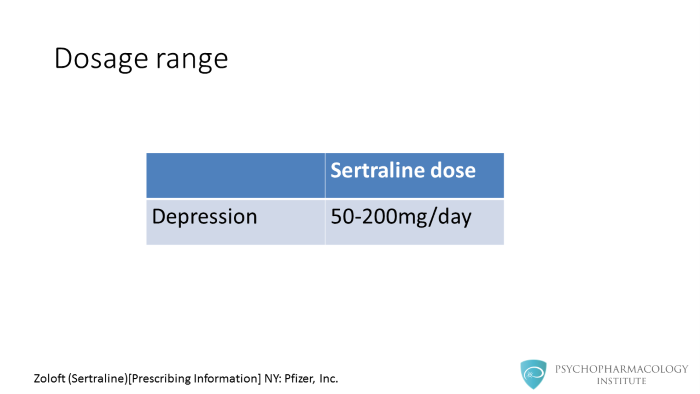
The dosage range for depression goes from 50 to 200 mg/day. The usual starting dose is of 50 mg/day for depression and OCD. For anxiety disorders, the recommended starting dose is lower: 25 mg/day for the first week.
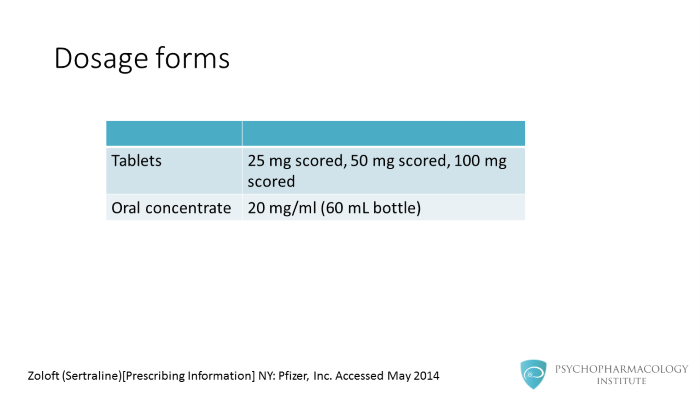
Sertraline is available as tablets and oral concentrate. Tablets of 25 mg scored, 50 mg scored, 100 mg scored. The oral concentrate contains 20 mg of sertraline per mL in a 60 ml bottle.
Other SSRI videos- The Psychopharmacology of Fluoxetine: An Illustrated Review for Prescribers
- Fluvoxamine Essentials: Mechanism of Action, Indications, Pharmacokinetics and Dosing
- Sertraline Essentials: Mechanism of Action, Indications, Pharmacokinetics and Dosing
- Citalopram and Escitalopram: A Summary of Key Differences and Similarities
- The Psychopharmacology of Paroxetine: An Illustrated Summary for Prescribers
This video is also available in Spanish: “
Sertralina: farmacodinamia, indicaciones, efectos adversos, farmacocinética y posología
“
References
- MacQueen, G et al. The selective serotonin reuptake inhibitor sertraline: its profile and use in psychiatric disorders . CNS drug reviews, 7(1), 1-24.
- Stahl, S M. Stahl’s Essential Psychopharmacology: Neuroscientific Basis and Practical Applications . 4thd ed. New York: Cambrigde University Press; 2013
- Zoloft (Sertraline)[Prescribing Information] NY: Pfizer, Inc. Accessed May 2014
- Mandrioli, R., Mercolini, L., & Raggi, M. A. (2013). Evaluation of the pharmacokinetics, safety and clinical efficacy of sertraline used to treat social anxiety . Expert opinion on drug metabolism & toxicology, 9(11), 1495-1505.
- Schatzberg, Alan F., and Charles B. Nemeroff, eds. The American psychiatric publishing textbook of psychopharmacology . American Psychiatric Pub, 2009.
