Slides and Transcript
Slide 1 of 16
Now, let’s talk about how we adjust substance use disorder medications in patients with renal impairment.
Slide 2 of 16
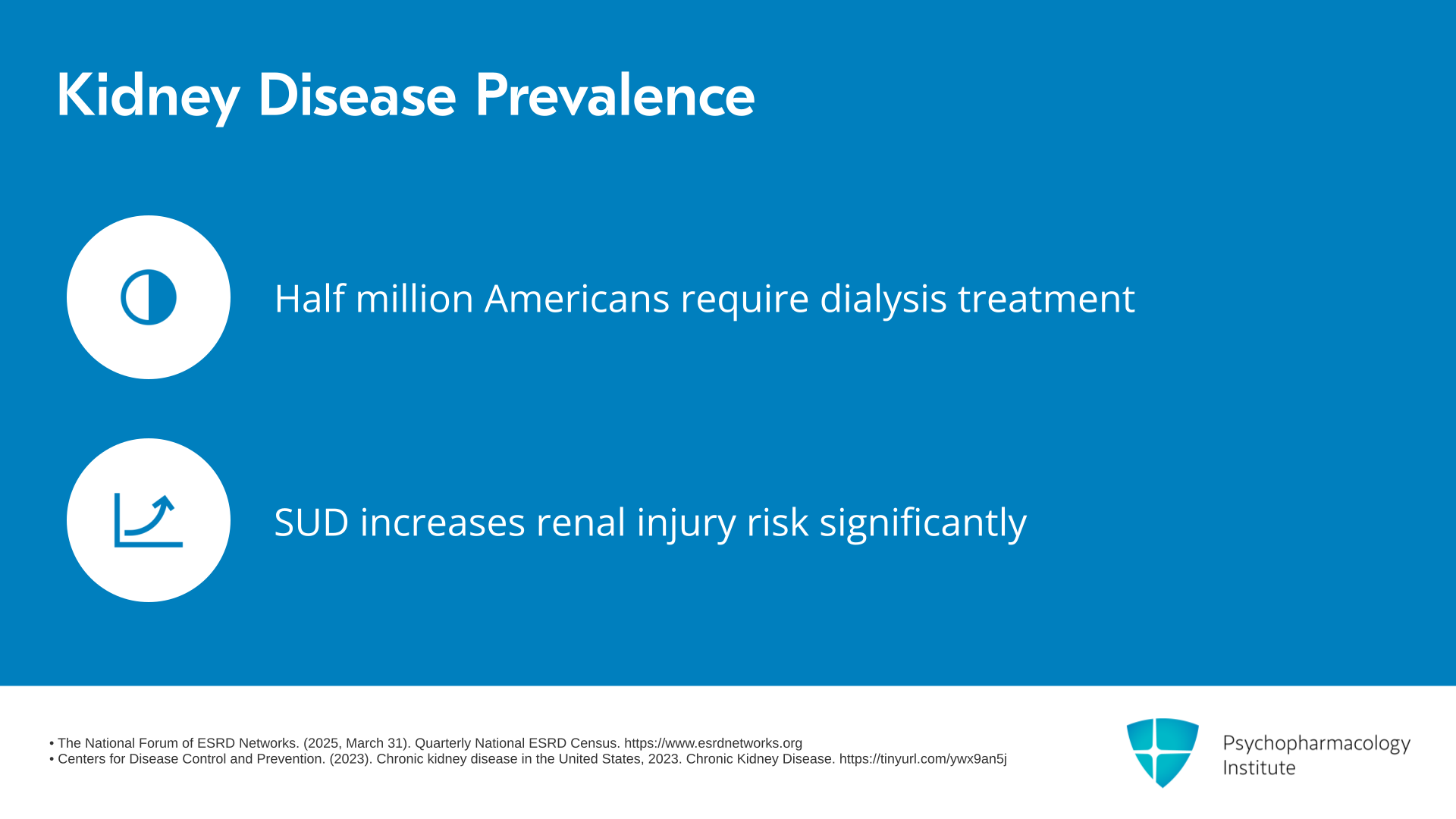
Renal impairment itself is something you’re going to run into with people both with substance use disorders and without. There’s about a half million people on dialysis at any one time in the United States. Believe it or not, 1 in 7 United States adults have chronic kidney disease. Because those with substance use disorders have elevated rates of cardiovascular diseases, that cohort of those with SUD are at elevated risk of renal injury especially as we get older.
References:
- The National Forum of ESRD Networks. (2025, March 31). Quarterly National ESRD Census. https://www.esrdnetworks.org
- Centers for Disease Control and Prevention. (2023). Chronic kidney disease in the United States, 2023. Chronic Kidney Disease. https://tinyurl.com/ywx9an5j
Free Files
Download PDF and other files
Success!
Check your inbox, we sent you all the materials there.
Slide 3 of 16
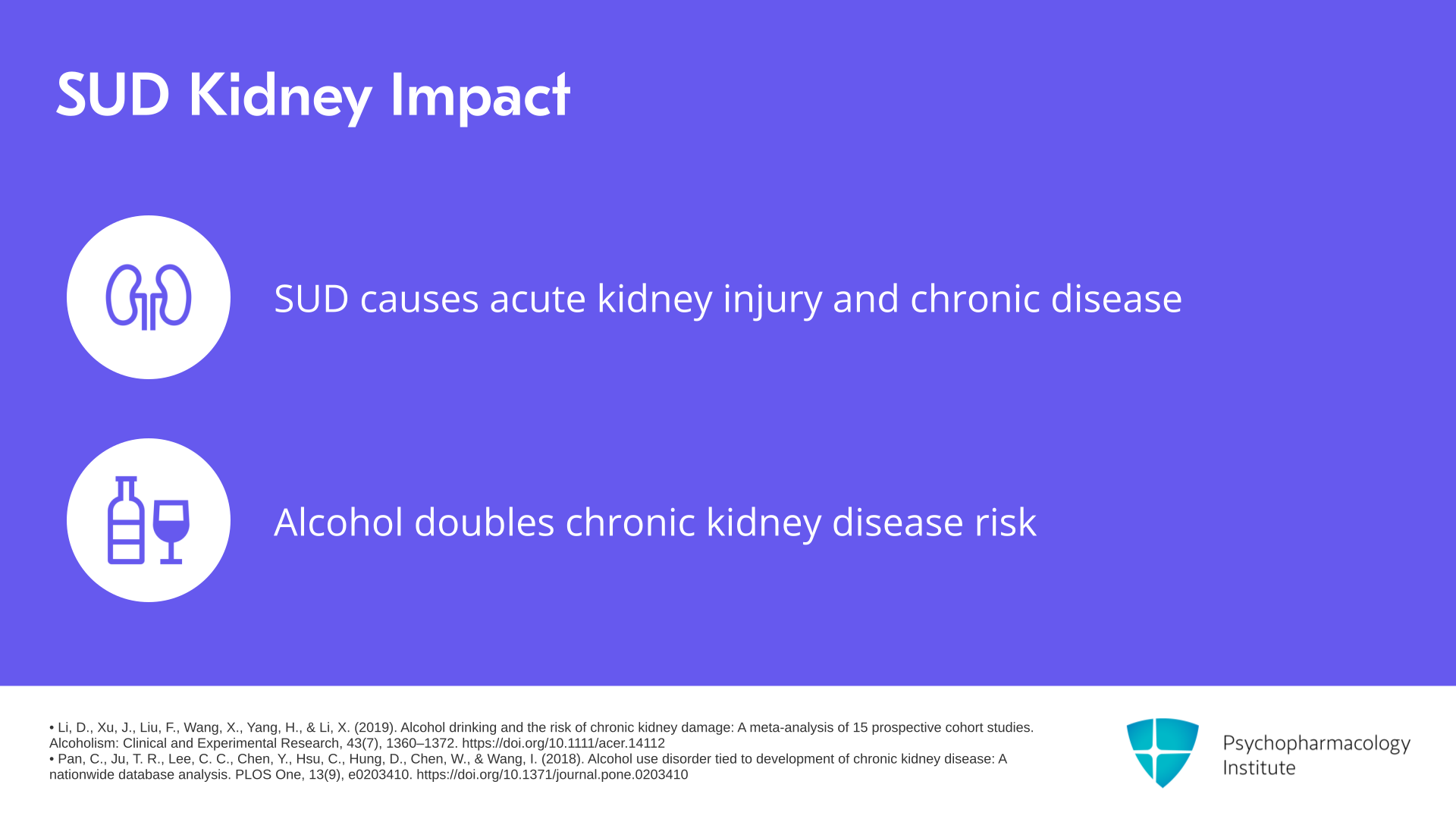
SUD itself can directly lead to acute kidney injury and chronic kidney disease including end-stage renal disease. For example, alcohol use disorder has been associated with nearly twice the incidence of chronic kidney disease.
References:
- Li, D., Xu, J., Liu, F., Wang, X., Yang, H., & Li, X. (2019). Alcohol drinking and the risk of chronic kidney damage: A meta-analysis of 15 prospective cohort studies. Alcoholism: Clinical and Experimental Research, 43(7), 1360–1372. https://doi.org/10.1111/acer.14112
- Pan, C., Ju, T. R., Lee, C. C., Chen, Y., Hsu, C., Hung, D., Chen, W., & Wang, I. (2018). Alcohol use disorder tied to development of chronic kidney disease: A nationwide database analysis. PLOS One, 13(9), e0203410. https://doi.org/10.1371/journal.pone.0203410
Slide 4 of 16
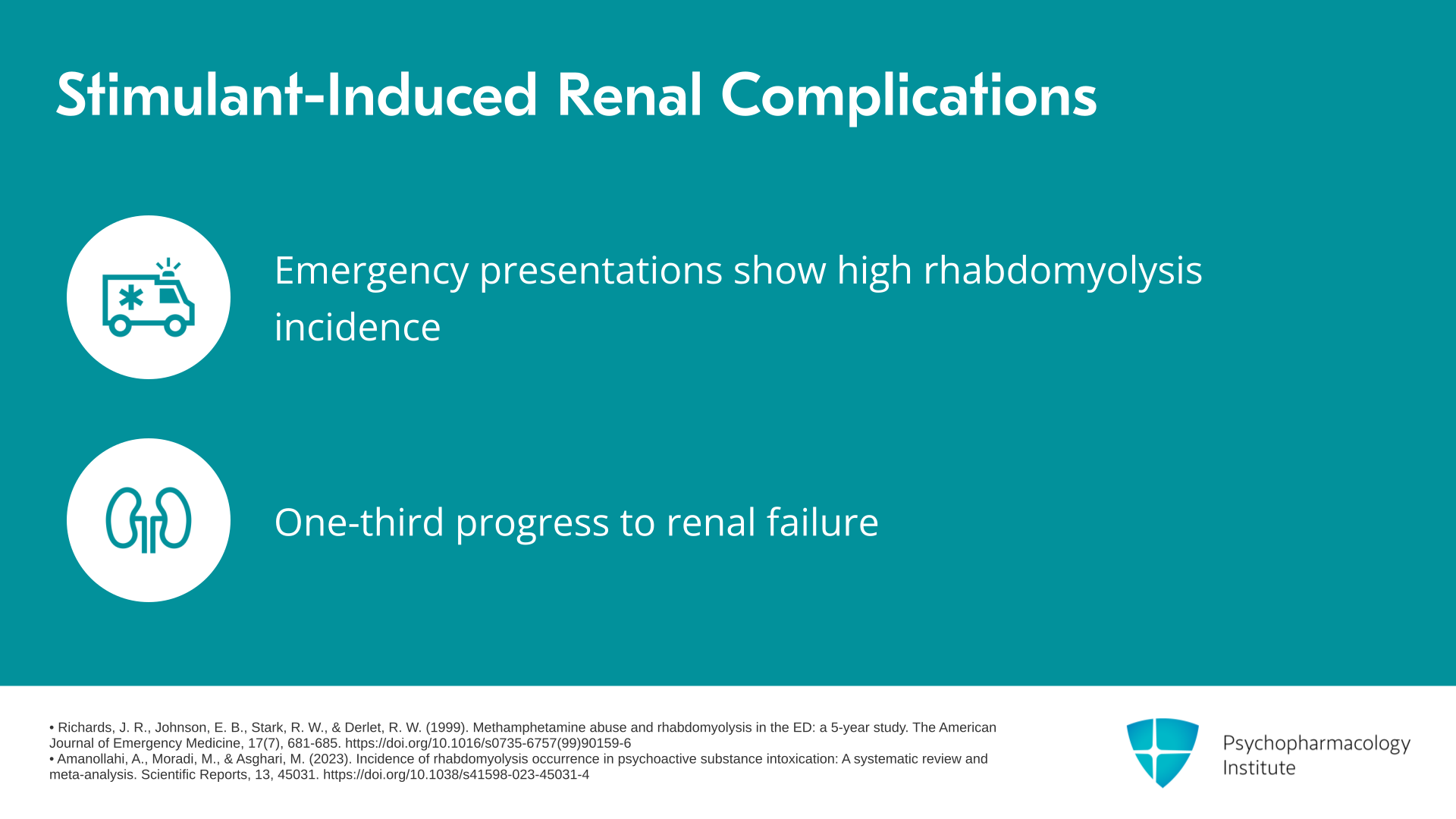
Patients presenting to emergency rooms due to methamphetamine or cocaine intoxication have a high incidence of rhabdomyolysis-induced acute tubular necrosis, 1/3 of whom progress to renal failure. So not only opiate use disorder and alcohol use disorder but especially psychostimulant use disorders are prone to elevated risk of developing renal failure.
References:
- Richards, J. R., Johnson, E. B., Stark, R. W., & Derlet, R. W. (1999). Methamphetamine abuse and rhabdomyolysis in the ED: a 5-year study. The American Journal of Emergency Medicine, 17(7), 681-685. https://doi.org/10.1016/s0735-6757(99)90159-6
- Amanollahi, A., Moradi, M., & Asghari, M. (2023). Incidence of rhabdomyolysis occurrence in psychoactive substance intoxication: A systematic review and meta-analysis. Scientific Reports, 13, 45031. https://doi.org/10.1038/s41598-023-45031-4
Free Files
Download PDF and other files
Success!
Check your inbox, we sent you all the materials there.
Slide 5 of 16
So let’s talk about how we adjust our medications. As I said in general, cardiovascular disease leads to increased risk of renal disease. So the first thing I’d like to address is smoking cessation pharmacotherapy. Chantix in the United States or varenicline is known to be substantially excreted by the kidney. So the risk of toxic reactions to the drug may be greater in those with impaired renal function, but in fact this has a wide therapeutic window and dosage adjustment isn’t recommended.
References:
- Saeed, D., Reza, T., Shahzad, M. W., Karim Mandokhail, A., Bakht, D., Qizilbash, F. H., Silloca-Cabana, E. O., Ramadhan, A., & Bokhari, S. F. H. (2023). Navigating the crossroads: Understanding the link between chronic kidney disease and cardiovascular health. Cureus, 15(12), e51362. https://doi.org/10.7759/cureus.51362
Slide 6 of 16
Nicotine replacement therapy really hasn’t been studied much so no dosage adjustments, but watch for signs of too much like being jittery or headache. Now, bupropion, clearance is significantly lower in subjects with renal impairment. So dosage adjustment isn’t described but I would tend to limit dosing to about 150 mg a day, especially in moderate and severe renal impairment. There are some that actually would do this for mild renal impairment.
References:
- Turpeinen, M., Koivuviita, N., Tolonen, A., Reponen, P., Lundgren, S., Miettunen, J., Metsärinne, K., Rane, A., Pelkonen, O., & Laine, K. (2007). Effect of renal impairment on the pharmacokinetics of bupropion and its metabolites. British Journal of Clinical Pharmacology, 64(2), 165–173. https://doi.org/10.1111/j.1365-2125.2007.02866.x
- Nagler, E. V., Webster, A. C., Vanholder, R., & Zoccali, C. (2012). Antidepressants for depression in stage 3-5 chronic kidney disease: a systematic review of pharmacokinetics, efficacy and safety with recommendations by European Renal Best Practice (ERBP). Nephrology, Dialysis, Transplantation, 27(10), 3736–3745. https://doi.org/10.1093/ndt/gfs295
Free Files
Download PDF and other files
Success!
Check your inbox, we sent you all the materials there.
Slide 7 of 16
How about for alcohol use disorder? With disulfiram because of the possibility of an accidental disulfiram alcohol reaction, use it with extreme caution in those with chronic and acute nephritis.
References:
- Stokes, M., Patel, P., & Abdijadid, S. (2024, September 10). Disulfiram. In StatPearls [Internet]. StatPearls Publishing. https://www.ncbi.nlm.nih.gov/books/NBK459340/
Slide 8 of 16
Naltrexone is primary metabolite are excreted primarily in the urine so caution is recommended when you administer this drug in the presence of renal impairment. It’s not dialyzable by the way. The pharmacokinetics of injectable naltrexone are not altered in subjects with mild renal insufficiency. But those with moderate to severe renal insufficiency, caution is recommended.
References:
- U.S. Food and Drug Administration. (2024). Naltrexone hydrochloride tablet — structured product labeling (SPL). https://tinyurl.com/2ahns9u8
Free Files
Download PDF and other files
Success!
Check your inbox, we sent you all the materials there.
Slide 9 of 16
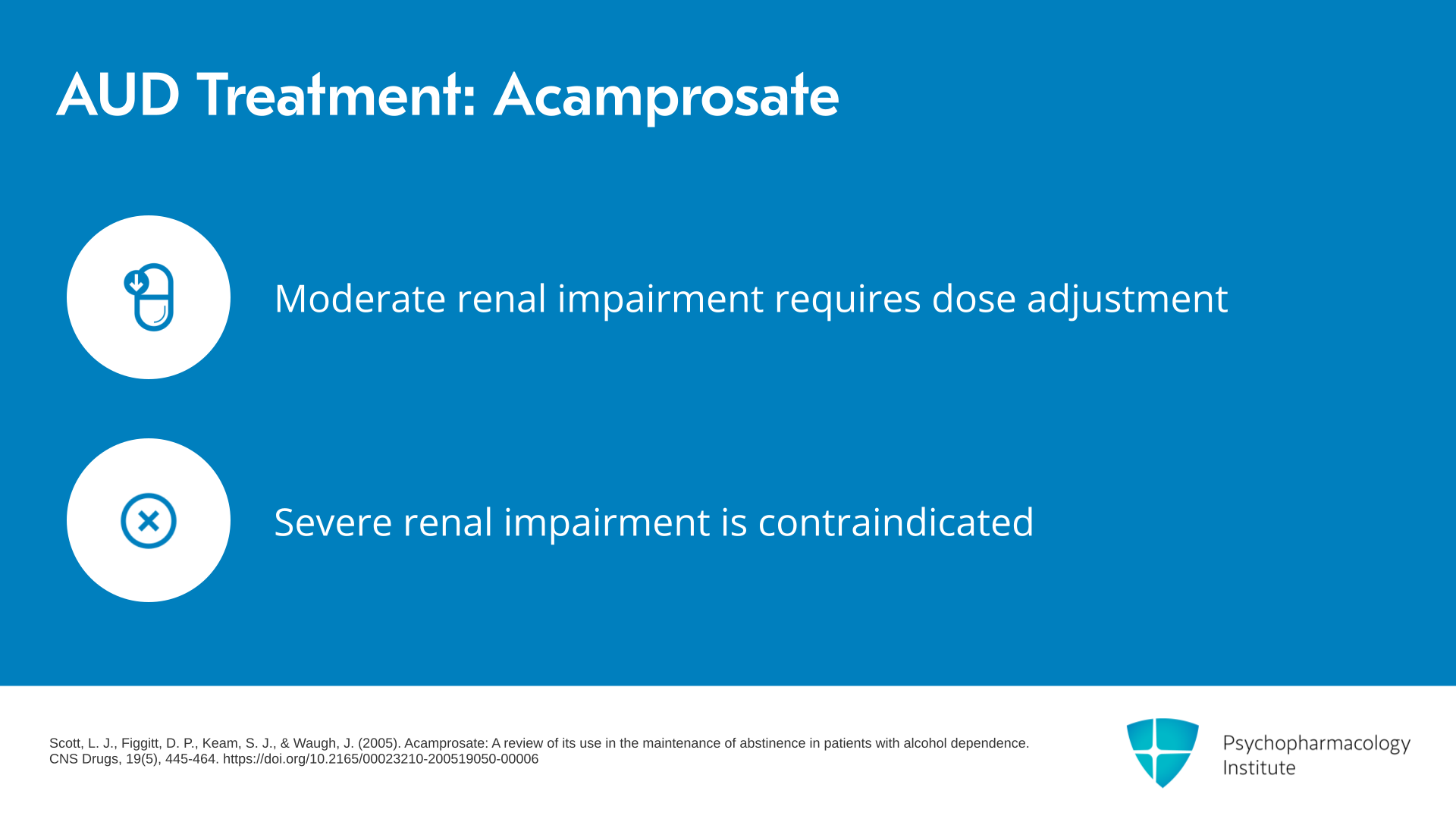
Acamprosate, here’s one that you would need to adjust. With moderate renal impairment, where creatinine clearance is 30 to 50 mL/min, a starting dose of half, 1333 mg tab t.i.d. is recommended. There are acamprosate calcium delayed-release tablets and those are contraindicated in those with severe renal impairment, which is a creatinine clearance of less than 30 mL/min. Sometimes, acute kidney failure has been reported with acamprosate calcium treatment.
References:
- Scott, L. J., Figgitt, D. P., Keam, S. J., & Waugh, J. (2005). Acamprosate: A review of its use in the maintenance of abstinence in patients with alcohol dependence. CNS Drugs, 19(5), 445-464. https://doi.org/10.2165/00023210-200519050-00006
Slide 10 of 16
Baclofen is excreted principally unchanged in the urine and so you may need a reduced dose.
References:
- Viavonou, R., Perreault, M. M., Barriere, O., Shink, E., Tremblay, P. O., Larouche, R., et al. (2014). Pharmacokinetic characterization of baclofen in patients with chronic kidney disease: Dose adjustment recommendations. Journal of Clinical Pharmacology, 54, 584-592. https://doi.org/10.1002/jcph.247
Free Files
Download PDF and other files
Success!
Check your inbox, we sent you all the materials there.
Slide 11 of 16
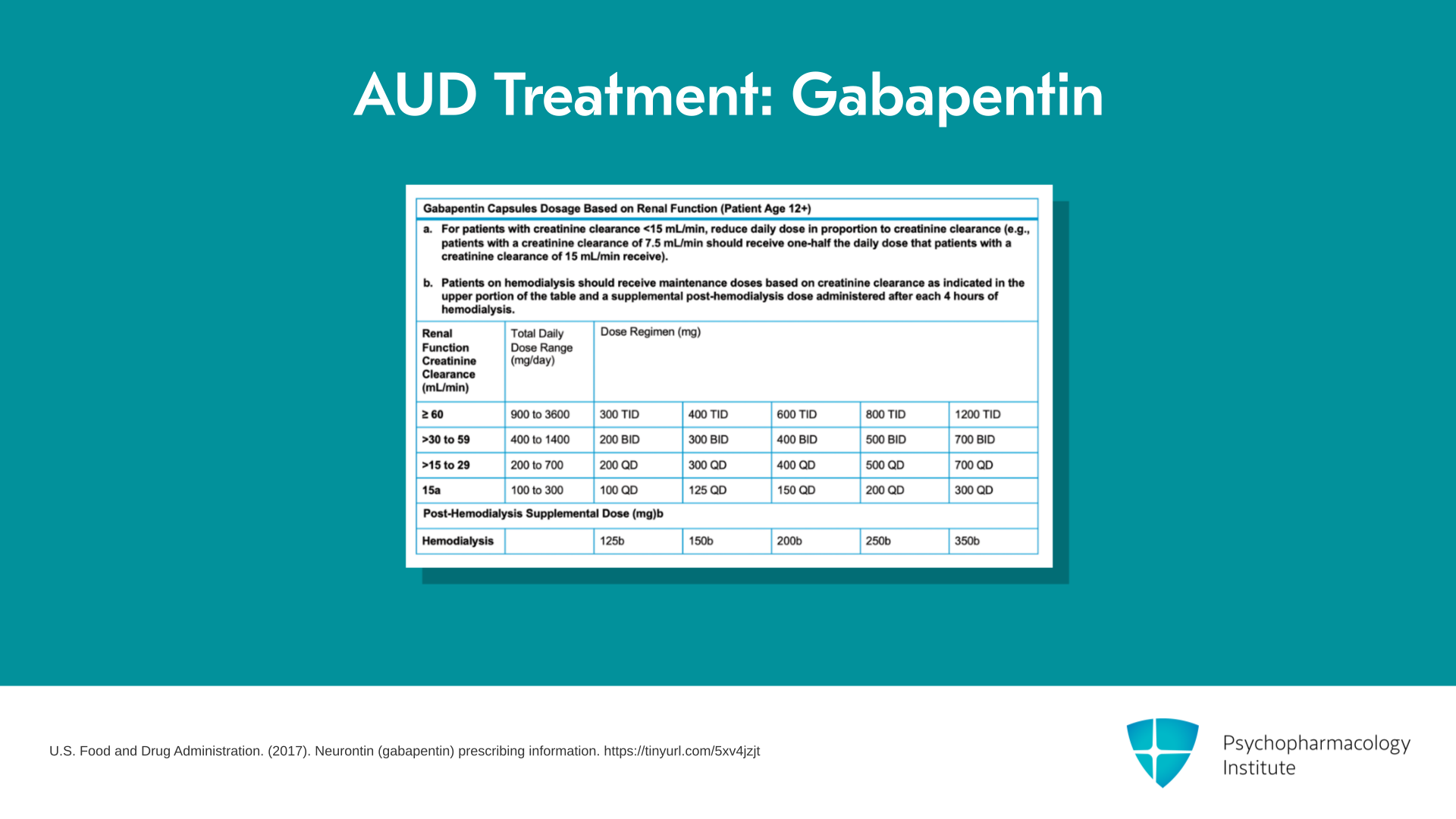
Now, the next slide is on gabapentin. If you’ve got mild renal impairment, that is 30 to 59 is your GFR, cut that in about a half. So you go from 900 to 400 a day. Moderate renal impairment is 15 to 29 for GFR, cut that in half again to 200 mg. And severe, which is a GFR of 15 or below and you’re considering dialyzing, that’s 100 mg. Remember, in the presence of progressive decrease of renal impairment you need to reduce the dose of gabapentin. Further, it is dialyzable. So it is recommended after dialysis that an extra dose of gabapentin be given. In the case of the lowest doses here, when we’re using hemodialysis, we add an extra dose of 125 mg of gabapentin after the hemodialysis to the daily dose of 100 mg that was with somebody with a GFR of 15 or under.
References:
- U.S. Food and Drug Administration. (2017). Neurontin (gabapentin) prescribing information. https://tinyurl.com/5xv4jzjt
Slide 12 of 16
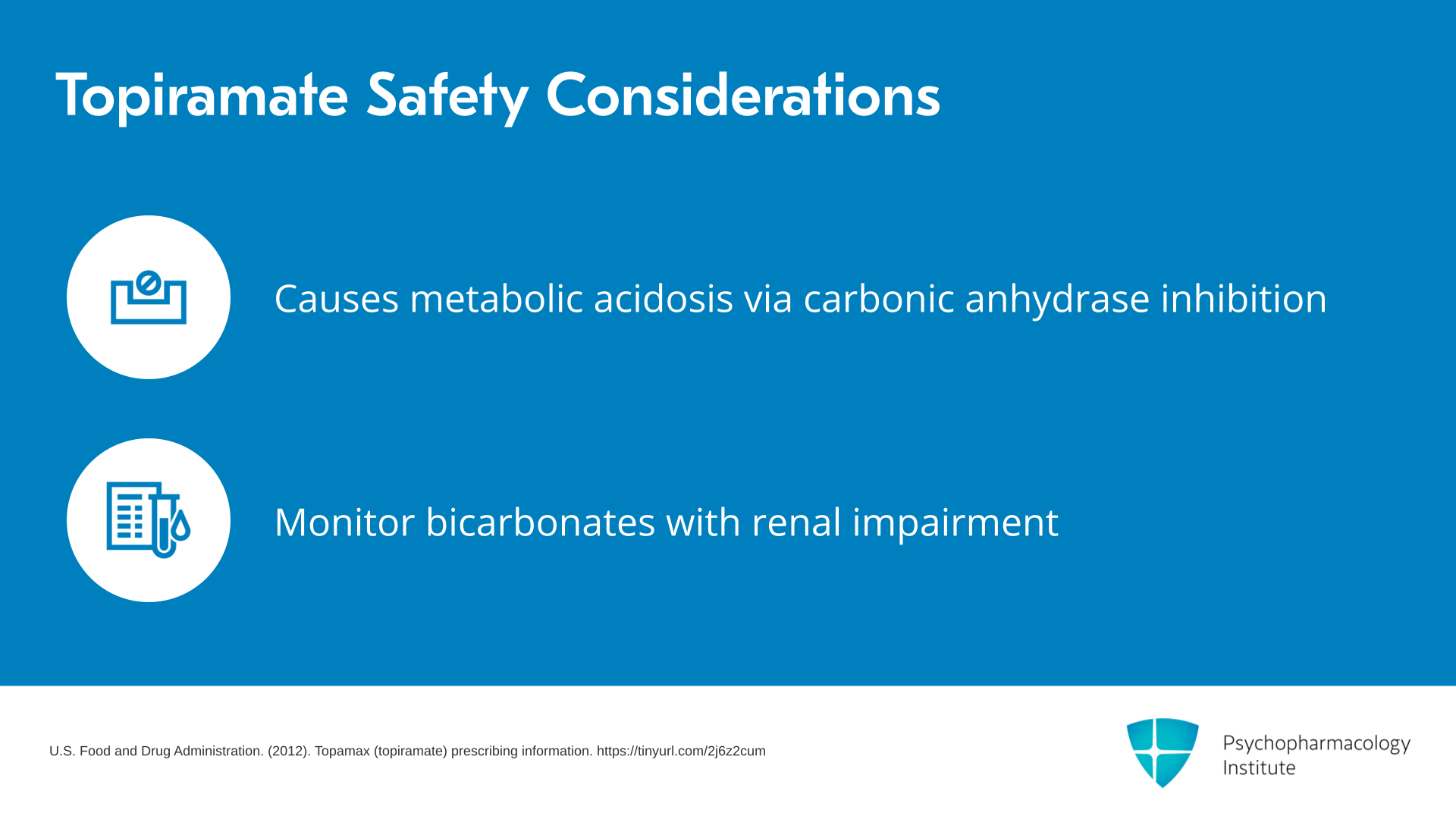
Topiramate can cause metabolic acidosis by carbonic anhydrase inhibition and bicarbonate loss. This can be additive to renal disease associated acidosis. So you’ve got two metabolic acidosises. Metabolic acidosis can occur at any time during treatment and especially during pregnancy it’s dangerous because it has adverse effects on the fetus. So use it carefully. Measure bicarbs if you’re going to use this agent in the presence of renal impairment.
References:
- U.S. Food and Drug Administration. (2012). Topamax (topiramate) prescribing information. https://tinyurl.com/2j6z2cum
Free Files
Download PDF and other files
Success!
Check your inbox, we sent you all the materials there.
Slide 13 of 16
We’ll also adjust the dose. With GFRs under 60, use 1/2 the usual adult dose. And once you get to moderate renal impairment, they say reduce by 42% the dose and in severe by 50%. So actually, they’re saying 1/2 all the way through. And hemodialysis clears most topiramate. So it is dialyzable.
References:
- U.S. Food and Drug Administration. (2012). Topamax (topiramate) prescribing information. https://tinyurl.com/2j6z2cum
Slide 14 of 16
For MOUD, methadone pharmacokinetics haven’t been evaluated in patients with renal insufficiency. Since it and its metabolites are excreted in urine to a variable degree, it’s recommended we start with lower doses or use longer dosing intervals, and titrate it more slowly. It is not removed by hemodialysis. Buprenorphine doesn’t have a clear relationship with GFR, so renal impairment doesn’t really alter its pharmacokinetics.
References:
- Dean, M. (2004). Opioids in renal failure and dialysis patients. Journal of Pain and Symptom Management, 28(5), 497-504. https://doi.org/10.1016/j.jpainsymman.2004.02.021
- Böger, R. H. (2006). Renal impairment: a challenge for opioid treatment? The role of buprenorphine. Palliative Medicine, 20(Suppl 1), s17-s23.
Free Files
Download PDF and other files
Success!
Check your inbox, we sent you all the materials there.
Slide 15 of 16
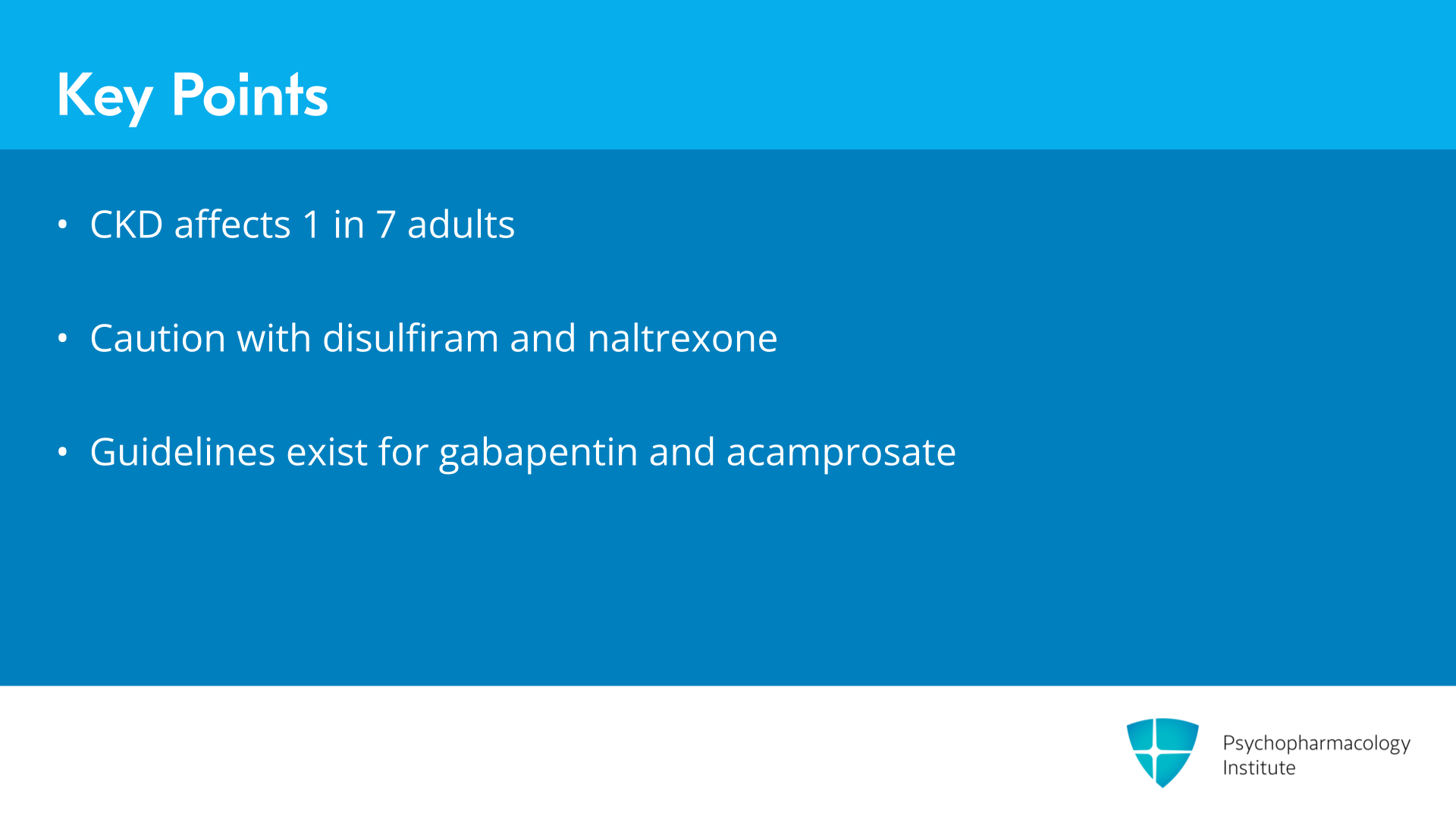
So the key points on chronic kidney disease and SUD medications: About 1 in 7 US adults have chronic kidney disease and these rates are elevated in those with substance use disorders. Both disulfiram and naltrexone are to be used with caution in those with renal impairment, and there are defined dosage guidelines for gabapentin and acamprosate.
Slide 16 of 16
For topiramate and bupropion, dose reductions are recommended in the presence of renal impairment.
Free Files
Download PDF and other files
Success!
Check your inbox, we sent you all the materials there.