Close Banner
Section Free  - Video Lectures

05. Rationale for Micronutrient Supplementation in Mental Illness

Published on January 1, 2023 Expired on January 1, 2026

Amelia Villagomez, M.D.

Assistant Professor of Psychiatry - University of Arizona

Key Points

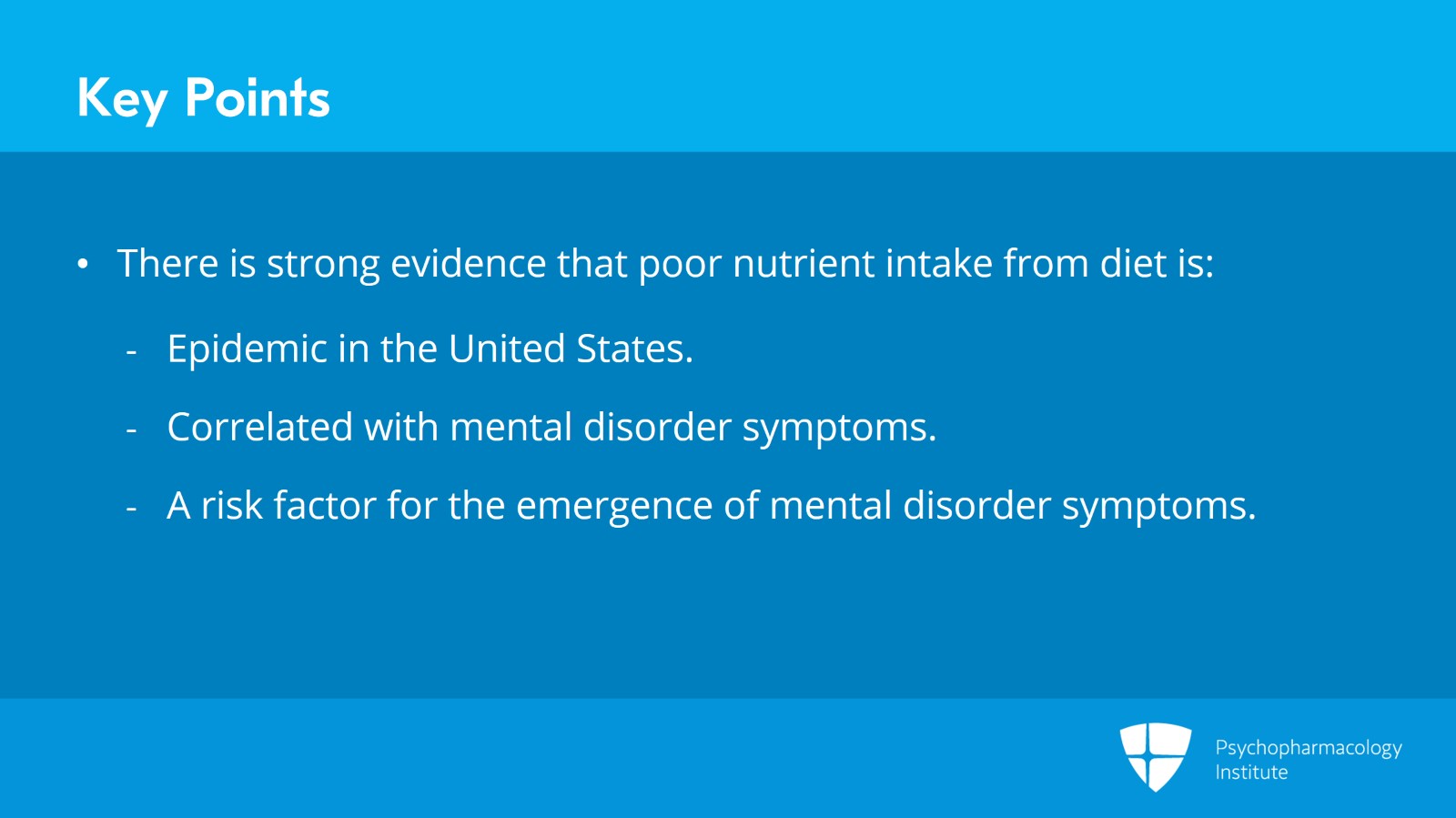
  • There is strong evidence that poor nutrient intake from diet is:
    - Epidemic in the United States.
    - Correlated with mental disorder symptoms.
    - A risk factor for the emergence of mental disorder symptoms.
  • Correcting poor nutrient intake can improve mental health.
  • A good diet may not be enough to optimize nutritional factors related to mental health.
  • Most Americans are not consuming sufficient amounts of vitamins and minerals.

Free Downloads for Offline Access

  • Free Download Presentation File (PPTX)
  • Free Download Video (MP4)
  • Free Download Audio File (MP3)

Slides and Transcript
Slide 1 of 18

A good diet may not be enough to optimize nutritional factors related to mental health.

Slide 2 of 18

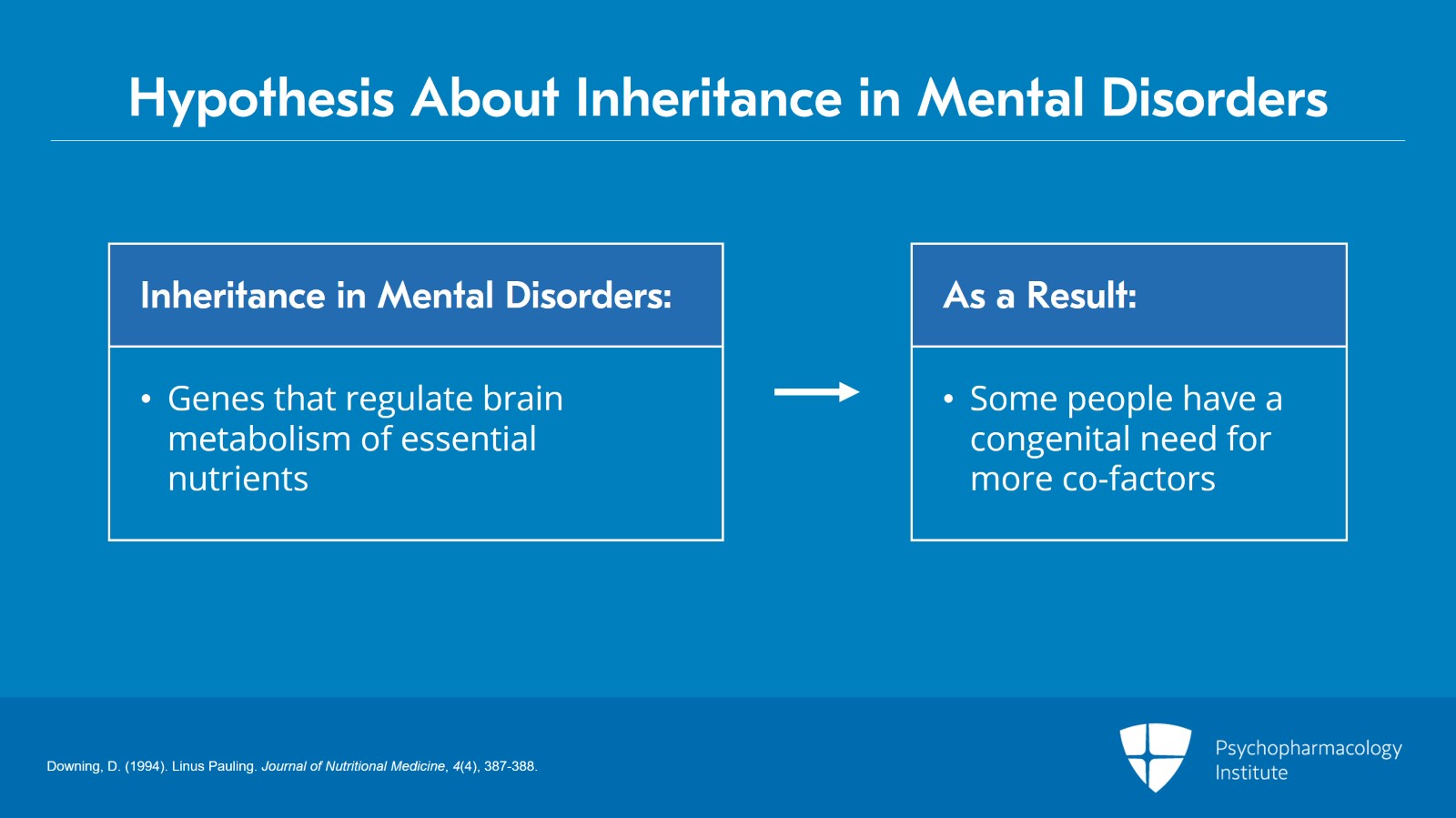
Nobel prize winner, Linus Pauling, in 1968 hypothesized that what is probably inherited in mental disorders are genes that regulate brain metabolism of essential nutrients. As a result, some people have a congenital need for more than typical amounts of co-factors for optimal enzymatic activity.
References:
  • Downing, D. (1994). Linus Pauling. Journal of Nutritional Medicine, 4(4), 387-388. 
Free Files
Success!
Check your inbox, we sent you all the materials there.
Slide 3 of 18

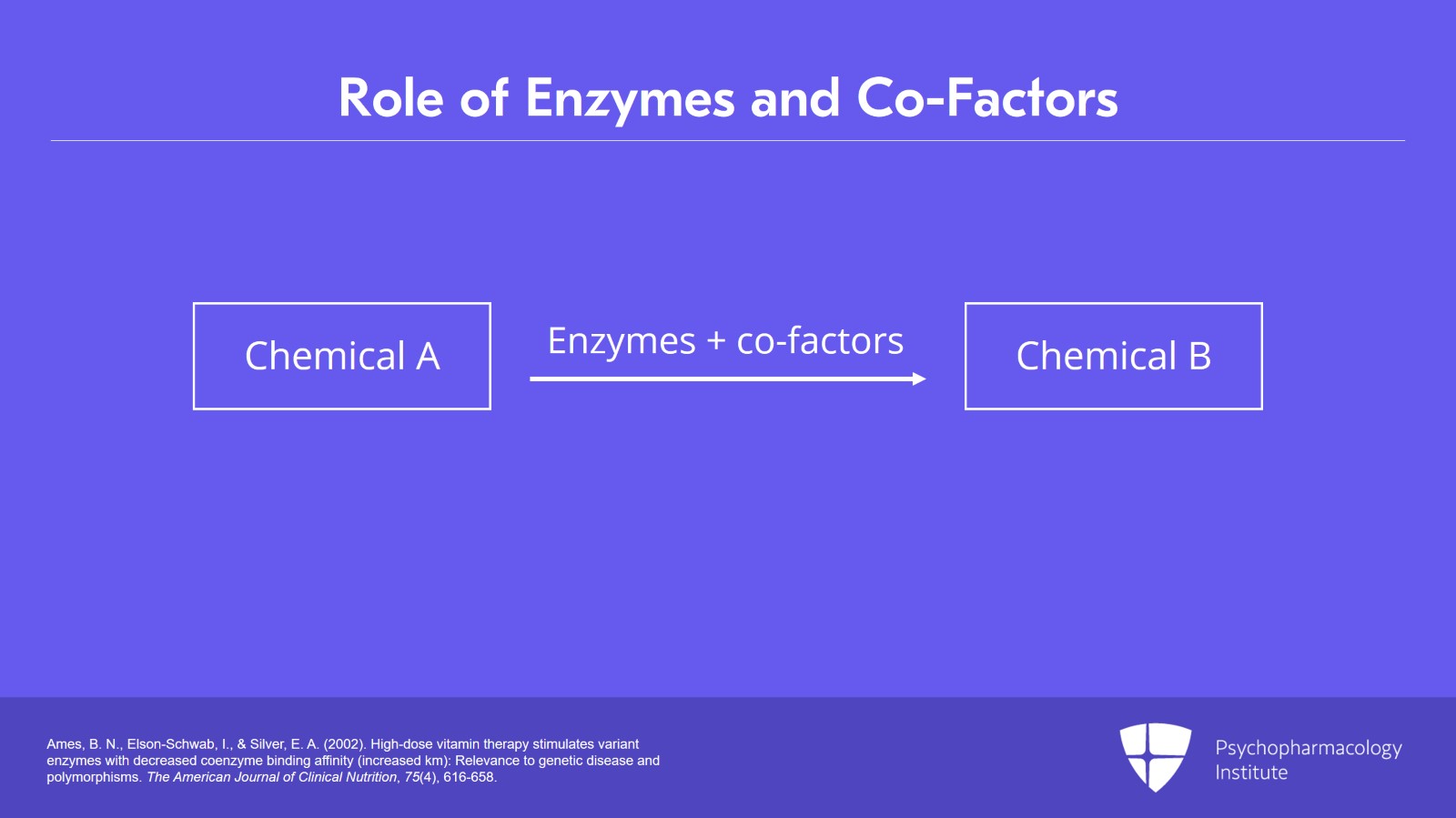
As we discussed previously, enzymes combined with co-factors, in other words vitamins and minerals, result in the transformation of chemical A to chemical B.
References:
  • Ames, B. N., Elson-Schwab, I., & Silver, E. A. (2002). High-dose vitamin therapy stimulates variant enzymes with decreased coenzyme binding affinity (increased km): Relevance to genetic disease and polymorphisms. The American Journal of Clinical Nutrition, 75(4), 616-658.

Slide 4 of 18

Polymorphisms in a gene can result in a decreased binding affinity for co-factors which in turn lowers the reaction rate.
References:
  • Ames, B. N., Elson-Schwab, I., & Silver, E. A. (2002). High-dose vitamin therapy stimulates variant enzymes with decreased coenzyme binding affinity (increased km): Relevance to genetic disease and polymorphisms. The American Journal of Clinical Nutrition, 75(4), 616-658.
Free Files
Success!
Check your inbox, we sent you all the materials there.
Slide 5 of 18

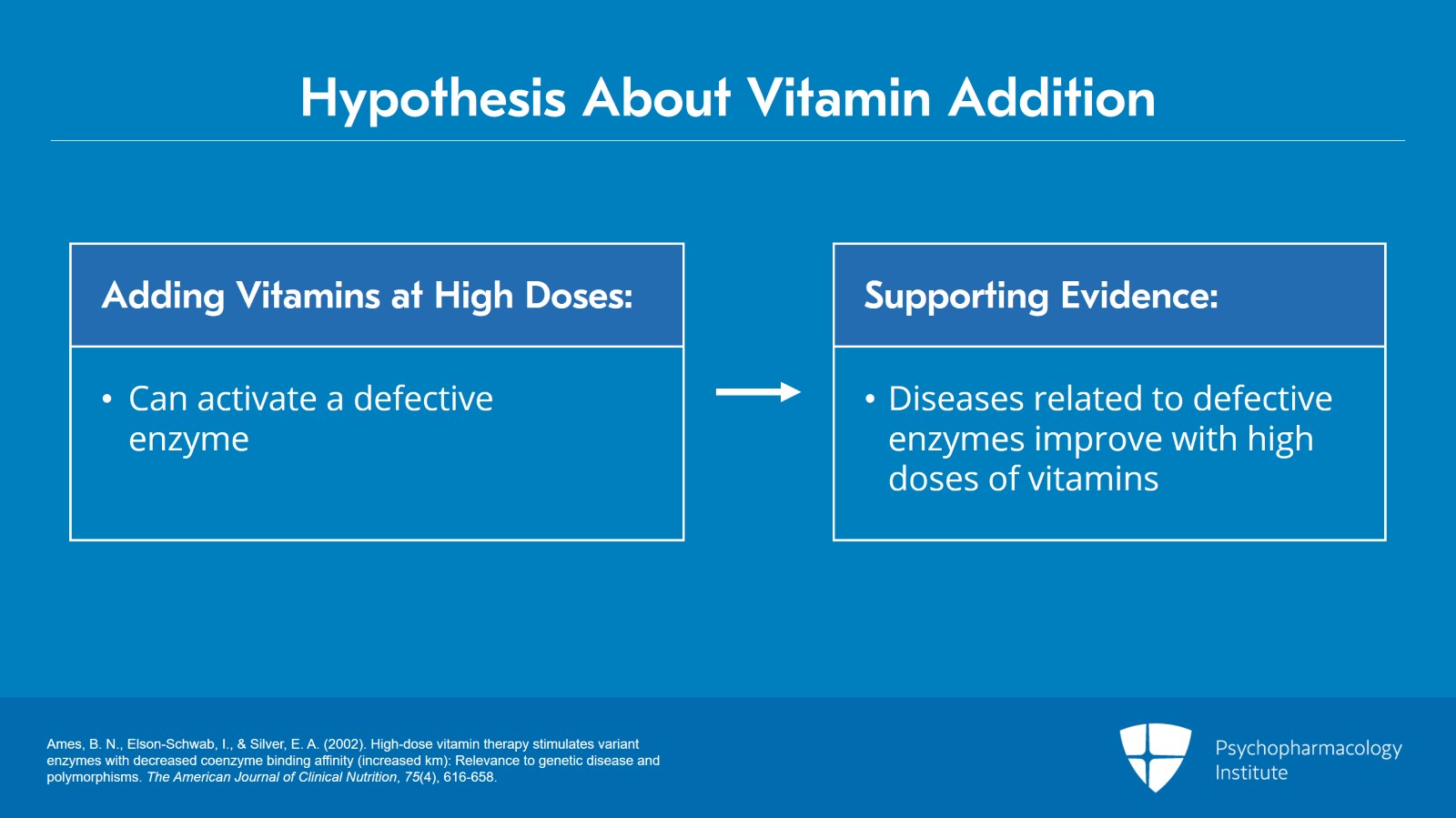
Dr. Bruce Ames has hypothesized that adding vitamins at high doses could increase the intracellular co-factor concentration and thereby activate a defective enzyme. In his 2002 paper cited below, he identified that about 50 human genetic diseases due to defective enzymes can be remedied or ameliorated by the administration of high doses of the vitamin component of the corresponding co-factors which at least partially restores enzymatic activity.
References:
  • Ames, B. N., Elson-Schwab, I., & Silver, E. A. (2002). High-dose vitamin therapy stimulates variant enzymes with decreased coenzyme binding affinity (increased km): Relevance to genetic disease and polymorphisms. The American Journal of Clinical Nutrition, 75(4), 616-658.

Slide 6 of 18

Along the same vein, Dr. Eugene Arnold has written about how certain individuals with ADHD benefit from omega-3 supplementation. He says the high heritability of ADHD is multifactorial, of course, but it seems conceivable that one of the genetic factors or more precisely one of the gene-by-environment interactions may be vulnerability to long-chain omega-3 deficiency.
References:
  • Gordon, H. A., Rucklidge, J. J., Blampied, N. M., & Johnstone, J. M. (2015). Clinically significant symptom reduction in children with attention-deficit/hyperactivity disorder treated with micronutrients: An open-label reversal design study. Journal of Child and Adolescent Psychopharmacology, 25(10), 783–798.
Free Files
Success!
Check your inbox, we sent you all the materials there.
Slide 7 of 18

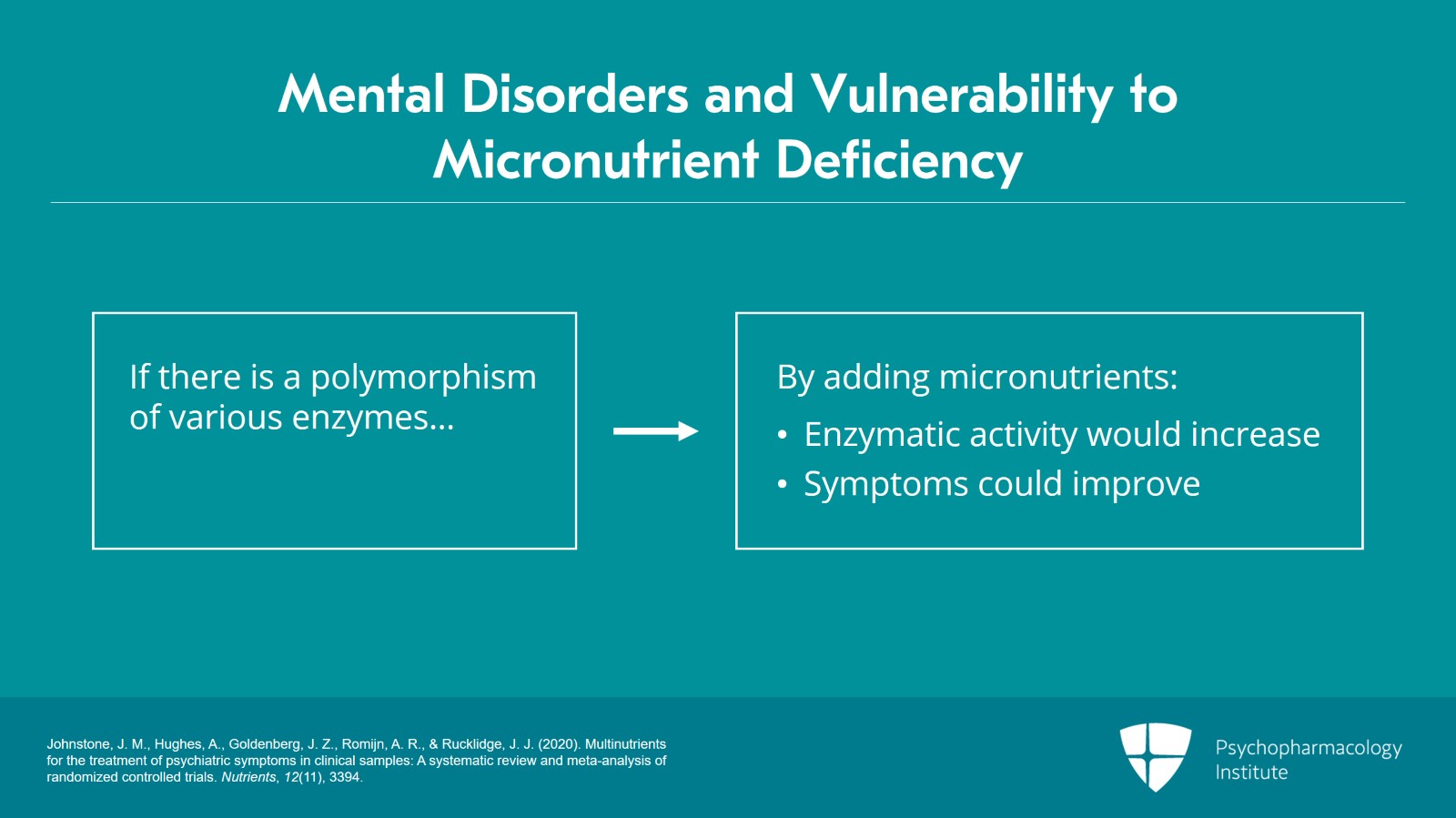
Is it possible that some individuals with mental disorders also have a vulnerability to micronutrient deficiency because of polymorphisms of various enzymes and that potentially adding in micronutrients would increase enzymatic activity resulting in improvement in symptoms? We will examine this hypothesis and research supporting it shortly.
References:
  • Johnstone, J. M., Hughes, A., Goldenberg, J. Z., Romijn, A. R., & Rucklidge, J. J. (2020). Multinutrients for the treatment of psychiatric symptoms in clinical samples: A systematic review and meta-analysis of randomized controlled trials. Nutrients, 12(11), 3394.

Slide 8 of 18

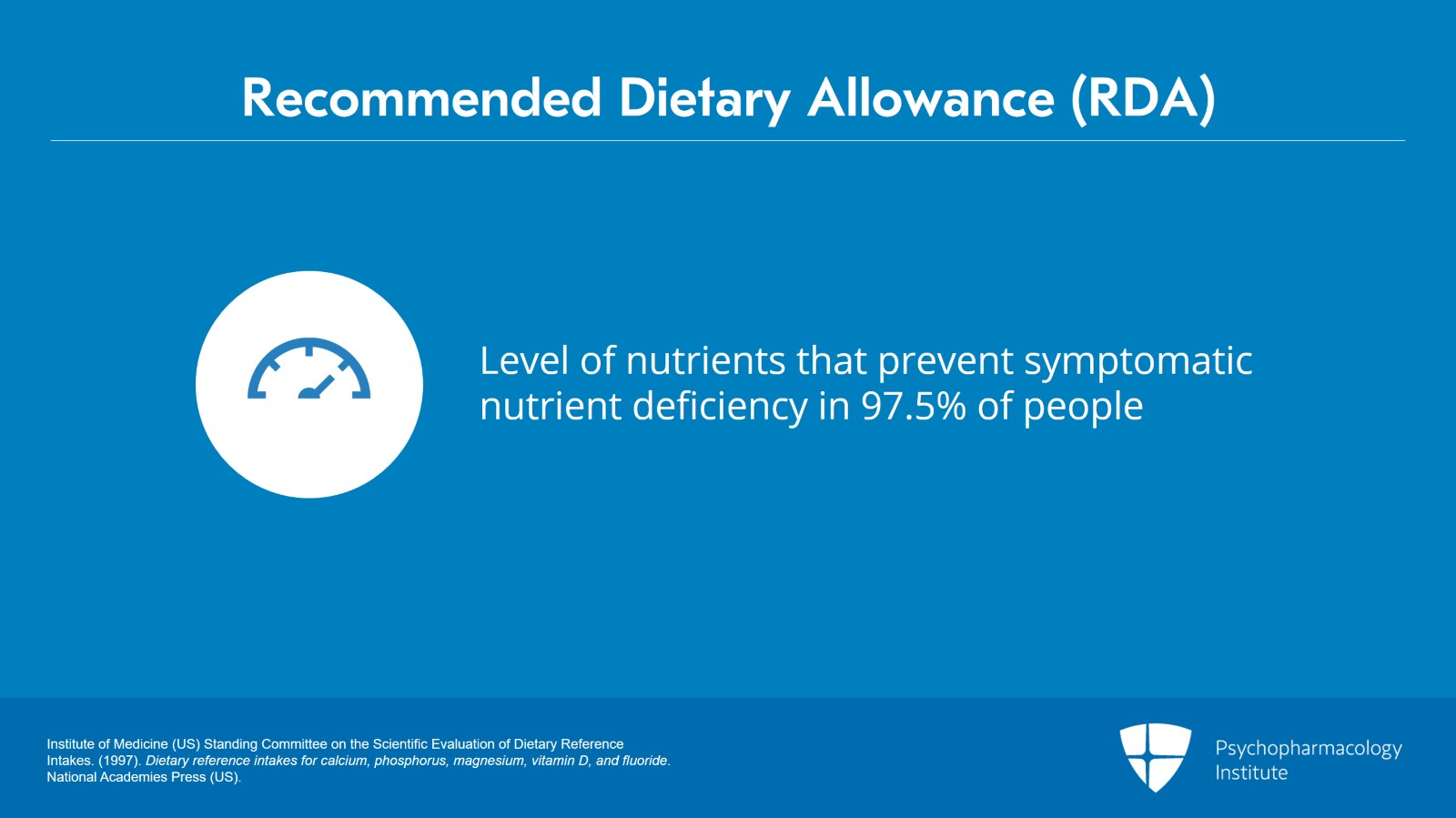
I want to take a moment to talk about the RDA or recommended dietary allowance. The RDAs were initially established during World War II to determine at the time of possible shortage what levels of nutrients would prevent symptomatic nutrient deficiency in most people and by most people specifically 97.5% of people, not all people. If 100 people were to get exactly the RDA level of vitamin C, then 2.5 of that 100 could be at a risk for developing scurvy, for example.
References:
  • Institute of Medicine (US) Standing Committee on the Scientific Evaluation of Dietary Reference Intakes. (1997). Dietary reference intakes for calcium, phosphorus, magnesium, vitamin D, and fluoride. National Academies Press (US).
Free Files
Success!
Check your inbox, we sent you all the materials there.
Slide 9 of 18

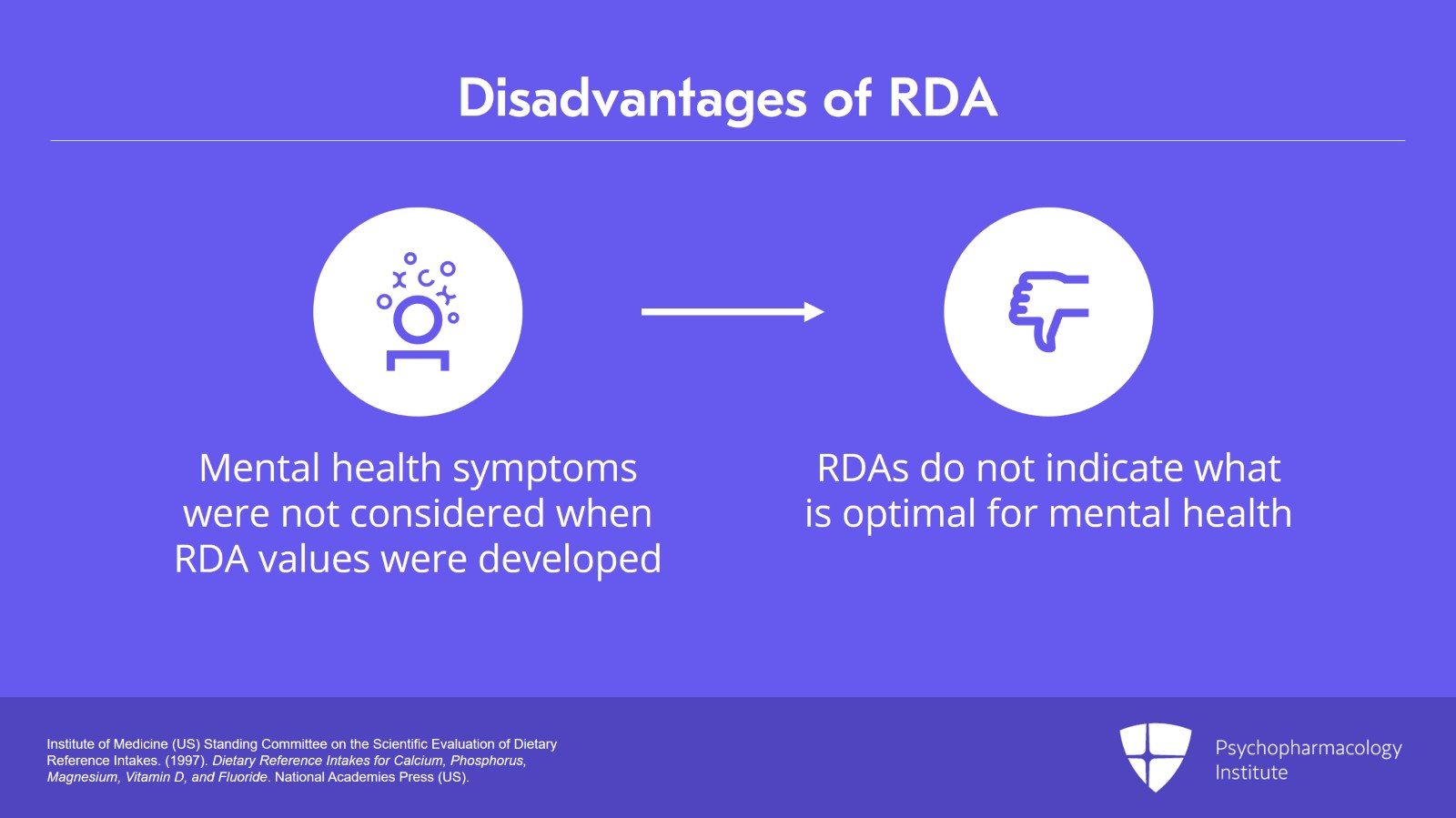
Additionally, mental health symptoms were not considered when developing RDA values. They were focused mainly on physical ailments. So, RDAs may not give us the best picture of what is optimal for mental health.
References:
  • Institute of Medicine (US) Standing Committee on the Scientific Evaluation of Dietary Reference Intakes. (1997). Dietary Reference Intakes for Calcium, Phosphorus, Magnesium, Vitamin D, and Fluoride. National Academies Press (US).

Slide 10 of 18

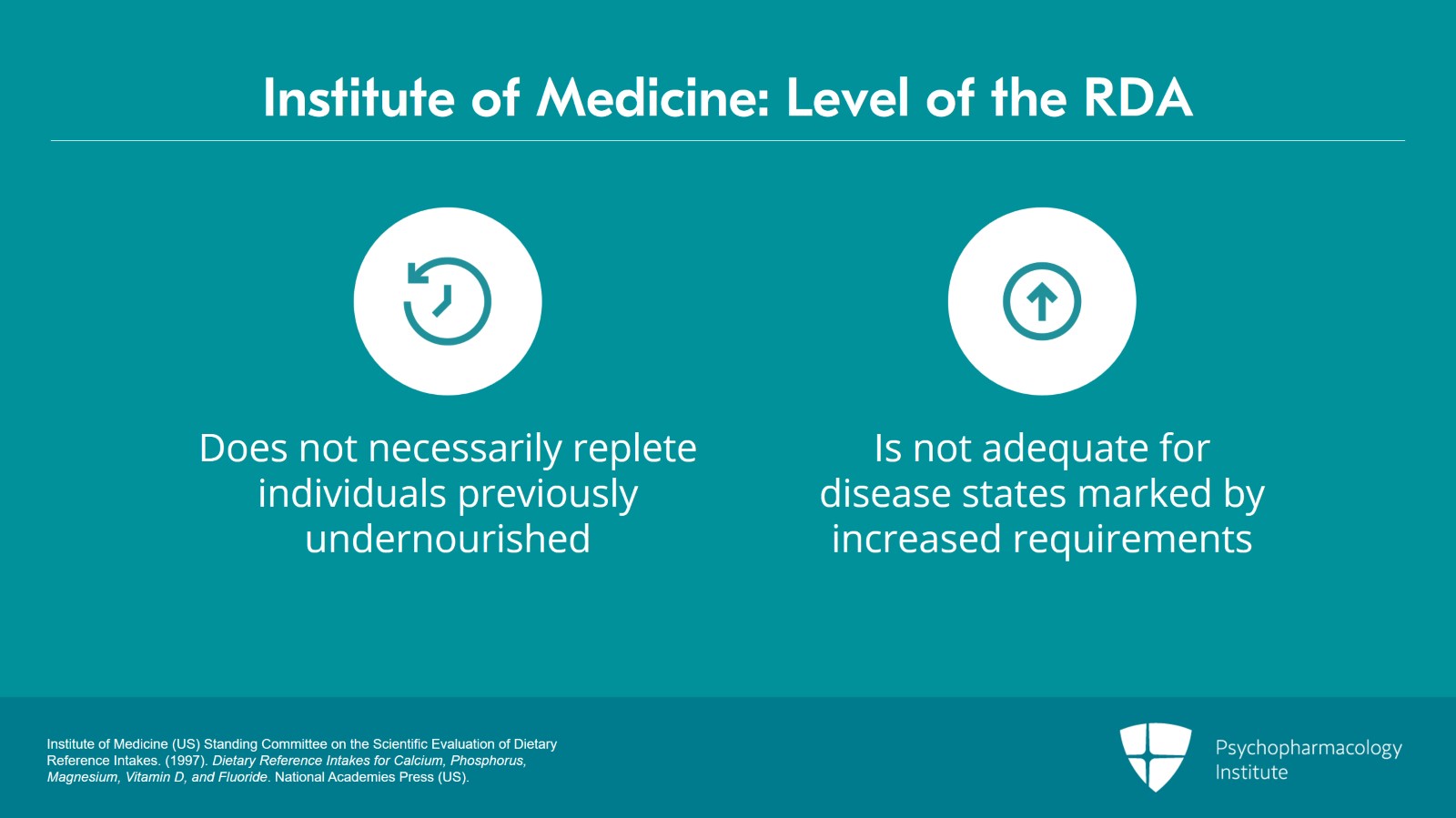
The Institute of Medicine has written that intake at the level of the RDA or AI which is adequate intake would not necessarily be expected to replete individuals previously undernourished nor would it be adequate for disease states marked by increased requirements.
References:
  • Institute of Medicine (US) Standing Committee on the Scientific Evaluation of Dietary Reference Intakes. (1997). Dietary Reference Intakes for Calcium, Phosphorus, Magnesium, Vitamin D, and Fluoride. National Academies Press (US).
Free Files
Success!
Check your inbox, we sent you all the materials there.
Slide 11 of 18

Given the high metabolic needs of the brain, often the first signs of dietary deficiency are psychological.
References:
  • Johnstone, J. M., Hughes, A., Goldenberg, J. Z., Romijn, A. R., & Rucklidge, J. J. (2020). Multinutrients for the treatment of psychiatric symptoms in clinical samples: A systematic review and meta-analysis of randomized controlled trials. Nutrients, 12(11), 3394.
  • Benton, D. (2010). The influence of dietary status on the cognitive performance of children. Molecular Nutrition & Food Research, 54(4), 457-470.

Slide 12 of 18

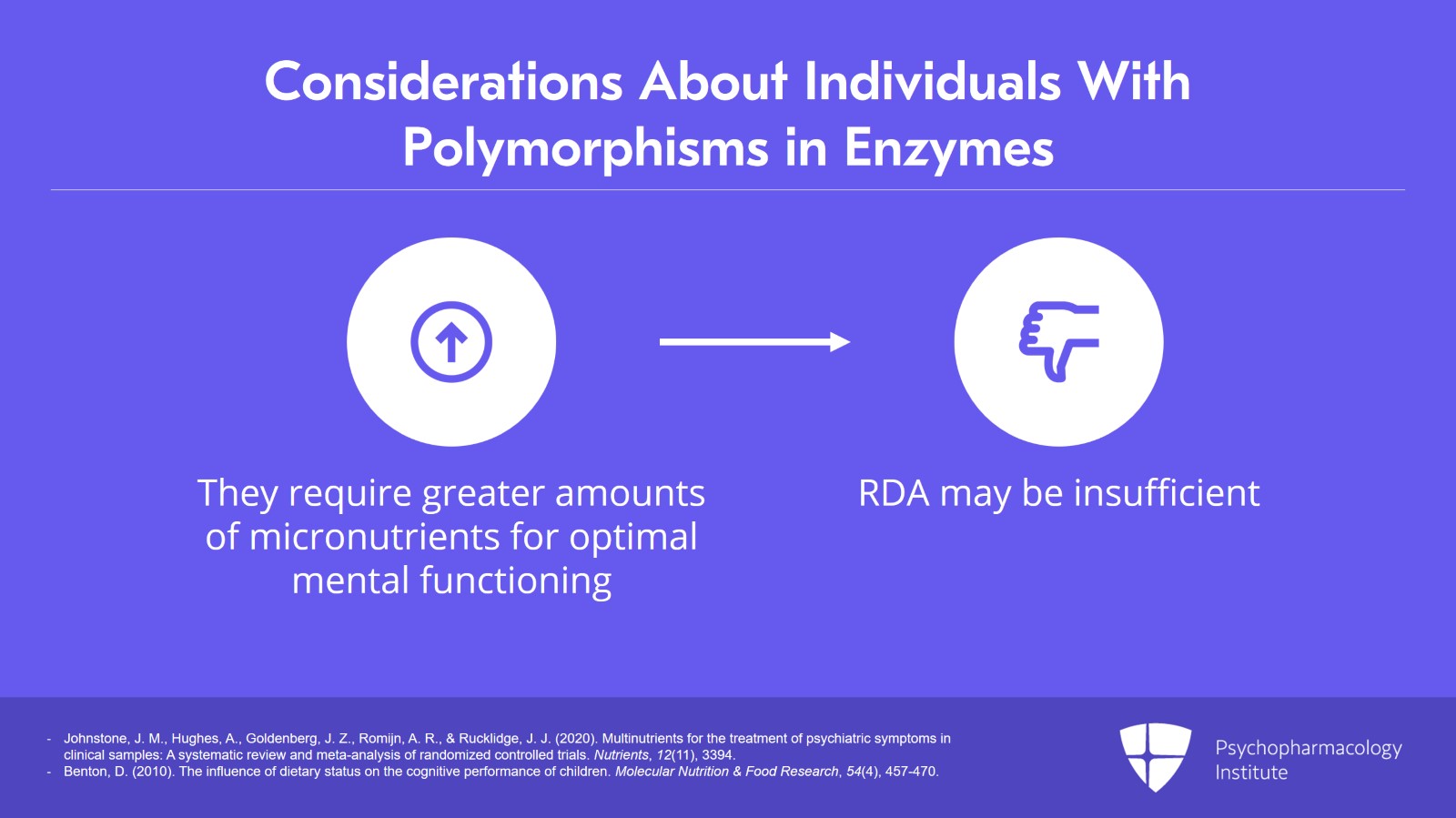
Some individuals are genetically predisposed to require greater amounts of micronutrients for optimal mental functioning and nutrient intakes at the recommended dietary allowance may be insufficient for some individuals based on polymorphism differences in enzymes, receptors, and other cell organelles.
References:
  • Johnstone, J. M., Hughes, A., Goldenberg, J. Z., Romijn, A. R., & Rucklidge, J. J. (2020). Multinutrients for the treatment of psychiatric symptoms in clinical samples: A systematic review and meta-analysis of randomized controlled trials. Nutrients, 12(11), 3394.
  • Benton, D. (2010). The influence of dietary status on the cognitive performance of children. Molecular Nutrition & Food Research, 54(4), 457-470.
Free Files
Success!
Check your inbox, we sent you all the materials there.
Slide 13 of 18

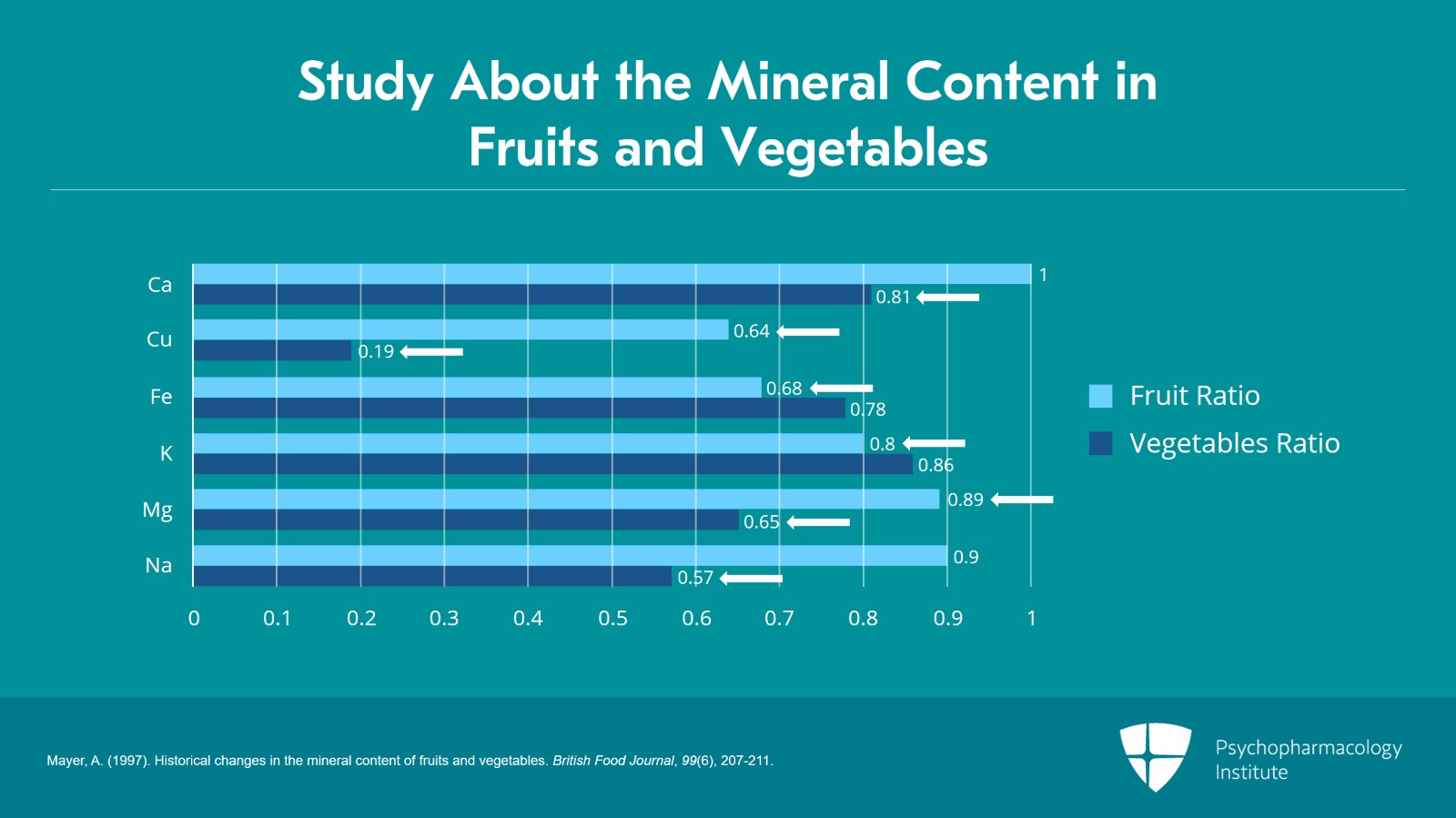
Another problem that compounds the issue of micronutrient insufficiency is that the nutrient density of plants has diminished over the past 50 years. This study looked at the mineral content of 20 fruits and 20 vegetables in the 1980s compared to the 1930s. There were several marked reductions in mineral content. The mineral content of fruits are illustrated in light blue and vegetables in dark blue. There were statistically significant reductions in the levels of calcium, magnesium, copper and sodium in vegetables, and magnesium, iron, copper and potassium in fruit. The water content increased significantly and dry matter decreased significantly in fruit.
References:
  • Mayer, A. (1997). Historical changes in the mineral content of fruits and vegetables. British Food Journal, 99(6), 207-211.

Slide 14 of 18

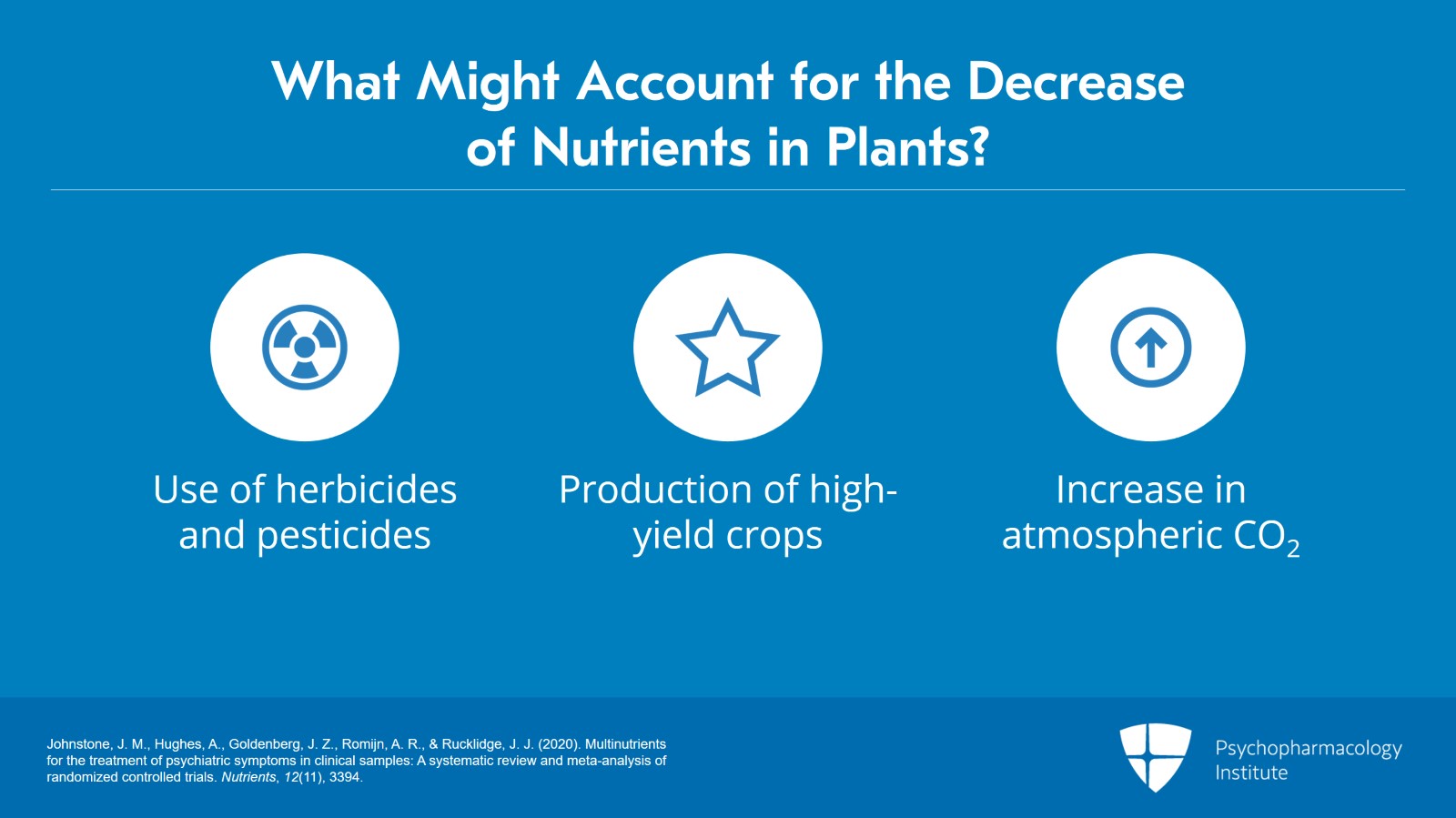
Well, what might account for these changes? On the environmental front, the use of herbicides and pesticides that diminish essential nutrients and crops through chelation of minerals, an emphasis on high-yield crops at the expense of nutrient density and even the increase in atmospheric CO2 have all been identified as contributors to the reduced nutrient density of plants.
References:
  • Johnstone, J. M., Hughes, A., Goldenberg, J. Z., Romijn, A. R., & Rucklidge, J. J. (2020). Multinutrients for the treatment of psychiatric symptoms in clinical samples: A systematic review and meta-analysis of randomized controlled trials. Nutrients, 12(11), 3394.
Free Files
Success!
Check your inbox, we sent you all the materials there.
Slide 15 of 18

Key points.   There is strong worldwide evidence that poor nutrient intake from diet is epidemic in the US, is correlated with mental health symptoms, is a risk factor for the subsequent emergence of mental health symptoms.

Slide 16 of 18

There is strong worldwide evidence that poor nutrient intake from diet when corrected results in improved mental health. A good diet may not be enough to optimize nutritional factors related to mental health.
Free Files
Success!
Check your inbox, we sent you all the materials there.
Slide 17 of 18

What we eat matters for mental health and most Americans are not consuming sufficient amounts of vitamins and minerals.

Slide 18 of 18

Free Files
Success!
Check your inbox, we sent you all the materials there.
Learning Objectives:

After completing this activity, the learner will be able to:

  1. Describe the connection between dietary patterns and mental health.
  2. Discuss the available evidence about using BSMs for mental health conditions.
  3. Recognize patients who can benefit from BSM supplementation.

Original Release Date: January 1, 2023

Review and Re-release Date: March 1, 2024

Expiration Date: January 1, 2026

Expert: Amelia Villagomez, M.D.

Medical Editor: Paz Badía, M.D.

Relevant Financial Disclosures: 

None of the faculty, planners, and reviewers for this educational activity have relevant financial relationships to disclose during the last 24 months with ineligible companies whose primary business is producing, marketing, selling, re-selling, or distributing healthcare products used by or on patients.

Contact Information: For questions regarding the content or access to this activity, contact us at support@psychopharmacologyinstitute.com

Instructions for Participation and Credit:

Participants must complete the activity online during the valid credit period that is noted above.

Follow these steps to earn CME credit:

  1. View the required educational content provided on this course page.

  2. Complete the Post Activity Evaluation for providing the necessary feedback for continuing accreditation purposes and for the development of future activities. NOTE: Completing the Post Activity Evaluation after the quiz is required to receive the earned credit.

  3. Download your certificate.

Accreditation Statement

This activity has been planned and implemented in accordance with the accreditation requirements and policies of the Accreditation Council for Continuing Medical Education through the joint providership of Medical Academy LLC and the Psychopharmacology Institute. Medical Academy is accredited by the ACCME to provide continuing medical education for physicians.

Credit Designation Statement

Medical Academy designates this enduring activity for a maximum of 0.75 AMA PRA Category 1 credit(s)™. Physicians should claim only the credit commensurate with the extent of their participation in the activity.

Free Files
Success!
Check your inbox, we sent you all the materials there.
Continue in the website
Instant access modal

Become a Bronze, Silver, Gold, Bronze extended, Silver extended or Gold extended Member.

2025–26 Psychopharmacology CME Program

Unlock up to 155 CME Credits, including 40 SA CME Credits.