Close Banner
Free Section  - Video Lectures

06. Psychopharmacology for People With Treatment-Resistant Early Psychosis

Published on November 1, 2021 Expired on April 1, 2025

Stephen R. Marder, M.D.

Professor, Psychiatry and Biobehavioral Sciences Director, Section on Psychosis - Resnick Neuropsychiatric Hospital at UCLA Ronald Reagan UCLA Medical Center

Key Points

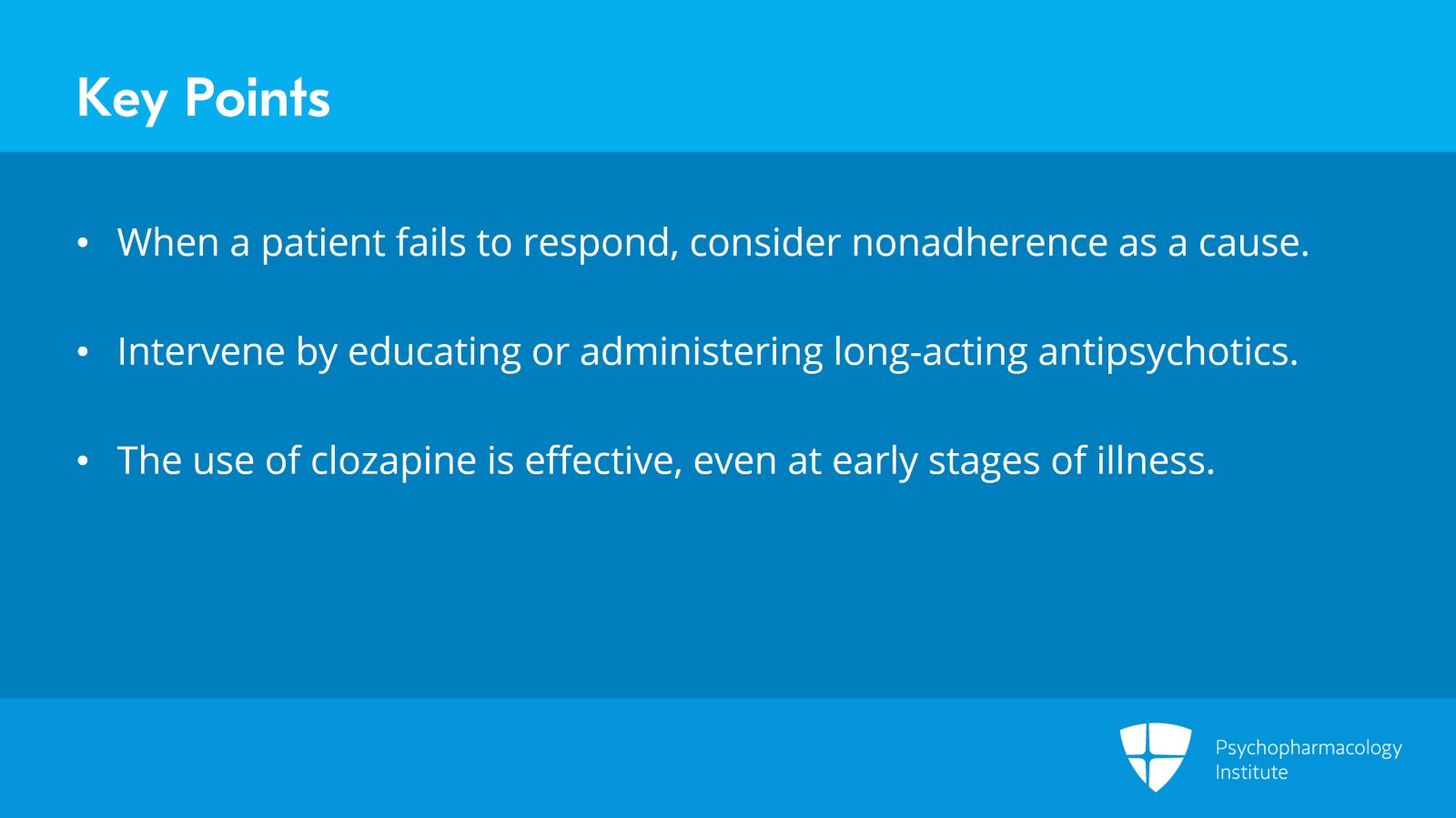
  • When a patient fails to respond, consider nonadherence as a cause.
  • Intervene by educating or administering long-acting antipsychotics.
  • The use of clozapine is effective, even at early stages of illness.

Free Downloads for Offline Access

  • Free Download Presentation File (PPTX)
  • Free Download Video (MP4)
  • Free Download Audio File (MP3)

Slides and Transcript

Slide 1 of 10

In the sixth section of these talks on the assessment and management of first episodes of psychosis, I'm going to talk about treatment resistance which can occur within the first episode.

Slide 2 of 10

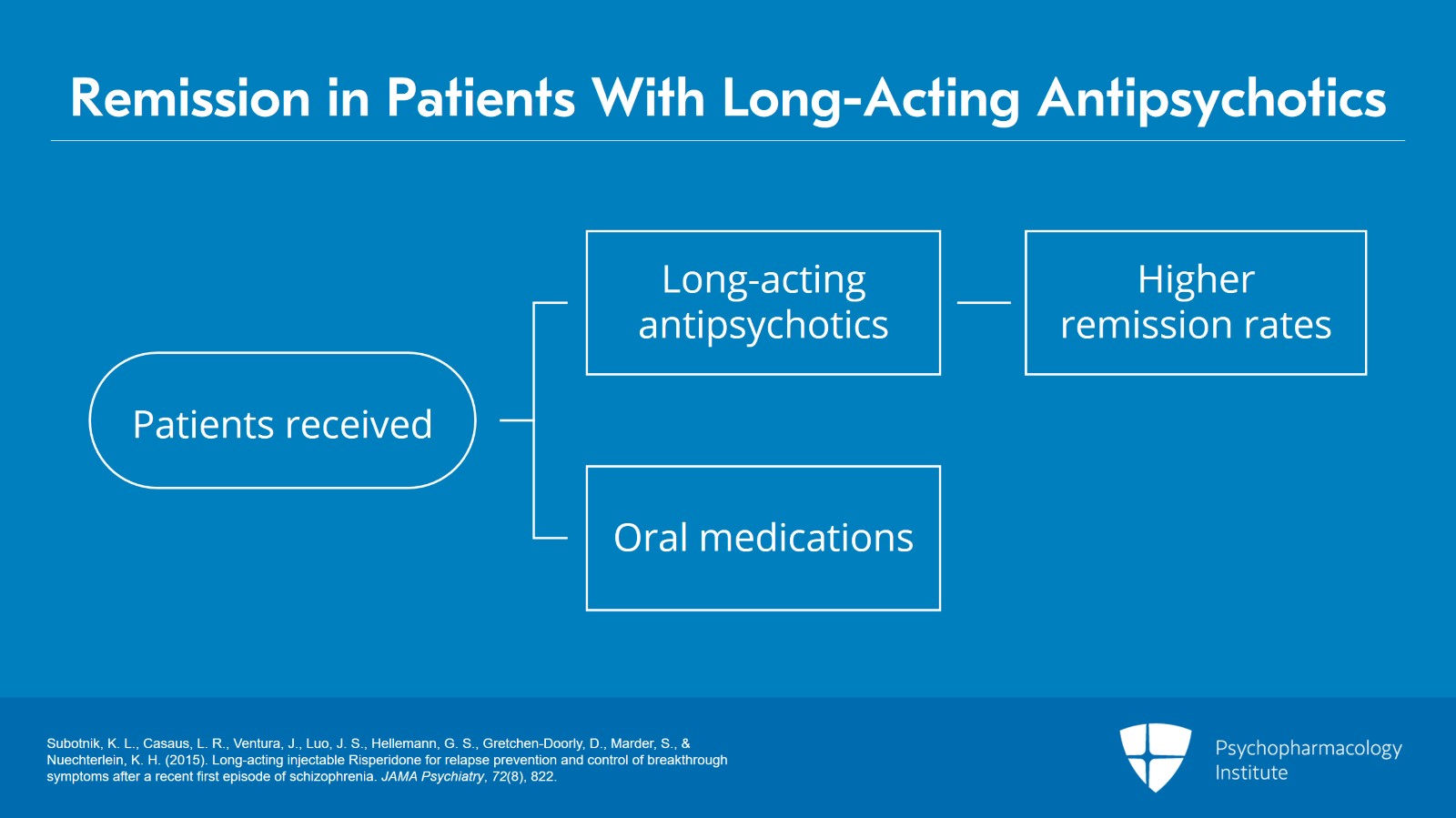
This is from a study which is done here at my home, UCLA, where we looked at remission in patients receiving a long-acting antipsychotic and those on oral medications. And what you see is that remission rates were much higher on long-acting antipsychotic.
References:
  • Subotnik, K. L., Casaus, L. R., Ventura, J., Luo, J. S., Hellemann, G. S., Gretchen-Doorly, D., Marder, S., & Nuechterlein, K. H. (2015). Long-acting injectable Risperidone for relapse prevention and control of breakthrough symptoms after a recent first episode of schizophrenia. JAMA Psychiatry, 72(8), 822.
Free Files
Success!
Check your inbox, we sent you all the materials there.

Slide 3 of 10

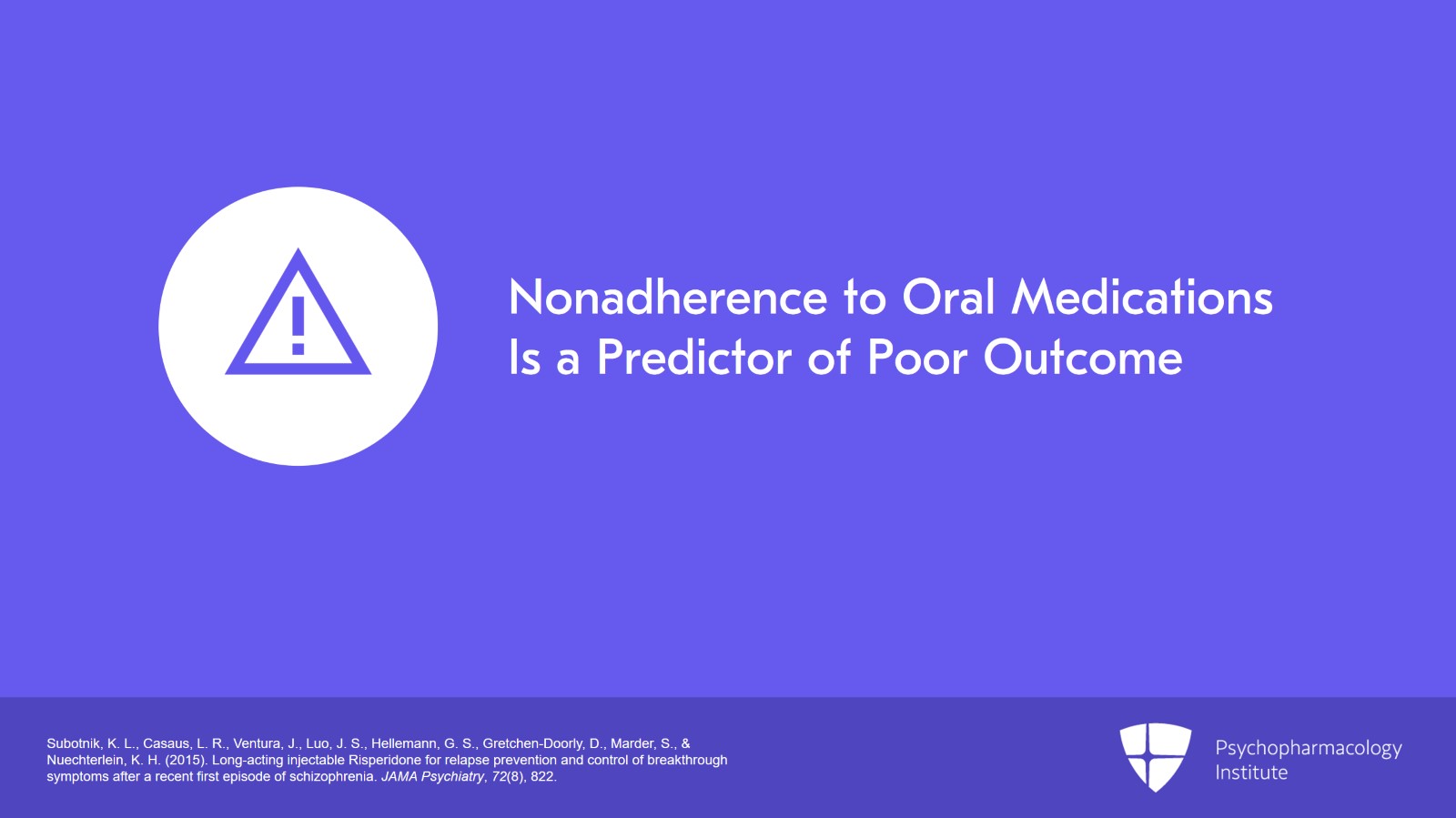
And what this suggests is that one of the important predictors of poor outcome in these first episodes is probably going to be nonadherence to oral medications. And when patients do poorly during a first episode, I think this needs to be one of the first considerations.
References:
  • Subotnik, K. L., Casaus, L. R., Ventura, J., Luo, J. S., Hellemann, G. S., Gretchen-Doorly, D., Marder, S., & Nuechterlein, K. H. (2015). Long-acting injectable Risperidone for relapse prevention and control of breakthrough symptoms after a recent first episode of schizophrenia. JAMA Psychiatry, 72(8), 822.

Slide 4 of 10

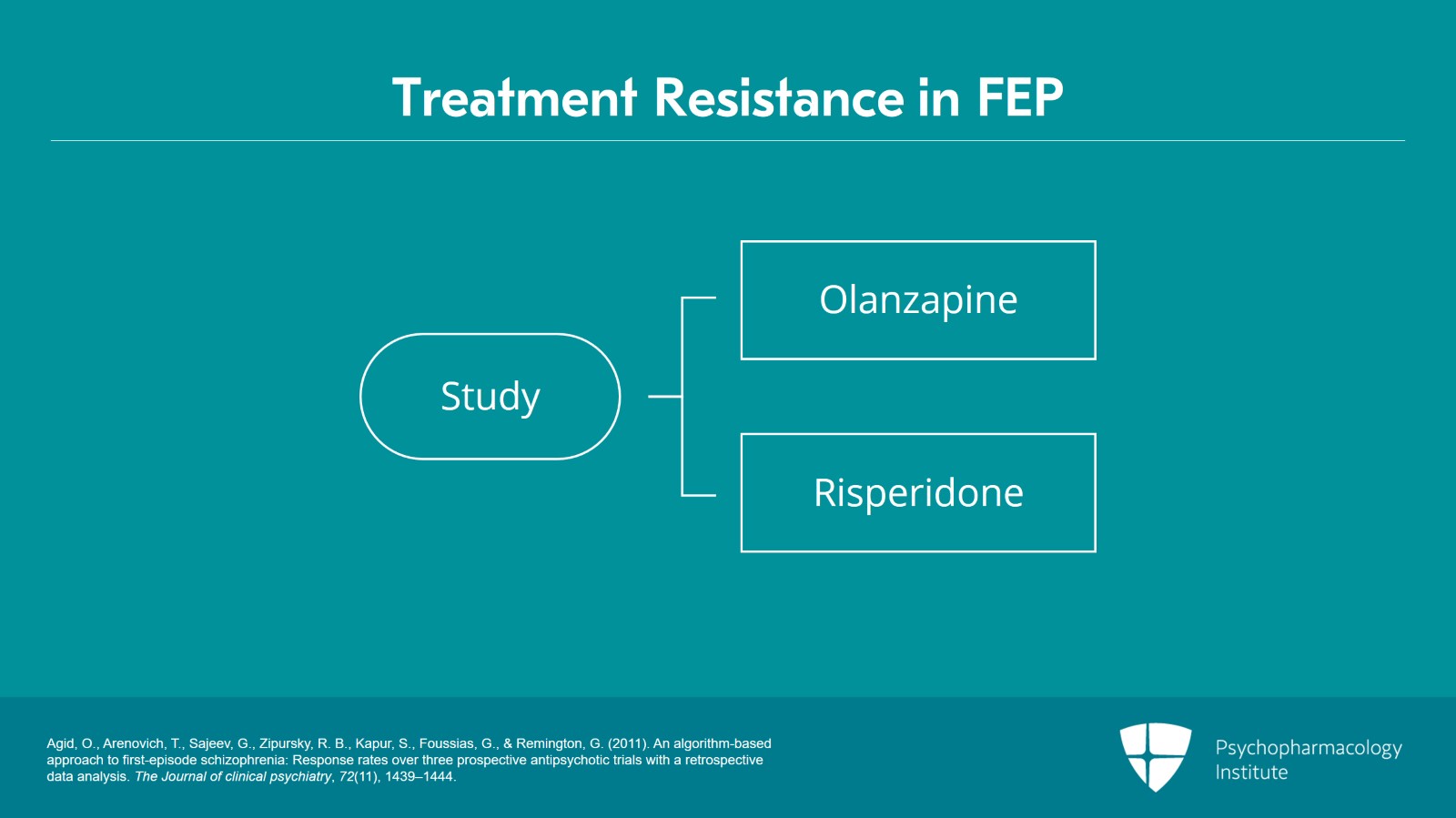
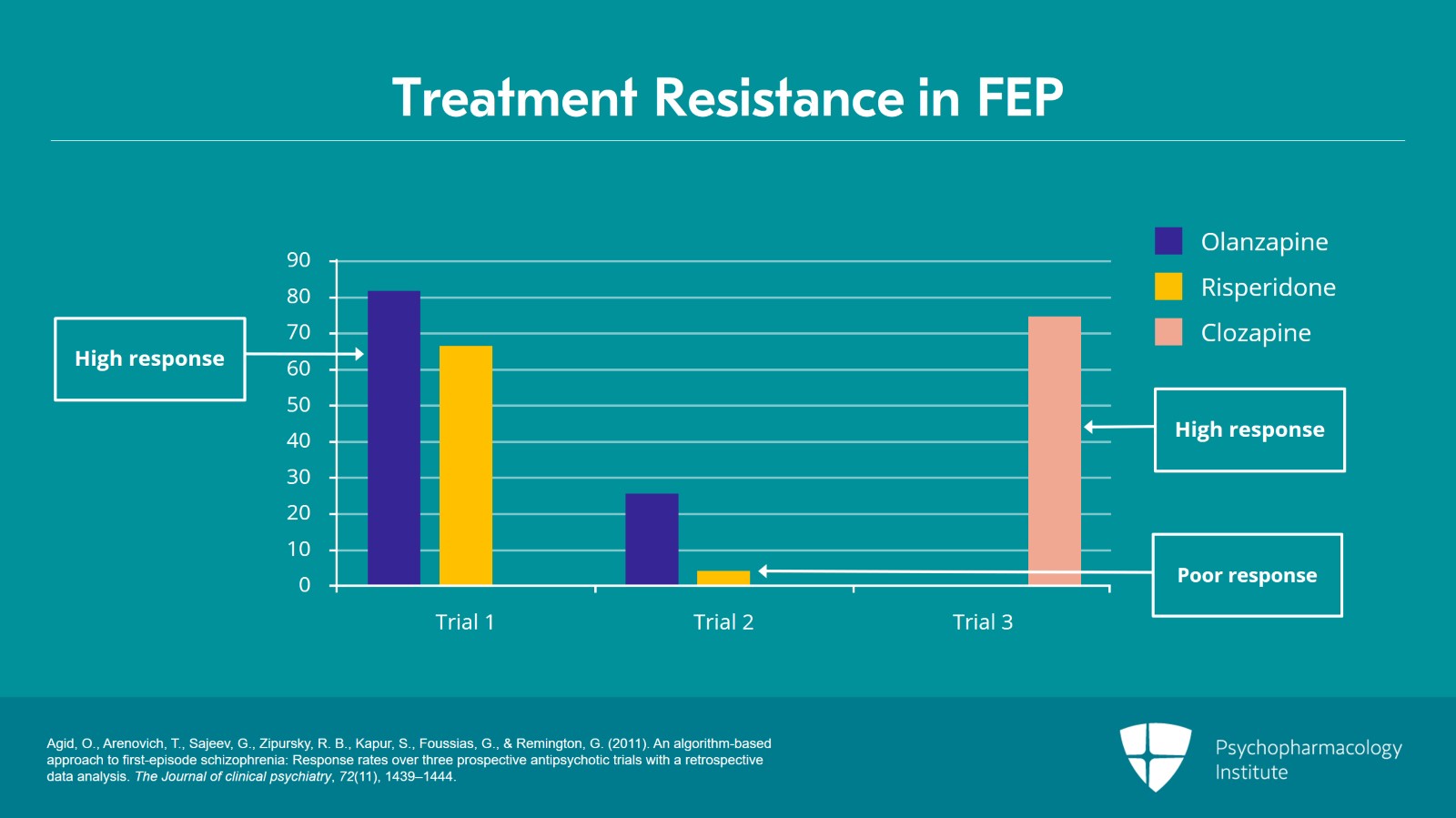
But let me talk about what we've learned about what to do if somebody is treatment resistant after a first episode. This slide is a study by Ofer Agid in Canada in which patients were treated with either olanzapine or risperidone.
References:
  • Agid, O., Arenovich, T., Sajeev, G., Zipursky, R. B., Kapur, S., Foussias, G., & Remington, G. (2011). An algorithm-based approach to first-episode schizophrenia: Response rates over three prospective antipsychotic trials with a retrospective data analysis. The Journal of clinical psychiatry, 72(11), 1439–1444.
Free Files
Success!
Check your inbox, we sent you all the materials there.

Slide 5 of 10

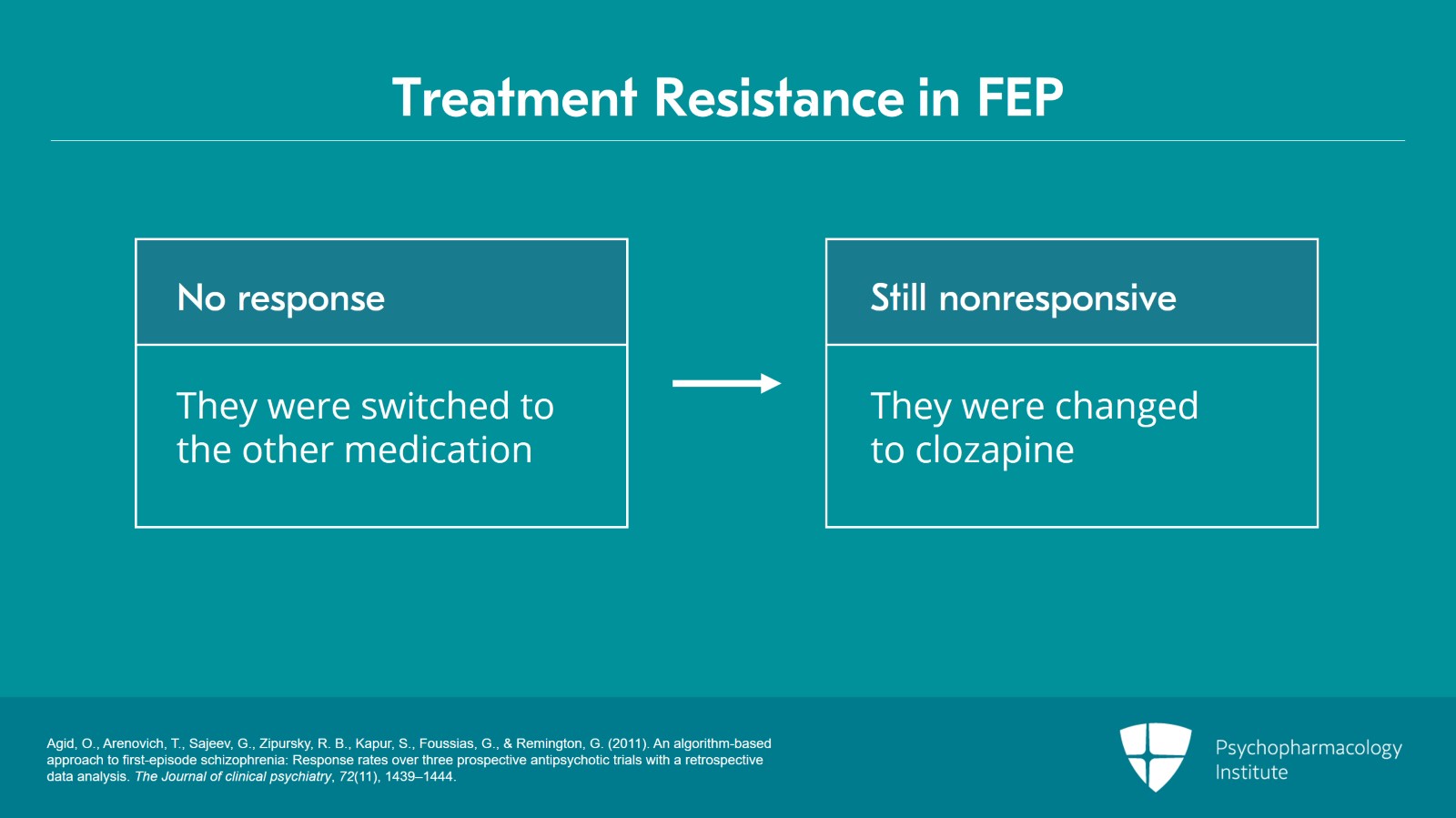
If they didn't respond, they were switched to the other medication, risperidone to olanzapine or olanzapine to risperidone. And then they would measure response rate. And if they were still nonresponsive, they were changed to clozapine.
References:
  • Agid, O., Arenovich, T., Sajeev, G., Zipursky, R. B., Kapur, S., Foussias, G., & Remington, G. (2011). An algorithm-based approach to first-episode schizophrenia: Response rates over three prospective antipsychotic trials with a retrospective data analysis. The Journal of clinical psychiatry, 72(11), 1439–1444.

Slide 6 of 10

In trial 1, there were high response rates on both, as I said in my past talk that you could expect something around 80% remission rate. But look what happens next time. The people who didn't respond to olanzapine when they were put on risperidone, their response rate was 4% which is pretty poor. For people who were on risperidone then changed to olanzapine, it was only 26% which suggests that switching to another second-generation antipsychotic is not very likely to work. But if you look at the next, trial 3, you'll see that things changed dramatically and that when these people were changed to clozapine there was a 75% response rate.
References:
  • Agid, O., Arenovich, T., Sajeev, G., Zipursky, R. B., Kapur, S., Foussias, G., & Remington, G. (2011). An algorithm-based approach to first-episode schizophrenia: Response rates over three prospective antipsychotic trials with a retrospective data analysis. The Journal of clinical psychiatry, 72(11), 1439–1444.
Free Files
Success!
Check your inbox, we sent you all the materials there.

Slide 7 of 10

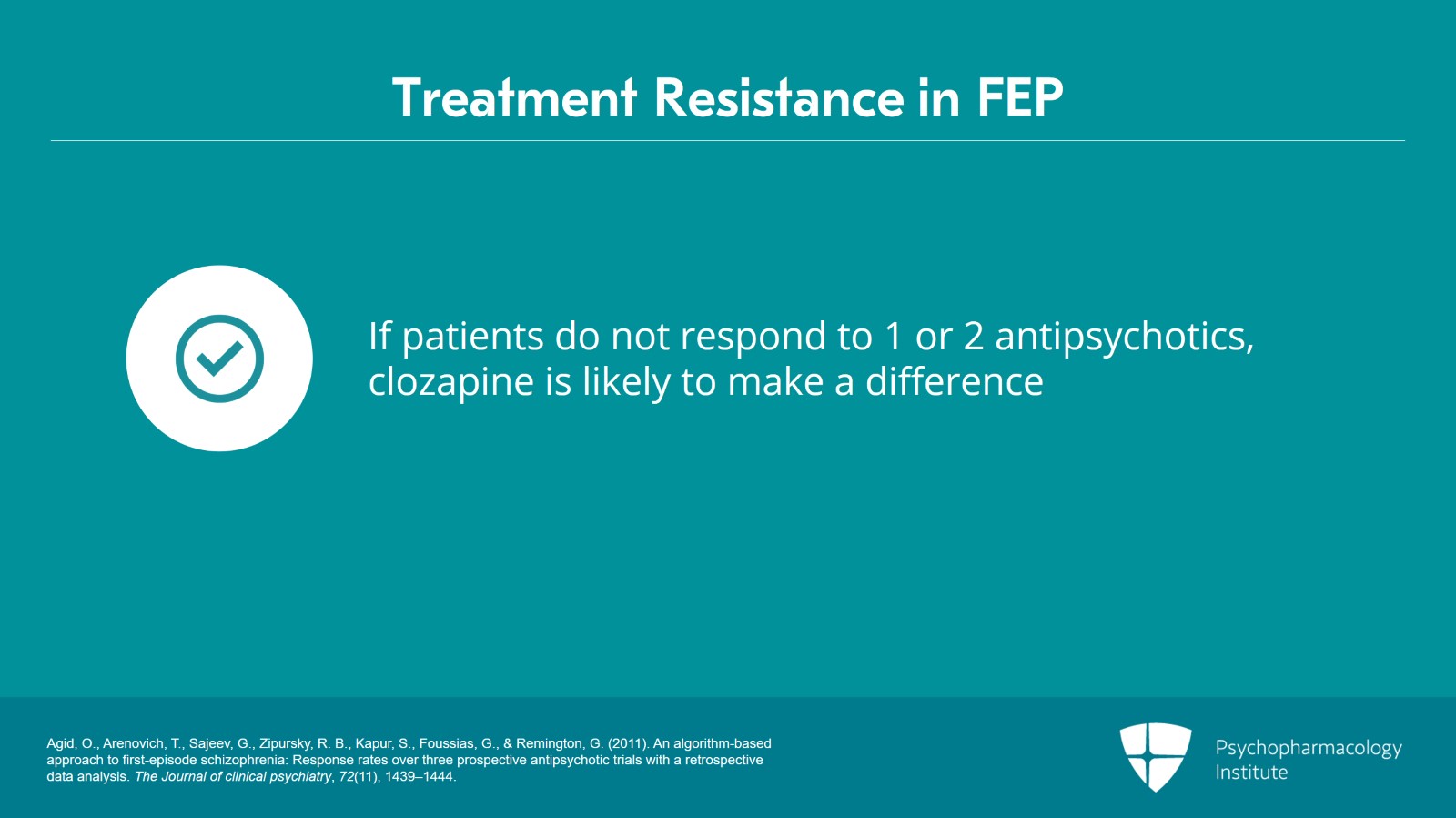
What I'm trying to emphasize is that there is a high likelihood that patients if they don't respond to one or even two antipsychotics, putting them on another one is not very likely to be helpful. Clozapine is likely to make a difference.
References:
  • Agid, O., Arenovich, T., Sajeev, G., Zipursky, R. B., Kapur, S., Foussias, G., & Remington, G. (2011). An algorithm-based approach to first-episode schizophrenia: Response rates over three prospective antipsychotic trials with a retrospective data analysis. The Journal of clinical psychiatry, 72(11), 1439–1444.

Slide 8 of 10

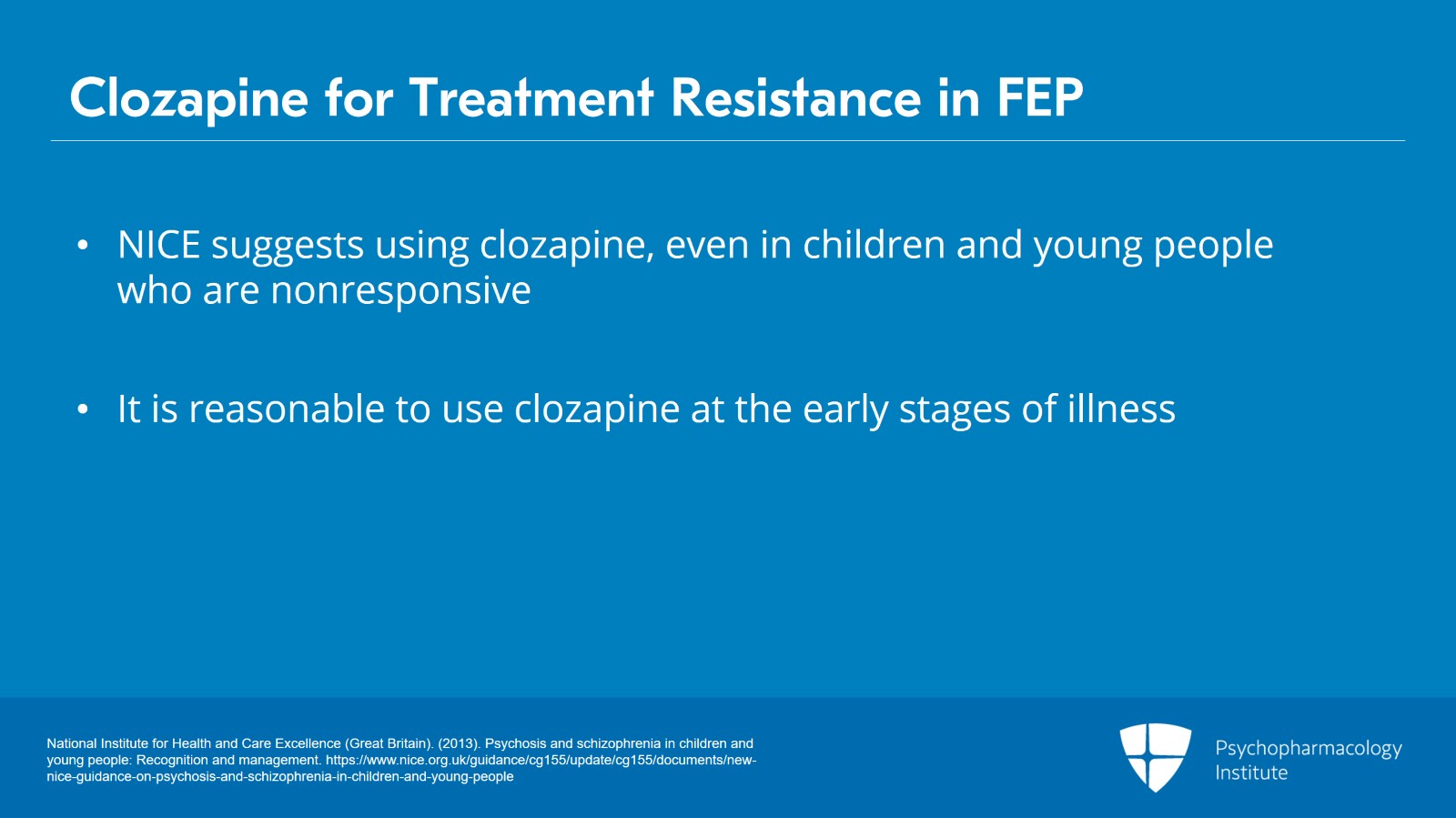
This is why the guidelines from the UK, the National Institute on Clinical Excellence, suggest that even in children and young people who haven't responded despite receiving two antipsychotics that they should have a clozapine trial. Clozapine is too often reserved for patients who are severely ill and in the late stages of illness. I think it's probably more reasonable, to get people on clozapine treatment at the relatively early stages of illness.
References:
  • National Institute for Health and Care Excellence (Great Britain). (2013). Psychosis and schizophrenia in children and young people: Recognition and management. https://www.nice.org.uk/guidance/cg155/update/cg155/documents/new-nice-guidance-on-psychosis-and-schizophrenia-in-children-and-young-people
Free Files
Success!
Check your inbox, we sent you all the materials there.

Slide 9 of 10

So in this talk on treatment resistance in first episodes, I've tried to make two points. First, when a first episode patient fails to respond to an antipsychotic trial particularly when they're on oral medications, one should consider nonadherence as a cause and one can either intervene by better education or putting them on a long-acting antipsychotic. Other intervention which seems to have a high likelihood of being effective is the use of clozapine and that has a very important role even at the early stages of the illness. Thank you.

Slide 10 of 10

Free Files
Success!
Check your inbox, we sent you all the materials there.

Learning Objectives:

After completing this activity, the learner will be able to:

  1. Discuss the typical course of first episode psychosis and predictors of clinical outcome.
  2. Review evidence on the use of psychotropic medications, as well as their potential benefits and risks, in the treatment of first episode psychosis.

Original Release Date: 11/01/2021

Review and Re-release Date: 03/01/2024

Expiration Date: 04/01/2025

Expert: Stephen Marder, M.D.

Medical Editor: Melissa Mariano, M.D

Relevant Financial Disclosures:

The following planners, faculty, and reviewers have the following relevant financial relationships with commercial interests to disclose:

Dr. Marder has disclosed the following relationships:

  • Sunovion: Consulting
  • Mmerck: Consulting
  • Boeringer ingelheim: Consulting
  • Roche: Consulting

All of the relevant financial relationships listed for these individuals have been mitigated.

Contact Information: For questions regarding the content or access to this activity, contact us at support@psychopharmacologyinstitute.com

Instructions for Participation and Credit:

Participants must complete the activity online during the valid credit period that is noted above.

Follow these steps to earn CME credit:

  1. View the required educational content provided on this course page.
  2. Complete the Post Activity Evaluation for providing the necessary feedback for continuing accreditation purposes and for the development of future activities. NOTE: Completing the Post Activity Evaluation after the quiz is required to receive the earned credit.
  3. Download your certificate.

Accreditation Statement

This activity has been planned and implemented in accordance with the accreditation requirements and policies of the Accreditation Council for Continuing Medical Education through the joint providership of Medical Academy LLC and the Psychopharmacology Institute. Medical Academy is accredited by the ACCME to provide continuing medical education for physicians.

Credit Designation Statement

Medical Academy designates this enduring activity for a maximum of 0.75 AMA PRA Category 1 credit(s). Physicians should claim only the credit commensurate with the extent of their participation in the activity.


Free Files
Success!
Check your inbox, we sent you all the materials there.
Continue in the website
Instant access modal

Become a Bronze, Silver, Gold, Bronze extended, Silver extended or Gold extended Member.

2025–26 Psychopharmacology CME Program

Unlock up to 155 CME Credits, including 40 SA CME Credits.