Close Banner
Section Free  - Video Lectures

08. Potential Combinations of Natural Medication for Psychiatric Disorders

Published on November 1, 2023 Certification expiration date: November 1, 2026

David Mischoulon, M.D., Ph.D.

Professor of Psychiatry - Harvard Medical School

Key Points

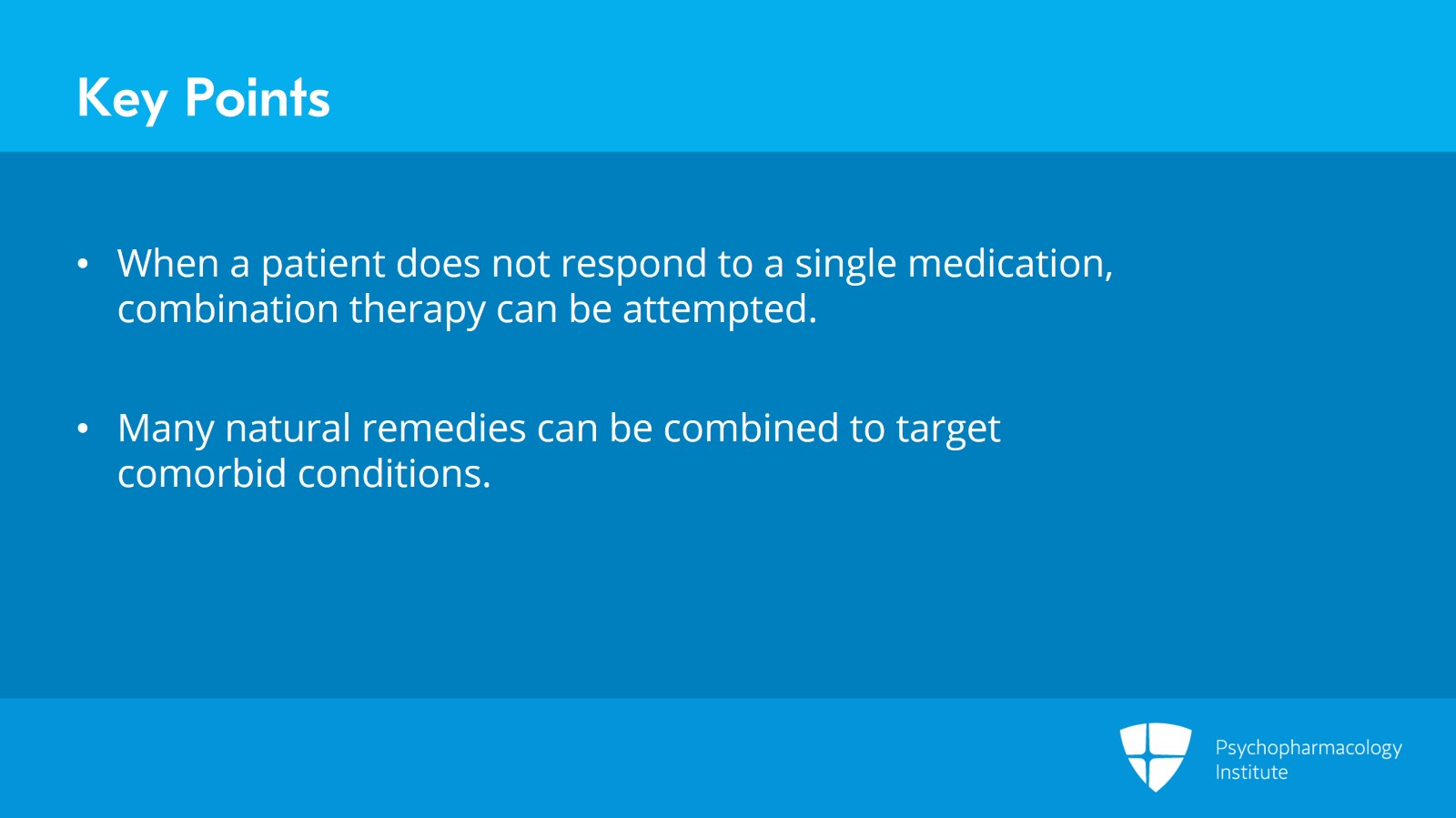
  • When a patient does not respond to a single medication, combination therapy can be attempted.
  • Many natural remedies can be combined to target comorbid conditions.
  • Be cautious when combining St. John's wort with other medication.

Free Downloads for Offline Access

  • Free Download Presentation File (PPTX)
  • Free Download Audio File (MP3)
  • Free Download Video (MP4)

Slides and Transcript
Slide 1 of 18

Now that we've reviewed all these natural remedies, I'm going to discuss how to use them strategically in potential combinations.

Slide 2 of 18

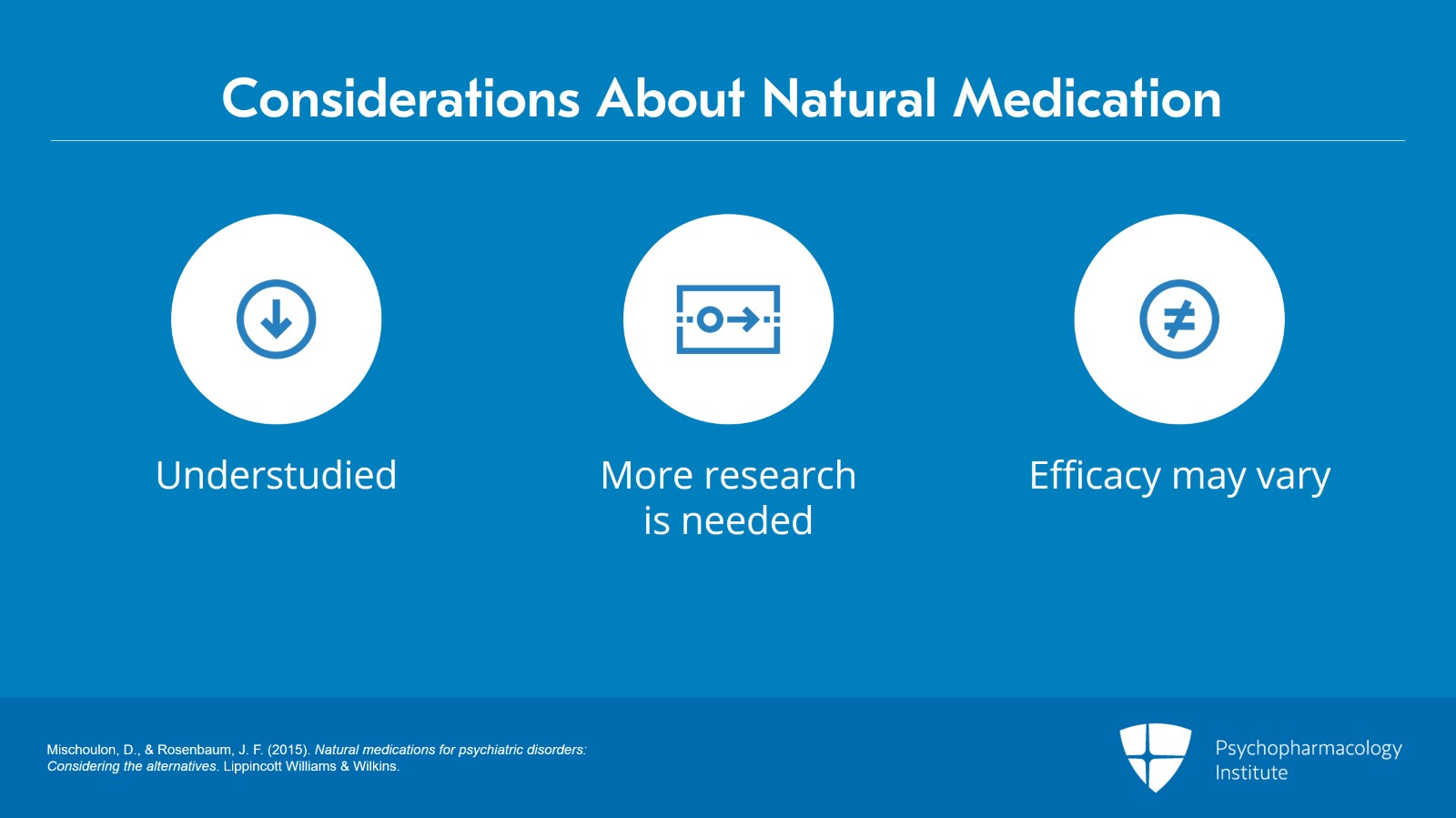
I do want to offer some words of caution. As I've said before, these remedies reviewed here are relatively understudied. More research needs to be done before we can recommend them with more certainty. The efficacy of these treatments may vary between conditions.
References:
  • Mischoulon, D., & Rosenbaum, J. F. (2015). Natural medications for psychiatric disorders: Considering the alternatives. Lippincott Williams & Wilkins.
Free Files
Success!
Check your inbox, we sent you all the materials there.
Slide 3 of 18

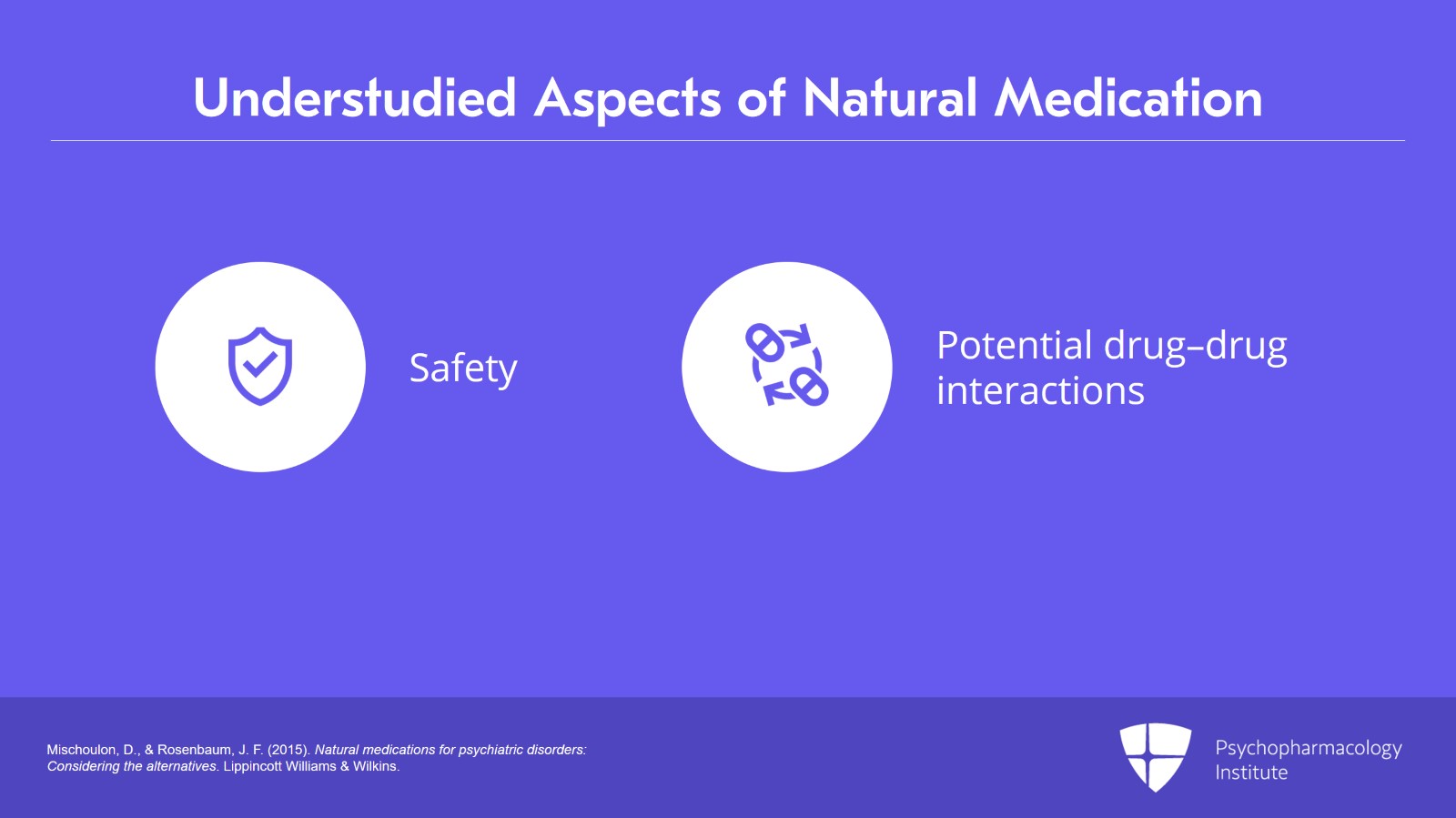
We do need to learn more about the safety of these remedies as well as their interactions or potential interactions with other medications.
References:
  • Mischoulon, D., & Rosenbaum, J. F. (2015). Natural medications for psychiatric disorders: Considering the alternatives. Lippincott Williams & Wilkins.

Slide 4 of 18

Combination therapy should always be considered as a viable strategy if monotherapy proves ineffective.
References:
  • Mischoulon, D., & Rosenbaum, J. F. (2015). Natural medications for psychiatric disorders: Considering the alternatives. Lippincott Williams & Wilkins.
Free Files
Success!
Check your inbox, we sent you all the materials there.
Slide 5 of 18

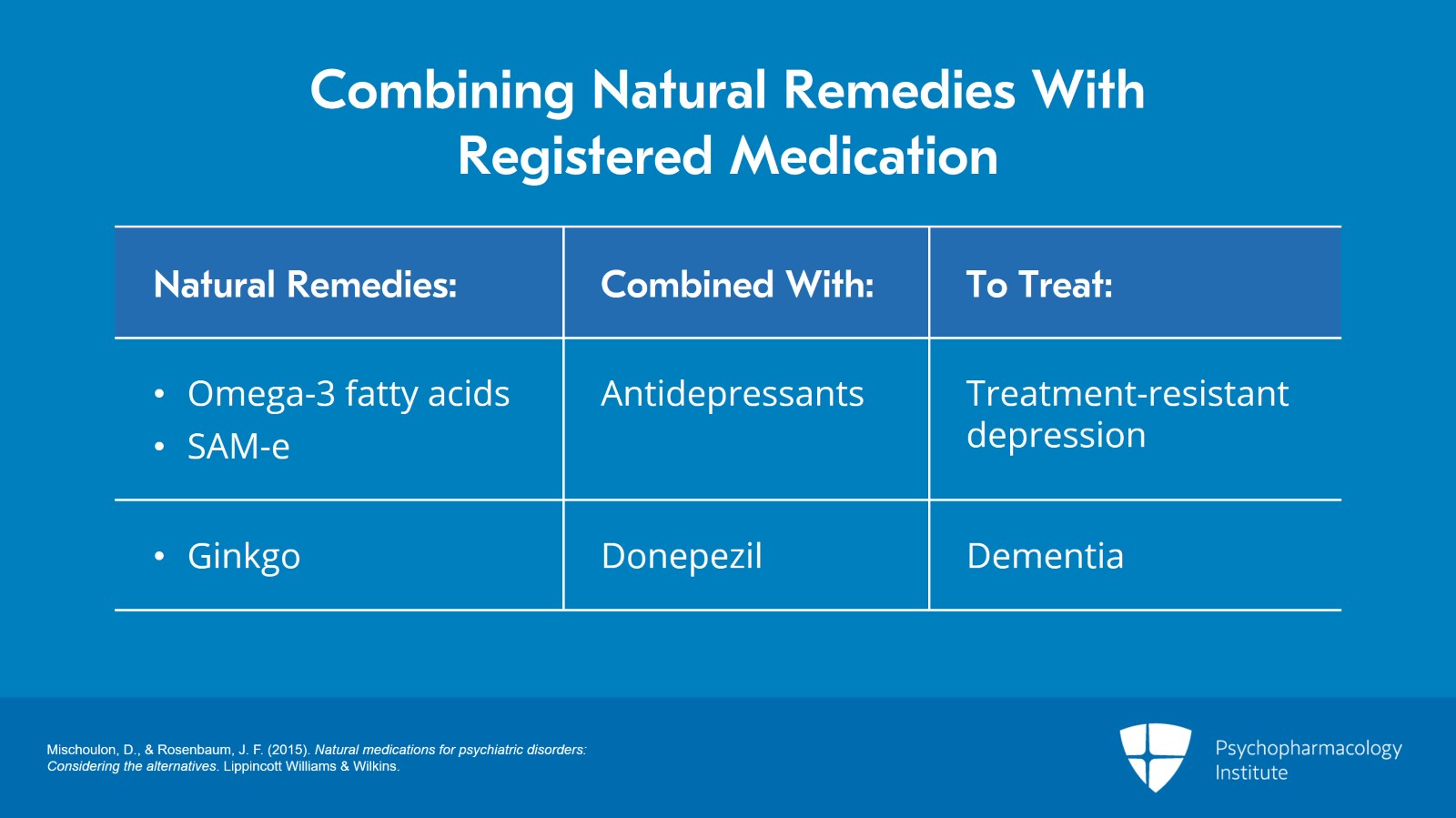
There have been some reports in which different natural remedies were successfully combined with registered medications. For example, omega-3 fatty acids and SAM-e, S-adenosyl methionine, have both been successfully combined with standard antidepressants for treatment-resistant depression. Ginkgo has been successfully combined with donepezil for dementia primarily of the Alzheimer type.
References:
  • Mischoulon, D., & Rosenbaum, J. F. (2015). Natural medications for psychiatric disorders: Considering the alternatives. Lippincott Williams & Wilkins.

Slide 6 of 18

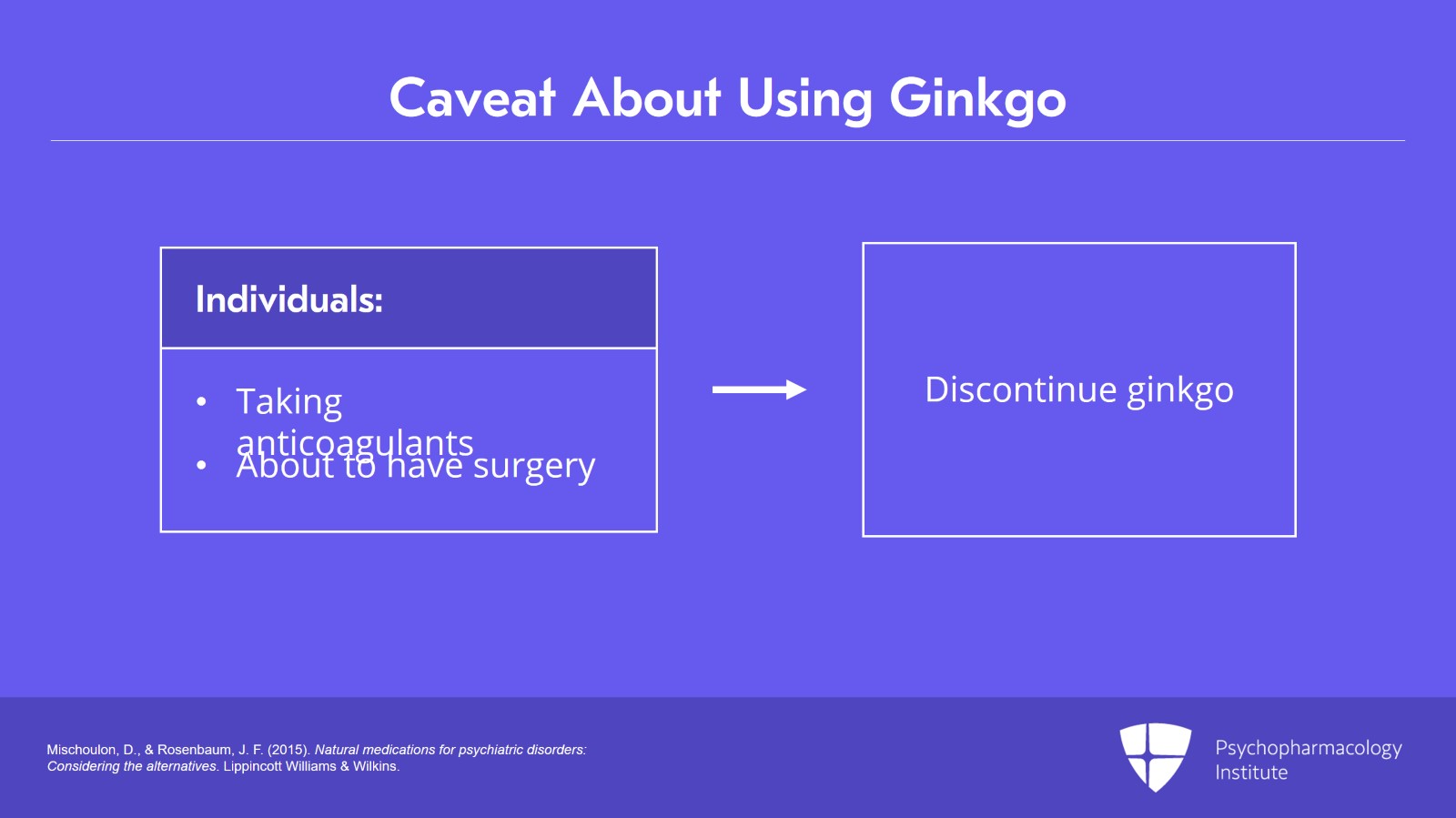
The main caveat about using ginkgo is that certain individuals taking anticoagulants or who are about to have surgery should discontinue ginkgo because ginkgo inhibits platelet activating factor and may increase the risk of bleeding.
References:
  • Mischoulon, D., & Rosenbaum, J. F. (2015). Natural medications for psychiatric disorders: Considering the alternatives. Lippincott Williams & Wilkins.
Free Files
Success!
Check your inbox, we sent you all the materials there.
Slide 7 of 18

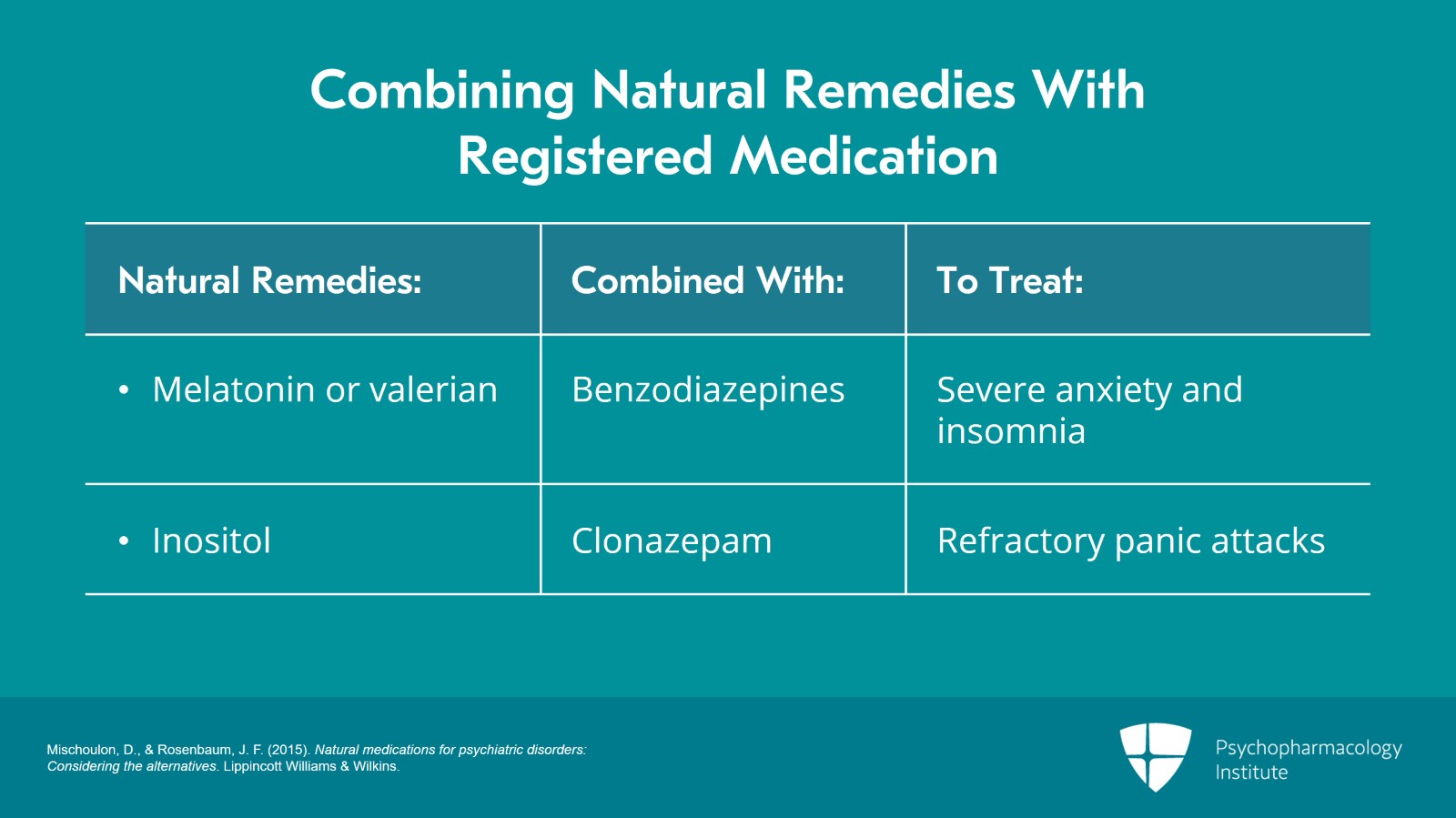
Other strategies include combining melatonin or valerian with benzodiazepines for cases of more severe anxiety and insomnia. Other examples include combining inositol with clonazepam for refractory panic attacks.
References:
  • Mischoulon, D., & Rosenbaum, J. F. (2015). Natural medications for psychiatric disorders: Considering the alternatives. Lippincott Williams & Wilkins.

Slide 8 of 18

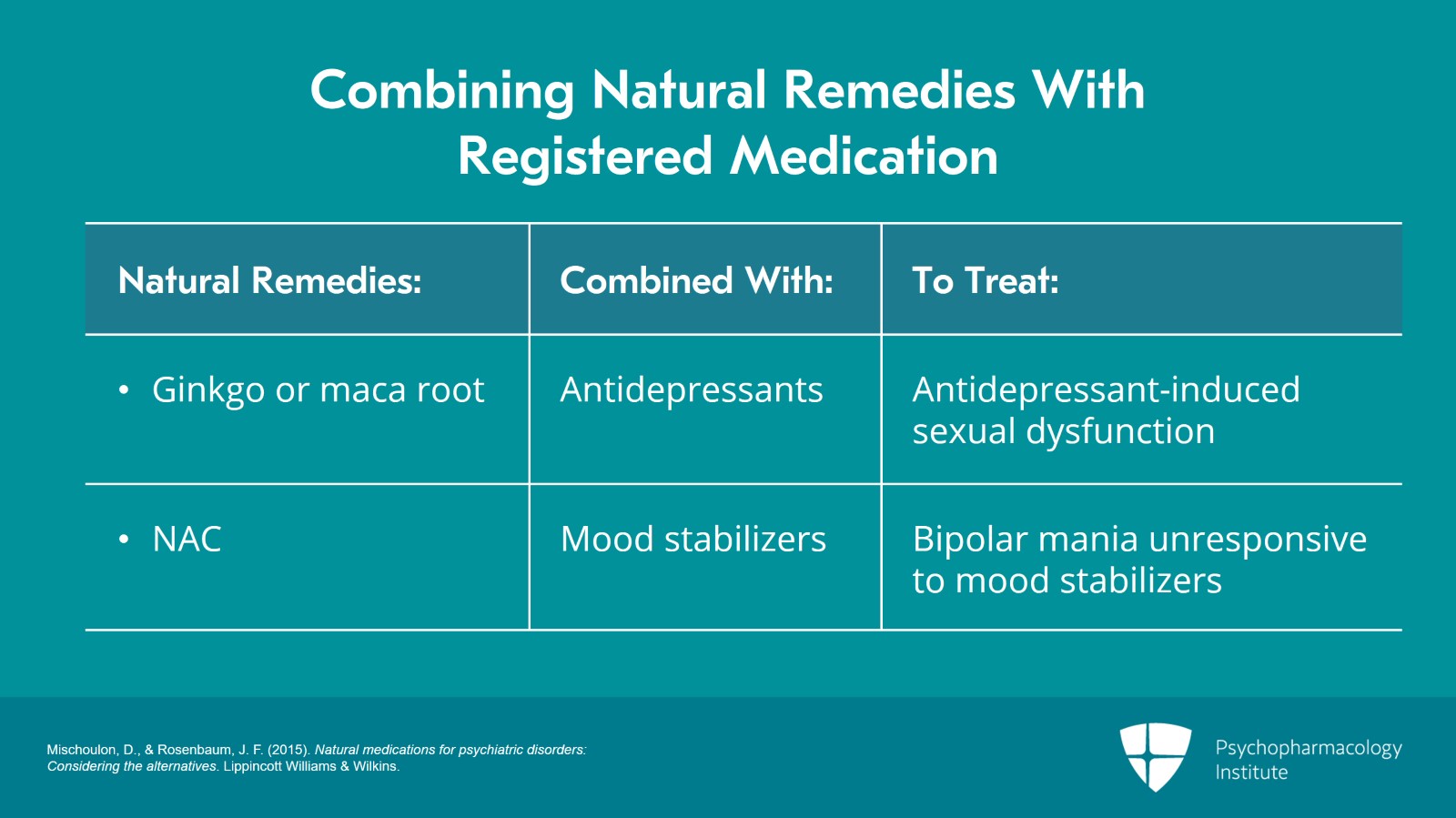
Ginkgo or maca root can be combined with standard antidepressants, in cases of antidepressant-induced sexual dysfunction. NAC could be combined with standard mood stabilizers in cases of bipolar mania that does not respond to mood stabilizers alone.
References:
  • Mischoulon, D., & Rosenbaum, J. F. (2015). Natural medications for psychiatric disorders: Considering the alternatives. Lippincott Williams & Wilkins.
Free Files
Success!
Check your inbox, we sent you all the materials there.
Slide 9 of 18

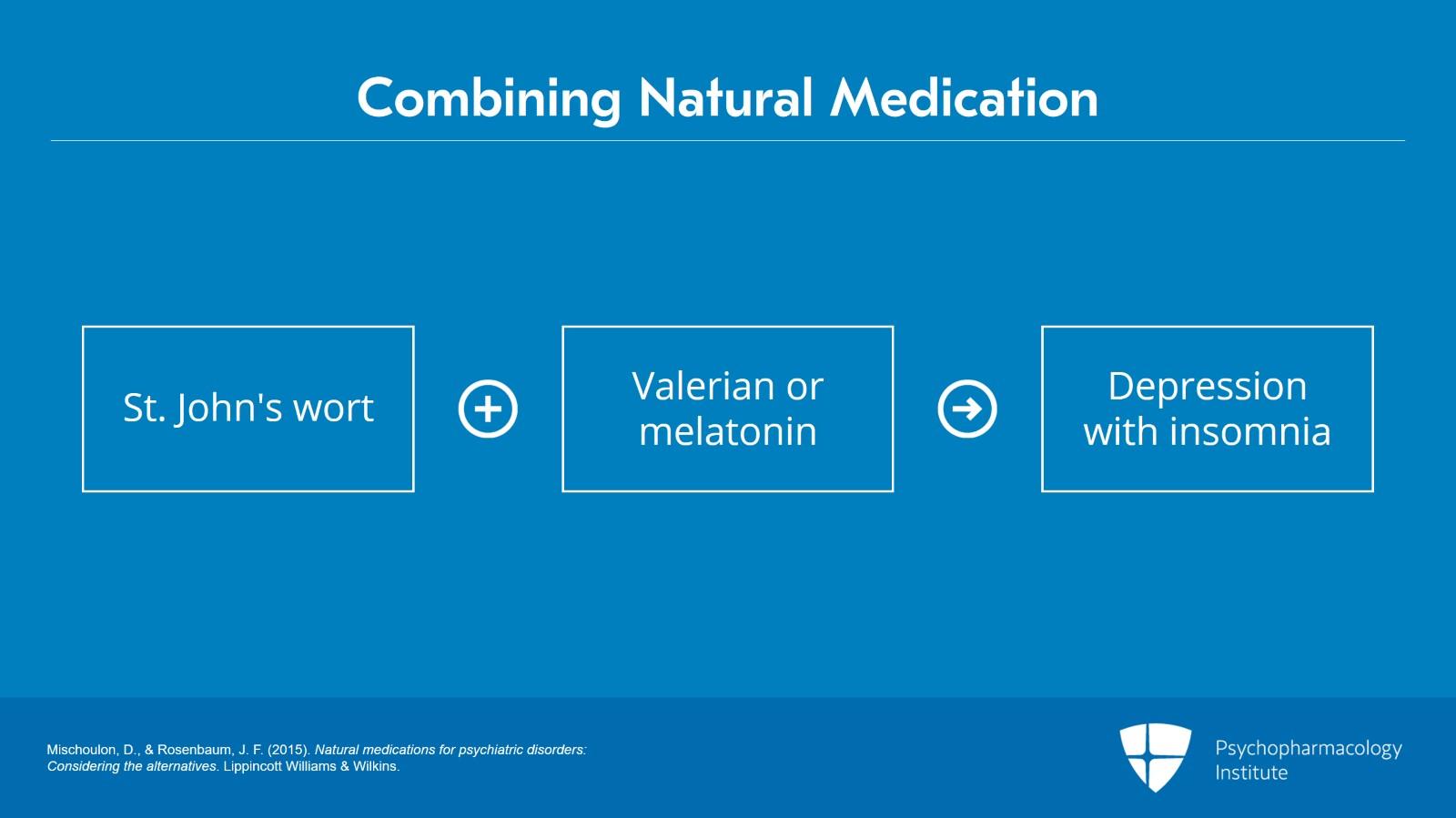
So let's talk a little bit about all natural combinations now. What happens if you have a patient with comorbidity who is very much set on wanting a purely natural regimen. Well, some speculative strategies can include combining St. John's wort with valerian or melatonin for depression with insomnia. There are actually some reports of this that show success.
References:
  • Mischoulon, D., & Rosenbaum, J. F. (2015). Natural medications for psychiatric disorders: Considering the alternatives. Lippincott Williams & Wilkins.

Slide 10 of 18

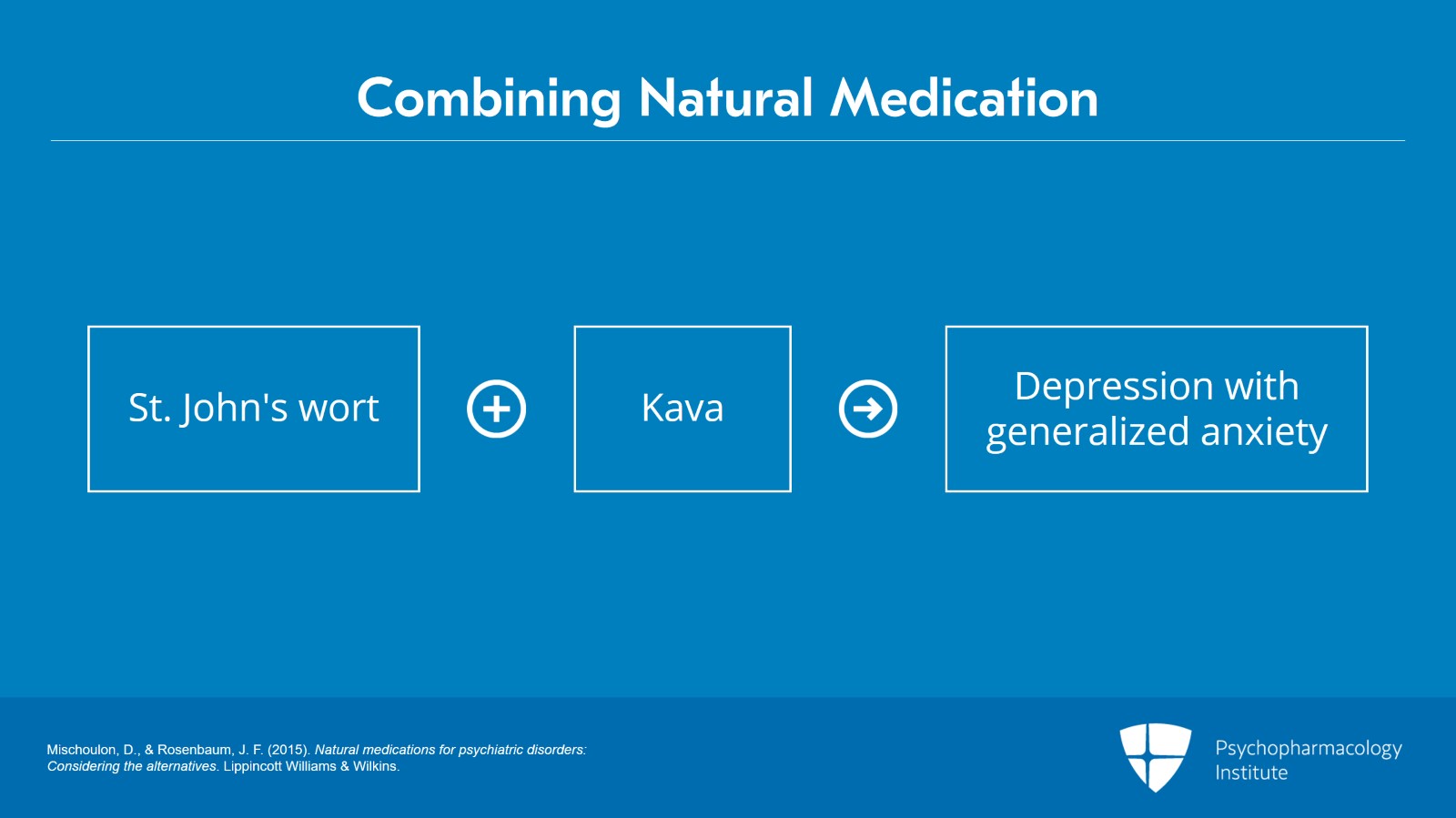
St. John's wort could be combined with kava for depression with generalized anxiety.
References:
  • Mischoulon, D., & Rosenbaum, J. F. (2015). Natural medications for psychiatric disorders: Considering the alternatives. Lippincott Williams & Wilkins.
Free Files
Success!
Check your inbox, we sent you all the materials there.
Slide 11 of 18

Kava should be used with caution because there have been reports of liver problems occurring.
References:
  • Mischoulon, D., & Rosenbaum, J. F. (2015). Natural medications for psychiatric disorders: Considering the alternatives. Lippincott Williams & Wilkins.

Slide 12 of 18

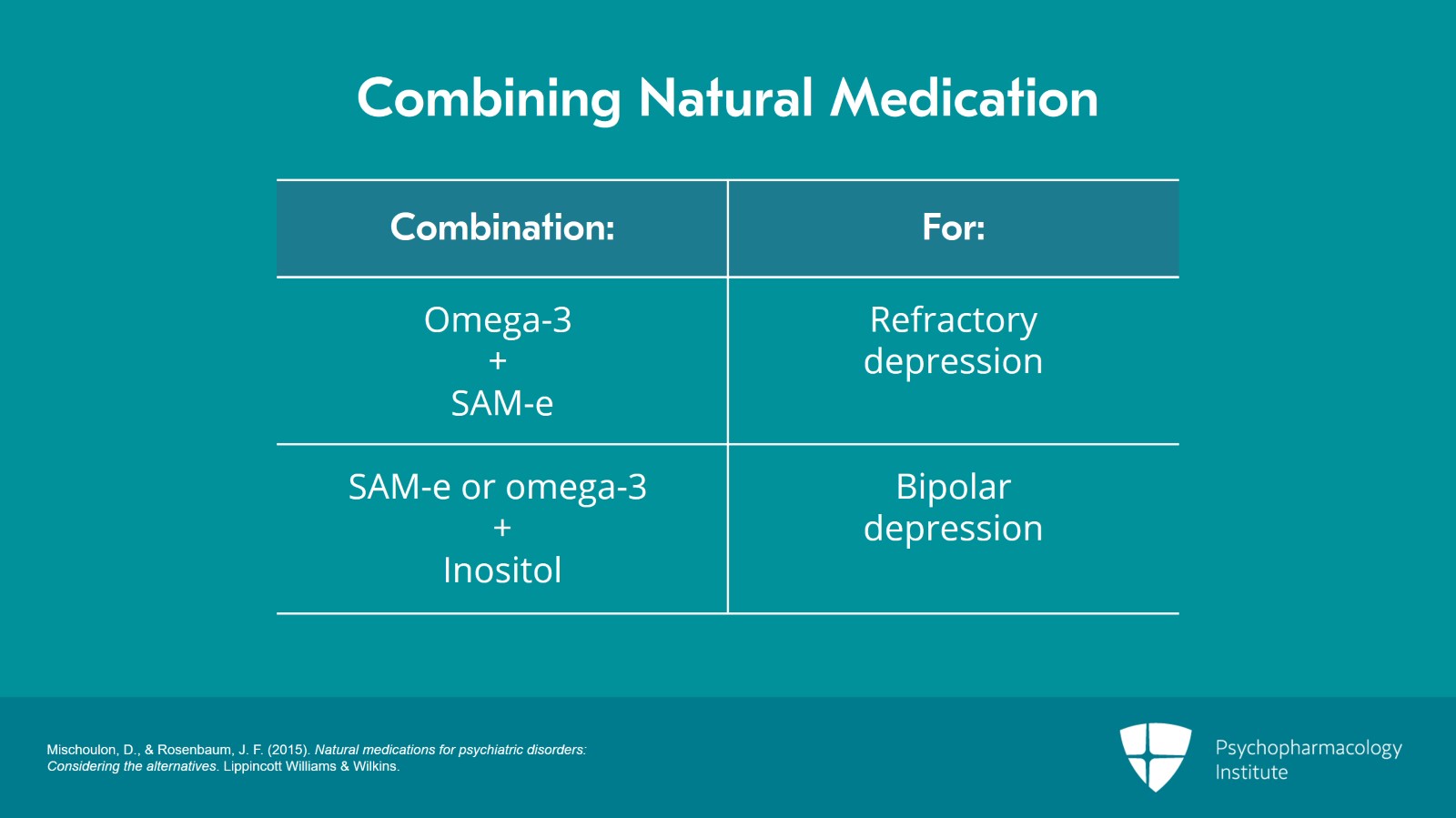
What else? Omega-3 and SAM-e could be combined together for refractory depression. And SAM-e or omega-3 could be combined with inositol for bipolar depression. But remember in cases of bipolar illness when you're looking to prevent mania, probably the safest strategy is to use a registered mood stabilizer. But these are approaches that you can take in certain carefully selected patients.
References:
  • Mischoulon, D., & Rosenbaum, J. F. (2015). Natural medications for psychiatric disorders: Considering the alternatives. Lippincott Williams & Wilkins.
Free Files
Success!
Check your inbox, we sent you all the materials there.
Slide 13 of 18

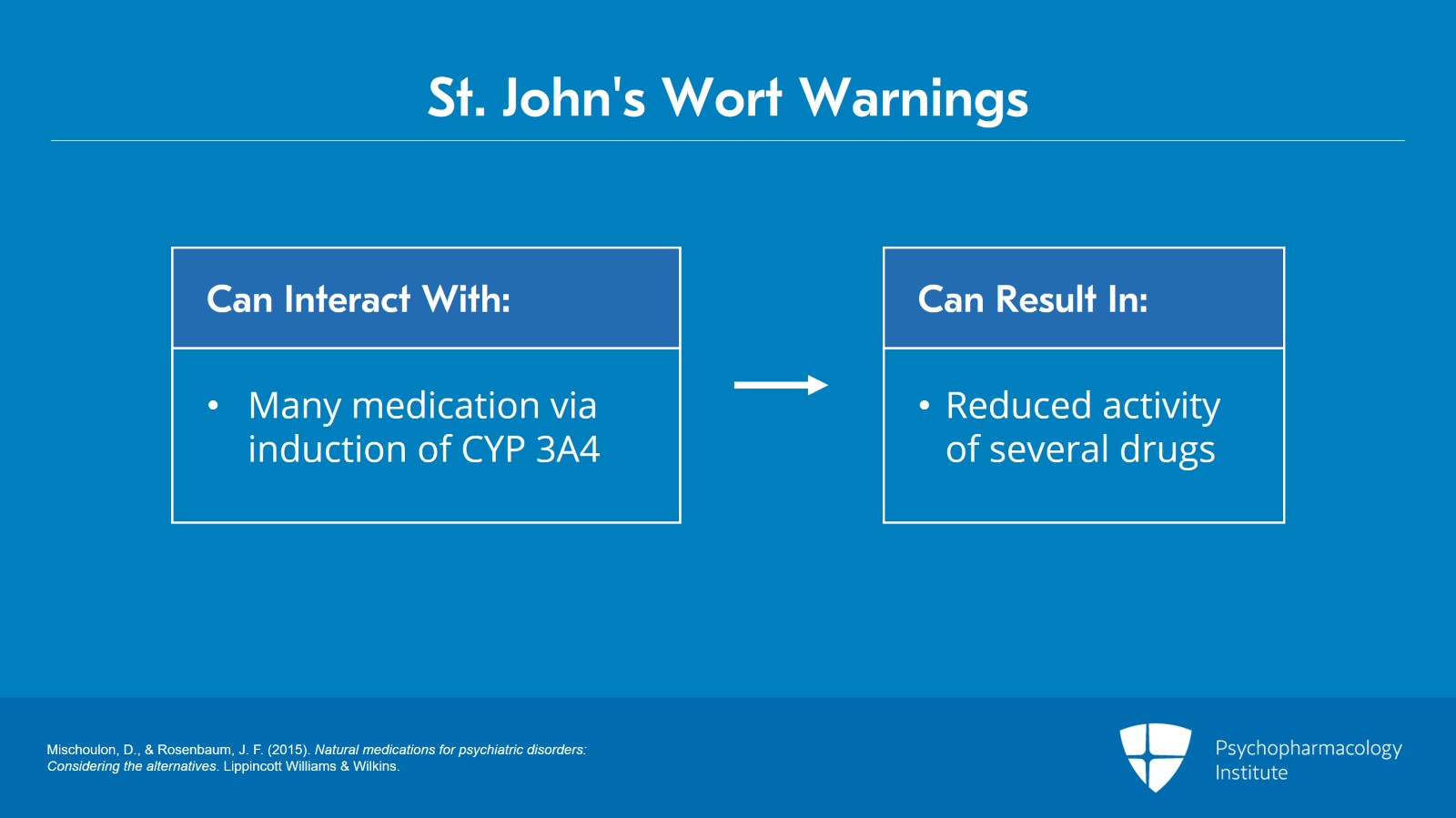
Having mentioned St. John's wort, I do want to issue a warning about it. Combining St. John's wort with other drugs can be tricky because it can interact with many other medications primarily via induction of cytochrome P3A4. This can result in reduced activity of several drugs: Warfarin, cyclosporine, birth control pills, some of the anti-HIV drugs, zolpidem and olanzapine among others.
References:
  • Mischoulon, D., & Rosenbaum, J. F. (2015). Natural medications for psychiatric disorders: Considering the alternatives. Lippincott Williams & Wilkins.

Slide 14 of 18

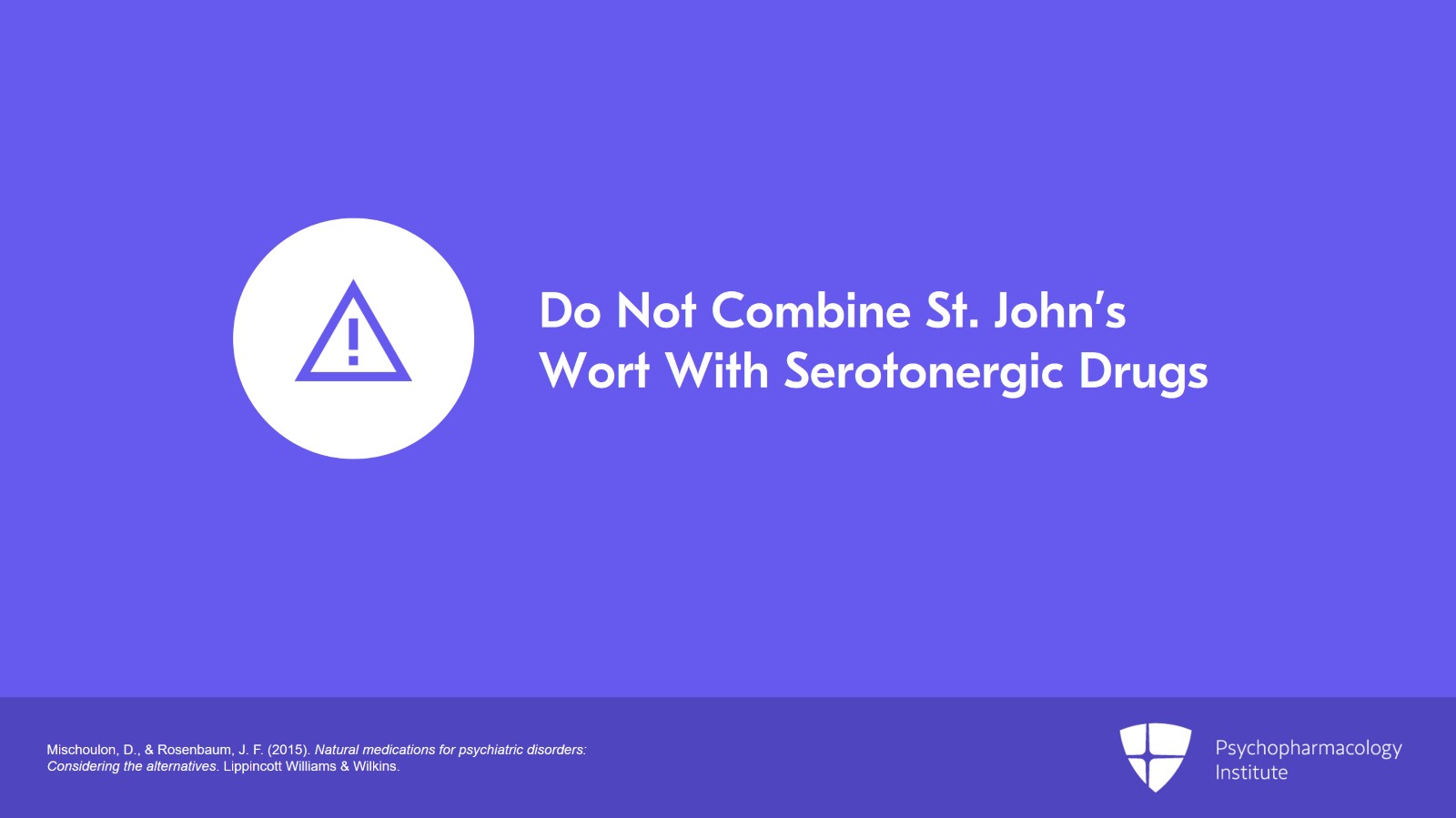
Another important caveat about St. John's wort, it should not be combined with serotonergic drugs such as the SSRIs because St. John's wort contains some mild monoamine oxidase inhibitor activity. The interactions with serotonergic drugs have been reported to cause serotonin syndrome in some patients.
References:
  • Mischoulon, D., & Rosenbaum, J. F. (2015). Natural medications for psychiatric disorders: Considering the alternatives. Lippincott Williams & Wilkins.
Free Files
Success!
Check your inbox, we sent you all the materials there.
Slide 15 of 18

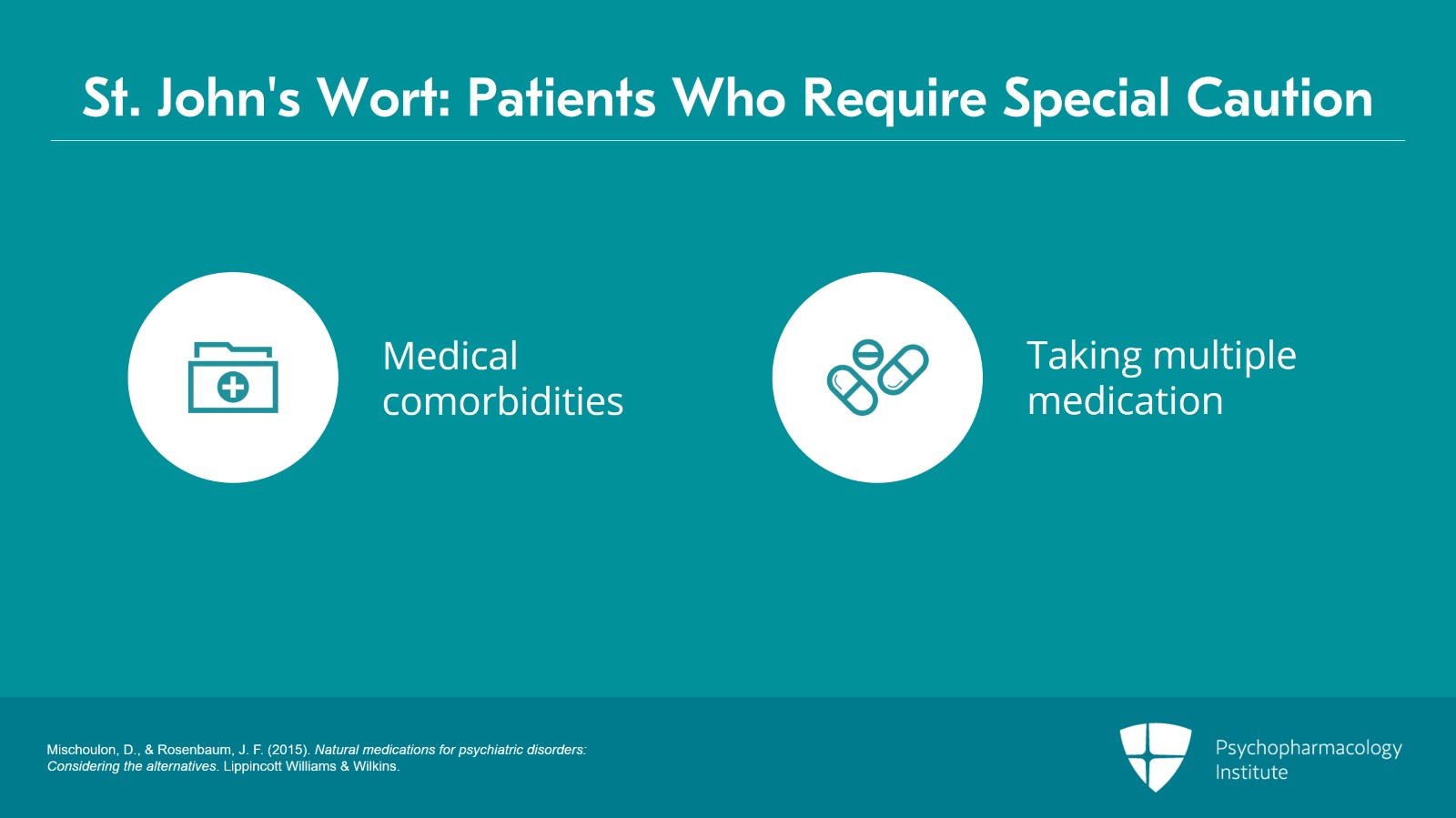
So the take-home point here is be very cautious with St. John's wort in patients who have medical comorbidities such as HIV, cancer, or who are status post transplants or who are taking multiple medications.
References:
  • Mischoulon, D., & Rosenbaum, J. F. (2015). Natural medications for psychiatric disorders: Considering the alternatives. Lippincott Williams & Wilkins.

Slide 16 of 18

Let me summarize this section with three key points. When a patient does not respond to a single medication, combination therapy can be attempted. Many of the natural remedies discussed here can be combined with each other in order to target comorbid conditions such as depression with anxiety or other combinations of illnesses. 
Free Files
Success!
Check your inbox, we sent you all the materials there.
Slide 17 of 18

Caution should always be exercised if you're trying to combine St. John's wort with other medications because it may have several potentially very serious interactions with other drugs.

Slide 18 of 18

Free Files
Success!
Check your inbox, we sent you all the materials there.
Learning Objectives:

After completing this activity, the learner will be able to:

  • Evaluate the evidence-based applications and benefits of natural medication in psychiatric treatments.
  • Analyze the potential risks and side effects of using natural medication in psychiatric treatments.
  • Identify potential combinations of natural remedies and acquire strategies to optimize their use in psychiatric care.

Original Release Date: November 1, 2023

Review and Re-release Date: March 1, 2024

Expiration Date: November 1, 2026

Expert: David Mischoulon, M.D.

Medical Editor: Paz Badía, M.D.

Relevant Financial Disclosures: 

David Mischoulon declares the following interests:

- Nordic Naturals:  Received research support (medication and placebo for a study)

- heckel medizintechnik GmbH:  Received research support (Whole Body Hyperthermia device for research study)

- MGH Clinical Trials Network and Institute (CTNI):  Received salary support

All of the relevant financial relationships listed above have been mitigated by Medical Academy and the Psychopharmacology Institute.

None of the others faculty, planners, and reviewers for this educational activity have relevant financial relationships to disclose during the last 24 months with ineligible companies whose primary business is producing, marketing, selling, re-selling, or distributing healthcare products used by or on patients.

Contact Information: For questions regarding the content or access to this activity, contact us at support@psychopharmacologyinstitute.com

Instructions for Participation and Credit:

Participants must complete the activity online during the valid credit period that is noted above.

Follow these steps to earn CME credit:

  1. View the required educational content provided on this course page.

  2. Complete the Post Activity Evaluation for providing the necessary feedback for continuing accreditation purposes and for the development of future activities. NOTE: Completing the Post Activity Evaluation after the quiz is required to receive the earned credit.

  3. Download your certificate.

Accreditation Statement

This activity has been planned and implemented in accordance with the accreditation requirements and policies of the Accreditation Council for Continuing Medical Education through the joint providership of Medical Academy LLC and the Psychopharmacology Institute. Medical Academy is accredited by the ACCME to provide continuing medical education for physicians.

Credit Designation Statement

Medical Academy designates this enduring activity for a maximum of 0.75 AMA PRA Category 1 credit(s)™. Physicians should claim only the credit commensurate with the extent of their participation in the activity.

Free Files
Success!
Check your inbox, we sent you all the materials there.
Continue in the website
Instant access modal

Become a Bronze, Silver, Gold, Bronze extended, Silver extended or Gold extended Member.

2025–26 Psychopharmacology CME Program

Unlock up to 155 CME Credits, including 40 SA CME Credits.