Close Banner
Section Free  - Video Lectures

05. Pharmacologic Interventions for Insomnia: Benzodiazepines and Non-Benzodiazepine Hypnotics

Published on December 1, 2023 Certification expiration date: December 1, 2026

Amit Chopra, M.D.

Psychiatrist and sleep specialist at Massachusetts General Hospital. - Harvard Medical School

Key Points

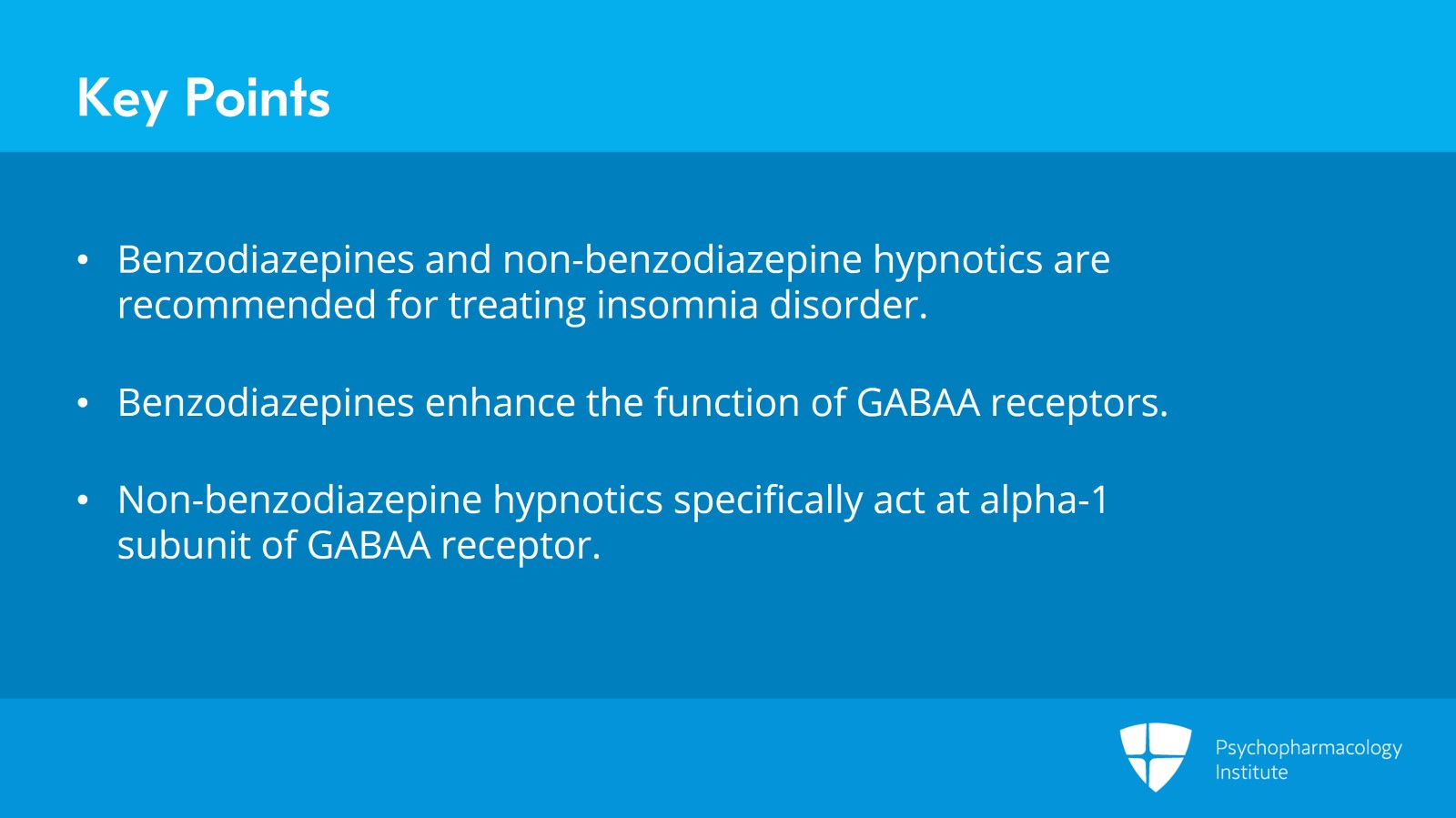
  • Benzodiazepines and non-benzodiazepine hypnotics are recommended for treating insomnia disorder.
  • Benzodiazepines enhance the function of GABAA receptors.
  • Non-benzodiazepine hypnotics specifically act at alpha-1 subunit of GABAA receptor.
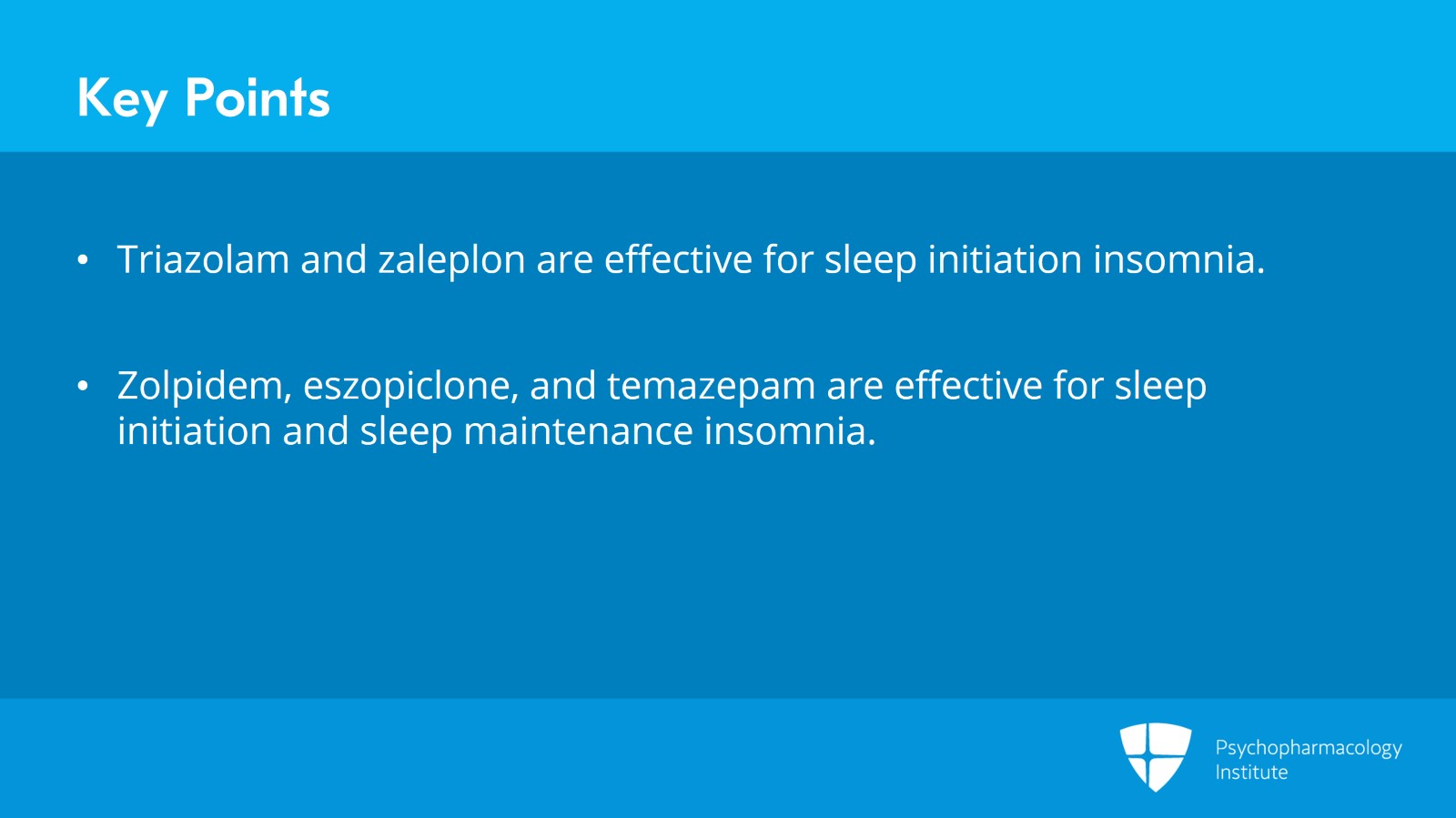
  • Triazolam and zaleplon are effective for sleep initiation insomnia.
  • Zolpidem, eszopiclone, and temazepam are effective for sleep initiation and sleep maintenance insomnia.

Free Downloads for Offline Access

  • Free Download Presentation File (PPTX)
  • Free Download Video (MP4)
  • Free Download Audio File (MP3)

Slides and Transcript
Slide 1 of 22

Welcome to video number 5, Pharmacological Interventions for Insomnia – Benzodiazepines and Non-Benzodiazepine Hypnotics.

Slide 2 of 22

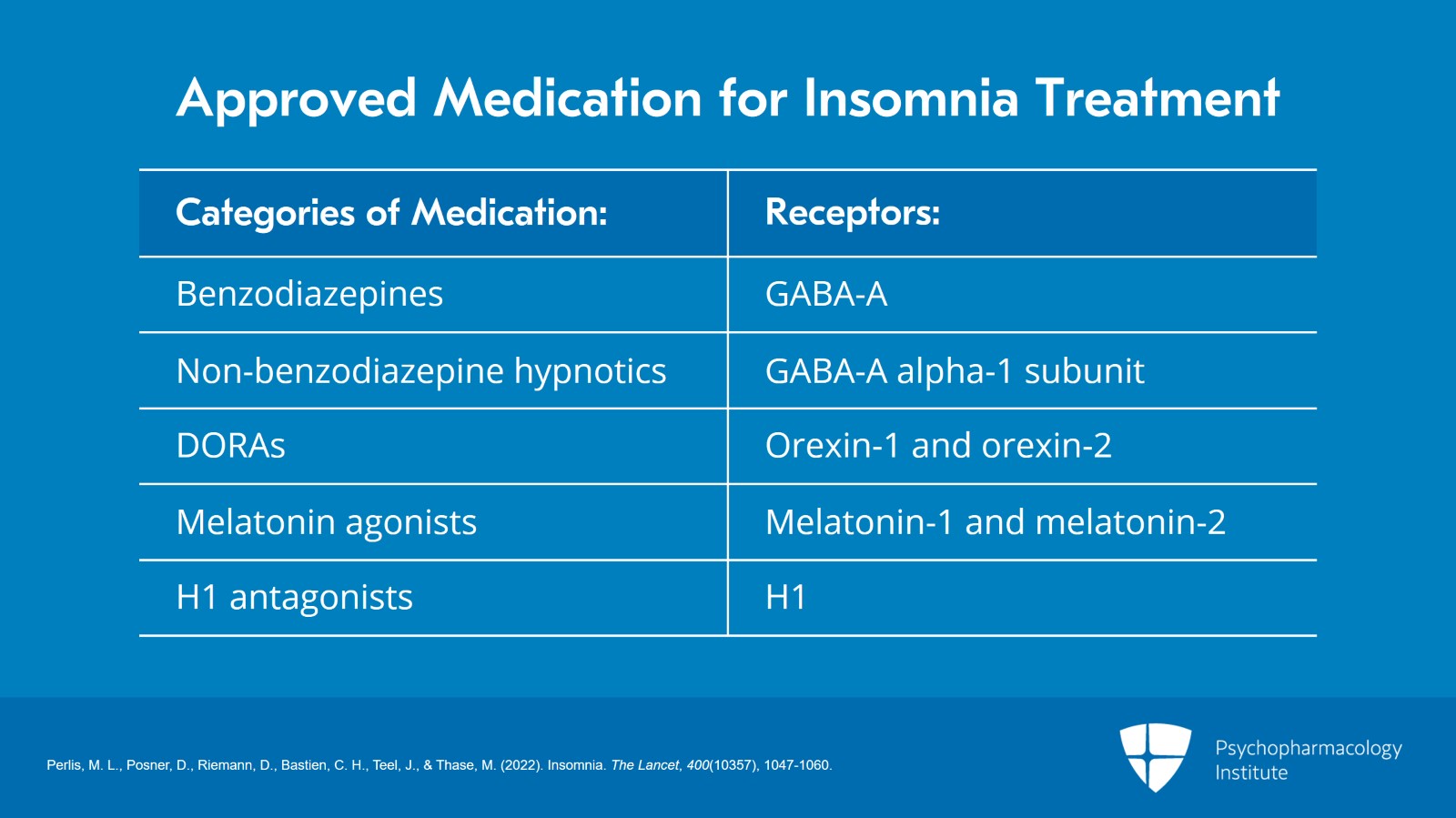
Five categories of medications have been approved for the treatment of insomnia disorder. These include benzodiazepines which are GABAA receptor positive allosteric modulators, non-benzodiazepine hypnotics which are GABAA receptor positive allosteric modulators specifically bind to alpha-1 subunit, dual orexin receptor antagonists or DORAs that act on orexin-1 and orexin-2 receptors, melatonin agonists that act on melatonin-1 and melatonin-2 receptors, and H1 receptor antagonists. 
References:
  • Perlis, M. L., Posner, D., Riemann, D., Bastien, C. H., Teel, J., & Thase, M. (2022). Insomnia. The Lancet, 400(10357), 1047-1060. 
Free Files
Success!
Check your inbox, we sent you all the materials there.
Slide 3 of 22

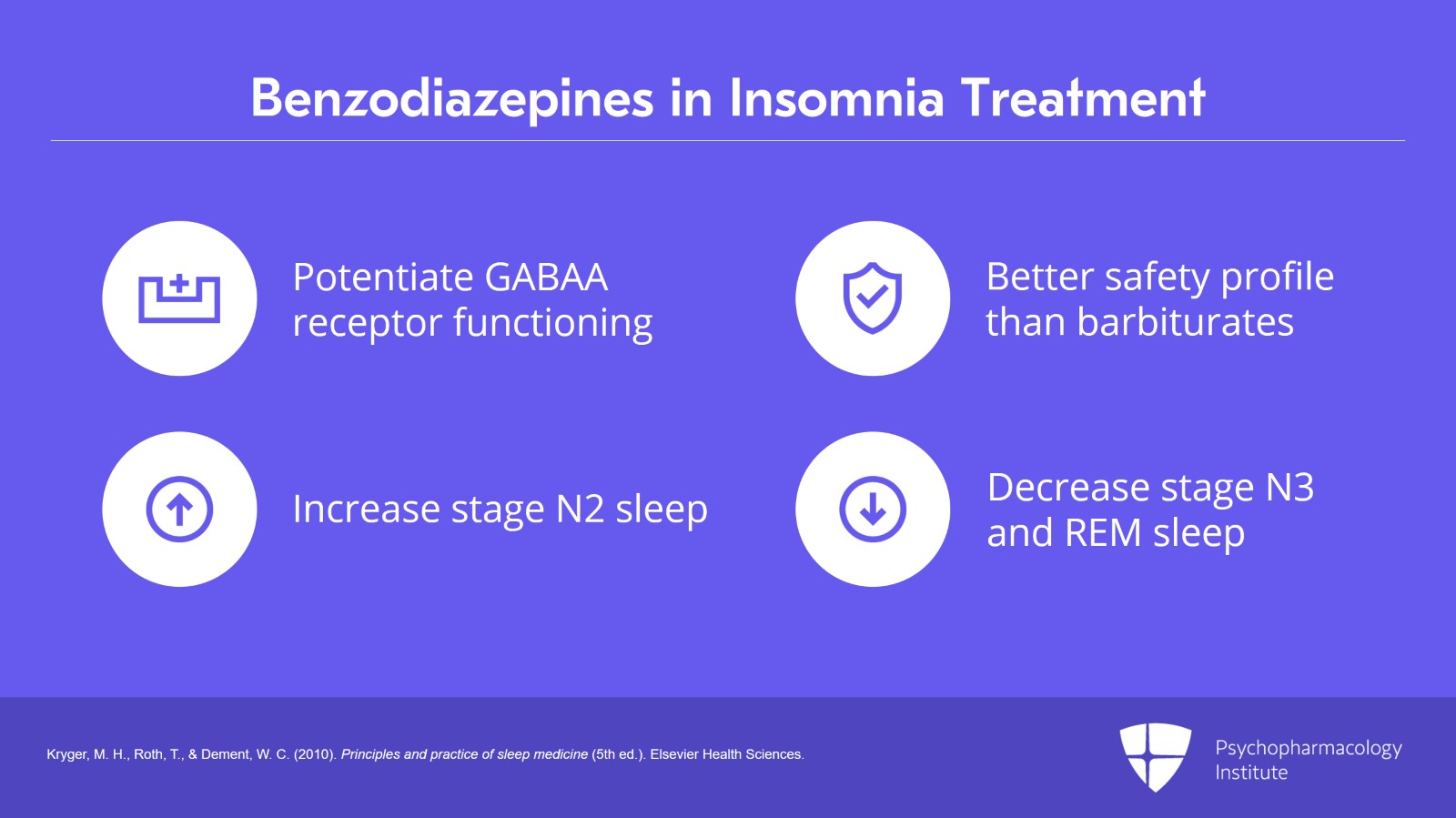
Benzodiazepines including triazolam and temazepam are used for treatment of insomnia disorder. Benzodiazepines potentiate GABAA receptor functioning by increasing channel opening frequency in contrast to barbiturates which increase channel opening duration. As compared to barbiturates, benzodiazepines have a better safety profile. Benzodiazepines increase stage N2 sleep, whereas decrease stage N3 and REM sleep. 
References:
  • Kryger, M. H., Roth, T., & Dement, W. C. (2010). Principles and practice of sleep medicine (5th ed.). Elsevier Health Sciences.

Slide 4 of 22

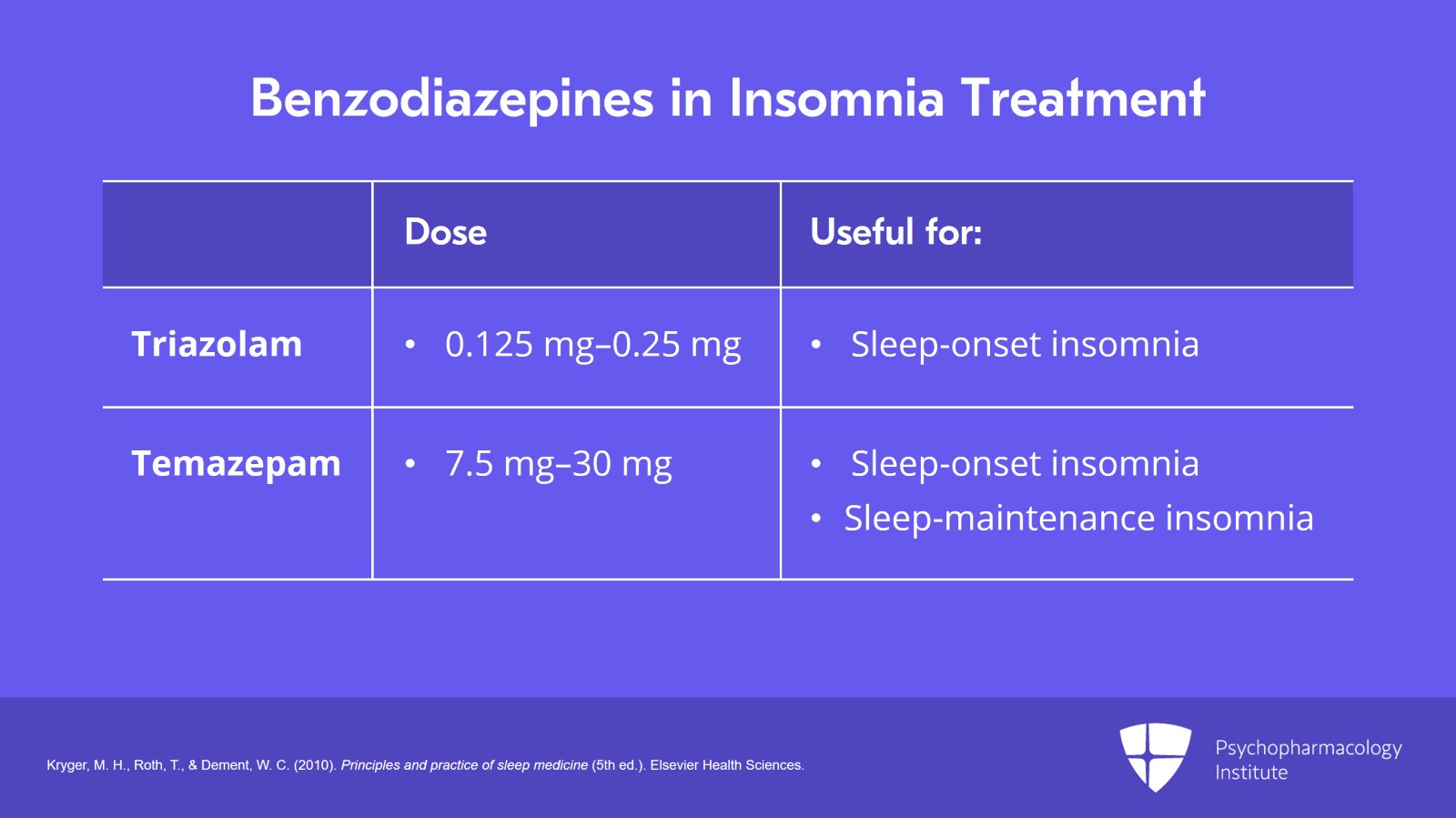
It is recommended that clinicians use triazolam 0.125 to 0.25 mg as a treatment for sleep-onset insomnia and temazepam between dosages 7.5 mg to 30 mg as treatment for sleep-onset and sleep maintenance insomnia in adults. 
References:
  • Kryger, M. H., Roth, T., & Dement, W. C. (2010). Principles and practice of sleep medicine (5th ed.). Elsevier Health Sciences.
Free Files
Success!
Check your inbox, we sent you all the materials there.
Slide 5 of 22

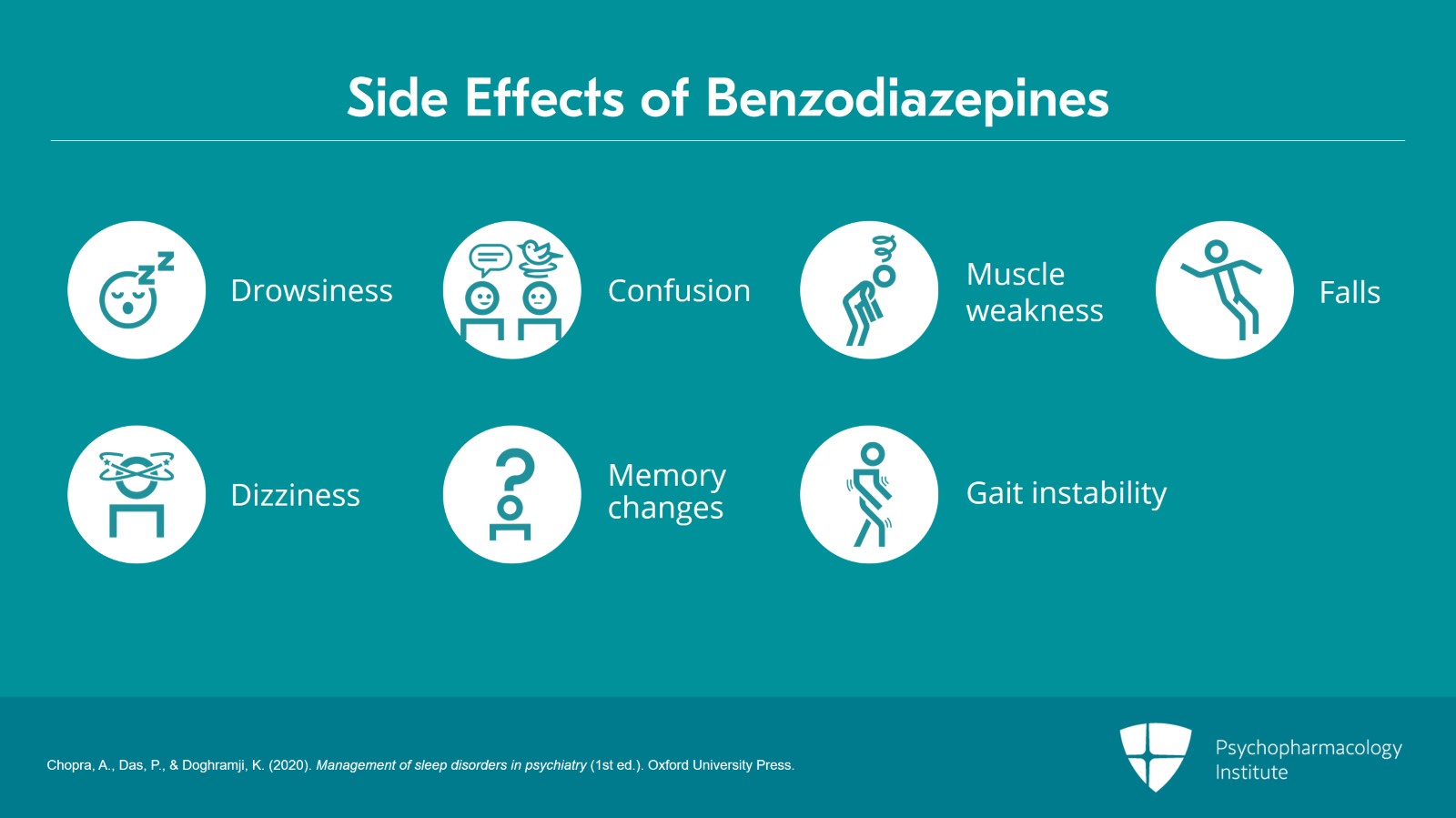
Side effects associated with the use of benzodiazepines include drowsiness, dizziness, confusion, memory changes, muscle weakness, gait instability and falls particularly in the elderly. 
References:
  • Chopra, A., Das, P., & Doghramji, K. (2020). Management of sleep disorders in psychiatry (1st ed.). Oxford University Press.

Slide 6 of 22

A prescribed short-term use is recommended due to risk of tolerance, rebound insomnia, withdrawal and dependence has been associated with the use of benzodiazepines. 
References:
  • Chopra, A., Das, P., & Doghramji, K. (2020). Management of sleep disorders in psychiatry (1st ed.). Oxford University Press.
Free Files
Success!
Check your inbox, we sent you all the materials there.
Slide 7 of 22

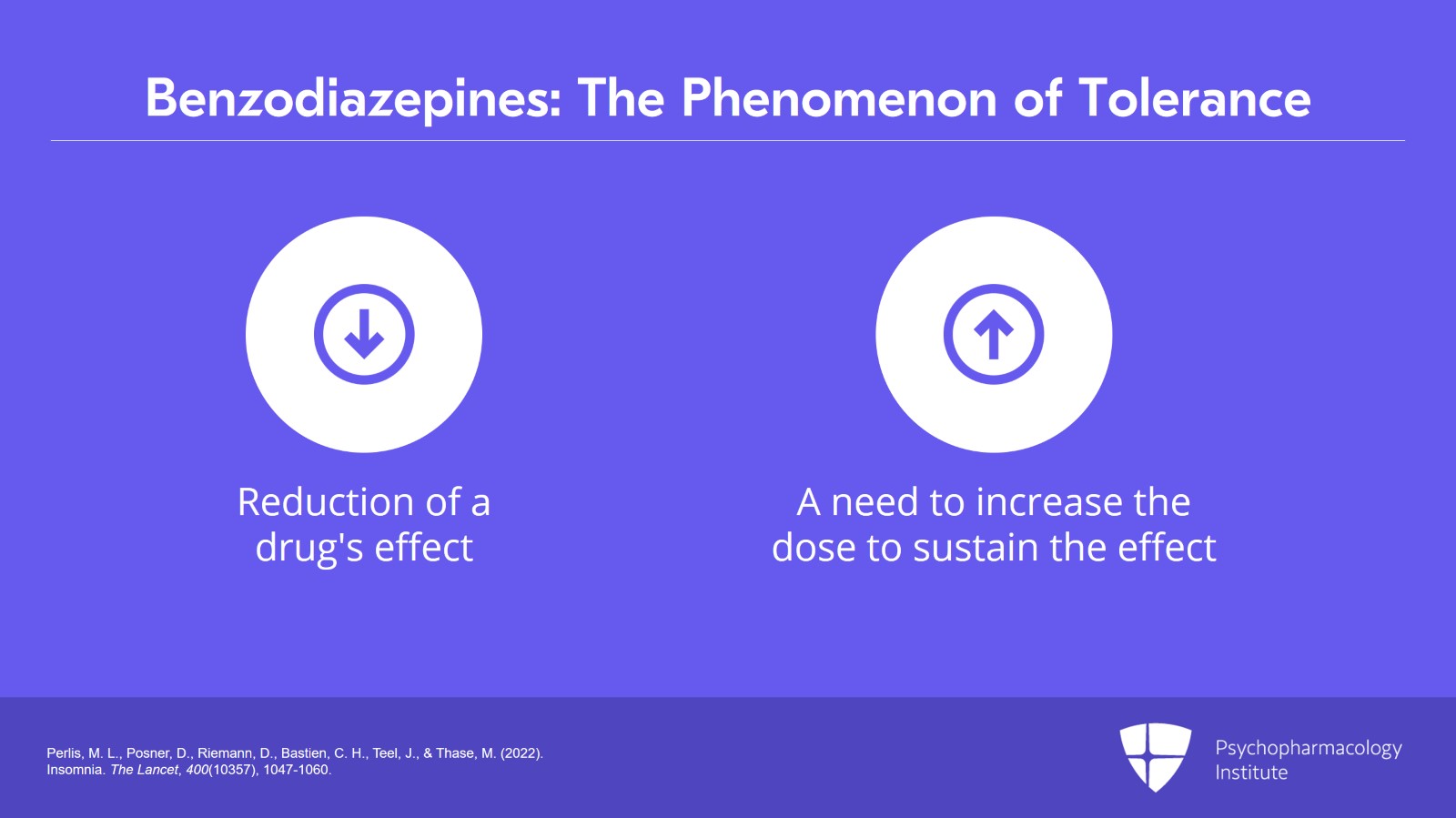
Tolerance is defined as a reduction of a drug's effect with repeated administration of a constant dose or the need to increase the dose to sustain a specific level of effect. 
References:
  • Perlis, M. L., Posner, D., Riemann, D., Bastien, C. H., Teel, J., & Thase, M. (2022). Insomnia. The Lancet, 400(10357), 1047-1060. 

Slide 8 of 22

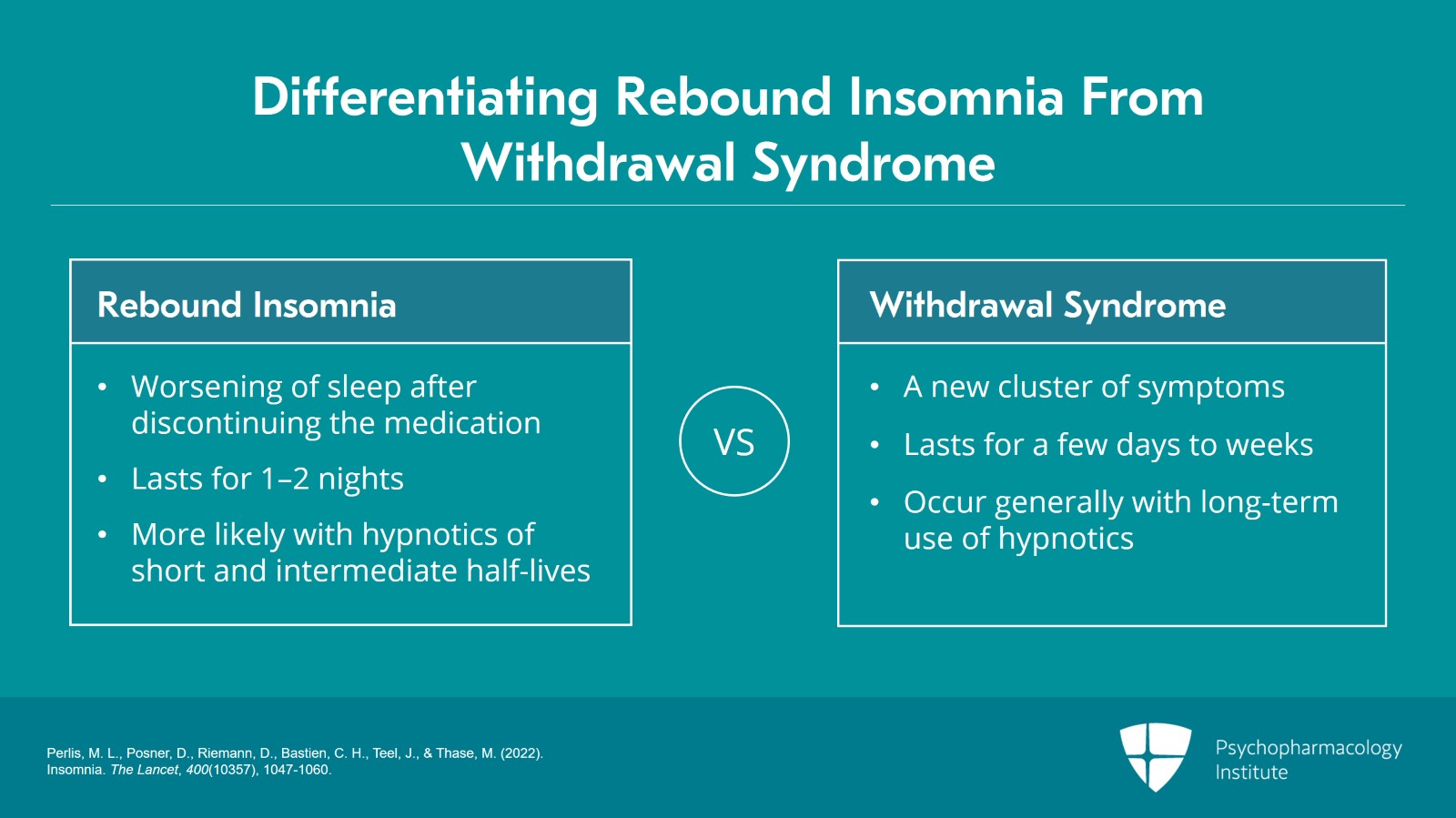
Rebound insomnia is defined as worsening of sleep relative to the patient's status before starting treatment. Rebound insomnia can last for one to two nights after the hypnotic medication is discontinued. It is more likely to occur with hypnotic medications with short and intermediate half-lives. Rebound insomnia must be differentiated from withdrawal syndrome which is characterized by a new cluster of symptoms which were not present before treatment that are unpleasant and last for a few days to a few weeks rather than one to two days. Withdrawal symptoms occur generally with long-term use of hypnotic medications. 
References:
  • Perlis, M. L., Posner, D., Riemann, D., Bastien, C. H., Teel, J., & Thase, M. (2022). Insomnia. The Lancet, 400(10357), 1047-1060. 
Free Files
Success!
Check your inbox, we sent you all the materials there.
Slide 9 of 22

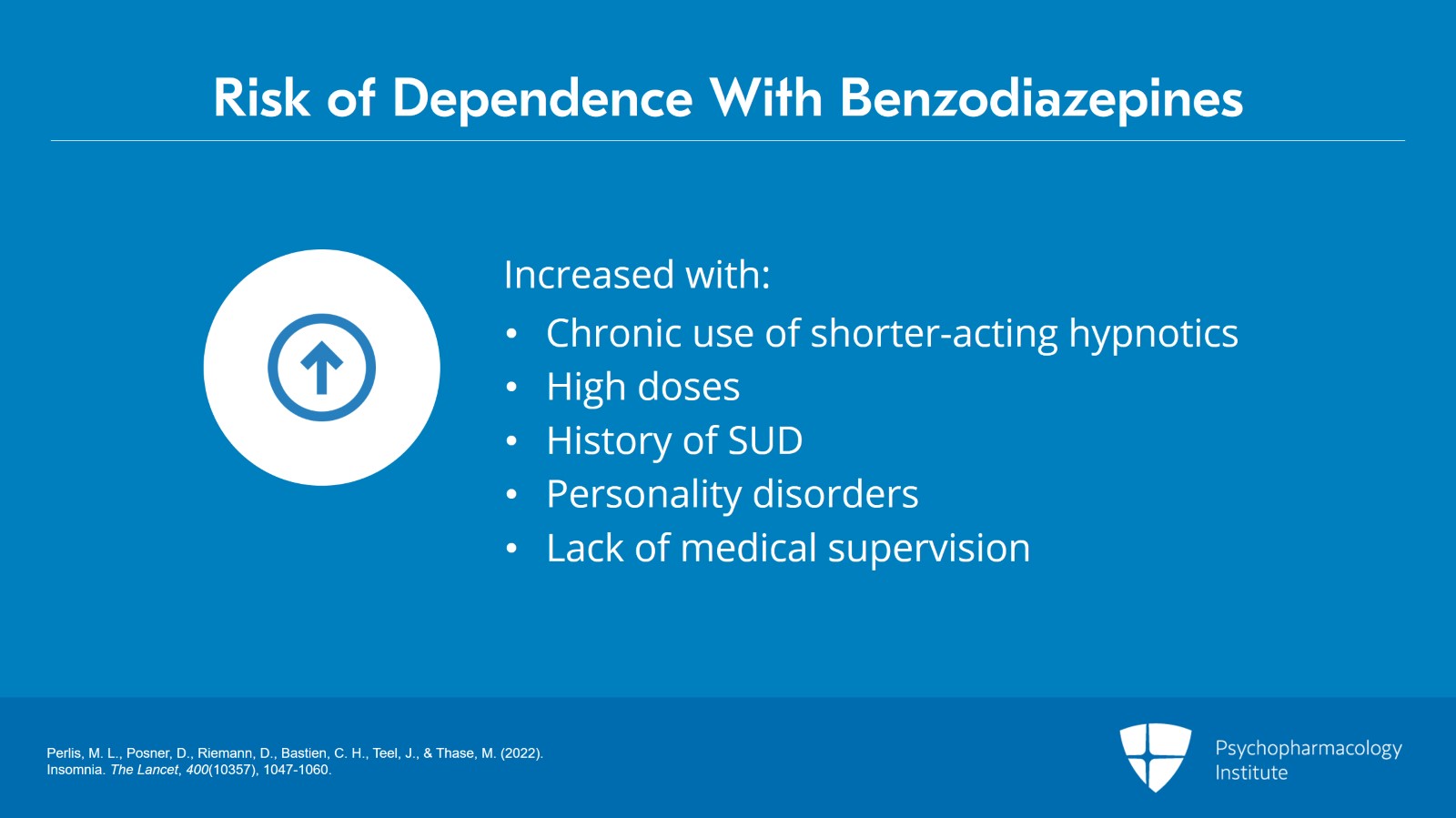
The risk of dependence with benzodiazepine hypnotics is increased with chronic use of shorter-acting hypnotics at higher dosages, a history of substance use disorders, personality disorders, and lack of medical supervision during medication prescription. 
References:
  • Perlis, M. L., Posner, D., Riemann, D., Bastien, C. H., Teel, J., & Thase, M. (2022). Insomnia. The Lancet, 400(10357), 1047-1060. 

Slide 10 of 22

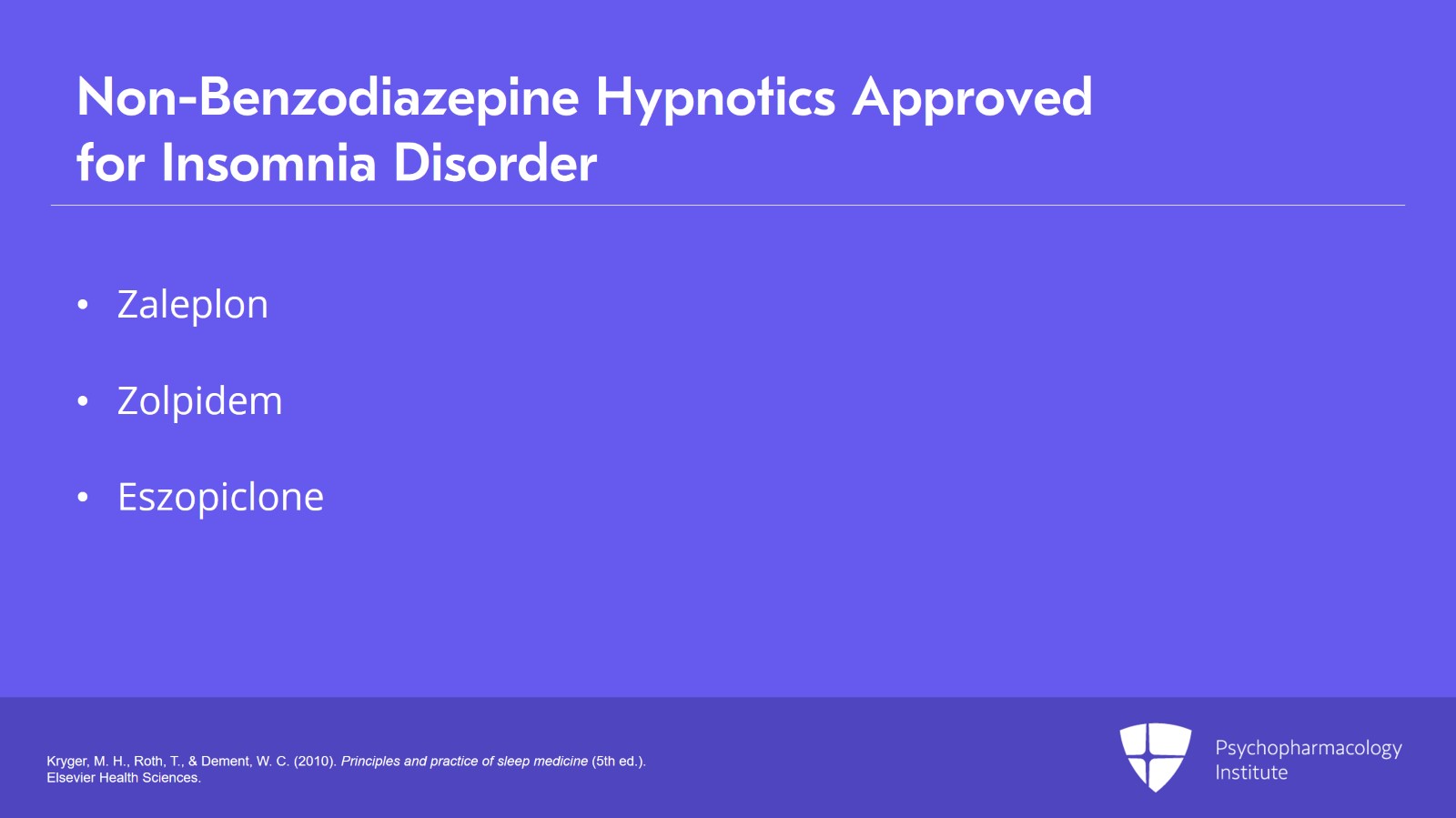
The non-benzodiazepine hypnotic medications approved for insomnia disorder include zaleplon, zolpidem, and eszopiclone. 
References:
  • Kryger, M. H., Roth, T., & Dement, W. C. (2010). Principles and practice of sleep medicine (5th ed.). Elsevier Health Sciences.
Free Files
Success!
Check your inbox, we sent you all the materials there.
Slide 11 of 22

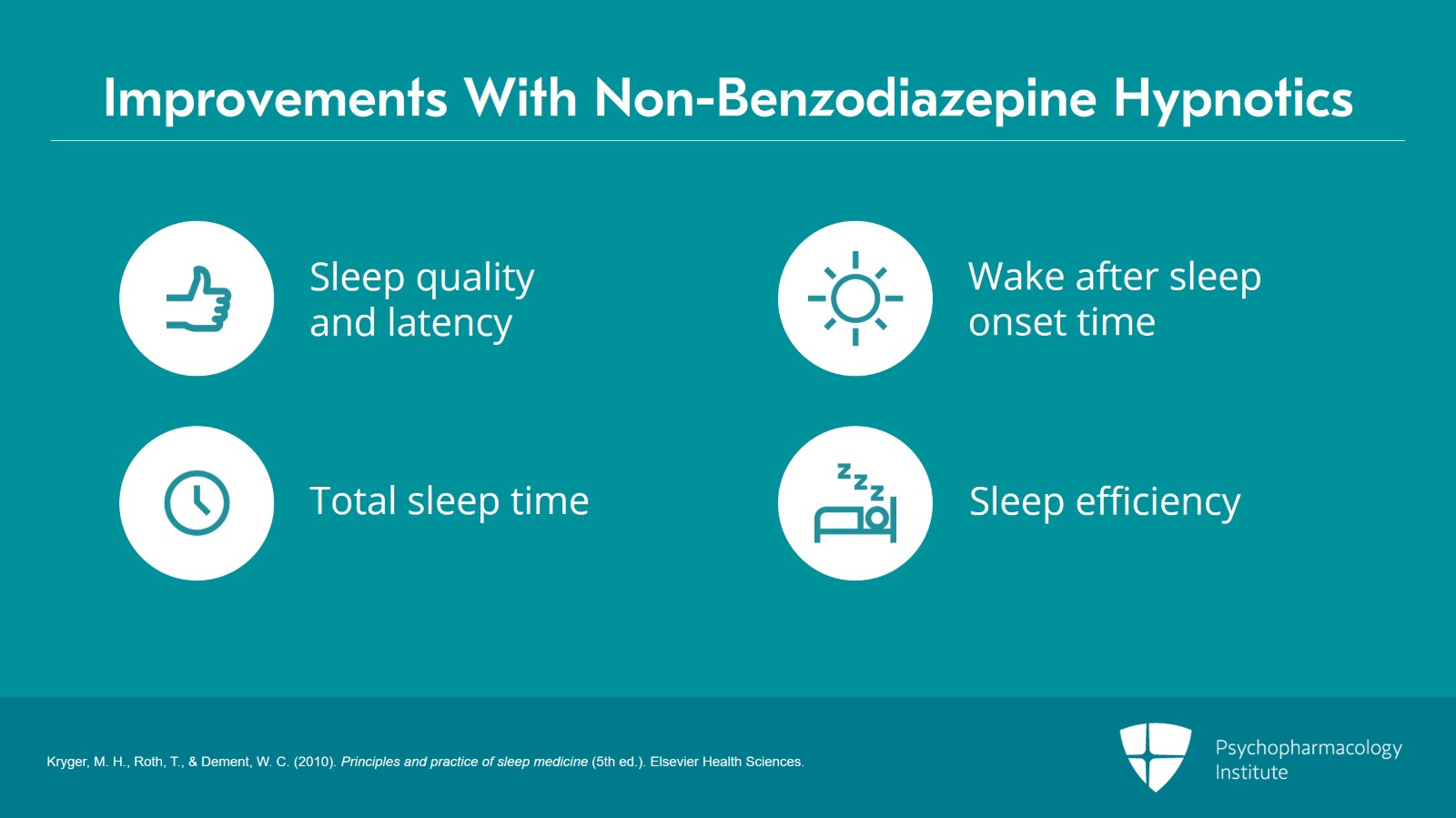
The short-term efficacy of non-benzodiazepine hypnotics is well-established in terms of significant improvements in sleep quality and sleep latency. Additionally, wake after sleep onset time, total sleep time, and sleep efficiency also improve depending upon the drug's duration of action. 
References:
  • Kryger, M. H., Roth, T., & Dement, W. C. (2010). Principles and practice of sleep medicine (5th ed.). Elsevier Health Sciences.

Slide 12 of 22

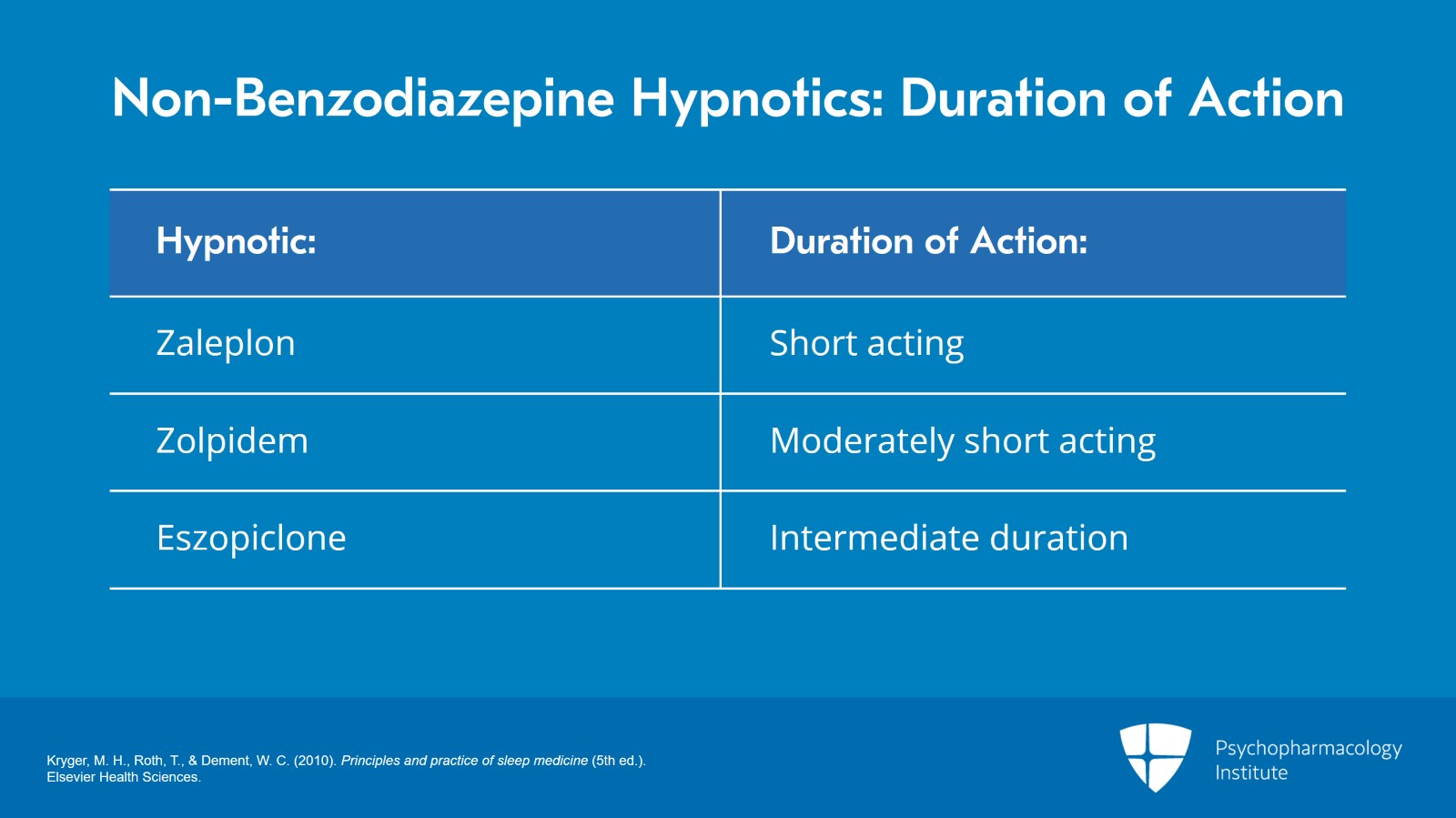
The elimination half-lives and duration of action of the non-benzodiazepine hypnotics range from short-acting zaleplon to moderately short-acting zolpidem and intermediate duration of eszopiclone. Differences in pharmacokinetic profiles can be used to clinical advantage in the treatment of insomnia disorder. Patients with sleep-onset difficulties or morning sedation from hypnotic use may benefit from a short half-life drug and patients with sleep maintenance difficulties may benefit from a drug with relatively longer half-life. 
References:
  • Kryger, M. H., Roth, T., & Dement, W. C. (2010). Principles and practice of sleep medicine (5th ed.). Elsevier Health Sciences.
Free Files
Success!
Check your inbox, we sent you all the materials there.
Slide 13 of 22

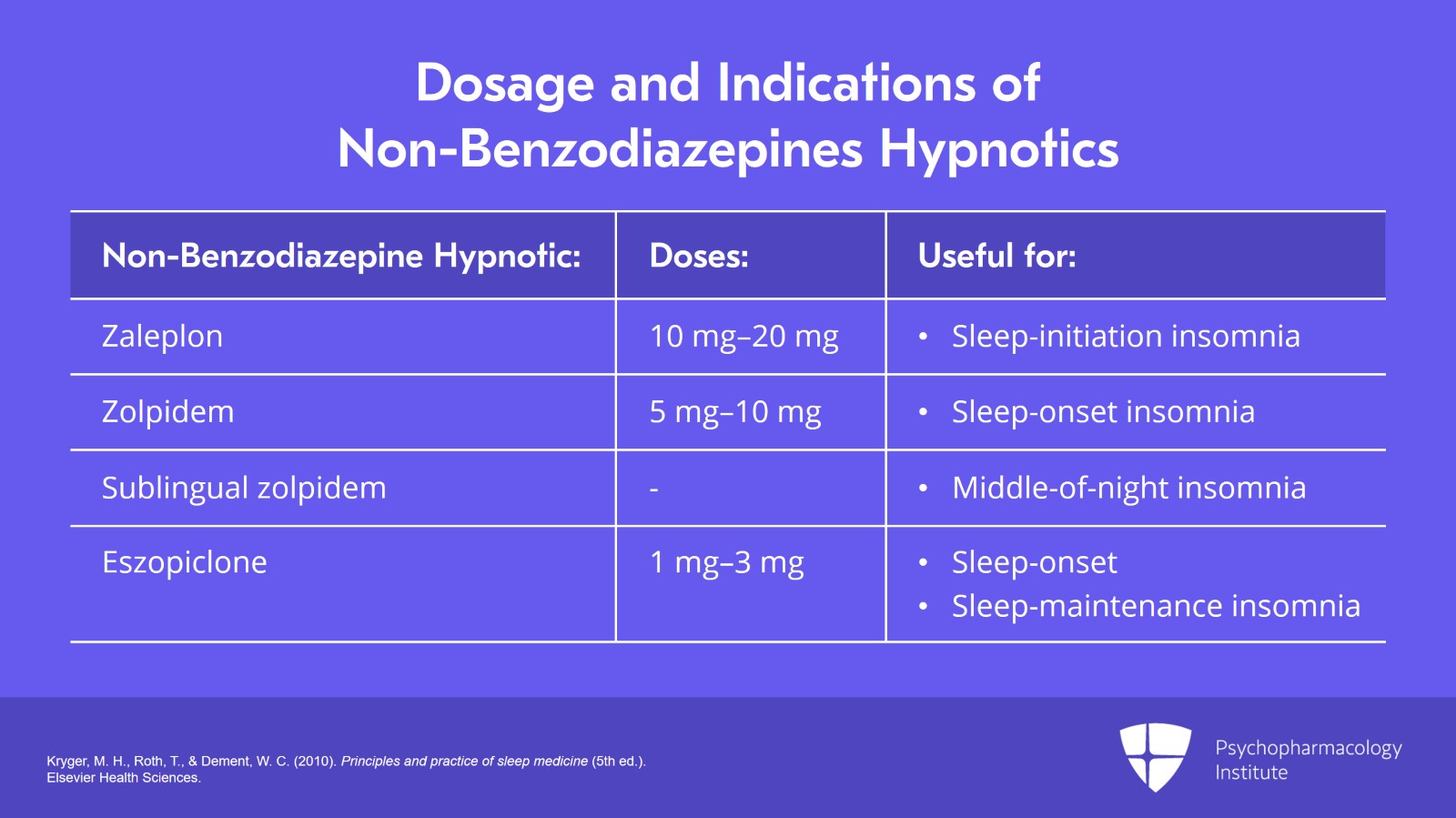
Zaleplon 10 to 20 mg is recommended for management of sleep initiation insomnia. Zolpidem 5 to 10 mg is indicated for management of sleep-onset insomnia. Sublingual formulation of zolpidem has been approved for the middle of night insomnia provided the individual taking this medication has at least four hours of sleep time at night. Eszopiclone 1 to 3 mg for sleep-onset and sleep maintenance insomnia has been recommended. 
References:
  • Kryger, M. H., Roth, T., & Dement, W. C. (2010). Principles and practice of sleep medicine (5th ed.). Elsevier Health Sciences.

Slide 14 of 22

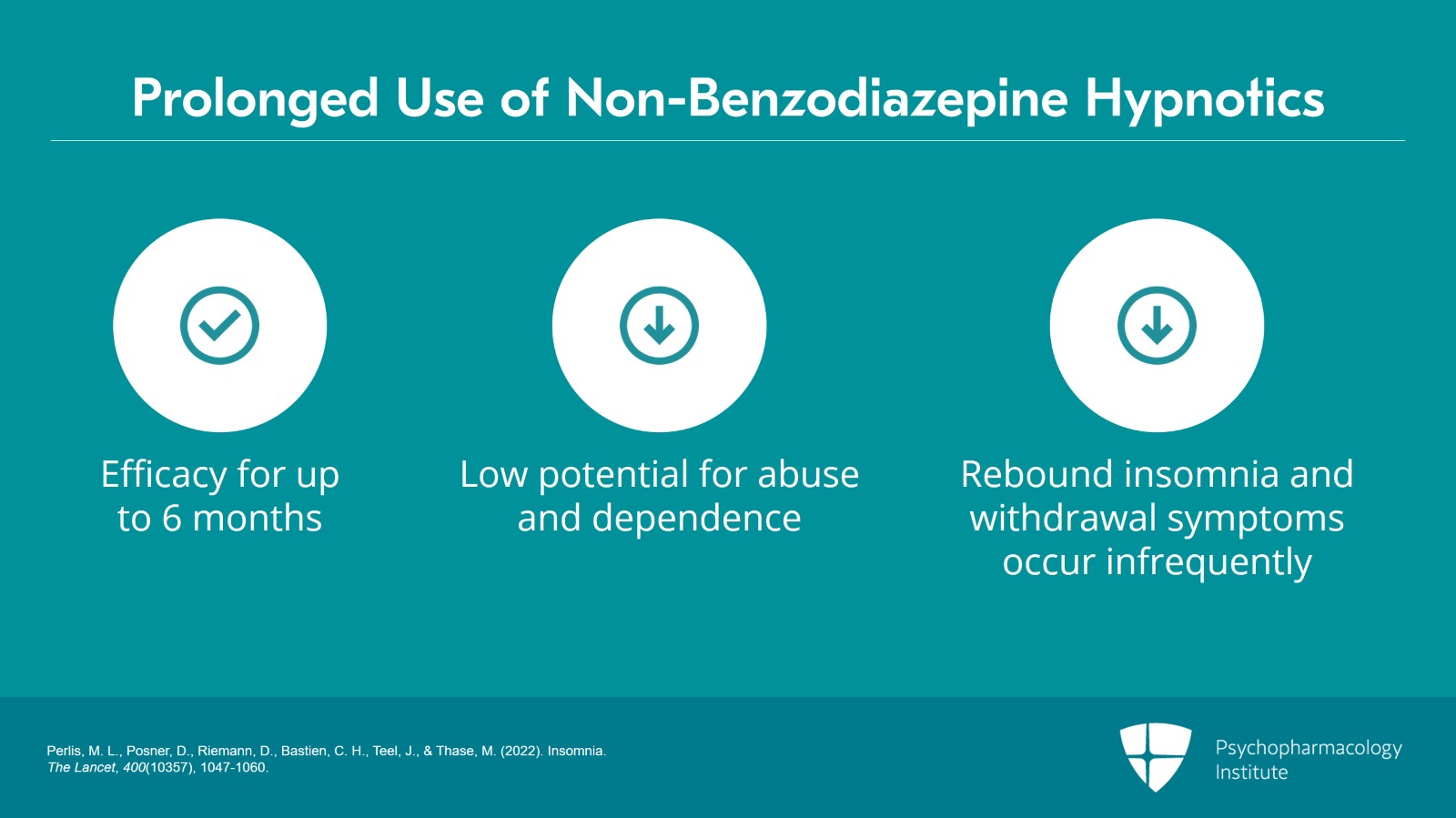
The efficacy of non-benzodiazepine hypnotics for up to six months of nightly or intermittent use has been established in double-blind, placebo-controlled studies. These medications appear to have a low potential for abuse and dependence but, like benzodiazepines, these medications are Schedule class IV medications. Rebound insomnia and withdrawal symptoms occur infrequently upon discontinuation of non-benzodiazepine hypnotics and may be less common and milder than those seen upon discontinuation of benzodiazepine medications. 
References:
  • Perlis, M. L., Posner, D., Riemann, D., Bastien, C. H., Teel, J., & Thase, M. (2022). Insomnia. The Lancet, 400(10357), 1047-1060. 
Free Files
Success!
Check your inbox, we sent you all the materials there.
Slide 15 of 22

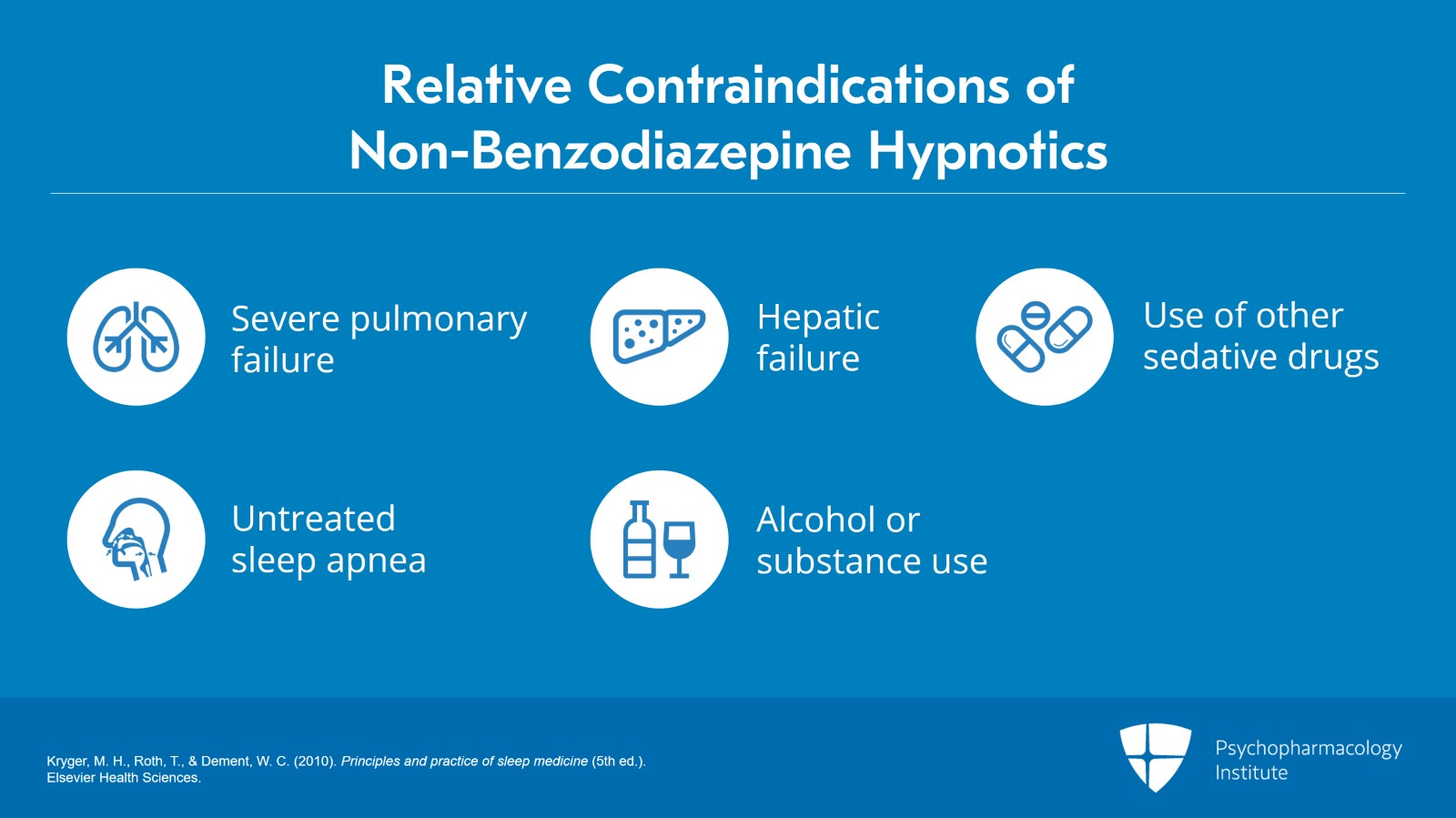
Relative contraindications to the use of non-benzodiazepine hypnotics include severe pulmonary failure, untreated sleep apnea, hepatic failure, alcohol or substance use, and use of other sedative drugs. 
References:
  • Kryger, M. H., Roth, T., & Dement, W. C. (2010). Principles and practice of sleep medicine (5th ed.). Elsevier Health Sciences.

Slide 16 of 22

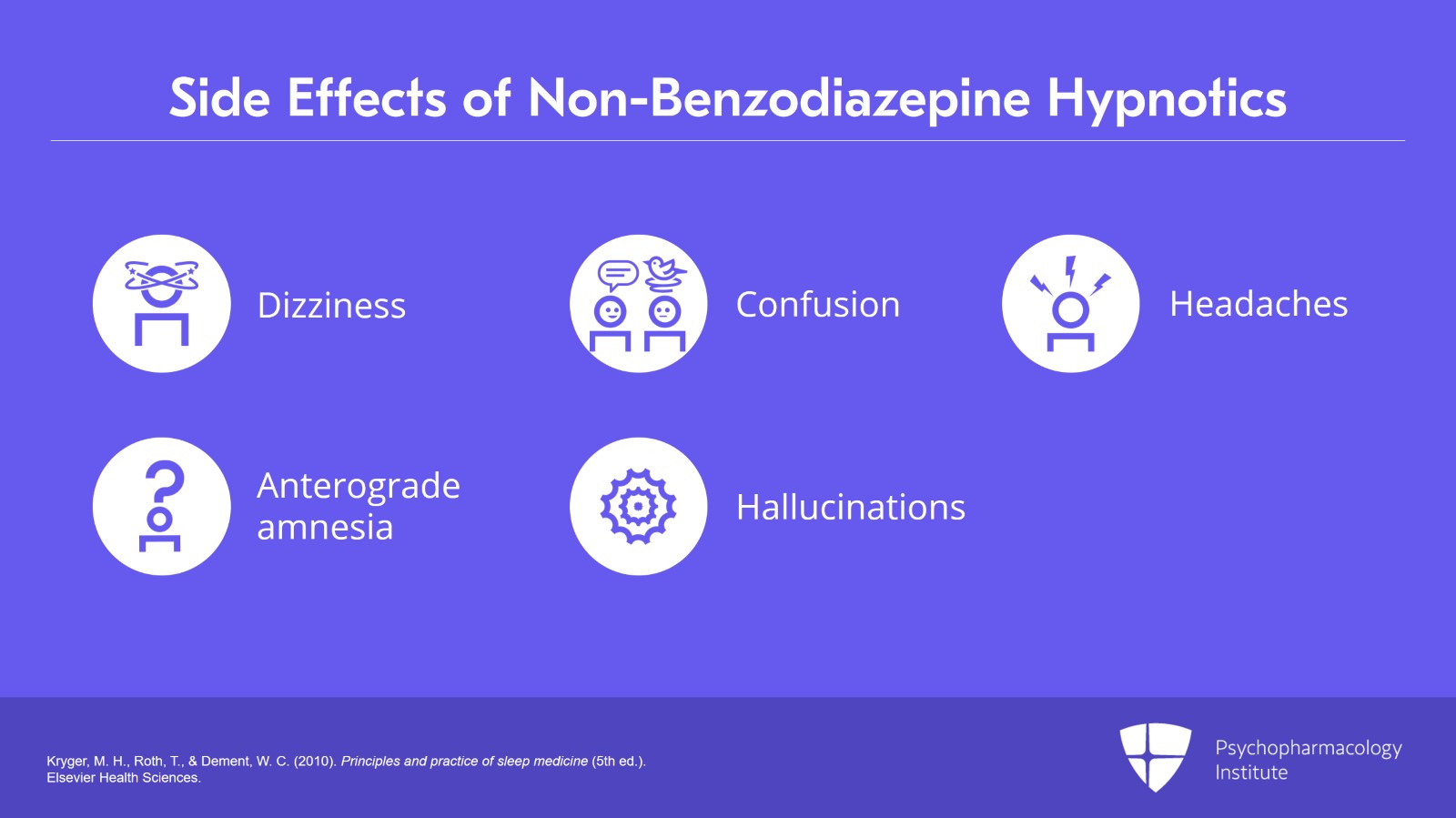
Side effects include dizziness, anterograde amnesia, confusion, and hallucinations. The most common adverse event reported in adults is headaches. 
References:
  • Kryger, M. H., Roth, T., & Dement, W. C. (2010). Principles and practice of sleep medicine (5th ed.). Elsevier Health Sciences.
Free Files
Success!
Check your inbox, we sent you all the materials there.
Slide 17 of 22

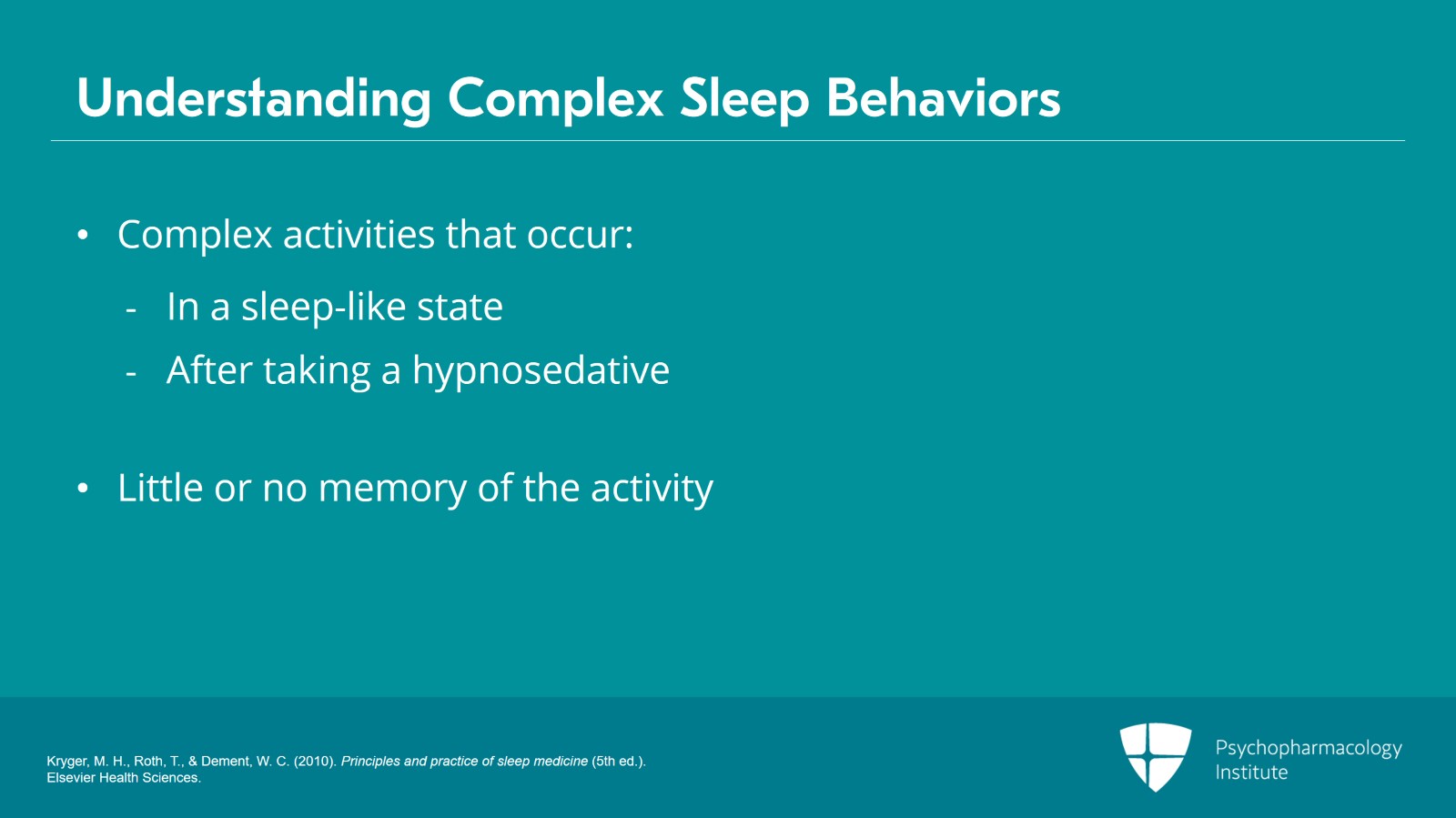
Complex sleep behaviors are complex activities normally associated with wakefulness that occur when the patient is in a sleep-like state after taking a hypnosedative drug. When the patient awakens the next morning, they have little or no memory of the activity. Complex sleep behaviors include sleepwalking with object manipulations, sleep conversations, sleep driving, sleep sex, and sleep shopping. 
References:
  • Kryger, M. H., Roth, T., & Dement, W. C. (2010). Principles and practice of sleep medicine (5th ed.). Elsevier Health Sciences.

Slide 18 of 22

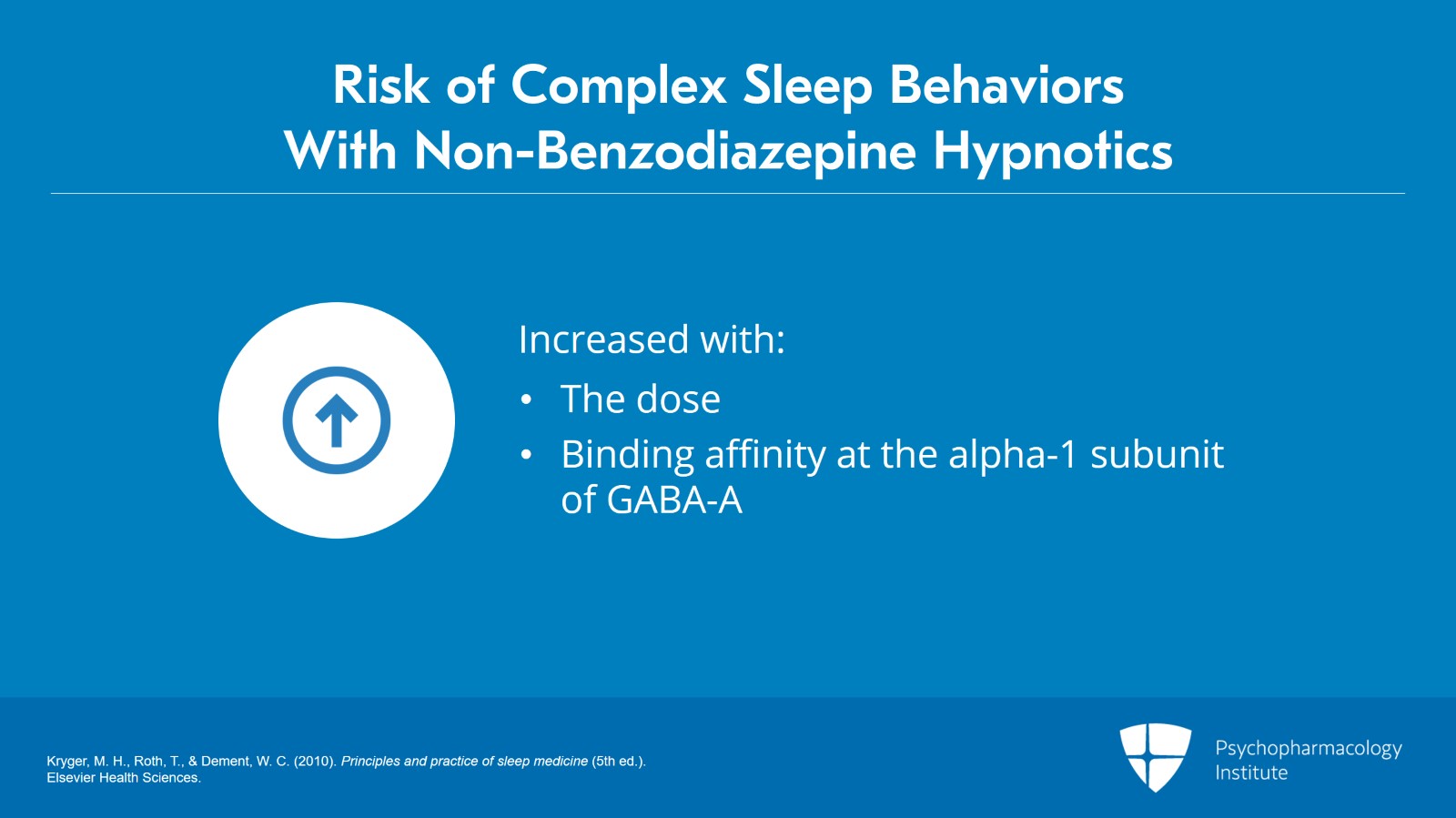
Evidence suggests that complex sleep behavior risk may increase with both the dose and binding affinity at the alpha-1 subunit of GABA-A receptors. 
References:
  • Kryger, M. H., Roth, T., & Dement, W. C. (2010). Principles and practice of sleep medicine (5th ed.). Elsevier Health Sciences.
Free Files
Success!
Check your inbox, we sent you all the materials there.
Slide 19 of 22

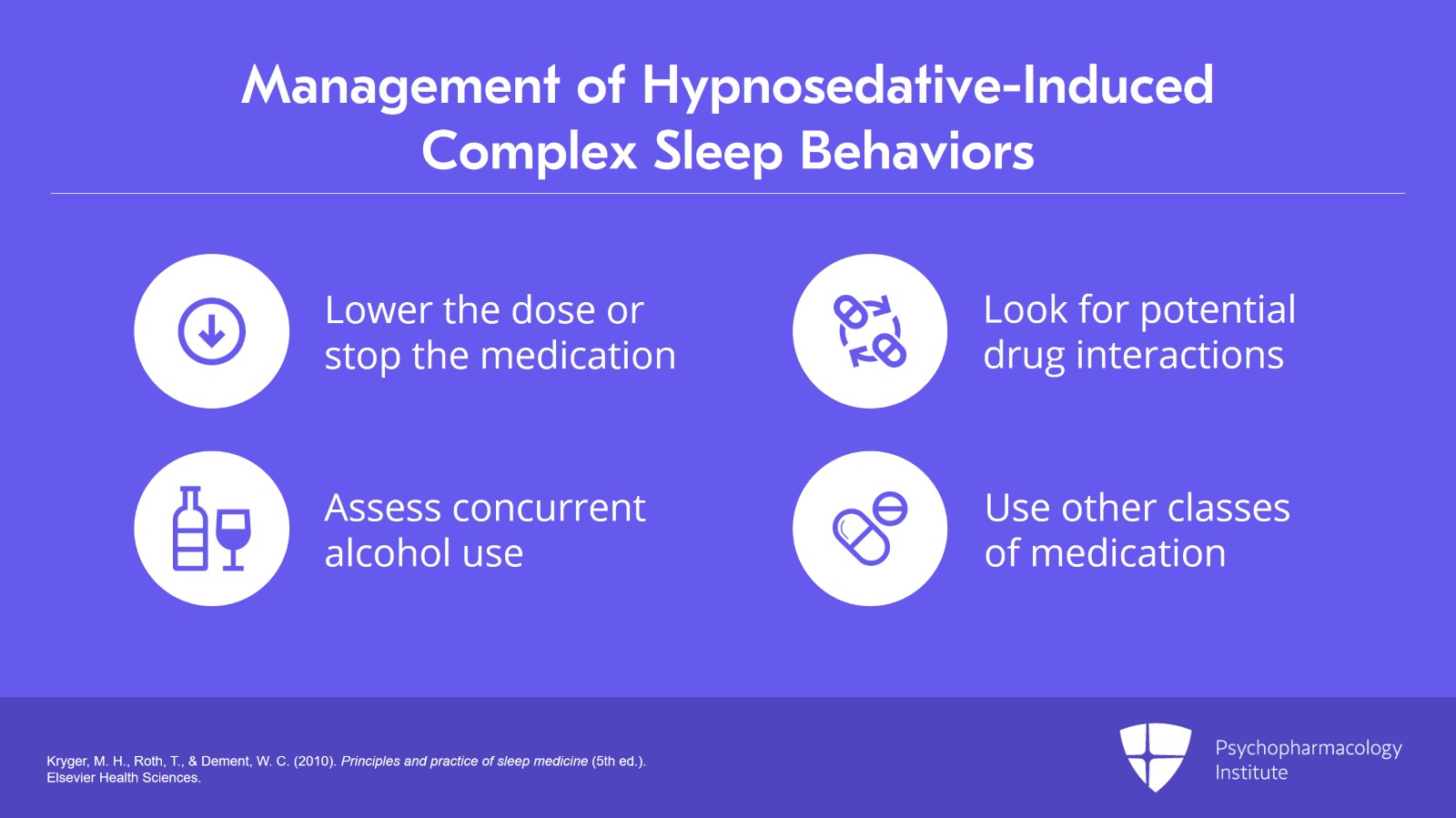
A number of potential strategies are available to manage and prevent hypnosedative-induced complex sleep behaviors. These include lowering the dose of or stopping the offending hypnosedative agent, examining drug regimens for potential drug interactions, and assessing concurrent alcohol use that may predispose patients to experiencing complex sleep-related behaviors. Other strategies include treatment with other classes of medications using non-pharmacological treatment strategies for insomnia disorder and careful selection of patients for treatment to prevent the likelihood of such adverse effects. 
References:
  • Kryger, M. H., Roth, T., & Dement, W. C. (2010). Principles and practice of sleep medicine (5th ed.). Elsevier Health Sciences.

Slide 20 of 22

Key points. Benzodiazepines including triazolam and temazepam and non-benzodiazepine hypnotics including zolpidem, eszopiclone and zaleplon are recommended for treatment of insomnia disorder. These medications act as positive allosteric modulators of GABAA receptor with non-benzodiazepine hypnotics specifically acting at alpha-1 subunit of GABAA receptor.
Free Files
Success!
Check your inbox, we sent you all the materials there.
Slide 21 of 22

Triazolam and zaleplon are effective for sleep initiation insomnia, whereas zolpidem, eszopiclone and temazepam are effective for sleep initiation and sleep maintenance insomnia.

Slide 22 of 22

Free Files
Success!
Check your inbox, we sent you all the materials there.
Learning Objectives:

After completing this activity, the learner will be able to:

  1. Gain insights into the sleep–wake cycle and its correlation with depression.
  2. Diagnose and assess insomnia. 
  3. Implement effective pharmacologic and nonpharmacologic interventions for insomnia and depression.

Original Release Date: December 1, 2023

Review and Re-release Date: March 1, 2024

Expiration Date: December 1, 2026

Expert: Amit Chopra, M.D.

Medical Editor: Andrea Quintás, M.D.

Relevant Financial Disclosures: 

Amit Chopra declares the following interests:

- Oxford University Press:  Royalty

All of the relevant financial relationships listed above have been mitigated by Medical Academy and the Psychopharmacology Institute.

None of the others faculty, planners, and reviewers for this educational activity have relevant financial relationships to disclose during the last 24 months with ineligible companies whose primary business is producing, marketing, selling, re-selling, or distributing healthcare products used by or on patients.

Contact Information: For questions regarding the content or access to this activity, contact us at support@psychopharmacologyinstitute.com

Instructions for Participation and Credit:

Participants must complete the activity online during the valid credit period that is noted above.

Follow these steps to earn CME credit:

  1. View the required educational content provided on this course page.

  2. Complete the Post Activity Evaluation for providing the necessary feedback for continuing accreditation purposes and for the development of future activities. NOTE: Completing the Post Activity Evaluation after the quiz is required to receive the earned credit.

  3. Download your certificate.

Accreditation Statement

This activity has been planned and implemented in accordance with the accreditation requirements and policies of the Accreditation Council for Continuing Medical Education through the joint providership of Medical Academy LLC and the Psychopharmacology Institute. Medical Academy is accredited by the ACCME to provide continuing medical education for physicians.

Credit Designation Statement

Medical Academy designates this enduring activity for a maximum of 1.25 AMA PRA Category 1 credit(s)™. Physicians should claim only the credit commensurate with the extent of their participation in the activity.

Free Files
Success!
Check your inbox, we sent you all the materials there.
Continue in the website
Instant access modal

Become a Bronze, Silver, Gold, Bronze extended, Silver extended or Gold extended Member.

2025–26 Psychopharmacology CME Program

Unlock up to 155 CME Credits, including 40 SA CME Credits.