Close Banner
Section Free  - Video Lectures

04. Pharmacogenetics-Guided Dosing: Strategies for Poor and Rapid Metabolizers

Published on December 1, 2024 Certification expiration date: December 1, 2027

Chris Aiken, M.D.

Editor-in-chief of the Carlat Psychiatry Report - Carlat Psychiatry Report

Key Points

  • For poor metabolizers, start at half the usual dose, titrate slowly, and reduce the target dose by 30-70%.
  • For rapid metabolizers, titrate faster but slow down if side effects occur, aiming for a 135-180% higher target dose.
  • Dose based on the patient's response, and if in doubt, check serum levels for most psychiatric medications.

Free Downloads for Offline Access

  • Free Download Presentation File (PPTX)
  • Free Download Audio File (MP3)
  • Free Download Video (MP4)

Slides and Transcript

Slide 1 of 8

In this video, we'll explore how to adjust the dose when you get an abnormal pharmacogenetic gene.

Slide 2 of 8

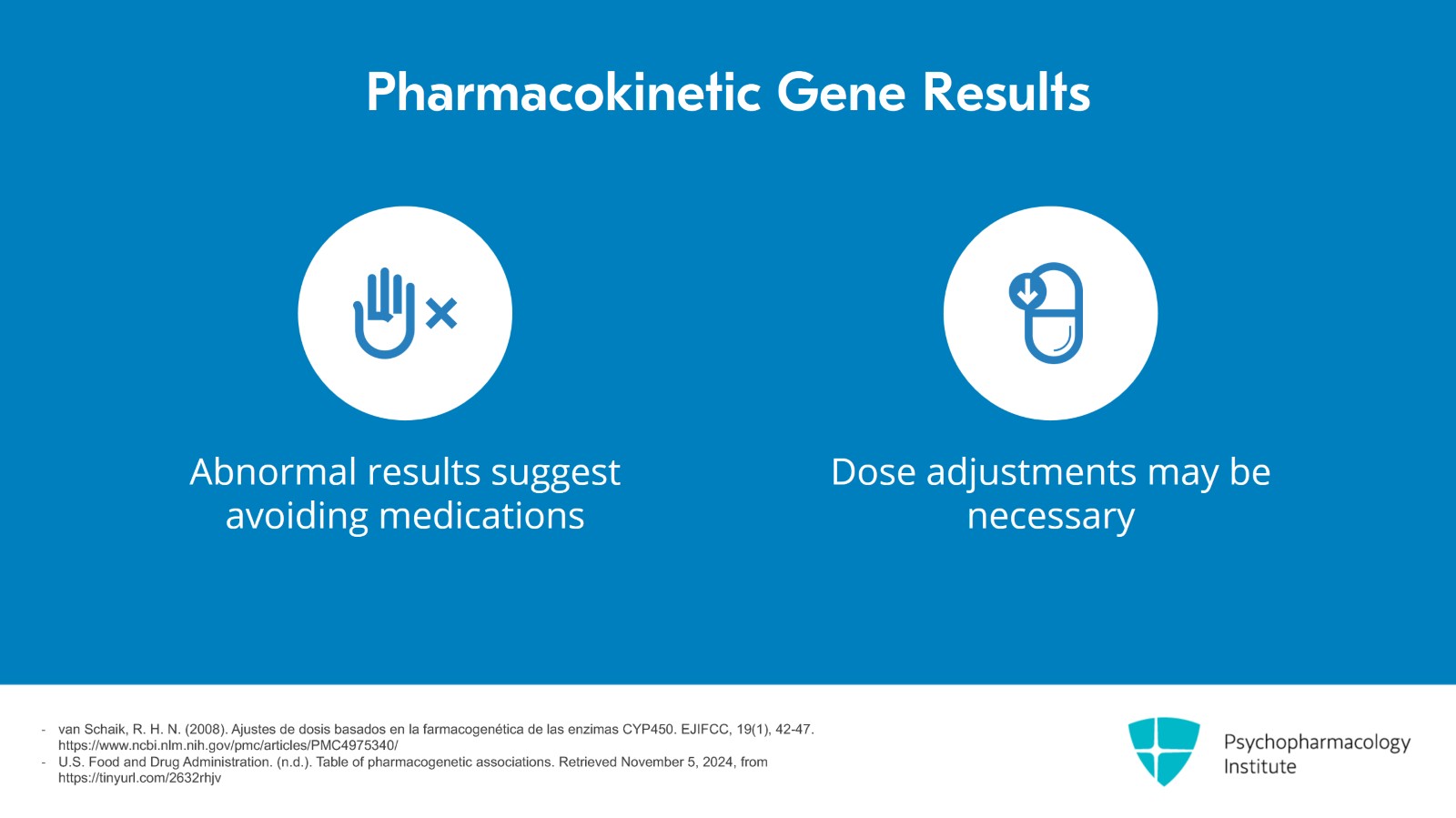
When you get an abnormal result for a pharmacokinetic gene, most genetic tests advise you to avoid medications that are metabolized by that enzyme. But what if you need to use that med? Here's how to adjust the dose based on the gene.
References:
  • van Schaik, R. H. N. (2008). Ajustes de dosis basados ​​en la farmacogenética de las enzimas CYP450. EJIFCC, 19(1), 42-47. https://www.ncbi.nlm.nih.gov/pmc/articles/PMC4975340/
  • U.S. Food and Drug Administration. (n.d.). Table of pharmacogenetic associations. Retrieved November 5, 2024, from https://tinyurl.com/2632rhjv2
Free Files
Success!
Check your inbox, we sent you all the materials there.

Slide 3 of 8

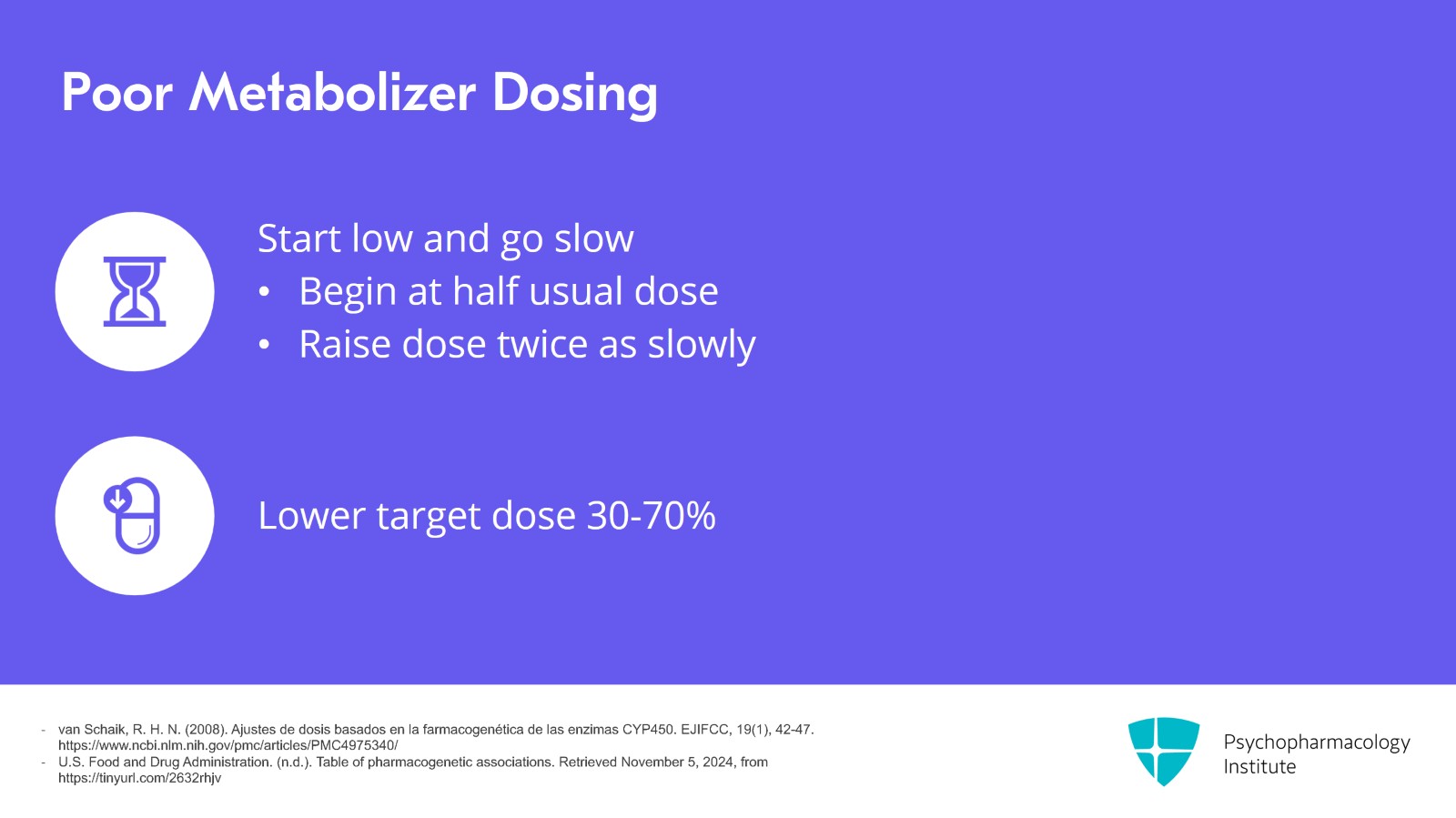
For poor metabolizers, here, we're going to worry about side effects as the dose goes too high. So start low and go slow. Start at half the usual dose and raise it twice as slowly as you normally would. Lower the target dose by about 30% to 70%.
References:
  • van Schaik, R. H. N. (2008). Ajustes de dosis basados ​​en la farmacogenética de las enzimas CYP450. EJIFCC, 19(1), 42-47. https://www.ncbi.nlm.nih.gov/pmc/articles/PMC4975340/
  • U.S. Food and Drug Administration. (n.d.). Table of pharmacogenetic associations. Retrieved November 5, 2024, from https://tinyurl.com/2632rhjv3

Slide 4 of 8

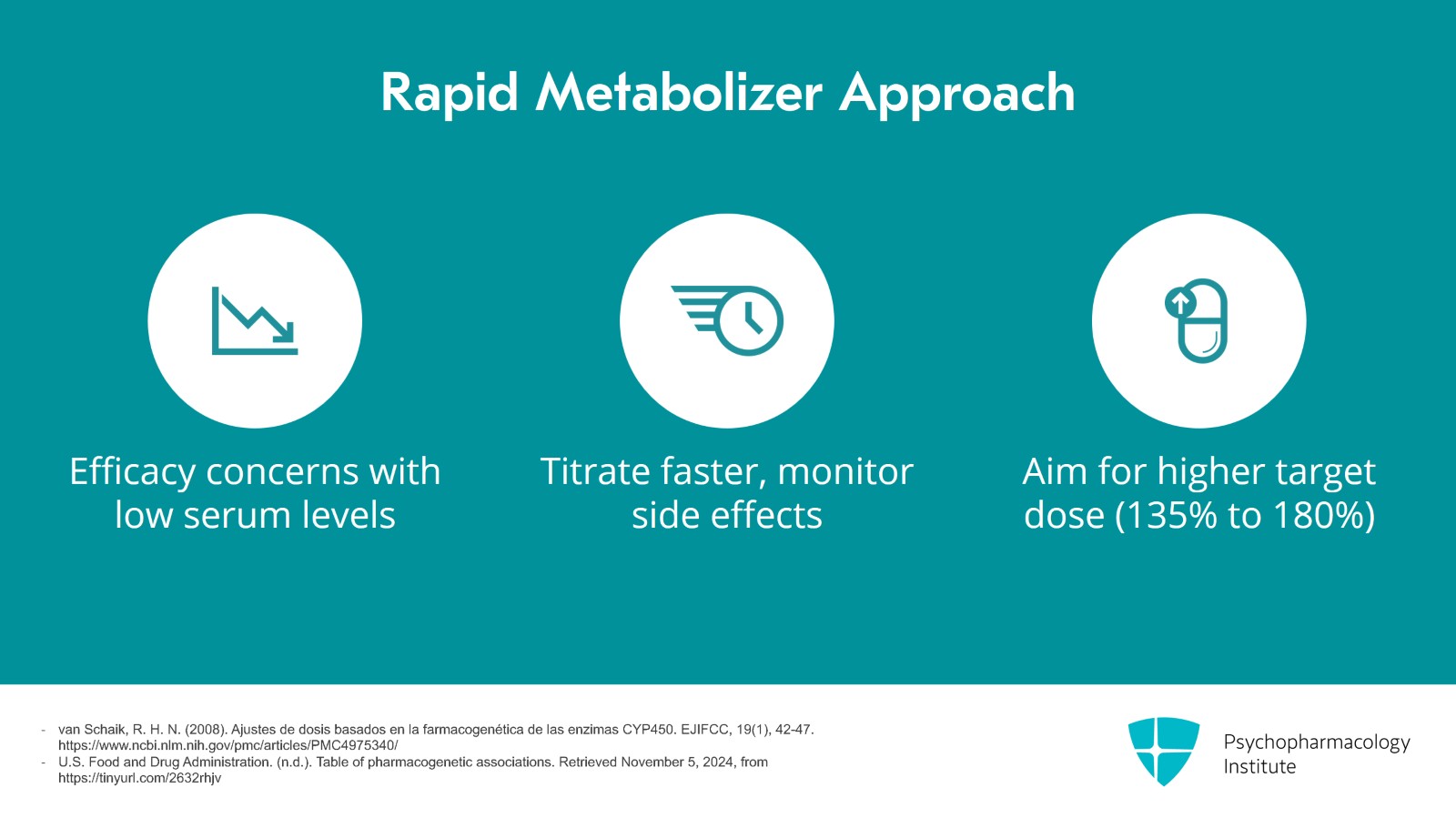
For rapid metabolizers, it's efficacy that we worry about, or lack of efficacy as the serum level goes too low. Here, you can titrate faster, but you should slow down if side effects occur. The key thing though is to aim for a higher target dose with rapid metabolizers, about 135% to 180% higher.
References:
  • van Schaik, R. H. N. (2008). Ajustes de dosis basados ​​en la farmacogenética de las enzimas CYP450. EJIFCC, 19(1), 42-47. https://www.ncbi.nlm.nih.gov/pmc/articles/PMC4975340/
  • U.S. Food and Drug Administration. (n.d.). Table of pharmacogenetic associations. Retrieved November 5, 2024, from https://tinyurl.com/2632rhjv4
Free Files
Success!
Check your inbox, we sent you all the materials there.

Slide 5 of 8

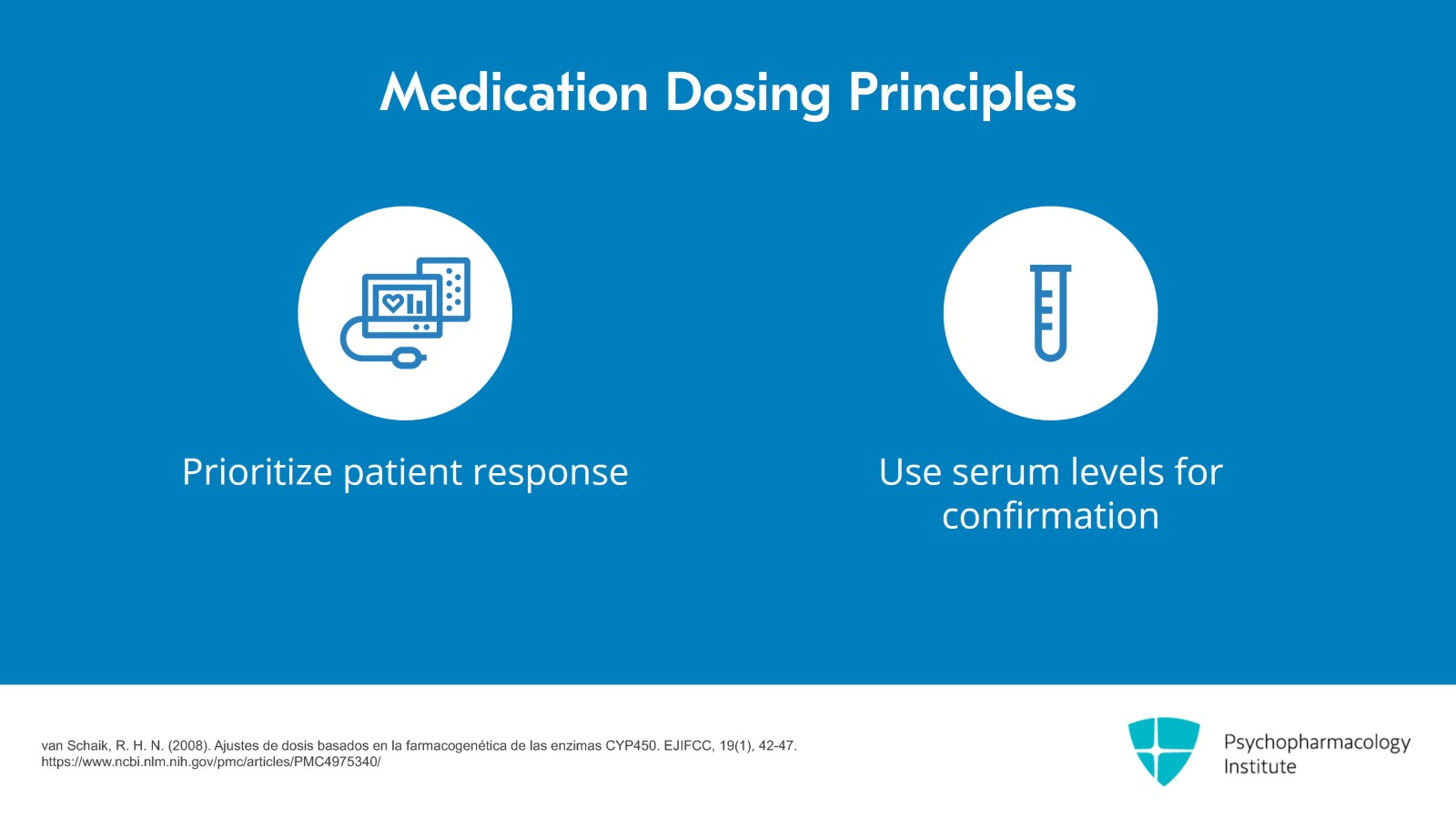
Those numbers are just rough estimates. Many other factors besides pharmacogenetics influence drug effects, so the more important rule here is to dose based on your patient's response. And if you're in doubt and need some more confirmation, you can check a serum level of most psychiatric medications.
References:
  • van Schaik, R. H. N. (2008). Ajustes de dosis basados ​​en la farmacogenética de las enzimas CYP450. EJIFCC, 19(1), 42-47. https://www.ncbi.nlm.nih.gov/pmc/articles/PMC4975340/5

Slide 6 of 8

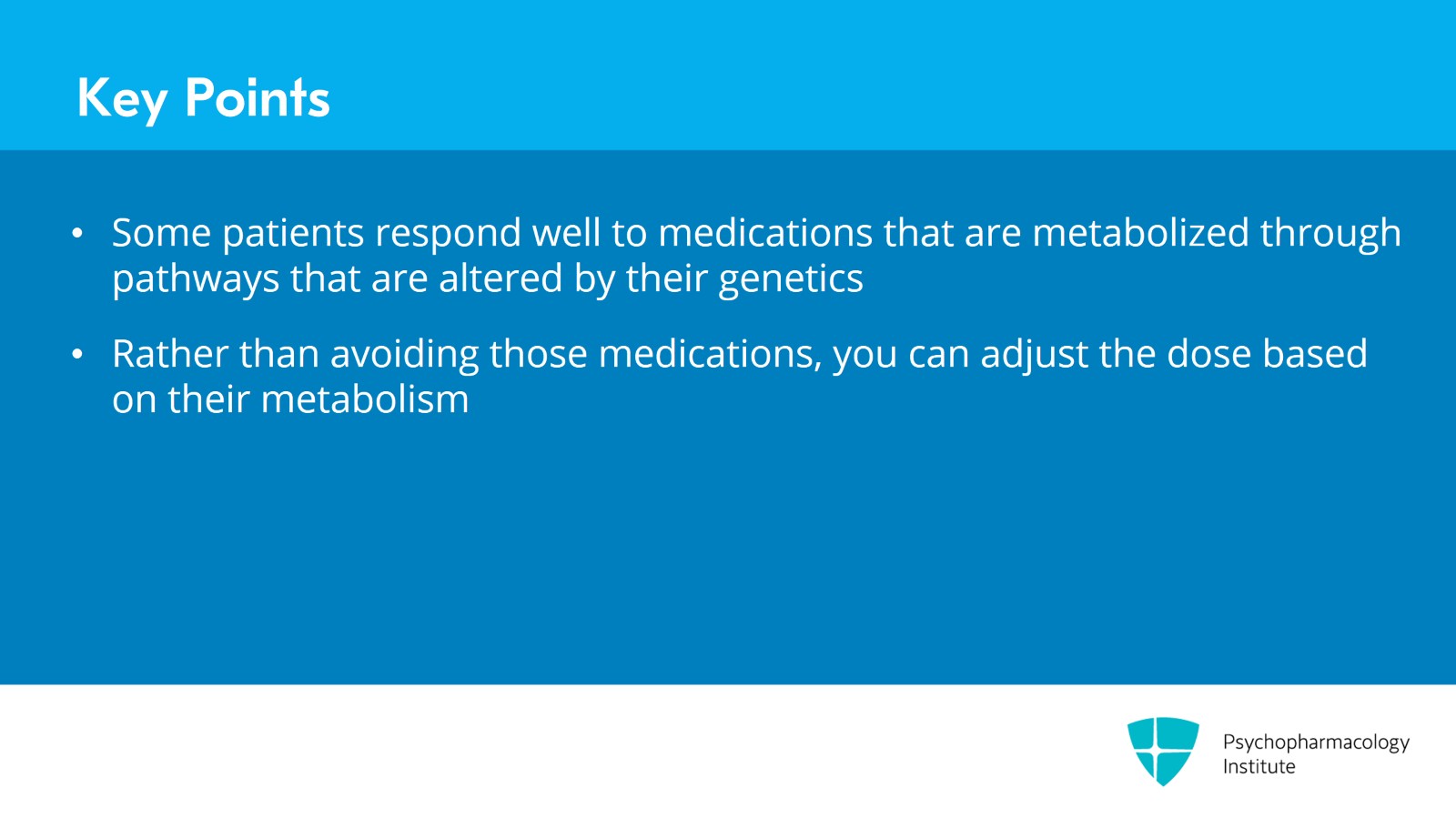
Let's summarize the key points for this talk. Some patients respond well to medications that are metabolized through pathways that are altered by their genetics. Rather than avoiding these medications entirely, you can adjust the dose based on the way that they metabolize it.
Free Files
Success!
Check your inbox, we sent you all the materials there.

Slide 7 of 8

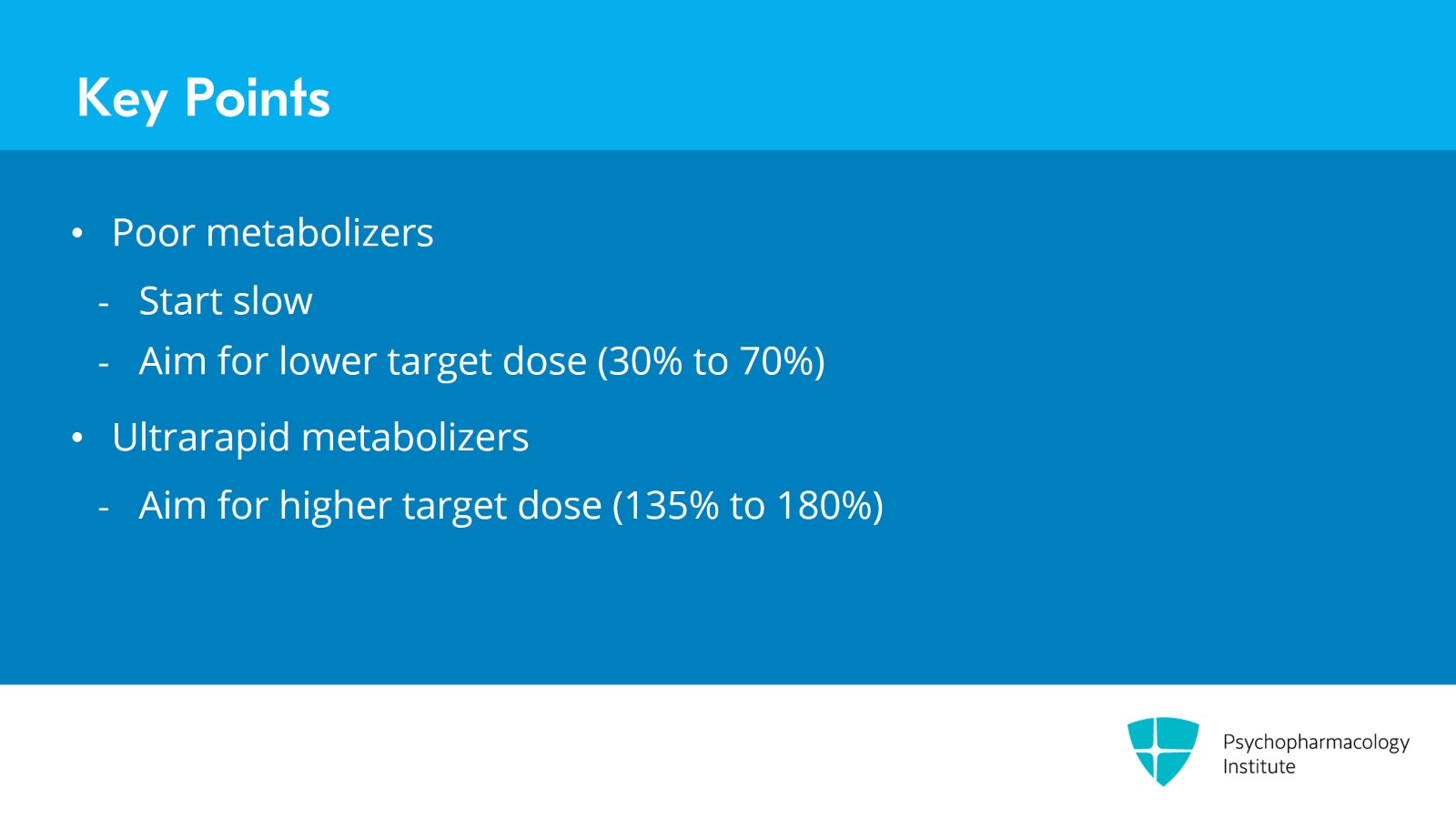
For poor metabolizers, you can avoid side effects by starting slow and aiming for a lower target dose, reducing it by 30% to 70%. For ultrarapid metabolizers, you can achieve better efficacy by aiming for a higher target dose, raising it by 135% to 180%.

Slide 8 of 8

Free Files
Success!
Check your inbox, we sent you all the materials there.

Learning Objectives:

After completing this activity, the learner will be able to:

  1. Describe how clinically relevant genes in psychiatry primarily involve liver drug metabolism, and discuss the current limitations of pharmacogenetic panels in clinical practice.
  2. Apply appropriate dosing strategies for patients with CYP2C19 poor metabolizer status when prescribing citalopram, considering patient-specific factors and alternative medication options.
  3. Evaluate situations where genetic testing may be clinically warranted, and identify the most useful pharmacokinetic genetic tests for psychiatric medications.

Original Release Date: December 1, 2024

Expiration Date: December 1, 2027

Expert: Chris Aiken, M.D.

Medical Editor: Flavio Guzmán, M.D. 

Relevant Financial Disclosures: 

None of the faculty, planners, and reviewers for this educational activity have relevant financial relationships to disclose during the last 24 months with ineligible companies whose primary business is producing, marketing, selling, re-selling, or distributing healthcare products used by or on patients.

Contact Information: For questions regarding the content or access to this activity, contact us at support@psychopharmacologyinstitute.com

Instructions for Participation and Credit:

Participants must complete the activity online during the valid credit period that is noted above.

Follow these steps to earn CME credit:

  1. View the required educational content provided on this course page.

  2. Complete the Post Activity Evaluation for providing the necessary feedback for continuing accreditation purposes and for the development of future activities. NOTE: Completing the Post Activity Evaluation after the quiz is required to receive the earned credit.

  3. Download your certificate.

Accreditation Statement

This activity has been planned and implemented in accordance with the accreditation requirements and policies of the Accreditation Council for Continuing Medical Education through the joint providership of Medical Academy LLC and the Psychopharmacology Institute. Medical Academy is accredited by the ACCME to provide continuing medical education for physicians.

Credit Designation Statement

Medical Academy designates this enduring activity for a maximum of 0.75 AMA PRA Category 1 credit(s)™. Physicians should claim only the credit commensurate with the extent of their participation in the activity.


Free Files
Success!
Check your inbox, we sent you all the materials there.
Continue in the website
Instant access modal

Become a Bronze, Silver, Gold, Bronze extended, Silver extended or Gold extended Member.

2025–26 Psychopharmacology CME Program

Unlock up to 155 CME Credits, including 40 SA CME Credits.