Close Banner
Section Free  - Video Lectures

04. Other Psychiatric Diagnoses in Agitated Patients: Mood and Substance Use Disorders

Published on March 1, 2024 Certification expiration date: March 1, 2027

Scott L. Zeller, M.D.

Vice President for Acute Psychiatry - University of California

Key Points

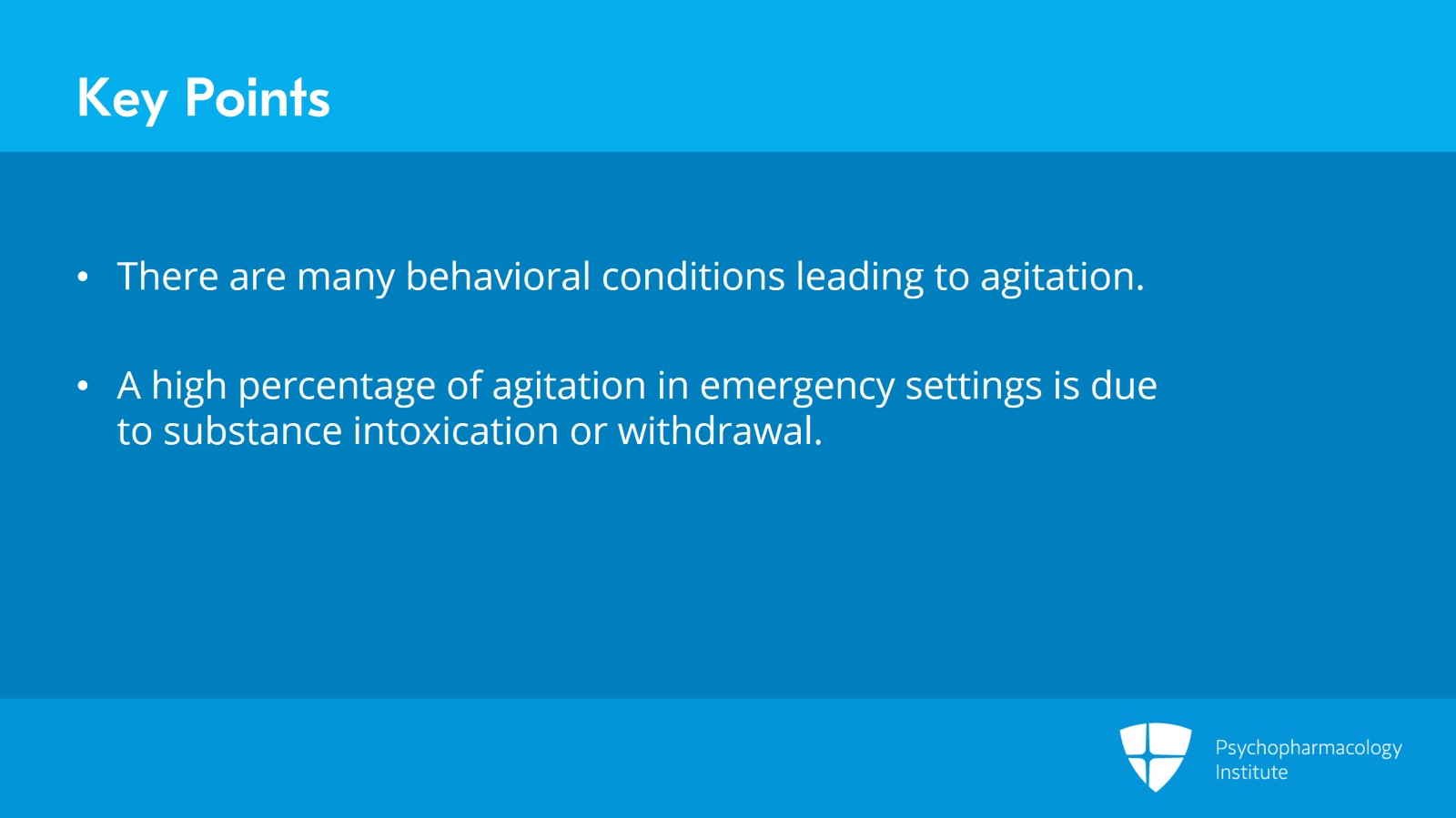
  • There are many behavioral conditions leading to agitation.
  • A high percentage of agitation in emergency settings is due to substance intoxication or withdrawal.
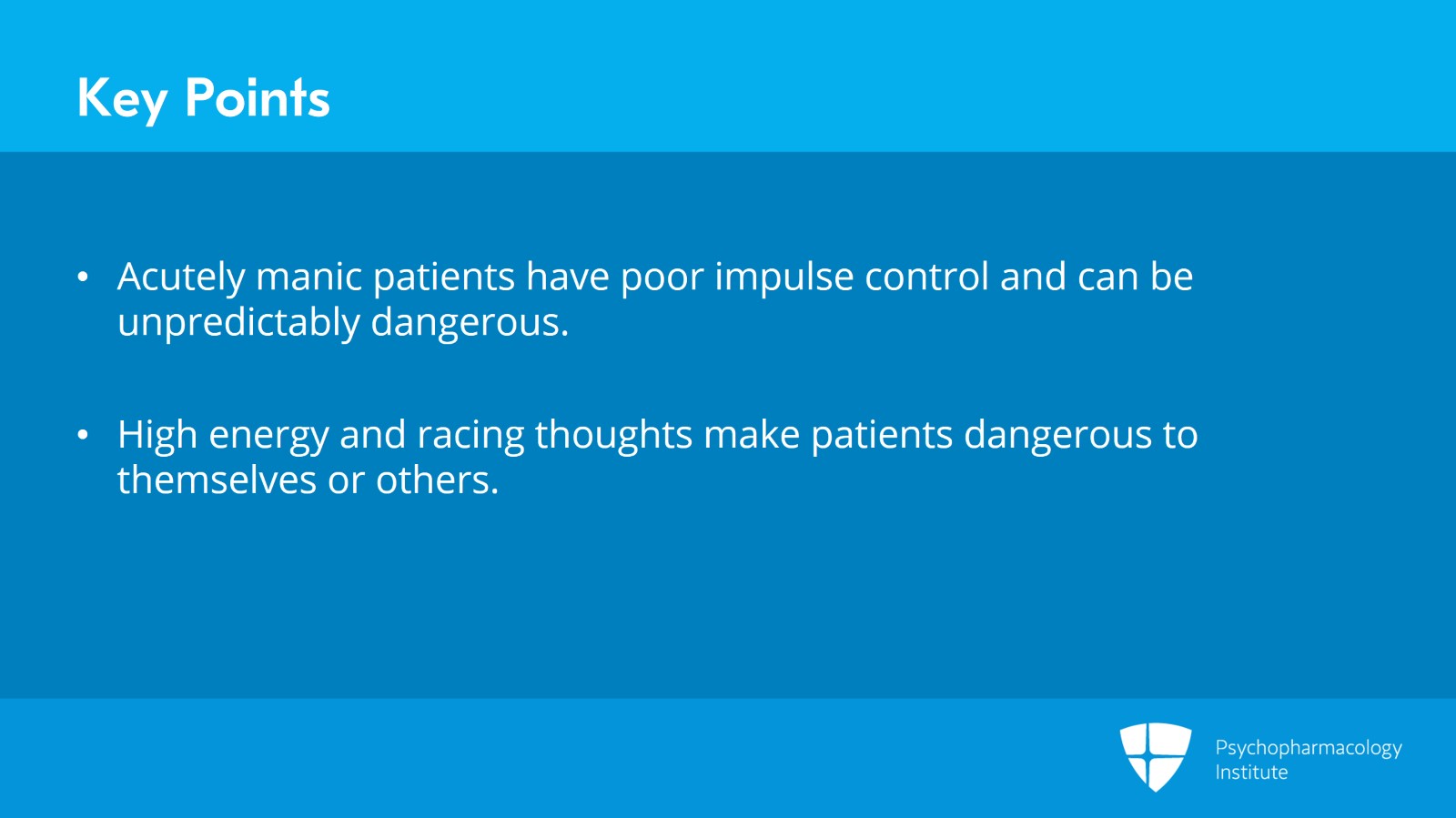
  • Acutely manic patients have poor impulse control and can be unpredictably dangerous.
  • High energy and racing thoughts make patients dangerous to themselves and others.
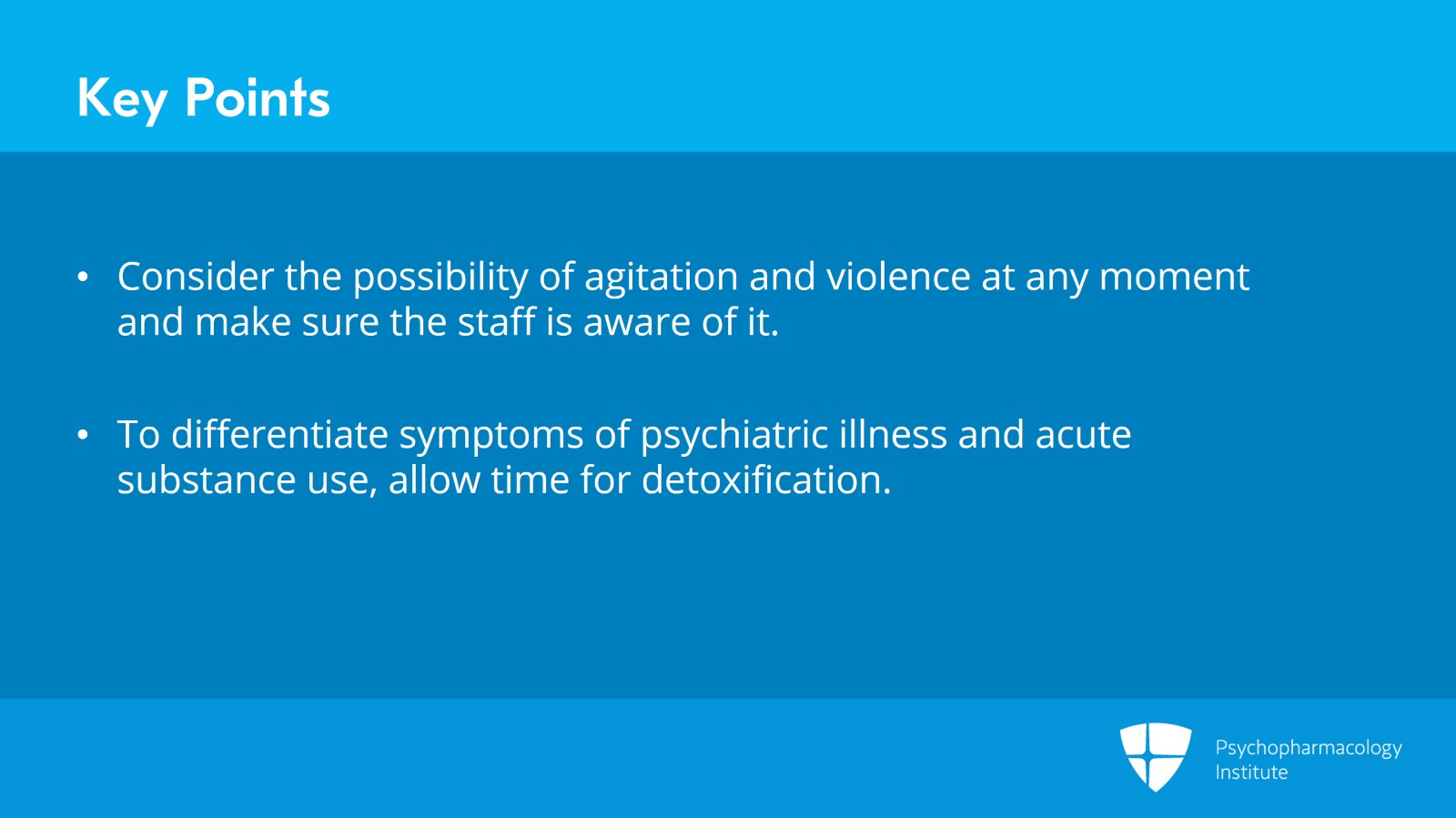
  • Consider the possibility of agitation and violence at any moment and make sure the staff is aware of it.
  • To differentiate symptoms of psychiatric illness and acute substance use, allow time for detoxification.

Free Downloads for Offline Access

  • Free Download Presentation File (PPTX)
  • Free Download Video (MP4)
  • Free Download Audio File (MP3)

Slides and Transcript
Slide 1 of 22

Hi. This is video four, which is about other psychiatric diagnoses in agitated patients, and we'll look at mood disorders and substance use disorders in this chapter.

Slide 2 of 22

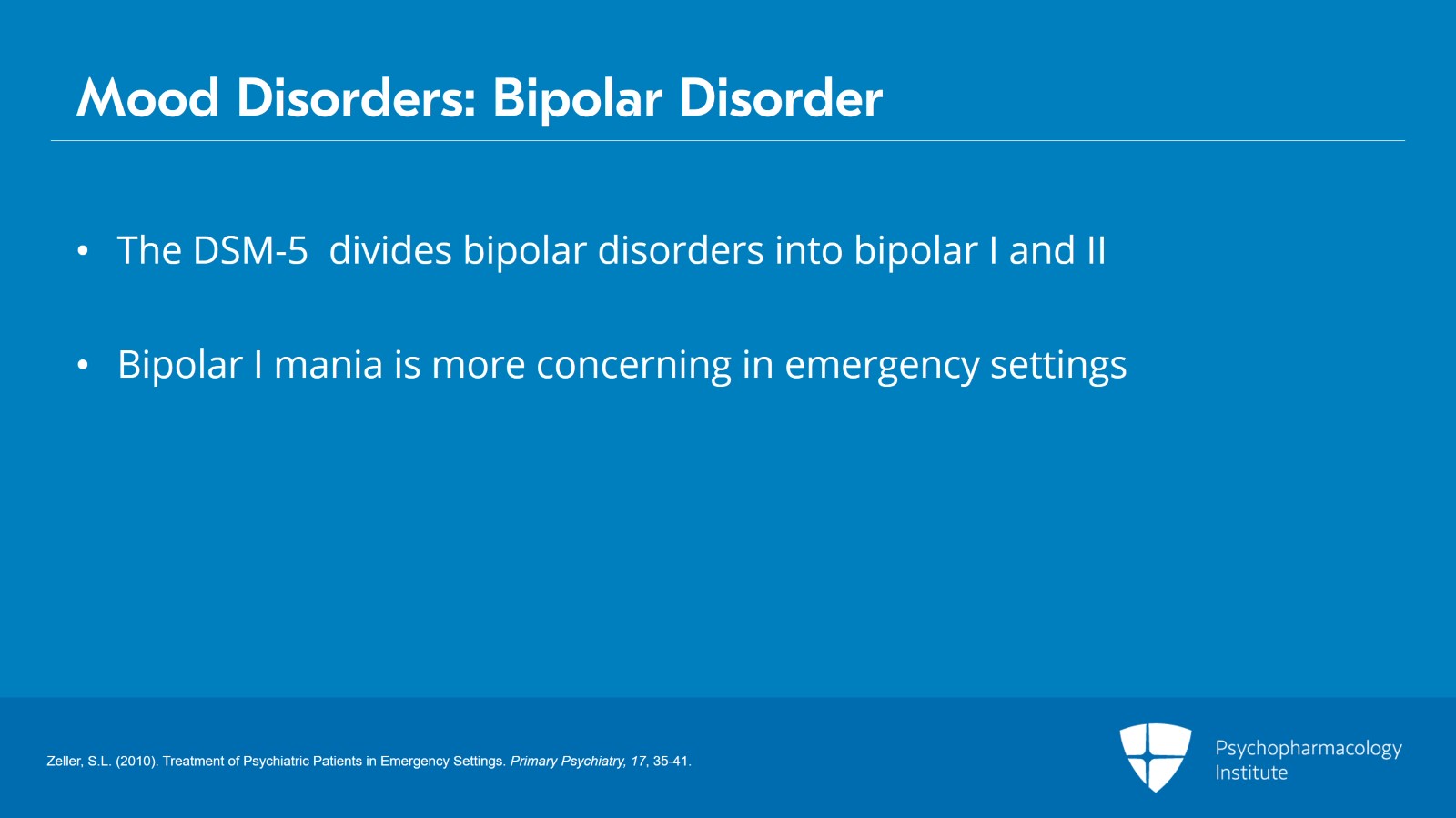
So, let's start with mood disorders, such as bipolar disorder, especially acute mania. In this day and age, the diagnostic manual says there's bipolar I and bipolar II. More commonly, it's the bipolar I mania that you need to be concerned about when it's encountered in the emergency setting.
References:
  • Zeller, S.L. (2010). Treatment of Psychiatric Patients in Emergency Settings. Primary Psychiatry, 17, 35-41.
Free Files
Success!
Check your inbox, we sent you all the materials there.

Slide 3 of 22

When we're thinking of acute mania, that's going to be people who could have any of the following kind of things: Euphoria, irritability, fluctuating anger even up to rage and hostility; delusions, especially paranoid delusions.
References:
  • Zeller, S.L. (2010). Treatment of Psychiatric Patients in Emergency Settings. Primary Psychiatry, 17, 35-41.

Slide 4 of 22

Hypersexuality, or also hyperreligiousity, especially believing one to have special religious powers, or connections. Somebody's hyperactive, they can't sit still, they're just moving all around.
References:
  • American Psychiatric Association. (2013). Diagnostic and statistical manual of mental disorders (5th ed.).
Free Files
Success!
Check your inbox, we sent you all the materials there.

Slide 5 of 22

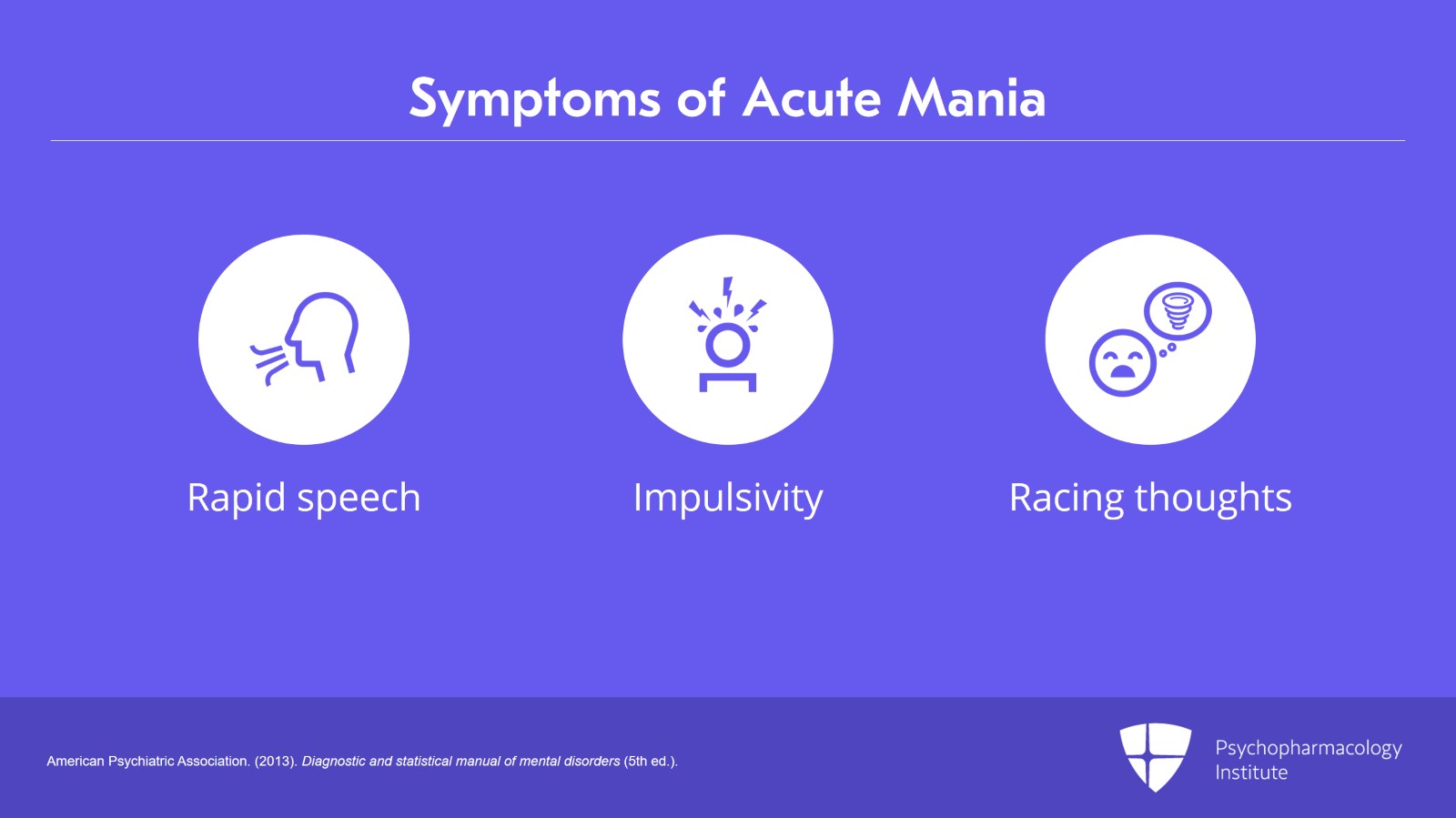
They've got rapid speech, very talkative; they can also be very impulsive, and racing thoughts are something we see quite a lot. And if you hear from people, it's like, oh our family member here has not slept in the last three days, that should be a real trigger that this could be mania.
References:
  • American Psychiatric Association. (2013). Diagnostic and statistical manual of mental disorders (5th ed.).

Slide 6 of 22

Realize that there’s lots of great data out there that show that patients with acute mania are really at a heightened risk for suicide.
References:
  • Zeller, S.L. (2010). Treatment of Psychiatric Patients in Emergency Settings. Primary Psychiatry, 17, 35-41.
Free Files
Success!
Check your inbox, we sent you all the materials there.
Slide 7 of 22

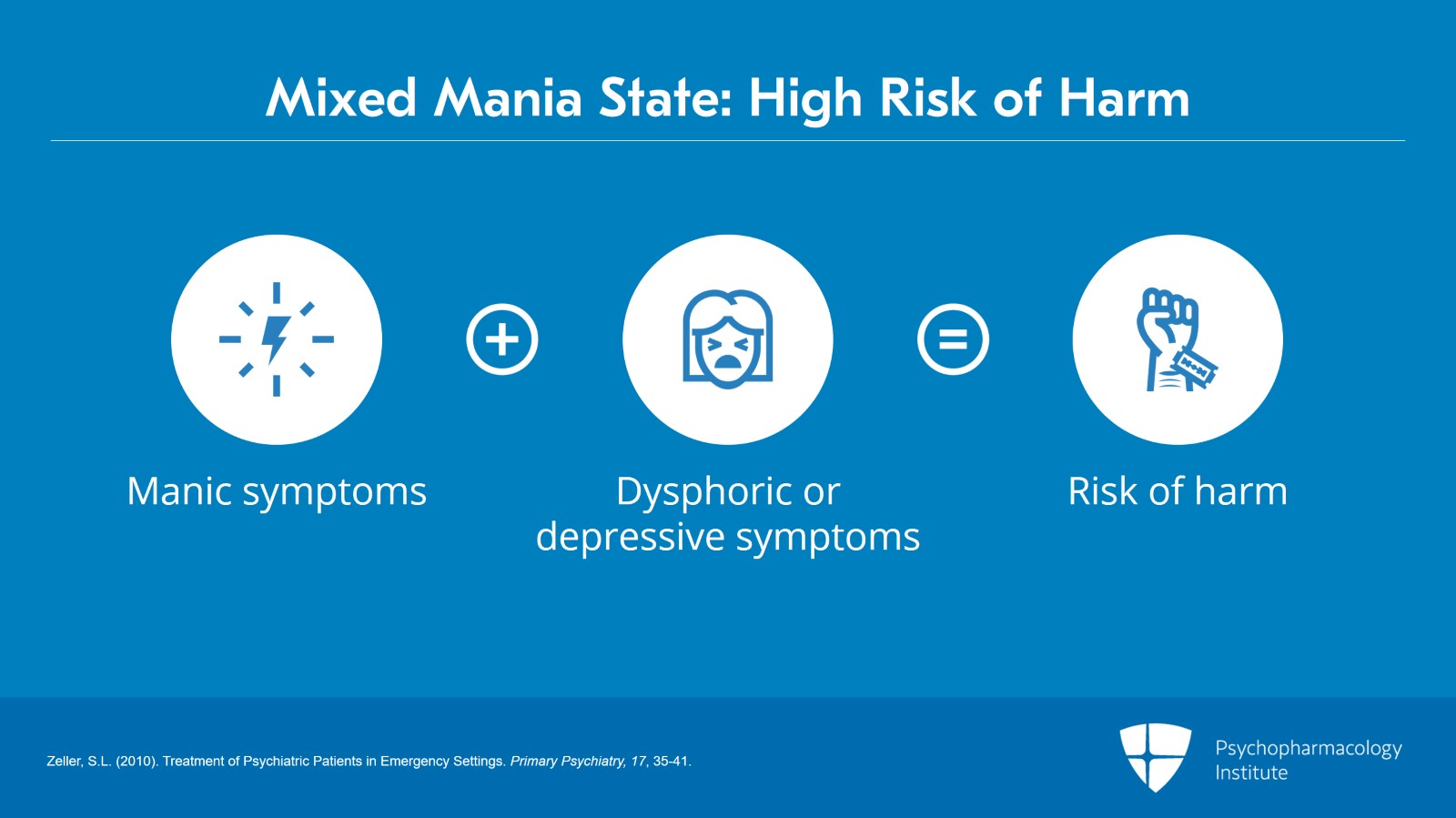
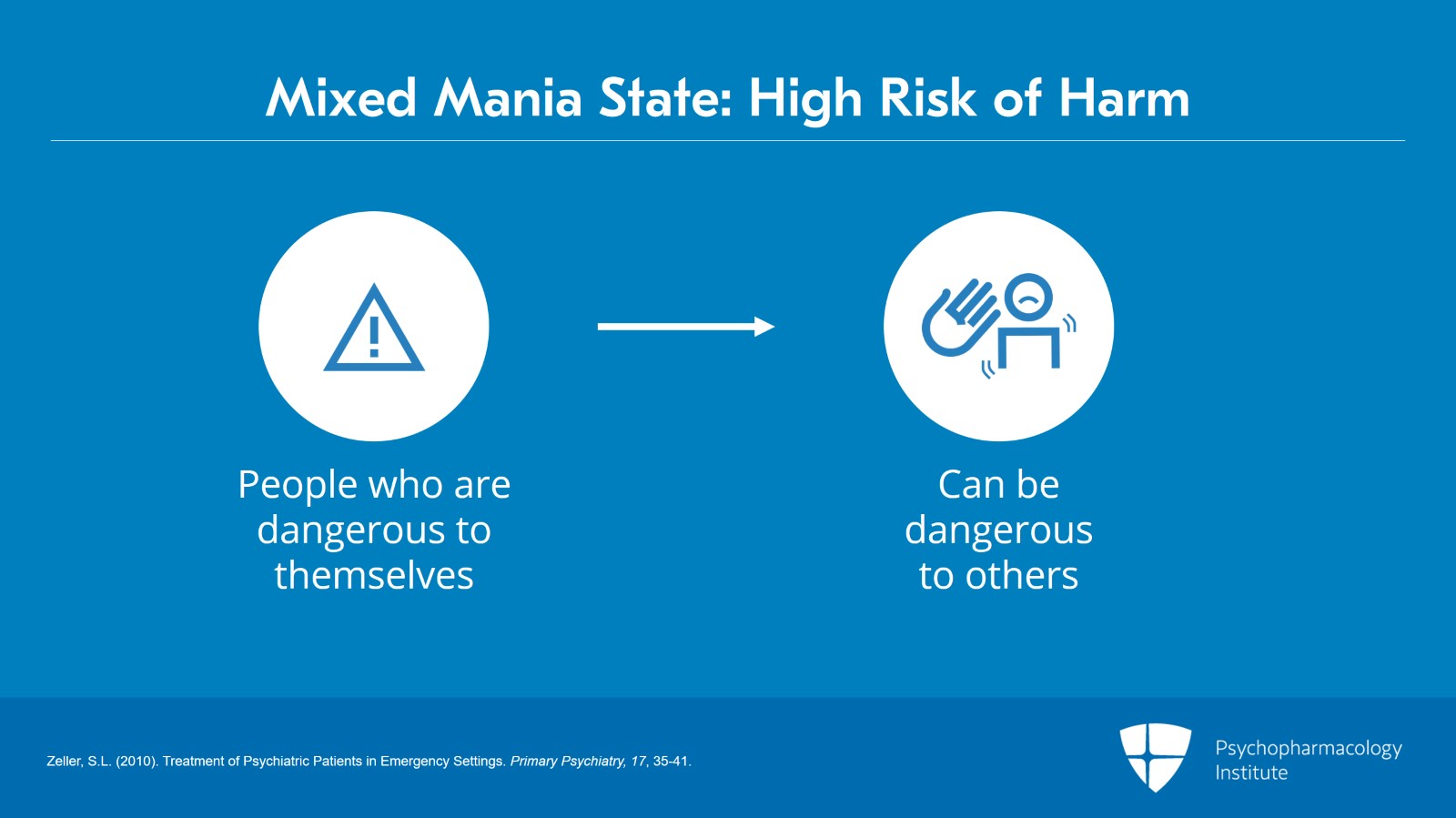
Especially when we have what we call a mixed mania state where there might be symptoms of mania but also some dysphoria, some depressive symptoms, feelings of being distraught, or that their life is not going the way they want to and they have enough energy to really go ahead and do some dangerous things to put themselves at risk. So, it's really important to take a good look at patients with mania and rule out that they're not also acutely dangerous to themselves.
References:
  • Zeller, S.L. (2010). Treatment of Psychiatric Patients in Emergency Settings. Primary Psychiatry, 17, 35-41.

Slide 8 of 22

And also, realize that people who are dangerous to themselves and with heightened energy can also be a danger to others because sometimes maybe an idea comes in your mind, well, I'm going to kill myself anyway, I might as well take out a few people with me, kind of thinking.
References:
  • Zeller, S.L. (2010). Treatment of Psychiatric Patients in Emergency Settings. Primary Psychiatry, 17, 35-41.
Free Files
Success!
Check your inbox, we sent you all the materials there.
Slide 9 of 22

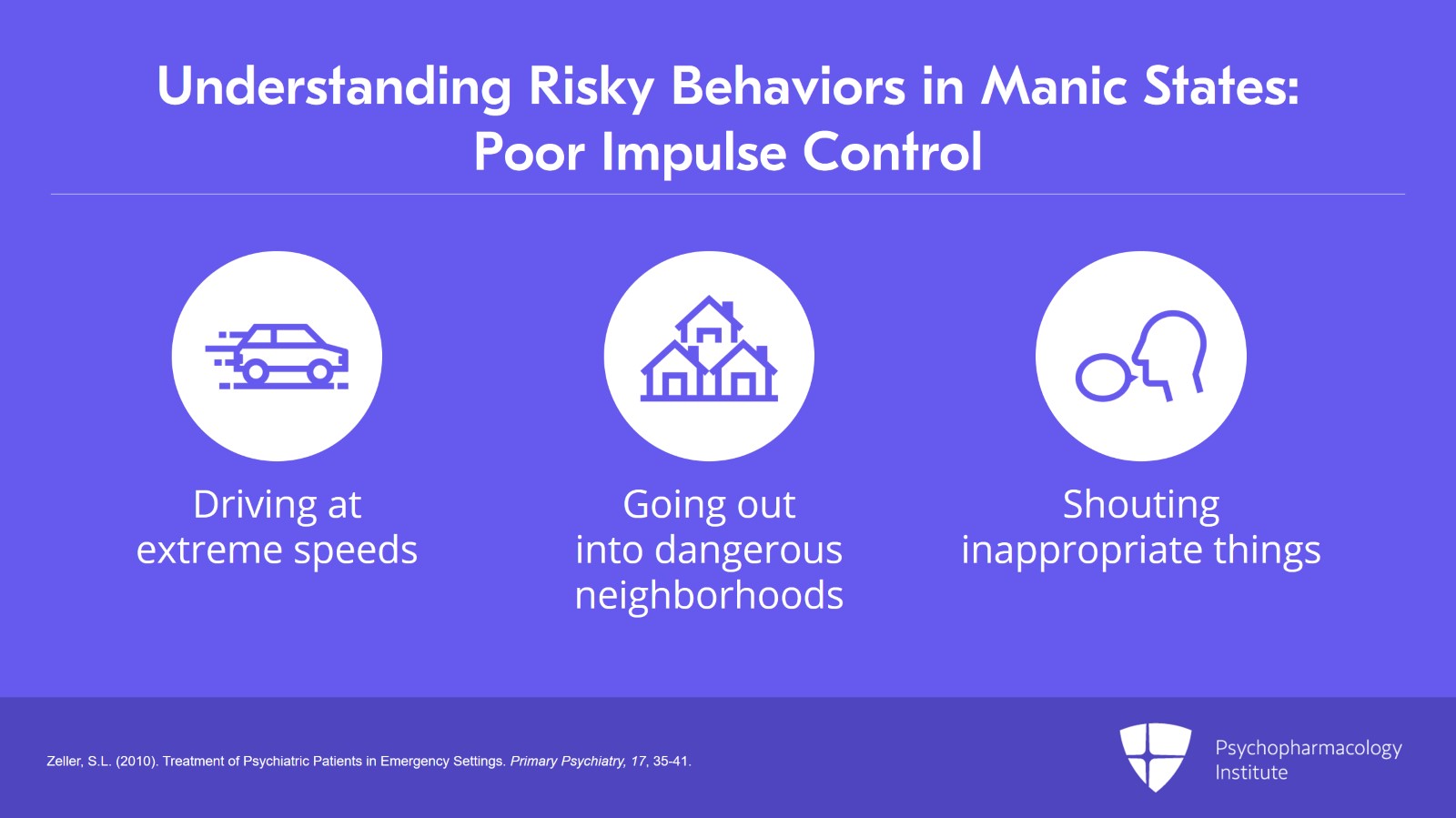
They can really have poor impulse control. I’ve seen, unfortunately, very, very risky behavior. I have seen in my clinical career so many cases of people who were brought in after doing something that the average person wouldn't do, like get in a car and drive 800 miles in one direction in the middle of the night for no reason with no destination and just seeing how fast they could go the whole way, going out and going into dangerous neighborhoods and shouting inappropriate things or acting in an unusual way, putting themselves really in danger.
References:
  • Zeller, S.L. (2010). Treatment of Psychiatric Patients in Emergency Settings. Primary Psychiatry, 17, 35-41.

Slide 10 of 22

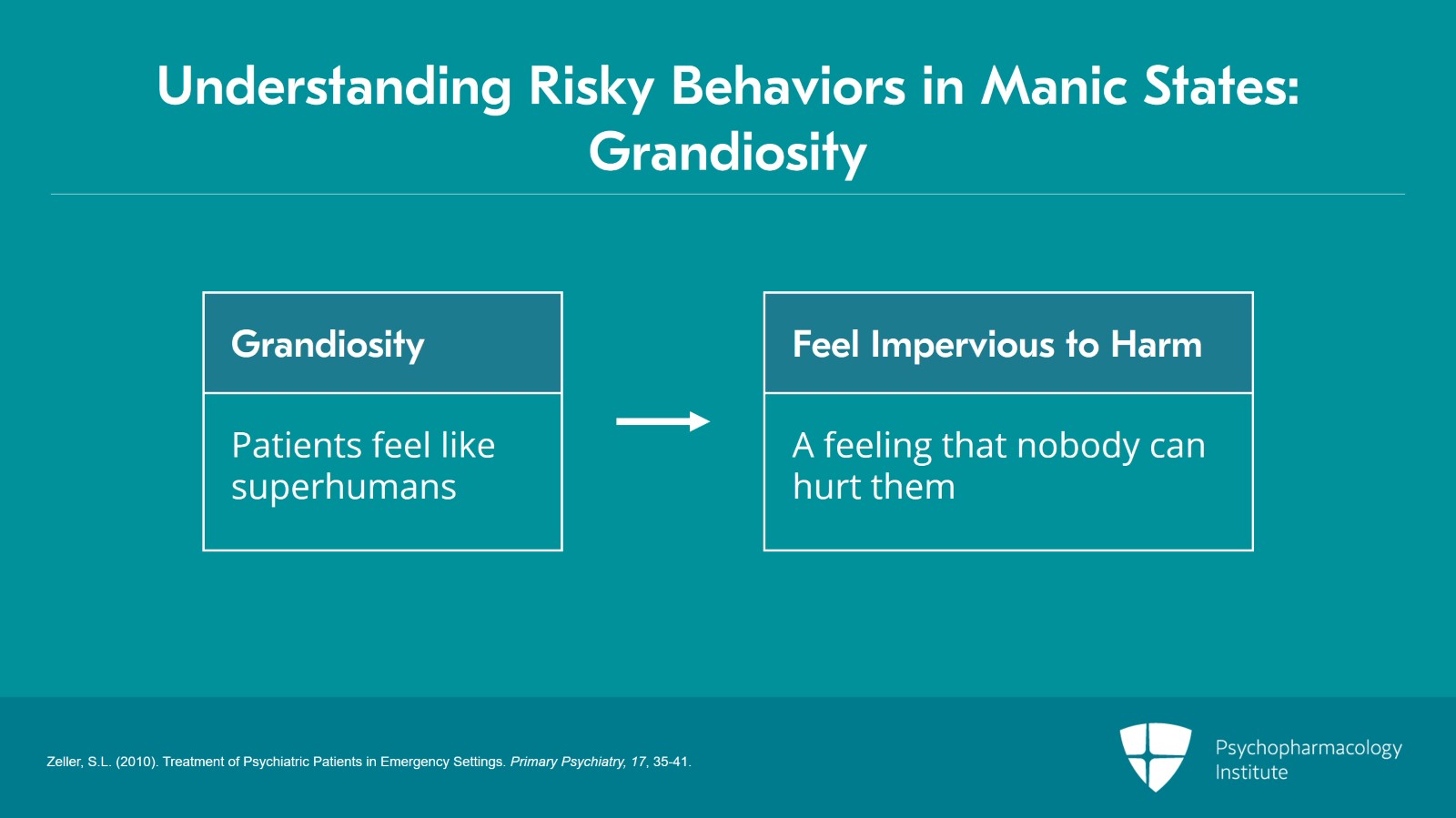
And there's a kind of a grandiosity that you see where people will feel like they are superhuman and they're impervious to harm and so why not walk into this dangerous neighborhood and start shouting insults at everybody you pass because nobody can hurt us. Part of that grandiosity really puts people in danger, and we need to recognize that when we're doing a risk assessment.
References:
  • Zeller, S.L. (2010). Treatment of Psychiatric Patients in Emergency Settings. Primary Psychiatry, 17, 35-41.
Free Files
Success!
Check your inbox, we sent you all the materials there.
Slide 11 of 22

At that same time, recognize that, of the serious mental illnesses, bipolar I disorder, often has people who are very high functioning when they're not cycling into mania or serious depression. And in fact, we know that there are celebrities and, and big corporate CEOs who have bipolar disorder, and when they are not in one of their, high cycle stages and they're really at baseline and doing really well, they can be super high functioning.
References:
  • Zeller, S.L. (2010). Treatment of Psychiatric Patients in Emergency Settings. Primary Psychiatry, 17, 35-41.

Slide 12 of 22

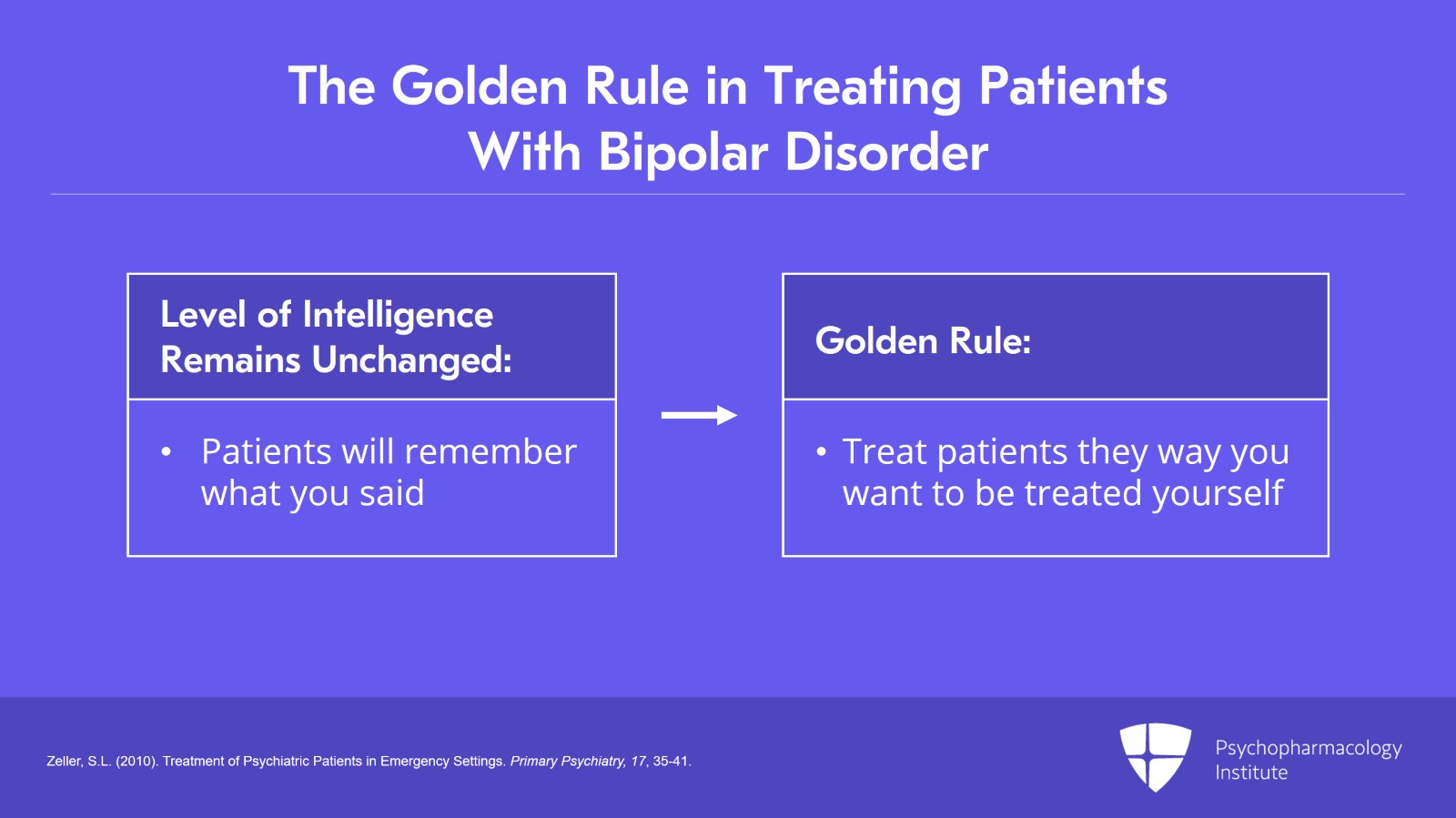
And what we found when you talk to people when they're in mania, they often really remember it and they still have that level of intelligence that they have when they're not acute and they often really remember things when they're in remission. So, it's important, to work with them with that in mind, and recognize that. Don't say anything goofy or something that you think, oh, they won't remember it, because look at their condition now. They're probably going to remember it and they'll remember that it was you that said it. So, treat them just the way you would want to be treated yourself. Do the Golden Rule, basically.
References:
  • Zeller, S.L. (2010). Treatment of Psychiatric Patients in Emergency Settings. Primary Psychiatry, 17, 35-41.
Free Files
Success!
Check your inbox, we sent you all the materials there.
Slide 13 of 22

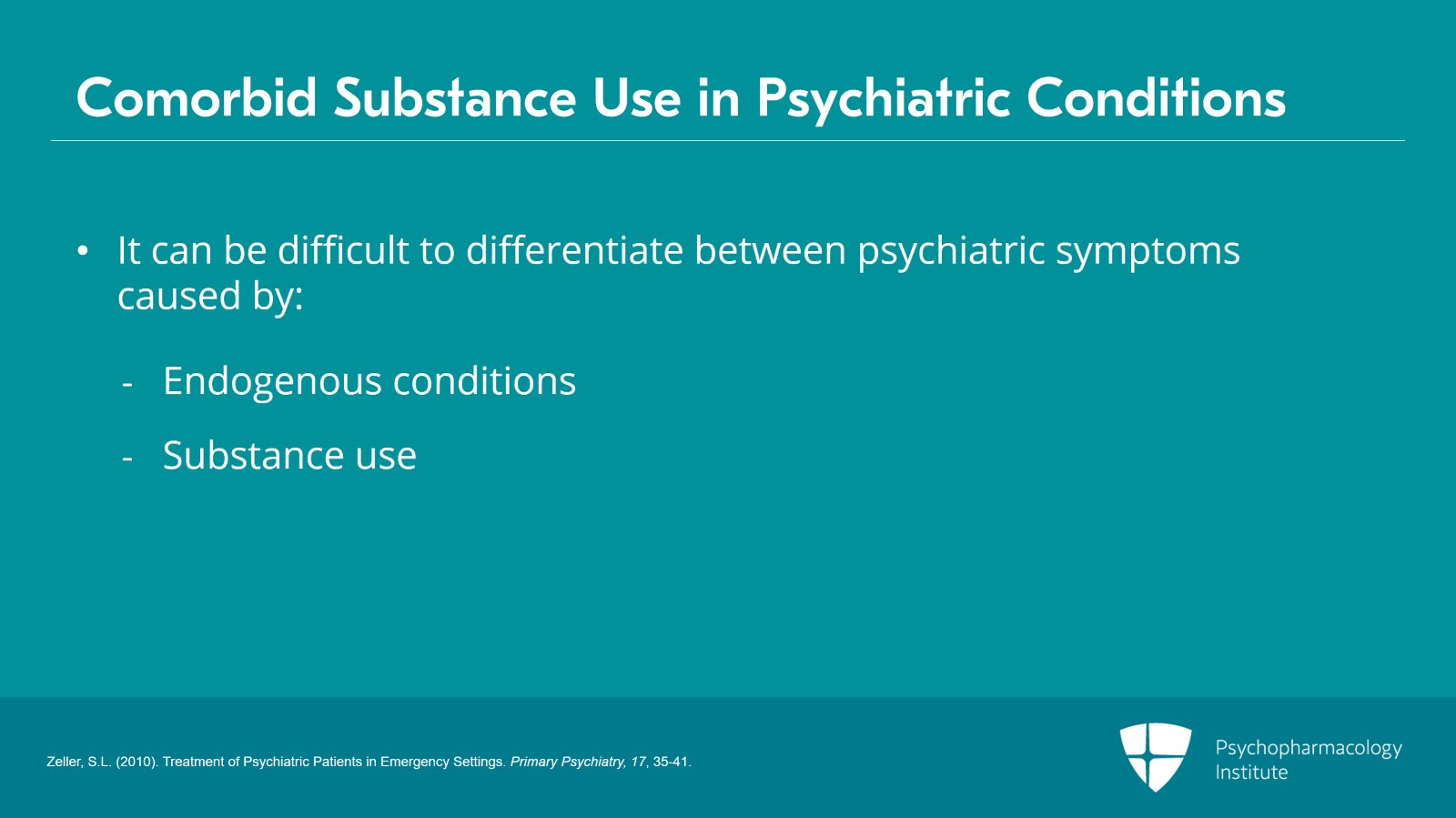
We move on to comorbid substance abuse in psychiatric conditions. Sometimes, it can be really hard to tell the difference between, psychiatric-type symptoms, whether they're caused by an endogenous condition such as schizophrenia or bipolar disorder or that these have been induced by using, let's say, a stimulant like methamphetamine or cocaine, or other medications. 
References:
  • Zeller, S.L. (2010). Treatment of Psychiatric Patients in Emergency Settings. Primary Psychiatry, 17, 35-41.

Slide 14 of 22

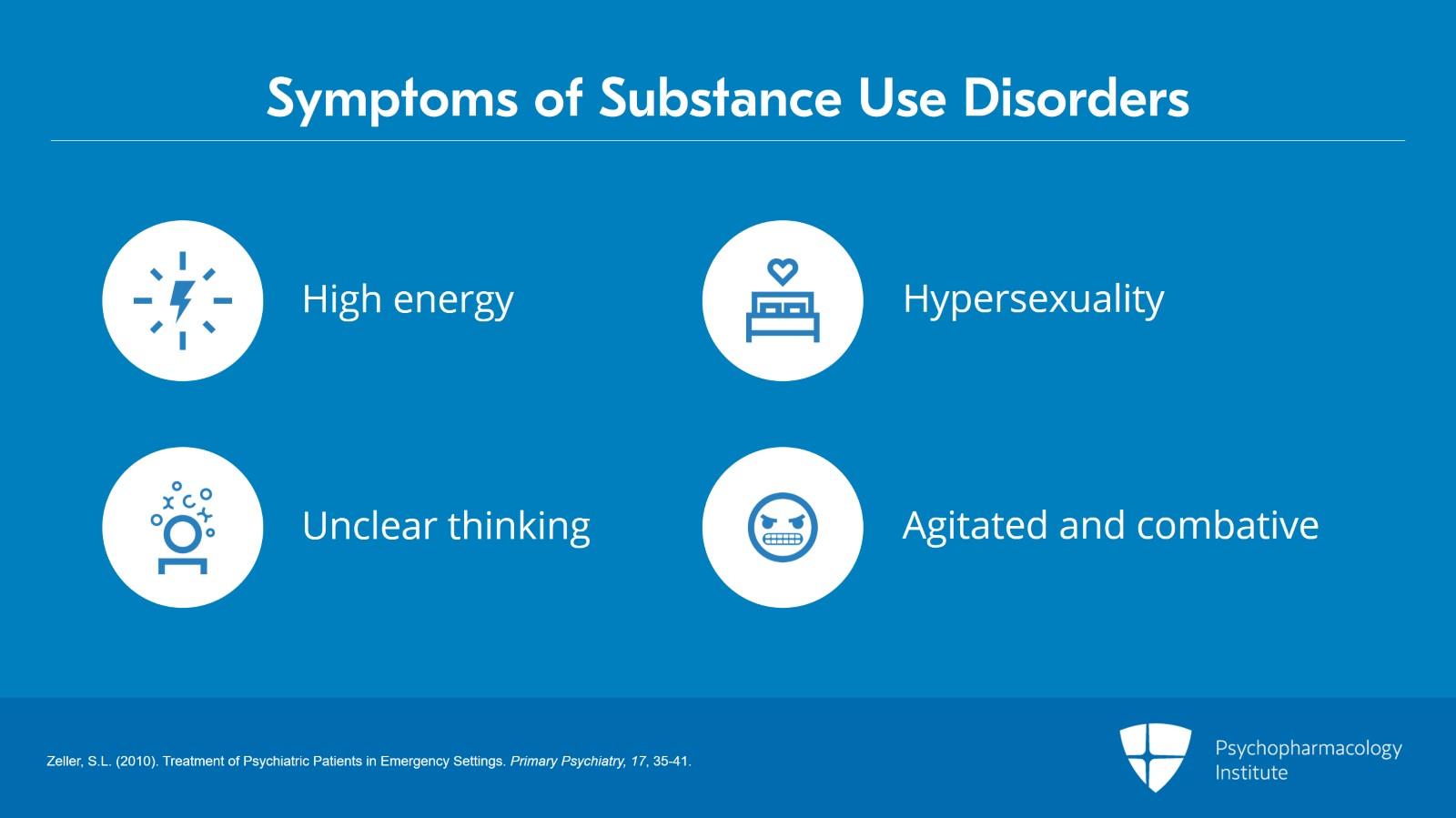
When somebody is having what appear to be symptoms, that might be caused by substance abuse, especially high energy, hypersexuality, behaving in such a way, where it seems like, they're not thinking clearly or if they're agitated, angry, lashing out, combative.
References:
  • Zeller, S.L. (2010). Treatment of Psychiatric Patients in Emergency Settings. Primary Psychiatry, 17, 35-41.
Free Files
Success!
Check your inbox, we sent you all the materials there.
Slide 15 of 22

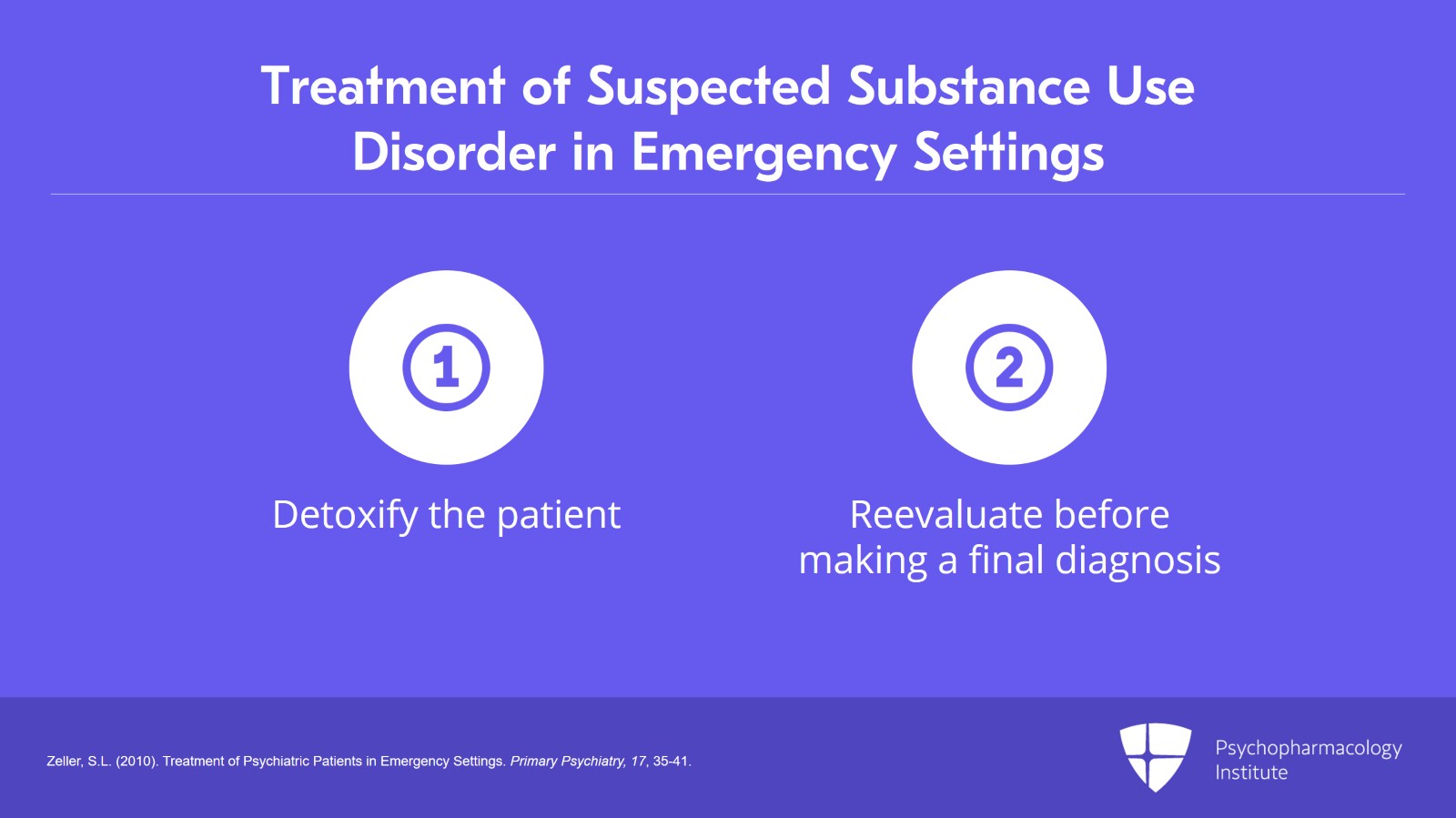
If you think that it may be substance induced, especially if it's stimulant induced, such as by methamphetamine, it can often be really helpful to not try to just say, okay, this is what this is, let's treat it right away, this person has schizophrenia and methamphetamine, you may want to give them some time to detoxify in front of you and then make a reevaluation before coming to a final diagnosis.
References:
  • Zeller, S.L. (2010). Treatment of Psychiatric Patients in Emergency Settings. Primary Psychiatry, 17, 35-41.

Slide 16 of 22

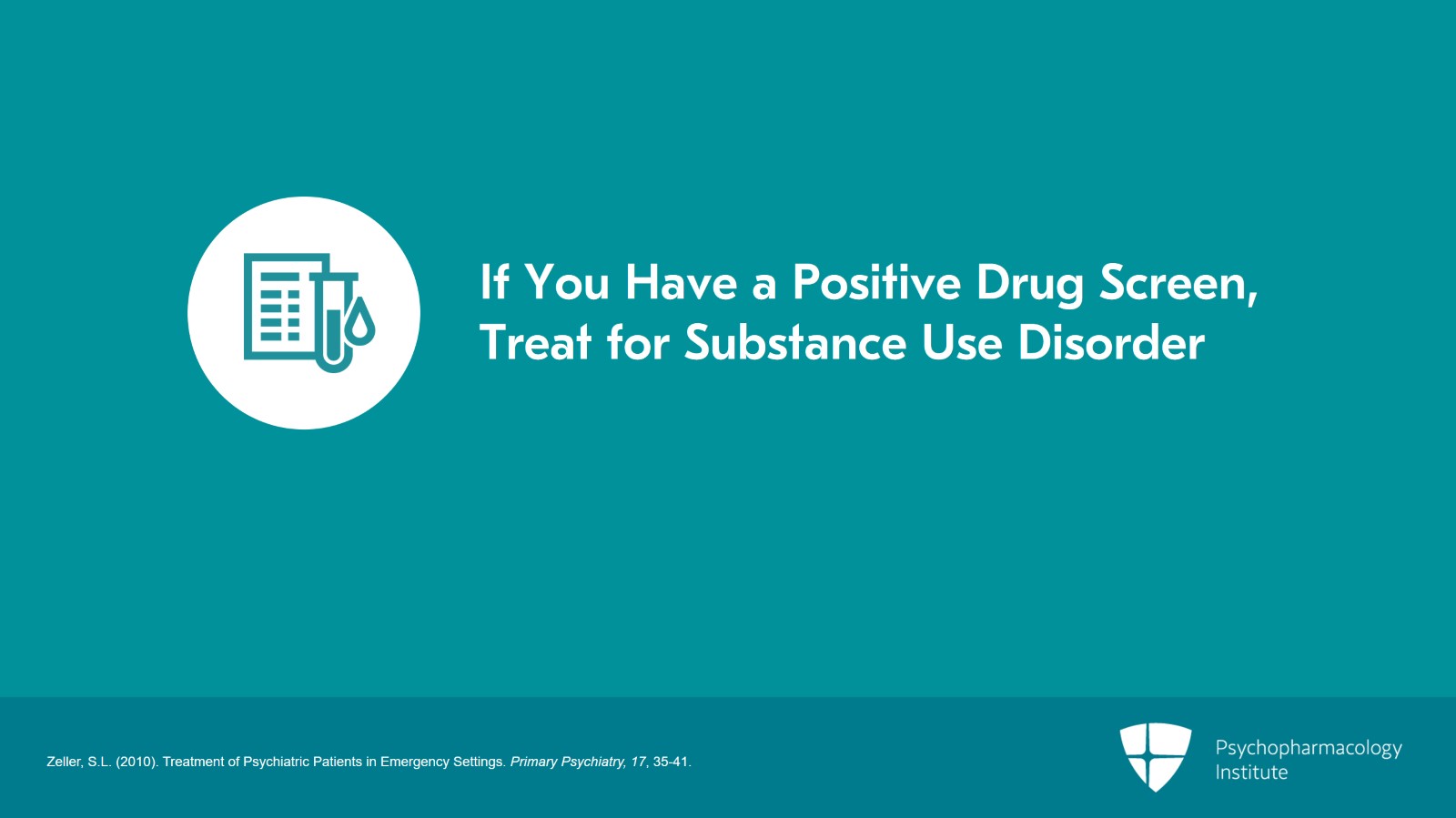
Unless you know something about the patient, I mean, if you’ve got a positive drug screen for one of the stimulants, which tends not to be remaining in the bloodstream all that long, so it's probably pretty acute, you can go ahead with treating with the substance abuse condition in mind.
References:
  • Zeller, S.L. (2010). Treatment of Psychiatric Patients in Emergency Settings. Primary Psychiatry, 17, 35-41.
Free Files
Success!
Check your inbox, we sent you all the materials there.
Slide 17 of 22

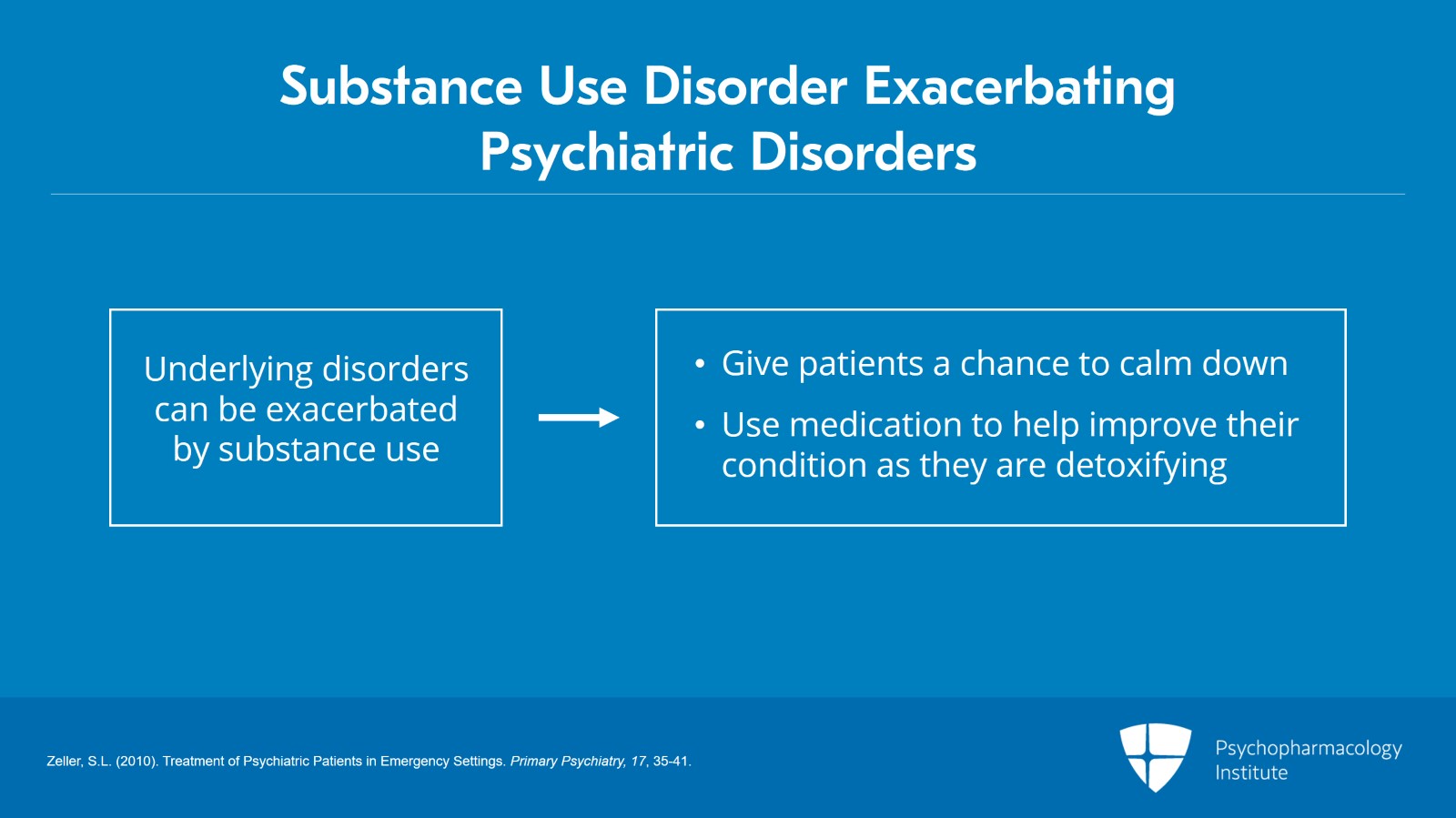
Also remember that a lot of our folks that we see in the emergency department may have an underlying schizophrenia or bipolar disorder that's being exacerbated by substance abuse. And to see what really is going on, sometimes giving a chance for them to come down a bit, sometimes treating a little bit with some medications that will help improve their condition as they're detoxifying will really help us with our overall treatment plan and our decisions on disposition.
References:
  • Zeller, S.L. (2010). Treatment of Psychiatric Patients in Emergency Settings. Primary Psychiatry, 17, 35-41.

Slide 18 of 22

We should really avoid prejudging what's going on with somebody unless we really have a good idea, we've got either lab data or a good history or a good person who's accompanied to give us collateral history to help us know what's going on and confirm what the condition is.
References:
  • Zeller, S.L. (2010). Treatment of Psychiatric Patients in Emergency Settings. Primary Psychiatry, 17, 35-41.
Free Files
Success!
Check your inbox, we sent you all the materials there.
Slide 19 of 22

So overall, our key points are to recognize first that there’s many other behavioral health conditions that can lead to agitation besides just schizophrenia; definitely, acute mania, and certainly very high percentage of agitation in emergency settings is going to be due to substance intoxication, sometimes substance withdrawal.

Slide 20 of 22

Recognize that acutely manic patients often have really poor impulse control, and they can unpredictably become a danger to self or others, at the drop of a hat, without their thinking that that's a problem, because of their high energy, because of their racing thoughts, they can suddenly become dangerous to themselves or others. So, so always keep that in back of your mind.
Free Files
Success!
Check your inbox, we sent you all the materials there.
Slide 21 of 22

Make sure that when you're working with somebody like this that, you're considering that even though they do not seem to be agitated, aggressive, or violent at this point, it could happen at any moment, and make sure the staff and everybody else who are around are aware of that. And finally, it can be difficult to tease out symptoms of psychiatric illness when a person is acutely having substance intoxication or in a withdrawal state. So, if it's possible to give them a little bit of time to see if there's some detoxification, if that improves their condition. That can be useful, and that can help avoid a lot of problems.

Slide 22 of 22

Free Files
Success!
Check your inbox, we sent you all the materials there.
Learning Objectives:

After completing this activity, the learner will be able to:

  • Identify and differentiate between various psychiatric diagnoses in agitated patients.
  • Prioritize nonpharmacologic approaches for managing agitation.
  • Recognize the preferred pharmacological agents used for managing agitation.

Original Release Date: March 1, 2024

Expiration Date: March 1, 2027

Expert: Scott Zeller, M.D.

Medical Editor: Radwa Hanafy, M.D. 

Relevant Financial Disclosures: 

Scott Zeller, M.D. declares the following interests:

- BioXcel:  Consultant

All of the relevant financial relationships listed above have been mitigated by Medical Academy and the Psychopharmacology Institute.

Contact Information: For questions regarding the content or access to this activity, contact us at support@psychopharmacologyinstitute.com

Instructions for Participation and Credit:

Participants must complete the activity online during the valid credit period that is noted above.

Follow these steps to earn CME credit:

  1. View the required educational content provided on this course page.

  2. Complete the Post Activity Evaluation for providing the necessary feedback for continuing accreditation purposes and for the development of future activities. NOTE: Completing the Post Activity Evaluation after the quiz is required to receive the earned credit.

  3. Download your certificate.

Accreditation Statement

This activity has been planned and implemented in accordance with the accreditation requirements and policies of the Accreditation Council for Continuing Medical Education through the joint providership of Medical Academy LLC and the Psychopharmacology Institute. Medical Academy is accredited by the ACCME to provide continuing medical education for physicians.

Credit Designation Statement

Medical Academy designates this enduring activity for a maximum of 1.25 AMA PRA Category 1 credit(s)™. Physicians should claim only the credit commensurate with the extent of their participation in the activity.

Free Files
Success!
Check your inbox, we sent you all the materials there.
Continue in the website
Instant access modal

Become a Bronze, Silver, Gold, Bronze extended, Silver extended or Gold extended Member.

2025–26 Psychopharmacology CME Program

Unlock up to 155 CME Credits, including 40 SA CME Credits.