Close Banner
Section Free  - Video Lectures

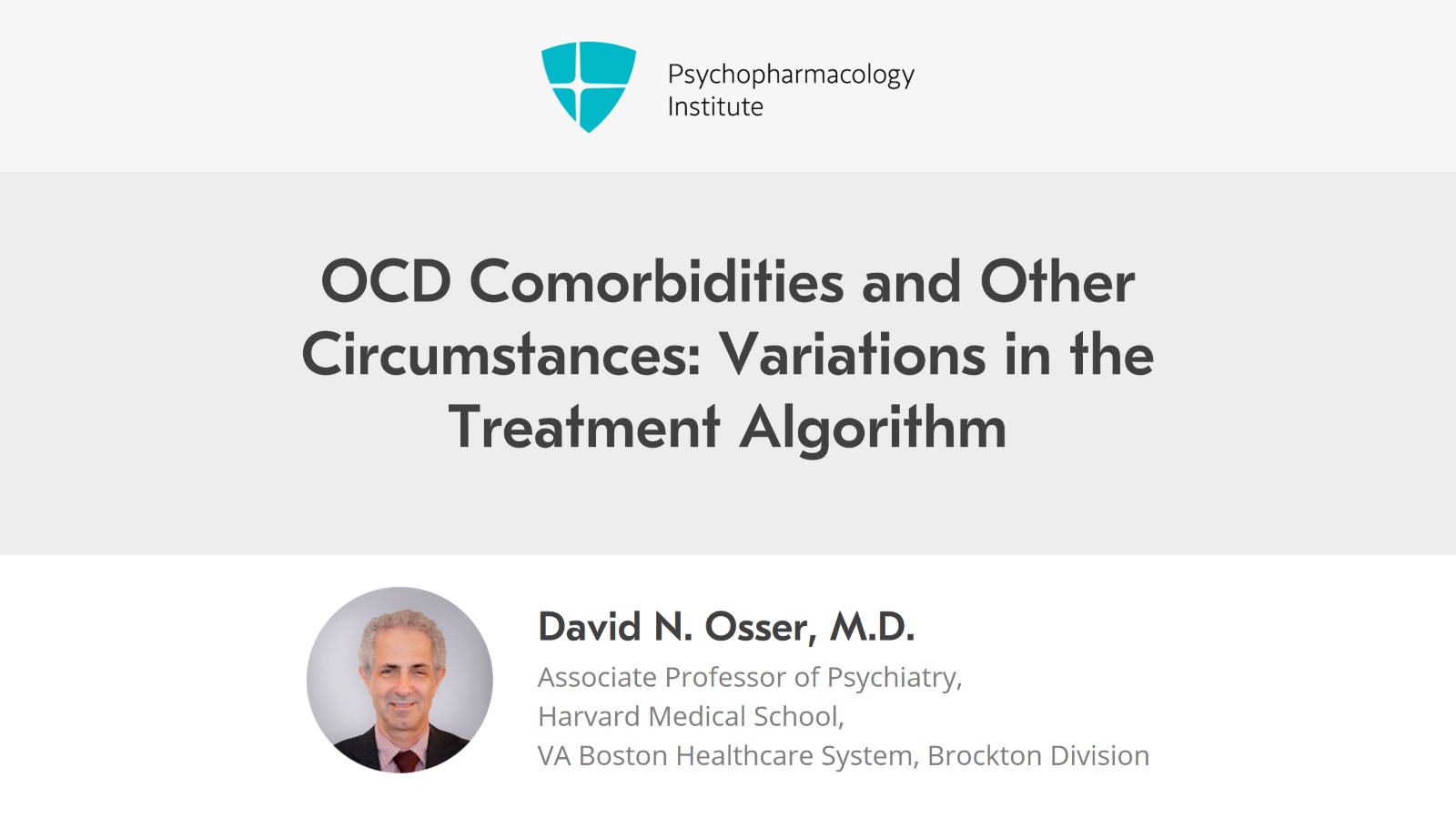
02. OCD Comorbidities and Other Circumstances: Variations in the Treatment Algorithm

Published on September 1, 2022 Certification expiration date: September 1, 2028

David Osser, M.D.

Associate Professor of Psychiatry - Harvard Medical School

Key Points

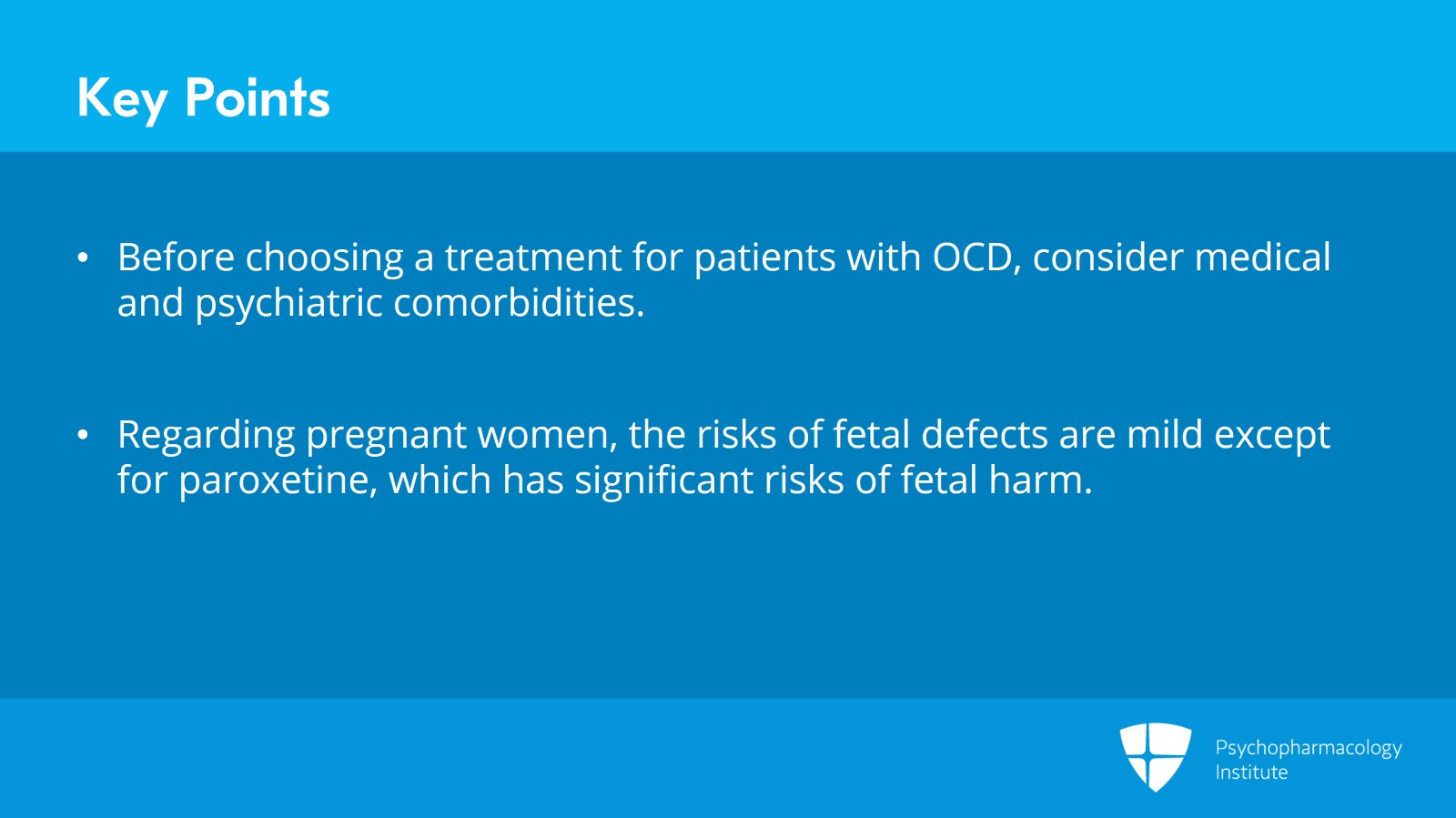
  • Before choosing a treatment for patients with OCD, consider medical and psychiatric comorbidities.
  • Regarding pregnant women, the risks of fetal defects are mild except for paroxetine, which has significant risks of fetal harm.
  • Generally, the benefits of SSRI treatment are worth the risks.
  • It is a collaborative decision with the prescriber, patient, and family.
  • Regarding bipolar disorder as a comorbidity, antidepressant use is not recommended.
  • Instead, CBT is recommended.

Free Downloads for Offline Access

  • Free Download Presentation File (PPTX)
  • Free Download Video (MP4)
  • Free Download Audio File (MP3)

Slides and Transcript
Slide 1 of 17

Welcome back those who are auditing this algorithm for the pharmacotherapy of OCD. And this is video 2 of that algorithm and it’s about comorbidities and other circumstances that could lead to variations in the treatment algorithm.

Slide 2 of 17

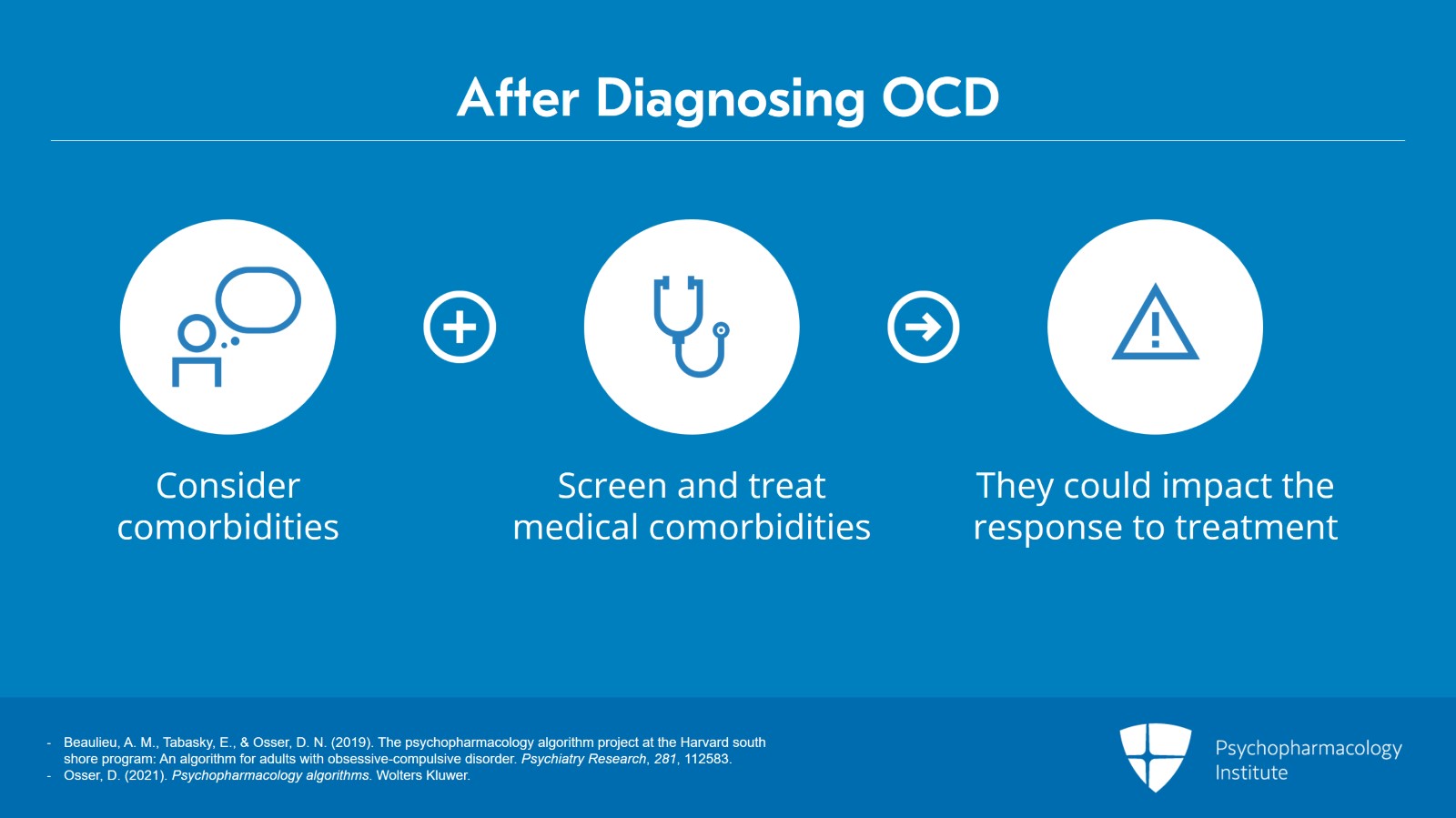
Now, I haven’t presented the algorithm in detail as yet but as you proceed to the second step of the algorithm after diagnosing OCD you do also need to consider what comorbidities that might be present could affect the choices in the algorithm and could lead to deviations from the standard recommendations for the case that has no comorbidities.   So screen for and treat medical comorbidities to start with. There may be some that could significantly impact the capacity to respond to treatment.
References:
  • Beaulieu, A. M., Tabasky, E., & Osser, D. N. (2019). The psychopharmacology algorithm project at the Harvard south shore program: An algorithm for adults with obsessive-compulsive disorder. Psychiatry Research, 281, 112583. 
  • Osser, D. (2021). Psychopharmacology algorithms. Wolters Kluwer.
Free Files
Success!
Check your inbox, we sent you all the materials there.
Slide 3 of 17

A few that I’m going to discuss in more detail though start with women of childbearing potential which isn’t a comorbidity. It’s really like a circumstance and pregnant women are included in this category. So, they have some special considerations because late exposure to SSRIs may increase risks of neonatal complications including premature delivery, decreased body weight of the infants, and persistent pulmonary hypertension.
References:
  • Reefhuis, J., Devine, O., Friedman, J. M., Louik, C., & Honein, M. A. (2015). Specific SSRIs and birth defects: Bayesian analysis to interpret new data in the context of previous reports. BMJ, h3190.

Slide 4 of 17

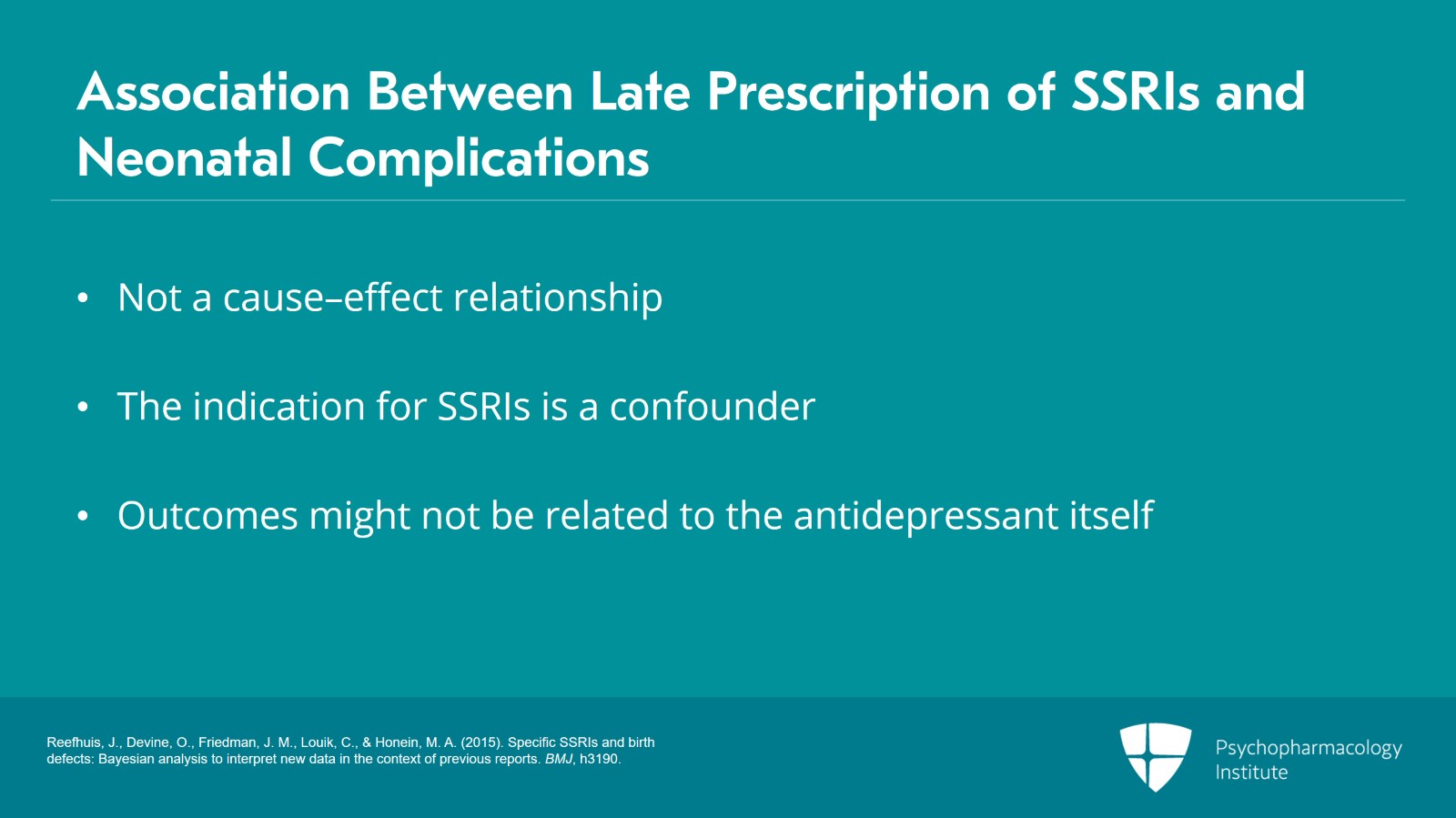
So this is an association that has been found with late prescription of SSRIs and these outcomes. But that doesn’t mean it’s a cause-and-effect relationship. There’s confounding by indication. In other words, the reason that people were prescribed an antidepressant may be the reason why they’re at higher risk for these outcomes and not the use of the antidepressant itself.
References:
  • Reefhuis, J., Devine, O., Friedman, J. M., Louik, C., & Honein, M. A. (2015). Specific SSRIs and birth defects: Bayesian analysis to interpret new data in the context of previous reports. BMJ, h3190.
Free Files
Success!
Check your inbox, we sent you all the materials there.
Slide 5 of 17

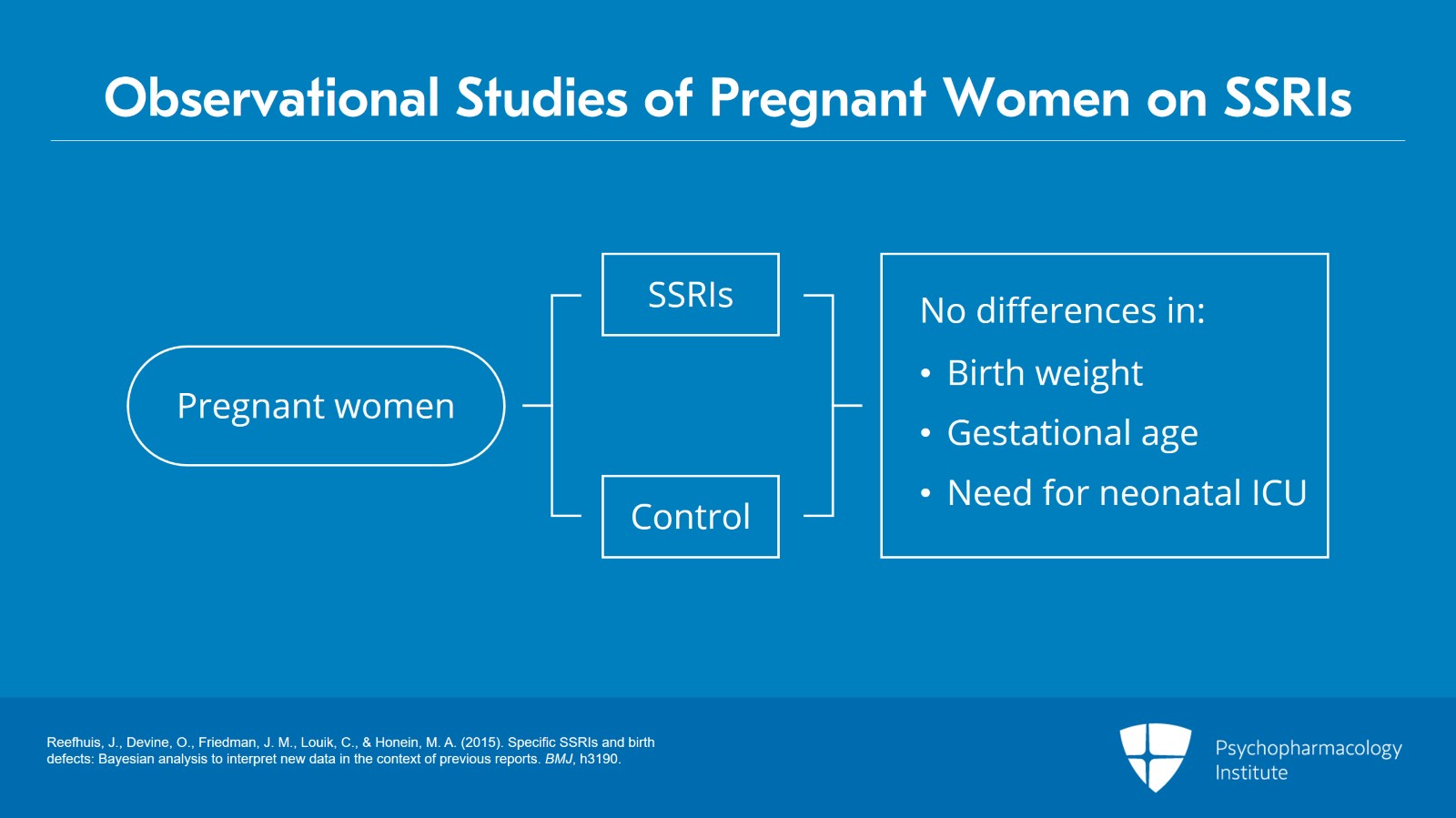
Now in these various observational studies that are done in pregnant women, they usually try to have a control group that they compare to the pregnant women getting the medication to see if there are differences in their outcomes versus the ones getting the SSRIs. We have to go by these observational studies as the best that we have and they are confounded by indication. There were no differences in neonatal outcomes including birth weight, gestational age, or need for a neonatal ICU admission though in women treated with pharmacotherapy. So at least, some of the major concerns associated with medication in pregnancy did not seem to occur with SSRIs.
References:
  • Reefhuis, J., Devine, O., Friedman, J. M., Louik, C., & Honein, M. A. (2015). Specific SSRIs and birth defects: Bayesian analysis to interpret new data in the context of previous reports. BMJ, h3190.5

Slide 6 of 17

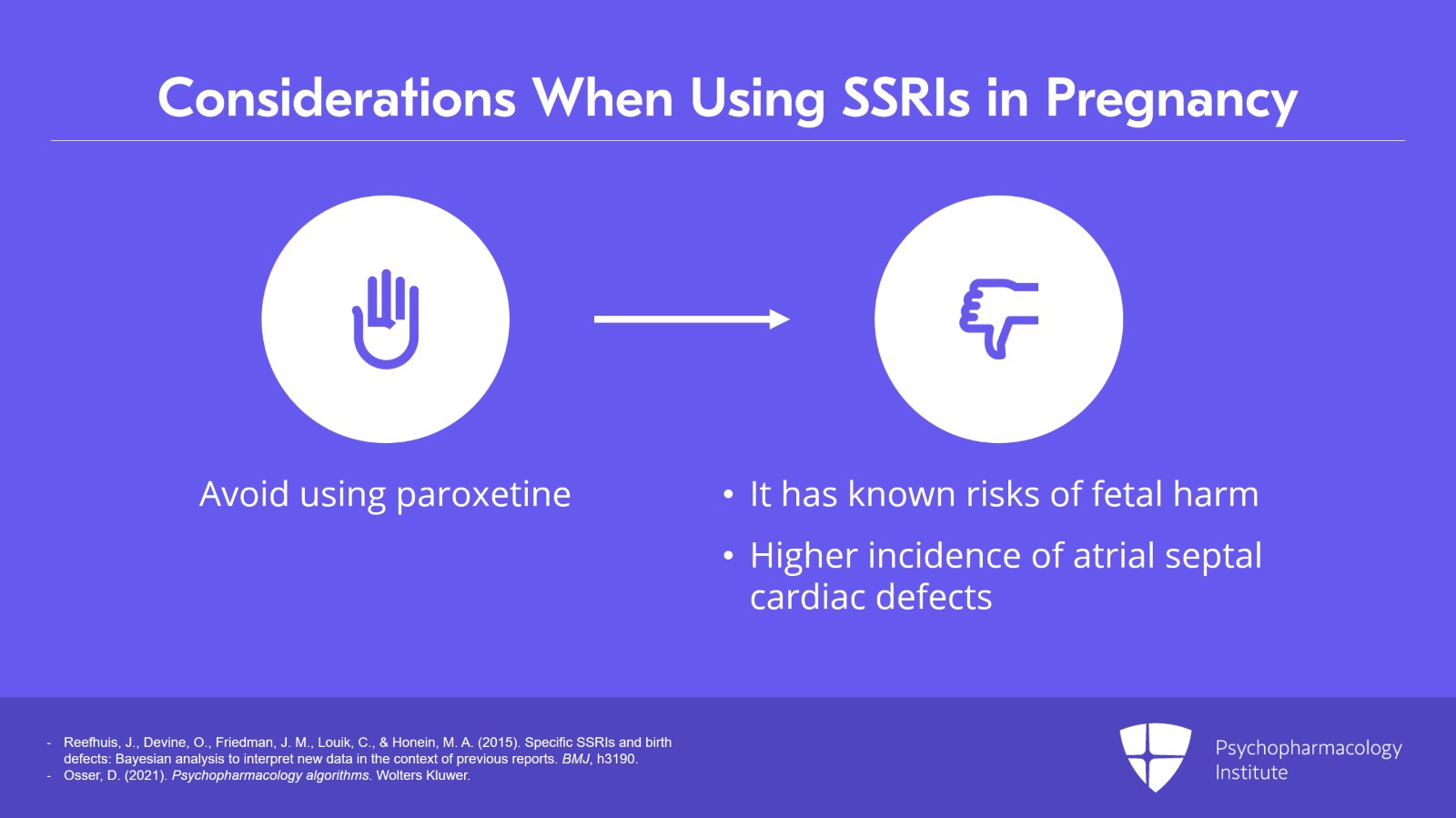
We would though avoid paroxetine. It has a D rating in the old rating system that the FDA used for pregnancy risk. D used to mean that there are some known risks, significant risks of fetal harm. And with paroxetine, the fetal harm was atrial septal cardiac defects being found at higher incidence than expected.
References:
  • Reefhuis, J., Devine, O., Friedman, J. M., Louik, C., & Honein, M. A. (2015). Specific SSRIs and birth defects: Bayesian analysis to interpret new data in the context of previous reports. BMJ, h3190.
  • Osser, D. (2021). Psychopharmacology algorithms. Wolters Kluwer.
Free Files
Success!
Check your inbox, we sent you all the materials there.
Slide 7 of 17

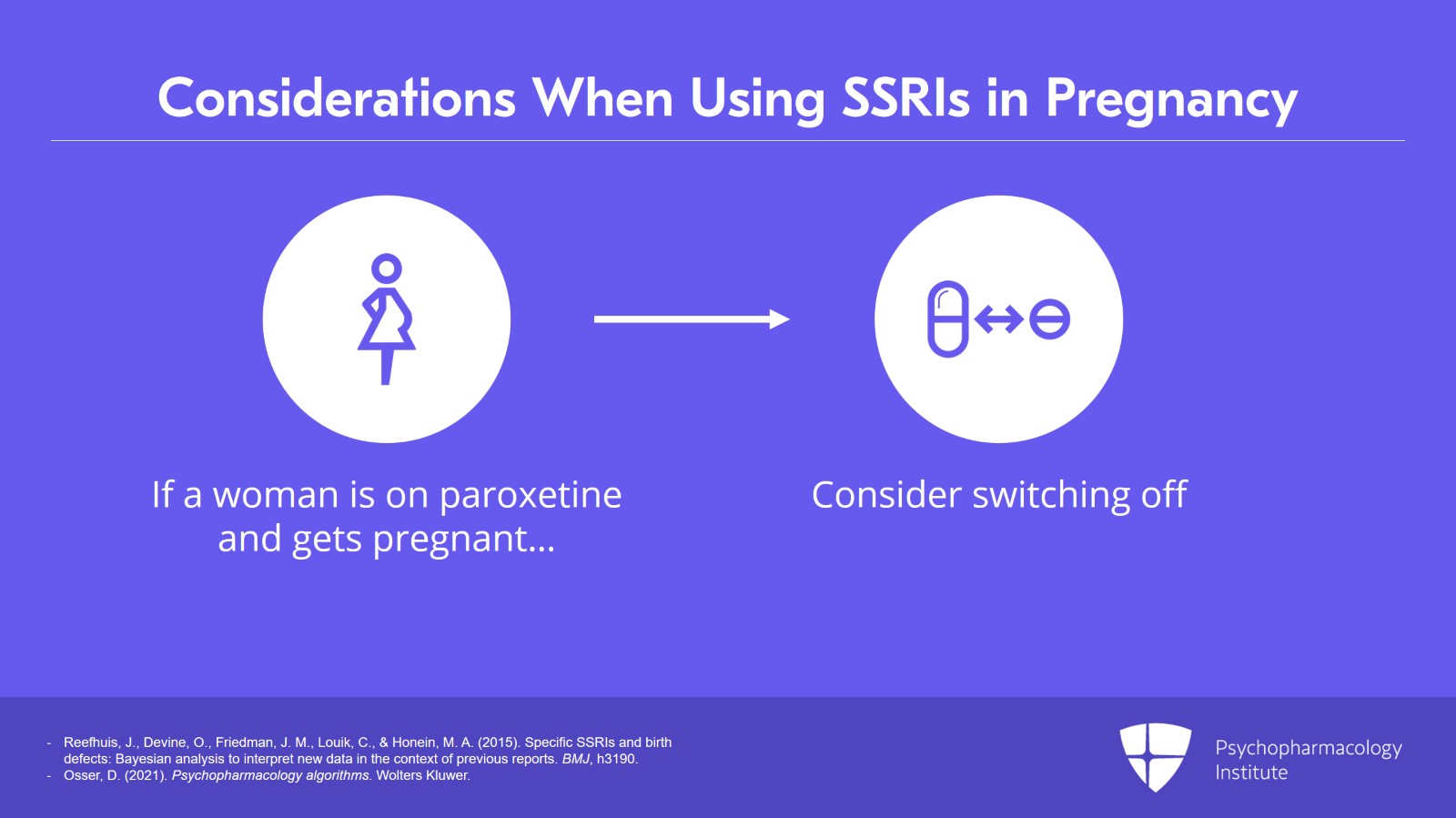
So we think you should not use paroxetine in pregnancy or if a woman is on it, happens to be on it and gets pregnant, we would consider switching off it to something that might be safer.
References:
  • Reefhuis, J., Devine, O., Friedman, J. M., Louik, C., & Honein, M. A. (2015). Specific SSRIs and birth defects: Bayesian analysis to interpret new data in the context of previous reports. BMJ, h3190.
  • Osser, D. (2021). Psychopharmacology algorithms. Wolters Kluwer.

Slide 8 of 17

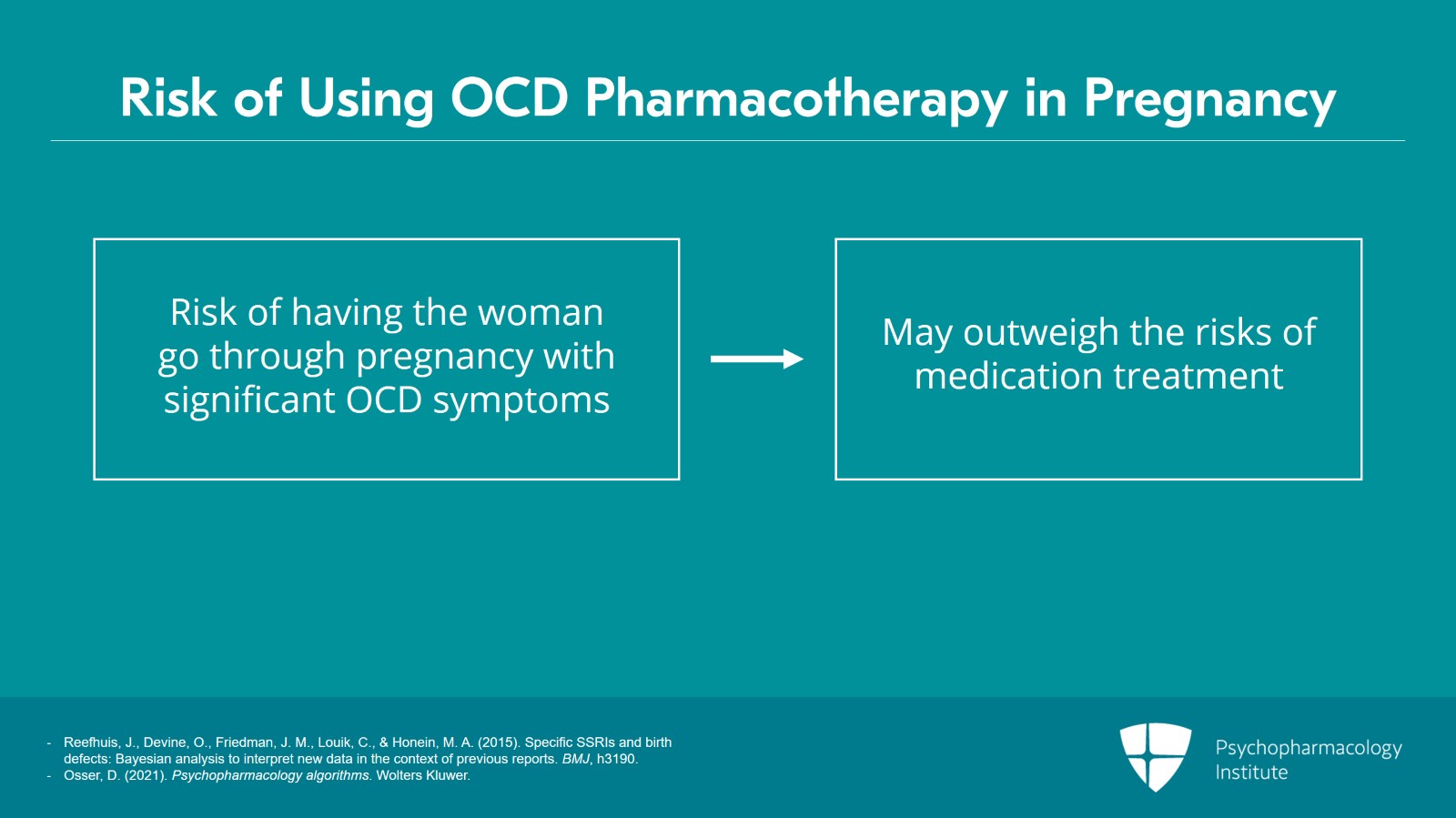
Overall though, the risk to the newborn of untreated OCD and having the pregnant woman go through pregnancy while exhibiting significant OCD symptoms may outweigh the risks of medication treatment of that OCD.
References:
  • Reefhuis, J., Devine, O., Friedman, J. M., Louik, C., & Honein, M. A. (2015). Specific SSRIs and birth defects: Bayesian analysis to interpret new data in the context of previous reports. BMJ, h3190.
  • Osser, D. (2021). Psychopharmacology algorithms. Wolters Kluwer.
Free Files
Success!
Check your inbox, we sent you all the materials there.
Slide 9 of 17

That’s a tough decision to make. It certainly should be made in collaboration with the patient and significant others of the patient as well as the prescriber.
References:
  • Reefhuis, J., Devine, O., Friedman, J. M., Louik, C., & Honein, M. A. (2015). Specific SSRIs and birth defects: Bayesian analysis to interpret new data in the context of previous reports. BMJ, h3190.
  • Osser, D. (2021). Psychopharmacology algorithms. Wolters Kluwer.

Slide 10 of 17

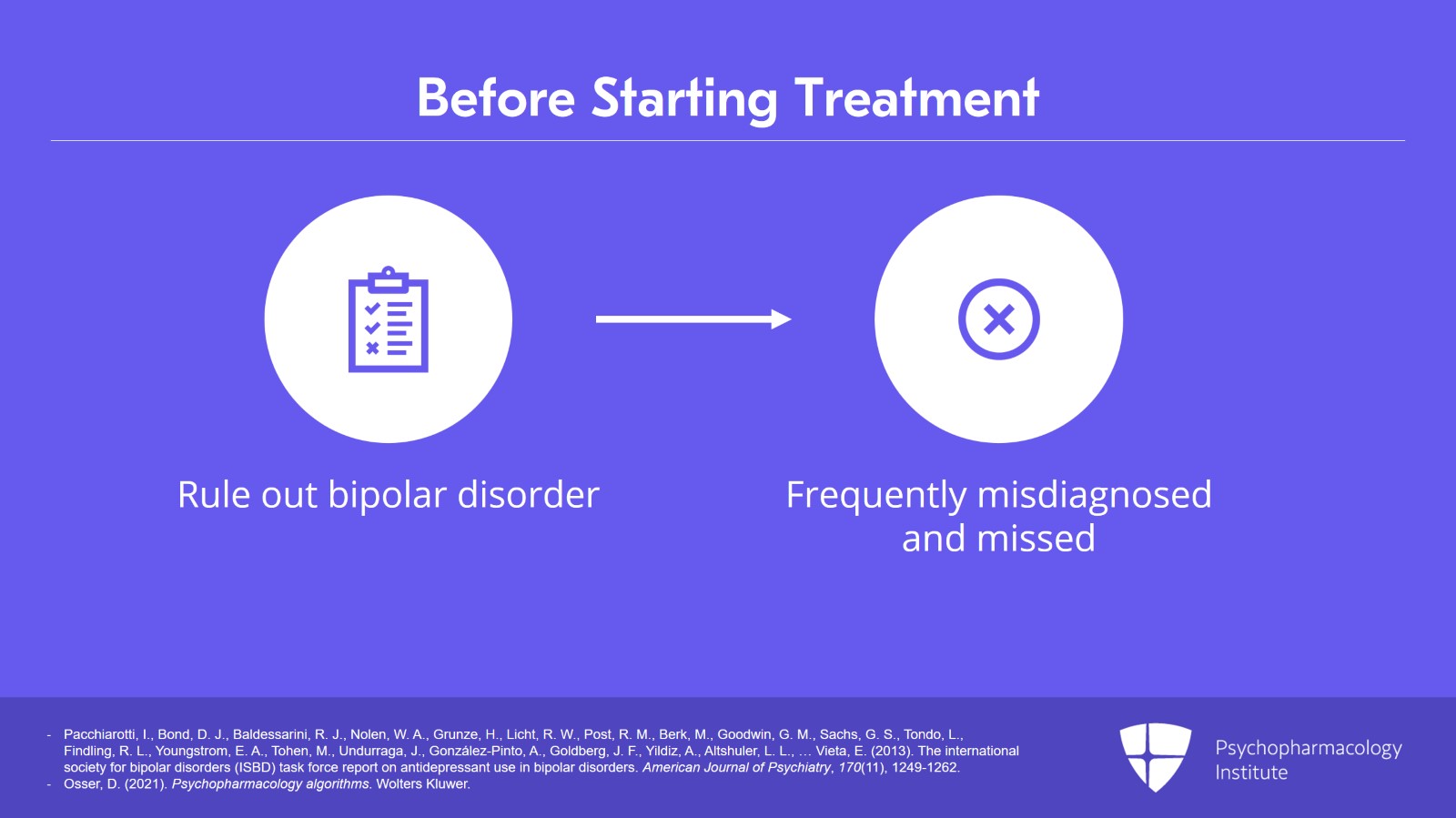
A psychiatric comorbidity that I want you to identify immediately before starting treatment is bipolar disorder, a disorder which by the way is frequently misdiagnosed and missed. Especially when people are having depressions, there’s a failure to recognize that there may also be hypomanias going on and these are really bipolar depressions.
References:
  • Pacchiarotti, I., Bond, D. J., Baldessarini, R. J., Nolen, W. A., Grunze, H., Licht, R. W., Post, R. M., Berk, M., Goodwin, G. M., Sachs, G. S., Tondo, L., Findling, R. L., Youngstrom, E. A., Tohen, M., Undurraga, J., González-Pinto, A., Goldberg, J. F., Yildiz, A., Altshuler, L. L., … Vieta, E. (2013). The international society for bipolar disorders (ISBD) task force report on antidepressant use in bipolar disorders. American Journal of Psychiatry, 170(11), 1249-1262.
  • Osser, D. (2021). Psychopharmacology algorithms. Wolters Kluwer.
Free Files
Success!
Check your inbox, we sent you all the materials there.
Slide 11 of 17

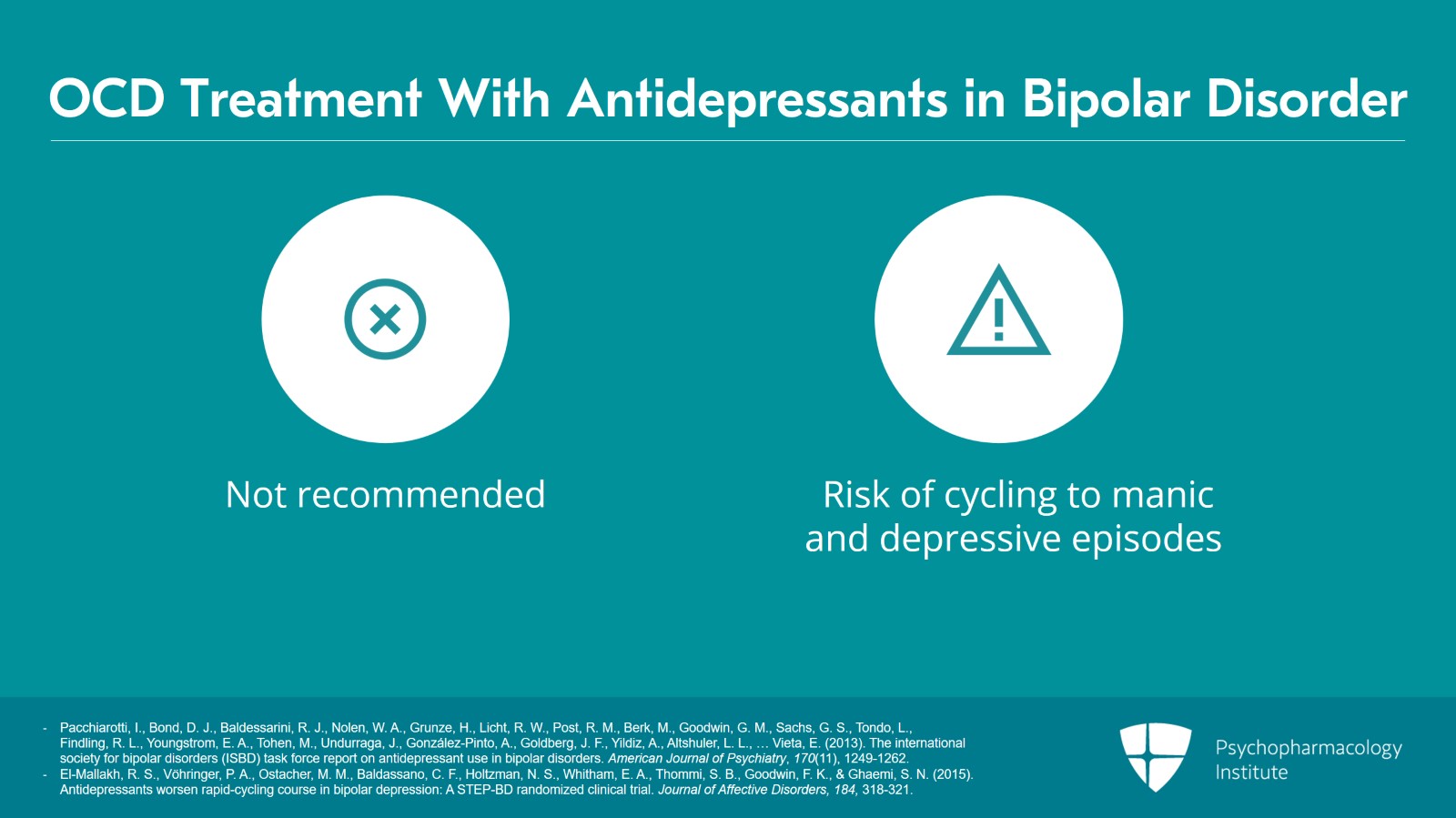
So carefully diagnose whether there’s bipolar disorder before commencing treatment for OCD with an antidepressant because we don’t recommend antidepressants if you have bipolar disorder. They may shift euthymic patients with bipolar disorder toward more manic episodes especially in the second six months of treatment even if they’re also on a mood stabilizer. And also, there are recurring depressions in people with bipolar. SSRIs may cause more cycling back to depression. So we prefer not to use them even though they’re prominent in the algorithm.
References:
  • Pacchiarotti, I., Bond, D. J., Baldessarini, R. J., Nolen, W. A., Grunze, H., Licht, R. W., Post, R. M., Berk, M., Goodwin, G. M., Sachs, G. S., Tondo, L., Findling, R. L., Youngstrom, E. A., Tohen, M., Undurraga, J., González-Pinto, A., Goldberg, J. F., Yildiz, A., Altshuler, L. L., … Vieta, E. (2013). The international society for bipolar disorders (ISBD) task force report on antidepressant use in bipolar disorders. American Journal of Psychiatry, 170(11), 1249-1262.
  • El-Mallakh, R. S., Vöhringer, P. A., Ostacher, M. M., Baldassano, C. F., Holtzman, N. S., Whitham, E. A., Thommi, S. B., Goodwin, F. K., & Ghaemi, S. N. (2015). Antidepressants worsen rapid-cycling course in bipolar depression: A STEP-BD randomized clinical trial. Journal of Affective Disorders, 184, 318-321.

Slide 12 of 17

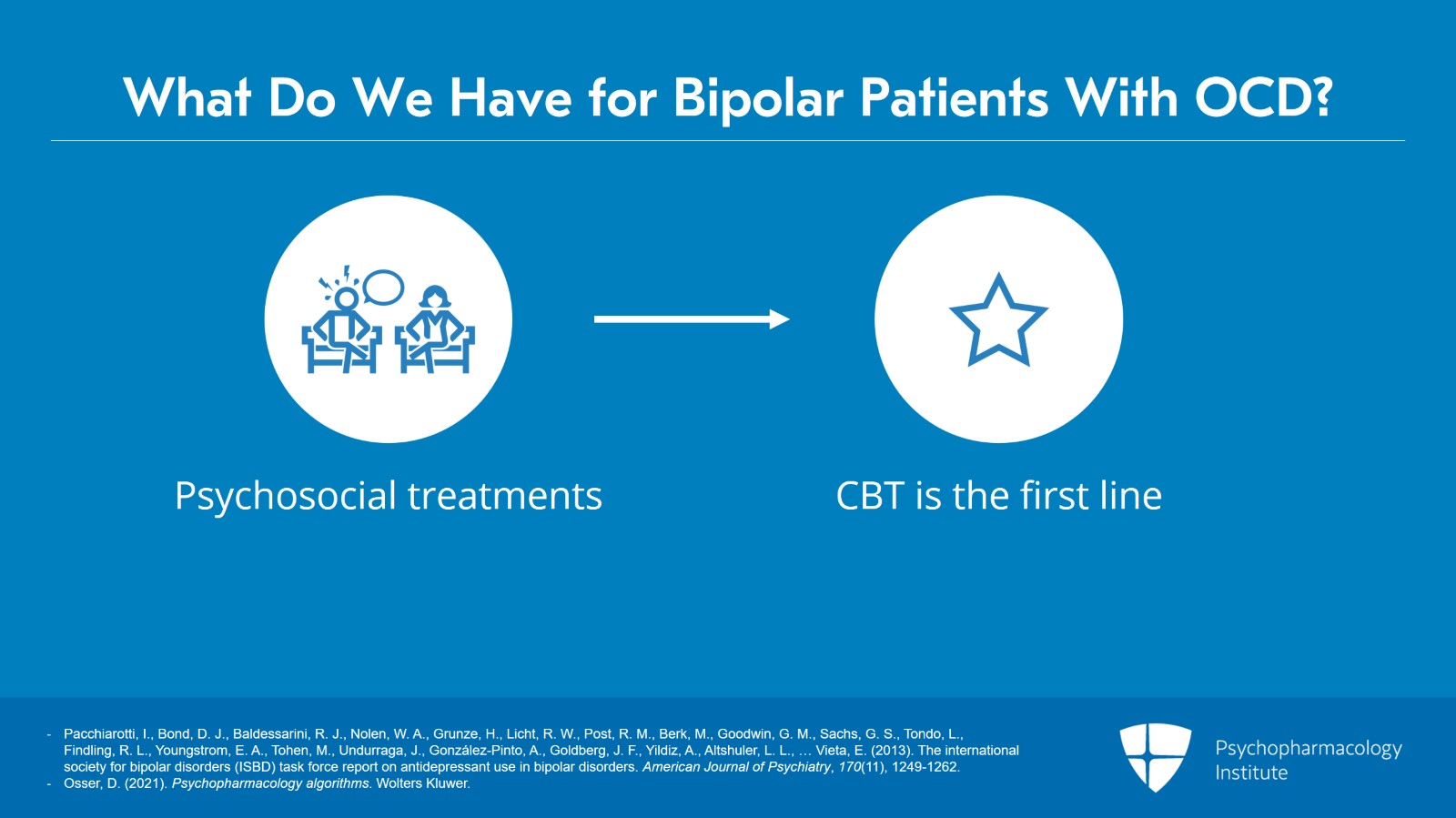
So what do we have for bipolar patients with OCD? Well, what we have is psychosocial treatments, psychotherapy. CBT is well established as effective. I think that would be first line. And we would not use antidepressants.
References:
  • Pacchiarotti, I., Bond, D. J., Baldessarini, R. J., Nolen, W. A., Grunze, H., Licht, R. W., Post, R. M., Berk, M., Goodwin, G. M., Sachs, G. S., Tondo, L., Findling, R. L., Youngstrom, E. A., Tohen, M., Undurraga, J., González-Pinto, A., Goldberg, J. F., Yildiz, A., Altshuler, L. L., … Vieta, E. (2013). The international society for bipolar disorders (ISBD) task force report on antidepressant use in bipolar disorders. American Journal of Psychiatry, 170(11), 1249-1262.
  • Osser, D. (2021). Psychopharmacology algorithms. Wolters Kluwer.
Free Files
Success!
Check your inbox, we sent you all the materials there.
Slide 13 of 17

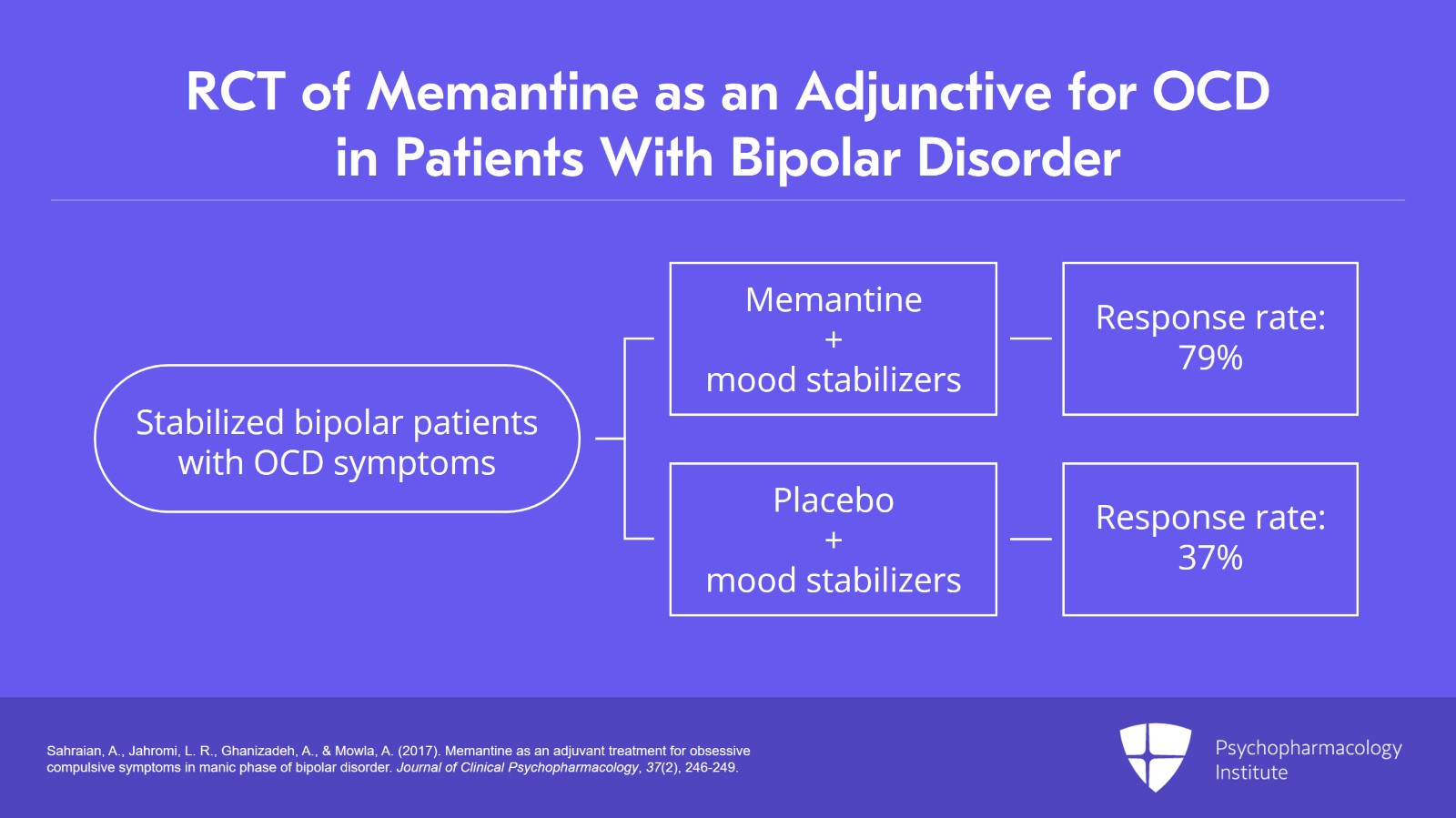
Now as far as what medication you could use, we have one randomized controlled trial with memantine 20 mg a day added to mood stabilizers as an adjunctive agent to the OCD in treating OCD symptoms in manic patients.   They had a response rate of 79% in the memantine group and 37% in the placebo group. There were a few side effects but it was a small study, only 38 patients. So that’s the evidence base that we have for pharmacotherapy of OCD in people with bipolar disorder.
References:
  • Sahraian, A., Jahromi, L. R., Ghanizadeh, A., & Mowla, A. (2017). Memantine as an adjuvant treatment for obsessive compulsive symptoms in manic phase of bipolar disorder. Journal of Clinical Psychopharmacology, 37(2), 246-249.

Slide 14 of 17

So to conclude this second video, the key points that were made, number one, as you prepare to choose treatment for your OCD patient consider various medical and psychiatric comorbidities.   Regarding women who could become pregnant the risks are mild on fetal defects except for paroxetine which has significant risks of fetal harm.
Free Files
Success!
Check your inbox, we sent you all the materials there.
Slide 15 of 17

Generally, the benefits are worth the risks of SSRI treatment but it’s a collaborative decision with the prescriber, the patient, and family.

Slide 16 of 17

And regarding bipolar disorder as a comorbidity, we do not recommend using any antidepressants. Instead, we recommend cognitive behavioral psychotherapy.
Free Files
Success!
Check your inbox, we sent you all the materials there.
Slide 17 of 17

Learning Objectives:

After completing this activity, the learner will be able to:

  • Identify the first-line treatment options for patients with OCD and prescribe them accordingly.
  • Utilize augmentation strategies considering efficacy and side-effect profiles of the different augmenters for OCD treatment.
  • Recognize which patients with OCD can benefit from noninvasive devices and neurosurgical interventions.

Released Date: September 1, 2022

Review Date: September 1, 2025

Expiration Date: September 1, 2028

Expert: David Osser, M.D.

Medical Editor: Paz Badía, M.D.

Relevant Financial Disclosures: 

None of the faculty, planners, and reviewers for this educational activity have relevant financial relationships to disclose during the last 24 months with ineligible companies whose primary business is producing, marketing, selling, re-selling, or distributing healthcare products used by or on patients.

Contact Information: For questions regarding the content or access to this activity, contact us at support@psychopharmacologyinstitute.com

Instructions for Participation and Credit:

Participants must complete the activity online during the valid credit period that is noted above.

Follow these steps to earn CME credit:

  1. View the required educational content provided on this course page.
  2. Complete the Post Activity Evaluation for providing the necessary feedback for continuing accreditation purposes and for the development of future activities. NOTE: Completing the Post Activity Evaluation after the quiz is required to receive the earned credit.
  3. Download your certificate.

Accreditation Statement

This activity has been planned and implemented in accordance with the accreditation requirements and policies of the Accreditation Council for Continuing Medical Education through the joint providership of Medical Academy LLC and the Psychopharmacology Institute. Medical Academy is accredited by the ACCME to provide continuing medical education for physicians.

Credit Designation Statement

Medical Academy designates this enduring activity for a maximum of 1.25 AMA PRA Category 1 credit(s)™. Physicians should claim only the credit commensurate with the extent of their participation in the activity.

Free Files
Success!
Check your inbox, we sent you all the materials there.
Continue in the website
Instant access modal

Become a Bronze, Silver, Gold, Bronze extended, Silver extended or Gold extended Member.

2025–26 Psychopharmacology CME Program

Unlock up to 155 CME Credits, including 40 SA CME Credits.