Close Banner
Section Free  - Video Lectures

09. Nonpharmacologic Therapies for Fibromyalgia

Published on July 1, 2023 Certification expiration date: July 1, 2026

Daniel J. Clauw, M.D.

Professor of anesthesiology & Psychiatry at the University of Michigan - Georgetown University

Key Points

  • There has been a dramatic increase in how effective nonpharmacologic therapies are thought to be.
  • Nonpharmacologic therapies should be seen as integrative therapies.
  • As you incorporate nonpharmacologic therapies into the care of patients with chronic pain, they will become easier to treat.

Free Downloads for Offline Access

  • Free Download Presentation File (PPTX)
  • Free Download Audio File (MP3)
  • Free Download Video (MP4)

Slides and Transcript
Slide 1 of 16

Nonpharmacologic therapies.

Slide 2 of 16

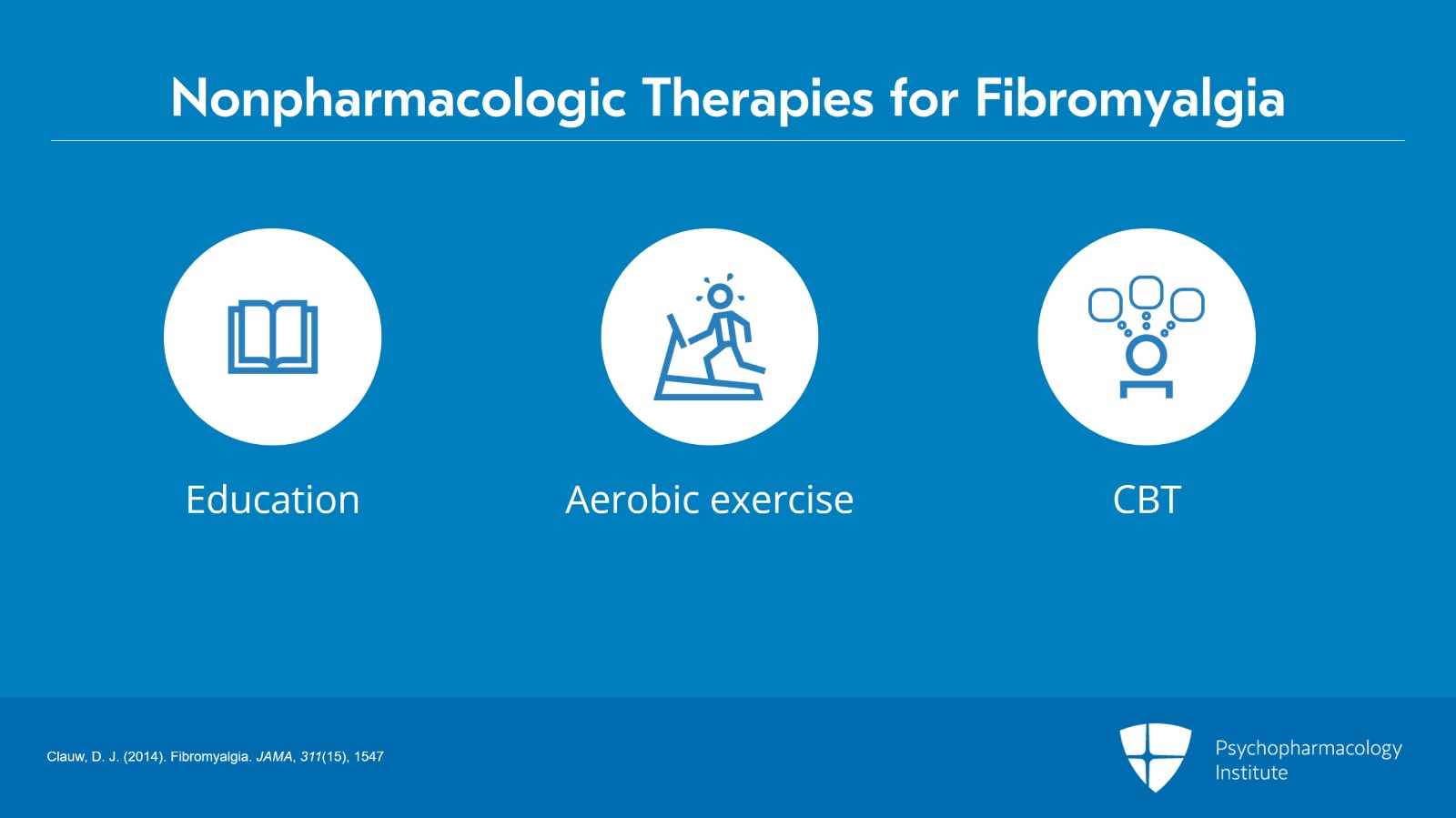
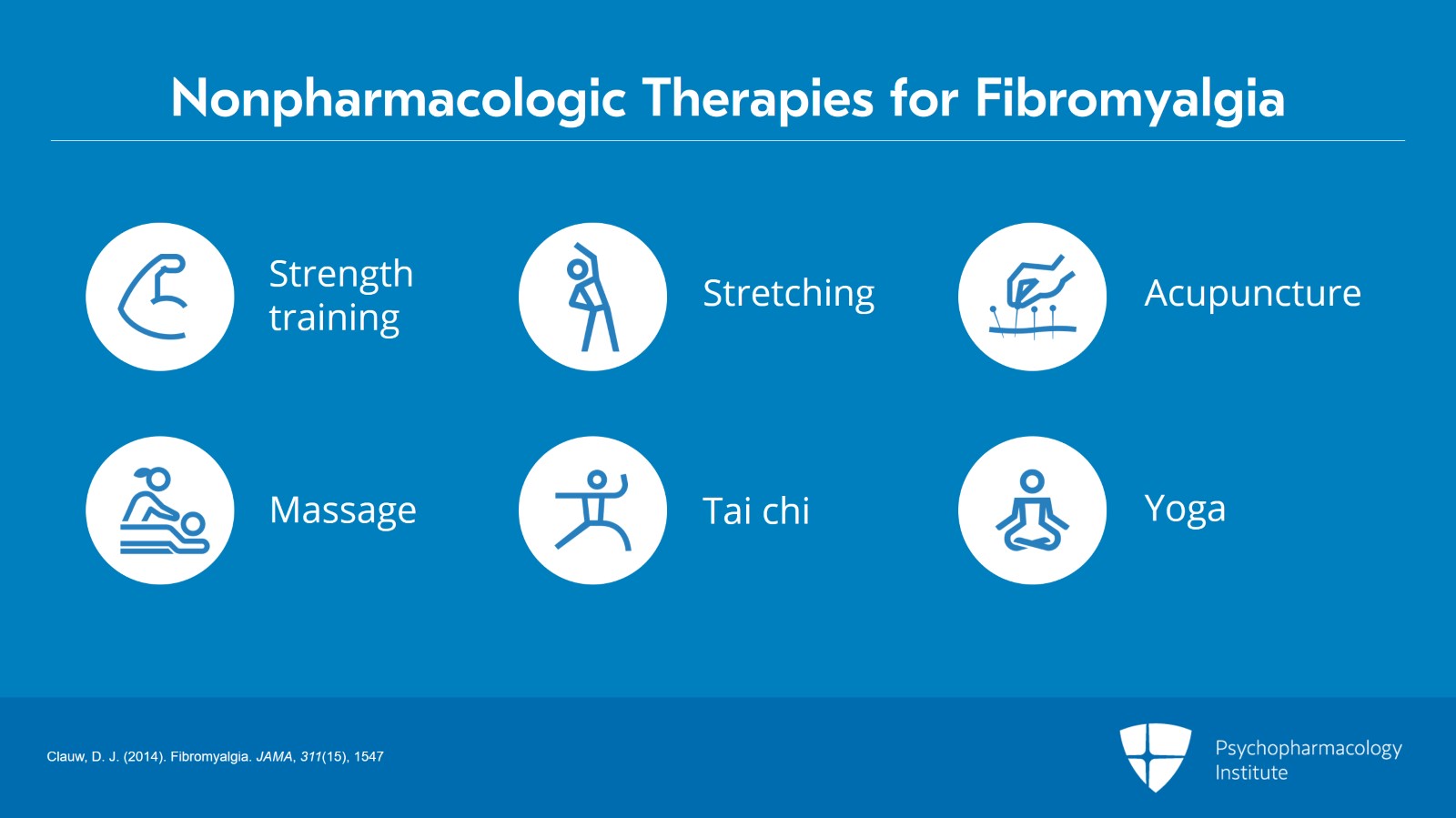
This slide shows the nonpharmacologic therapies for fibromyalgia. So for a long time, we’ve known that education, aerobic exercise, and cognitive behavioral therapy can be quite helpful for all types of chronic pain.
References:
  • Clauw, D. J. (2014). Fibromyalgia. JAMA, 311(15), 1547.
Free Files
Success!
Check your inbox, we sent you all the materials there.
Slide 3 of 16

More recently, we’ve seen that basically any type of exercise, strength training, stretching can be effective. And a lot of therapies that we used to be very dismissive of, a lot of these started in Eastern therapies, acupuncture, massage, tai chi, yoga, different types of meditation, all of these therapies that are now listed in modest evidence were in weak evidence.
References:
  • Clauw, D. J. (2014). Fibromyalgia. JAMA, 311(15), 1547.

Slide 4 of 16

So, there’s really been a fairly dramatic increase in the evidence base for nonpharmacologic therapies. And because of this, we’re trying to think of other ways of getting these therapies to individuals rather than having them come in in person to be seen.
References:
  • Clauw, D. J. (2014). Fibromyalgia. JAMA, 311(15), 1547.
Free Files
Success!
Check your inbox, we sent you all the materials there.
Slide 5 of 16

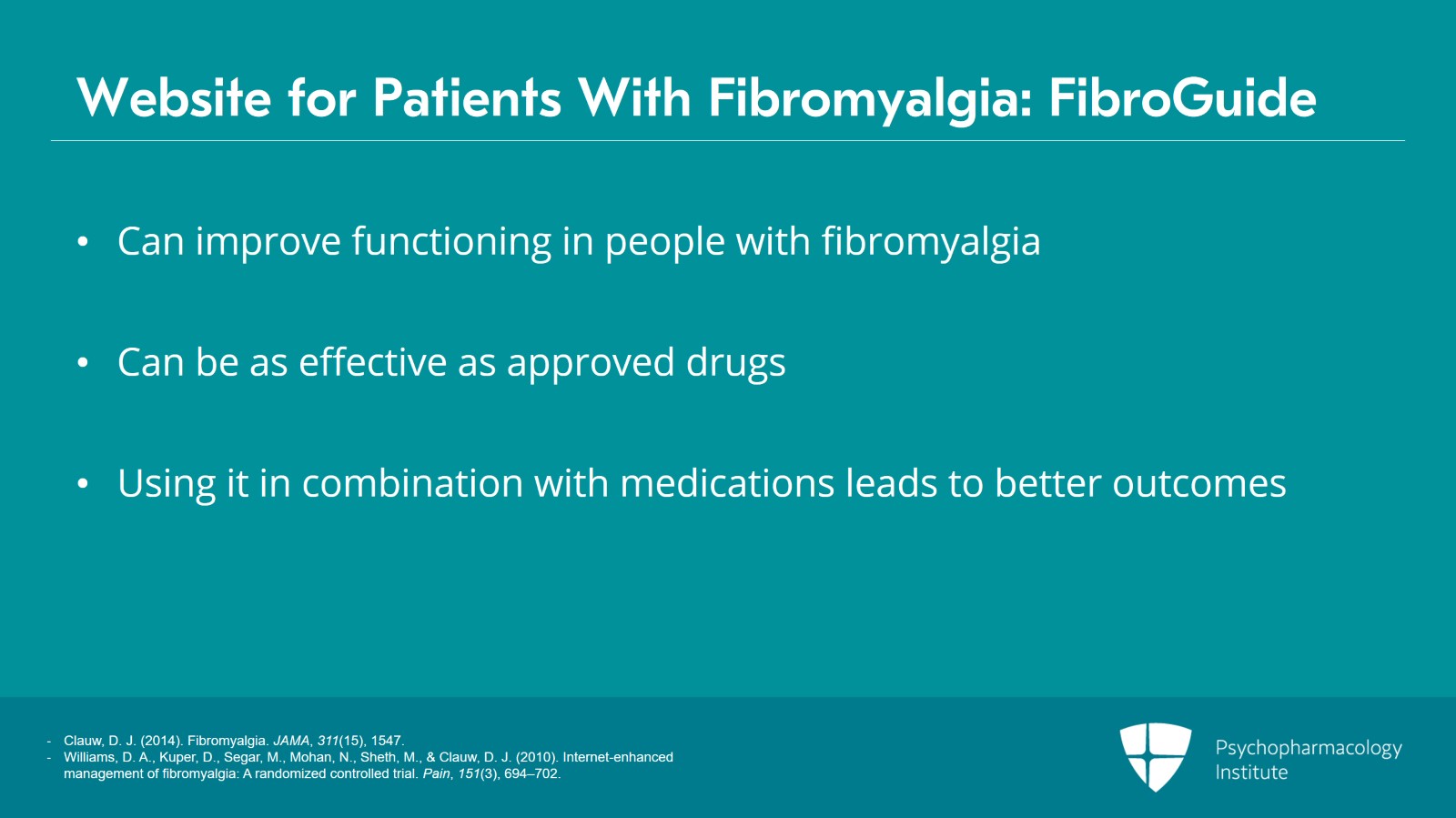
So one of our group’s first attempts was a simple website for fibromyalgia patients called FibroGuide. And just this website alone in a randomized controlled trial worked as well with respect to effect size in improving function in people with fibromyalgia as other drugs that were approved for use in fibromyalgia. And I’m not saying you shouldn’t use the drugs, I’m saying this to say that if you use them together, that would probably be better than thinking of these as being either I’m going to use one treatment or the other.  
References:
  • Clauw, D. J. (2014). Fibromyalgia. JAMA, 311(15), 1547.
  • Williams, D. A., Kuper, D., Segar, M., Mohan, N., Sheth, M., & Clauw, D. J. (2010). Internet-enhanced management of fibromyalgia: A randomized controlled trial. Pain, 151(3), 694–702.

Slide 6 of 16

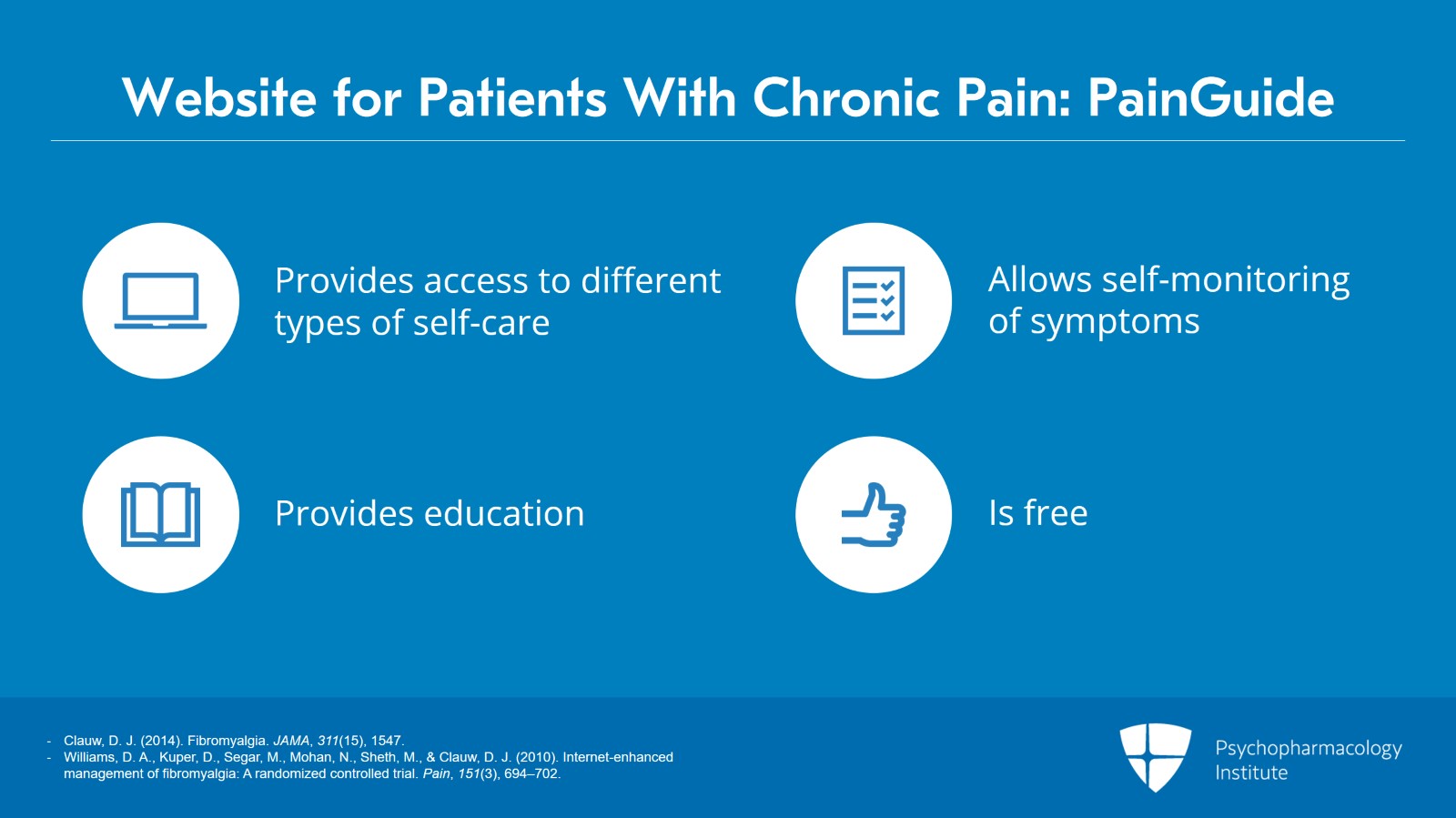
We now have a much better website that’s for almost any chronic pain patient. It’s PainGuide, www.painguide.com. And this is being tested in a number of ongoing NIH-funded studies. It’s much better than the original version of FibroGuide. It gives people direct access to a number of different types of self-care. It talks about diet and nutrition, reframing, relaxation. It allows people to actually track some of the symptoms that they’re experiencing as well as some of the new therapies that they’re trying. And it really helps explain things. This is free. We don’t get anything for this. We just develop these types of websites as a public service to people that have chronic pain.  
References:
  • Clauw, D. J. (2014). Fibromyalgia. JAMA, 311(15), 1547.
  • Williams, D. A., Kuper, D., Segar, M., Mohan, N., Sheth, M., & Clauw, D. J. (2010). Internet-enhanced management of fibromyalgia: A randomized controlled trial. Pain, 151(3), 694–702.
Free Files
Success!
Check your inbox, we sent you all the materials there.
Slide 7 of 16

We really have to think of these nonpharmacologic therapies as integrative therapies, not complementary, not alternative therapies.
References:
  • Clauw, D. J. (2014). Fibromyalgia. JAMA, 311(15), 1547.
  • Williams, D. A., Kuper, D., Segar, M., Mohan, N., Sheth, M., & Clauw, D. J. (2010). Internet-enhanced management of fibromyalgia: A randomized controlled trial. Pain, 151(3), 694–702.

Slide 8 of 16

Our challenge really is to as rapidly as possible integrate the availability of these therapies to all of our patients with chronic pain. And as you start using more and more of these nonpharm therapies in your chronic pain patients, you patients will become easier to treat because they will derive some benefit from those nonpharmacologic therapies.
References:
  • Williams, D. A., Kuper, D., Segar, M., Mohan, N., Sheth, M., & Clauw, D. J. (2010). Internet-enhanced management of fibromyalgia: A randomized controlled trial. Pain, 151(3), 694–702.
  • Clauw, D. J. (2014). Fibromyalgia. JAMA, 311(15), 1547.
Free Files
Success!
Check your inbox, we sent you all the materials there.
Slide 9 of 16

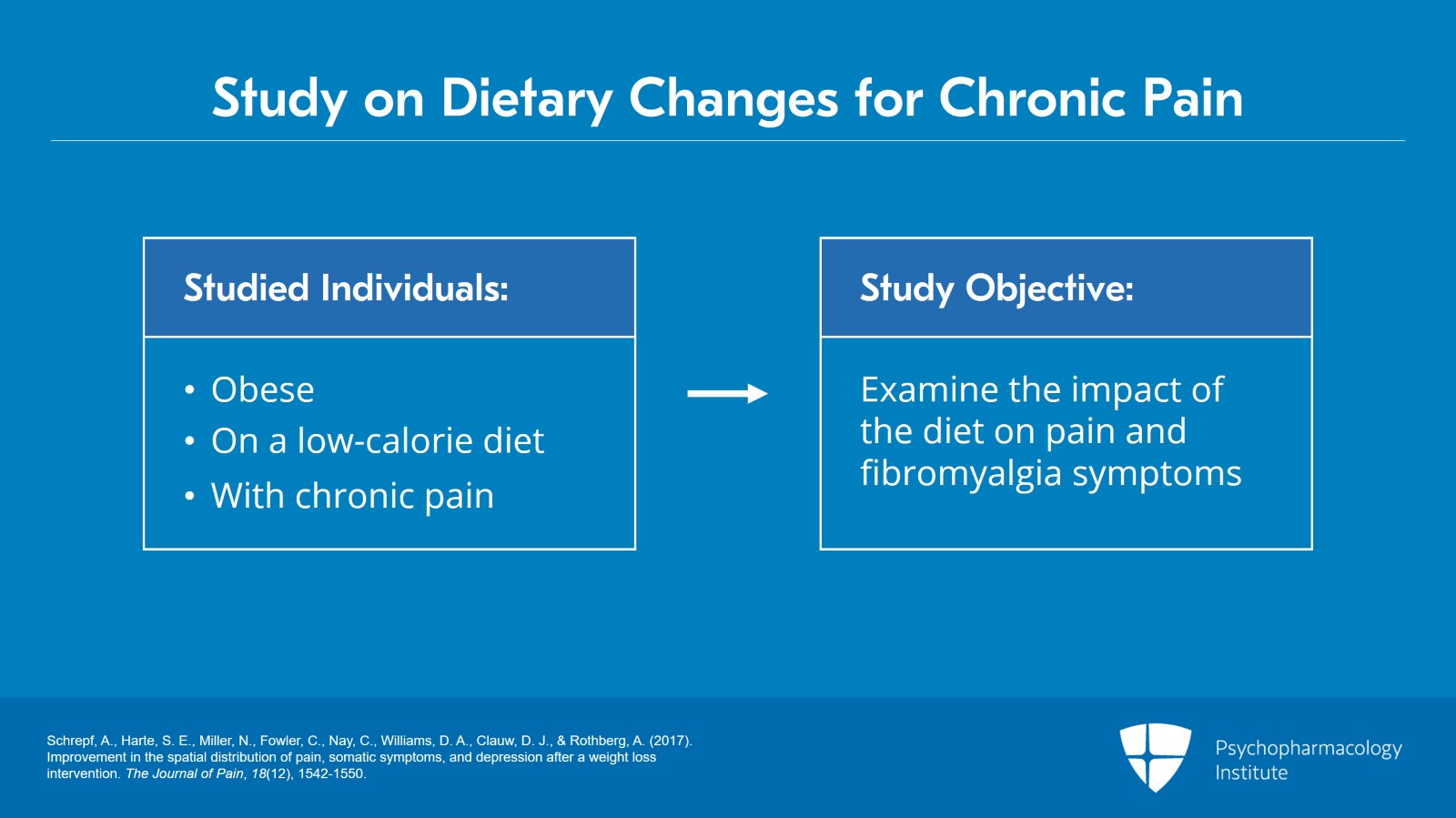
And we’re even looking at using diet and nutrition to treat chronic pain. This is a study we published a couple of years ago where we were looking at individuals that were attending a weight loss clinic at the University of Michigan. These are individuals that were morbidly obese and on a very low-calorie diet to treat their obesity. But it just turns out that a lot of them had chronic pain and we started collecting information on whether that diet and the weight loss led to any improvements in pain and fatigue and fibromyalgia symptoms.
References:
  • Schrepf, A., Harte, S. E., Miller, N., Fowler, C., Nay, C., Williams, D. A., Clauw, D. J., & Rothberg, A. (2017). Improvement in the spatial distribution of pain, somatic symptoms, and depression after a weight loss intervention. The Journal of Pain, 18(12), 1542-1550.

Slide 10 of 16

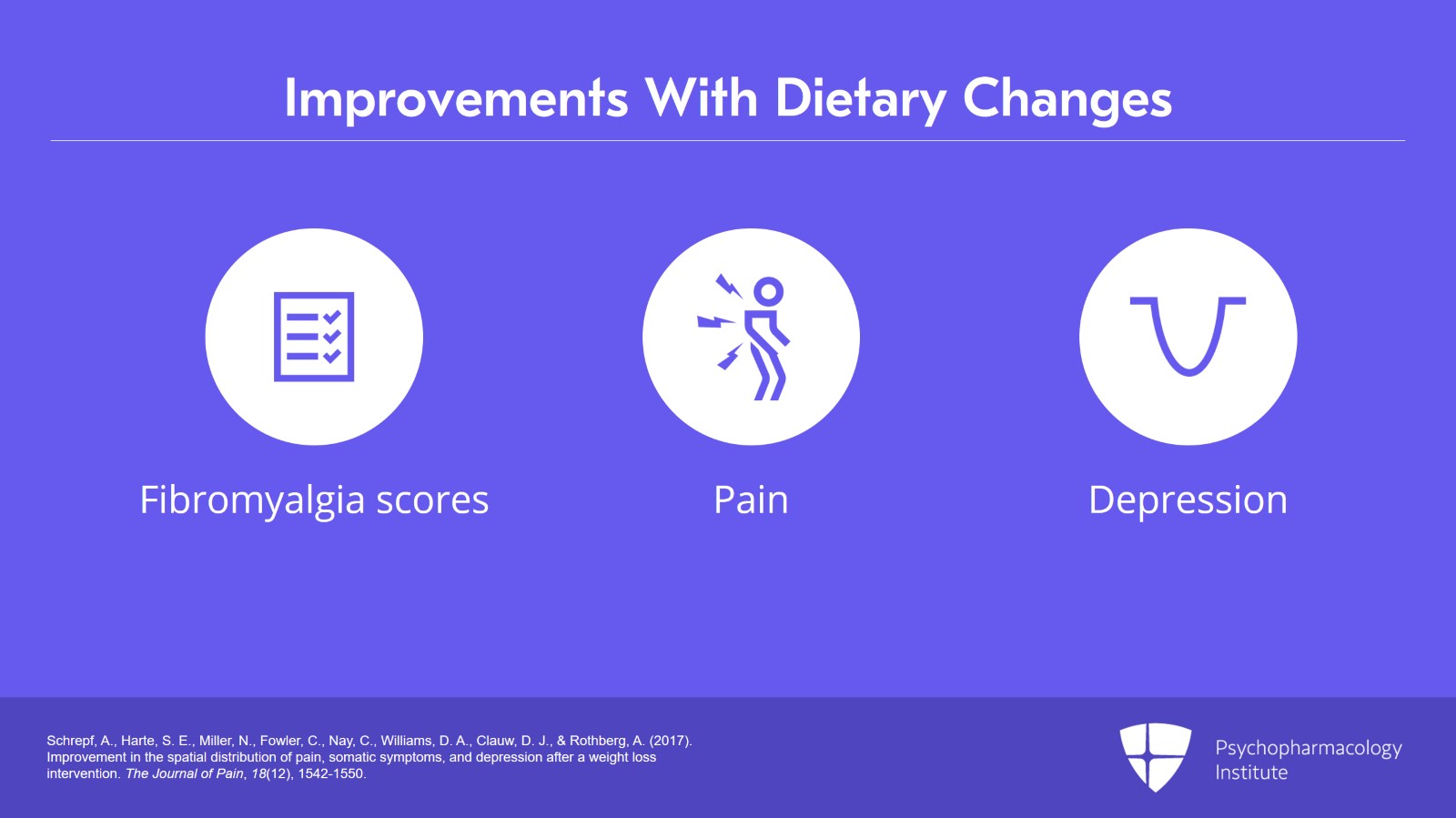
And when we first published this a couple of years ago, we said, yes, there were dramatic improvements in fibromyalgia scores and pain and depression and all sorts of other things in these individuals that were put on a very low-calorie diet for three months.
References:
  • Schrepf, A., Harte, S. E., Miller, N., Fowler, C., Nay, C., Williams, D. A., Clauw, D. J., & Rothberg, A. (2017). Improvement in the spatial distribution of pain, somatic symptoms, and depression after a weight loss intervention. The Journal of Pain, 18(12), 1542-1550.
Free Files
Success!
Check your inbox, we sent you all the materials there.
Slide 11 of 16

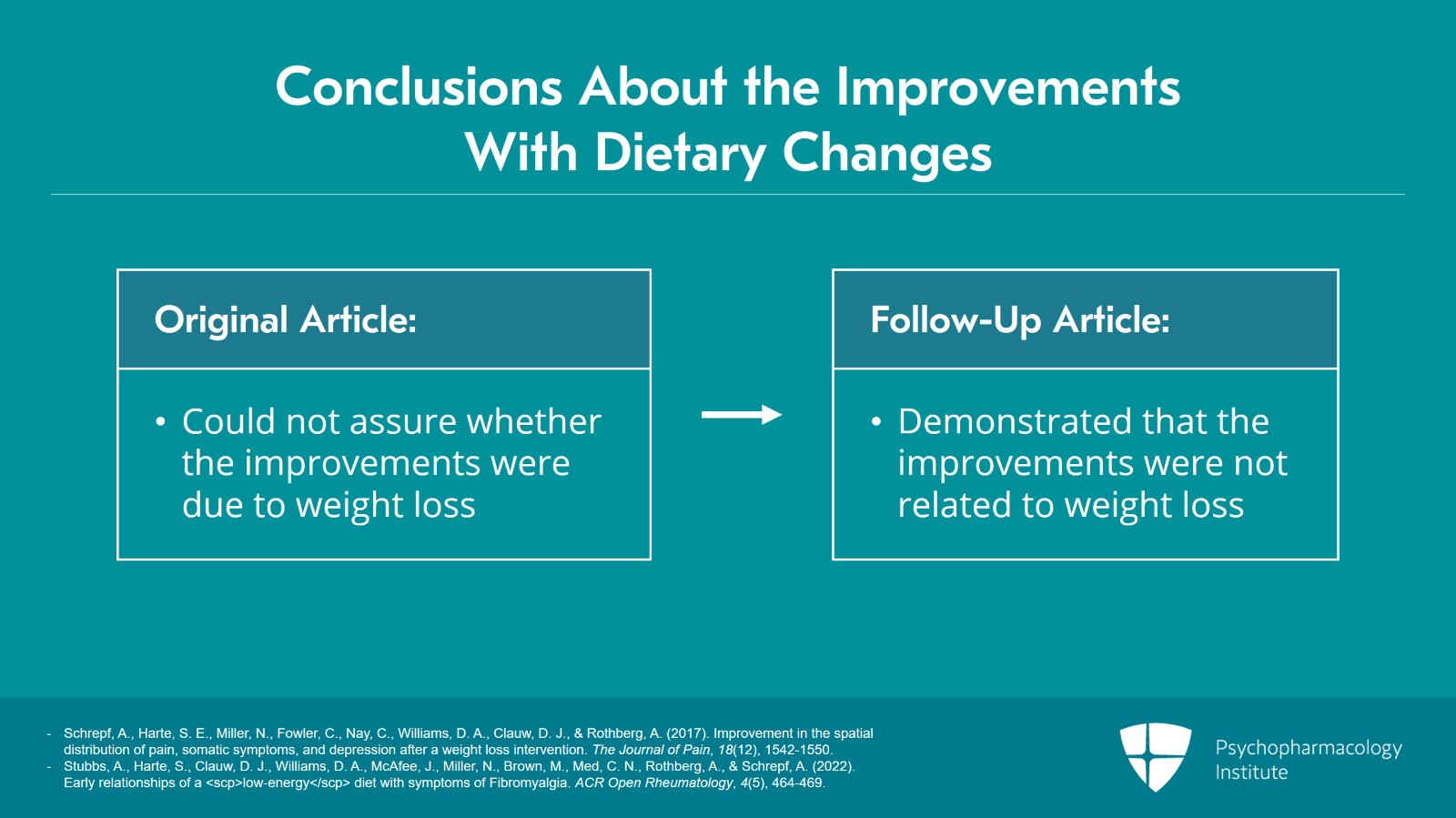
And so in the original article, we said we weren’t sure whether the improvement with diet was due to weight loss or not. But a couple of months ago, we published a follow-up article to this saying that this occurred very rapidly. This occurred within a couple of weeks. Now we’re pretty sure it really has nothing to do with weight loss.
References:
  • Schrepf, A., Harte, S. E., Miller, N., Fowler, C., Nay, C., Williams, D. A., Clauw, D. J., & Rothberg, A. (2017). Improvement in the spatial distribution of pain, somatic symptoms, and depression after a weight loss intervention. The Journal of Pain, 18(12), 1542-1550.
  • Stubbs, A., Harte, S., Clauw, D. J., Williams, D. A., McAfee, J., Miller, N., Brown, M., Med, C. N., Rothberg, A., & Schrepf, A. (2022). Early relationships of a <scp>low‐energy</scp> diet with symptoms of Fibromyalgia. ACR Open Rheumatology, 4(5), 464-469.

Slide 12 of 16

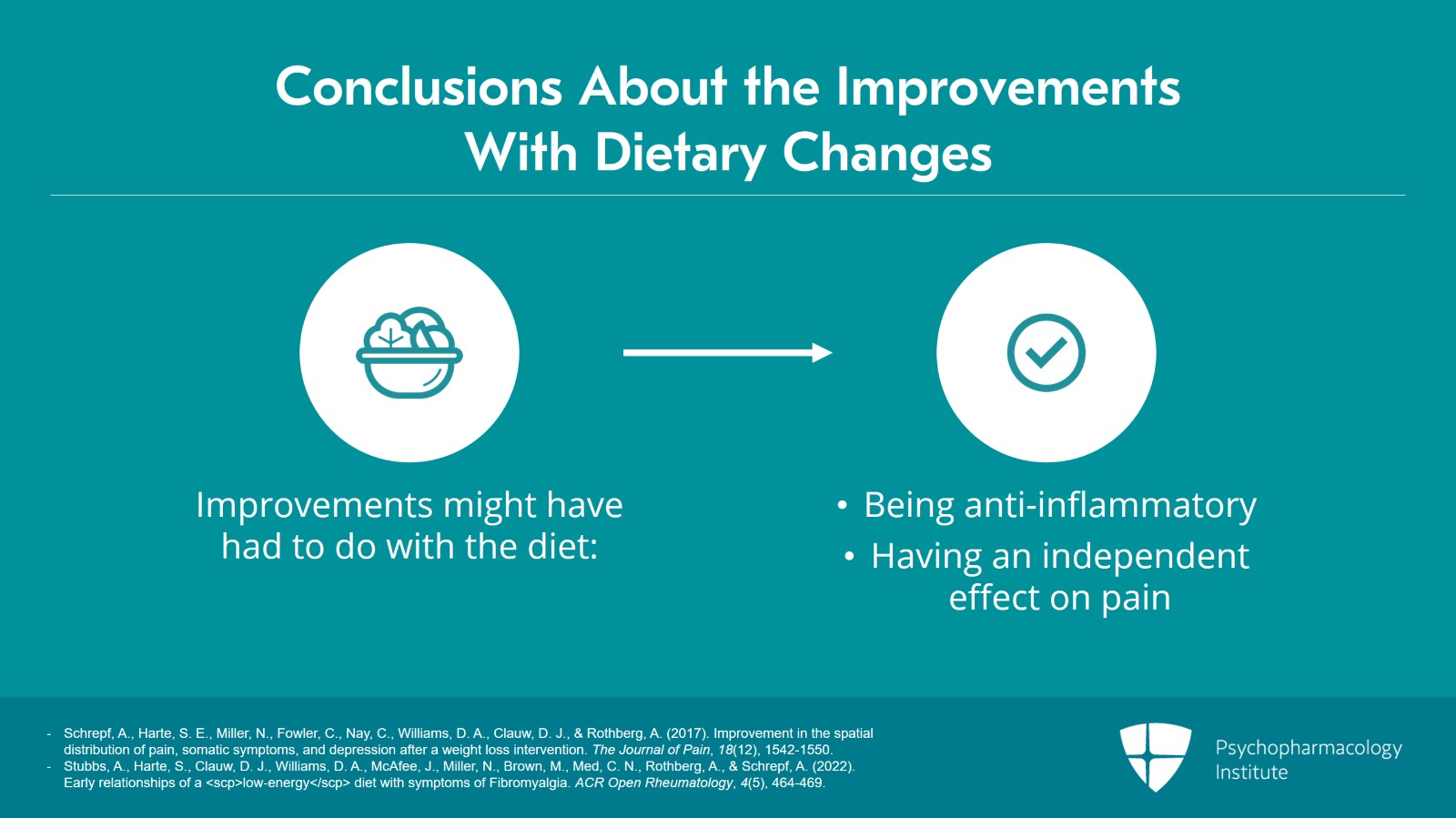
Weight loss does help improve pain in weightbearing joints but we think that the improvements that we’re seeing with this caloric restriction probably have more to do with this diet either being anti-inflammatory or having some kind of independent effect on pain and other symptoms that we see in conditions like fibromyalgia.
References:
  • Schrepf, A., Harte, S. E., Miller, N., Fowler, C., Nay, C., Williams, D. A., Clauw, D. J., & Rothberg, A. (2017). Improvement in the spatial distribution of pain, somatic symptoms, and depression after a weight loss intervention. The Journal of Pain, 18(12), 1542-1550.
  • Stubbs, A., Harte, S., Clauw, D. J., Williams, D. A., McAfee, J., Miller, N., Brown, M., Med, C. N., Rothberg, A., & Schrepf, A. (2022). Early relationships of a <scp>low‐energy</scp> diet with symptoms of Fibromyalgia. ACR Open Rheumatology, 4(5), 464-469.
Free Files
Success!
Check your inbox, we sent you all the materials there.
Slide 13 of 16

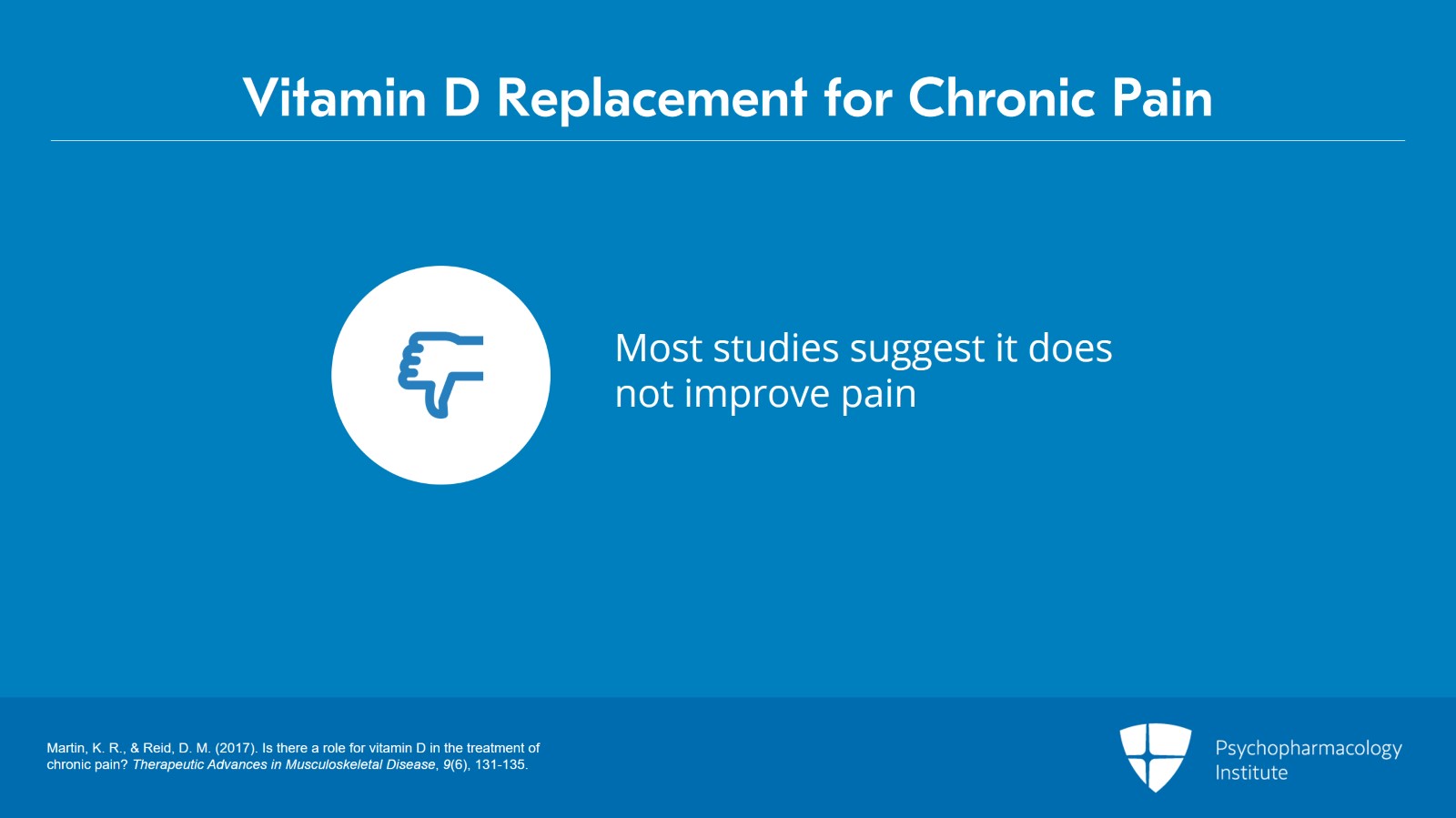
Other controversial and emerging issues in fibromyalgia and chronic pain. Vitamin D levels are low in most individuals with chronic pain but most of the studies that have been done suggest giving people vitamin D replacement doesn’t make pain better. A couple of studies have suggested it does but most it doesn’t.
References:
  • Martin, K. R., & Reid, D. M. (2017). Is there a role for vitamin D in the treatment of chronic pain? Therapeutic Advances in Musculoskeletal Disease, 9(6), 131-135. 

Slide 14 of 16

There’s really been a fairly dramatic increase in the evidence base for nonpharmacologic therapies. We really have to think of these nonpharmacologic therapies as integrative therapies, not complementary, not alternative therapies.
Free Files
Success!
Check your inbox, we sent you all the materials there.
Slide 15 of 16

And as you start using more and more of these nonpharm therapies in your chronic pain patients, your patients will become easier to treat because they will derive some benefit from those nonpharmacologic therapies.

Slide 16 of 16

Free Files
Success!
Check your inbox, we sent you all the materials there.
Learning Objectives:

After completing this activity, the learner will be able to:

  1. Delve into the pain mechanisms and appreciate their clinical relevance.
  2. Learn the essential steps for recognizing and accurately diagnosing patients with fibromyalgia.
  3. Execute impactful pharmacologic and nonpharmacologic interventions for chronic pain management.

Original Release Date: July 1, 2023

Review and Re-release Date: March 1, 2024

Expiration Date: July 1, 2026

Expert: Daniel Clauw, M.D.

Medical Editor: Paz Badía, M.D.

Relevant Financial Disclosures: 

Daniel Clauw declares the following interests:

- Pfizer:  Consultant
- Tonix:  Consultant, research support
- Virios:  Consultant

All of the relevant financial relationships listed above have been mitigated by Medical Academy and the Psychopharmacology Institute.

Contact Information: For questions regarding the content or access to this activity, contact us at support@psychopharmacologyinstitute.com

Instructions for Participation and Credit:

Participants must complete the activity online during the valid credit period that is noted above.

Follow these steps to earn CME credit:

  1. View the required educational content provided on this course page.

  2. Complete the Post Activity Evaluation for providing the necessary feedback for continuing accreditation purposes and for the development of future activities. NOTE: Completing the Post Activity Evaluation after the quiz is required to receive the earned credit.

  3. Download your certificate.

Accreditation Statement

This activity has been planned and implemented in accordance with the accreditation requirements and policies of the Accreditation Council for Continuing Medical Education through the joint providership of Medical Academy LLC and the Psychopharmacology Institute. Medical Academy is accredited by the ACCME to provide continuing medical education for physicians.

Credit Designation Statement

Medical Academy designates this enduring activity for a maximum of 0.75 AMA PRA Category 1 credit(s)™. Physicians should claim only the credit commensurate with the extent of their participation in the activity.

Free Files
Success!
Check your inbox, we sent you all the materials there.
Continue in the website
Instant access modal

Become a Bronze, Silver, Gold, Bronze extended, Silver extended or Gold extended Member.

2025–26 Psychopharmacology CME Program

Unlock up to 155 CME Credits, including 40 SA CME Credits.