Close Banner
Section Free  - Video Lectures

03. Mood Stabilizers for BPD: Lamotrigine and Lithium

Published on January 1, 2022 Certification expiration date: April 1, 2028

Paul Links, M.D.

Professor with the Department of Psychiatry and Behavioural Neurosciences - McMaster University, Hamilton ON, Canada

Key Points

  • Be cautious about using mood stabilizers in BPD patients.
  • Lamotrigine can be helpful for affective instability in mild-to-moderate BPD patients.

Free Downloads for Offline Access

  • Free Download Presentation File (PPTX)
  • Free Download Audio File (MP3)
  • Free Download Video (MP4)

Slides and Transcript

Slide 1 of 12

Next, we’re going to talk about mood stabilizers for patients with borderline personality disorder.

Slide 2 of 12

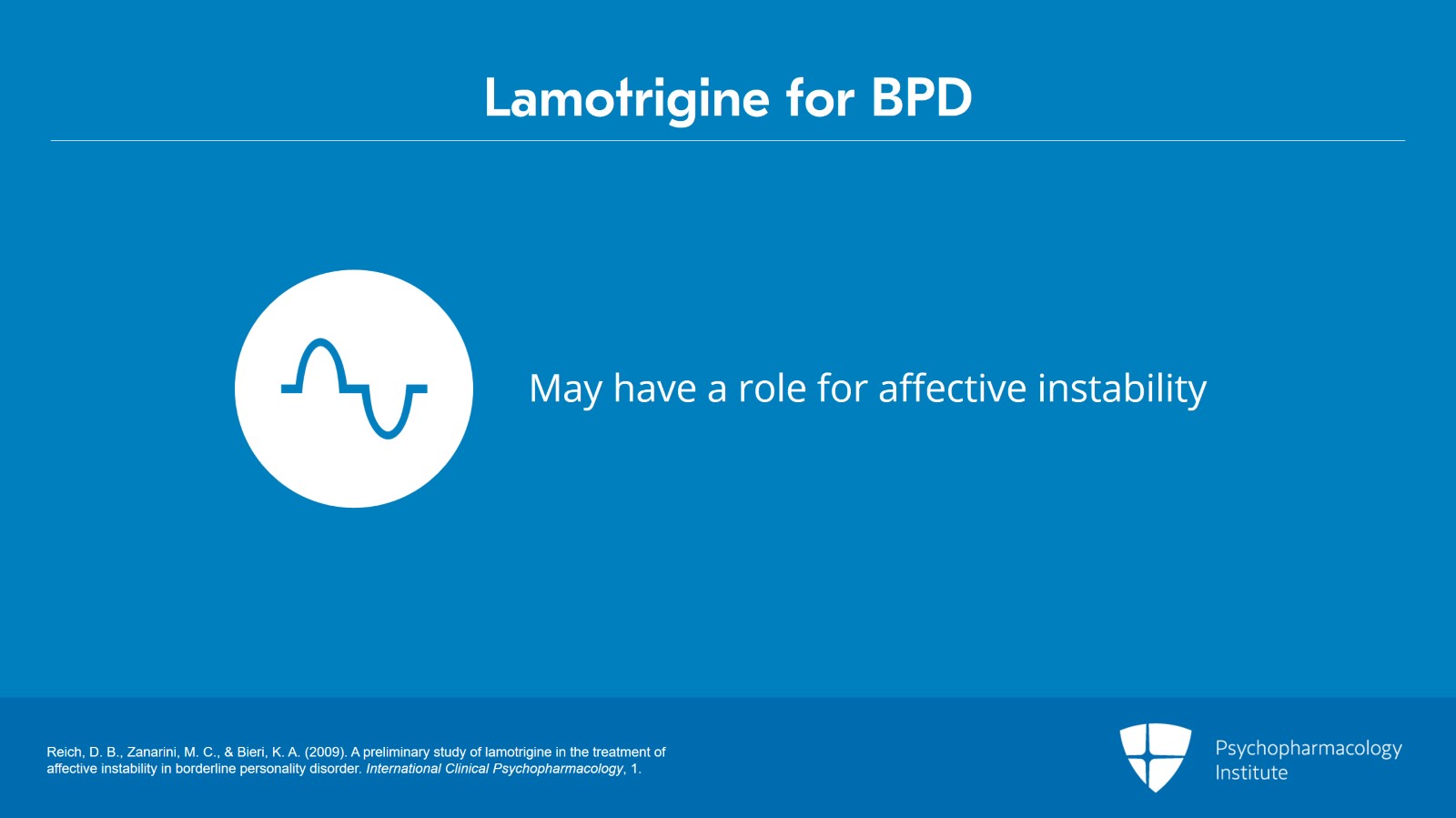
We’ll talk a little bit about lamotrigine which is particularly interesting. Some of the earlier randomized controlled trials of lamotrigine suggested they may have a role for affective instability as a primary outcome.
References:
  • Reich, D. B., Zanarini, M. C., & Bieri, K. A. (2009). A preliminary study of lamotrigine in the treatment of affective instability in borderline personality disorder. International Clinical Psychopharmacology, 1.
Free Files
Success!
Check your inbox, we sent you all the materials there.

Slide 3 of 12

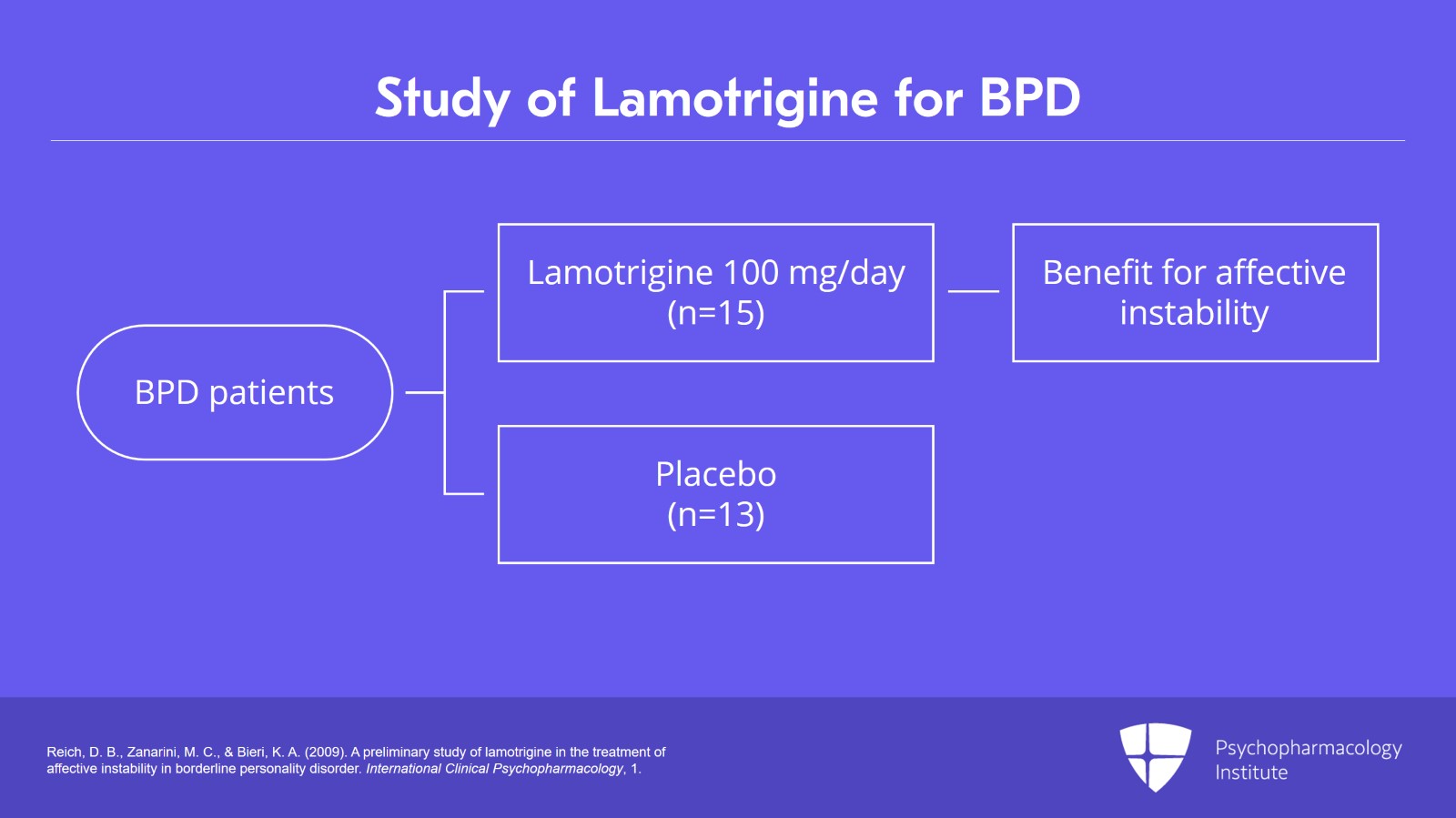
This was a small study for borderline personality disorder of 15 patients in the lamotrigine arm, 13 patients in the placebo arm and the dose was around 100 mg a day. So certainly, the trial has limitations but it did show benefit for lamotrigine for affective instability.
References:
  • Reich, D. B., Zanarini, M. C., & Bieri, K. A. (2009). A preliminary study of lamotrigine in the treatment of affective instability in borderline personality disorder. International Clinical Psychopharmacology, 1.

Slide 4 of 12

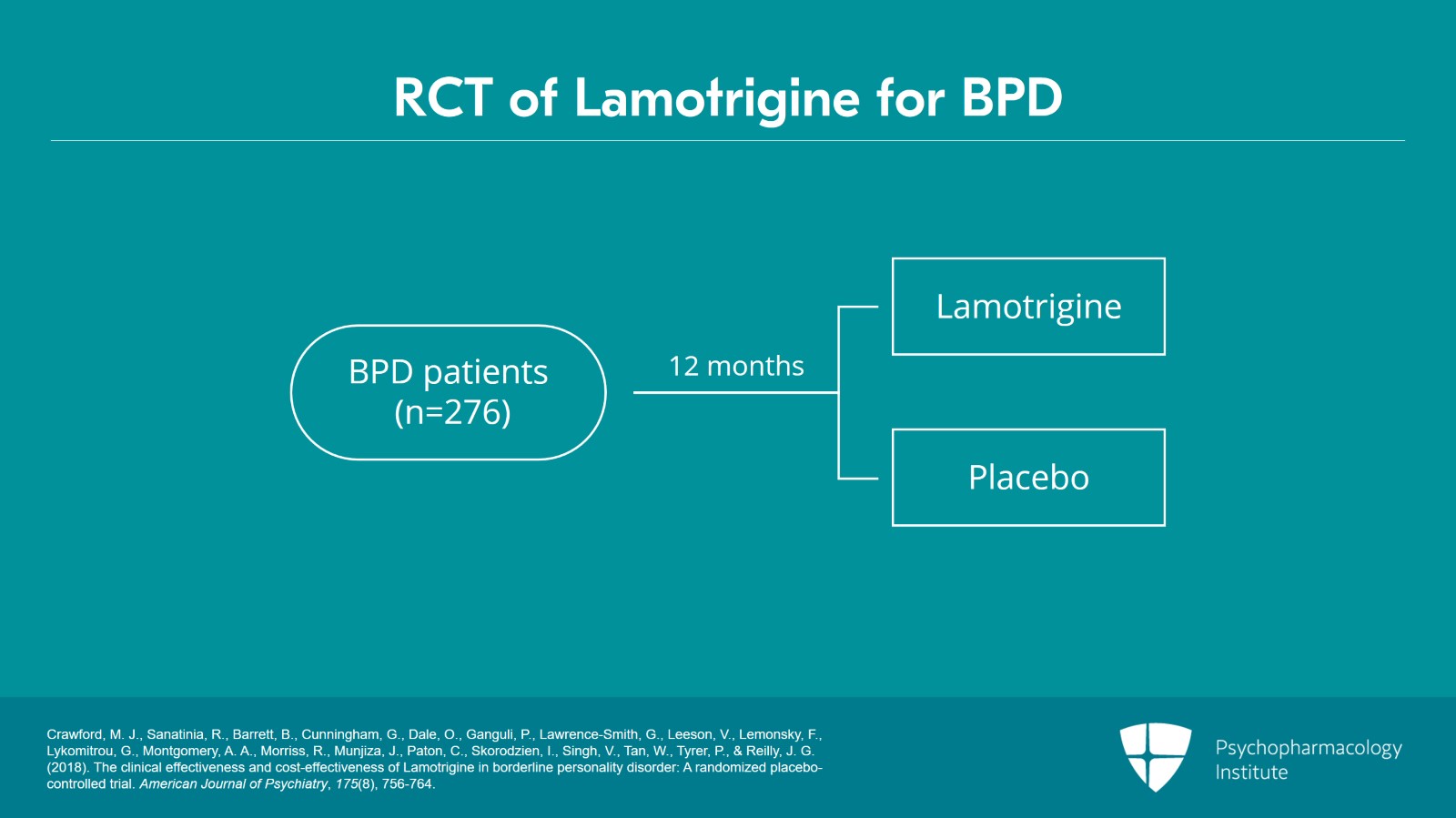
And it was on that basis that Crawford and colleagues in the UK undertook probably the best pharmacologic study in patients with borderline personality disorder. And this was a randomized controlled trial of lamotrigine versus placebo that followed these patients for 12 months. The sample was made up of 276 patients although they did lose a number of patients during the 12-month follow-up. They compared lamotrigine versus placebo but all the patients were receiving care sort of in a mental health specialty clinic.
References:
  • Crawford, M. J., Sanatinia, R., Barrett, B., Cunningham, G., Dale, O., Ganguli, P., Lawrence-Smith, G., Leeson, V., Lemonsky, F., Lykomitrou, G., Montgomery, A. A., Morriss, R., Munjiza, J., Paton, C., Skorodzien, I., Singh, V., Tan, W., Tyrer, P., & Reilly, J. G. (2018). The clinical effectiveness and cost-effectiveness of Lamotrigine in borderline personality disorder: A randomized placebo-controlled trial. American Journal of Psychiatry, 175(8), 756-764.
Free Files
Success!
Check your inbox, we sent you all the materials there.

Slide 5 of 12

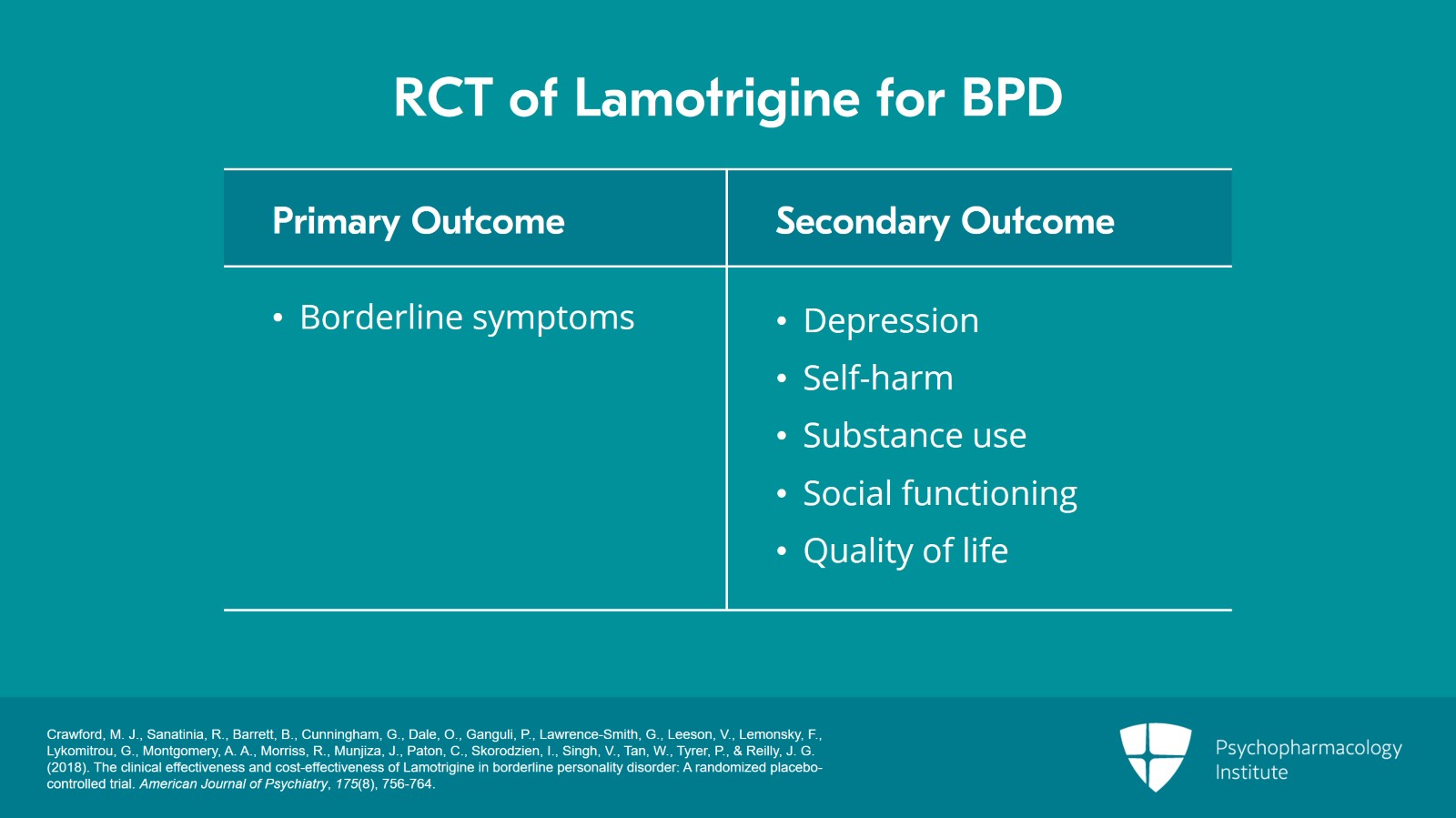
The primary outcome was borderline symptoms, but they had a breadth of secondary outcomes including depression, self-harm, substance use, social functioning, and quality of life including a cost effectiveness analysis.  
References:
  • Crawford, M. J., Sanatinia, R., Barrett, B., Cunningham, G., Dale, O., Ganguli, P., Lawrence-Smith, G., Leeson, V., Lemonsky, F., Lykomitrou, G., Montgomery, A. A., Morriss, R., Munjiza, J., Paton, C., Skorodzien, I., Singh, V., Tan, W., Tyrer, P., & Reilly, J. G. (2018). The clinical effectiveness and cost-effectiveness of Lamotrigine in borderline personality disorder: A randomized placebo-controlled trial. American Journal of Psychiatry, 175(8), 756-764.

Slide 6 of 12

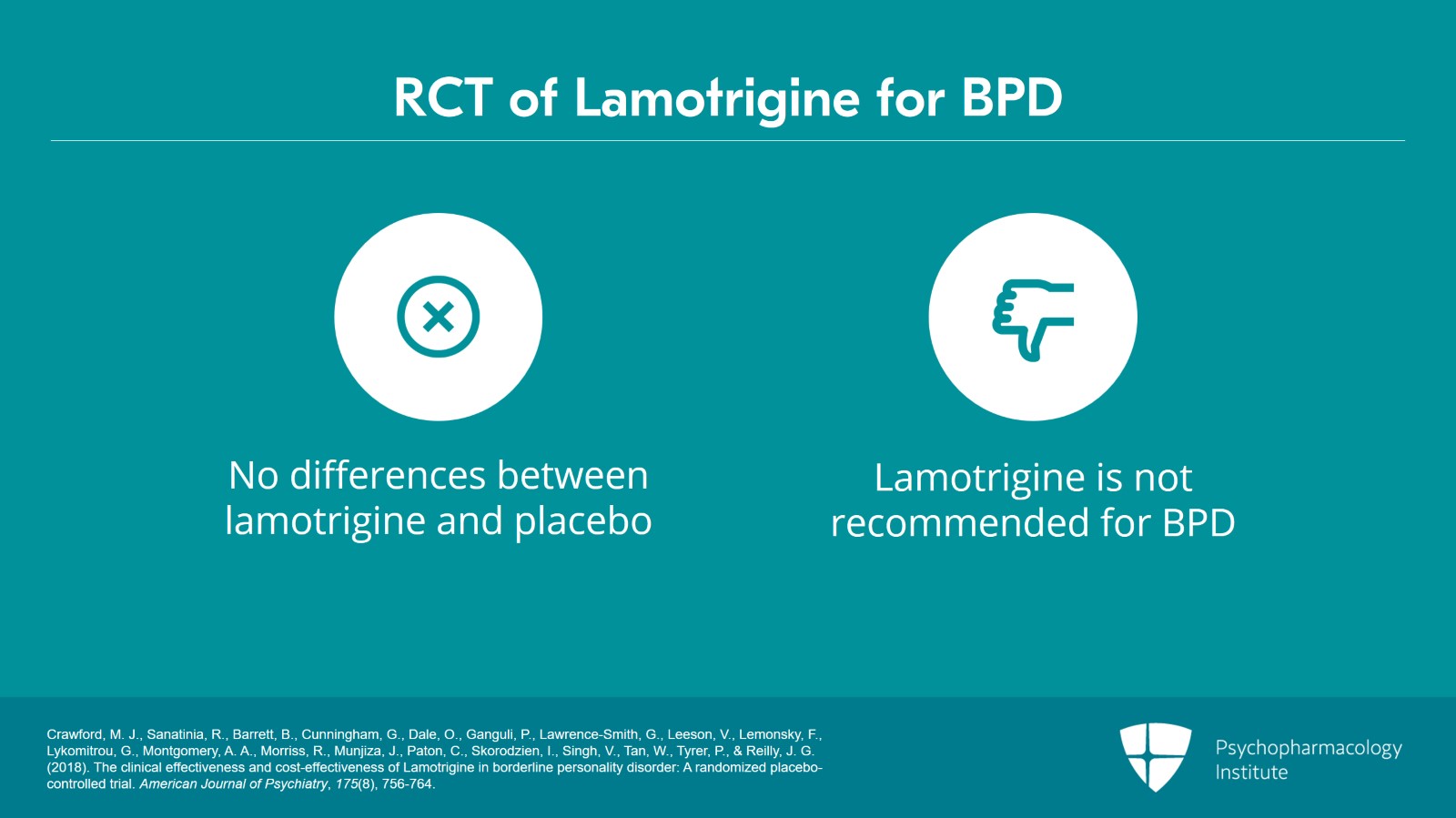
Now, this study is important because it demonstrated that there were no differences between lamotrigine and placebo on the borderline outcomes or any of the secondary outcomes. There was no advantage to lamotrigine in terms of quality of life or costing. And so, the authors concluded that we could not recommend lamotrigine for borderline patients based on this carefully conceived study.
References:
  • Crawford, M. J., Sanatinia, R., Barrett, B., Cunningham, G., Dale, O., Ganguli, P., Lawrence-Smith, G., Leeson, V., Lemonsky, F., Lykomitrou, G., Montgomery, A. A., Morriss, R., Munjiza, J., Paton, C., Skorodzien, I., Singh, V., Tan, W., Tyrer, P., & Reilly, J. G. (2018). The clinical effectiveness and cost-effectiveness of Lamotrigine in borderline personality disorder: A randomized placebo-controlled trial. American Journal of Psychiatry, 175(8), 756-764.
Free Files
Success!
Check your inbox, we sent you all the materials there.

Slide 7 of 12

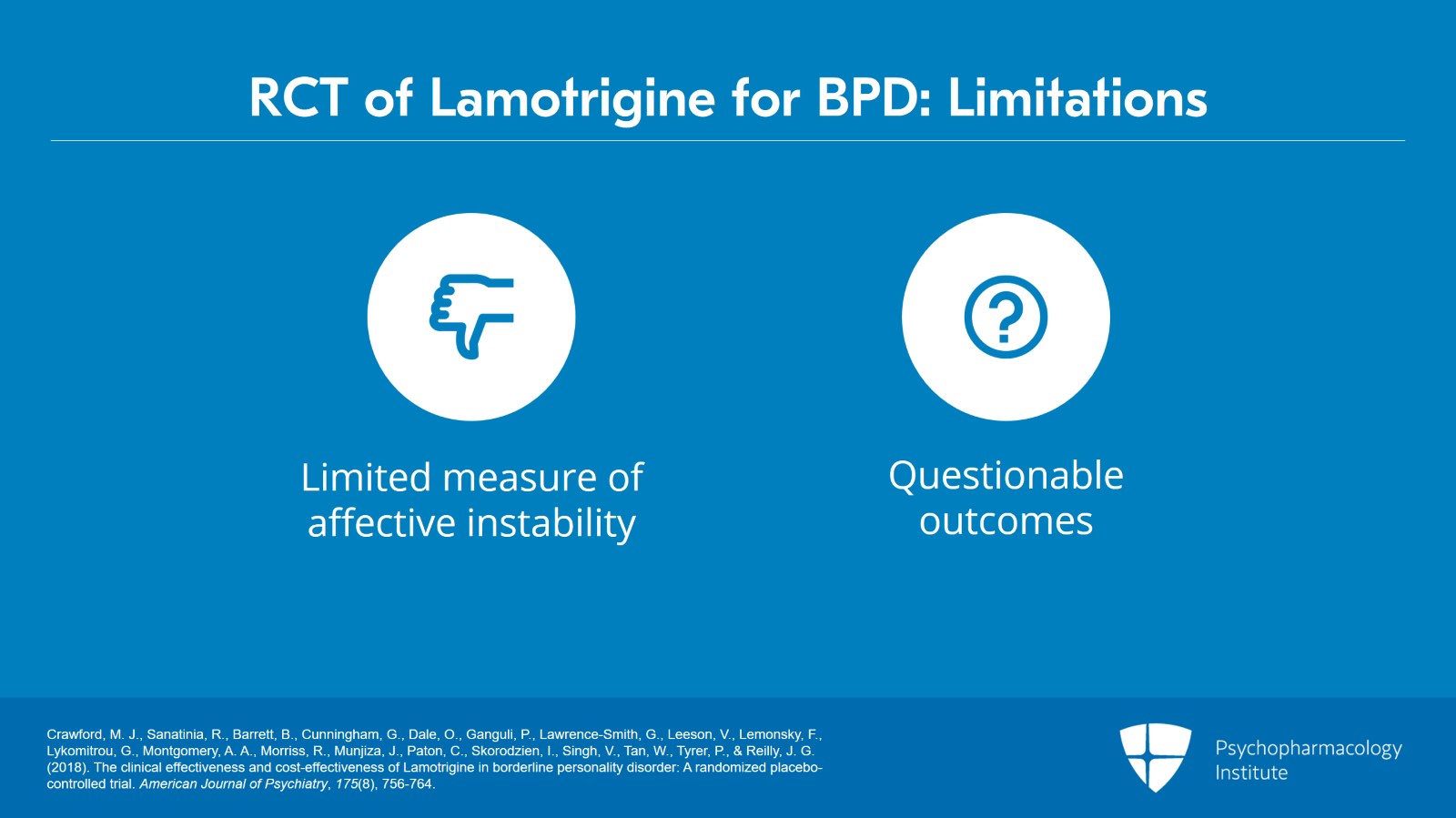
Well, just a couple of comments on the Crawford study that I think are important takeaways. The challenge of the study is that they used a rather limited measure of affective instability and so I think you can question whether it’s a valid outcome measure. Were they really capturing affective instability with the measure they used?
References:
  • Crawford, M. J., Sanatinia, R., Barrett, B., Cunningham, G., Dale, O., Ganguli, P., Lawrence-Smith, G., Leeson, V., Lemonsky, F., Lykomitrou, G., Montgomery, A. A., Morriss, R., Munjiza, J., Paton, C., Skorodzien, I., Singh, V., Tan, W., Tyrer, P., & Reilly, J. G. (2018). The clinical effectiveness and cost-effectiveness of Lamotrigine in borderline personality disorder: A randomized placebo-controlled trial. American Journal of Psychiatry, 175(8), 756-764.

Slide 8 of 12

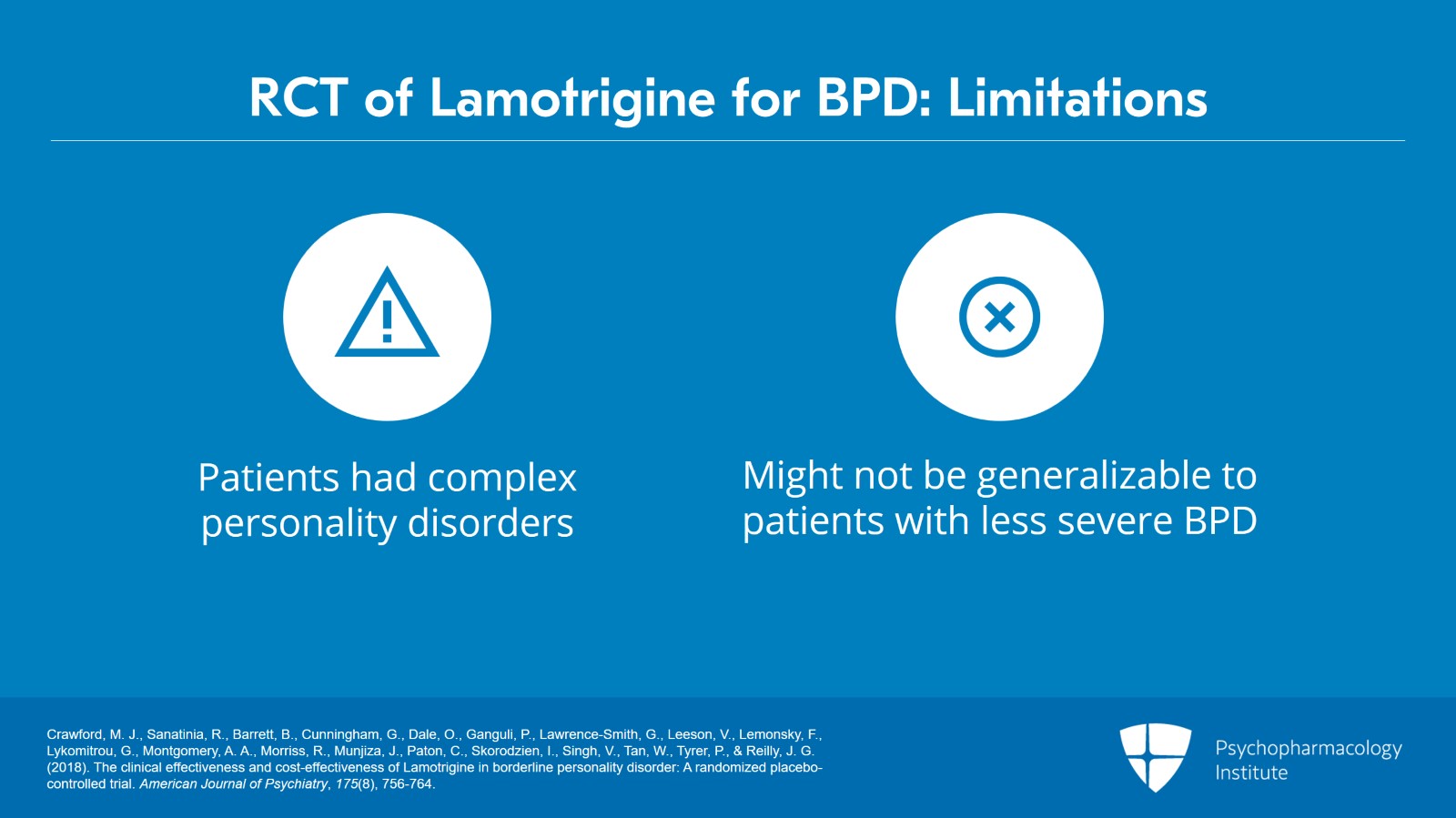
More importantly, all of these patients were considered to have complex personality disorders and I would take that to mean rather severe borderline personality disorder. So, it’s not clear that it would generalize to less severe borderline patients which seem to be the patients in the earlier research studies.
References:
  • Crawford, M. J., Sanatinia, R., Barrett, B., Cunningham, G., Dale, O., Ganguli, P., Lawrence-Smith, G., Leeson, V., Lemonsky, F., Lykomitrou, G., Montgomery, A. A., Morriss, R., Munjiza, J., Paton, C., Skorodzien, I., Singh, V., Tan, W., Tyrer, P., & Reilly, J. G. (2018). The clinical effectiveness and cost-effectiveness of Lamotrigine in borderline personality disorder: A randomized placebo-controlled trial. American Journal of Psychiatry, 175(8), 756-764.
Free Files
Success!
Check your inbox, we sent you all the materials there.

Slide 9 of 12

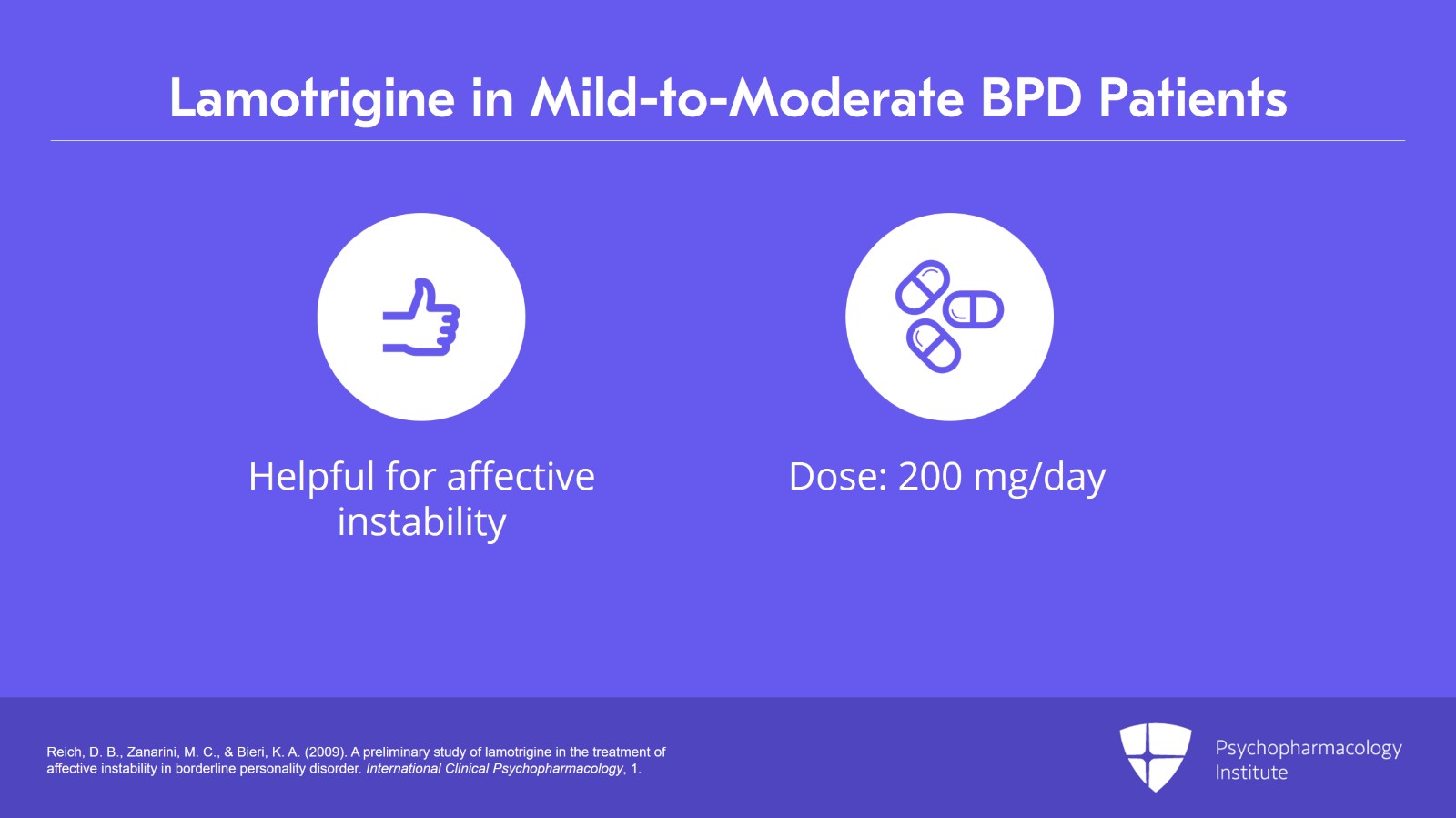
I have used lamotrigine at times in mild to moderate borderline patients, for example, the patients I might see in primary care consultation or collaborative care. It can be helpful for the affective instability. And often, they’ve done quite well with doses in the range of 200 mg a day.
References:
  • Reich, D. B., Zanarini, M. C., & Bieri, K. A. (2009). A preliminary study of lamotrigine in the treatment of affective instability in borderline personality disorder. International Clinical Psychopharmacology, 1.

Slide 10 of 12

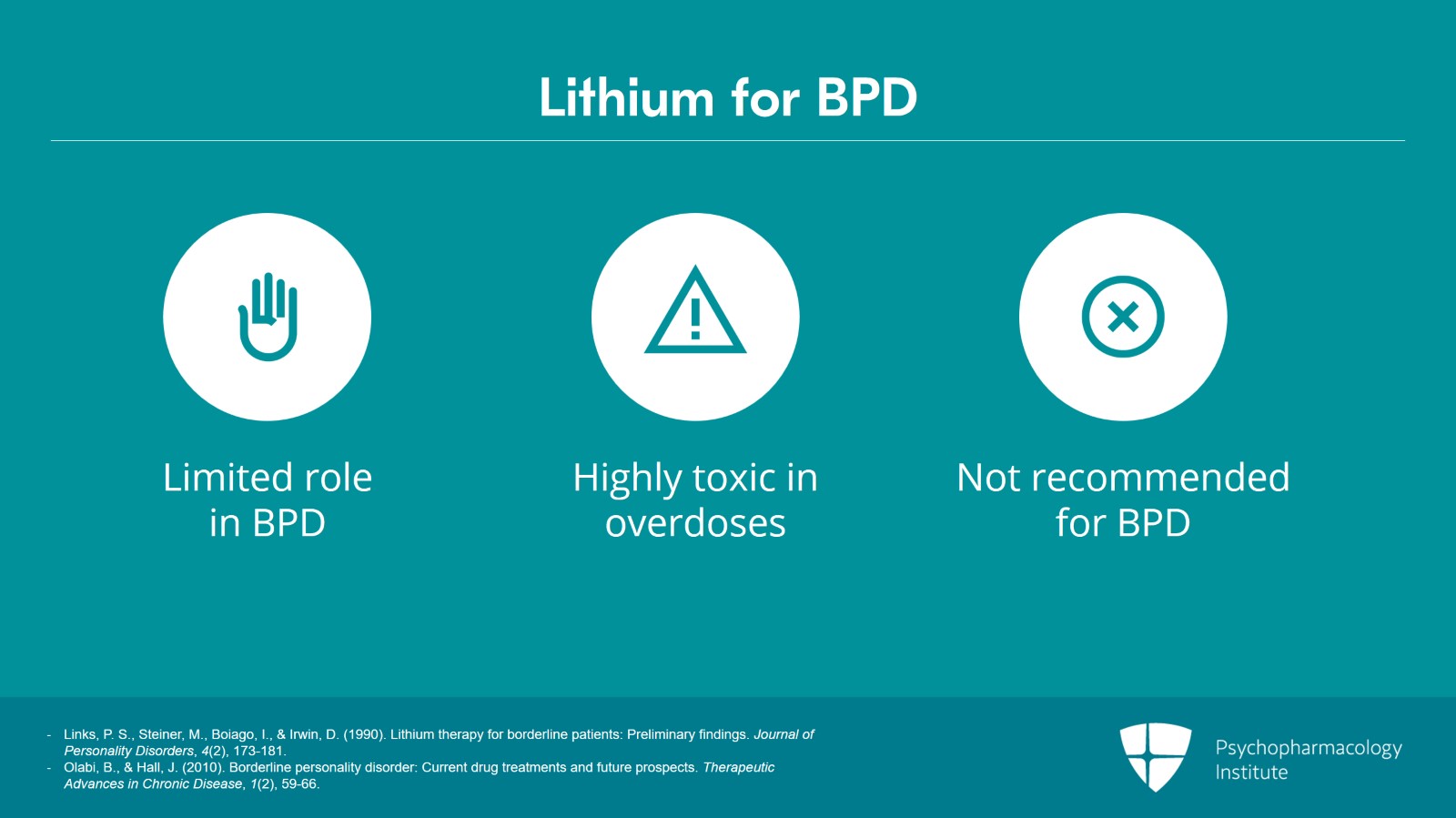
Lithium, there is only one small study in borderline patients. So, lithium has a very limited role in borderline personality disorder. And of course, it is highly toxic in overdoses so I think it’s not a recommended mood stabilizer in borderline patients.
References:
  • Links, P. S., Steiner, M., Boiago, I., & Irwin, D. (1990). Lithium therapy for borderline patients: Preliminary findings. Journal of Personality Disorders, 4(2), 173-181.
  • Olabi, B., & Hall, J. (2010). Borderline personality disorder: Current drug treatments and future prospects. Therapeutic Advances in Chronic Disease, 1(2), 59-66.
Free Files
Success!
Check your inbox, we sent you all the materials there.

Slide 11 of 12

So, the key points around mood stabilizers is that the Crawford trial certainly makes me more cautious about using mood stabilizers in borderline patients because of the lack of findings from the best trial. Lamotrigine can be helpful for the affective instability in mild to moderate borderline patients

Slide 12 of 12

Free Files
Success!
Check your inbox, we sent you all the materials there.

Learning Objectives:

After completing this activity, the learner will be able to:

  1. Understand the importance of good psychiatric management in BPD.
  2. Determine which psychotropic medication may be appropriate for each symptom domain and comorbidity in BPD.
  3.  Discuss the available evidence about novel pharmacologic approaches and future research directions in the treatment of BPD.

Original Release Date: January 01, 2022

Review and Re-release Date: April 1, 2025

Expiration Date: April 1, 2028

Expert: Paul Links, M.D.

Medical Editor: Paz Badía, M.D

Relevant Financial Disclosures:

The following planners, faculty, and reviewers have the following relevant financial relationships with commercial interests to disclose:

Dr. Links has disclosed the following relationships:

All of the relevant financial relationships listed for these individuals have been mitigated.

Contact Information: For questions regarding the content or access to this activity, contact us at support@psychopharmacologyinstitute.com

Instructions for Participation and Credit:

Participants must complete the activity online during the valid credit period that is noted above.

Follow these steps to earn CME credit:

  1. View the required educational content provided on this course page.
  2. Complete the Post Activity Evaluation for providing the necessary feedback for continuing accreditation purposes and for the development of future activities. NOTE: Completing the Post Activity Evaluation after the quiz is required to receive the earned credit.
  3. Download your certificate.

Accreditation Statement

This activity has been planned and implemented in accordance with the accreditation requirements and policies of the Accreditation Council for Continuing Medical Education through the joint providership of Medical Academy LLC and the Psychopharmacology Institute. Medical Academy is accredited by the ACCME to provide continuing medical education for physicians.

Credit Designation Statement

Medical Academy designates this enduring activity for a maximum of 0.50 AMA PRA Category 1 credit(s). Physicians should claim only the credit commensurate with the extent of their participation in the activity.


Free Files
Success!
Check your inbox, we sent you all the materials there.
Continue in the website
Instant access modal

Become a Bronze, Silver, Gold, Bronze extended, Silver extended or Gold extended Member.

2025–26 Psychopharmacology CME Program

Unlock up to 155 CME Credits, including 40 SA CME Credits.