



Slides and Transcript
Slide 1 of 16
Additional Off-Label Options for Bipolar Depression. In this section, I’m going to talk about treatments that might work for bipolar depression. They have roles in certain patients and certain symptoms, but they don’t have anywhere near the level of evidence that we’ve talked about in earlier sections.
Slide 2 of 16
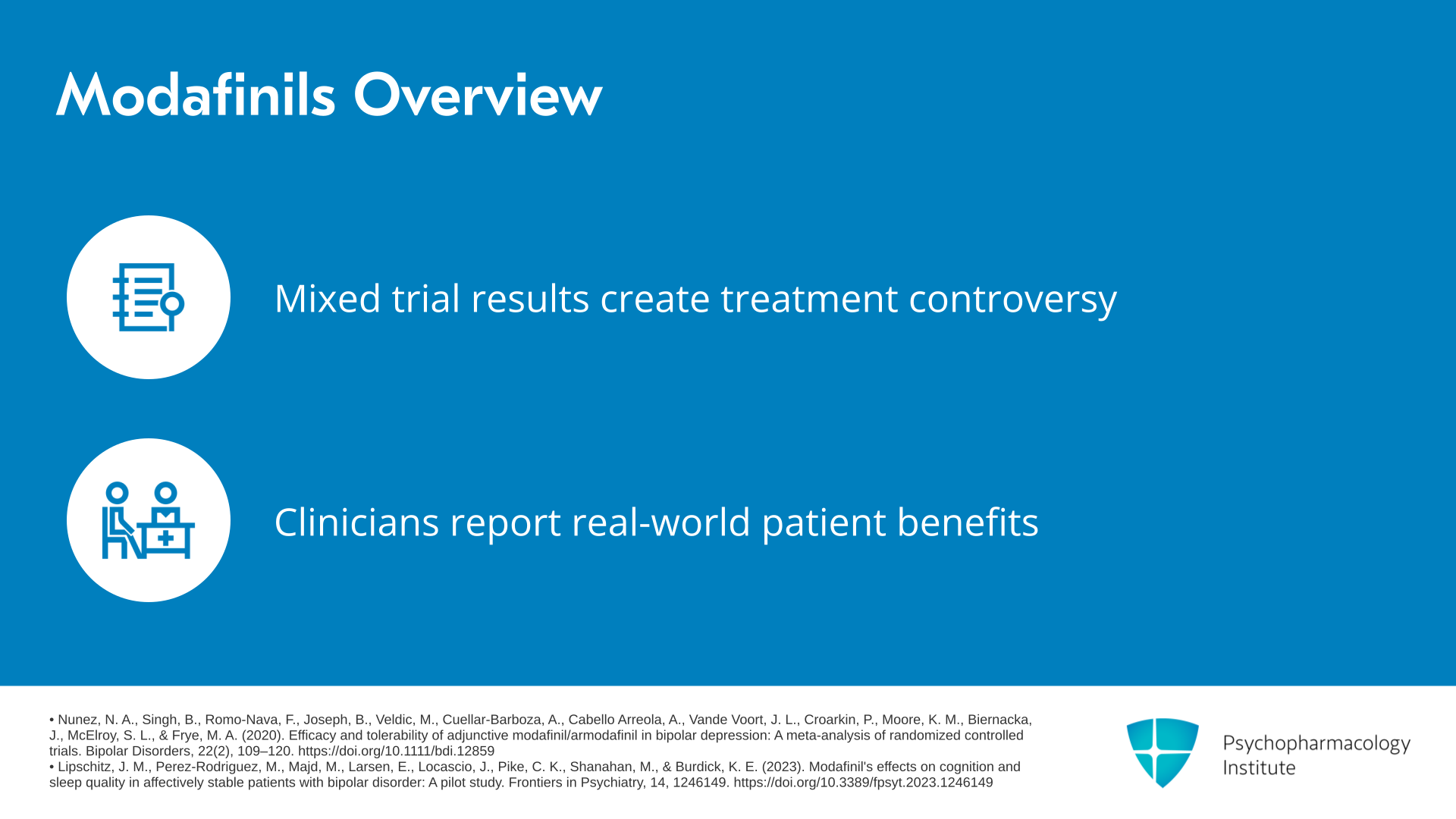
So let’s start with one that’s a very popular treatment but it’s controversial whether it works, the modafinils. These include modafinil, Provigil, and armodafinil, Nuvigil. So what’s controversial about them is that they treated bipolar depression in small trials but they then failed in a large randomized controlled trial when the company tried to get it FDA approved. So normally, we would toss this out and say it probably doesn’t work at all. But many of us see benefits with patients in practice and myself as well. Looking at all the research on the modafinils, it looks like they do improve symptoms that are very important to patients mainly fatigue and cognition.
References:
- Nunez, N. A., Singh, B., Romo-Nava, F., Joseph, B., Veldic, M., Cuellar-Barboza, A., Cabello Arreola, A., Vande Voort, J. L., Croarkin, P., Moore, K. M., Biernacka, J., McElroy, S. L., & Frye, M. A. (2020). Efficacy and tolerability of adjunctive modafinil/armodafinil in bipolar depression: A meta-analysis of randomized controlled trials. Bipolar Disorders, 22(2), 109–120. https://doi.org/10.1111/bdi.12859
- Lipschitz, J. M., Perez-Rodriguez, M., Majd, M., Larsen, E., Locascio, J., Pike, C. K., Shanahan, M., & Burdick, K. E. (2023). Modafinil's effects on cognition and sleep quality in affectively stable patients with bipolar disorder: A pilot study. Frontiers in Psychiatry, 14, 1246149. https://doi.org/10.3389/fpsyt.2023.1246149
Free Files
Download PDF and other files
Success!
Check your inbox, we sent you all the materials there.
Slide 3 of 16
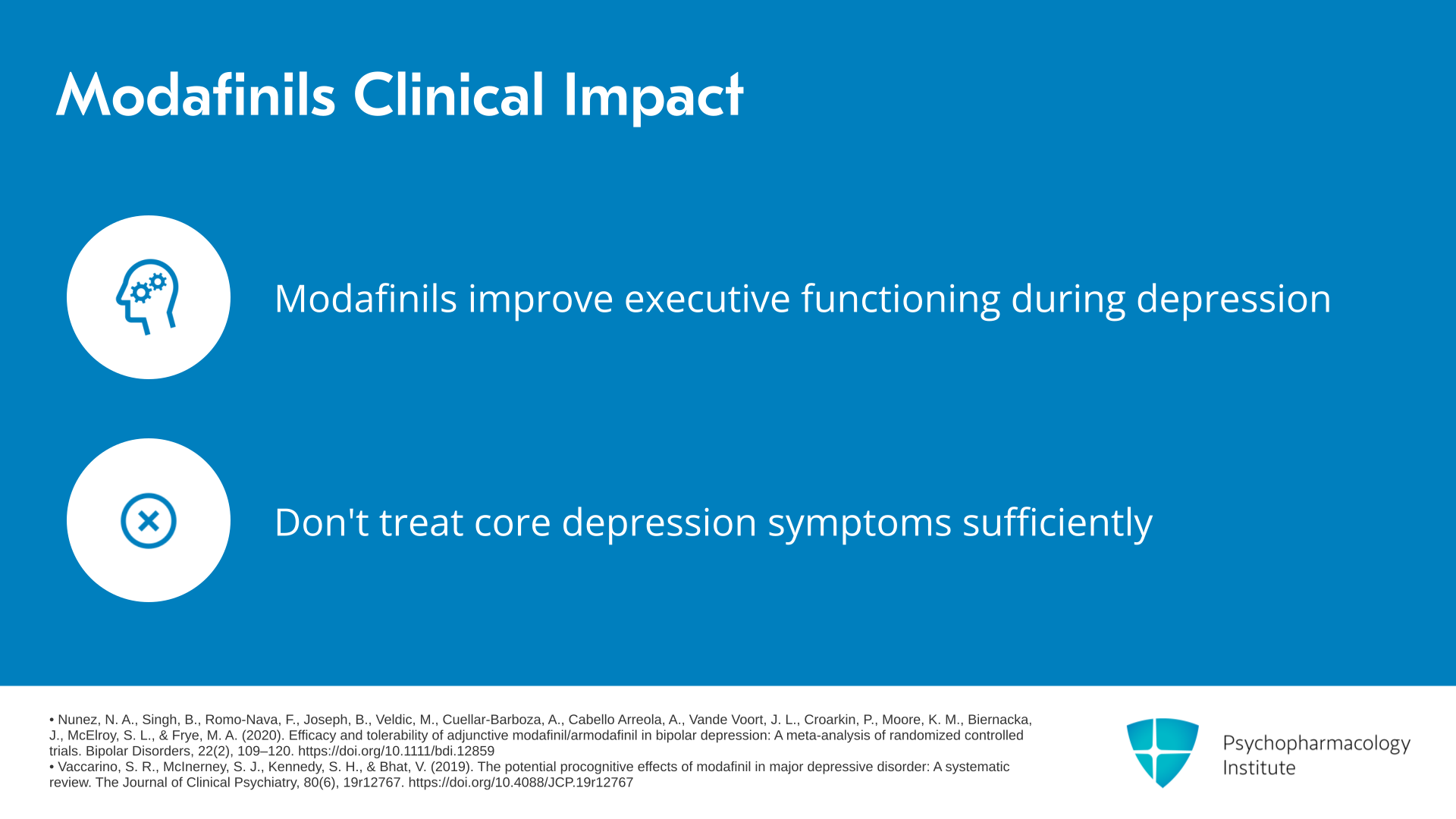
For example, in a meta-analysis, the modafinils improved executive functioning during depression. That means that you can function better and think clearly which is not something that’s going to make a big difference on a Hamilton Depression Rating Scale. My guess is these medications make a big difference in patients’ lives but they don’t treat the core symptoms of depression enough to make a meaningful difference on a depression rating scale, hence, their failure in some controlled trials.
References:
- Nunez, N. A., Singh, B., Romo-Nava, F., Joseph, B., Veldic, M., Cuellar-Barboza, A., Cabello Arreola, A., Vande Voort, J. L., Croarkin, P., Moore, K. M., Biernacka, J., McElroy, S. L., & Frye, M. A. (2020). Efficacy and tolerability of adjunctive modafinil/armodafinil in bipolar depression: A meta-analysis of randomized controlled trials. Bipolar Disorders, 22(2), 109–120. https://doi.org/10.1111/bdi.12859
- Vaccarino, S. R., McInerney, S. J., Kennedy, S. H., & Bhat, V. (2019). The potential procognitive effects of modafinil in major depressive disorder: A systematic review. The Journal of Clinical Psychiatry, 80(6), 19r12767. https://doi.org/10.4088/JCP.19r12767
Slide 4 of 16
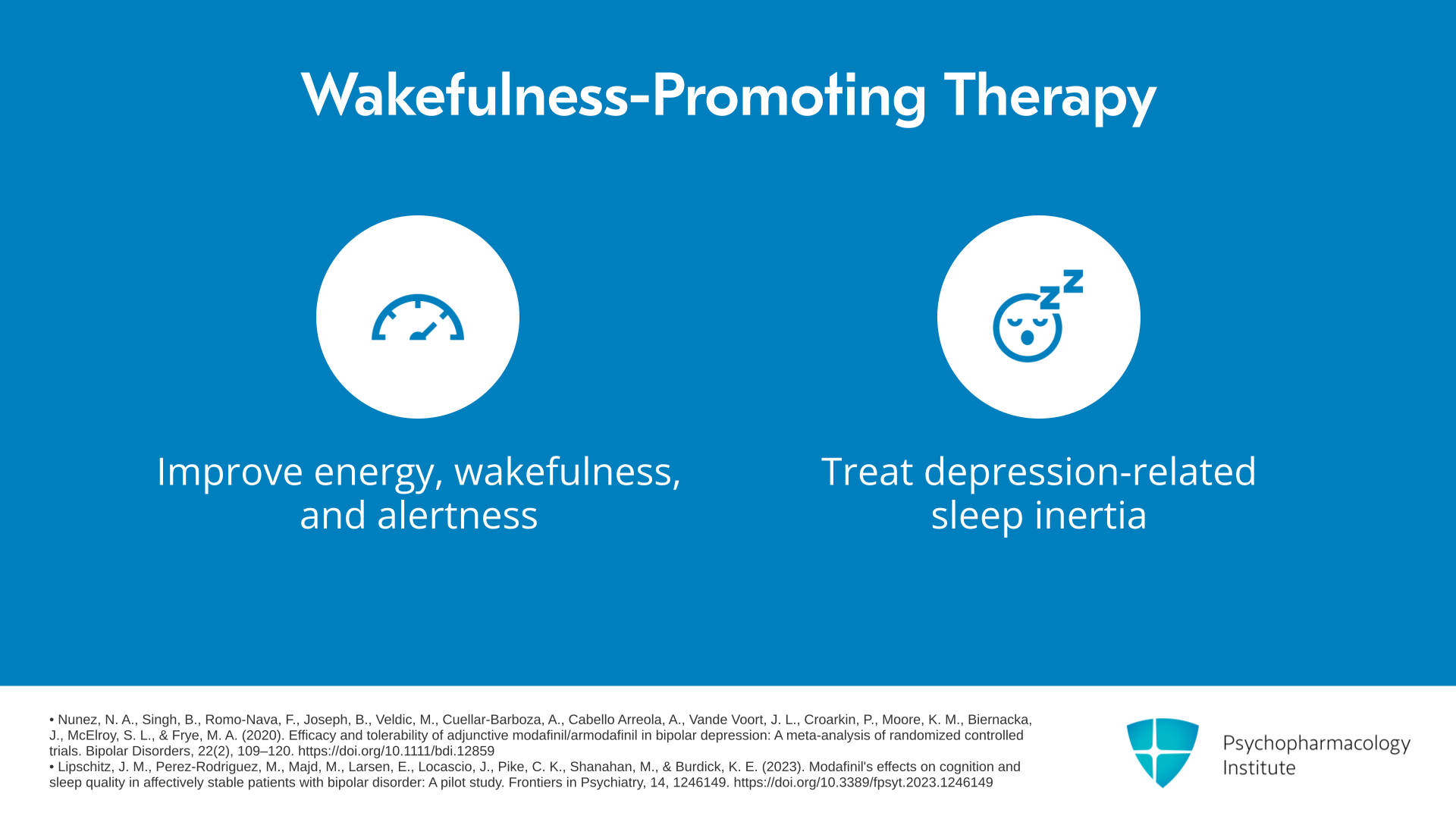
These are classified as wakefulness-promoting agents and that is what they do reliably. They improve energy and wakefulness and alertness. And in that way, they help to set the patient’s circadian rhythm. So when I use these medications, I want the patient to get out of bed and stay out of bed as part of the treatment while they’re using that. So there’s a behavioral component here as well. They also treat sleep inertia which is this groggy feeling many patients have during depression. Where they feel like they can’t wake up and their mind is not working for the first four hours of the day.
References:
- Nunez, N. A., Singh, B., Romo-Nava, F., Joseph, B., Veldic, M., Cuellar-Barboza, A., Cabello Arreola, A., Vande Voort, J. L., Croarkin, P., Moore, K. M., Biernacka, J., McElroy, S. L., & Frye, M. A. (2020). Efficacy and tolerability of adjunctive modafinil/armodafinil in bipolar depression: A meta-analysis of randomized controlled trials. Bipolar Disorders, 22(2), 109–120. https://doi.org/10.1111/bdi.12859
- Lipschitz, J. M., Perez-Rodriguez, M., Majd, M., Larsen, E., Locascio, J., Pike, C. K., Shanahan, M., & Burdick, K. E. (2023). Modafinil's effects on cognition and sleep quality in affectively stable patients with bipolar disorder: A pilot study. Frontiers in Psychiatry, 14, 1246149. https://doi.org/10.3389/fpsyt.2023.1246149
Free Files
Download PDF and other files
Success!
Check your inbox, we sent you all the materials there.
Slide 5 of 16
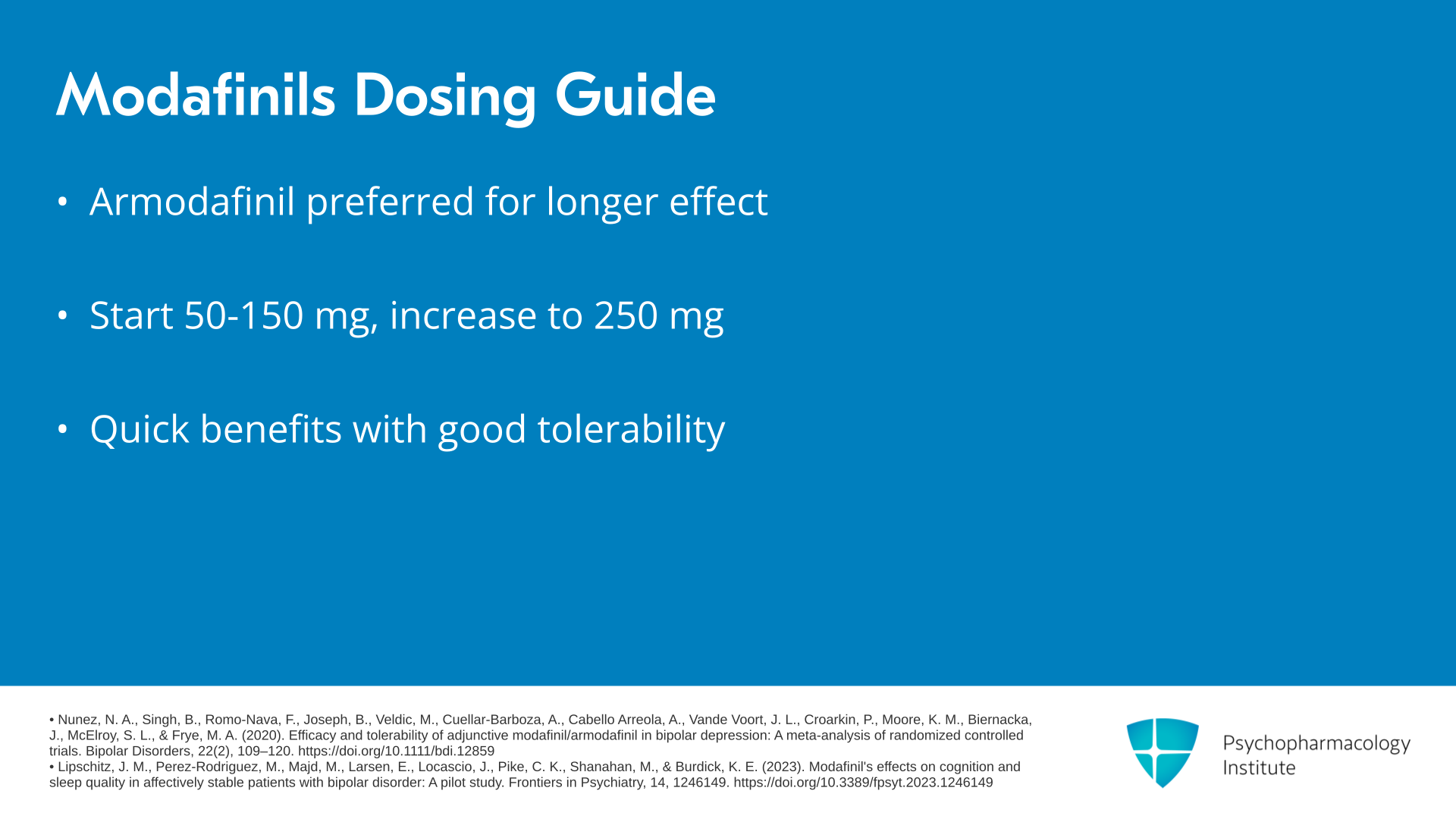
The modafinils are pretty well tolerated and fairly easy to dose. I prefer to use armodafinil because it has smoother blood levels and a little bit longer effect for most patients. You can start at a low dose like 50 to 150 and raise to 250 mg in the morning. They are controlled substances so have a misuse potential and very rarely they can cause Stevens-Johnson syndrome or arrhythmias. Their benefits are pretty quick. Many patients feel it right away and some people take them as needed successfully.
References:
- Nunez, N. A., Singh, B., Romo-Nava, F., Joseph, B., Veldic, M., Cuellar-Barboza, A., Cabello Arreola, A., Vande Voort, J. L., Croarkin, P., Moore, K. M., Biernacka, J., McElroy, S. L., & Frye, M. A. (2020). Efficacy and tolerability of adjunctive modafinil/armodafinil in bipolar depression: A meta-analysis of randomized controlled trials. Bipolar Disorders, 22(2), 109–120. https://doi.org/10.1111/bdi.12859
- Lipschitz, J. M., Perez-Rodriguez, M., Majd, M., Larsen, E., Locascio, J., Pike, C. K., Shanahan, M., & Burdick, K. E. (2023). Modafinil's effects on cognition and sleep quality in affectively stable patients with bipolar disorder: A pilot study. Frontiers in Psychiatry, 14, 1246149. https://doi.org/10.3389/fpsyt.2023.1246149
Slide 6 of 16
Our next off-label option is omega-3, which is one of the better studied supplements in bipolar depression. It works by coating brain cells with neuroprotective effects. So it helps brain cells become more flexible and have a healthy coating of healthy fats on them. If we don’t get enough omega-3s from our diets, the brain tends to substitute cholesterol which makes the brain cells more brittle. And that’s what you see in patients. They’re more brittle. They’re more irritable and more depressed.
References:
- Serefko, A., Jach, M. E., Pietraszuk, M., Świąder, M., Świąder, K., & Szopa, A. (2024). Omega-3 polyunsaturated fatty acids in depression. International Journal of Molecular Sciences, 25(16), 8675. https://doi.org/10.3390/ijms25168675
- Marangell, L. B., Suppes, T., Ketter, T. A., Dennehy, E. B., Zboyan, H., Kertz, B., Nierenberg, A., Calabrese, J., Wisniewski, S. R., & Sachs, G. (2006). Omega-3 fatty acids in bipolar disorder: clinical and research considerations. Prostaglandins, Leukotrienes, and Essential Fatty Acids, 75(4-5), 315–321. https://doi.org/10.1016/j.plefa.2006.07.008
Free Files
Download PDF and other files
Success!
Check your inbox, we sent you all the materials there.
Slide 7 of 16
And what we see clinically is a small effect size in bipolar depression as well as unipolar depression. It might help prevent mania but it does not treat mania. And it’s good for depression especially inflammatory depression.
References:
- Serefko, A., Jach, M. E., Pietraszuk, M., Świąder, M., Świąder, K., & Szopa, A. (2024). Omega-3 polyunsaturated fatty acids in depression. International Journal of Molecular Sciences, 25(16), 8675. https://doi.org/10.3390/ijms25168675
- Marangell, L. B., Suppes, T., Ketter, T. A., Dennehy, E. B., Zboyan, H., Kertz, B., Nierenberg, A., Calabrese, J., Wisniewski, S. R., & Sachs, G. (2006). Omega-3 fatty acids in bipolar disorder: clinical and research considerations. Prostaglandins, Leukotrienes, and Essential Fatty Acids, 75(4-5), 315–321. https://doi.org/10.1016/j.plefa.2006.07.008
Slide 8 of 16
It also helps a few physical problems that go along with bipolar disorder like dyslipidemia where it’s actually FDA approved there. It can reduce acne and psoriasis, side effects on lithium and it can improve fatty liver as well.
References:
- Serefko, A., Jach, M. E., Pietraszuk, M., Świąder, M., Świąder, K., & Szopa, A. (2024). Omega-3 polyunsaturated fatty acids in depression. International Journal of Molecular Sciences, 25(16), 8675. https://doi.org/10.3390/ijms25168675
- Marangell, L. B., Suppes, T., Ketter, T. A., Dennehy, E. B., Zboyan, H., Kertz, B., Nierenberg, A., Calabrese, J., Wisniewski, S. R., & Sachs, G. (2006). Omega-3 fatty acids in bipolar disorder: clinical and research considerations. Prostaglandins, Leukotrienes, and Essential Fatty Acids, 75(4-5), 315–321. https://doi.org/10.1016/j.plefa.2006.07.008
Free Files
Download PDF and other files
Success!
Check your inbox, we sent you all the materials there.
Slide 9 of 16
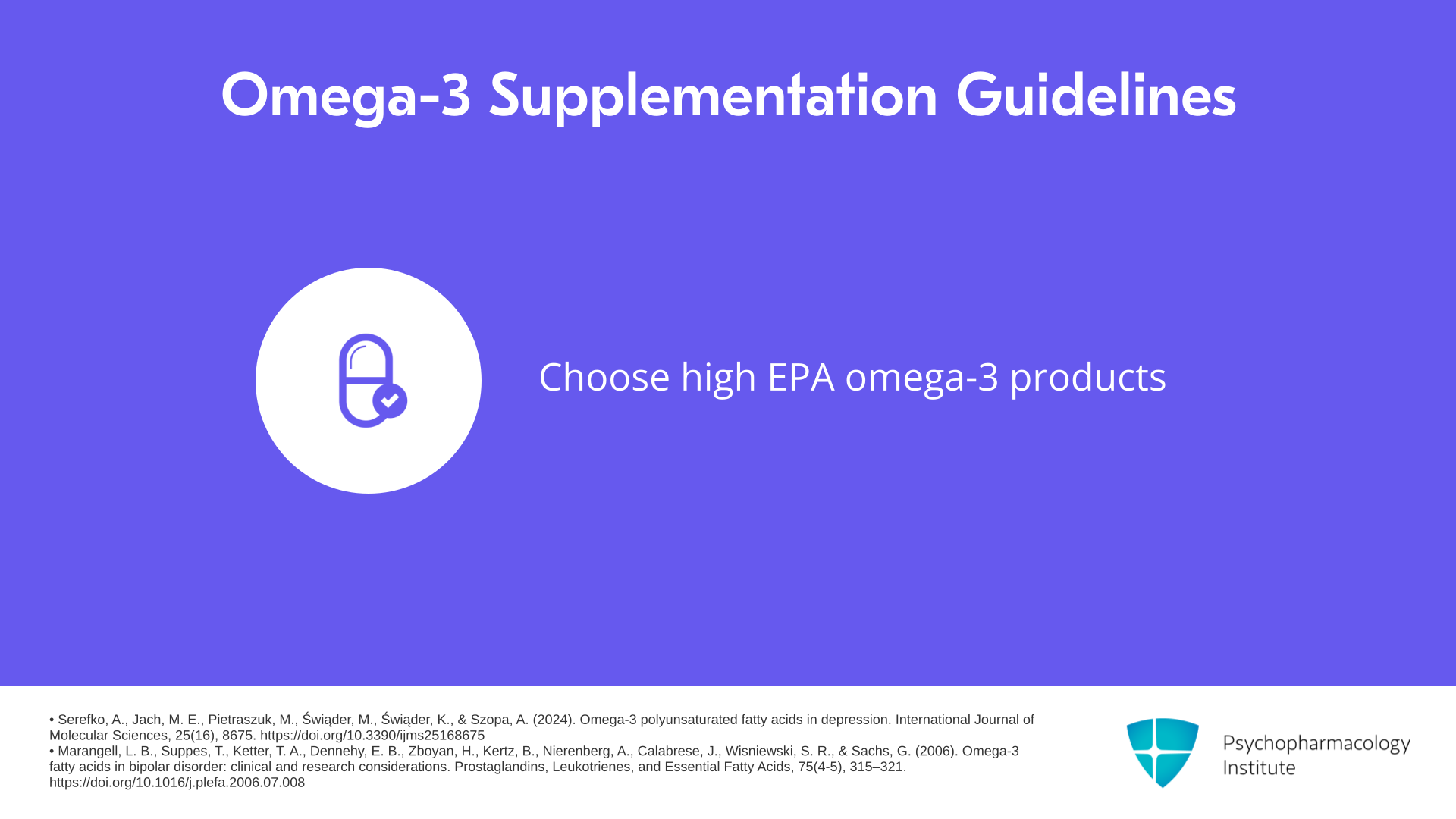
Most patients tolerate it well and it’s important to get a type of omega-3 with a high EPA ,you want to have about twice as much EPA as DHA to treat depression.
References:
- Serefko, A., Jach, M. E., Pietraszuk, M., Świąder, M., Świąder, K., & Szopa, A. (2024). Omega-3 polyunsaturated fatty acids in depression. International Journal of Molecular Sciences, 25(16), 8675. https://doi.org/10.3390/ijms25168675
- Marangell, L. B., Suppes, T., Ketter, T. A., Dennehy, E. B., Zboyan, H., Kertz, B., Nierenberg, A., Calabrese, J., Wisniewski, S. R., & Sachs, G. (2006). Omega-3 fatty acids in bipolar disorder: clinical and research considerations. Prostaglandins, Leukotrienes, and Essential Fatty Acids, 75(4-5), 315–321. https://doi.org/10.1016/j.plefa.2006.07.008
Slide 10 of 16
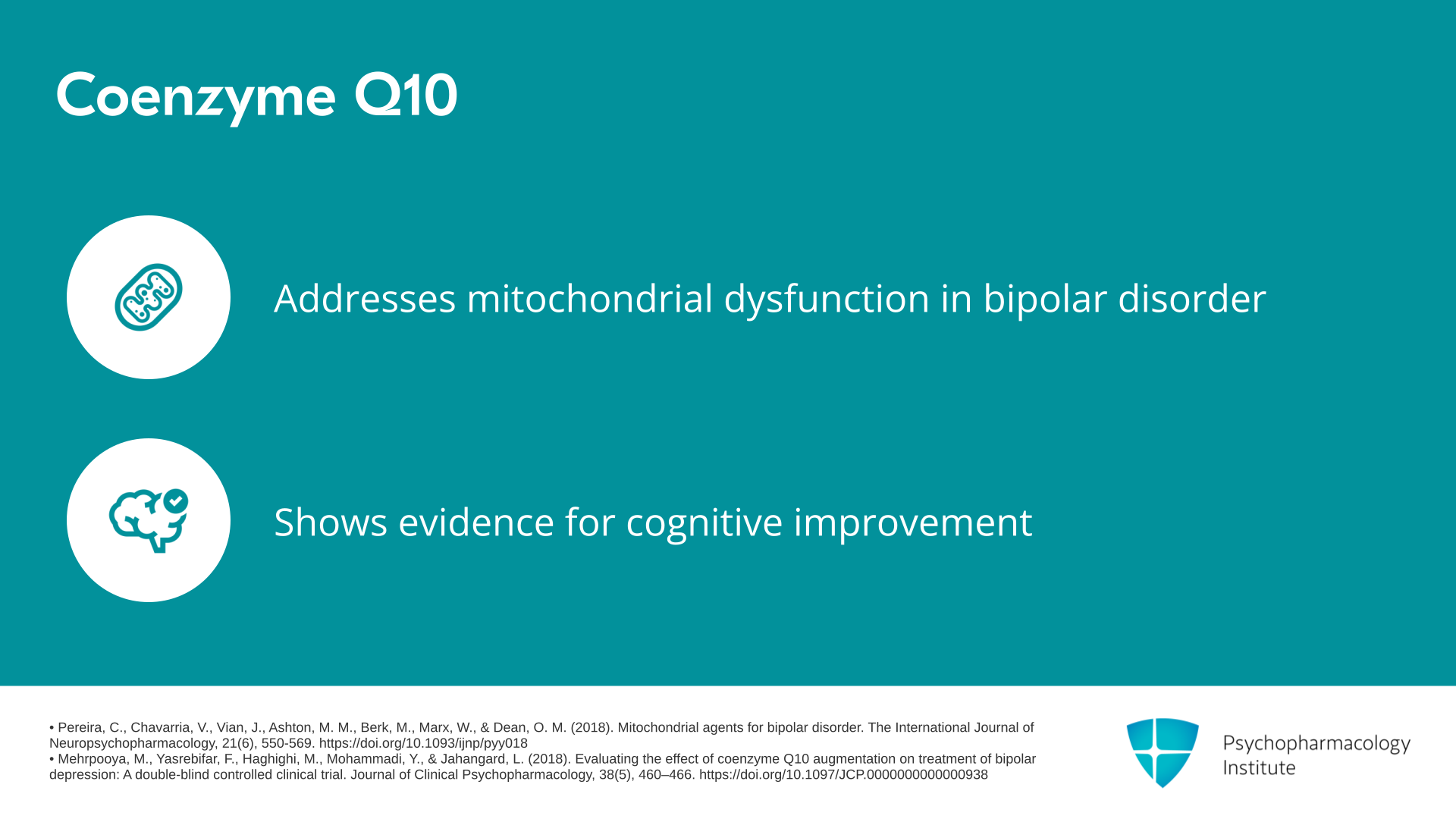
Our next option is another supplement called coenzyme Q10 and this one addresses part of the pathology of bipolar disorder which is that there’s a lot of mitochondrial dysfunction in bipolar, and coenzyme Q10 helps in mitochondrial repair and helps in energy and anti-inflammatory effects as well. There’s some evidence that it helps cognition in patients, so maybe a good choice for patients with cognitive dysfunction. It’s very well tolerated and improves energy a little bit.
References:
- Pereira, C., Chavarria, V., Vian, J., Ashton, M. M., Berk, M., Marx, W., & Dean, O. M. (2018). Mitochondrial agents for bipolar disorder. The International Journal of Neuropsychopharmacology, 21(6), 550-569. https://doi.org/10.1093/ijnp/pyy018
- Mehrpooya, M., Yasrebifar, F., Haghighi, M., Mohammadi, Y., & Jahangard, L. (2018). Evaluating the effect of coenzyme Q10 augmentation on treatment of bipolar depression: A double-blind controlled clinical trial. Journal of Clinical Psychopharmacology, 38(5), 460–466. https://doi.org/10.1097/JCP.0000000000000938
Free Files
Download PDF and other files
Success!
Check your inbox, we sent you all the materials there.
Slide 11 of 16
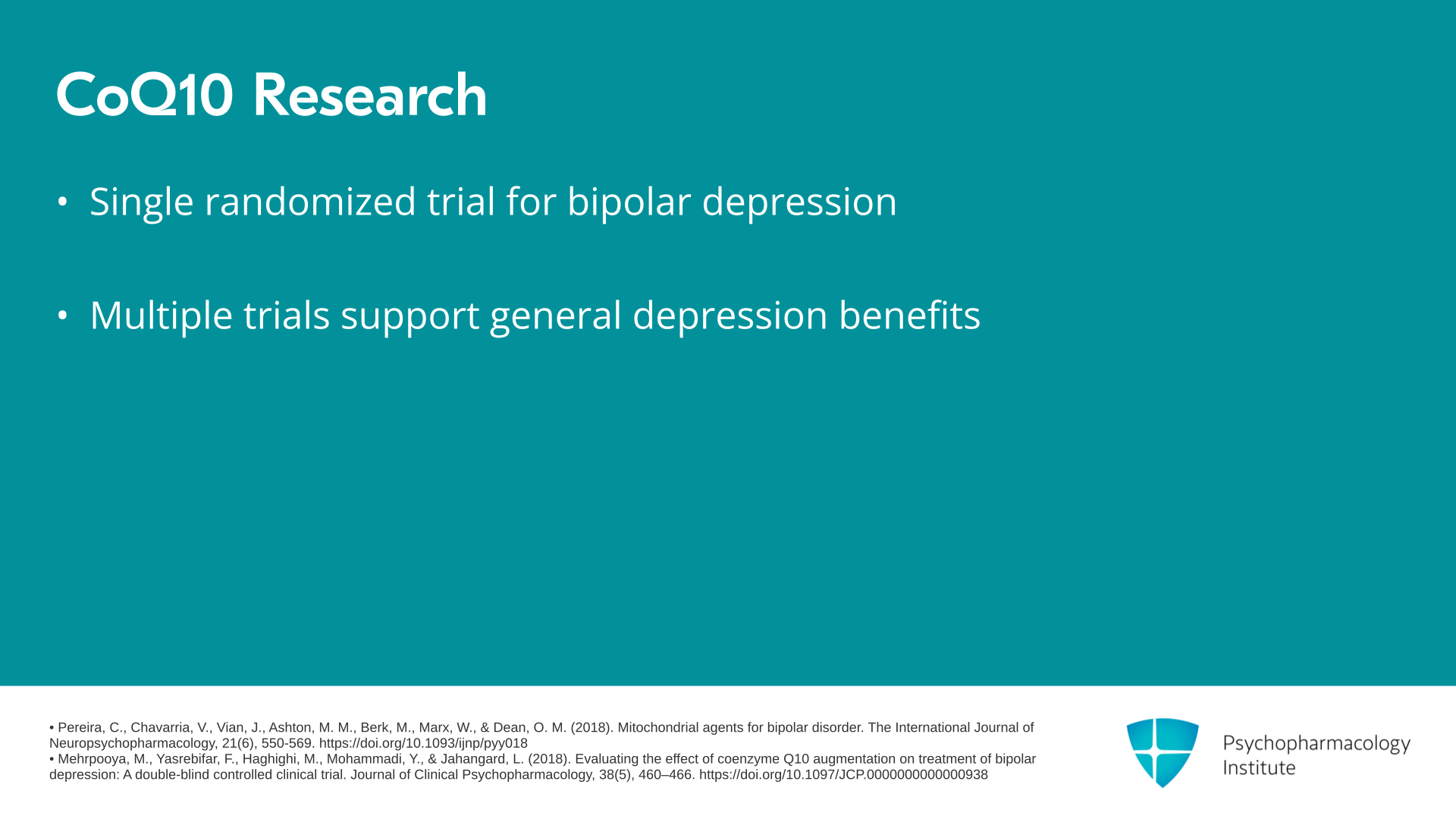
The main drawback of coenzyme Q10 is that there’s only one randomized trial in bipolar depression but it has more trials in depression due to medical illness and major depression. There are trials on ADHD. So we have more data if we put it all together suggesting that this is a medication that’s beneficial for depression including the bipolar type.
References:
- Pereira, C., Chavarria, V., Vian, J., Ashton, M. M., Berk, M., Marx, W., & Dean, O. M. (2018). Mitochondrial agents for bipolar disorder. The International Journal of Neuropsychopharmacology, 21(6), 550-569. https://doi.org/10.1093/ijnp/pyy018
- Mehrpooya, M., Yasrebifar, F., Haghighi, M., Mohammadi, Y., & Jahangard, L. (2018). Evaluating the effect of coenzyme Q10 augmentation on treatment of bipolar depression: A double-blind controlled clinical trial. Journal of Clinical Psychopharmacology, 38(5), 460–466. https://doi.org/10.1097/JCP.0000000000000938
Slide 12 of 16
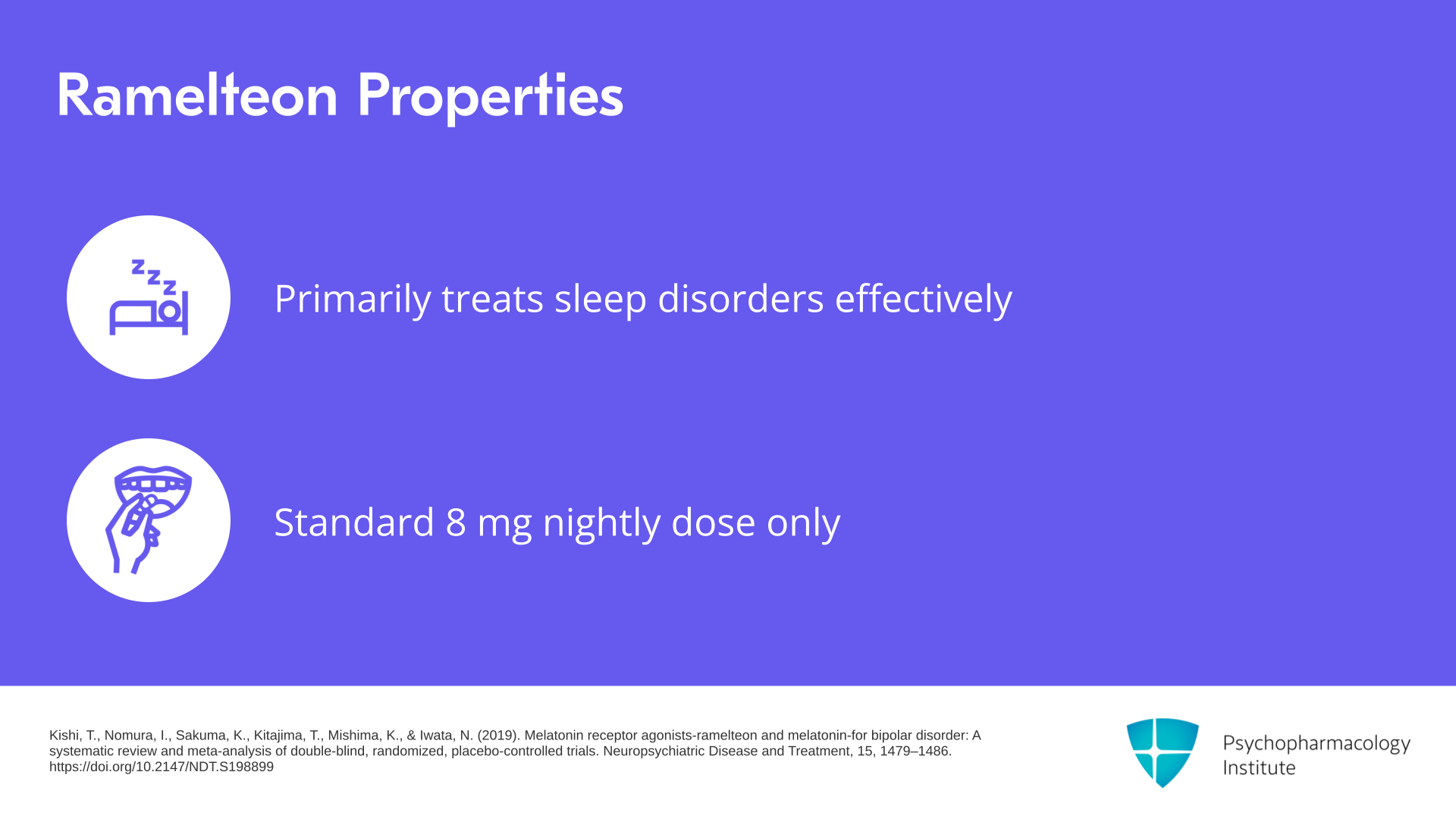
Our last treatment for bipolar depression is really not a treatment for bipolar depression, but it can help sleep and may help depression. It’s called ramelteon, Rozerem. It’s a sleep medication and it’s very easy to dose. There’s only one size. It’s 8 mg at night. There’s no starting dose. It’s not a controlled substance unlike other sleep medications. And what’s unique about it is in some studies it worked better for sleep the longer you took it, perhaps ’cause it’s setting the circadian rhythm ’cause this is a melatonin agonist.
References:
- Kishi, T., Nomura, I., Sakuma, K., Kitajima, T., Mishima, K., & Iwata, N. (2019). Melatonin receptor agonists-ramelteon and melatonin-for bipolar disorder: A systematic review and meta-analysis of double-blind, randomized, placebo-controlled trials. Neuropsychiatric Disease and Treatment, 15, 1479–1486. https://doi.org/10.2147/NDT.S198899
Free Files
Download PDF and other files
Success!
Check your inbox, we sent you all the materials there.
Slide 13 of 16
Most sleep medicines tend to wear off when you get some tolerance the longer you take it. So patients appreciate knowing that, that this is one that’s not addictive and may work better with longer-term use. You need to tell patients it’s a more subtle effect that builds up.
References:
- Kishi, T., Nomura, I., Sakuma, K., Kitajima, T., Mishima, K., & Iwata, N. (2019). Melatonin receptor agonists-ramelteon and melatonin-for bipolar disorder: A systematic review and meta-analysis of double-blind, randomized, placebo-controlled trials. Neuropsychiatric Disease and Treatment, 15, 1479–1486. https://doi.org/10.2147/NDT.S198899
Slide 14 of 16
And why did I list it for bipolar depression? Ramelteon failed in mania, but ramelteon did manage to prevent depression in one trial of bipolar depression. It was a weak effect but some signal there that it may prevent depression. And based on its melatonergic mechanisms and its ability to stabilize circadian rhythms, there’s reason to think that it might.
References:
- Kishi, T., Nomura, I., Sakuma, K., Kitajima, T., Mishima, K., & Iwata, N. (2019). Melatonin receptor agonists-ramelteon and melatonin-for bipolar disorder: A systematic review and meta-analysis of double-blind, randomized, placebo-controlled trials. Neuropsychiatric Disease and Treatment, 15, 1479–1486. https://doi.org/10.2147/NDT.S198899
Free Files
Download PDF and other files
Success!
Check your inbox, we sent you all the materials there.
Slide 15 of 16
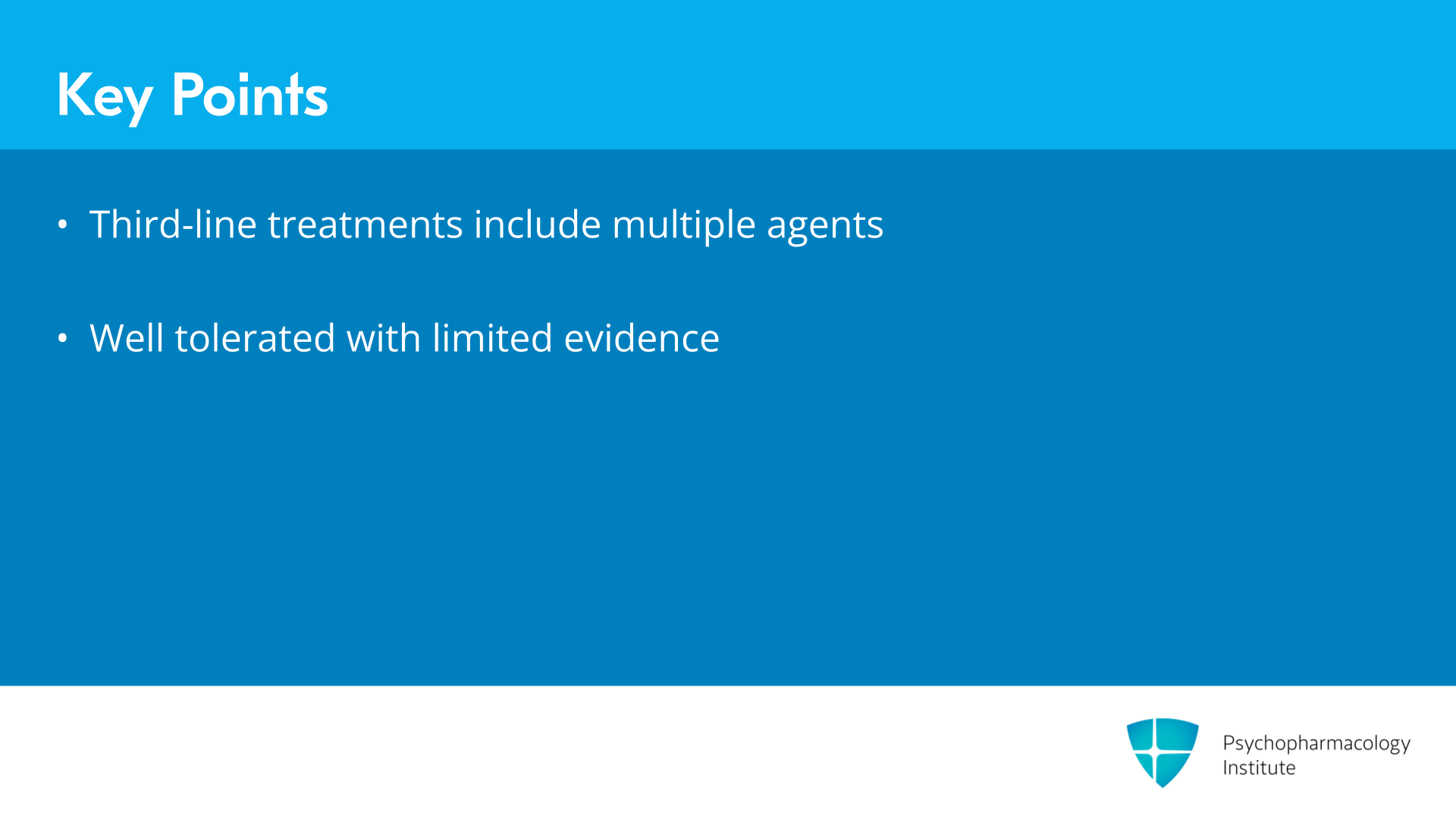
Let’s wrap up these off-label therapies with our key points. These third-line off-label treatments for bipolar depression include the modafinils, omega-3 fatty acids, coenzyme Q10 and ramelteon. They are well tolerated but they’re supported by limited evidence. So consider them after other options have failed.
Slide 16 of 16
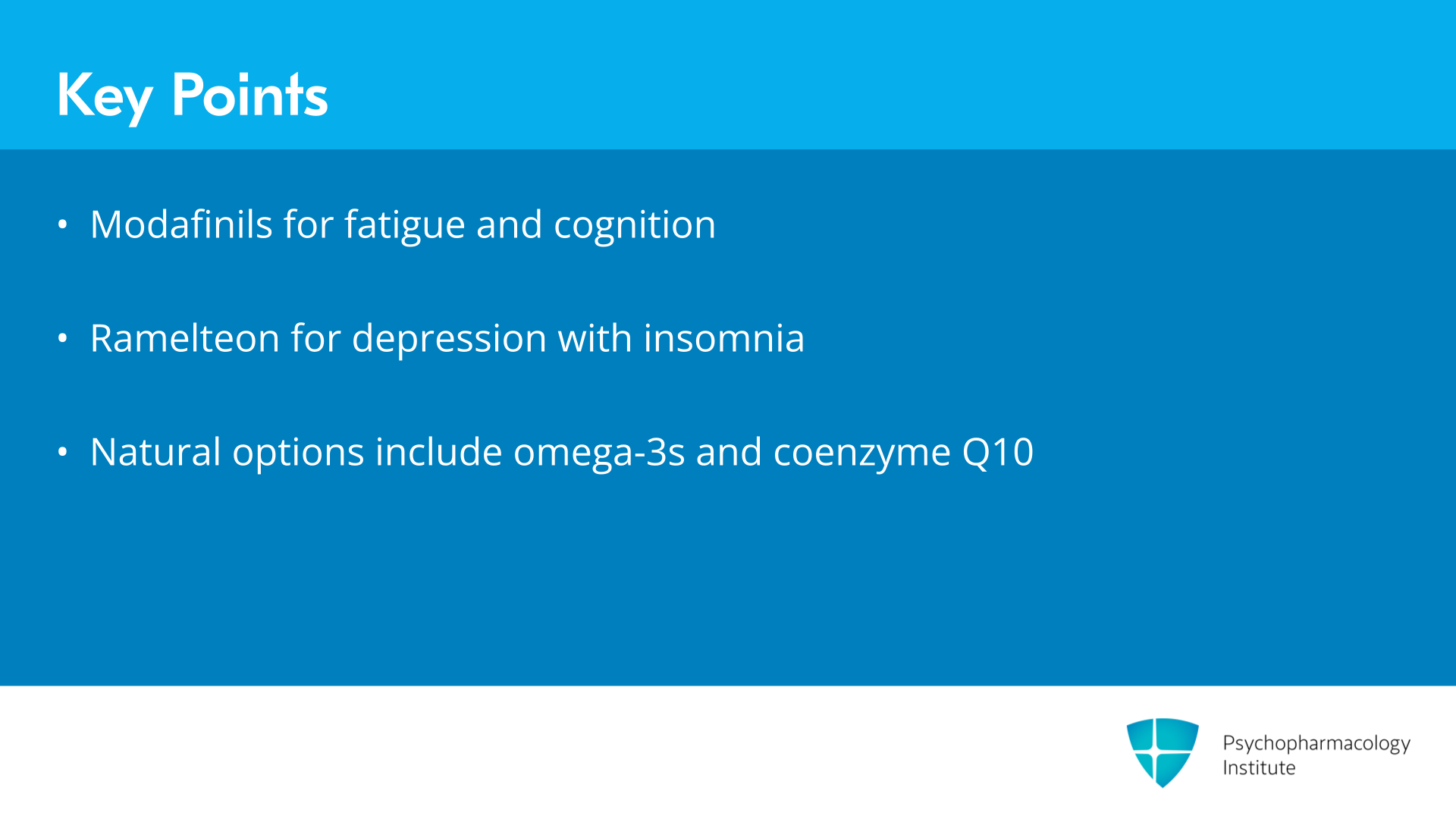
Specifically, the modafinils for fatigue and cognitive dysfunction, ramelteon for depression with insomnia and the omega-3s and coenzyme Q10 for patients who can’t tolerate medications or prefer a natural option.
Free Files
Download PDF and other files
Success!
Check your inbox, we sent you all the materials there.
