Slides and Transcript
Slide 2 of 23
Glutamate modulators are a very exciting area of research and potential therapeutics. Glutamate is as we know the primary excitatory neurotransmitter in the brain. The concentration and dynamics of extracellular glutamate are tightly regulated and it’s important that synaptically released glutamate is rapidly and efficiently cleared from the extrasynaptic space.
Excess glutamate and especially hyperstimulation of the NMDA receptor and consequent excessive calcium influx can lead to neuronal damage and atrophy, what we call excitotoxicity. And you see that in various types of pathological seizures and epilepsy.
References:
- Rosenberg, D., & Gershon, S. (2012). Pharmacotherapy of child and adolescent psychiatric disorders. John Wiley & Sons.
Free Files
Download PDF and other files
Success!
Check your inbox, we sent you all the materials there.
Slide 3 of 23
Glutamatergic dysregulation has been investigated in multiple studies with the role of the glutamatergic system implicated in a variety of psychiatric conditions.
References:
- Rosenberg, D., & Gershon, S. (2012). Pharmacotherapy of child and adolescent psychiatric disorders. John Wiley & Sons.
Slide 4 of 23
So let’s look at the mechanism of action of memantine.
It’s an N-methyl-D-aspartate, NMDA receptor antagonist that acts as a non-competitive, open channel blocker and blocks the receptor channel when it is excessively open.
As such, memantine is believed to protect against glutamatergic excitotoxicity.
References:
- Rosenberg, D., & Gershon, S. (2012). Pharmacotherapy of child and adolescent psychiatric disorders. John Wiley & Sons.
Free Files
Download PDF and other files
Success!
Check your inbox, we sent you all the materials there.
Slide 5 of 23
There are some indications that memantine may have a beneficial effect for the treatment of autism, OCD, and mood disorders.
References:
- Rosenberg, D., & Gershon, S. (2012). Pharmacotherapy of child and adolescent psychiatric disorders. John Wiley & Sons.
Slide 6 of 23
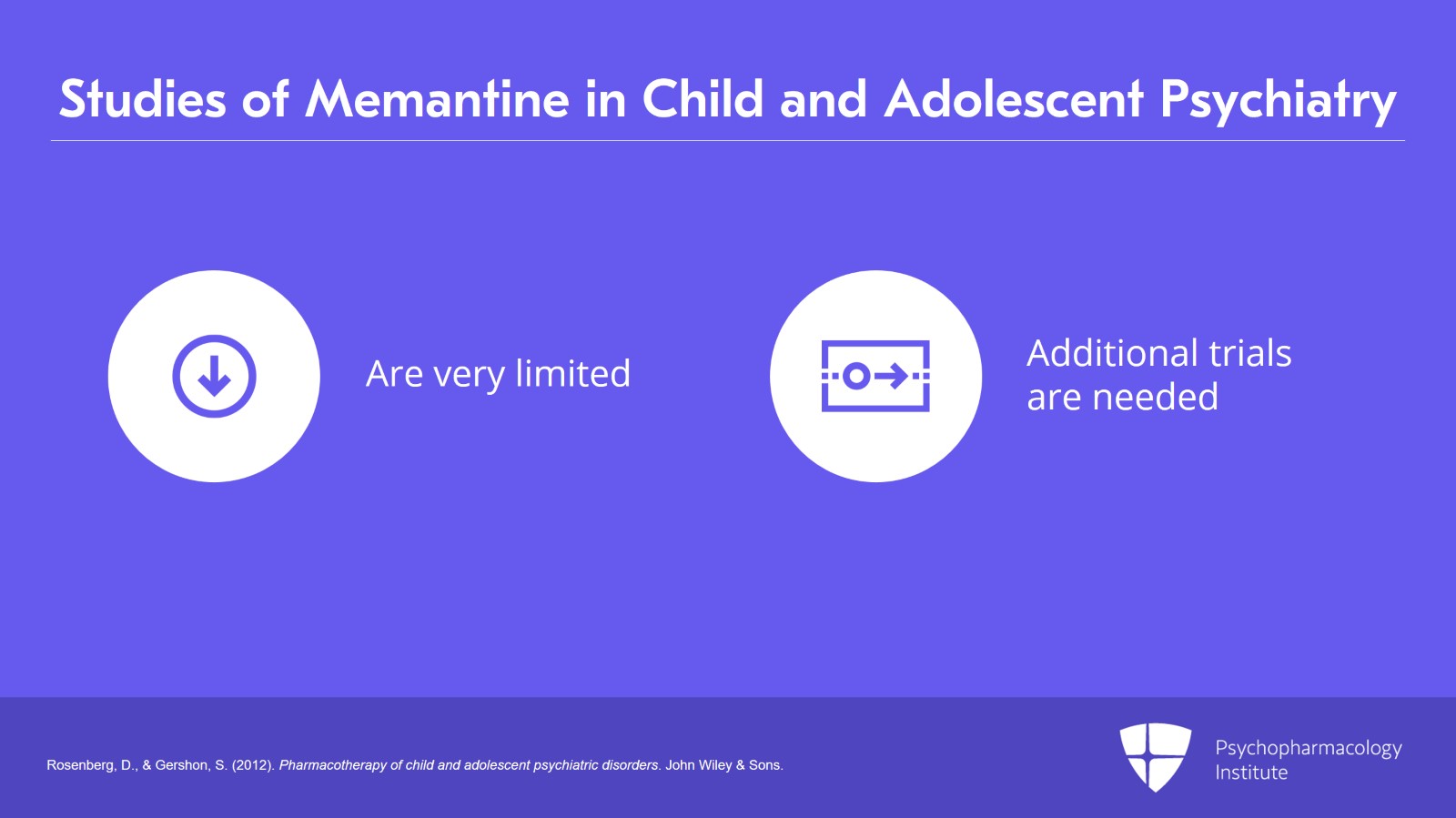
That being said, studies of memantine in Child and Adolescent Psychiatry have been very limited and more rigorous clinical trials are needed to confirm this.
References:
- Rosenberg, D., & Gershon, S. (2012). Pharmacotherapy of child and adolescent psychiatric disorders. John Wiley & Sons.
Free Files
Download PDF and other files
Success!
Check your inbox, we sent you all the materials there.
Slide 7 of 23
Potential indications, autism spectrum disorder.
Glutamatergic dysfunction has been implicated in autism spectrum disorders and has led to several studies on the use of memantine for the treatment of autism.
References:
- Rosenberg, D., & Gershon, S. (2012). Pharmacotherapy of child and adolescent psychiatric disorders. John Wiley & Sons.
- Aman, M. G., Findling, R. L., Hardan, A. Y., Hendren, R. L., Melmed, R. D., Kehinde-Nelson, O., Hsu, H., Trugman, J. M., Palmer, R. H., Graham, S. M., Gage, A. T., Perhach, J. L., & Katz, E. (2017). Safety and efficacy of memantine in children with autism: Randomized, placebo-controlled study and open-label extension. Journal of Child and Adolescent Psychopharmacology, 27(5), 403-412.
Slide 8 of 23
Evidence from several OLTs and retrospective studies suggested that memantine may improve social interaction, language function, and memory as well as behavioral symptoms such as hyperactivity, lethargy, irritability, and stereotypic behavior in children with autism spectrum disorders.
And that’s significant because many of the standard medicines, the atypical antipsychotics such as risperidone and others, can help with symptoms associated with autism spectrum disorders but not often the social interaction, language function, core symptoms of autism.
References:
- Rosenberg, D., & Gershon, S. (2012). Pharmacotherapy of child and adolescent psychiatric disorders. John Wiley & Sons.
- Aman, M. G., Findling, R. L., Hardan, A. Y., Hendren, R. L., Melmed, R. D., Kehinde-Nelson, O., Hsu, H., Trugman, J. M., Palmer, R. H., Graham, S. M., Gage, A. T., Perhach, J. L., & Katz, E. (2017). Safety and efficacy of memantine in children with autism: Randomized, placebo-controlled study and open-label extension. Journal of Child and Adolescent Psychopharmacology, 27(5), 403-412.
Free Files
Download PDF and other files
Success!
Check your inbox, we sent you all the materials there.
Slide 9 of 23
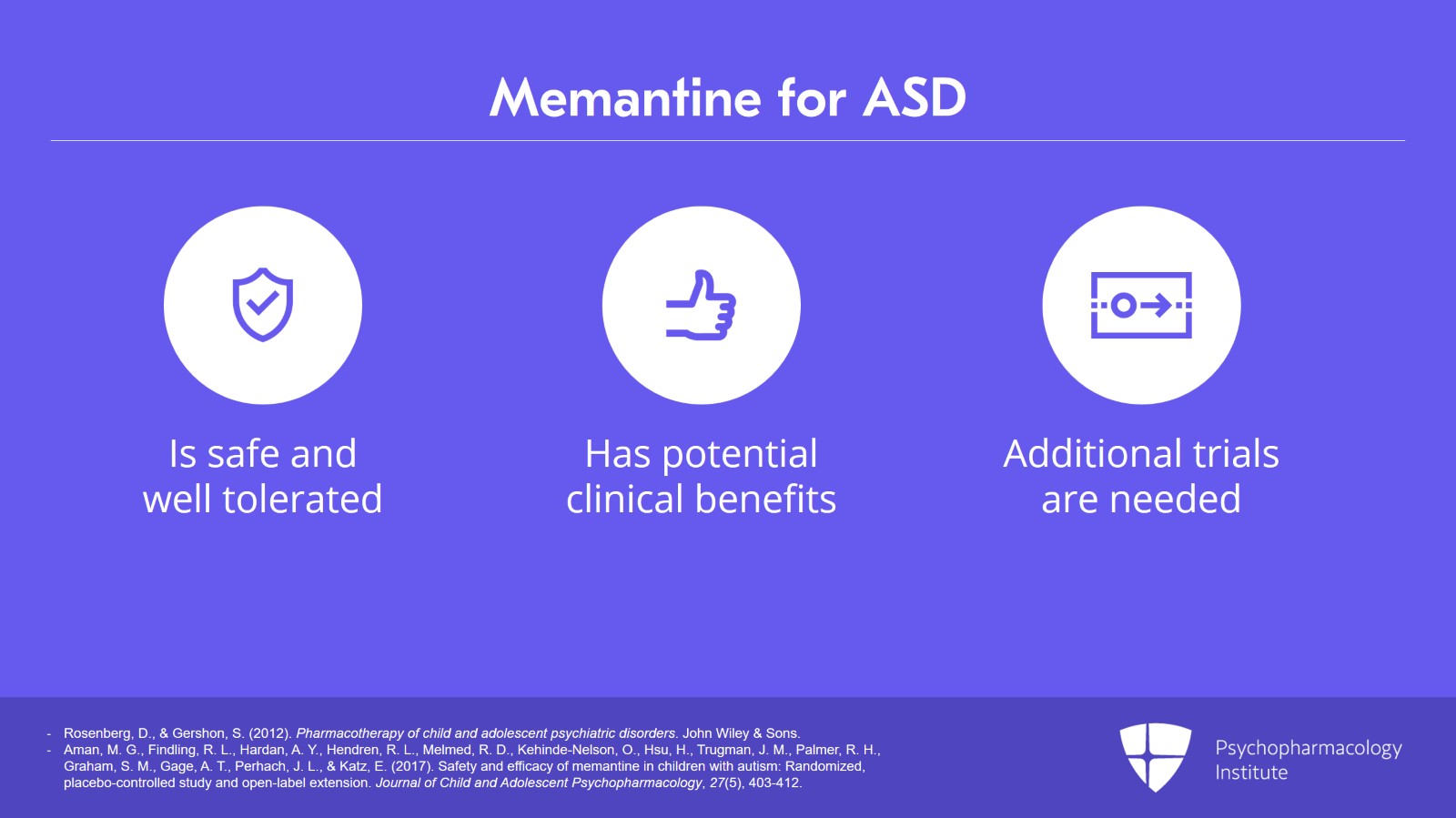
Overall data from pediatric studies have shown that memantine is very safe. It’s very well tolerated with potential clinical benefits in children with ASD.
Current findings though are based primarily on case series, OLTs and a few randomized controlled trials so additional trials are clearly needed.
References:
- Rosenberg, D., & Gershon, S. (2012). Pharmacotherapy of child and adolescent psychiatric disorders. John Wiley & Sons.
- Aman, M. G., Findling, R. L., Hardan, A. Y., Hendren, R. L., Melmed, R. D., Kehinde-Nelson, O., Hsu, H., Trugman, J. M., Palmer, R. H., Graham, S. M., Gage, A. T., Perhach, J. L., & Katz, E. (2017). Safety and efficacy of memantine in children with autism: Randomized, placebo-controlled study and open-label extension. Journal of Child and Adolescent Psychopharmacology, 27(5), 403-412.
Slide 10 of 23
Obsessive-compulsive disorder.
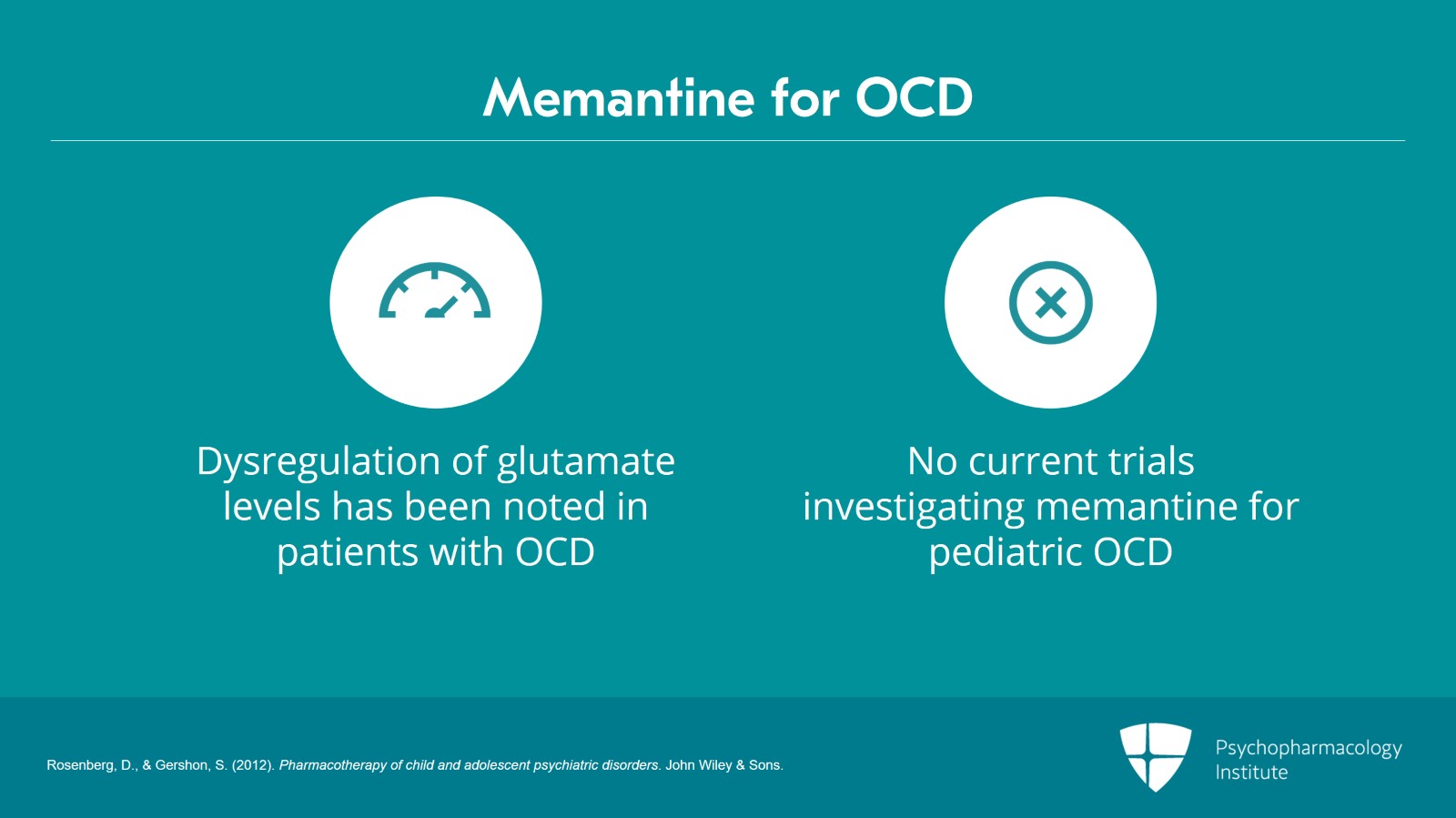
This is another exciting area where this is being used fairly routinely in OCD clinics across the country. Dysregulation of glutamate levels have been noted in the brains of patients with OCD but there currently are no trials investigating memantine in pediatric OCD.
References:
- Rosenberg, D., & Gershon, S. (2012). Pharmacotherapy of child and adolescent psychiatric disorders. John Wiley & Sons.
Free Files
Download PDF and other files
Success!
Check your inbox, we sent you all the materials there.
Slide 11 of 23
A case report of a 15-year-old female with chronic severe OCD resistant to several trials of different SSRIs reported significant improvement when memantine was added to a previously ineffective citalopram regimen.
References:
- Rosenberg, D., & Gershon, S. (2012). Pharmacotherapy of child and adolescent psychiatric disorders. John Wiley & Sons.
Slide 12 of 23
So the bottom line here is that memantine is not a standalone agent.
It’s not going to replace the standard treatments for OCD but in cases where there isn’t sufficient improvement or there’s no improvement at all, memantine can be very helpful and get clinically meaningful improvement.
References:
- Rosenberg, D., & Gershon, S. (2012). Pharmacotherapy of child and adolescent psychiatric disorders. John Wiley & Sons.
- Fineberg, N. A., Hollander, E., Pallanti, S., Walitza, S., Grünblatt, E., Dell'Osso, B. M., Albert, U., Geller, D. A., Brakoulias, V., Janardhan Reddy, Y. C., Arumugham, S. S., Shavitt, R. G., Drummond, L., Grancini, B., De Carlo, V., Cinosi, E., Chamberlain, S. R., Ioannidis, K., Rodriguez, C. I., Garg, K., … Menchon, J. M. (2020). Clinical advances in obsessive-compulsive disorder: A position statement by the International College of Obsessive-Compulsive Spectrum Disorders. International Clinical Psychopharmacology, 35(4), 173–193.
Free Files
Download PDF and other files
Success!
Check your inbox, we sent you all the materials there.
Slide 13 of 23
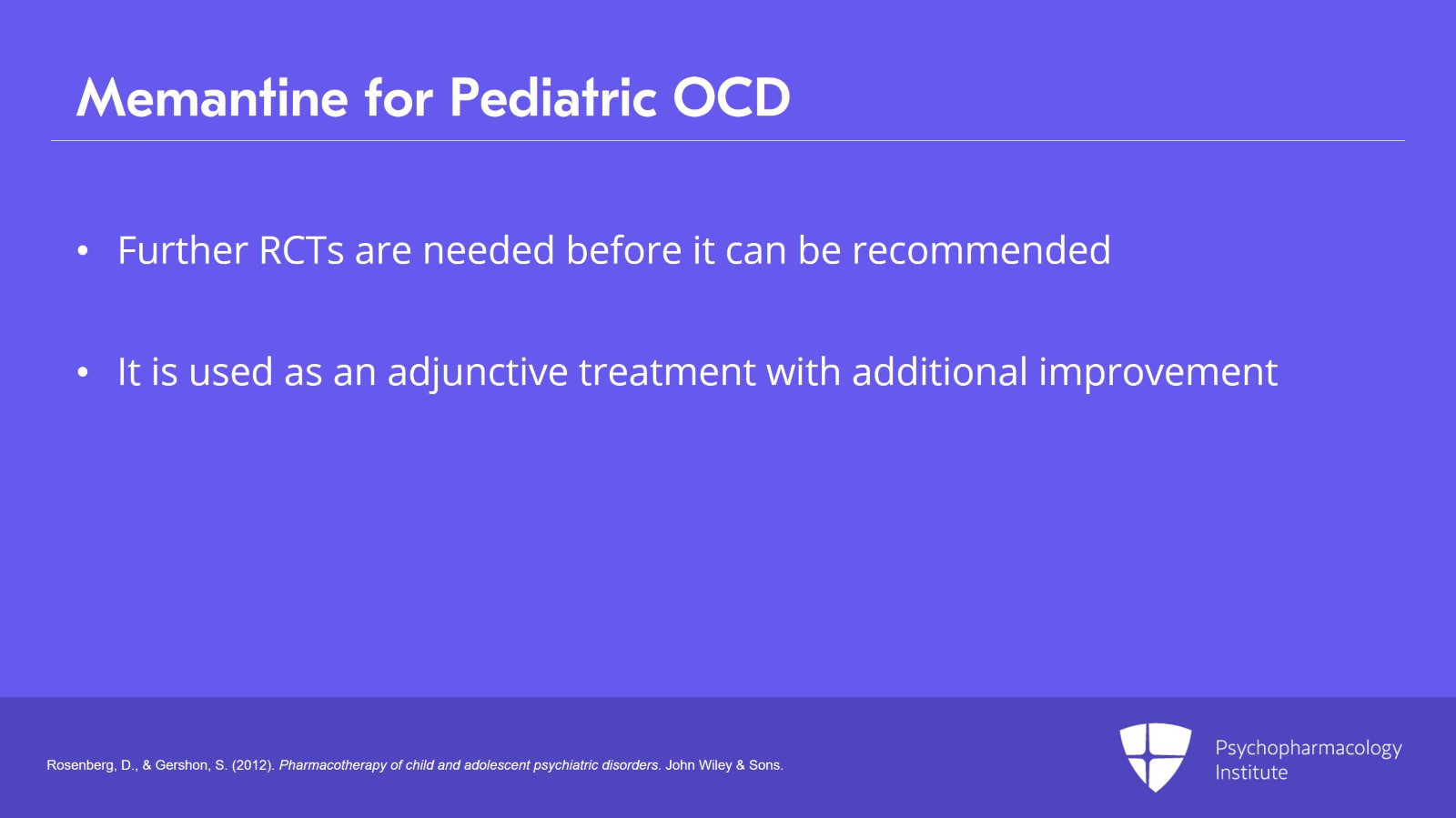
Further randomized controlled trials are needed before memantine use can be recommended fully in pediatric populations.
That being said, given the severity of obsessive-compulsive disorder, in our clinic we often use memantine as an adjunctive treatment. It doesn’t typically have an oh wow effect although sometimes it does in nonresponders but it does yield significant additional improvement. And any improvement that we can get particularly with a compound that has this nice safety profile is definitely a huge advantage.
References:
- Rosenberg, D., & Gershon, S. (2012). Pharmacotherapy of child and adolescent psychiatric disorders. John Wiley & Sons.
Slide 14 of 23
I will say that because of its safety profile we don’t limit ourselves to using memantine in treatment-resistant, refractory, extreme OCD patients.
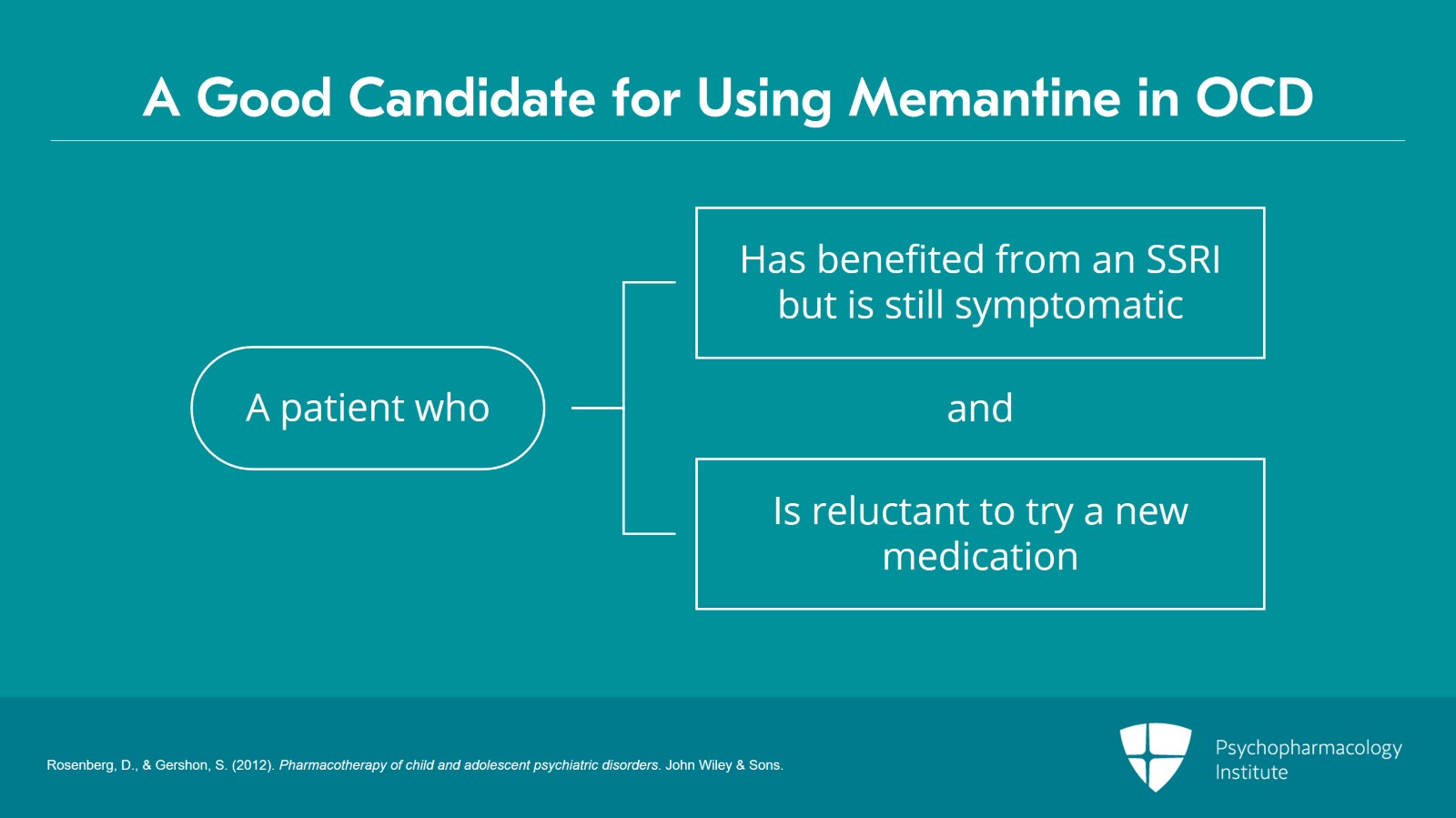
A good example would be a patient who has achieved some benefit from their SSRI but not enough and are still symptomatic but the parent or patients, they are reluctant to try a new SSRI or medicine to attempt to get full remission of symptoms in part because they don’t want to give up the gains they’ve made. They realize it’s not enough but they want more. And in those cases, given the safety and potential for some augmentation benefit, we will add memantine.
That being said, I do want to remind people that the studies in children are lacking and more investigation is clearly needed.
References:
- Rosenberg, D., & Gershon, S. (2012). Pharmacotherapy of child and adolescent psychiatric disorders. John Wiley & Sons.
Free Files
Download PDF and other files
Success!
Check your inbox, we sent you all the materials there.
Slide 15 of 23
What about indications in major depressive disorder?
There is in fact growing evidence that disturbances in glutamate function are critically involved in the pathophysiology of major depressive disorders.
References:
- Rosenberg, D., & Gershon, S. (2012). Pharmacotherapy of child and adolescent psychiatric disorders. John Wiley & Sons.
- Hosenbocus, S., & Chahal, R. (2013). Memantine: A review of possible uses in child and adolescent psychiatry. Journal of the Canadian Academy of Child and Adolescent Psychiatry, 22(2), 166–171.
Slide 16 of 23
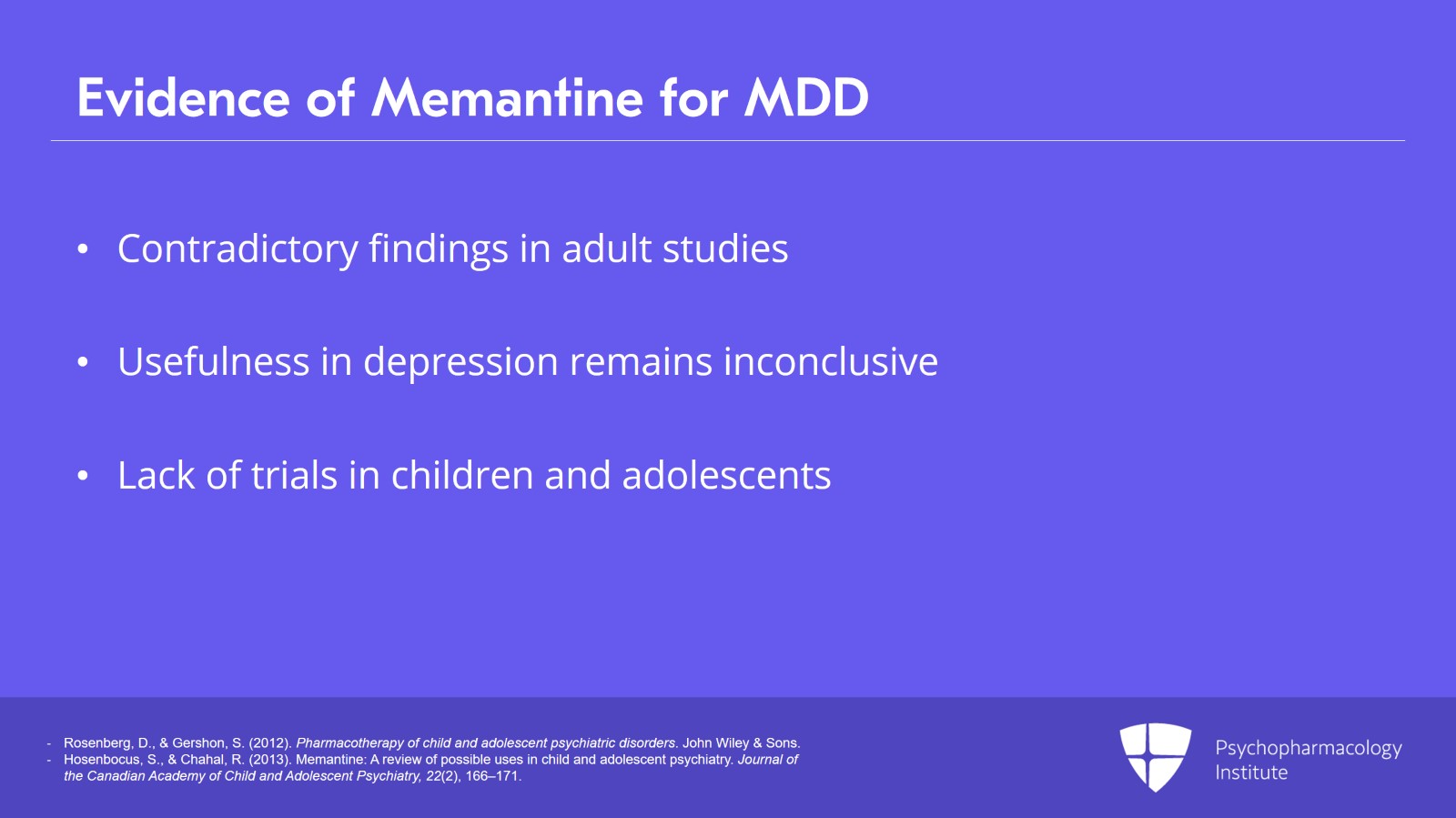
And results from two randomized controlled studies and open-label study and several case reports on the use of memantine for depression therapy for adults had produced contradictory findings. Neither of the studies which observed positive effects from memantine treatment included a control group.
So memantine’s usefulness in depression remains elusive and inconclusive.
Additionally, no trials at all had been conducted with memantine treatment for depression in children and adolescents.
References:
- Rosenberg, D., & Gershon, S. (2012). Pharmacotherapy of child and adolescent psychiatric disorders. John Wiley & Sons.
- Hosenbocus, S., & Chahal, R. (2013). Memantine: A review of possible uses in child and adolescent psychiatry. Journal of the Canadian Academy of Child and Adolescent Psychiatry, 22(2), 166–171.
Free Files
Download PDF and other files
Success!
Check your inbox, we sent you all the materials there.
Slide 17 of 23
Bipolar disorder.
Several OLTs suggest memantine may improve manic symptoms and produce a sustained rather than a transient mood stabilizing effect when added as an augmentation therapy for adults with or without treatment-resistant bipolar disorder.
References:
- Rosenberg, D., & Gershon, S. (2012). Pharmacotherapy of child and adolescent psychiatric disorders. John Wiley & Sons.
- Hosenbocus, S., & Chahal, R. (2013). Memantine: A review of possible uses in child and adolescent psychiatry. Journal of the Canadian Academy of Child and Adolescent Psychiatry, 22(2), 166–171.
Slide 18 of 23
So while memantine has demonstrated positive effect as an augmentation therapy for adults with bipolar disorder, there are no studies in children or adolescents with bipolar disorder.
References:
- Rosenberg, D., & Gershon, S. (2012). Pharmacotherapy of child and adolescent psychiatric disorders. John Wiley & Sons.
- Hosenbocus, S., & Chahal, R. (2013). Memantine: A review of possible uses in child and adolescent psychiatry. Journal of the Canadian Academy of Child and Adolescent Psychiatry, 22(2), 166–171.
Free Files
Download PDF and other files
Success!
Check your inbox, we sent you all the materials there.
Slide 19 of 23
In conclusion, based on the available research, there are indications that memantine may have a key signal and beneficial effect for the treatment of autism, OCD, and mood disorders particularly bipolar disorder in children and adolescents.
References:
- Rosenberg, D., & Gershon, S. (2012). Pharmacotherapy of child and adolescent psychiatric disorders. John Wiley & Sons.
- Hosenbocus, S., & Chahal, R. (2013). Memantine: A review of possible uses in child and adolescent psychiatry. Journal of the Canadian Academy of Child and Adolescent Psychiatry, 22(2), 166–171.
Slide 20 of 23
However, the data remains limited and memantine augmentation should be used in cases that are refractory to other treatments.
References:
- Rosenberg, D., & Gershon, S. (2012). Pharmacotherapy of child and adolescent psychiatric disorders. John Wiley & Sons.
- Hosenbocus, S., & Chahal, R. (2013). Memantine: A review of possible uses in child and adolescent psychiatry. Journal of the Canadian Academy of Child and Adolescent Psychiatry, 22(2), 166–171.
Free Files
Download PDF and other files
Success!
Check your inbox, we sent you all the materials there.
Slide 21 of 23
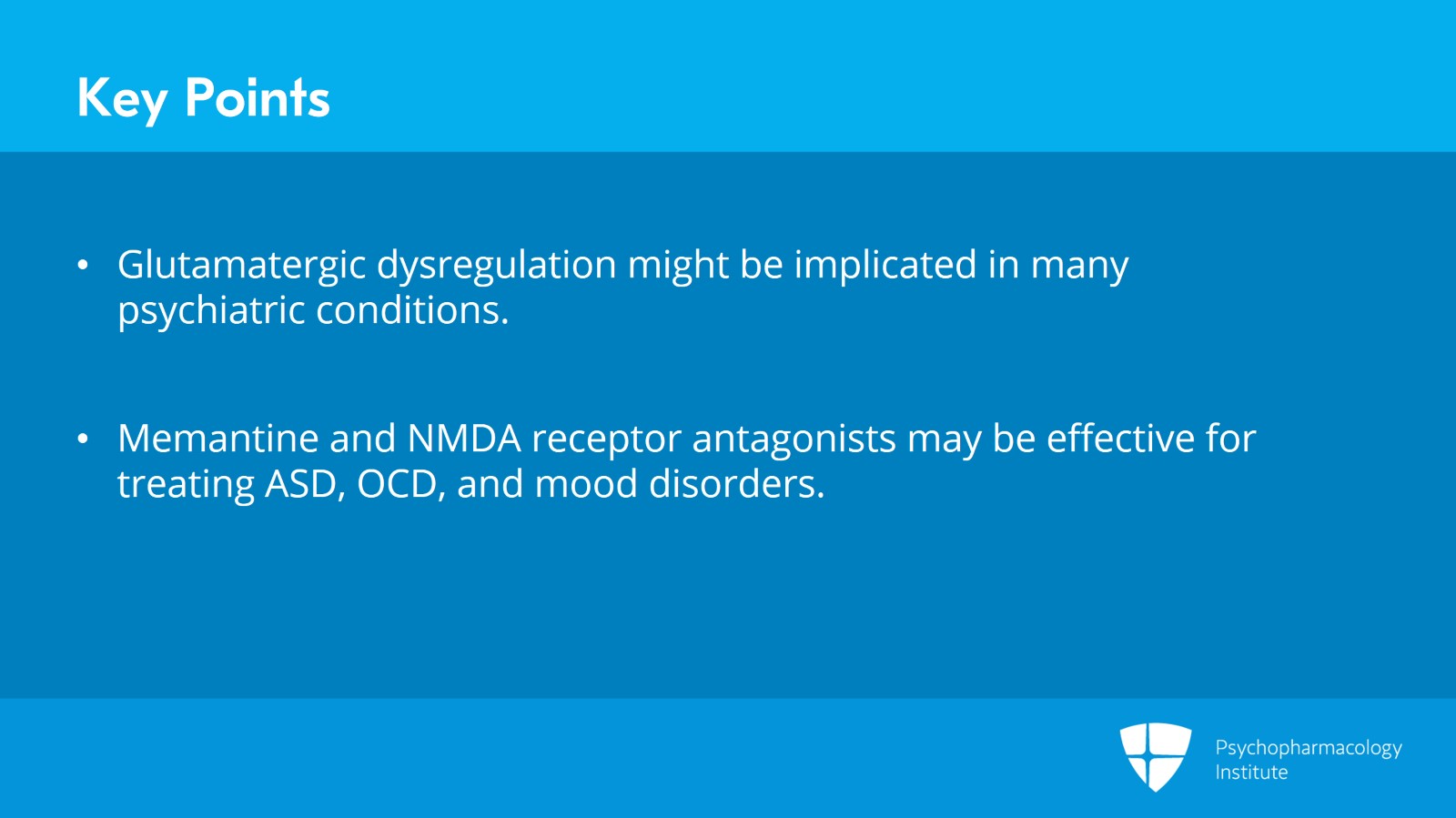
The key take-home points here are that glutamatergic dysregulation has been investigated in multiple studies with the role of the glutamatergic system implicated in many psychiatric conditions and that there are indications that memantine and NMDA receptor antagonists may have a beneficial effect for the treatment of autism, OCD, and mood disorders.
Slide 22 of 23
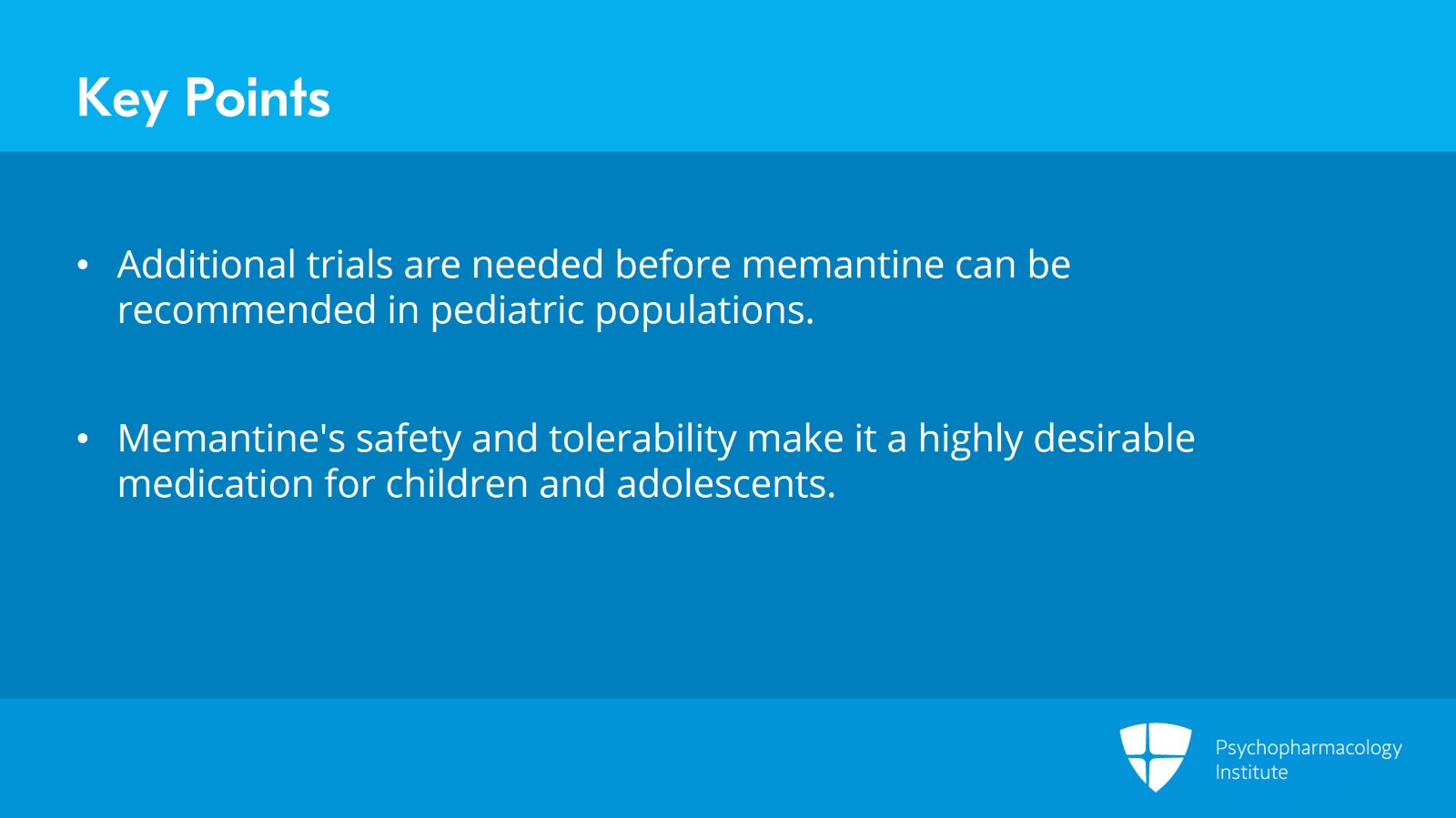
That being said, studies in children have been limited and additional trials are needed before memantine can be recommended in pediatric populations.
If efficacy is demonstrated, memantine’s excellent safety record and tolerability make it a highly desirable medication for use in children and adolescents.
Free Files
Download PDF and other files
Success!
Check your inbox, we sent you all the materials there.