Slides and Transcript
Slide 1 of 17
Hi everybody. This is video 3 of Lithium: How to Manage Dosage, Side Effects and Persuade Patients to Take It. We’re going to begin discussing side effects.
Slide 2 of 17
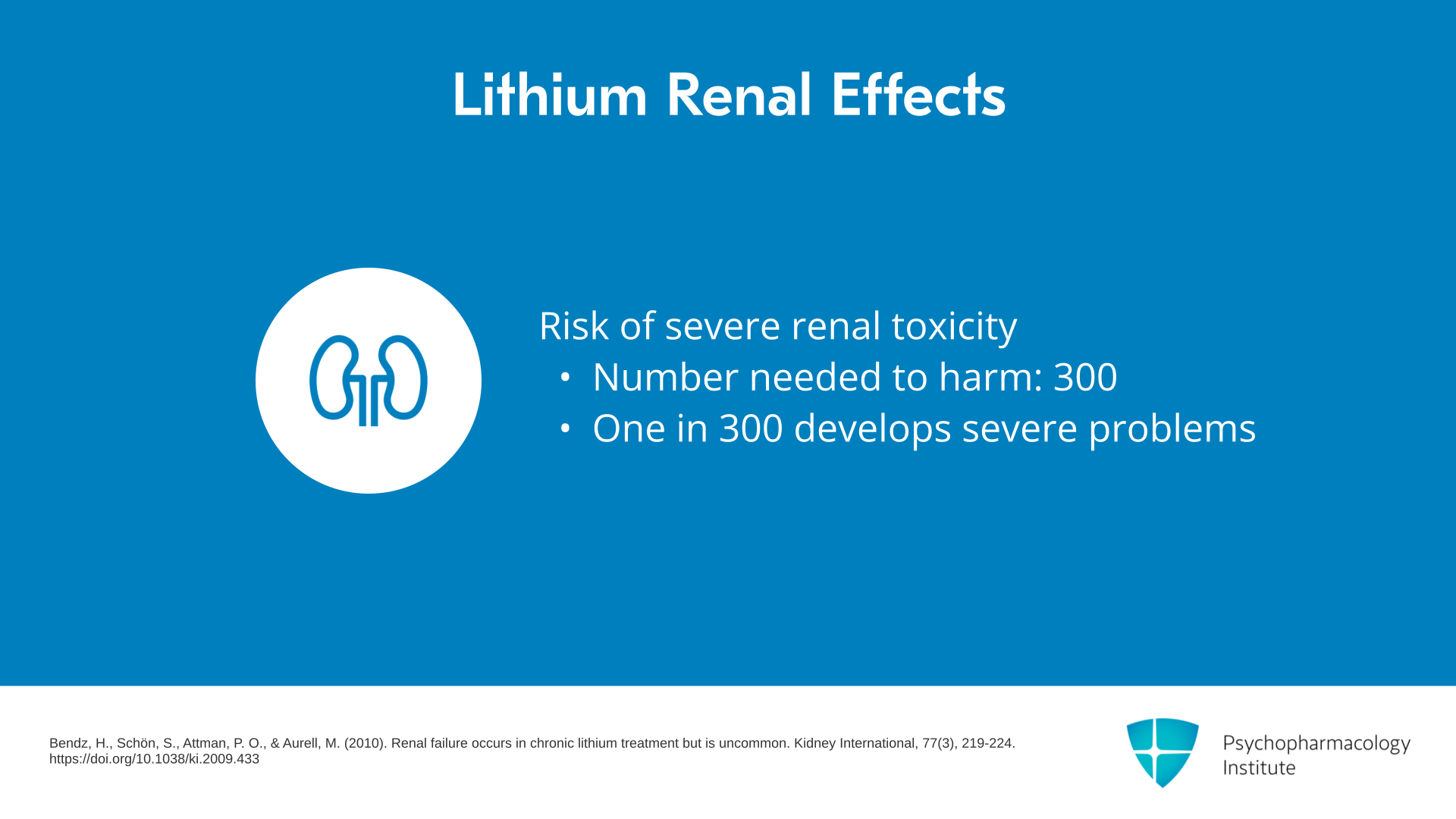
And we’ll start with managing renal side effects which is certainly at the top of everyone’s concern. So what is the risk of severe renal toxicity? Well, there was a meta-analysis that calculated a number needed to harm of 300. What that means is you have to treat 300 patients with lithium before you’re going to see one who develops severe renal problems who would not have gotten those problems spontaneously or from some other cause.
References:
- Bendz, H., Schön, S., Attman, P. O., & Aurell, M. (2010). Renal failure occurs in chronic lithium treatment but is uncommon. Kidney International, 77(3), 219-224. https://doi.org/10.1038/ki.2009.433
Free Files
Download PDF and other files
Success!
Check your inbox, we sent you all the materials there.
Slide 3 of 17
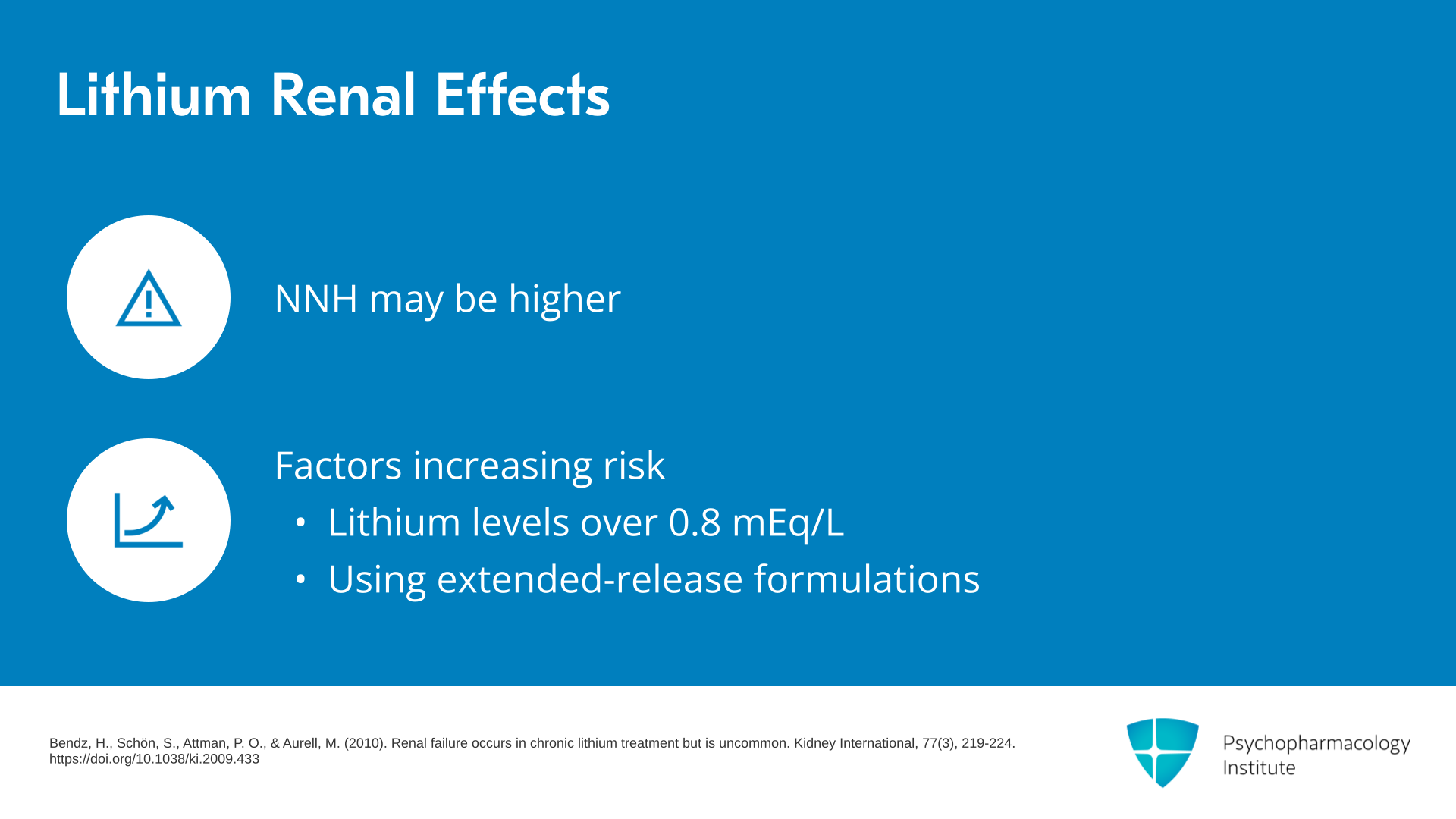
The number need to harm may be much higher. This is based on data that comes from people who may not have been treated with the best evidence approach. They may have done things with their patient’s dosing that make them at higher risk for kidney problems, like letting the lithium levels go over 0.8 or into the toxicity area, not using the once-a-day immediate-release at night dosing of their lithium. So if you do all the right things as best I can see they would be from the evidence, I think the number needed to harm could be much higher than 300 for severe renal toxicity.
References:
- Bendz, H., Schön, S., Attman, P. O., & Aurell, M. (2010). Renal failure occurs in chronic lithium treatment but is uncommon. Kidney International, 77(3), 219-224. https://doi.org/10.1038/ki.2009.433
Slide 4 of 17
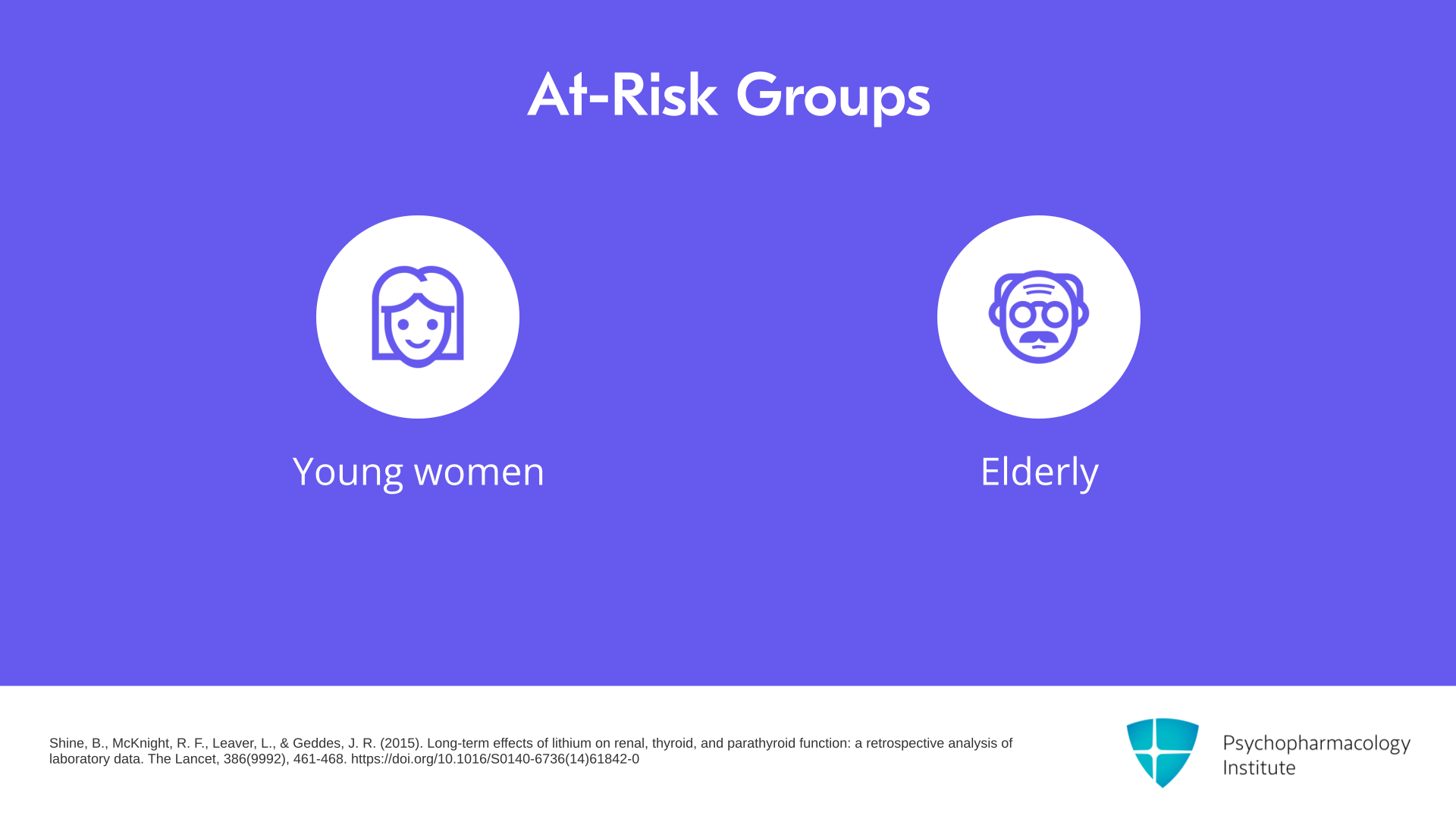
So who’s at risk? Young women may be at higher risk, that’s one subgroup and elderly as well.
References:
- Shine, B., McKnight, R. F., Leaver, L., & Geddes, J. R. (2015). Long-term effects of lithium on renal, thyroid, and parathyroid function: a retrospective analysis of laboratory data. The Lancet, 386(9992), 461-468. https://doi.org/10.1016/S0140-6736(14)61842-0
Free Files
Download PDF and other files
Success!
Check your inbox, we sent you all the materials there.
Slide 5 of 17
Monitor kidney function every four to six months. I saw a recent paper that said you should do it every four months, three times a year. Most guidelines say every six months though. That’s the usual recommendation as a minimum for checking kidney function. But it can sneak up on you. I’ve seen cases that started to develop problems and got fairly severe before they were noticed by a routine check. Of course, that could’ve been from other reasons than the lithium but still the checking enables you to detect it.
References:
- Gitlin, M., & Bauer, M. (2023). Key questions on the long term renal effects of lithium: a review of pertinent data. International Journal of Bipolar Disorders, 11(1), 35. https://doi.org/10.1186/s40345-023-00316-5
Slide 6 of 17
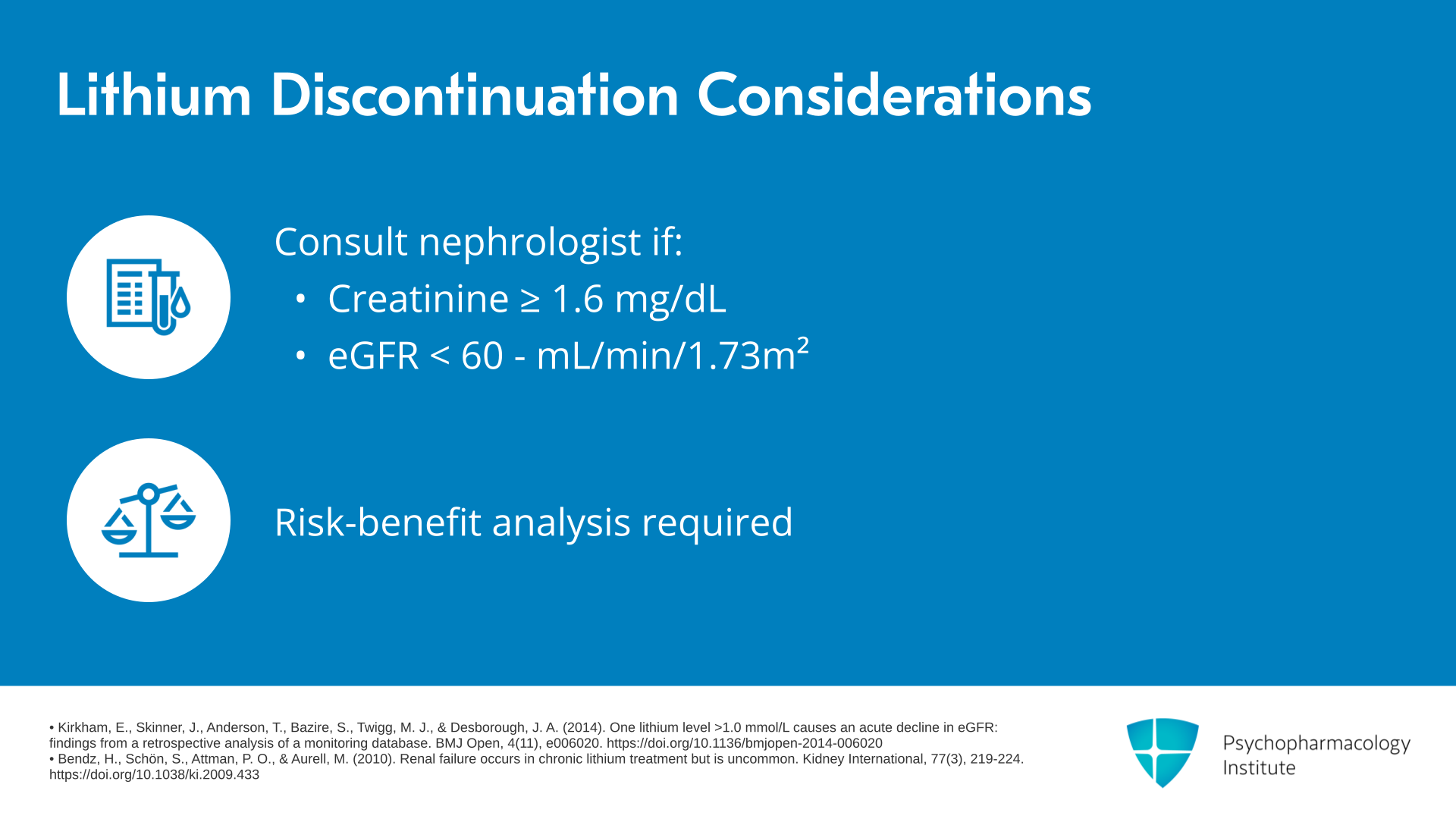
When do you have to stop lithium? If the creatinine level goes at or above 1.6 or the estimated GFR goes below 60, you should consult with a nephrologist. The decision to stop is a risk-benefit analysis decision. Considering what the nephrologist says about what the cause of this might be, what future monitoring should be done, it could prove temporary or due to other things going on at the same time, you should make adjustments certainly to your way you’re dosing. That could improve the situation with these kidney function tests.
References:
- Bendz, H., Schön, S., Attman, P. O., & Aurell, M. (2010). Renal failure occurs in chronic lithium treatment but is uncommon. Kidney International, 77(3), 219-224. https://doi.org/10.1038/ki.2009.433
- Kirkham, E., Skinner, J., Anderson, T., Bazire, S., Twigg, M. J., & Desborough, J. A. (2014). One lithium level >1.0 mmol/L causes an acute decline in eGFR: findings from a retrospective analysis of a monitoring database. BMJ Open, 4(11), e006020. https://doi.org/10.1136/bmjopen-2014-006020
Free Files
Download PDF and other files
Success!
Check your inbox, we sent you all the materials there.
Slide 7 of 17
The next issue with lithium in the kidney is doing what you can to prevent it. I already mentioned in the previous talk about the importance of avoiding toxic levels ’cause that predicts later onset of renal problems. So that means monitoring the things that could cause that, you and the patient monitoring them together. This is another example of frequent meeting and collaboration with the patient to ensure they know what they need to do to take this drug safely and effectively.
References:
- Bosi, A., Clase, C. M., Ceriani, L., Sjölander, A., Fu, E. L., Runesson, B., Chang, Z., Landén, M., Bellocco, R., Elinder, C. G., & Carrero, J. J. (2023). Absolute and Relative Risks of Kidney Outcomes Associated With Lithium vs Valproate Use in Sweden. JAMA Network Open, 6(7), e2322056. https://doi.org/10.1001/jamanetworkopen.2023.22056
- McKnight, R. F., Adida, M., Budge, K., Stockton, S., Goodwin, G. M., & Geddes, J. R. (2012). Lithium toxicity profile: a systematic review and meta-analysis. Lancet, 379(9817), 721–728. https://doi.org/10.1016/S0140-6736(11)61516-X
Slide 8 of 17
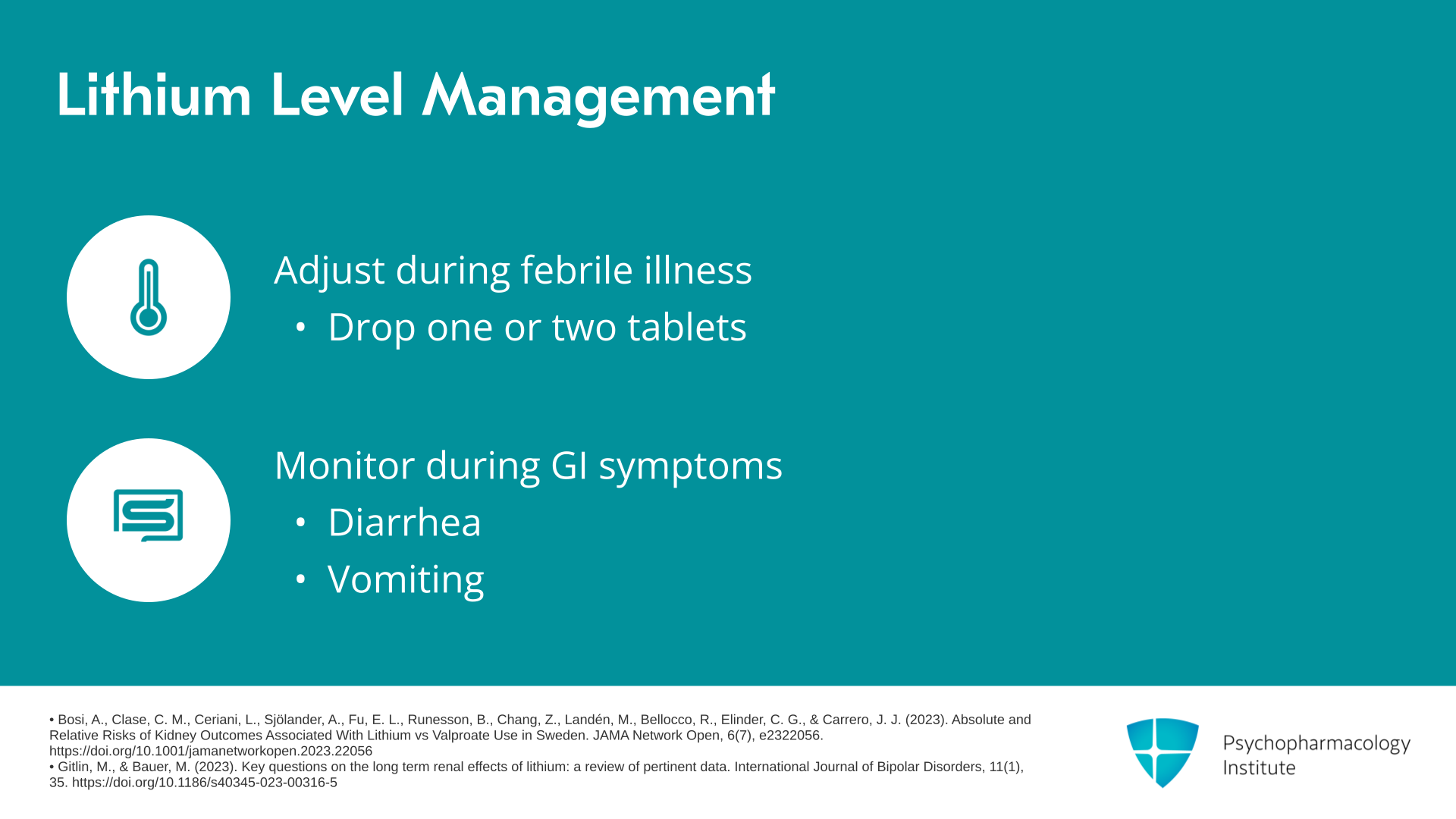
So if they get a febrile illness that’s associated with toxic lithium levels developing, they should consider dropping one or two of their tablets until that febrile illness is over and maybe rechecking a level. They should be checked to see what’s happening with their lithium levels when they are having GI problems. Any condition that’s causing diarrhea, you can lose a lot of electrolytes that way and that can lead to lithium levels going up. Vomiting a lot of liquid can also have the same effect. But also if you’re vomiting, you may not be keeping down the lithium that you’re taking. So in any case though, they may need an adjustment.
References:
- Gitlin, M., & Bauer, M. (2023). Key questions on the long term renal effects of lithium: a review of pertinent data. International Journal of Bipolar Disorders, 11(1), 35. https://doi.org/10.1186/s40345-023-00316-5
- Bosi, A., Clase, C. M., Ceriani, L., Sjölander, A., Fu, E. L., Runesson, B., Chang, Z., Landén, M., Bellocco, R., Elinder, C. G., & Carrero, J. J. (2023). Absolute and Relative Risks of Kidney Outcomes Associated With Lithium vs Valproate Use in Sweden. JAMA Network Open, 6(7), e2322056. https://doi.org/10.1001/jamanetworkopen.2023.22056
Free Files
Download PDF and other files
Success!
Check your inbox, we sent you all the materials there.
Slide 9 of 17
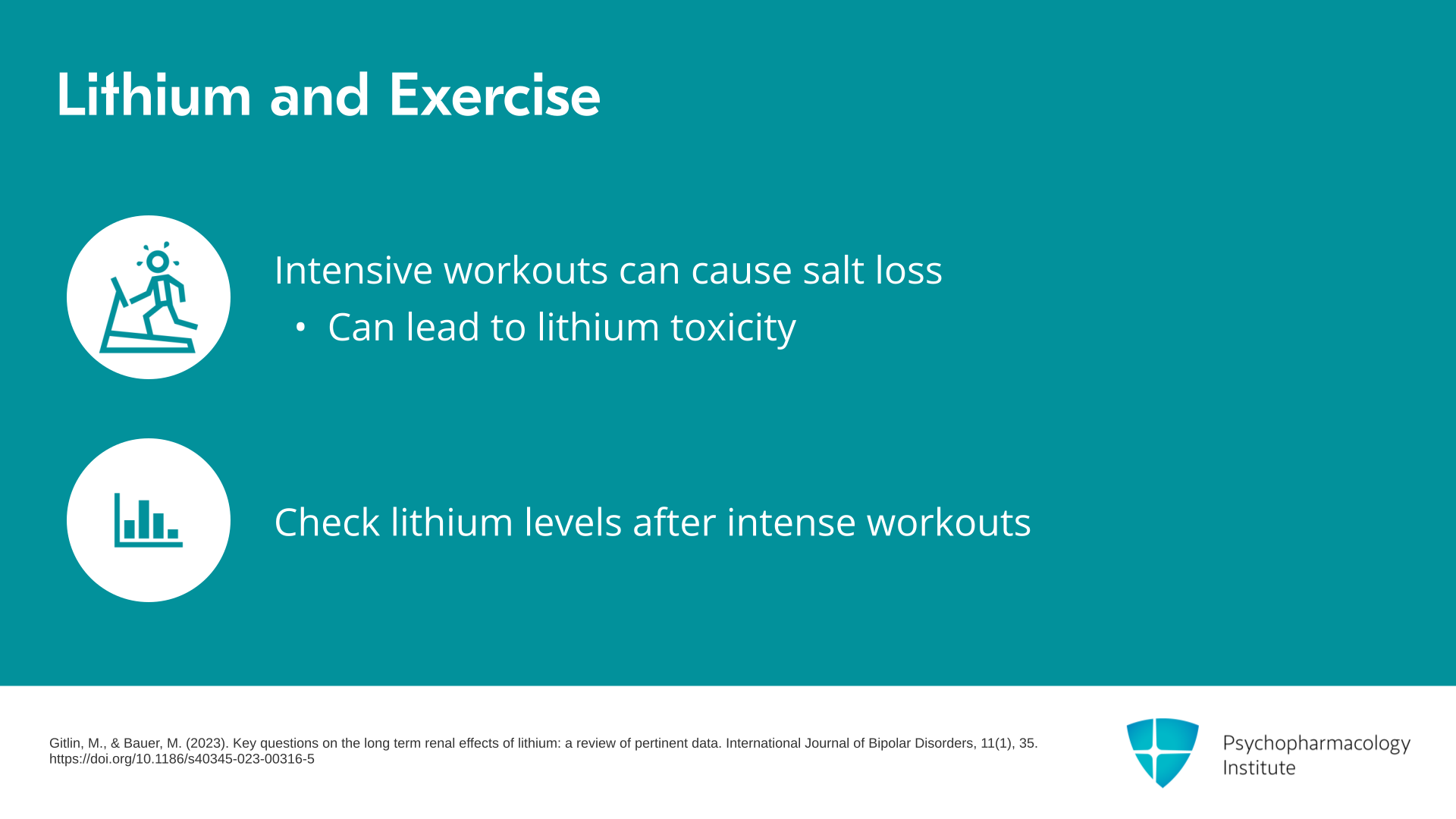
And there are other causes of salt loss that could occur. One of them is intensive marathon workouts with extensive sweating and losing salt. You do excrete a little bit of lithium from your pores as well as sodium chloride but the quantity of salt seems to be greater than the quantity of lithium that you lose that way. So you can become lithium toxic. Not all the data is completely clear on this. Some studies have failed to confirm this. So it’s an individual thing. If they do sweat tremendously during a workout, it’s probably prudent to have a lithium check after one of those events to see if they’re one of the people that’s flipping into high lithium levels after their workout.
References:
- Gitlin, M., & Bauer, M. (2023). Key questions on the long term renal effects of lithium: a review of pertinent data. International Journal of Bipolar Disorders, 11(1), 35. https://doi.org/10.1186/s40345-023-00316-5
Slide 10 of 17
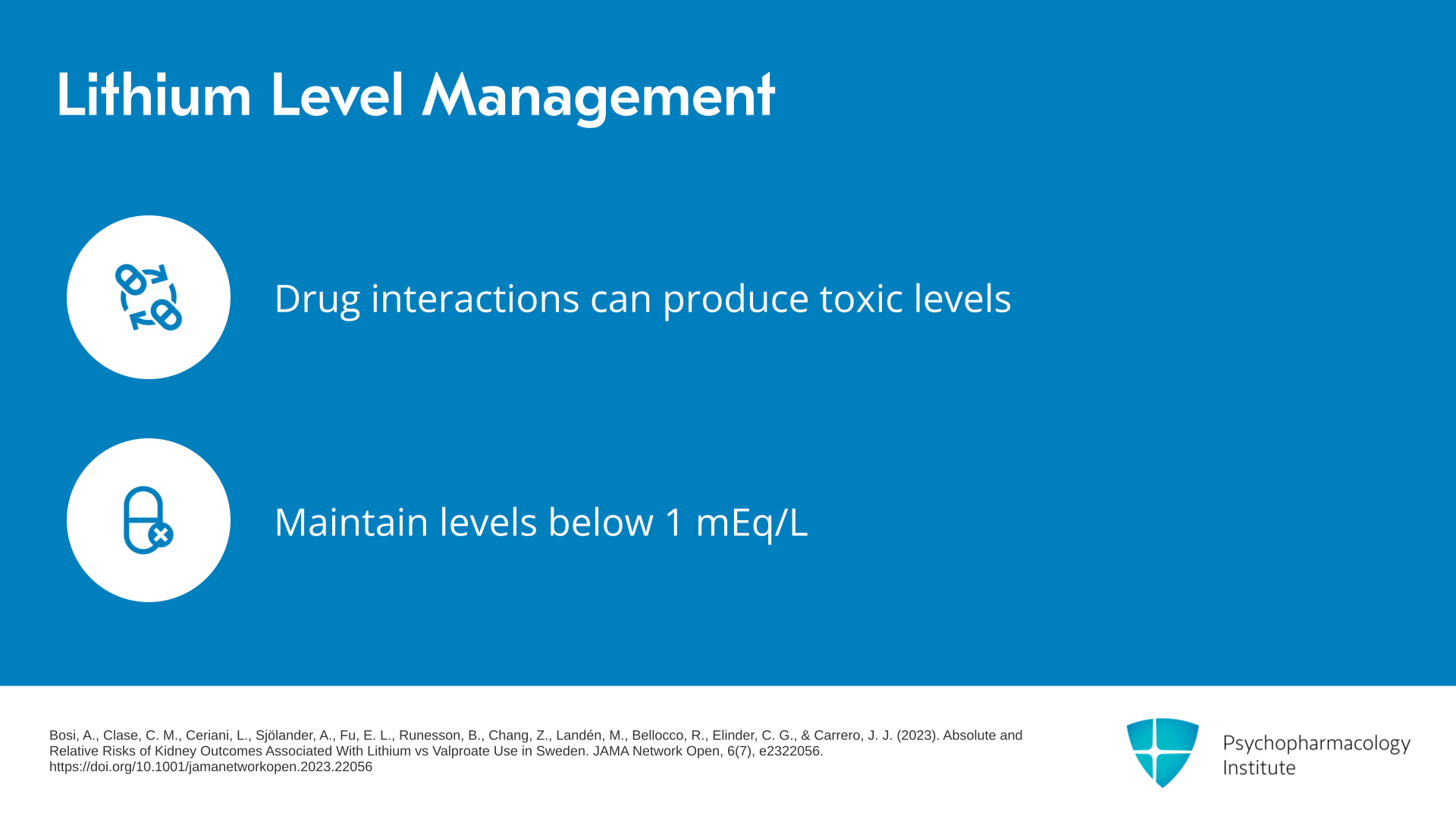
And then finally, there’s drug interactions that can produce those toxic levels. Another issue to be specific about is higher levels. You may go over 0.8 at times but you don’t want to ever go over 1. That is a barrier that you should be taking seriously that could cause a later vulnerability to kidney problems. So if you can keep those levels low and have the patient do well clinically, long-term studies have shown that the risks of severe renal toxicity are no greater than with valproate. It’s only when people are maintained at higher and higher levels that there starts to be a greater risk with lithium.
References:
- Bosi, A., Clase, C. M., Ceriani, L., Sjölander, A., Fu, E. L., Runesson, B., Chang, Z., Landén, M., Bellocco, R., Elinder, C. G., & Carrero, J. J. (2023). Absolute and Relative Risks of Kidney Outcomes Associated With Lithium vs Valproate Use in Sweden. JAMA Network Open, 6(7), e2322056. https://doi.org/10.1001/jamanetworkopen.2023.22056
Free Files
Download PDF and other files
Success!
Check your inbox, we sent you all the materials there.
Slide 11 of 17
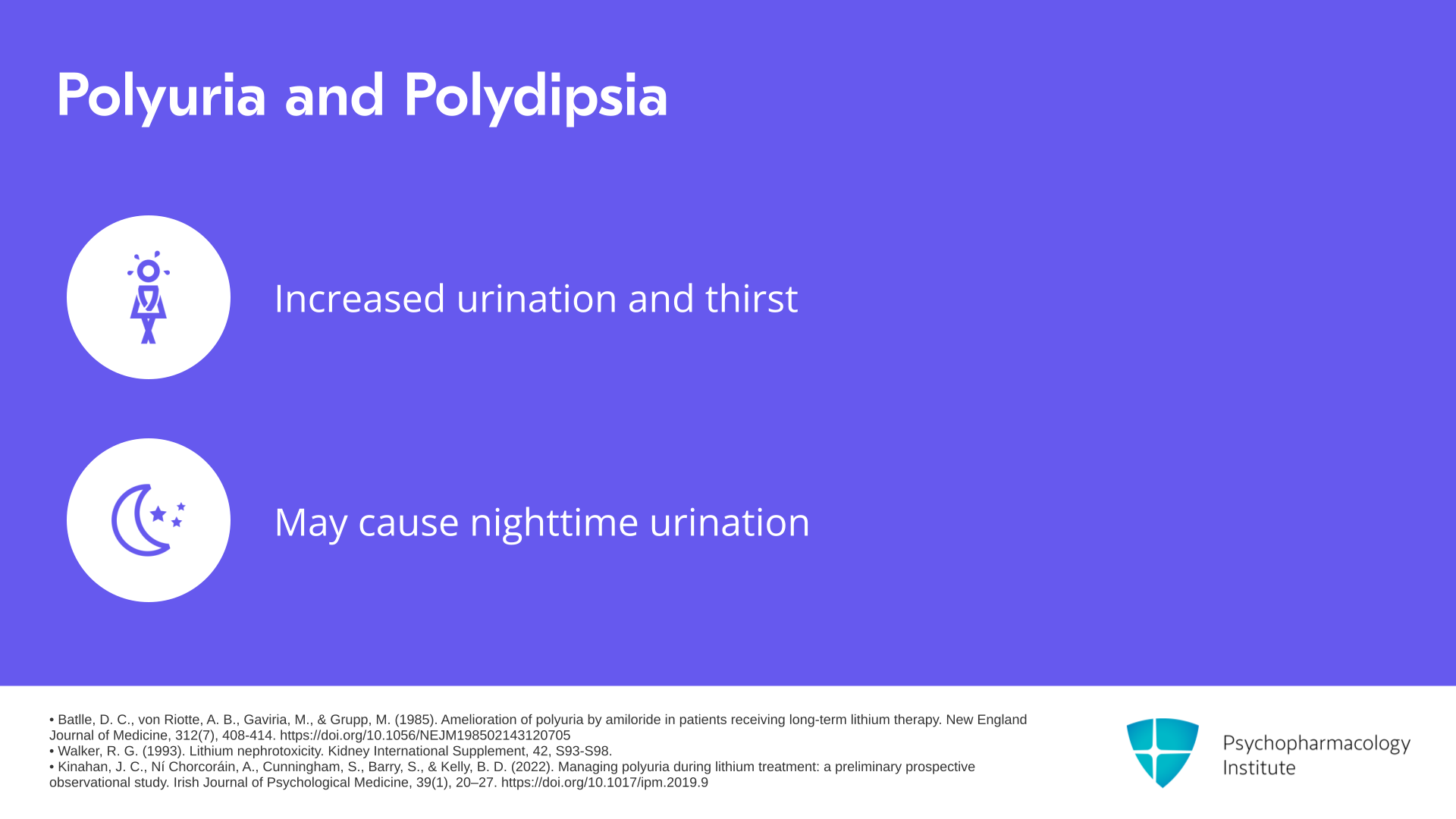
The next issue with lithium in the kidney is the common side effect of polyuria and polydipsia. It’s very routine. And I’m always discussing it with patients. So what are the main implications of it? They’re drinking more, they’re urinating more. They may be urinating at night which they may or may not have been doing before. Usually, this is not a game-changing problem for them being willing to keep taking it but they should at least be prepared for it and expecting it.
References:
- Batlle, D. C., von Riotte, A. B., Gaviria, M., & Grupp, M. (1985). Amelioration of polyuria by amiloride in patients receiving long-term lithium therapy. New England Journal of Medicine, 312(7), 408-414. https://doi.org/10.1056/NEJM198502143120705
- Walker, R. G. (1993). Lithium nephrotoxicity. Kidney International Supplement, 42, S93-S98.
- Kinahan, J. C., Ní Chorcoráin, A., Cunningham, S., Barry, S., & Kelly, B. D. (2022). Managing polyuria during lithium treatment: a preliminary prospective observational study. Irish Journal of Psychological Medicine, 39(1), 20–27. https://doi.org/10.1017/ipm.2019.9
Slide 12 of 17
Now, what’s key though is what beverages are they consuming when they have this increased thirst. If it’s caloric beverages like sodas and fruit juices or beer, this can lead to weight gain because as I’m sure you know from the studies of obesity management, the calories that you get from beverages if you take in a lot of them with your beverages, it doesn’t reduce the amount of calories you want to get from your food that you have in the other part of your meal. So your total calorie intake goes way up when you drink calories in your beverages. And this leads to weight gain, undesirable effect from lithium that many patients already know about.
References:
- DiMeglio, D., & Mattes, R. (2000). Liquid versus solid carbohydrate: effects on food intake and body weight. International Journal of Obesity, 24, 794-800. https://doi.org/10.1038/sj.ijo.0801229
Free Files
Download PDF and other files
Success!
Check your inbox, we sent you all the materials there.
Slide 13 of 17
A second issue is they may also have other symptoms of the diabetes insipidus-like syndrome that lithium causes including fluid retention, water retention or water weight which also occurs when you eat regular salt. You can retain water. This usually leads to a very rapid weight gain, much more rapid than the adipose-based weight gain from eating more calories or drinking more calories. So within the first week or two or three, they may put on quite significant weight. They may even notice that in the abdominal area where it may be concentrated when they move or shake their abdomen, they can almost feel a splashing sensation like there’s water in there. And then they may also get edema. So these are significant symptoms of water retention.
References:
- Chengappa, K. N., Chalasani, L., Brar, J. S., Parepally, H., Houck, P., & Levine, J. (2002). Changes in body weight and body mass index among psychiatric patients receiving lithium, valproate, or topiramate: an open-label, nonrandomized chart review. Clinical Therapeutics, 24(10), 1576–1584. https://doi.org/10.1016/s0149-2918(02)80061-3
Slide 14 of 17
But this is not a reason to stop lithium. This is a reason to give them a diuretic to help them excrete that water. Amiloride is the diuretic of choice, 5 to 20 mg per day. It usually does not raise lithium levels and it may have some benefit on long-term kidney problems. That is the recommended solution to those problems. It’s not clear from the evidence that it helps with weight gain and water retention, I should stress.
References:
- Batlle, D. C., von Riotte, A. B., Gaviria, M., & Grupp, M. (1985). Amelioration of polyuria by amiloride in patients receiving long-term lithium therapy. New England Journal of Medicine, 312(7), 408-414. https://doi.org/10.1056/NEJM198502143120705
- Wells, B. G. (1994). Amiloride in lithium-induced polyuria. The Annals of Pharmacotherapy, 28(7-8), 888-889. https://doi.org/10.1177/106002809402800718
Free Files
Download PDF and other files
Success!
Check your inbox, we sent you all the materials there.
Slide 15 of 17
I should stress that when going by evidence it actually hasn’t been studied that amiloride will reduce water retention and weight gain with lithium. What we do know is that it’s a diuretic. It helps people excrete water. They will have lower urine volumes. That has been shown. It’s assumed that this will also result in less water being retained and prevent weight gain from water. But that wasn’t a specific outcome in the studies mentioned about where they looked at urine volume. But I think it’s a reasonable speculation.
References:
- Batlle, D. C., von Riotte, A. B., Gaviria, M., & Grupp, M. (1985). Amelioration of polyuria by amiloride in patients receiving long-term lithium therapy. New England Journal of Medicine, 312(7), 408-414. https://doi.org/10.1056/NEJM198502143120705
- Wells, B. G. (1994). Amiloride in lithium-induced polyuria. The Annals of Pharmacotherapy, 28(7-8), 888-889. https://doi.org/10.1177/106002809402800718
Slide 16 of 17
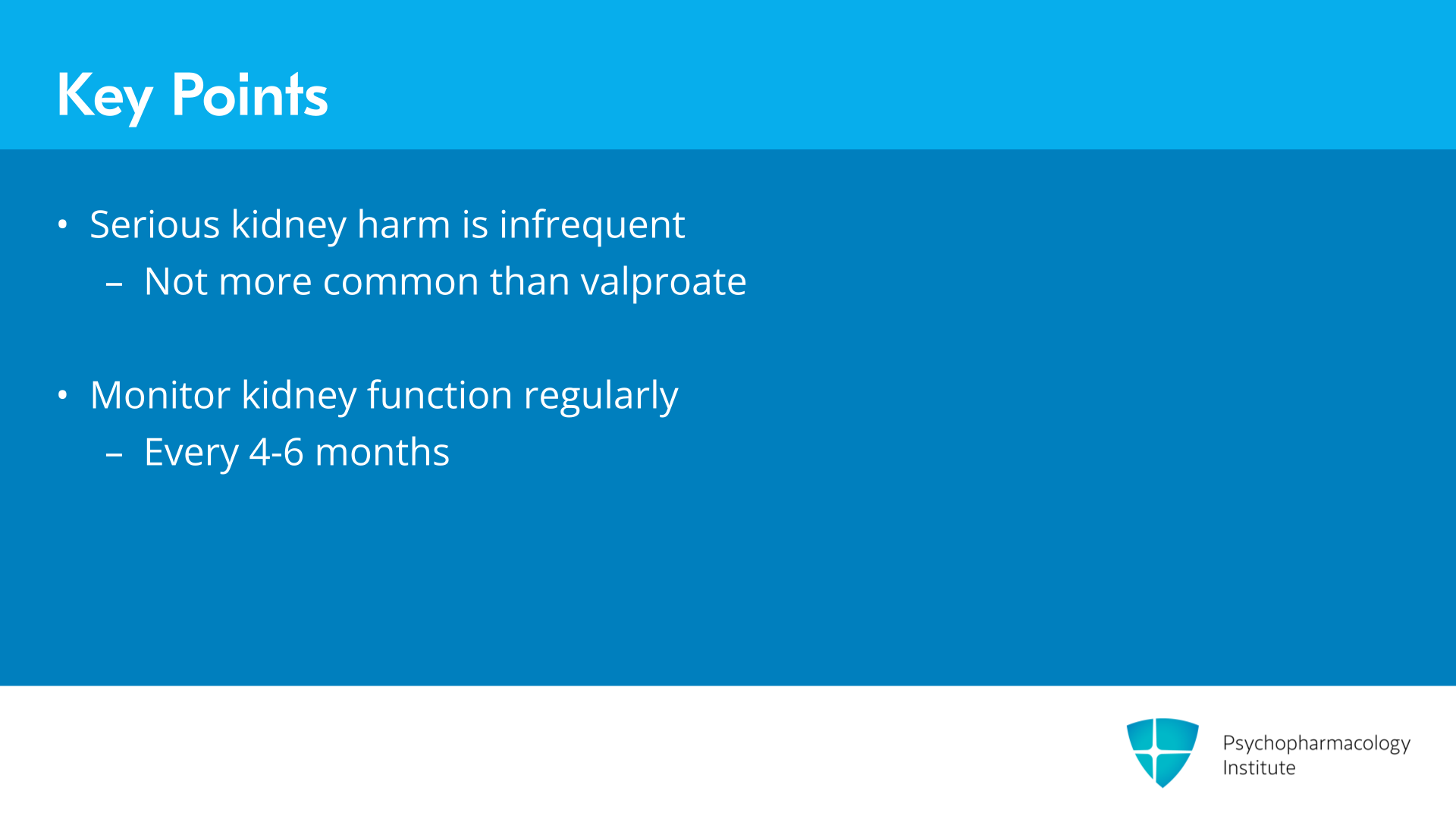
The key points are: serious kidney harm is very infrequent and may not be more common with lithium than valproate, though, as long as lithium levels are kept in the lowest area that you can safely do for effectiveness. Second, you should be monitoring kidney function tests often, at least every six months, some say every four months.
Free Files
Download PDF and other files
Success!
Check your inbox, we sent you all the materials there.
Slide 17 of 17
Avoid toxic levels. Do as many of those things that we discussed that could possibly reduce that risk. You especially don’t want levels ever going over 1.0. And finally, if they get polyuria and polydipsia, if it needs treatment, amiloride is the drug of choice as a diuretic.