



Slides and Transcript
Slide 1 of 11
In this fourth section of this series on the assessment and management of first episodes of psychosis, I’m going to talk about the management of first episodes, particularly the management with antipsychotics.
Slide 2 of 11
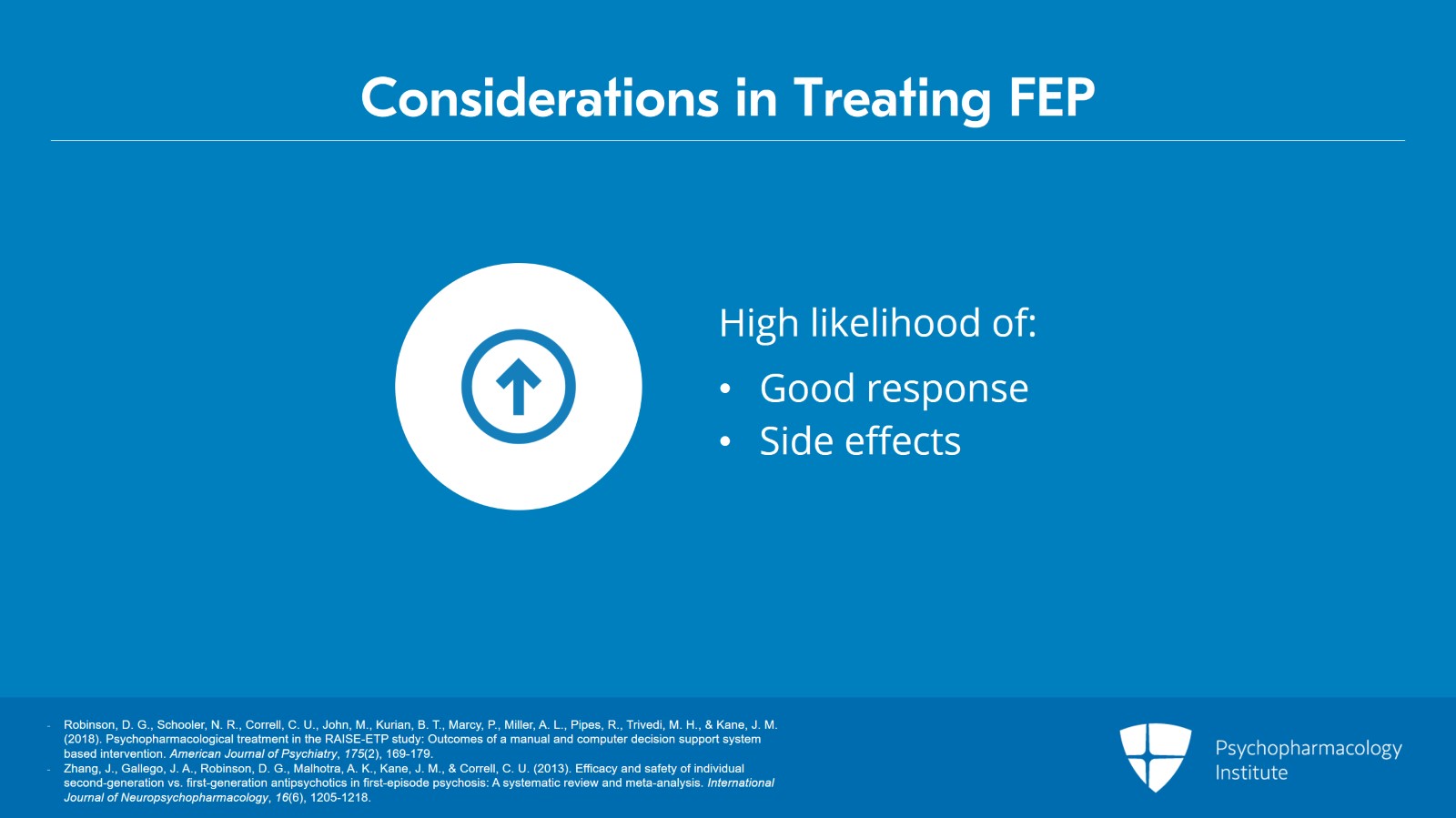
There’s a number of things to bear in mind with treating first episodes. One is that at a first episode patients have a high likelihood of showing a good response but also a very high likelihood of having side effects.
References:
- Robinson, D. G., Schooler, N. R., Correll, C. U., John, M., Kurian, B. T., Marcy, P., Miller, A. L., Pipes, R., Trivedi, M. H., & Kane, J. M. (2018). Psychopharmacological treatment in the RAISE-ETP study: Outcomes of a manual and computer decision support system based intervention. American Journal of Psychiatry, 175(2), 169-179.
- Zhang, J., Gallego, J. A., Robinson, D. G., Malhotra, A. K., Kane, J. M., & Correll, C. U. (2013). Efficacy and safety of individual second-generation vs. first-generation antipsychotics in first-episode psychosis: A systematic review and meta-analysis. International Journal of Neuropsychopharmacology, 16(6), 1205-1218.
Free Files
Download PDF and other files
Success!
Check your inbox, we sent you all the materials there.
Slide 3 of 11
So this leads to a number of treatment principles.
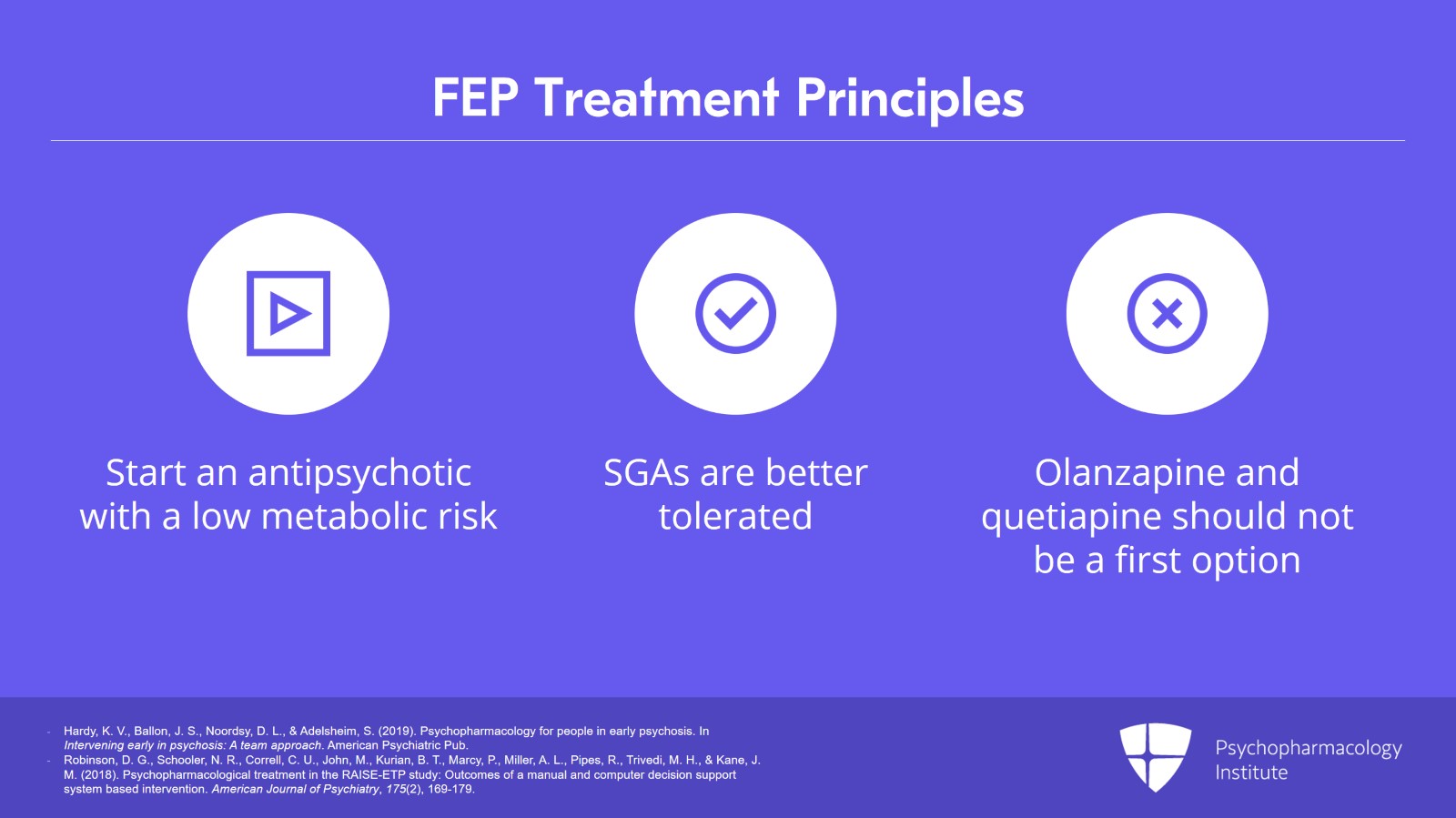
It’s important to start with an antipsychotic with a low metabolic risk. Weight gain and the development of type 2 diabetes should be a concern of all clinicians. That’s why most clinicians will choose a second-generation antipsychotic because they’re better tolerated. But I think that most would choose an antipsychotic that has a relatively low metabolic risk which would mean that drugs like olanzapine and quetiapine might not be the best consideration for a first episode.
References:
- Hardy, K. V., Ballon, J. S., Noordsy, D. L., & Adelsheim, S. (2019). Psychopharmacology for people in early psychosis. In Intervening early in psychosis: A team approach. American Psychiatric Pub.
- Robinson, D. G., Schooler, N. R., Correll, C. U., John, M., Kurian, B. T., Marcy, P., Miller, A. L., Pipes, R., Trivedi, M. H., & Kane, J. M. (2018). Psychopharmacological treatment in the RAISE-ETP study: Outcomes of a manual and computer decision support system based intervention. American Journal of Psychiatry, 175(2), 169-179.
Slide 4 of 11
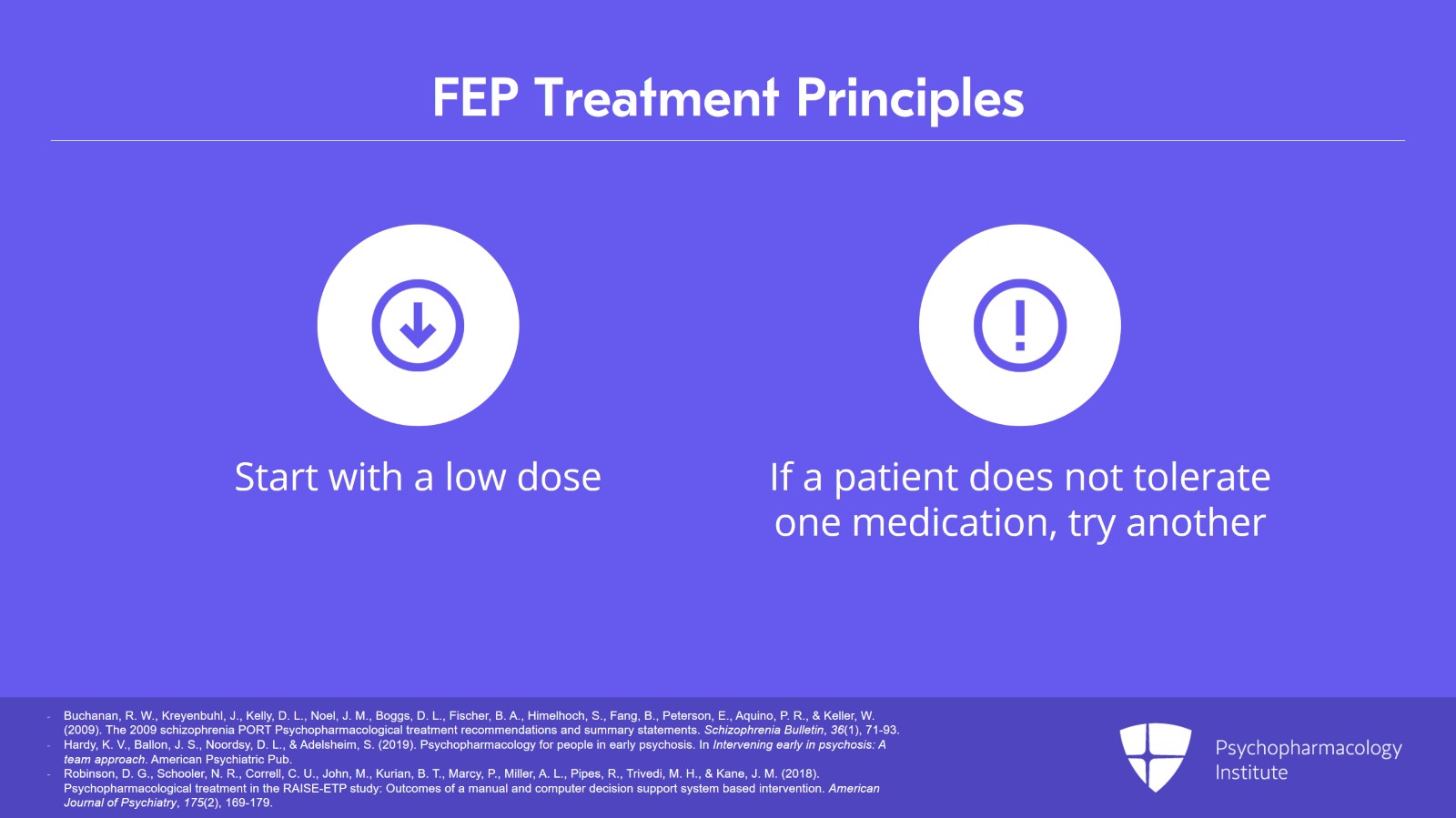
In general, one should start with a low dose. First episode patients sometimes respond well to half of the usual dose.
Sometimes, clinicians will find it hard to find a medication that first episode patients tolerate. So if a patient doesn’t tolerate one, it’s important to try a second.
References:
- Buchanan, R. W., Kreyenbuhl, J., Kelly, D. L., Noel, J. M., Boggs, D. L., Fischer, B. A., Himelhoch, S., Fang, B., Peterson, E., Aquino, P. R., & Keller, W. (2009). The 2009 schizophrenia PORT Psychopharmacological treatment recommendations and summary statements. Schizophrenia Bulletin, 36(1), 71-93.
- Hardy, K. V., Ballon, J. S., Noordsy, D. L., & Adelsheim, S. (2019). Psychopharmacology for people in early psychosis. In Intervening early in psychosis: A team approach. American Psychiatric Pub.
- Robinson, D. G., Schooler, N. R., Correll, C. U., John, M., Kurian, B. T., Marcy, P., Miller, A. L., Pipes, R., Trivedi, M. H., & Kane, J. M. (2018). Psychopharmacological treatment in the RAISE-ETP study: Outcomes of a manual and computer decision support system based intervention. American Journal of Psychiatry, 175(2), 169-179.
Free Files
Download PDF and other files
Success!
Check your inbox, we sent you all the materials there.
Slide 5 of 11
The other is that many patients do better on long-acting formulations. First episode patients have very high rates of nonadherence with antipsychotics, they often don’t like the idea of taking a medication regularly and some prefer a long-acting route.
References:
- Hardy, K. V., Ballon, J. S., Noordsy, D. L., & Adelsheim, S. (2019). Psychopharmacology for people in early psychosis. In Intervening early in psychosis: A team approach. American Psychiatric Pub.
- Robinson, D. G., Schooler, N. R., Correll, C. U., John, M., Kurian, B. T., Marcy, P., Miller, A. L., Pipes, R., Trivedi, M. H., & Kane, J. M. (2018). Psychopharmacological treatment in the RAISE-ETP study: Outcomes of a manual and computer decision support system based intervention. American Journal of Psychiatry, 175(2), 169-179.
Slide 6 of 11
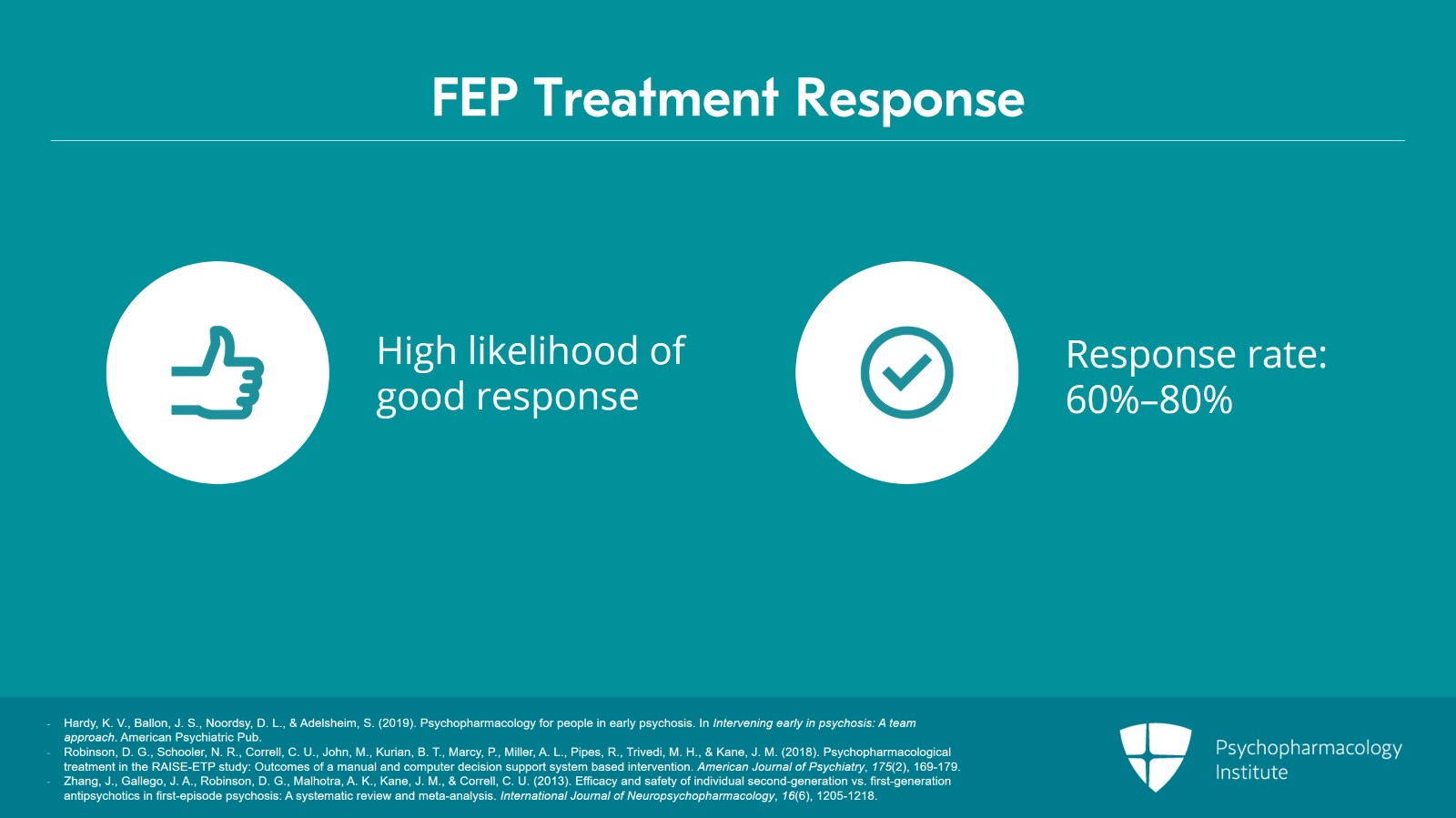
Patients in the first episode have a high likelihood of responding well. There are studies that suggest that the response rate should be somewhere in the range of 60% to 80.
References:
- Hardy, K. V., Ballon, J. S., Noordsy, D. L., & Adelsheim, S. (2019). Psychopharmacology for people in early psychosis. In Intervening early in psychosis: A team approach. American Psychiatric Pub.
- Robinson, D. G., Schooler, N. R., Correll, C. U., John, M., Kurian, B. T., Marcy, P., Miller, A. L., Pipes, R., Trivedi, M. H., & Kane, J. M. (2018). Psychopharmacological treatment in the RAISE-ETP study: Outcomes of a manual and computer decision support system based intervention. American Journal of Psychiatry, 175(2), 169-179.
- Zhang, J., Gallego, J. A., Robinson, D. G., Malhotra, A. K., Kane, J. M., & Correll, C. U. (2013). Efficacy and safety of individual second-generation vs. first-generation antipsychotics in first-episode psychosis: A systematic review and meta-analysis. International Journal of Neuropsychopharmacology, 16(6), 1205-1218.
Free Files
Download PDF and other files
Success!
Check your inbox, we sent you all the materials there.
Slide 7 of 11
An important guideline is identify those who don’t respond well at a relatively early stage.
If somebody isn’t doing well on, say, two antipsychotics, we don’t want them to go untreated for months and months. It’s important to consider an alternative like clozapine.
References:
- Hardy, K. V., Ballon, J. S., Noordsy, D. L., & Adelsheim, S. (2019). Psychopharmacology for people in early psychosis. In Intervening early in psychosis: A team approach. American Psychiatric Pub.
- Robinson, D. G., Schooler, N. R., Correll, C. U., John, M., Kurian, B. T., Marcy, P., Miller, A. L., Pipes, R., Trivedi, M. H., & Kane, J. M. (2018). Psychopharmacological treatment in the RAISE-ETP study: Outcomes of a manual and computer decision support system based intervention. American Journal of Psychiatry, 175(2), 169-179.
- Zhang, J., Gallego, J. A., Robinson, D. G., Malhotra, A. K., Kane, J. M., & Correll, C. U. (2013). Efficacy and safety of individual second-generation vs. first-generation antipsychotics in first-episode psychosis: A systematic review and meta-analysis. International Journal of Neuropsychopharmacology, 16(6), 1205-1218.
Slide 8 of 11
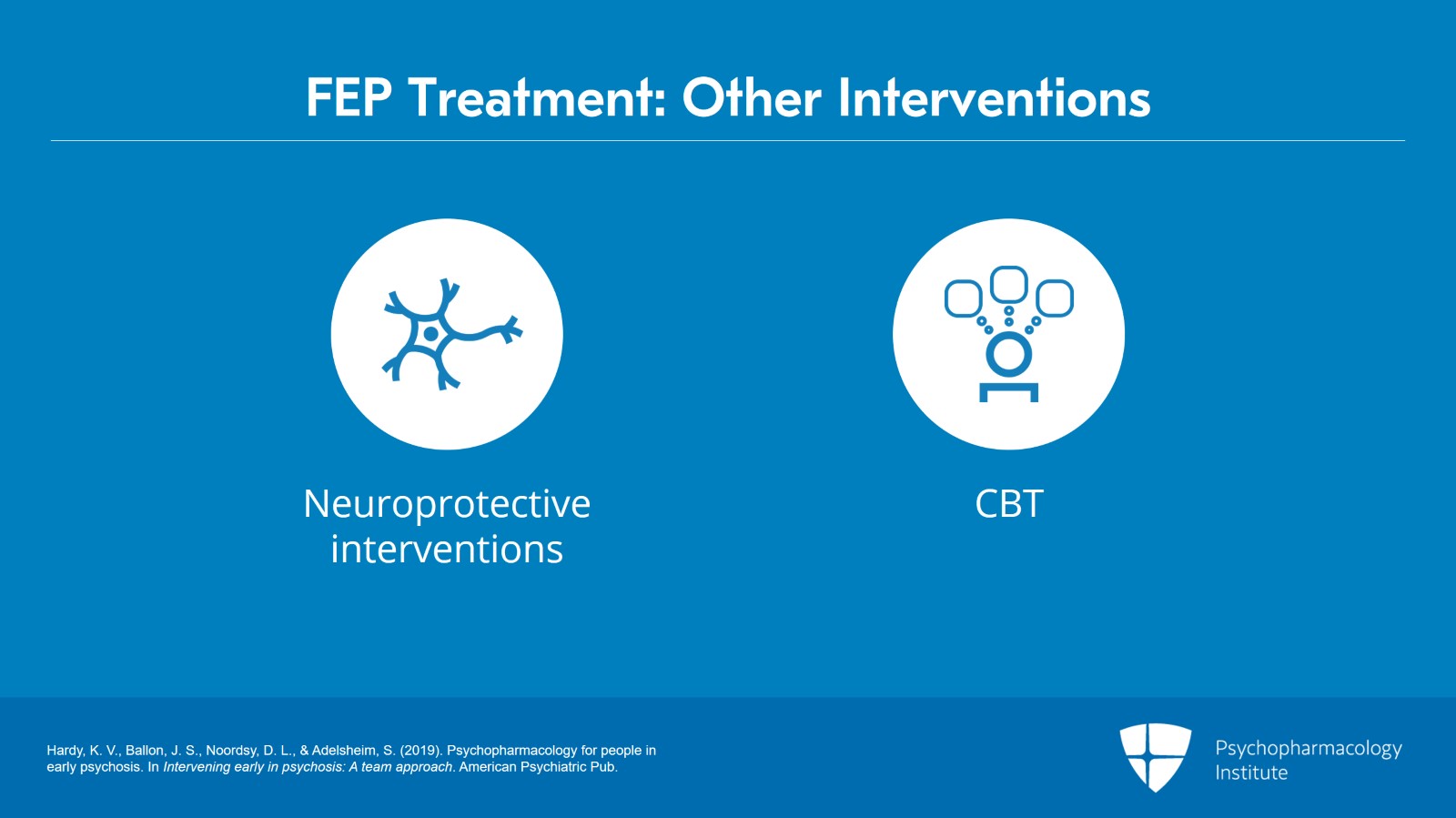
The other is also, at a first episode, emphasizing neuroprotective interventions. This could include improving their diet, recommending exercise, lifestyle interventions and other things.
It’s better if these services are provided with comprehensive services so it includes not just an antipsychotic but consideration of cognitive behavior therapy and other treatment.
References:
- Hardy, K. V., Ballon, J. S., Noordsy, D. L., & Adelsheim, S. (2019). Psychopharmacology for people in early psychosis. In Intervening early in psychosis: A team approach. American Psychiatric Pub.
Free Files
Download PDF and other files
Success!
Check your inbox, we sent you all the materials there.
Slide 9 of 11
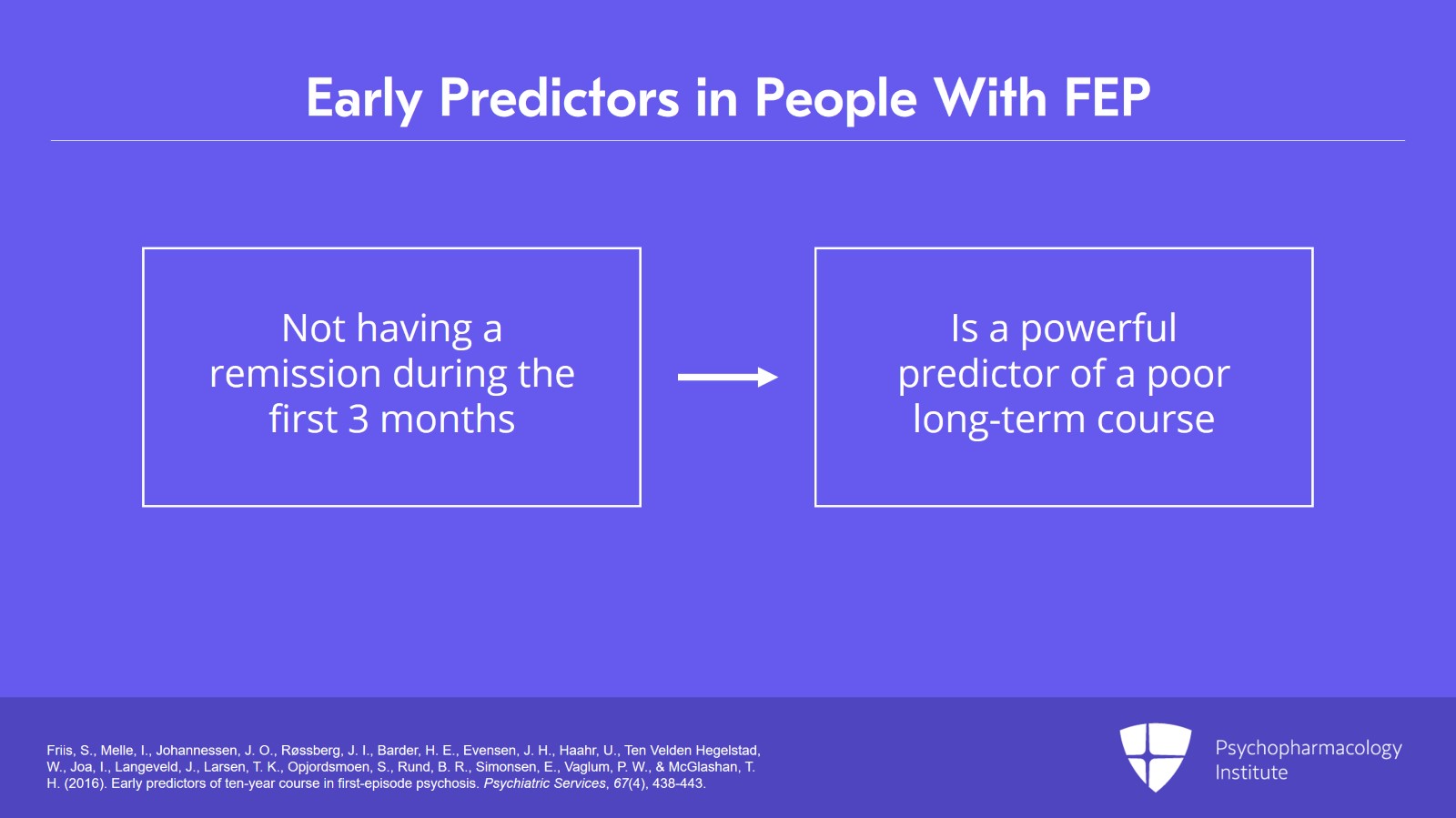
A study from Scandinavia, which was recently published, looked at the early predictors of the 10-year course in people who had a first episode. The thing that stands out is not having a remission during the first three months was a very powerful predictor of a poor long-term course which again suggests if somebody isn’t doing well to change treatments.
And in a later lecture, I’m going to talk about treatment resistance and sometimes the value of getting these patients on clozapine.
References:
- Friis, S., Melle, I., Johannessen, J. O., Røssberg, J. I., Barder, H. E., Evensen, J. H., Haahr, U., Ten Velden Hegelstad, W., Joa, I., Langeveld, J., Larsen, T. K., Opjordsmoen, S., Rund, B. R., Simonsen, E., Vaglum, P. W., & McGlashan, T. H. (2016). Early predictors of ten-year course in first-episode psychosis. Psychiatric Services, 67(4), 438-443.
Slide 10 of 11
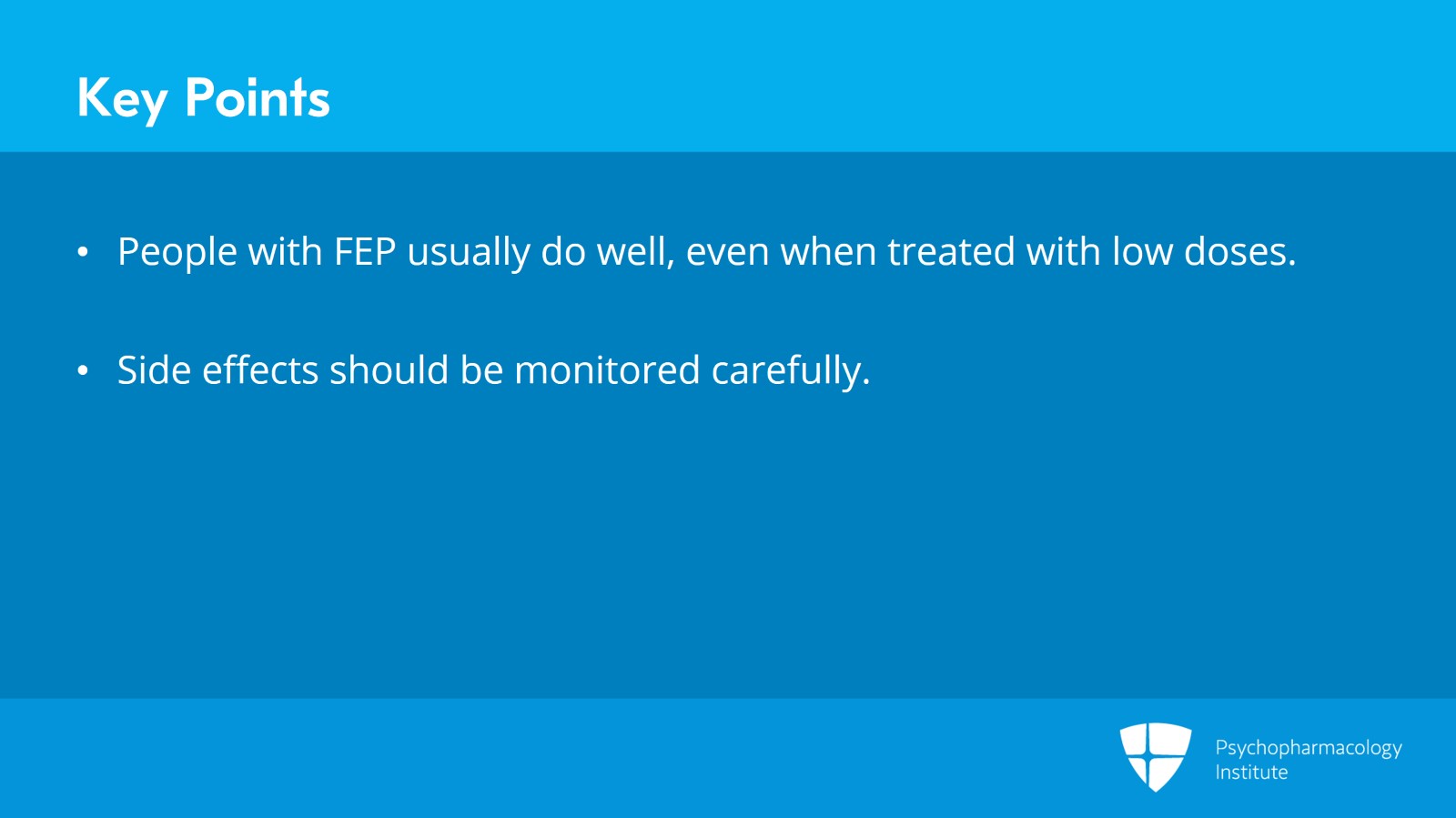
So finally, the key points I wanted to make is that people in a first episode usually do well even when they’re treated with relatively low doses.
And side effects are a problem and they should be monitored very carefully.
Thank you very much.
Free Files
Download PDF and other files
Success!
Check your inbox, we sent you all the materials there.
Slide 11 of 11

