



Slides and Transcript
Slide 1 of 8
Video 4 is entitled Major Depressive Disorder with Mixed Features and Anxious Distress, Special Considerations for These Specifiers.
Slide 2 of 8
And the first of these is depression with mixed features.
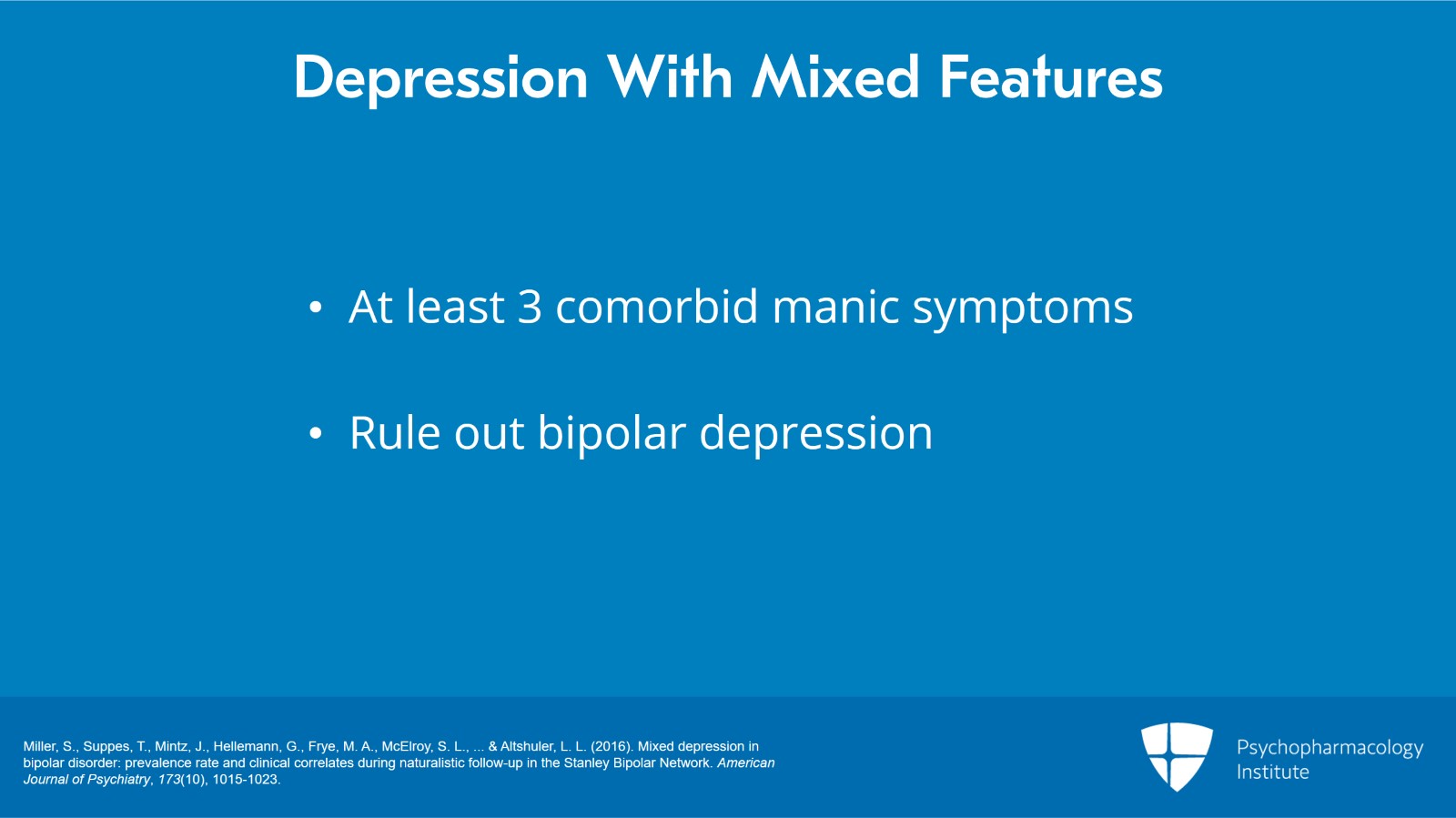
This specifier in the DSM 5 is new. It is for depressed patients with at least three comorbid manic symptoms on most days of the depression. This is for people who do not have bipolar disorder and have no history of mania or hypomania, at least not so far in their course as best you can tell through your careful evaluation to see if they’ve had bipolar episodes. Because if they have, they should not be in this algorithm.
Examples of these manic features would be racing thoughts, pressured speech, decreased need for sleep and increased energy. They could have all those things while still meeting the criteria for major depression. And this would be called depression with mixed features.
Again, you must rule out bipolar depression. They look pretty close to having that from mentioning those symptoms but maybe they have no past history of mania or hypomania. It’s very easy to miss a history of hypomania. Patients don’t understand or realize that they’re having discrete episodes of hypomania. They may think it’s just their normal self that they would like to be all the time but just aren’t much to their disappointment but they see it as their normal. They don’t consider it to be a problem and they deny having it. Also, they may not want a diagnosis of bipolar. If they suspect they have it but don’t want it, they may hide it from you. So you do your best to rule out bipolar depression.
References:
- Miller, S., Suppes, T., Mintz, J., Hellemann, G., Frye, M. A., McElroy, S. L., … & Altshuler, L. L. (2016). Mixed depression in bipolar disorder: prevalence rate and clinical correlates during naturalistic follow-up in the Stanley Bipolar Network. American Journal of Psychiatry, 173(10), 1015-1023.
Free Files
Download PDF and other files
Success!
Check your inbox, we sent you all the materials there.
Slide 3 of 8
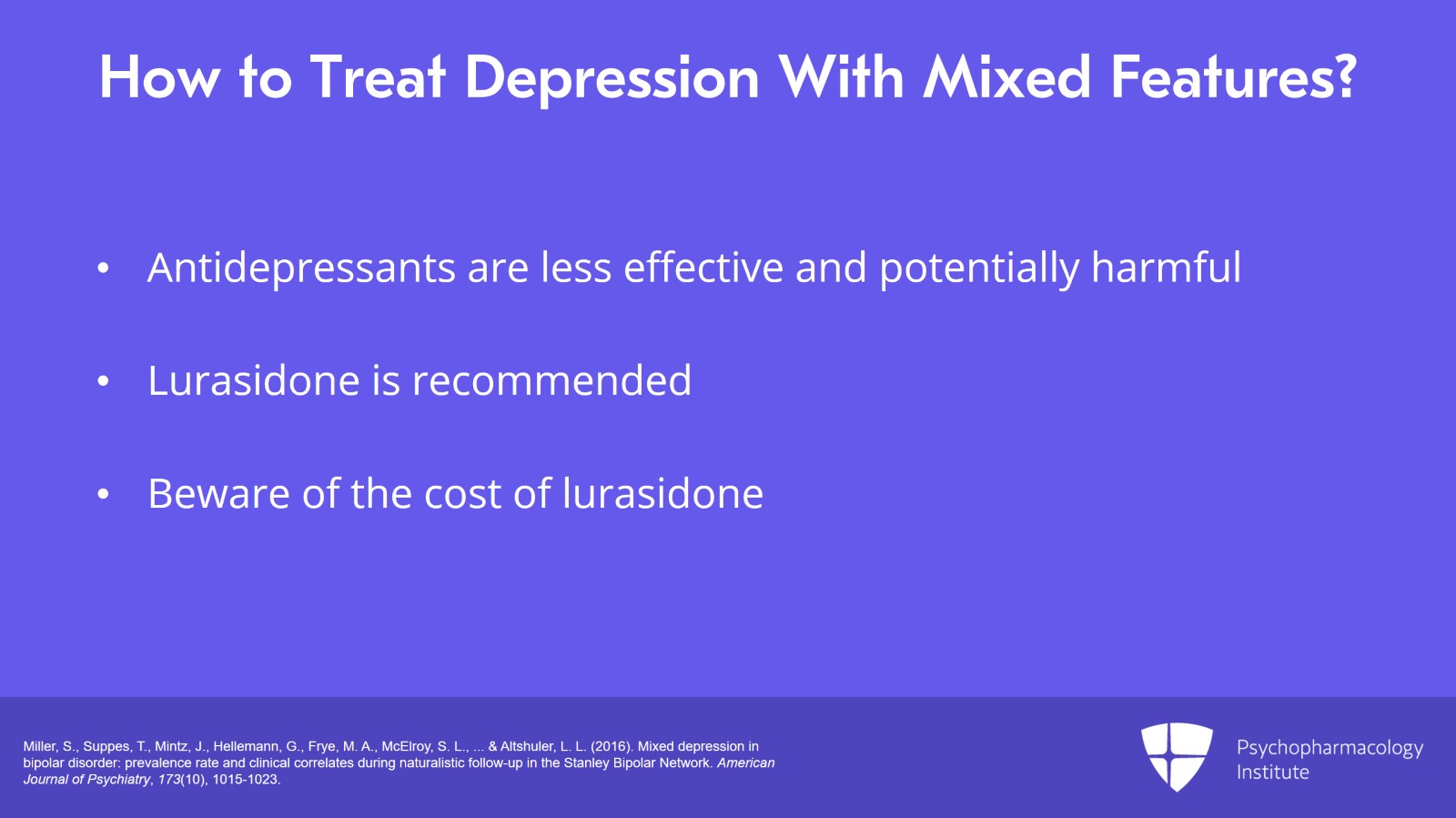
So what do the experts think about how to treat this depression with mixed features? Well, it seems from what evidence we have that antidepressants are much less effective and they’re potentially harmful especially if the patient does have an underlying bipolar disorder that has not manifested itself yet or where the patient has not disclosed to you the details that would enable you to make that diagnosis. So it’s risky to give these people antidepressants and they don’t seem to work from what limited evidence we have.
So a tentative recommendation for these patients is rather than following our major depression algorithm we actually recommend lurasidone which has the only study to date specifically in this population, major depression with mixed features but no bipolar disorder. They studied patients actually a little bit different from the criteria. They had two manic symptoms along with their depression rather than the three required in DSM 5. But the difference from placebo was a quite impressive number needed to treat of three. That means for every three patients you treat, one is going to get better who did not get better or would not have gotten better on placebo.
Now, lurasidone is costly compared to many other treatments for depression. And we hesitate to recommend first line an expensive agent. But given the robust effect size in this study, we are recommending it at this time and awaiting new data on whether there are any other treatments that clearly work for major depression with this new diagnosis of mixed features.
References:
- Miller, S., Suppes, T., Mintz, J., Hellemann, G., Frye, M. A., McElroy, S. L., … & Altshuler, L. L. (2016). Mixed depression in bipolar disorder: prevalence rate and clinical correlates during naturalistic follow-up in the Stanley Bipolar Network. American Journal of Psychiatry, 173(10), 1015-1023.
Slide 4 of 8
Now, the second specifier we want to mention in this video is depression with anxiety or anxious distress as they call it in the specifier.
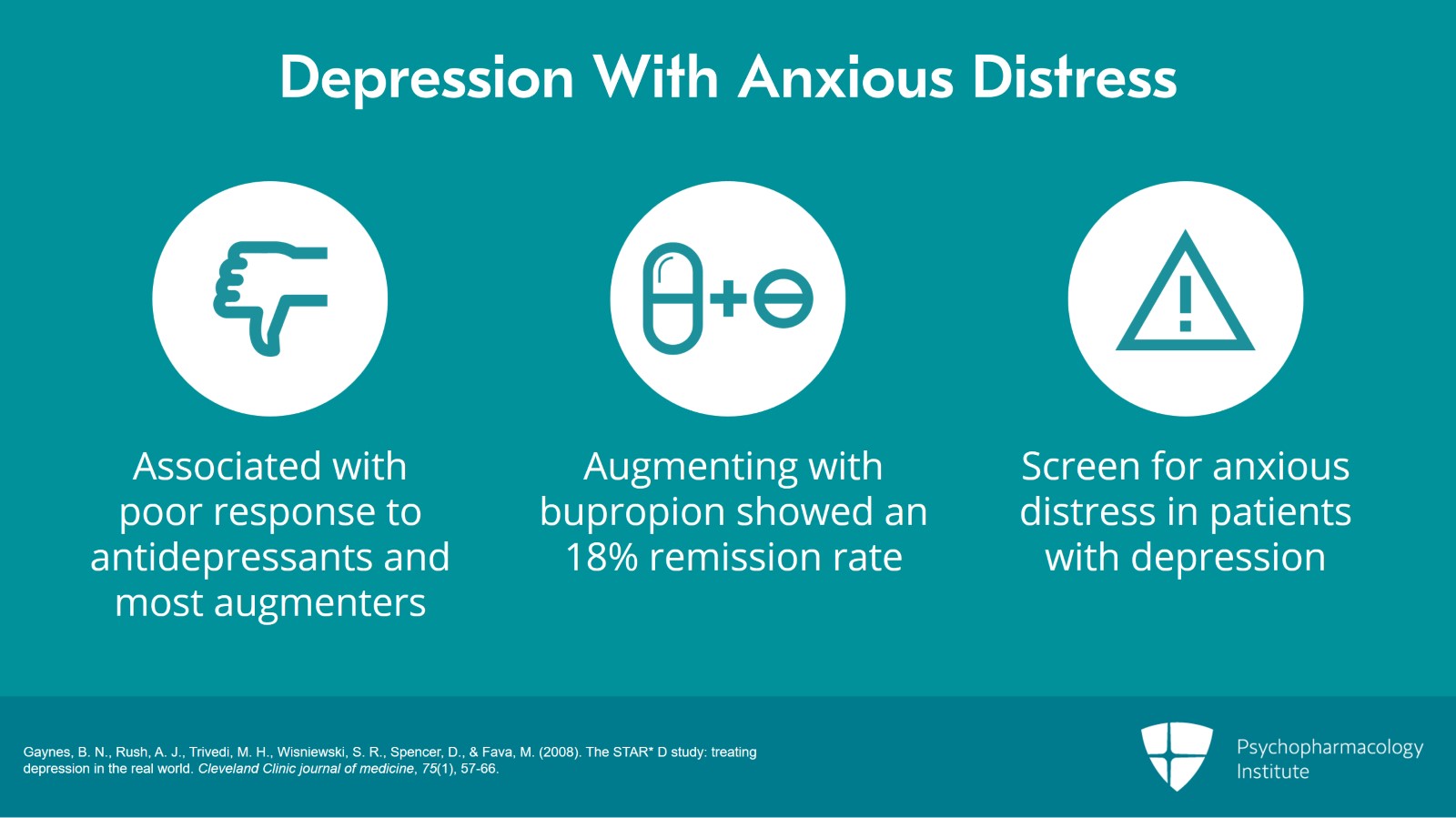
STAR*D, and other studies find this specifier to be very common in the population of patients with major depression. Actually, 50% of STAR*D patients had it.
Yet, it’s associated with poor response to antidepressants and poor response to most augmenters, all of the augmenters used in STAR*D actually. We had remission rates of around 10% for all the augmenters.
It’s a little bit better with bupropion as an augmenter interestingly and bupropion is not something we think about for anxiety-prone people. It had an 18% remission rate.
But the key thing about depression with anxious distress is it’s my impression clinicians do not think of this. They’re not aware of this evidence on how it changes treatment when there’s a lot of anxiety associated with your patient with major depression. They don’t identify the specifier. They try to treat the depression in the usual manner and this is not often rewarding.
References:
- Gaynes, B. N., Rush, A. J., Trivedi, M. H., Wisniewski, S. R., Spencer, D., & Fava, M. (2008). The STAR* D study: treating depression in the real world. Cleveland Clinic journal of medicine, 75(1), 57-66.
Free Files
Download PDF and other files
Success!
Check your inbox, we sent you all the materials there.
Slide 5 of 8
So what does work in depression with anxious distress?
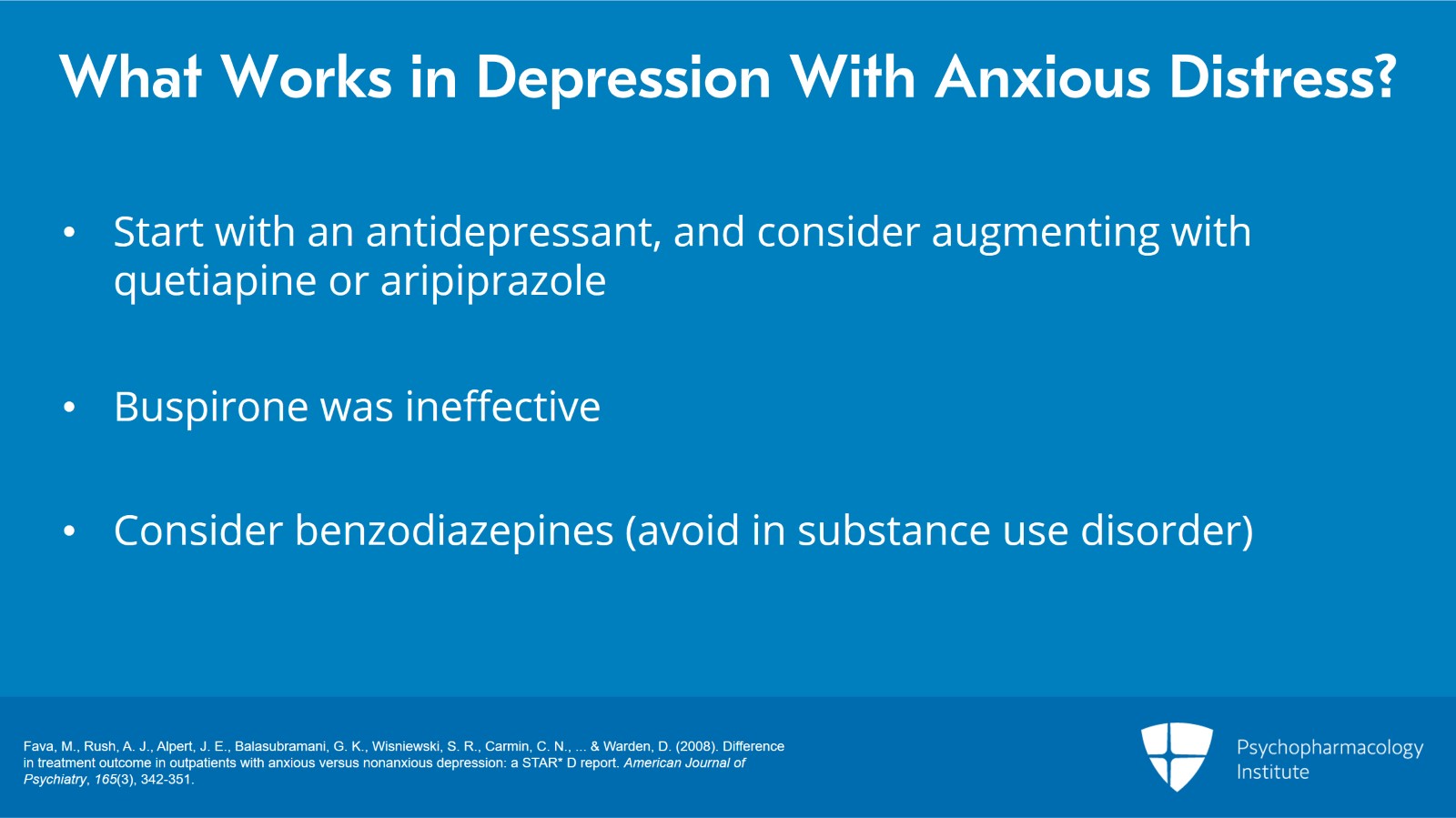
You have to start with an antidepressant and consider augmenting with quetiapine or aripiprazole. Quetiapine has a bigger side effect burden than aripiprazole. So although we don’t recommend those augmenters routinely as you’ll soon see in the major algorithm, for this subgroup, they may be preferred.
Buspirone though was not effective in STAR*D as an augmenter in these patients with anxious distress so I wouldn’t bother with that.
Benzodiazepines are one more option for managing the anxiety in the anxious distress. Of course, benzodiazepines should probably be avoided in the usual populations you worry about, substance abusers, alcoholics and so on.
References:
- Fava, M., Rush, A. J., Alpert, J. E., Balasubramani, G. K., Wisniewski, S. R., Carmin, C. N., … & Warden, D. (2008). Difference in treatment outcome in outpatients with anxious versus nonanxious depression: a STAR* D report. American Journal of Psychiatry, 165(3), 342-351.
Slide 6 of 8
So the key points of this video are the two very important specifiers for the diagnosis of major depression that change treatment are depression with mixed features and depression with anxious features.
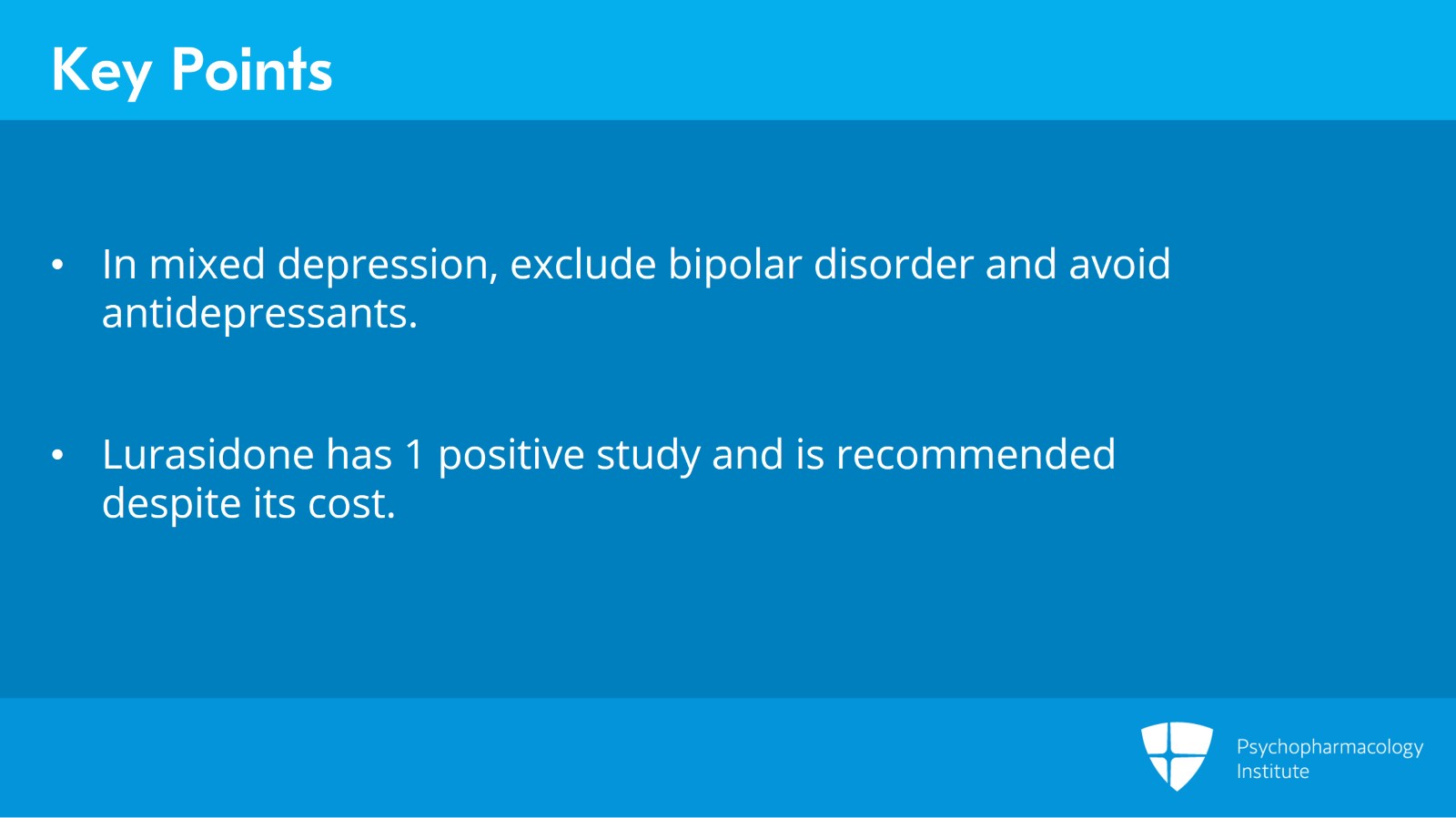
For the mixed depression, try to be sure the patient does not have bipolar disorder. That’s a whole different algorithm. Treatment is different. But if not bipolar and clearly meeting these new criteria in the DSM 5, you probably should avoid antidepressants. Lurasidone has one positive study and is tentatively recommended despite its cost.
Free Files
Download PDF and other files
Success!
Check your inbox, we sent you all the materials there.
Slide 7 of 8
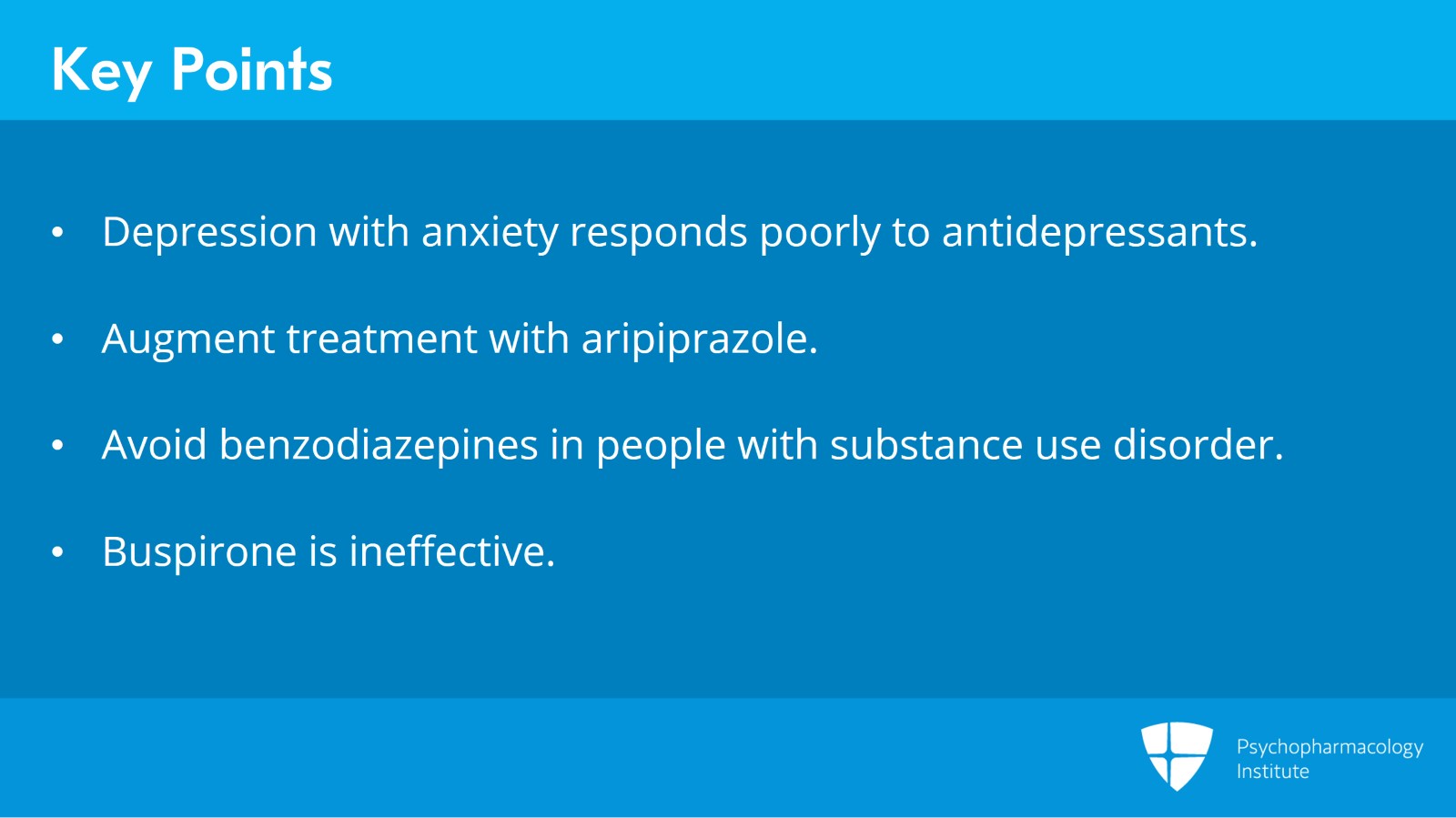
And the final key point, major depression with a lot of anxiety responds poorly to almost all antidepressants and their augmenters except it seems for the atypical antipsychotics as augmenters. And of those, we prefer aripiprazole. Benzodiazepines may help and are to be avoided though in people with substance abuse. But buspirone seems ineffective.
Slide 8 of 8
Free Files
Download PDF and other files
Success!
Check your inbox, we sent you all the materials there.
