

Slides and Transcript
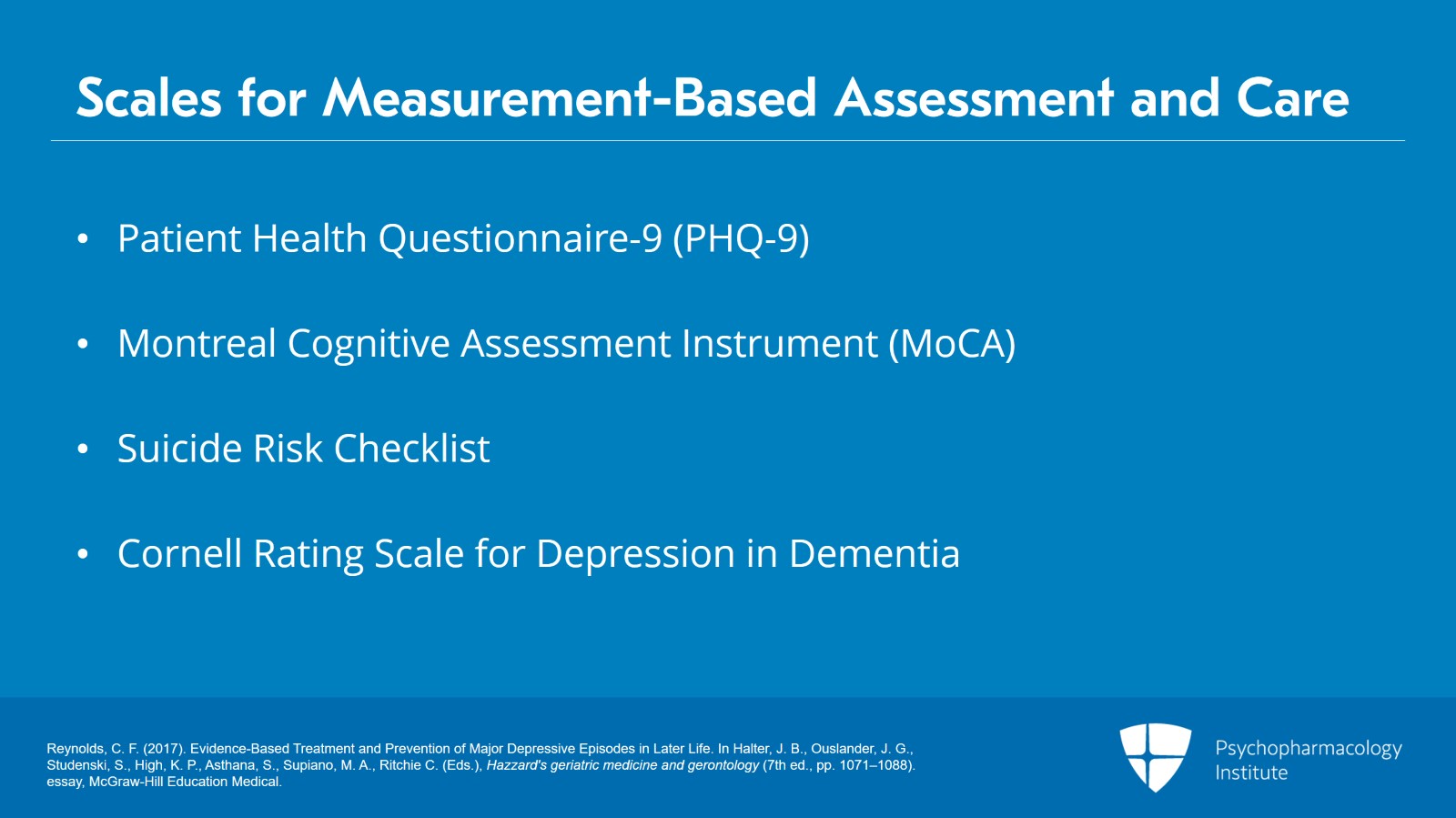
Unlock this Video Lecture and earn 1.25 CMEs
Become a Bronze, Silver, Gold, Bronze extended, Silver extended or Gold extended Member.
Already have an account? Sign in


To unlock this video you need to become a Bronze, Silver, Gold, Bronze extended, Silver extended or Gold extended Member.
Check Our CME Program
Unlock this Video Lecture and earn 1.25 CMEs
Become a Bronze, Silver, Gold, Bronze extended, Silver extended or Gold extended Member.
Already have an account? Sign in
After completing this activity, the learner will be able to:
Original Release Date: 02/01/2021
Review and Re-release Date: 03/01/2024
Expiration Date: 04/01/2025
Expert: Charles Reynolds, M.D.
Medical Editor: Lorena Rodriguez, M.D
None of the faculty, planners, and reviewers for this educational activity have relevant financial relationship(s) to disclose during the last 24 months with ineligible companies whose primary business is producing, marketing, selling, re-selling, or distributing healthcare products used by or on patients.
Contact Information: For questions regarding the content or access to this activity, contact us at support@psychopharmacologyinstitute.com
Participants must complete the activity online during the valid credit period that is noted above.
Follow these steps to earn CME credit:
This activity has been planned and implemented in accordance with the accreditation requirements and policies of the Accreditation Council for Continuing Medical Education through the joint providership of Medical Academy LLC and the Psychopharmacology Institute. Medical Academy is accredited by the ACCME to provide continuing medical education for physicians.
Medical Academy designates this enduring activity for a maximum of 1.25 AMA PRA Category 1 credit(s)™. Physicians should claim only the credit commensurate with the extent of their participation in the activity.

Become a Bronze, Silver, Gold, Bronze extended, Silver extended or Gold extended Member.
2025–26 Psychopharmacology CME Program